









Relentlessly local coverage of Gilbert and our neighboring communities


Let’s Dance

Joselyn Gonzalez, 11, prepares for her show on the Gilbert Global Village Festival stage.

Relentlessly local coverage of Gilbert and our neighboring communities
Joselyn Gonzalez, 11, prepares for her show on the Gilbert Global Village Festival stage.
BY SRIANTHI PERERA
Following on the heels of Mesa, Tempe, Scottsdale and Glendale, Gilbert has been selected for a new national initiative that would help the town better share information, disperse data, inform local decision making and engage residents. Bloomberg Philanthropies’ What Works Cities Initiative, established by former New York Mayor Michael Bloomberg, is designed to accelerate cities’ use of data and evidence to improve people’s lives. Gilbert, along with nine other cities across the country, was recently added
to the list of mid-size cities to partner with the initiative. What Works will limit itself to 100 cities, and the count now stands at 77. There’s no cost for a city to participate. The Government Performance Lab at the Harvard Kennedy School, Sunlight Foundation (a Washingtonbased nonprofit that advocates open government), Johns Hopkins University, and Results for America are some of its partners.
see NEW PORTAL page 8
BY SRIANTHI PERERA
Gilbert Public Schools Superintendent Christina Kishimoto is one of two finalists being considered for a top education position in Hawaii.
Hawaii’s Board of Education confirmed that Kishimoto is in the running to become the next superintendent of the state’s public school system, which has 256 schools on six islands, more than 175,000 students and 22,000 permanent employees and an annual operating budget of about $1.9 billion.
As a comparison, GPS has a student
enrollment of 36,500 and an annual budget of $305 million.
The position pays in the range of $240,000 and the new appointee would assume the position on July 1. Current Superintendent Kathryn Matayoshi’s job ends June 30.
Kishimoto and the other finalist, Linda Chen, who served as chief academic officer for Baltimore City Public Schools in Maryland from 2014 to 2016 and now
see KISHIMOTO page 8













publisher Steve T. Strickbine
Niki D’Andrea






480-898-6475 Lou Lagrave Laura Meehan Zac Reynolds
Becky Bracken
Srianthi Perera contributers
Jennifer Alvrez, Don Andrews, Alison Bailin Batz, Melody Birkett, David M. Brown, Marge Christianson, Christina Fuoco-Karasinski, Kathy Kerby, Emily Liu, Coty Dolores Miranda graphic design
Christy Byerly, Veronica Thurman
administration
Courtney Oldham
For News Tips, Editorial Articles, Opinion or Classifieds, email is preferred.


*Some conditions apply.

Gilbert - Because your home may well be your largest asset, selling it is probably one of the most important decisions you will make in your life. And once you have made that decision, you’ll want to sell your home for the highest price in the shortest time possible without compromising your sanity. Before you place your home on the market, here’s a way to help you to be as prepared as possible.
To assist homesellers, a new industry report has just been released called “27 Valuable Tips That You Should Know to Get Your Home Sold Fast and for Top Dollar.” It tackles the important issues you need to know to make your home competitive in today’s tough, aggressive marketplace.
Through these 27 tips you will discover how to protect and capitalize on your most important investment, reduce stress, be in control of your situation, and make the best profit possible. In this report you’ll discover how to avoid financial disappointment or worse, a financial disaster when selling your home. Using a common-sense approach, you will get the straight facts about what can make or break the sale of your home.
You owe it to yourself to learn how these important tips will give you the competitive edge to get your home sold fast and for the most amount of money. Order your free report today. To hear a brief recorded message about how to order your FREE copy of this report call toll-free 1-800-303-3049 and enter 8023. You can call any time, 24 hours a day, 7 days a week.
Get your free special report NOW.
This report is courtesy of Realty Network Group at Realty Executives. Not intended to solicit buyers or sellers currently under contract. Copyright© 2017
Gilbert - A new report has just been released which reveals 7 costly mistakes that most homeowners make when selling their home, and a 9 Step System that can help you sell your home fast and for the most amount of money.
This industry report shows clearly how the traditional ways of selling homes have become increasingly less and less effective in today’s market. The fact of the matter is that fully three quarters of homesellers don’t get what they want for their homes and become disillusioned and - worse - financially disadvantaged when they put their homes on the market.
As this report uncovers, most homesellers make 7 deadly
mistakes that cost them literally thousands of dollars. The good news is that each and every one of these mistakes is entirely preventable. In answer to this issue, industry insiders have prepared a free special report entitled “The 9 Step System to Get Your Home Sold Fast and For Top Dollar”. To hear a brief recorded message about how to order your FREE copy of this report call toll-free 1-800-303-3049 and enter 8003. You can call any time, 24 hours a day, 7 days a week. Get your free special report NOW to find out how you can get
BY SRIANTHI PERERA
Five schools in the Gilbert Public Schools district and Eduprize School, Gilbert received “A+ School of Excellence” titles from the Arizona Educational Foundation recently.
The GPS schools are Superstition Springs Elementary, Oak Tree Elementary, Islands Elementary and Patterson Elementary and Gilbert High School. This brings the total number of A+ schools in the district to 12.
Each received a $500 reward and a banner with the title, which is valid for 3 1/2 years.
“We put in five applications and we’re thrilled because all five were accepted for a visit and all five received A+ awards,” Dr. Christina M. Kishimoto, superintendent of GPS, said.
It was particularly noteworthy for Gilbert High School, which is celebrating its 100th graduating class this year.
Principal Christopher Stroud said he was proud”
“This is our first attempt to get the A+ and we earned it. It’s a difficult process. Some schools need multiple attempts to get it,” he said.
As for the significance this year, Stroud said that it “came up incidentally... I can’t say that that was entirely by design.”
Stroud added that the school prepared for the application process for a few years. “When we finally felt
that the time was right, it happened to be when we’re celebrating the 100th graduating class at Gilbert High,” he said. “For the seniors who are going to be leaving us… I think, for them, this A+ designation is really a wonderful way for them to seal their legacy upon the school. I think that’s a wonderful parting gift.”
This year, the Arizona Educational Foundation awarded the title to 39 out of the 56 public schools that applied from across the state.
The program “calls attention to the positive stories and successes occurring in public schools,” states Executive Director Bobbie O’Boyle in the organization’s website. “The application and evaluation process for this program is comprehensive and rigorous. We applaud these schools for going above and beyond the norm to meet their students’ needs and for achieving overall success despite the many challenges that face the education community statewide.”
Schools that apply (from prekindergarten through 12th grade) are evaluated on student focus and support, school culture, active teaching and learning, curriculum, leadership, community and parent involvement and assessment data.
Once the lengthy written application is submitted, a rigorous site visit is
conducted by a team of trained judges.
The team will “see whether what’s stated in the application is lived out in the school,” Kishimoto said.
For example, Patterson Elementary, which is a small, community-based school, highlighted its transition to a more STEM-based exploratory curriculum. The visitors wanted to see that firsthand, Kishimoto said.
Also, the application stated that many of the school’s parents and grandparents belong in the school community and are constantly assisting the school in its programming.
“They went to see that in fact that’s happening,” she said.
Patterson Elementary’s title was a renewal. The titles are valid for threeand-a-half years, after which a school has to reapply.
At Gilbert High, Stroud said that they strived to capture the school culture in the application.
“We wanted to make sure that our application was as true to real life and as true to the reality of each day at Gilbert High as we possibly can make it,” Stroud said. “I think a mistake that any school can make is where you try to say we do all these wonderful things and you don’t actually do those wonderful things.”
“We took a real long, hard look at ourselves and asked what do we do for

kids that’s good and let’s focus solely on those things, and that’s what we did,” he added.
Among them, the principal said, is “putting our students and our families first on all of the decisions that we make.”
The application also highlighted the school’s various hands-on learning opportunities and its wealth of cocurricular opportunities that extended beyond the classroom.
Kishimoto said it was “huge” that 12 out of GPS’s 40 schools have A+ grading.
“It just shows that these are 12 very cohesive, high-engaging, vigorous learning communities,” she said.
“It will encourage the other schools also to go through this process. It’s pretty intense,” she said.
The superintendent does not suggest that the schools apply to the program. Instead, the principal, staff and parents have to make the decision.
“The principal, teachers and the parents have to be really cohesive because the visitors that come on to the campus, they check on these various groups to make sure that everyone has the same vision of success for their kids,” Kishimoto said.
Details: azedfoundation.org/programs/ a-school-of-excellence-program


Award-winning Arizona builder for 38 years.

Blandford Homes specializes in building master planned environments with a variety of amenities and charm. Many offer resort-style amenities such as pools, spa, fitness, tennis, event lawns, and lifestyle activities, you’ll find the perfect community to fit your lifestyle.
A Mountain Bridgein Northeast Mesa – Resort-Style Master Planned Community
6 BRAND NEW REVOLUTIONARY MODELS FOR 2017
Villa Collection • From the mid $300’s • 480-988-2400
Vintage Collection • From the high $300’s • 480-988-2400
Craftsman Collection • From the low $400’s • 480-641-1800
Artisan Collection • From the low $500’s • 480-641-1800
Master Collection • From the low $700’s • 480-641-1800
B Mulberry –“New Old-Home Neighborhood” GRAND OPENING NEW PHASES!
Arbor Collection • From the low $240’s • 480-895-6300
Americana Collection • From the $260’s • 480-895-2800
Centennial Collection • From the low $300’s • 480-733-9000
Heritage Collection • From the mid $300’s • 480-733-9000
C The Estates at Thirty-Second Street NOW SELLING
Estate single-level homes with 4 to 6 car garages and optional RV garages and carriage houses • From the low $700’s • 480-750-3000
D The Estates at Las Sendas NOW SELLING
Northeast Mesa Resort-Style Master Planned Community
Estate single-level homes on 30,000 sq. ft. lots with 4 to 6 car garages and optional RV garages and carriage houses From the high $700’s • 480-641-1800
E Sienna Hills –124th St & Shea in Scottsdale COMING SOON!
Luxury single level estate homes from the low $900’s







BY SRIANTHI PERERA

With ailing financial health, Gilbert Hospital filed for Chapter 11 bankruptcy in early 2014.
Following restructuring, the successful recovery of the town’s first full-service hospital has garnered national attention.
The Phoenix-based bankruptcy law firm Allen Barnes & Jones, which last year restructured Gilbert Hospital and Florence Hospital in Anthem, was awarded the M&A Turnaround Award recently in the category of Healthcare/Life Sciences Deal of the Year.
to put Gilbert Hospital in quite a lot of distress, too,” he said. “At the time it filed for bankruptcy, it had run out of cash completely and it had lost some adjacent property to a foreclosure and its landlord had sent a notice of termination of its lease and it was in quite bad shape.”


The restructuring involved creating a holding company called New Vision Health, which now owns both the hospitals.
The national Turnaround Management Association is also considering it for an award, which is to be announced later.
Dan Garrison of Andante Law, who represented Gilbert Hospital, was one of the lawyers involved in the plan to restructure both hospitals simultaneously.
“The two-sided plan was one reason (for the national attention) and the bigger one, he said. The other feature, according to him, is its full-payment plan.
“All the creditors of both hospitals plan to be paid back in full with modest interest on top of it and Florence, in particular, was in very, very bad shape,” Garrison said. “If they had sold the hospital as they were planning to do, creditors might have received only a very small fraction of the money back and now, because of the structure we put together, they’re going to be able to be paid back in full.”



“Dan and Bryce (Suzuki of Bryan Cave, which represented the lender) came up with the idea of merging both hospitals,” said Hilary Barnes, who represented the two hospitals’ patient-care ombudsman, Jerry Seelig. “When you put the two enterprises together and developed economies of scale, it became a much more successful enterprise, and it has emerged stronger from the bankruptcy.”
When a healthcare facility goes into bankruptcy, to protect the interests of the patients, the bankruptcy court appoints a neutral patient care ombudsman to advocate and monitor for the benefit of the patients and report to the court.
Barnes said that the hospital didn’t close and “maintained a high level of patient care the entire time.”
Operating on the premise of a patient going from “door to doc in 31 minutes,” Gilbert Hospital, located at 5656 S. Power Road, is a full-service acute-care hospital that’s open 24 hours a day, seven days a week and offers a complete array of hospital services.
Florence Hospital at Anthem is also a full-service hospital located in Florence and is the only one in that city. It, too, promises patients service from “door to doc in 31 minutes.”


At the outset, after its opening in 2006, Gilbert Hospital experienced a high volume of patients and was profitable. Later, however, hospital founder and emergency-room physician Dr. Timothy Johns used its funds to prop up Florence Hospital at Anthem, which he also owned. It did not bode well for Gilbert Hospital.
Garrison said that Gilbert Hospital went from “very, very dire straights to a very solid situation over the course of two years.”


“Florence Hospital had only been open for a year when it filed for Chapter 11 bankruptcy in March 2013. It had never made money. It had been started with some bank loans and with a large infusion of capital from Gilbert Hospital,” said Garrison.

“By the time we confirmed the Chapter 11 plan, Gilbert Hospital not only had this Chapter 11 plan structure in place to reorganize and emerge from bankruptcy, but it had accumulated about $10 million in cash over and above it paying ongoing bills and paying for its attorneys,” he said. “It was a really successful turnaround of the business operations that also started to take place in Florence once Gilbert took over management there.”


“The shareholders of Gilbert Hospital sued the founder of the hospital for taking money out of Gilbert (Hospital) and loaning it to and investing in another hospital project,” he said.
The lawsuit was settled before Gilbert Hospital filed for bankruptcy.
“But the lawsuit and changing management and shareholder frustration and a number of other things worked together
Meanwhile, Dr. Johns remains a shareholder and is the chief medical officer of the two hospitals, but is not involved in the financial or operational management of the hospitals. As a result of the litigation, a board of directors was created, and Dr. Johns is a member of the board as well. The current chief executive officer is Dennis Rutherford.






owns her own educational consulting services company, were whittled down from a pool of 92 candidates.
The two are to be flown to Hawaii for a meeting with the board on May 11, meet with stakeholders in the community, participate in public forums and informal meet-and-greets. The decision is expected to be made soon after.
Kishimoto did not respond to a request for comment.
“Since the process is still in motion, Dr. Kishimoto is not able to make a statement at this time,” Irene MahoneyPaige, district spokeswoman stated in an email message.
The GPS Superintendent, who came to Gilbert from the Hartford Public School District in Connecticut, took office here in July 2014.
Of Puerto Rican descent, Kishimoto was raised in the south Bronx and has degrees from Columbia University and Barnard College. She’s also bilingual.
Kishimoto took up the Gilbert position amid turbulence and controversies circulating the school board and the departure of many teachers. One of her
FROM page 1
“We’ve applied for the program a few times and this is the first year that we got accepted and engaged in the program,” said Derek Konofalski, Gilbert’s multimedia analyst.
Gilbert Mayor Jenn Daniels said that Gilbert is “excited to be selected to participate in the What Works Cities initiative.
“We are committed to making government more accessible, and partnering with What Works Cities will further promote our dedication to open data and digital government and will improve our interactions with our residents,” she said.
Konofalski said that the first step is to formulate the town’s policy with help from the Sunlight Foundation and figure out what exactly Gilbert would make public on an open data portal.
“They’re going to help us figure out what types of data we’re going to make public, in what order, what timeframe, how often we’re going to update that data and who’s going to be responsible for which types of data,” he said, and added that it will then be submitted to the town attorney and later be ratified by Town Council before it becomes official.
Public safety and public works data, crime rates and locations of crime and school ratings are possible data sets that could be shared in Gilbert.
“They’ll be able to see and compare,” Konofalski said. “The big benefit is when
first tasks was to fill in the administrative positions that were vacant.
In her letter to the superintendent search committee, Kishimoto states that the position “is very attractive to me because the district has established a vision to be a progressive leader in education, ready to embrace new models of engagement that are student-centered and teacher empowered.
She also states, “Over the past three years, I have been serving as the Superintendent of Gilbert Public Schools leading a major strategic reform plan based on a significant redesign of the district governance structure, instructional technology integration approach, and district brand, while re-norming through a change process guided by a managed performance empowerment theory of action.”
One of the competencies of the job profile is an understanding of Hawaii’s culture and values and demonstrated ability to incorporate them into leadership decisions, actions and style.
However, neither candidate is from Hawaii.
Under Superintendent Christina Kishimoto, five GPS schools received A+ designations from the Arizona Educational Foundation recently, bringing the total to 12 schools.
(See story on Page 4)



we put that data live, they’ll actually be able to compare our crime rate directly with some of the other cities in What Works. And the information will be updated regularly.”
Konofalski said that the SPARK APP League, a two-day coding competition for students, may also put the data to good use.
Tempe, which was admitted to the initiative earlier this year, is also figuring out the best use of the initiative.
“As a first step in infusing open data throughout Tempe’s website, GovEx and the Sunlight Foundation will work with
the Tempe Police Department to build police data sets to be placed online,” states the city’s website. “The data sets involve crime and use of force. In addition, the partners will develop an open data policy and clarify the process for releasing data publicly. Members of the public will be invited to review and comment on a draft policy.”
Meanwhile Mesa, which was admitted to the initiative in 2015, enacted its first Open Data policy, established an Open Data leadership board, conducted a data inventory and established a process for the release of data.
BY GSN STAFF
Gilbert has partnered with SeeClickFix on a new resident engagement platform, Gilbert 311, which allows residents to report quality-of-life issues and request town services.
With the free Gilbert 311 mobile app and web tools, residents are able to provide the town with pictures, videos and specific descriptions to help fix a variety of issues, such as potholes and streetlight outages, across the community.
SeeClickFix was founded in 2008 to empower citizens with tools to publicly document quality of life concerns in their neighborhoods.
The app also allows residents to view, comment on and vote to fix problems submitted by their neighbors. Residents may create their own “watch areas” to receive notifications about all of the issues reported in their community, enabling them to follow the progress of all service requests, not just the ones they report.
The Gilbert 311 mobile app is available for download in the App Store and Google Play. In addition to the mobile apps, residents can send service requests via Gilbert’s website at gilbertaz.gov/311.
STORY AND PICTURES BY SRIANTHI PERERA
Every mother feels that her child is a miracle.
But Diane Passafiume of Gilbert possibly has a bigger claim than most.
Her daughter, Alyssa, a 17-year-old junior at Williams Field High School, was born with chicken pox; developed sleep apnea and a heart defect and had to wear a heart monitor until she was 2; had seizures from age 1 to 6 that caused her to stop breathing; and last, but not least, developed an immune disorder called Mucha-Habermann that manifests itself as lesions or ulcerated sores.
“Through this time, in and out of hospitals, she was always very loving and outgo-
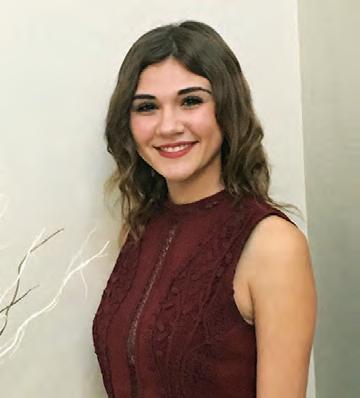
Seventeen-year-old Alyssa Passafiume is participating in the upcoming Miss Teen America competition in Los Angles.
ing and she was very rambunctious,” Passafiume recalled. “I would say God wants her here for a reason. She’s been through so much… she’s special.”
With most of her early maladies put to rest, Alyssa is a normal, happy teen, an active member of the Phoenix Children’s Chorus and working hard at school with an aim of becoming a pediatrician. She’s also a queen.
In September, Alyssa was chosen as Miss Arizona Teen America and is now looking forward to competing in Miss Teen America, to be held Aug. 2-5 in Los Angeles. Judging criteria include beauty, of course, plus fitness, interview skills, talent and a viable platform.
Her “random acts of kindness” platform was chosen because her interests are many and varied, she said.





























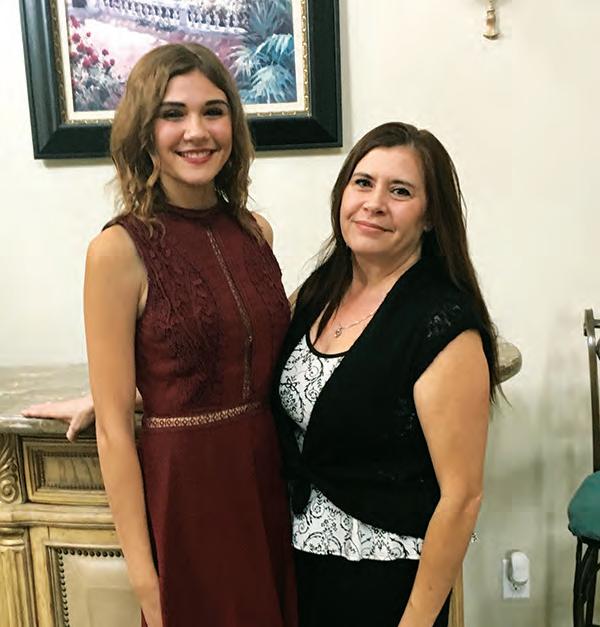



“With everything that’s going on in the world, I’m just hoping that even a little will make an impact in someone’s life,” said Alyssa, who volunteers at Feed My Starving Children, Young Lives and ICAN of Chandler, among other nonprofits helping youth.
Just last month, she emceed at the Gilbert Global Village Festival, to get firsthand experience on speaking to an audience. Her parents, Jiovani and Diane, are also helping her to find sponsors, which is an integral part of participating in the pageant.
The competition is tough and merits rigorous preparation and dedication, she said.
“I’m definitely nervous because this is my first big pageant,” she said. “But you just need to have confidence and trust yourself because you’re going to rock it, basically.”
The teen already knows how to juggle her time, what with the mandatory choir rehearsals and practice time each week, her volunteering commitments and school work.
“I have a study time; I have a pageant time and I have a choir time,” she said. “Sometimes, you have to do what you have to do with schoolwork, and I usually get it done.”
Alyssa also attends a preparatory program in the medical field at EVIT in Mesa.
Due to the extensive periods spent in hospitals undergoing treatment when she was little, she feels that she can understand the fears of sick children.
“That’s mostly why I’m inspired to become a pediatrician; just help kids in general,” said Alysssa, who has two younger sisters, Jiana, 14, and Alana, 11. “I want to help them and put a smile on their faces.”
Alyssa is aware that she is a role model to younger girls.
“I really strive to empower young women like myself to reach for their goals. I faced many obstacles in life and I want to show others that no matter who tells you no, you can still do it.
“I want to help spread kindness and I hope the others see the example that I set and want to jump on the bandwagon,” she added.
Passafiume said that participating in the pageant will help her daughter with her future career plans as well.
“I’m really excited for her…I told her that this is going to give her the social skills and the outreach skills to be able to reach out to people in the community and it will be a very good opportunity for her in life to speak in front of that many people,” said, adding “it’s the inner beauty that will hopefully shine.”


BY MELODY BIRKETT
A new gym that just opened in Chandler offers a fitness program like none other in the East Valley.
“This is the first basketball-focused fitness center,” said Jay Bhakta, the Gilbert man who owns PickUp USA at 221 E. Willis Road.
While many gyms provide basketball courts, PickUp USA offers organized, scored and officiated games by trained referees.
“It allows you to play on a team during timed 10-minute games,” said Bhakta. “We’re the first franchisee here in Arizona. We’re expanding all over the U.S. right now.”
“We run officiated games six days a week,” Bhakta said. “We have two trained officials at all times on the court, rotated out. So they’re fresh referees. It’s highly organized.”
Members simply put their name on a list and are rotated into games.
“You get a real game experience,” Bhakta added. “You get the buzzer beaters, the shot clocks, the fouls. There are 10-minute games so the winner stays in, and you reset the clock and the next game comes in — 10 minutes, 10 minutes, back-to-back.”
PickUp USA doesn’t have “all the nu-
ances of a regular pickup game like at a park — the foul calls, the hacking, the argument and who’s next,” he added. “All of that stuff is all organized by us.”
Pickup games are for anyone 15 and older but anyone as young as 5 can become a member and have access to the courts.
“We have the group-training sessions available to them,” said Bhakta. “It’s basketball focused, hourlong boot camps. So, they work on different parts of the game for that hour: shooting, dribbling, passing.”
Gustine Crispin is already a member along with her sons.
“First of all, I love basketball,” Crispin said. “I’ve been playing basketball for over 40 years. And now I have kids. My boys are 13 and 11. And this is a great place for them…This is a basketball heaven.”
Her older son Jamison, who goes by Jam, has been playing basketball four years and likes the idea of getting a workout and fine-tuning his skills at a gym.
“I like it,” Jam said. “Plus, I usually don’t sweat when I go somewhere, but now I’m sweating a lot.”
He just wishes there were pickup games for his age group because he has a goal of making it big: “I will be an NBA player.”
PickUp USA general manager Steven Lancaster played professional basketball in Europe for six years after college.
“Basketball in itself has been a huge part of my life,” Lancaster said. “It has helped me get a scholarship for school so no student debt, so that’s a big thing. It helped me travel, not just the country, but in the world, as well, as far as playing in different tournaments and playing basketball overseas.”
He also played basketball with NBA All-Star LeBron James in high school.
“In high school, we were on the same Amateur Athletic Union team. In Arizona, it’s called ‘club.’ We were teammates when we were 15 all the way to seniors in high school.”
Lancaster has been playing basketball since he was 5, but tried other sports such as football, baseball and martial arts.
As a freshman in high school, he was 5-foot-3 But he had a growth spurt and grew to his current 6-foot-3 by his sophomore year.
“Once I started to dunk a basketball, then basketball took my heart,” said Lancaster, who grew up in Ohio. “From there, I went to hone in on my skills and my craft and that turned into being an

All-State performer, being rated one of the top players in the state. That translated to scholarship offers. From there, that translated into being a professional.”
After voluntarily leaving professional basketball, Lancaster became a trainer.
“So when this opportunity came about, I told myself, what better way to continue my love of basketball into something to give back to other people?” he said.
“These young athletes who come here, they are entrusting us with the most important part of their life which is their sport. Granted, they all go to school but for most athletes, the thing they love most is their sport.”
He not only holds himself to high standards, but the staff as well.
“Everybody who trains with me or anybody at PickUp USA, I challenge them to challenge our trainers. If they can’t give you an answer, then they shouldn’t be here and that’s me included.”
Information: pickupusafitness.com/






































































































BY DAVID M. BROWN
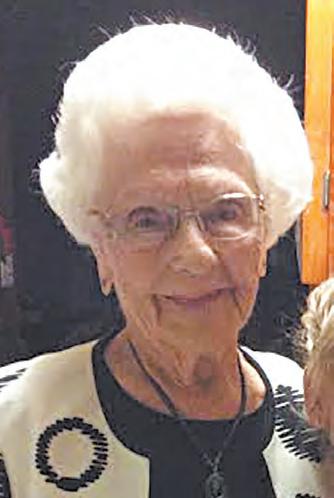
Margaret V. (Stewart) Shahan died February 28, 2017. She was 99.
A native Arizonan, Shahan was born December 31, 1917, at the family home in Gilbert where she lived all her life. Her husband of 69 years, James ‘Jimmie’ M. Shahan, was a farmer and died nine years ago.
Her parents were Olin P. Stewart and Rita M. Stewart (Allen). Glenn Stewart, Helen Clark, Alhoa Mae Hanson and Elaine Stewart were her siblings.
“Margaret’s mother died when she was 14, so she became the mother of the Pop Stewart family at that time,” recalled Dale Hallock, a friend who came to Gilbert in 1936 as an 18-month-old and later served as mayor, July 1, 1971 to June 14, 1976. “Her mother’s death was drowning in the Salt River near Blue Point, when she slipped off a rock in the fast-moving water.”
One son, Darrel, died before Shahan,
and children, J. Michael (Sid) and Kelley Shahan, are Gilbert residents. Another daughter, Rita Powers, lives in Prescott Valley, and daughter-in-law Judith Shahan, Darrel’s wife, is in Chandler. She had seven grandchildren, 11 great-grandchildren and two great-great grandchildren.
Her father, Olin, was “a very good farmer,” Hallock said. He built the family home in 1900, just two years before the town’s eponymous founder, William “Bobby” Gilbert, donated land for a rail siding to the Arizona Eastern Railway, which was building a line from Phoenix to Florence. The town of Gilbert grew from that, incorporating July 6, 1920.
“After Olin died, Margaret and Jimmie purchased the farm from the estate and, for his adult life, farmed the land just north of Warner Road and backing up to the Consolidated Canal,” said Hallock, who met Shahan in 1968 but knew of her
years before through her husband.
With Gilbert thriving, the Town Council approved a strip annexation of 53 square miles of county land in the 1970s when Hallock was mayor. But Margaret and Jimmie resisted becoming part of the expanded town. “I had not one word of discord from her or Jimmie,” said Hallock, who volunteers at the Gilbert Historical Museum, where, in 2010, he helped Margaret write the history of the Shahan family in Gilbert.
Today’s municipal complex is across the street from the couple’s rural homestead in a small county island on south Gilbert Road. In the Shahans’ old age, they sold the remaining land, which is now utilized for retail, multilevel apartments and a movie theater.
“Margaret was a very fastidious lady,” Hallock said, “and was always seen as a beautiful woman.”
Brown is an East Valley-based writer. Read more of his work at azwriter.com.
BY SRIANTHI PERERA
As a neonatal nurse practitioner in a large medical center in the East Valley, Tara Sundem has seen too many babies having tremors, seizures, stiff limbs, difficulty sleeping and vomiting.
These are the tiniest victims of the drug abuse epidemic sweeping the country.
Their symptoms are of the neonatal abstinence syndrome – a condition experienced by an infant after birth due to sudden discontinuation of exposure to certain drugs, such as opioids, used by the mother during pregnancy.
In July 2015, the Arizona Department of Health Services stated that the rate of the syndrome has increased by 235 percent from 2008 and 27 percent since 2013.
“I live in the East Valley and I think that it’s a clean-cut area; and I always thought the downtown or the west side is associated with drug use. But it’s happening here, too,” said Sundem, a Gilbert resident.
On any given week, there are more than a dozen babies in withdrawal in East Valley hospitals.
“Five or six years ago, we would see one or two patients a month,” she said. “Now we see six to eight cases a day.” Sundem, together with fellow neonatal nurse practitioner Kelly Woody of Ahwatukee Foothills, is establishing an outpatient recovery center for such babies in the Valley. It would provide a therapeutic and inviting environment of short-term
medical care to the infants and their families as well as offer non-judgmental support, education and counseling.
The Technical Assistance Partnership of Arizona, which helps nonprofits be successful, is helping with a business plan and making connections.
The two nurses have also enlisted the support of Melissa Delaney, who is adept at fundraising, while healthcare finance expert Antoinette Sheen is helping them navigate the rules, laws and regulations for establishing a new healthcare provider and providing guidance on the financial plan.
Hushabye Nursery will be modeled on a similar recovery center in West Virginia called Lily’s Place. There’s just one other facility in Seattle, which is centered more on foster care. Although the syndrome has skyrocketed around the country, there are only two facilities exclusively devoted to the care of these babies.
With a business plan ready, the nurses are looking for a site to be donated to the cause. There’s an empty state medical facility in Phoenix, but 18 other nonprofits are in the running to obtain it.
Ideally, the facility for Hushabye Nursery should be about 9,000 square feet, Sundem said, and have space to host 12 beds and the possibility of increasing it to 16 beds in the future.
It would employ about 25 people, recruit volunteers and partner with community organizations. The center would
also look into forming contracts with local nursing schools that could send its students for clinical experience.
Funding for Hushabye Nursery is going to be sought initially from private sources and fundraising. A local philanthropic organization has expressed interest in helping, as well. Once the facility is up and running, organizers plan to get reimbursement from the state’s Medicaid Agency, the Arizona Heath Care Cost Containment System.
Sundem and Woody believe that taking the babies out of a stimulating neonatal intensive care unit of a hospital, where they’re usually placed, would be helpful for them.
The neonatal unit is usually a high-
energy place with bright lights, beeping monitors and heightened activity, and is designed to take care of premature babies and babies with heart and respiratory problems, Sundem said.
“Essentially, the babies with the syndrome are healthy, big babies that are having to withdraw. They need a quiet, homelike environment that’s dark, with very minimal stimulation,” she said.
In Arizona, babies are given morphine to aid in the withdrawal process. While a healthy baby goes home within 48 hours, a drug-addicted baby needs about eight weeks to recover.
“When they withdraw, it’s hard, it’s
painful, it’s heart-wrenching to watch them do the things to withdraw. They’re tremulous, they shake uncontrollably, they’ll have a fever intermittently, they’ll sweat, they’ll cry inconsolably. It’s not uncommon for them to get maybe fi ve to 10 minutes of sleep just because they can’t give in,” she said.
The babies would fi rst be stabilized in a large hospital before being transferred to Hushabye Nursery to continue their withdrawal. Some babies don’t need further care because they recover within 48 to 72 hours after birth.
“Some babies, you can do comfort measures and different techniques to get them through and you’re able to let them withdraw and go through that at home, where it’s stable,” she said. Others need medication.
After the newborn period, these babies are stricken with development delays, have behavioral problems, cognitive disabilities and learning disabilities. Other conditions develop as they proceed through childhood.
The average cost for infants with the syndrome in an intensive care setting is approximately $31,000, while it’s $2,500 for other infants. Transferring them to the proposed center would help cut costs as much as 50 percent, the nurses said.
From 2008 to 2014:
-With 1,903 cases, the rate of neonatal abstinence syndrome has increased by 235 percent.
- Arizona Heath Care Cost Containment System was the payer in 79 percent of the cases overall.
-White, non-Hispanics made up 68 percent of the total number of cases.
-The number of newborns exposed to cocaine decreased by 76 percent.
Source: Arizona Department of Health Services, July 2015.
Meanwhile, where are the mothers?
For most mothers, having a baby that’s addicted is a turning point in their own lives, Sundem said.
“It’s a matter of us giving them the resources and the training and the education to try to make it so that the baby and the moms have the best outcomes,” she said. “It’s a start for both of them for a healthier life.”
tapaz.org/hushabye-nursery




Healthcare premiums have become una ordable.
You worry your children will not have insurance.
Please look into my Direct Pediatric Care Program.
• Low Monthly Membership
• Appointments at least 30 min-1hour long
• Enhanced Access to a pediatrician by text, email and phone
• No Insurance required
Peace of mind that your children have good access to healthcare




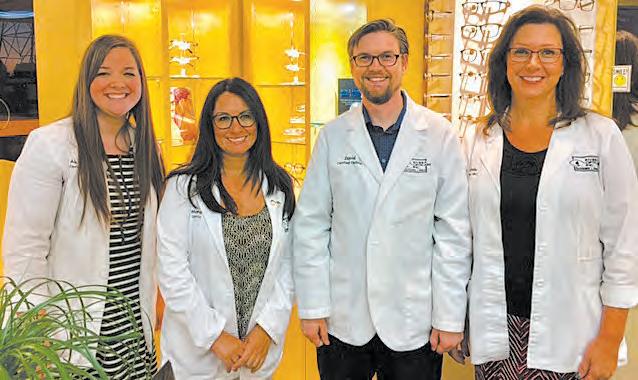



BY JENNIFER ALVAREZ, TOWN OF GILBERT
High school and middle school students from across Arizona gathered recently for two full days of coding at the 5th Annual SPARK Game Jam. The coding competition is created by Gilbert in partnership with Arizona State University’s Fulton Schools of Engineering. This year’s theme focused on Earth Day and encouraged students to “hack the planet.”
Competition sponsor Waymo, formerly called the Google self-driving car project, was onsite offering students an inside look at the self-driving vehicle. Waymo Systems Engineer, Ryan Cash, provided insights into the power of coding and shared his journey to become a self-driving engineer.
“The team at Waymo has been really excited to be a part of this event with SPARK,” he said. “I’ve watched these high school and middle school students put together some really impressive games over 24 hours. I’ve been amazed. This is the type of activity that helps them really grow both educationally and personally.”
The teachers in attendance were also excited about the opportunities for their students.

“I think it’s neat they have corporate people here the kids can talk to and learn about life in general, about being a programmer, about being in marketing,” said Melody Fraser, a teacher from Mesquite High School. “All those things we talk about in school, but now we get to see it in real life.”
The Best Overall Game winners were first-time coders, The Trimontality from Basha High School. Their winning game, “Gilbert Cleanup”, concentrated on picking up trash “monsters” throughout Gilbert.

“I just remember each of us looking at it like, oh man, I’m so proud of this, so it was totally worth it,” said winning team member Noah Hancock.
Other winners include:
Best Game Design: Spaghetti Code from Basha High School for their game “Canal Cleanup” Best Visual Design: Dragon Rage
from Mesquite High School for their game “Clean Gilbert”
Best Technical Game: New Conglomerate from Valley Vista High School for their game “Saving Gilbert”
Model Citizen Award: Claws of Fury from Gilbert Junior High School for their game “All or Nothing!”
The student games are available to play at sparkappleague.com.







BY COTY DOLORES MIRANDA GSN CONTRIBUTOR
Lisa Steinbring won’t forget the weekend of April 22 very quickly.
She only has to look at the ring on her left hand to remember a 48-hour roller coaster of emotion.
Not only did she accept Ron Riffle’s proposal of marriage April 22, but the next day was her birthday.
And that day almost cost the Chandler woman her diamond engagement ring had it not been for the help she received from strangers at an Ahwatukee park.
Even though Steinbring had pneumonia, friends of the couple wished to celebrate her double dose of happiness by attending an outdoor performance of their favorite band, Tripwire, at the season’s last Concerts in the Park event at Desert Foothills Park.
The concert turned into a community diamond hunt when the diamond centerpiece in her ring fell off and landed in the grass.
“Ron and I met last year as part of the Singles in Gilbert Meetup. Many of our SIG friends were with us to celebrate my
birthday, and despite the pneumonia, we wanted to share our happy news,” said Steinbring, who days later was still battling the lung infection. “The only reason I even got off my chair was when the band announced our engagement, and we went up to dance,” she recalled.
One minute the ring with multiple sparkling stones was intact, then the next the center diamond was gone – the surrounding diamonds encircling an empty, gaping setting.
The loss coalesced and energized a community of about 60 concertgoers into action.
After it was announced that the diamond was missing, literally dozens of concert attendees searched in the sparse dry grass and abundant dirt for 45 minutes, their cellphones providing illumination in the gloaming, and then the dark.
The scene prompted one observer to liken the sight to summer fireflies.
“Someone came to me and said this poor lady had lost the diamond out of her ring – the centerpiece stone. I announced
it after the band stopped playing, and 50 to 60 people immediately started helping to look for it,” recalled Ahwatukee resident and Realtor Randy Fitch, who has sponsored the Concerts in the Park series of free music for 15 years.
“The poor lady was crying her eyes out and her fiance was distraught, but after searching themselves, they finally gave up and left,” Fitch said.
For Steinbring, it was devastating loss further exacerbated by her illness.

“We had lost all hope, yet all our friends were praying to Saint Anthony that it would be found,” recalled Steinbring, whose 59-year-old husband succumbed to cancer two years ago.
Others who saw the couple’s angst persevered in the night search, among them Ahwatukee attorney Brian Foster, his fiancee, Alina Chu, and his two daughters, Kelsey and Brittany.


“I wish I’d videotaped it because it was nighttime and suddenly you see all these cellphones with lights looking on the ground. This went on for a long time after the concert,” said Foster. “All of a sudden I heard a commotion and someone yelling, ‘I











found it!’”
That voice belonged to Heather Unger, wife of Tripwire drummer Karl Unger who was at the concert with their two daughters.
She had a serendipitous tale of her own.
“I couldn’t help look for the ring when it was announced as I was watching the girls. After the gig ended, I packed up our chairs while my husband packed up his drums and equipment and headed downhill, Unger recalled, adding:
“I opened the flashlight on my phone and thought, ‘what the heck; it’s worth a try’ and started looking for the diamond where everyone had been dancing,” said Unger.
“I may have been looking literally for five minutes when I noticed something shining in the grass. I almost passed it, but went back. I picked it up, and sure enough, it was the diamond! I yelled, ‘I found it, I found it!’” she said.
“I know I’d be heartbroken if I lost the stone in my engagement ring, and I’m very happy to know their special ring will be reset with the original diamond,” said Unger, who celebrates 17 years of marriage to Karl this month.
The euphoria of the discovery evaporated a bit when those remaining realized they had no idea who the couple was, let alone them the good news.

Enter social media.
“I didn’t get her contact information, so I posted on Facebook that we’d found ‘something precious’ and they could contact me,” said Fitch, an Ahwatukee Realtor for 20 years.
“Just as I got home, the fiance, Ron, called me. I said I needed some kind of evidence and he sent me a photo of the diamond ring on Lisa’s hand, and then another photo of it without the stone.”
Proof enough, and within 40 minutes, the couple and Fitch met up at a restaurant.
“She was shaking, she was so excited,” recalled Fitch. “I told them, ‘You are going to have such a wonderful story to tell.”
“We couldn’t believe it,” said Steinbring, recalling the phone call alerting them of their lost-but-now-found diamond.
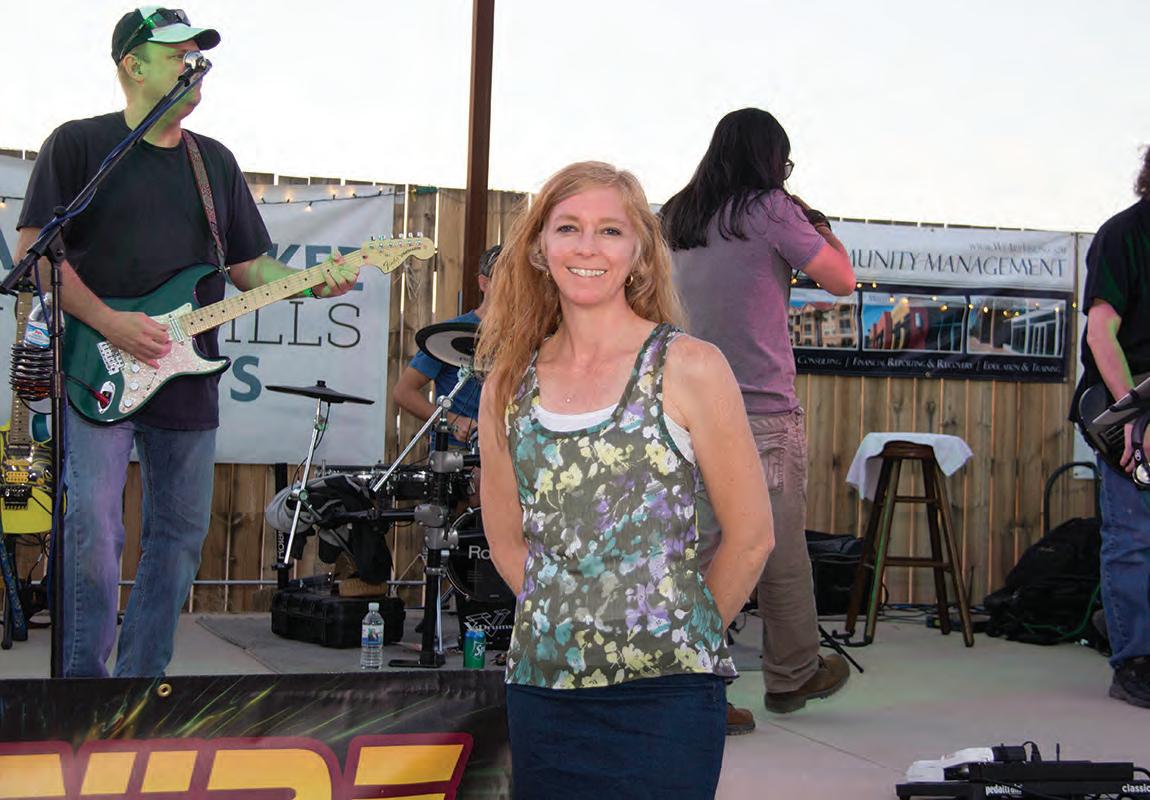
“We are so grateful for this happy miracle memory of this ‘diamond in the rough’, and for the quick, energetic action by everyone - the women, men and even young children who heeded the call to help once Randy announced it onstage,” she said.
ALEXA DEDRICK
Sr. Loan Officer
NMLS #580685
P. 480-235-1496 Email: alexa@azms.net
I am committed to helping you find the right mortgage product for your needs. I understand that every borrower is different, and Arizona Mortgage Specialists offers a variety of products to meet your individual requirements.
“I had strangers give me a pat on the shoulder to encourage me, and then help us retrace our steps. And I thank Heather for not giving up. We have angels in Heaven and Earth helping us every day.”
As she and Riffle are avid fans of the
band Tripwire, she was quick to offer a shout-out to them, too.
“I like to say Tripwire rocked my diamond out of the setting and then put it right back next to my heart,” she smiled.
BK#












































































Photos by Kimberly Carrillo
The sights, sounds and flavors of various cultures on display at the recent Gilbert Global Village Festival.


1. Danielle Baker dances.
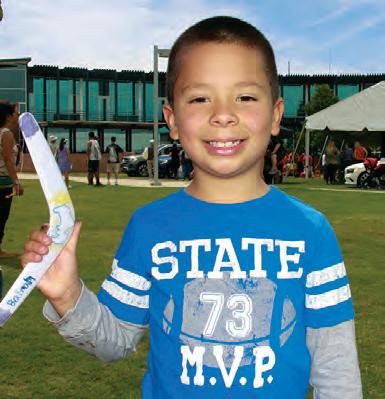
2 Taj Vengoechea shows his boomerang.
3. Enoch Cheung plays the drums.
4. Lilly McFerrin, 7, and sister Aubrey, 5, show off their new face paint.
5. Yumi La Rosa Flamenco Dancers.













BY GSN STAFF
SunDust Gallery artist Asli Günaydin has been invited to exhibit her series of self-portraits, titled “Ladies of My Life,” in May at the Gilbert Southeastern Regional Library at 775 N. Greenfield Road, Gilbert.
Günaydin, originally from Turkey, studies advanced painting techniques at SunDust Gallery in Gilbert.
After finishing her MBA, Günaydin worked throughout the Middle East, Europe and Asia, and credits her unusual corporate life with the self-portrait concepts. Her stylized portraits emphasize unrealistic facial and body features, slightly elongated necks, rounded shoulders and large, penetrating eyes.
Visitors will find her works evoke powerful memories of corporate sameness, such as wearing traditional business attire, or the lack of emotion exhibited in high-profile business meetings.
“I create the illusions of myself, asking the viewer to briefly look beneath the surface of my portraits,” Günaydin said.




























































BY GSN STAFF
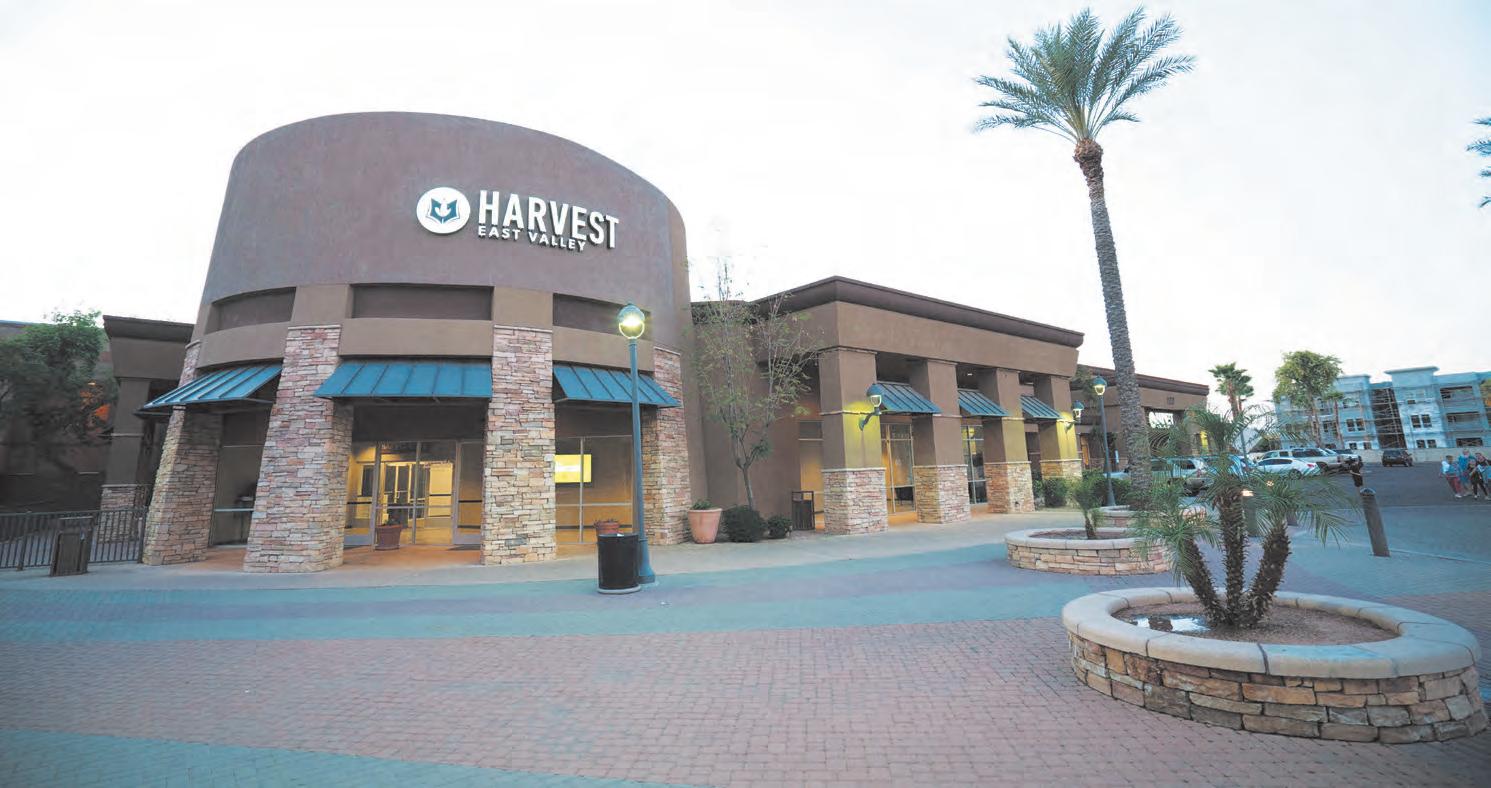
Harvest East Valley, a fast-growing church that originated in Chandler, is housed anew at Gilbert Town Center, just south of downtown Gilbert.
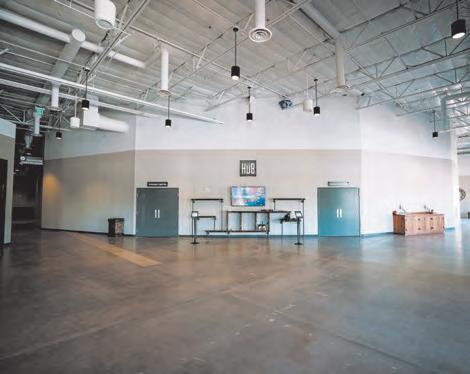
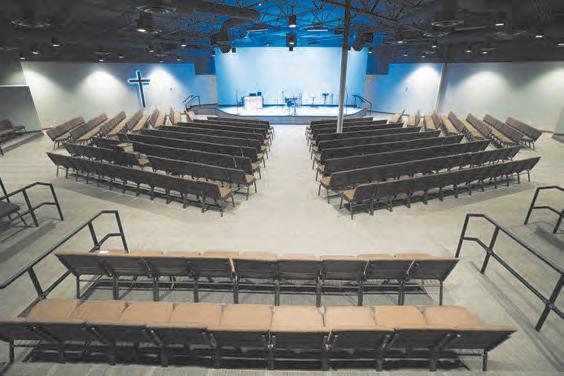
The church spearheaded an innovative adaptive reuse project that transformed an abandoned strip mall storefront into a $1.5 million, 650-seat worship center.
Founded a little more than four years ago, Harvest East Valley’s rapid growth and expansion into a new worship center is a local example of a trend that’s been sweeping the nation for several years, according to a press release issued by the church.
While traditional churches are consolidating and selling off assets, a new generation of churches such as Harvest East Valley are thriving and expanding, even if they need to get creative to accomplish their goals, it stated.
Harvest East Valley’s customdesigned 32,000-square-foot worship center was carved out of a quirky collection of former retail storefronts, including a former gym-turned-laser tag stadium-turned-charter school.
The nondenominational church focused on biblical teaching, vibrant worship and community, was founded in Chandler in late 2012 inside a converted industrial warehouse space with core group of 50 adults.
“But by early 2017, our weekly attendance had grown to over 800,” Adam Bailie, lead pastor, said. “So despite adding a second and a third service, and taking over additional space across the parking lot from our original worship center, we knew we needed a new facility.”
The problem – albeit a good one to have – didn’t have an easy solution, said Jeff Carlson, executive pastor. “Since our growth rate forced us to accelerate our expansion plans, we had to get creative, since we knew financial institutions don’t typically lend money
The
to churches that are as young as ours.”
Carlson said that the space was a choppy and confusing maze of 12 retail storefronts. The church worked with Barduson Architects, K&I Architects & Interiors and Redden Construction on the renovation, which lasted seven months.
The storefronts were demolished down to the exterior walls. Challenges included digging out and infilling the old Gold’s Gym pool to create a new family activity center. This had to be accomplished while also preserving and restoring the original wooden gym

floor, which had been painted and coated with a spray-in liner.
The design team also had to figure out how to stitch together the central 19,000-square-foot space with a series of smaller retail storefronts that bookended both sides.
These former office/retail suites all had their own entrances, which were sealed off to shift the focus back to the main entryway and inner lobby. New interior hallways and thoughtful wayfinding also helped create a singular and seamless worship center space.
“If you’d never been here before, you’d never guess it was a series of 12 separate suites and spaces,” Carlson said.
But even as Harvest East Valley settles into its new quarters, the church is already keeping an eye on the future.
“One of our goals with this project was to not overbuild so as to give us the flexibility to move again as we continue to grow,” Bailie said. “But hopefully not in the next few years.”
Harvest East Valley is at Gilbert Town Center, 1120 S. Gilbert Road. Details: 480-471-6614 or harvestev.church.com.




















































BY MARGE CHRISTIANSON, SPECIAL TO GILBERT SUN NEWS
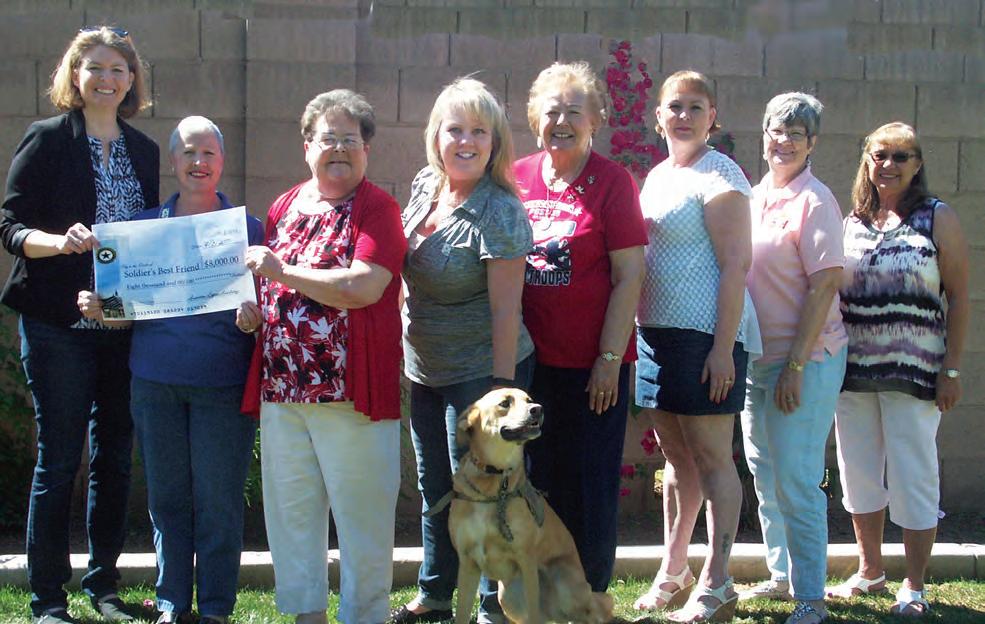
The American Legion Auxiliary unit in Gilbert recently presented an $8,000 check to Soldier’s Best Friend, bringing the total contributed by Arizona Auxiliary units to nearly $30,000.
Soldier’s Best Friend is an Arizona organization that pairs combat veterans with rescued companion dogs. The $8,000 raised by the Gilbert Auxiliary unit is enough to pair two veterans suffering from post-traumatic stress or traumatic brain injury with a companion dog, at no cost to the veterans.
The auxiliary chose to focus on Soldier’s Best Friend under the leadership of its president, Jan Cushing. The Surprise resident and member of the Glendale Auxiliary chose Soldier’s Best Friend because it fills a critical need in Arizona – helping veterans suffering from their combat experience.
According to the Veterans Administration, 22 veterans commit suicide in the U.S. every day. Women veterans are twice as likely as their civilian counterparts to commit suicide. “I have seen firsthand how a trained dog can add calm and meaning to a veteran,” Cushing said.
“Touching two lives at once,” the organization trains and pairs only rescued dogs with veterans. Training the team takes six to nine months. The organization has “graduated” 170 teams and has about 40 teams currently in training.
According to Jenna “Jay” Montoya, the organization’s event and volunteer coordinator, there are plans to double that capacity. The Peoria facility already has a large, open training space and yard, and a kennel room is being planned.
“We are so lucky to have the support of local organizations,” Montoya said. “We
have an Eagle Scout making picnic tables for the yard area; Goodyear and Luke AFB canine officers assist in training – even a local airline donated seats to assist with travel training,” she said.
The Gilbert unit raised funds with breakfasts and dinners since last July and by selling merchandise to local residents. “We are a small but passionate auxiliary unit – always looking for new members, organizations and businesses who want to support our patriotic mission,” said unit president Linda Silvas.
The Legion’s Texas Hold‘em Poker Club also donated $500.
The American Legion Auxiliary is the largest women’s patriotic organization in the world and has 15,000 members in Arizona. Last year, Arizona members volunteered more than 175,000 hours of service to veterans. Arizona units contributed thousands of hours of service to the Veteran Health Care System in Phoenix, Prescott and Tucson.
The units hold annual “Christmas Shops” at these locations, where hundreds of veterans shop for themselves and their loved ones at no cost.
The auxiliary partners with the Arizona Veterans Administration to conduct a veteran’s Creative Arts Festival. The competition is part of the VA’s recreation therapy program designed to farther rehabilitate both inpatients and outpatients.
In addition, they raise funds and assist active military, their families and their communities.
















BY GSN STAFF
Queen Creek Unified School District has hired Patty Rogers as the director of human resources and Bobette SylvesterMcCarroll as associate superintendent of business and support services. Both assume their new roles July 1.
Rogers has more than 25 years of experience in education. Currently, she is the assistant superintendent of Human Resources and Curriculum at the J.O. Combs Unified School District. She has held other leadership positions, including elementary principal, and has also taught third grade, high school math and physical education.
She is married to an educator and has two daughters.
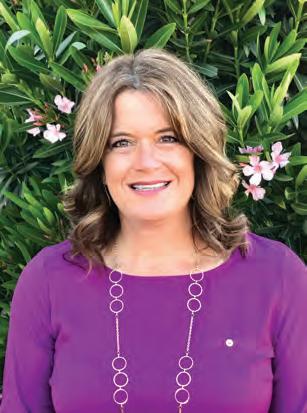
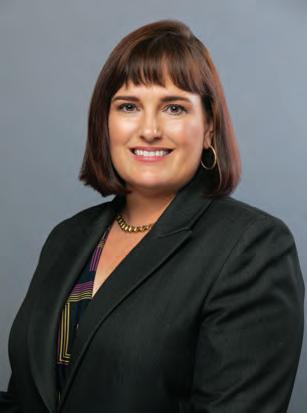
“We are excited to have Ms. Rogers on the QCUSD team,” said Dr. Berry, superintendent. “She brings with her many experiences that will benefit our entire staff.”
Sylvester-McCarroll served more
than five years as the assistant superintendent for business and support services at Mesa Public Schools. In this capacity, she directed a host of financial and business activities including budget development, facilities construction and maintenance, student transportation and food services. She worked in a similar role in the Payson Unified School District for 16 years and has also worked in the Valley as a financial analyst for a private sector firm.
Sylvester-McCarroll has two children, Chandler and Bailey. Her family recently grew by four after she married Richard McCarroll, a software development manager at a private company.
“With Queen Creek experiencing such tremendous growth, Bobette’s experience will be extremely beneficial to the district,” Berry said. “We are excited to add Bobette to the QCUSD team.”

BY ALISON BAILIN BATZ
For parents of the recently graduated class of 2017, this time may be bittersweet.
But, even though class might be over, there is one more lesson parents must ensure their kids learn before the new school year starts – financial literacy.
“Simply put, so far in their lives, children have most likely focused on money going out. But where does it go? And when? And why? A budget, reviewed with and by a parent each month, can be an easy way to show the value of money on a regular basis,” said Mike Brown of Washington Federal, a bank with 30 local branches celebrating its 100th anniversary in 2017.
For example, if a child gets a $20 allowance each month, have them develop a budget to make that money last for an entire month. This means saying “no” to spending all of the fun money at once. It also helps children understand how to prioritize.
The lesson: Sometimes a lifestyle adjustment is required in order to ensure one does not exceed money

going out versus money going in.
Washington Federal offers the Washington Federal Financial Scholars Program, a financial education curriculum designed to provide students with the critical skills needed to make sound financial decisions.
“The web-based platform uses the latest in new media technology – simulations, avatars, gaming and adaptive-pathing – to bring complex financial concepts to life for today’s digital generation,” said Brown. “The high school course offers nine units in a variety of financial topics including credit scores, insurance, credit cards, student loans, mortgages, taxes, stocks, savings, 401(k)s and other critical concepts that map to national financial literacy standards.”
For more information about getting Washington Federal’s free financial literacy program in your school in time for the next school year, visit www. washingtonfederal.com.
Alison Bailin Batz is a senior account executive at HMA Public Relations.


















































• $500 off the monthly fee for up to 6 months
• Rates frozen for members through 2018 (Total savings of up to $8,000.)






For a limited time, the first residents to join our Savanna House assisted living and memory care community will be eligible for valuable discounts!*







• Complimentary upgrades, VIP gatherings and more!





























*Limited-time offer and restrictions apply; contact Savanna House for full details.










Savanna House features private residences along with respectful assistance with daily living and specialized memory care for Alzheimer’s and dementia.








KATHY KERBY
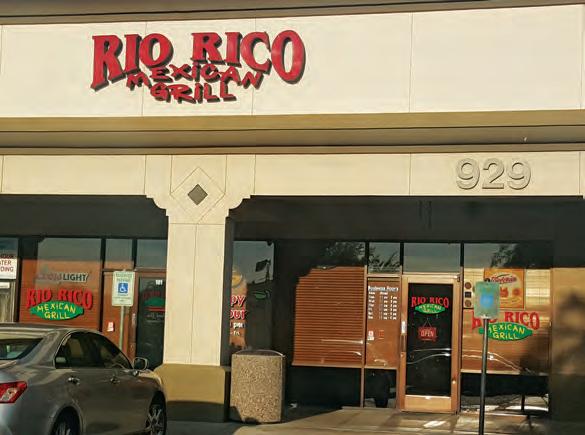
Rio Rico Mexican Grill was opened in 2005 by Juan and Maria Ruiz and their son Mario. They recently moved to a new location in Patterson Landing, on the northeast corner of Val Vista Drive and Guadalupe Road in Gilbert, just a quarter of a mile north of their previous location. Their goal is to provide their “valued customers with fresh, homemade, authentic Mexican food.”
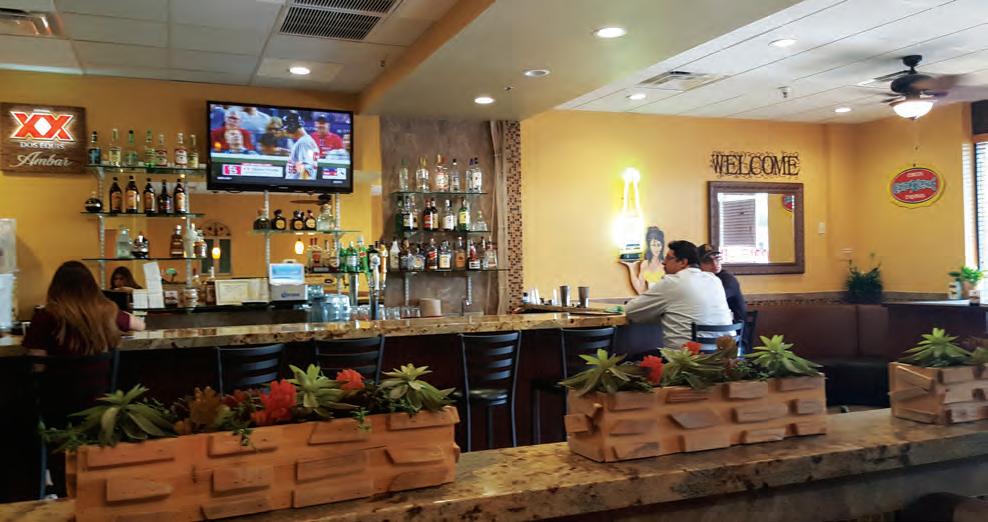
The casual atmosphere of this family-owned restaurant features the calming use of golds, browns and burnt orange with leather booths on tiled floors and dark tables accented with gold pendant lights.
The natural granite bar area has seating for about a dozen thirsty diners and offers a nice selection of domestic and Mexican beer as well as wine, well drinks and house margaritas. The walls are adorned with antique Mexican window frames with wood and wrought iron and several flatscreen televisions.
As we were being seated on a recent Tuesday evening, we noted the eclectic crowd of families, couples, girlfriends and single diners of various ages. With warm greetings from the staff, many seemed to be regulars who enjoyed the friendly, family atmosphere.
The extensive menu includes breakfast items, appetizers, house specialties, seafood, combination plates, fajitas, burritos, burgers and desserts.
A lunch menu is offered from 11 a.m. to 4 p.m. Monday through Friday and there is a kid’s menu for children under 12. Diners with small appetites will also appreciate the a la carte menu, which seems to be disappearing from many Mexican restaurants.
Our server, Anna, brought a basket




of warm crispy chips and spicy salsa that will please fans of cilantro. Next, we sampled the La Grande ($11.50) with a tasty cheese enchilada, perfectly cheese-stuffed and fried chili
relleno and a hearty beef taco that we enhanced with extra salsa. The aptly named La Grande also included sides of smoky beans and mild rice.
Rio Rico prides itself on the seafood entrees, so our next selection was the shrimp fajitas ($11.95). The sizzling cast iron platter covered with grilled shrimp nestled among diagonally sliced onions, red, green and yellow peppers was steaming with flavor. An additional plate held the rice, beans, sour cream and guacamole and a basket with warm, flour tortillas completed the seafood feast.



Chili verde ($11.25) and chili colorado ($10.95) are two of the house specialties and the chunks of pork simmered for hours with flavorful green tomatillo sauce or seasoned rich red sauce were very tender as we placed each bite on a
flour tortilla for added appeal. Mexican dessert options featured traditional flan ($3.75) a house made custard topped with caramel, deep fried ice cream ($4.95) churros ($3.50) and three sopaipillas ($3.50). Each one looked delicious as they were delivered by efficient servers to the tables around us, but we will have to save dessert for another visit.
Rio Rico Mexican Grill
929 N. Val Vista Drive, Gilbert 480-539-4491
rioricomexicangrill.com
Open 11 a.m. to 9 p.m. Tuesday through Saturday and 11 a.m. to 8 p.m. Sunday.

STORY AND PHOTOS BY SHANIA ALBA
CRONKITE NEWS
Inside a Gilbert storage facility like any other, a husband and wife are working on a mission unlike any other.
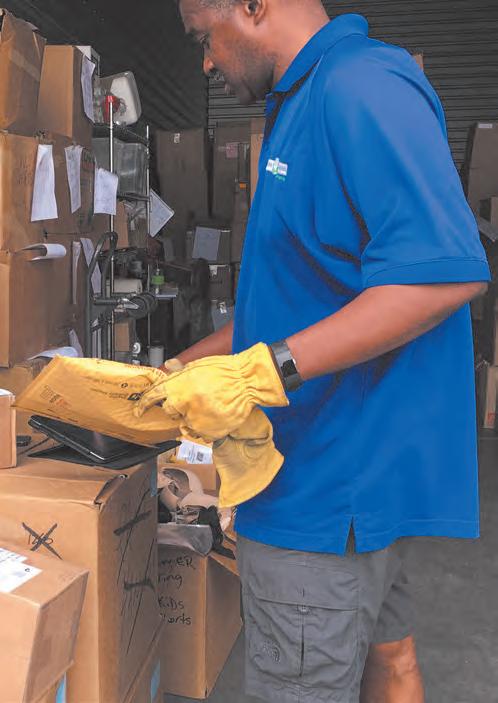
The walls of the storage unit are lined from front to back with cardboard boxes filled with bras and other women’s underwear. The towers of boxes create two makeshift and cramped aisles.
Elaine Birks-Mitchell and her husband, Johnny Mitchell Jr., are getting ready to send out their latest shipment on a cloudy day in March, with a strong breeze sweeping through to cool the couple.
“It’s a textile we don’t want you to throw them away. We want you to definitely recycle them,” Birks-Mitchell said.
The Mitchells make up the backbone of the Bra Recyclers. The business specializes in selling or donating repurposed undergarments. Their inventory consists of bras: all shapes, sizes, styles and colors.
The Bra Recyclers operates by buying large quantities of undergarments and textiles from thrift stores and other groups. The company donates its surplus undergarments to nonprofit organizations that need them.
The surplus garments are sent to organizations all over the country that “are dealing with people that are in some sort of transition state,” said Birks-Mitchell. Foster children, battered women, women trying to recover from being homeless and other organizations receive the donations.
Locally, Helen’s Hope Chest, an organization that primarily helps foster
children, the Clothes Cabinet that helps families that are homeless and Moma’s House, an organization helping survivors of domestic violence are among the groups that work with the Mitchells to provide bras and other undergarments, according to its website.
“As a woman, it’s a big self-esteem booster. When you don’t have one you realize how much it means to you when you do have one,” Birks-Mitchell said.
Until recently, the husband-and-wife team did it all: picking up donations from people, thrift stores and even a Girl Scout troop. Then they sorted, repacked and shipped. Now, the couple needs more people to sort the donated garments.
Epi-hab Phoenix Inc. a nonprofit for people with epilepsy and others challenges that make it difficult to work elsewhere, has taken on the task.
The Epi-hab facility stretches about 30,000 square feet. Several long tables are placed across the main room, with each table as a step in the sorting assembly line.
The process starts with the Mitchells picking up boxes of donations from their P.O. box or their local business partners that collect bras for them, such as Flo’s on 7th and Dillard’s. The boxes are scanned in order to notify donors that their package was received. Next, the Mitchells hand the donations off to Epi-hab to sort the bras.
Sorting can stretch the length of the tables, with volunteers looking at differ-

Scheduling summer childcare has never been easier or more convenient. So get excited, plan your summer and we’ll fill in the gaps.
ent styles of bras on poster board as a sorting guide into three categories: new, gently used, and thrift.
New bras include bras that are donated with the price tag attached to it. Gently used includes garments that do not have a price tag and are still in good condition. Thrift includes bras that are older and getting worn out but still function.
Johnny Mitchell picks up boxes of the sorted bras from Epi-hab, drops off new garments to sort and returns with the boxes to the Mitchells’ storage unit to be sent to organizations in need.
The Bra Recyclers have worked since 2009 to provide women with undergarments they cannot afford. The Mitchells hope something as basic as a bra will help ease struggles women face in their lives.
“I think a lot of people don’t think about something as simple as a bra and what an impact it will have on a person’s life,” Birks-Mitchell said.
The Bra Recyclers accept anything they are sent by donors, but if it’s unusable, it’s sent to small businesses across the country that use bras for other unconventional purposes.
“There is a lady on the East Coast that takes used bras and takes the wire out and she sells the wire,” said Birks-Mitchell. Other groups recycle the fabric for carpets and textiles.
Most people don’t realize that bras can be donated and recycled. Women buy bras they think they need, but most
of time they sit in a drawer untouched, Birks-Mitchell said.
Donors can pack their unwanted garments and drop them off at a designated donation facility listed at brarecycling. com/drop-off-locations. The donation center will then ship the garments to The Bra Recyclers.
Donors may also mail bras to the Bra Recyclers, 3317 S. Higley Road, Suite 114441 Gilbert, AZ 85297.
All donors must print, complete and include the Bra Recyclers form with their donated garments. The form asks for contact information and if the donor wants to be notified when the package is received by the Bra Recyclers.
Donation centers and the Bra Recyclers form can be found at brarecycling. com.



BY SRIANTHI PERERA
For more than a year, Stacy Rendell had been eating healthy bowls of grains and superfoods at a restaurant called Grabbagreen that she stumbled upon in Scottsdale.
Now, she continues to eat her favorite foods at Grabbagreen. The only difference is that now she owns one.
An accountant by profession, the Chandler resident opened the first East Valley location of the Scottsdale-based food and juice restaurant in Gilbert’s Rivulon Center recently. It’s located next to LA Fitness, a helpful spot to those who crave a protein drink after a workout.
Rendell is helped in this business endeavor by husband Brad, who runs his own information technology company.
The 1,627-square-foot restaurant space has several walls of green that imparts a soothing and welcoming ambiance.
But it’s the food that appeals the most.
“To me, there’s nothing like this around here, where the whole restaurant’s gluten free, all whole foods, layering your veggies, a healthy way to steam your proteins, and whole grains that help stabilize your metabolism and stay in your blood sugar throughout the day,” Rendell said. Grabbagreen uses 70 percent organics
in its grains and signature menu items and hormonefree and antibiotic-free proteins.
Yes, its list of healthful merits is long.
Those who feel that healthy eating limits one to munching spinach or chomping on carrots should head to Grabbagreen.
The menu offers a full selection of grain and greenbased bowls; the colorful blends are topped with in-house sauces such as the sweet yogurt agave barbecue or the tangy chili-mango that appeal to the eye as well as the taste buds.
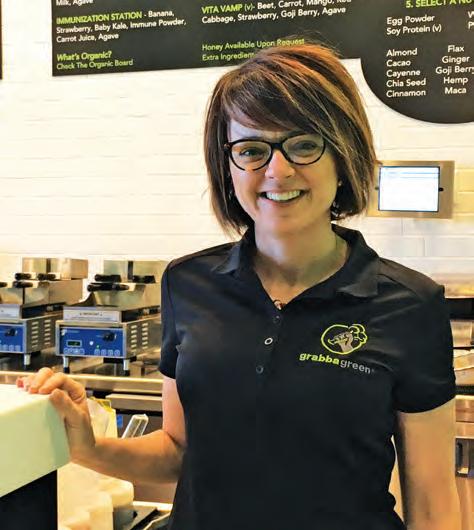
Fresh-pressed juices have titles descriptive of their benefits –Boost, Immune, Power and Wellness are a few. The breakfast menu, available all day, includes collard wraps and quinoa cakes. Patrons may also create their own bowl according to dietary requirements. Meals for children include Mighty Mac and Cheese made with quinoa noodle and cheddar-jack cheese.

At Grabbagreen, you can scan the menu boards and customize your own meal according to dietary requirements.
None of these items will break the bank; the price range is between $7 and $10.50.
Grabbagreen has 17 restaurants operating in nine states and expects to open about 20 stores this year.
“It’s really a healthy way to eat, and I think a lot of people are taking that into their own hands nowadays. There’s a shift in society where we are more health-con-
scious,” Rendell said. “That’s what we are, and it fits in line with the lifestyle that I like to live as well.”
Grabbagreen is at 75 E. Rivulon Blvd. at Loop 202 and Gilbert Road. Open from 7 a.m. to 9 p.m. Monday to Saturday and from 9 a.m. to 7 p.m. on Sunday. Details: 480-477-9600 or facebook. com/grabbagreengilbert.


BY BECKY BRACKEN
Summer reading season is here. Why not add a few local authors to your reading list? From a children’s book about the environment to a Gilbert mom sharing her tips for navigating stepmotherhood, there is a diverse range of authors at work right here in the neighborhood who could always use a little love.
There are all kinds of moms in the world. One Gilbert author, Elizabeth Mosaidis, just released her new book that both chronicles her own journey of becoming a stepmom and offers support to other women navigating what can be a difficult transition into stepmotherhood.

“I struggled as a stepmom the first year I got married, so I know how hard it can be,” Mosaidis said.
“I started writing the book last year because it helped me process my feelings towards all of the challenges that come along with being a stepmom.”
But beyond the book, as the title suggests, “The Stepmom Project” is about creating a space where stepmothers can come together and learn from each other’s experiences.
“I always envisioned ‘The Stepmom Project’ as much more than a book,” Mosaidis said. “When I was writing it, I pictured a community of stepmoms working together and supporting each other to take steps to reach their goals. By goals, I mean the goals that each stepmom sets, whether it be having a peaceful family vacation or creating a family tradition together. And that really embodies the essence of ‘The Stepmom Project.’”
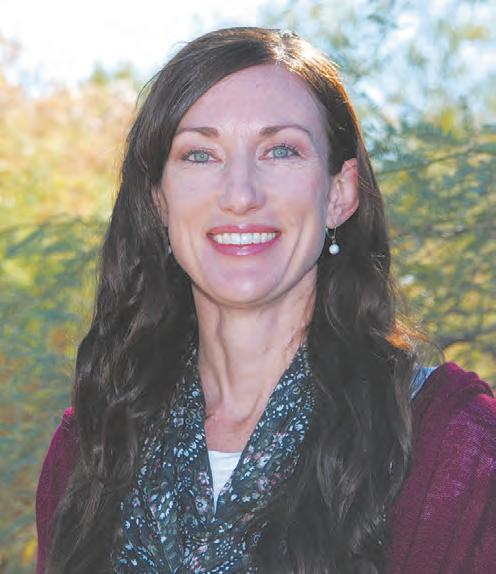
“The Stepmom Project: A 30-Day Personalized Journey for Stepmothers” is available on Amazon.
Gilbert authors Erin Michelle and Pam Galito describe their new body, mind and spirit book, “Essays of the Light: Channeled Guidance for Your Ascension,” as a guidebook “of channeled messages for ascension from the ascended masters and the archangels.”
The essays aim to “reveal thoughtprovoking tools to view societal and personal issues in a different light,” according to a statement from the book’s authors. “‘Essays of the Light’ contains essays that are channeled messages to assist you in your ascension.”

“Essays of the Light” is available on Amazon and Kindle.
Sherri Ponsati wrote her new children’s book to inspire younger generations to share her love of nature and concern for endangered species. “Wilber’s Blue Whale Tale” is the story of an endangered blue whale and features illustrations from Gilbert High School junior Azalia Farret.
“The inspiration for my book has come from a passion I have had since I was a child,” Ponsati said. “Preserving endangered species has become an important part of my life, and I have realized that bringing awareness to the threats they face helps provide funding to preserve them. By writing to children, I hope to inspire them to help in the future by listening to cute fictional stories that portray the real-life details.”
“Wilber’s Blue Whale Tale” is available on Amazon.
Talking to kids about death and loss can be challenging, so Karen Longstreth of Gilbert decided to share what she learned by helping her own children following the death
of her husband with her new book, “Through a Child’s Eyes.” Longstreth lost her husband in 2002 after his long battle with cancer. Her own children were just 12, 9 and 7. ”So often an adult does not know what to say when a young child asks questions about death,” Longstreth said. “Death, organ donation, cremation, burial, funerals, these are scary topics for anyone. In the book, these are explained in terminology young



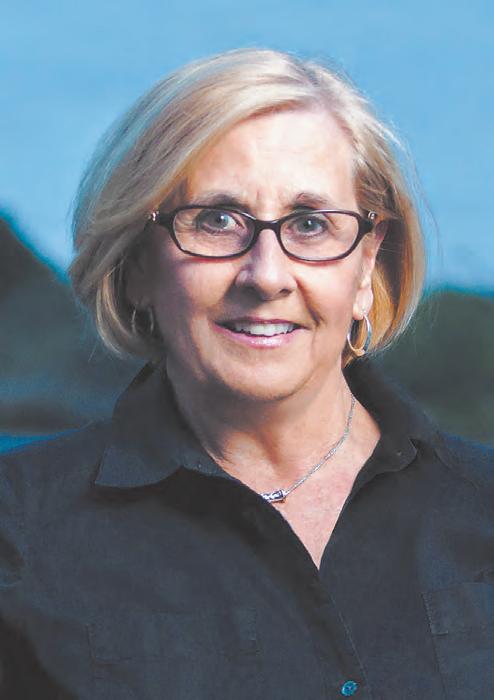
children can understand. I stress giving enough honest, age-appropriate information to answer a child’s question, knowing that they will ask more when they are ready.”
In addition to a straightforward terminology section of the book, there are also pages for questions and answers to help adults process their own feelings and workbook pages for kids.

“There are 17 prompts such as: What color were your loved one’s eyes? Can you draw them? What songs remind you of your loved one who has died? Write them down,” Longstreth said. “Allowing a child to utilize these pages allows them to create their own memory book of their loved one who has died. It allows them to be an active participant in their own grief journey. In providing this avenue for a child it also shows the child that someone is truly concerned about them and wanting them to move forward in a positive manner.”
“Through a Child’s Eyes” is available on Amazon.
Gilbert author Connie Wesala just released her third novel, “We’ll Find a Way,” a sequel to her previous novel, “The House on 4th Street.” The story is a work of historical fiction and features a protagonist from the present day intertwined with stories from moments in history ranging from the Oklahoma land run to the Vietnam War.
Wesala credits much of her literary success to the education she received from local community colleges


following a career in education, including Mesa Community College, Phoenix College and Chandler-Gilbert Community College. Wesala received her Creative Writing Certificate from Chandler-Gilbert Community College in 2013.
“The professors are great and even as a retired educator I found the courses challenging and as professional as any university program,” Wesala said. “I had supportive and encouraging teachers in every class I took. They kept me moving forward in a new life direction after twenty years in education.”
“We’ll Find a Way” is available for Kindle, Nook and KOBO and the paperback is available on Amazon and in independent bookstores.
This collection of 15 short stories is from first-time author Brad Perry, who has called Gilbert home for the past 5 years.
“It’s a quirky book – strange, surreal, and sincere,” Perry said. “Tales about failed writers and forgotten soldiers, about insanity and nostalgia, about returning home and plummeting to hell, they’re all in there.”
Perry says he’s inspired by authors like Stephen King, Gillian Flynn and Joyce Carol Oates.
“I’m fascinated by the unknown and all the mysteries that hide in our periphery,” Perry added. “These fascinations definitely show up in my writing, too.”
“Strawberry Hill” is available on Amazon and barnesandnoble.com.





BY GSN STAFF
Girl Scouts-Arizona Cactus-Pine Council presented the Girl Scout Gold Award to 33 recipients this year, among them Sarah Perrin of Gilbert.
Perrin chose to raise awareness of the Gilbert Historical Museum and help it become a multi-generational community center. She organized a show, Gilbert’s Got Talent, which gathered people from different generations to showcase their talents. Six teams performed for an audience of about 60 people.
The Girl Scout Gold Award is the highest honor a Girl Scout can receive, and is the equivalent to becoming an Eagle Scout in the Boy Scouts. In order to earn it, a Girl Scout must create a project that continues to give back to the community long after she moves on, and often take as long as 18 to 24 months to complete.






Other East Valley winners this year are as follows:
Chandler resident Amanda Molina worked with Lost Our Home Pet Foundation in Tempe to create Miles for Mutts, a volunteer-driven program to give dogs more exercise in order to reduce their stress and make them more adoptable.
Chandler resident Claire Mushet worked with the city of Chandler to lead hikes at Veterans Oasis Park for elementary-aged children to help them enjoy being out in nature and get them away from the computer.
Chandler resident Kathlene Hartle did her part to slow the decline of monarch butterflies, with the help of Chandler Parks Department, which provided her with a 2,100-square-foot space to house
migrating monarchs.
Mesa resident Lauren Hawks founded a club modeled on the Model United Nations club in high school to help younger students become more aware of global issues.
Mesa resident Paige Brown led a community-based book drive, spreading the word by social media and at community centers, to help domestic violence shelter victims. She collected more than 2,000 books, which she cleaned, inspected and sorted.
Mesa resident Rachel Spielberger created a riding trail at Sunshine Acres Children’s Home. After identifying a route for the trail, she secured donations to purchase a variety of plants and cactus to add to its beauty and also added signs to help the children learn more





about the plants.
Queen Creek resident Justice Williams, after hearing that Unified Athletes, a group of students with special needs, was raising money for new uniforms with little success, stepped up to put on a show featuring her a cappella club, the Perry Pipes, to raise the funds. With the money raised, they were able to purchase soccer shorts for all the players and inspired the principal to buy matching jerseys.
To earn the award, each girl must complete two Senior or Ambassador journeys or complete one Senior or Ambassador journey and have earned a Girl Scout Silver Award. After completing either of these requirements, a minimum of 80 hours is suggested to complete the steps to earn the Girl Scout Gold Award.
BY GSN STAFF
Freddy’s Frozen Custard & Steakburgers is set to open its newest location in northwest Gilbert.
The fast-casual restaurant concept is in expansion mode, and this marks the third site in Gilbert.
“Guests of our locations around the Valley frequently mention they enjoy our family-friendly atmosphere and quick service as much as they enjoy our premium quality steakburgers and frozen custard treats,” said Craig Newman, franchise operator. “Our team members strive to provide a high level of hospitality we call the ‘Freddy’s Way’ that encourages guests to feel comfortable and invites them to return.”
The 3,200-square-foot, freestanding location seats 100 guests and has additional seating on the patio. Drivethrough service is also available.
Freddy’s signature menu items include lean ground beef steakburgers, Vienna Beef hot dogs and crispy shoestring fries, as well as dessert treats prepared with a choice of chocolate or vanilla frozen custard that is churned fresh each day.
“Our most popular specialty orders include the Freddy’s Original Double and the Signature Turtle Sundae,” Newman said. “With a variety of condiments and toppings to choose from for both our food items and custard treats, we encourage guests to customize their orders to their liking; the combinations are endless and you might even find your own special favorite at Freddy’s.”
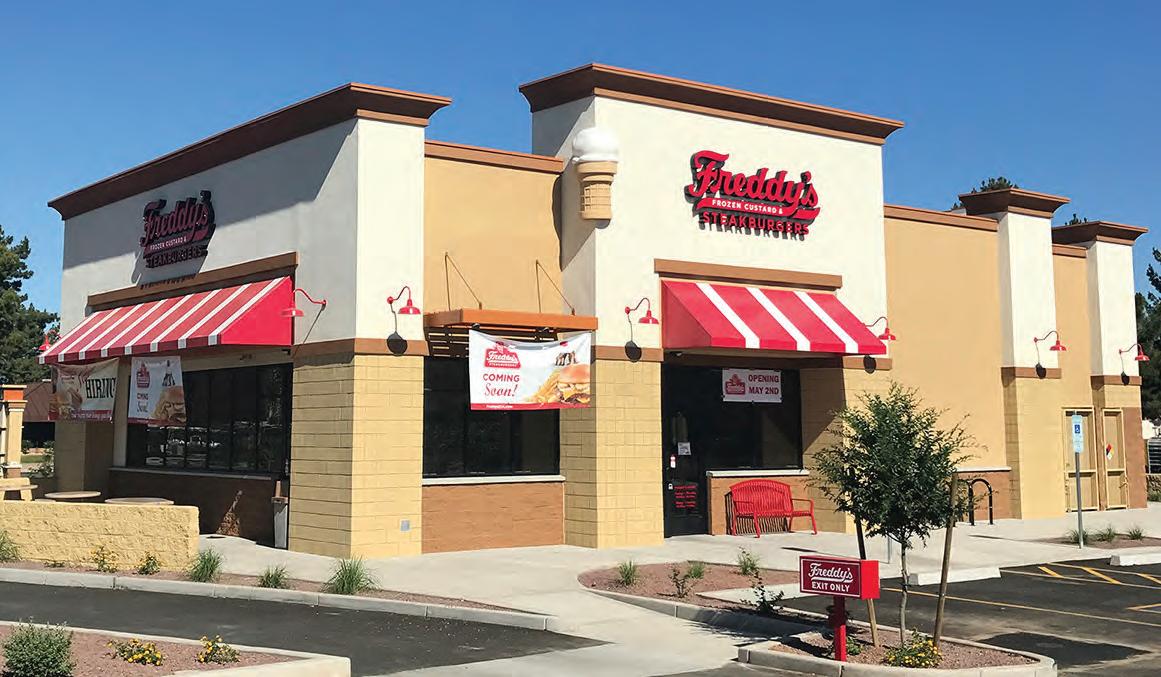
Co-founded in 2002 by Scott Redler and Bill, Randy and Freddy Simon, Freddy’s opened its first location in Wichita, Kan., offering a unique combination of cooked-to-order steakburgers, Chicago dogs, and other savory items along with its signature desserts prepared with premium frozen custard churned fresh throughout the day.
Today, 256 Freddy’s restaurants serve

a total of 30 states across the map from California to Pennsylvania, Virginia and down the East Coast to Florida.
This year, Freddy’s has been named for a fifth time to Entrepreneur’s Franchise 500 list (ranked No. 41), and has, for the fourth year in a row, been included as one of the top 10 on Franchise Times magazine’s Fast & Serious list.
Freddy’s Frozen Custard & Steakburgers is at 1405 N. Arizona Ave. Open 10:30 a.m. to 10 p.m. Sunday through Thursday and 10:30 a.m. to 11 p.m. Friday and Saturday.


BY GSN STAFF
David Fabiano, a town of Gilbert engineer, was recently named to the American Public Works Association’s national 2017 Top Ten Public Works Leaders of the Year.
The 10 leaders, chosen from across the country, are to be honored at the association’s annual conference Aug. 27-30 in Orlando.
Fabiano was also to be honored locally during the Gilbert Town Council meeting on May 4.
The award is given to honor the public works professional’s career, in which he or she demonstrated excellence in public works, services and infrastructure in his or her community through advancement of public works services and technology.
Fabiano has more than 23 years of experience in the public works field.


In 2016, he transitioned to the public side as the town engineer for Gilbert, where he managed the Capital Improvement Program, traffic engineering and traffic operations.
According to the town, an example of Fabiano’s achievements occurred when Gilbert did not adequately value access to the right-of-way or incentivize quick resolution of work in the right-of-way, and he established an internal committee to review and make recommendations for changes.
The stakeholders group is being formed to engage its input and feedback on appropriate measures to incentivize timely and quality work, and a policy change recommendation is to be made to the Town Council for financial year 2018.
480-222-2022
1230 West Southern Ste. 103
Tempe, AZ 85282
http://www.granitetransformations.com/phoenix/
The relationships we build sustain us in many ways—so do the ones you build with your primary care physician and specialists. The doctors at Dignity Health Medical Group are ready to build a relationship with you that can last a lifetime. Meet a doctor at dignityhealth.org/DHMG or call 602.406.3464 (DHMG).


BY SRIANTHI PERERA
Every summer, Gilbert author Sara Fujimura spends a month with her husband, Toshi, and two teenaged children in rural Gifu Prefecture, Japan.
Fujimura’s in-laws live in a Buddhist temple because her father-in-law is the temple manager.
“We get to experience the everyday life, which is different than staying in a hotel and seeing the big sights,” she said.
Born and raised in Virginia, Fujimura’s emersion in the Asian culture, in addition to being married to a Japanese man for 25 years and her biracial children, has lent her a unique perspective.
This outlook shapes her writing.
“My overarching theme: It’s enough that you understand the World War II Japanese internment camps, but I’m going to give you different stories,” she said.
There aren’t many Japanese superheroes or main characters in American fiction, Fujimura feels; they’re usually the sidekick or the “tech guy.”
“In the book that’s coming out, I’ve purposely made a biracial Japanese boy who’s the love interest. I’m telling stories that people can understand, but at the same time, putting a twist on what it is based on my reality and the things that I see,” she said.
Fujimura’s “Tanabata Wish” was self-published recently and her screenplay, “Kitsune Mask,” won first place at the Copa Shorts Film Festival in Maricopa recently.
“Tanabata Wish” is based on the Star Festival, a star-crossed lovers’ story. The festival traces its origins to a legend that the Cowherd Star (Altair) and Weaver Star (Vega), lovers separated by the Milky Way, are allowed to meet just once a year, on the seventh day of the seventh month. It’s the time when people make their own wishes.


“It’s also set on real places where you can go to,” said Fujimura. A case in point is the gold clock in front of Takashimaya Department Store in Nagoya Station, Nagoya, where people meet. “I love that about books or movies, where you can see where it takes place and you can step into the stories.”
The book’s core audience comprises avid reading teens and youth in their early 20s who are manga (Japanese comics) and anime (Japanese animation) fans.
Fujimara has written another, a non-fiction book on the Spanish influenza of 1918 that is due to be published later.
Her screenplay, “Kitsune Mask,” which she wrote on a dare loosely based on her son’s story, is about a biracial Japanese girl who goes back to Japan. Because of the many Japanese words in the script, Fujimura invited her son, who is a voice actor, to read it at the festival.
“It was his story that I twisted around,” she said. “Both of us were extremely surprised that we won.”
Based on that success, Fujimura plans to continue with her screenplay writing, expand it to a pilot episode and shop it to television networks.
While she’s new to screenplay writing,






catching. In local “Obento circles,” she’s known as the “Obento lady.”
Another of Fujimura’s themes is trying to help the next generation become a little more worldly and globally minded.
Fujimura is an old hand at writing and has published fiction, nonfiction, essays and magazine features, including travel stories, for about 20 years. Although her degree is in public health education, she didn’t work in that area or in corporate America. Her college minor was in dance, and she used to be a dance teacher when the family lived on the East Coast.
Her other interest is Obento, the Japanese art of box lunches that are not only tasty, but also very healthy and eye-
“I had a Girl Scout group for 10 years and seven out of the eight were biracial or bicultural. They would come to my house, make Japanese food, and talk about Korean dramas, what they were going to wear to so-and-so’s quinceañera: all of these different cultures they were in and out of,” Fujimura said. “I think that’s where we’re headed.”
She also wants to help them see themselves.
“That’s why I write a lot of biracial stuff; especially to show the boys that you can be the hero too, you can be the love interest.”



















Everyone had a doggone good time at Adora Trails’ Pup-a-Palooza event where Taylor Morrison, Maracay Homes and the Arizona Humane Society teamed up to help four-legged friends find their forever homes on April 22. 1 2 5 3 4 6
1. This dog, named “Ready, Set, Go,” put on a show as part of the Phoenix Area Disc Dogs.
2. Brea Goodwin loves her new pony made by Princess Ana.
3. “Dixie Blue” grabs the Frisbee.
4. People were able to adopt pets from the Waggin’ Wheels. 5. Ryland Bennett shows off his “Star Wars” face paint.
6. Easton Bennett, 4, gets his face painted by Princess Moana.
7. Liam Mikolajczyk, 8, eats a hot dog before the frisbee show.
8. Princess Ana made balloons for the kids.
9. Addison Bennett, 8, and Elsa pose for a photo.
10. Zoe Slater, 3, keeps cool with a frozen treat.
11. “Dixie Blue” waits for his owner to throw the frisbee.
12. The Phoenix Disc Dogs put on quite a show.







7 8 9 10 12 11





When you lose a loved one, it is one of those times in life when you can feel lost, or adrift–not sure of which way to turn and how to make it through. You need to know that there’s someone there that you can trust, someone who feels like family. A funeral director who cares can make a huge difference in your comfort level, and allow you to the safety of knowing that your best interests are being considered. This is the benefit of choosing Mountain View Funeral Home and Cemetery for your final arrangements and those of your loved ones.
Family Owned and Operated
Mountain View Funeral Home understands the concept of family: since 1951, the Coury family have been operating the family funeral home under the guiding philosophy of being of service to members of the community in their time of need. Now managed by the Second and third generation of Coury’s, Mountain View Funeral Home is a Mesa, AZ tradition with professionally trained and licensed staff members all with the stated goal of ensuring your loved one receives the dignified memorial service that they deserve.
Education
A family funeral home takes services a step further by offering education before a loss as well as caring and compassion during a period of mourning. Funeral directors and their team will help you understand the meaning of different parts of the memorial
service, the differences between cremation and interment, and provide you with a wealth of additional options including beautiful touches such as a release of white doves after the service.
When a loved one passes from the mortal coil, you can feel overwhelmed with details, so another benefit that family funeral homes can offer is access to a concierge to help with everything from florists, hotels, restaurants and even car services. Our professional staff is available to assist with any special needs six days per week.
Finding the right fit for a funeral home is important; you want to know that not only is your loved one being treated with dignity, but that you and your family will feel comfortable and supported in your decisions during this time. Selecting Mountain View Funeral Home and Cemetery is one way to ensure that you are using a family funeral home who will go above and beyond your expectations.
Mention this ad to get $200 Discount
We believe our work is a “mission of service” and it’s a privilege to help a family during the most difficult time in their life.

BY GSN STAFF
When he met John Flynn of Gilbert four years ago, Chris Willems never thought it would lead to a change in his career.
Willems and Flynn were just two fathers whose sons, Ryan and Sean, respectively, were on the same club soccer team.
But now the two men are business partners, operating a Two Men and a Truck moving franchise. They recently held a ribbon-cutting at their Tempe offices. They will oversee the business rather than haul household possessions.
Although neither man had a job that involved moving furniture, they had backgrounds in the logistics of moving trucks, people and equipment from one point to another.
Willems previously was an owner at Three Rivers Holdings and TiSport, manufacturing and distributing wheelchairs and accessories for people with mobility limitations.
Flynn was a director in the supply chain and manufacturing departments for Motorola for 15 years before he went over to On Semiconductor in the same position for another nine years.
After four years of seeing each other at the soccer games, they eventually became friends. That’s when Willems learned that Flynn was looking for a new business route to take his career.
Since Willems was already looking at companies to bring to the area, he asked Flynn if he would be interested in joining the venture.
That’s when they decided on Two Men and a Truck, the largest franchised moving company in the U.S. with 349 locations and 2,534 trucks.
Willems serves as president and Flynn as general manager responsible for daily operations.
Willems, the father of three boys, and Flynn, who has a son and a daughter, said they opted for the franchise for several reasons.
“We saw the need for a moving-andpacking service that focuses on continuously striving to exceed the customers’ expectations in value and high standard of satisfaction,” Willems said, stating that Two Men and a Truck have been doing that for 30 years and “we wanted to further extend this level of moving commitment to our local communities.
“We also wanted to own a business where our personal values meshed with those of the business and to provide rewarding professional moving careers with a lot of upward-mobility opportunities,” Willems added.
When they open for business next Tuesday, it will be the culmination of a long process. Willems said opening the franchise “is very time consuming and

demands a lot from the two of us to get the operations prepared, staffed, and equipped to begin servicing our customers.”
Willems said most of their business will be focused on local moves, though they will provide service for in-state and outof-state relocations.
“This is a rapidly growing segment of our market,” he said of the non-local activity. “We also provide packing and local storage options.”
While the national office provides some marketing, Willems and Flynn are doing some of their own as well.
“A lot of our local marketing efforts are focused on Internet search, direct mail, social media, grassroots marketing, community involvement, and charity efforts,” Willems said.
“For example, one of our big charity efforts is Movers for Moms, where we annually give back to the community by collecting and distributing items that will help women and children living in shelters. This is really just a new chapter in our lives and we are looking forward to the opportunity to broaden the incredible Two Men and a Truck brand.”








fun
much more.

BY GSN STAFF
Maracay Homes recently closed on a $4.26 million purchase of 63 lots a quarter-mile south of Riggs Road on 156th Street, in Gilbert’s fast-growing southern region.
Jeremy Lovejoy and Brian Stillman of Insight Land and Investments brokered the transaction between Maracay and the seller, Hari C. Puri.
Maracay plans to develop the 31.89acre land parcel into an upscale, gated enclave to be marketed as Marathon Ranch and feature a mix of spacious single-story fl oor plans ranging from approximately 3,400 to 4,040 square feet.
The homesites are 12,600 square feet, and will offer homes priced in the midto upper $400,000s, said Tom Lemon, Maracay Homes vice president of Land Acquisitions and Development.
Maracay, a wholly owned company of
the TRI Pointe Group, will complete land development and open for sales in the fi rst part of 2018.
“When we unveil Marathon Ranch to the public early next year, it will join Maracay’s The Preserve at Adora Trails as our second neighborhood to open in south Gilbert in less than a year,” Lemon said.
“And that isn’t by accident. This area, in particular, is one of the fastest-growing regions of the Valley, not only for its close proximity to top-rated schools and major employment hubs, but also because it offers convenient access to Phoenix’s big-city amenities while maintaining its rural charm,” he added.
“Homebuyers will enjoy views to San Tan Mountain and access to regional trails and outdoor recreation opportunities.”
BY GSN STAFF
Phoenix-based Emerald Industries has purchased the nine-acre school campus that houses Lauren’s Institute for Education at 1305 S. Gilbert Road in Gilbert.
The 31,015-square-foot building sold for $9.5 million; its previous owner was Fenway Properties of San Diego.
Lauren’s Institute for Education, which provides special education and speech, occupational, physical and music therapy to autistic and the developmentally delayed children, has leased the property since 2015.
The school campus was built in 1997 and extensively renovated in 2015.
It contains 25 classrooms, seven administrative offices and a large outdoor area featuring a pool and multiple athletic courts.
The sale equated to a price of $306.30 per square foot. The property was on the market for 24 days.
“This is yet another sale further validating educational-based real estate as a defined institutional asset class,” said Todd Noel, executive vice president with Colliers International in Greater Phoenix, which provided real estate services for the transaction.

BY GSN STAFF
Banner Health has opened two new urgent care centers in the East Valley: at 1660 N. Higley Road, Ste. 104 in Gilbert (480-827-5600) and at 1908 E. McKellips Road in Mesa (480-827-5610).
Banner Urgent Care offers treatment for illnesses which aren’t life threatening, minor injuries, physical exams, screenings and some diagnostic testing; in addition to on-site x-ray and pharmacy services.
The medical company acquired 32 existing Urgent Care Extra centers last year and opened seven new urgent care sites in March.
In addition to the two in Mesa and Gilbert, residents in Maricopa County now have a newly built Banner Urgent Care in Goodyear and Avondale, while Pima County residents gained two Banner Urgent Care locations in Tucson.
“It’s a service that’s obviously needed in both markets,” said Banner Urgent Care CEO Rob Rohatsch, MD. “We’re fairly new to the urgent care business, but not to the health care business, so
we’re striving to provide our communities with the best in care from a trusted, well-known health network.”
This growth in highly convenient, extended-hours care assures that our patients across Phoenix and Tucson will have excellent access to care, even when their physician’s office is closed, company officials stated in a media release.
“No one has time to be sick, but make sure you take the time to get well – even if that means an after-hours visit to our urgent care providers. We are here to help, every day,” Rohatsch said.
Banner Urgent Care provides treatment option for patients with illnesses and injuries such as cold and flu; ear, eye and throat infections; fevers; skin rashes; and sprains, strains and lacerations. The locations are open every day of the year, and accept most insurance plans.
Details: BannerHealth.com/services/ urgent-care.
























A new Cricket Wireless store has opened at 745 N. Gilbert Road, Suite 126 in Gilbert.
The company offers simple plans starting at $30 a month, no annual contracts, a rate plan pricing that includes monthly taxes, unlimited talk and text nationwide with all plans and a nationwide 4G LTE network.
“At Cricket, our goal is to give customers something to smile about,” said Roger Redmond, Southwest market director, in a media release. “That’s why we deliver a simple, smart wireless experience that people deserve.”
Cricket is a subsidiary of AT&T Inc.
Details: cricketwireless.com
BY GSN STAFF
Commercial real estate developer
Irgens - Phoenix announced three signed tenants totaling more than 27,000 square feet for its Spectrum Medical Commons, a medical campus near Val Vista Drive and the 202 Santan Freeway.
The property is located immediately adjacent to Dignity Health Mercy Gilbert Medical Center. Warner Park Surgery Center (operated by United Surgical Partners, International) has leased 15,334 square feet in the building. Dignity Health has leased 5,992 square feet and Advanced Surgical Associates Ltd. has leased 5,979 square feet.
The building, which is currently under construction, is scheduled for completion in the fall.
The two-story, multi-tenant building at 3367 S. Mercy Road will contain approximately 44,000 square feet of space and is now nearly 65 percent leased. The building will feature tenant amenities such as common conference facilities, a common break room and shaded outdoor seating.
Irgens hosted a “beam signing” event recently to celebrate the construction progress and tenant lease commitments.

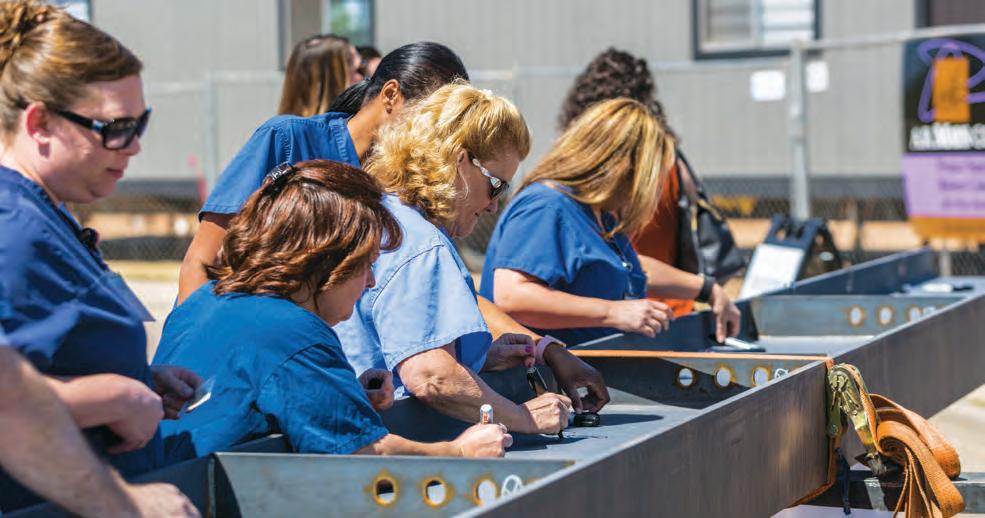
“Construction is moving at a great pace and we have just hit a significant milestone with tilted up walls on this exciting project,” said Jason Anzalone, vice president of development with Irgens. “We are excited to have so much of the building committed to tenants before




completion and are eager to see patients being served at Spectrum in September of this year.”
BY SRIANTHI PERERA
Asian fast casual food is now available in the southwest corner of Gilbert’s Santan Village shopping center.
Teriyaki Madness, located at Pecos Road and Market Street opposite Winco Foods, is a fast growing restaurant concept from Denver that reportedly has a growing fan base around the country.
Friends Sam Jack of Gilbert and Denise Foley of Apache Junction opened the outlet two years after setting up another one in Mesa.
“I wanted to get out of the corporate world,” said Foley, who used to work in information technology and met Jack, who has a similar background, during the course of her work.
Foley was sold on the simple but tasty menu it offered.
The two popular signature dishes, chicken teriyaki and spicy chicken, appealed to
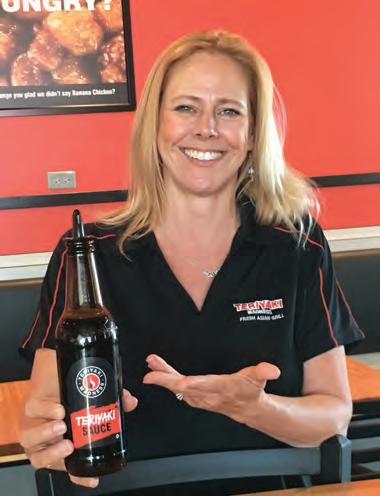
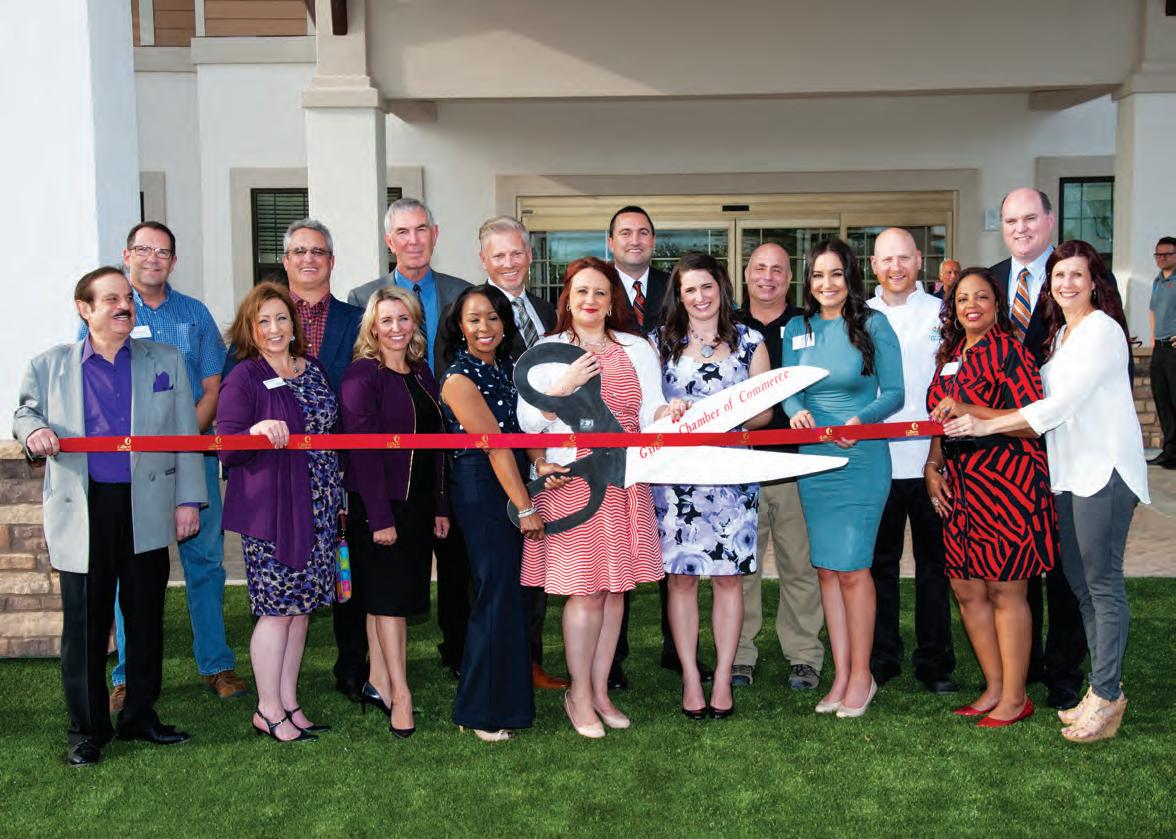
Foley when she tasted them in a Las Vegas kitchen. The brand is also known for its bowls of rice or yakisoba noodles topped with fresh-cut veg
for
Saturday, May 6 through Sunday, May 21, 2017
recently and
helped cut the ribbon during its grand opening. The community, developed by Prevarian Senior Living, offers private residences with private baths – a choice of 74 alcove, onebedroom, or two-bedroom floor plans for assisted living and 42 suites for memory care residents. Amenities include a restaurant-style dining room and private dining room for family gatherings, a cafe/bistro, several activity areas such as a card and game room, movie theatre, beauty salon, music room and library/computer center. Details: savannahouseseniorliving.com.

Personalize Your New Kitchen and Bath with Upgrades – at NO EXTRA COST! * Now You Can Have the Kitchen and Bath of Your Dreams!
Deposit on a new Toll Brothers home in Arizona during this special event and you’ll be able to add even more style, elegance, and value with select luxury kitchen and bath upgrades.
Toll Brothers Avian Meadows
Single-family homes from the mid-$400,000s (480) 825-7946
Calliandra Estates
Single-family homes from the low $500,000s (480) 245-7198
Dorada Estates
Single-family homes from the mid-$500,000s (480) 314-6777
Toll Brothers at Whitewing
Single-family homes from the mid-$700,000s (480) 306-8655
BY GSN STAFF
Rivulon, the mixed-use project at the corner of Gilbert Road and the Loop 202, is adding two new buildings, developer Nationwide Realty Investors announced.
The 60,000-square-foot, fourstory speculative buildings, once completed and leased, would boost Gilbert’s employment corridor being developed along Loop 202.
Nationwide Realty stated that the first of the two buildings, located at 111 E. Rivulon Blvd., broke ground in March and is expected to be complete late this year.
Construction of the second building, at 161 E. Rivulon Blvd., is slated to begin in the summer and is planned for completion early next year.
In addition to the two office buildings underway, the next phase of development at Rivulon includes a creative and flexible office neighborhood along the northern border of the community.
Nationwide Realty Investors is also exploring partnership opportunities for a six- to nine-acre hotel site within the project.
Rivulon is anchored by health and wellness company Isagenix, which moved its world headquarters to a 150,000-square-foot building last year. Thereafter, Gilbert’s first Mercedes-Benz dealership opened a 70,000-square-foot location along Gilbert Road.
Retail such as Sauce Pizza & Wine, Jersey Mike’s Subs and, more recently, fast-casual health food restaurant Grabbagreen followed to support the large employers in the vicinity.
Rivulon is a 250-acre development that’s projected to include approximately 3 million square feet of office and about 250,000 square feet of retail and hotels.
Nationwide Realty Investors, based in Columbus, Ohio, is the real estate affiliate of Nationwide Mutual Insurance Company.
etables, chicken, beef or tofu; appetizers, including edamame and shrimp tempura; a kids menu; and sides. To help complete the flavor, two types of teriyaki sauce are made fresh, in-house.
The dishes are customizable and made to order during a seven- to 10minute preparation time. The price point is average, with most entrees costing $8 to $10.
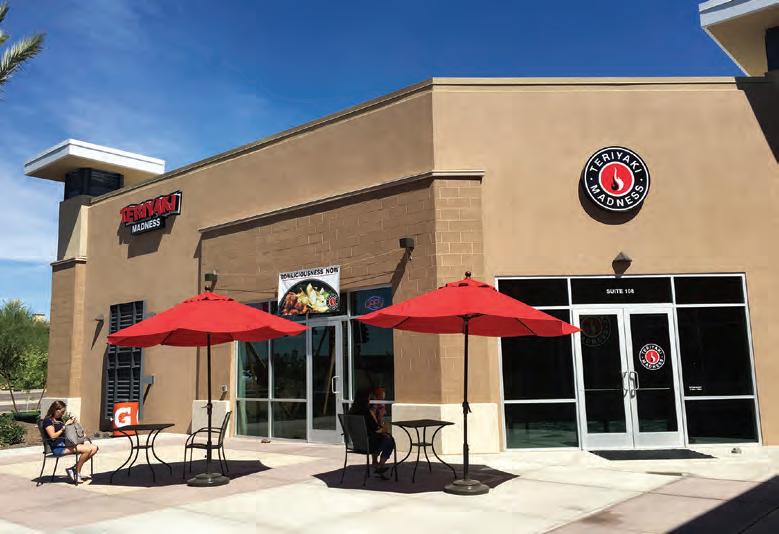
For Jack and Foley, Gilbert was a natural transition from the first store in Mesa. They had their eyes on the spot on Market Street since the time they opened the Mesa store in 2015.
The owners are present at the restaurant on a daily basis, with Foley handling the majority of day-to-day operations and Jack taking care of things behind the scenes.
Foley’s husband, Richie, will also be involved in the new business and Jack’s dog,
Scooby, is supposed to make frequent appearances, as well.
For Jack and Foley, the main draw to the brand was the delicious food, and the main draw to the city of Gilbert was the people.
“With a neighborhood feel and fresh, quality ingredients, our food is a welcome change to franchised pizza, burgers or sub sandwiches,” Jack said. “We serve large, customizable bowls
and plates that make customers feel great and fully satisfied. Denise and I are thrilled to have the chance to give back to this wonderful community that has been a big part of our lives.”

Our dedication to providing patients with the respect and care they truly deserve is what sets us apart in Phoenix’s East Valley. With simple, centralized scheduling and comfortable, relaxing environments, we aim to be the Valley’s most-trusted provider of quality outpatient medical imaging.
EVDI provides women’s imaging at 5 of our centers which are equipped with state-of-the-art imaging technology, providing comprehensive services from simple x-rays to advanced MRIs. And our staff of experienced, board-certified radiologists ensure that your reports not only convey accurate data, but the information needed to make a difference in your life.

























BY EMILY LIU, HIGLEY UNIFIED SCHOOL DISTRICT
Williams Field High School junior Lindsay O’Driscoll collected nearly 1,000 cans for United Food Bank before she completed eighth grade. Now, the junior varsity softball player is a Parker and Son’s Character Counts Scholarship finalist for her lifelong integrity, thoughtfulness, work ethic and other qualities.
The scholarship finalists – made up of 10 monthly nominees who exhibit strong character as athletes – were honored at a Taking Stick Resort Arena banquet recently. The students received trophies, $100 gift cards and 10 Arizona sports game tickets.
“The fact that I just got into the top 10 was really cool,” O’Driscoll said. “The kid who did win it really deserved it, so much more than I did. I was really happy with the experience because it was something completely new.”
Janice O’Driscoll said she nominated
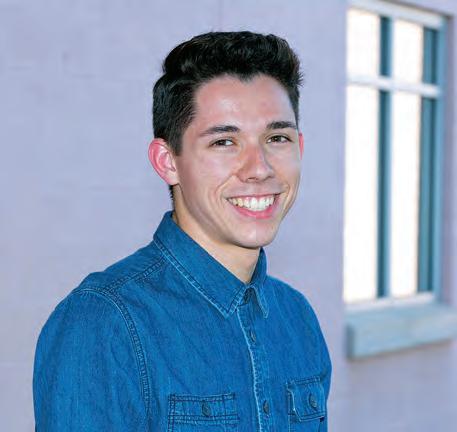





her daughter because of her “personal, deep and genuine” commitment to helping others.
“Lindsay exudes what it means to have character that counts – the attributes that stem from the heart, not a requirement by family or school,” Janice said. “She is a leader, a champion and a role model. I would nominate her again in a heartbeat.”
Even at 5 years old, Lindsay was already delivering Christmas presents to shelters and collecting food for those in need. “She was helping me make sandwiches for a homeless shelter with a huge smile on her face and questions about whether we should make more,” Janice said.
Having her mother to encourage her volunteerism, always reminding her to “help others breathe easier,” is what O’Driscoll said inspires her to think of
others first to this day.
Now, on the field, she believes in being considerate, catering to others’ emotions and never attacking others.
Off the field, O’Driscoll chooses to put philanthropy first, giving back during the school year through Feed My Starving Children and National Honor Society. In the summer, she commits 50 hours to helping patients and staff at Dignity Health through its Volunteen Program.

“A lot of times with high school, volunteerism gets pushed to the side because we’re balancing so much,” O’Driscoll said. “But volunteerism should definitely be number one. Helping
people should always be number one.”
O’Driscoll plans to work in the medical field, studying nursing in college before getting her master’s degree and becoming a physician’s assistant.
BY EMILY LIU
Williams Field High School senior Trey Leveque was selected as one of the inaugural Better Make Room Student Advisory Board’s 17 members from across the United States. He’s hoping to bring a refreshed collegebound culture to students.
Better Make Room is a Civic Nation program, established as a part of former First Lady Michelle Obama’s Reach Higher initiative. As a part of its board, Leveque flew to the White House earlier this year to meet influencers like actress Lana Parrilla, television person -
ality Ted Allen and Michelle Obama herself to speak about college-going culture.
In his “life-changing” visit, Leveque said he learned the importance of promoting college readiness tools and inspiring Arizona high school students to pursue Ivy League education early on.
“I am extremely honored to have been given this opportunity to be selected to support the Better Make Room’s mission in creating a collegegoing, college-persisting and college-
graduating culture,” Leveque said.
To bring the campaign back to Williams Field, Leveque said he will empower students with a voice and encourage students to participate in college-related events.
In the fall, Leveque will attend Arizona State University, majoring in business management or international business. He is striving to gain his MBA from an Ivy League college. With his passion for education, Leveque seeks to help other students enter the colleges of their dreams as well.











































Photos by Srianthi Perera
About 160 students from Highland High School applied and were accepted to Arizona State University in the fall. Recently, amid much cheering, whistles and excited chatter, ASU representatives dropped in on the would-be Sun Devils at their school campus at 4301 E. Guadalupe Road. The squad also visited other schools around the Valley to inspire and encourage students to pursue a college education.
1. Abbie Hatch, born and bred in Gilbert, wants to become a Japanese interpreter and has enrolled in Eastern Asian studies at ASU. She’s visited the country many times, including as a child, and said that she’s always loved it.
2. ASU students and college mascot Sparky are about to join the student body at Highland High School.
3. Gene Valocchi, department head of counseling at Highland High, left, poses with Sparky and teacher Carole Wayne.
4. ASU students, its Spirit Squad and Sparky traveled to the high school in this bus.
5. Brianna Paserk gets it on record that she’s a future Sun Devil.




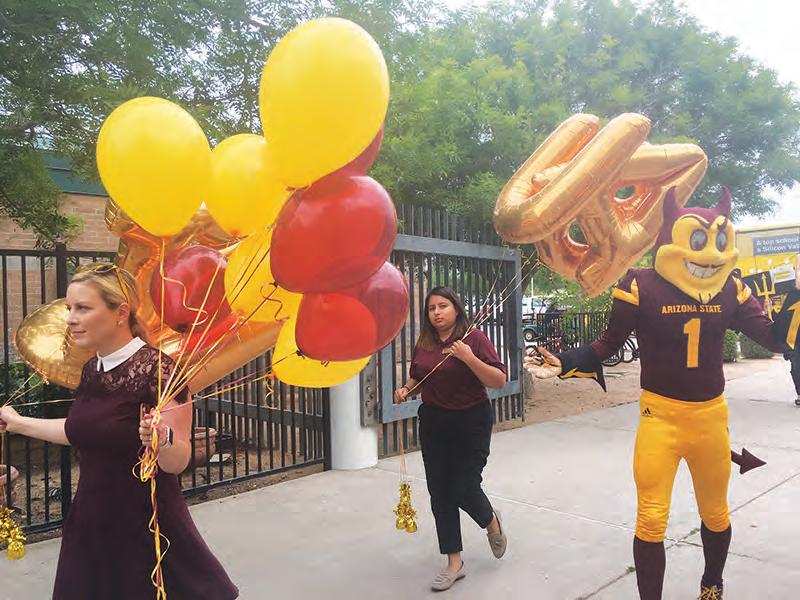
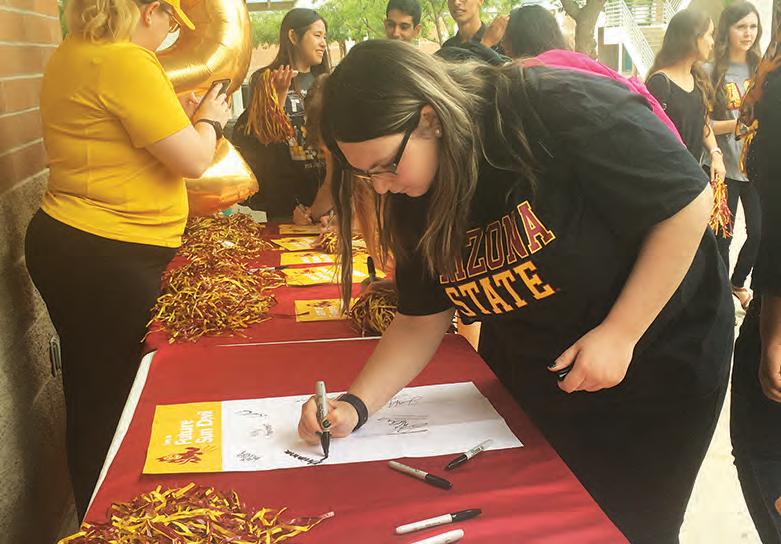


STORY AND PHOTOS BY SRIANTHI PERERA
Amy Daly is the nurse at Islands Elementary School in Gilbert.
The Chandler resident also functions at the school as a mother, counselor, social worker, teacher, homework helper, referee between siblings and what have you.
These secondary titles that rise above her regular duties are part of why Islands Principal Chris Birgen nominated her to become America’s Greatest School Nurse.
“We need more people like her in this world, especially in education,” he said. “She steps out of her role and acts as a caregiver.”
The nationwide competition, organized by Pfizer pharmaceutical company, has selected Daly as Arizona’s finalist. A representative from each state is in the running to win the grand prize: an ultimate summer vacation. The voting period has passed and the winner is to be announced on May 5.
“I love what I do. I love taking care of the kids. It’s completely humbling to be recognized,” said Daly, who has three children of her own.
Islands Elementary, part of the Gilbert Public Schools, has a student body of about 530. From 8 a.m. to 4 p.m., Daly attends to an average of 40-60 students each school day. Most of the visits are for the everyday
cuts and bruises, headaches, nausea and other common ailments. She also treats and administers medication to those with chronic conditions such as asthma, diabetics, heart issues and seizures.
Then, she keeps an eye on students who have broken bones and are hobbling on crutches or wheelchairs. At times, she has to call for emergency services, such as when a teacher suffered a stroke, and a child was in an accident just outside the school grounds.
“Some just come when they need a hug,” Daly said.
Students hail from all socioeconomic levels; homeless children to those from high-income families.
For those who need it, Daly has a fridge stocked with food, bathroom with a shower, washing machine and well-organized closet full of clothes. If the child does not have health insurance, she gets the family connected to free health care, and if they need eye glasses, she refers them to clinics that help. She also routinely administers the state-mandated hearing and vision tests.
Then, there are those students she calls “frequent flyers”; those who complain of a headache at a particular time each day.
“If I do see a trend that they’re trying to get out of class, I will work with the teacher and talk with the student and find out if there’s a reason why they’re wanting to get out at the same time,” she said.
“Your goal most of the time is to get them calm and figure out what they’re in for and play that detective to figure out what’s going on with them. There’s usually a reason,” she added.
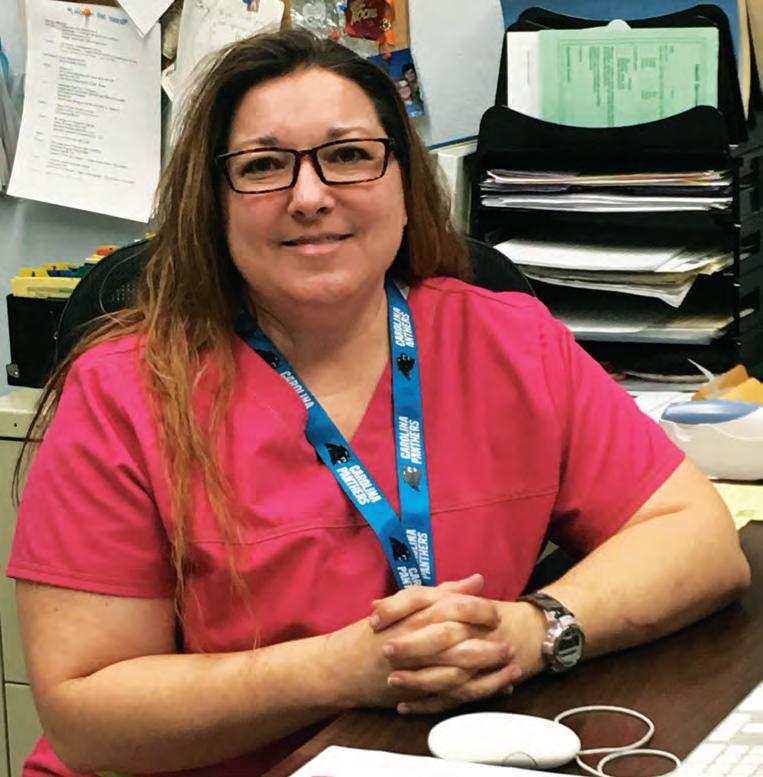
When Daly left her former employer, St. Joseph’s Hospital and Medical Center in Phoenix, her colleague teased her saying she was going to “deal with Band-Aids.”

Have you been told that your knee pain can only be xed by surgery? Are you living on pain medication in order to make it through your job or workouts?
Have you changed the way you do things in order to avoid the pain? Do you think your pain will just “go away” on its own?
Are you 25+ years of age and can answer YES to any of these questions? Or do you have a friend or family member you hear complain about low back pain frequently?
If you have had pain in your low back for more than 2 weeks, most likely it will not just “go away” on its own
Lucky for you, there is an option to a pain free life that does not involve pain medication or surgery.
Just imagine what your life could be like if your low back pain was gone. Could you do your job pain free? Could you lift your kids or grandkids easily? Could you nish that workout that you have been unable to do? The possibilities are endless on what you will be able to do when you are free of low back pain.
How do you find out this great information?
Request my special FREE report:
5 Ways to End Low Back Pain
In this report, you will find out…
• Simple changes to make in your daily routine that will decrease your pain.
• Natural ways to help address the pain receptors without medicatiuon
• Simple stretches you can do daily to help loosen up the muscles that get tight with your daily routine.
• How you can nd out what is causing your pain in 20 minutes, with no cost to you. What to do next
Call 602-904-6576 for your free report. You can call 24 hours a day. The report is limited to the rst 15 to respond, so don’t wait, continuing to hope it will “get better on its own.” You can also download the report at www.getyourfixpt.com/free-reports/back-pain-freereport
P.S. To con rm, no one will ask you for any money for the report. It is 100% FREE!
Call today and start living a PAIN FREE life again!



“I assured them that there was much more to it than that, and I have been amazed at what I’ve had opportunities to do here,” Daly said. “It’s very different than hospital work. It’s one of those positions where you really have opportunities to make differences in children’s lives.”
When they were younger, Daly’s three children, Conner, now 17, Kira, 15, and Brayden, 13, attended Islands Elementary. This helped with Daly’s daily schedule, when she and her children had the same commute. It also helped when Conner was diagnosed with leukemia in sixth grade.
“Having this job, and just the Islands family that I work with, really gave me the flexibility to make sure that I was available for him when he was getting his treatment,” she said.
In her “spare time” at work, Daly also mentors two other school nurses at GPS; the nurses meet monthly to talk about their experiences and challenges. One challenge of being a school nurse is that they have to rely on their own judgment and experience, without any other help, most of the time.
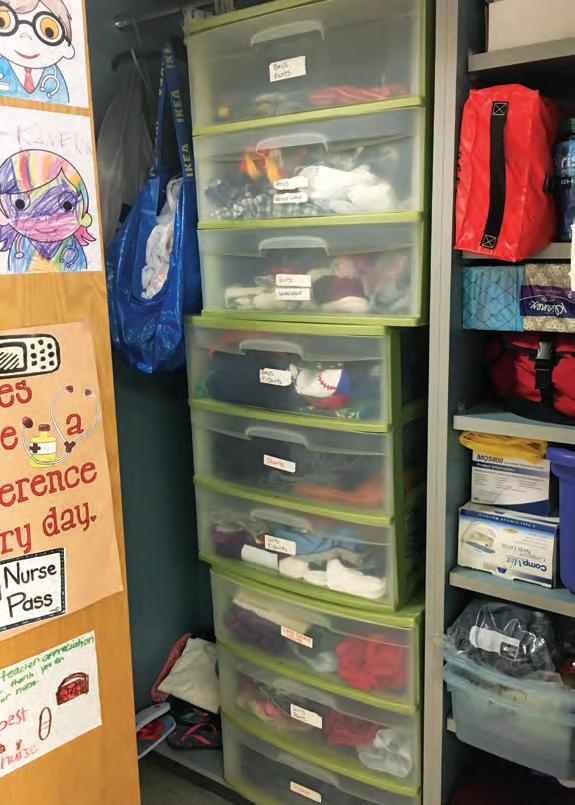

Daly would relish an opportunity to win this competition. The prize, a summer vacation with her husband, Bryan, and maybe





































Photos by Cheryl Haselhorst
Quartz Hill Elementary School in Gilbert celebrated its 10th anniversary recently with an old-fashioned hoedown. There was good food, music, country dancing, face painting and lots of merriment. Students also opened the school’s 2007 time capsule.
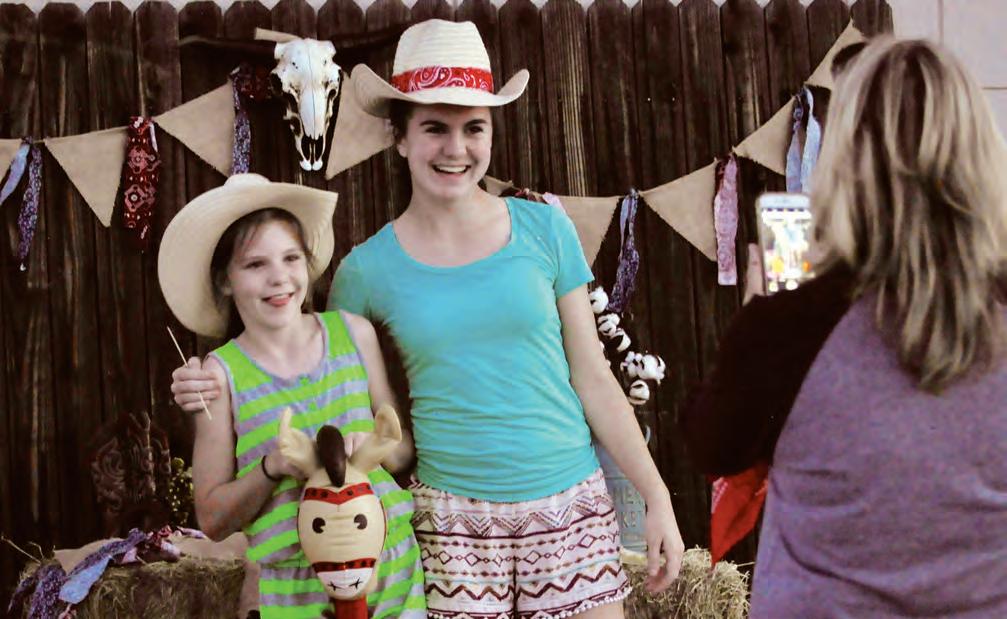
3 2


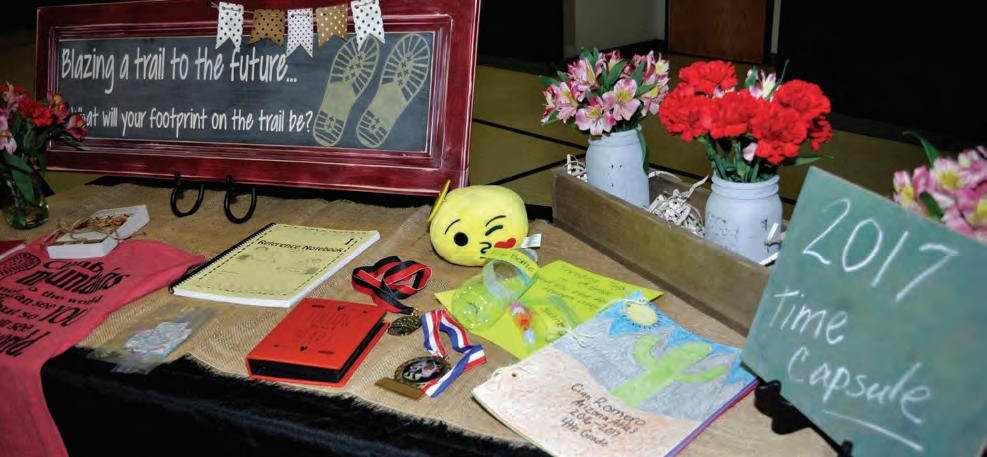
1. Participants strut their country dancing stuff as they follow the caller’s directions. Students had been practicing all week. 2. Sisters Peyton, 11, left, and Paige, 13, Morris pose for a campy photo taken by their mother Michelle Morris, who is one of Quartz Hill’s original teachers. 3. Sixth-graders Kylie Anderson, left, and Caitlin Soelberg practice their country dance moves. Both are 11 years old. 4. Quartz Hill first-grader Aubrey Steffen, 7, dressed in her hoe-down best, throws the ball in a bowling game. 5. Analysa Gilbert concentrates on throwing a football. 6. Enjoying a bite of cotton candy is Owen Runyon, 6, first-grader. 7. Quartz Hill plans to put these items into a new time capsule. 8. The Football Toss game was popular at the celebration. 7 6 5 8


4




























The Bridge Church
645 N. Gilbert Road, Suite 180, Gilbert 480-294-7888
bridgechurchaz.org
Service: 10 a.m. Sundays
We exist to help people know God, and become everything God created them to be. We do this by helping people begin a relationship with God, grow in that relationship to find freedom from the struggles they experience, discover the purpose for which God made them, and live out their purpose to make a difference in the church and in the world.
Central Christian Church-Gilbert 965 E. Germann Road, Gilbert centralaz.com
Services: 4 and 5:30 p.m. Saturdays and 9 a.m., 10:30 a.m. and noon Sundays
While the Bible itself is the church’s official document of faith, the website lists a variety of statements that fundamentally define the church. Please visit the website for more information.
The Church of Jesus Christ of Latter-day Saints
3301 S . Greenfield Road, Gilbert 480-822-5000 lds.org
First United Methodist Church of Gilbert
331 S . Cooper Road, Gilbert
480-892-9166
gilbertumc.org
Services: 8 and 9:30 a.m. (traditional services) and 11 a.m. (contemporary service) Sundays
The two traditional services feature the Chancel choir and traditional worship. The 11 a.m. service has a contemporary feel, with music from the Praise Band. The 9:30 a.m. service generally has the largest attendance.
Gilbert Presbyterian Church
235 E. Guadalupe Road, Gilbert
480-892-6753
azgpc.org
Services: 8:30 and 11 a.m. Sundays
Gilbert Presbyterian Church is called to be a Christ-centered covenant family nurtured by the Holy Spirit to worship God and to share God’s love.
The Lawrence Memorial AME Zion Church
1141 E. Guadalupe Road, Gilbert
480-772-3603
Services: 10:15 a.m. Sunday; Bible study is 6:30 p.m. Tuesday
The Lawrence Memorial Church is a contemporary church. We are a multicultural church that is simply looking to reach the unreachable with love.
Living Water United Methodist Fellowship
Highland Park Elementary School
230 N Cole Dr., Gilbert livingwaterum.org
Services: 10 a.m. Sundays
Living Water exists to bring people in to meet Christ, build people up to follow Christ and send people out to share Christ.
Mission Community Church
4450 E. Elliot Road, Gilbert
480-545-4024
mission68.org
Services: 4 p.m. and 6 p.m. Saturdays

and 9, 10:30 and 11:59 a.m. Sundays
The Bible is God’s word to all people. It was written by human authors under the supernatural guidance of the Holy Spirit. Because it is inspired by God, it is truth and without error in the original manuscripts.
Redemption Gilbert
1820 W. Elliot Road, Gilbert 480-632-2220
gilbert.redemptionaz.com/about/ a-brief-overview/
Services: 8, 9:30 and 11 a.m. Sundays Gospel means good news, but it is truly the most profound and glorious truth ever revealed. It is not advice, nor is it a system or philosophy to add to the congregants’ lives. It is an exclusive truth claim, a holistic worldview, the true story of the whole world, which by its very nature must redefine and recolor everything else.
Resurrection Episcopal Church
Meets at Gilbert Community Center, 130 N. Oak St., Gilbert 480-719-5343
resurrectiongilbert.org Services: 10 a.m. Sundays
Resurrection officials say the congregation is a church you can believe in because you belong. This means it welcomes and embraces all people because God already has. Come for worship, fellowship and Bible study on Sundays and join the group on a spiritual journey to better understand God’s plan for our lives.
San Tan Bible Church
1424 S. Promenade Lane, Gilbert Phone number not available. santanbible.org
Services: 8:30 a.m. (Bible hour); 9:30 a.m. (Café 2:42) and 10 a.m. worship service Sundays
The church believes the glory of God is the chief end of all we do.
Sun Valley Community Church
456 E. Ray Road, Gilbert 480-632-8920
sunvalleycc.com
Services: 4 and 5:30 p.m. Saturdays and 9, 10:30 and 11:59 a.m. Sundays
The atmosphere is casual and friendly at Sun Valley Community Church. It places high value on authentic Christian living and placing Christ at the center of all our teachings. The church also offers worship music that is current and uplifting, along with focused weekend sermons that break down the Bible in a way that makes it easy to connect the word of God with today’s busy life.
Two Rivers Church
326 E. Guadalupe Rd., Gilbert 85234
480-892-2435, 2riverschurch.org
Services: 6 p.m. Saturdays; and 10 a.m. and 12:30 p.m. (Spanish) Sundays
Two Rivers Church exists to help lead congregants into a growing relationship with Jesus Christ by encouraging and equipping them to love God intimately and serve others. It has a casual environment with a serious faith.
Vineyard Community Church
601 S. Cooper Road, Gilbert 85233
480-892-5828
vineyardaz.com
Services: 9 a.m. and 11 a.m. Sundays
Vineyard Community is a casual, friendly and inviting church. Its desire is to be a safe place where people’s lives are being transformed by Christ in community for the world.
The diverse community of Christfollowers seeks the radical in-breaking of the kingdom of God here and now. Followers worship God with the intention of touching heaven and changing earth.



BY CHRISTINA FUOCO-KARASINSKI, SPECIAL TO GILBERT SUN NEWS
Actor Rob Lowe will conduct an “experiment,” as he likes to say. On Friday, May 12, the “Parks and Recreation” veteran will debut his one-man show, “Rob Lowe: Stories I Only Tell My Friends,” at the Mesa Arts Center. It could become an ongoing project.
“I think if I enjoy it as much as I think I’m going to, it will probably be a tour,” says Lowe, calling from Los Angeles. “Right now, it’s one night only; the true definition of one night only.”
The actor, whose latest movie, “How to Be a Latin Lover,” opened on April 28, has never done anything like this.
“I’ve done a bunch of speaking engagements across the country, which put me in the mindset to do it,” Lowe says. “The two books that I wrote continue to have such an impact that it gave me the idea for this evening. I’m very excited about it and I’m working very, very hard on it.”
The Mesa Arts Center was a logical choice for the polished actor who has made a slew of announcements recently. He’s the new Colonel Sanders in KFC’s television ads, and he’ll debut A&E’s “The Lowe Files” this summer.
“I had heard that the Mesa Arts Center was unbelievably beautiful. It has great acoustics and a great place to perform. The other was I wanted to go to a place where I hadn’t spent a lot of time; someplace where (fans) weren’t used to seeing me. I wanted to go somewhere fun, where I could spend a weekend. And somewhere that wasn’t too far from Los Angeles. All of those things brought me to Mesa.”
Lowe is intrigued by the vulnerability that comes with standing on the stage alone, in the dark, in front of thousands of fans. The last time he was on stage was six years ago in London’s West End when he did “A Few Good Men” with Aaron Sorkin.
“I like to think of it as creating a time machine where time stands still for that 90 minutes and you have a communal moment that’s believably intimate together. Everything else in your life fades away in that moment. I love being able to conjure that.”
Lowe is a self-described “political junkie” and he’s been particularly interested in the events of the last year.
“It’s unlike anything we’ve ever seen,” he says. “It makes “The West Wing,” “House of Cards” or “Scandal” look uninspiring. I find it honestly to be a micro-
cosm of everything in our world.
“Winning an Oscar used to mean one thing. Now it means something different. I watched the show ‘Feud’ about Bette Davis and Joan Crawford. The majesty and scope and seriousness with which the Oscars was beheld, there’s no resemblance. The same is true with our elective process. Everything is debased and crazy.”
Lowe’s acting career is number one. When he’s approached by fans, he never knows what resonates with them.
That is exciting to Lowe, who made his mark early in his career as Sodapop Curtis in the film ‘The Outsiders.’
“As my ‘Parks and Recreation’ character, Chris Traeger, would say, I see fans ‘literally’ of any age,” he says with a laugh. “She could be an 8-year-old who saw ‘Monster Trucks’ in the theater, or an 80-yearold who loves ‘The West Wing.’ I never know what project anyone is going to want to talk about. I really am proud of that. There are plenty of (entertainers) who have one or two big ones. I have such a diverse body of work. That’s the fun of the evening, too. When I open it up to questions, it’s always an adventure.”
That sounds nervewracking, but he says that’s the “fun of it.”
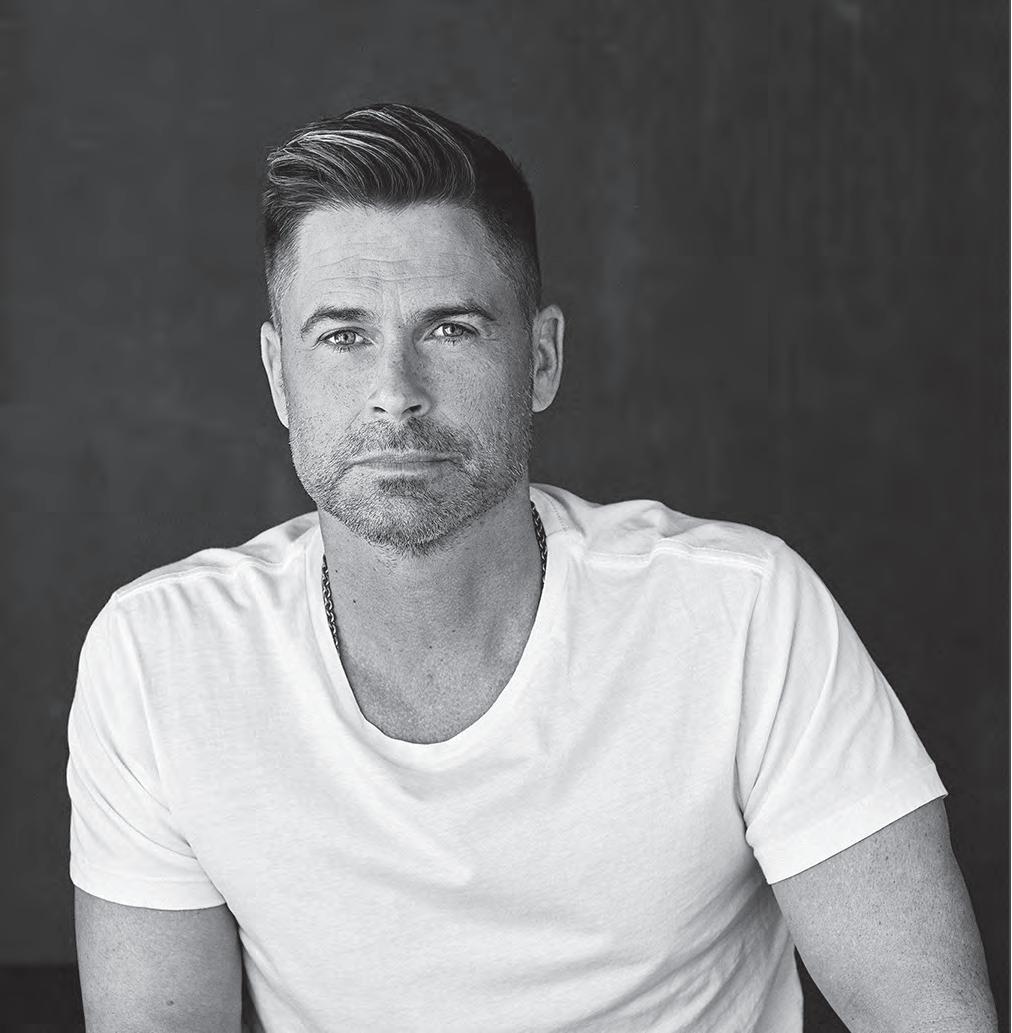

“What keeps anybody relevant and sharp is continuing to put yourself in situations out of your comfort zone,” he says. “The adrenaline is pumping. Anything that’s done over and over can be routine. This is one of the areas that
I have not had any experience in. I have tons of experience on the stage, but this one-man show genre is really new to me. It’s a fun challenge that I always wanted.”
Rob Lowe: Stories I Only Tell My Friends, Mesa Arts Center, 1 E. Main St., Mesa, 480-644-6500, mesaartscenter.com, 8 p.m. Friday, May 12, $30-$165.
BY SRIANTHI PERERA
“The Drowsy Chaperone,” captivates attention by its very title.
The story follows a middle-aged, unsociable musical theater fanatic as he plays the record of his favorite musical, the (fictional) 1928 hit “The Drowsy Chaperone.” While the needle moves across the vinyl, he brings the story, characters and music to life – and brings the audience along with him.
Limelight Performing Arts, in partnership with Studio 3 Performing Arts, brings to stage the hit musical that won five Tony Awards and pokes fun at all of the clichés that characterize the musical theatre genre. It runs April 21 through May 7 at Studio 3’s Artspace Theatre in Gilbert.
Here’s how the story goes:
When showgirl Janet Van De Graff makes plans to leave her career to marry oil tycoon Robert Martin, Follies producer Mr. Feldzeig is forced by a pair of gangsters disguised as pastry chefs to sabotage the wedding. Meanwhile, best man George tries to help the would-be groom keep his nerves in check, and Janet’s drowsy chaperone imparts her own
No Time For Sergeants , Thursdays to Saturdays through May 13, HCT. When lovable hillbilly Will Stockdale gets drafted into the Air Force, he sets his sights instead on serving in the Army. His journey, which turns the Air Force upside down, provides loads of heartwarming hilarity.
Chandler Symphony Classical Series: Light of Heart. Sunday, May 7, CCA. The Chandler Symphony presents a free concert that showcases the work of Weber, Walton and Stravinksy.
Rob Lowe. Friday, May 12, MAC. Prolific actor Rob Lowe (“The West Wing,” “Parks and Recreation”) stages an intimate one-man production based on his bestselling book, “Stories I Only Tell My Friends.”
The World Is Ours , Saturday, May 13, MAC. The Phoenix Children’s Chorus sings music from around the world, including “What a Wonderful World,” “Fa Shu Ha” from Taiwan, “Canto de Pilon” from Venezuela and much more.
brand of wisdom.
“It’s very lighthearted and you’ll keep laughing the entire time,” said Emma England, Studio 3 Performing Arts Academy founder and the artistic director of the production. “If someone really enjoys musicals, they will really connect to this show.”
It’s also off the wall. In addition, their version is unique, England said, because it has built in audience interaction.
Most seats are show-only, but some include servings of dessert.
“During the show, the actors will sit and stand on the tables themselves where the audience is sitting. They may go and shake hands with the audience or gesture toward them and bring them into the show, if you will,” England said. “Anything goes, really.”
“It’s one of my favorite shows to direct,” Don Crosby, a longtime actor and director of the play stated in a news release.
Crosby said that the over-the-top, melodramatic, slapstick musical features a cast of talented teenagers in the Valley.

“Audiences will feel like they’re watching a full-scale, professional production. The cast is creative, fun and truly loves what they’re doing. The cast brings so much joy to their roles, making this musical not just a show but an experience,” he said.
Rock, Roll & Remember. Sunday, May 14, MAC. Travel to the past as the Tempe Community Chorus presents a tribute performance to Dick Clark and American Bandstand. Rock out to classics like “Blue Moon” and “I’m a Believer.”
Los Lonely Boys. Wednesday, May 17, MAC. Since gaining fame for their hit single “Heaven” in 2003, these brothers haven’t stopped rocking, and now

they’re back in Mesa. Aida. Thursdays-Saturdays, May 18-July 1, HCT. Tony Award-winning musical “Aida” brings a tale of love, loyalty and betrayal to the stage. Set to the music of Elton John, you won’t want to miss it.
Coppelia , Saturday, May 20, CCA. Experience the famous ballet that sees a young man fall in love with a dancing doll, which doesn’t please his fiance. Chaos ensues before everything gets set right.
Limelight Performing Arts, in partnership with Studio 3 Performing Arts, presents “The Drowsy Chaperone” through May 7 at Studio 3’s Artspace Theatre at 511 W. Guadalupe Road, Suite 12 in Gilbert. Details: 480-545-1492, limelightyouththeater.org or studio3arts.com.

A Toast to the Rat Pack , Sunday, May 21, CCA. Frank, Dean and Sammy come to life thanks to three talented performers. They’ll bring your favorite songs and plenty of laughs to the stage.
Celtic Woman: Voices of Angels. Tuesday, May 23. Get swept away to the Emerald Isle through traditional and contemporary song and dance, as well as captivating stage design and costumes.
Harmony Orchestra. Wednesday, May 24, MAC. Support a nonprofit music program that helps children in underserved communities participate in the joy of music through orchestra, choir and mariachi.
CCA—Chandler Center for the Arts Tickets: 480-782-2680, chandlercenter.org
HCPA—Higley Center for the Performing Arts
Tickets: 480-279-7194, higleycenter.org
HCT—Hale Centre Theatre Tickets: 480-497-1181, www. haletheatrearizona.com
MAC—Mesa Arts Center Tickets: 480-644-6500, mesaartscenter.com
SCPA—Scottsdale Center for the Performing Arts Tickets: 480-499-8587, scottsdaleperformingarts.org
BY DAVID M. BROWN
When Karen Schmeiser was in seventh grade, her best friend and horse buddy, Donna, gave her an Easter basket with a sketch pad, pencils and a book on how to draw horses.
“I had fun, and, when I stepped back from that drawing, I remember thinking, ‘Wow, I can draw!’ I’ve loved art ever since,” said the Val Vista Lakes resident, who still treasures the drawing and book.
A portrait painter in oils, Schmeiser is the wife of Al Schmeiser, longtime principal of Schmeiser Olsen & Watts, a Mesa-based intellectual property law attorney. After starting the firm in 1983, the Long Island, N.Y., native expanded the practice and opened an office here in 1994. The second marriage for both, they have been married for two years.
“My ambition as an artist is to be the best I can be, not in how much money or fame I can achieve. I paint simply because I feel inspired to paint,” said Schmeiser, who also teaches and occasionally schedules firesides at their home, which focus on her art and their meanings. She also sells giclées, high-quality reproductions, of some of her works.
Following the Old Masters, such as Raphael and Rembrandt, she paints in the classical academic method. “When you want to learn the best methods, you copy the best, and that’s how I teach others to paint.”
Her pieces tell a story or teach a principle. She’s now doing a five-part part-biographical series, “Journey of Faith.”
“I love paintings that cause the viewer to feel emotion,” she said. “I’ve had people walk into a room where I was painting and get tears in their eyes; that makes it all worth it in my book.”
That book has many moving chapters. Her father worked for the government, so the family relocated 11 times before she was 6. They settled in rural Upper Marlboro, Md,, where she rode horses almost daily. They moved when she was 17, and she lived with her mother in Florida, graduating from
high school there.
“My mother was always an inspiration and support to me, my biggest fan,” she said. “She was an untrained artist and loved everything I did.”
Schmeiser started at a community college in nursing but left to get married and start a family: “That was more of an education than I could have received anywhere!”
She lived in Texas, Hawaii, Colorado and now in Arizona for almost 26 years, raising six children. Today, with Al’s four children, they have a large family including 30 grandchildren. “It’s always crazy fun when we get together,” she said.

In Texas, she studied with a few artists and continued with other teachers in Arizona as well as maintained a mural business and taught art classes to youth.
In Arizona, she began “serious studies” with Frank Covino, the master artist and instructor, who died in 2016, just after he had been offered a position to teach at the famed Academy of Fine Arts of Florence. “I was able to go there last fall with Al; it was a very emotional experience,” Schmeiser said.
Under Covino’s guidance, she felt she “had come home. He was a hard task master, especially to those who he thought had serious talent, and had me in tears many a time. I finally realized that he was pushing me to be the best I could be.”
She became his Arizona coordinator for five-day oil-painting workshops that she still holds twice a year. She also schedules “Art of the Masters” workshops, also biannually in five-day sessions, with associate artist, Marcia Gilliam, a Maricopa resident.
Her reconnection with Al is a work of art in itself.
In 2014, she became single and was called to serve an Art Mission for the Church of Jesus Christ of Latter-day Saints. Joining a small team of artists, under Linda Curley-Christensen, she painted murals for the Baton Rouge and Philadelphia temples.

“That was an amazing experience and educational in many ways, especially artistically and spiritually,” she recalled.
At this time she met – or re-met – Al. Some 18 years earlier, he had done some patent work for her family. “We met only once, and who would have thought that we would meet again and fall in love almost two decades later,” she recalled.
She and Al were married at the Val Vista Lakes Clubhouse in Gilbert and were sealed for “time and all eternity” in the LDS Gilbert Temple the following year. “He is the ‘love of my life’ and ‘gets me,’ that whole artist personality and the sensitivity,” she said.
When they decided to stay in his former home, they remodeled it, with one of Al’s few requests realized: that her “Deliverance” painting of Queen Esther from the Bible adorn the dining room wall. “It was the inspiration for the entire house,” she said.
An inspiration at Gayle Belcher’s home, also in Val Vista Lakes, is a painting she purchased from Schmeiser a number of years ago: a still life with flowers, glassware and drapery.
“The painting has a mystery to it. Karen painted it using only two of the three primary colors and black and white, and yet people are puzzled by which primary color was not used,” said Belcher, a friend since 1992.
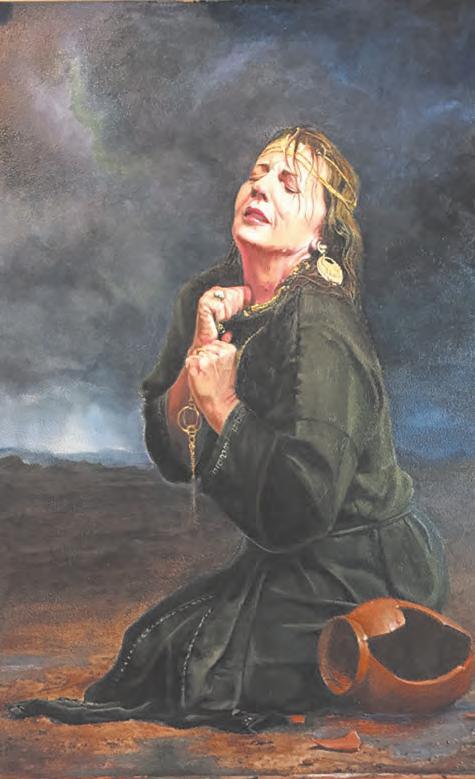
and “Broken Journey.”
“I studied the painting long and hard myself – I am a former art teacher – and I finally had to ask Karen which primary color she didn’t use. It is quite beautiful to behold, and even more so because of the mystery behind it,” she added. “To have one of Karen’s masterpieces in my home is a constant source of visual joy.”
This is the purpose of her work. “There is something so exciting and fulfilling in creating something never before seen,” Schmeiser said. “There is a story I need to tell. It becomes personal. What makes it all so rewarding is when someone comes into my home and spends 10 minutes or so gazing at a painting, wanting to know the story behind it or when tears come into their eyes as they connect with a particular painting.”
























BY DON ANDREWS
“No Time for Sergeants” brings laughs and nostalgia to Hale Centre Theatre. Regarded as the funniest comedy written about the U.S. Armed Forces, “Sergeants” is a comedy for and about the military men and women who served our nation in World War II.
The story revolves around Will Stockdale, a naive young country boy who is drafted into the U.S. Air Force. Taken by his fellow draftees as a bumpkin and a hillbilly, Will is quick to make friends as well as enemies with his gullible charm.
Stockdale befriends fellow enlistee Ben Whitledge, who dreams of not serving in the Air Force, but transferring to the Army Infantry. Together, they turn the Air Force upside down with their assorted antics in an effort to be transferred. Their hijinks don’t escape the notice of their barracks sergeant, Orville King. Sgt. King is a career military man who likes to keep his head down so as not to attract undue attention from the brass.
That’s an impossible task, however, with Stockdale and Whitledge around. Their tomfoolery leads up to a prank so crazy and daring that it could jeopardize every one of their careers.
Josh Hunt plays the role of the clueless Will Stockdale in Hale’s production. Hunt is a six-time ariZoni Award nominee, most recently for his performance in “Heaven Can Wait” at Hale Theatre. Eric Mitchell has the role of Ben Whitledge, while Raymond Barcelo portrays the long-suffering Sgt. King. Stage veteran Tom Endicott has a dual role as Will’s father as well as appearing as General Bush. This is Endicott’s sixth


show at the Hale, most recently in “Arsenic and Old Lace.” Sergeants is directed by M. Seth Reines, who last staged Mark Twain’s hilarious comedy “Is He Dead?” as well as the tragic “The Diary of Anne Frank” at Hale, for which he won an ariZoni Award.
“No Time for Sergeants” is based on the book of the same title by Mac Hyman, who documented much of the action on his experiences in the Army Air Corps during World War II. Ira Levin later adapted the book into a play for both television and the stage. Sergeants became tremendously successful on Broadway, running for 796 performances.





“No Time for Sergeants” plays Thursdays, Fridays and Saturdays through May 13. Tickets are $18 for children, $22 for students and $30 for adults. The theater is located at 50 W. Page Ave. in Gilbert’s Heritage District. Details at 480-497-1181 or haletheatrearizona.com.

BY DENNY BARNEY
It takes a leap of faith to create something new. Maybe you want to start a business or build an addition to your home. Maybe your company builds the roads that help us get home, or the computer chips that connect us across time and space.
If the dream is big enough, you’ll probably sketch it on a piece of paper. And guess what? That paper might just end up in our hands.
As Supervisors, we strive to better serve the builders and land owners who create spaces of opportunity in Maricopa County. That’s why we’re funding a brand new system that allows them to submit permit applications and building plans, check the status of their projects, and schedule any necessary inspections… all from the comfort of their home or office.
Think about this: a single permit set for one of our recent capital projects weighed about 200 pounds! It took four carts to deliver it. We’re talking about a lot of trees – and a cost of thousands of dollars.
Our “Electronic Document Review (EDR)” system is designed for anyone
who is tired of that – tired of spending money on copies, tired of driving between their office and ours. We know it can be a hassle. You’re thinking, how long will I be away? Is the Plans Examiner going to be available? Did I bring enough sets?
With EDR, you can log onto our Citizen Access portal anywhere, anytime to upload the documents you need us to see. When we’ve reviewed them, you’ll get an e-document back with red-lined comments so it’s easier for you to make revisions. Corrections can be agreed upon digitally. You can also electronically submit for changes even after we’ve approved your permit.
We’ve only begun to dip our toe in the electronic filing world. Right now, we only accept residential permits online and 10-15 percent of submittals are done that way. With this new EDR system, which will be phased in over the next few months, we will be accepting commercial, industrial and tenant permits as well.
There are plenty of good reasons to expand our use of electronic documents. For customers, it’ll be faster,
cheaper and more convenient. The new system also benefits our staff. Instead of swimming in a sea of paper, they will be one click away from perusing your plans, sharing them with colleagues and providing timely feedback.
This is part of a broader effort. For example, the Flood Control District is accepting online applications and payments for right-of-way use permits. Environmental Services fast-tracks commercial swimming pool variances to allow construction to start earlier. Our Planning and Zoning Department offers a number of time-saving resources, including fast-track, same-day service for small residential construction projects. It’s all part of the same story: we are streamlining our regulatory agencies so they work better for you.
We understand some of you like things the way they are. You like the certainty of printing off plans and handing them to an actual person. You can keep doing it that way if you prefer. EDR is simply another option. Our goal, as always, is smarter government and better service.
In short, if you take a leap of faith
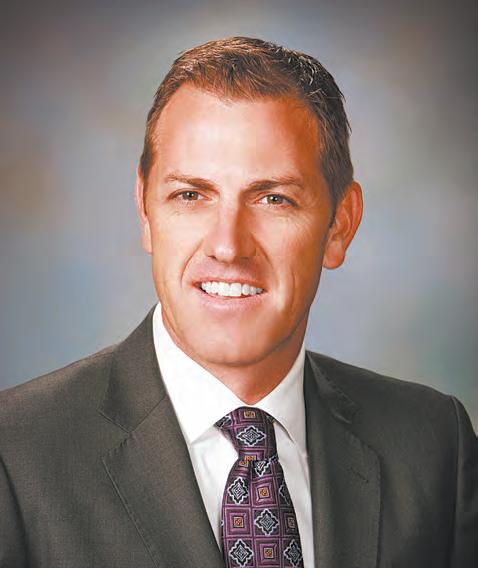
and draw up a plan on a sheet of paper that will make Maricopa County better, we want to make your life easier. EDR is the latest example of that, and it won’t be the last.
Denny Barney is a Gilbert resident and Chairman of the Maricopa County Board of Supervisors.





Never lived in homes with modern finishes. Beautiful espresso cabinets, tile backsplash, all new appliances. Only $849 per month with ez qualify financing includes home and space rent. 55+ mobile home park in great Chandler location. Call Kim 480-233-2035

PROFESSIONAL HOUSE CLEANING SERVICE
35years Experience 20years in the Valley Free Estimates Local References Move-out cleaning services available. All work done by non-smoking, meticulous owner. Call Shirley 480-433-4945


ANYTHINGELECTRICAL, AIRCONDITIONING, PLUMBING
FreeServiceCallwithRepairSameDayService Guaranteed24/7-2Hours orLessTroubleshooting Experts MinutemanHome ServiceSRPAPSCertifiedLicensed/Bonded/InsuredROC242804BBB A+Valleywide 602-279-0942
GLASS, MIRRORS, SHOWER DOORS
Family Owned with 50 years' EXPERIENCE.
Shower and tub enclosures Framed, Frameless or Custom Doors We also install insulated glass, mirrored closet doors, window glass, mirrors, patio doors, glass table protectors. If it’s glass, we can help you. QUALITY SERVICE at Competitive Prices. FREE Estimates
WESLEY'S GLASS & MIRROR Call 480-306-5113 wesleysglass.com SERVICING THE ENTIRE VALLEY

IS YOUR "HONEY DO" LIST GETTING TOO BIG FOR YOU?
Did you buy something that needs to be put together?
Give John the Handyman a call! He can help you get things done.
Anything that takes your time I can do & have the tools to do it!
760-668-0681
HOLTZMAN HOME IMPROVEMENT
People do business with people they trust Home Remodeling & Additions
*Kitchens or Baths
*Painting/Drywall/Stucco
*Plumbing/Electrical
*Tile/Flooring
*Decks/Garages
We Do It All!
24 Hour Emergency Services
Licensed/Bonded/Insured
ROC#242008
SPRING SPECIAL
15% off labor on any job over $1,000
Must mention this ad for discount
Can't combine with any other offer
Call for a Free Estimate!
602-628-8735
602-323-6574
Holtzmanhomeimprovement com


Contact: Tracey Wilson
480-898-5611
tracey@timespublications.com
www.gilbertsunnews.com
HOME REMODELING
REPAIRS & CUSTOM
INTERIOR PAINTING
Move a wall; turn a door into a window.
From small jobs and repairs to room additions, I do it all.
Precision interior painting, carpentry, drywall, tile, windows, doors, skylights, electrical, fans, plumbing and more.
All trades done by hands-on General Contractor.
Friendly, artistic, intelligent, honest and affordable.
40 years' experience. Call Ron Wolfgang Office 480-820-8515
Cell 602-628-9653
Wolfgang Construction Inc Licensed & Bonded ROC 124934
ALL PRO TREE SERVICE, LLC
Tree Trimming, Tree Removals, Stump Grinding, Monthly Landscape Maintenance, Full Yard Clean Ups, Palm Trees, Deep Root Fertilization, Irrigation, Etc. Free Estimate, Very Professional, Insured, and Bonded!
Visa & MasterCard Accepted Mention this Ad and Receive 15% off Discount! 480-354-5802 or dennis@allprotrees com
See Our Ad in the Biz Box Section
Interior/Exterior Painting Free Estimates Light Repairs, Drywall Senior Discounts
References Available Call Jason 480-442-8271
Deadline: 16th of the month for the next publication
SHINE PRESCHOOL Now Enrolling Do you have or know someone preschool age?
Shine Preschool, a private home based preschool located in South Chandler and taught by an experienced and passionate teacher, is now enrolling for 2017-2018 school year, following the CUSD calendar. Discounted rate if registered by 5/25. Limited spaces remaining, secure your spot now! For more information, email: shinepreschoolinfo@gmail.com

ENOS KING-LEWIS II, AGENT Guide, Producer Fun Trips! Prosperity - Wellness
10 years in business. Insured and Bonded www azpawsathome com 602-359-8389
and you will have the cleanest windows and screens on the block. Below is the list of services we offer: Windows-Interior & Exterior Screens-Sunscreens/Regular Tracks, Ceiling Fans, Light Fixtures Power Washing Your driveways, sidewalks & patios