OREGON TILTH
GROWTH AND IMPACT REPORT
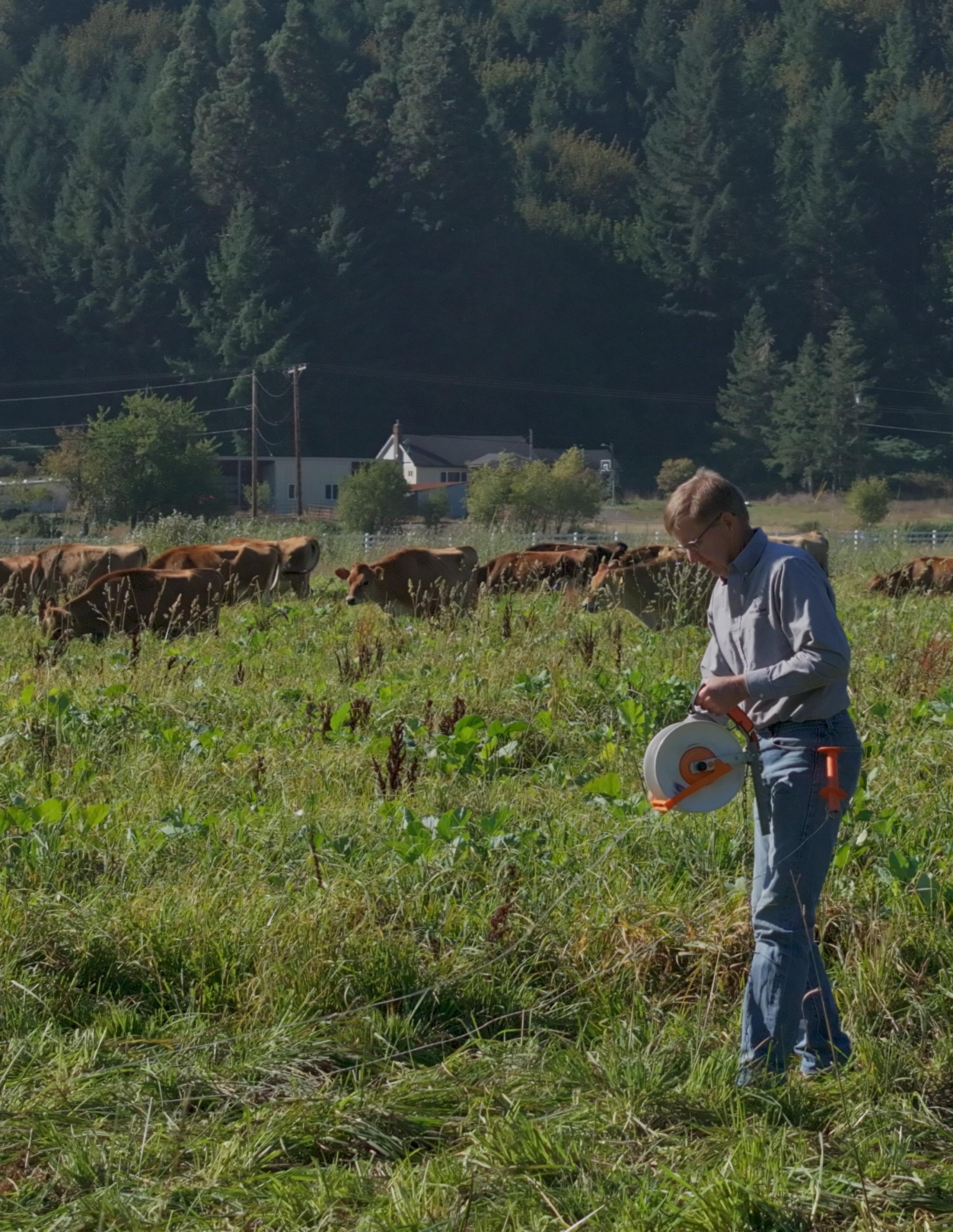
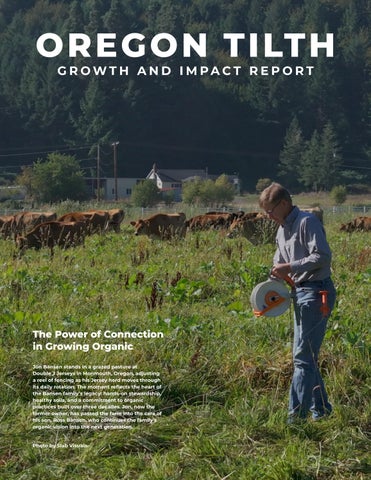
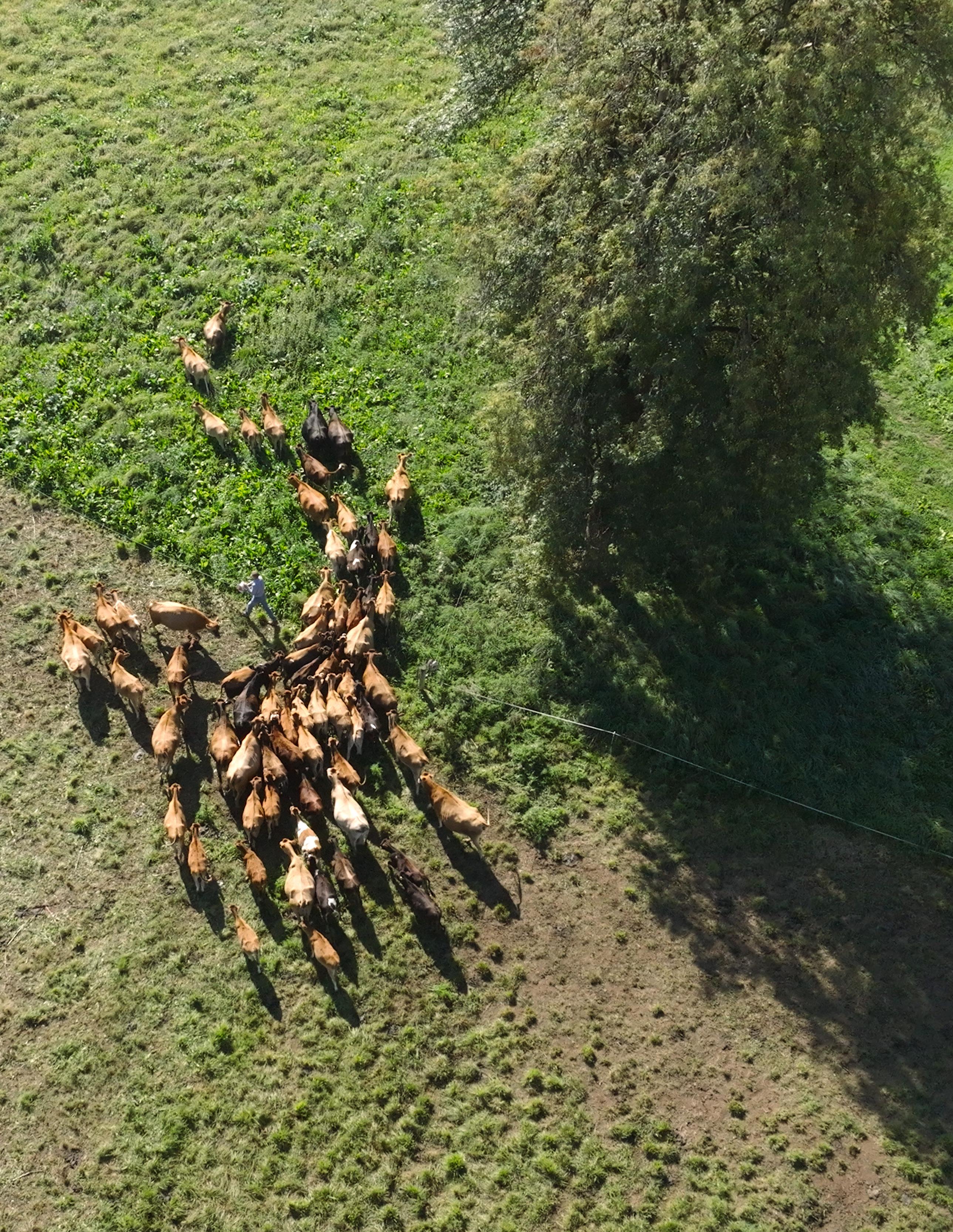
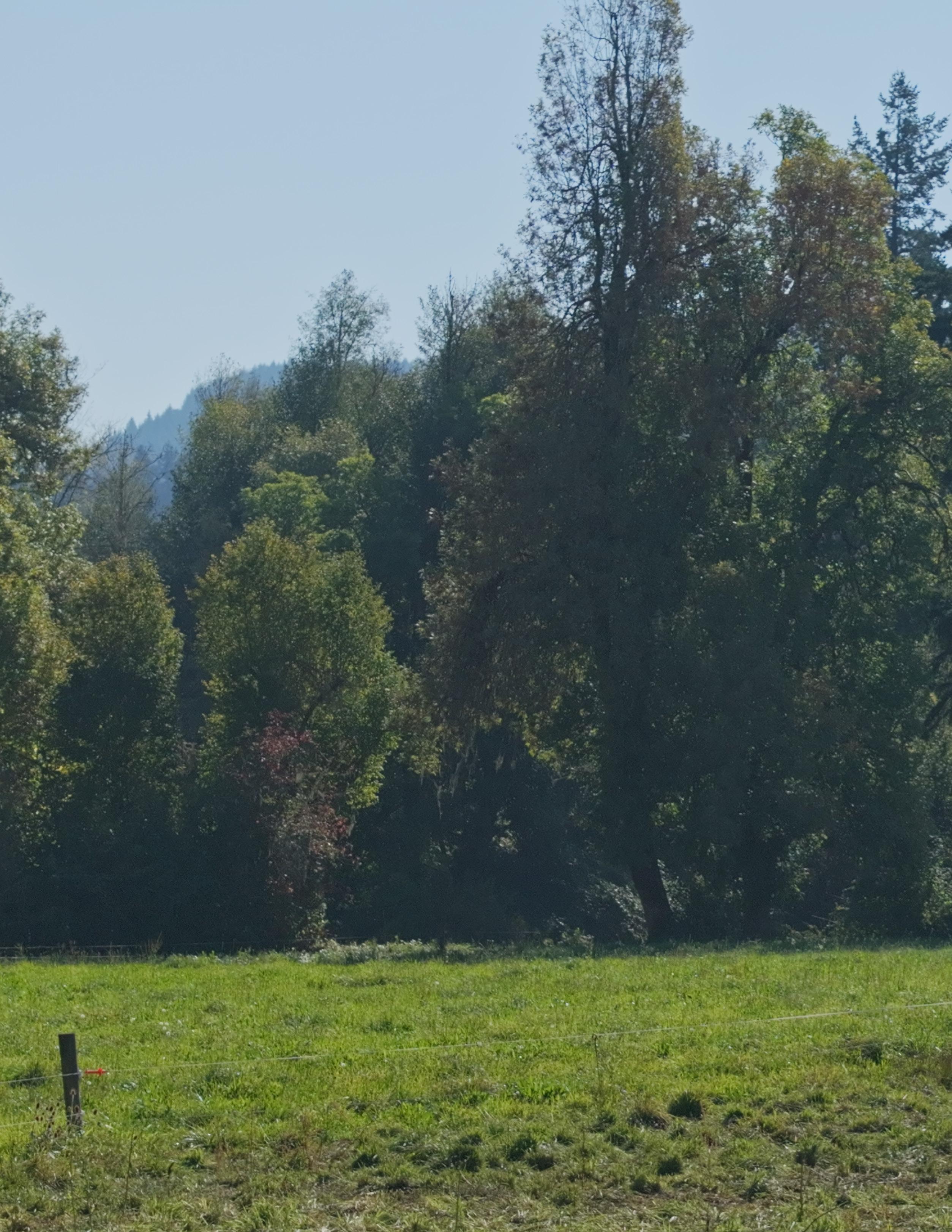
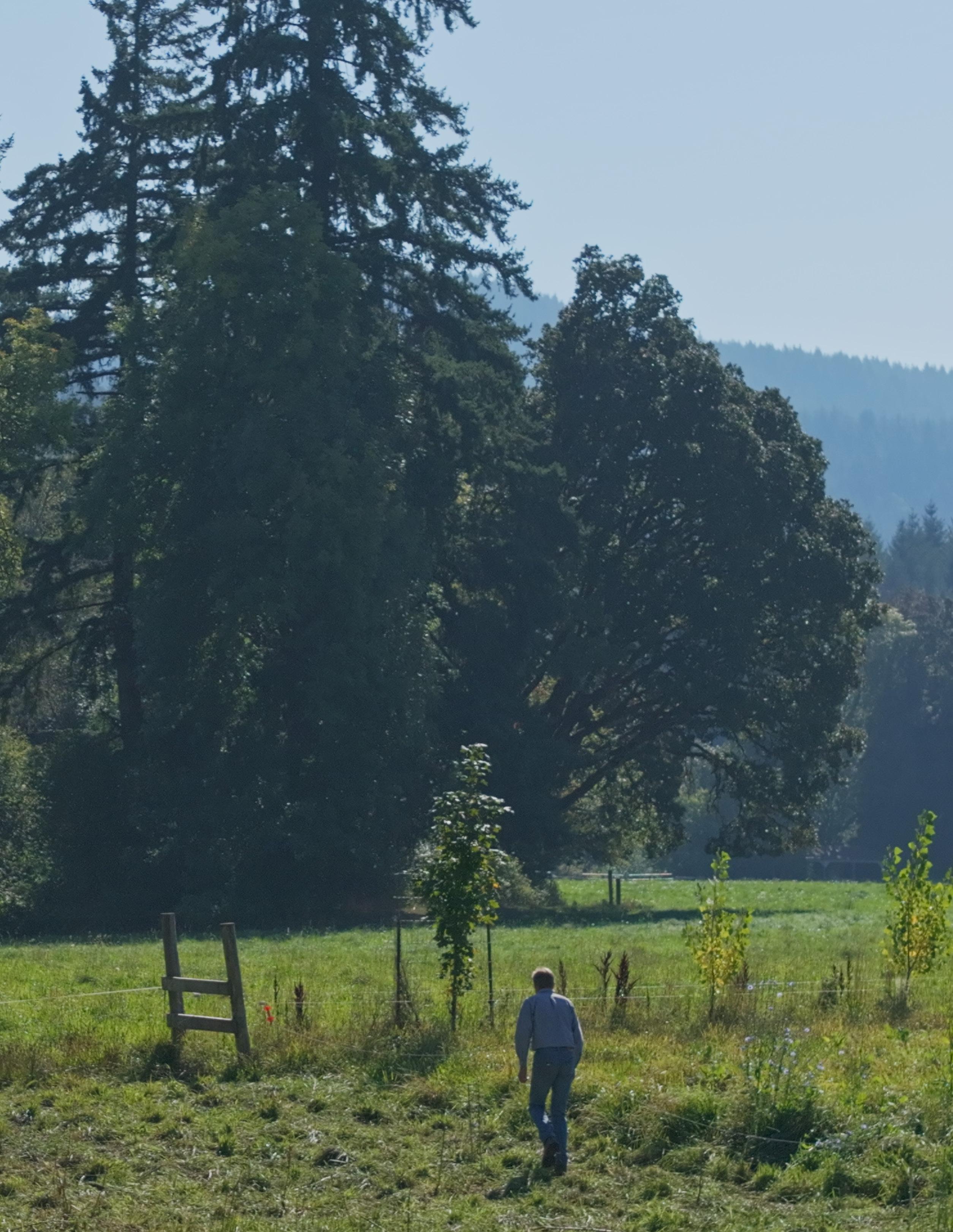
Jon Bansen stands in a grazed pasture at Double J Jerseys in Monmouth, Oregon, adjusting a reel of fencing as his Jersey herd moves through its daily rotation. The moment reflects the heart of the Bansen family’s legacy: hands-on stewardship, healthy soils, and a commitment to organic practices built over three decades. Jon, now the former owner, has passed the farm into the care of his son, Ross Bansen, who continues the family’s organic vision into the next generation.
Photo by Slab Visuals
CONNECTED VALUES
A LETTER FROM OREGON TILTH’S BOARD PRESIDENT
THE POWER OF CONNECTION IN GROWING ORGANIC
BUILDING TRUST AND LEGACIES WITH GRAIN MILLERS AND G3 ORGANICS 4 6 28 26 22 10 8 12 16 20
GROWING ORGANIC WITH OREGON TILTH: STORIES OF CONNECTION
A LETTER FROM OREGON TILTH’S INTERIM–CEO THE POWER OF CONNECTION IN ACTION FOUNDATIONS FOR GROWTH: LEADERSHIP, STRATEGY, AND STRUCTURE
STEWARDING CONNECTION: THE HEART OF OREGON TILTH’S APPLICANT EXPERIENCE TEAM
GENERATIONS GROWING TRUST WITH DOUBLE J JERSEYS AND ORGANIC VALLEY
CULTIVATING CONNECTION AND CRAFT WITH LEMELSON VINEYARDS
OREGON’S ORGANIC WINE STORY: CONNECTING THE CRAFT AND THE FUTURE
TRANSITION TO ORGANIC PARTNERSHIP PROGRAM (TOPP): GROWING THE AMERICAN ORGANIC ECOSYSTEM
CULTIVATING CONNECTION: HOW MENTORSHIP GROWS THE FUTURE OF ORGANIC FARMING
Support and promote biologically sound and socially equitable agriculture.

OUR VISION Community-led food systems that enrich people and planet, together.
We do the right thing, no matter what. We are of good character. We grow trust through honesty, consistent care and attention.
We share our beliefs, decisions, strengths and failures. We are vulnerable and aim for authenticity. We are open and honest, even when things are unclear or unknown.
We live with a purpose to make a difference for others. We seek to understand the thoughts and feelings of others. We are generous of heart.
We believe everything is interconnected. We work towards balance, support and the well-being of all life – human, plant and animal. We honor differences and value diversity as the bedrock of resilience.
Ani Kame’enui, President
Stephanie Jerger, Treasurer
Marni Karlin, Secretary
Alisha Burrell, Member
Tina Consentino, Member
Channing Nesbitt, Member
Tinia Pina, Member
Aimee Simpson, Member
We see collaboration with others as a roadmap to success. We celebrate each other’s uniqueness. We build solid, lasting relationships. We each do our part.
We turn our beliefs and values into concrete action. We see challenges as opportunities. We face difficult tasks and conversations rather than avoiding them.
Dr. Leonard Freeman, Jr., Interim-CEO
Renee Kempka, Finance and Administration Director
Ben Bowell, Education and Advocacy Director
Edward Johnson, Communications and Marketing Director
We pursue new ideas and innovation in service to a greater good. We transform hope into influence and solutions. We are eager learners and enthusiastic educators, sharing know-how with others to encourage continuous improvement.
“Together, we’re not just responding to change; we’re shaping what comes next for organic agriculture.”
–Ani Kame’enui, Board of Directors, President
Over the past 50 years, Oregon Tilth has been shaped by adversity and growth. 2025 was no different, but through it all, one truth guided us: connection is our greatest strength. That is, a commitment to collaboration. It has carried us through moments of transition, grounded our decisions in shared purpose, and renewed our dedication to the people and partners who make organic possible.
As a young geologist and engineer, and later as a policy lobbyist in Washington, D.C., it was the connection to place, purpose, and people that drove my engagement in conservation, climate, and organics. Likewise, at Oregon Tilth, connection has always been a part of our ethos, from the soil and beyond. From the beginnings of the organic movement to the present, this work has been dynamically rooted in collaboration. Linking people, land, and learning in pursuit of something bigger than any one organization.
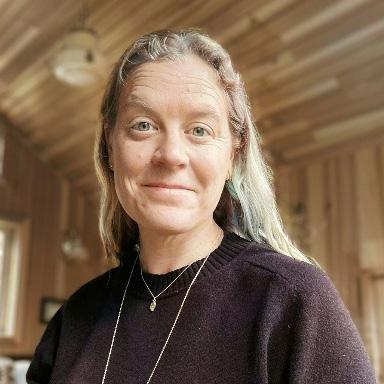
As the agricultural landscape evolves in complexity and pace, Oregon Tilth stands strong in its mission and spirit. We aim to lead with transparency, integrity, and datadriven excellence. We listen with intent, adapt with care, and continually build systems that enable producers, handlers, and processors to not just endure - but to thrive. The true measure of our strength lies not only in results, but in the compassion, clarity, and courage we bring to every action.
The power of connection reminds us that our future depends on how we show up for one another, and this shifting industry. As colleagues, partners, and advocates for organic integrity, every certification, every policy effort, every shared success is a reflection of that collective dedication.
Together, we are not only navigating change; we are shaping what comes next for organic agriculture. Oregon Tilth supports and promotes biologically sound and socially equitable agriculture. Rooted in people, guided by knowledge, and strengthened by the deep connections that unite us all.
Ani Kame’enui Board of Directors, President Oregon Tilth
“Our progress is powered by people. Each connection we nurture strengthens the organic movement for generations to come.”
–Dr. Leonard Freeman, Jr., Interim–CEO
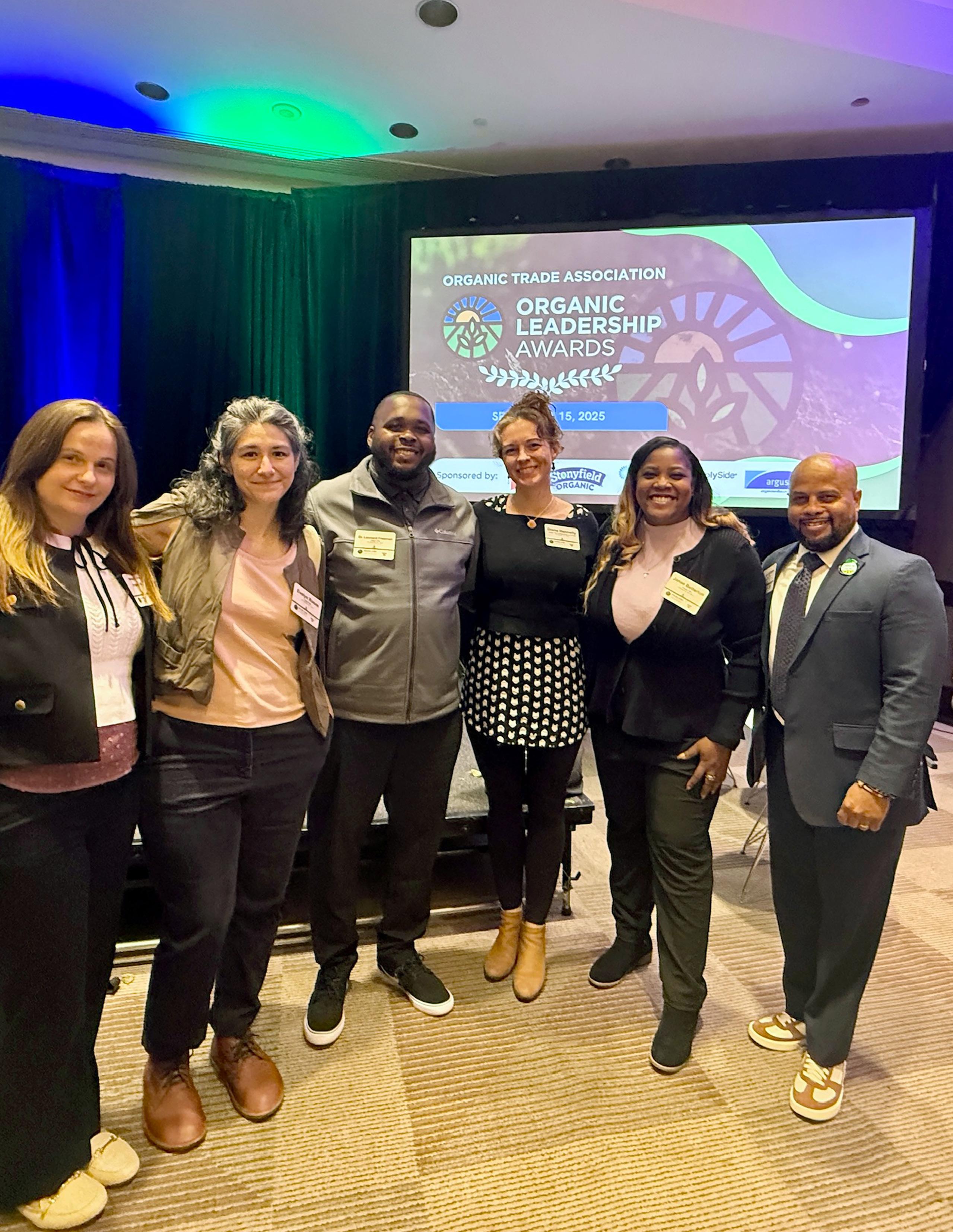
the Organic Trade Association, where 262 farmers, business leaders, and policymakers gathered in Washington, D.C. to strengthen relationships and advance the future of organic.
Building trust, advancing equity, and growing organic excellence together.
Over the past year, Oregon Tilth has navigated a season of change that deepened our connection to the people we serve, challenged our systems, and strengthened our resolve. Through every endeavor, one truth has remained constant: connection is what elevates us and gives our work meaning.
We’ve reinforced our teams across the organization to build a stronger organization that leads with intention, resourcefulness, and creativity, so clients and partners can feel confident working with us at every step of the certification journey. We are dedicated to our members and supporters, whose trust in Oregon Tilth drives our mission to create an equitable, transparent, and sustainable food system.
When we align people, systems, and data with integrity, we cultivate trust. When we lead with empathy and equity, we transform how we serve.
As I shared on a panel during Organic Week 2025, organic is more than a method; it is a movement rooted in equity, resilience, and community. Our leadership across the organic sector continues to emphasize collaboration, transparency, and consistency in how we uphold integrity. When producers understand the why behind organic, they are empowered to grow with confidence and purpose.
Our progress is driven by people: staff, clients, educators, and advocates who embody the mission every day. By investing in them, sharing knowledge, and building partnerships. Oregon Tilth continues to shape a future where organic remains trusted.
Oregon Tilth’s legacy was built on connection, and our future depends on it. Together, we are growing not just a stronger organization, but a stronger organic movement.

Dr. Leonard Freeman, Jr. Interim–CEO Oregon Tilth

“When people, data, and purpose move together, connection becomes the engine that drives progress and lasting impact.”
–Dr. Leonard Freeman, Jr., Interim–CEO
At Oregon Tilth, the power of connection defines how we grow, adapt, and serve. Our 2025 strategic priorities focus on three interconnected pillars: People, Data, and Operational Excellence. Together, these priorities strengthen our foundation and guide how we build trust, measure impact, and deliver meaningful results that reflect our values in action.
People are the heart of Oregon Tilth. We are committed to staff engagement, alignment, and well-being because our people drive every success. Through professional development, cross-training, and opportunities for collaboration, we create a culture where learning and connection thrive. Our teams are encouraged to share ideas, strengthen skills, and find new ways to serve with integrity and care. When our people feel supported and connected to purpose, they elevate the mission in every interaction with our clients, members, and communities.
Data fuels our growth. We are building a culture where data informs decisions, inspires innovation, and creates
accountability. Teams across Oregon Tilth are using real-time insights to improve processes, strengthen communication, and identify opportunities for greater impact. By improving data literacy, accuracy, and access, we are transforming information into a shared language of progress. When data and people work together, we not only see the path forward, we move along it with clarity and confidence.
Operational Excellence turns our vision into measurable action. We are simplifying complex systems and enhancing technology. Each improvement helps create a seamless, transparent certification experience that feels personal, reliable, and empowering. Operational excellence is about efficiency, creating space for innovation, and collaboration that benefits everyone we serve.
These priorities are deeply connected. People bring purpose. Data brings insight. Operational Excellence brings results. Together, they represent Oregon Tilth’s ongoing commitment to connection, integrity, and growth. A framework for building a stronger, more resilient organic future.

Strengthening connection through people, purpose, and shared vision
“The earth is what we all have in common.”
—Wendell
Berry, “The Long-Legged House,” (1969)

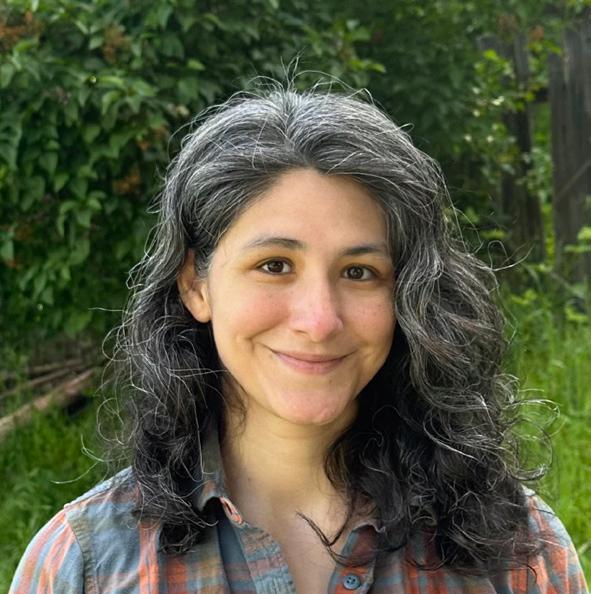
Evelyn Rosas Certification Director

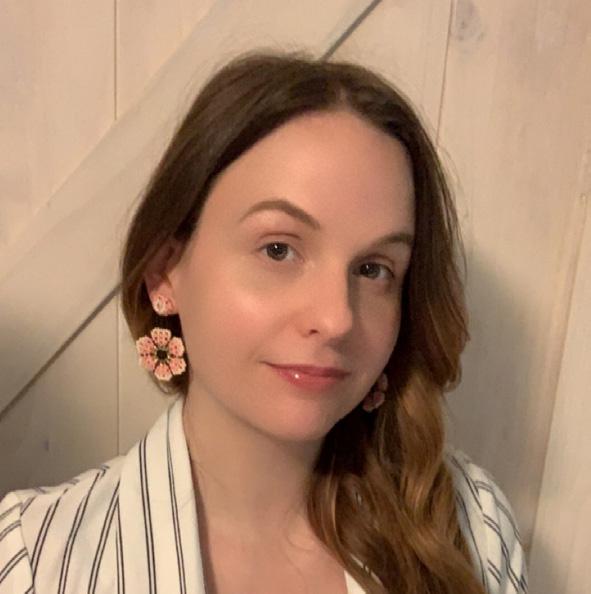
Lexi Spoor Inspections Deputy Director
JJ Mack Senior Quality Assurance Specialist
Meagan Collins Quality & Compliance Manager
In 2024, Oregon Tilth celebrated fifty years of advancing organic integrity — a milestone that honored our history while illuminating the road ahead. Beyond that celebration, we have entered a defining moment for our organization, one shaped by reflection, resilience, and connection.


Guided by our strategic priorities of People, Data, and Operational Excellence, Oregon Tilth is evolving with the everchanging landscape of the organic industry, ensuring that our foundation remains strong, inclusive, and steady to weather any season that lies ahead.
Our growth begins with people. Our education, advocacy, and certification programs are grounded in a peoplefirst philosophy that values partnership, transparent communication and collaboration, and accountability. We know that organizational strength depends on shared leadership, and we have continued to invest in a team structure that reflects that belief. Across our Certification, Quality, and Inspections departments, new leaders are shaping a collective framework for excellence—one that balances vision with purpose, practicality, and trust.
Certification is led by Evelyn Rosas, whose experience in organic production, education, and program management brings empathy and precision to every decision.
Her leadership centers on clarity and empowerment, building systems where each voice contributes to the process and every outcome is shared success.
Inspections, led by Lexi Spoor’s leadership and guidance, represents integrity in motion. Lexi’s focus on consistency, and transparency reinforces trust. Ensuring that inspection remains a cornerstone of accountability within the organic system.
Quality and Accreditation, led by Meagan Collins in partnership with JJ Mack, provides the structural balance that keeps Oregon Tilth strong. Together, they are simplifying complexity, embedding quality into every process, and creating frameworks that make expectations clear and consistent. Their work ensures that quality is not a checkpoint, but a continuous practice that supports every department and every person who touches our mission.
These leaders reflect a shared philosophy that excellence in certification is not the work of one team, but the product of collective connection. Each is committed to building a culture where systems serve people, not the other way around, and where decisions are informed by both data and lived experience.
Through this intentional alignment of leadership, strategy, and structure, Oregon Tilth has strengthened how we serve the organic community.
We have clarified roles, streamlined communication, and created collaborative systems that connect every part of the organization to our mission.
Departments are using shared data to inform operations, measure service timelines, and create equitable workloads. Processes are becoming streamlined and more transparent, making certification more accessible and responsive.
“Looking ahead, we remain focused on building a community where everyone, regardless of background, has access to the benefits of organic practices,” said Dr. Leonard Freeman, Jr., Interim–CEO. “Whether through certification, education, or advocacy, we aim to create a more inclusive and accessible organic sector that serves both producers and consumers alike.”
Oregon Tilth’s foundation for growth is not built on systems alone. It grows through people (leaders, farmers, educators, and advocates) working together to sustain a shared vision. The next chapter of our story is one of connection, collaboration, and collective progress. Together, we are building a stronger, more equitable organic movement for generations to come.
“Getting input from every individual is data. That helps us make informed decisions, improve processes, and reach operational excellence.”
–Evelyn Rosas, Certification Director
“Our vision for the inspections department is grounded in data and built on trust. By analyzing how time is spent, we can create more equitable workloads and provide stronger support for our teams.”
–Lexi Spoor, Inspections Deputy Director
“Quality is the foundation of our organization. We’re building structure and showing that quality touches every part of what we do.”
–Meagan Collins, Quality Compliance Manager
“Certification is the core of Oregon Tilth, but it rests upon the support of certification services, inspections, quality, and education.”
–JJ Mack, Senior Quality Assurance Specialist

At Oregon Tilth, we believe that organic is a movement. A living, evolving ecosystem grounded in care, accountability, and connection. For over fifty years, we’ve walked alongside producers who chose a different path. A path that favors soil over shortcuts, relationships over transactions, and long-term health over short-term gain. As we reflect on our journey and look ahead, one truth stands out: connection is the force that sustains us.
In today’s agricultural landscape, where food systems are under pressure from climate change, consolidation, misinformation, and economic volatility, connection is not a soft skill. It’s the infrastructure that keeps us grounded and resilient. It’s how we grow with each other and because of each other.
And the evidence is clear: the organic sector is expanding. According to the Organic Trade Association’s (OTA) 2025 Organic Industry Survey, the U.S. organic market has surpassed $70 billion, continuing its upward trajectory even in uncertain times. Consumers are seeking out organic products not only for their health benefits but also for what they represent: transparency, integrity, and responsibility.
As the market grows, so must our connections.
Because scale without connection risks losing the very spirit of this work.

In a moment defined by division, misinformation, and ecological urgency, connection is an essential act. For the organic movement to remain credible, accessible, and resilient, we must center connection not just as a value, but as a strategy.
Across the supply chain, there are real challenges. Farmers aging out of operations, new growers struggling to access land and capital, consumers confused by competing labels, and organic certifiers working to meet demand with integrity and care. These challenges cannot be solved in isolation. They demand cooperation, shared knowledge, and the kind of trust that only grows through relationships.
Consumers want more than marketing, they want meaning. Producers want more than policy, they want partnership. Connection delivers both.
When Oregon Tilth leads with transparency and empathy, when producers share their practices openly, when shoppers understand how their choices support real change; that’s when we move beyond transactions into transformation.
We’re living in a time that calls for renewing relationships, not just practices. Connection is the soil where those relationships grow.
The more we grow, the more important it is to stay connected to each other, to our purpose, and to the land. This is not a philosophical stance; it’s a practical strategy for longevity.
Organic thrives when farmers, processors, organic certifiers, consumers, and advocates work as an interdependent network.
• When farmers feel supported, they innovate.
• When organic certifiers listen, systems improve.
• When consumers are informed, trust builds.
• When we work across silos and sectors, new opportunities emerge.
We call this the Power of Connection, and it shapes every part of our work at Oregon Tilth.
This year’s Growth and Impact Report is organized around six core connections that bring the organic certification journey to life:
The land is our teacher. Organic producers don’t just farm on it, they form relationships with it. Whether stewarding land passed down through generations or restoring soil after years of depletion, our partners view farming as an act of care and continuity. Organic certification becomes part of that legacy, a commitment made visible.
Each organic certification is powered by purpose. For some, it’s about protecting community health. For others, it’s a way to align their business model with their environmental ethic. Whatever the reason, the choice to go organic is not just strategic, it’s deeply personal. OTA’s data shows values-based purchasing is rising, especially among Gen Z and Millennials, who see organic as a symbol of a better world.
Organic certification isn’t one-size-fitsall. It’s dynamic, and detailed, but it’s also transformative. Our Applicant Experience Team brings empathy, guidance, and clarity to that process. They help producers move from feeling overwhelmed to feeling equipped. Which builds a stronger, more inclusive organic system.
Behind every certified operation is a network of encouragement. From peer producers to Oregon Tilth staff to regional mentors and educators, these connections are often the difference between burnout and breakthrough. We’re proud to be part of a community that shows up for one another and shares what works.
Organic certification leads to measurable change. Improved soil health, better water retention, stronger biodiversity, and expanded market access. Beyond the metrics, the impact is human, producers able to support their families, landowners returning to traditional practices, and consumers feeding their children with confidence. This is impact with heart.
The next chapter of organic will be written by those who can imagine and build something more. Our partners are already doing that. They’re embracing climatesmart practices, uplifting equity in food systems, mentoring new farmers, and pushing for policies that protect smallscale operations. They remind us that connection isn’t just about who we are now, it’s about who we’re becoming.
If we want organic to continue to grow in both market share and movement strength, we must keep connection at the center.
That means:
• Investing in relationships that make the process less transactional and more transformational.
• Designing systems that listen, adapt, and reflect the diversity of the communities we serve.
• Elevating the people behind the practices, sharing their voices through storytelling, advocacy, and public education.
• Bridging gaps in understanding, especially for consumers who don’t yet realize that organic already includes the “free-from” claims they prioritize.
• Welcoming the next generation of farmers, consumers, and leaders into a movement that is theirs to shape.
Connection is not something we stumble upon; it is something we choose. In this moment, when organic is gaining momentum but also facing more complexity, we must choose it boldly. The real power of connection is that it multiplies. One farmer’s story can inspire dozens more. One staff member’s encouragement can change a producer’s path. One informed shopper can influence their whole family’s choices. When we connect, we grow in strength, vision, and possibility.
At Oregon Tilth, we are proud to walk with our partners as they grow organic with integrity. We invite everyone, producers, consumers, policymakers, and advocates to join us in choosing connection as the way forward.
Let’s grow this movement together.
An authentic selection of stories from the field, told directly by the farmers, ranchers, handlers, and processors who have experienced the organic certification journey with Oregon Tilth.
Where values meet purpose, and every call, question, and conversation builds trust in organic integrity.
Before the soil is tested, before the forms are signed, and long before the organic certification seal appears on a package, there is a conversation. Often, it begins with hope, curiosity, and purpose. That first connection is where the Oregon Tilth Applicant Experience Team steps in.
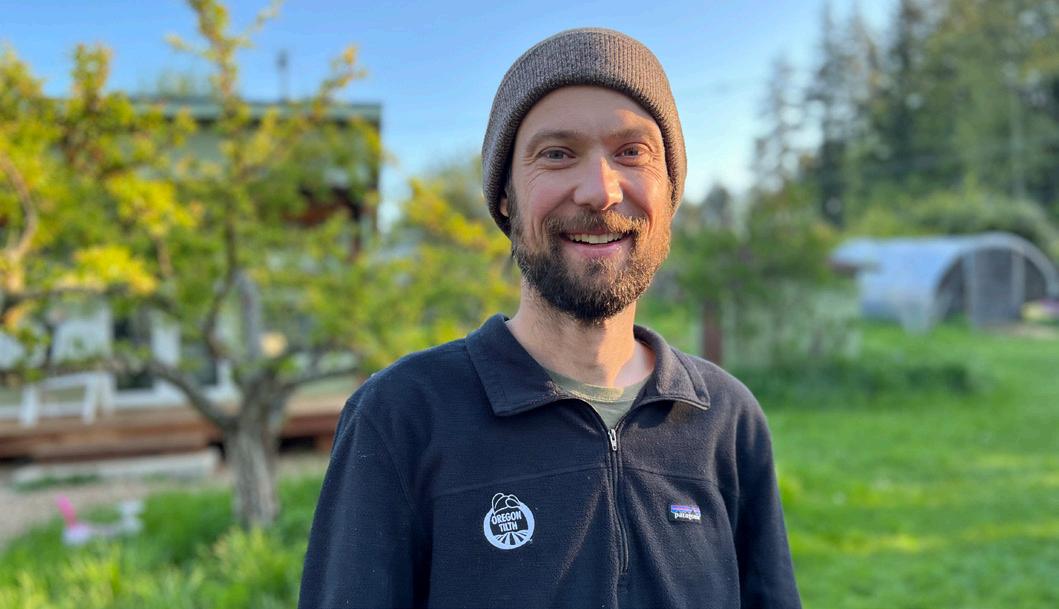
This small but essential team serves as a bridge between Oregon Tilth’s mission and the thousands of farmers, ranchers, handlers, and processors working to bring organic integrity to life.
Levi Fredrikson, Senior Applicant Experience Specialist, describes it simply: “We’re on the frontlines of certification. When producers reach out, we listen, we guide, and we walk with them through every step of the process. It’s about helping people understand that organic certification isn’t just paperwork; it’s a partnership.”
Oregon Tilth’s role extends far beyond compliance. As a nonprofit organization focused on education, advocacy, and organic certification, with staffed inspectors and a diverse set of certification scopes, it has built a system grounded in accessibility and trust.
“We measure success by what’s best for our clients,” Levi says. “Sometimes that means helping them move forward with certification, and sometimes it means advising them to take more time to prepare. Either way, we’re here to support their goals and values.”
That people-first approach mirrors what is happening across the organic industry.
According to the Organic Trade Association’s 2025 Consumer Perception Report, USDA Organic remains the most trusted certification in the country, with 74 percent of consumers placing their confidence in it, ahead of every other major label.¹
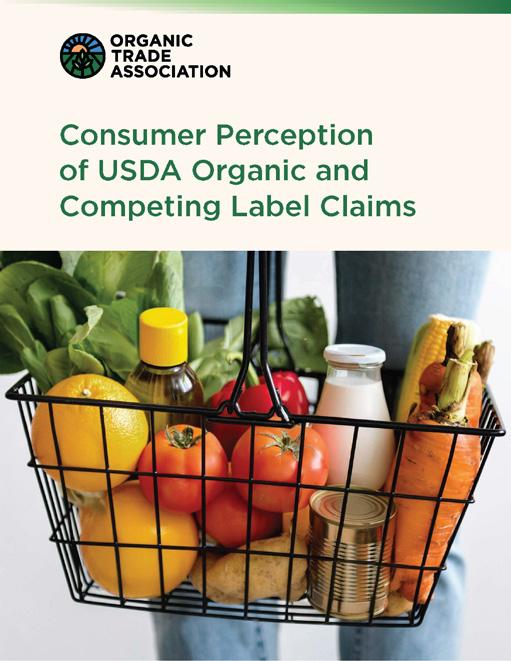
The report also found that more than half of younger consumers are willing to pay a premium for USDA Organic products, signaling a generational commitment to healthier, value-driven choices.²
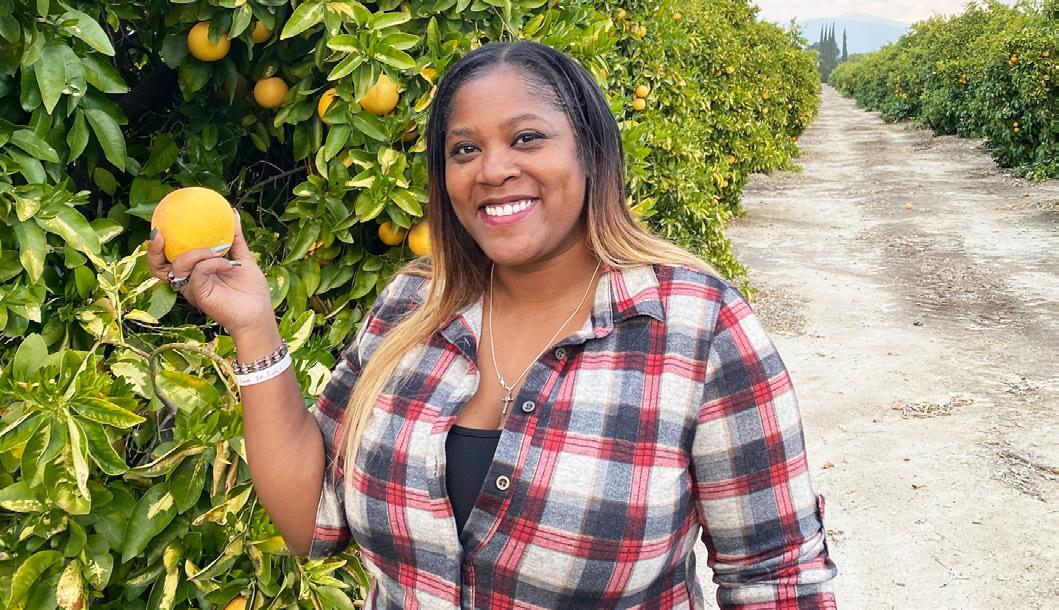
Janae Betterton, Client Experience Specialist, sees that shift firsthand. “The younger generation truly understands the value of organic,” she says. “They’re choosing food that aligns with their beliefs, and we’re here to steward that connection between their values and the farmers who make those choices possible.” Her own story reflects that passion. “I didn’t choose organic,” she says with a smile. “Organic chose me. It’s about giving back to the planet and ensuring that what we take, we also restore.”
That mindset is more relevant than ever.
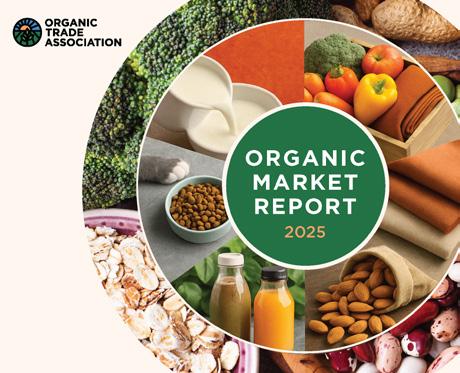
The OTA 2025 Organic Market Report notes that the U.S. organic marketplace grew 5.2 percent in 2024, reaching $71.6 billion in sales, more than twice the growth rate of the overall food sector.³
“Organic remains a known quantity with high consumer recognition and the highest level of trust in a certification with a developed marketplace,” said Matt Dillon of the OTA.⁴ As demand continues to rise, Oregon Tilth’s Applicant Experience Team plays a vital role in ensuring that the certification process remains accessible, transparent, and rooted in education.
Levi believes that connection between people, policy, and purpose is what keeps organic strong. He points to the Strengthening Organic Enforcement (SOE) rule, which has expanded transparency and alignment across the industry. “SOE ensures everyone along the supply chain is accountable,” he says. “That accountability is what protects the integrity of organic. Our job is to make sure our clients understand it and feel supported through it.”
Those values are visible across Oregon Tilth’s certified community.
Double J Jerseys, in partnership with Organic Valley, demonstrates generational stewardship and care for animals and land. G3 Organics and Grain Millers show how data and trust shape fair, local economies. And Lemelson Vineyards brings science, craftsmanship, and ecological balance into every organically grown grape. Each reflects the shared belief that connection to people, planet, and purpose is what keeps the organic movement alive.
As the industry continues to evolve beyond farmers’ markets into mainstream retail and global trade, Oregon Tilth’s mission remains constant: to support and promote biologically sound and socially equitable agriculture.
“The power of connection is what makes all of this possible,” Levi says. “Organic certification is about people doing good work for the planet and each other. When we connect those people to their purpose, we all grow stronger.”
74%
U.S. consumers who trust the USDA Organic certification more than any other food label¹.
50% + Younger consumers (Gen Z and Millennials) willing to pay a premium for USDA Organic products, reflecting a generational shift toward value-based purchasing 2 .
$71+B
Total U.S. organic sales in 2024, growing 5.2% year over year — more than twice the rate of the overall food sector ³.
1,400 +
Educational events and mentorship activities hosted through the USDA Transition to Organic Partnership Program (TOPP), connecting new producers to experienced mentors nationwide4.
These numbers reflect more than market trends, they represent a growing movement rooted in trust, transparency, and shared purpose.
As a regional lead for the USDA Transition to Organic Partnership Program (TOPP), Oregon Tilth continues to strengthen the connections that make organic possible, supporting farmers, handlers, and consumers who believe in a better way to grow.
1. Organic Trade Association (OTA). 2025 Consumer Perception Report, p. 31.
2. Organic Trade Association (OTA). 2025 Consumer Perception Report, p. 42.
3. Organic Trade Association (OTA). 2025 Organic Market Report, p. 2.
4. Organic Trade Association (OTA). 2025 Organic Market Report. Washington, p. 11.
From one generation to the next, the Bansen family grows through connection, care, and a lasting commitment to organic integrity.
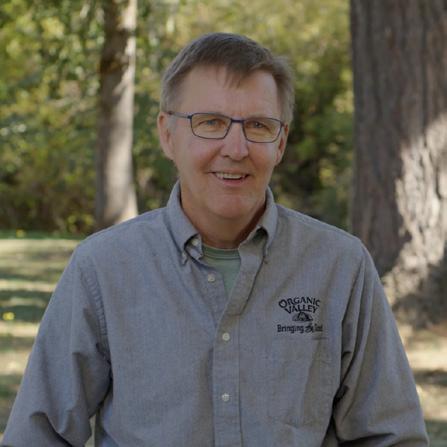
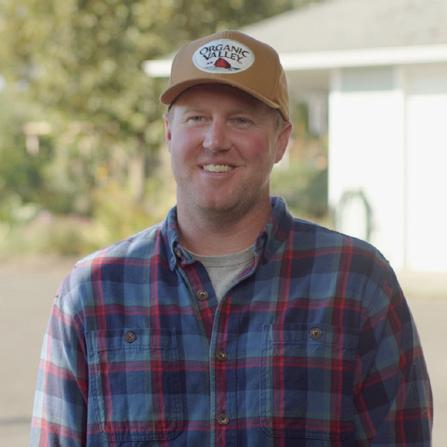
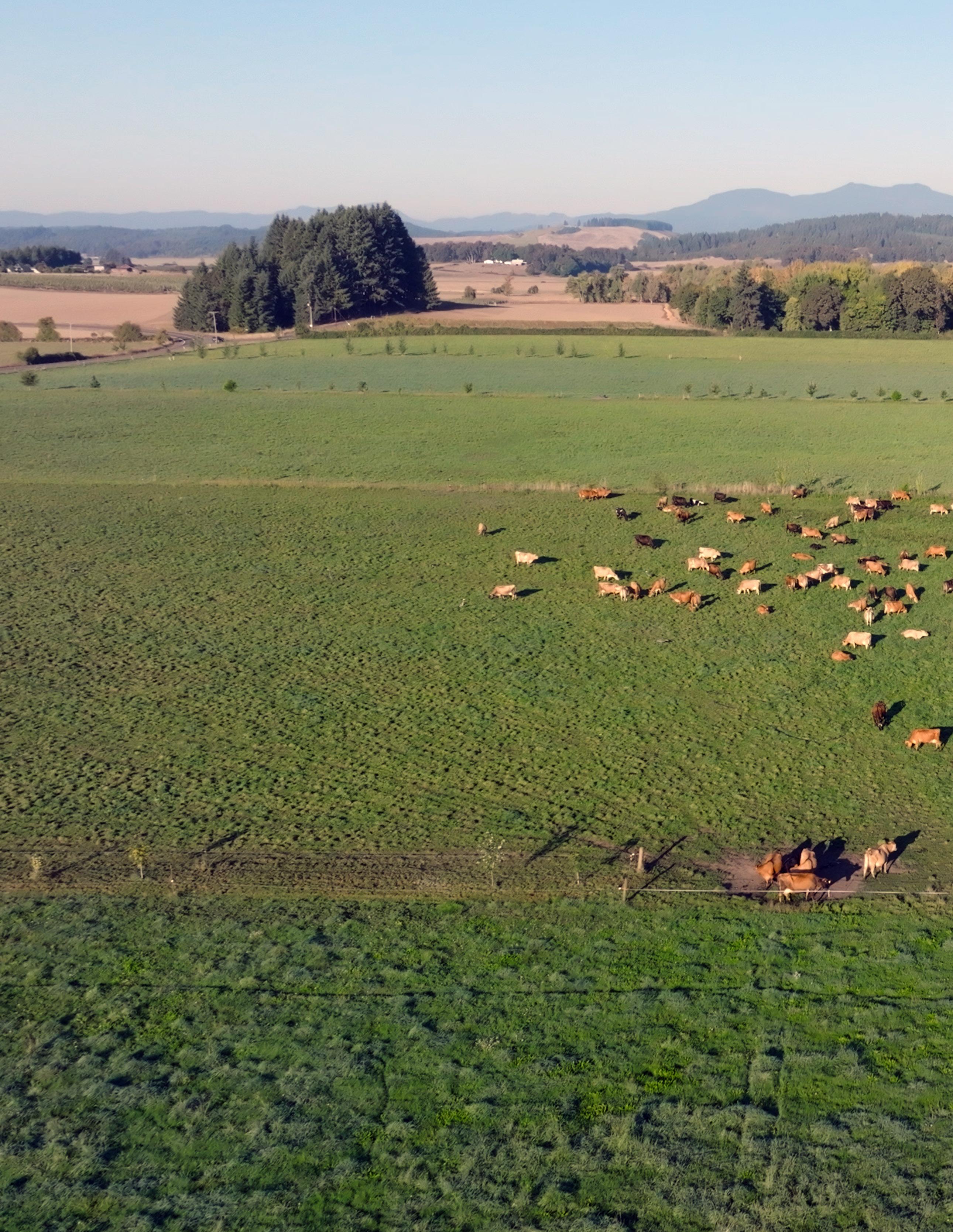
Interview with: Jon Bansen, (Former Owner) and Ross Bansen, (Owner) of Double J Jerseys
“Now, as the next generation, it’s my turn to uphold that standard and keep improving it. Certification keeps us true to our values.”
–Ross Bansen, Double J Jerseys
Oregon,
For more than three decades, Jon and Julie Bansen have nurtured their land, their herd, and their values. What began as a small conventional dairy in the early 1990s has grown into a multigenerational organic legacy. One now carried forward by their son, Ross, and his wife. Their journey embodies what it means to grow organic with Oregon Tilth: blending tradition with innovation and leading with care for both people and planet.
When Jon made the decision to transition the dairy to organic nearly 25 years ago, it wasn’t a leap into the unknown; it was a return to his roots. “My grandfather was organic before it had a name,” Jon reflects. “He farmed without chemicals, without shortcuts. That’s the foundation we came back to.” The shift to organic was guided by both practicality and principle. Jon recognized that progress wasn’t about doing more but doing better. Eliminating harmful sprays, investing in biological solutions, and finding balance between the health of the land, the cows, and the family who depend on both.
As Jon stepped back and Ross stepped forward, the spirit of stewardship deepened. For Ross, organic certification represents both responsibility and opportunity. “We’ve been organic since 2000,” he says. “Now, as the next generation, it’s my turn to uphold that standard and keep improving it.”
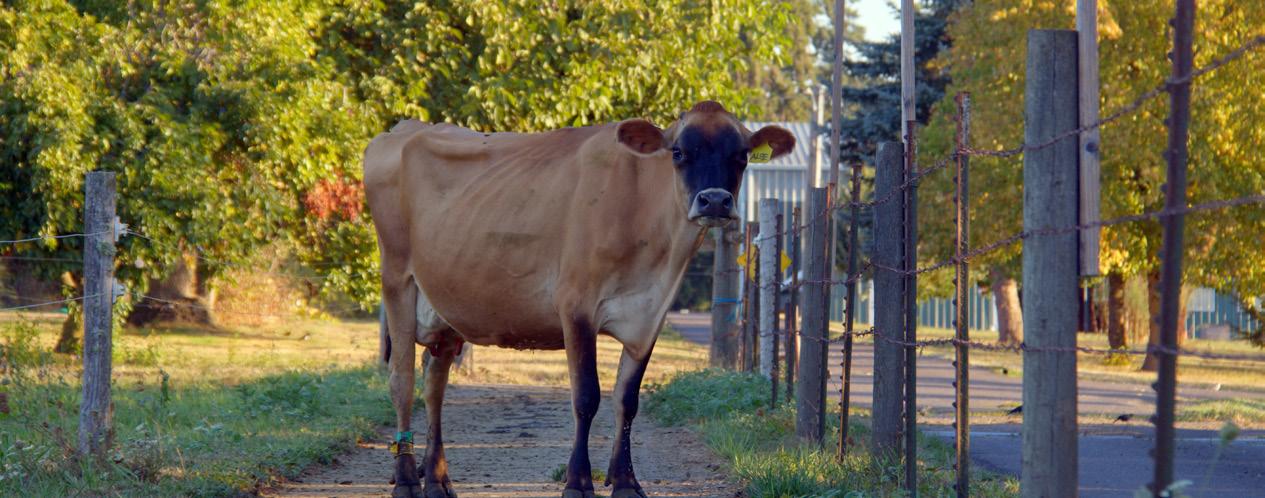
The certification process, once a source of uncertainty, has become a symbol of growth. “Our inspector walked me through the process and held me accountable. It was tough, but it built confidence. It’s a partnership that helps us stay true to our values.”
Double J Jerseys continues to ship milk through Organic Valley, a cooperative that reflects Oregon Tilth’s values of integrity and transparency.
Together, they model what the future of organic can be. A system rooted in fairness, sustainability, and trust. “The co-op lets farms like ours stay small, stay personal, and stay viable,” Ross says. “It’s what keeps the next generation coming back.”
From Jon’s birdhouses for fly control to Ross’s evolving digital recordkeeping, the Bansen family demonstrates how connection builds resilience. Between past and present, people and place, purpose and practice.
Their story reminds us that organic farming is not just about production; it is about preservation. It is a living promise passed from one generation to the next, growing stronger through every season of change.
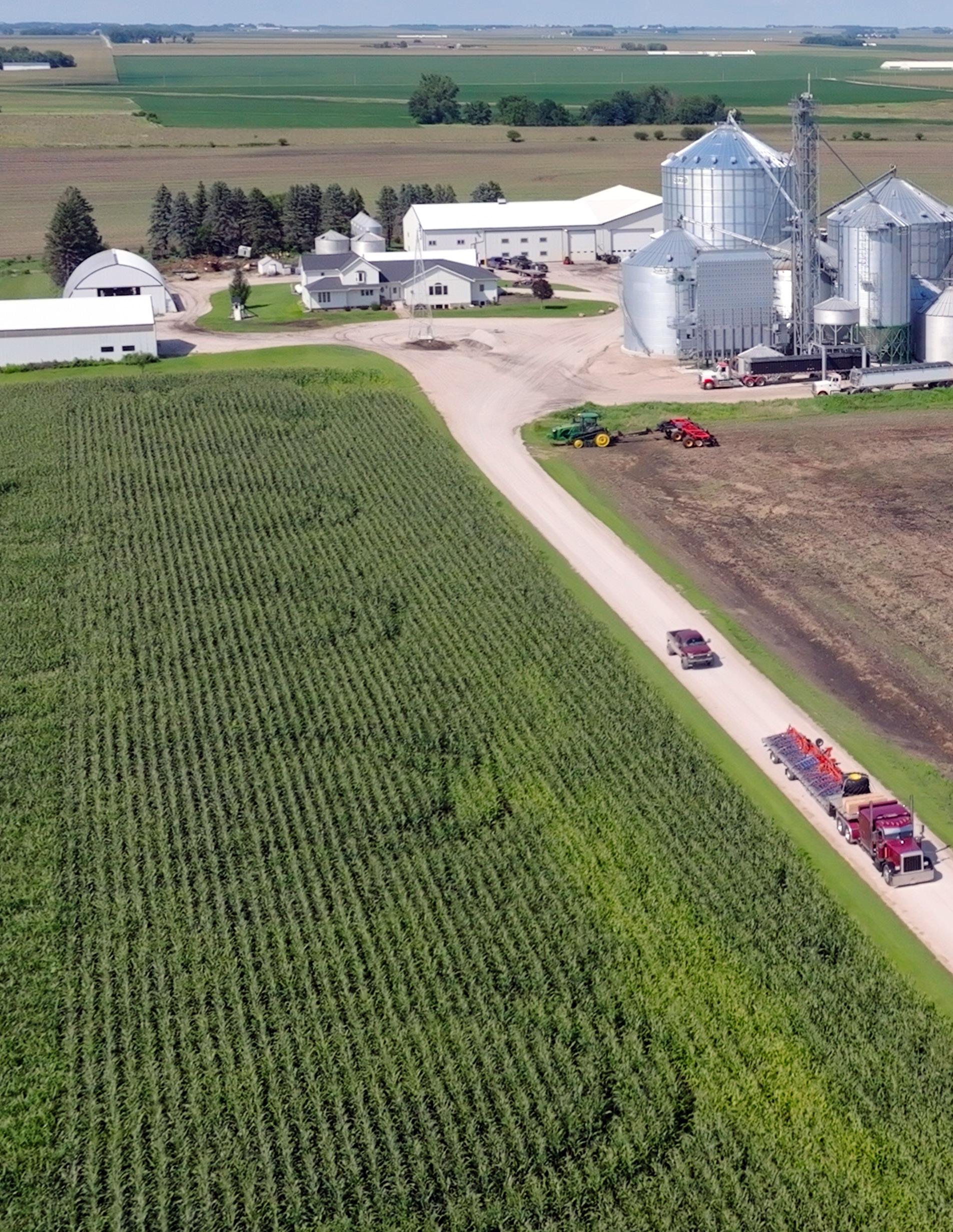
From soil to family, the story of Grain Millers and G3 Organics reflects how connection, trust, and shared purpose shape the next generation of organic farming.
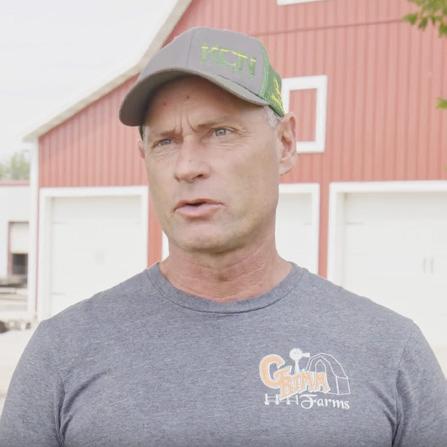
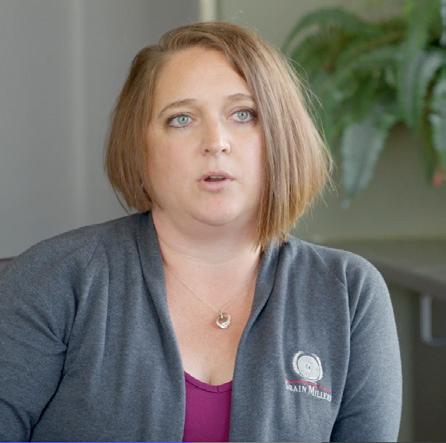
For the Grimm family in West Bend, Iowa, farming has always been a story of dedication, innovation, and family. On their fifth-generation farm, G3 Organics, connection runs as deep as the soil.
“My great-grandmother’s family was the first to settle on our homestead,” says Jordan Grimm, who now farms alongside his seven sons and father. “We’ve been here ever since, growing with the land and each other.”
When Jordan looked for ways to keep his family farming together, the shift to organic was both a practical decision and a promise to the next generation. “We wanted to bring our sons into farming without adding acres. Organic allowed us to make more per acre, improve soil health, and farm responsibly,” he explains. “The soil just changed. You can stick your hand in it now and feel the difference.”

That commitment to improvement and transparency led G3 Organics to partner with Grain Millers, established in 1980’s. The Marion, Indiana facility was first certified by Oregon Tilth and has worked with organic producers since 1990 and sees relationships as the backbone of organic integrity. “We’ve built our business on relationships,” says Lindsey Mullenbach, Director of Quality and Regulatory. “Our role is to be a bridge, connecting growers, procurement teams, and customers so everyone has what they need to succeed. It’s about doing the right thing, always.”
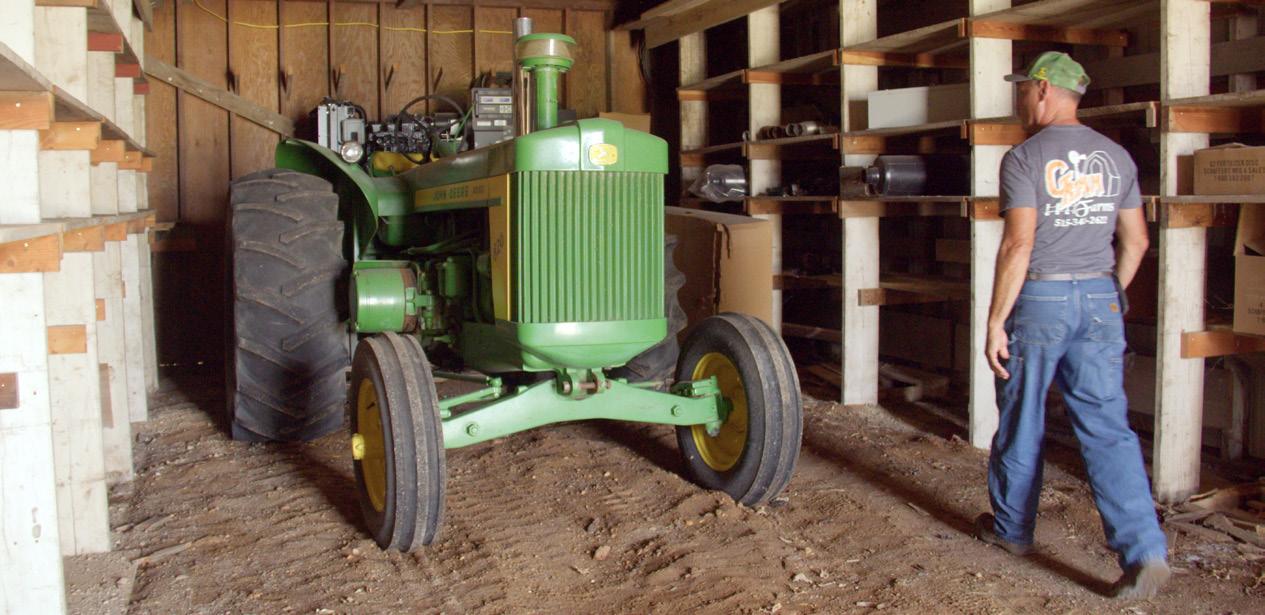
For Jordan, the certification process has been both challenging and rewarding. “Oregon Tilth made it easy to understand what was expected,” he says. “It takes time, but it keeps us accountable and proud of what we produce.” The partnership between Grain Millers and G3 Organics reflects the spirit of collaboration that defines the organic community, where each link in the chain supports the next.
From repurposed farm equipment to regenerative soil practices, the Grimm family continues to innovate while honoring their roots. Their story, like Grain Millers’ commitment to farmers, shows that organic is more than a certification. It is a connection between people, generations, and the promise of a better way to grow.
“My hope is that the next generation can keep farming and live the same life I had. I don’t want to be the last generation farmer.”
–Jordan Grimm, G3 Organics
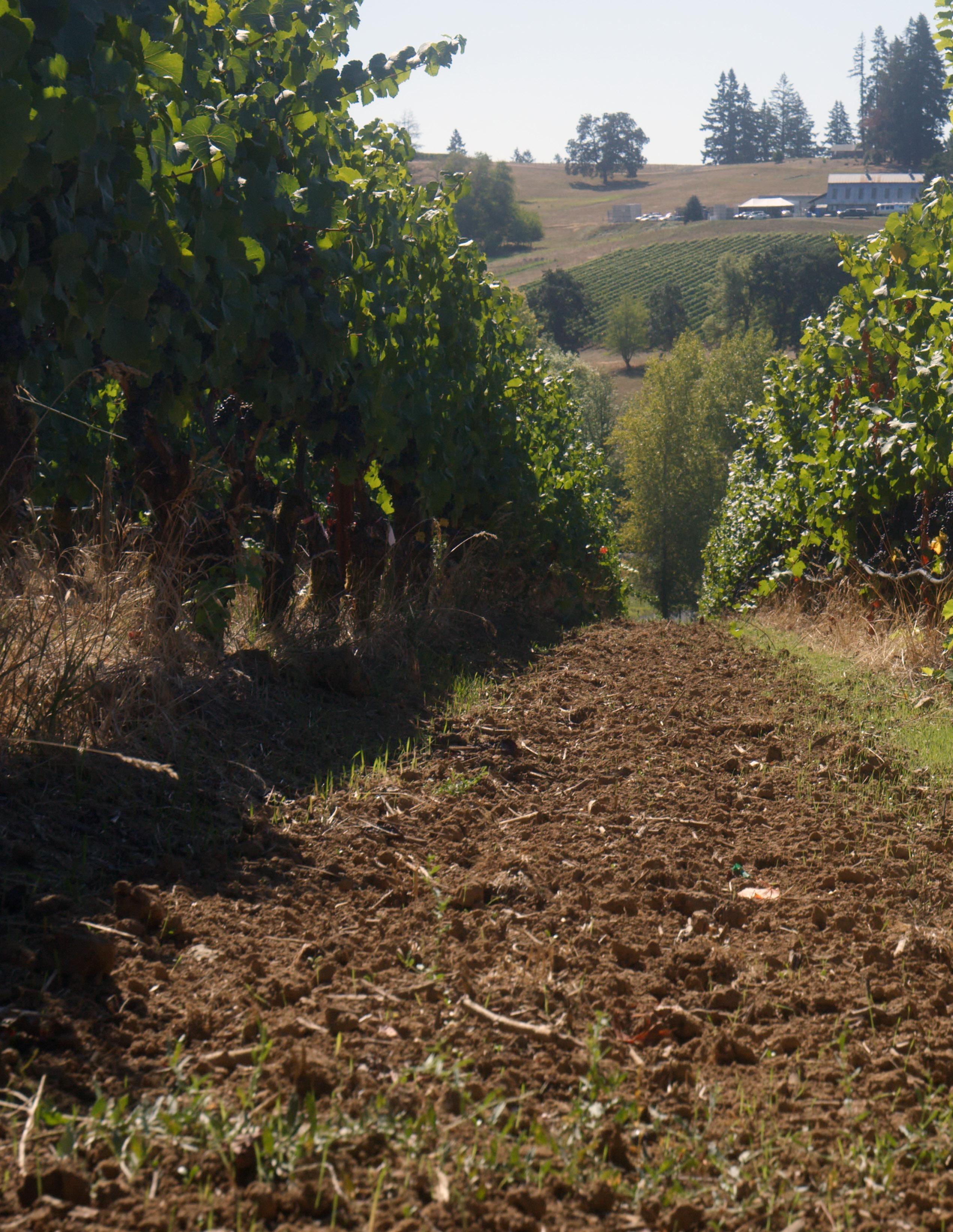

From soil to glass, Lemelson Vineyards grows connection, craftsmanship, and care through every organically farmed acre.
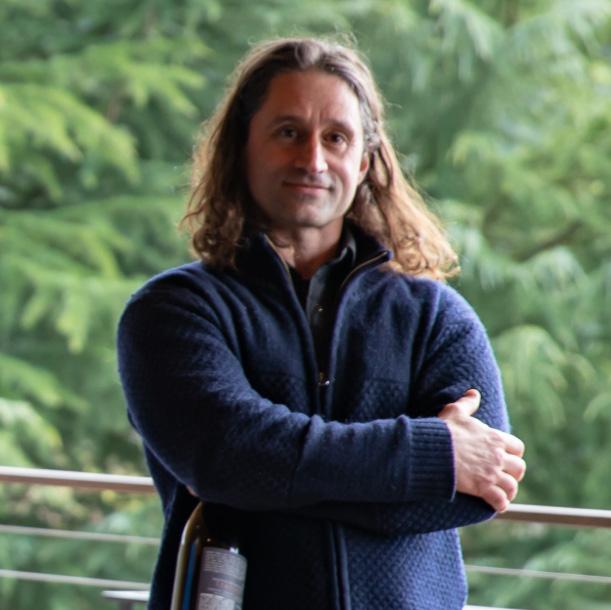
In Oregon’s Willamette Valley, Lemelson Vineyards stands as a living expression of vision and values.
Founded by Eric Lemelson, an environmental lawyer inspired by his grandmother’s organic garden, the vineyard was designed to be different. From the first vines planted in the late 1990s, Eric’s goal was clear: to produce world-class wines while caring for the land and the people who tend it. “It was really a no-brainer for him,” recalls Rob Schultz, Vineyard Manager. “He wanted to be an organic farmer before he wanted to be a winemaker.”
Today, Rob oversees 130 acres of certified organic vineyards spread across five distinct sites. Each vine is touched by hand a dozen times throughout the season, reflecting both the precision and patience that organic viticulture requires. “We farm organically because it is safer for me, for our team, and for the environment,” Rob explains. “But even beyond that, we make better grapes and better wine when we farm this way.”
The journey to organic success has not been without challenges. In an industry that long believed organics could not produce highquality fruit, Rob and his team learned to innovate and collaborate. They found natural solutions through canopy management, timing, and experimentation with organic materials. “We use cinnamon and sulfur to prevent mildew,” Rob says. “It outperforms anything synthetic, and it proves that nature already provides what we need.”
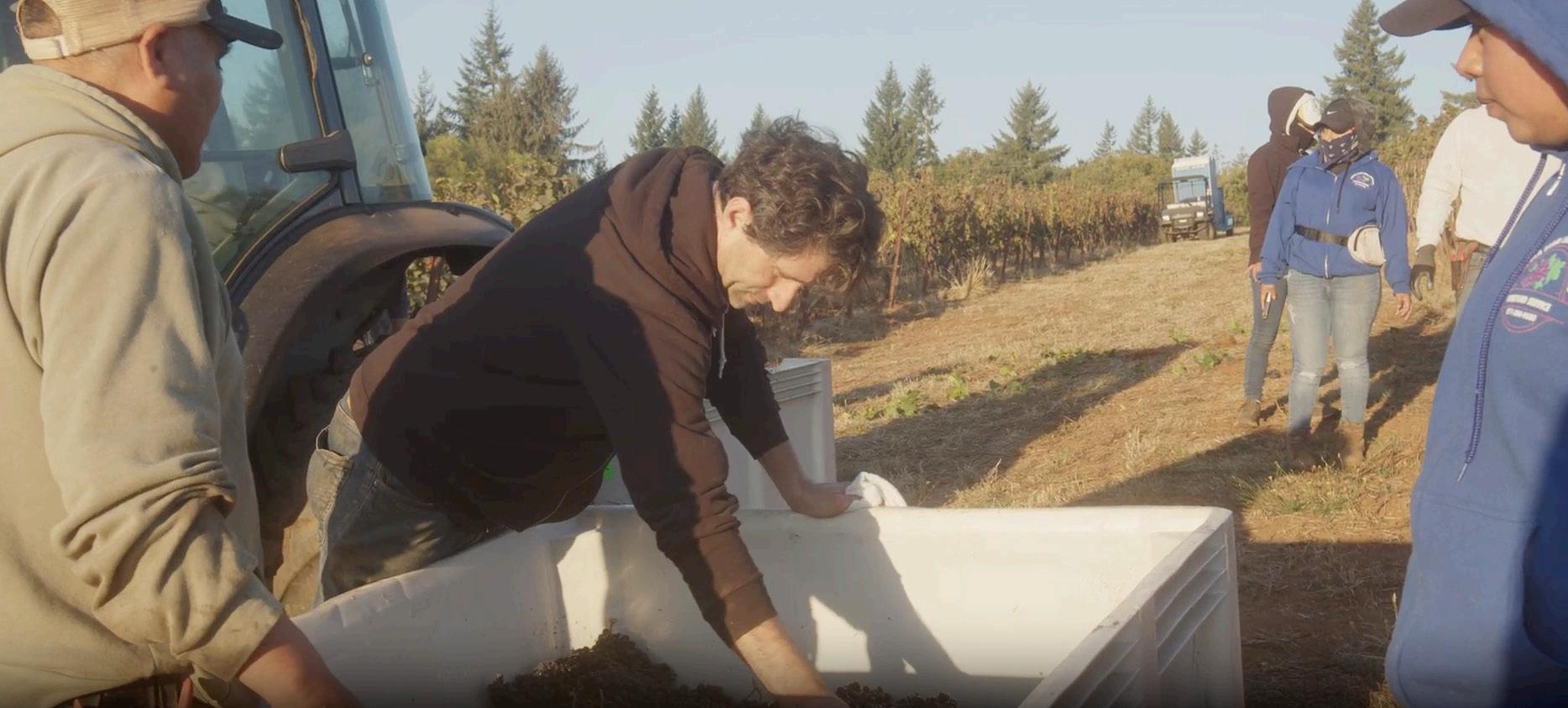
For Rob, farming organically is as much about people as it is about production. “When you are farming chemically, you have to think twice before hugging your kids,” he says. “Here, I can feel proud of what we grow and what we give to people. It is farming with love and intention.”
That spirit of connection continues to expand. Rob is part of the Organic Winegrowers Network, a growing community of viticulturists who share practices, ideas, and inspiration. “For years, people said organic wine could not compete,” he reflects. “Now, some of the best wines in the world are grown organically.”
For Lemelson Vineyards, certification with Oregon Tilth is more than compliance. It is a shared commitment to integrity, transparency, and progress. A partnership built on trust and a belief that true craftsmanship begins with care for the land, the people, and the planet that sustains us all.
“By farming organically, I can feel proud of what we grow and what we give to people. It’s farming with love and intention.”
–Rob Schultz, Lemelson Vineyard
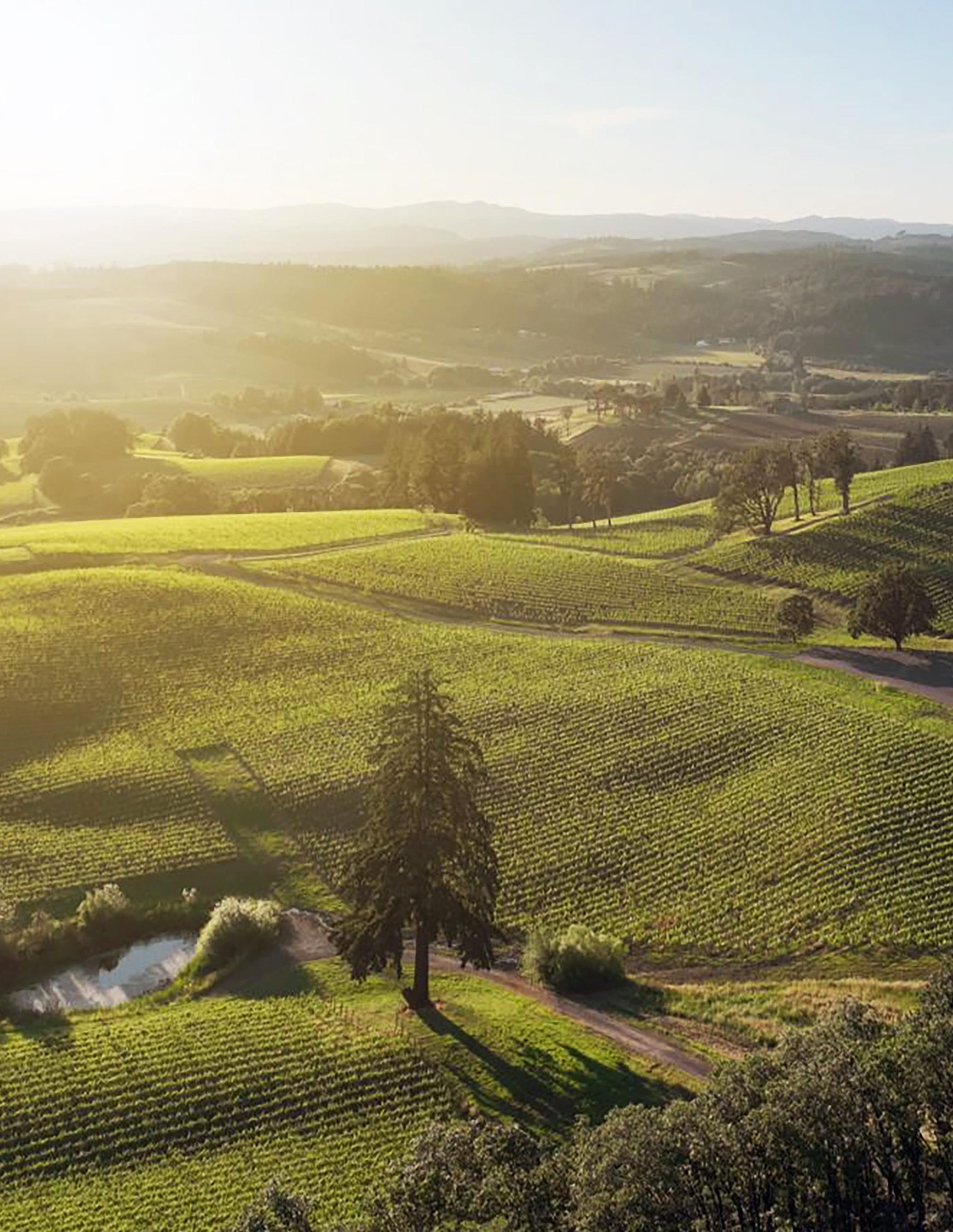
Across research fields, Oregon’s organic wine community grows through advocacy, collaboration, and a shared commitment to integrity and innovation.
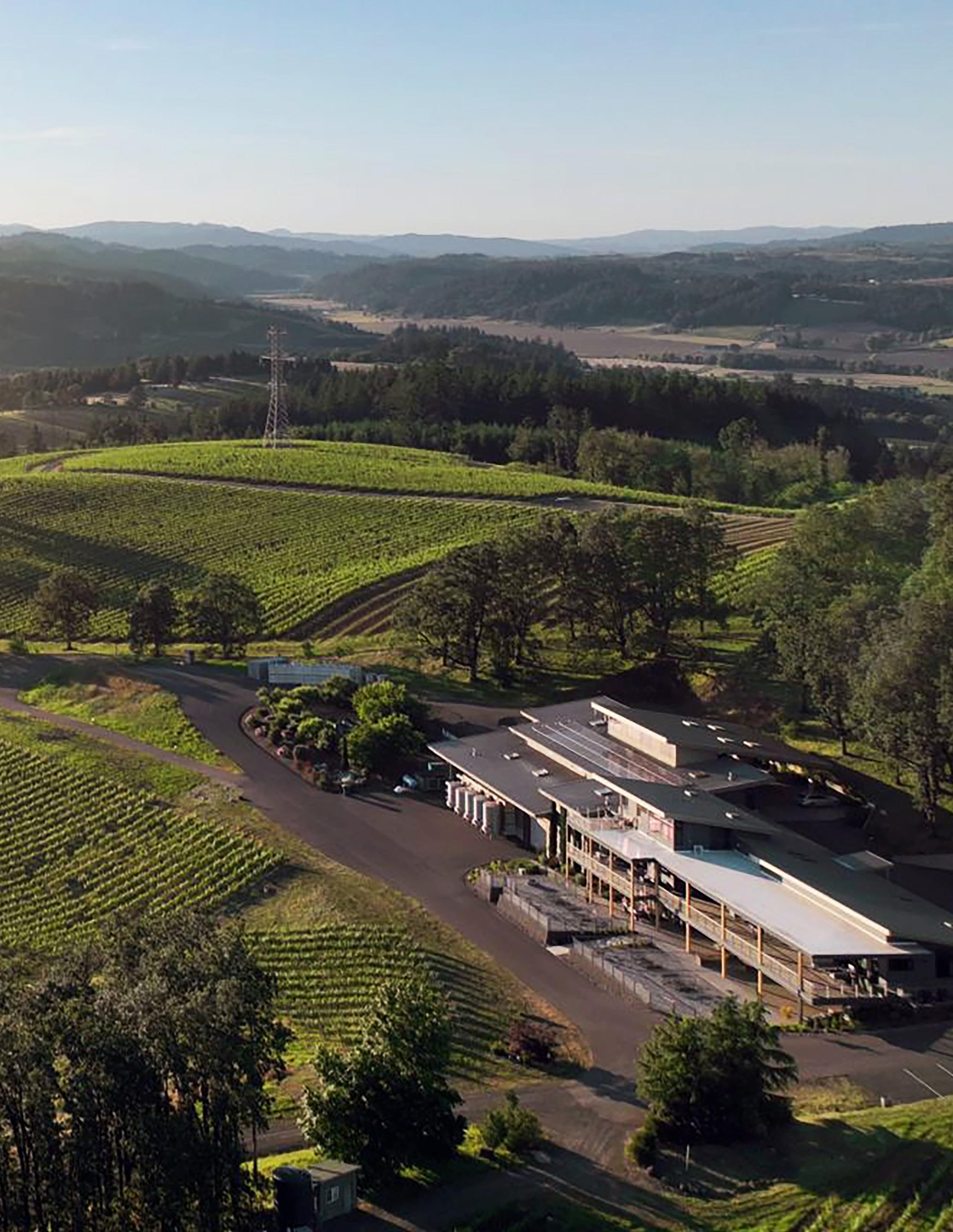
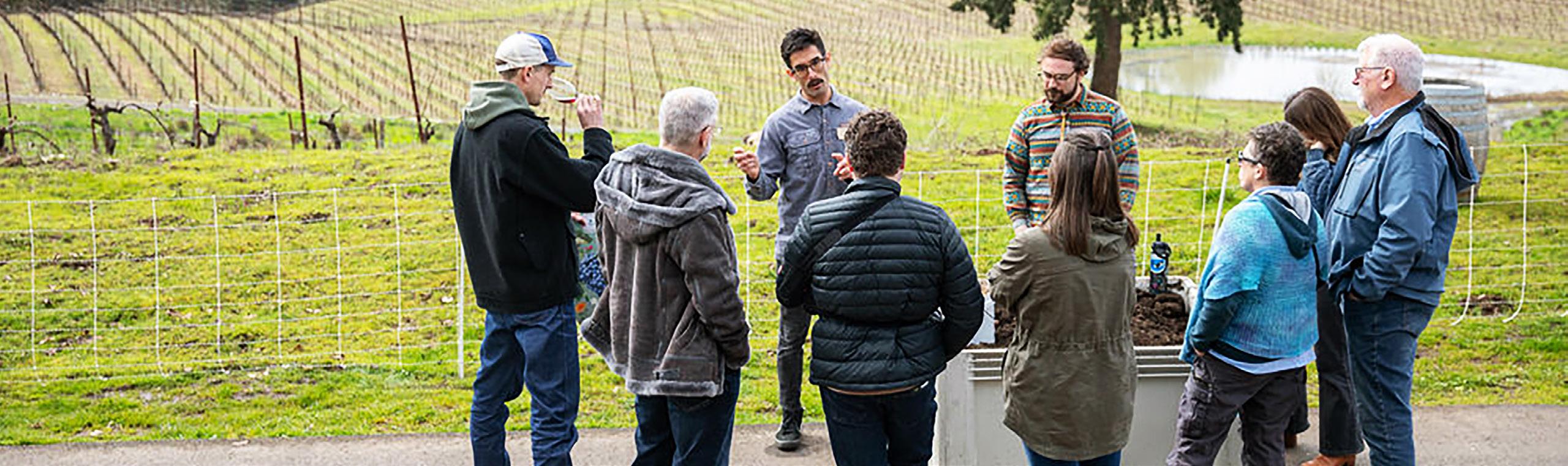
Oregon’s organic wine movement continues to grow from the ground up, strengthened by collaboration, science, and shared purpose.
Earlier this year, the Organically Grown Wine Conference presented by the Organic Winegrowers Network, held at Alexana Winery in Newberg’s Dundee Hills American Viticultural Area (AVA), became a landmark moment for Oregon’s viticulture community. Co-organized by Amy Wong, Coalition Director of the Oregon Organic Coalition, Drew Herman, Director of Viticulture at Alexana Winery, and Rob Schultz, Vineyard Manager at Lemelson Vineyards, the event united growers, educators, certifiers, and advocates to explore what it truly means to cultivate for the future.
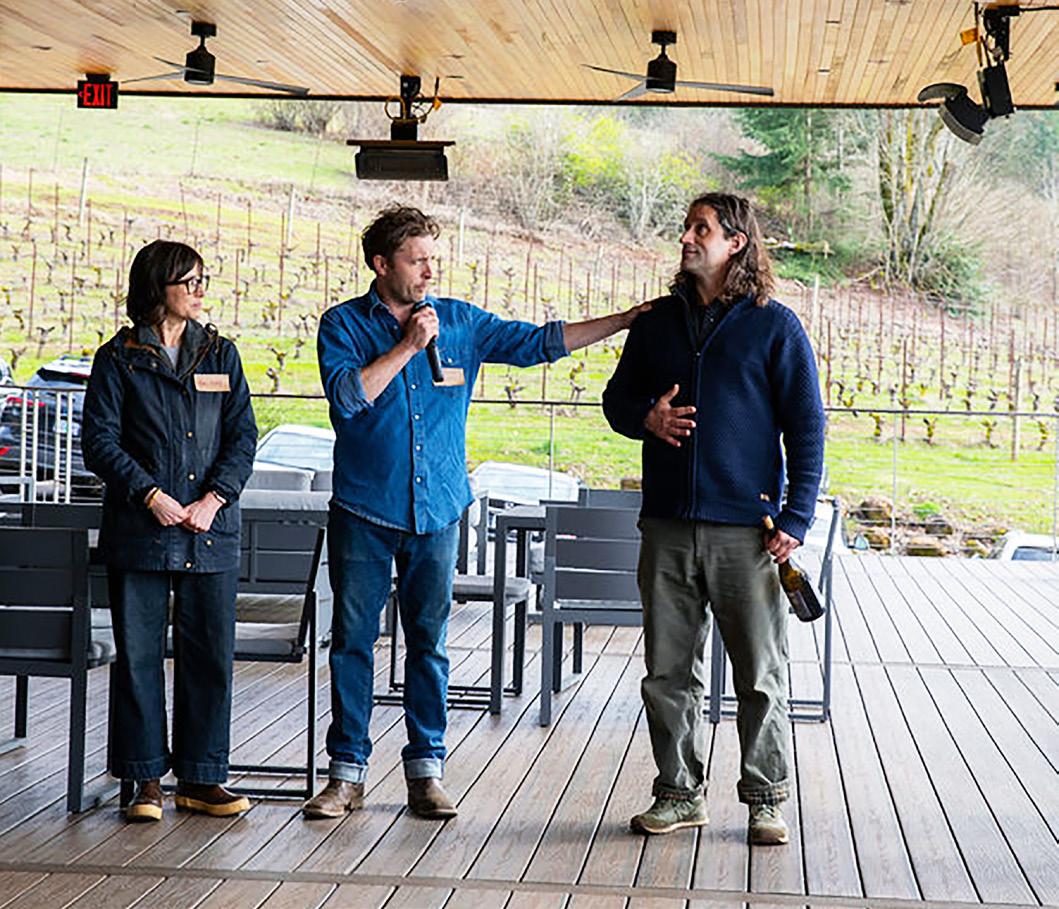
The conference was the first of its kind in Oregon, offering a platform where growers could share real-world experiences and technical insights while researchers and policymakers discussed how to build systems that sustain growth for the long term. From conversations about soil health and ecological balance to the economics of organic certification, every session returned to one central idea: connection. Connection between people and land, science and practice, and between organic values and market realities.
Former CEO Chris Schreiner reflected on the decades of advocacy that laid the groundwork for Oregon’s leadership in organics.
“Having the USDA Organic Program created opportunities for research, investment, and collaboration,” he said. “Oregon now has six organic extension agents at OSU. That is revolutionary.” His perspective underscored how advocacy and partnership have turned passion into progress by aligning universities, certifiers, and farmers through shared purpose and trust.
For Oregon Tilth, this is what advocacy looks like in action: creating space where people, data, and operational excellence grow together.
From securing federal funding for organic research to supporting producer-led initiatives such as the Oregon Organic Coalition, Oregon Tilth continues to play a catalytic role in shaping the infrastructure that sustains organic agriculture. Its work bridges the gap between policy and practice, ensuring that scientific innovation reaches the fields and the farmers who need it most.
Wine, Drew Herman shared his team’s journey to certification.
Their transition to organic was both a technical and philosophical transformation. “We weren’t just swapping products,” Drew explained. “We were rethinking our relationship to the land.” Alexana’s approach combined ecological restoration with modern precision tools, planting multi-species cover crops, integrating livestock, and relying on data and observation to guide every decision.
That balance of traditional stewardship and technological innovation reflects the future of organic wine. From drone mapping and soil microbiome analysis to regenerative soil practices, Oregon’s organic winegrowers are proving that sustainability and excellence can coexist. “Organic is not about limitation,” Drew said. “It’s about unlocking new potential through observation and care.”
The power of connection extends far beyond a single vineyard. Oregon’s organic wine community has become a model for collective advocacy, where competition gives way to collaboration. Through peer-to-peer learning networks, partnerships with Oregon State University, and support from programs such as TOPP (Transition to Organic Partnership Program), growers are learning from one another and building resilience together.
Oregon’s organic wine movement is thriving because it is built on authenticity and relationships. The collaboration between farmers, scientists, and certifiers is creating not only better wine but a better way of working, one rooted in trust, innovation, and the shared belief that integrity is the true measure of excellence.
As Oregon Tilth continues to champion advocacy, certification, and connection across the agricultural landscape, one truth remains constant. The power of connection is reshaping what it means to grow organically.
Through people, data, and collaboration, Oregon’s organic wine community is cultivating more than vineyards. It is growing the foundation for a more sustainable, transparent, and connected future for all.

Building networks, mentorship, and capacity to meet America’s rising demand for organic food.
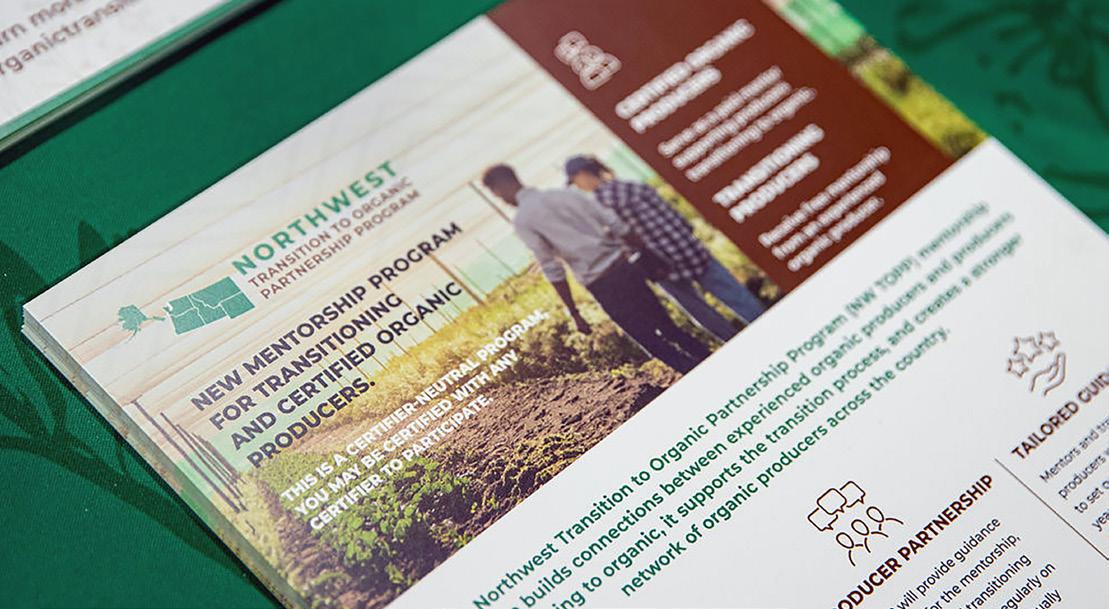
Transition to Organic Partnership Program (TOPP) is transforming how American farmers grow food, connect to markets, and prepare for a sustainable future.
Launched in 2022, TOPP invests in the capacity of U.S. producers to meet the increasing domestic demand for certified organic food while strengthening rural economies and preserving the integrity of the USDA Organic seal.
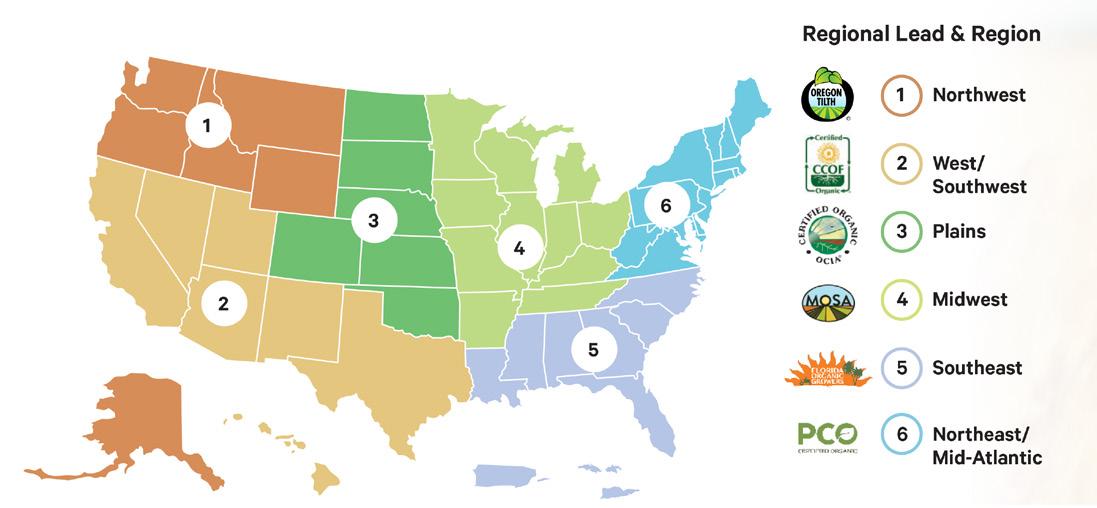
As one of six regional leads, Oregon Tilth plays a pivotal role in implementing this vision across the Northwest. Through partnerships, mentorship, and technical support, Oregon Tilth helps producers navigate the complex transition process, connect with mentors, and build networks that sustain long-term success in organic agriculture.
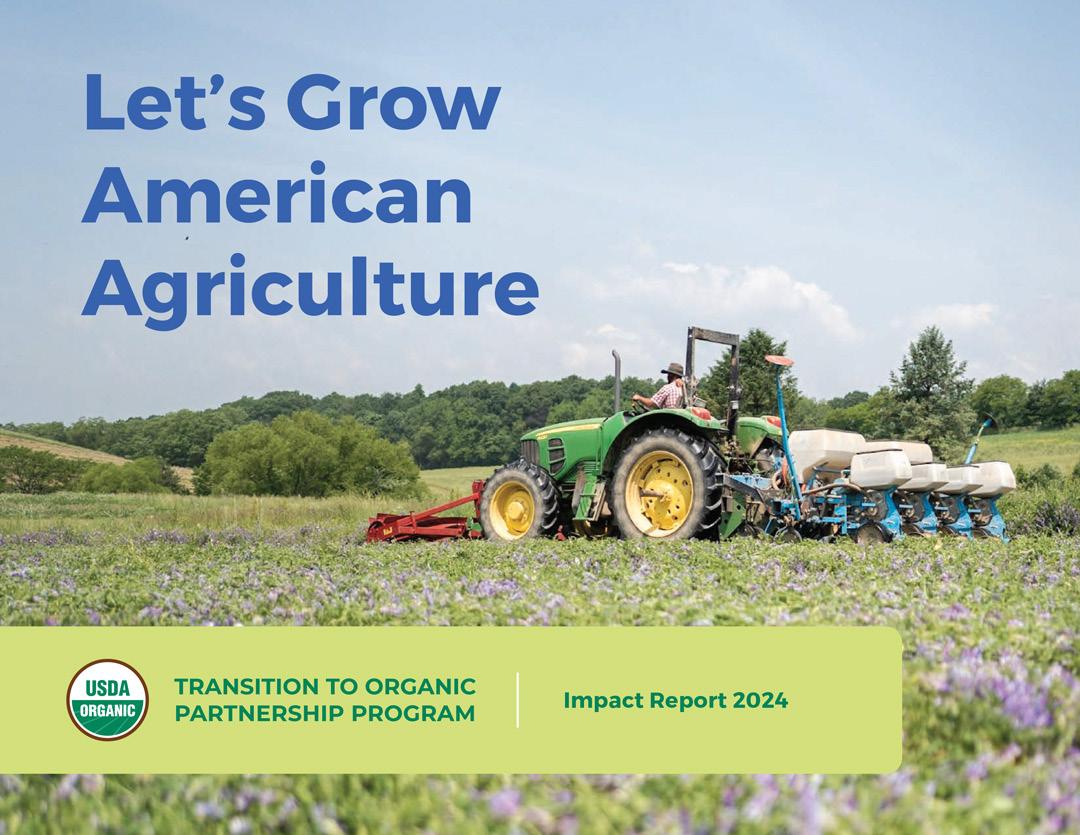
The USDA TOPP Impact Report (2024) reveals a year of measurable progress and meaningful connections. Across all six regions, the program linked 237 experienced mentors with 327 transitioning mentees, hosted nearly 1,500 educational events, and provided 2,225 technical assistance engagements.
Together, these efforts supported more than 500 operations in achieving organic certification and helped transition over 260,000 new acres of farmland into organic production.
Each mentorship, workshop, and field day tells a story of connection and growth. From Oregon’s vineyards to the Great Plains and Southeastern produce farms, TOPP’s peoplecentered model is building bridges between experienced organic farmers and those beginning the transition. This peer-to-peer approach strengthens confidence, supports compliance, and fosters a culture of shared learning that helps farmers thrive.
The program directly addresses a pressing national challenge: while 82% of American households purchase organic products, domestic supply has not kept pace with rising demand. The United States spent an estimated $8.9 billion on organic imports in 2024, according to research by the Organic Trade Association (2025). By equipping U.S. farmers with technical skills, financial guidance, and regional support, TOPP is helping close that gap, ensuring more organic food is produced on American soil.
165+
Partner Organizations Across Six U.S. Regions
2,225 Technical Assistance
Engagements Delivered
237
Mentors*
327 Mentees*
*Active at end of 2024 fiscal year.
Through collaboration with more than 165 partner organizations, TOPP leverages the combined strength of local and national networks. This collective approach allows regional partners to tailor training and mentorship to their area’s unique climate, crops, and community needs while maintaining a shared national vision for organic growth. Every number represents a farmer, a community, and a step forward in strengthening America’s organic future.
3,863
New Operations Certified**
260,479
New Acres Certified**
**The total number of operations and acres certified, with a certification effective date between October 1, 2023 and September 30, 2024. This includes all operations and acres certified in FY24, with TOPP support and as part of the larger organic ecosystem.
For Oregon Tilth, this work reflects the organization’s mission to expand access, equity, and sustainability in the organic sector. As a regional lead, Oregon Tilth continues to collaborate with certifiers, universities, and nonprofits to build the systems and support networks that help farmers succeed.
Together, these efforts are not only closing the supply gap but also deepening the trust, transparency, and integrity that define the USDA Organic label.
The
power of connection is at the heart of TOPP’s success.
Through people, data, and shared purpose, Oregon Tilth and its partners are cultivating more than organic acreage. They are growing a stronger, more connected ecosystem that empowers farmers, supports communities, and ensures that the future of organic agriculture is built from the ground up.
By Claire Davis, Education Technical Specialist, Oregon Tilth
Based on interviews with TOPP mentee Daniel Reaux and mentor David Wills-Ehlers.
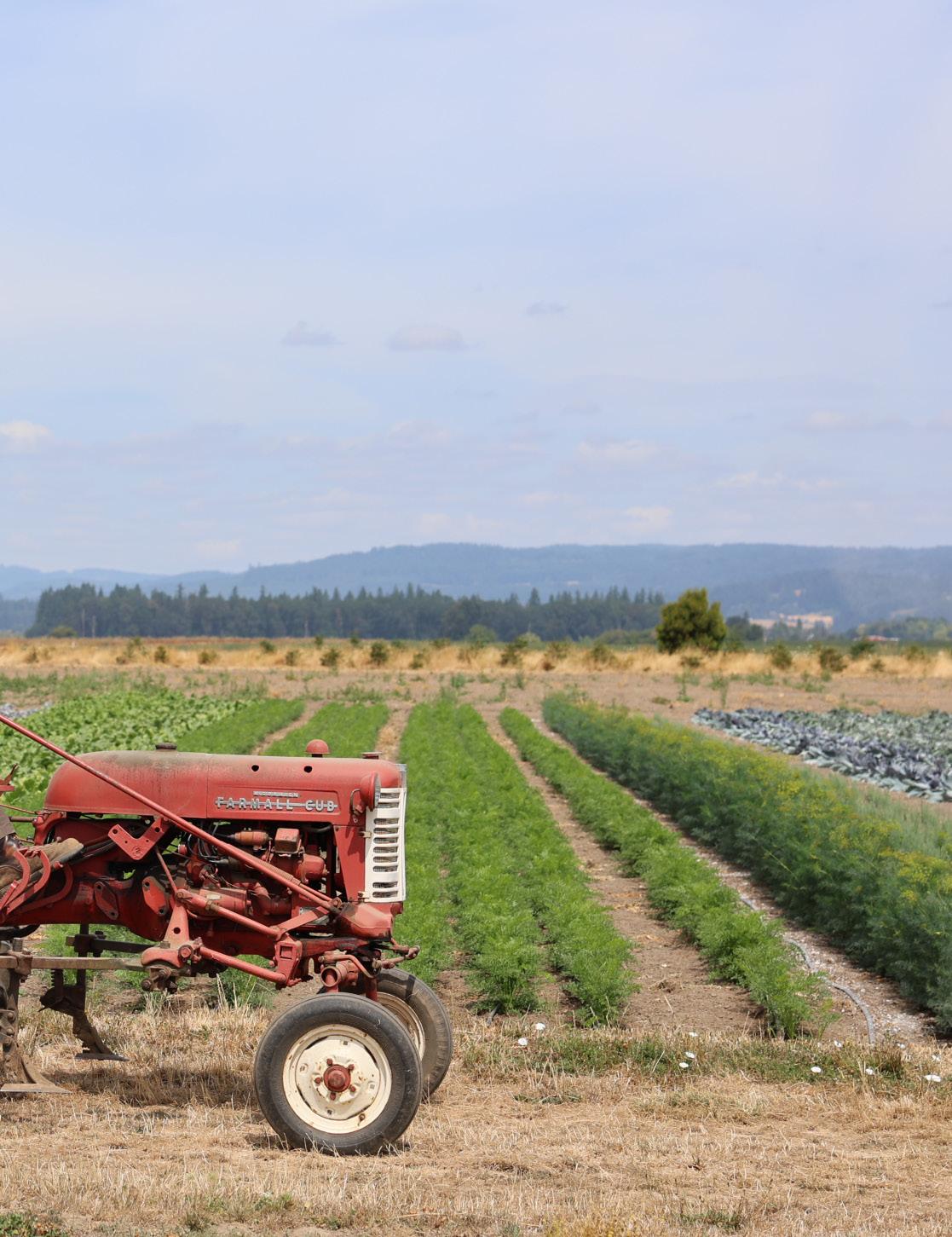
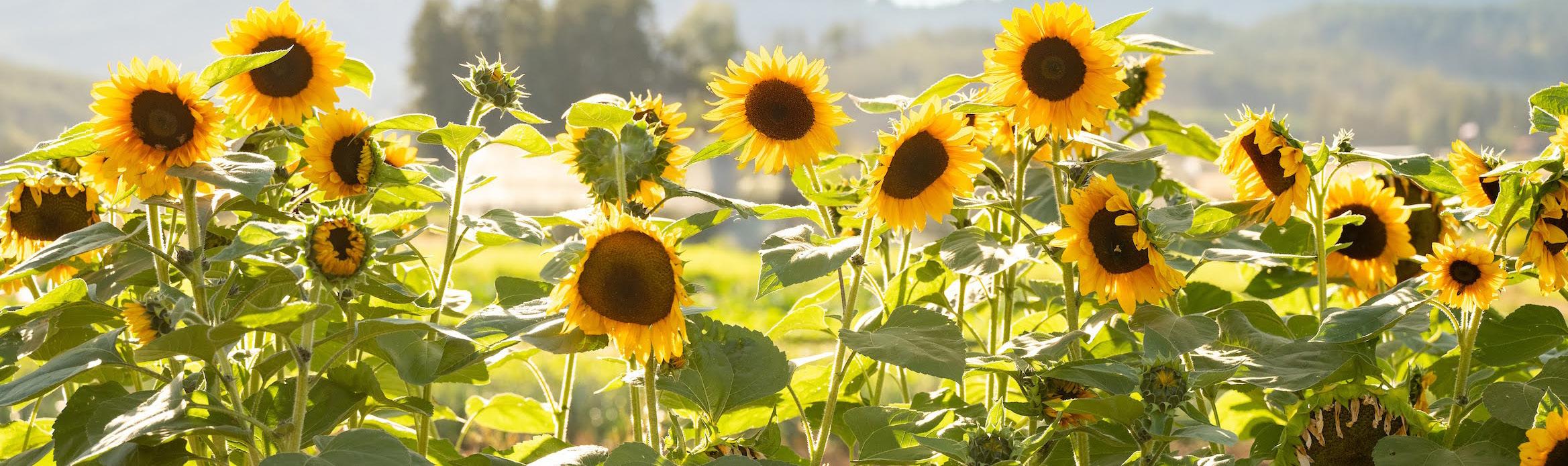
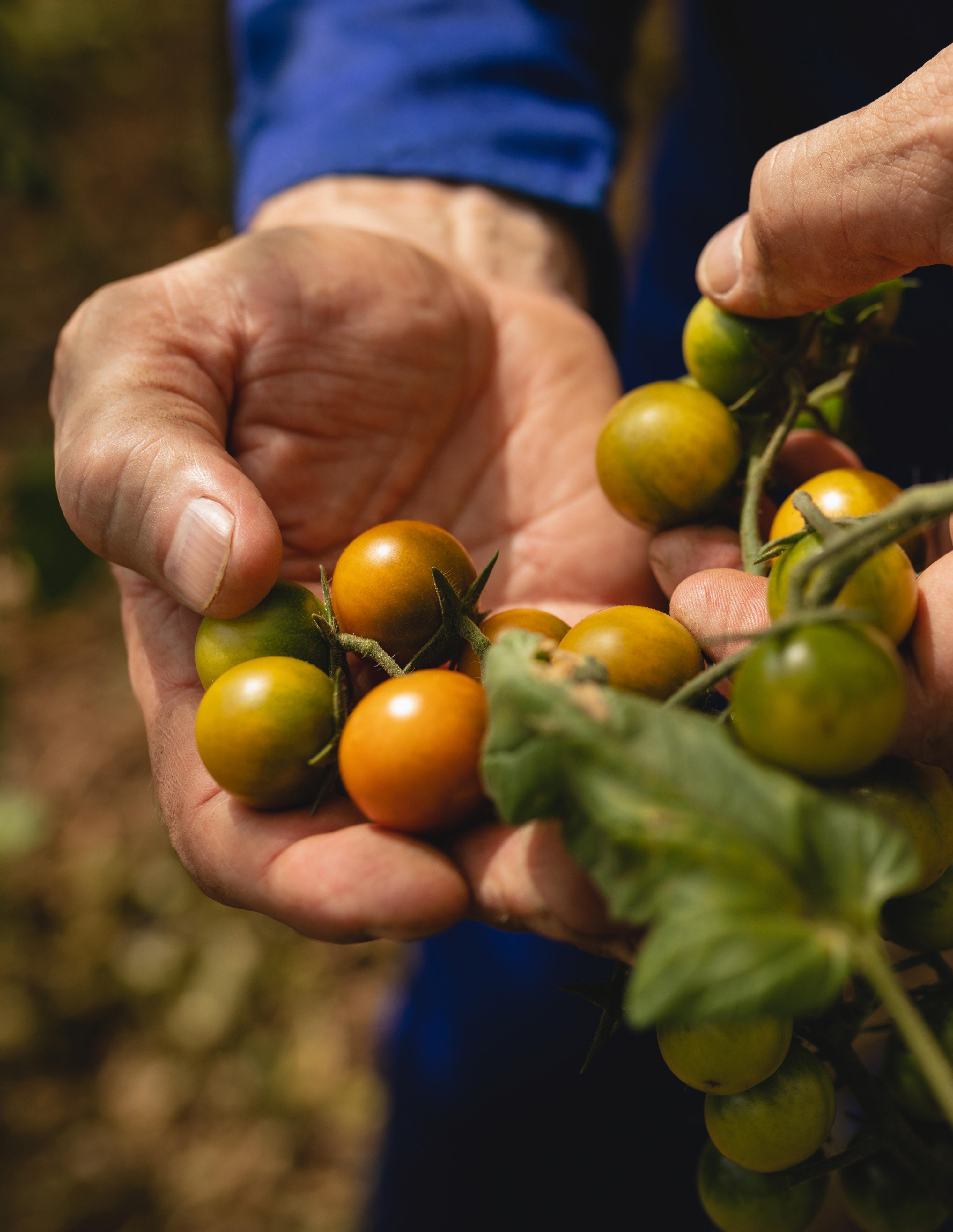
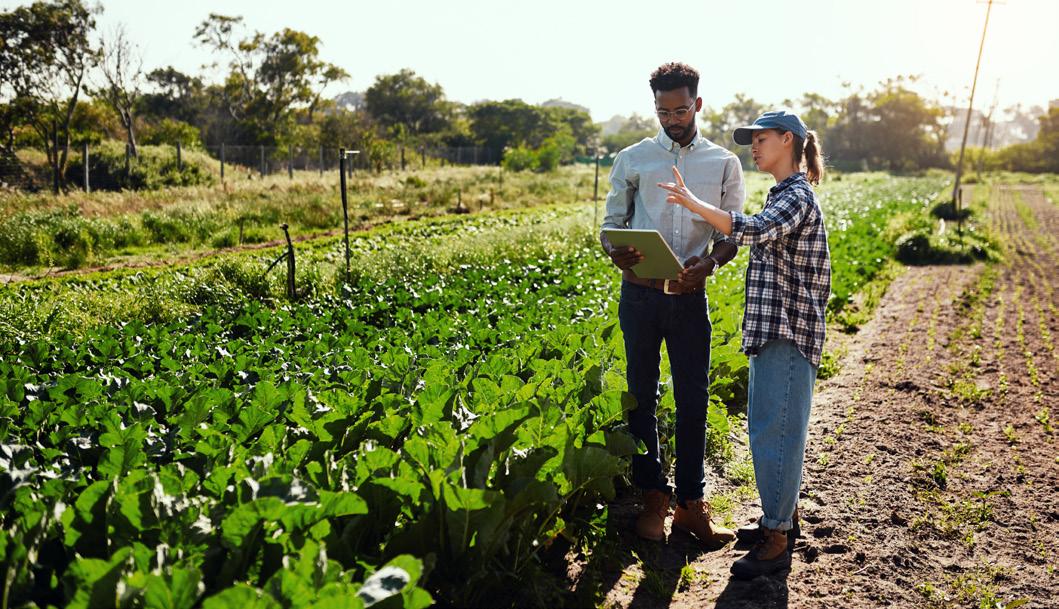
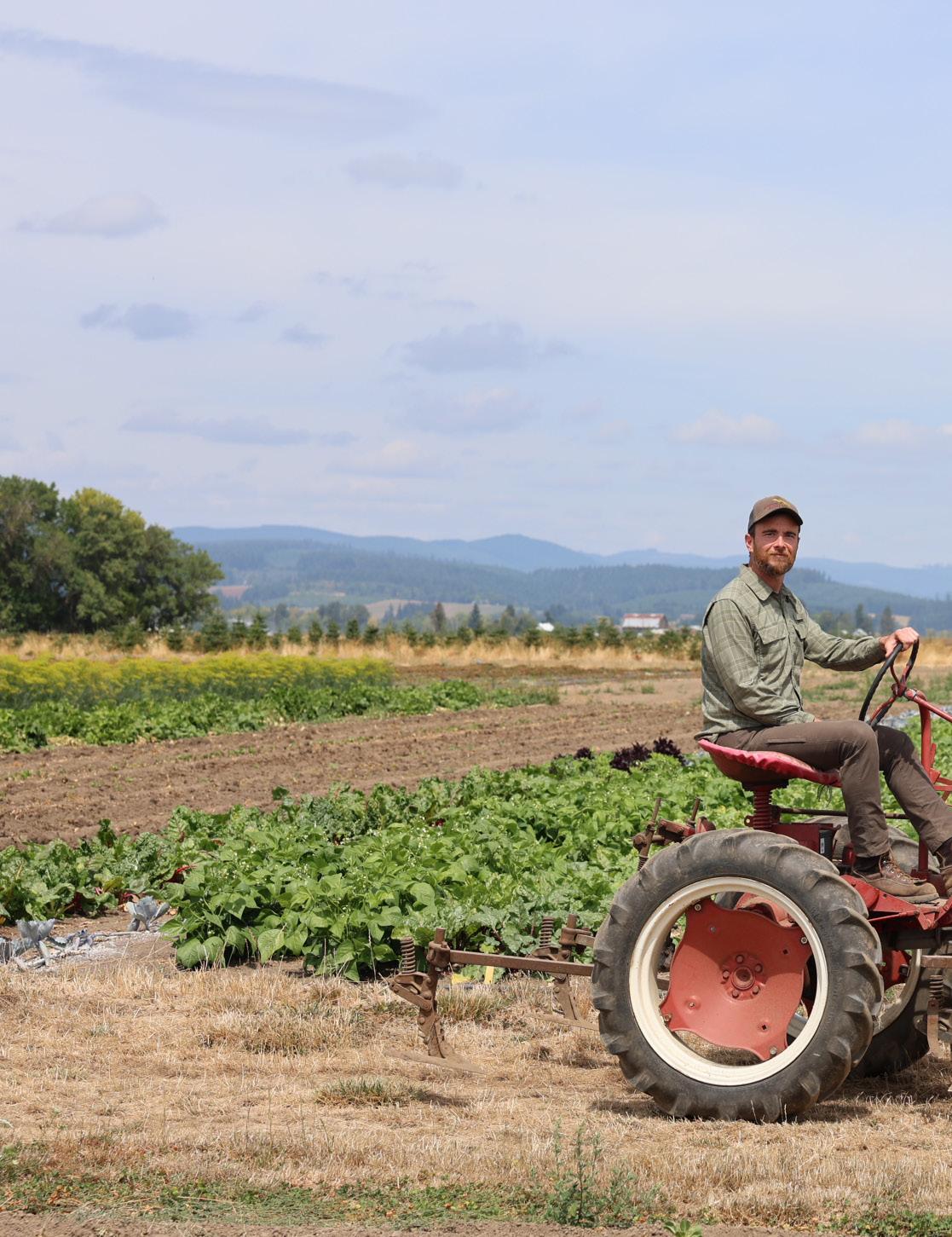
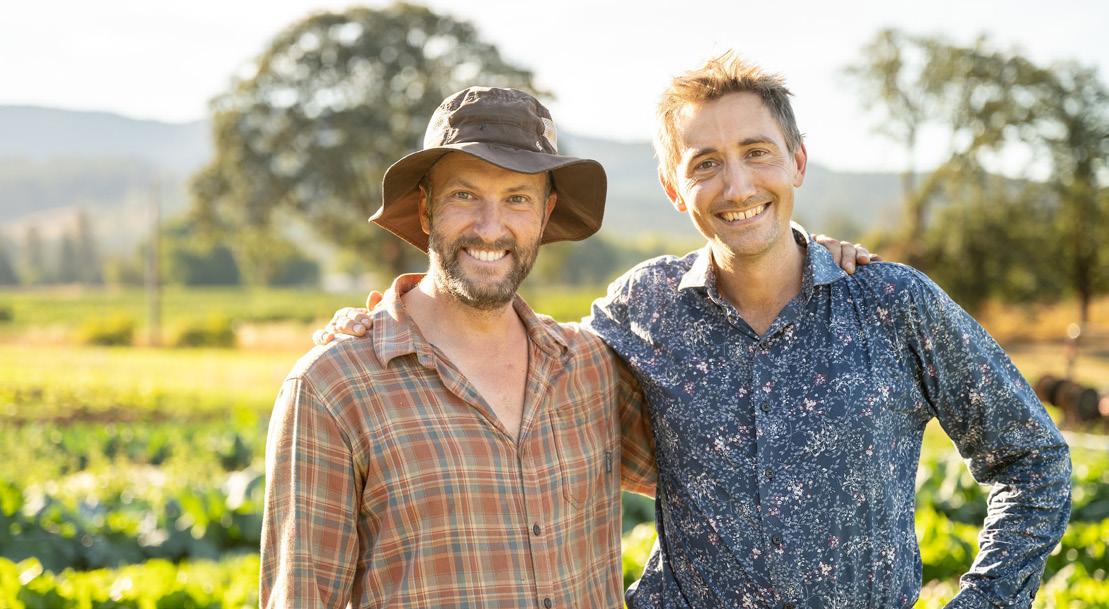
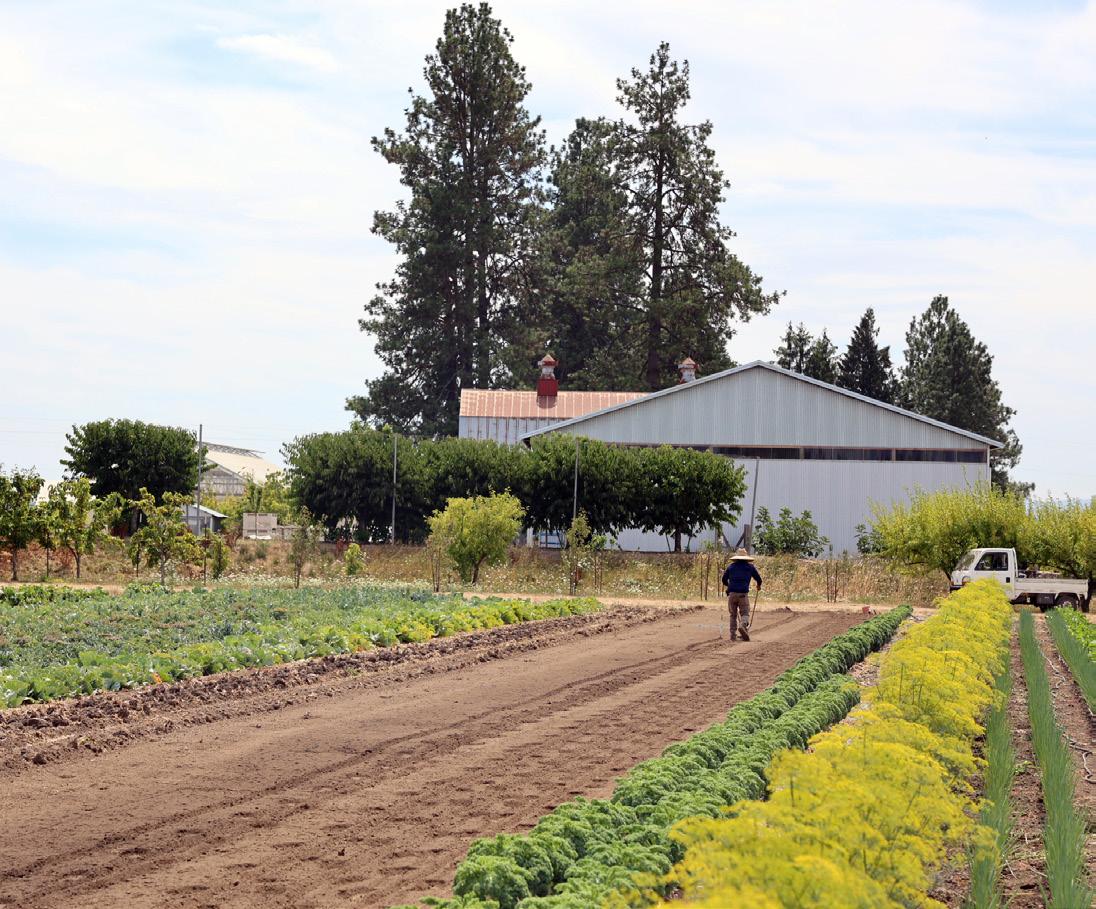
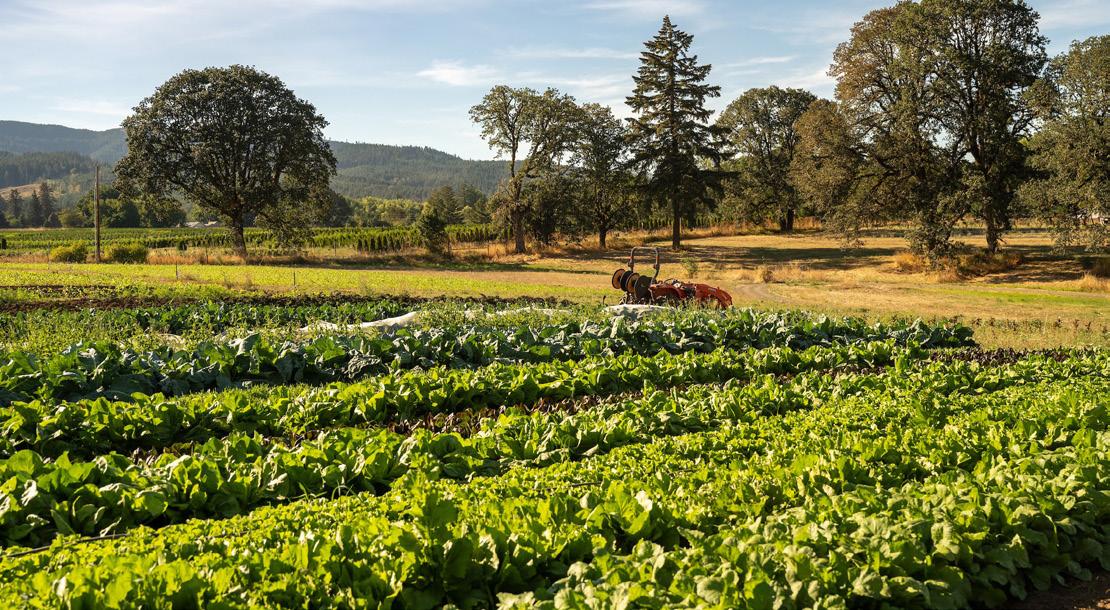
On a warm day in early August, farmers Daniel Reaux and David Wills-Ehlers walk through the sunny fields of Blooming Junction Farm, situated just west of Portland.
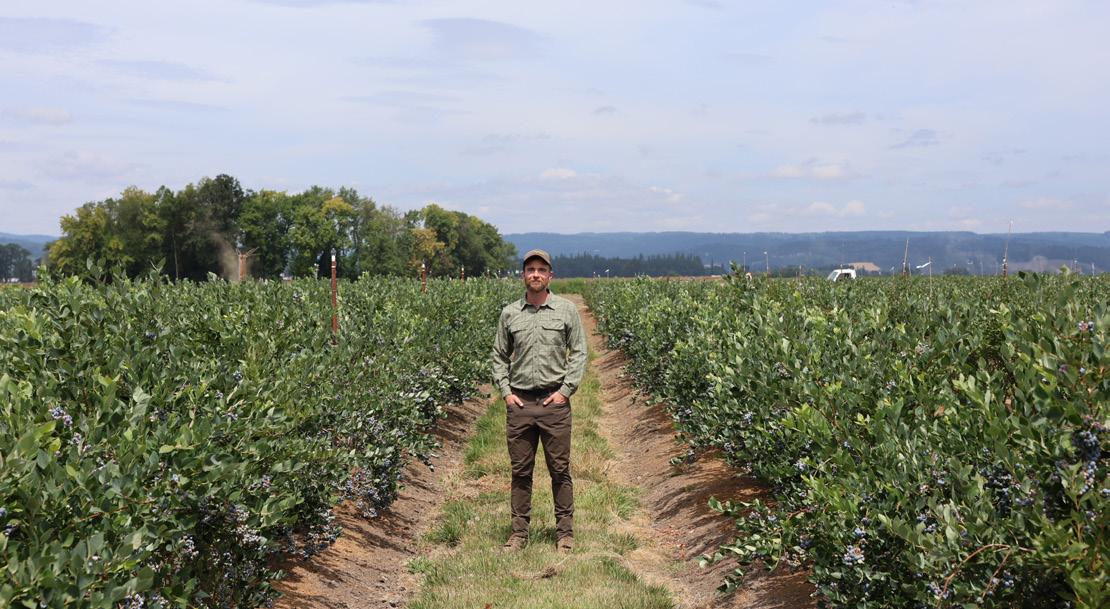
Daniel has been managing Blooming Junction for the last three years, while David co-owns and operates Zephyr Organics, a certified organic operation out of Gales Creek. Before starting Zephyr, David co-managed Zenger Organics in Southeast Portland.
In addition to loving their gigs as local Portland-area farmers, Daniel and David share another trait: a vested interest in organic certification. The two were connected through the Transition to Organic Partnership Program (colloquially known as “TOPP”), a USDA-funded initiative that assists producers with organic certification.
TOPP provides one-on-one mentorship from certified organic farmers and ranchers, as well as one-on-one certification assistance from regulatory specialists. The program was created to lower the barrier to entry for organic certification and address the growing demand for organic products in the US. Through TOPP, producers who are new to organic certification – mentees – are matched with organic-informed mentors in their region. The mentees receive direct, 1-on-1 mentorship at no cost, and the producers who join as organic mentors are well compensated for their time.
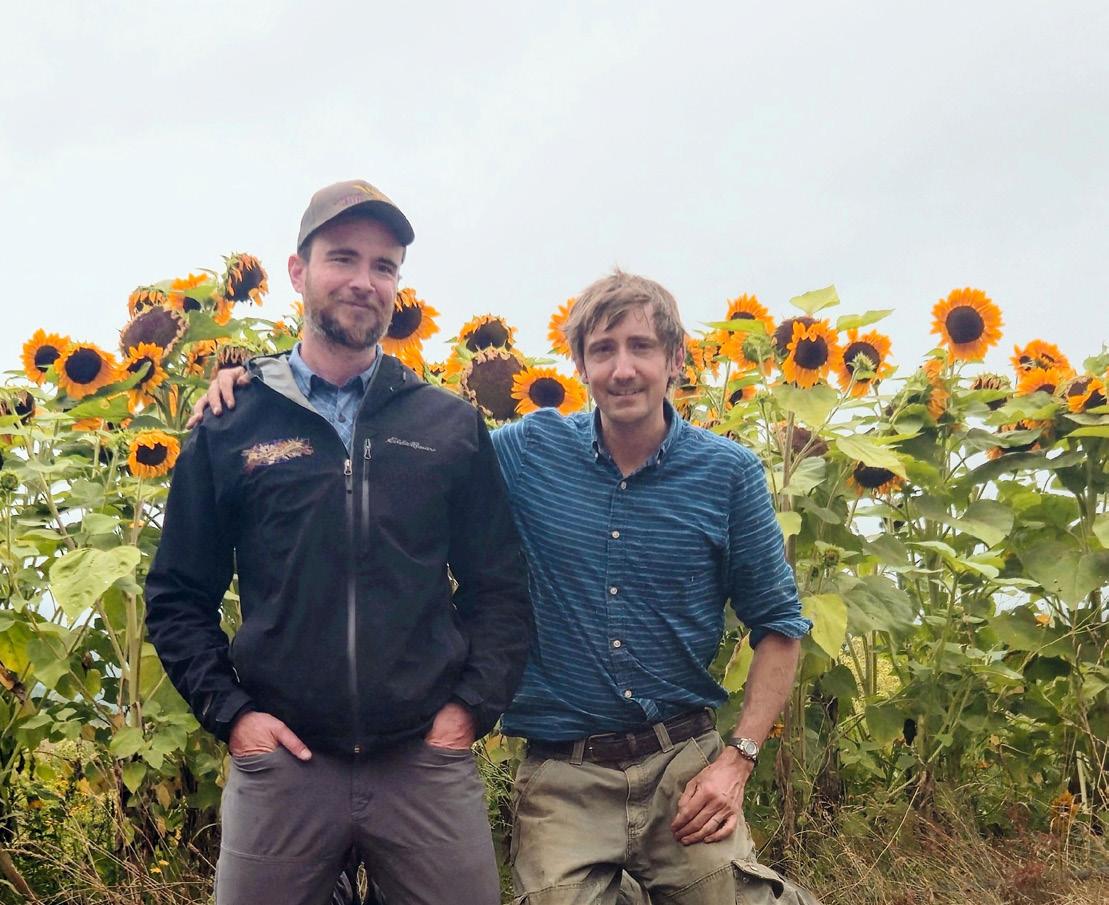
As Daniel works to achieve organic certification for Blooming Junction, David, with years of organic experience, is there to provide guidance each step of the way.
Here’s what the two farmers have to say about their experiences with TOPP:
What made you decide to pursue organic certification?
Daniel (mentee): Since the farm was started in 2013, we have prioritized regenerative and earth-minded practices. Becoming “certified” was always an ideal to work towards, but the initial cost and workload, especially developing and maintaining record keeping systems, seemed daunting. Pursuing organic certification became more of a possibility after achieving our Good Agricultural Practices (GAP) produce safety certification. This process required us to standardize and document many of the aspects of our operation that would be covered by an organic certification. With this foundation in place, we felt empowered to turn our focus on organic certification.
David (mentor): Having a third party audit and document these standards is a straightforward and honest way of doing things. We grow organically because it’s the right thing to do, and we have a third party sign off on our practices so that [customers] don’t have to take our word for it.
We already maintain thorough records as a matter of organizing our production plan, and the costs associated with certification are greatly offset by the market access that we gain -- even at our tiny scale.
What has your experience participating with TOPP been like?
Daniel (mentee): Getting started with organic certification can be overwhelming, and although there are plenty of resources available from the certifying agencies, having a mentor who’s already gone through the process as a farmer has made a huge difference. David has been a steady guide. We set up regular times to meet, both at our farm and at his. One of the most helpful aspects has been information sharing on documentation and recordkeeping –something I’ll admit I’m less adept at. He generously shared his spreadsheet templates and explained how Zephyr organizes their information, something that’s easy to overlook but critical to staying compliant. In addition to the farm visits, David’s been consistently available by phone and email. Having that kind of mentorship and support has made me feel much more equipped as we move forward in the organic transition process.
David (mentor): Working with mentees is as varied as are humans themselves … I can share my experience with record-keeping as well as the inspection process to help these producers feel prepared to make the leap and get certified. I’m also transparent about our own finances so that we can have frank and honest conversations about how the costs associated with certification balance with mentees’ own anticipated sales outlets.
Why should other producers consider joining TOPP, either as a mentee or mentor?
Daniel (mentee): This program offers valuable guidance in a field where much of the learning traditionally comes through years of hands-on experience. For mentees, it provides direct access to seasoned farmers who have already navigated the complexities of organic certification and sustainable practices. You can save yourself loads of stress and time, and gain a great relationship with a farmer who is dedicated to your success.
David (mentor): We are fortunate to live in a region with a surfeit of superb local growers and a great market base with high standards for produce. There’s a special culture of cooperation and knowledge sharing: lots of transparency, informal training, and mentorship taking place all the time. I love doing my part to pass this along. It’s a part of belonging in our tradition.
This TOPP program greases the skids for these kinds of informal relationships -- not just because there’s compensation for my time, which makes it easier to step aside from the farm here and there to provide advice, but perhaps more importantly, because they’re facilitating introductions between growers.
TOPP is helping to accelerate the process of bringing new farmers into the existing fold in ways that will pay dividends for all of us long after the TOPP program has ended.
If you’re interested in organic certification, or you’d like to become an organic mentor, reach out to Northwest TOPP today! Mentors are excited to connect with new mentees, and they are available across Oregon for all types of crop and livestock operations. You can also speak with a certification specialist at no cost to answer questions you have about organic certification.
Grants & Donations
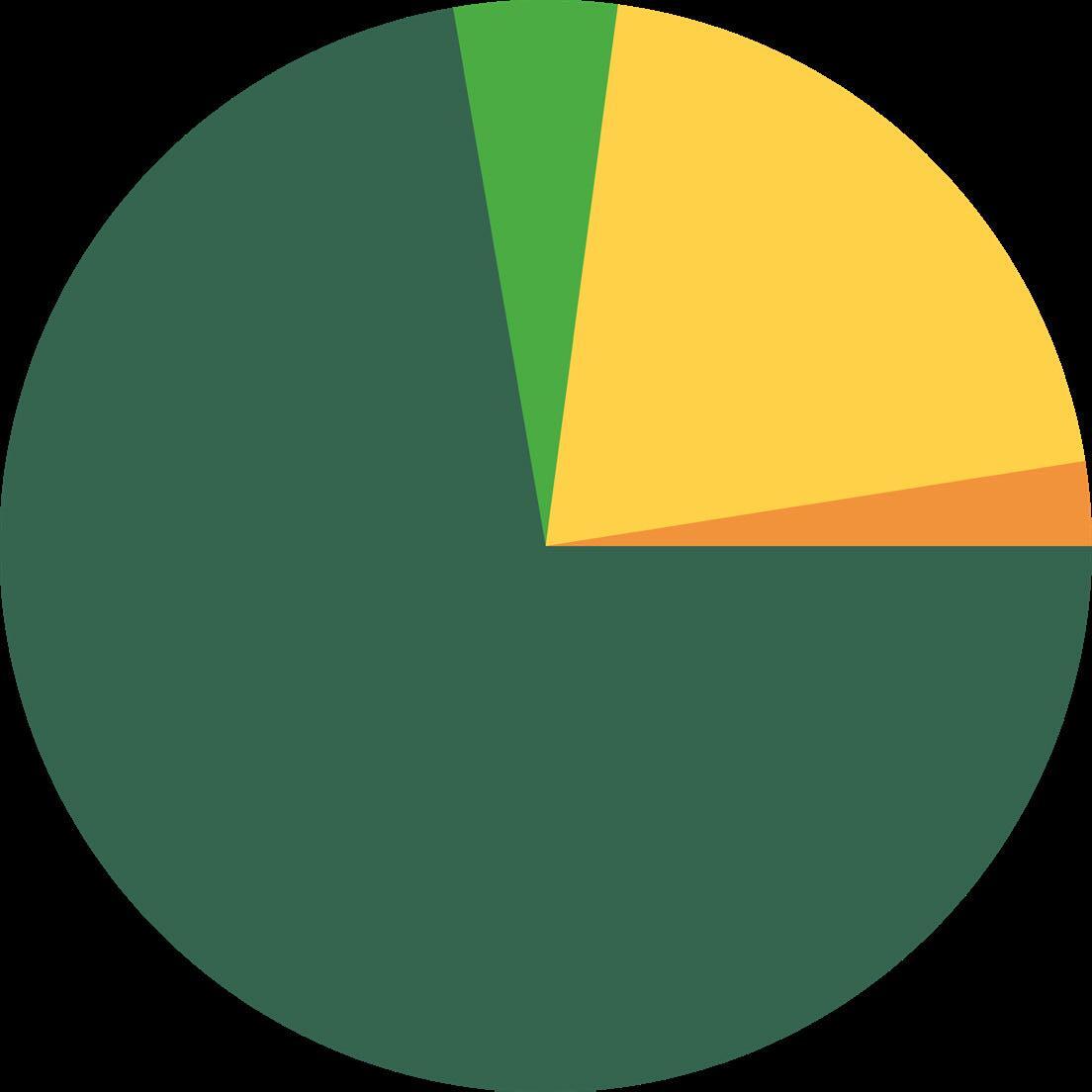
In 2024, Oregon Tilth strengthened its role as a connector across the organic community, closing the year with $14.2 million in total revenue. Domestic certification remained the core of our work at 72 percent of revenue, supported by steady engagement in Latin America certification at 5 percent. Our public support continued to grow, with 20 percent coming from grants, agreements, and sponsorships, and 2 percent from interest, dividends and other income.
Our investments in people, programs, and partnerships reflect the heart of our mission.
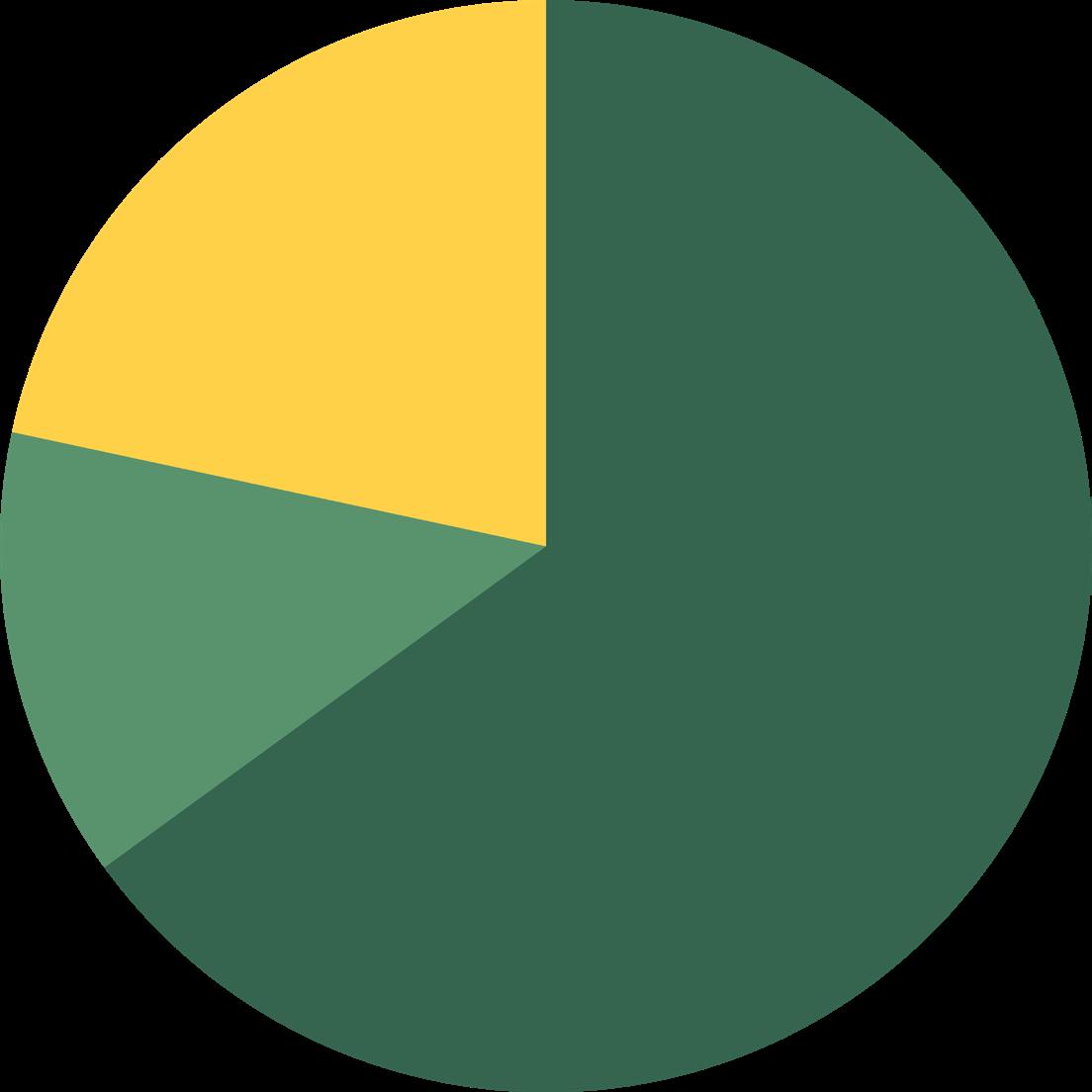
Oregon Tilth dedicated 65 percent of expenses to certification services, largely in the support of staffing, to ensuring producers received the support needed to maintain organic integrity. Another 22 percent funded our education, advocacy, and outreach initiatives that help producers connect to training, transition tools, and new markets. The backbone of administrative and general costs made up 13 percent, supporting the systems and staff that keep our programs strong and accessible.
Total expenses reached $14.5 million, positioning Oregon Tilth to meet rising demand while maintaining financial stability.
Across the year, our financial story reflected the power of connection. It showed how staff, producers, advocates, supporters, and partners are working together to strengthen a resilient and inclusive organic movement. Oregon Tilth enters the coming year with a stable foundation and a shared commitment to trust, transparency, and meaningful progress across the organic supply chain.
CONSOLIDATED STATEMENTS OF
(audited)
124,275
14,726,399