Thermal Imaging purpose-built for day & night birdwatching, ecology, conservation and wildlife observation.
DISCOVER | MEASURE | PROTECT | UNDERSTAND

Thermal Imaging purpose-built for day & night birdwatching, ecology, conservation and wildlife observation.
DISCOVER | MEASURE | PROTECT | UNDERSTAND
WILDLIFE OBSERVATION HAS ALWAYS BEEN ABOUT DISCOVERING MORE...
More species. More behaviour. More understanding of the natural world around us.
Yet much of nature remains hidden from view. Animals move through dense woodland unseen, birds disappear into reed beds, and the most fascinating moments often happen in the low light of dawn, dusk and night.
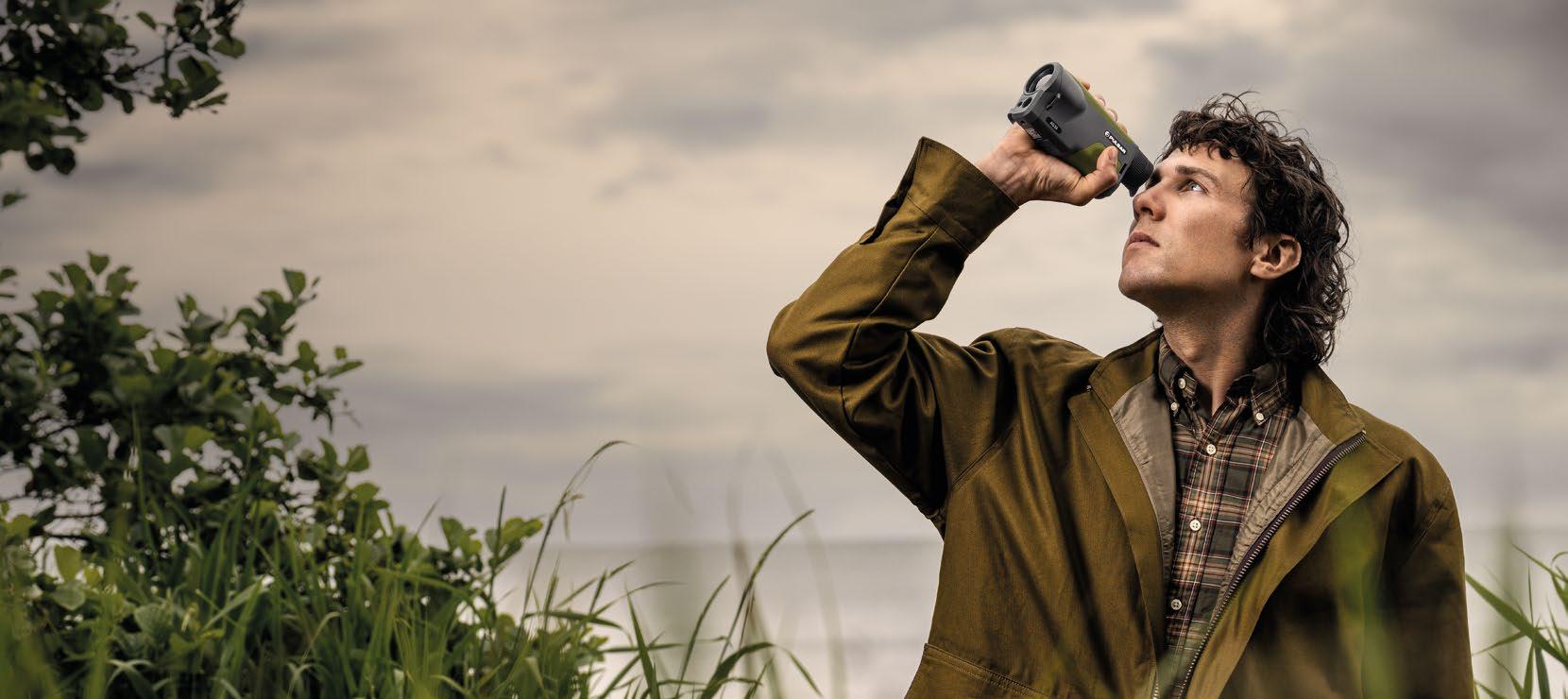
Thermal imaging reveals a world that traditional optics cannot. It helps wildlife enthusiasts, birdwatchers, ecologists and conservation professionals detect, observe, and document wildlife with greater confidence while reducing disturbance to the animals they study.
The Pulsar Wildlife collection has been created around four simple principles:
- Discover wildlife that would otherwise remain hidden.
- Measure activity and gather more reliable observations.
- Protect sensitive species through non-invasive monitoring.
- Understand behaviour, habitats, and the natural world in greater detail.
Whether you are taking your first steps into thermal imaging or looking for the ultimate wildlife observation tool, Pulsar Wildlife opens new possibilities for understanding the natural world.
Discover more about Pulsar Wildlife by scanning the QR code or visiting www.pulsarwildlife.co.uk
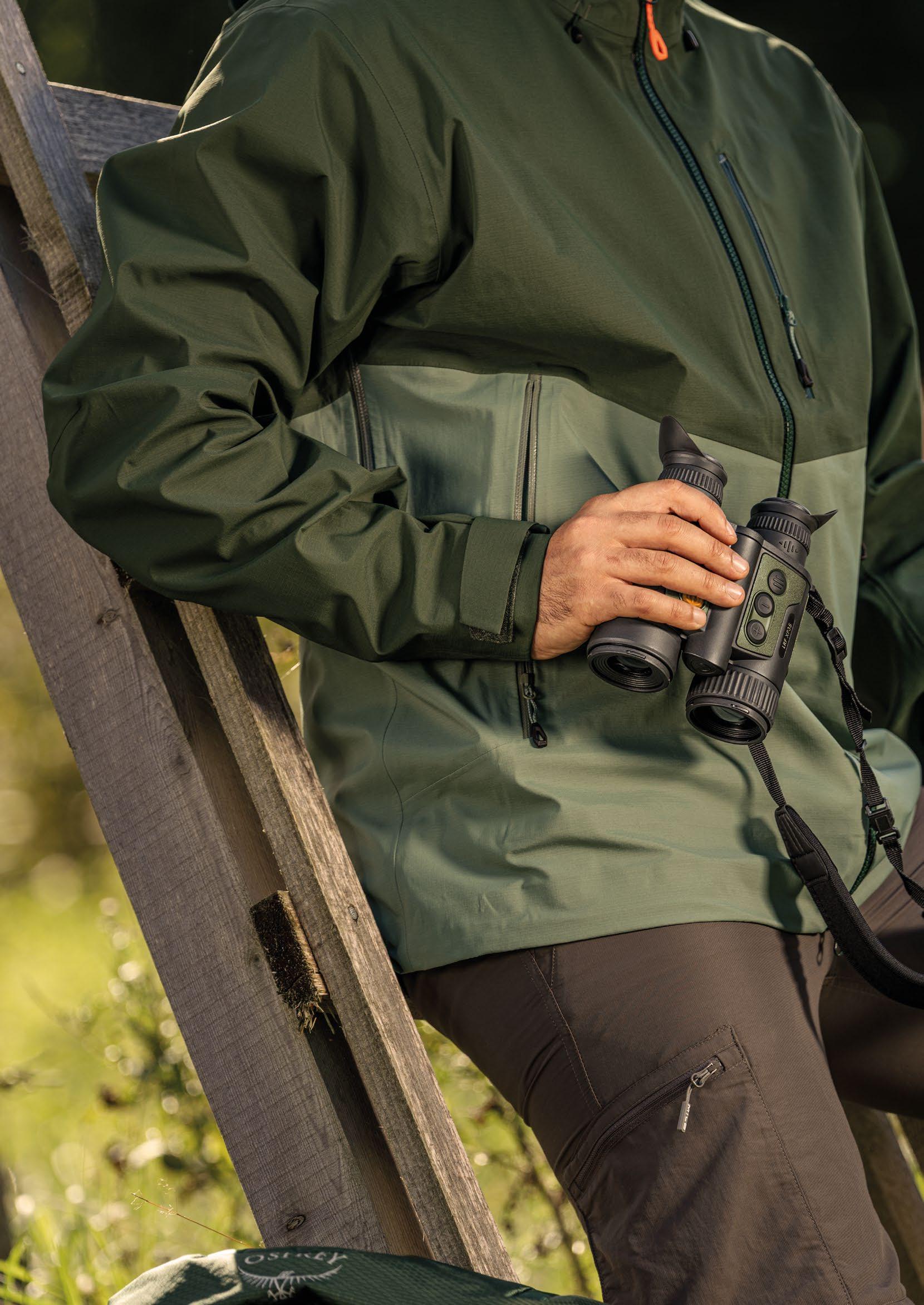
How thermal imaging can help you:
Reveal wildlife hidden from view.
Improve survey confidence.
Observe more, disturb less.
Find wildlife before raising your camera.
Choosing the right thermal device.
What makes a great thermal.
Meet the Alaris, Orni, Lumion & Ventex.
Compact thermal imaging for everyday wildlife observation.
Designed for active wildlife observation and birding.
Advanced thermal imaging for dedicated wildlife enthusiasts.
Professional binocular thermal observation.
Why professionals choose Pulsar Wildlife.
UK Service Commitment.
Full product comparison & specifications.

REVEAL HIDDEN WILDLIFE.
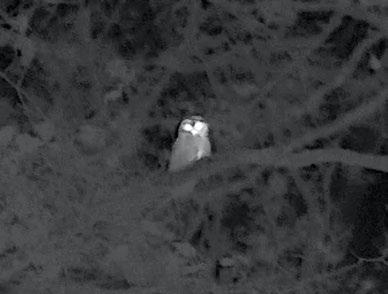
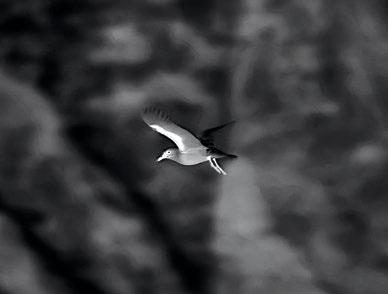
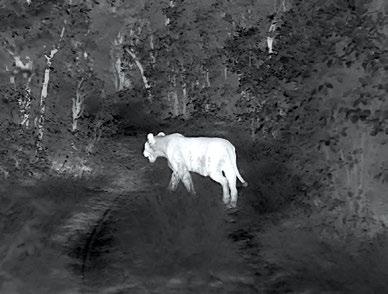
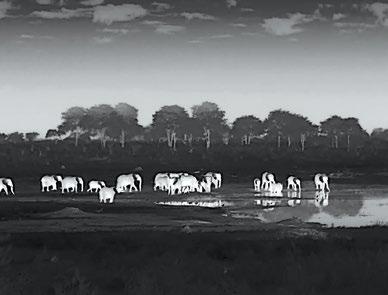
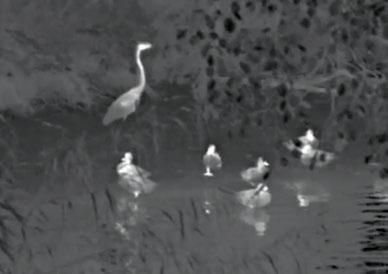
Thermal imaging can reveal the wildlife that traditional optics often miss. From owls at dusk to animals concealed in dense woodland, thermal imaging opens a new dimension of observation.
Thermal reveals:
• Birds concealed in reed beds.
• Owls before they fly.
• Wildlife hidden in woodland.
• Hedgehog activity in hedgerows.
• Mammals moving after dark.
Improve survey confidence with technology that helps detect and record wildlife across challenging habitats and low-light conditions.
Thermal can improve:
• Detection rates.
• Survey efficiency.
• Coverage.
And aid with:
• Bird ringing.
• Habitat assessments.
• Population monitoring.
• Environmental impact assessments.
• Species counts.

Observe natural behaviour without relying on bright lights or close approaches, helping reduce disturbance to sensitive species.
Thermal supports:
• Ethical observation.
• Reduced disturbance.
• Better protection.
• Nest monitoring.
• Disturbance-free protected species work.
• Non-invasive habitat management.
• Habitat reintroduction.

SPEND LESS TIME SEARCHING & MORE TIME RECORDING.
Locate subjects faster and gain a deeper understanding of wildlife behaviour before raising a camera.
Thermal helps with:
• Wildlife photography.
• Camera trap placement.
• Documentary filmmaking.
• Recording thermal observations for social media. U N D E R S T A N D P R O T E C T M E A S U R E D I S C O V E R
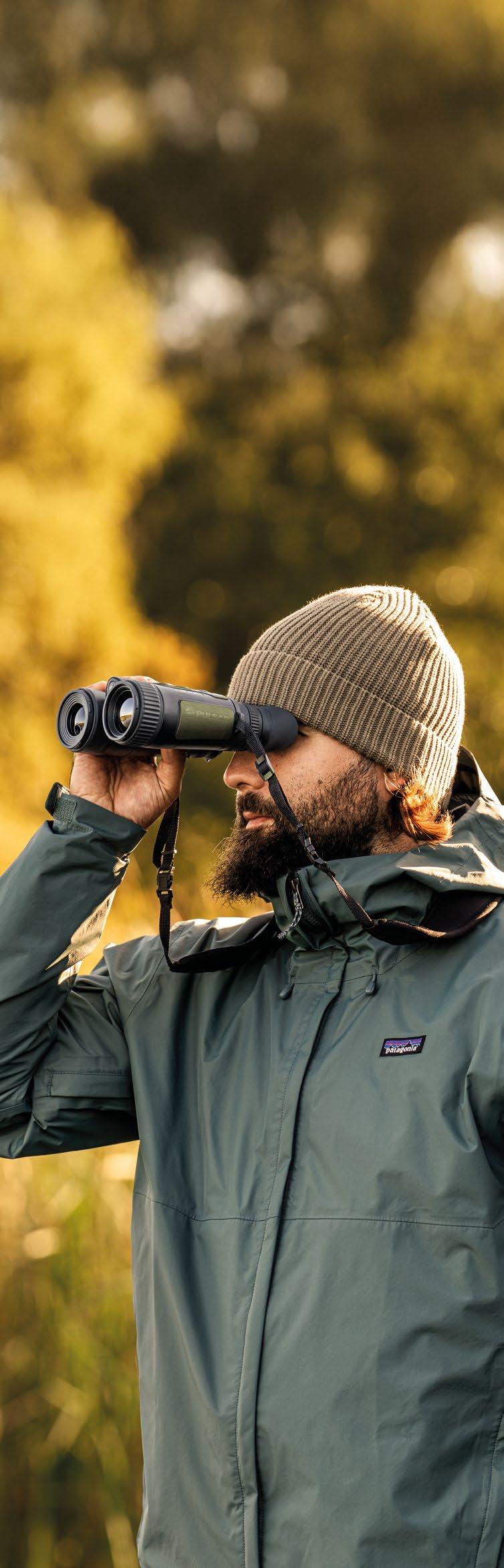
Whether you’re discovering wildlife for the first time, conducting professional surveys or searching for the perfect photographic opportunity, the Pulsar Wildlife collection offers a solution tailored to your needs.
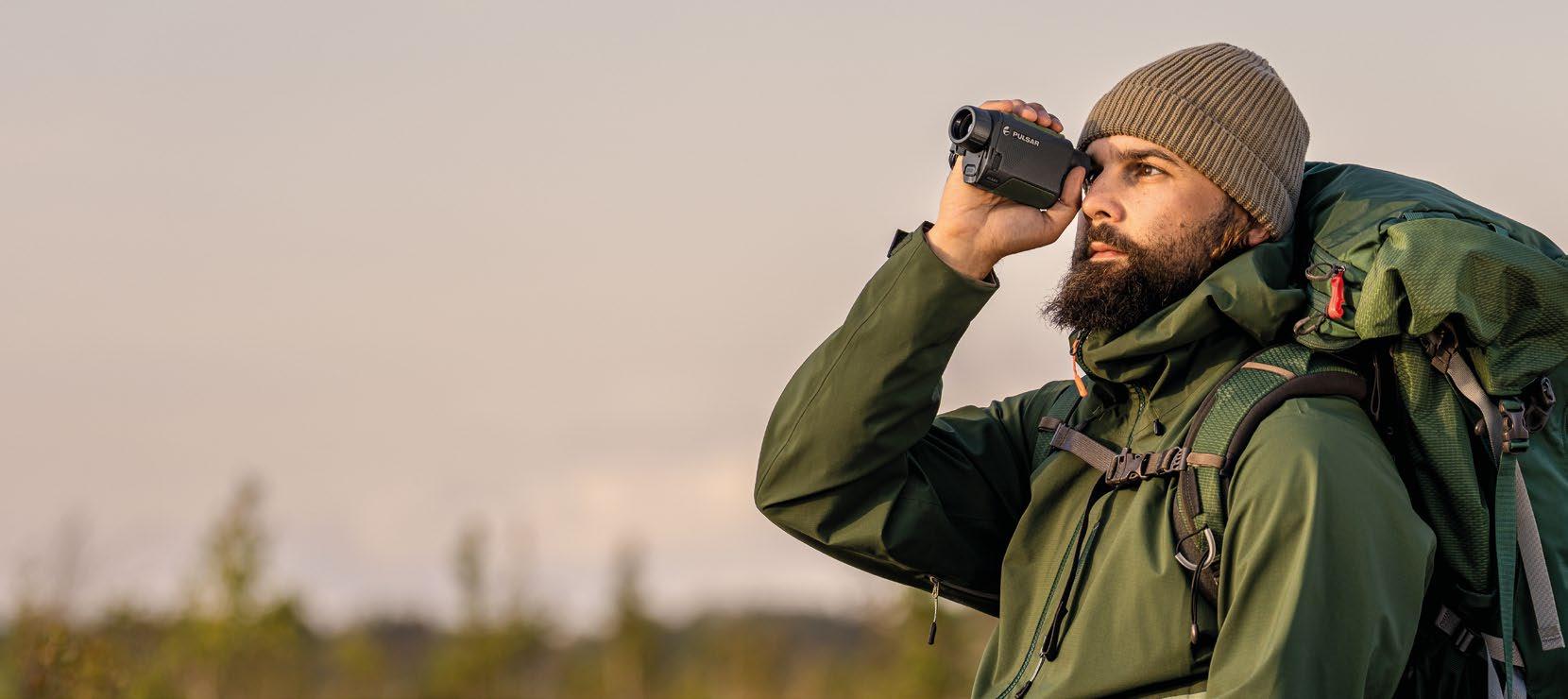
We recommend: Alaris XQ30
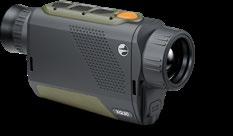
Why choose the Alaris XQ30:
• The most affordable entry point into the Pulsar Wildlife range.
• Compact and lightweight for everyday carrying.
• Its wide FOV makes it easy to scan habitats.
• Premium, European-made quality at an entry level price.
We recommend: Orni XG35
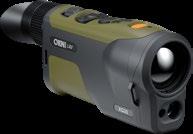
Why choose the Orni XG35:
• One-handed, ambidextrous operation for active observation.
• Auto-dimming screen is perfect for day & night use.
• The ideal companion to binoculars & spotting scopes.
• Built-in image stabilisation and advanced image processing achieves enhanced image quality.
We recommend: Lumion XL50
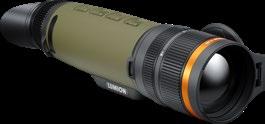
Why choose the Lumion XL50:
• Exceptional image quality.
• Improved recognition of wildlife at distance.
• Maintains image quality throughout its entire 2.5-20 x magnification range.
We recommend: Alaris XG30 | Orni XG35
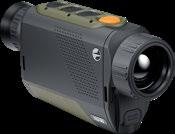
Why choose the Alaris XG30:
• Its 12µm pixel pitch achieves improved image detail in comparison to its sibling, the Alaris XQ30.
• Pocket-sized portability for users who travel light.
Why choose the Orni XG35:
• Designed for comfortable use.
• Easier handling & operation during extended observation sessions.
• Ideal for users frequently switching between optics.
We recommend: Ventex XT50 | Lumion XL50
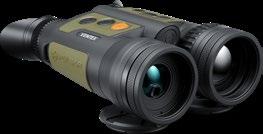
Why choose the Ventex XT50:
• Longer video file size allows for extended periods of recording.
• Easy to tripod mount; can be left to record and controlled remotely.
• Two-eyed viewing is more comfortable over long periods.
• Premium HD sensor for best-in-class image quality.
Why choose the Lumion XL50:
• HD thermal sensor and large 50mm lens for easier species identification.
• Camera-style zoom and focus rings lend a familiar feel for photographers.
• Lightweight design allows for quick switching between thermal & DSLR.
• Wide 14° FOV covers wider areas when scanning, revealing more wildlife in less time.
We recommend: Lumion XL50
Why choose the Lumion XL50:
• Excellent detail for monitoring wildlife activity.
• Observe from distances that avoid disturbing sensitive species.
• Suitable for long-term monitoring projects.
• Supports responsible, non-invasive observation.

We recommend: Ventex XP35 | Lumion XL50
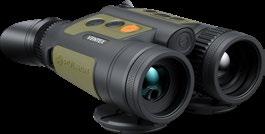
Why choose the Ventex XP35:
• Wide field of view for scanning habitats from a fixed position.
• 17µm pixel pitch makes it perfect for use in all types of weather conditions.
Why choose the Lumion XL50:
• HD thermal sensor for excellent image detail and identification.
• More lightweight than a pair of binoculars.
• Tripod mountable for effortless, hands-free operation & recording during surveys.
We recommend: Ventex XT50
Why choose the Ventex XT50:
• Premium thermal performance for the most demanding survey applications.
• Exceptional image detail at range.
• The best choice when both comfort and maximum capability are required.
We recommend: Lumion XL50 | Ventex XT50
Why choose the Lumion XL50:
• Excellent image detail at range in a portable format.
• Ideal for covering ground between vantage points.
• Strong all-round performance in open habitats.
Why choose the Ventex XT50:
• Premium thermal sensor, optimised for long-range observation.
• Immersive binocular viewing from fixed positions.
• The stand-out choice when maximum range and comfort are both priorities.
We recommend: Ventex XP35
Why choose the Ventex XP35:
• Wider field of view for scanning habitats comfortably.
• Binocular viewing reduces eye strain during long observation sessions.
• Better suited to behavioural observation than long-range detection.
• Compact & lightweight, it is ideal for users who prioritise comfort and scanning over maximum range.

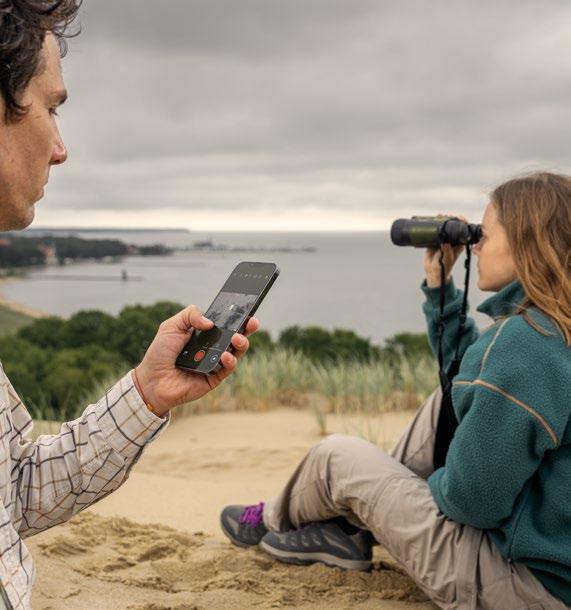
The NEW Wild Vision app from Pulsar Wildlife provides full access to all the essential features in the palm of your hand, so you can take a hands-off approach and focus on your observations. Simply install the app and register to make the most of your thermal imaging device.
Wild Vision turns your phone into a second screen, sharing what’s seen through your Pulsar Wildlife thermal imager’s lens directly to your connected smart phone or tablet. This feature is especially convenient for group observations (allowing you to share the view with several people at once, without having to take turns through the lens), and for surveys. Allowing you to tripod mount your device for long periods of observation.
For more information on the app, please scan the QR code or visit www.pulsarwildlife.co.uk
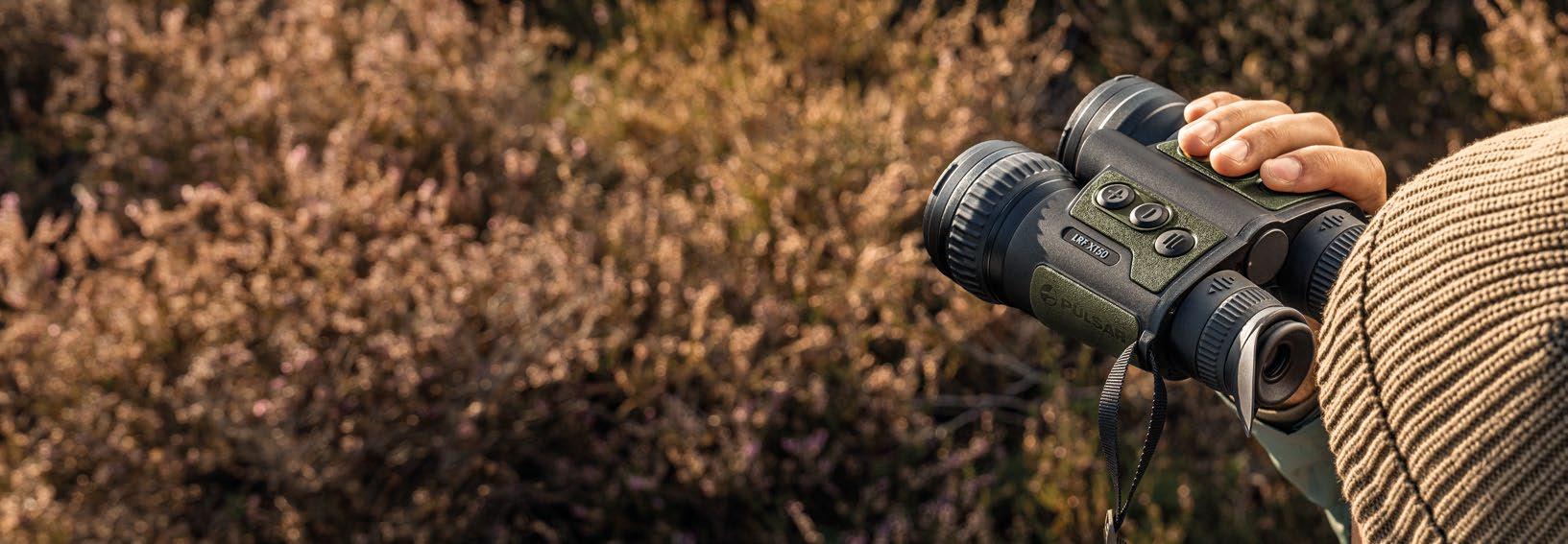
Understanding a few key features can help you choose the thermal imager best suited to the way you observe wildlife. While every observer has different priorities, the most important considerations are field of view, thermal sensitivity, image detail, observation range, and viewing comfort.
Field of view and magnification are closely linked and represent one of the most important trade-offs in thermal imaging.
A wider field of view allows you to see more of the landscape at once, making it easier to scan habitats, follow moving wildlife and locate animals hidden within vegetation.
Higher magnification brings distant subjects closer, helping you observe wildlife in greater detail and at longer distances.
In practice, increasing magnification often reduces field of view.
A wider field of view is beneficial for:
• Birdwatching.
• Woodland observation.
• Following moving wildlife.
• Scanning large areas quickly.
Higher magnification is beneficial for:
• Long-range observation.
• Mammal watching at distance.
• Wildlife surveys.
• Observing behaviour in greater detail.
Choosing the right balance between field of view and magnification depends on how and where you observe wildlife. A birdwatcher working in woodland may benefit from a wider field of view, while an observer monitoring distant birds across open countryside may place greater importance on magnification and image detail at longer ranges.
Thermal sensitivity determines how effectively a thermal imager can distinguish small temperature differences.
Higher thermal sensitivity can help reveal:
• More feather and fur detail.
• Better image contrast.
• Wildlife hidden within complex backgrounds.
• Improved performance in rain, fog and humid conditions.
Thermal sensitivity is particularly valuable when observing wildlife in challenging environments where subtle differences in temperature can make subjects easier to detect. Particularly important for mammal watching, conservation work, ecology & surveys.
Resolution determines how much detail is contained within the image.
Higher-resolution sensors can make it easier to:
• Recognise wildlife at greater distances.
• Observe behaviour in greater detail.
• Differentiate between species.
• Maintain image quality when using digital zoom.
While thermal sensitivity helps you detect wildlife, resolution helps you better understand what you are looking at.
Particularly important for nature photography, longrange observation & professional monitoring.
Observation range is influenced by the combination of sensor performance, lens size, and environmental conditions.
Greater observation capability allows users to:
• Detect wildlife at longer distances.
• Monitor wildlife without disturbance.
• Observe across open landscapes.
• Gather more information from distant subjects.
Long-range performance is particularly important when observing wildlife across farmland, wetlands, moorland, and coastal environments.
Particularly important for long-range observation, nature photography, ecology & surveys.
For many users, comfort becomes just as important as image quality during long periods of observation.
Comfortable viewing can:
• Reduce eye fatigue.
• Improve concentration.
• Support extended surveys and monitoring.
• Create a more natural observation experience.
Particularly important for extended observation sessions, ecology, surveys & professional users.
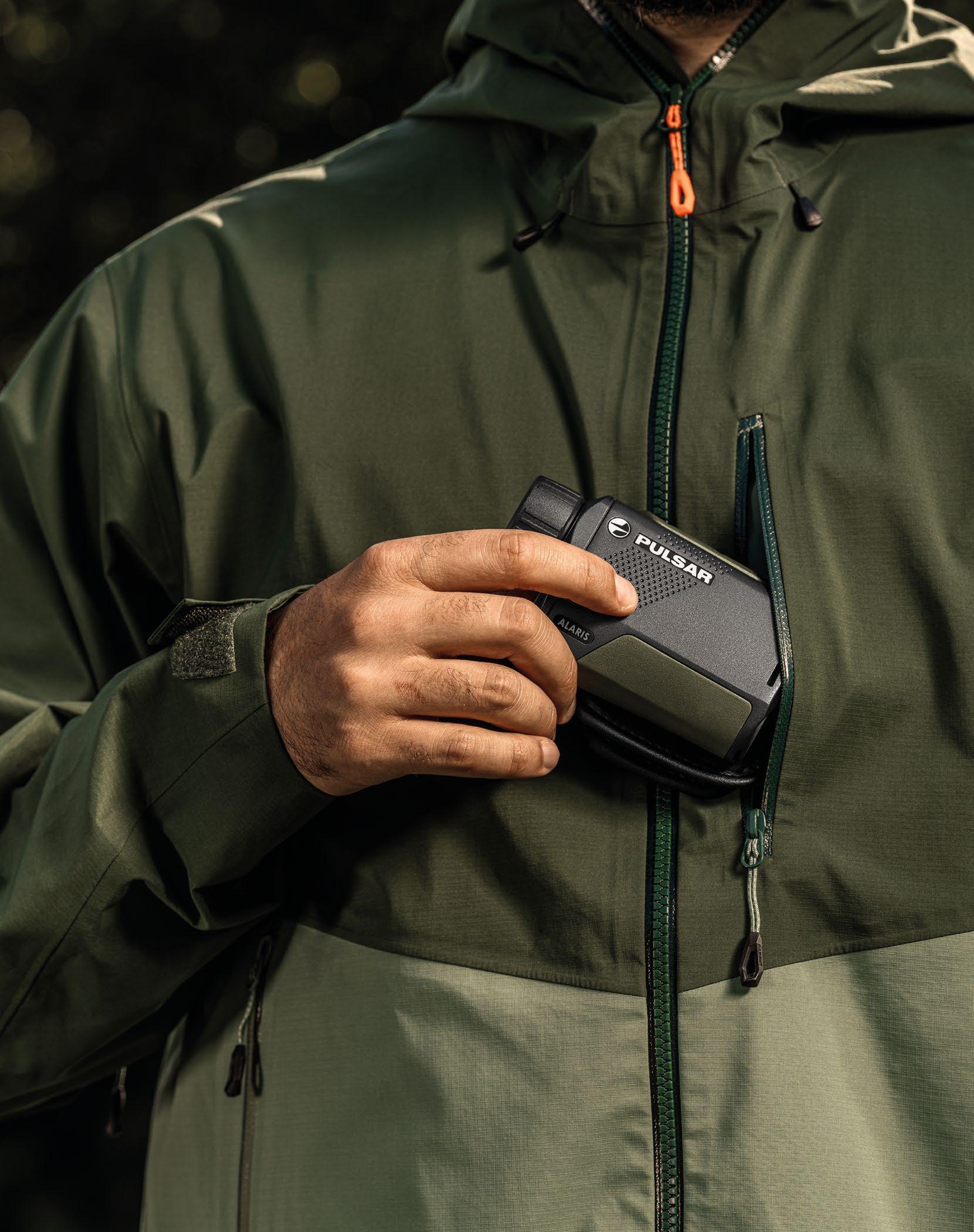
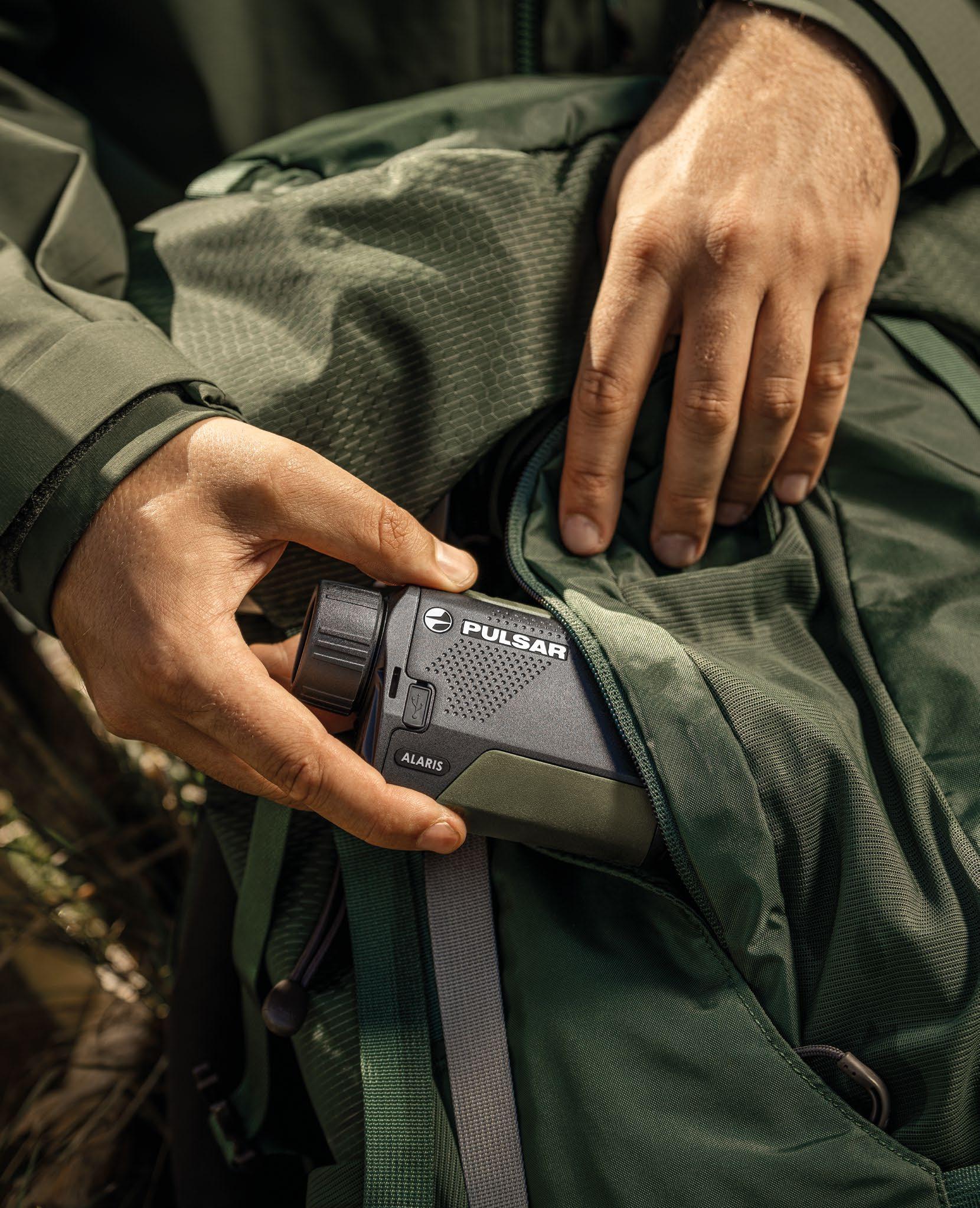
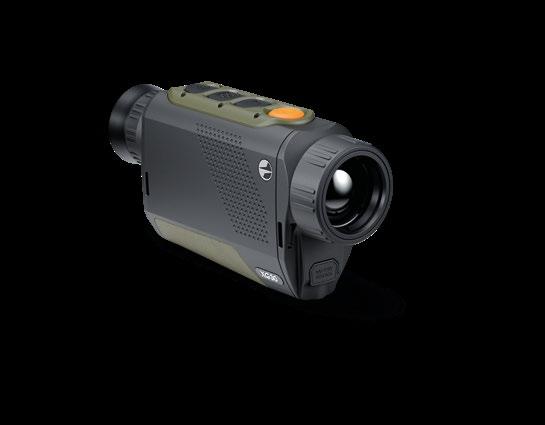
Small but Mighty. The Alaris series features two of Pulsar Wildlife’s smallest thermal imaging monoculars. Each device in the series will offer an incredibly powerful thermal performance. The compact footprint of each device allows for easy stowing in a pocket or pack when not in use, making the Alaris series the ideal choice for keen, first time thermal observers looking for a device to complement their day optics.
Alaris / Its name, from the Latin meaning “of the wing,” reflects agility and, as an entry-level, budget-friendly device, Alaris is a great choice for everyday outdoor use.
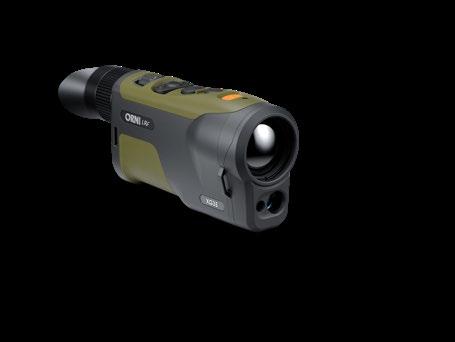
Optimised for one-handed observation. Built for bird watching and wildlife observation, the Orni XG35 is the first device in the Pulsar Wildlife range to enable onehanded, ambidextrous operation. An ergonomic focus wheel enables more natural feeling focus adjustments, allowing you to track a moving animal whilst keeping the image in focus as you turn your head.
features all of the essential functionalities you could
The Alaris XQ30 Pro features impressive <20mK thermal sensitivity, compact handling, reliable imaging, and delivers value for those seeking professional-grade performance without the premium price tag.
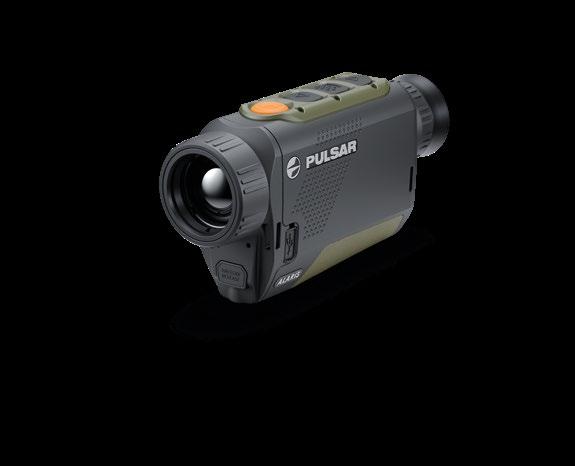
The Alaris XG30 features a more powerful sensor, the widest FOV in the series (14.6°), and a larger magnification range, making it ideal for detection without excessive searching and scanning, as well as close-up observation.
Discover more about the Alaris series by scanning the QR code or visiting www.pulsarwildlife.co.uk/alaris
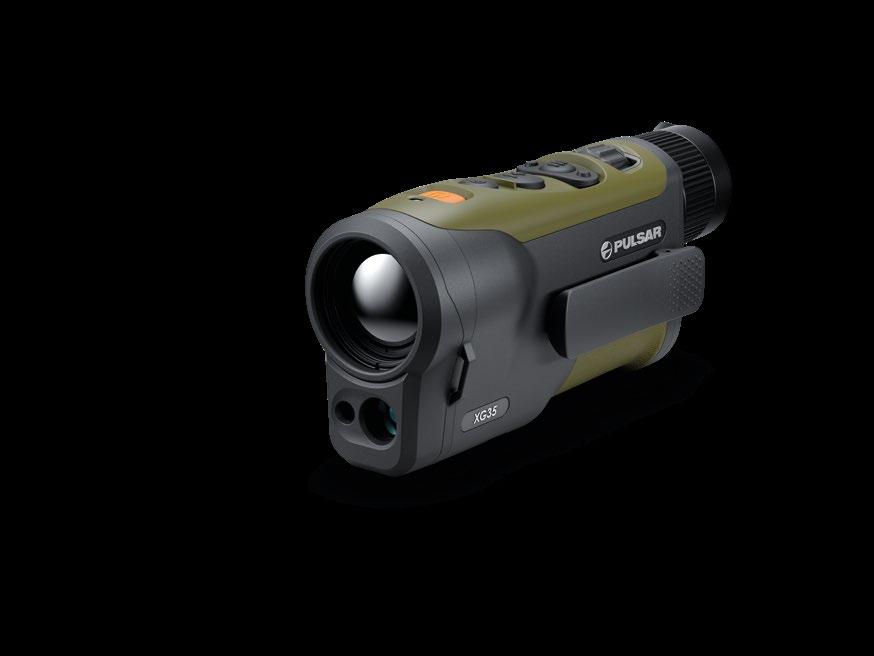
A highly sensitive 640×480, 12µm thermal sensor, combined with a powerful 35mm f1.0 objective lens, provides remarkable image detail. Built for extended observation in challenging conditions , the Orni XG35
The Orni XG35 features electronic image stabilisation and a large HD 1024x768 AMOLED display, enhancing your viewing experience and and reducing the effects of camera shake and motion blur.
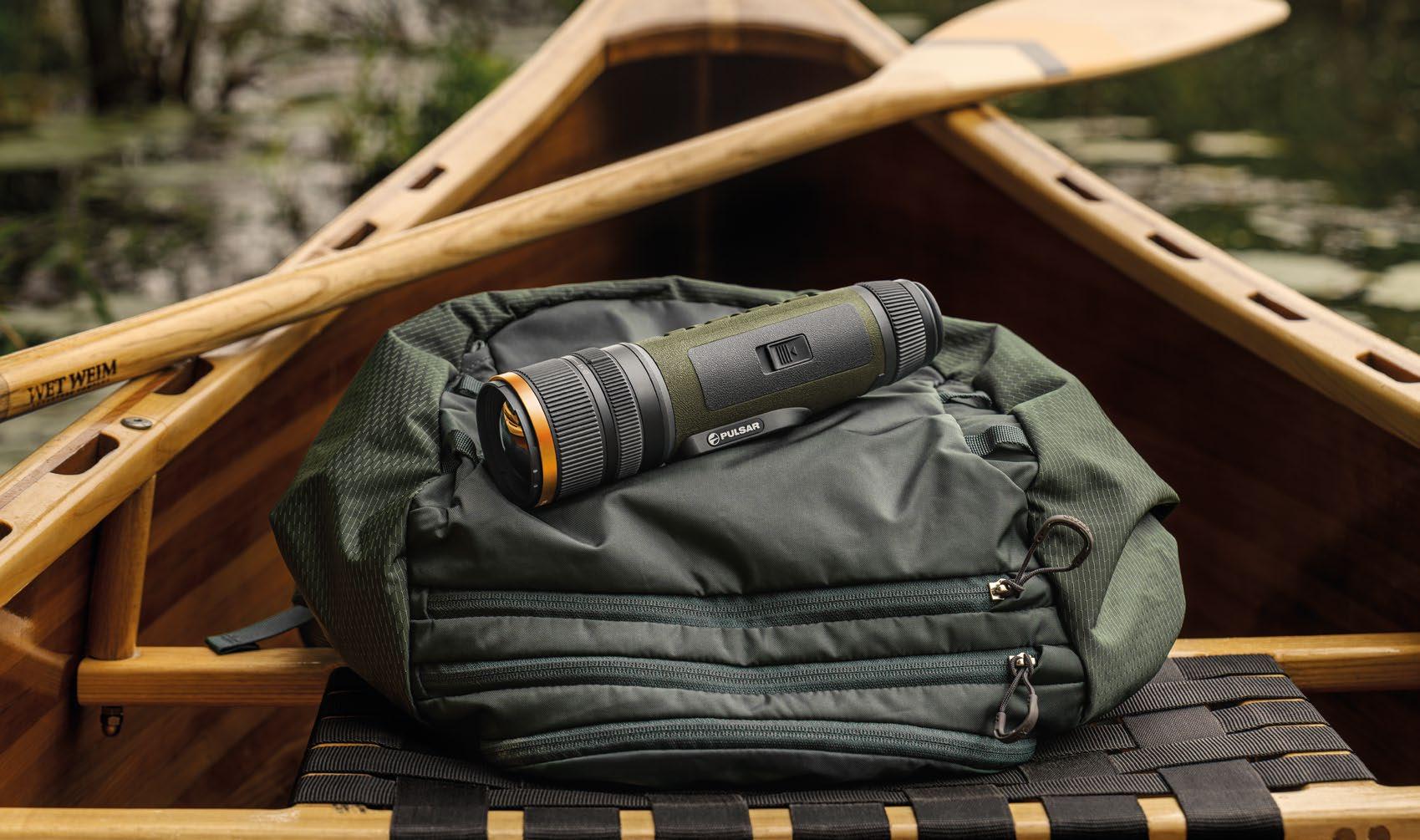
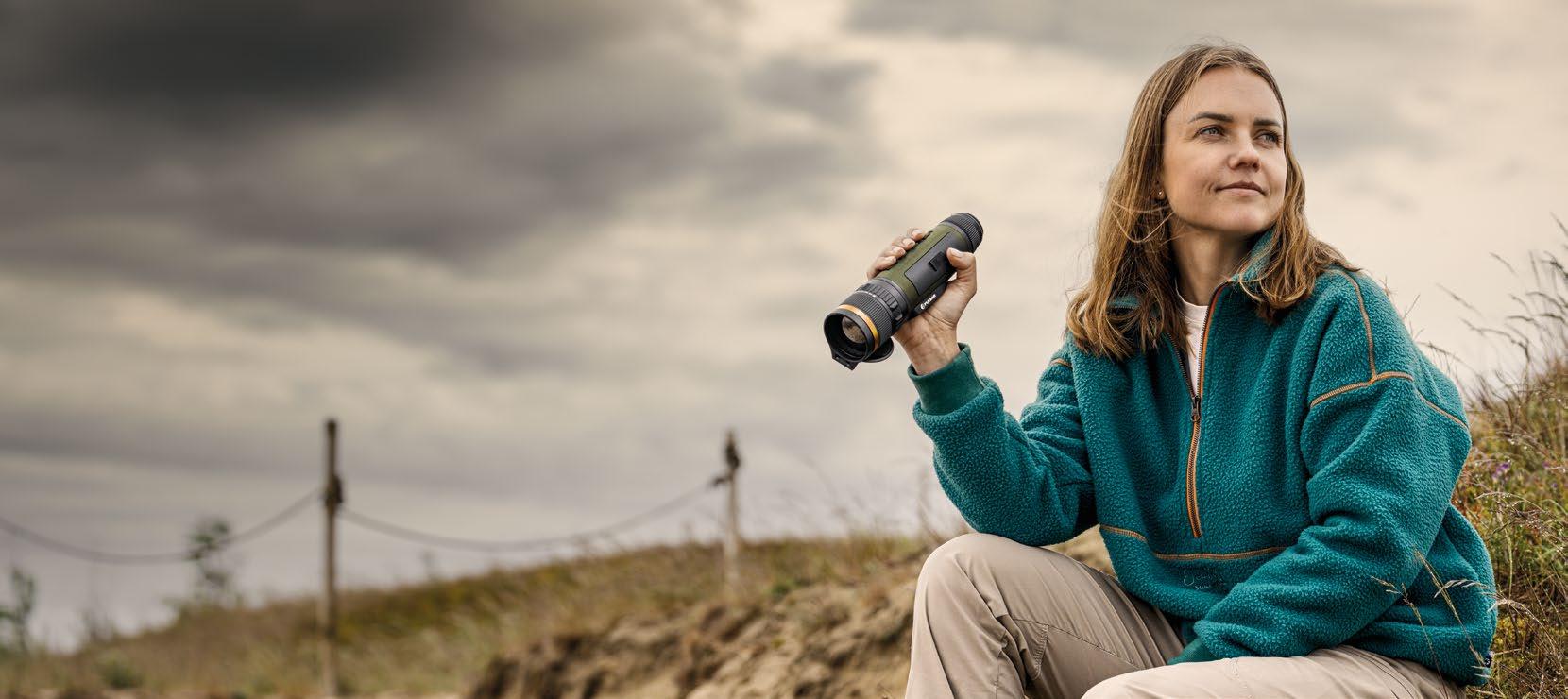
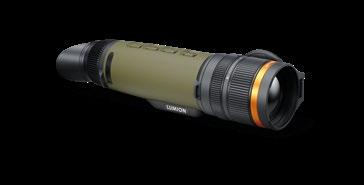
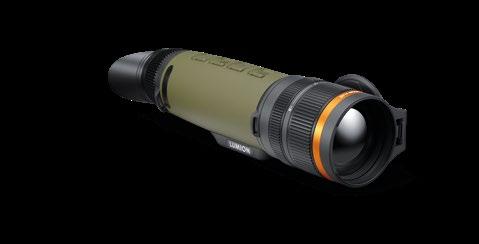
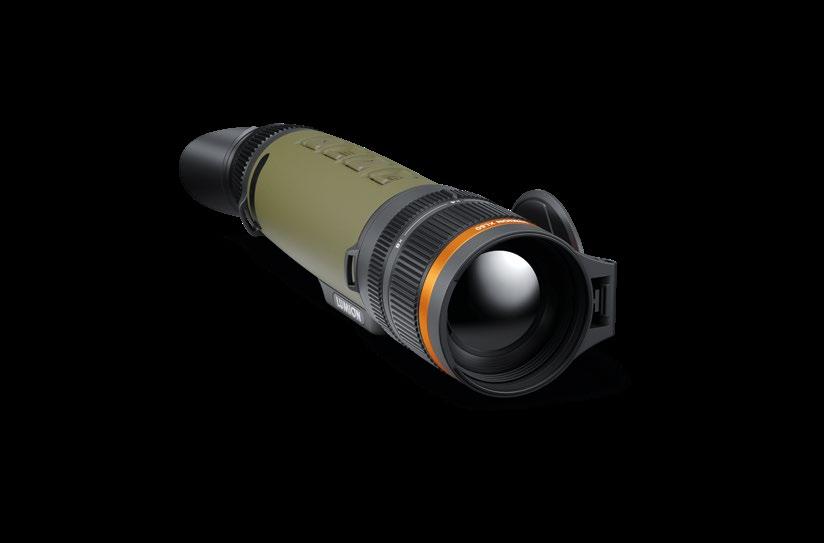
Advanced observation for wildlife enthusiasts. The Lumion XL50 has been ergonomically designed for comfort and durability, with a rubber-armoured body shell which withstands everyday knocks, whilst ensuring comfort over long periods of observation. Plus, traditional camera-style zoom & focus rings on the objective lens achieves fast and intuitive operation.
Pulsar Wildlife’s Image Boost technology ensures the Lumion XL50 provides the highest possible level of detail, clarity, and contrast through a set of proprietary image processing algorithms which work to render complex scenes in a wide range of half-tones, with evenly emitting low-contrast objects (such as the sky, grass, and the surface of a body of water).
The Lumion XL50 is provided with a 3-point ergonomic carry case, designed to remain stylish and comfortable.
Lumion / From the Latin lumos meaning “light”, this device delivers the most detailed image thanks to its HD-resolution thermal imaging sensor.
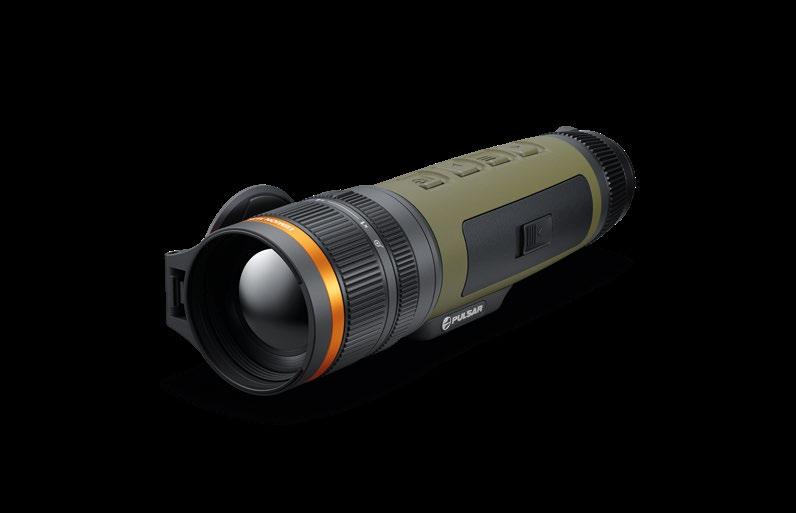
The Lumion XL50 features a large format 1024×768, 12µm, <20mK sNETD HD thermal sensor, providing crystal-clear images all the way through its 2.5-20x magnification range and achieving an astonishing detection range.
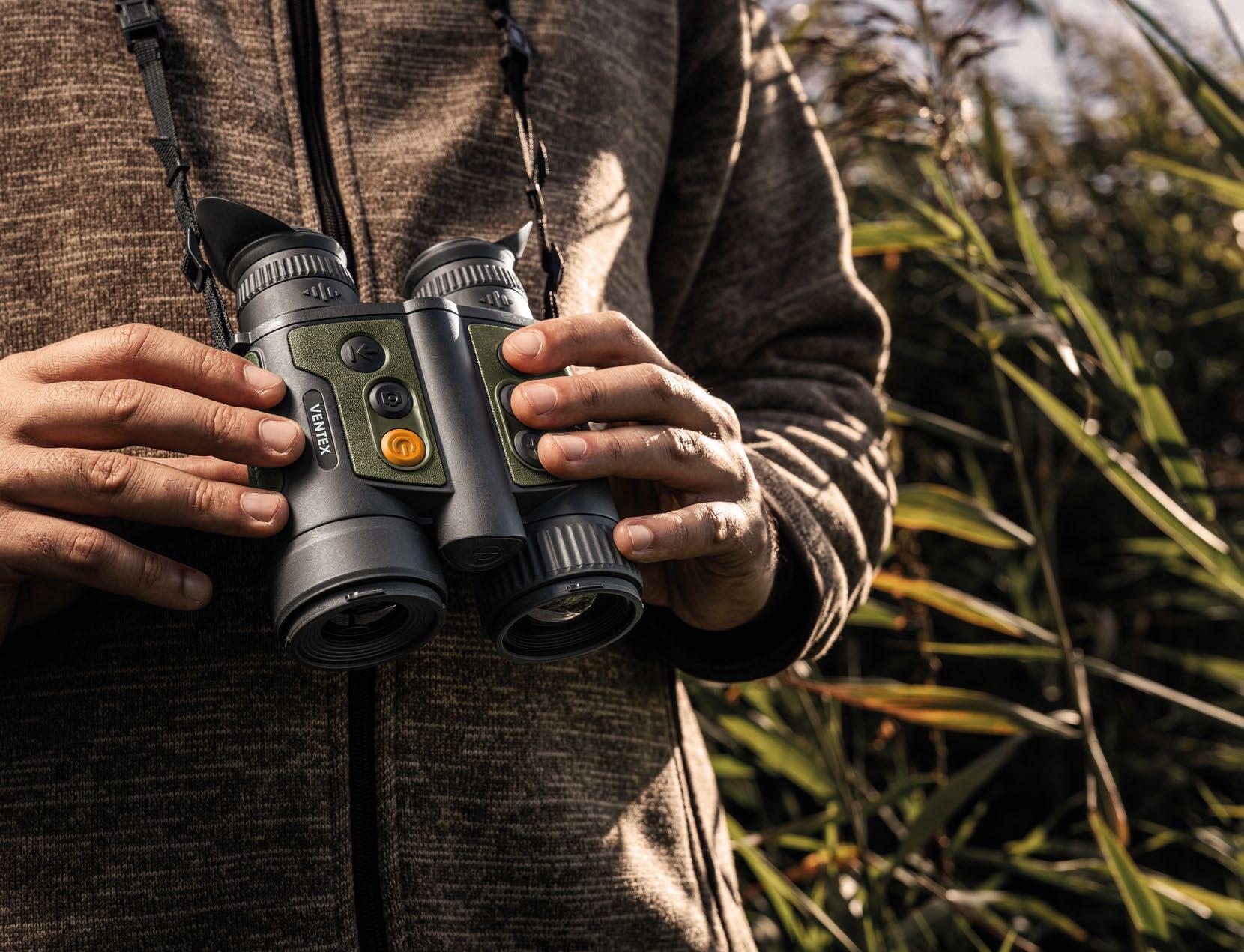
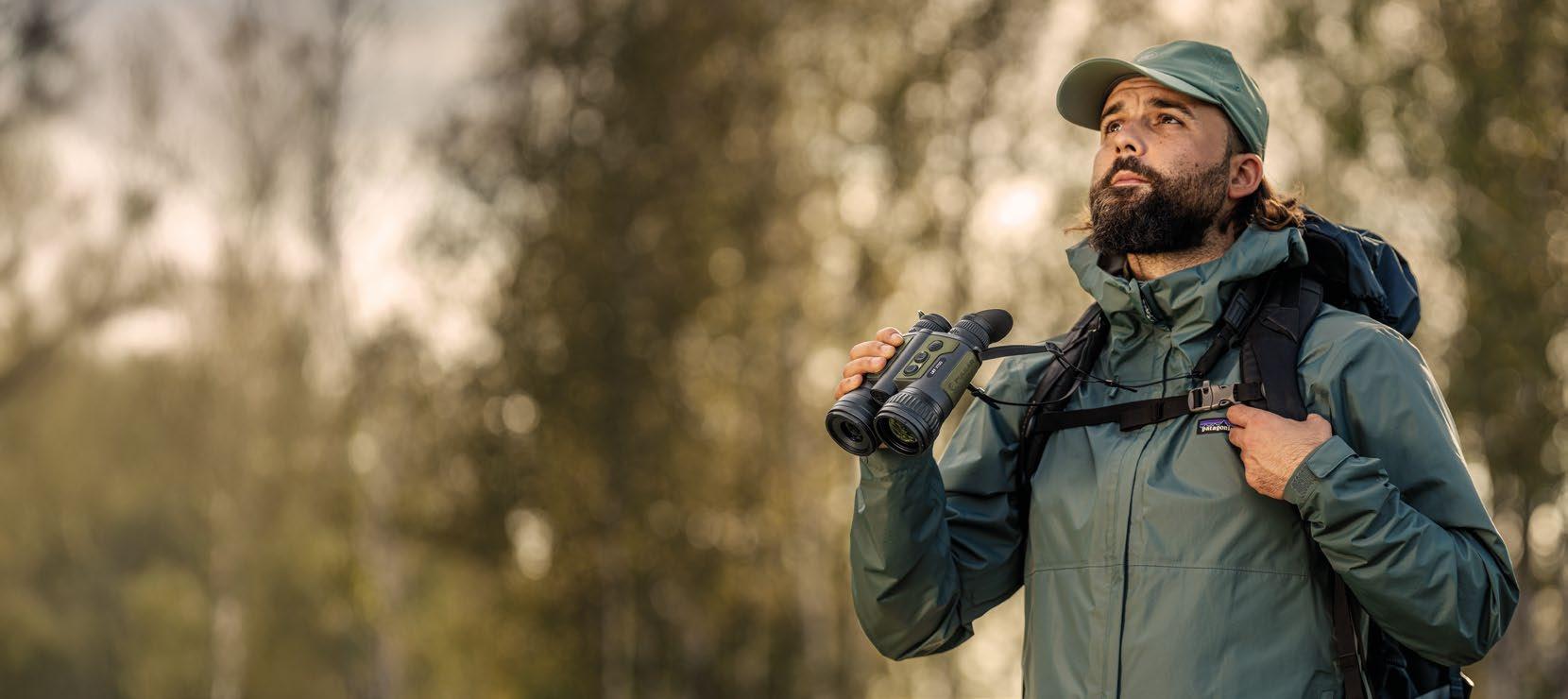
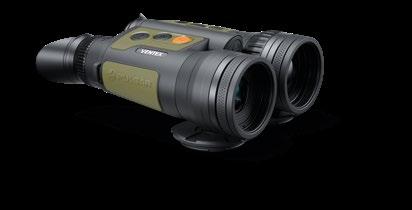
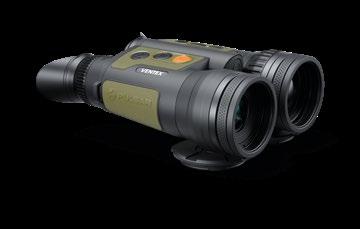
HD thermal performance with image stabilisation. Two viewfinders are better than one, especially when it comes to comfort in the field, and comfort is what the Ventex series has been designed for. Six buttons, conveniently arranged where your fingers would naturally rest, control the most commonly used functions and settings — whilst retaining the familiar design aesthetics usually found in a pair of traditional day binoculars.
Ventex / Inspired by Lithuania’s most famous birding site Ventė Cape, the Ventex series provides comfortable, fatigue-free observation.
The Ventex XP35 may be the smallest and lightest iteration in the Ventex series, but it offers the widest FOV at 17.8° opening up the observation area more than ever before. A built-in still image and video recorder will capture every moment during observations.
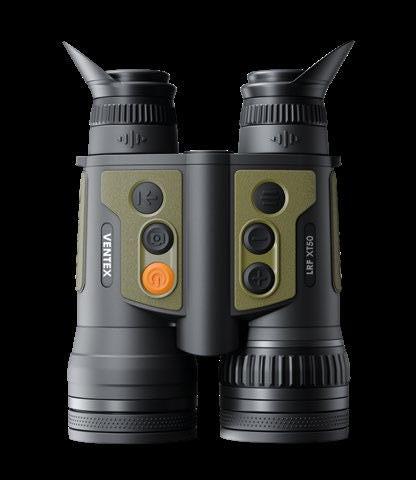
Ideal for detection the Ventex XT50 is the premium addition to the series, offering the best image quality and achieving an exceptional long range observation experience through its HD 1280×1024, 12µm thermal sensor, 1280×960 viewfinders, and wide 17.5° FOV.
We believe spec sheets should reflect what users actually experience — not just ideal lab conditions. That’s why we publish clear, honest, and comparable performance data across all key areas.
Thermal Sensitivity: Sensor (NETD) vs. System NETD (sNETD)
We provide two types of NETD (Noise Equivalent Temperature Difference):
• Sensor NETD shows the raw sensitivity of the sensor, without enhancements.
• System NETD (sNETD) includes image processing and reflects how the device can perform in real use.
To ensure transparency, we quote both NETD and System NETD (sNETD) — so you know what your device is capable of with or without digital enhancements. Unlike other brands, we avoid excessive filtering that lowers NETD at the cost of clarity, detail, and performance. With Pulsar Wildlife, you get advanced processingwithout sacrificing image quality.
Pulsar Wildlife devices use their own unique batteries to ensure two things: your safety and the continued smooth operation of your devices. There are several benefits to choosing a B-Pack over Lithium-Ion batteries, including superior run times, their ability to display the charge level on your device’s screen, and the ability to recharge them inside or outside of the device via a USB-C charger. But it is your safety that takes precedence.
B-Packs use a special casing that features a micro controller to control the charging and discharging processes, monitor temperature, and protect against external damage. This protective casing prevents short circuits and overheating, significantly reducing the risk of combustion that comes with Lithium-Ion batteries.
Our detection ranges are calculated using Johnson’s Criteria, the industry benchmark for thermal performance. All figures are based on standard 1.8m tall objects and repeatable testing — so what’s listed is what’s achievable during observations. Detection Ranges You Can Trust:
Honest Battery Life:
Our proprietary batteries allow us to accurately quote runtime at a standard temperature for consistency. Actual performance varies depending on how you use features like Wi-Fi, video recording, etc. — and we make that clear. Our goal is simple: reliable, real-world figures, not marketing exaggerations.
All Pulsar Wildlife products use highquality French-made Lynred thermal sensors, available with either 17µm or 12µm pixel pitches and a range of resolutions: 17µm: 384×288, 640×480 and 12µm: 640×480, 1024×768, 1280×1024.
17µm sensors feature larger pixels that capture more infrared radiation, providing a higher signal-to-noise ratio (SNR) and improved thermal sensitivity, particularly in low-contrast conditions. Their greater thermal energy capture often requires less image enhancement, enabling faster processing and lower power consumption.
12µm sensors offer a more cost-effective solution with higher-resolution options, delivering greater base magnification and finer image detail. They are ideal for applications requiring enhanced detail recognition.
Image latency refers to the time delay between a real-world thermal event and its appearance on a thermal imager’s display. This delay is caused by the sensor’s response time and the device’s internal processing. In wildlife research — particularly during bat surveys — low image latency is critical. Pulsar Wildlife’s thermal imaging devices are highly regarded for their minimal latency, allowing researchers to track fast-moving animals with greater accuracy and confidence.
Every Pulsar Wildlife device has been built to withstand the bumps, knocks, and scrapes you’d expect during long observation sessions. Each model features a robust construction designed to keep your device running at the top of its game in any weather conditions.
Provided by our exclusive UK Distributor, Thomas Jacks Limited.
When you choose a Pulsar Wildlife device, you’re investing in performance and precision — and we believe your service experience should match.
If we can confirm your device has developed a fault within the warranty period and we are unable to repair or resolve the issue within 10 working days1, we will replace it with a new one2
What’s more, if the fault is confirmed within the first 60 days of ownership, we will replace the device immediately.
We have dedicated service and repair facilities in the UK including extensive test and calibration equipment and factory trained technicians. Beyond warranty, we aim to provide service and repair support for all devices for a minimum of 10 years3, 4 .
Find out more about our service commitment and capabilities and how they work here: www.pulsarwildlife.co.uk/warranty-service-commitment
1 The 10 working days begins the day the device is received by us and ends the day we ship it back to you. Devices with intermittent faults sometimes require extended or weather dependent testing and may take longer, but you will be kept fully informed. 2 If we do not have stock of the exact model you will have a choice to either wait for the device to be replaced or for it to be replaced by an equivalent model. 3 Subject to availability of parts and components. 4 Service support for 10 years minimum from original date of launch.
THERMAL IMAGING MONOCULARS
THERMAL IMAGING BINOCULARS
Prices & Specifications
For all current prices, please check www.pulsarwildlife.co.uk. The information in this catalogue is subject to change without notice and should not be construed as a commitment by the manufacturer.
Please note: All Pulsar Wildlife detection ranges are based on standard 1.8m tall human objects.