
The University of Arkansas at Little Rock’s Student Newspaper November 2021

UALR
RACIAL DISCRIMINATION ON OUR CAMPUS


The University of Arkansas at Little Rock’s Student Newspaper November 2021
UALR
RACIAL DISCRIMINATION ON OUR CAMPUS
Seasonal affective disorder (SAD) is a type of depression affecting people most when seasons are changing, lasting about four to five months. The two types of SAD are winter-pattern SAD (winter depression) and summer-pattern SAD (summer depression). Most people suffering from SAD will notice that their symptoms begin in late fall or early winter, thus making winter depression the most common type of SAD.
According to Mental Health America, a community-based nonprofit organization that advocates for those with a mental illness and promotes the mental health of all, 5% of the United States population will experience SAD, with women being the most commonly affected. However, these were the statistics prior to COVID-19. The rates of SAD may begin to see an increase, as the pandemic forced people to stay indoors, hardly spending time in the sun, and made them physically distance themselves from family and friends. Those that have previously suffered from SAD are now more at risk to suffer from it again due to these conditions, especially since COVID-19 caused an overall increase in rates of depression. The past few winter seasons have been extremely difficult due to stressors, isolation, financial insecurities and uncertainties about where the future lies. This has made it harder to maintain a healthy mindset, putting everyone more at risk of experiencing SAD.
When a patient begins to experience symptoms of SAD, a doctor or mental health professional will perform an evaluation to ensure that there are no other underlying mental health conditions. The evaluation they undergo may include a physical exam, lab work and a psychological evaluation. Symptoms to look out for as winter or spring approach include: feeling depressed often or daily, loss of interest in activities one generally enjoys, low energy, trouble sleeping, change in appetite or weight, feeling fatigued, unable to concentrate, feeling hopeless and thoughts of death or suicide. When experiencing winterpattern SAD, common symptoms are oversleeping, increased appetite, cravings for carbohydrates, weight gain and social withdrawal. Summer-pattern SAD symptoms include insomnia, decreased appetite, weight loss, restlessness, anxiety and violent behavior.
The Mayo Clinic, a nonprofit organization that provides clinical practice, education and research, explains the causes and risk factors of SAD. SAD is more common in populations living in the north, as they receive shorter daylight hours when winter arrives. This in turn affects one’s circadian rhythm, which disrupts the body’s “internal clock,” leaving you to experience depressive symptoms. Other causes of SAD are linked to low serotonin levels due to reduced sunlight and an imbalance of melatonin levels. Also, if one has been diagnosed with major depressive disorder, bipolar disorder (specifically bipolar disorder II) or another mental health disorder, one will be more at risk of experiencing SAD. Another large risk factor would be a family history of SAD or major depressive disorder.
The treatment options available for SAD are phototherapy (light therapy), medication, psychotherapy and mind-body connection techniques. Light therapy utilizes a special light box that exposes the patient to bright light similar to that of outdoor light; this allows brain chemicals to change and increases mood. It is one of the most effective treatments for SAD, as its effects are seen within days. Medication is also another option a mental health professional may suggest. Depression is generally treated with antidepressants called selective serotonin reuptake inhibitors (SSRIs). Because SAD is a type of depression, SSRIs can also be used as a form of treatment. Psychotherapy, or talk therapy, is another approach one may take. It allows the patient to identify their thoughts and feelings in order to provide them with coping skills. Lastly, mind-body connection techniques are also useful in the treatment of SAD. This can include relaxation techniques like yoga, meditation or music/art therapy.
While it’s easier said than done, reaching out when you need help is the best thing you can do for yourself. However, there are still a few things you can do if you still aren’t ready to reach out for help. Opening up your blinds first thing in the morning, going outside for a walk to get fresh air, or simply breaking out of your normal routine and connecting with others via a phone call, FaceTime or in-person can help..
By Vasti Hernandez

This year UA Little Rock has 13 social work students that have been placed in various schools in the Little Rock School District (LRSD). They are completing internships as success coaches and getting handson experience aiding students in the district.
This is the first year they are working with the entire district. Previously, the students had only been placed to work in Hall High School.
Stephanie Abrao, the lead social worker for LRSD, was part of the program’s expansion. She said, “This year, my position changed and allowed me to work with the social workers in other schools and principals in other schools to implement the internship program there as well. Presently, we are in 4 High Schools, 1 K-8, and 2 elementary schools. I am hoping this will expand even more next year.”
David Namir, LCSW, is an instructor and field coordinator for the School of Social work. He works with placing students. He said, “I think it’s really fantastic that the school district is making a commitment to social work.”
He described the duties of the interns. “The undergraduate students are doing things like case management, meaning that they provide resources and will help [high school students] with specific problems. The graduate students can do things like actual therapy with the students.”
Namir explained that the students might assist in helping their clients with topics such as parents’ incarceration, young mothers, LGBTQ+ struggles, eating disorders, abuse situations, and more through group sessions or individual meetings.
Abrao explained that not only LRSD students are benefiting from this partnership. She said, “The students participating in the internship get experience that will prepare them for anything in the social work field. By having access to assist children and adolescents in LRSD, they are exposed to invaluable opportunities across diverse populations that will enhance their ability to serve others.”
Only senior undergraduate students and second-year master’s students are working with the LRSD. The School of Social Work chose this in order to ensure
On October 13, 2021, residents of University Village at UA Little Rock received an email about a major construction project at the front entrance gate. The current gate will be changed into a mechanical sliding gate that will cover the whole front entrance of the University Village.
The new gate will enhance the safety and security of the residential complex. There were some operational issues with the gate in the past, so replacement was the best
students were prepared with the proper education. The School of Social Work only admits students to their school in their junior year.
Undergraduate students have a field seminar course at UA Little Rock with their liaison. They are also provided with onehour supervision with their field instructor.
“One of the advantages,” Namir said, “is that the students in the Little Rock School District can be challenged with a lot of different issues. So, it’s not just working in a domestic violence shelter or drug rehab. It really runs the gambit of all different kinds of problems.”
Namir also praised the quality of the field instructors that work with the UA Little Rock students.
In previous years, the School of Social Work worked with Abrao to place students in Hall High School. The program was even awarded a “Partners in Education” award in recognition of its work during its first year working with the LRSD.
Last year the program was challenged to work remotely due to the pandemic and students moving to virtual classes as well as working in person to serve students on campus. The main test was keeping in contact with the
solution. After the construction of the new gate, people will need to provide proof of residency or proof that they are a student at the university to be able to enter.
“In effort to enhance safety and security at University Village, the university made the decision to change the gate to better secure the property,” stated Dr. Patti Light, Director of Campus Living. “[It] prevents nonresidents from parking in the residence space(s), and it will decrease open access to the property.”
The new gate will still have
students who went virtual.
Abrao said, “Covid presented new challenges. Last year we delivered services via zoom but also made home visits. We would meet them outside and make sure there was social distancing. There was a lot of case management and connecting our students to resources in the community.”
Working with all of LRSD instead of just Hall High School this year has allowed more students to work and more schools to receive help from both Bachelor’s of social work students and Master’s of social work students. This is helpful because according to Namir, the UA Little Rock Social Work Masters Program is the largest on the campus.
“We are bursting at the seams with students,” Namir explained. “I think that’s probably a good problem to have.”
Abrao added, “The most rewarding part is having the capability to provide mental health services and connect families to resources. Having more social work interns that are able to reach more students is incredible. The challenge is there are thousands of students.”
UA Little Rock students will continue to serve the LRSD
easy access for permitted cars.
“It will be very similar to gates at apartment complexes in the city or gated communities,” Light explained.
The newly-constructed gate will only open and close when cars enter or leave, which will keep the property more closed off to nonresidents. Students who are currently living in the Village will need a valid parking ID to access, thus it will work the same as the gate the Village has had the past few years.
“It will take several weeks once the gate arrives to finish building the new one,” Light
By Remington Miller
“ The most rewarding part is having the capability to provide mental health services.”
pointed out. “But the current gate will still be operational until the new gate project is completed.” Even throughout the course of the construction of the new gate, there will be no open access to the property for nonresidents.
The construction will take time, but it’ll build safety for returning and future residents. There will be no more prohibited cars or pedestrians that do not have a student ID. All for the protection and comfort are for UA Little Rock residents.
By Laura Jansen
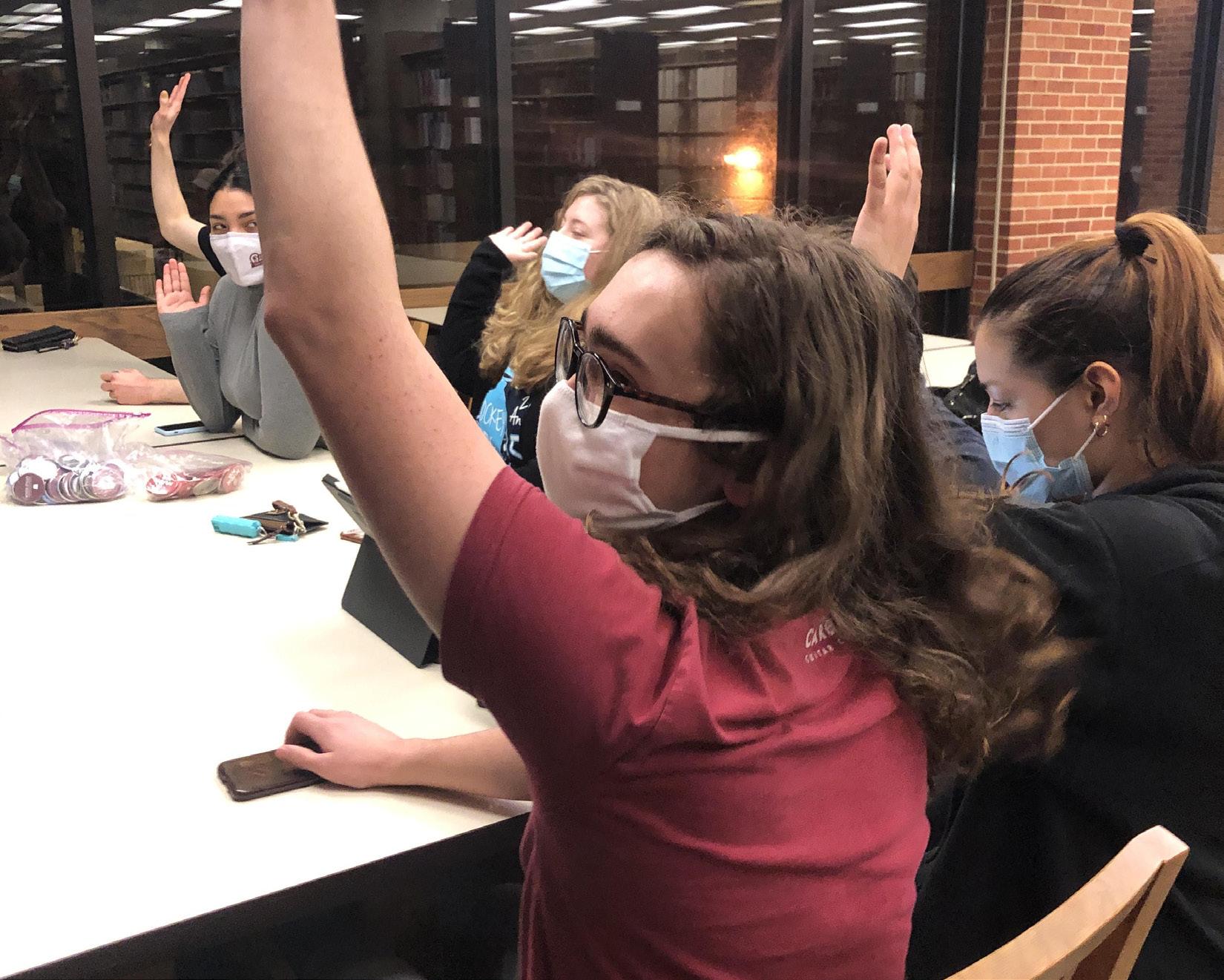
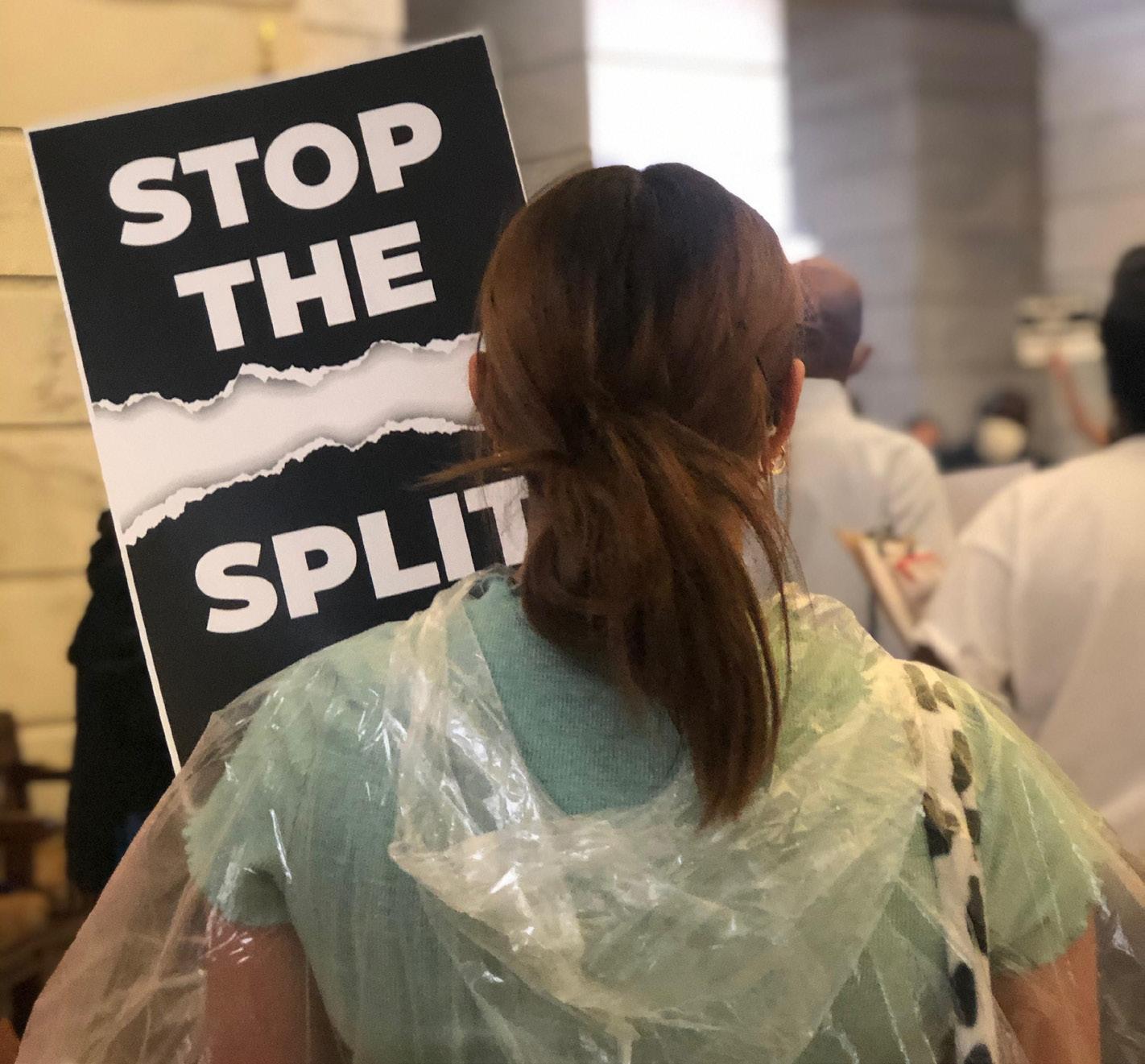
Only a semester into the school year, the University of Arkansas at Little Rock’s Young Democrats is taking the world by storm. Although their group is relatively small – at least right now – their plans are big. Not only have they have met numerous times this semester to discuss their plans, but they have also invited Democratic chairmen to advise their future goals and they have attended the Rally for Fair Maps to end racial gerrymandering, stop the split in Pulaski County and protest the people’s vote statewide.
On Oct. 2, 2021, the Young Democrats held their first official meeting. In attendance was Grant Tennille, Chair of the Democratic
Party, who sought to bestow his wisdom upon the Young Democrats as they venture in their future endeavors. He spoke about the Rally for Fair Maps and how the Democratic Party is planning to sue the plans put in place by the Republican Party. The Republican Party has diluted the votes of people of color for decades, and it is time to put an end to that. Additionally, Tennille talked about the refocusing of income tax into areas that actually require it, like infrastructures, education and smaller communities. Tennille emphasized the need for the Democratic Party to tighten its message – especially right now. Since more and more communities
are favoring the Republican Party, it is vital for the Young Democrats to reach out and encourage the younger generation. His main goal for the Young Democrats is to get organized and get loud. The Young Democrats need their voices heard – especially in a state dominated by the Republican Party. They need their voices heard to stress issues such as job training, student debt and the urgency and dangers of climate change. Mainly though, the Young Democrats must stress the act of voting to the younger generation.
“I felt like our first meeting was really informative,” Vice President Lamar Townsend said. “Tennille granted us with a lot of interesting
information concerning the Party’s future ideas, and I was so glad to see that they value our ideas and want to work with us to accomplish the goals of the Party.”
The Young Democrats held their second official meeting on Nov. 18, 2021. Their principal objective was to decide the main positions throughout the organization, such as President, Vice President, Secretary and Treasurer; determining the qualifications for membership and ratifying the Young Democrats Constitution. Although these positions are temporary, the positions of the Young Democrats read as follows: Caroline Johnson as President, Lamar Townsend as Vice President,
Adrian Rogers as Secretary and Caleb Mimms as Treasurer. The main qualifications of a Young Democrat are submitting a form of membership, being a current student at UA Little Rock, and attending the monthly meetings. As of now, the primary goals of the Young Democrats are to find support throughout Little Rock, find sponsors and funding for future events and reach out to as many students as possible. Those interested in joining the Young Democrats can email vmangeles@ualr.edu for more information.
By Vivian Angeles
On Oct. 16 the UA Little Rock Department of Public Safety (DPS) was made aware of a student receiving harassment via text messages, threatening the student’s safety and the safety of their ex-partner. The ex-partner’s vehicle was vandalized, and the person sending the threats sent another text confirming they did it. According to the UA Little Rock Student Handbook Section VI. Statement of Behavior, the verbal harassment section states, “Forms of abuse include spoken, written, or electronic.”
Four days later, Officer Gary McGee provided a narrative that, using a reference search, was able to identify that the number sending
them was a “landline” located in Searcy, AR. DPS made contact with the Searcy Police Criminal Investigation Division.
The report provided to The Forum was incomplete.
On Oct. 18 around 5:55 p.m. Officer Ka’Noesha D. Wilson was dispatched to an alarm at North Hall on the first floor of the building. There were reports of water and steam. Wilson noted water damage to the property of the student living in the room. A facilities worker, Randy Henslee, arrived and said the leak was caused by a water heater. Resident Assistants were able to use vacuums to get water off of the floor.
On Oct. 26 a victim arrived at the main department to make a written statement about their car being hit at the University Village at 9:45 a.m. that morning. The alleged perpetrator supposedly backed into the victim’s passenger side of the car. The victim got the phone number and later met up to take photos of their cars. According to the statement, the alleged perpetrator “made a comment, claiming no one was there to see what actually happened” and did not want to provide their insurance card.
The narrative that quoted the
victim’s written statement was provided by Officer Eric Woods.
The University of Arkansas at Little Rock recently launched a new rebranding campaign with the name Expect More. This campaign came after months of research and creative innovation, and in partnership with MHP/Team SI.
Vice Chancellor of University Advancement, Christian O’Neal hopes that this campaign continues to elevate UA Little Rock into reaching its full potential and become more well known.
“Our goal is to make the university we know and appreciate so much more wellknown in the marketplace for its unique attributes,” O’Neal said. “Expect More is helping maximize the way we deliver stories about the people behind the programs that power our university.”
Expect More is the tagline, but the campaign is much more complex and goes beyond that to dig deeper into campus and students’ needs.
“… It infiltrates on-campus life and beyond, underscoring the university’s position in the
community and commitment to providing high-quality education,” O’Neal said.
Not only will this positively impact the students at UA Little Rock by creating greater opportunities and continuing to promote the existing ones, but the faculty and staff are well versed in what this means for the future of the university.
“Our faculty and staff are future-focused and working hard through our programs to help our students accomplish extraordinary things,” O’Neal said. “For example, we are one of the few universities that offer the opportunity to undergraduate students to actively participate in groundbreaking research.”
From investigating the understanding the public had of the university to interviews with stakeholder groups, extensive preparation was put into this campaign.
“We learned from each of these exercises that the university’s reputation is intact, and that we perform well compared to other state of Arkansas universities,” O’Neal said. “Of real interest, we learned the programs that
give UA Little Rock its standing are offering solutions that the public wants to know more about. This was going to be a good time to amplify our message in a fresh way.”
Before this campaign, the university has and continues to work hard in recruiting more students as well as promoting retention, and this campaign will work alongside to provide those effective results.
O’Neal said that since launching, the university has seen a 15 percent uptick in website traffic as compared to this time last year as well as more applicants.
“They report favorable trends in applications for Fall 2022 since the launch,” he said. “Expect More - Scholarships emphasizes that eligible freshmen who enroll in fall 2022 can get up to 50% off - and can renew for their sophomore year.”
With success does come some challenging times, and O’Neal shared that some of their most difficult obstacles have been ensuring that resources are allocated and are on the right track to optimizing awareness of all the great things
the institution is doing.
“With the help of digital media, we are becoming better at this while being even more capable of seeing our results in real-time,” he said. “The benefit of having demonstrable results at our fingertips helps us to make the best decisions about our marketing strategies
expanding their reach. In five years, UA Little Rock will be celebrating its centennial anniversary, so the hope is that the perception and reputation of the institution is recognized.
“By the time we have reached our 100th anniversary, we want to have better educated the public about the attributes of
“It infiltrates on-campus life and beyond, underscoring the university’s position in the community and commitment to providing high-quality education.”
and make the best use of our resources.”
Developing and launching the campaign was a team effort that was finalized this past summer.
“The process culminated this summer with a zoom call of the full team including UA Little Rock marketing student interns who were involved in the process with our agency team,” O’Neal said.
With this campaign, the university hopes to spread the word about the good work they are doing and continue
UA Little Rock,” O’Neal said.
“The Expect More campaign takes this message directly to the public by helping inform, persuade and remind how UA Little Rock helps shape student lives and ultimately our region’s future.”
By Azalea Andrade
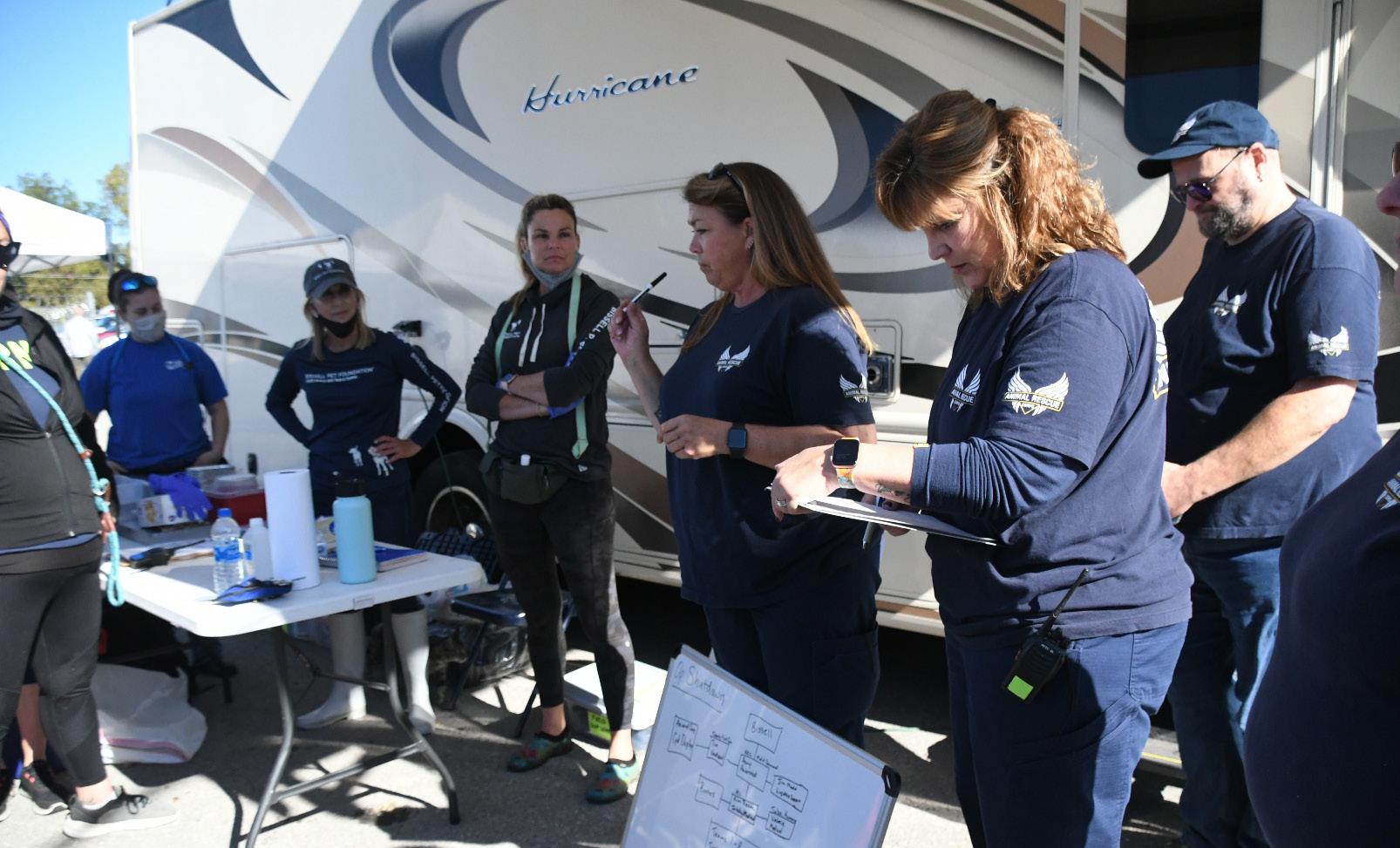
This year, In October 2021, Animal Rescue Corps (ARC), BISSELL Pet Foundation and several other animal rescues teamed up to save over 300 dogs and cats from the Humane Society of the Delta in Helena, Arkansas. The director of the failed humane society was arrested and charged with 285 counts of felony animal cruelty due to inhumane and neglectful practices at the shelter.
ARC is a “volunteer army of animal rescuers” with over 6,000
not fill up again. Well, the director there is basically a hoarder. She was going around to surrounding states and sometimes two states away or three states away and pulling animals from other shelters to bring them there, only to warehouse them. They weren’t getting adopted,” He said.
Within a couple of months, the humane society had over 300 dogs and cats. This issue went mostly unnoticed until the city’s water department went to the humane
“We can’t address these big problems like this humanely without collaboration. It takes a tremendous amount of resources to do this.”
volunteers throughout North America. As a nonprofit animal protection organization, its mission is to end animal suffering. They do this by rescuing animals from abuse and natural disasters, creating public awareness of animal welfare and training animal shelters and volunteers.
“I’ve been with Animal Rescue Corps since its founding in 2010,” said Michael Cunningham, ARC’s Director of Administration. During the phone interview, Cunningham sat with an anxious mother dog who happened to have come from another rescue operation. Cunningham is also the Public Information Officer and a director of the shelter. He closely followed the rescue that took place in Helena, which was dubbed Operation Shutdown.
“Last summer, a bunch of groups got together and went down to the Humane Society of the Delta and removed most of the animals because they were full. They were going to clean the place up and
society to collect an outstanding balance of $29,000. They were shocked to see the animals’ health and living conditions.
“There were dogs living within the walls of the facility,”
Cunningham said. “There were dogs eating rats because the place was infested with rats. Everywhere. [There were] lots of dead rats on the ground [and] live rats running everywhere.”
The animal abuse and neglect didn’t stop there. Sources reported that the animals were living in their own feces and urine. Trash cans were full to the brim and garbage was thrown about the property. Some animals even had open wounds with signs of infection.
“All the cats had upper respiratory illness,” Cunningham continued. “They had cats living in the walls. They had cats living in the ceilings.”
The city workers soon called the Helena-West Helena Police. The Executive Director of the humane society, Reta Merritt Roberts, was
then arrested and charged with 285 counts of felony animal cruelty. Even though the former director was removed, the city didn’t know what to do with over 300 dogs and cats, many of whom were sick and malnourished. They decided to call the BISSELL Pet Foundation for help.
“BISSELL Pet Foundation reached out to us and asked us to be the boots on the ground,” Cunningham said. “We agreed and we put together a field team and went down there.”
From then on, Operation Shutdown was officially on its way.
“As shelter director, I’m on the receiving end of the animals,” Michael said. ARC had additional members on the ground, including Tim Woodward, the Executive Director; Amy Haverstick, the Director of Field Operations and Investigations; and Kim Rezac, the Director of Animal Welfare.
“Tim, Kim and Amy were on the property in Arkansas, running a field team for all of the different organizations that came down there to help,” he said. People traveled from Kentucky, Louisiana, Mississippi, North Carolina, South Carolina and Oklahoma to save the animals.
“Groups from all over came there to help with that situation. These are big problems. They cannot be resolved humanely without the collaboration of different organizations, and we all do our part so that we can provide a humane solution,” he said.
The teams on the property were in charge of assessing the animals, identifying health conditions and transporting them to a safer area.
BISSELL Pet Foundation divided the animals among the volunteer rescue groups; ARC took the 54
dogs that were left and transported them to their rescue operation center in Lebanon, Tennessee.
The facility in Lebanon can adapt to large-scale rescues like Operation Shutdown. Volunteers configure and shape the enclosures depending on the number of animals or the size of the animals. “We’re physically building the shelter here, based on what’s coming towards us,” Cunningham said. “So, when they arrive they have an appropriatelysized enclosure and we’ve got their meals and everything ready for them when they come in.”
After the initial rescue, each animal received medical care, such as heartworm medication, spay/ neuter, vaccinations and other treatments as needed. They were then given time to recover from the trauma and stress stemming from their living conditions in Helena.
“We get a lot of dogs that just don’t have any life experience at all,” Cunningham said. “And what they have had is usually a pretty negative life, so we have to overcome a lot of that here and get them used to people touching them and being in their space. Generally, the animals are in our care for somewhere between 10-30 days before we move them on to our placement partners.” Many of the animals have already left for ARC’s placement partners around the nation; they have gone to Illinois, Indiana, Kentucky, Massachusetts, New Jersey and Wisconsin.
Though Operation Shutdown saved the lives of over 300 animals, there are thousands of situations like the Humane Society of the Delta throughout the United States.
“It is pretty sad,” Cunningham said. “Two days later we did an Amish puppy mill up in Iowa and
that was 514 dogs.”
Auctions, hoarding and unregulated breeding contribute to these patterns of neglect. Legislation is slow to catch up. According to the ASPCA, California was the first state “to ban the sale of commercially bred puppies, kittens and rabbits in pet stores” when they passed A.B. 485: the Pet Rescue and Adoption Act, effective as of 2019. The United States Department of Agriculture (USDA) also enforces the Animal Welfare Act (AWA), which outlines basic care standards for dogs and cats. Although there is some animal welfare protection, it is not enough. There are still way too many places like the Humane Society of the Delta that neglect the health and safety of animals that are entrusted into their care.
“We can’t address these big problems like this humanely without collaboration. It takes a tremendous amount of resources to do this” said Cunningham. Donations help make rescues like Operation Shutdown possible; 85% of every dollar donated to ARC goes directly to the animal program.
“We don’t charge for our services, we are completely free [in] situations like this. That’s why we founded this organization—to give law enforcement a resource to address situations of large scale animal cruelty that are beyond their reach.”
By Danielle Spence




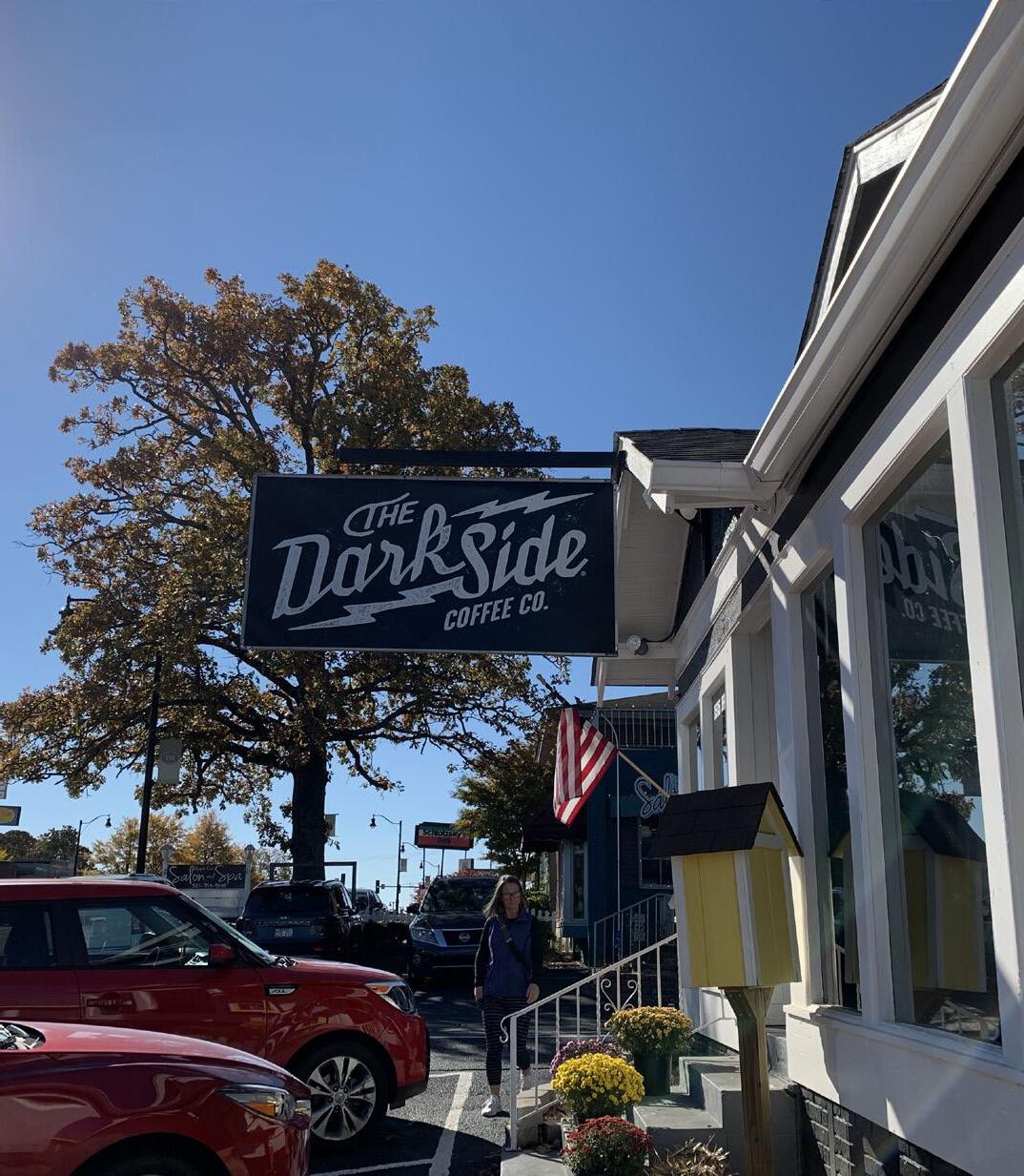
The Dark Side lounge is a local coffee shop on JFK in North Little Rock. Dark Side has two locations, the lounge and the express. Both are along JFK.
The lounge opened a few months ago and has been thriving ever since. I started going to the express location earlier this year, which is a drive-up location and instantly fell in love with their coffee and unique theme.
There is no better smell than when you walk into the lounge and smell the fresh coffee.
The lounge has a very calming atmosphere with a variety of seating options making it a perfect spot to do homework.
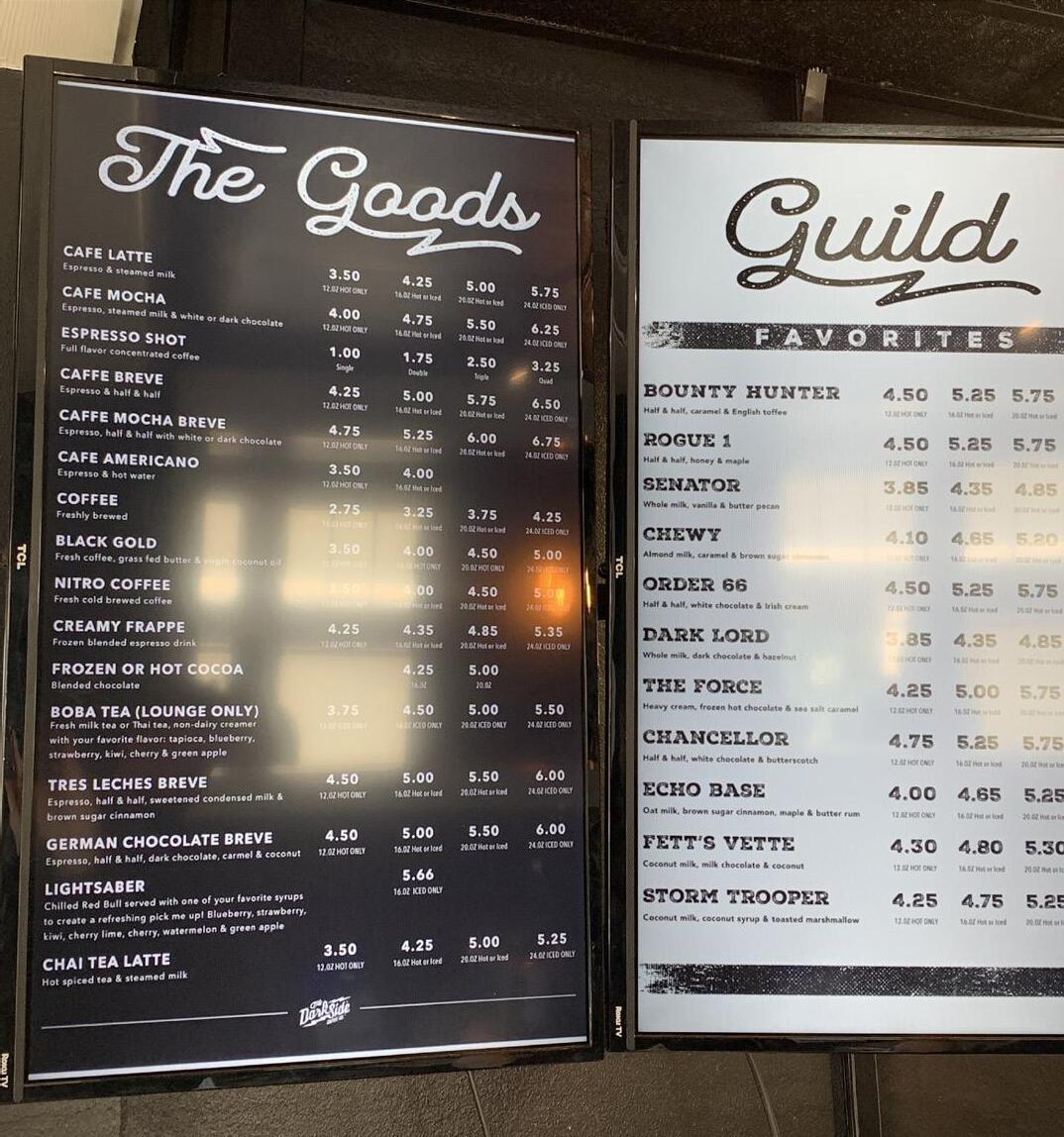
Dark Side offers a variety of Star Warsthemed coffee, hot or iced.
My go-to is the 24 ounces iced nitro coffee with dark chocolate and caramel, paired with a cinnamon roll or blueberry muffin.
Dark Side has the best coffee I’ve had in North Little Rock and Little Rock. Their customer service makes it 10 times better. When I walked in I was greeted by every employee with a smile even though there was a line wrapped around the entrance.
Every time I go to Dark Side there is a line so the wait is long. When I went I waited in line for at least 20 minutes for my coffee.
Parking can also be an issue. There are three parking spots in the front of the building and then a few parking spots available in the back of the building. Since they’re busy all the time it can be hard to find parking. I’ve always had to park in the back of the building, but some people may have to park down the street and walk.
The prices are comparable to Starbucks except it tastes better, in my opinion, and you’re supporting a local business.
If you’ve never had Dark Side I highly recommend you do, you won’t leave disappointed!
The Department of World Languages at the University of Arkansas at Little Rock has been organizing a Spanish Conversation Group table for any students, faculty, staff, and members of the community to practice Spanish. Conversations are led by the faculty from the department and range from beginner to fluent.
By Maddie Becker
Edma Delgado, Ph.D., is an assistant professor of Spanish and has been helping with the conversations.
“This year, all of October, I was the person present at the conversation table,” Delgado said.
“One professor will be on hand. When we had them in person per pandemic, we would eat lunch together and chat in Spanish every week at noon.”
The conversations are held on Wednesdays at noon through a virtual platform. Before COVID-19, they were held in person. This year, they have seen a large turnout of community members.
Delgado mentioned that the dynamic of the conversations is to talk and practice the skills.
“The goal is not to provide a lesson, per se,” Delgado said. “[The goal] is to practice the conversation skills that you have. Depending on the group that is present, we may split up into an advanced group and a beginner group just because the skill abilities are different and the things you are able to say are different.”
Various professors from the department lead conversations and they all have different strategies to create an engaging environment. For Delgado, she allows the participants to talk about what they feel comfortable sharing.
“Depending on who is leading the conversation, they will do different things,” Delgado said. “I am about seeing where the conversation leads. … We end up discussing things that are related [to the conversations.] We will talk about simple things with students in the earlier stages of their studies and more complicated things that require the ability to narrate for more advanced participants.”
Delgado is passionate about her work and encourages anyone who is interested in practicing their Spanish skills to join.
“We provide them as a service part of our community outreach mission,” she said. “We want people to sustain their language. Usually, if you do not practice your language skills, they’ll deteriorate after a while. … So it’s a way to help students taking classes develop their language skills and students who have taken classes or people who have studied the language previously, to retain their language skills.”
By Azalea Andrade
One staff member is taking steps towards his dream of having a film produced by Disney with his new children's book, Papa Dude, out now.
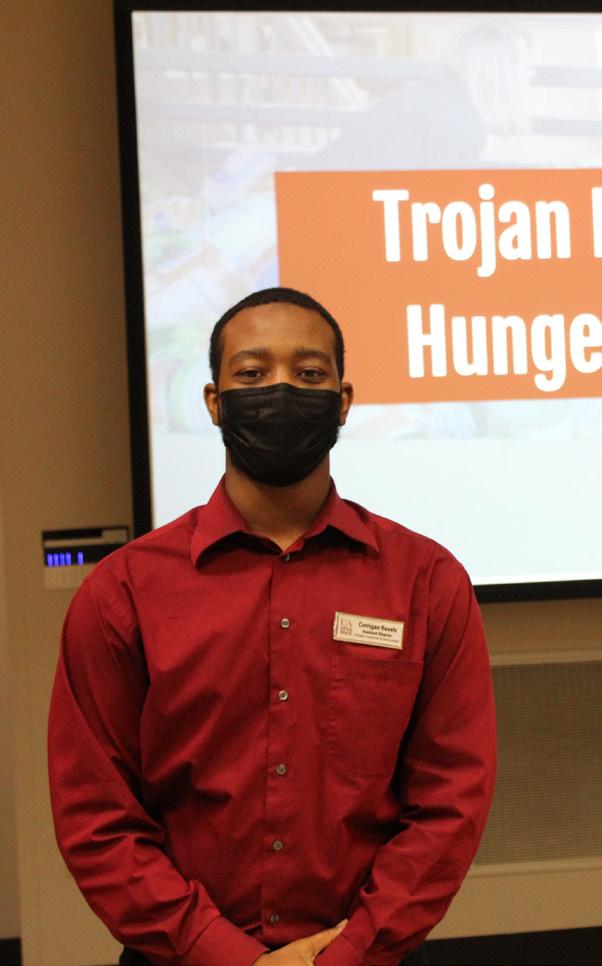
Corrigan Revels, a UA Little Rock alum and the Assistant Director of Student Leadership and Development in the Student Experience Center, tells the story of Quintin, who, with the help of his grandfather (who he calls Papa Dude), overcomes an insecurity to see his true potential.
The story, illustrated by Paige Manson, who is also a Trojan alumnus, is one that all ages can relate to.
“I hope readers will be able to accept their insecurities and be willing to overcome them,” Revels said. “I want them to also understand that embracing positive views from others can be the strength that they need to move forward in life… there is nothing wrong with asking [for] help.”
Revels originally submitted the story to Disney under one of their film initiatives. After not making the cut, he was inspired by a fellow filmmaker to turn the script into a children’s book.
“A few months later,” Revels said, “I witnessed Matthew Cherry win an Oscar for Best Animated Short Film and I knew that it was based on his children's book.”
So with that in mind, the road to Disney success is not over for Revels. And even if the story doesn’t become a film, he’s still happy with what he’s done. He didn’t read much as a child, and promoting literacy in youth is something he finds to be important.
Papa Dude is available on Amazon and at authorhouse.com in both print and digital forms.
By Magnolia Risley
Do yourself a favor and look up into the everexpanding sky the next time bedtime rolls around.
The night sky holds many magnificent feats of nature and so much mystique, it’s easy to understand what led UA Little Rock animal lab technician Darrell Heath to produce and host a monthly UA Little Rock TV series “The Night Sky” with a simultaneous blog post.
Heath’s fascination for the natural world around him began at a very early age, and like with most little kids, manifested in an affinity for dinosaurs.
“I started out with this fascination for dinosaurs,” Heath says. “That gave me a sense of what author John McPhee calls deep time, a geological timeline without humans in it.”
Deep time contextualizes the insignificant span of humankind against the broader backdrop of geological processes over millions of years. Understanding deep time gives one a more accurate perspective of Earth’s long history, and once Heath gained this perspective, he wanted to broaden it immediately.
Forming an understanding of deep time amidst the formative years of the Space Race and the Apollo missions led Heath into planetary science as a kid and offered him a much broader perspective of the universe and our planet that resides within it.
Learning about the planets, moon, and space were a big part of American culture in the sixties and seventies, around the time Neil Armstrong and Buzz Aldrin made history on the lunar surface. Even as an eight-year-old, Heath understood how monumental placing a man on the moon was and the significance it held.
“I watched Neil Armstrong step off the moon lander onto the surface of the moon and thought ‘wow’,” says Heath. “The interest just snowballed from there into other aspects of astronomy.”
Venturing into adulthood sidetracked Heath’s astronomy aspirations, with most of his academic career spent studying biology and zoology.
This foray into biology along with the studying of reptiles and amphibians only lasted about twenty years, until Heath’s ex bought him a telescope for Christmas, reinvigorating his curiosity for astronomy and deep time.
Revisiting his fascination for the night sky in his forties, Heath joined the Central Arkansas Astronomical Society, during which he was able to volunteer for NASA’s Jet Propulsion Laboratory as a Solar System Ambassador.
The Solar System Ambassador program has been dedicated to conveying information to the public about NASA’s ongoing missions to explore the solar system, with Heath having served as past president and is a current outreach coordinator for the CAAS, where he hosts star parties and other educational events on space and astronomy.
Volunteering with the Solar System Ambassador program is what guided Heath to his current role as the Outreach Coordinator for the Arkansas Space Grant Consortium, which prepared him to create his passion program “The Night Sky”.
Initially, Heath sent out small articles via email to UALR’s faculty and staff with the subject lines reading, “Here’s something that’s happening in the sky right now”, and the response around campus was resoundingly positive.
Such positive responses, and the vast amount that Heath received, only reinforced his passion for astronomy. Once the Director of University Television, Cheryl Hellmann, approached him and asked if he would like to produce a television show modeled after his monthly newsletters, he agreed wholeheartedly.
Once the program “The Night Sky” began production, it was a hit, with one episode garnering over
160 thousand views on YouTube alone.
“My goal [for “The Night Sky”] is to do outreach to make people curious and more science literate,” Heath says. “We live in a world where science is viewed as something that is either wrong or made up altogether.”
While stoking the flames of curiosity surrounding astronomy and space, in the hopes of creating a more science-literate society,
“The Night Sky” is as much a constant educational event for Heath as it is for his audience.
“The Night Sky” is a channel for Heath to continue exploring and learning about both astronomy and deep time; with the show holding the potential to discover something new each day.
“A lot of the topics I cover each episode, I’m learning more and more about them as I complete each episode,” says Heath. “I see it as a continuation of my learning experience.”
Continual education sounds daunting at first, especially regarding astronomy and other areas that require special equipment, but thanks to the Ark. Space Grant Consortium, anyone can gain access to some of these tools.
Partnering with the Central Arkansas Library System, the Ark. Space Grant Consortium placed telescopes all around the state in communities with corresponding libraries, offering everyday citizens the chance to begin studying the cosmos and spark interest in their night skies.
“People with a library card can go in and check out a telescope just like they can a book,” Heath says. “They can keep it for two weeks, as well, and explore the universe from their own back yard.”.

By Bennett Wood

Little Rock’s brand-new Art Club hosted their first meeting on Oct. 1. They hold their meetings on Thursdays from 4:30 p.m. to 6 p.m. at the Windgate Art Center and welcome anyone that wants to get in contact and stop by.
Some events they’ve hosted are virtual art critiques, arts and crafts workshops, costume contests, a nature walk and drawing session, and most recently a painting and pizza event.
“People like to come to events with food and gotta tie the art in there as well,” the treasurer Kristen Macchi said. “We want to have one more meeting this semester before finals just to destress as well.”
While attendance for members is encouraged it is not required as Art Club’s purpose is to be a place for people to relax, have fun and get to know other students.
The Club President Clara Mitchell summed up why she wanted to start the club, “The fact that a lot of people see what we are doing on Instagram are like ‘I’m surprised there’s not an art club’,” she said. “It just took someone to start it.” Mitchell will be graduating in a little over a year and hopes to find someone that understands how important Art Club is to the community of Windgate to continue it in the future.
She said she has had fun talking to people and organizing the events, “This is just something to
help people it's never meant to be an obligation,” she said. “Just to get to know the people you see all the time but maybe didn’t have the courage to say hi to in class.”
There are currently no fees for attending the events and the Windgate Center of Art and Design has given some funding to support them.
Looking towards the future, “We are also considering fundraising for club fees as well as charity and community outreach.” Macchi said. They are interested in supporting all kinds of charities, “Women’s battered homes, local artists and supporting them,” Mitchell said. “We have been trying to look for some demos or lectures for those local artists.” Any addition of club
fees would be kept at a minimum and re-invested into the club.
People that don’t consider themselves really artistic and nonart majors are welcome to join, “We welcome everyone,” Mitchell said. “We would love to see more people who want to participate in a little bit of art but they can’t commit their entire major to it.” The best way to contact them is by going to their Instagram page Art Club at UALR. On their page, they have a GroupMe to not only share club announcements but also get to know people who share the same interests.
By Payton Dhooge
There are three things that college students are constantly on the search for: community, connection, and coffee. Especially after many months of being confined to the spaces of your dorm room or home, everyone is looking for ways to step outside of the zones they have been stuck in for too long.
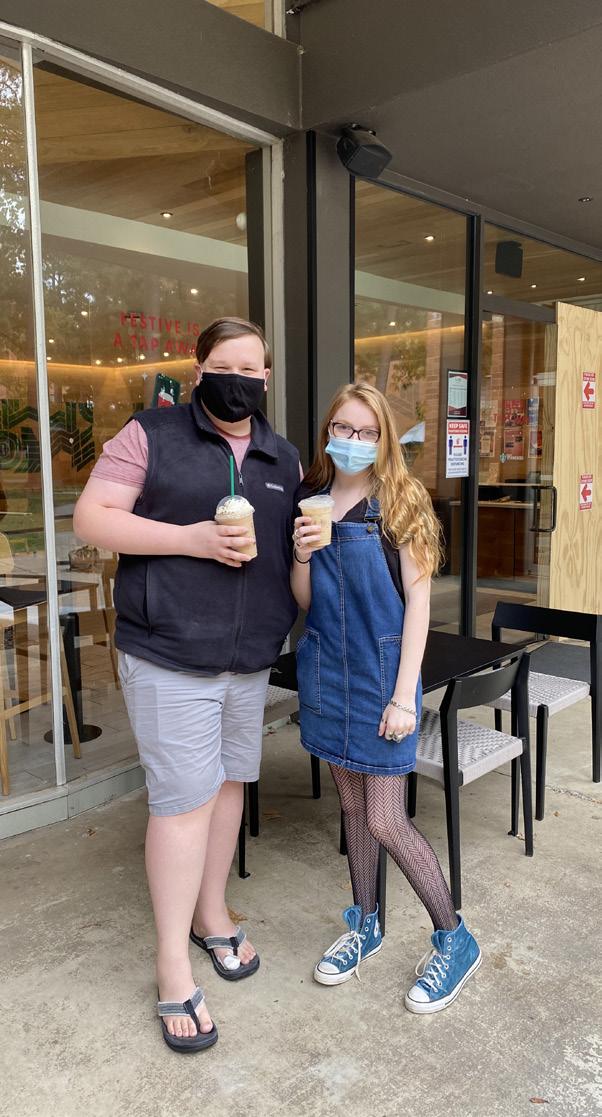
UA Little Rock is home to two college students hoping to help others take that small step forward. Sophomores Emily Wells and Adison Cummings created an Instagram account, @ ualr_starbies_reviews, this past year where they share reviews on Starbucks drink recommendations they receive or drink ideas they find.
“When we got the idea we were like ‘let’s make a page and review Starbucks!’” said Wells. “We didn’t think about it for a long time.” Cummings was also on board with the idea, explaining that “one day, Emily was like, ‘let’s do it!’ and I said, ‘Alright! Let’s do it!’” Their inspiration was “probably TikTok,” said Wells, “because [of] those TikTok videos where they would go through and [ask] ‘give me a drink that I sound like’ so that was kind of the inspiration for it."
While trying drink recommendations they find on their own time is fun, Wells and Cummings decided to take it a step further by asking their followers to send them drink recommendations. From students’ personal favorites to ones they
are hesitant to try on their own, Wells and Cummings brave it out. “Sometimes people will [direct message] us and give us drink recommendations,” explained Cummings. “Or, I’ve even had people come up to us in person and be like ‘hey, you should really try this drink next time you go!’ or just from friends or stuff we see on TikTok or just our own personal favorites.”
Although their account has been up and running for a few months now, Wells and Cummings are still shocked when students approach them in person. While laughing, Cummings said, “Yeah, it’s just weird to be perceived like that sometimes.” Wells then added, “Sometimes, I forget that people can, like, see us in person outside of our account, [but] we’re not just the account… But, it’s not bad, I mean, I’m glad that people are interacting with it and it’s a fun little community.” They love that their followers engage with their content both on and offline, as their goal was to foster a community of people with similar interests: Starbucks.
The drinks they’ve reviewed, from caramel ribbon crunch frappuccinos to nitro cold brews, are all rated on a scale of one to ten. One being the lowest rating a drink can receive and ten being the highest. They’re very considerate of the tastes and preferences of their followers and rate their drinks based on not only their likings but those of others as well.
Explaining her criteria when rating drinks, Wells said, “Honestly, I try to keep in mind that if it’s not for me, it might be for someone else. So...if it’s really bad to me, I’m not like ‘ugh one [out of ten].’ I’m like, ‘Okay, this isn’t my taste but it’s probably somebody else’s so I’m gonna give it like a six.’ But, if it’s really good, it’s a ten. If it’s better than good, it’s an eleven.”
Cummings also applies similar criteria to his ratings. “Whenever I get drinks, you know, I do try to keep in mind, like Emily said, ‘This is my taste and other people have different tastes.’ But, I do try to think of ways to make it better. I got hot chocolate the other day and it was by itself so it was a little tasteless, but I just went back to the dorm and put some whipped cream on it. So then I recommended that ‘hey, this wasn’t that good by itself but just ask for whipped cream on top and it makes it a whole lot better!’” They remain honest while still having fun which is what allows their account to continue growing.
It’s fun to see the recommendations that their followers submit, but it’s also nice to get to know the likings of the ones running the account as well. When asked what kind of drinks they favored, Wells said that she enjoys the “frappes and the sweet, fruity drinks. I like the drinks that are based with lemonade, like the teas - those are so good!”
Cummings, on a similar note, said, “I do definitely have a
preference for frappuccinos. Before [when] I used to come here they used to always know me by name and what I was gonna get. One time I came in and the line was really long and one of the workers was like, ‘Alright Adison, you getting your usual mocha cookie crumble frappe?’ and I was like, ‘Yes, sir.’ He had it made by the time I paid. But yeah, definitely frappuccinos, and I do like the refreshers.”
Their top three favorite drinks were also similar. Cummings top three favorite drinks are the white chocolate cream frappe - a recommendation - the java chip frappe, and the strawberry acai refresher. Wells’ favorites are the mocha cookie crumble (or java chip), the chai tea lattes - “I crave it all the time. It’s so good!” - and the strawberry acai refresher. Currently, they are trying out all the Christmas drinks released earlier this month. “I like the Christmas drinks, because I really like the toasted flavors, like the toasted white mocha,” said Wells, “That one’s probably my favorite out of the Christmas flavors.”
Wells and Cummings encourage everyone to reach out and send in their recommendations. They’re college students, like everyone else, trying to stay afloat after a long, tumultuous year through an outlet that allows them to have fun and be creative.
“DM us. Come find us. However,” said Wells. “We try to keep in mind all the recommendations and try to go through them to
make sure everybody gets their recommendations [reviewed]. We want people to feel represented.”
By submitting drink recommendations, you fuel the content they are able to put out. “We do kind of treat it like a job,” commented Wells. “But like a really fun job.” Cummings added, “It’s just a lot of fun, you know. We like getting recommendations.”
They can be reached via DM or by commenting on their Instagram posts @ualr_starbies_reviews, or you can look for them on-campus!
By Vasti Hernandez
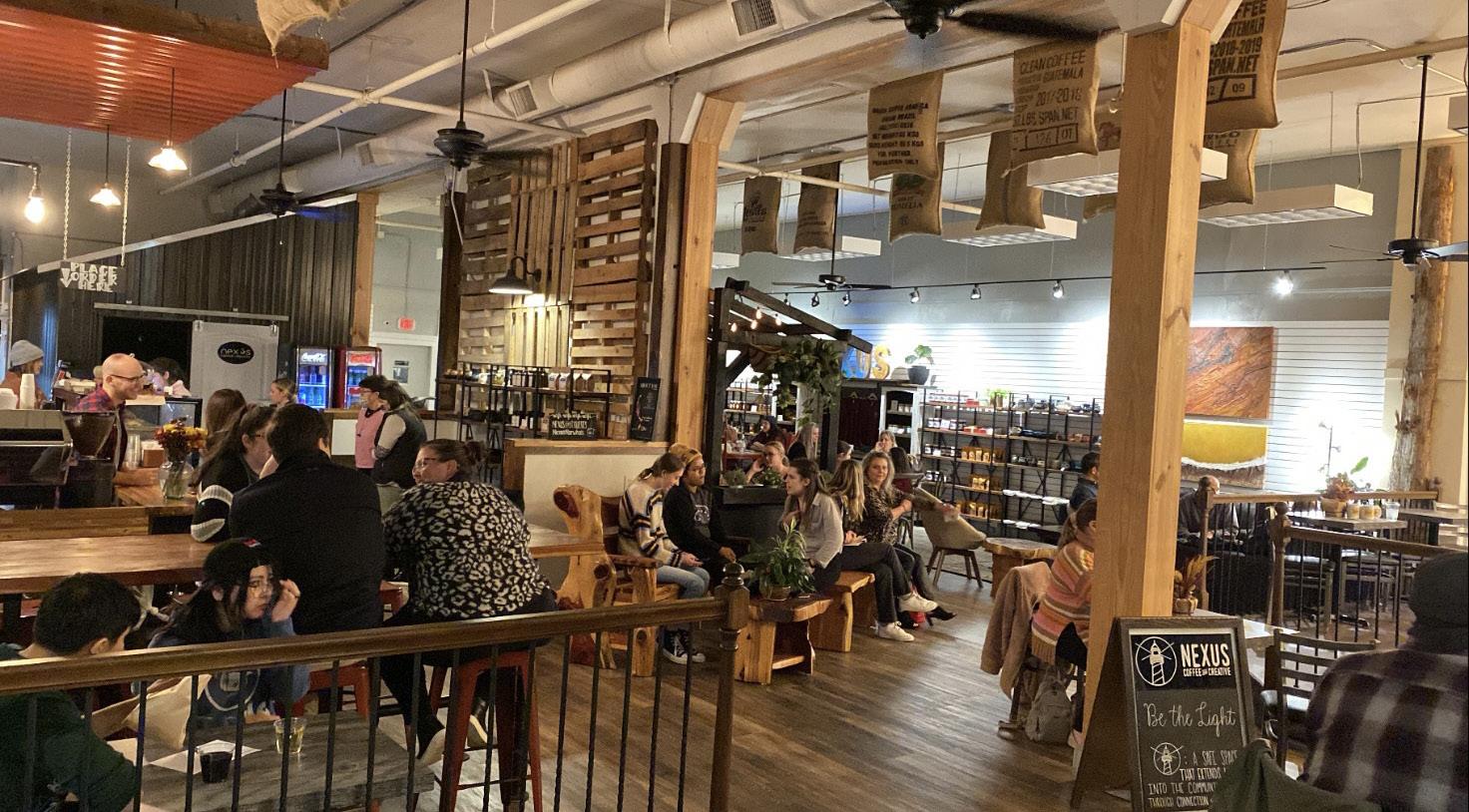
It’s a Thursday afternoon. You’ve just gotten done with your course load for the day, and you’re looking for a way to unwind. You want to relax but also have fun and hang out with your friends. The perfect solution to this oxymoron of a dilemma? Nexus Coffee & Creative’s Trivia Night.
Nexus Coffee & Creative is a coffee shop located in downtown Little Rock. Since their establishment in 2017, their goal has always been, according to the website, “to be a meeting placea point of connection, meaning, and creativity for our beloved city.” Hence, the name: Nexus.
Nexus strives to build a community and a sense of togetherness throughout the city of Little Rock, and what better way to do that than through the art of trivia? Since day one, Nexus has held a trivia night every month.
“This is what this space was meant to be, not just coffee and tea, but a community space to have events and workshops and rental spaces, and trivia is a very wellknown community driver,” Jake Coffman, Marketing Director and Manager said. Every trivia night has a different theme, most likely centering on a TV Series or Film(s). Some recurring themes include “Friends”, “The Office”, “Stars Wars”, Marvel, and “Harry Potter”.
This month, fellow Forum Writer, Vasti Hernandez and I had the privilege to attend Nexus’ “Gilmore Girls”-themed trivia night. As avid fans of coffee and anything “Gilmore Girls”, we were more than ecstatic to attend, and we were not disappointed. The night was absolutely amazing.
Not only was it tons of fun, but the environment was beautiful.
The coffee - or in my case, the Chai - was delicious, the staff was wonderfully polite and attentive and the people were more than great. While we were here, we had the chance to make some new friends and join their team. Like us, it was their first time attending a Nexus Trivia Night, and they were just as nervous and excited as us.
“The trivia was really fun, the coffee is really good,” mentioned Sierra Lowry, one of my fellow team members as well as a first-time customer of Nexus. “I loved the fact that we didn’t have to stand up and give our answers.” I second that.
Our, collective, favorite part of the night, however, was the fact that although it was a competition, the night never felt tense in the slightest. On the contrary, we spent the night helping each other out when we could, laughing at our silly mistakes and cheering on the winners.
“I loved the atmosphere of Nexus; it’s incredibly welcoming and warm.” Margaret Lowry, one of my fellow team members said. “I would definitely come again.” Sadly enough, my team and I were not one of the winning teams.
Even though we’ve all watched the “Gilmore Girls’” six seasons repeatedly, it was still not enough. Nonetheless, we had the best time, and we look forward to attending more of these trivia nights.
This Dec. 9th, Nexus will be holding a Christmas Classicsthemed trivia night! I definitely recommend going and bringing your friends! You won’t regret it.
By Vivian Angeles
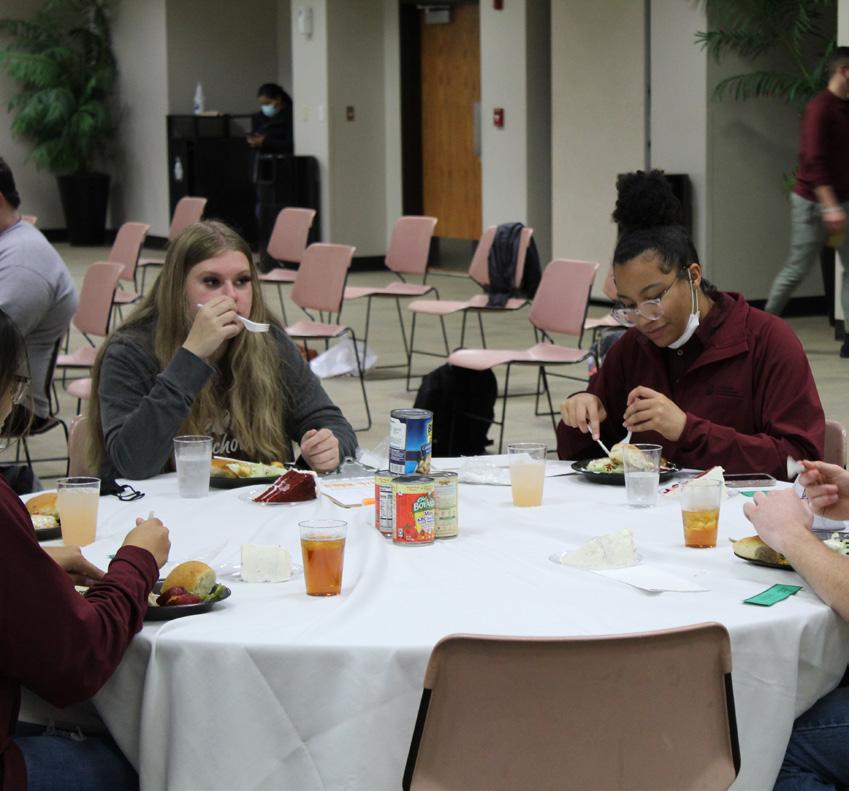
“If you’re yellow, you’ll be to my left, your right. Don’t utilize the chairs just yet, you’ll be able to later. But, feel free to use the ground or the wall.”
Those were the words Corrigan Revels said to the crowd entering the Ledbetter Hall in the Donaghey Student Center on Nov. 9. Students were randomly handed tickets at the door, after signing in and making a donation of five nonperishable canned food items to donate to the Trojan Food Pantry.
The tickets varied between red, yellow and green. Those who had yellow tickets were considered lower class. They were unable to sit in chairs where the other ticket colors, representing the middle and upper classes, were able to sit, such as in a row of chairs or at a banquet table.
The first speaker to greet the crowd was Markeith Thomas, who informed students about hunger on campus.
“Of course, I could not leave here today without telling y’all how to help,” Thomas said, ending his presentation with information about how to help the food pantry.
Then Tiffani Silvey, graduate assistant to the Chancellor’s Leadership Corps Scholarship Program, presented Trojan Food Pantry statistics. According to Silvey, to date, the food pantry has served 627 individuals and 256 households.
Silvey also identified the three populations most impacted by food insecurity: first-generation
students, off-campus students, and students of color.
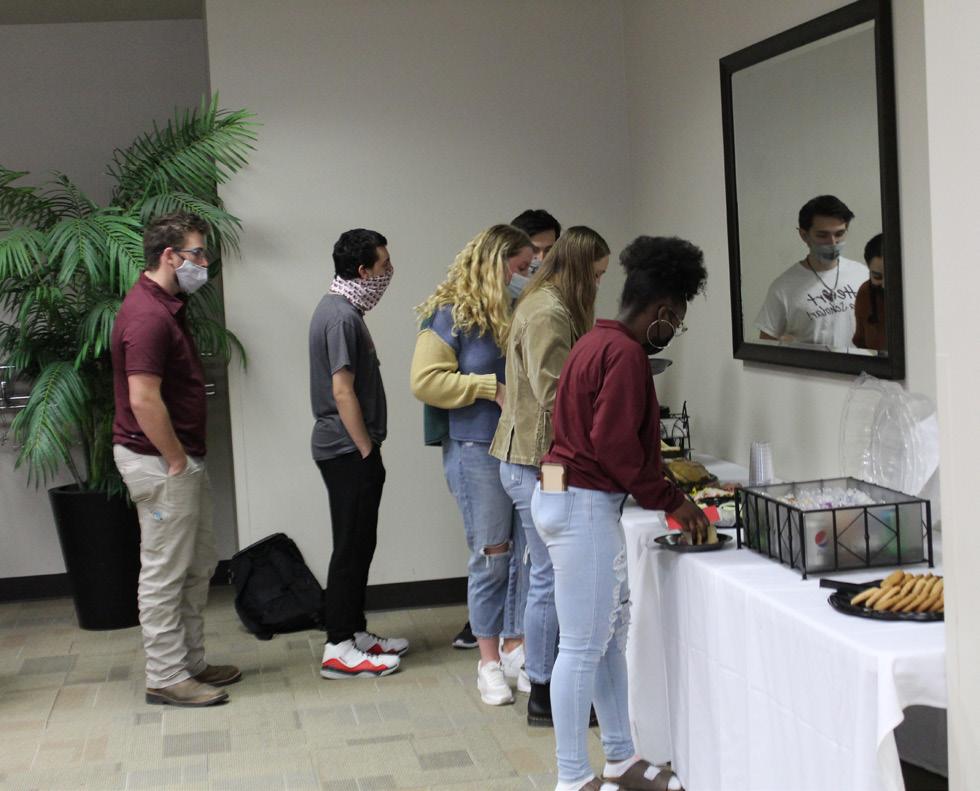
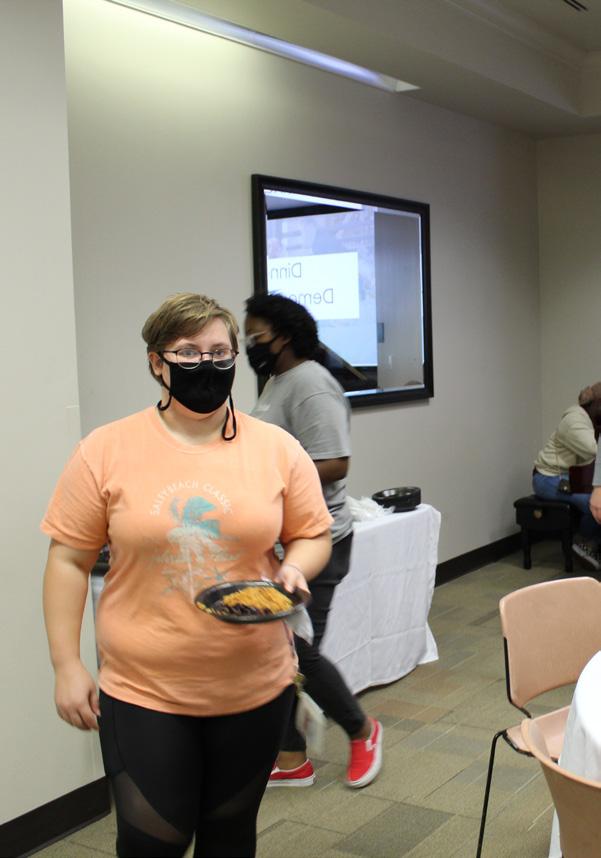
The food presentation was the highlight of the event. Those with red tickets were offered punch, roasted potatoes, and a chicken dish along with a piece of cake. Those who were handed green tickets were allowed to make their own deli sandwiches and get a soda. Then, the lower class tickets meant students were allowed rice and beans and a glass of water.
Revel and Silvey lead a discussion with the attendees about how the differences between those who suffered from food insecurity and those who did not were not always obvious. The discussion also hit on the disparity between the meals offered. They pointed out that sometimes being food insecure means being unable to afford healthy, nutritious or fresh options.
“This is just a reminder to make sure that we are truly checking in with our friends, knowing what’s truly going on, and making sure that we can help them,” Revels said.
After the presentations, all guests were allowed to examine the leftover meals and eat at tables to discuss the evening to promote community building and awareness about food insecurity and how the Trojan Food Pantry shows up for students.
By Remington Miller


This semester Dance Harvest returned to the stage with performances from Nov. 12 to Nov. 14. Gage Pipkin’s capstone project Turn off the Light: A Visual Narrative of Horror and Queerness was performed on Nov. 12-13.
Concert Director Stephen K. Stone greeted the audience, introducing that the routines would follow the order listed in the program and have around 45 seconds of the house lights on to allow the audience to check their programs in between performances. Facemasks were required for all attendees and performers, along with a fogging of the stage in between the two events.
Throughout the evening, the audience was shown costumes designed by Don Bolinger, either solely or as a mentor, who has been the costume shop manager for the UA Little Rock Theatre Arts department for 20 years. Mike Stacks was the lighting director and worked on every routine.
The first performance was titled Dynamics, featuring performers Jali Chandler, Lizzie Schaefer, and Laney Smith. It was a powerful, energetic start with the performers in blue, yellow, and red costumes, designed by Kiara Willis, the choreographer of the piece, and Bolinger.
What followed was the most eerie and chilling performance of the Dance Harvest, a piece called Who is Conspiracy? Savannah Davis and Bolinger designed the costumes. The dance was choreographed by Davis and performed by Lillian Berry, who performed with not just her body but her voice and created a terrifying experience that left the audience in silence and unable to look away.
3 for 5 was the third routine,
choreographed by Stephanie Thibeault, with costumes by Bolinger. The dance was performed by Makayla Allman, Alexis Brooks, and Stephen Glass. It was a good way to build up the audience after Who is Conspiracy?
Davis performed a solo next called Growing Up, choreography and costume design by Madison Price. The costume was a pink dress that added to the dance’s graceful aesthetic.
60 BPM | 5.28 was the only dance with a director’s note in the program, which informed the audience that the choreography, under Price, was “predetermined through ‘chance operations,’ and it is consistent amongst all three performances. All other elements within the piece, including music selection, costuming, and lighting design will be de determined through chance operations just prior to each performance.”
Price and Bolinger designed the costumes for performers Allman, Schaefer, and Willis.
Then came a Man Eater, choreographed by Lillian Berry, who aided Bolinger with costuming as well. On Nov. 12 and Nov. 13, the dance was performed by Chandler, Laney Smith, and Jessica Williams. On Nov. 14, Berry replaced Williams to perform in the dance. The red dresses and fun and flirty nature of the performance were wellreceived by the audience.
My Escape, choreography and costume design by Willis, was a unique solo. The dance featured Price accomplishing a minor costume change mid-performance that impressed the room.
The second to last routine was performed by Willis and choreographed by Berry. This is where Stacks’ work was outstanding, the light creating an
Arkansas wasn’t nicknamed “the Natural State” for just any reason. Many Arkansans don’t realize the natural gems (quite literally!) they have in their backyard. From Central Arkansas, a trip down Highway 65 can show many locals things they have never seen before.
locals are proud of that. The town also hosts its annual Turkey Drop, where live turkeys are thrown out of an airplane over the town square.
almost door to Heaven cast upon Willis during More than I Could Imagine.
Greek mythology was revitalized during Bow to Us, the finale of the evening and star of the show. From Davis’ and Bolinger’s brilliant costuming to Chandler, Glass, Smith, and Ryann Young’s performance, this piece clicked. The chemistry inside the stage buzzed and left the evening on an extremely high note.
Turn Off The Light followed about an hour after Dance Harvest, filled with drag elements and performances from Pipkin, as Heather O’Sexual, and Berry and Schaefer. The six performances within the show highlighted the queer experience of internalized homophobia, the stereotype of oversexed and evil homosexual relationships, and how to find selflove through authentic expression.
In their biography in the program, Pipkin added that they “would like to thank the department for supporting queer art making” and “mentoring them and their cast for taking on the challenge to create in a collaborative manner to bring such a piece to life.
Shortly after this capstone, it was announced that Pipkin was selected to dress performers at the 95th annual Macy’s Day Thanksgiving Parade and will be assigned to dress 20 people who will be accompanying the Louisiana state float, according to Angelita Faller’s article for UA Little Rock.
These performances graced the stage after it was announced that UA Little Rock cut its dance degree program during the academic retrenchment process in 2020. The passion for the final semesters of the program lives on.
By Remington Miller
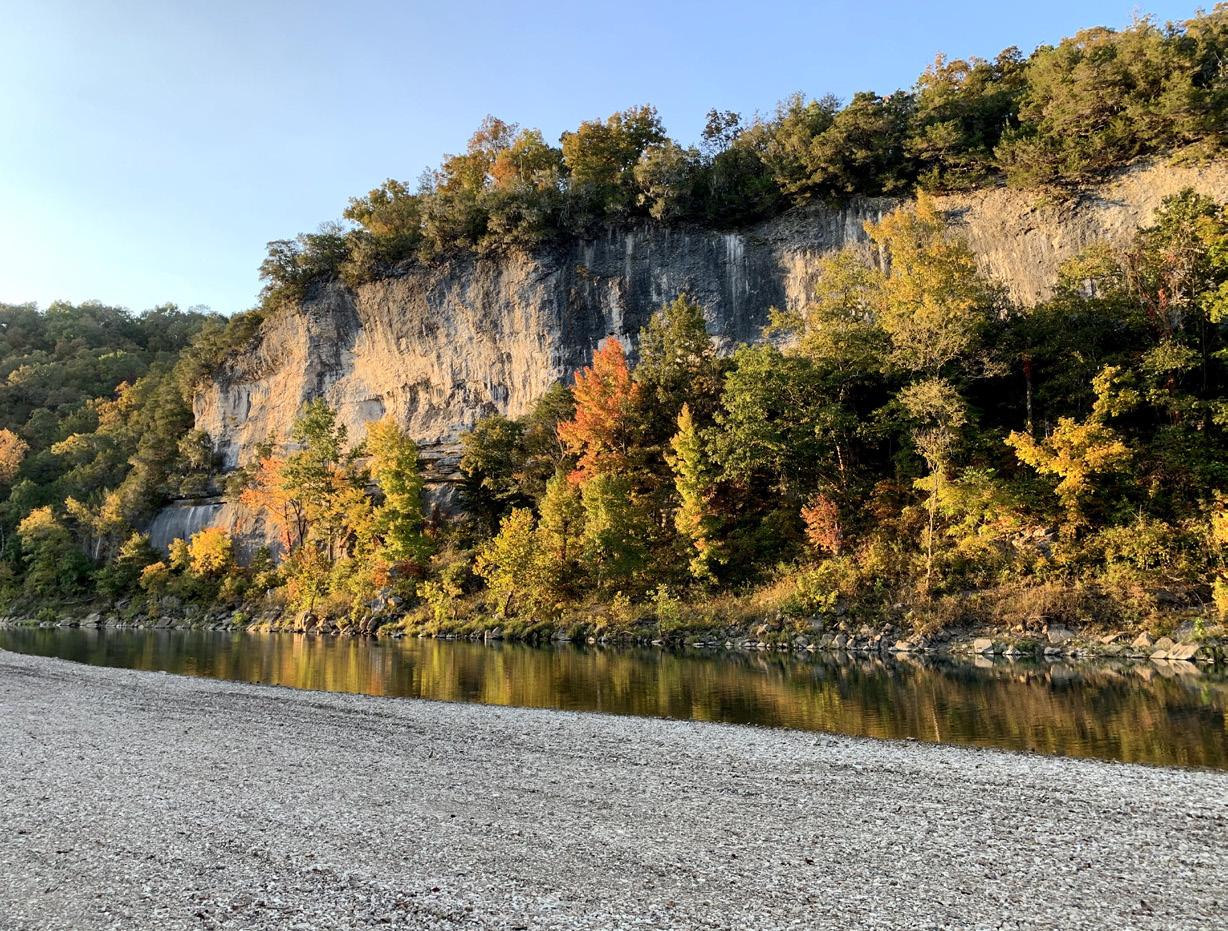
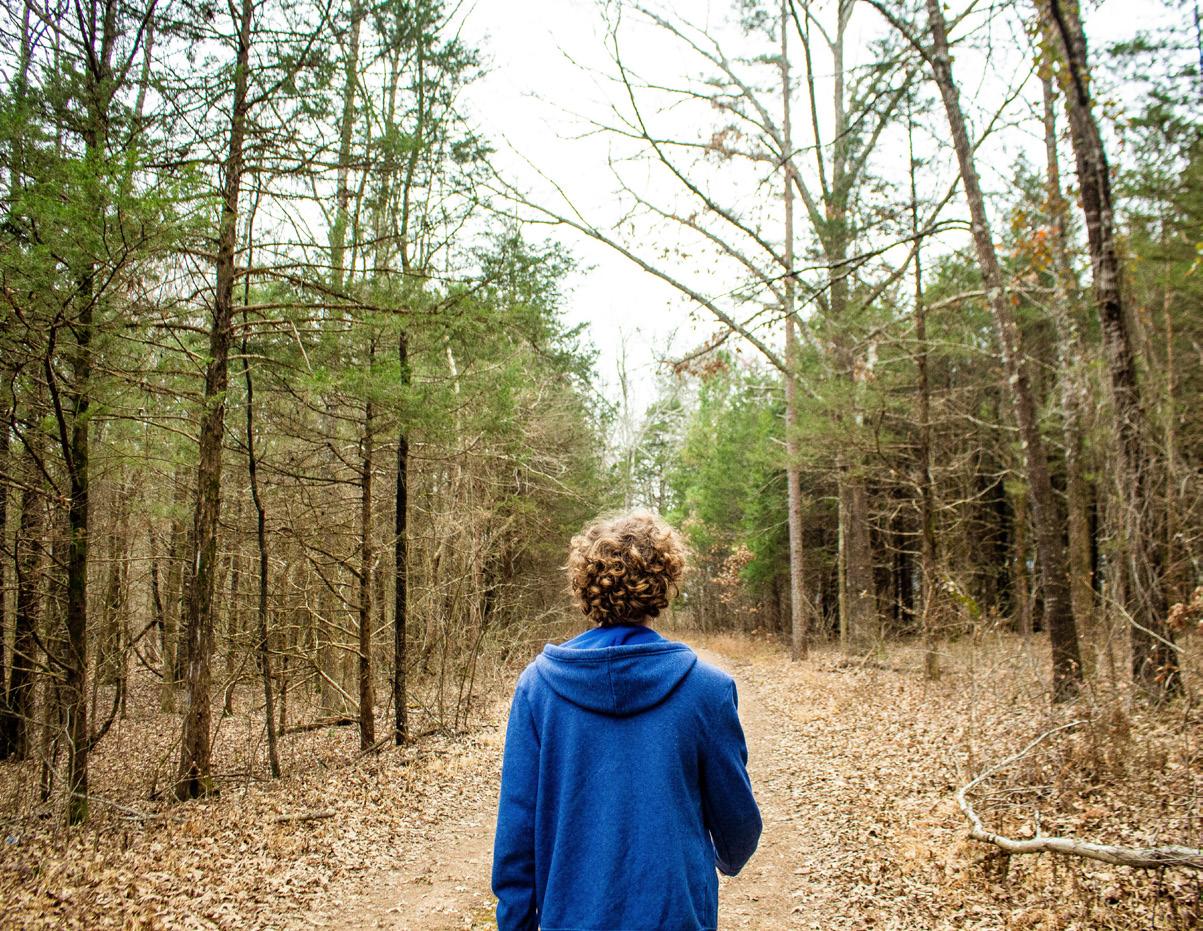
The Buffalo River, which spans across much of the Ozarks, offers not only beautiful sights but also recreational activities. Visitors to the Nation’s first national river can canoe, fly fish, hike, camp, swim, or hammock. The opportunities are endless- from sightseeing down into the valley under Hawksbill Crag to spending a night under the stars at Tyler’s Bend, the Buffalo can be accessed by those young and old with a variety of trail difficulties and accommodations.
While visitors are in the north, stopping at Ponca to see the elk is a must. During the fall and winter months, Lost Valley is crowded with cars parked on the side of the road, full of hopeful tourists hoping to get a look at the notorious Arkansas elk herd.
The Ozarks have not only waterfalls and caverns, but also great small businesses and local food joints to support. Corsey’s BBQ in St. Joe has the thickest smoked ham and turkey sandwiches you’ve ever seen. Yellville sports the only place in the state where a person could be in a boat under a vehicle bridge under a railroad bridge and someone could be in a plane. The
If small-town traditions aren’t your thing, Eureka Springs offers both spooky sights and historical charm with a more “city” feel. The whimsy town has many Victorian-inspired structures, including the Crescent Hotel, the most infamously haunted spot in the Ozarks. Eureka Springs is proud of its Passion Play, a biblical production performed outside near the Christ of the Ozarks monument, which is reminiscent of the one in Brazil, just much smaller. There is also a large population of LGBTQ+ friendly businesses and local art; there is something there for everyone.
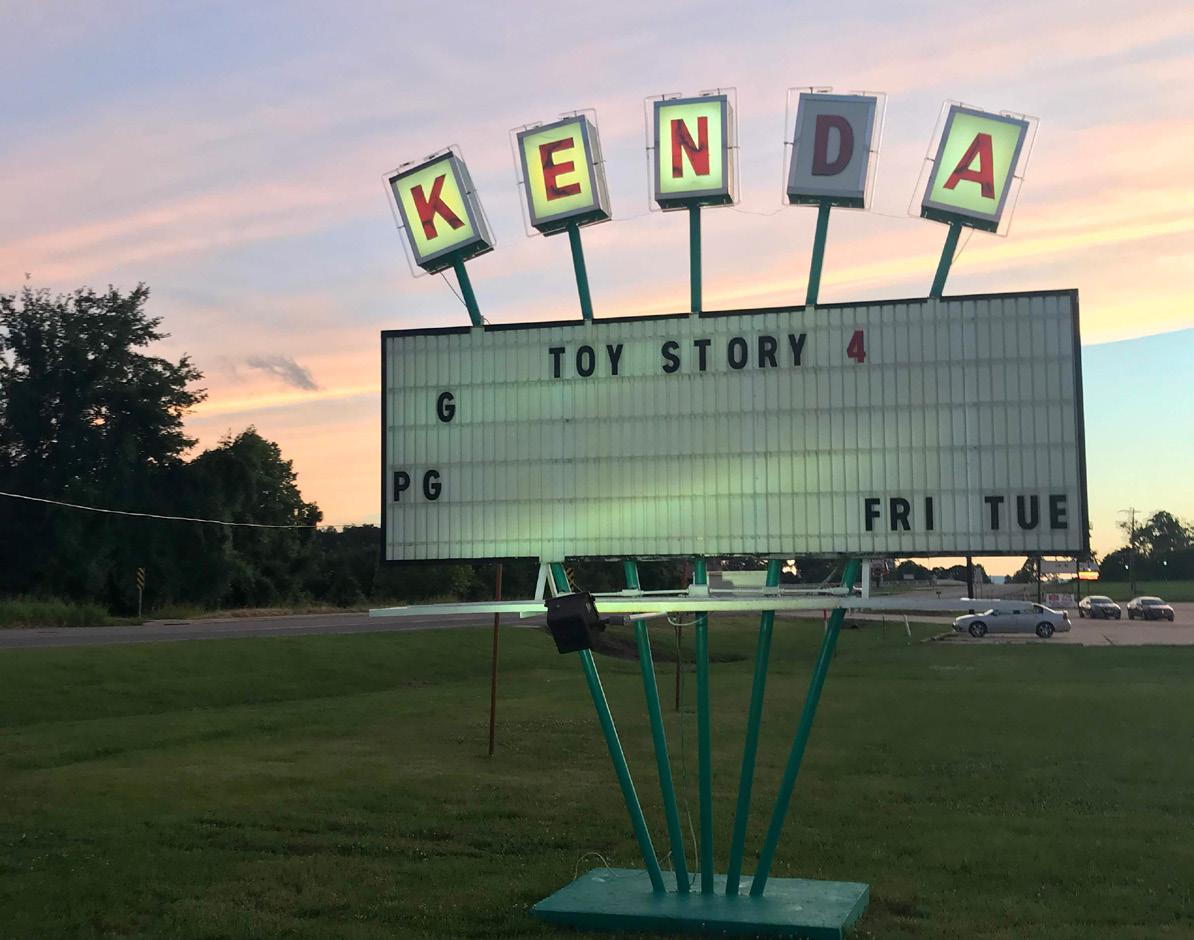
Marshall has a drive-in that has been around longer than our parents, where they show new and old releases on a big screen after dark, complete with concessions and a faint scent of cow manure from the nearby pastures.
Further south on Highway 65, Clinton hosts the annual Chuck Wagon races, which draws huge crowds from miles away.
There are many sights to see within a three-hour drive from central Arkansas. Take advantage of the state’s heritage and gain some pride for your neck of the woods next time you have a free weekend.
By Magnolia Risley


Harry Styles graced North Little Rock with his presence on Nov. 24 at the Simmons Bank arena as part of his Love on Tour show. His first time in Arkansas, it was originally scheduled to be his last show of the tour, but a date in Long Island was added following ticket sales from Little Rock.
The show was amazing, to say the least. I’m still not okay Gates opened at 7:30 p.m. Those who had pit tickets had been camping since midnight the morning of the concert, even though they had the option to come and receive their wristbands and then return to the arena later.
I arrived at the arena about an hour before the gates were scheduled to open, at which point the line—if you could call it that— was already wrapped entirely around the arena three times. I got lucky and hopped over to a line ahead of me every time I saw someone I knew, so I was able to be in my seat by 8.
Once inside, the stands were an endless sea of feather boas, bellbottoms, and glitter ensembles. I myself had a pair of patchwork bell bottoms on, (shoutout to America Jane Vintage in Conway for hooking me up with an awesome vintage outfit!).
He came without an opening act for this show, and once the lights dimmed and his intro was playing, the six minutes it took for him to come out were electric. Everyone was screaming, some were already crying and there was a moment of collective gasps when “Golden” started playing and Harry rose from beneath the stage in a shimmering, sequin blue buttonup with his classic suspenders and
pastel blue pants.
I’ll be honest with you, I cried for the first song and a half that he performed. I’ve personally been a fan of Harry for eight years, since the release of the “Midnight Memories” One Direction album. I shipped Larry, hard, and I was the kid in the back corner of my seventh grade English class who followed the “refresh not replay” agenda on YouTube when the “You and I” music video came out and the Directioners wanted to break some kind of YouTube watch record
After I got over the initial rush of, “Oh my GOD he’s a real person and he’s STANDING in front of me,” I had a blast. Harry did a great job of interacting with the audience and moving around the stage. I was in the second row of the bottom bowl, so of course I felt like I had the best seat in the house. Thank you, Ticketmaster, for allowing fans who signed up early to have access codes to presale tickets.
He played “Falling” directly in front of me and I don’t think I will ever be the same.
About halfway through the show, Harry said, “What would happen if I was to call the Hogs?”
With a little gesture of his hand; the arena went wild. We did it three times and halfway through the second time, he said, “Oh, it’s still going?”
It was amazing. A sign in the pit read, “I used my grandma’s will to be here,” and Harry asked the fan what her grandma’s name was, so the arena called the hogs in honor of Grandma Dee again.
He also sang “Medicine,” a song of his that has never been officially released. In between every song, the audience would chant “Medicine, medicine, medicine,” and he finally did it as the next to

last song in the encore. Fans lost their minds. In a video I saw later, he told the pit off-mic with a wag of his finger, “If you ask nicely, you will get it!”
Overall, his band in their matching orange outfits were awesome, Harry himself was unbelievable, and the energy of the arena was unmatched. A disco ball came down while he sang “Sign of the Times” that cast light rays across the arena, and it was a beautiful moment where everyone was singing, dancing, and taking in being in the same room as their idol.
For me, it was amazing to see him doing the same dance moves I’ve watched him do in concert videos on Twitter for the past almost decade. He is an icon and it’s great to know that he’s stayed true to his character since the beginning, waving rainbow flags and boas and blowing kisses to the audience in between shaking his water bottle out on the pit and dancing with his guitarist, Mitchell, on stage.
His smile was contagious, even though he was one show away from finishing a 42-show tour and it was the day before Thanksgiving, he gave us his absolute best.
When he first came out, he said something along the lines of, “For the next 90 minutes, we will be heart to heart, soul to soul, and the only rule is for you to dance like nobody is watching— like you’ve never danced before.” Mission accomplished, Harry, thank you.
By Magnolia Risley
Walking into the movie theater has a way of evoking a childlike sense of wonder, especially when you are seeing is a Marvel entity.
“Eternals”, written and directed by Chloé Zhao (“Nomadland”) with writing credits by Patrick Burleigh and Ryan Firpo, is a strong narrative-driven film that relies heavily on character development in some places, and the good old Marvel-action formula from movies past.
Pulling from famous comic book writer and artist Jack Kirby’s 1970s story “When Gods Walked the Earth”, “Eternals” introduces another superhero gang to Disney’s table since the Avengers team finalized their run in the 2019 blockbuster hit “Avengers: Endgame”, Marvel’s last installment of the Avengers franchise.
Essentially, “Eternals” is a film about a powerful, diverse family of immortal beings created by a group of god-like characters called the celestials, sent from planet to planet throughout the galaxy by the Celestial Arishem, in order to help birth more Celestials.
This celestial family has 10 members, and quite a roster of A-list actors as well, with solid performances from Gemma Chan (Sersi), Richard Madden (Ikaris), Angelina Jolie (Thena), Salma Hayek (Ajak), Kumail Nanjiani (Kingo), Lia McHugh (Sprite), Brian Tyree Henry (Phastos), Lauren Ridloff (Makkari), Barry Keoghan (Druig), and Ma Dongseok (Gilgamesh).
When the Eternals arrive on Earth in Mesopotamia around 5,000 B.C., we see their introduction to the human species and how the demi-god beings began shaping human’s path toward evolution, innovation as well as our civilizations, cultures, and mythologies.
The film starts from the presentday and touches back on previous moments in their history on Earth, jumping around about 7,000 years throughout Earth and humanity’s evolution, using this trope to successfully get the team back together after a less than pleasant parting of ways in Tenochtitlan 1521 A.D., amidst the Spanish army invasion of the Aztec Empire.
Getting the band back together, so to speak, is initiated at first by
formula the studio is so dependent upon using, the film veers off into more adult and mature territory, until it redirects right back into that comedy and action safe zone.
the reemergence of the Deviants, organic beings created by the Celestials to help protect humans from predators and facilitate population growth.
Due to an evolutionary gene in the Deviants, the Celestials eventually lose control of the monsters, who then begin to attack humans. This is when the Eternals are created, by the Celestials, to protect humanity from the very creatures these cosmic “gods” made to help them.
Initially, the Deviants are made to be the source of conflict for the Eternals and the reason for their mission, until both the audience and the team find out about the Emergence, a Celestial birthing event that kills its host planet.
Differing opinions run rampant amongst the cosmic-scale family, with some wanting to save Earth and the humans living on it, others wanting to carry out the original mission of the Emergence, and then one who opts out of fighting on either side.
Using the conflicting feelings and opinions of human beings amongst the Celestials, the film really conceptualizes the path society is on today, drawing parallels to real natural disasters and cataclysmic events that humans have indirectly, or directly, created.
Zhao’s first foray into the Marvel universe is meant to feel vastly different from all the Marvel films that predate it, and it does…up until those reliable humor and action sequences pop up that are integral to the Marvel brand.
Even though Marvel’s first attempt at a high-concept film went grand in both scale and concept, it didn’t fully commit to its artistic potential, falling back into the Marvel Cinematic Universe’s safe zone…the Marvel formula.
Running at two hours and twenty-six minutes, “Eternals” is a beautifully produced and directed art piece that could have been curtailed by thirty minutes. Even though the film carried conflicting tones, the audience can appreciate the slower moments when Marvel finally drops the fighting and CGI, and run with higher-concept moments.
Because of this attempt at a departure from the typical Marvel
Beautifully directed by Zhao, “Eternals” directly benefits from her love of natural landscapes, wide open spaces, and sweeping shots, creating a very pretty and practical film. Due to this artistic choice, many scenes with insane cosmic-level CGI, the graphics are more noticeable than any other MCU entry to date.
Breaking from previous Marvel Studios (and Disney) norms, “Eternals” breaks ground for a couple of marginalized groups and offers representation desperately lacking from the mainstream media and silver screen.
Representing the LGBTQIA community is Marvel’s first openly gay black superhero Phastos, played by Brian Tyree Henry, marking a monumental step forward for the queer community, in terms of representation, in a bigbudget studio production of this magnitude.
Lauren Ridloff also makes history as the first physically disabled actor to portray a superhero in the MCU, Makkari, providing some muchneeded representation for the deaf community. According to research by Preply, an online language tutoring service, there has been a 250% spike in inquiries to “learn sign language for beginners”.
Humanity at its worst is truly NOT what we as a species have to offer this world; humans are capable of so much more than we give ourselves credit for.
At its core, “Eternals” is a slightly convoluted attempt at a more serious, high-brow art film about cosmic superheroes that learn to love humans, and eventually save them from the end of the world. Having faith in humanity is a major theme and message of the movie, shown through the group’s struggle with each other’s decision to stop, or not to stop, the Celestial from awakening, thus saving Earth and everyone living on it.
Overall, “Eternals” execution fell just short of its grand concept, but only because of the film’s fear to go its own direction and fully commit to its high concept. Not the typical Marvel action movie, “Eternals” offers a unique evolution from one superhero team, The Avengers, to the next super-powered team, The Eternals. As a Marvel fan, “Eternals” receives five out of ten stars.
By Bennett Wood

ADELE RELEASES “30,” HER FIRST ALBUM
Adele’s “30” is one of the most highly anticipated albums of the year, and is now out. The studio album was officially released on Nov. 19. 2021, by Melted Stone and Columbia records. The singer plans to make the album available in multiple formats and multiple limited editions. “30” was originally inspired by Adele’s divorce from her ex-husband, Simon Konecki. Throughout the album, she tackles the story of the separation, along with motherhood, and her examination of fame.
The music streaming service, Spotify, even removed the shuffle play button from her album per her request. Adele says the album should “tell a story,” in reference to the order of the tracks they were placed in. The singer thanked the streaming service by allowing the tracks not to be played at random, according to an article in The Guardian.
She tweeted, “We don’t create albums with so much care and thought into our track listing for no reason. Our art tells a story and our stories should be listened to as we intended. Thank you, Spotify for listening.”
Spotify’s Twitter account replied, “Anything for you”.
In merely three days, Adele’s “30” became the biggest selling album of 2021. Adele has surpassed the previous highest seller Taylor Swift, whose December 2020 album “Evermore” has sold 462,000 copies this year, according to The Guardian.
Adele is no stranger to climbing the top of the charts with her emotional hits, as she earned the name the “voice of heartbreak.”
She was the first female in artist history, topping the Billboard Hot 100 to have three simultaneous
top-ten singles as a lead artist from her second studio album “21.”
“30” is Adele's toughest and most powerful album yet. Throughout this album, she manages to transform her heartbreak into a grateful and incredibly moving journey for her listeners. She tells a more unexpected story of love. She voices what it means to inflict pain on your family and to try to love again.
The album has a style combination of contemporary pop, R&B, and hip-hop, whereas in her songs, “Cry Your Heart Out” and “Love Is a Game,” her vocals are more playful. “Strangers by Nature,” is one of her most majestically unique tracks. It is a collaboration with film composer and producer Ludwig Göransson. Adele deeply mourned her past relationship with the opening line “I'll be taking flowers to the cemetery of my heart.”
Her track “My Little Love” takes on an intimately personal feel with tender bedtime conversations between Adele and her son Angelo, as they adjusted to the divorce. This very sad track revealed that, for the first time in years, she felt truly lonely. In contrast to her more seldom heard track, in “Oh My God” Adele embodies her more sultry side, collaborating with American record producer Greg Kurstin. This track features a lot of whistle-tone runs that Adele’s voice adds to characterize the song.
Adele’s “30” features 12 songs in which she uses her voice in newfound multitudes. She managed to embody boldness in this masterpiece. Yet, she still disclosed genuine vulnerability while sharing her story. Stream “30” everywhere today!
By Shadayja Sneed





Reading this book was like opening a can full of fall.
“Pumpkinheads” is a graphic novel that was released in 2019, written by Rainbow Rowell and illustrated by Faith Erin Hicks. It won the 2019 Goodreads Best Graphic Novels & Comics award.
The story follows Deja, a black plus-size sweet and sassy girl, and Josiah, called Josie, a dedicated worker. Both are seniors in high school and have worked at the DeKnock’s World Famous Pumpkin Patch & Autumn Jamboree.
Even if it is centered around a pumpkin patch, there is a lack of Halloween settings and instead all the warmth and color of fall. This was a perfect book to read while observing the seasonal changes of an Arkansas November.
This book is a quick read, which to me and other college students, is a joy. I love to read, but the amount of reading required in college coursework can be overwhelming and suck the joy right from the marrow of reading. Even if you like your class material, reading so many pages a week can provide a sense of fatigue. This book felt like a breeze to read and delivered a cute story.
“Pumpkinheads” provides an excellent main character. Deja is not only black and plus-size, she is under the bisexual umbrella. However, this is not a coming-out story. It was nice to see a queer person of color character simply be queer without there being
an affront to queerness. Rowell casually reveals Deja’s sexuality, letting readers meet Deja’s exes along the way. This acknowledged her queerness but it did not overpower the story, or more so, that was not the story Rowell was trying to tell.
Being plus-size was also addressed in the book. In an attempt to calm down some rowdy children, Deja jokingly threatens to eat all of the marshmallows herself so they cannot make s’mores. One of the kids responded by saying “it looks like you already did.”
Josiah drops a marshmallow on the ground and gestures for the kid, telling him that can be his marshmallow. It showed that the nature of comments like that were unacceptable. Kids in the graphic novel were constantly shown to be ill-behaved, insensitive, and a nuisance.
Deja is shown to be eating multiple times throughout the story, at times I feel like it is a little much with her obsession with food. If she is not eating, she is likely talking about eating. While it might be nice to have a plus-size character confident in her body and not trying to lose any weight, I feel like the focus on food for Deja is a little heavy-handed.
Deja was still presented as desirable throughout the story. We meet three of Deja’s exes within the novel, all of whom seem still interested in maintaining friendly relationships with her. In a conversation between Rowell and Hicks, included in the pages after
the story in my book, Rowell said “I wanted to push back on the idea that a girl needs to be small and petite to be considered adorable.”
It is also important to acknowledge that when it came to recognizing the accomplishments of the workers, it was almost always Josie winning employee of the month every month, despite the many other diverse coworkers in the story. There is a chance that the choice was made to emphasize Josie’s dedication to the pumpkin patch, his love for it is constantly mentioned. Graphic novels have less time and space to convey a lot of characteristics. But, the only other person readers know of winning the award is Meredith Gomez, who is drawn to not appear white.
Josiah is a white male character who is known to be a hopeless romantic and a hard worker. It is easy to fall in love with him and he avoids the pitfalls of toxic masculinity. He is shown to be sensitive, careful, and an eager rule-follower. His crush is on Marcy, the fudge shoppe girl who readers do not see until the very end when Josiah talks to her and realizes she is not the girl for him.
Admittedly, it seemed a little on the nose to have him fall in love with a black character but his crush supposedly is on the fudge girl, who Deja calls multiple comedic punny names relating to fudge. It can be overlooked, but if you catch it, and can seem like insensitive foreshadowing knowing that in the beauty industry those with darker
skin are often compared to food items, like almond and chocolate. Perhaps it is looking too deeply at the lighthearted jokes as fudge is a popular fall food, however, it would not be an honest review if I did not admit it caught my eye.
Beyond just the vivid cast of characters, the story is full of comedy and cute. A reader should not go into this story expecting to weep or do anything other than smile. It lacks a very serious depth, but it is meant to be lighthearted and fun. Who could not laugh at Deja’s comment about a certain ex saying “Plus he listens to his own podcast in the car” when asked why she broke up with a certain coworker? The story was full of quirks and quips to make readers laugh between pages.
The story handles a trope I usually roll my eyes at, the friends to lovers trope. Especially when it is a male and female being friends, it usually feels so cheesy and forced. However, this graphic novel presents such an authentic connection and chemistry along with a fun and exciting adventure. If you are searching for an easy read to enjoy before the Christmas holiday, or if you just miss the fall feeling during the dark winter nights, this is the book for you. It covered a lot in so few pages and you will be unable to put it down and make you reminisce about the friends you make and what truly makes the seasons we romanticize worth the excitement.
By Remington Miller
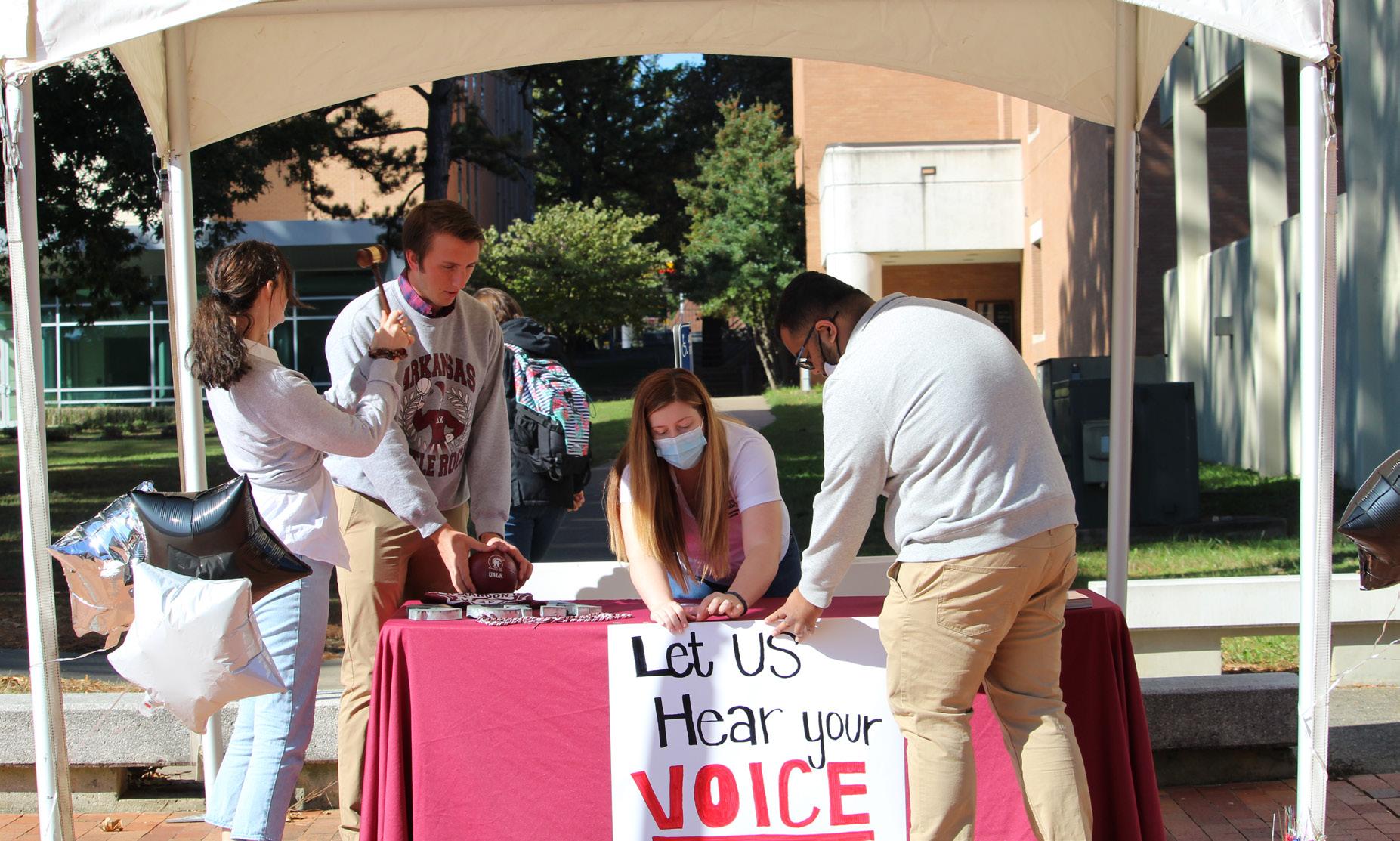
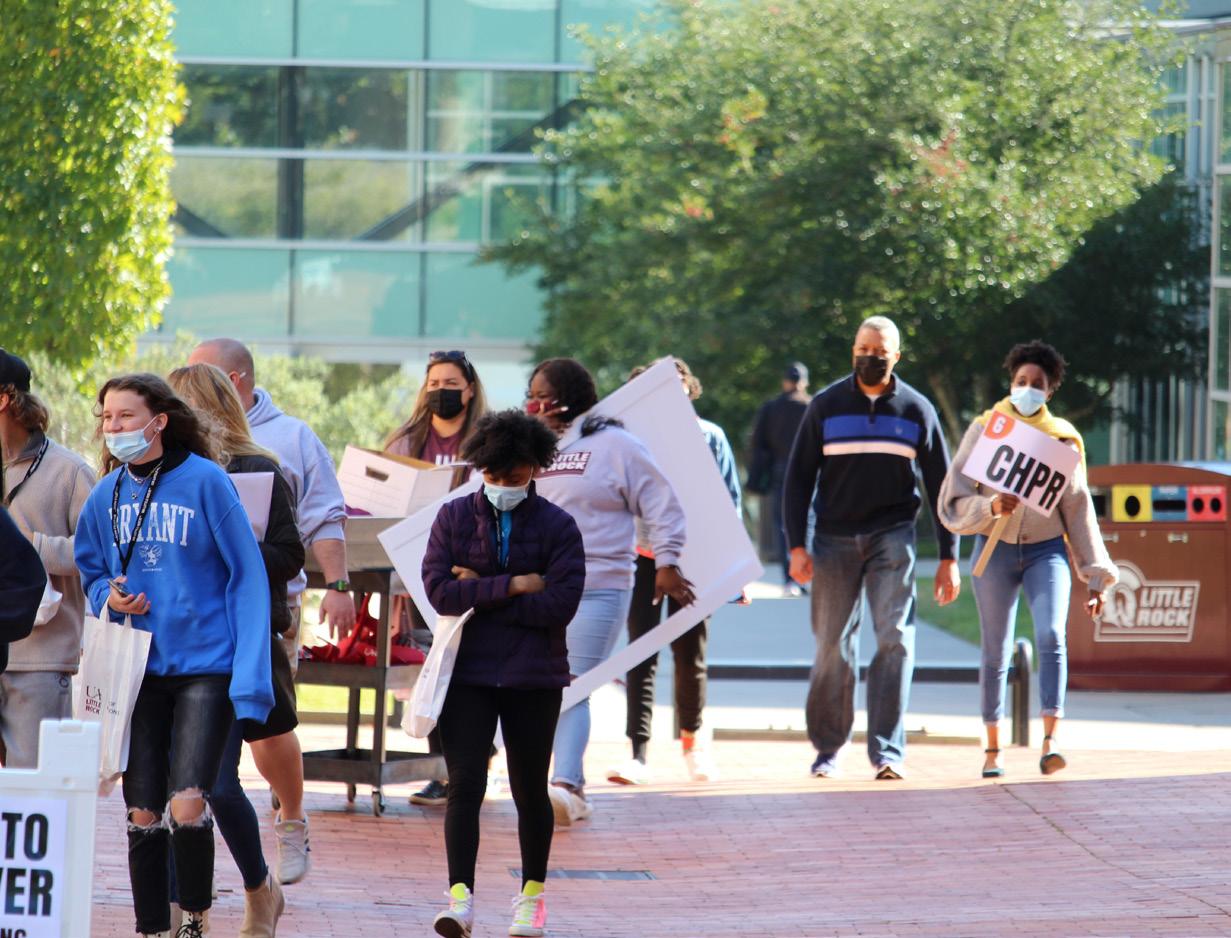
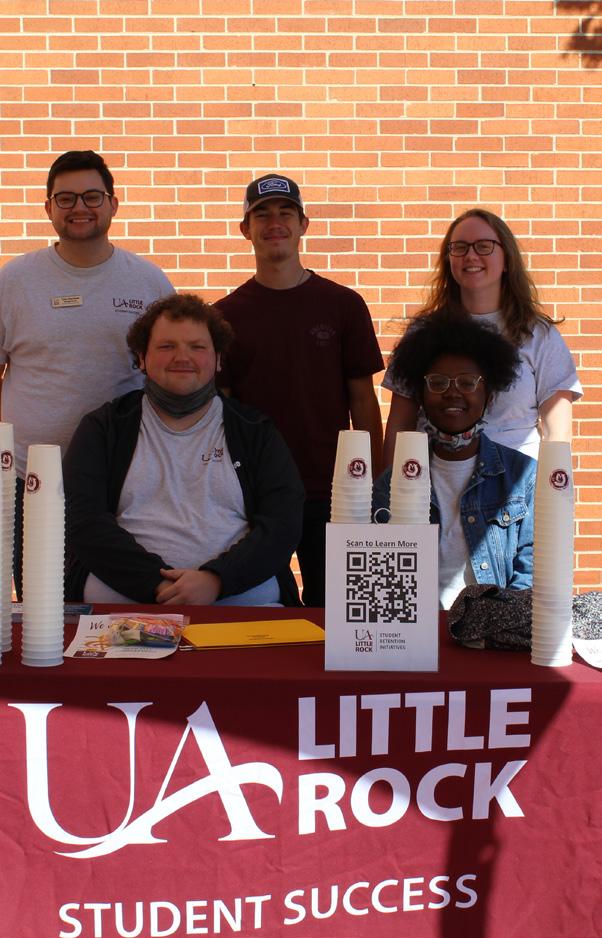
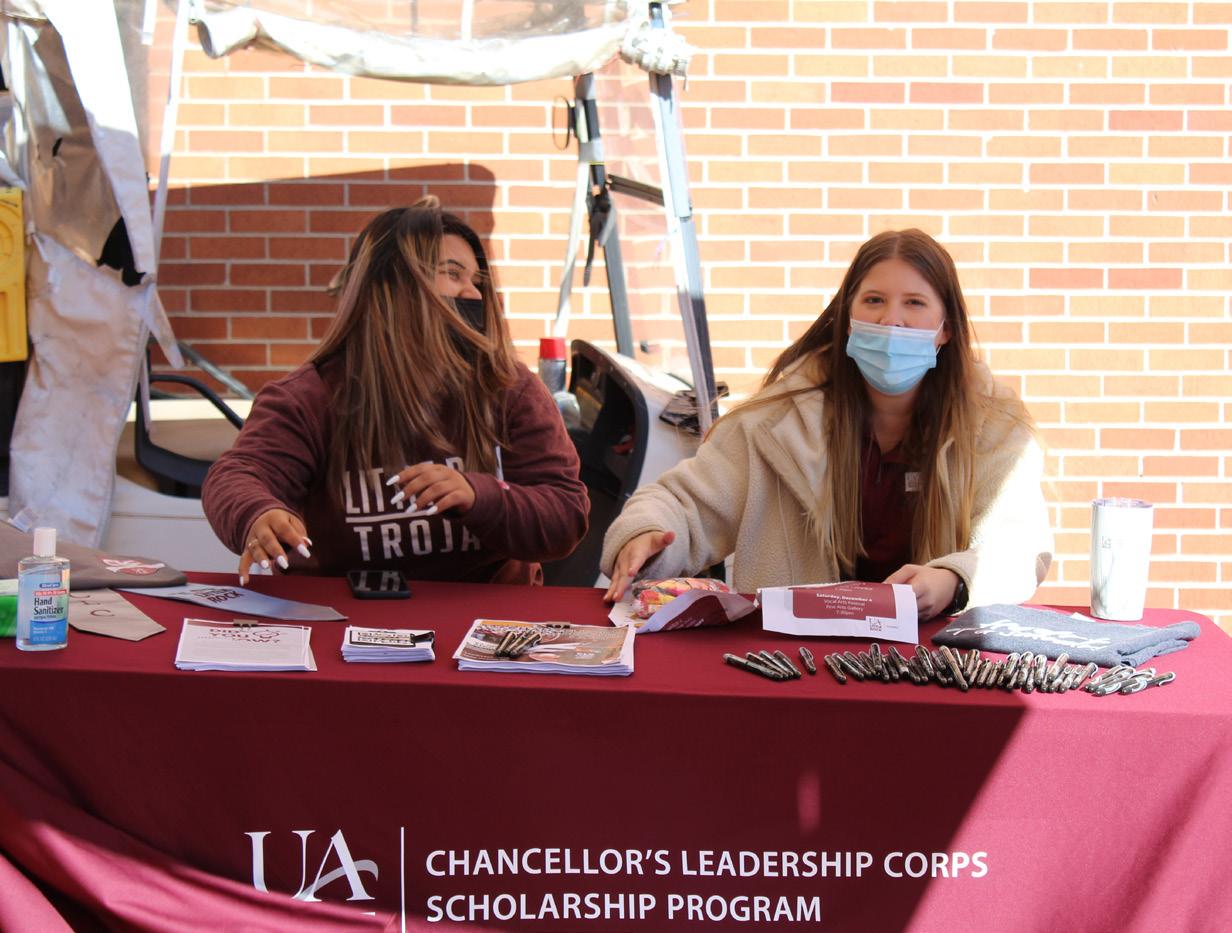
1
Every campus building has a Toner/Ink Cartridge collection box. These boxes can be used for all types of toner and ink cartridges, and staff can bring cartridges from home as well. If you have a large supply of outdated or obsolete cartridges in the department, a pick up can be scheduled by contacting Facilities Management at 501-916-3390.
2
We are currently not accepting batteries from personal use outside the University. For larger batteries, a pickup can be scheduled by contacting Facilities Management at 501-916-3390.
3
4
5
Battery Collection Tubes are currently located in the following areas:
Main Campus Mail Room & Housing Commons 2nd floor Housing office
DSC 1st floor Information Desk & Law School Library Main Desk & Facilities Management Warehouse
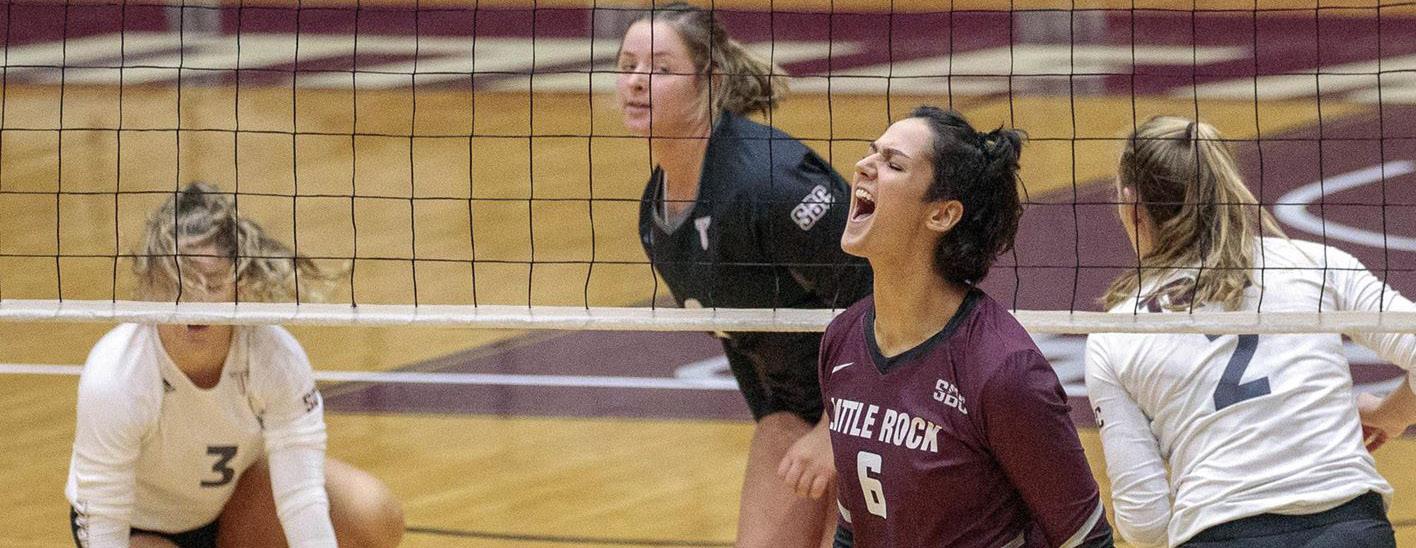
The volleyball season started with a great winning streak, one of the wins being over SEC team Arkansas Razorbacks. But the team didn’t finish out the season the way they wanted to on November 18th in the first round of the SunBelt Tournament.
The team played with confidence in the five-setter against the Southeastern Conference team, and won for the first time ever in three meetings against the Razorbacks. The team closed the Arkansas Classic tournament out with three straight wins. A good start to the pre-season.
The weekend after didn’t go the way the Trojans wanted to. They closed out UCA Invitational with three losses, which tied the wins and losses in pre-season for them. But that didn’t stop the girls, and they picked it back up the two last pre-season tournaments with all wins.
Pre-season was a success and the team had high hopes with all the talent they had on the team, but they weren’t the only ones who got better from previous years. Several SunBelt conference teams surprised multiple.
Unlike previous years, South
Alabama had a winning season and ended first on the East Side of the Conference while also gaining the SunBelt Champions of 2021 title. After three consecutive years Texas State did not win the Championship game November 21st and finished second.
Three seniors, Leigh Maher, Laura Jansen, and Nathalia Vigineski, finished their volleyball career here at Little Rock. Maher will be pursuing her masters at an undetermined university, Jansen is looking to play professionally, and Vigineski will be applying for a GA spot with the volleyball team.
Teams were careful with the 2021 Little Rock team, because it is a team that never gives up. They could be down by 10 points and still be able to tie with the other team's score. 23 sets from the 29 games the Trojans played were determined by two points.
Little Rock finished the season out with a 14-15 record and a 5-11 SunBelt record. Their final game was against Troy in the first rounds of the SunBelt Championship. The team will start working in the off season, to get ready for next season. They will be back!
By Laura Jansen
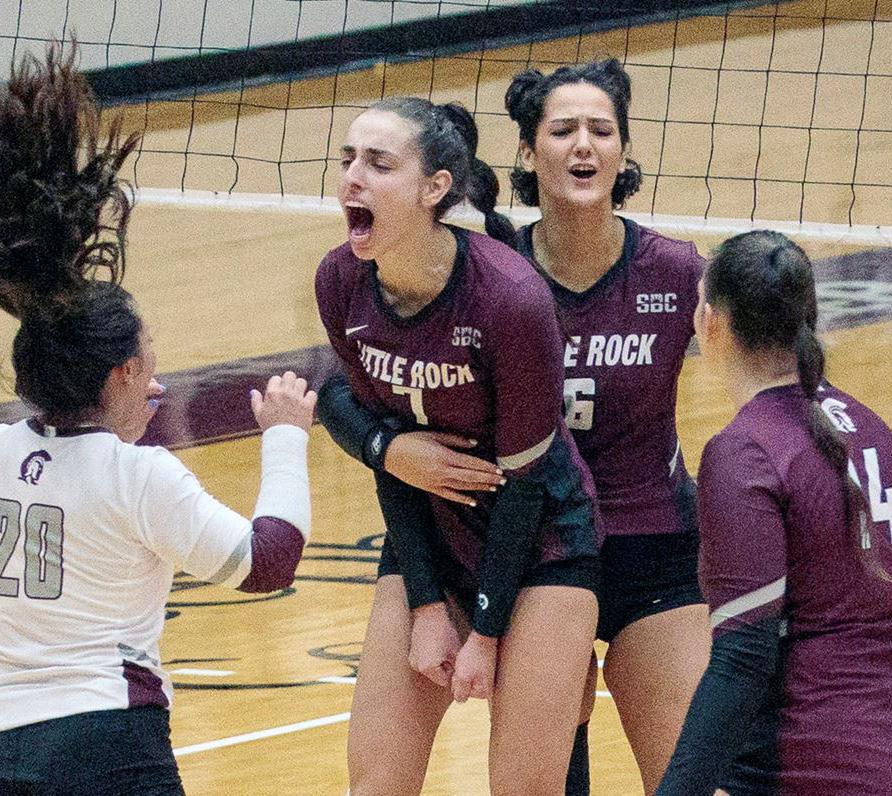
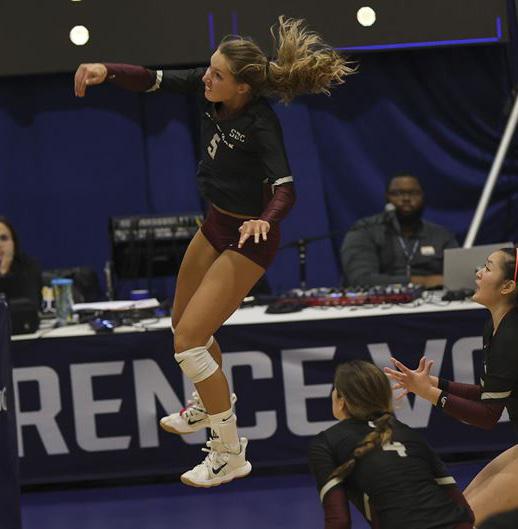
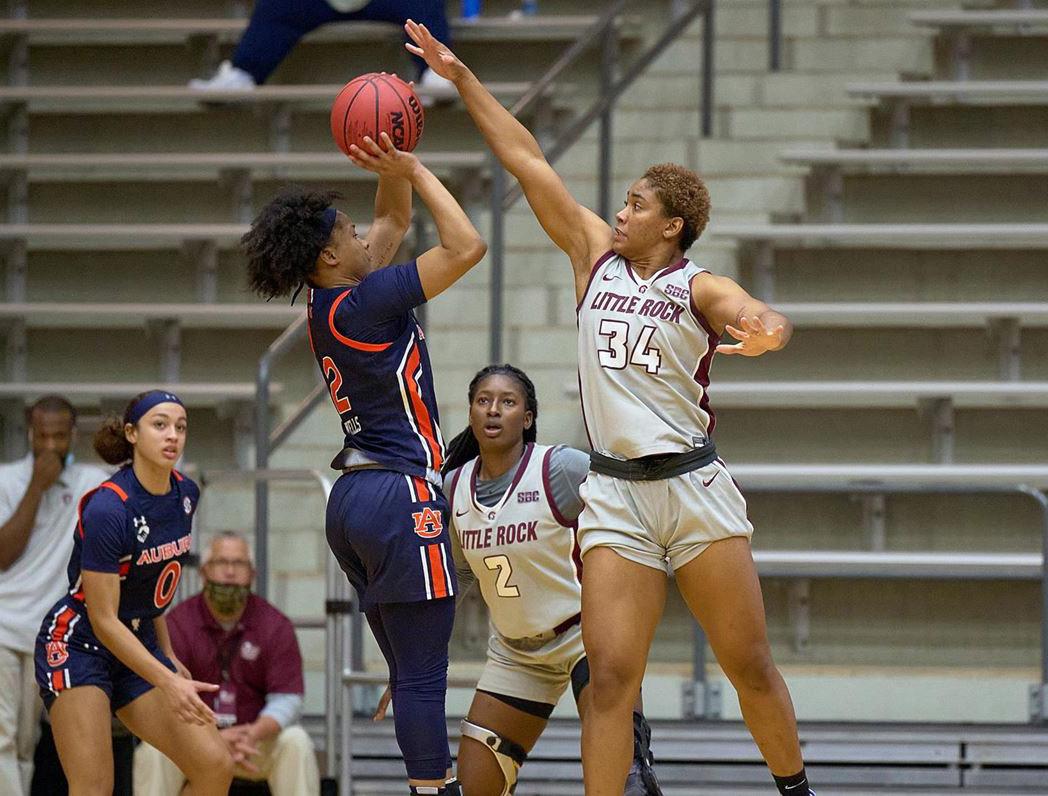
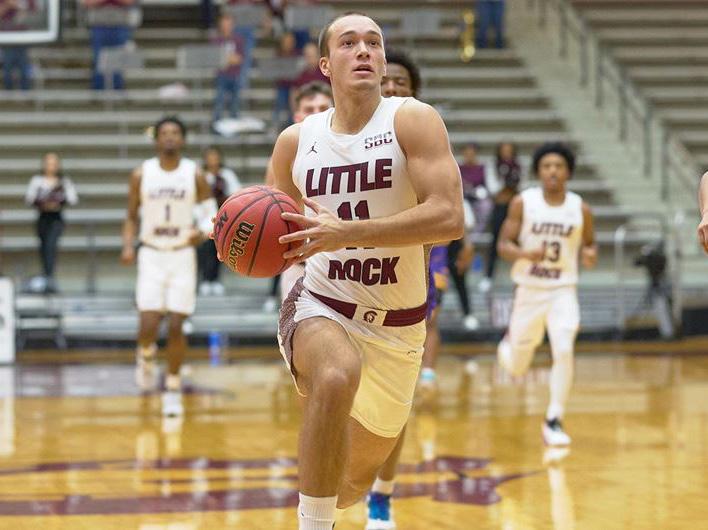
Men’s Basketball: Trojans tame Huskies
The Trojans led wire to wire, leading by as much as 26 points, the team was led by DeAntoni Gordon, who had a career high 16 points, while also chipping in 9 rebounds and 2 blocks.
Big man, Nikola Maric had 15 points while shooting 7-9 from the field and tallying 7 rebounds.
Marko Lukic led the bench with 11 points.
The Trojans were +10 on the boards, 42-32 and as a team Little Rock had a season high 6 blocks.
The Trojans suffocating defense held Northern Illinois to 23.1% shooting and just 4-of-13 from deep.
The Trojans had some key stops and some clutch free throws from Gordon, Smith, and Palemo to earn their fourth win of the season, winning 67-60.
Trojans get washed away by Hurricanes in second half.
The Trojans were a different team after halftime as they shot 54.1% in the first half, but just 23.8% in the second half while committing 10 turnovers over the
final 20 minutes.
Little Rock shot a decent 42% from the field but a terrible 21.7% from deep, shooting 5-of-23.
DeAntoni Gordon once again led the way with a new career high 17 points while shooting 8-of-14 from the field.
After trailing 42-38 at the half, Tulsa found their way offensively, led by 8 straight points from Jeriah Home as the Golden Hurricanes used a 21-4 run to lead by 13 with 12 minutes left in the second half.
For the game, Tulsa shoot 55.2% from the floor and had four players in double figures.
Jeriah Home had 17 points and was the spark for the Hurricanes offense with 12 points in the second half.
Tulsa extended their lead to 17, using a 8-0 run over three minutes, the closest the Trojans got was 12 points.
The Golden Hurricanes would go on to win 77-63, improving to (4-2) while dropping the Trojans record to (4-3).
Tulsa leads the all time series 7-5 and 6-1 in Tulsa.
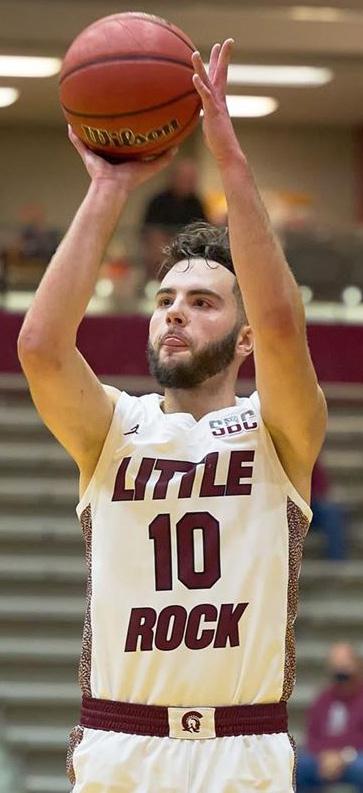
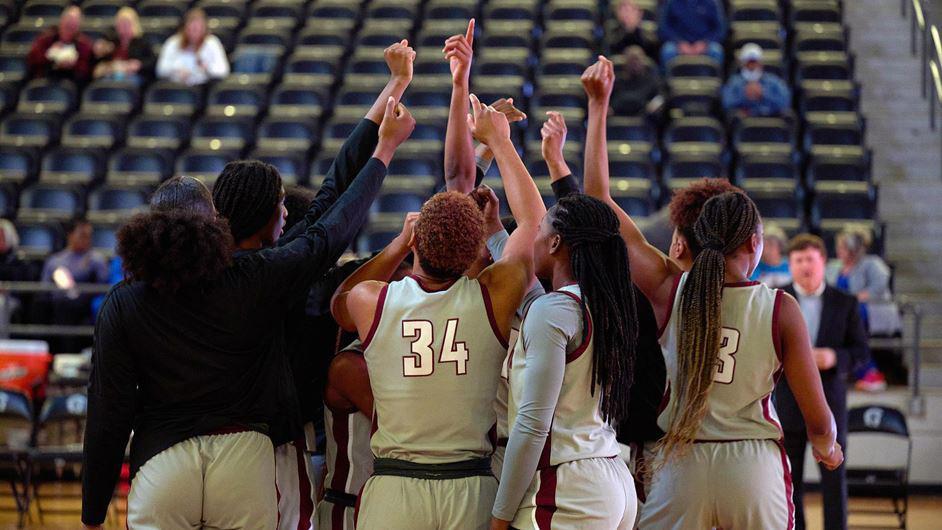
Women’s Basketball: Trojans pounce on Auburn
Mayra Caicedo started off blistering hot from the field shooting 5-5 and handing out 8 assists while also hitting two big free throws to hold off Auburn.
Krystan Vornes registered her first double-double of the season with 14 points and a game-high 10 rebounds.
off against Oral Roberts on Sunday. Sun Belt Player of the Week : Sali Kourouma
After leading the Trojans to a perfect record for the week, Kourouma repeats as the Sun Belt Player of the Week.
Kourouma averaged 28.0 points and 8.0 rebounds per game last week as the Trojans took down Memphis and Arkansas-Pine Bluff.
She had a career-high 32 points in their 55-50 victory against Memphis.
By George Shavers

Sali Kourouma led all players with 16 points and shot over 58 percent from the field.
The Trojans allowed a doubledigit lead to evaporate into a onepossession margin and committed turnovers with three players entering the final minute in foul trouble.
The Trojans shot 45.8% from the field, forced 17 turnovers, and blocked 3 shots. The Trojans were able to hold off a late comeback from Auburn to win 57-49.
A quote from Caicedo after the game:
“We will learn from this and use it to get better. I’m glad we got the win and thought we played well in some areas.”
Little Rock will face Abilene Christian on Saturday before facing
Sali shot an impressive 43.2 from the field and a good 78.9% from the free-throw line. She enters the week second in the nation in free throws made with 28.
Third in points per game with 25.2 and seventh in the nation in field goals made.
This marks the second time Kourouma has won the award, she is off to a great start to the season.
By George Shavers
Thanksgiving is one of my favorite holidays because it’s a great reminder of the importance of practicing gratitude. Gratitude, or the feeling of being thankful and appreciative, is a well-studied subject in the field of positive psychology, the study of what makes life meaningful. Many studies have demonstrated positive mental health benefits of gratitude. These include greater mental wellbeing, increased life satisfaction, increased happiness, increased self-esteem, stronger relationships, and even better physical health.
Thanksgiving is a great yearly reminder and opportunity to express your appreciation for your loved ones; however, expressing gratitude does not need to only be a holiday tradition. Rather, including gratitude in your routine
is a great and easy way to improve overall well-being and satisfaction. While directly telling people that you appreciate them is a great way to express gratitude, you can also practice gratitude privately by keeping a journal.
Keeping a gratitude journal is one of the simplest and most effective means of incorporating gratitude into your life, as shown by research. Fortunately, there is absolutely no wrong (or right) way to keep a journal, though there are some evidence-based tips you can follow to make your journaling more effective. These tips are from UC Berkeley’s Greater Good Science Center, a positive psychology research group, and are based on the results of several gratitude research studies: Before journaling, set an
intention to be happier and more grateful to get into the right mindset.
Rather than creating a list of things, try to focus on a few things or people you’re grateful for and thoroughly describe why you’re thankful for them.
Instead of things, write more about people you’re thankful for. Don’t write every day. Instead, aim for weekly entries.
The goal of a gratitude journal is to help you become and remain aware of the things and people you’re thankful for in life, including the blessings that are sometimes taken for granted. So, though Thanksgiving has passed, keep saying (or writing) thank you!
By Ahad Nadeem
The leaves are changing colors and the smell of pumpkin spice is in the air. This can only mean one thing, fall is here you guys! Not only is Thanksgiving around the corner, but this semester is coming to an end soon. I know many students, myself included, are excited about these few days off from school. But what will everyone be up to? There are countless fall activities that people can enjoy. If you are still unsure about what activities you would like to partake in, just keep reading I’m sure you will find something that interests you.
Fall is my favorite season because of the weather and the beautiful scenery when you step outside. I love seeing the brightly colored trees and the leaves covering the ground. People who are into nature will be spending a lot of time outdoors I’m sure. Whether they choose to go hiking, hunting, or simply for a peaceful walk to enjoy the view. Other
outdoor activities that you can add to your list are visiting pumpkin patches, orchards, or attending a fall festival near you. There is no limit to what you can do.
One of my favorite things to do during fall is to have a bonfire. My friends and family love to all get together and have a harvest party with a fire pit. The best part of all is roasting marshmallows over the fire and making s’mores. This is really something I look forward to every year. I’m sure I’m not alone with this, I mean who doesn’t love s’mores?
I get it, you may not be an outdoors person, or you simply do not like the cooler weather. There are many activities people enjoy indoors on fall break as well. If you are a sports fan, I’m pretty sure you’re cheering on your favorite football team. The planning of sports parties during fall break is extremely popular. Gather all your best buds, get some great food,
and enjoy the game together. On days where you feel the hint of the winter air outside, and you would rather find something cozy to do, light your favorite fall scented candle, grab one of your favorite books, and cuddle up in your blanket. This is so relaxing and I’m sure a lot of people think the same. The fall activity possibilities are endless and you should definitely take advantage of the many fun things you can do. If fall is your favorite season, I’m sure you won’t have any trouble with boredom. Even if you are not a fan of fall and the cooler weather, just try something new and you never know, you may learn to love the fall! I hope everyone has fun doing the things that they love during this season and I hope everyone has an amazing fall break!’
By Camry Gardner
Intellegent.com is a great resource for college students. From information on study planning and financial literacy they have many articles that focus on questions that most young adults have. They recently published a survey conducted in July, 2021, were they asked 1,250 white college applicants ages 16 and older if on their college application they lied about being a racial minority. This survey was conducted online and to qualify the participants needed to have previously applied to a university in the U.S. They found some standout statistics, “34% of white Americans who applied to colleges or universities admit to lying about being a racial minority on their application” with 48% of those claims being Native American and 3 out of 4 of their false applications being accepted by the college.
These claims I believe need to be analyzed with skepticism. The sample pool of only 1,250 is too small to apply the findings to the average U.S. white college applicant with certainty. Their article on the findings do not point out if the participants were from across the U.S. or the area that they are based in Seattle, WA. There is also the issue of participation bias were students that decided to respond to the survey could have felt the need to because of their lying while those that didn’t lie actively did not
participate. Internet surveys are one of the most unreliable research methods due to uncertainty of the participants identity. Regardless of how applicable the survey is to the wider U.S. the issue of white students falsely claiming to be a racial minority can’t be ignored. Out of the 1,250 people who took the survey 425 of them lied on their application and the majority were accepted into their prospective school. These are spots that could have possibly been taken away from actual minorities that do not have the privilege of generational wealth and prosperity. White people using other people’s race when it benefits them is a very current reality. Half of the students who lied claimed Native American heritage hoping they didn’t need to verify the claim. College applications need precautions set in place to validate claims like that. For Example, the applications could ask for a Certificate of Degree of Indian Blood (CDIB) which is an official U.S. document that a person is federally recognized as having Native American ancestry. Universities and colleges have a responsibility to their students to verify all information that could sway them on who gets admitted. It is unequal to let factors that hold importance in the application acceptance decision go unchecked.
By Payton Dhooge
This piece is The Forum’s first editorial work under this staff, so we feel we should offer an explanation of what this means for our paper and writers.
The editorial page is one means of conversation between a newspaper and its readers, where the publication can take strong positions. It is the role of editorials to encourage action, influence social change, begin dialogue and also take a stand.
The views reflected in this editorial are not those of every writer or staff member for The Forum, but it is the opinion of the paper itself, and was composed by the most senior staff members, approved by the assistant and executive editors, and completed after consultation with the faculty advisor.
The Forum would also like to note we reached out to several more faculty members in various positions to try and get their comments for this editorial. While some asked to remain anonymous, nearly all did not reply.
For further concerns, please contact editor@ualr.edu and feel free to send or email letters regarding this or future editorials to the same address. If you would like to bring a topic into question as an editorial, letters to the editor are always welcomed.
With all of this being said, this is the Forum’s first editorial in a few years, as well as the first under this staff, but something we felt strongly needed to be brought to attention and discussed among every level of this institution.
This is On the Racial Discrimination on Our Campus.
The reasons for this editorial are countless in our eyes. We are tired of our friends, peers, and professors seeing less opportunity and even less equality based on their race or nationality. In this piece, you will hear from faculty and students alike who feel that their experiences and lives have been negatively impacted by UA Little Rock’s failure to lessen the racial gap.
While we recognize that UA Little Rock is trying to solve this issue, we still think there is
more work to be done before everyone feels welcome and important in this Predominantly White Institution (PWI). Granted, UA Little Rock is making strides to solve this issue, through such things as the Diversity Council, the Multicultural Center, the Racial Barriers Committee and the very recently appointed Chancellor’s Fellow for Diversity, Equity, and Inclusion. (Unfortunately, though The Forum was told this Fellow would be announced weeks before our deadline, it was only announced a day before, meaning we could not get a statement from Dr. Melvin Beavers.) But despite these strides, we still think there is more work to be done before everyone feels welcome and important in this PWI.
The spark for this editorial came from the August lawsuit filed against UA Little Rock alleging to their discrimination on age, race, nationailty and retaliation by Dr. Brian Mitchell. While it may seem this was a surprise, there have been issues with discrimination at UA Little Rock for much, much longer. Speaking with minority faculty, it seemed clear to us that there has always been a lack of diversity and inclusion at UA Little Rock.
This also follows the #BlackatUALR tweets that trended on campus of stories of Black students facing discrimination. Dr. Mitchell’s allegations certainly raise some serious questions. Since this is pending legal action, we will not draw any conclusions. Regardless of the lawsuit’s outcome, however, the allegations as well as the complaints we will mention should be sufficient motivation for the university to take a long, hard look at its efforts to recruit more faculty of color and at every other element of what constitutes a truly inclusive university.
“My start as a full-time employee wasn’t like most other professors at the university,” said Dr. Mitchell. “I worked for the university for nearly a decade as an adjunct before starting in a fulltime position. I taught at a college prior to [Hurricane Katrina in 2005] and was working as a decorated Senior Federal Investigator of
Employment Discrimination as my full-time position while I was working teaching as an adjunct. My problems began when I came on full-time. I was paid less than other professors that came on full-time and was lied to during salary discussions. I noticed that I was talked to quite differently than others and was given information that conflicted with the department’s by-laws. I later discovered that my evaluations were routinely ranked amongst the lowest in the department despite my research, teaching, and service being recognized nationally and internationally. Other professors at the university noticed the differences in pay and treatment and inquiries into these problems were made by those tenured professors. Instead of getting better, things got worse, much worse. I tried to ignore the issues and when they persisted, I tried to distance myself believing the old adage of ‘out of sight, was out of mind.’ I tried working harder, believing that more academic success would insulate me. My decision to file a complaint [was made] after I received a midtenure evaluation. The evaluation was vague and suggested that my most recent book, ‘Monumental,’ would be disqualified from tenure consideration. I should note that the book has now won multiple awards and honors and has had numerous excellent reviews. It was at that point that I decided to file a complaint.”
Some major issues from the faculty perspective include the small number of Black/Brown faculty members on campus compared to the student numbers. Black/Brown faculty are a small minority, especially those who are tenured or on the tenure-track. UA Little Rock also has a problem retaining faculty of color. Part of that has to do with salary differences and difficulties in promotion. One faculty member mentioned that since the university’s beginning, there’s been less than 10 Black full professors. A full professor is a senior-level professor, with the goal of expanding their research and building their body of work
even further. Although a few years ago, the Chancellor agreed to do a study on salary differences, the initial results of the study were supposed to be coming out after Thanksgiving, and have still not been released.
“Well, the Black at UALR tweets are really what we have to base a lot of our information off of,” Racial Barriers Committee Chair Christine Jones said. “We can open it up to the floor and say ‘okay now what would you like us to do?’
Which is kind of what we did the first week of RBC, which was ask the students what they’d like to see. There are other areas of inequality that apply to staff and faculty, but we’re charged with focusing on students and the Black at UALR tweets kind of told us a lot.”
Since the RCB is focused on the student perspective, it is also important to note the discrinination that students of color face on campus.
“I have experienced some microaggressions,” said Senior Alexandria Brown. “I remember there was an employee at UALR. I was at this luncheon and I had received this award, and you had to stand in front of everyone and tell your name and major and what you want to do. I was talking and after he stopped me and said, ‘Oh you are in journalism?’ This was before I actually got a job at KUAR. I was just an intern and he was like, ‘You should be on TV you speak so eloquently and you speak so articulate it’s just astonishing,’ like why is it astonishing, because I’m Black? So I get that a lot. A lot of people say that I ‘talk white’ or that my voice is really eloquent or clear. It’s automatically an assumption that I’m not supposed to be like that because I’m Black. A lot of times being on air at KUAR a lot of people are shocked that I’m Black when they see me. For those that can’t pick out that I’m Black are shocked when they see me, I’m not going to say it’s disheartening because unfortunately I’m used to it. It shouldn’t be like that; I shouldn’t be desensitized to that but I’ve experienced it from the beginning of my elementary school career until college and will
probably experience it as life goes on unfortunately.”
Brown continued on to speak about the Black at UALR tweets that Jones previously credited to the creation of the Racial Barriers Committee.
“I do know of situations where others have experienced microaggressions, racism and discrimination,” Brown said. “That’s because on Twitter there’s a trending #Blackatualr hashtag. When I read the Black at UALR tweets, I felt so oblivious because I had no idea that so many Black people and POC, other minorities endured so many things. It opened up my eyes and made me want to be more attentive to the microaggressions that maybe flew over my head that I didn’t notice.” Brown also does not feel enough was done to respond to the Twitter thread.
“Did they even respond? There is a Racial Barriers Committee Forum and no one knows about this committee. Why? Because it hasn’t been publicized, it’s not on [the UALR] website, it’s not on social media, which is the best way you can inform someone that there’s a new organization happening to contribute to the betterment of racial climate on campus. The best way to address racism or bad racial climate in any setting is to take accountability for it and be as transparent as possible. It shouldn’t take someone crying that this is happening on campus to address this. And then still do the bare minimum. They could have done so much more. This campus had great potential. What attracted me to UALR is how diverse [the student body] is. There’s so many people that come from different countries and states that are of different ethnic groups. You would think that a campus that prides itself on it would try to make those groups comfortable. As time goes on it’s kind of like being ignored unfortunately.”
Although UA Little Rock seems to disregard minorities on campus, some feel that they advertise being a welcoming university when that might not be the case. One such student who sees this is UA Little
Rock NAACP President and Zeta Phi Beta member, Junior Nakiah Willis. She especially sees this in the gap between the Black and white Greek life on campus.
“I do remember seeing the video of one of the IFC Frats, around 2018 or late 2017, on a bus, they were singing a song, and the N word did happen to come up and they all sang it,” Willis said. “The worst part was that there were no consequences against them. The school was like ‘okay’ and just swept it under the rug.
“I’m a part of Zeta Phi Beta Sorority Inc. one of the D9 Sororities which is part of the National Panhellenic Council so that incorporates all the Black fraternities and sororities. There is separation between the Black and white sororities. There’s no support from either side from each other. At the beginning of the year there was an event where we were basically strolling out on ChiOmega Courtyard. All of us were really irritated because they had DPS there but we also had to do the work of DPS. Basically like it’s our own event and we want to have fun but why do we have to come in and check people in and stuff like that. That should have been just DPS’s job. Chi Omega and Kappa Delta, they never have to do anything like that. That’s kind of what really made us upset.”
Willis also feels that UA Little Rock may use their diverse student population to bring in more students, then when those students get here, they are disappointed with the inclusion they see.
“One thing that I noticed about UALR is that they like to use minorities as propaganda to promote the diversity of the campus,” Willis said. “Which the campus is diverse but it’s also on top of that ‘what are they doing for these minority students in particular?’ So they’re kind of just putting our faces up on these flyers to bring in more minority students but they’re not following up on their actions. I’ve seen that which is probably why our enrollment is declining each year. They pretty much sweep everything under the rug.”
This is corroborated by UA Little’s Rock praise of minority faculty, such as Dr. Mitchell’s “Monumental” in their media, when they discriminate against that same faculty in practice.
“The administration needs to
improve transparency and record keeping as a starting point,” Dr. Mitchell explained. “It also needs to ensure that its policy compares with federal law. The problems are not connected to training, there is an ample amount of that going on. The problems, as I see them, are connected with the application of rules and ensuring that there is a level playing field.
I have known several faculty of color that have left the university over these issues. Many have noted that they talked about their issues in exit interviews. However, the chancellor has said that she will not make redacted copies of exit interviews available. We also have a problem with record keeping in regard to race and discrimination issues. A perfect example of this was the disappearance of the Race Forums that were on the Diversity Councils web page. These were forums which the Black and Brown Faculty Committee had specifically requested to have recorded, transcribed, and archived by the university. We also asked for a neutral moderator to be over that process. Since the forum, the university has disclosed that no transcripts were created and the administration maintains that the password to retrieve the videos has been forgotten or lost. There are numerous examples of these sorts of disappearances.”
Dr. Mitchell wanted to emphasize there is an abundance of wonderful and kind allies on the campus. Those individuals have been willing to talk openly about race and measures needed to reform the university. We would be remiss if we did not include the strides UA Little Rock has taken to try and be a better institution.
The people on the Racial Barriers Committee work hard to make campus a more inclusive place, even if UA Little Rock may not advertise their presence much.
“There’s tension,” Jones from the RBC said. “You can tell that there’s tension, and we know that. Some students, faculty, and staff are experiencing inequities. And we know this because they’ve told us their stories about their experiences. I think that initiatives like the one that created the Racial Barriers Committee and the Diversity Council shows that there’s people on campus that care about these issues. This is something that is important to us. I’ve felt very supported by the student body as well as the administration.”
Many UA Little Rock professors try to be inclusive to make minority students feel more welcome.
“A lot of [professors] will try to sort of understand where you are coming from and work with you,” said Senior César Guerrero Gonzalez. “You know a lot of them will do even small things like how to pronounce my name, so I appreciate that rather than whitewash my name.”
Gonzalez continued, stating that he had not personally been active in minority groups on campus, but that he knew they existed and his professors were clear those resources existed.
“All of my professors have made
much harder.”
The issue of racial discrimination is nothing new, and is unfortunately something our minority peers, friends, and professors have to experience daily not only in our institution, but in everyday life as well.
“W.E.B DuBois prophetically said that Race would be the biggest issue in the United States in the 20th century. It is clearly evident that our nation’s reluctance to deal with the issue has ensured that it will be a major problem in the 21st century,” Dr. Mitchell said.
“We, as a nation, have watched the escalation of racial violence and are witnessing the emergence
know what people are going through. Everybody has a voice and they should be heard. You have to think these are people, specifically people like me, who have had their voice taken away for centuries. Somebody can say [they are an ally] all they want but if that person doesn’t believe it in their heart or just doesn’t care it’s not really going to go anywhere.”
Mitchell also wants students to know they are not alone and there are options if they feel discriminated against in any way.
“Students can demand transparency and diversity,” Dr. Mitchell said. “They can support the efforts of the Black and Brown
“On our campus, they make students, staff, and faculty of color feel unwelcome. We often talk about retention and recruitment problems but we seldom recognize that our problems in those areas are linked to the more complex issues of discrimination and harassment.”
me feel welcomed,” Gonzalez said. “They treat me well. I appreciate that. I’ve gotten a lot of stuff about the minority groups here on campus, I just haven’t really gotten involved. I definitely know they exist. Like I know that’s a resource that’s available.”
Dr. Mitchell said that “few people can argue the importance of race in American History. Our nation could not have become the power we are today without the use of enslaved labor on land quite literally stolen from Native Americans. It is naïve to believe that racial attitudes developed over centuries and encapsulated into our education, legal, housing, and justice systems would merely disappear in a single lifespan. While we acknowledge the progress that has been made, we must also truthfully acknowledge that we have a long way to go. We cannot heal those wounds, on campus or in our nation, until we admit that the problems exist. Fixing the problems of policies is the easy part. Fixing the problems of application and climate are
of Jim Crow Era voter suppression policies. On the economic end, discrimination and harassment costs employers hundreds of millions of dollars annually and they erode our principles of equality and unity. On our campus, they make students, staff, and faculty of color feel unwelcome. We often talk about retention and recruitment problems but we seldom recognize that our problems in those areas are linked to the more complex issues of discrimination and harassment.”
This is something that minority students and faculty are impacted by in all facets, and it can be hard for white allies to understand the severity of these issues.
“ It’s not my own quote but I thought it was really good. It said, “If you are always ignoring the elephant in the room you are bound to carry the weight of it,’” Willis said. “I think that would particularly go with this situation. It’s like you’ve got to try and put yourself in other people’s shoes. I know that is hard but empathize with people because you never
Faculty committee in their list of requests given to the chancellor. Don’t be afraid to talk to trusted mentors if you feel that something is wrong. Also realize that you can report incidents.”
All of this information can be overwhelming for those who did not realize the severity of the situation here at UA Little Rock, but change has to happen. Everyone we spoke to advocated for more transparency from the university, and more adherence to the laws that call for equality.
While these committees and councils are helpful, they cannot be the full answer. UA Little Rock must be upfront and admit that there are problems. We cannot solve things without directly facing them and without addressing them. Councils/committees are an important part of the process, but there are so many issues that get talked about but nothing really changes. These things go beyond talking. There must be action.
By The Forum
The Forum is the official student newspaper at the University of Arkansas at Little Rock. The Forum is funded in part by the student activity fee. The opinions expressed in The Forum are those of the staff and contributing writers and do not represent the official views of UALR. The Forum is published 7 times in each of the fall and spring semesters. The Forum editor can be reached at editor@ ualr.edu.
The Forum welcomes letters to the editor on any subject. Letters must include the author’s name, classification, major or position and a contact telephone number for confirmation. Letters are subject to editing to meet space limitations. Please limit letter to 500 words or less. The staff will not alter
the meaning of the letter, but will correct spelling and punctuation and edit to conform to Associated Press and news style. All letters are subject to publication.
The editor has the right to reject any letter especially those letters that are libelous, obscene or incoherent, as well as comments on our news coverage and editorial position.
Letters should be emailed to editor@ualr.edu or sent to: The Forum, University of Arkansas at Little Rock, Donaghey Student Center, Suite 116, 2801 S. University Ave., Little Rock, AR 72204
All material published in this newspaper is copyrighted.





WRITER
Payton Dhooge, @paytondhooge
WRITER
Magnolia Risley, @mags.ris
ILLUSTRATOR
Marissa Davis, @helloimriss

WRITER
Laura Jansen, @laura.jansennn

WRITER
Shadayja Sneed, @Shaylildayja

WRITER
James Johnson, @treynotdre
WRITER
Maddie Becker, @maddiee_erin
WRITER
Vasti Hernandez, @iamvastihernandez
ADVISOR
Carlton ‘Sonny’ Rhodes, @sonny_rhodes

WRITER

Natalie Arnold, @nattt_alyy WRITER
Vivian Angeles, @vivian.angeles
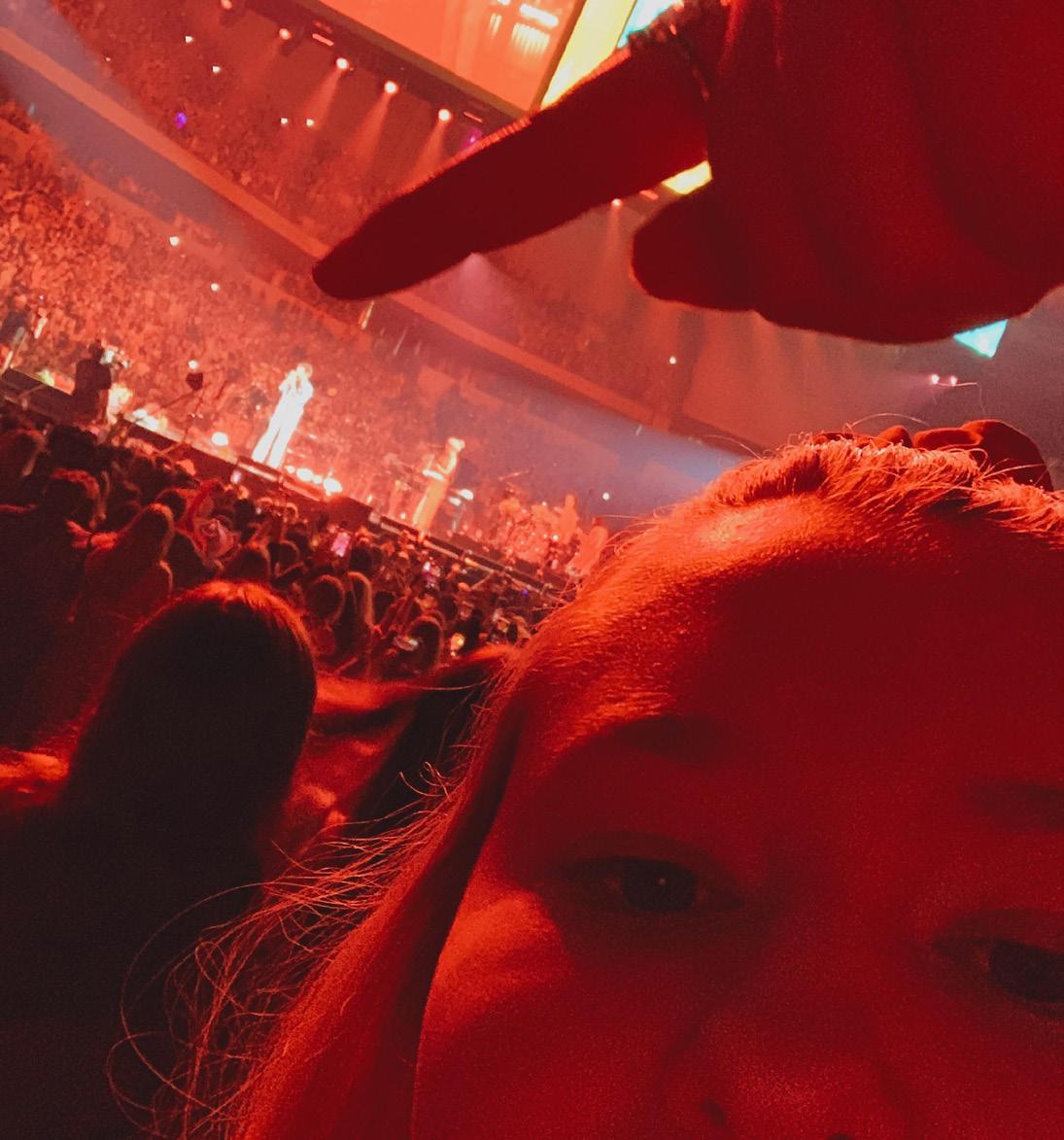
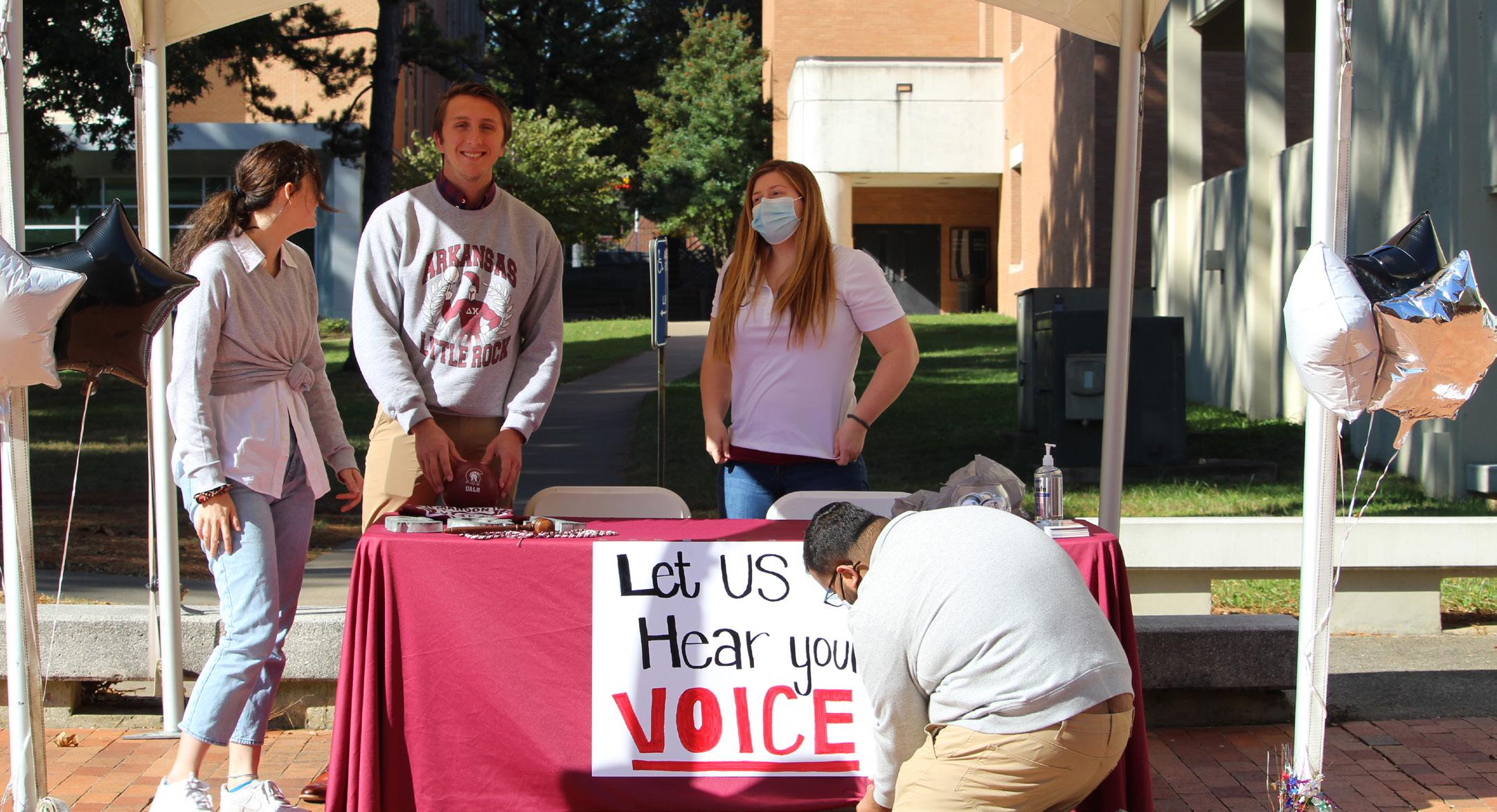
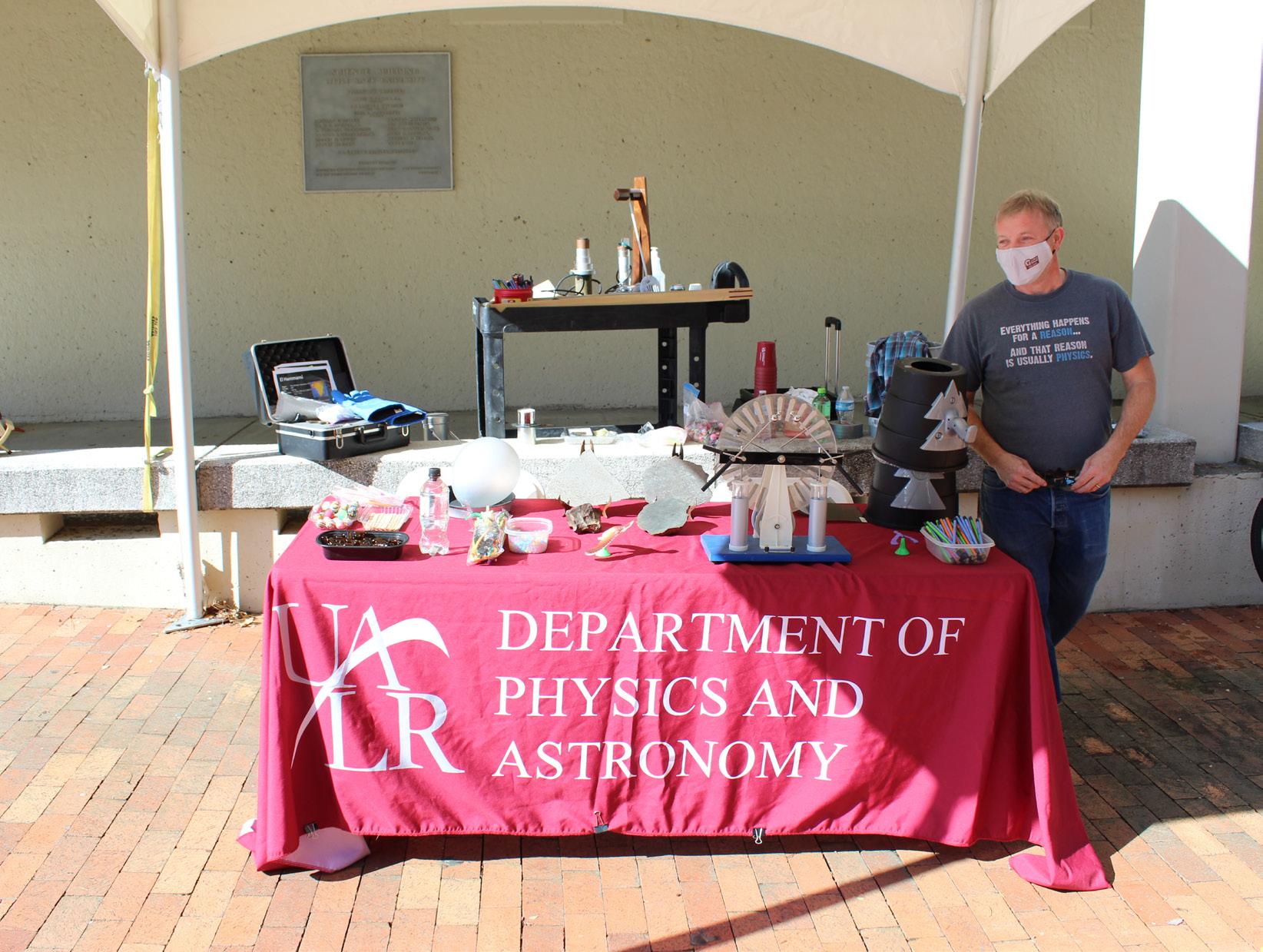
This is Senior Bennett Wood’s final edition with us before he graduates in Dec. If you see Bennett around campus, make sure to congratulate him on his stellar work for The Forum and wish him luck! We love you and will miss you on staff Bennett!