















Jacob Ellerbee Executive Editor Editor@ualr.edu
On Oct. 15 and 17, Chancellor Joel E. Anderson announced his plans for administrative and academic restructuring.
In a memo dated Oct. 15, Anderson said a reorganized administrative structure will save the university money.
“The efficiencies enabled by the new organizational structure also will result in cost savings for the university.”
Notable administrative restructuring includes reducing the number of vice chancellors to four. There are currently seven, but according to a memo released by the chancellor, the four vice chancellor positions moving forward will be:
• Executive Vice Chancellor and Provost
• Vice Chancellor for Finance and Administration
• Vice Chancellor for Advancement
• Vice Chancellor for Enrollment Management
The most noticeable change, however, the chancellor said,
will be merging Student Affairs units into the Academic Affairs Division.
According to a recommendation from Provost Toro, she said creating the position of Vice Provost for Student Affairs will “formalize UALR’s commitment to become a student-centered institution.”
In the memo, Anderson said it was time for change and to begin planning for the future -- a future which calls for doubling the number of graduates by 2025.
“What worked well for UALR 25 years ago does not necessarily work best for UALR today. The purpose of restructuring is to reshape the university to operate more successfully and more responsively within its current and future environment.”
Anderson said a number of events are impeding growth at UALR, but most notably is the lack of state funds.
“As is true of other public institutions across the nation, the share of our budget funded


















































Alexis Wiliams Staff Writer aawilliams@ualr.edu
Alliance President Zack Baker found a gay slur written on one of the organization’s flyers on Tuesday, Oct. 8 in Stabler Hall. Instead of lashing out at the individual, Baker said this incident just shows a need for education about the Alliance and the LGBT community.
Baker is a junior sociology major who has served as Alliance president since the start of fall 2013.




























The planned academic restructuring would reduce the number of vice chancellors from seven to four. The reorganization would promote an e cient distribution of university funds, Chancellor Joel Anderson said.
25 to 30 members per meeting. The week of Oct. 7-11 was a busy week for the Alliance. They hosted two major events: a bake sale and a coming-out celebration. They had the bake sale on Wednesday, Oct. 9 to raise money to attend “Creating Change.” Baker explained that “Creating Change” is a conference hosted every year by the National Gay and Lesbian Task Force. He said that about 3,000 people attend the conference each year, and its focus is LGBT equality. It covers a wide vari-
ety of issues, ranging from campus organization and religious issues to HIV prevention and [supporting] older gays and lesbians. “You name it, and there’s probably a session on it at this conference. So we’re raising money because it’s quite expensive, and unofficially, I have eighteen people wanting to go. But that number could change.”
The other big event was UALR’s own “National Coming Out Day.” Friday, Oct. 11 marked the 25th anniversary of that day designated to raise
See Alliance page 4
“That word is a loaded word with a long history. Back in the day, one of the ultimate insults you could be called was a ‘f--’.”












“The Alliance is a student organization for Lesbian, Gay, Bisexual, Transgendered and Straight allies,” Baker said. “We provide a safe space for people to be who they are without fear of judgment. We work to promote equality and provide education on campus.” The Alliance averages an impressive
-Zack
Baker, Alliance President

















Kezia Nanda
For quite some time, UALR had only one police station. The Department of Public Safety has been based on the outer edge of campus. But, this is now changing. The station at the University Plaza area is where all the police related activities has taken place. UALR’s Crime Prevention Officer, Jennifer Sibley, said the station on Asher disassociates them from students and faculties. Sibley is pleased to say that for the first time, UALR is opening up a new substation. As she was showing her new office that is located at the first floor of Stabler Hall, she said, “I love it [her new
office], because it’s right in the middle of campus.” Sibley said that although the signs are not up yet, her office is already operating. The daytime, evening, and night patrols as well as the bike and foot patrols, are already using the Stabler substation as their base.
Sibley said she likes the location because there are many classes located at Stabler Hall and it is close to the theatre building. Sibley said she thinks this will make escorting students easier, especially the theatre majors who have odd hours and practices that can last until midnight. She said students can even call earlier and schedule for an escort to be ready when his or her class is over.
See Substation, page 3







Among one of the largest problems facing modern college students is student loan debt. Because of varying interest rates and tuition costs, the amount of debt often varies, with students attending private colleges and Ivy League universities sinking themselves into a financial hole far more than those going to public schools. But while UALR students may not accrue the same amount of debt as that of a Harvard grad, the spike in tuition and current loan legislation do little to provide hope for current students as well as those in the future.
Loan newcomers are often greeted with a number of questions, most of which have answers heavily dependent on the income of the student as well as parents. Many first-time freshmen enter college with one or two minimumwage jobs on their resume, leaving their financial aid to be determined by their parents’ salaries. While this can do service to low-income students who receive Pell Grants and other forms of federal aid, loans are often pushed in addition to these grants, offering semireasonable amounts to students willing to take out thousands of dollars for immediate college admission.
This is considered “good debt” by creditors, but the long haul spells out something much different. A proposal conceived by the University of Arkansas system last May -- which cited operational and associated costs -- led to a 5-percent hike at the beginning of the 2013. This might not seem like much to the average student, but this increase barely ensures part-time coursework for a student who borrows a $7500 loan for the entire academic year. While the disbursed amount may vary year to year and depends wholly on individual circumstance, this means a student can acquire up to $30,000 in debt (interest rate notwithstanding). For a full-time






student, the cost can be several thousand dollars more, which is unacceptable for someone seeking a bachelor’s degree in a four or five-year period.
With high interest rates becoming more of an issue as years pass, students often find it impossible to foot the bill themselves. According to recent legislation, this spike benefits not only lenders like Sallie Mae and Wells Fargo, but also the federal government at large. The latest deal, struck by the Bipartisan Student Loan Certainty Act last summer, may do better for some undergrads who will no longer have to depend on Parent PLUS loans. But according to Sen. Elizabeth Warren of Massachusetts, changes in legislation will generate up to more than $184 billion in profits for the government over the next four years. While this may seem beneficial for a nation
that’s up to trillions of dollars in debt, it does little for students who have little or nothing to do with the United States’ current financial hole.
Multiple representatives have advocated for the lowering of college costs since the Obama administration began, but little has been done to achieve it. While some stipulations have benefited a number of future enrollees, current students are already struggling with sizable debt that will follow them into old age. It’s up to these representatives - who should work in conjunction with university officials - to help pass legislation that allows some degree of forgiveness. But until then, student loans should be researched and taken out carefully, for fluctuations in tuition rates may prove fatal to the blind or passive student.
Comments and Tweets from our readers on social media

If you could be the chancellor of UALR for a day, what would you be doing?

“Go out and talk to the students. Listen to them, and hear what they want improved on.”
- Dana Weston
“Getting rid of the trolleys and doing everything I could to lower tuition costs.”
- Trevar Dye

“Praying.”
- Stephanie Freedle

- Tntfleamarket Teapotsandturtles

CORRECTION:

In our Oct. 2 -22 edition of The Forum, we incorrectly attributed a quote on page 4. Our pull quote was attributed to Jennifer Sibley; however, the quote should have been attributed to civil rights leader Ozell Sutton.
News Editor KenDrell Collins
Photography Editor Dallen Shields














Restructuring, continued from page 1 by the state has been in steady decline,” Anderson states in the memo. “The share of our budget funded by student tuition and fees has been on a steady incline.”
The last statement in the memo, found in the “highlights” section, includes a statement regarding the benefits of restructuring.
“In addition to financial advantages, the reduction of the number of administrative vice chancellors will allow the chancellor more time to focus energy off campus to protect and promote the interest of the university.”
The chancellor said he expects the changes will bolster opportunities for UALR to succeed in the future.
“I am confident that the new academic and administrative structures will put UALR in a better position to thrive in today’s challenging and different higher education environment,” according to the memo. “I believe this reorganization will maximize the unique strengths of UALR, eliminate barriers to student success and put the university on the firmest possible footing for the future.”
Before the chancellor’s changes are finalized, he must first submit the changes and the new organizational structure to the University of Arkansas Board of Trustees. The chancellor said the meeting will occur Nov. 22 on campus.
Changes in titles and reporting relationships will likely begin being implemented Dec. 1, according to Anderson.
Additionally, in terms of academic restructuring, the changes appear to be more noticeable.
Moving forward, there will be five academic colleges instead of six. The colleges will be:
• College of Business
• College of Education and Health Professions
• College of Arts, Letters, and Sciences























UALR Collections and Archives. An-
Chancellor Joel Anderson said the academic restructuring is part of a larger plan for the university’s future, which would include o -campus promotion and increasing graduation rates. Most of the academic restructuring changes will occur after the beginning of the new scal year. volved in the work that remains,” Anderson stated in his memo. He added that how the faculty, staff and students go about implementing the structure is “going to be the key to creating a new culture at UALR.”
• College of Social Sciences and Communications
• College of Engineering and
• Information Technology
The Vice Provost for Research will become the Vice Provost for Research, Innovation and Economic Development. This redefined position, according to Anderson, will “reflect UALR’s growing role as a research university and its support of state economic development efforts.”
The Associate Provost for the Center for Arkansas History and Culture will be expanded to Associate Provost for
KenDrell Collins Editor kdcollins@ualr.edu
An early retirement option that has been offered to UALR faculty for nearly three decades is set be discontinued. Professors have expressed gratitude for the option as well as disappointment at its revocation.
In an email to employees on October 3, UALR Chancellor Joel Anderson notified faculty that in the coming 15 months, the university would be ending its long established early retirement benefit. The option, Anderson said, “tied up salary dollars in the short-run and have postponed hiring of replacements.”
UALR is the only university in the state that has offered the option on a regular basis, Anderson said. However, it is not a perk exclusive to UALR. “It was made possible in the 1980’s by the Arkansas Legislature,” Anderson said.
The plan is available this semester to tenured faculty who are 55 years or older and will have been at the university for at least 15 years by the date he or she retires. For the two subsequent semesters, the limit for years served will be lowered to 10 or more, but the facuty member’s combined age and service must equal 70. The same requirements apply to non-tenured faculty, non-classified staff, and classified staff. They will receive 20 percent of their annual salary .
The package is divided into two components: “buy-out” and “phase out.” Those who take the buy-out will receive an entire year’s salary after retiring. The phase-out is more gradual, allowing professors to teach part-time for two years and still receive full-time pay. Those who chose this option must relinquish their tenure benefits.
“Throughout the years, I have felt good about the fact that we provided this benefit to faculty who have given many years of service to this institution,” Anderson said. “The draw back to continuing it is that it is expensive. We end up paying for a year in which they don’t work. The budget is tight enough these days that we need to have those dollars available in the short run.”
Rhetoric and Writing professor, Michael Kleine, said he intended to spend more time teaching at UALR, but the discontinuation of the early retirement has changed his mind.
“I am 65 now. I was planning to teach for four more years until I was 70. But we just learned that the early retirement package would be stripped away within
DPS, continued from page 1
According to Sibley, UALR’s Police Chief Edward Smith, Lieutenant Jerome Bailey, and other officers have been pushing for a closer substation to ensure the safety of students and faculty. She said their goal is to prevent bad things from happening.
“Everybody is on board,” Sibley said. “We’re here to reach out to everyone we serve, we are servants. I believe police presence lowers crime, and we definitely are more of a presence now on our campus, inside our campus.”
about a year and a half. That’s the one faculty perk that we had and it was just taken away.”
Kleine said that he is now planning to retire at the end of next fall, as it would be his last chance to get the early retirement benefits. He said that the change has left him and many of his fellow faculty members feeling demoralized and unvalued.
“Quite frankly we have not been rewarded with even a raise, a decent raise, in years,” said Kleine.
His longtime friend and colleague, history professor Thomas Kaiser, seconded Kleine’s sentiments, calling the move “shabby.”
“We had no legal right to it, it wasn’t promised, but it was a long established tradition that I counted on in terms of planning my retirement,” Kaiser said. “This was one benefit, which to some degree compensated for those two things.”
Kleine, who said he loves his vocation, has one regret from his decion to retireno longer getting to teach students or be involved in the process of “constructing knowledge.”
Not all faculty members are disconcerted, though. In fact, Charles Anderson, who is also a professor of Rhetoric and Writing said the option is a gift from the university, not an entitlement.
“Nobody signed a contract saying, ‘Oh by the way when you retire we’re going to give you a year’s salary.’ I mean, giving people a year’s salary is terribly generous.”
He plans to retire in the coming years as well, by taking advantage of the option before it disappears. Instead of choosing the buy-out option though, he is opting for the phase-out.
“I’m not quite ready to quit work,”
Charles Anderson said. “I’m not quite ready to quit teaching. I still am enjoying it a lot. It’s good for me to be able to keep teaching for a while. I think it will be really good for my department. For my department to simply lose the experience of their full professors all at once is going to be hard for the department. It’s going to be hard for students.”
He pointed out that he understands the university’s position of wanting to save money by hiring younger faculty, who often receive lower salaries and may even have fresh ideas. However, he acknowledged that the risk in doing so is that those professors are more likely to leave than tenured faculty.
For now, the decision is concrete. The chancellor said, in his letter to employees, that the early retirement option will be gone for the foreseeable future.
The substation has offices, a restroom and a break room. Sibley said it did not cost a lot to transform the first floor of Stabler Hall into a police substation. She hopes that there will be more substations around campus and especially one close to the residence halls.
UALR’s Public Safety day shift is from 7 a.m. to 3 p.m.. The evening shift is from 3 p.m. to 11 p.m. and night shift is from 11 p.m. to 7 a.m.. Sibley said, if the doors are locked, anyone can call the number written on the window and wait there for an escort without having to go up to the primary station.
derson said this will include the Ottenheimer Library, the Center for Arkansas History and Culture as well as the Sequoyah National Research Center.
Anderson stressed in his second memo, dated Oct. 17, that restructuring is but the first of many steps to move the university forward.
“Although the broad organizational decisions have been made, much important work remains to be done. While faculty have had significant opportunities to influence the restructuring outcomes, they will need to be more directly and immediately in-
The chancellor said most of the academic restructuring changes will occur once the new fiscal year begins July 1.
Specifics and more details regarding the academic and administrative changes can be found at: http://ualr.edu/chancellor/universityrestructuring.
Javari burnett Staff Writer
This year, the National Day on Writiing is on October 13. UALR’S department of Rhetoric and Writing will be is hosting a writing contest called Tales from the South. It’s an opportunity for students to get their creative juices flowing.
To celebrate this year’s theme “Write to Connect,” UALR’s writing department is partnering with Tales from the South for a UALR exclusive show on October 22. Only students currently enrolled in Rhetoric courses will be selected for the three spots.
“Tales from the South” is a radio show created and produced by Paula Martin Morell, who is also the show’s host. The show is taped live on Tuesday nights at Starving Artist Cafe’ in the Argenta Arts District of North Little Rock. The shows include dinner and a show, and shows are $5 admission and open to the public. Tales from the South” is a showcase of writers revealing their own personal experiences.
While the show itself is unrehearsed, the literary memoirs have been crafted diligently by each writer. Stories range from comical to touching, from everyday occurrences to life-altering tragedies that will have you at the edge of your seat.
Though stories are not required to be reenactments of “Southern” occurrences, the majority are based on the southern life. Writers must be either originally from the South or live here currently. The distinct Southern art of storytelling rich in language, detail, and voice should be alive in all of them. Possible prompts for discussion include writing about favorite family traditions, best southern foods, and traditional tailgating and sports events the individual likes to attend. Also, every story submission is considered for a show. Even if a particular piece is not selected immediately for this event, it will be consider for another show. Students have been highly encouraged to participate from faculty and staff. Winners must be currently enrolled in a writing or rhetoric course. One story will be selected from three types of applicants: a composition student, an undergraduate student, and a graduate student. The three winner’s pieces will be read over the radio. Story selections have been made and will be revealed at the show. The show is anticipated to have a full house filled with faculty, staff, and students. If interested in wanting to participate in any other events with “Tales from the South,” visit their website at talesfromthesouth.com to learn about how to submit, keep up the schedule, and listen to the radio live.
Bathrooms in Stabler
Recently, there has been an influx in complaints from faculty and administration. Their problem: campus restrooms.
Certain complaints started with just a few scraps of tissue being left on the floor, access water on the sink, or even the inappropriate graffiti written on the stalls. Now, matters have gotten much worse. Scrap paper and wall expressions are the least of the sanitation issues seen in the university bathrooms. The person or persons to blame for this insanitary behavior is still a mystery
Students voice their concerns about campus bathroom, adding to the list of complaints from university staff. These complaints vary from dirty floors, displeasing odors and lack of materials needed for restroom usage. Sophomore Childhood education major, Candice Moore, expressed a few complaints she had of her own.
“The bathrooms are always cluttered and something‘s always wasted
on the floor," Moore said. “Paper towels are rarely in the dispenser, which leaves people slinging water everywhere,” she also added. Senior Senior Clayborn Waters, a journalism major, said, “All my senses were being tortured. I don’t know what was worse, the stench from the sanitation fluid left in the stall next to me, or the dirt and grime that covered the sink.”
The students themselves could be responsible for the neglect of university bathrooms. “There has been several times where I’ve seen a guy just throw a used paper towel on the ground, or walk out of a stall and not flush it,” sophomore biology major Qkeyoree Miller said.
Faculty, staff, and students are responsible for keeping university
and usable. Bathrooms are a
of the
and
are, and are

KenDrell Collins Editor kdcollins@ualr.edu
Two UALR students who specialize in film and music have created an organization that allows performers and producers to showcase their skills.
Arkansas Film and Music, founded by seniors Jeremy Couch and Tyler Bean, is still in its infant stages, but it is among the fastest-growing organizations on campus.
The club, which currently consists of five film and music producers hopes to recruit more talent.
“Our main goal is to build a network of collaboration here on campus with the other organizations by providing them with various services, whether it be for promotion for any special events that they want to hold on campus, to enter our own material into upcoming film festivals in Hot Springs and Little Rock, and just to make a collaborative effort with the local community,” Bean said.
Bean, a Hot Springs native, has several roles in the organization: president, art director, graphic designer and, occasionally, stand-in actor. Couch is the club’s vicepresident and music supervisor.
But the shortage of members has not hindered the team from landing some substantial production jobs. This year, the UALR College of Business reached out to Arkansas Film and Music for help.
“They contacted us about wanting to create a documentary of the College of Business spanning the entire history of the College of Business itself, from its inception to present,” Bean said.
The project is set for completion next year and will include interviews with the college’s faculty. Even though Arkansas Film and Music is providing its services for free, it sees this documentary as a chance to boost its notoriety.
“What we’re hoping to get out of this is some recognition and attention here on campus,” Bean said.
The documentary is one of many endeavors for the group. The organization is also in the process of producing a film trailer for a feature-length film by local writer Rebecca Jones. The film, titled “Dark of the Soul,” is a supernatural crime drama that, according to Bean, has a “Sixth Sense vibe” to it. He and his

team plan to have the trailer finished by February.
As a side project, the club is constructing its own horror movie for entry into the Little Rock Horror Picture Show, which is poised to take place March 21-23.
But why the combination of film and music?
“Just as with film, music also tells a story itself,” Bean said. “So taking those two different aspects and combining those can create something that is dynamic and complex at the same time, while still having fluidity and rhythm and cohesiveness with the story telling as well. So those two different genres can blend in well with each other.”
The club embraces individuals who have a passion for art, music or film. It depicts itself as a service that can help students gain recognition, both on campus and in the local community. More than 40 students have already expressed interest in joining the organization this semester.
But according to its founders, the organization’s mantra is simple: produce movies and music.
“We are Arkansas film and music,” said Bean. “We are here to provide a service for you. Anyone who is wanting any promotional services, please feel free to contact us. We’d love to work with you, not only to give you recognition but also to help us with recognition as well. We’re here to provide.”
Students can join Arkansas Film and Music by contacting the group on its Facebook page or sending an email to arkansasfilmandmusic@gmail.com. The club intends to launch its own website within the coming year.
Alliance, continued from page 1
and accepting campus,” Baker said the Alliance hosted an event in the Diamond Café complete with music, rainbow-colored desserts, and “free swag.”
Baker is a member of Central Arkansas Pride, an organization that he founded alongside friend Jennifer Pierce and others. “We got together and realized that Little Rock needed a pride parade. So we started organizing, and I put up flyers all over campus to promote the parade.” As it happens, the Pride Parade was a smashing success. Despite the rain, about 500 people turned out for the event, and Baker said both the Alliance and West Hall featured floats in the parade.
“So when I was hanging up flyers about all of our activities for LGBT History Month, I came across one of the Pride Parade flyers in Stabler Hall that had ‘F--’ written on it,” said the Alliance president.
Baker considered both the incident and its implications to be equally offensive. “First of all, I would never promote someone vandalizing someone else’s property at all. Regardless of whether or not you agree with their position or ideas, that is someone else’s property, and we should all respect that.”
“Second of all,” he continued, “That word is a loaded word with a long history. Back in the day, one of the ultimate insults you could be called was a “f--”. And even today, while the word may not carry the same weight, it can still be offensive. Especially to those who may not have fully accepted their sexual identity at this point, or to those who are in the closet and haven’t come out yet because they’re afraid of judgment. And when they see those kinds of things, it just reaffirms their beliefs that ‘Someone’s out there who’s gonna judge me.’ And again, that’s not okay on this campus. We want everyone to come here and feel safe. We want you know that you can come here and be whoever you want to be without fear of being judged, harassed, bullied, or whatever the case may be.”
About this being UALR’s first occur-
rence of such bigotry, Baker was very frank: “I have no doubt that it has probably happened at one point—I mean, there are 13,000 students on this campus—but to my knowledge, no has done anything like this.”
The Alliance president also held no doubts about the prevailing student opinion of LGBT endeavors. “This campus is very open and accepting. But we want things to stay that way. There’s really no room for [incidents like the slur] on this campus, especially in the capital city. We really ought to be friendlier toward each other, and regardless of what our personal beliefs are, it’s important for us all to get along. People need to know that Administration does not tolerate it, and I certainly don’t tolerate it either.”
“One thing I’ like to let the students know,” Baker said, “is that if you’re ever having a problem with someone being homophobic and verbally abusive to you, there are places you can go for help. You can talk to someone in Administration or Counseling Services, or you can come to me [and the Alliance], and we’ll do everything in our power to make sure it doesn’t continue happening.”
Baker does not yet know who wrote the slur. If he could speak to that individual now, he shared a few things that he would like to tell him or her. “We’re in college, and that kind of behavior is not appropriate and not acceptable. It’s okay to have your opinions—we’re not always going to agree on everything—but we should still show our fellow human beings a certain amount of respect.”
Baker said that, in light of all of the activities the Alliance planned last week, the organization has not yet discussed the incident. “But I’m sure we will,” he said.
To get the latest on Alliance events or to join the organization, email Zack Baker at zdbaker@ualr.edu or “Like” their Facebook page at “UALR’s Alliance.”

“I think I have a stalker...”
Liz Fox managing editor elfox@ualr.edu
As a crime of control and intimidation, stalking is among the most psychologically harmful crimes. Behaviors associated with the act fall into multiple categories, but most stalking involves threatening, physical proximity, and persistent, unwanted contact from an offender. According to the National Center for Victims of Crime, more than 6.6 million adults in the U.S. have reported incidents or feelings of being stalked; of that amount, the largest group consists of young women aged 18 to 24 who have reported estranged lovers or romantic interests. While methods usually involve repetitive physical contact, stalking can also be initiated through electronic devices and social networking outlets. With the advent of Facebook, MySpace, Instagram and similar sites, information is often openly available for scouring predators. In many cases, “cyberstalkers” falsify personal details
to obtain details about their victims. But for those feeling threatened, a bad outcome can easily be prevented with the following:
Alter Facebook settings to ensure your profile is as private as possible. Set notifications for status updates, photo posts, etc. to “Friends Only.” Instructions on how to change these settings are found in the Facebook FAQs.
Social networking may be an outlet for life-sharing, but it’s best to avoid providing personal information - namely addresses and phone numbers - in a public arena. Reserve those details only for close friends, co-workers and family.
If you feel someone has already infiltrated one of your social networking accounts, virtually all websites have a “Block” feature. Many sites also contain a “Report” link for repeated harassment or threatening content.
For victims who feel stalked in a “traditional” sense, solutions are sometimes muddled and dependent on the extent of the crime. But like cyberstalking, there are also precautions one can take
if stalking or equally threatening behavior is evident Regardless of gender, avoid walking alone at night. This is especially true for residents of metropolitan, urbanized areas with high populations. If you suspect you’re being followed, call the police immediately. If the offender knows where you live or has access to your car, opt for changing locks and make sure no one has attempted to hide themselves behind or inside the vehicle.
Stalking involves harassment and invasion of privacy, which can lead to several psychological issues, including chronic anxiety, severe depression, insomnia and social disorders. Seek counseling right away if you feel uneasy or have already become a victim of stalking.
Additional resources for awareness and crime prevention can be found at VictimsOfCrime.org and StalkingAwarenessMonth.org.
Hilary Perkins Editor hdperkins@ualr.edu
UALR has revamped its marketing strategy to recruit potential students. The new campaign includes several new projects.
The Grads at Work campaign is one of the university’s efforts to bring in more students. It consist of UALR college graduates telling their stories about their lives after college. The project began two years ago.
This year, there is a new campaign called My Future at Work. The My Future at Work campaign highlights the stories of students enrolled at UALR. The stories are focused on their hometown, personal experiences, reasons for choosing UALR, and the careers they would like to pursue.
“I think one of the things that are given is the platform for students to have a voice,” said Judy Williams, the Executive Communications Director in the Office of Communications. Williams is also the supervisor of the Digital Strategy Division and the Printing Services Strategy.
The My Future at Work campaign’s website contains content from different types of marketing medium such as newspapers, television, and radio. Various stories will be uploaded on this website.
“It allows people in the community to benefit from our resources on campus,” said Jared Jacks, one of the recruitment coordinators from the Office of Recruitment.
The marketing strategy also has another component called the Recruitment Road Trip. The point is take the university to perspective students. “Our Regional Open Houses are designed to bring the UALR experience to students and their parents in the respective communities,” said Dean Ray Kahler, a recruiter in the Office of Communications. These open houses last for two hours. The Recruitment Road Trip collaborates with the Alumni Association to set up meetings during road trips. When traveling to different places, other students are allowed to join and ask questions about UALR. Door prizes are given away and students get to meet student ambassadors.
There are two road trips coming up. The first trip will be to Texarkana on Oct. 29 from 6 pm. to 8 p.m. at the Northridge County Club. The next trip will be to Memphis on Nov.5 from 6 p.m. to 8 p.m. at the Lichterman Nature Center.
“We use different approaches to reach those different populations from direct mail to digital messages and social media to use of international agents, word, of mouth, search subscriptions and telemarketing strategies,” said Kahler. For more information, visit ualr.edu/ recruitment/road-trip/.

KenDrell Collins News editor kdcollins@ualr.edu
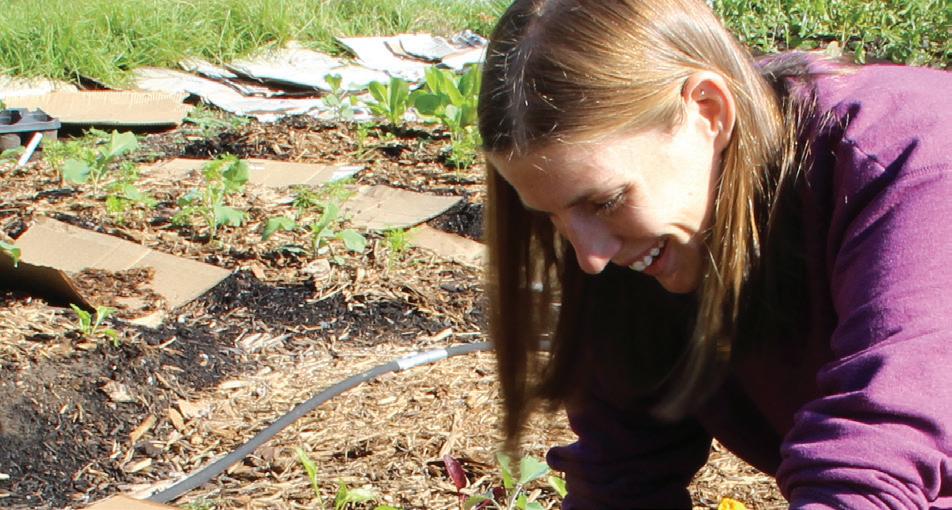
Autumn Erickson is not your average college student. She began college nearly a decade ago and she is now a senior anthropology major who will graduate in the spring.
Before Erickson was a Trojan, she was a UCA Bear. She went to the school on a volleyball scholarship for several years and majored in history with a minor in French.
“I was there [UCA] in 2003 to 2006, “ Erickson said. “Then my coach left and I decided that I was ready to take a break. I didn’t know if I was going to have my scholarship because usually when you get new coaches, they bring in new players. You just never really know.”
Uncertain about her future, she left school and stepped into the work place. However, her time in the “real world” was short-lived. Erickson said she began to miss school life and decided to come to UALR, where she developed some new interests.
“I feel like being nontraditional, being a little bit older, having a little bit of
experience in the world helps you define your experience at UALR and what you want to get out of it better. I just feel really focused compared to myself when I first came into college” Required to take a science course, she chose physical anthropology. She liked the idea of studying human beings and their cultures.
Erickson began to unearth an interest in gardening around the same time she found her niche in the anthropology community on campus. She quickly discovered a way to unite her two newfound passions. Erickson said the Sustainability Committee gave the Anthropology club a grant in 2012. She had the idea of starting a campus garden after taking a class taught by anthropology professor Krista Lewis.
“It really started because I took Dr. Lewis. She had an eating culture class. We talked about just sustainable farming and gardening strategies. We did some service learning out in the community and I went around to community gardens, thinking ‘Wouldn’t it be so great if we had a campus garden?’”
After receiving overwhelming support from the club members, the project

Photo by KenDrell Collins
Steven Savage Staff Writer srsavage@ualr.edu
Fall is here and college students know that means finals are just around the corner. Students new to the college experience may feel overwhelmed or stressed when it comes to tests, but there is hope.
The UALR Trio Student Support Services offered a study skills workshop for the Student Success Initiative Oct. 16. Graduate assistant Purvi Parmar led the workshop and offered tips to improve organization and test taking skills.
“Sometimes students get confused and don’t know where to start,” she said. “They take notes and still don’t know what to study or how to start studying.”
Parmar said the best way to be prepared for an exam is to use your time wisely. Look over your class schedule and set aside times to eat, sleep and study. If you discover you have two or more hours of free time on certain days, use that time to go over information for you exam.
“There’s nothing wrong with being selfish with your time, just say no and set priorities,” Parmar said.
When some students get ready to hit the books, they prefer to study alone.



Nonetheless, it can be a good idea to make a own study group. Taking time to divide up the work among your peers decreases your workload and helps you better understand the material.
“Most students prefer to study alone, but don’t underestimate studying in a group,” she said. “You may get some new ideas you missed while studying by yourself.” If you think back to your younger days, you may remember using flashcards for spelling, math, or science tests. Flashcards are not just for elementary and middle school; they work wonders in college. When you write your notes and definitions more than once, it keeps the information fresh in your mind.
Before students decide to pull out the energy drinks for all-nighters, they may want to stop and get some rest instead.

was underway. Erickson and the club planted their first seeds during the fall. The garden is now located on the on the Worth James property off of Fair Park, across from U.S Pizza Company. They grow native plants on the 35 by 35 squre foot block of land that now host over 100 plants and lots of fruits and vegetables.
“It is open to all students. As opposed to like community gardens where you have all sorts of people coming in, it is more like education and research based. We want students to feel like they have some ownership.”
Although she said she loves the outdoors and food, Erickson didn’t grow up around gardening. “I grew up in Texas and it’s really hot and dry,” Erickson said. “My dad is from North Dakota and he’s a farmer, but we never did that. After this eating cultures class, I became interested in food. Then doing all the service learning put me in an environment. I just found it interesting and new.”
Erickson envisions herself doing some form of horticultural work in the future. She finds medical research very interesting and she is even entertaining the idea of working with the Garden Core, where she would be able to help bring fresh food to communities that
don’t have access to good resources. For now though, she is returning to her first love - volley ball.
“I am currently like a semi-professional beach volleyball player. So when I graduate in spring, I’m going to turn all of my attention for the next five years onto that. I’m going and playing a pro tournament on Thursday. Yeah, it’s really random and weird. It’s just like a strange string of events that have sort of led me back into the volleyball world.”
She has a volleyball partner who competed as a former Olympian. The two played in tournaments over the summer.
When Erickson isn’t in the garden or on the sand, she is helping other young girls develop their volleyball skills. She coaches at the club of her former coach at UCA.
“I remember how hard it was for me when I grew up playing a sport. I do want to be a good role model for them. I don’t want to come to practice and be like all stressed out. I don’t get that from the people around me, so I try not to be like that: strong, ambitious, thoughtful, focused, positive, appreciative, hard working.”
Parmar said it is best to not increase your caffeine intake because it may increase your test anxiety. According to the New York Times, sleep deprivation can interrupt critical thinking and attention span.
“Try to stay sharp by getting at least six to eight hours of sleep before your exam,” Parmar said.
A key piece of advice is to help you during your semester is to become familiar with your course syllabus. It is important to know the date of your exam in advance in order to gather information and clarify notes during class reviews.
“Read your course syllabus, gather lecture notes from your peers, and clarify what notes they are going to read or review before the exam,” Parmar said.
“Practice the test questions and imagine that you are a professor testing other students.”
Parmar also offered the POSSE plan for students to make the best use of study time and efforts:
P – Plan out what information is crucial for you to know on the exam
O – Organize your lecture notes, materials, flashcards, etc.
S – Schedule time to study either with a group or alone
S – Study thoroughly by reading and writing out material
E – Evaluate yourself after the test
Here are a few steps from to keep in mind on the day of the exam to beat stress:
Avoid stressful people – before a test, do not sit with people who stress you out
Eat healthy and exercise – skip sugar and go for granola bars, healthy cereal or fruits and veggies
Say “no” to distractions
Force yourself to take breaks – for every hour that you work, take a 10 or 15 minute break
Visualize the test going well to build up confidence.
Do not cram hours before an exam. If you are still learning information right up to the last few hours before the exam, you may not remember it during the exam.
“Keep working and avoid the wall of impossible,” Parmar said. “Break it down and make things possible. If you always do what you have always done, then you will always get the same result, so make improvements.”
The UALR TRIO Student Support Services has two upcoming workshops in room 103 of the Speech Building at 2 p.m.:
October 22 – Writing Skills: Basics of English October 24 – Writing Skills: Basics of Editing
There’s no need to slack off or freak out as finals approach - by implementing some of the study skills from the workshops, students can finish the fall semester with a high GPA and be prepared to take on the spring.

Center for Arkansas History and Culture
Arkansas Studies Institute building 401 President Clinton Avenue Little Rock, Arkansas 72201
ualr.edu/cahc cahc@ualr.edu





Resources
manuscripts, photographs, and audiovisual materials.
Steven Savage Staff Writer srsavage@ualr.edu
College students can spend time in the classroom trying to earn the highest GPA while missing opportunities to apply what they learn to the real world. Internships give students the opportunity to apply what they learned in the classroom to the work environment.
Imagine that you have just graduated from college with honors and are optimistic about the career opportunities available to you. You spent countless hours burning the midnight oil to maintain your 3.8 GPA and majored in a field that has projected job growth. Unfortunately, since you spent so much time focused on studying, you missed chances to meet new people, volunteer, participate in student organizations or earn internships. Now that you are in the real world, you have no contacts in your career field and no work experience to reflect on in an interview. As a result, you end up being turned down for entry-level positions because of a lack of experience. This is a problem recent college graduates may face as they enter the competitive job market.
In a Forbes magazine article, “Internships May Be The Easiest Way to A Job in 2013,” Jacquelyn Smith wrote that internships have become the “new interview” in the job search process for students and employers. The article stated that “66 percent of employers believe interview performance and relevant work experience are the most important factors in their hiring decisions—far more significant than strong academic performance.”
“Internships give students an opportunity to test the waters. They get a chance to work in a particular area of their field of study. It allows them to figure out what they want in a career. Getting that experience before you graduate is important. You don’t want to graduate, apply for a job and not have any experience,” Cooperative Education Coordinator Michael Yang said.
Although some students know internships are crucial to gaining employment after graduation, many are still unsure about how to land one. A great way to start looking for internships would be to start networking with the faculty, Yang said.
“The faculty is very connected with those in their field,” he said. “Build those contacts so you can refer back to them for letters of recommendation.”
Getting involved in student organizations can be a great avenue to gain volunteer work in the community. In today’s society, the saying goes, “It’s not what you know, it’s who you know.”
Students could have a 4.0 GPA, but employers want to see tangible work that displays their talents. According to Smith’s article, “employers will look at what the student has been learning at school, relevant projects, course work and extracurricular activities. In a highly competitive job environment employers want to see that a candidate has the hunger to be successful more than purely in an academic setting.”
When it comes to looking for and gaining internships, Yang offers the following advice:
Research several companies and decide if their mission statement is aligned with your values.

Get in contact with someone that has knowledge about internships or volunteer opportunities in the company.
Be able to sell yourself. Polish your resume and cover letters to highlight your best qualities and experience.
Build a portfolio with your best work.
Volunteer for unpaid internships.
Yang said, “Conducting an informational interview helps identify where you want to work. It helps you identify what company is the best fit for you.”
Once you have earned an internship, you have the opportunity to show an employer your work ethic. Employers want to know you are willing to put forth a strong effort, whether or not you are being paid.
Also, it is important to make yourself an asset to the company. Learn about every facet of the company. When it comes time for them to hire new people, employers will remember that you can come in ready to work.
J Michael Keith, a mass communications senior, had the opportunity to work an internship. He said he came to UALR for the opportunity to get an internship in Little Rock. “I searched and applied all over and was lucky enough to land one with the Arkansas Travelers Baseball Club. In that internship, it showed me what the real world was all about. It also showed me that what I learned in college was actually used every day,” he said. After the end of his internship with the Travelers, he went back to being a full-time student. “In January, they called me looking for help and needed someone who had done what I did in the front office,” he said. “Without my internship, I would have never had the opportunity to be in the situation I am now.” Keith now works full time as an account executive for the Arkansas Travelers.
Caleb Mitchell Staff Writer cfmitchell@ualr.edu
The heat of summer is finally dissipating and the chill of autumn is setting in. Everywhere you go, pumpkin-flavored everything bombards your taste buds, and if you walk into any local grocery or convenience store, bags upon bags of bat and ghost-shaped candies fill the aisles. Yes, October is in full swing, Halloween is fast approaching and that can only mean one thing: horror movies are back with a vengeance.
Whether Freddy, Jason or Michael is your man, this time of year is always perfect to settle down with a group of friends – or if you’re feeling brave, just a blanket and a mug of hot chocolate – and pop in some flicks that are guaranteed to get the blood pumping (and spilling). Is “Scream” your preferred movie choice? Maybe a little “Paranormal Activity”? Do you and your friends fight over whether to watch “The Texas Chainsaw Massacre” or “The Strangers”? Either way, rest assured you’re not alone in your quest for chills, thrills, and kills. But what exactly is it that makes people watch these types of movies?
Resident Assistant Brady Redman
thinks the answer is simple: “Everybody likes to be scared sometimes.” One female student, who wished to remain anonymous, said that she also enjoys the rush that the scares give her – but she only watches horror movies under certain circumstances. “It is usually when I am home alone and at night,” she said. “It makes your heart pound and palms sweat. Also, when you hear a little creak, it makes you freak out.” Music major Derrick Herman had similar thoughts. “It’s a chance to feel an adrenaline rush,” Herman said. “And you get that sensation of being in danger, without actually putting yourself in danger.”
Leanna Payton, Hall Director for West Hall, agrees with Herman, saying that the adrenaline is a big part of it for her as well. “It makes your adrenaline pump, and gets you excited and scared,” Payton said. “It’s emotions that you don’t normally have, and sometimes those are fun to have because it’s like experiencing a different world.” Payton also said that she enjoys the tradition of watching horror movies throughout the month, due to the nature of Halloween.
However, the scares don’t do it for all students. In fact, some don’t seem fazed by the genre at all, saying they watch horror films for the humor they derive
from them, or for the challenge of trying to find that one film that will someday scare them senseless. University Village resident Steven Cato said he watches horror movies for one reason only: “The stupidity makes me laugh.” Other people, like Spanish major Marissa Godfrey, use the pretense of being scared as an excuse to have a good time, or to share a moment with someone they love. “It gives me a reason to cuddle up with my man,” Godfrey said.
Tim Edwards, an associate professor in UALR’s School of Mass Communication who specializes in pop culture, weighed in on why people get such enjoyment from watching horror flicks.
“I think it has to a lot to do with the escapist gratification they receive from those movies,” Edwards said. “You suspend disbelief and allow yourself to be taken into another place where things are other-worldly; there is a sense of excitement for many in the audience. They get a rush from the action, the suspense, etc. Also, it is an opportunity for the audience to live vicariously through the characters; to have an experience they would not otherwise have but still feel safe because they know it is only fantasy - a movie.”
Brad Pierce, a graduate student who
teaches courses on films and film criticism in the School of Mass Communication, had his own opinion on the matter as well.
“I think people watch horror movies [for] the same reason they ride rollercoaster rides; they have a physical response (fear), yet they know that it’s safe,” Pierce said. “People want to face their fears in a fun and harmless way, and feel their hearts race and their adrenaline pump. I myself love horror movies because of the communal environment and reaction that’s present in the theater when watching it; it feels like I’m at a big sleepover, I’m 13, and I’m watching a scary movie with my friends.”
For whatever the reason may be, one thing is clear: people love horror movies, and for as long as they’ve been around and as popular as they continue to be, they aren’t going anywhere anytime soon. So whether you’re a fan of slashers, “gorror” flicks, horror-comedies, survival-horror or psychologicalhorror films, go ahead; get a few friends together, grab some popcorn, turn the lights down and settle down to scare up some memories and fun together this Halloween season.
Hillary Perkins Staff Writer hdperkins@ualr.edu
Anyone can fall on hard times. Whatever they have to do to make sure their bills and tuition are paid is what they will do. If this means taking out a loan and perhaps risking more debt, students may be willing to take that risk.
“A higher education is not possible without student loans, but we always encourage students to borrow no more than what they need,” said Karen Hus-
“A higher education is not possible without student loans, but we always encourage students to borrow no more than what they need.”
-Karen Husley, associate director of nancial aid
ley, associate director of financial aid.
Students take out loans for school tuition, as well costs of living on campus, text books and meal plans. Some different loan options are the Stafford Loans, the Perkins Loans and the PLUS Loans.
There are two forms of the Stafford Loans: the Federal Family Education Loans and Federal Direct Students Loans. The Federal Family Education Loans are provided by private lenders. The government provides the Federal Direct Student Loans to students and their parents. The Stafford Loans are either subsidized or unsubsidized. Subsidized loans are loans in which the
government pays interest for students while they attend school.
The Perkins Loans are also provided by the government for students with high financial needs. The purpose of the loans is to supplement the Stafford Loans. The Perkins Loans are subsidized loans, and students do not have to begin payments until nine months after graduation.
The PLUS Loans supplement other grants and loans that students receive for college.
When students use different strategies to take out loans and keep a budget for themselves, they have to be smart about their money. Scholarships and summer jobs allow students to save money, Director of Financial Aid Tammy Harrison said.
When it comes to the amount of money students can take out in loans, there are various qualifications, Hulsey said. Those qualifications include classification, student independence based on Federal Student Aid regulations and the degree that the student is trying to pursue.
The Arkansas Department of Higher Education distributes about $170 million in financial aid each year from state to state revenues and lottery funds. This money provides loan repayments and scholarship programs like the Arkansas Academic Challenge scholarship, the Workforce Improvement Grant, Arkansas Governor Scholars and Higher Education Opportunities, or GO, Grants.
ADHE also provides federal tax credits and benefits including the American Opportunity Tax Credit, the Lifetime Learning Credit, deductions for student loan interest, tax-free education assistance, and tuition and fee deduction.





American Opportunity Tax Credit is for undergraduates attending school at least part-time. With the Lifetime Learning Credit, students are not required to study for a degree or got to school parttime.
Deductions for student loan interest are designated for students who are considered dependents, and no deductions may not be taken out.
Tax-free education assistance is for employees, and provides tax-free money that is not allowed to be spent on families.
Tuition and fee deduction is for students claimed as a dependent, who can submit an American Opportunity Tax Credit or Hope of Lifetime Learning Credit in the same year.
The Public Service Loan Forgiveness Program helps students pay back their

loans after graduation. Students must make 120 monthly payments on time and have a full-time job, as well as providing public service. There are some loans available for the loan forgiveness program. The only loans that are received under the William D. Ford Federal Direct Loan are eligible to be a part of the Public Service Loan Forgiveness Program. Loans such as the Federal Family Education Loan and the Federal Perkins Loan are not eligible.
Students who applied for the FEEL program or the Perkins Loan, students can use the Direct Consolidation Loam program to take advantage of the PSLF. More information is available at www.adhe.edu or ualr.edu/financial aid.
Kezia Nanda Contributing Writer kananda@ualr.edu
Late last year, a 6 year-old Bentonville girl, Jersey Bridgeman, was found dead in Bentonville, after being suffocated and raped. Earlier this year, another case happened in Arkansas where a former youth baseball coach in Texarkana area pleaded guilty to sexually abusing young children. Sexual abuse is more widespread than is thought. Unfortunately, a sexual abuse survivor said that Arkansas has done very little to raise awareness about this matter.
“When people are abused ... it really traumatizes people and it’s hard to get ahead in life.”
-Phyllis
Phyllis Harrington, the founder of Break The Silence - Speak Out America, a non-profit organization working to prevent and stop sexual abuse in children, said, “It’s really bad. There’s one out of three girls and one out of six boys that are sexually abused every two minutes before the age of 18.” She added that studies showed from a total of about 470,000 students enrolled in Arkansas schools, about 77,000 girls and 40,000 boys in Arkansas have been or will be sexually abused by the age of 18.
According to Harrington, although Governor Mike Beebe earlier this year declared the month of April as Child Abuse Awareness and Prevention Month, the state has not done enough to prevent sexual abuse. She said she has contacted the governor, legislators, school superintendents, communities and mayors of several cities in Arkansas.
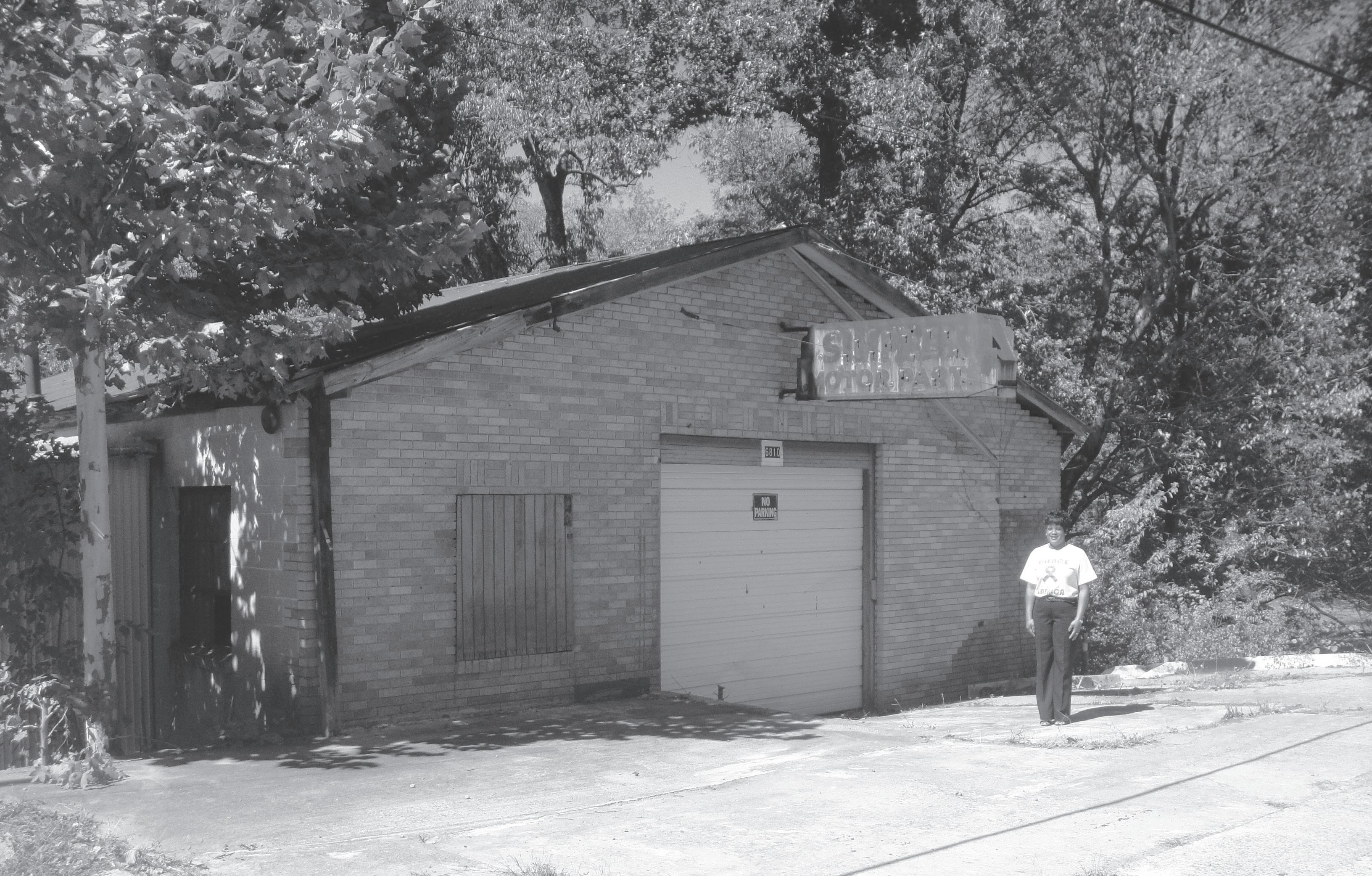
The organization that has been working for a year, recently received a building from a private donor. Harrington said she needs college students and people in the community to help the organization clean and renovate the building.
The 3,500 square-foot facility will be used for a thrift store to fund the programs, classrooms, counseling rooms and possibly rooms to house victims. Harrington said support groups and counseling are essentials for sexual abuse victims.
“When people are abused in any shape or fashion, it’s really hard. It really traumatizes people and it’s hard to get ahead in life,” Harrington said. “I’m a survivor of sexual abuse myself as a child.” She went through counseling sessions to open up about her experience. “God has been working with me for years to be able to go out and help others. But, I had to seek healing first, before I’m able to help someone else,” she said.
Break The Silence-Speak Out America is trying to prevent and stop sexual abuse of children through education and awareness. Harrington said her goal is for Arkansas schools to implement sexual abuse prevention in their curriculum. She said it is very important for anyone to know that they can talk to someone about it. “It’s OK to tell if someone is harming you and if some-
one is touching you in inappropriate way. Tell someone, your mother, father, teacher or a pastor. Tell someone so we can get you some help,” Harrington said. She said males can find it hard to open up about their experience if they were abused in the past. Bullying, she said, is the primary factor of any kind of abuse, including sexual abuse. She appreciates schools that raise awareness on bullying to children and teenagers.
She also hopes that with the new building she can provide sexual abuse prevention training as well as healing to the survivors that may still be in trauma and finding it hard to move on in life. In effort to spread awareness to communities in Arkansas, Harrington has been traveling to different cities with other sexual abuse survivors. “A lot of children can’t speak for themselves, so I want to be that voice for them and to help protect them,” she said.
Break The Silence-Speak Out America is asking the public on Oct. 25 through 26 to help clean and renovate the building that was donated to the organization.
The building is located at 6810 Arch St. Pike, Little Rock, AR 72206. Harrington also asks anyone to drive by and donate “Loose Change” to their organization.
In the state, there are some other organizations such as PATH or Partners Against Trafficking Humans which works to help victims of sex trafficking and ACASA or Arkansas Coalition Against Sexual Assault which works to eliminate sexual violence.
Rachel Wright Staff Writer rswright@ualr.edu
Is it quicker to walk or to drive?
When navigating around campus, students have many choices of transportation: trolley, bike, skateboard, motorcycle, car or feet. Which is more convenient, and most efficient?
According to an article in USA Today, people between the ages of 16 and 34 approach travel differently than their parents. Because of increase in gas prices, many people are choosing not to drive and finding alternate forms of transportation.
When trying to maneuver around campus, students want a quick and efficient mode of transportation. But what are the choices and how can a student decide what the best fit is?
Cars are convenient for off campus trips, but when traveling from the dorms or village to class, is it worth trying to find parking?
“That is a waste of gas, in my opinion, it is not a far enough distance to drive every day,” Chenesia Brown, a junior criminal justice major, said about driving from the East Hall parking lot to her classes in Stabler Hall. Traveling from the Village or dorms to the Business Building by car, and parking by the Jack Stevens Center, especially for a night class, is a different story.
The University has provided students with trolleys that run around Monday through Thursday from 7 a.m. to 10 p.m. and Friday from 7 a.m. to 4 p.m. The trolleys have two routes: the Maroon route and Sliver route.
The Maroon Route travels around the south side of campus, and stops at the Village, University Plaza, the bus shelter on Campus Drive across from
the Donaghey Student Center and South Oaks Apartments.
The Silver Route travels the south side of campus, and stops at Lot 14, Lot 13, Lot 8 (College of Business), Fine Arts Building, across from the Donaghey Student Center and the north end of West Hall. Students can follow the trolley’s route by pulling up the Trojan Trolley Tracker system on the university website with their phone, laptop or tablet.
Students who want to take a more active approach when traveling around campus can ride a bicycle, skateboard, or longboard. There are bike stands all around campus: by the Information Technology Building, the Fine Arts Building, Stabler Hall, the library, the admissions building, the main campus dorms and the DSC. Bikes are a way for students to stay fit while going to and from class, and cut down the time it takes to get across campus. By cutting down the time it takes to get to class, students might find they have more time to get ready.
Students who skateboard or longboard also say it cuts down the time it takes to get to class, “A walk that usually takes 15 minutes only takes five minutes on the board,” said John Brewster, a junior management information systems major. Compared to driving, “it’s more enjoyable, a good light exercise, and better for the environment (saves on gas),” said longboarder Jerett Wemette, a sophomore mechanical systems engineering major. Though bicycles, skateboards and longboards help with travel and the environment, they will need upkeep, so be ready for minor investments. UALR is not responsible for bikes that are lost or stolen. It is a student’s job to make sure their bike is properly secured to a bike rack.

Motorcycles can be a major investment for students, but could pay off in the long run. Motorcycles are cheap on gas and easy to maneuver around campus and find parking. To legally operate a motorcycle the person should have a motorcycle license.
“Riding is a stress reliever, and is enjoyable,” a source said. When riding a motorcycle it is recommended that riders wear proper attire such as a leather jacket and helmet for protection. If a student decides to invest in a motorcycle, they might want to consider weather changes that could prevent them from riding.
When in doubt, a student can always walk to class.
Life in America from the perspective of a French foreign-exchange student

When I first came to UALR in 2011 as an exchange student, I excepted the school system to be different from the one in my home university. I knew for instance that I could choose my class schedule and therefore my teachers - although I did not know them at that time. While attending my first class, I excepted the professor to be just like the ones I had in France. It was not the case, and I admit it was, at first, a little confusing for me.
Let me explain. Professors in France, whether you are in elementary school, middle school, high school or college, are seen as “superior” to the students. This is particularly the case in college. Professors show the students from the very first day of class that they represent authority; therefore, students should listen, stand still and not argue with their professors. From my experience, French professors are more harsh than American ones. American professors are more careful; in France, they are more aggressive to stop trouble before it starts, and if the methods are sometimes harsh, they are effective. Professors are not afraid to say what they think. Some teachers’ comments can be hurtful, but they are never personal. Everyone will be treated the same. You adapt and use this skill later in life.
In the American system, teachers are seen as people to rely on and trust. For instance, I know I can ask my professors for an extension for an assignment, or for help concerning an assignment or even for something unrelated to the class. I would not talk to my French professors about something unrelated to the class. And I would not ask for an extension for an assignment either; professors rarely give extensions, except in an extreme case of emergency. French teachers have a clear-cut purpose: to teach students.
I believe that American students have a more friendly and informal relationship with their professors than French students. For instance, professors in France would almost never invite their students at an event or for dinner, and they would rarely accept students - current or former - as a Facebook friend. I know some American professors invite their students to their homes, or to events such as readings, concerts and so on. It happened to me.
I had dinner at one of my professors’ homes, I spent New Year at one of the UALR employees’ homes, I babysat for one of my former professors and I attended events in Little Rock with some of my professors. I even worked with UALR employees when I volunteered for Suicide Prevention Week.
I do not imagine doing these things back home. In France, professors are nothing more than professors; they will not invite you to events, they will not greet you in the streets, etc. Of course, there are some exceptions.
Moreover, professors and students socialize very easily in the U.S. - whether it is inside or outside of the classroom. I am sure most of the students at UALR have received candies, cookies or any kind of food by at least one of their teachers. If you have not, I guess I am a lucky student: in the past two years, I had professors bring candies, cookies and other foods I cannot remember.
This kind of behavior does not often happen in a French classroom, mainly because students are there to study, not to eat and have fun. They do that outside of the classroom. There are some exceptions though. For instance, some professors bring chocolates around Christmas time, and some allow their students to bring food and drinks for the last day of class.
In brief, relationships between teachers and students are more formal in France. This may influence students in their diversity, their level of self-confidence, their intensity of participation inside a group, the development of their creativity and their interactions with a hierarchy in a company.
However, you cannot judge an entire system through a unique experience. French schools and teachers - as well as Americans ones - are different from one city to another.
A bientôt pour de nouvelles aventures! (See you later for other adventures!)

Caleb Mitchell Staff Writer
I have never seen Brian De Palma’s original 1976 film “Carrie.” I am surprised by this fact, given that I am a huge fan of horror movies, Stephen King, and trashy teen revenge flicks. Regardless, I am still very familiar with the plot of “Carrie,” given the nature of the internet and word-of-mouth making it almost impossible to not hear the details of so-called “classic” films. But I went into Kimberly Peirce’s “Carrie” reboot trying to forget everything I’d heard about the original and instead watch the updated version with an open mind.
It’s impossible for me to compare the two versions. But as someone who has never seen the original, I can tell you this new and improved version of “Carrie” is very good, but difficult to watch at times. Much of this is due to compelling performances by Chloë Grace Moretz (Carrie) and Julianne Moore (Margaret, Carrie’s mother). Moretz really makes the viewer feel for Carrie, showing not only the character’s vulnerable side but
also the strength she pulls from her telekinetic abilities. Carrie didn’t just seem like a character – she felt like a real person I wanted desperately to help.
Moore really puts her acting chops to the test, playing Carrie’s crazed, self-mutilation-obsessed mother to great effect. The actress also does an excellent job at showing Margaret’s fragility and borderline -- if not outright -- split personality, namely in moments where Margaret gives Carrie love and affection. She promises nobody will “hurt her little girl,” which shows the real but twisted love this unstable mother and daughter share and make the moments of conflict between them that much more intense. But no film is perfect, and with this much emotion and drama taking place, you’d expect something else to suffer – and indeed it does. While I loved “Carrie” overall, my main gripe with it is that for a film that’s been so heavily advertised as horror, it’s not very scary. Granted, the many sickening acts Carrie’s psychopathic classmates pull on her are quite horrifying, but there was never anything I found overtly scary about the film. Maybe this has more to do with horror standards of modern
cinema than it does the film’s lack of scares. While I wasn’t scared, my stomach was in knots for half the film and I was overwhelmed by the sense of dread and suspense I felt while watching the movie. These are arguably sensations that stand toe-to-toe with feeling scared, so maybe “Carrie” could rightfully be called a horror film if we’re judging it on the basis of causing sensations of horror and not simply executing wellorchestrated jump scares.
Another minor gripe I have is with the film’s final act. While I knew what was coming during the infamous prom scene, I was expecting Carrie’s major meltdown to be a little more raw. The film seems to toy with idea that Carrie is just discovering her powers and doesn’t quite have control of them, yet Carrie suddenly turns into a telekinetic demigod, wrecking anything and everything in her path. Admittedly, I was fine with this while I was watching the scene (mainly because I was just ready for all of Carrie’s classmates – have I mentioned how horrible these people are? – to get their proper fates), but looking back, it really seems a bit too over-the-top and comic book-worthy
with the way in which Carrie suddenly gains masterful control and causes chaos that would make “X-Men’s” Jean Grey green with envy. The film’s ending was also pretty hokey and seemed to imply the possibility of a sequel – something that, in my opinion, is not even close to being necessary. Despite these few gripes, “Carrie” is a movie that I really loved and would recommend to those who can handle its intense and often gut-wrenching content. I can’t speak for how it stands up compared to the original, but what I can tell you is this: “Carrie” is one of the most intense, suspenseful, horrifying, and hard to watch films I’ve seen in quite a while. Is this simply the ramblings of someone who has never seen the original film before? Am I just overstating the impact this movie had on me as I’ve never seen the first one? Perhaps so, but even if this is the case, you can’t deny the themes of bullying, abuse, isolation and neglect resonate strongly with today’s society – enough that I’d argue that “Carrie” is just as culturally relevant today, if not more so, than it was 37 years ago.

Liz Fox Managing Editor elfox@ualr.edu
With the army of artists trying to resurrect their prime, Gary Numan is often looked upon as a washed-up one hit wonder. He’s best known for the 1979 staple “Cars,” a primitive synth-pop track with minimalism and an overly catchy hook. But the pop edge faded with the pioneerism of industrial and darkwave music, and Numan has spent the last three decades trying to perfect and blend these sounds. Despite a few flops, Numan has arrived at newfound maturity with “Splinter (Songs From A Broken Mind),” his twentieth studio album released Oct. 14 on Mortal Records.
If you take a look at the singer these days, Numan wears the image of an aging rocker grasping to keep up with recent trends. He has just hit the age for AARP mailings, and his coiffed, smokeyeyed appearance may paint a caricature more than a statement of reinvention. But the singer-songwriter has avoided getting lost into the dark forest of bad genre-melding and turned a new leaf, making for a critically successful piece that’s virtually without fault.
“Splinter” begins on a strong note with “I Am Dust,” a track carrying considerable industrial influence that sets the tone for the rest of the album. Instead of choosing the sometimes-corny synth ploys of his heyday, Numan utilizes pointers from predecessors Throbbing Gristle and “Pretty Hate Machine”era Nine Inch Nails, who often opted
for darker frequencies instead of pop melodies or outright thrash. Many of the tracks, notably “We’re the Unforgiven” and the single “Love Hurt Bleed,” continue in this fashion, making for a cohesive piece in a career that’s been peppered with mishaps.
Unfortunately there are times when the album’s darkness comes off as shallow. While the melodies of each song are intact and avoid crossing the line of being too dark, many of Numan’s lyrics are shrug-worthy. Following in the tradition of modern industrial rock acts, some of his poetic license is largely derivative, mimicking the callousness and self-deprecation of Trent Reznor’s early catalog.
But even though “Splinter” sporadically contains bad songwriting, Numan can be cut some slack, for the album was born out of depression and struggles with parenthood, a challenge for everyone involved. “Lost,” a sparse track written from the point of view of a new father, only cements this idea, allowing for some reason behind the vague, dark lyrics found on the rest of the album.
Overall, “Splinter” is a solid album and serves as a potential comeback. It’s Numan’s first Top 20 album in the UK in the last 30 years, and the man’s drive should be admired if he managed to crawl out of his hovel so quickly. But the takeaway is this: while his latest material revolves around concepts of mental illness and life struggles, the recent exorcism of personal demons has him dancing on a high note, which is where Gary Numan should rightfully stand.

Liz Fox Managing Editor elfox@ualr.edu

With Instagram continuing to rise in popularity, camera and photo-editing apps are becoming more essential for the typical smartphone user. Photography has proven to be a cornerstone of social networking, but sometimes effects, ranging from sharpness to filters, are what is needed to grab the attention of friends and acquaintances. Since hundreds of apps are available through the Apple and Android stores, it’s important to know which items to avoid and those that are fully worth the functionality and, in some cases, the price.

Collage apps have become staples for Instagram users who want to show more than one photo in the same set, especially since photo spam is generally not welcome. PicStitch, developed by Big Blue Clip, provides a number of eclectic layouts to place multiple photos within the same frame. The app also offers several effects, including rounded corners, frame patterns and basic photo-editing techniques. While this is ideal for a mobile environment, files created in PicStitch do not often translate well onto a desktop, the images grainy and sometimes oversaturated (depending on what effects are used). Another, perhaps more bothersome downside is that developers have yet to update the app for Apple iOS 7, which implies problems for consumers who have opted for the recent upgrade. But regardless of its downfalls, PicStitch exists as a solid app for users who grow tired of the one-frame photo square that’s become standard in social networking.

Unlike PicStitch, CameraSharp is focused (no pun intended) on offering an opportunity for smartphone users to take clear, highdefinition shots.
The default iPhone camera app has barely been touched since its inception, leaving behind frustration about its low quality and lack of basic tools.
But CameraSharp bears an anti-shake/ steady function, allowing phone photographers to capture a moment in motion. This capability also cuts some slack for those with unsteady handsmyself included - and minimizes the possibility of photo ops gone awry. The app also offers a timer and continuous-shot settings, which are perfect if you’re a fan of self portraits. Since its creation in 2011, CameraSharp has improved steadily with more features accompanying every update, and at $1.99, it’s definitely worth it.

A recent wave of networks on Instagram and Tumblr have taken to doing more than merely adding an exclusive retro mask over the face of their photos. Many have chosen text and graphic overlays that make hi-def pics look more like arrangements in a fashion catalog, and at the root of this trend is PicLab. Created by developer Roberto Nickson, PicLab is vibrant and easy-to-use, with a wide selection of typefaces, filters and elements at one’s disposal. Users fed up with the standard square or rectangular frame can choose something abstract, creating a graphic that could have only been created with Adobe Photoshop in the past. The one drawback, like PicStitch, is the app’s product is only suited for mobile devices, with photos coming up blurry or low-quality on a highresolution monitor. But unlike many other available apps, using PicLab is a fun experience and definitely passes the time even if an end result fails to be reached.
Alexis Williams Staff Writer aawilliams3@ualr.edu
California hard-rock band “Smile Empty Soul” will be playing Nov. 3 at the Revolution Music Room. To spread the word at UALR of the upcoming show, drummer Jake Kilmer spoke to The Forum on Friday, Oct. 18.
Smile Empty Soul formed in 1998 in San Clarita, California by members Sean Danielsen (vocals, rhythm guitar) and Ryan Martin (bass), and former drummer Derek Gledhill. Jake Kilmer (drums, backing vocals) officially joined the band in 2006, just in time to contribute to the creation and release of their third album, “Vultures,” and has been with them ever since.
The band is currently on their “‘Merican Chemicals Tour” to promote their latest album “Chemicals”, released on Oct. 1. Joining them are rising groups ACIDIC and First Decree.
Fans will find “Chemicals” measures up quite well to its predecessors: it manages to sound fresh while still being mindful of the band’s roots. “The Front Row Report” even gives the album an 8.5/10 rating.
“[‘Chemicals’] is really raw and organic-sounding, “ Kilmer said. “The songs all sound great together. We did it the right way, you know?”
In fact, the drummer is so pleased with their latest album that he considers all of the songs to be in his first or second-place slots.
“I like the first nine tracks. The tenth and eleventh are a close second. But the third [“Chemicals”] is my favorite. It’s just cool the way it all grooves, and I like the way the song flows.”
Kilmer also noted his love-love relationship with music is not limited to Chemicals.
“Well, of course I really liked ‘Vultures’ because it was my first time participating in something like this. But each time we put out a new record and get radio play, we all feel pretty good...so

a $20 gift certificate to the Root Cafe and free admission to all Quantum Flux events for the next six months.
I guess I’m pretty proud of all of them.”
The drummer revealed the band’s creative process is less of some magical formula and more of a musical phenomenon. “For us, it’s just the same old thing. [Their preceding album] was kind of heavy, so we thought ‘Maybe [our fans] don’t want something heavy this time’. So Sean wrote his ass off, he got the tunes together, and we started jamming.”
“Smile Empty Soul is a pretty hardworking band,” Kilmer said. “That’s why we’ve lasted for so long. It takes all three of us working together to make albums. But when we’re not on tour, we’re pretty much just relaxing.”
The band’s upcoming show at the Rev Room will not be the group’s first performance in Little Rock. Smile Empty Soul has played three times in the past year alone, with Hurt in December and again with two local bands at Downtown Music in April.
At the April concert, the setlist was written on a piece of paper and taped to the floor (which some girl happily ripped from the floor and took home that night). Kilmer said that is because the setlist is a very organic decision. “We practice all the songs, and about an hour or two before we go on, we get a handful of songs in mind. But sometimes in the middle of a set, one of us’ll start playing a different song, so we’ll go with that song. We like to mix it up a little for you guys.”
For students who may not be familiar with the band’s music, Kilmer said those students could count on a few great things at the show.
“It’ll be like going to a concert with three guys actually playing music. You’re gonna hear ‘precise playing,” Kilmer said. “Actually, no. You’re not gonna hear ‘precise playing’. You’re gonna see fireworks.”
Students can catch Smile Empty Soul live on Nov. 3 at the Revolution Music Room. For tickets, call (501) 823-0090 or visit RevRoom.com.
Disclaimer: The reporter who wrote this article is personally acquainted with some Haunted Flux participants. Regardless, The Forum has taken steps to ensure high-quality, unbiased journalism.
One might expect live tunes, art and performances at a psychedelic music festival, but what about alchemy? Organizers say all these will be a part of Haunted Flux, a night-long music festival taking place Nov. 2 at the Enjoy LifeStyle Center, located in North Little Rock at 543 Oak St.
“Whatever it is that you want to do, we want to provide a safe space for you to discover yourself and express whatever it is you find,” said event co-organizer Cat Hicks.
Haunted Flux is the second Quantum Flux event, and will be part of the Tel Terrors Halloween Haunt, Enjoy’s annual week-long Halloween festival. Enjoy owner Daniel Haney said he invited the collaboration after attending Quantum Flux in August.
“I was impressed with her Quantum Flux event, so I decided to take the reins off and see what Cat’s team is capable of, and so far I’ve been very impressed,” he said.
Haunted Flux features local artists with a variety of electronic, acoustic and ambient sounds. The line-up includes Groove Cluster, Perfect Glitch, S!Bass Cadet, SHARE, Sick Numbles, Mixmafia, Braxton, Trash Vortex, Dead Pickers Society, Paul “The Boogie Man” Morphis and Marjarine Smugglers.
The event will also incorporate many forms of visual art. Lasers and live visuals will compliment the music, and local artists will create and display their artwork. There will also be performances by hoop, aerial and fire dancers.
Two workshops will take place before the music starts. The alchemy workshop will explore the history and contemporary applications of what Hicks considers to be humanity’s oldest science, and will involve blessing the water at the event. A partner-stretching workshop will demonstrate two-person exercises to increase flexibility and prepare for more intense activity. It will also exhibit basic acrobatic yoga poses for two people.
In addition, there will be a costume contest, the winner of which will receive
Volunteer Spencer Fooley noted that the event is being held during the new moon, which could affect costume choices.
“Astrologically speaking, the new moon represents your personality,” Fooley said. “The winner of the costume contest will be the one who most accurately depicts their true self, or is most creative in depicting the form of their true self.”
“I’m definitely looking forward to the musical part and workshops provided by the psychedelic community, and interacting with people I may or may not be in touch with,” said Kurt Blevins, a junior information science major and Haunted Flux volunteer. “I think it would be a wonderful influence on people’s lives to come down and see that not everything has to be hostile and not everything has to have one goal or objective. Here, people can have their own objective.”
Camping reservations are available through the event’s Facebook page. There will be an organic kitchen with home-brewed kombucha tea, she said, as well as a complimentary community breakfast at sunrise. In addition, Enjoy will sell alcohol.
Although music ends at 8 a.m., the gate closes at 2 a.m. and no re-entry is allowed after 1 a.m. Only people who are older than 18 will be admitted.
“What we’re doing is a fusion between what Little Rock already knows and what we believe is the future of events like this,” Hicks said. She added that she would like Haunted Flux to provide consciousness-expanding opportunities offered at “transformative gatherings” like Rootwire and Burning Man, while remaining a fun and entertaining experience for more casual festival-goers.
“It’s definitely a different kind of venue space and venue show than Little Rock has probably ever seen.”
Haunted Flux will be held Saturday, Nov. 2 at 6 p.m. Tickets cost $10 or $15 with a camping reservation, and part of the proceeds will benefit Little Rock’s Dunbar Community Garden.
OCTOBER 23 – NOVEMBER 1
THROUGH OCT. 31
FRIDAY, OCT. 25/SATURDAY, OCT.
THURSDAY, OCT. 31
Mehr-ZAhra Shah Staff Writer mehr.zahra@yahoo.com
The UALR women’s volleyball team started their conference schedule on Sept. 27 at Mobile, Ala. where the team beat South Alabama 3-1. The UALR Trojans have been blazing through games ever since.
The team won 7 straight conference games and 13 overall before falling at home to Western Kentucky. The girls have traveled from Alabama to Louisiana, and have won every single conference road game so far this season.
“I think as a team we have proven to be pretty tough, because we have been on the road for seven straight weeks, which is extremely tiring,” said Coach Van Compton. During this extensive amount of time on the road, the volleyball team has played against schools like Georgia State, UT Arlington and Texas State.
The final game of the win streak was against Texas State on Oct. 13, which the Trojans won 3-2. The game Oct. 18 against Western Kentucky at the Jack Stephens Center ended the streak.
The girls had an amazing streak going and coach Compton thinks that more people should know what kind of team they are.
“I think we have a product we need to be marketing,” said Compton. The team is composed of impressive players like junior Edina Begic who received Sun Belt Conference Player of the Year in 2012 and is nationally ranked second in points per set and third in kills per set.
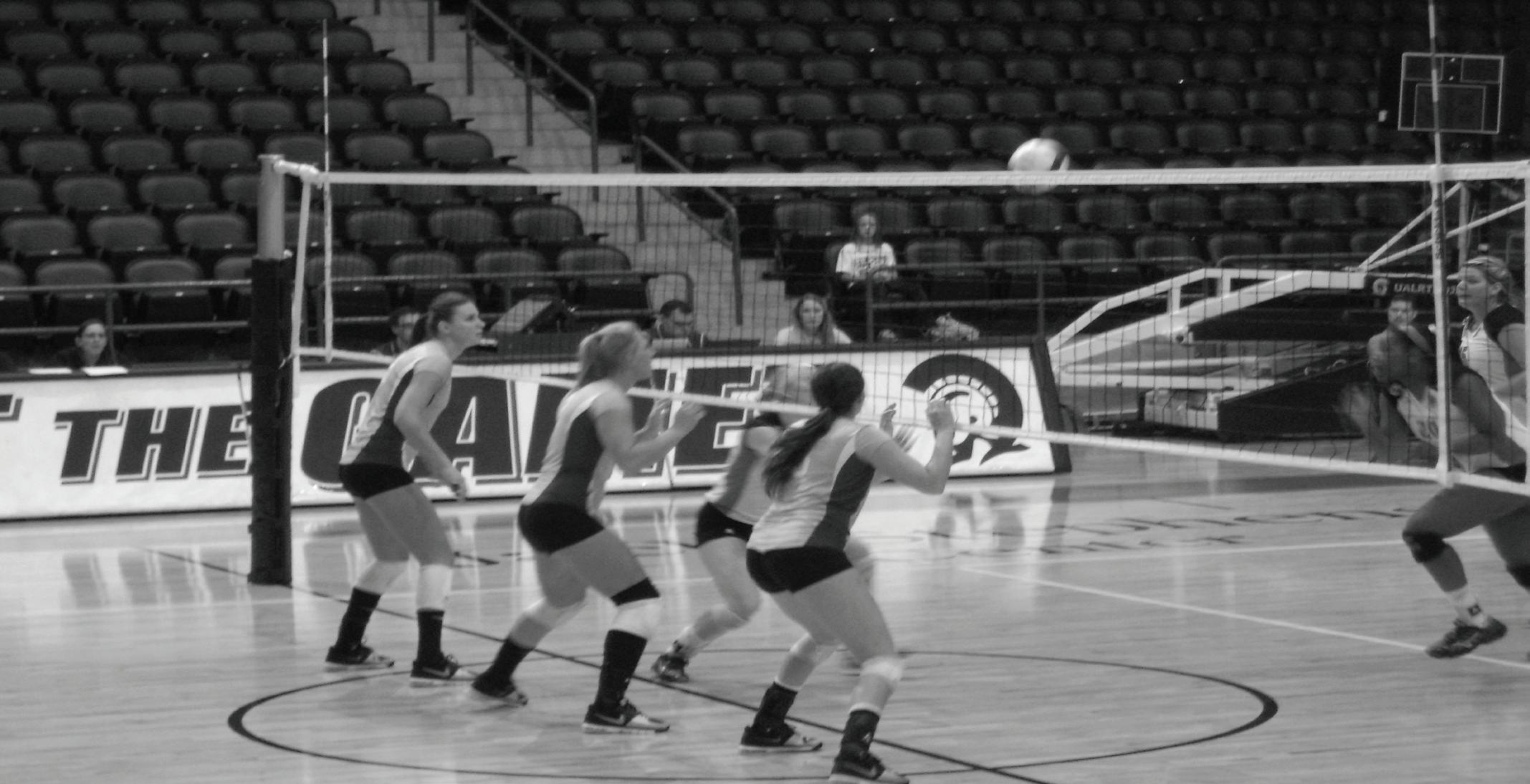
“I would just be remiss not to invite people out to see someone of that caliber of a player,” said coach Van Compton “We are a very talented team and can do some great things, and I think it’s really good volleyball; people don’t know unless they give it a chance and come see it.”
The team puts in extensive preparation to perform their best. “We practice hard and work hard in the weight room,” junior Marlene de Zoete said. The team attributes its success to the long hours spent in the weight room.

each individual is on the team was an expression echoed by Mason.
“Staying in shape is definitely the most important contributing factor,” de Zoete pointed out “because by the fifth set most teams are like ‘OMG I’m dying’ because it is so tiring.”
The team members get their motivation from one another. “Good positive energy throughout the whole game really helps us finish the game out strong,” said Begic.
“We really do build off each other’s energy,” said de Zoete. The team also notes the importance of team chemistry in general. “It is not just on the court, it
matters off the court too,” junior Adisa Hodzic said.
The team lost their second straight at home in a match against Louisiana Sunday. Even with the recent losses, the team has won 12 of their last 14 matches and will look to bounce back quickly.
“I think we have proven to be a team that has the ability to come back in difficult situations, that is definitely one of our strengths,” Compton said.
The team will play their next match against Troy on Oct. 25 at the Jack Stephens Center.
The UALR Trojan soccer team nears the end of its season with the goal of making it to the conference tournament still within reach. The five seniors remain positive in what has been a year of learning in head coach Adrian Blewitt’s first season with the team. The door remains open for a berth in the SBC Tournament in Texas. The team is battling ULM for the final tournament bid, while the seniors simultaneously approach the end of their UALR careers.
The seniors on the team are Ashley Barksdale, a biology major and Little Rock native; Holly Holland, a health science major also from Little Rock; Adrianna Queen, a biology major from Las Vegas; Page Mason, a studio art major with an emphasis on illustration who is from Fresno, Calif.; and Andrea Letzel, a sports management major from Germany who transferred to UALR just this season.
The task to keep a team focused as the season has its usual ups and downs typically falls on the upperclassmen and this group understands the part they play.
“We just try to come out to practice every day and remember to have fun and the reasons that we’re all here –just to keep the connectivity between all the players and the bond that we have, just trying to keep that up and not to get down if we miss a goal or miss a pass,” Barksdale said.
The sentiment of remembering why
“I think it’s just letting all of us players know and understand that we do care for one another and that we do know why you’re here and you’re an asset to the team no matter what part of the team you might be,” she said.
The ladies hope that they have left their mark on the team and their teammates as their college careers come to an end.
“I’ve always been a person with a very strong personality, so hopefully I’ve left a lasting impression on the girls that are just coming in this year,” Queen said. “I’m just really happy to say that I’ve been a part of this place. Hopefully, they’ll remember me,” she said.
It’s been kind of a struggle, the past four years for me, being up and down with injuries for me and everything,” Holland said. She went on to say that she hopes she left a good impression, both personally and on the field when she did get to play. “It’s been a good four years, overall,” she said.
Though this has been Letzel’s only season with the team, she hopes that she has been able to contribute. “I hope I’ve brought some international experience on the team,” she said. Letzel played on several teams in Germany prior to this season at UALR.
After a loss Sunday to conference leading Western Kentucky, the team has one game remaining against Texas State on Oct. 25 in San Marcos, Texas, which is coincidentally the site for the SBC Tournament Nov. 6-10.
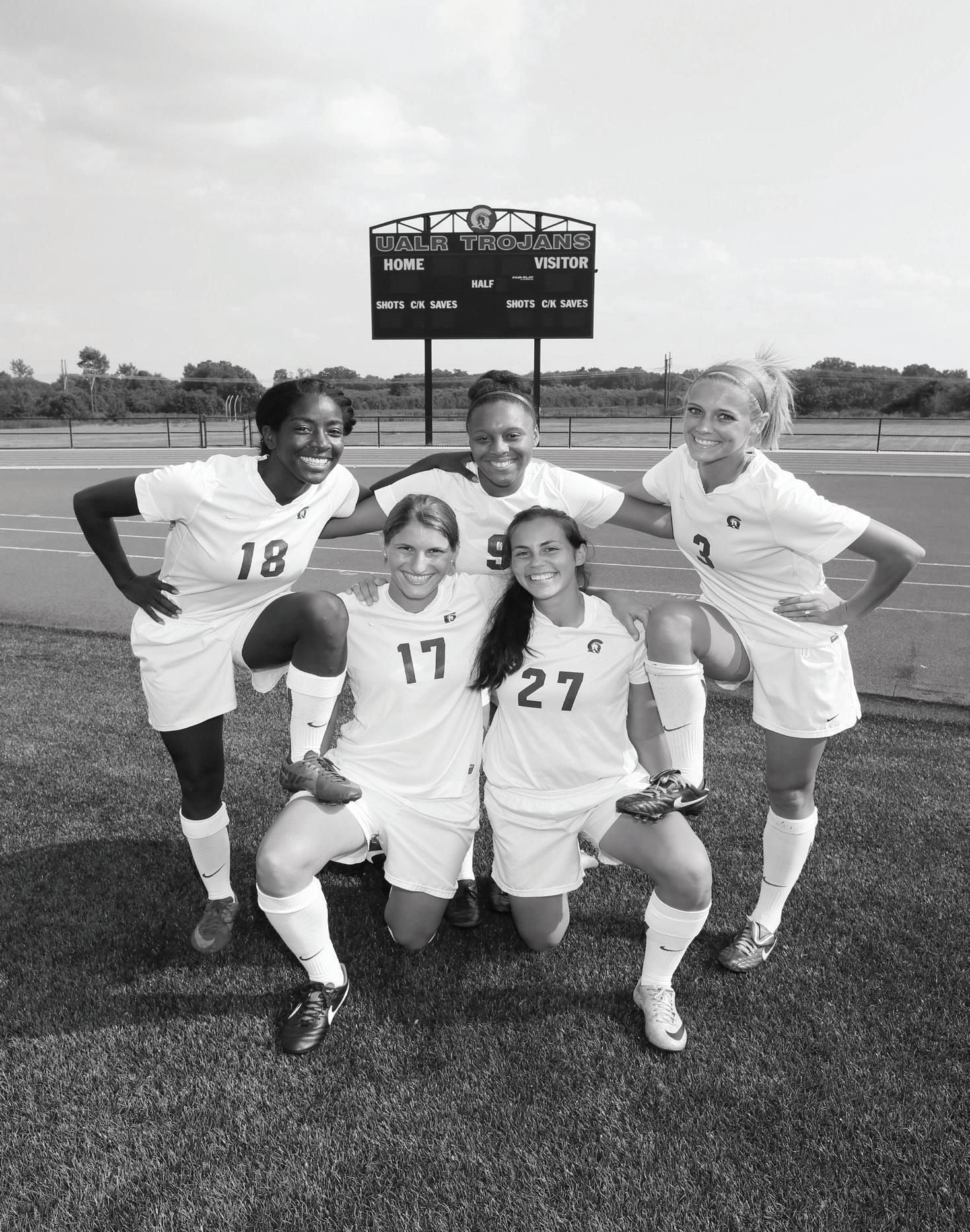




Jacob Ellerbee Executive Editor jjellerbee@ualr.edu
The UALR swimming and diving program has been steadily growing over the course of the last half-decade and this year, the program boasts one of the biggest classes ever with 10 freshman being added to the team to give UALR 19 competitors in total.
This growing team is anchored by senior Hope Myers, one of the team’s most astute and studious competitors.
Teammate Meghan Petersen, a junior who competes in the breastroke and the individual medley, said Myers is someone that brings positivity to the team.
“She is always an encouraging, happy person at practice,” Petersen said. “[She] keeps everyone smiling and working hard.”
As a captain of the team, Myers is someone the freshman can look up to.
“She is an amazing captain,” Petersen said. “She’s a good role model and leader for the team as a whole.”
Myers has the stats and the skills to demonstrate why she is one of the captains of this squad. As a freshman, she scored a pair of fourth-place finishes in the 200 and 400-yard individual medley in her first collegiate meet. In the Sun Belt Championships, she earned a lifetime best in the 200 individual medley, clocking in at 2:15.61. Her efforts were noticed by then-Sun Belt Commissioner Wright Waters, who added Myers to his “Sun Belt Conference Commissioner’s List,” reserved for student athletes who maintain a GPA of 3.5 or better.
As a sophomore, Myers received her first winner performance, earning first place in the 400 individual medley at the UALR Invitational meet. She also arguably put on one of her best performances of her career during her junior year, swimming a season-best in the 200 individual medley (2:14.89), the 200 free (1:58.64) and the 400 individual medley (4:45.59).
Now, entering her senior season, all eyes are on Myers to lead the team

and leave her mark on this growing program.
Myers, who came to UALR with her twin sister and teammate Holly, has been named a captain in her senior year and for good reason. She has 16 years of experience under her belt when it comes to swimming, but her path to a decorated career in swimming almost didn’t happen.
“[Holly and I] started out with gymnastics -- and it was before the age of 6, because that’s when we started swimming-- but we didn’t like it too much. So, our mom kind of forced us to join swimming.”
Myers quickly developed a proficient set of skills and began competing with a club team in her hometown of Purvis, Miss.
“We took recruit trips my senior year. Holly and I went on some trips to Pennsylvania and [UALR]. We wanted to get out of our hometown and state of Mississippi.”
“The facilities here were really nice and it was closer to home,” Myers said.
Myers said the six-hour drive home was a lot shorter than it would be had they chosen to go to a school in Pennsylvania, which would have totaled about two days worth of driving. Although the proximity to home was an important factor in choosing UALR, head coach Amy Burgess sealed the deal in help-
Photo By Jacob Ellerbee
ing lure Myers to the program. Myers noted that watching Burgess conduct a practice helped her realize she is the right coach and a good influence to help her achieve her goals.
“When I first met her and then talked to her, I thought ‘Wow, she’s a great person and a great coach.’”
Going into her senior season, Myers said she is more excited than ever to compete, due to the increase in number of swimmers on the team.
“I’m really excited going into the meets because now we can compete with some of these other teams we never had a chance to beat before. Even though we had good swimmers, we didn’t have the numbers there.
“One of our team goals is to kind of better our times and win a few more meets that we couldn’t [in previous seasons] because we didn’t have those numbers there, so that’s really exciting.”
Myers is expected to graduate in May and said after that, she hopes to attend graduate school. She’s still deciding if she will remain in Arkansas or return to Mississippi to attend school.
The team will have four home meets this season: Dec. 5-7 (UALR Christmas Invitational), Jan. 18 (Southern Illinois), Jan. 26 (Rice) and Jan. 31 (Vanderbilt).
C.J.
Waters
Staff Writer cwwaters@ualr.edu
After ending last season in the first round of the Women’s NIT, the Lady Trojans basketball team is preparing for the 2013-14 season with a new look.
UALR head coach Joe Foley will go into his 11th season with the team on Nov. 10 when the team will face Sam Houston State at the Jack Stephens Center.
“Well actually, our tradition has been pretty good here lately,” Coach Foley said. “We actually we would love to get into the NCAA tournament and see what goes from there. So actually we got to work hard and do a lot of things to reach that goal.”
The Lady Trojans bring back seven players from last season including starters senior guard Taylor Ford, senior forward Hannah Fohne, senior guard Nia Gregory, junior guard Taylor Gault, junior forward Kiera Clark, junior guard Ka’Nesheia Cobbins, and sophomore forwards Shanity James and Carolee Dillard.
The team only lost two players that included three-point specialist Janette Merriex, who graduated last year, and Morgan Bolton, who is currently at SMU this season. In addition, Foley and the Lady Trojans bring in six new players, which include six freshmen.
The freshmen are Antoina Robinson, Di’Mond Jackson, Kaitlyn Pratt, Keanna Keys, Lexus Williams, and Sharde Collins.
Collins had a successful season last year at Liberty-Eylau after averaging 15.8 points, 8.8 rebounds, 4.0 steals, and 3.5 assists. She was also the 72nd ranked guard in the state by ESPNW. “We think she will definitely help us quite a bit though we needed a good shooter,” Foley said about Collins.
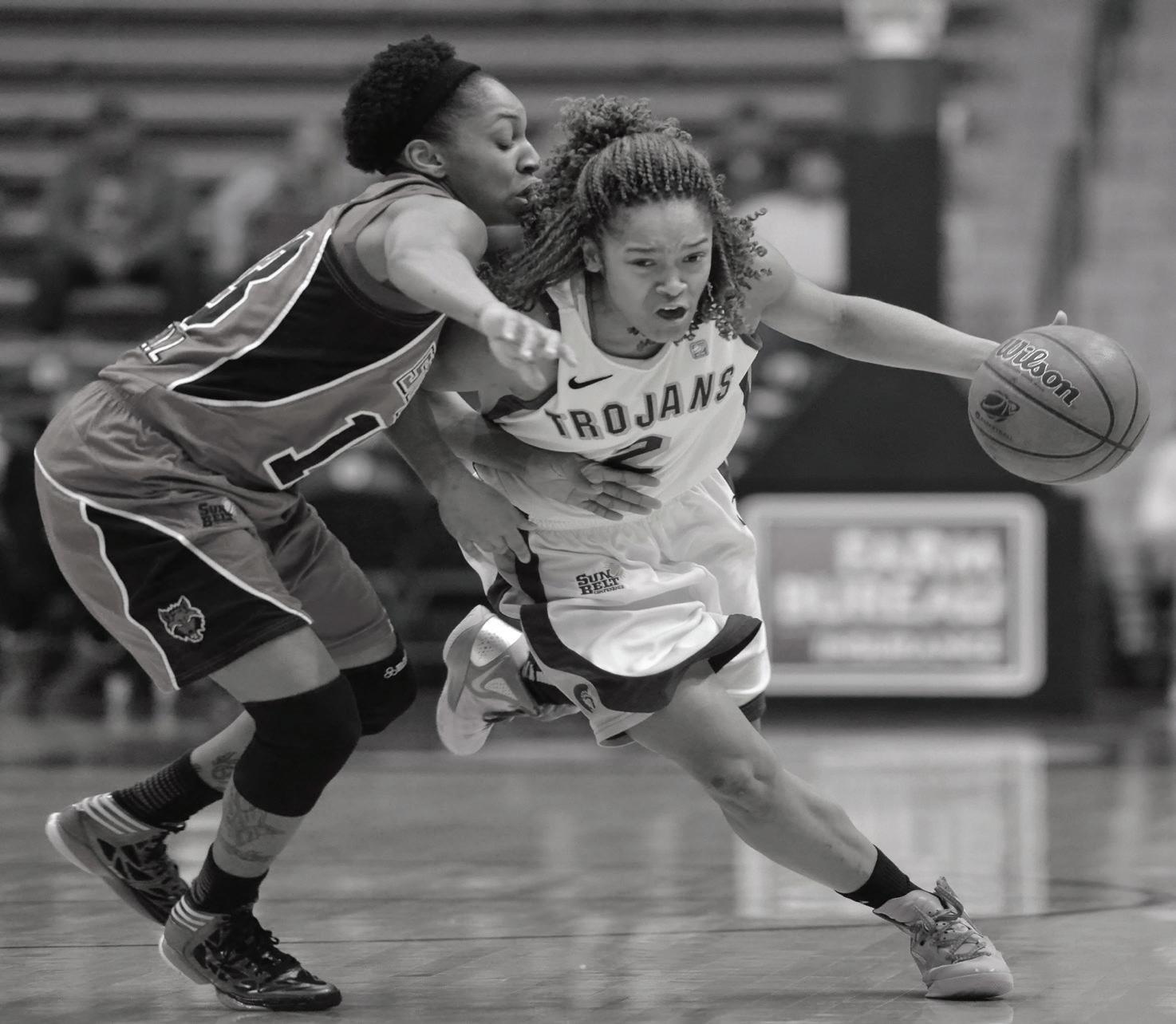
Taylor Ford averaged 9.9 points and 5.6 rebounds last season.
In addition to Collins, the Trojans also adds sophomore Lexus Williams, who transferred from SMU this season. She averaged 2.5 points per game and 2.3 rebounds in 22 games last season. Williams also competed at North Little Rock High School for all four seasons including a state championship in 2010. She will have to sit out this season due to the NCAA transfer policy.
“As a team, just to get everybody on the same page,” said Ford. “Like right now, we’re really trying to focus on getting ready to know the offense and defense.” Ford had a breakout season after
finishing with 9.9 points per game and dishing out a career-high 4.5 assists. Gault, who was Sun Belt Freshmen of the Year in 2011, returns to the team as the top scorer with 13.9 points per game from last season. She scored a careerhigh 33 points in the season opener at Tulsa last season.
UALR will begin Sun Belt Conference play on Thursday, Jan. 2 at Texas State. To see the 2013-14 Lady Trojans basketball team, the Meet the Trojans event is set for Monday, Nov. 4 at the Jack Stephens Center.
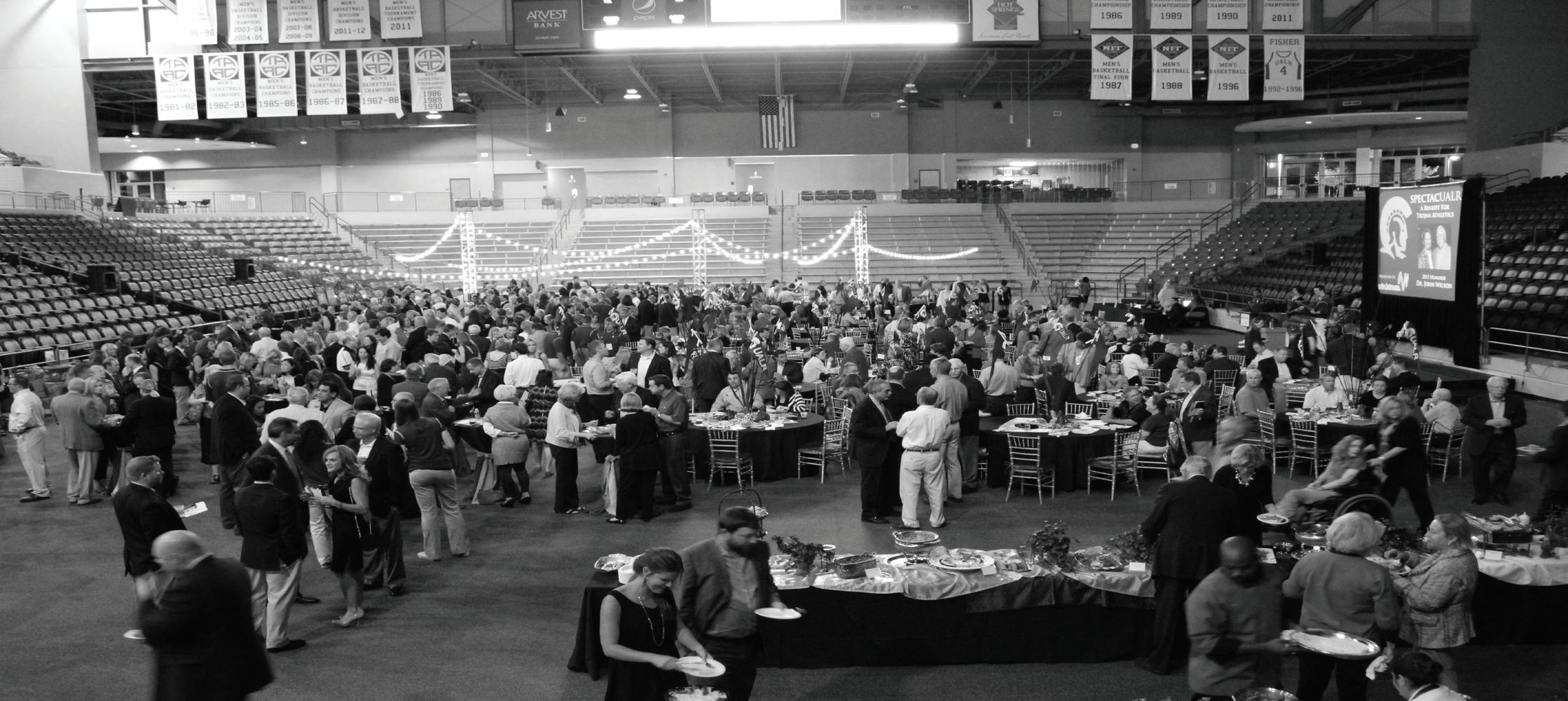
For the first and possibly last time this semester, I’m going to be a little more serious. With a topic as inconsequential as sports, I usually don’t worry about my opinion being disagreed upon. We all have our opinions about sport topics and we all have our favorite teams. Part of what makes sports great is having those ‘friendly’ arguments about what team is the best or who is the best player.
But one particular issue that has become a hot button topic recently is the name of the NFL’s Washington Redskins. Over the past few weeks, everyone from President Obama, NBC Sports analyst Bob Costas, and even the owner of the team himself, Dan Snyder, has offered their opinion on the topic. So why not throw in my two cents on the argument too?
The Washington team has existed since 1932 when they were known as the Boston Braves, before changing the name to the Boston Redskins the following year. The team has been known as the Redskins ever since.
Recently, in a heartfelt letter to Washington fans, Snyder explained the fondness and memories that he and others have for the nickname. He wrote about his experience as a child going to his first game and about the way he felt about the team’s fight song: Hail to the Redskins. I read the letter in its entirety and tried to see the issue from his and other Washington fans point of view.
Being a lifelong sports fan, I understand the emotions involved with rooting for a team that you love. Everything about them is sacred to you. But I have to say that in this instance, Snyder is totally wrong and missing the point. It is simply not about him or the rest of the Washington fans. Snyder went on in his letter to tell of the origin of the team, how it was formed with Native Americans in prominent roles on the team and that the name was made to honor them. The comparison can be made to African American symbols of service from the early part of last century, which I don’t have the time or space to get into now. But the point is, the symbols that are offensive to me today as an African American were deemed acceptable by society. But it’s not about me.
Bob Costas has been a longtime sports analyst on major network sporting events. He is a very respected in both the journalism field and sports players and fans. At halftime of the recent NFL game between Washington and Dallas, Costas spoke eloquently about the controversy surrounding the Redskins nickname. He poignantly asked what the equivalence would be if we were referring to African Americans, Hispanics, Asians, or any other ethnic group. He went on to call the name “an insult, a slur, no matter how benign the present day intent.” Again though, it’s not about Costas and what he thinks.
If you know anything about our current leader, you know that President Obama is a huge sports fan. He’s more of a basketball guy, but with this professional football team in our nation’s capital - he was asked to weigh in on the issue. He admitted that if he were the owner of the team whose nickname offended a sizable number of people, he would consider changing it. But it’s not about the leader of the Free World either.
Snyder said in his letter that extensive polling has been done to find out if Native Americans found the name offensive. The poll of 1000 Native Americans found that 90 percent did not find it offensive. Surprisingly, it’s not about them either.
The point that Snyder is missing in his own research is that there is a group left. What about the ten percent of the Native Americans polled that were offended by the name? You know what? These are the people who this is all about.
I can’t tell anyone that they should or shouldn’t be offended by the name. I’m not Native American. What I do know is, if there is a percentage that finds the name offensive then everyone else’s opinion is irrelevant. The name then becomes offensive and needs to be changed. It’s time for the apathy to end and for the pressure to build, as it appears to be. The team to root for is in every way possible the minority, even within their own. These people have to be spoken for. There’s no other side to take on this one.