
URBAN SUSTAINABILITY IN

of the Parliaments of the Commonwealth PAGES 310-318 Established in 1920 | Over 100 years of publishing 2022 | Volume 103 | Issue Four | Price £14 IN THIS ISSUE UN Habitat’s ED examines multilevel governance on urbanisation PAGE 310 From COP26 to COP27: Four climate laws passed in the Commonwealth PAGE 320 Public engagement and the work of Parliamentary Committees PAGE 334 Points of Order: the National Assembly of The Gambia in operation PAGE 337
Journal
As the global population reaches the landmark figure of 8 billion people, this issue examines how urbanisation can provide a sustainable future for the Commonwealth. Digitising the Parliamentary Journals of the Oldest Legislature in Canada PAGE 354
THE COMMONWEALTH

Calendar of Forthcoming Events
Updated as at 28 November 2022
2022
December
3 December 2022 International Day of Disabled Persons
5 to 12 December 2022 CWP Workshop on Champions for Gender Equality, Canberra, ACT, Australia
10 December 2022 UN Human Rights Day
2023
January
3 to 6 January 2023 Conference of the Speakers and Presiding Officers of the Commonwealth (CSPOC), Canberra, Australia
21 to 27 January 2023 Parliament of Seychelles - Independent Parliament Programme, Mahé, Seychelles
31 Jan to 2 Feb 2023 CPA Post-Election Seminar: Parliament of Kenya, Mombasa, Kenya
March
5 to 9 March 2023 23rd Commonwealth Law Conference 2023, Goa, India
8 March 2023 International Women's Day
11 to 15 March 2023 146th IPU Assembly, Bahrain
13 March 2023 Commonwealth Day
April
w/c 17 April 2023 Mid-Year CPA Executive Committee meeting, Gibraltar
26 to 28 April 2023 52nd CPA British Islands and Mediterranean Regional Conference, London, UK
June
30 June 2023 International Day of Parliamentarism / World Parliament Day (IPU initiative)
September
30 Sept to 6 Oct 2023 66th Commonwealth Parliamentary Conference, Accra, Ghana including 39th CPA Small Branches Conference; Commonwealth Women Parliamentarians (CWP) and Commonwealth Parliamentarians with Disabilities (CPwD) meetings; 66th CPA General Assembly; CPA Executive Committee meetings; and the 57th Society of Clerks at the Table (SoCATT) meetings.
The CPA calendar fosters the exchange of events and activities between CPA Regions and Branches. For further information on any events, please contact the CPA Branch concerned or the CPA Headquarters Secretariat via hq.sec@cpahq.org or visit www.cpahq.org. CPA Branch Secretaries are asked to send notices of all events to the CPA Headquarters in advance of the publication deadline to ensure the calendar is accurate.
ADVERTISE HERE
• Want to reach an audience of 17,000 Commonwealth Parliamentarians?
• Be one of the first to place an advert in The Parliamentarian in 2023.
For over a century, our quarterly journal has been circulated to Commonwealth Parliaments and Legislatures in print and digital formats and will give your organisation a unique platform to showcase your work to Members of Parliament and key decision makers across the Commonwealth alongside articles from global leaders and international experts.
To discuss advertising space in our upcoming publications email editor@cpahq.org

CONTENTS
THE PARLIAMENTARIAN: 2022 ISSUE FOUR
VIEWS & COMMENT
Editor’s Note
Challenges of urban sustainability in the Commonwealth Page 292

View from the Commonwealth Women Parliamentarians Chairperson
Gender dimensions of the impact of climate change Page 294
View from the CPA Secretary-General
Reflections on CPA activities in 2022 and looking ahead to 2023 Page 298
View from the CPA Chairperson
The significance of climate change in the Commonwealth Page 293
View from the Commonwealth Parliamentarians with Disabilities Chairperson
Reflecting on Commonwealth responses to climate change following COP27 in Egypt Page 296

NEWS & PHOTOS
CPA news News reports include: CPA Parliamentary Academy Residency in Western Cape
• Visit to South African Parliament and meeting with South African Provincial Legislatures


• CPA gives evidence to Australia Parliament Committee
• CPA at 145th IPU Assembly in Rwanda
• CPA Canada Regional Parliamentary Seminar in Northwest Territories
• St Helena Ministerial training
• CPwD Regional Conference in Tanzania
• Commonwealth flags raised for Gabon and Togo Pages 300-307
Commonwealth Women Parliamentarians (CWP) news Reports from CWP activities in Tanzania, New Zealand, Vanuatu, Gibraltar and Northwest Territories Pages 308-309
Commonwealth Youth Parliament news Reports from 11th Commonwealth Youth Parliament in Trinidad and Tobago as well as the CPA Secretary-General's Branch visit and school event Pages 356-357
290 | The Parliamentarian | 2022: Issue Four | 100 years of publishing
PAGES 337 & 341
PAGE 320 PAGE 334
PAGE 328
FEATURE ARTICLES
UN-Habitat’s Executive Director examines multi-level governance on urbanisation Page 310
A call to action on sustainable urbanisation across the Commonwealth Commonwealth Sustainable Cities Initiative Page 312
Urban sustainability in Uganda
A case study from Kampala Page 314
Building sustainable economies in small jurisdictions
The Speaker of Malta outlines the challenges facing CPA Small Branches Page 316
From COP26 to COP27: Four climate laws passed in the Commonwealth
The Grantham Research Institute co-author an update on domestic climate legislation Page 320
Pakistan's 'biblical' floods A wake-up call for a united response to climate disasters Page 325
Building Gender-Sensitive Parliaments and Women’s Representation
The experience of Cyprus Page 328
Building GenderSensitive Parliaments and Parliamentary Responses to the COVID-19 pandemic
The Speaker of the Gujarat Legislative Assembly Page 330
How public engagement can strengthen the work of Parliamentary Committees
Learning lessons from the experience of the Welsh Parliament Page 334
Points of Order: the National Assembly of The Gambia in operation
Using Points of Order in the Chamber Page 337
Unparliamentary Language
Points of Law arising from the Revised Standing Orders of the National Assembly of The Gambia
Page 341
The growth of the administration of the Parliament of Uganda and its impact on the separation of powers The Administration of Parliament Act Page 343
Parliaments bringing accountability to public debt
The critical role of Parliaments Page 346
Professional Parliamentary Development
The work of the Pakistan Institute for Parliamentary Services (PIPS) Page 348
The role of trade union movements in democracy
A Commonwealth history Page 352
Digitising the Parliamentary Journals of the Oldest Legislature in Canada
The Nova Scotia Legislature Page 354
PARLIAMENTARY REPORTS
Parliamentary Reports and Third Readings
Legislative reports from Canada, British Columbia, Trinidad and Tobago, United Kingdom, New Zealand and Australia
Pages 358-371
CPA DIRECTORY


CPA Organisational Structure
CPA Executive Committee, CWP and CPA Small Branches Steering Committees, CPwD Regional Champions and CPA Regional Secretaries Page 372
The Parliamentarian: Journal of the Parliaments of the Commonwealth Volume 103 | 2022: Issue Four The Parliamentarian ISSN 0031-2282
Issued and published by the Commonwealth Parliamentary Association, CPA Headquarters Secretariat, Richmond House, Houses of Parliament, London, SW1A 0AA, United Kingdom.
Tel: +44 (0) 20 7799 1460 Email: hq.sec@cpahq.org www.cpahq.org Twitter @CPA_Secretariat Facebook.com/CPAHQ
Stephen Twigg CPA Secretary-General
Mr Jeffrey Hyland Editor, The Parliamentarian editor@cpahq.org
Main images: CPA Headquarters Secretariat. Additional images: CPA Branches and Shutterstock.
Annual subscription: Four issues including supplements: UK: £44 inc. postage. | Worldwide: £46 surface post and £52 airmail
Price per issue: UK: £14 cover price plus UK or worldwide postage.
Disclaimer: Opinions and comments expressed in articles and reviews published in The Parliamentarian are those of the individual contributors and should not be attributed to the Secretariat of the Association.
Contributors: Thank you to all contributors for this issue.
Printed in: United Kingdom by Warners Midlands, PLC; and Times Printers, Singapore.
Limited print run - contact editor@cpahq.org for details of print copies for CPA Branches.
The Parliamentarian | 2022: Issue Four | 100 years of publishing | 291
CONTENTS
Creating a better future for 8 billion people
CHALLENGES OF URBAN SUSTAINABILITY IN THE COMMONWEALTH
Mr Jeffrey Hyland, Editor The Parliamentarian, Commonwealth Parliamentary AssociationThis final issue of The Parliamentarian for 2022 explores the theme of urban sustainability in the Commonwealth and many other topics.
As the global population reaches the landmark figure of 8 billion people, the UN-Habitat Executive Director, Ms Maimunah Mohd Sharif examines how multi-level governance on urbanisation is a key goal for a sustainable future. The Commonwealth Sustainable Cities Initiative outlines the recent call to action for the Commonwealth to tackle the urgent challenges of climate change and rapidly growing cities by promoting sustainable urbanisation. Hon. Laura Kanushu, MP (Uganda) provides a case study from Kampala about urban sustainability in Uganda. The Speaker of the House of Representatives at the Parliament of Malta, Hon. Angelo Farrugia, MP outlines the challenges facing CPA Small Branches in building sustainable economies in small jurisdictions.
The issue of climate change is of utmost importance in the Commonwealth. The Chairperson of the CPA Executive Committee, Hon. Ian Liddell-Grainger, MP (United Kingdom) examines the significance of climate change in the Commonwealth. The Commonwealth Women Parliamentarians (CWP) Chairperson, Hon. Dr Zainab Gimba, MP (Nigeria) in her first View article for The Parliamentarian as CWP Chair looks at the gender dimensions of the impact of climate change. In her first View article, the new Commonwealth Parliamentarians with Disabilities (CPwD) Chairperson, Hon. Laura Kanushu, MP (Uganda) also reflects on Commonwealth responses to climate change following the recent COP27 in Egypt. The Grantham Research Institute co-authors an update with CPA on domestic climate legislation in the last year from COP26 to COP27, highlighting four climate laws passed in the Commonwealth. The recent ‘biblical’ floods in Pakistan are seen as a direct impact of climate change and Ms Bisma Rahman Zafar (National Assembly of Pakistan) calls this a ‘wake-up call’ for a united response to climate disasters in her article in this issue.
The CPA Cyprus Branch submits an article looking at the building of gender-sensitive Parliaments and women’s representation drawing on the recent experience of Cyprus.

The first woman Speaker of the Gujarat Legislative Assembly, Hon. Smt Dr Nimaben Acharya, MLA spoke at the recent 65th Commonwealth Parliamentary Conference on the topics of gender equality in Legislatures and the parliamentary responses to the COVID-19 pandemic in India.
Professor Diana Stirbu (London Metropolitan University) examines how public engagement can strengthen the work of Parliamentary Committees arising from the lessons in her recent report about the Welsh Parliament.
Two articles from The Gambia examine different parliamentary procedures - Kalipha MM Mbye looks at Points of Order and how they are used in the Chamber and Alhagie M. Dumbuya examines unparliamentary language and the Points of Law arising from the Revised Standing Orders of the National Assembly of The Gambia.
Mohammed Katamba (Parliament of Uganda) writes about the growth of the administration of the Parliament of Uganda and its impact on the separation of powers. The Westminster Foundation for Democracy’s Franklin De Vrieze writes about Parliaments bringing accountability to public debt and Muhammad Rashid Mafzool Zaka considers the impact of the Pakistan Institute for Parliamentary Services (PIPS) in providing professional development for Members of Parliament.
Owen Tudor (Commonwealth Trade Union Group) writes about the role of trade union movements in democracy and looks at their history through a Commonwealth lens. This issue also features an article on digitising the Parliamentary Journals of the oldest Legislature in Canada at the Nova Scotia Legislature.
The CPA Secretary-General, Stephen Twigg in his View article for The Parliamentarian reflects on CPA activities in 2022 and looks ahead to 2023. The CPA Secretary-General recently visited Trinidad and Tobago for the 11th Commonwealth Youth Parliament (CYP) and this issue features a news report from event, the first time that the CYP has been held ‘in-person’ since 2019.
This issue of The Parliamentarian features a wide range of news and reports from CPA and Commonwealth activities as well as reports from CPwD and CWP activities. The Parliamentary Report and Third Reading section in this issue includes parliamentary and legislative news from Canada Federal; British Columbia; Trinidad and Tobago; New Zealand; the United Kingdom; and Australia Federal.
We look forward to hearing your feedback on this issue of The Parliamentarian, on the issues affecting Parliamentarians across the Commonwealth and to receiving your future contributions to this publication.
Jeffrey Hyland, Editor, The Parliamentarian editor@cpahq.org

292 | The Parliamentarian | 2022: Issue Four | 100 years of publishing EDITOR’S NOTE
THE SIGNIFICANCE OF CLIMATE CHANGE IN THE COMMONWEALTH
The future of our planet is at real risk. At long last this statement is no longer the exclusive rallying cry of committed environmentalists. It has become a sombre truth.
Almost every nation on earth is now represented at the latest round of international talks, COP27, in Egypt. These annual conferences are growing in importance and influence. Even China, not noted in the past for enthusiasm to control its own industrial pollution, has pledged to become carbon neutral by 2060.
The Chinese have sent fifty delegates to Sharm el-Sheikh in Egypt which may be an indication that the reluctant tectonic plates of world politics are beginning to move – too slowly, perhaps, but every small step is surely a sign of progress.
Some of my Parliamentary colleagues, from developing nations within our Commonwealth family, may believe that the rate of progress remains stubbornly timid. I understand that frustration.
For those from island communities directly threatened by rising sea levels and unpredictably violent weather such attitudes are understandable. The risks they face are already dangerously close to home. They may lack the economic prosperity to mitigate against climate disaster and they were not responsible for creating the pollution that has caused it.
So the outcome of talks in Egypt may look more like ‘Catch22’ than COP27. However, it is unrealistic wishful thinking to expect every nation, rich or poor, to synchronise their actions and adopt identical policies all at once.
The relentless nature of climate change may seem to demand that the world links arms and locks step. The balances of real life,
however, provide a more credible scenario.
Some of the richer nations may be able to go faster beyond today’s pledges. But the overriding importance of all climate promises must be that they will be met in full, not watered down, weasel-worded or quietly ignored.
My instinct is that world leaders now appreciate the complexity of the tasks ahead and are becoming more inclined to find practical solutions rather than convenient by-passes.
At long last the rate of climate change and the impact of public opinion is injecting an overdue dose of honesty into this vital global debate.
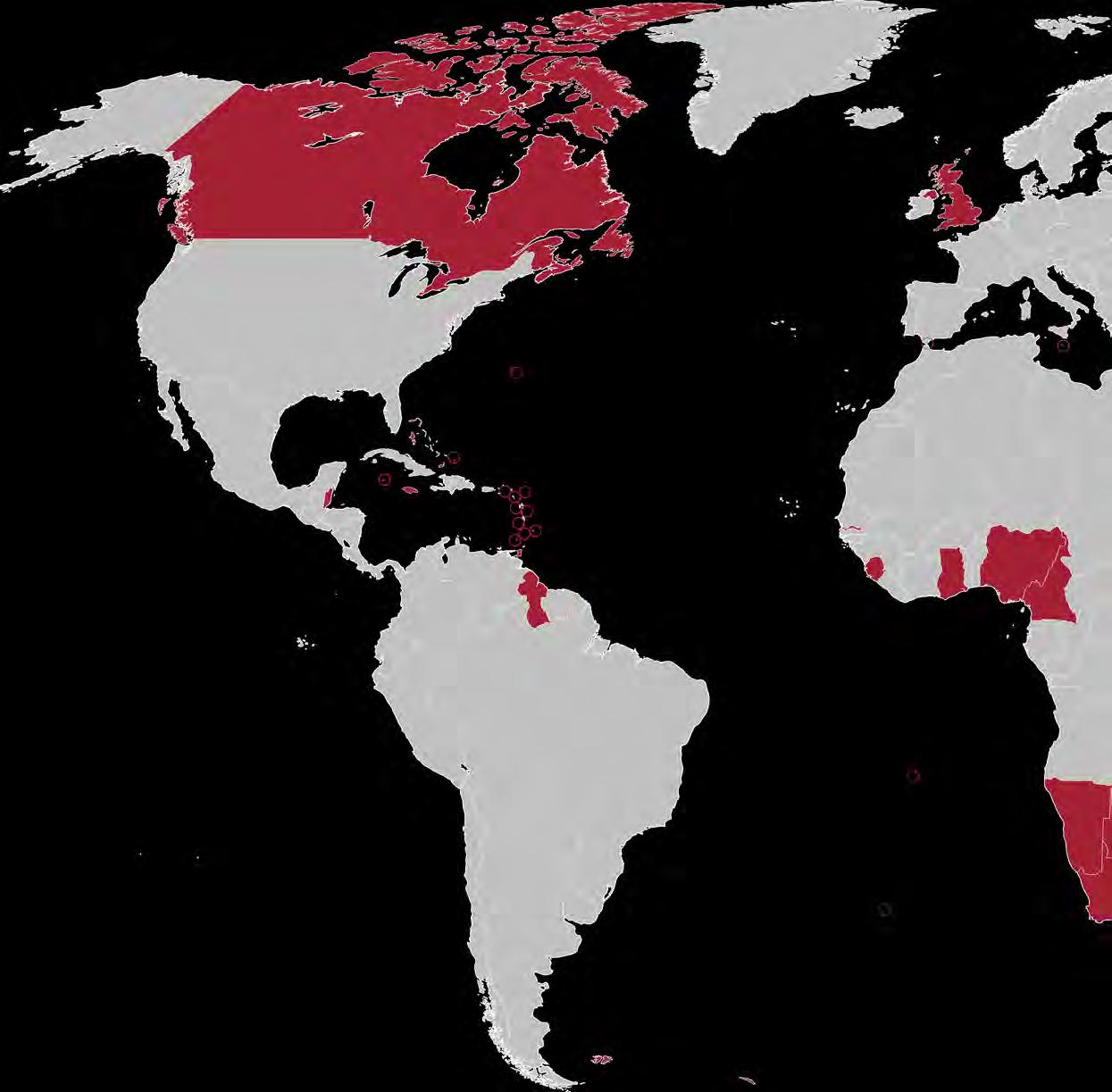
The Commonwealth has long recognised the significance of climate change and taken action to help its most vulnerable members. There are 56 Commonwealth nations of which 32 are small states (defined by the Commonwealth Secretariat as countries with a population of 1.5 million people or less), some requiring the greatest assistance.

Yet the Commonwealth family as a whole is responsible for only 15% of CO2 emissions worldwide.
We therefore have a vested interest in ensuring that actions must speak louder than words at COP27.
I believe that the role of our many different Parliaments is also vital now and in the future.
The spirit of cooperation and ethical democratic progress fostered by the network of Commonwealth Parliamentary Association Branches will be important.

There have been some signs of practical progress since the UK hosted COP26 in Glasgow last year.
Parliamentarians in Australia, The Bahamas, India and Nigeria have all pushed legislation through which will help (see article by The Grantham Institute on page 320).
But the results of such measures and the promises made at COP26 are likely to make only a marginal difference to the scale of dangerous emissions by 2030, according to the UN.
In other words, the problem is not going away, and the efforts required to tackle it are still unmatched by action.
That is why what happens at COP27 is of such importance. It must not become a climate COPOUT.
The Parliamentarian | 2022: Issue Four | 100 years of publishing | 293
VIEW FROM THE CPA CHAIRPERSON
Hon. Ian Liddell-Grainger, MP, Chairperson of the CPA Executive Committee and Member of the United Kingdom Parliament.
“The Commonwealth has long recognised the significance of climate change and taken action to help its most vulnerable members. Yet the Commonwealth family as a whole is responsible for only 15% of CO2 emissions worldwide.”
VIEW FROM THE COMMONWEALTH WOMEN PARLIAMENTARIANS
GENDER DIMENSIONS OF THE IMPACT OF CLIMATE CHANGE
Commonwealth Women Parliamentarians (CWP)
 Chairperson, Hon. Dr Zainab Gimba, MP, Member of the Federal Parliament of Nigeria
The climate change crisis presents one of the greatest challenges to the world. It has continued to remain the world's biggest issue as its impacts continue to change our world. The earth’s climate is rapidly changing, and these changes have significantly affected our lives.
The increasing demand for energy and resources due to population growth and industrialisation has stretched resources, resulting in exploitation and its attendant effects on the environment.
Climate patterns play an important role in shaping our natural ecosystems and the economies and culture that depend on them. The changes in climate affect how people, plants and animals live. Climatic conditions often have a major influence on the livelihood, health and security of the poorest people in the world. Women suffer higher risks and a greater burden from the impacts of climate change in the face of poverty as the majority of the world’s poor are women.
The discussion on climate change has often neglected the gender dimensions of its impacts. Many international protocols on climate change do not capture a gender perspective on proposals to fight climate change.
We must realise that climate change widens the existing gender inequalities and poses a unique range of threats to the livelihood, health and safety of women and girls. Without
gender analysis of the impact of climate change, we overlook an important aspect of social life in a changing climate. As the world struggles to promote sustainable environment, attention must be given to the survival needs of the most vulnerable in society.
Climate change and its direct consequences, such as floods, droughts, deforestation, land degradation, water scarcity, heat waves, storms, soil losses, farmers and herder crisis and rapid urbanisation, have adverse implications on physical infrastructure, water, energy supply and employment. All these have altered the economies of the world and its social relations. To be sure, everyone is affected by the changes, but women are disproportionately affected due to the imbalance in power relations and resources allocation, particularly in developing countries.
Climate change has serious ramifications in four dimensions of food security: food availability, food accessibility, food utilisation and food systems stability. Women constitute the significant global poor, and they rely on farming for survival in contrast to men, who enjoy economic advantage. Women farmers currently account for 45-80% of all food production in developing countries depending on the region (according to www.un.org).
About two-thirds of the female labour force in developing countries, and more than 90% in many African countries, are engaged in agricultural work. Thus, when farming comes under severe weather conditions, resulting in the loss of soil, deforestation and other social threats, women face a loss of income and their sources of livelihood and this further pushes them into poverty.
Women are often excluded from decision making on access to and the use of land and resources critical to their livelihoods. It is important therefore, that the rights of rural women are ensured in regards to food security, non-discriminatory access to resources, and equitable participation in decision making processes.
In many cases, women have limited access to information on new techniques on adaptive measures to manage the effects of climate change on their environment and farming. These also expose women to suffer more from the vagaries associated with climate change.
294 | The Parliamentarian | 2022: Issue Four | 100 years of publishing
“We must realise that climate change widens the existing gender inequalities and poses a unique range of threats to the livelihood, health and safety of women and girls. Without gender analysis of the impact of climate change, we overlook an important aspect of social life in a changing climate.”
This year, a large part of Nigeria was affected by floods where more than 1.4 million people were displaced. Women and girls were the most affected. A case in point was a local woman who was shown on the National Television carrying a knife, yam and pot in one hand, and a pot stand and tray in the other hand, looking for a dry land to cook food for her children. It was that bad that she was moving up and down inside water that covered above her knees and looking for dry land, just to feed her family.
Again, the unending crisis between farmers and herders in Nigeria, has led to the loss of many lives and destruction of crops and livestock in particular leading to a worsening food crisis. Women are usually the main victims of such a crisis and where they survive, they become widows and often the main breadwinners of the family. Many women end up becoming internally displaced persons.
Urbanisation is an important transformation that may help to reduce poverty and inequality through the creation of employment opportunities. It may also contribute to environmental sustainability through efficient use of resources, and improved social welfare through better service delivery. However, this can only be achieved through the adoption of gender-based policies and planning on the alleviation of various aspects of urban poverty.
Essentially, addressing the impact of climate change on gender, involves addressing factors that affect the welfare of
VIEW FROM THE COMMONWEALTH WOMEN PARLIAMENTARIANS
women and girls, and their human rights, as well as the resources on which their livelihoods depend. Improving climatic conditions can be an effective way to increase their income, improve their health, raise their educational standards, empower them and reduce their vulnerability to natural hazards.
Governments must demonstrate a commitment to institutional reforms and legal frameworks to ensure that more women are involved in climate-related planning, policy making and implementation.

There is the need for improved public education and enlightenments on the effects of climate change, and adequate funding for adaptation strategies, as well as information relating to agricultural management, especially among the rural population.
The key element is to build the capacity of women and girls to be able to contribute to the discussions on climate change and the decision-making process directed at addressing this scourge. Capacity development requires a commitment to positive attitudinal change, training on adaptive measures and greater involvement in policy dialogue and institutional reforms.
As Parliamentarians, we have an essential role to play in ensuring that efforts aimed at combating climate change include a gender perspective through the relevant legislative instruments.
The Parliamentarian | 2022: Issue Four | 100 years of publishing | 295
PARLIAMENTARIANS WITH DISABILITIES

REFLECTING ON COMMONWEALTH RESPONSES TO CLIMATE CHANGE FOLLOWING COP27 IN EGYPT
A View from Uganda
Introduction
Climate change poses a significant threat to global prosperity and sustainable development. The climate emergency now affects all regions of the globe and rapidly continues to escalate. Recent reports by the IPCC (Intergovernmental Panel on Climate Change) indicate that the goal of limiting global warming to 1.5 degrees Celsius, will be unattainable without immediate reductions in greenhouse gas (GHGs) emissions.

Developing countries, particularly in Africa, need effective tools and frameworks to address and influence the climate change agenda at both the national and global level now more than ever. In this regard, Members of Parliament are better placed to promote the views of the citizens during international negotiations and ensuring mitigation responses both at the national and constituency level.1
This, therefore, places Parliaments at the center of climate change response. Parliaments have the opportunity to scrutinise government in national and international climate change related matters and can hold them to account for their actions.2 The vital role that accountability mechanisms in national environmental legislation, formulated to address trans-boundary environmental challenges, is widely acknowledged. For instance, UNEP notes that to achieve sustainable development objectives through proper environmental governance requires that decision makers are held accountable for actions contrary to the set objectives.3
Role of Commonwealth Parliaments in the Climate Change Response
The recent UN’s 27th annual Conference of the Parties (COP27) summit theme was ‘implementation’. It aimed to shift the focus from negotiations and planning to action on the ground, where it is most needed. It wanted to ramp up adaptation to climate change impacts, in parallel with emission reductions. It also hoped to highlight both Africa’s need for immediate climate action and its role in facilitating and mobilising action at scale. So what is the role of Commonwealth Parliaments?
Putting in place a legal framework is the first step towards enabling the establishment of lasting climate change goals which is an important factor in implementing global agreements like the Paris Agreement. National laws and international agreements are mutually reinforcing. For example, for international laws on climate change such as the Paris Agreement to be legally enforceable, they must be domesticated in the national legislation, have appropriate budget allocations and a strong oversight of government conduct. An appropriate legal framework not only aids the domestication of these agreements, but also provides a basis for comparability across countries. It is critical for any country to establish climate change framework laws that require accountability for the implementation of the core responsibilities within the laws to avoid a mismatch between the intentions and actions.4
Furthermore, post-legislative scrutiny by Parliaments is an effective process for assessing the effectiveness of legislation.5 Therefore, Parliaments through their legislative, representation and oversight roles can hold governments accountable for their actions or lack thereof towards climate change related matters. Parliaments should provide oversight to ensure that laws passed are implemented and the citizens actively involved in the decision-making process. Addressing climate change is a complex and challenging task, but Parliaments and Parliamentarians are well-positioned to take action and to deliver much-needed, long-term results.
Parliamentarians have a good platform to undertake the above mandates and to support inclusive, sustainable development that addresses climate change through their:6
296 | The Parliamentarian | 2022: Issue Four | 100 years of publishing
FROM
COMMONWEALTH
VIEW
THE
Commonwealth Parliamentarians with Disabilities (CPwD) Chairperson, Hon. Laura Kanushu, MP, Parliament of Uganda
“Therefore, Parliaments through their legislative, representation and oversight roles can hold governments accountable for their actions or lack thereof towards climate change related matters. Parliaments should provide oversight to ensure that laws passed are implemented and the citizens actively involved in the decision-making process.”
a) Legislative Role: Parliaments should establish appropriate laws on environmental management and climate change to give direction for sustainable development. Such laws should provide the foundation for establishing the rights and demands of the different stakeholders in a country.
b) Oversight Role: Parliaments have the mandate to hold governments accountable for their actions such as the implementation of laws, policies and provision of funding in response to climate change. Parliaments can achieve this through conducting public hearings and requiring public officials to testify before Parliamentary Committees. Also, Parliaments scrutinise the expenditure and revenue budget proposals by the central Government and provide oversight roles during the implementation of government projects and programs.
c) Representation: Parliamentarians as the representatives of the people should voice the concerns of the citizens to the relevant government agencies. This can only happen if there is an active involvement of the population including the civil society advocacy groups and the vulnerable groups to ensure that government decisions reflect the views of all stakeholders.
d) Budgeting7: Parliaments play an important role in the allocation of public resources for climate actions through the scrutiny, amendment, approval and oversight of the national budget. Most importantly, budgets should be gender responsive to address gender inequalities. An important reason for scrutinising the budget from a climate change perspective is that it can reflect how government expenditure promotes the achievement of international climate change commitments and the necessary steps to achieve the set goals.
Climate Change Efforts by the Parliament of Uganda
a) First and foremost, the Parliament of Uganda established a legal framework that promotes mitigation and adaptation to climate change by enacting the National Climate Change Act, 2021 to provide for climate change response measures. This law also forms the basis for Parliament to hold government to account in their performance in relation to climate change commitments.
b) Furthermore, a Climate Change Committee was created in Parliament in 2019 which was instrumental in the passing of the Climate Change Act (2021). This Committee is responsible for scrutinising all Bills and policies relating to climate change, oversees all Parliamentary activities relating to climate change, makes recommendations on legal and regulatory frameworks relating to climate change, carries out oversight mandates on the implementation of climate change-related government projects and programs among others.
c) Parliament, through the Environment and Natural Resources Committee and the Budget Committee, have constantly lobbied for adequate financing of climate change interventions including mainstreaming interventions into the National Development Plans and budgets.
d) Parliament holds the different government agencies accountable on what progress they have made with the various climate change funds allocated to these agencies both by the government and the development partners. Where necessary Parliamentarians make oversight visits to the sites where government projects to address climate change are located.
VIEW FROM THE COMMONWEALTH PARLIAMENTARIANS WITH DISABILITIES
e) There is increasing demand in Parliament for a requirement that relevant Government departments present a certificate on climate change actions in their development plans, budget framework papers and Ministerial policy statements before they are approved. This development is being spear-headed by the Climate Change Committee of Parliament.
f) During the Prime Minister’s Question Time, Parliamentarians question the Prime Minister on the efforts and progress the Government has made in regard to combating climate change.
g) In some cases, Parliamentary Select Committees have been constituted to address issues of environmental degradation such as sand mining in Lwera, pollution of the shores of Lake Victoria, deforestation; all of which have an impact on the fight against climate change. These Select Committees scrutinise relevant policies and hold government to account. The Select Committees present their report with recommendations to Government and the Government must respond within a specific period.
Going Forward
It is important for Parliaments to provide for post-legislative scrutiny which addresses issues of compliance with specific roles and responsibilities in the climate change laws and policies. This should also include assessing the effectiveness of the relevant legislation and specifying the actions that the Parliament should take after the scrutiny.
Providing for stakeholder engagement in pre-legislative and post-legislative scrutiny. Parliaments should promote an enhanced flow of information to all stakeholders to aid their oversight and scrutiny of government laws, policies and actions.
Parliaments should provide for sanctions for non-compliance. This is possible if the legal framework clearly specifies the sanctions and actions to be taken in case of failure to comply. Global agreements and commitments are of little value if they are not enforced nationally.
Parliaments should consider introducing specific provisions related to court proceedings and dispute resolutions such as providing for tribunals in their climate change laws.
Parliaments should also consider trust-based accountability systems in collaboration with sanctions-based approaches.
References:
1 Iied, 2010. The Role of Parliamentarians in Strengthening the Climate Change Agenda: Malawi Report. https://pubs.iied.org
2 IPU, 2016. Parliamentary Action Plan on Climate Change
3 Higham C, Averchenkova A, Setzer J and Koehl A. 2021. Accountability
Mechanisms in Climate Change Framework Laws, London: Grantham Research Institute on Climate Change and the Environment and Centre for Climate Change Economics and Policy, London School of Economics and Political Science.
4 Ibid.
5 Ibid.
6 Agora, 2022. Parliaments, Environment and Climate Change. https://agora-parl. org/resources/
7 WFD, 2021. Parliaments and the Paris Agreement. https://www.wfd.org/what-wedo/resources/parliaments-and-paris-agreement
The Parliamentarian | 2022: Issue Four | 100 years of publishing | 297
VIEW FROM THE CPA SECRETARY-GENERAL
REFLECTIONS ON CPA ACTIVITIES IN 2022 AND LOOKING AHEAD TO 2023

In November 2022, I was delighted to attend the 11th Commonwealth Youth Parliament (CYP) hosted by the Parliament of Trinidad and Tobago. CYP is a vital strand of the CPA’s work and reflects the importance of youth engagement as set out in our current Strategic Plan. You can read the report from CYP as well as my visit to the CPA Trinidad and Tobago Branch on pages 356-357.
In the CPA Headquarters Secretariat, we are exploring ways of strengthening our work in this area across three key themes:
• Direct engagement with young people by the CPA. The Commonwealth Youth Parliament is the flagship example of our work on this theme.
• Support for young Parliamentarians.
• Assisting and enabling our member Parliaments and Legislatures to engage fully and effectively with young people.
At the Commonwealth Heads of Government Meeting (CHOGM) in Kigali in June 2022, it was agreed 2023 will be ‘a year dedicated to youth-led action for sustainable and inclusive development’. The CHOGM Communique called on stakeholders to ‘renew and strengthen their commitment to youth engagement and empowerment’ and went on to welcome the commitment by Pakistan to host the next Commonwealth Youth Ministerial Meeting in Islamabad in January 2023.
A lot has been written about the impact of the COVID-19 pandemic on children and young people, including the loss of learning arising from school closures and the effects on children and young people’s mental health and well-being. These effects have been felt globally but the greatest impact has often been on those already facing the gravest challenges of exclusion and inequality.
Addressing these issues lies at the heart of the UN’s Sustainable Development Goals (SDGs). At the CPA, we are determined to assist our Members to do all they can to work on the SDGs including holding their governments to account to deliver national commitments to achieve the Goals. As part of this work, we will be launching a new course as part of the CPA Parliamentary Academy in 2023.
The CPA Parliamentary Academy was launched in 2021 providing a wide range of online courses tailored to the needs of Parliamentarians and parliamentary staff. As part of the Academy’s work, there are two residencies per year, and it was a pleasure to attend them both in 2022 – in Sydney, Australia in May and in Cape Town, South Africa in October.
Whilst I was in Cape Town for the CPA Parliamentary Academy Residency, I took the opportunity to have a number of other meetings. I visited the Parliament of the Republic of South Africa and met with the CPA South Africa Branch Secretary and Secretary to the National Council of the Provinces, Advocate Modibedi Phindela. Additionally, I met with Speakers from the Provincial Legislatures of South Africa. At both meetings we had an excellent discussion about the CPA’s priorities going forward including on the crucial issue of the CPA’s legal status. You can read about my visit to South Africa on page 300.
The question of the CPA’s Status has been under active consideration for at least the past three decades. I am determined to resolve this issue during my tenure as CPA Secretary-General. We had an excellent discussion on this in Halifax, Canada, at the 65th Commonwealth Parliamentary Conference (CPC) in August of this year. Since then, I have been working with colleagues in the CPA Headquarters Secretariat to implement the decisions made at the 65th CPC. The Governance Working Group met in November, and I was able to update them on progress including renewed efforts to persuade the UK Government to introduce primary legislation. Alongside this, we discussed potential benchmarks/criteria for a new host were the CPA Headquarters to decide to seek relocation outside the United Kingdom. Ultimately, any decision about Status/relocation will be a matter for the CPA General Assembly.
Working Group members agreed that an important consideration, were relocation to be pursued, is the rights and expertise of our existing staff. I am maintaining regular contact with staff and their representatives to ensure that their voices are heard. The Working Group will meet again in December 2022 ahead of a planned virtual CPA Executive Committee meeting in January 2023.
2023 will be an important year for the CPA both on the issue of our Status and as we continue to implement our Strategic Plan. Now that Gabon and Togo have joined the Commonwealth, I hope they will apply soon to join the CPA. We look forward to our Mid-Year CPA Executive Committee meeting in Gibraltar and our 66th CPC in Ghana. In 2023, we will be implementing the decisions made at the 65th CPC to ensure greater representation of women Parliamentarians both at the CPA General Assembly and on the CPA Executive Committee.
Tackling climate change will remain a priority area for the CPA, both in our general work and in the work of our CPA Small
298 | The Parliamentarian | 2022: Issue Four | 100 years of publishing
The Secretary-General of the Commonwealth Parliamentary Association, Stephen Twigg
CPA PHOTO GALLERY
Right: The Secretary-General of the Commonwealth Parliamentary Association, Stephen Twigg met with four Parliamentary Clerks from the CPA Africa Region as part of a visit to the UK Parliament through the Society-of-Clerks-at-theTable (SOCATT) Africa Region. Discussions focused on areas for collaboration and support for Clerks and parliamentary staff in the region. The Parliamentary Clerks were: Hon. Paran Umar Tarawally, Clerk of the Parliament of Sierra Leone; Julius Kampamba, Deputy Principal Clerk at the National Assembly of Zambia; Rana K. Tiampati, Head of Table Office at the Parliament of Kenya; and Mapitja Joseph Machaka, Secretary of the Free State Provincial Legislature, South Africa. During their visit to the UK Parliament, the SoCATT Africa representatives also met with the Clerk of the UK House of Commons; the Parliamentary Digital team; the CPA UK Branch; and the Inter-Parliamentary Relations Office.
Right: The CPA Secretary-General, Stephen Twigg met with his counterpart, Rt Hon. Patricia Scotland, KC, the Commonwealth Secretary-General to discuss ongoing collaboration with the Commonwealth Secretariat to support Commonwealth Parliamentarians and to promote the rule of law and the separation of powers.

Left: The Secretary-General of the Commonwealth Parliamentary Association, Stephen Twigg met with the South African High Commissioner to the UK, His Excellency Jeremiah Nyamane Mamabolo. The meeting followed a successful visit to Cape Town to host the recent CPA Parliamentary Academy Residency programme and continued dialogue on close collaboration between the CPA and South Africa to support Parliamentarians and Parliaments.


Right: The CPA Secretary-General, Stephen Twigg met with a Member of the New South Wales Legislative Assembly, Hon. Jihad Dib, MP, Shadow Minister for Emergency Services, Energy and Climate Change at the CPA Headquarters. The CPA New South Wales Branch recently hosted the first CPA Parliamentary Academy Residency Programme and will host the 67th Commonwealth Parliamentary Conference in 2024.

Branches network. Our Chairperson, Hon. Ian Liddell-Grainger, MP has written powerfully about this in his View column in this issue of The Parliamentarian reflecting on COP27.
One of the themes which featured in the consultation on our Strategic Plan was the importance of work on human rights. CPA’s Human Rights Working Group, chaired by Hon. Akierra Missick, MP of the Turks and Caicos Islands, has done some great work exploring the scope for the CPA to do more in this area. Its recommendations were agreed by the CPA Executive Committee in August 2022. One of these is for us to develop a human rights course as part of the CPA Parliamentary Academy. This will be developed and launched in 2023. The aim is to share best practice from a range of CPA Regions, and we will work with Commonwealth human rights organisations including the Commonwealth Human Rights Initiative (CHRI).
In Cape Town, I had a meeting with Steve Letsike of the Commonwealth Equality Network (TCEN) and representatives of the Kaleidoscope Trust in which we discussed the importance of CPA’s work on human rights and ways in which we can work together to support Parliaments and Parliamentarians in carrying out their human rights responsibilities. This will include an opportunity for TCEN to contribute to the CPA Parliamentary Academy’s new course on human rights.
I am proud that our Strategic Plan has disability as one of its
priority cross-cutting themes. The Commonwealth Parliamentarians with Disabilities (CPwD) network is the newest of our three networks. Its Capital Investment Fund (CIF) is making a real difference. Recently, I was looking at the report from the Parliament of Jamaica about how they have used their CIF funding very effectively to address barriers faced by persons with disabilities. It was also a pleasure to meet virtually with the Speaker of the Parliament of Jamaica and our Chairperson to discuss a range of issues.
In November, CPA’s Africa Region held its second CPwD Regional Conference hosted by the National Assembly of Tanzania. I will continue working closely with the network so that we can truly ensure that disability inclusion is at the heart of CPA’s work.
As this is the final edition of The Parliamentarian of 2022, may I take this opportunity to thank everyone with whom I have worked this year. With the lifting of travel restrictions, it has been wonderful to visit a range of our Branches and Regions. For me, this has included opportunities to return to countries that I had visited before joining the CPA, including South Africa and Rwanda, but also the opportunity to visit countries I had not previously visited including India, Pakistan, Sierra Leone, Australia, Trinidad & Tobago and Canada. My thanks to the hardworking staff both in CPA HQ and in our CPA Branches and Regions who ensure that such visits are successful.
The Parliamentarian | 2022: Issue Four | 100 years of publishing | 299
VIEW FROM THE CPA SECRETARY-GENERAL
Image credits: CPA Headquarters Secretariat.
COMMONWEALTH PARLIAMENTARIANS ENHANCE THEIR PROFESSIONAL DEVELOPMENT SKILLS AT SECOND CPA PARLIAMENTARY ACADEMY RESIDENCY PROGRAMME IN SOUTH AFRICA

Twenty-eight Commonwealth Parliamentarians from across the CPA’s membership attended the inaugural Advanced Professional Development and Skills-Building Residency Course in Cape Town, South Africa from 24 to 28 October 2022. This CPA programme is the second CPA Parliamentary Academy residency programmes held in 2022 and it examined how Members of Parliament can enhance their soft skills on topics ranging from leadership and strategic thinking to communications and team management.
Over five days, the delegates developed universal skills that are applicable both in Parliaments and in many different spheres. Delegates were mentored throughout the programme by current and former Parliamentarians and Clerks from across the CPA’s membership including Speakers and Presiding Officers from Western Cape, KwaZulu-Natal and Alberta as well as experts in professional development.


One participant Hon. Brainax Kaise, MP (Parliament of Malawi) said: “The CPA Residency programme is the catalyst for change in how we deal with issues in our daily lives and in Parliament.” Hon. Kedibone Lebea, MPL (Provincial Legislature of Limpopo) said: “The course has re-energised my determination, commitment and selflessness to the people of Limpopo … thank you CPA." Hon. Letti Matlhodi Maseko, MPP (Provincial Parliament of Western Cape) said: "This was a fantastic residency programme. I have gained a lot from the facilitators and from fellow global colleagues."
The programme was co-hosted by the CPA Headquarters Secretariat and the Western Cape Provincial Parliament and delegates attended from: Belize; Gambia; Gauteng; Ghana; Jersey; Limpopo; Malawi; New South Wales; Pakistan; Queensland; Sri Lanka; Western Australia; Western Cape; and Zambia.
Delegates were welcomed to Cape Town by the Speaker of the Western Cape Provincial Parliament, Hon. Masizole Mnqasela, MPP; the Deputy Speaker, Hon. Beverley Schafer, MPP; and the CPA Secretary-General, Stephen Twigg who said: “It is a great pleasure to be hosted by the CPA Western Cape Branch for the second CPA Parliamentary Academy Residency Programme. I thank the Hon. Speaker and Deputy Speaker for their time during the programme and I would like to thank the parliamentary staff of Western Cape who have pulled this all together so well. It is brilliant to see so many CPA Members from across the Commonwealth participate in this Residency programme, and I look forward to being further involved in the discussions we have had and the outcomes we can take forward from this opportunity for mutual learning.”
The CPA programme provides an extension of the CPA Parliamentary Academy, the CPA’s portfolio of online courses, training and resources specifically for Parliamentarians and parliamentary officials. The residency courses are intended to complement the online courses, providing face-to-face interactive learning and knowledge-sharing at a more advanced level. The first residency programme was co-hosted by the CPA Headquarters Secretariat and the New South Wales Parliament in Sydney, Australia in May 2022.
300 | The Parliamentarian | 2022: Issue Four | 100 years of publishing CPA NEWS
For the latest CPA and Commonwealth news please visit www.cpahq.org or follow the CPA on social mediaTwitter @CPA_Secretariat | Facebook.com/CPAHQ | LinkedIn | Instagram @cpa_secretariat
Images: Provincial Parliament of Western Cape
Images: Provincial Parliament of Western Cape
CPA SECRETARY-GENERAL VISITS PARLIAMENT OF SOUTH AFRICA AND ENGAGES WITH SOUTH AFRICAN PROVINCIAL LEGISLATURES


During a visit to Cape Town, the CPA Secretary-General, Stephen Twigg met with the CPA South Africa Branch Secretary and Secretary to the National Council of the Provinces, Advocate Modibedi Phindela at the Parliament of the Republic of South Africa. At a meeting held at the Parliament buildings, they discussed the CPA’s support for Members of Parliament in South Africa and the CPA South Africa Branch’s ongoing engagement through the CPA Africa Region and the wider Association. The CPA Secretary-General was accompanied by Emily Davies, Head of Strategy and Engagement and Zothile Zondi, Programmes Officer (seconded to CPA Headquarters from the South Africa Parliament).

KwaZulu-Natal, Mpumalanga, Northern Cape and Western Cape. Members discussed the issue of the CPA’s legal status, unique representation for sub-national Legislatures in the CPA’s membership and the ongoing professional development support for Members of Parliament through CPA programmes.

In South Africa, the CPA Secretary-General also met with
SPEAKER OF CANADA’S HOUSE OF COMMONS MEETS WITH CPA DEPUTY SECRETARY-GENERAL DURING UK BILATERAL VISIT
The Deputy Secretary-General of the Commonwealth Parliamentary Association, Jarvis Matiya met with the Speaker of the Canadian House of Commons, Hon. Anthony Rota, MP as part of a visit to the UK Parliament. Discussions focused on areas for continued collaboration and various strands of CPA’s work including the status of the Association and the review of modalities for organising and hosting the Commonwealth Parliamentary Conference (CPC). The CPA Canada Region recently hosted the 65th CPC in Halifax, Canada. The Speaker-led delegation included Hon. Carol Hughes, MP; Hon. Sukh Dhaliwal, MP; Hon. Kelly McCauley, MP; and Hon. MarieHélène Gaudreau, MP.
During their visit to the UK Parliament, the Canadian delegation met with the Speaker of the UK House of Commons, Rt Hon. Sir Lindsay Hoyle, MP; the Lord Speaker, Rt Hon. Lord McFall of Alcluith; the CPA UK Branch Chairperson, Rt Hon. Dame Maria Miller, MP; the Parliamentary Chamber and Security teams; as well as attending the opening of the Constituency Garden of Remembrance.
MAHARASHTRA DELEGATION VISIT UK PARLIAMENT
The Chairperson of the Commonwealth Parliamentary Association, Hon. Ian LiddellGrainger, MP and the CPA Deputy Secretary-General, Jarvis Matiya, met with the Speaker of the Maharashtra Legislative Assembly, Hon. Shri Rahul Suresh Narwekar and a delegation of MPs and parliamentary staff. Discussion focused on the CPA’s support for Parliamentarians through the CPA Parliamentary Academy and professional development programmes and the CPA’s work in the wider CPA India Region. The Speaker-led delegation from the Indian state of Maharashtra were on a study-visit to the UK Parliament which also included bilateral meetings with the Speaker and UK MPs.

The Parliamentarian | 2022: Issue Four | 100 years of publishing | 301 CPA NEWS
The CPA Secretary-General also held a meeting in Cape Town with six of the nine Speakers and Presiding Officers from the South African Provincial Legislatures in the margins of the CPA Residency programme. The CPA Branches represented included Eastern Cape, Gauteng,
representatives Ms Phyll Opoku and Steve Letsike from The Commonwealth Equality Network to discuss opportunities to collaborate on human rights and equality in the Commonwealth.
Image credits: CPA Headquarters Secretariat.
CPA GIVES EVIDENCE TO AUSTRALIAN CODES OF CONDUCT COMMITTEE
The Commonwealth Parliamentary Association (CPA) has provided oral and written evidence to the Parliament of Australia’s Joint Select Committee on Parliamentary Standards. The Committee is conducting an inquiry into the development of codes of conduct for the Parliament of Australia. At a public hearing on 29 September 2022, the CPA’s Head of Programmes, Matthew Salik, gave evidence to the Committee and answered questions on the CPA’s experience in the field of parliamentary codes of conduct, ethics and standards. He noted the CPA’s previous work in developing benchmarks for codes of conduct and supporting Parliaments in this field, providing evidence on the importance of comprehensive ethics training for Members and staff and the need to be forward-thinking, not reactive, when developing codes of conduct.
The CPA’s written submission to the Committee provided further insight into key principles and standards that should be incorporated into parliamentary codes of conduct. The submission referenced several CPA publications which have been produced to support Commonwealth Parliaments to establish, update and uphold codes of conduct and the highest ethical standards of governance. The submission also included codes of conduct benchmarking case studies from Ghana, Kenya, South Africa and the United Kingdom. The submission concluded: “Whatever the content of the codes, there are key principles and elements that should be included as a minimum standard. These minimum standards have been developed by the CPA and highlighted in this submission. Finally, the CPA would wish to emphasise that, as part of its deliberations, the Committee looks to many of its international and domestic parliamentary counterparts in identifying examples of good practice.”
The Joint Select Committee on Parliamentary Standards for the 47th Parliament of Australia was established in July 2022 “to inquire into and report on matters relating to the development of codes of conduct for Commonwealth (of Australia) parliamentary workplaces.” The Committee has been tasked with developing codes of conduct to ensure safe and respectful behaviour in parliamentary workplaces and recommending options for enforcing and reviewing the codes.
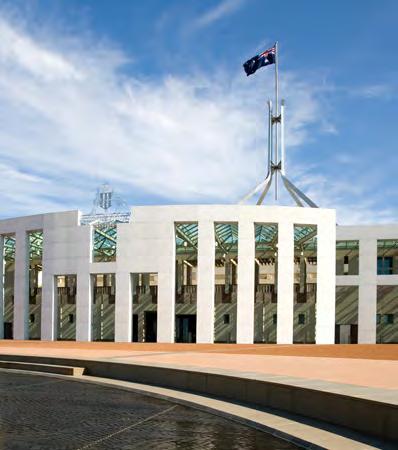
The CPA’s submission was given alongside a number of other organisations including the Office of the Parliamentary Commissioner for Standards UK; the Australian Services Union; Parliamentary Service at the New Zealand Parliament; Transparency International Australia; Governance Institute of Australia; The Global Institute for Women's Leadership.
COMMONWEALTH PARLIAMENTARIANS HIGHLIGHT GENDER EQUALITY FOR PARLIAMENTS AT 145th IPU ASSEMBLY IN RWANDA

Commonwealth Parliamentarians attended the 145th Inter-Parliamentary Union (IPU) Assembly in Kigali, Rwanda from 11 to 15 October 2022. The IPU Assembly began with a session on gender equality and gender sensitive Parliaments as drivers for a more resilient and peaceful world.
The CPA Vice-Chairperson, Hon. Osei Kyei-Mensah-Bonsu, MP (Ghana) spoke during the Assembly about the work of the Commonwealth Women Parliamentarians (CWP) network, which places emphasis on gender equality and supports member Parliaments and Legislatures to be more gender sensitive and inclusive. The CPA Vice-Chairperson also outlined recent amendments to the CPA Constitution ensuring equal gender representation in the Association’s governance and its General Assembly.
During the IPU Assembly, the Parliament of Rwanda was commended for being the world’s first country with a female majority in Parliament. The Speaker of the Chamber of Deputies at the Parliament of Rwanda, Hon. Donatille Mukabalisa said "In Rwanda, promoting gender equality and women in leadership is a constitutional imperative."

The CPA President, Rt Hon. Alban Bagbin, MP, Speaker of the Parliament of Ghana and the Deputy Secretary-General of the Commonwealth Parliamentary Association (CPA), Jarvis Matiya also attended the IPU Assembly to meet with Speakers and Members during the week.
For the latest CPA and Commonwealth news please visit www.cpahq.org or follow the CPA on social mediaTwitter @CPA_Secretariat | Facebook.com/CPAHQ | LinkedIn | Instagram @cpa_secretariat
302 | The Parliamentarian | 2022: Issue Four | 100 years of publishing CPA NEWS
CPA NEW SOUTH WALES MEMBERS AND PARLIAMENTARY STAFF PARTICIPATE IN ELECTORAL OBSERVATION WORKSHOP
A group of 10 Members of the New South Wales Parliament, six parliamentary staff and one former Member, have participated in a workshop on ‘Electoral Observation’. Under the auspices of the Commonwealth Parliamentary Association New South Wales Branch, the Australian Electoral Commission arranged for BRIDGE facilitators to conduct a BRIDGE workshop on electoral observation the New South Wales Parliament.
The idea for the training came from former Member and former Chair of the Commonwealth Women Parliamentarians (CWP) Australia Region, Hon. Catherine Cusack. Returning from a CWP meeting at which Members had identified electoral observation as a way to ‘give back’ and continue to promote democracy post-politics, Ms Cusack asked the New South Wales Branch of the CPA to investigate training options. The Branch reached out to the Australian Electoral Commission (AEC) who kindly facilitated the workshop.
BRIDGE stands for Building Resources in Democracy, Governance and Elections and it is a modular professional development program with a particular focus on electoral processes. It is a program used around the world as part of broader capacity building framework to enhance the professional skills and confidence of electoral administrators and stakeholders in the electoral process. The AEC is one of five BRIDGE Partners who provide leadership and oversight of BRIDGE. The other BRIDGE Partners include the International Institute for Democracy and Electoral Assistance, International Foundation for Electoral
Systems, United Nations Development Programme and United Nations Department of Political and Peacebuilding Affairs.
The three-day workshop covered: the purpose and role of electoral observation, national and international election observation, codes of conduct, deployment of election observers, observation methodologies, reports and recommendations.
This was the first time a BRIDGE workshop had been conducted in Australia to serving Members of Parliament and parliamentary staff. According to participants, the workshop was a great success, and it has provided them with the knowledge and information they need to make an informed decision whether to one day seek to participate in election observation missions.
The CPA New South Wales Branch hopes that the end result will be a number of additional, well trained and well qualified, future international election observers, continuing to champion and strengthen democracy for years to come.

BRIDGE - Building Resources in Democracy, Governance & Elections https://bridge-project.org/.
EDUCATION IS A KEY FOCUS FOR PARLIAMENTARY TWINNING AS NEW SOUTH WALES MEMBERS VISIT SOLOMON ISLANDS

The CPA Vice-President, Hon. Matthew Mason-Cox, MLC lead a delegation from the Parliament of New South Wales to the National Parliament of Solomon Islands for discussions about parliamentary practice and procedure and education for young people. The President of the New South Wales Legislative Council was welcomed by the Speaker of the Solomon Islands Parliament, Hon. John Patteson Oti. The New South Wales delegation included Hon. Aileen MacDonald and Hon. Rod Roberts, MLC from the Legislative Council and Hon. Stephen Bali, MP and Hon. Melanie Gibbons, MP from the Legislative Assembly.
The Speaker of the Solomon Islands Parliament highlighted the challenges faced by the National Parliament and acknowledged the support received by the Parliament of New South Wales over the years, particularly under the parliamentary twinning program. The two Presiding Officers opened the ‘Parliament Teachers Resource Book’ workshop for Guadalcanal Secondary School Teachers at the Paul Tovua Complex. The educational resource will provide teachers with information about Parliament to use in civic education lessons. Teachers in the Solomon Islands previously relied on newspaper articles and online news to gather information about Parliament, but much of it was inaccurate or incomplete. The new programme aims to train educators in understanding the institution of Parliament with the aid of the new resource books to be able to teach accurate information to students about the Legislature’s processes, functions, roles and duties. The
education team at the New South Wales Parliament provided inputs for the resources.
The New South Wales delegation also met with the Prime Minister of the Solomon Islands, Hon. Manasseh Sogavare and the Leader of the Opposition, Hon. Matthew Wale.
The twinning programs between Parliaments in the CPA Australia and CPA Pacific Regions have taken place for a number of years. Under the twinning arrangements, joint capacity building and professional development initiatives are conducted for Parliamentarians and parliamentary staff. The relationships promote collaboration and understanding between Parliaments to ensure they fulfil their legislative, representative and oversight roles.
The Parliamentarian | 2022: Issue Four | 100 years of publishing | 303 CPA NEWS
Image credit: Parliament of New South Wales Image credit: Parliament of Solomon Islands.
CPA CAPACITY-BUILDING PROGRAMME PROVIDES TRAINING FOR ST HELENA’S ELECTED OFFICIALS AND CIVIL SERVANTS

Members of the St Helena Legislative Council, along with officials from the St Helena Government (SHG), have benefitted from a CPA Technical Assistance Programme (TAP) from 31 October to 4 November 2022. Elected Members, Portfolio Directors, SHG officials and staff from the Legislative Council Office participated in the programme aimed at supporting and improving the capacity of the Legislature.
Prior to a recent change to a Ministerial form of government in St Helena, the CPA supported the Legislative Council in assessing its legislative practices against the CPA Recommended Benchmarks for Democratic Legislatures. Building on the Commonwealth Latimer House Principles on the separation of powers, the CPA Benchmarks provide a framework for excellence in Commonwealth parliamentary and legislative practice. During St Helena’s assessment, a number of areas were identified for further development, including the need for ongoing training for elected Members.
As a result, the CPA designed a bespoke one-week training course aimed at improving the knowledge and skills required of elected Members and officials to undertake their duties. The training was designed to provide a mix of professional development opportunities for those involved, resulting in the institutional strengthening of St Helena’s parliamentary processes and procedures. The programme covered areas such as parliamentary conduct and behaviour, the Ministerial system, the role of Committees, public inquiries and Ministerial question time. Reflecting on the training programme, Hon. Andrew Turner, MLC said: “With all of us a year into our roles, the training has answered valuable questions about the issues we've come across in that time. I hope that we can now take this training forward and use it to help develop better systems and improve decision making. I
want to extend the thanks of all councillors to the CPA for taking the time to come to the Island and provide this in-depth training.”
The CPA Technical Assistance Programme was delivered with inputs from Connétable Michael Jackson of the Jersey States Assembly and Waseemah Achmat, Committee Coordinator from the Western Cape Provincial Parliament, demonstrating the CPA’s wide reach across the Commonwealth. The CPA’s Deputy Head of Programmes, Lydia Buchanan, commented on the workshop: “This week of training will go a long way to improving the standards of Ministerial oversight in St Helena. The CPA remains committed to St Helena and will continue to support the development of the Elected Members and parliamentary staff.”
The CPA St Helena Branch was founded in 1970 and regularly engages on bilateral and multi-lateral activities. St Helena is one of the smallest jurisdictions in the CPA’s membership.
42nd CANADIAN REGIONAL PARLIAMENTARY SEMINAR HELD IN NORTHWEST TERRITORIES

Parliamentarians and parliamentary staff from across the CPA Canada Region attended the 42nd Canadian Regional Parliamentary Seminar in Yellowknife, Northwest Territories from 13 to 16 October 2022. Delegates were welcomed to the Legislative Assembly of Northwest Territories by the Speaker, Hon. Frederick Blake Jr., MLA, followed by an opening drum prayer and fire-feeding ceremony.
Sessions held during the seminar provided discussions on a wide range of topics including food production in Manitoba; a case study of a giant mine ‘from contamination to remediation’; enhancing diversity and reconciliation in Legislative Institutions with examples from British Columbia; towards gender equity in Parliaments; and safe labour practices for migrants and refugees.
For the latest CPA and Commonwealth news please visit www.cpahq.org or follow the CPA on social mediaTwitter @CPA_Secretariat | Facebook.com/CPAHQ | LinkedIn | Instagram @cpa_secretariat
304 | The Parliamentarian | 2022: Issue Four | 100 years of publishing CPA NEWS
Image credit: Legislative Assembly of Northwest Territories.
Image credit: Government of St Helena.
TYNWALD MPs MEET WITH CPA SECRETARY-GENERAL TO DISCUSS PARLIAMENTARY STRENGTHENING
The CPA Secretary-General, Stephen Twigg met with a delegation of Members of the Tynwald Legislature as part of a visit by the CPA Isle of Man Branch to the UK Parliament to understand how different Parliaments operate with a focus on the scrutiny of Government budgets. The delegation was led by the Speaker of the House of Keys, Hon. Juan Watterson, SHK who is also the CPA Small Branches Steering Committee for the CPA British Islands and Mediterranean Region. Ten Members of the Legislature and two parliamentary staff joined the discussions which examined areas for collaboration and support for Members and parliamentary staff through the CPA Parliamentary Academy as well as support for the smallest jurisdictions in the Commonwealth.
During some of the Members’ first visit to the UK Parliament, they also met with the Speaker of the UK House of Commons; the Parliamentary Digital team; the CPA UK Branch; and the Inter-Parliamentary Relations Office.
The Tynwald Members attending were: Hon. Juan Watterson, SHK; Hon. Claire Christian, MHK; Hon. Tim Glover, MHK; Hon. Peter Greenhill, MLC; Hon. Dr Michelle Haywood, MHK; Hon. Tim Johnston, MHK; Hon. Sarah Maltby, MHK; Hon. Stuart Peters, MHK; Hon. Kerry Sharp e, MLC; Hon. John Wannenburgh, MHK; accompanied by Head of Legislative Services, Carlos Phillips and Corporate Services Manager, Louise Trimble.
Earlier this year, the CPA Isle of Man Branch hosted over 40 Parliamentarians and official for the 51st CPA British Islands and Mediterranean Regional Conference on the theme of ‘Impactful Scrutiny’.


COMMONWEALTH PARLIAMENTARIANS EXAMINE HOW TO COMBAT SECURITY THREATS AT INTERNATIONAL SEMINAR
Over 30 Commonwealth Parliamentarians from 18 Legislatures attended the Conference on the Scrutiny of National Security Legislation held from 1 to 3 November 2022. The conference highlighted the fastevolving nature of security threats in the 21st century and the gathering of Parliamentarians was an opportunity for delegates to equip themselves with the skills to shape and scrutinise legislation within rapidly changing local and international security landscapes.
The Chair of the UK House of Commons Foreign Affairs Select Committee, Hon. Alicia Kearns, MP gave the keynote address to the conference and said: “The foremost responsibility of any Government is the security of its people. At a time of global insecurity, the Commonwealth offers us a network of likeminded
on security, we can all benefit and develop new strategies to protect our societies and people.”
The conference was organised by the CPA UK Branch at the UK Parliament
and girls in conflict.
also
climate security, challenges to security from both conventional and non-conventional
The Parliamentarian | 2022: Issue Four | 100 years of publishing | 305 CPA NEWS
Images: Parliament of the UK/CPA UK Branch.
allies. By meeting and exploring our different views
and
addressed risks to cyber security and
conflict, and the prevention of violence against women
Image credit: CPA Headquarters Secretariat.
COMMONWEALTH PARLIAMENTARIANS DISCUSS INCLUSION AND ACCESSIBILITY FOR PERSONS WITH DISABILITIES AT
CPWD AFRICA
REGIONAL CONFERENCE IN TANZANIA
The 2nd Commonwealth Parliamentarians with Disabilities (CPwD) Africa Regional Conference was held from 14 to 18 November 2022 in Dar-es-Salaam in Tanzania. The Regional Conference was hosted by the CPA Tanzania Branch and welcomed over twenty Parliamentarians and delegates from across the CPA Africa Region, including many Parliamentarians with disabilities, to discuss the theme of ‘Parliamentarians and Persons with Disabilities as champions of inclusion and accessibility to the public and private sectors’.
The Deputy Speaker of the National Assembly of Tanzania, Hon. Mussa A. Zungu opened the CPwD Regional Conference and called on elected representatives across the political spectrum to mainstream disability concerns.

The new CPwD Chairperson, Hon. Laura Kanushu, MP (Uganda), reaffirmed the network’s commitment to inclusivity and accessibility for persons with disabilities and said: “I thank the Parliament of Tanzania for hosting this CPwD Regional Conference. Members have agreed a number of resolutions to present in their different Parliaments to encourage the increased participation of persons with disabilities.”
Delegates at the CPwD Regional Conference discussed a wide range of topics including legal and constitutional amendments towards increased representation for persons with disabilities in Parliaments; economic empowerment and entrepreneurship; the role of Parliaments in facilitating the needs of persons with disabilities; empowering persons with disabilities through ICT; health rights for women with disabilities. Dr Magreth Matonya, Director of Special and Inclusive Education at the Ministry of Education, Science and Technology gave a review of education for people with disabilities in Tanzania.
The CPA Secretary-General Stephen Twigg sent a message to the CPwD Regional Conference saying: “Empowerment lies at the heart of what the CPwD network is all about. Its purpose, first and foremost, is to provide a voice: a voice for persons with disabilities within the CPA, and a voice for persons with disabilities within their respective Parliaments.”
COMMONWEALTH PARLIAMENTARIANS FOCUS ON CHALLENGES FACING DEMOCRACY AT 2022 ATHENS DEMOCRACY FORUM
Twenty-three Members of Parliament and eight officials from Commonwealth Parliaments attended the 2022 Athens Democracy Forum from 28 to 30 September 2022. The Forum brings together innovative approaches to overcome the challenges facing democracy and keynote speakers included the President of European Commission, the President of Ukraine and a former United Nations Secretary-General. The Forum was organised by the Democracy and Culture Foundation and celebrated its tenth anniversary this year.
The Commonwealth Parliamentary Association brought together delegates at the Forum from South Africa (Limpopo, KwaZuluNatal, North West Provincial Legislatures), the National Assemblies of Mozambique, Cameroon and Mauritius, the Parliaments of Ghana, Sierra Leone and Cyprus, and the Turks and Caicos House of Assembly.
The CPA Deputy Secretary-General, Jarvis Matiya said that the CPA was very pleased to be attending the Athens Democracy Forum 2022 - a platform for reflection on the key challenges facing democracy, good governance and freedoms.

306 | The Parliamentarian | 2022: Issue Four | 100 years of publishing CPA NEWS
Image credit: National Assembly of Tanzania.
Image credits: CPA Headquarters Secretariat.
FLAG-RAISING CEREMONIES MARK GABON AND TOGO’S ENTRY INTO THE COMMONWEALTH
The flags of Gabon and Togo were raised at the Commonwealth Headquarters at Marlborough House in London for the first time at two special ceremonies marking the countries joining the Commonwealth family. Gabon became the 55th member and Togo the 56th member of the Commonwealth on 25 June 2022 following approval from Commonwealth leaders during the Commonwealth Heads of Government Meeting (CHOGM) in Kigali, Rwanda. The Commonwealth Secretary-General, Rt Hon. Patricia Scotland, KC and the President of Gabon, H.E. Ali Bongo Ondimba, led the first flag-raising ceremony attended by Commonwealth High Commissioners and senior government officials. The second flagraising ceremony was held with the President of the Togolese Republic, H.E. Faure Gnassingbé and the Commonwealth Deputy Secretary-General, Dr Arjoon Suddhoo.


The Commonwealth Secretary-General said: “It is a great day for Gabon and Togo and a great day for the Commonwealth. A day which signifies the strengthening of the relationship between the Francophone and Anglophone families across the world. Gabon
and Togo’s entry [into the Commonwealth] has been an incredible journey. We have walked it together, all of us, and that journey to entry is at an end. So today, we stand at a new beginning: a new chapter for Gabon and for Togo and for the Commonwealth.”
The Gabon President said: “In a world full of uncertainties, mostly created by humanity’s excesses and greed, we believe strongly that the Commonwealth family of nations is a unique and varied community of countries that share common values and whose diversity represents a formidable melting pot of ideas and solutions.”
The Togo President said: “Our stepping into the Commonwealth family is an incredible booster towards progressing together and leaving no one behind. It is my wish that the new dawn we are setting today will unveil an era of fruitful cooperation, economic growth, sustainable development as well as social and cultural fulfilment for all of us.”
The Legislatures of both Gabon and Togo will now be eligible to join the Commonwealth Parliamentary Association’s membership of 180 Commonwealth Parliaments at a future date.
The Speaker of the House of Representatives of the Republic of Indonesia, Hon. Puan Maharani, chaired the 8th meeting of the Speakers of Parliaments of the G20 countries (P20) held from 6 to 7 October 2022. Commonwealth Speakers and Deputy Speakers attended the P20 in Indonesia from Australia, Canada, India, South Africa and the United Kingdom. The Speaker of Fiji also attended as an observer.


Held on the theme of ‘Stronger Parliaments for Sustainable Recovery ’, Speakers and Presiding Officers agreed to continue to increase the role of Parliament at the global level and discussed a wide range of priority issues ranging from sustainable development, the green economy, food and energy security and economic challenges, to gender equality.
The outcome document from the P20 provides a joint commitment from the parliamentary leaders of the G20 countries and these commitments will go forward to the G20 Summit due to be held in November 2022 in Bali. The next P20 meeting for parliamentary leaders will be chaired by the Parliament of India.
*The members of the G20 are: Argentina, Australia, Brazil, Canada, China, France, Germany, India, Indonesia, Italy, Japan, Republic of Korea, Mexico, Russia, Saudi Arabia, South Africa, Turkey, the United Kingdom, the United States, and the European Union. Spain is also invited as a permanent guest
The Parliamentarian | 2022: Issue Four | 100 years of publishing | 307
Images: Commonwealth Secretariat.
COMMONWEALTH NEWS
COMMONWEALTH SPEAKERS JOIN THE 8th P20 PARLIAMENTARY SPEAKERS SUMMIT IN INDONESIA
Image credit: Parliament of Indonesia.
COMMONWEALTH WOMEN PARLIAMENTARIANS NEWS


COMMONWEALTH WOMEN PARLIAMENTARIANS IN AFRICA REGION ENCOURAGE MORE WOMEN IN LEADERSHIP ROLES AT WORKSHOP IN TANZANIA
Commonwealth Women Parliamentarians (CWP) from the CPA Africa Region have held a Regional Gender Sensitization Workshop on the theme of ‘ Women Parliamentarians in Leadership and Politics’ in Arusha, Tanzania from 19 to 21 October 2022. Women from 15 African Parliaments, plus political and gender experts from across the region, attended the workshop to discuss topics including election campaigning, representation and post-election conflict.
The seminar was opened by the Speaker of the National Assembly of Tanzania, Rt Hon. Dr Tulia Ackson, MP who said: “Let me emphasise that while the impact of an increase in the number of women in Parliaments cannot be underestimated, the focus should now be on how women MPs can have meaningful participation and visible contributions, thereby making a difference for women and girls as well as the entire society.”
The newly elected Chairperson of the Commonwealth Women Parliamentarians network, Hon. Dr Zainab Gimba, MP (Nigeria), also spoke at the opening ceremony, adding: “It is my hope that this CWP Workshop will energize our resolve and bring new insights to our work. I therefore urge you all to take advantage of the CWP Workshop to learn new ideas on how best the pursuit of increased women with visible contributions, in politics and leadership positions, could be achieved.”
In a goodwill message sent to attendees at the CWP Workshop, the CPA Secretary-General, Stephen Twigg said: “The CWP network plays a vital part in connecting, developing and supporting women Parliamentarians. I am sure that the CWP Workshop in Tanzania this week will result in important and insightful contributions to the dialogue around gender sensitisation and the actions we can take to make our institutions and practices more responsive and inclusive to women.”
CPA Branches represented at the CWP Workshop included both national and sub-national Legislatures: Botswana; Gauteng; Kenya; KwaZulu-Natal; Malawi; Mpumalanga; Mozambique; Namibia; Nigeria; Rwanda; South Africa; Tanzania; Uganda; Zambia; Zanzibar.

NEW ZEALAND BECOMES SECOND COMMONWEALTH PARLIAMENT TO ACHIEVE GENDER EQUALITY
The New Zealand Parliament has become the second Legislature in the Commonwealth to reach a historic majority female Parliament, becoming one of just a handful of nations to achieve the gender equality milestone. In 1893, New Zealand women won the right to vote, and now they join a small group of Parliaments in the world where the majority of Members are women. The swearing-in of Labour Party list MP, Hon. Soraya Peke-Mason to the New Zealand Parliament on 25 October 2022 marked a landmark for women in New Zealand as she replaced the former Speaker of the House of Representatives, Rt Hon. Trevor Mallard. Soraya Peke-Mason is the 60th woman to join the 120-seat New Zealand Parliament, where current numbers mean that there are 60 female MPs to 59 male MPs in the Chamber.
New Zealand joins five other nations which have equal or more women in Parliament and the second in the Commonwealth to have equal representation after the Parliament of Rwanda. Globally, the following countries have equal representation (according to IPU data in 2022) – Rwanda, Cuba, Nicaragua, Mexico, the United Arab Emirates and New Zealand.
The Commonwealth Women Parliamentarians New Zealand held a special event to celebrate Parliament’s equality milestone attended by past and present women MPs including current New Zealand Prime Ministers, Rt Hon. Jacinda Ardern as well as former Prime Ministers, Rt Hon. Jenny Shipley and Rt Hon. Helen Clark (via video link).
FIRST WOMAN ELECTED TO VANUATU'S PARLIAMENT IN 14 YEARS
Following a recent election in Vanuatu, Gloria Julia King became the first woman to be elected to the country's Parliament in 14 years. New MP Gloria Julia King hopes her victory inspires other women and she was quoted by local media saying - "A female voice in Parliament lets all people in Vanuatu know that there is a female voice up there representing them." Ms King is also only the sixth woman to be elected to Vanuatu's Parliament since independence in 1980. Several women ran in the recent election and, in 2020, an allfemale party was formed to try to improve gender balance in Parliament. The Pacific Region has one of the lowest rates of female representation in politics.
Source: ABC News Australia.
308 | The Parliamentarian | 2022: Issue Four | 100 years of publishing
Image credit: Parliament of New Zealand.
Image credit: National Assembly of Tanzania.
COMMONWEALTH WOMEN PARLIAMENTARIANS NEWS

COMMONWEALTH
WOMEN PARLIAMENTARIANS
FROM CPA BRITISH ISLANDS AND MEDITERRANEAN REGION FOCUS ON ATTRACTING MORE WOMEN INTO PARLIAMENT AT REGIONAL CONFERENCE IN GIBRALTAR
Twenty Women Parliamentarians from seven Legislatures have examined a range of initiatives to increase the numbers of women in Parliament, to protect MPs against online harms and to ensure that Parliaments are gender sensitive institutions. The Commonwealth Women Parliamentarians (CWP) British Islands and Mediterranean (BIM) Regional Conference was hosted by the Gibraltar Parliament and the CPA Gibraltar Branch from 4 to 7 October 2022. Delegates were welcomed by the CWP BIM Regional Chairperson, Hon. Samantha Sacramento, MP (Gibraltar) and CWP Regional ViceChairperson, Hon. Rhianon Passmore, MS (Wales). Delegates attended from Guernsey, Jersey, Isle of Man, Malta, Scotland, Wales, Gibraltar and the United Kingdom as well as the CPA SecretaryGeneral, Stephen Twigg.
Delegates discussed attracting and retaining more women Parliamentarians and held an outreach event with local women in Gibraltar to discuss the opportunities available in political life. A key discussion topic was online harm and online safety and the delegates explored how Parliaments across the CPA BIM Region are responding to the escalating problem of online harms, particularly towards women MPs, with practical training on digital self-defence and safety responses to online abuse. The programme also included sessions focusing on Gender Sensitive Parliaments, a key focus for the CWP network, asking if Parliaments are doing enough to respond to the changing demographics of their elected representatives. Dr Jessica Smith (University of Southampton) presented the findings of her report for the region on ‘Effective and Inclusive Parliaments’.
The recently elected Chairperson of the Commonwealth Women Parliamentarians (CWP) network, Hon. Dr Zainab Gimba, MP (Nigeria) spoke at the regional conference and thanked the BIM Region for their inspiring work on gender equality. In her remarks, the CWP Chairperson also highlighted the need to increase the representation of women in Parliament which can be done through engaging male champions and advancing the work to ensure that Commonwealth Parliaments become gender sensitive institutions. “Whilst there are numerous examples of women changemakers across the Commonwealth achieving extraordinary progress, the responsibility to re-gender Parliaments cannot and should not continue to be seen as an additional burden placed on women Parliamentarians and stakeholders alone. Rather, gender balance and gender sensitivity can only be achieved when all stakeholders
The CWP network will continue to advance these goals through its initiatives and activities.
The CWP BIM Regional Chairperson, Hon. Samantha Sacramento, MP (Gibraltar) said: “The CWP has the specific focus of supporting women Parliamentarians and it provides an exciting opportunity to connect with colleagues from across the region to compare approaches to the challenges that we face with the common ambition to attract and retain committed and effective women Parliamentarians.
In line with the CWP mandate and my commitment to the further the equality agenda locally, I wanted to use this opportunity of having so many women Parliamentarians in Gibraltar to help us address the issue of the acute underrepresentation of women in Parliament by providing a unique event for women in Gibraltar who are interested in politics to join like-minded women meeting other women politicians so they may learn from each other and encourage other women to look at politics and feel like they also belong. The aim is to promote discussion of political life locally and hopefully this will serve as one more tool to encourage more women to stand for election at the next opportunity.”
NORTHWEST TERRITORIES LEGISLATURE IS FIRST WOMAN-MAJORITY LEGISLATIVE ASSEMBLY IN CANADA
Commonwealth Women Parliamentarians in the 19th Northwest Territories Legislative Assembly have been recognised as the only woman-majority Legislative Assembly in Canada. In 2021, a by-election resulted in the Northwest Territories gaining a majority of women representatives, a first for Canada. Women currently represent 34.9% (270 out of 772) of all Provincial and Territorial Legislators across Canada as a whole.
Northwest Territories Member, Hon. Julie Green, MLA wrote about women in politics and the Legislative Assembly as the first womenmajority legislature in Canadian history in the CPA’s 65th CPC Canada supplement to The Parliamentarian

The Parliamentarian | 2022: Issue Four | 100 years of publishing | 309
partner and support women Parliamentarians in addressing and eradicating harmful practices and procedures, formal and informal rules, norms, behaviours, barriers and restrictive parliamentary cultures.”
Image credit: Legislative Assembly of Northwest Territories.
URBAN SUSTAINABILITY IN THE COMMONWEALTH
CREATING A BETTER FUTURE FOR 8 BILLION PEOPLE
The world’s population has reached 8 billion. It is another milestone in human development. For us, it is also a time to pause and rethink how to make our home, our planet, sustainable. If we fail to take care of the natural and built environments, we risk ruining our home and displacing billions of people.
It took the world 125 years to grow from 1 billion to 2 billion and only 12 years to get from 7 billion to 8 billion. There are more and more of us in the world. We have diversity, infinite opportunities, and multiple possibilities. However, our challenges and problems are not only multiplying but intensifying as well.
Urban areas absorb almost all the current and future population growth. Today, more than half of the world’s population lives in cities and towns. By 2050, this number will reach 70%. The future of humanity is undoubtedly urban. We will continue to urbanise rapidly, especially in some countries in Asia and Africa. But our urban future is not uniform across regions and poses different scenarios.
In countries of the global north, where urbanisation is stabilising and slowing down, key priorities for the future of cities include managing cultural diversity, upgrading and modernising aging infrastructure, addressing the problem of shrinking and declining cities, and catering to the need of the ageing population. At the same time, cities and human settlements of the global south struggle with different challenges – rising poverty, informal settlements, high levels of youth unemployment, and lack of basic services.
Today, one billion people live in slums and informal settlements. And this number is on the rise. It is most prevalent in three regions, home to about 85% of slum residents globally – Central and Southern Asia, 359 million; Eastern and Southeast Asia, 306 million
and sub-Saharan Africa, 230 million, according to the data of the UN-Habitat World Cities Report 2022
The recent quadruple ‘C’ crisis – COVID, Climate, Conflict, and Capital – has created even more challenges and put more pressure on urban areas both in the global north and south. Lack of affordable and adequate housing, natural disasters caused by extreme temperatures, ongoing conflicts, and rising living costs affect everyone. As UN-Habitat’s 2022 World Cities Report revealed, the COVID-19 pandemic created nearly 163 million newly poor people in 2021. Newly poor are those who have fallen into poverty due to the pandemic or those who could have exited poverty but remain poor.
UN-Habitat’s data reveals that, over the next five decades, most expansion and urban growth will occur in low-income countries, 141% of the growth will happen there. Lower-middle-income and high-income countries will only experience 44% and 34% growth, respectively.
Studies show that normally urban land expansion happens at a slightly higher rate than population growth. This means that urban and territorial planning, resource allocation and technical skills on the city level are extremely important for the future of our cities and our planet. Small cities and towns will be critical in ensuring we make progress toward sustainability.
City densities need to be planned so they do not exert pressure on existing open land. Cities must also ensure that proper infrastructure and basic services are in place. Urban growth should be planned and not lead to overcrowding or unsustainable sprawl. For this, smaller and mid-sized cities need resources and training to raise specialists. For example, Asia and Africa have only one urban planner for about 77,000 and 100,000 people, respectively.
Ms Maimunah Mohd Sharif is the UN Under-Secretary-General and Executive Director of the United Nations Human Settlements Programme (UN-Habitat), appointed by the UN Secretary-General, following an election by the UN General Assembly on 22 December 2017. In January 2022, her tenure was extended for the second term. Since joining the United Nations, Ms Sharif has re-positioned UN-Habitat as a thought-leader in sustainable urbanisation and an agency that advocates for the implementation of the New Urban Agenda to achieve the Sustainable Development Goals and the nationally determined contributions to the Climate Action Paris Agreement. Prior to UN-Habitat, she was the Mayor of the City Council of Penang Island, Malaysia and was the first woman to be appointed as President of the Municipal Council of Seberang Perai in 2011. She began her career as a Town Planner at the Municipal Council of Penang Island in 1985. In 2009, she was entrusted as the first General Manager to establish George Town World Heritage Incorporated and manage the George Town World Heritage Site which was inscribed by UNESCO in July 2008.

310 | The Parliamentarian | 2022: Issue Four | 100 years of publishing
As the global population reaches the landmark figure of 8 billion people, UN-Habitat’s Executive Director examines how multi-level governance on urbanisation is a key goal for a sustainable future.
Above: During CHOGM 2022 in Rwanda, UN Habitat’s Executive Director, Ms Maimunah Mohd Sharif spoke about the need for multi-level and multi-sectoral cooperation to achieve sustainable urbanisation at a panel discussion on the topic of ‘Empowering Cities to Deliver’ organised by the Commonwealth Sustainable Cities Initiative. During an intense week of activity in Rwanda, the UN-Habitat Executive Director joined the Rwandan Minister of Infrastructure, Hon. Dr Ernest Nsabimana and Commonwealth partners, city mayors, Ministers, representatives of civil society, built environment professionals, technical experts, development partners and private sector partners from all regions of the Commonwealth to promote the ‘Call to Action on Sustainable Urbanisation across the Commonwealth’.

In addition, Commonwealth Heads of Government adopted a Declaration that will prioritise a greater focus on sustainable urbanisation to address the impacts of rapid urbanisation and climate change in the Commonwealth,
We must also consider adopting a new universal social contract that stipulates basic income, health coverage and housing. The COVID-19 pandemic has demonstrated to us how important housing is. Proper and adequate housing was the best vaccine against the virus. However, when people had to shelter in their places, a billion people could not do it simply because they did not have an adequate place to call home. Affordable housing programmes
to ensure liveable cities, towns and villages for all Commonwealth citizens. Recognising that Commonwealth countries are projected to account for nearly 50% of the projected growth in the world’s urban population to 2050, and that cities are responsible for over 70% of global carbon emissions, the Declaration acknowledges the need for integrated strategies to deliver safe and sustainable urbanisation and to support cities to mobilise resources to develop scalable programmes to address key challenges while reducing risk and vulnerability.
Commenting following publication of the Declaration, UN Habitat Executive Director Ms Maimunah Mohd Sharif said: “I applaud Heads of Government for recognising sustainable urbanisation as a defining issue for the Commonwealth. With its shared values and extensive networks, the Commonwealth provides the perfect platform from which to engage with such critical challenges and I look forward to working with Commonwealth colleagues in the coming period.”
are essential to house growing populations. At the same time, investment in housing can create economic opportunities and more jobs in the construction sector.
Last but not least, we need to think about effective multi-level governance. In practice, it means that all levels of government –city, regional and national - work together and adopt collaborative strategies and policies and allocate sufficient resources for implementing these policies. National urban policies need to connect with regional and local action plans and be translated into master plans and even district mappings. Cities and regions need funds in their coffers to implement these plans. This is what we mean when discussing effective local action and localisation of the UN Sustainable Development Goals.
The future of our planet and humanity will be determined in cities. It is high time we pay more attention to planning and managing our cities and human settlements. It is our chance to create a better quality of life for 8 billion people worldwide.
The Parliamentarian | 2022: Issue Four | 100 years of publishing | 311
Image credit: Commonwealth Sec/CHOGM 2022
URBAN SUSTAINABILITY IN THE COMMONWEALTH
“ With its shared values and extensive networks, the Commonwealth provides the perfect platform from which to engage with such critical challenges and I look forward to working with Commonwealth colleagues in the coming period. ”
A CALL TO ACTION ON SUSTAINABLE URBANISATION ACROSS THE COMMONWEALTH
CHOGM 2022 saw Commonwealth Heads of Government meet in person for the first time since 2018 when they gathered in London. It was also the first time that Rwanda had hosted a CHOGM, and the Government and people of Rwanda did a wonderful job of warmly welcoming colleagues from all corners of the Commonwealth to the city of Kigali.
The Commonwealth Heads of Government Meeting (CHOGM) sets Commonwealth policy and highlights the priority areas for member states. Recovery from the pandemic and the climate emergency were high on the agenda, as well as democratic values; development; trade and investment among many others, all coming together under the theme of ‘Delivering a Common Future: Connecting, Innovating, Transforming’.
Significantly, sustainable urbanisation was reflected in the CHOGM agenda for the first time, and this was partly as a result of the collective endeavours of a number of Commonwealth organisations and partners led by: the Commonwealth Local Government Forum (CLGF), the Association of Commonwealth Universities (ACU), the Commonwealth Association of Architects (CAA) and the Commonwealth Association of Planners (CAP), together with the Prince’s Foundation and the Government of Rwanda, under the umbrella of the Commonwealth Sustainable Cities Initiative (CSCI).
This collaborative partnership emerged out of a shared recognition of the challenges and opportunities of getting urbanisation in the Commonwealth right. Almost 50% of the new urban population between now and 2050 is projected to be living in Commonwealth cities and towns – that is an increase of approximately one billion people in the next thirty years, many of whom will be living in informality and more than 60% of whom will be under thirty years old.
With cities consuming more than two thirds of the world’s energy and producing more than 70% of greenhouse gas emissions, it is vital that the challenge of the climate emergency is tackled in cities to ensure that eco-systems are protected, and cities are liveable places for all. Cities are also hubs for ideas, commerce, culture and productivity, but without sustainable urbanisation, it is clear that the values and benefits that come with this density will not be translated into progress for all.
In the run-up to the CHOGM, the Commonwealth partners undertook a period of extensive consultation highlighting the need for a multi-level, multi-sector, and multi-stakeholder response to the nature and scale of the challenges being faced. They also emphasised the opportunity to leverage the Commonwealth network to deliver solutions that are both scalable and replicable.
This resulted in the launch of the Call to Action on Sustainable Urbanisation across the Commonwealth. The Call to Action has three main objectives: to bring a greater focus to bear on sustainable urbanisation in Commonwealth policy making; to mobilise the power of the Commonwealth to work in a more integrated manner across its various networks toward multi-level governance and sustainable urbanisation; and to develop a programme of practical action to help deliver sustainable cities and human settlements across the Commonwealth.
The Call to Action was further reinforced by the ‘Declaration on Sustainable Urbanisation’ tabled by the Government of Rwanda and adopted by Heads of Government at the completion of CHOGM 2022. The Declaration acknowledges the need for integrated strategies for safe and sustainable urban development that enhance community wellbeing and security, together with the need to support cities, municipalities, and other urban authorities to mobilise resources to develop comprehensive, scalable programmes to address key challenges of sustainable urbanisation and build climate resilience to reduce risk and vulnerability. It also recognises the need for knowledge sharing and increased opportunities for professional development. The CHOGM Communique further recognises the intrinsic value of sustainable urbanisation to harness structural transformation for the world’s urban populations.
The Commonwealth Parliamentary Association has been following the Call to Action closely, and the CSCI partners welcomed the fact that CPA Secretary-General, Stephen Twigg participated in their official side event at CHOGM, designed to raise awareness of the Call to Action and Sustainable Urbanisation with participating delegations. The CLGF and CPA were also able to use the meeting between Associated Commonwealth organisations and Foreign Ministers during the CHOGM to reinforce the importance of a coordinated Commonwealth effort and the potential of the Commonwealth networks to play a much stronger role in implementation. Sustainable urbanisation was highlighted as a key area which would benefit from partnerships across the multisectoral and multi-level Commonwealth networks.
In very practical terms, Commonwealth Parliamentarians have a critical role to play in ensuring sustainable urbanisation. They can and must ensure that sustainable urbanisation stays on the national and Commonwealth policy agenda. It is vital that we see cities as places of opportunity and potential and work together to promote a much more integrated and collaborative approach to planning and development to meet the demands of growing populations, whilst also recognising the importance of environmental sustainability.
312 | The Parliamentarian | 2022: Issue Four | 100 years of publishing
URBAN SUSTAINABILITY IN THE COMMONWEALTH
This article from the Commonwealth Sustainable Cities Initiative1 outlines the recent call to action to tackle the urgent challenges of climate change and rapidly growing cities by promoting sustainable urbanisation.
URBAN SUSTAINABILITY IN THE COMMONWEALTH

This is particularly important in intermediary and secondary cities which often lack the capacity and access to resources to keep pace with population and associated urban growth. Many countries are exploring national urban policies or integrated planning approaches, and Parliamentarians are ideally placed to champion these strategic approaches.
Finance and investment at the city level will be key to unlocking development. Astrid Haas, an urban economist from Uganda who has been collaborating with the Commonwealth partners, notes that “Africa faces a need for US$20-25 billion annually in infrastructure investment, plus $20bn more each year for housing. Trying to convey the scale here is very hard. We are talking about ballooning numbers, and people need to be shocked into action.”
The public purse alone will not be able to meet this demand. Parliamentarians and decision makers must come on board with mayors and local leaders, as well as the private sector, to unlock legislation that makes it difficult for cities to borrow or raise revenue on the markets, and to invest in the necessary capacity at the local level to ensure that cities can leverage investment into essential infrastructure and services.
Research undertaken by the CAA and CAP shows that there is a critical lack of capacity among the Built Environment Professions in the Commonwealth. Their Survey of the Built Environment Professions in the Commonwealth2, published in 2020, highlights a critical lack of professional capacity in many of the Commonwealth countries which are urbanising most rapidly, coupled with a
Above: During CHOGM 2022 in Rwanda, the Commonwealth Sustainable Cities Initiative held a series of side events on the theme of Sustainable Urbanisation across the Commonwealth. The CPA Secretary-General, Stephen Twigg joined Government Ministers and city leaders on a panel to discuss the topic of ‘Empowering Cities to Deliver’ and the need for multilevel and multi-sectoral cooperation to achieve sustainable urbanisation. Panellists included: UN Habitat’s Executive Director, H.E. Maimunah Mohd Sharif; South Africa’s Deputy Minister of Cooperative Governance and Traditional Affairs, Hon. Thembi Nkadimeng; and the Mayor of Belize City Council, Mr Bernard Wagner.
corresponding lack of educational capacity and a weakness in built environment policy, e.g. planning policy and building codes, especially in the public sector and in secondary cities where the majority of urban dwellers actually live.
Parliamentarians’ recognition of this gap and support for policies to increase the number of built environment professionals; for investment in universities, planning and architecture schools; and in ensuring that cities are places where professionals can develop their careers could be instrumental in the transformation that is required for sustainable urbanisation.
These are just three very practical areas where Commonwealth Parliamentarians could support sustainable urbanisation as set out in the CHOGM outcomes. They are by no means the only ones. The power of the Commonwealth is to bring together a broad cross sector of partners and to work together to find common solutions to shared challenges. The Commonwealth partners championing the Call to Action look forward to working closely with the CPA and its members in implementing the Commonwealth’s commitment to ensuring sustainable urbanisation.
References:
1 https://commonwealthsustainablecities.org/ 2 https://commonwealthsustainablecities.org/survey/
The Parliamentarian | 2022: Issue Four | 100 years of publishing | 313
2022
Image credit: Commonwealth
Sec/CHOGM
“ The power of the Commonwealth is to bring together a broad cross sector of partners and to work together to find common solutions to shared challenges. ”
URBAN SUSTAINABILITY IN UGANDA
Introduction
Sustainability is the long-term viability of a system with respect to social, financial and environmental aspects. Urban sustainability can be described as the practice of creating an urban or city environment that functions to foster the long-term viability of social, financial and environmental factors.
According to the 2022 Call to Action on Sustainable Urbanisation across the Commonwealth, it is expected that by 2050, an additional 2.5 billion people will be living in the world’s towns and cities, with almost 50% of that growth taking place in the Commonwealth. Furthermore, it is estimated that 50% of Commonwealth citizens will be living and working in cities and human settlements (C&HSs). Consequently, this requires that the issue of sustainable urbanisation is located within the broader Commonwealth framework.
Across the world, rapid urbanisation is a prominent attribute of economic development. In order to understand any city’s urbanisation process, it is important to appreciate the growth dynamics of its urban systems. Such dynamics are influenced by several factors including economic, socio-cultural, population, political, administrative, legislative, migration from rural to urban locations, and technological etc.
The Ugandan Picture
Uganda’s urbanisation process can be described as being in its early stages. Even though the majority Uganda’s population still resides in rural areas, the urban growth rate has been growing at 4.5% per year and is expected to escalate further. The 2014 Uganda Housing and Population Census estimated that 6.4 million people (18% of the population) lived in urban areas with this number estimated to have risen to 20 million by 2030 and over 33 million people (equivalent to 32% of the population) by 2050.
According to the UN World Urbanization Prospects, the total population in East African Community (EAC) countries will grow from an estimated 111 million people in 2000 to over 407 million people by 2050. Likewise, the urban population is expected to grow from about 20 million people (17.7% of the total) to well over 173 million (more than 42.5% of the total).1
In Uganda, urbanisation is expected to increase as incomes become greater especially as Uganda pursues middle income status. There has been a consistent link between increasing incomes and changes in urban shares.2 Not surprisingly, the fast population growth rates and increasing differences between urban and rural incomes are creating high urbanisation growth rates.
EAC countries face a variety of sustainability challenges. In many respects, sectors like industrialisation, transportation, solid waste, water, sanitation and energy have not kept pace with the region’s rapid population growth and urbanisation. Some of these challenges are unique to the individual countries, but others are common across the entire region. Due to a combination of population growth, economic development, government resource and capacity constraints, lack of data, relatively new strategic planning for urbanisation and national priorities, many of the EAC countries have primarily focused their urban development efforts on capital cities and other primary cities with large population and economic bases.
Whereas there has been rapid urbanisation in Uganda, this growth has happened without adequate policy coordination which affects the capacity to achieve sustainable urbanisation. In effect, urbanisation has not necessarily resulted in increased productivity, but rather most of the jobs created involve low productivity activities, proliferation of unplanned urban settlements and slums that are characterised by poor service delivery and road networks etc.
In view of the above, it is inevitable that the rapid urbanisation is well managed in order to achieve a sustainable and inclusive growth. A well planned and managed urbanisation process can aid the better delivery of services and provide more jobs and other opportunities, thus making the urban areas more competitive. It is important to note that much as Uganda’s urban population is largely better off than the rural population, urban poverty is widespread, severe and growing. Urban income inequality is considerably high with the majority of urban residents being impoverished.
In fact, an estimated 60% of capital city, Kampala’s, population live in informal settlements and are faced with particular challenges that relate to poverty. Whereas they may have greater proximity to services such as health and education, access remains a challenge owing to the existence of formal and informal barriers. Yet the urban poor mostly depend on the informal economy, with irregular
Hon. Laura Kanushu, MP is the Chairperson of the Commonwealth Parliamentarians with Disabilities (CPwD). She is a Ugandan lawyer, politician and legislator. She represents people with disabilities in the Parliament of Uganda, where she is a member of the National Resistance Movement (NRM). Her career as a human rights advocate has focused especially for people with disabilities and she is the Executive Director of Legal Action for People with Disabilities (LAPD). She is an Executive Member of the Uganda Women's Parliamentary Association (UWOPA) as the people with disabilities representative.

314 | The Parliamentarian | 2022: Issue Four | 100 years of publishing
THE COMMONWEALTH
URBAN SUSTAINABILITY IN
incomes and high security risks. Moreover, residents of high-density urban slums further grapple with challenges of insecurity, health and stigmatization.3 In 2021, Uganda elevated ten Municipalities to the level of regional cities.4 Unfortunately, the same urbanisation patterns experienced in Kampala are likely to manifest in these new cities if no deliberate efforts are made to avert this trend and make the urbanisation process more sustainable.
It is important to ensure that due attention is drawn to the legal framework on urbanisation in order to ensure sustainability. This framework should consider urban land use, physical planning and development control etc. Indeed, in 2010 Uganda enacted the Physical Planning Act 2010, amended in 2019, which provides that “the entire country is declared a planning area and this Act shall apply to the entire country in all aspects”. The amended 2019 Act further provides that “every citizen has a right to a clean and healthy environment in accordance with Article 39 of the Constitution” and that “every Ugandan has a duty to create, maintain and enhance a well-planned environment”
Despite enactment of a Physical Planning Act, Uganda did not formulate a National Physical Development Plan until 2019. Indeed, to date, the Plan is yet to be inaugurated while business continues as normal with continuation of challenges of unsustainable urbanisation.
In 2016, the EAC developed the EAC Vision 2050 that laid out the community’s overall development and strategic agenda including city-level goals. At the city-level, to develop a model for urban sustainability the challenges identified for the six EAC countries can be combined with the goals and aspirations laid out for the region to encompass four main overlapping areas for achieving urban sustainability: (i) social development; (ii) economic development; (iii) environmental management; and (iv) effective governance.
Going Forward
Therefore, in order to ensure that urbanisation is sustainable, it is important that new planning approaches are adopted that empower
URBAN SUSTAINABILITY IN THE COMMONWEALTH
Above: A view across the Kampala skyline in Uganda.

urban authorities to address challenges and opportunities availed by urbanisation. Furthermore, it is important that physical development planning is prioritised and accorded the due attention it deserves within the government policy making process.
The leaders at national and municipal levels should ensure that urbanisation is sustainable and inclusive by ensuring that land and property rights are conducive to spur economic density of cities and urban areas. Further to this, strategies should be developed and implemented that improve the living conditions in slums in addition to averting the emergence of new ones. This would include profiling of slums with a view of generating basic data and information necessary for planning.
Furthermore, income enhancement mechanisms should be an integral component of slum improvement projects.
Lastly, government should ensure that funds are allocated (conditional grants) to cater for the physical planning needs of the existing and emerging urban areas across the country. These funds would among others address the human capacity gaps at the local government level to respond to the challenges brought by urbanisation.
References:
1 Baseline Study of Urban Sustainability in the East African Community, January 2018, United Nations Industrial Development Organization (UNIDO)
2 SomikLall, Planning for Uganda’s Urbanization. Available at: https://knowledge. uclga.org
3 Brown M, Andrea, 2013, Uganda’s National Urban Policy: The Emerging Response to Poverty, Food Security and Gender in Urban Uganda. Available at: www.landnet.ug
4 These include Mbarara, Hoima, Mbale, Gulu, Arua, Lira, Soroti, Fort Portal, Masaka and Jinja.
The Parliamentarian | 2022: Issue Four | 100 years of publishing | 315
Image credit: Shutterstock_632817764 Kampala skyline Uganda
SUSTAINABLE
BUILDING SUSTAINABLE ECONOMIES IN SMALL JURISDICTIONS
As they say, ‘no man is an island', and I find this particularly fitting when it comes to the majority of the Small Branches of the CPA. We have had to cope and come to terms with our scale, and in spite of that – or dare I say thanks to - we have succeeded to build on our strengths to make our economies sustainable. If we didn’t cope until now, we certainly would not be where we are today.
One of the most striking realities that CPA Small Branches face is that of lack of natural resources, which means we need to be more creative when designing the foundations of our economies. Allow me to refer to when the CPA Small Branches' Second Official Workshop met in Malta in 2020 to discuss exactly this aspect. At the time, we spoke about trade opportunities for small states, the development of the tourism sector, education, integration and equality, renewable energy and energy independence, ocean management, climate change and food security.
Tourism during COVID-19
For many years, tourism has been a significant contributor to the Maltese economy. Unfortunately, it has been one of the most impacted as a direct result of the COVID-19 pandemic. Studying the impact of COVID-19 on the tourism industry may therefore offer important lessons for CPA Small Branches by understanding how the authorities sought to improve the resilience of this important sector. No small, open tourism-based economy will ever be free of the threat of a global pandemic. One other threat that hangs over us is that of climate change and extreme weather conditions that impact hugely small countries. It is thus crucial that we observe and learn how to recover quickly from such situations so that our economies can return to prosperity.
In Malta, for example, rather than looking at agility and attractiveness, we have seen that tourism has rather taken a step backwards and reverted to the drawing board to revise a number of strategies. COVID-19 can never and should not be treated as a short- or medium-term ‘blip’ in performance, after which destinations and travellers strive to rush to return to the previous normality.
Numerous experts speak about a new normal, a post-COVID-19 reality which necessitates a paradigm shift from the previous economic model governing the tourism industry until the end of 2019. We can reasonably expect that travellers will increasingly be seeking safer destinations which offer less uncertainty in the face of potential sudden adversity.

Speaking from my local aspect, in the past weeks the Maltese Government has revised its policy to a new strategy which will cover the pandemic period up until 2030. The strategy identifies the path for the long-term sustainable and responsible development of the tourism sector with the main objective being the mainstreaming of the three pillars of Sustainable Development, namely Economy, Environment and Social Cohesion. It asserts that Malta's tourism policy needs to shift to a growth scenario which is increasingly based on a healthier mix of quality and quantity over the next decade, with the introduction of policies that focus on the operational level of the tourism industry and a greater understanding of the barriers and possible solutions required for the implementation of a sustainable policy in the long term.
In an effort to stimulate domestic expenditure, the Maltese government announced an Economic Regeneration Plan in June 2020, representing a further economic injection of €900 million. Funds were allocated to help companies adapt their business models, and hotels were exempted from paying Malta Tourism Authority (MTA) licenses on their properties and food and beverage operations for the year. Most of the measures introduced during the semi-lockdown period were subsequently extended until March 2021. Moreover, Malta also sought assistance from the European Commission, which provided state aid schemes to support the Maltese economy. This is evidence of the theory that, when seeking to reduce the impact of an economic shock, small states seek the economic shelter afforded by international organisations to offset inbuilt structural weaknesses with external assistance.
During the pandemic, local tourism was also encouraged, with ‘staycations’ in Maltese hotels for locals. An incentive was given by
Hon. Angelo Farrugia, MP has been the Speaker of the House of Representatives at the Parliament of Malta since April 2013. He is a strong supporter of the CPA and served as the first CPA Small Branches Chairperson from 2016 to 2019, during which time the network’s strategic plan was launched. Previously he served as Deputy Leader of the Labor Party, a Member of Parliament and Shadow Minister for Work, Workers' Rights and Parliamentary Affairs. He was first elected to Parliament in 1996, and subsequently elected again in 1998, 2003 and 2008. He served as Chairman on the House Committee of the Consideration of Bills (1996–98), and as a general Member since 1998.
316 | The Parliamentarian | 2022: Issue Four | 100 years of publishing
ECONOMIES IN THE COMMONWEALTH
the Government, where, in direct relation to the tourism industry, €100 vouchers were provided to all Maltese residents aged 16 and over, 80% of which was to be spent directly within catering and accommodation establishments, and the remaining 20% to be spent in the retail sector. This measure was intended to ease pressure on the citizens whilst simultaneously stimulating the economy by bolstering domestic tourism.

Small states’ responses to global crises
The agility with which small states are able to respond to crises contrasts starkly with the situation in larger countries which often struggle to deliver the sustained political consensus required to achieve timely structural reform and fiscal consolidation.
Another concern that the world is finding itself in and has to contend with is that of food security. This is especially true for small islands due to the vulnerability and limited scale of agriculture, which also face uncertain impacts from the evolving climatic changes. Agriculture has been the mainstay for survival and economic development in many small islands, especially those which are more remote. There is usually great competition for land resources from tourism, agriculture and other land activities, and the various uses should be carefully planned. Additionally, many islands are highly dependent on imported food and agricultural products, and very susceptible to changes in world food prices.
SUSTAINABLE ECONOMIES IN THE COMMONWEALTH
Over the past decade, many small islands have experienced considerable increases in trade deficits. These are among the most open economies in the world, and thus particularly vulnerable to external shocks. These challenges and opportunities are typified by some of the major trade developments being faced by Caribbean and Pacific Small Islands. In the Caribbean for example, challenges may include the erosion of trade preferences and the increase of the global market share resulting from changes in global markets and the loss of preferential market access for traditional productssuch as sugar, bananas, rice - leading to the further marginalisation of many small islands, putting them under increased pressure. The ongoing process of regional trade integration offers several opportunities but slow progress in achieving regional integration has thus far limited some of the gains.
Economic transition for small jurisdictions
To move from a position of vulnerability and dependence to one of resilience, small island economies must also explore new areas of economic development and strengthen diversification strategies. Sound inter-linkages are required between sectors like agriculture, tourism, industry, ICT, finance etc. The services sector, and in particular agro-tourism, represent a genuine opportunity to link local producers to agribusiness.
The Parliamentarian | 2022: Issue Four | 100 years of publishing | 317
Image credit: Shutterstock_333076082
Above: A view across the capital of Malta, Valletta.
SUSTAINABLE ECONOMIES IN THE COMMONWEALTH
According to studies by the United Nations Environment Programme Green, the economy transition promises multiple benefits for Small Island Developing States (SIDS) to better manage natural capital, protect the environment, create green jobs and achieve sustainable development. Agribusiness and the private sector are an important development tools for less resourceful countries, promoting growth, generating employment and promoting public-private partnerships. Small and medium-sized enterprises are key to the economies in developing countries in terms of employment creation. When the agribusiness potential is underutilised, this leads to a high level of imported food products, often higher prices and lack of investment and support to the local producers and exporters. Greater involvement of the private sector in designing and implementing viable local and export food industries should be encouraged.
The Blue Economy
Allow me also to refer to what has become known as the ‘Blue Economy’. Studies have shown that by 2030, many ocean-based industries have the potential to outperform the growth of the global economy, both in terms of value added and employment. These industries include offshore wind, tidal and wave energy; offshore aquaculture; cruise tourism; maritime surveillance and marine biotechnology. Projections suggest that the ocean economy could reach over US$3 trillion by the end of the decade.
The benefits of investing in an ocean economy are clear, and it is estimated that each dollar invested will yield, on average, five dollars in return. Small Island Developing States can reap the benefits of a rapidly growing ocean economy. While they may be small in size, many refer to themselves as 'large ocean states' and clearly for good reason. Through their exclusive economic zones, these small islands control some 30% of all oceans and seas globally. The size of some exclusive economic zones is truly breath-taking. For example, Saint Lucia has a marine reserve the size of Germany, while Tuvalu has an exclusive economic zone 27,000 times its land mass. The combined zones of Mauritius and the Seychelles represent an area bigger than India.
Small Island Developing States (SIDS) have long been stewards of vast ocean spaces spanning the Indian and Pacific Oceans and the Caribbean Sea, and they are leading the way in leveraging their ocean resources for economic development and climate action.
Take Seychelles for instance, whose former President Danny Faure once called the blue economy as the ‘next frontier of our development’. In 2018, Seychelles launched the world's first sovereign blue bond mobilizing US$15 million for blue economy projects to fund climate action, as well as sustainable marine and fisheries projects. Similarly, in March 2020, the country secured the first-ever climate adaptation debt restructuring, which forgave part of its foreign debt in exchange for designating nearly a third of its ocean territory, an area larger than Germany, as a marine protected area.
With run-away climate change and a global economy still reeling from the impacts of the COVID-19 pandemic, the investments by island nations in their ocean economies also strengthens their resilience to external shocks. But with limited resources they cannot do it alone. The business community, both local and international are critical partners. Their success is intimately tied to the success of ocean economy strategies by SIDS governments which in turn impact business sectors, such as tourism, airlines, fisheries, shipping and emerging sectors such as biotechnology and ocean energy.
To be clear, the examples set by SIDS is not about ‘business as usual’. What island nations are demonstrating is that benefitting from ocean resources is not a zero-sum game. Conserving the ocean protects marine life and generates economic growth for island and business communities alike.
Politically ‘neutral’ small states
One final thought I wanted to share are the advantages, especially for small countries like many of us, to be politically neutral and nonaligned, and not belonging to any defence alliance. This has been the case in Malta for many decades, and thanks to its neutral status has always been considered as a credible interlocutor and wellplaced to mediate freely and without any conditions. This status is also supportive of a strong and active parliamentary diplomacy structure, where positions taken are not limited by the country’s political ties.
This article is based on a presentation given at the CPA Small Branches Workshop B: ‘Building Sustainable Economies in CPA Small Branches’ at the 38th CPA Small Branches Conference in Halifax, Canada in August 2022.

318 | The Parliamentarian | 2022: Issue Four | 100 years of publishing
“ One of the most striking realities that CPA Small Branches face is that of lack of natural resources, which means we need to be more creative when designing the foundations of our economies. ”
Register for the CPA Parliamentary Academy Now


Free courses for CPA Members
The CPA has designed a curriculum of online courses specifically for Parliamentarians and parliamentary officials.
Our courses are intended to strengthen your capacity to fulfil constitutional and statutory obligations as well as to enhance your knowledge and understanding of the role of Parliament in the democratic governance process. These accessible courses offer an adaptive and flexible learning approach, with both written and visual content along with access to a variety of useful resources. So if this sounds right for you, register for the Academy now and get started!
To register for the CPA Parliamentary Academy, please email hq.sec@cpahq.org or fill out a ‘Contact Us’ form on our website. More information can be found on our website: www.cpahq.org/parliamentary-academy
FROM COP26 TO COP27:
CLIMATE LAWS PASSED IN THE
COMMONWEALTH
FROM COP26 TO COP27: FOUR CLIMATE LAWS PASSED IN THE COMMONWEALTH
Australia, The Bahamas, India and Nigeria have all made legislative progress on climate change since COP26. Using data from the Climate Change Laws of the World database1, this article assesses the impact of these developments in domestic climate legislation.
Co-authored by the CPA Headquarters Secretariat and policy experts at the Grantham Research Institute at the London School of Economics (GRI LSE) www.lse.ac.uk/granthaminstitute
In November 2021, with the world falling behind in the race to limit global temperature increases to 1.5 °C, the Glasgow Climate Pact2 agreed at COP26 stressed ‘the urgency of enhancing ambition and action’ during a ‘critical decade’ of the climate crisis. The Pact called on countries to accelerate climate action by revisiting and strengthening targets in their national climate action plans by the end of 2022.
Yet one year on, as world leaders and climate experts descend on Sharm-el-Sheikh, Egypt, for COP27, the latest Emissions Gap Report by the UN Environment Programme (UNEP)3 shows that updated national pledges since COP26 ‘make a negligible difference to predicted 2030 emissions.’
In the context of this damning verdict on post-COP26 progress at the international level, this article reviews developments in climate legislation since COP26, analysing new laws advanced in
four Commonwealth countries: India, The Bahamas, Australia and Nigeria.
Using information from the Climate Change Laws of the World database, policy experts from the Grantham Research Institute assess the impact of these developments in domestic climate legislation, explaining how parliamentary action at the national level can help to drive urgently needed change at an international level.
The case studies show how Parliaments have made valuable progress by setting emissions reduction targets into law, strengthening climate governance and institutionalising carbon trading mechanisms.
However, questions remain over whether adaptation, resilience and community empowerment components within the legislation are strong enough to bring about the 'rapid and systemic transformation’ required to achieve the goals of the 2015 Paris Agreement and avoid a climate disaster.
INDIA: NEW ENERGY LEGISLATION SEEKS TO CREATE A DOMESTIC CARBON MARKET
The Energy Conservation (Amendment) Bill 2022 was passed by the Lok Sabha, the lower house of the Parliament of India, in August 2022. The Bill is still to be debated in the Rajya Sabha (upper house).
The Bill, which amends the Energy Conservation Act 2001, includes provisions that seek to:
1. Mandate use of non-fossil energy sources, including green hydrogen, green ammonia, biomass and ethanol, to promote a faster transition to renewable energy.
2. Introduce a domestic carbon market, making it easier to finance renewable energy projects through carbon credit trading.
3. Enhance the scope of the energy conservation building code and regulate energy use in large residential buildings.
4. Increase the number of members in the Governing Council of the Bureau of Energy Efficiency, adding Ministers responsible for sectors including transport, housing, environment and steel.
Introducing the Bill, Hon. R. K. Singh, Minister of New and Renewable Energy, said: ‘we have decided to not export our carbon credits ... We want to create our own carbon credit markets so that
we can ensure more investments in the clean energy sector in our country alone.’
Whilst the Bill itself does not mention a ban on exporting credits, it does begin to build the framework for a domestic market by empowering the ‘central government or any agency authorised by it’ to issue carbon credit certificates. It also seeks to update existing mechanisms related to the trading of energy efficiency and renewable energy certificates.
Expert view: a step forward on carbon pricing mechanisms with key implications for international trade by Arnaud Koehl, Research Assistant, LSE Grantham Institute
There are now around 50 countries in the world that have passed climate change framework laws. However, despite domestic discussion, India has yet to do so.
Without such overarching legislation, India is nonetheless taking steps to incrementally amend sectoral legislation in order to progress on climate policy and prove its seriousness on its 2070 net zero target ahead of COP27.
320 | The Parliamentarian | 2022: Issue Four | 100 years of publishing
India notably needs to use a variety of governance, normative and market instruments to kick in decarbonisation pathways in the short term. In that regard, this Bill is welcome as it includes a strong mix of measures that should help address affordability and access to clean energy.
The Bill develops the market regulation framework that will help make low-carbon behaviours profitable and viable. While India is already a key actor in voluntary carbon offsets, the government is also seeking to expand carbon pricing mechanisms to more sectors.
The Bill could result in a switch from carbon credits primarily being sold on the international stage to the creation of a domestic market of carbon credits. It shows an awareness of the need for India’s exporting companies, notably heavy industry, to keep a competitive edge, particularly in light of the EU’s Carbon Border Adjustment Mechanism4 proposal.
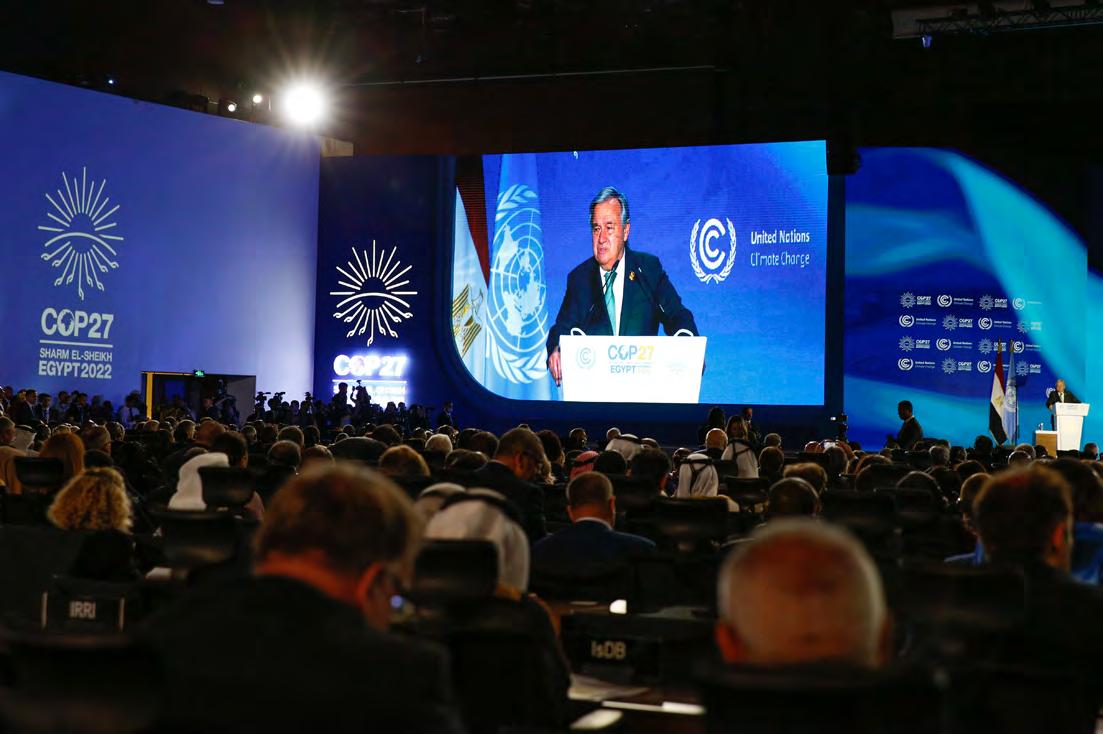

If implemented, the Bill could enable further domestic decarbonisation while reinforcing India's diplomatic place as a leader of the developing world on mitigation policies. However, it also raises questions.
CLIMATE LAWS PASSED IN THE COMMONWEALTH
Firstly, will the switch from a voluntary to a mandatory system happen fast enough, or happen at all, given that, although discussed by the Bill’s proponents, it is not currently in the scope of the legislation? Moreover, will the shift in focus to the domestic market jeopardise the international purchase of carbon credits, given the dominance of India on that market?
The Parliamentarian | 2022: Issue Four | 100 years of publishing | 321
COP26 TO COP27:
FROM
Image credit: UNFCCCC/COP27
Above: The UN Secretary-General, H.E. António Guterres addresses the 27th Conference of the Parties to the United Nations Framework Convention on Climate Change (COP27), that took place in the Egyptian coastal city of Sharm el-Sheikh in November 2022.
Image credit: DFID © Abbie Trayler-Smith
CLIMATE LAWS PASSED IN THE COMMONWEALTH
THE BAHAMAS:
ISLAND NATION LEGISLATES TO PROTECT OCEAN RESOURCES USING NOVEL CLIMATE FINANCE CONCEPT
In May 2022, the Parliament of The Bahamas passed the Climate Change and Carbon Market Initiatives Act, 2022. The Act formally came into operation on 7 July 2022.
The primary objective of the Act is to ensure compliance with the 2015 Paris Agreement by allowing the government to implement national emissions reduction initiatives. In pursuit of this aim, the Act seeks to establish a carbon market in The Bahamas and permits the government to incentivise domestic and international carbon trading. The Act sets out the institutional arrangements and fundamental principles of the carbon market and empowers the Prime Minister to enter carbon trading agreements with other countries, private entities and within internationally recognised voluntary markets.
Blue carbon credits
Establishing a carbon market will allow The Bahamas to capitalise on its marine ecosystem by selling ‘blue carbon credits’.
The value of these ocean-based credits derives from the carbon storing capacity of mangroves, seagrass beds and other elements of the 1,600 square-mile Bahamian marine ecosystem.

Marine ecosystems are carbon sinks; they absorb carbon, removing it from the atmosphere. Under the new law, licensed projects working to preserve these endangered ecosystems will be able to generate revenue by selling carbon credits to states, companies and individuals seeking to offset their emissions.
In a speech to Parliament, the Prime Minister, Hon. Phillip Davis, said that blue carbon credits would ‘allow the government to tap into a completely new source of revenue ’, declaring that The Bahamas was the first country to ‘put all the pieces together in terms of getting our marine resources valued as carbon sinks and monetizing that value in the carbon markets’.
A follow-up Bill to establish a formal regulatory framework for carbon trading was introduced to Parliament in July 2022. The
follow-up Bill has two key aims: to ensure proper verification and accreditation of carbon credits, and to allow the creation of different financial instruments to trade carbon credits.
Expert View: Blue carbon markets as an innovative climate finance tool in The Bahamas by Isabela Keuschnigg, Research Assistant, LSE Grantham Institute
The potential of blue carbon in mitigating climate change while providing substantial adaptation co-benefits has received increasing attention, as has the idea of carbon markets as means to finance the protection of blue carbon ecosystems.
In addition to this Act, various blue carbon initiatives have recently emerged. Some projects were presented at a side event of the UN Ocean Conference 2022, building on the carbon market momentum created at COP26 by the finalisation of rules for international carbon markets (under Article 6 of the Paris Agreement).
With explicit references to The Bahamas’ international climate commitments, the Climate Change and Carbon Market Initiatives Act will play an important part in financing the implementation of the country’s Intended Nationally Determined Contribution, which features coastal wetlands as part of its mitigation and adaptation strategies.
Part III of the Act incorporates key principles to address criticisms commonly levelled at carbon markets, and that were important in the negotiation of Article 6 of the Paris Agreement. For instance, the principles of additionality and permanence, the prohibition against double counting, and the requirement to contribute to social and environmental benefits. The implementation of such principles is likely to be a key part of the long-term success of the Act.
One area of concern is that the current Act lacks any reference to community-based engagement and does not include accountability to local communities, although these are the main challenges threatening the integrity of carbon markets in general. Such safeguards should be incorporated in order to reinforce good governance principles - perhaps through Section 16 of the Act, which makes room for further regulations in support of fundamental principles governing trade in carbon markets.
322 | The Parliamentarian | 2022: Issue Four | 100 years of publishing
COP26
FROM
TO COP27:
CARIBBEAN
Image credit: Bahamas Mangroves by James St. John (licensed under CC BY 2.0)
CLIMATE LAWS PASSED IN THE COMMONWEALTH
AUSTRALIA: CLIMATE CHANGE ACT SETS
EMISSIONS TARGETS INTO LAW
About the Bill: The Climate Change Act 2022 was passed into law by the Parliament of Australia in September 2022. The primary purpose of the Bill is to ‘set out Australia’s greenhouse gas emissions reduction targets in domestic law’.
The Bill also
• Requires annual Ministerial statements to Parliament on progress towards emissions reduction targets.
• Requires the Climate Change Authority to advise the Minister on the annual statement and updated emissions targets.
By enshrining two targets – a 43% emissions reduction from 2005 levels by 2030, and net-zero by 2050 – into law, the Bill indicates the direction of travel for climate policy in the medium and long-term. According to Chris Bowen, Minister for Climate Change and Energy, this ‘gives certainty to investors and participants in the energy market and will help stabilise our energy system’.
The Climate Change (Consequential Amendments) Bill was also passed to incorporate these targets into 14 existing pieces of legislation.
Australia’s Climate Change Act has been widely identified as ‘framework legislation’, one of the primary legislative responses to climate change employed by Parliaments around the world.
According to the Grantham Research Institute, some key characteristics of climate framework laws include long-term and/ or medium targets and/or pathways for change, institutional arrangements for climate governance at the national level, and mechanisms for transparency and/or accountability.

Framework legislation typically pinpoints where climate policy is headed toward but does not precisely chart the route to get there. It is often accompanied by government plans introducing more detailed mechanisms aimed at reducing emissions.
In the Australian example, plans announced alongside the Bill included modernising the grid, a national electric vehicle strategy and a target of 82% renewable electricity by 2030.
Expert View: New legislation sends an important signal, but must be followed by implementing measures by Catherine Higham, Policy Fellow, LSE Grantham Research Institute
This Act is the first major climate change legislation in Australia since the repeal of the Clean Energy Act 2011. That Act was repealed following several federal elections where climate change and carbon pricing were central issues. This history has highlighted some of the key challenges with the introduction of mandatory carbon pricing schemes, whether through imposing direct taxes on high emitting fuels or through the creation of emissions quotas for regulated industries, which directly impact on households. Without sufficient attention to distributional impacts and complementary measures, these schemes can be deeply unpopular. In light of this history, it is perhaps unsurprising that instead of emphasising the economic approach by which emissions will be reduced, the Act is focused on setting the narrative and governance arrangements for tackling climate change.
These include ensuring oversight and accountability for meeting national climate targets through annual progress reports; the explicit incorporation of the principle of ‘non-regression’, often understood as an implicit requirement of the Paris Agreement, into Section 10(5) of the Act; and an emphasis on the role of the Climate Change Authority in ensuring that climate action is grounded in science and the goals of the Paris Agreement.
The Act creates a legal framework that sets a clear direction of travel – and one that seems unlikely to be reversed given record levels of public concern about climate change. It brings Australia into the fold of countries with firm domestic commitments to ‘net zero emissions’, a goal derived from the Paris Agreement’s emphasis on the need to balance emissions of greenhouse gases with their absorption by climate sinks by mid-century.
However, it provides little in the way of detail regarding implementation. While this is not unique among framework climate legislation (Sweden’s target setting Bill5 provides an appropriate comparison), it does mean that further legislative action across multiple sectors of the economy will be urgently needed to support the Act’s implementation.
The Parliamentarian | 2022: Issue Four | 100 years of publishing | 323 FROM COP26 TO COP27:
FROM
CLIMATE LAWS PASSED IN THE COMMONWEALTH
NIGERIA: ENERGY TRANSITION PLAN ANNOUNCED AFTER LANDMARK CLIMATE LEGISLATION
In November 2021, just days after the conclusion of COP26, Nigerian President Muhammadu Buhari signed into law the Climate Change Act 2021, creating ‘a legal framework for the country to achieve its climate goals, achieve long-term social and economic sustainability, and resilience’.
In terms of specific emissions reduction targets, the Act includes a reference to achieving net-zero between 2050 and 2070 but at COP26, President Buhari was more specific, announcing that Nigeria would commit to net-zero by 2060.
In pursuit of this aim, the Federal Government launched an Energy Transition Plan in August 2022. It maps out how Nigeria intends to manage emissions reductions across the power, transport, oil and gas, cooking and industrial sectors to achieve netzero. Plans include:
• A transitionary ramp-up of gas generation before 2030 to establish baseload capacity and facilitate the integration of renewables.
• Expanding renewable electricity generation (primarily solar power) and electrifying 1.5 million new households per year to eliminate fossil fuel generators by 2030.
• Expansion of biofuel blending as a transition measure in the transport sector, with a target of 30% biofuel blend by 2036, and a longer-term transition to electric vehicles.
• Circulating five to ten million safe cooking gas cylinders within a year to aid the transition away from traditional cooking fuels by making safe gas more affordable.
The government estimates that US$10 billion of additional annual spending will be required to fund the energy transition. In a recent speech in the US, Nigerian Vice-President Professor Yemi Osinbajo called on public and private investors to redress imbalances in international energy investment by financing the energy transition in growing markets such as Nigeria.

In September 2022, President Buhari directed the AttorneyGeneral, Minister of Justice and Minister of Environment to review ‘lapses’ in the Climate Change Act. He cited ‘noticeable implementation challenges’, including the significant financial and bureaucratic burden of establishing zonal and state offices of the National Council on Climate Change, and the removal of Commissioners of Environments from each of Nigeria’s 36 states from the National Council.
Expert View: Mobilising finance for a just energy transition in Nigeria by Tiffanie Chan, Research Assistant, LSE Grantham Research Institute
One of the key objectives of Nigeria’s Energy Transition Plan is the ‘promotion of a fair, inclusive and equitable energy transition’. The expansion of industries related to solar energy, hydrogen and
References:
1
Climate Change Laws of the World database - https://climate-laws.org/ 2 Glasgow Climate Pact - https://ukcop26.org/the-glasgow-climate-pact/ 3 https://www.unep.org/resources/emissions-gap-report-2022
electric vehicles will require significant investment in infrastructure. Communities must be consulted and engaged in social dialogue. However, at present, the Plan demonstrates only weak just transition considerations. During the implementation stage, stronger just transition measures will be vital.
To achieve this, Nigeria must secure the necessary funds. The initial US$10 billion that Nigeria is seeking to raise ahead of COP27 could kickstart the Energy Transition Plan, but additional financing is likely required to translate Nigeria’s ambition into implementation.
To draw a comparison, although Western nations pledged US$8.5 billion at COP26 under the South Africa Just Energy Transition Partnership, Reuters recently reported that South Africa's investment plan for shifting from coal to renewable energy will need US$46.5 billion, more than five times the pledged amount.
As highlighted by Vice-President Osinbajo, the energy transition cannot be achieved without addressing energy access for millions of people in Nigeria. The Plan views gas as an important transitionary fuel. The initial expansion of gas generation capacity poses risks to the climate and the development of renewable energies should remain central to the long-term plan. Affordable access for local, rural communities should be prioritised.
Ultimately, the Plan is only one part of Nigeria’s response to the climate crisis. It is primarily focused on emissions reductions and mitigation measures. The Climate Change Act 2021 must concurrently be implemented adequately to support Nigeria in adaptation, resilience and disaster risk management.
4 https://www.c2es.org/content/carbon-border-adjustments/ 5 https://climate-laws.org/geographies/sweden/laws/climate-act
324 | The Parliamentarian |
Issue
2022:
Four | 100 years of publishing
COP26 TO COP27:
A UNITED RESPONSE TO CLIMATE DISASTERS IN THE COMMONWEALTH
PAKISTAN’S ‘BIBLICAL’ FLOODS: A WAKE-UP CALL FOR A UNITED RESPONSE TO CLIMATE DISASTERS
Home to over 2.5 billion citizens from Australia to Antigua, Canada to Cameroon, the Commonwealth is an incredible platform, bridging a vast geographical region, as well as different religions and cultures. Accounting for just 15% of the world’s CO2 emissions, 25 out of the 56 Commonwealth countries are most vulnerable to climate catastrophes. The geography of the Commonwealth with as much as 8.8 million square kilometers of forest land, 45% of the world’s coral reef, 49 countries bordering the ocean and 25 small island states make the Commonwealth even more vulnerable to the effects of climate change.
Since prolonged increases in temperature and changing weather patterns have now become a frequent phenomenon, the future of our planet is at risk. Our Earth’s temperature has risen by 0.14°F (0.08°C) every decade since 1880.1 Disturbingly, by the end of the 21st century, the average global temperature is going to rise by 0.5 °F to 8.6 °F.
Countries that are already struggling to perform better economically and socially are more vulnerable to climate change than others. Climate change multiplies the impact of economic inequality, social issues, population growth, and rapid urbanisation at large.
The Commonwealth remains a major source of change in the world today. Being a global advocate of climate change, the Commonwealth encourages small and other vulnerable states to intensify their calls for greater climate action and assists them in confronting the adverse impacts of climate disasters. Nevertheless, it seems like the existing efforts are not enough and much needs to be done to mitigate impact and build resilience in the face of the climate crisis.
Climate change brings Pakistan to the brink
In Pakistan, the most visible evidence of climate change is the damage caused by the ‘biblical’ floods that have recently swept through the country. With 33 million people affected and a quarter of the country under water, this is one of the worst climate-induced disasters in the history of Pakistan and it is a wakeup call for a united Commonwealth response to climate change inflicted catastrophes.
Pakistan’s share in the global carbon emissions is less than 1% yet it is one of the worst climate-hit countries in the world. The
Government of Pakistan, being aware of climate change and its serious insinuations, is working towards an augmentation of a disaster management system, mitigation/adaptation techniques and policies, and legislation on the subject as well as the furtherance of a ‘risk-sensitive governance’ policy in order to build pliability against the worst blight of our modern times. Pakistan has taken various steps in the form of national policies and initiatives in order to combat the menace of climate change. These initiatives also enable Pakistan to further limit its share in the global carbon emissions.
In this regard, Pakistan developed the National Climate Change Policy, 2012 (NCCP), which was last updated in 2021, that aims to address the many upcoming climate change challenges. Moreover, an Implementation Framework (2014-2030) for the systematic execution of the policy, adaptation and mitigation mechanisms are the highlight of the policy.
Pakistan could long foresee the significance of improving ecosystems and thus, the Green Pakistan Programme was launched in 2016 with a target to resuscitate wildlife and to expand forest cover across the country. In 2019, the program was upgraded to the Ten Billion Tree Tsunami Programme (TBTTP) with a plantation aim of 3.296 billion trees. Other nature-based adaptation techniques (e.g. Eco system restoration Fund, Recharge Pakistan Program and Protected Areas Initiative for further carbon reduction and vegetation improvement) have already been championed by Pakistan as a clear manifestation of the country’s resolve to tackle climate change.
In the next 10 years, the Green Pakistan Programme will seize 148.752 million tons of CO2; based on the Intended Nationally Determined Contributions (INDC) submitted by Pakistan to the United Nations Framework Convention on Climate Change (UNFCCC) in 2021 as compared to 489.87 million tons in 2018. One of the most significant mechanisms to mitigate against climate change has finally been initiated by Pakistan under the National Adaptation Plan (NAP), eventually aimed at building climate resilience. The much talked about NAP will build on these pre-existing nature-based models for implementation and action. Moreover, various widespread long-term and short-term plans will
Ms Bisma Rahman Zafar is a Deputy Director (Research) at the National Assembly of Pakistan. Over the years she has carried out legislative research on a wide array of subjects as well as speech writing for high profile political figures. In addition to assisting legislators in fulfilling their parliamentary functions, she actively contributes her research services to MPs for various multilateral platforms like the Parliamentary Association of Economic Cooperation Organization (PAECO), UN Women, World Bank Group, Commonwealth Parliamentary Association (CPA) and Inter-Parliamentary Union (IPU). During her service, she has participated in various training locally and abroad including the prestigious US State Department Sponsored Legislative Fellows Program (LFP) in 2016.

The Parliamentarian | 2022: Issue Four | 100 years of publishing | 325
A UNITED RESPONSE TO CLIMATE DISASTERS IN THE COMMONWEALTH
address the vulnerabilities of climate change as well as the inclusion of adaptation measures into Pakistan’s national policy.
Helping towards a green Pakistan, the country signed the Global Methane Pledge in 2021. Through this initiative, Pakistan aims to slash methane emissions - eventually contributing to the global agenda whereby the parties joining the pledge will commit to the target of reducing methane emissions by at least 30% by 2030. Furthermore, in a drive to mitigate the adverse impact of the automobile sector on the environment, the Government of Pakistan approved the National Electric Vehicle Policy. The policy builds on an aim of 30% shift to electric by 2030.3
The Parliament of Pakistan through its Committees has been actively contributing towards addressing the climate crisis in the country. The National Assembly’s Standing Committee on Climate Change functions with focus on holding the government and other regulatory bodies to account on climate action. The Committee has developed a broad package of Action for Climate Empowerment (ACE). The Legislative Mapping Initiative of the Committee annotates various laws and acts that are relevant to climate change. It will not only provide evidence on the existing laws but the information to amend the legislation as well. In order to fulfil the role of policy oversight and evidence-based legislation, the Committee collaborates with external experts. Lastly, the Committee has also developed a National Coordination Forum serving as a vibrant national parliamentary platform.
According to the Sustainable Development Report that assesses a country’s progress on its attainment of the SDGs; Pakistan has met SDG-13 on Climate Action nearly a decade before the target deadline. Despite the COVID-19 pandemic, which caused severe disruption in the path towards progress, the country has kept forging ahead.4
Progress on climate action does not elude Pakistan from the adversaries of climate crisis. The SDGs Secretariat held various meetings and conferences to continue with the arduous task of being on track with its commitments. The 3rd Regional Seminar of Asia Pacific countries, hosted by the Parliament of Pakistan, is one such recent example wherein Pakistan took a lead in voicing out its demand for climate reparations and achievement of the SDGs. Unfortunately, Pakistan’s call for creating a global fund to address the damage caused to vulnerable countries in the wake of climate change has not yet been fully achieved and this clearly indicates that climate action is not yet a ‘top priority’ for the world.
The call for climate justice
The resolution made at the 15th Climate Change Conference of the Parties (COP15) in 2009, that was later validated at COP16 and has been time and again reaffirmed in the Paris Agreement, is not only a clear manifestation of the significance of climate justice but also a commitment for developing countries to assist in mitigating the adverse impact of climate change.
Given the severity and extremity of climate-induced disasters, many countries are left with no choice but to build resilience and embrace adaptation in the face of the climate crisis. Devastation caused by climate catastrophes in Pakistan requires vital support from the international community since it is a global issue that needs to be addressed at a global level. Pakistan has been effectively raising its voice at various regional and global forums in the form of global advocacy in favor of support and action for climate justice. Regardless
of the plethora of initiatives that Pakistan has adopted to deal with the climate crisis; the paramount challenges in the form of creating a Global Climate Risk Index of all parties under the UN system, a recovery window for addressing the humanitarian needs resulting from climate change and the global goal on adaptation still lie ahead.
Pakistan is in the front line for advocacy with other developing countries on various important matters including seeking US$100 bn per year as promised in 2009 and enhancing this pledge by at least three times, the development of a transparent mechanism defining climate finance needs, and last but not the least encouraging simplified procedures to access climate finance.
As Pakistan recovers and rebuilds itself, still reeling from the worst devastation ever witnessed in recent times, it is time for the world to realise that of the thousands of unknown threats that lie before us, the most enthralling known threat is the ‘existential crisis’ that climate change presents. Today, it is affecting Pakistan, but tomorrow it could be any other nation. Therefore, in a call for moral compunction let ‘collective justice and collective responsibility’ be our new slogans with an ultimate aim of protecting our planet. It is a wake-up call for the whole world to act now.
References:
1 Annual Global Climate Report 2020

2 Economic Survey of Pakistan 2021-22
3 ibid
4 Sustainable Development Report Pakistan Chapter - Available at: https:// dashboards.sdgindex.org/profiles/pakistan
Further reading:
• Abidoye, B.O., Odusola, A.F., 2015. ‘Climate change and economic growth in Africa: an econometric analysis’, Journal of African Economies, 24, 277301.
• SL Harlan, DN Pellow, JT Roberts, ‘Climate justice and inequality’, 2015.
• Contribution of Working Groups I, II and III to the Fifth Assessment Report of the Intergovernmental Panel on Climate Change, Core Writing Team, R.K. Pachauri and L.A. Meyer (eds.) IPCC, Climate Change 2014.
• H. Bulkeley, GAS Edwards, S Fuller, ‘Contesting climate justice in the city: Examining politics and practice in urban climate change experiments’, Global Environmental Change, 2014.
• Jeffrey D. Sachs, ‘Pakistan and the Fight for Climate Justice’, 13 September 2022.
• Louisa Parks and Donatella Porta, ‘Framing Processes in the Climate Movement: From Climate Change to Climate Justice’, January 2014.
• Libby Porter, ‘Climate Justice in a Climate Changed World’, 30 April 2020.
326 | The Parliamentarian | 2022: Issue Four | 100 years of publishing





DID YOU KNOW THAT CPA HAS RESOURCES AVAILABLE FOR COMMONWEALTH PARLIAMENTS? DOWNLOAD CPA’S NEW PUBLICATIONS AND TOOLKITS Visit www.cpahq.org or email hq.sec@cpahq.org www.cpahq.org
BUILDING GENDER-SENSITIVE PARLIAMENTS AND WOMEN’S REPRESENTATION: THE EXPERIENCE OF CYPRUS
Article submitted by the CPA Cyprus Branch.
The concept of gender sensitivity is a way to reduce the barriers caused due to discrimination and gender bias. In this way, creating the right kind of gender sensitive environment leads to mutual respect regardless of gender. While the world has made significant progress on gender equality and women's empowerment, primarily with the Millennium Development Goals and then the subsequent Sustainable Development Goals (including equal access to primary education for boys and girls), women and young girls continue to suffer discrimination and violence across the world.
Gender equality is not just a fundamental human right but a necessary foundation for a peaceful, sustainable and prosperous world. By providing equal access to education, health care, work and representation in political and economic decision-making processes, there will be immense benefits for the economy and society as a whole.
Parliaments have a huge role to play in this process, hence the need to focus on building gender sensitive Parliaments. As far as the Cyprus House of Representatives is concerned, in recent years, an increased focus is being placed on gender-related matters, both in terms of the issues debated in Committees and at Plenary level relating to proposed Bills, as well as in terms of other initiatives undertaken by the President and members of the House.
Women’s representation in Parliament
Representation for women in Parliament has faced a number of difficulties in recent years with Cyprus ranking among countries where women account for fewer than one in five Members of Parliaments. Following the most recent election in May 2021, there was a 3% fall in representation of women in Parliament compared with the 2016 parliamentary elections. Only eight women were elected to one of the
“ Gender equality is not just a fundamental human right but a necessary foundation for a peaceful, sustainable and prosperous world. By providing equal access to education, health care, work and representation in political and economic decision-making processes, there will be immense benefits for the economy and society as a whole. ”
56 seats in Parliament, translating into a female representation of 14%, down from 17% in 2016 (this figure later rose to 12 women, or 21.4%, after reshuffles in 2017). A total of 115 women stood for a seat in the various political parties in May 2021 out of 659 candidates. Gender Equality Commissioner, Iosifina Antoniou described the decrease as a ‘setback for Cyprus’ which would have a negative impact on policy for social issues such as education, health, welfare and equality. “Women make proposals about different issues than the ones usually discussed in Parliament” she said. On a positive note, Hon. Annita Demetriou was elected as the President of the House of Representatives in June 2021 - the first woman and youngest person to hold the role.
Legislative measures to prevent violence against women in Cyprus One key focus for Members of the House of Representatives in Cyprus in recent years has been the introduction of legislation to combat violence against women.
Following the ratification by law of the Istanbul Convention 2017, which concerns the Prevention and Combating of Violence against Women and Domestic Violence, the Cyprus House of Representatives has adopted legislation to harmonise Cyprus legislation with the provisions of the Convention. This constitutes the most comprehensive legally binding international instrument focused on preventing domestic violence, protecting victims and prosecuting accused offenders. Its ratification has opened the way for a better coordinated response to these phenomena and we should all strive to ensure that no country desists from its contractual obligations in this regard.
Within this framework, the Cyprus House of Representatives has been instrumental in promoting the adoption of legal tools which include the Law on the Prevention and Combating of Violence against Women and Domestic Violence, the Protection from Harassment and Harassment Monitoring Law, the Establishment of Minimum Standards on the Rights, Support and Protection of Victims of Crime Law and the Sexism and Online Sexism and Related Matters Act of 2020
The Cyprus House of Representatives remains fully committed to the goal of achieving substantive gender equality and eradicating violence against women and girls. Members of Parliament are ready to contribute effectively, both domestically as well as at the international level, to promoting women's rights.
Additionally, under the Istanbul Convention, the Council of Ministers has approved the implementation of the creation of the ‘Home for Women’, which aims to provide services to adult women and young girls (under 18 years old) identified as victims of violence and to their dependants, since its establishment in December 2020.
328 | The Parliamentarian | 2022: Issue Four | 100 years of publishing BUILDING GENDER-SENSITIVE
PARLIAMENTS
The House Standing Committee on Human Rights and on Equal Opportunities for Men and Women, contributed its support to this end.
The Committee reported that the ‘Home for Women’ managed 32 cases of violence against women (72% were Cypriot and 28% were from overseas, 99% of cases had under-age children, 69% of the perpetrators had Cypriot citizenship and 30% were from overseas). According to recent research the COVID-19 pandemic has unfortunately, in common with many jurisdictions across the world, increased the number of incidents of domestic violence.
The Cyprus House of Representatives in July 2022, introduced femicide as a criminal offence per se, carrying the same penalty as the crime of homicide. The purpose is for Cyprus to fully align with the obligations flowing from the Istanbul Convention and to emphasise the criminal dimension of femicide especially regarding the social awareness angle for women victims.

Gender-sensitising Parliaments
The Cyprus House of Representatives and CPA Cyprus Branch has supported the aims of the Commonwealth Women Parliamentarians (CWP) network in seeking to introduce practices that promote gender-sensitive Parliaments and increasing the number of women Parliamentarians across the Commonwealth.
The CWP network plays an important role in raising and addressing issues relating to gender equality, in particular, the representation of women in Parliaments. The inclusion of gender perspectives in all aspects of the work of Parliament - legislation,

oversight and representation – is a key priority for the Cyprus House of Representatives.
This article was adapted from an intervention given at the CPC Workshop F: Building Gender Sensitive Parliaments at the 65th Commonwealth Parliamentary Conference in Halifax, Canada in August 2022.
References:
• 31/05/2022: Just eight female MPs, a drop of three per cent (Cyprus Mail) https:// cyprus-mail.com/2021/05/31/just-eight-female-mps-a-drop-of-three-per-cent/
The Parliamentarian | 2022: Issue Four | 100 years of publishing | 329
BUILDING GENDER-SENSITIVE PARLIAMENTS
BUILDING GENDER-SENSITIVE PARLIAMENTS AND PARLIAMENTARY RESPONSES TO THE COVID-19 PANDEMIC
GENDER-SENSITIVE PARLIAMENTS
Democracy requires constant evaluation and reassessment. In the 20th century, one of the greatest changes to democracy around the world was the inclusion of increasing numbers of women, both as voters and as Members of Parliament.
Parliaments are well placed to champion the goal of gender equality. Parliaments aim to reflect society and so they must reflect the changing dynamics of their electorates. A gender-sensitive Parliament sets a positive example by promoting gender equality and women's empowerment among society both nationally and internationally.
Democracy everywhere is premised on a genuine partnership between men and women as gender equality is in the interest of both men and women, which is a precondition for genuine democracy. Increasing the participation of women in the political life of a nation constitutes an important step towards democratisation in the real sense. Of course, women's participation ensures diversity in contributions to policy making as it can offer new perspectives and development priorities. Without the participation of women, a Parliament cannot be considered representative of the population it is intended to serve.
However, according to recent research by the Inter-Parliamentary Union (IPU) on a ‘Project on Gender Sensitive Parliaments’, it was revealed that for many years the responsibility of defending women's rights and gender equality in Parliaments and Legislatures rested mainly on the shoulders of women MPs or MLAs. We can see that there was a shift in the focus of that responsibility to Parliaments, as institutions representing the interests of all citizens. In this direction, it seems that many Parliaments are working to move away from their traditional male-dominated membership towards promoting equality.
Gender mainstreaming in Parliaments has been embraced internationally as a strategy towards realising gender equality.
It involves the integration of a gender perspective with a view to promoting equality between women and men and combating discrimination.
In the context of Gender-Sensitive Parliaments, all Parliaments must be places that meet the requirements of both women and men in the way they are run and structured, and where women not only can work, but also want to work. There should be family-friendly environments in all Parliaments, where men and women find their needs to live, as well as work, are taken into account. Also, the language or behaviour in Parliaments should be better regulated.
Legislatures which represent and promote gender equality can deliver better to their constituents and are more legitimate. Being sensitive to gender makes Parliaments more efficient, effective and legitimate. It is important to have enough women in Parliaments to occupy the key positions of parliamentary leadership, whereby women in such positions can present a positive role model to other women. Throughout the world, however, relatively few women serve as Presiding Officers or Speakers of their respective Parliaments, and only marginal numbers serve as women Presidents or Prime Ministers.
The positions of Chairs of Parliamentary or Legislative Committees are also rarely occupied by women. Committee Chairs are generally responsible for presiding over its business and conduct with knowledge of the Standing Orders or internal rules applicable to the Committee and therefore, it is common to appoint Committee Chairs who have served at least one parliamentary term, which often doesn’t include women MPs.
In respect of including women in public policy, the Parliament of India enacted the National Food Security Act, 2013 which aimed at providing subsidized food grains to approximately two thirds of India's population. Under the Act, pregnant women, lactating mothers and certain categories of children are eligible for daily free
Hon. Smt Dr Nimaben Acharya, MLA is the Speaker of the Gujarat Legislative Assembly in India. She was elected as the first woman Speaker unanimously in September 2021. She has been elected five times as an MLA to represent the Bhuj constituency of Kutch district. A gynaecologist by profession, she has been associated with various activities relating to women’s empowerment, rural development and sports. She has held several roles on Parliamentary Committees at the Gujarat Legislative Assembly.

330 | The Parliamentarian | 2022: Issue Four | 100 years of publishing
BUILDING GENDER-SENSITIVE PARLIAMENTS
The first women Speaker of the Gujarat Legislative Assembly spoke at the recent 65 th Commonwealth Parliamentary Conference on the topics of gender equality in Legislatures and the parliamentary responses to the COVID-19 pandemic in India.
meals. The Right to Education was enacted in 2009, under which free and compulsory education for children between 6 and 14, including all girls of this age group.
As Parliamentarians, it is our duty to ensure that the laws enacted by Parliament are women-friendly and that Parliament serves as a model institution for creating a positive environment for women's economic development.
In other fields, wherever the involvement of women is concerned, under the National Mission for the Empowerment of Women which set out to achieve inter-sectoral convergence of all pro-women and women-centric programmes across Ministries in the Government, we as legislators have an important role in getting those programmes implemented at the grassroots level.
The National Mission in India is engaged in striving to achieve social, economic and legal empowerment of women by identifying the gaps in developmental goals and setting up of appropriate institutional frameworks to tide over the bottlenecks in the process of ensuring coordinated and effective service delivery to women at the grassroots level.

Coming to the situation of the women in my own state, Gujarat, the State Government promulgates the budgetary policies and implications addressing gender equality through gender responsive strategies, schemes and programmes so as to ensure that the fruits
of development reach every individual. Based on the 2030 UN Global Agenda of Sustainable Development Goals for empowering women in society, since 2014-15, the State Government has published a ‘Gender Budget’ pertaining to women-specific financial allocations. The document provides insights into various initiatives taken up by the State Government. It also enables the Departments to determine the need and justification for the gender specific allocations in various sectors.
The gender budgeting process is now institutionalised within the State budgeting system. At the same time, the Gender Budget Statement for 2022-23 has been prepared in line with the State Budget 2022-23, in which we have around 109 major schemes with 100% of provision targeted towards women for their education, protection, health care and livelihoods as the primary objectives.
From this, the gender-oriented allocation with schemes of 100% for women can be recognised and the State Government do hope that this document will help in reducing the gender gaps, if any, and direct the purposeful public expenditures towards women and girls. Such a system would be useful in strengthening the State's efforts in holistic development and the empowerment of women in the State.
The Parliamentarian | 2022: Issue Four | 100 years of publishing | 331
GENDER-SENSITIVE PARLIAMENTS
Above: The Gujarat Legislative Assembly
BUILDING
PARLIAMENTARY RESPONSES TO THE COVID-19 PANDEMIC
REMAINING RELEVANT IN RESPONSE TO A PANDEMIC: THE ROLE AND RESPONSIBILITIES OF PARLIAMENT
The outbreak of the novel Coronavirus (COVID -19) has become a global pandemic. It very quickly transformed the daily activities of all human beings and organisations throughout the world. The Parliaments and Legislatures were not exempt from the harsh effects of this global pandemic.
However, even in such a global situation, the functioning of the Parliament or the Legislature, which functions under the Constitution, cannot afford to be suspended for long periods from its cardinal function of law-making, oversight and representation. To overcome such a situation in future, there is a need to develop a new system for conducting the constitutional functions of the Parliaments and Legislatures when such situations arise.
Impact of COVID-19 on Parliaments
This pandemic has created a watershed, not only in health and economic terms, but also in presenting unprecedented challenges in the functioning of Legislatures across the world. The lessons we learnt from the emergence of this pandemic is that we must ensure that our rules and Standing Orders reflect the need to continue working as an institution in any situation.
In many cases, innovative strategies and mechanisms were explored. We witnessed the continued working of Parliaments in many countries and India was no exception. Measures included:
• Establishing and embedding efficient digital workspaces
• Proactive acknowledgement of IT as a core element for organisational operations
• Establishing a future focused IT strategy
• Making available essential resources and IT equipment
• Adhering to the standard operation procedures of the respective government and measures issued by the World Health Organisation (WHO) and other international organisations.
Initiatives taken by the Parliament of India included:
• Maintaining 24/7 connections between Legislators and the general public to provide necessary and immediate relief and assistance to the neediest.
• Passing legislation to reduce the salaries and allowances of MPs and Ministers for a period of one year to supplement the
financial resources of the India Government in order to assist with tackling the pandemic.
• Reallocated funds of the ‘Members of Parliament Local Area Development Scheme’ (MPLADS) to the consolidated fund of India.
• Setting-up of a control room for immediate interface between MPs, MLAs and the public and to coordinate responses to the pandemic.
• Adopting the necessary safety and security measures for holding sessions in Parliament – including arranging testing facilities for all involved, distanced seat allocation, polycarbonate sheets between rows and seats, sensor-based sanitiser dispensing machines installed, compulsory use of masks and social distancing in Parliament buildings.
India's global role in the pandemic
The Government of India reached out to many countries in need during the COVID-19 pandemic. During the first four months of the pandemic wave across the globe, India shared their concerns and resources for many countries.
Key initiatives included the following actions:
• February 2020: 15 tonnes of masks, latex gloves, infusion pumps and internal feeding pumps were sent to China by Indian Airforce Flight.
• March 2020: Declared US$9.3million as emergency funds for South Asian Association for Regional Cooperation (SAARC) Member nations.
• April 2020: Sent a team of 15 doctors to Kuwait and also sent 85 million tablets of Hydroxyl-Chloroquine, 500 million tablets of Paracetamol and 1,000 tonnes of Paracetamol granules to 108 countries.
• May 2020: Sent INS medical teams, essential medicines and food items to The Maldives, Mauritius, Madagascar, Comoros and The Seychelles.
• May 2020: Launched a special mobile application ‘AROGYA SETU’ to combat and control the spread of the pandemic in India.
Initiatives taken by Gujarat Legislature included:
• Held the 7th Session of 14th Gujarat Legislative Assembly following the norms of social distancing.
• Reduced the salaries of all MLAs, the Speaker, the Deputy Speaker, all Ministers, the Leader of the Opposition and all Whips by 30% by the passing of legislation. The Administration also reallocated the ‘MLAs Local Area Development Funds’ for two years to the consolidated funds of the State.
• Sanitised the entire Legislative Buildings, including the House and Committee Rooms, twice a day using UV light rays to make them free from Coronavirus.
• Provided masks and sanitizer to each and every MLA, Officer and parliamentary staff at the Legislature at regular intervals.
• Temperature checks were held at all entry points of the building.
• Arranged antigen tests of the MLAs and staff of the Legislature at regular intervals.
This article is based on presentations given at conference workshops at the 65th Commonwealth Parliamentary Conference in Halifax, Canada in August 2022.
332 | The Parliamentarian | 2022: Issue Four | 100 years of publishing
“ This pandemic has created a watershed, not only in health and economic terms, but also in presenting unprecedented challenges in the functioning of Legislatures across the world. The lessons we learnt from the emergence of this pandemic is that we must ensure that our rules and Standing Orders reflect the need to continue working as an institution in any situation. ”





COVID-19 DELIVERING PARLIAMENTARY DEMOCRACY CPA Toolkit for Commonwealth Parliaments CPA TOOLKIT FOR COMMONWEALTH PARLIAMENTS ON THE COVID-19 PANDEMIC AND DELIVERING PARLIAMENTARY DEMOCRACY DOWNLOAD CPA’S NEW PUBLICATION TODAY! Visit www.cpahq.org or email hq.sec@cpahq.org The outbreak of COVID-19 (Coronavirus) and its spread to at least 180 countries has consequently plunged many Parliaments and Legislatures across the world into a state of emergency. Commonwealth Parliaments and Parliamentarians are grappling with many different issues both to implement the emergency health measures during this global pandemic while at the same time looking at new ways to conduct debates, scrutinise and pass legislation, hold parliamentary committees and question the actions of their governments. THE ‘CPA TOOLKIT FOR COMMONWEALTH PARLIAMENTS AND LEGISLATURES ON THE COVID-19 (CORONAVIRUS) PANDEMIC AND DELIVERING PARLIAMENTARY DEMOCRACY’ provides various measures and recommendations that can be adopted by both Parliaments and Parliamentarians in order to continue to deliver on the Legislatures’ role of scrutinising legislation and delivering democracy during a global pandemic. www.cpahq.org Coronaviruses (CoV) are a family of viruses that cause illness ranging from the common cold to more severe diseases. Coronavirus disease (COVID-19) is a new strain that was discovered in 2019 and has not been previously identified in humans. PUBLIC HEALTH IMPACTS The public health impacts of the Coronavirus outbreak are widespread. Some of the areas of public health affected will include: • Increased mortality rate – the primary health impact of the global pandemic • Physical health of the general population – for those who suffer from the virus but also through lack of exercise/fresh air, poor diet, etc during social distancing measures • Social care provision particularly for elderly or vulnerable groups • Mental health – particularly through stress, anxiety, isolation especially during social distancing measures • Health services – a global pandemic will have a huge effect on the public health services in any given jurisdiction. Avoid touching eyes, nose and mouth Hands touch many surfaces and can pick up viruses. Once contaminated, hands can transfer the virus to the eyes, nose or mouth. Maintain social distancing Maintain at least 2 metre (6 feet) distance between people, especially those who are coughing or sneezing. Washing of hands frequently Regularly and thoroughly clean hands with an alcohol-based hand rub or wash them with soap and water. Common signs of infection include: • Respiratory symptoms • Fever • Cough • Shortness of breath • Breathing difficulties In more severe cases, infection can cause: • Pneumonia • Severe acute respiratory syndrome • Kidney failure • Death COVID-19 SYMPTOMS PREVENTION COVID-19 PANDEMIC A pandemic is a global outbreak of disease. Pandemics happen when a new virus emerges to infect people and can spread between people sustainably. Because there is little to no preexisting immunity against the new virus, it spreads worldwide. The virus that causes COVID-19 is infecting people and spreading easily from person-to-person. Cases have been detected in most countries worldwide and community spread is being detected in a growing number of countries. On 11 March 2019, the COVID-19 outbreak was characterized as a pandemic by the WHO. Practice respiratory hygiene This means covering mouths and noses with either the bent elbow or a tissue when people cough or sneeze. https://www.who.int/emergencies/diseases/novel-coronavirus-2019/advice-for-public
PUBLIC ENGAGEMENT WITH PARLIAMENTARY COMMITTEES
HOW PUBLIC ENGAGEMENT CAN STRENGTHEN THE WORK OF PARLIAMENTARY COMMITTEES: LEARNING LESSONS FROM THE EXPERIENCE OF THE WELSH PARLIAMENT
Public engagement remains an underexplored area of parliamentary activity, although Parliaments worldwide have intensified their efforts to redefine their relationship with their respective publics of late. They have done so by improving their public information provisions, external communications, outreach and education initiatives, as well as the ways in which they consult with a wide range of communities, individuals and organised stakeholders, and the extent to which they reflect the public’s voice in their deliberations and outputs. The recent Inter-Parliamentary Union Global Parliamentary Report1 (2022) makes a strong case for the centrality of public engagement in parliamentary activity, but also, more broadly, in the context of representative democracy as a whole: 'Public engagement matters because it is mutually beneficial for communities, for Parliaments as institutions and for individual Members of Parliament (MPs). It enables Parliaments to create better laws and policies by tapping into wider sources of information. It cultivates knowledge in communities and improves the quality of decision-making. It also allows closer monitoring of policy implementation. And in doing so, it sustains representative democracy in a rapidly changing world' (page 14).
Nevertheless, there are still questions regarding the effectiveness of public engagement (how we measure and maximise impact), as well as the extent to which Parliaments successfully manage to reach out to and engage with a wide range of individuals, going beyond the ‘usual suspects’, and diversify the range of evidence they tap into. These preoccupations framed the terms of reference of the Welsh Parliament’s 2020-21 Academic fellowship on developing a framework for measuring the effectiveness of its Committees, which resulted in the publication of the ‘Power, Influence and Impact of the Senedd Committees’ Report2 in November 2021. This article presents findings from this work, as it relates to the public engagement function of the Welsh Parliament.

The effectiveness of Welsh Parliament Committees
The Welsh Parliament 3, also known as Senedd Cymru, is a relatively new Parliament – it was established in 1999, as part of a wider constitutional reform program in the United Kingdom. It is
a small (currently 60 elected Members)4, unicameral Parliament, whose leitmotif over the past 20 years has been continuous institutional learning as it has gradually acquired more powers and competences, and as it has transformed its structure and operations in order to reflect the changes in its constitutional arrangements.
Its Committee system, which has also seen significant transformations, departs from the Westminster model of separating the legislation and government oversight functions; instead, policy and legislation Committees fulfil a dual role, much akin to functional organisation of Committees in some continental European countries. However, distinctly from other Parliaments, the Welsh Committees are quite unique in the fact that they are very small (6 Members), and that their portfolios don’t mirror Executive departments, but span over broad thematic policy areas.
Committees are central to the legislative, scrutiny and representation role of Parliaments, being sometimes described as the ‘engine room’ of Parliaments. Therefore, the debates about their ability to affect change (government agenda and priorities, government policy, spending, legislative proposals, and, more broadly, beyond government) have shaped existing approaches to measuring effectiveness. But the concept of effectiveness in parliamentary settings is notoriously difficult to operationalise and measure. At a corporate organisational level, the Senedd Commission, the body responsible for the provision of property, staff and services required to enable the Welsh Parliament to function, employs the following definition: ‘being effective is being focussed on goals, priorities and implementation' 5 But this doesn’t fully account for the political nature of parliamentary activity. As such, effectiveness in parliamentary settings needs to account not only for the achievement of set goals and aspirations but also for the constitutional arrangements underpinning the formal set of powers and the strength of parliamentary actors, their de facto political influence6, as well as the extent to which they can affect change over government activity and beyond.
The Power, Impact and Influence Report found that effective Committees rely on fully engaged and interested Members and are
Professor Diana Stirbu is a Professor of Public Policy and Governance at London Metropolitan University, where she specialises in public administration and governance reform from a devolved and territorial perspective in the UK. Her research interests include public engagement in public and political institutions, gender representation, and strategic management and change in the public sector. Professor Stirbu undertook an Academic Fellowship with the Welsh Parliament in 2020-21 and is the author of the ‘Power, Influence and Impact of the Senedd Committees Report’. She also currently holds a public appointment from the Welsh Government, being a member of the Expert Panel that supports the work of the Independent Commission for the Constitutional Future of Wales.
334 | The Parliamentarian | 2022: Issue Four | 100 years of publishing
PUBLIC ENGAGEMENT WITH PARLIAMENTARY COMMITTEES
supported by excellent services. They have access to external advice and expertise, and operate within a coherent corporate strategic framework where goals and aspirations are aligned with adequate resources and capabilities that feed into Committees’ activities.
Moreover, effectiveness relies on strategic planning that focuses on outcomes, not activities, and on developing a shared sense of what success looks like. Effective Committee work is informed by a diverse range of evidence, made possible by embedded practices of evaluation and self-reflection that promotes lesson learning. Lastly, effective Committees promote good relationships with stakeholders, work transparently and communicate effectively to a wide range of audiences, accounting for the different needs of different audiences. Their engagement activities are innovative in reaching out to new audiences, and are designed purposefully to bring the lived experiences of citizens in the Committees’ work.
Whilst this represents the collective understanding for what it means to work effectively as a Committee from the perspective of the institutional actors that the author engaged with during 2020 and 2021, the links between public engagement and strengthening Committees’ work can be further explored.
Public engagement in the Welsh Parliament Committees

Public engagement in the Welsh Parliament has been highly institutionalised at strategic level, operational level (both corporate and parliamentary business)7, and has featured as a strategic goal in successive Commission’s strategies. The Communication and Engagement Strategy sets out the overall engagement framework, types of audiences and key performance indicators. Committees in the Welsh Parliament are supported by integrated teams comprising of Clerks, researchers, communication and engagement specialists, lawyers and translators; hence public engagement is fully embedded in the wider integrated Committee support services.
The Citizen Engagement Team facilitates Committees’ engagement with diverse audiences, focusing on bringing lived experience into the evidence base of Committee work, by using a range of methodologies and tools (i.e., focus groups, surveys, in-depth interviews, discussion forums) documented in the Engagement Toolkit.8 Following the first Wales Citizen Assembly in July 2019, which looked at the question of how people in Wales can shape their future through the work of the Welsh Parliament, it became even more important to embed more deliberative engagement into the work of Committees. 9 Whilst there is still a long way to go in terms of fully embedding the lived experience into Committee practice, or in terms of reaching beyond the usual suspects, or the general public recognition and visibility of their work, the Welsh Parliament Committees offer interesting lessons of how public engagement can enhance Committees’ effectiveness.
Five ways in which public engagement supports Committees’ effectiveness
The Power, Impact and Influence Report identifies some areas of good practice in public engagement in the Welsh Parliament, particularly around adopting a strategic approach to engagement, embedding support through integrated support services, focusing on fitness for purpose of engagement activities and on evaluating impact. Coupled with internal case studies on impact of engagement activities, some presented at the International Parliamentary Engagement Network seminar in February 2022 by the Welsh Parliament representatives10, this article identifies five ways in which public engagement contributes to Committees’ effectiveness: 1. Enhancing the evidence base by highlighting gaps in government consultations. One of the important contributions made by the Welsh Parliament Committees in a few instances
The Parliamentarian | 2022: Issue Four | 100 years of publishing | 335
Above: The main Chamber at Senedd Cymru.
PUBLIC ENGAGEMENT WITH PARLIAMENTARY COMMITTEES
was to bring forward and evidence ‘missing voices’ from government consultations. For example, the Environment, Infrastructure and Skills Committees in the 5th term (2016-21), conducted a series of broader engagement activities (focus groups and a survey) as part of the post-legislative scrutiny of the Wales Active Travel Act 2013 11 These activities brought to light the missing perspectives of those who do not engage in cycle or walk to work, thus supporting a better understanding of barriers to active travel. This eventually led to an acknowledgement of the Committee’s efforts to engage more broadly by one of the major stakeholders in the consultation, as well as to a Committee recommendation (subsequently accepted by the Government) that ‘the Welsh Government should lead a lessons learned exercise on Active Travel consultation to seek best practice and capture innovative ways of reaching people who do not currently walk or cycle’.12
2. Enhancing the evidence base by bringing the lived experience of people in Committees’ deliberations and evidence base. The way that Committees mediate knowledge is critical to the role they play in improving the evidence base of their work as well as the work of the government. Often, the official data and expert evidence informing the deliberation of policy makers, does not reflect or engage directly with the lived experiences of those affected. In its inquiry into rough sleeping in Wales in 2017, the Equalities, Local Government and Communities Committee collected evidence from a range of organisations that support rough sleepers and from experts. Perhaps more importantly, the Committee ‘heard from people who have firsthand experience of life on the streets but have since been supported into accommodation. They gave moving accounts of how they ended up sleeping rough.’13 This demonstrates that such approaches humanise debates around complex issues, such as rough sleeping, but they also provide a useful direct exposure of political representatives to real life problems of marginalised groups or individuals.
3. Innovative engagement can lead to powerful exhibits evidencing the scale of existing issues, can galvanise the media and lead to positive responses from the government. This was evidenced by the Economy, Infrastructure and Skills Committee inquiry into the state of roads in Wales in 2018, where the Committee, supported by the Citizen Engagement team, invited citizens to enter a photography competition to capture on camera people's depiction of the state of roads in Wales, with the winner having their image on the report cover and featured in an exhibition as a further incentive. Hon. Russel George, MS, the Chair of the Committee, noted in the forward to the subsequent report14 that ‘We received a cross section of images, some funny, some breathtakingly beautiful, and others highlighting pitifully poor pavements. […] I was pleased to learn that some of these holes have been filled since the pictures were taken.’ This innovative piece of engagement generated a significant amount of media coverage across the UK and in Wales.
4. Legitimising democratic deliberation by involving stakeholders and the general public in setting Committees’ priorities. Involving the public and stakeholders in the early stages of strategic planning by inviting ideas on what should guide the
Committee’s forward working programme can be a powerful tool to ensure the relevance of Committees. In the Welsh Parliament, some Committees15 enter a consultation stage as early as their establishment in a new parliamentary term and set their agendas taking into account the views expressed by the public and/or stakeholders. Some have used social media to crowdsource ideas, while others have used more formal type of consultation to do so.
5. Enhancing Committees’ public profile and the relationship between Committees and the public. One of the main sources of influence for Committees lies in their ability to command respect from government and stakeholders. In Wales, we have learnt that the way that Committees engage with the wider public and stakeholders (at scale or more targeted), communicate their work and the impact of their work effectively, and follow up on their inquiries is essential to building that profile and respect.
To conclude, public engagement is central to the work of the Welsh Parliament’s Committees across all dimensions: informing, listening and involving different audiences. A high degree of institutionalisation at strategic and operational level means that engagement is embedded in the work of the institution and has the potential to strengthen the work of Committees, from supporting the scrutiny process to enhancing the profile and visibility of their work. Whilst the Welsh Parliament has not got everything perfect just yet in terms of engaging with a diverse audience and making its work relevant across the whole of Wales, one lesson for other Legislatures around the world would be that engagement strategies should not be static, but account for changing supply and demand factors within the political ecosystem.
References:
1 Inter Parliamentary Union (2022) Global Parliamentary Report. Public Engagement in the work of Parliament ² Stirbu, D. (2021). Power, Influence and Impact of the Senedd Committees. Developing a framework for measuring committees’ effectiveness . Report Commissioned by the Welsh Parliament.
3 Previously known as the National Assembly for Wales
4 The current program of constitutional reforms in Wales includes proposals to enlarge the size of the Welsh Parliament to 96 Members.
5 Senedd/Assembly Commission (2016) Organizational Efficiency and Effectiveness. Review of the Assembly’s Commission Approach
6 Monk, D. (2010). A framework for evaluating the performance of committees in Westminster Parliaments. The Journal of Legislative Studies, 16(1), 1-13.
7 Stirbu, D. S., & McAllister, L. (2018). Chronicling National Assembly committees as markers of institutional change. The Journal of Legislative Studies, 24(3), 373-393.
8 Citizen Engagement Team (2014). The Public Engagement Toolkit. The Welsh Parliament.
9 The Welsh Parliament (2019). Our first Citizens’ Assembly reports back
10 International Parliamentary Engagement Network Seminar, 22 February.
11 Environment, Infrastructure and Skills Committee (2018). Report on Post Legislative Scrutiny of the Active Travel (Wales) Act 2013
12 Welsh Government (2018). Written Response by the Welsh Government to the post legislative scrutiny report of the Active Travel (Wales) Act 2013.
13 Equalities, Local Government and Communities Committees (2018), Life on the streets: preventing and tackling rough sleeping in Wales, page 5.
14 Economy, Infrastructure and Skills Committee (2018), The state of roads in Wales, page 5.
15 See for example the Children, Young People and Education Committee consultation to set its priorities.
16 Institute for Government (2015). Select Committees under Scrutiny. IfG: London.
336 | The Parliamentarian | 2022: Issue Four | 100 years of publishing
POINTS OF ORDER: THE NATIONAL ASSEMBLY OF THE GAMBIA
POINTS OF ORDER: THE NATIONAL ASSEMBLY OF THE GAMBIA IN OPERATION
Introduction
One of the cornerstones of parliamentary procedure is that proceedings in the Assembly are conducted in a free and civil manner. To facilitate this recognised principle, the National Assembly of The Gambia adopted rules of procedures1 for the maintenance of order and decorum for the conduct of Members and to regulate its own proceedings. Considering the sacred nature of the institution of Parliament, Members are expected to show respect for one another, and the competing different viewpoints. Therefore, offensive or discourteous behaviour or language is intolerable.
The Sixth Legislature of the National Assembly of The Gambia was elected to office in April 2022; relatively new in office at the time of writing this article. The majority membership of this Legislature is made up of first timers in parliamentary practice and procedure.
Only a few months into parliamentary proceedings and the apparent enthusiasm to employ and test every opportunity and tool at their disposal, the conduct of some Members during proceedings reveals the normal inexperience associated to new membership to any organisation as well as the creative art of politicians seeking to be recognised in every gathering.
The fundamental rules and precepts of the routine important parliamentary tool of ‘Point of Order’ cannot be ignored in any parliamentary proceedings. There is no device, which is more frequently used and abused than that of a Point of Order.
This article therefore examines the practices and rules pertaining to Points of Order in the National Assembly and the powers of the Speaker, as the Presiding Officer to enforce order and decorum when breaches occur. It also provides some understanding and clarifications on the principles, usage and rules of Parliamentary Points of Order with specific emphasis on The Gambia’s context.
Point of Order
Generally, it is a fundamental parliamentary law that a Member speaking must be heard in silence by others in every proceedings of the Legislature and Members are condemned to making unseemly disruption while a Member is on his or her feet speaking.2 Hence, a ‘Point of Order’ is a privileged permissible interruption granted to a Member to interrupt another Member on an alleged breach of the rules of procedure or a matter of procedure requiring Speaker’s
elucidation.3 The rules require that a Point of Order may be raised if there is any alleged deviation from parliamentary rules, existing laws or whether proper procedure has been, or is being, followed in the National Assembly.
Equally and in principle, a Point of Order, especially on a substantial matter, could be raised by a Member or a Chairperson of a Committee seeking the guidance of the Speaker on a matter of procedure affecting the National Assembly in its operation or proceedings. Essentially, a Member can use a Point of Order to seek guidance from the Speaker in the Chamber on a matter of parliamentary procedure.4
It is therefore pertinent to note that a Point of Order in its general parliamentary sense is an appeal to the Presiding Officer for clarification or judgment on a matter of procedure in the National Assembly.
What form should a Point of Order take?
There may not be a specific form in which a Point of Order may be raised. However, it is a settled rule that a Member can make a Point of Order relating to a particular breach, or matter of procedure during proceedings of the National Assembly. In practice, a Member is required to catch the Speaker’s eye through raising his or her constituency tag or standing in one’s place shouting or indicating “Hon. Speaker, Point of Order!”
Substantial Points of Order, and ones not related to a specific proceeding but affecting a procedural matter of the National Assembly may be taken by the Speaker.5 However, the Speaker may decide not to make an immediate ruling on such kind of Points of Order but ask for time to reflect on the issue. It is advisable that a Member wishing to make a substantial Point of Order should give prior notice to the Speaker’s Office. This is desirable as substantial points of order are usually intricate and may require some technical research.
It is a decried practice where Members often abuse Points of Order or misconstrue it with “point of observation or clarification”9 to participate in a debate. This is many a time frowned upon by the Speaker as against the rules of the National Assembly. For a Point of Order to be legitimate, it must relate to a matter of procedure or alleged breach of it for the Speaker to decide on the matter.
Kalipha MM Mbye is the Deputy Clerk for Legal and Procedural Matters at the National Assembly of The Gambia. He holds an LLB degree (Bachelor of Laws) from the University of The Gambia, and LLM degree (Master of Laws) in International Legal Studies from the University of Bradford, UK. He has his interests in parliamentary democracy, constitutional law, public international law, and the rule of law.

The Parliamentarian | 2022: Issue Four | 100 years of publishing | 337
Disclaimer: The opinion expressed in this article is entirely that of the author’s and do not represent the views or opinion of the National Assembly of The Gambia or any institution or person he may be associated with.
POINTS OF ORDER: THE NATIONAL ASSEMBLY OF THE GAMBIA
What happens when a Point of Order is raised?
It is a cardinal rule that any Member who is on his or her feet speaking must resume his or her seat whenever a Point of Order is raised, and the Member raising the Point of Order must equally submit his or her point to the Speaker for determination.7 It is equally imperative that, except by leave of the Speaker, no other Member must rise until the Speaker decides on a Point of Order and when a ruling is made on the point, the Member who had the floor is entitled to proceed, subject to the decision.8 This is a very fundamental rule that ought to be observed by Members of Parliament at all times in the proceeding of the National Assembly.
Speaker’s duty on a Point of Order
It is the duty of the Speaker to decide on all matters of order and procedure in the Chamber of the National Assembly. The Speaker, as the Presiding Officer responsible, in the National Assembly, for the observance of the rules of order and procedure, his or her decisions are not subject to appeal except on a substantive motion for which notice must be given.9 Equally, the Speaker has the duty to call any Member to order if he or she considers any Member’s action a violation of any provision of the rules or a breach of general parliamentary procedure and practice regardless of whether a Point of Order was raised or not.
The Speaker has the responsibility to examine the issue(s) raised in a Point of Order to determine its propriety and may rule it out of order even where no Point of Order is raised from the floor. It is, however, not the duty of the Speaker to decide any question which is not directly presented in the National Assembly.
The Speaker may likewise decline to rule on a substantive Point of Order to a later time or date for examination and ruling, and on a very rare occasion submit a question of procedure to the National Assembly for a decision. However, in making a ruling on a Point of Order, the Speaker may hear arguments from Members, or even refer to parliamentary usages, customs and conventions.
Members must alert themselves that the Speaker has the mandate of ensuring that proceedings and behaviour of Members are confined to the rules and practices of the National Assembly, and to safeguard itself from excesses. While it is a generally agreed and recognised principle that Parliament is the master of its own proceedings and the Speaker its servant, the Speaker has extensive powers to enforce the rules and maintain order for the smooth and orderly conduct of parliamentary business.10
Multi Points of Order
Customarily, a Point of Order raised must be disposed with before another Point of Order may be made. This further epitomise the rule that once a Point of Order is raised all Members must be seated to hear the Speaker rule on the matter. This is an inviolable rule to the orderly operations of parliamentary proceedings. In exceptional circumstances, however, the Speaker has the discretion to entertain multiple Points of Order at the same time to make a ruling.11
In practice, the Speaker usually decides on a particular point of order before another point is raised for determination. Essentially, and as alluded to earlier, this does not preclude the Presiding Officer in his or her own judgment to take more than one Point of Order alleging a violation of a particular rule or a matter of
procedure, or even a point upon a Point of Order for determination. It is appositely important to note that, where the Speaker decides to entertain more than one Point of Order at a time, he or she may rule separately on each Point of Order in such manner or form as he or she may determine. This procedure enables the Speaker to save the time of the National Assembly by hearing all Points of Order and upholding any legitimate one without deciding on the others. Thus, where several Points of Order are made against an issue and the Speaker sustains one, that would suffice for the other points on same issue. Therefore, it could be safely concluded that it is a permissible practice that multi-Points of Order are allowed in rare cases but at the discretion of the Speaker.
The Speaker’s ruling or decision
Where a Point of Order is sustained against a Member on his or her feet, the Member is required, subject to the ruling of the Speaker, to discontinue his or her speech.12 This rule is sacrosanct, and it is binding that a Member must respect and not disregard this ruling. The effect of a Speaker’s ruling on a Point of Order may extend to Hansard, the verbatim record of the proceedings. For instance, if the ruling is not in favour of word or phrase uttered by a Member to be unparliamentary, the speaker may, in addition, ask that the language is expunged from the records.
While acknowledging the rules of decorum, courtesy and respect in parliamentary proceedings as important, it is a cardinal principle not to interrupt the Speaker. The Speaker must always be heard in silence Even under permissible interruptions, Members are expected to be courteous and respectful to the National Assembly, the Speaker and to other Members. Thus, all Members, and not only the Speaker, must be on alert for any infractions of the procedures. Of course, remedies are available in parliamentary law against disrespectful or disorderly behaviour in the National Assembly. Remedies include being brought to order by the Speaker, made to apologise or withdraw one’s statement, and where required suspended from the sitting.
Generally, membership of any Legislature comes with certain obligations, and some of these are enshrined in the rules of such a Parliament.13 This is common to all Parliaments or any formalised group of people. The most important of these are the obligations to abide by the rules of the Legislature and to abide by the lawful decisions in a parliamentary democracy. Notably in a parliamentary setting, Members are obliged not to oppose the ruling of the Speaker except through an appropriate mechanism, such as a substantive motion to overturn or reconsider such a decision.
The precedent rule
It is trite that a decision of a higher court is binding on a lower court on a question of similar fact – stare decisis. Similarly, it is a parliamentary law that the Speaker’s ruling serves as precedent for any ensuing matter of same issue or fact. In referring to precedent to resolve a Point of Order, the National Assembly is applying a judicial doctrine, stare decisis, under which a judge is bound by an earlier decision of a higher court on similar facts and law. In practice, the National Assembly is equally bound by the previous rulings of the Speaker on matters of similar fact and rule.
Notwithstanding this doctrine, the Speaker may after further argument or examination reverse his or her own ruling on a
338 | The Parliamentarian | 2022: Issue Four | 100 years of publishing
Point of Order or even that of a former Speaker, where present circumstances dictate such rulings to be overturned or modified. For example, it is arguable that Speaker’s ruling No. 3 of 202014 should be reviewed for modification regarding negatived ordinary Bills at Second Reading stage.
In principle, while the Speaker ordinarily avoids disregarding a previous decision on similar facts, such earlier decisions may be examined, modified and even overruled where cogent reasons are present to do so.
Time to take a Point of Order
Certainly, a Member can use a Point of Order for guidance from the Speaker in the National Assembly on a matter of procedure or on any allegation of a breach of procedure. Generally, there may not be any specific rule indicating the time at which a Point of Order may be raised. In practice, especially in the UK House of Commons, a Point of Order relating to a particular incident could be raised immediately after the incident.15 Essentially, if there is any alleged breach of procedure, a Point of Order may be raised immediately thereof.
In the UK, any more substantial Points of Order or one not relating to a specific event in the Chamber or to a Member speaking are usually taken in the Chamber after Question Time, and any urgent questions or oral statements.16 Under the practice of the National Assembly of The Gambia, such substantial Points of Order unconnected to live proceedings happening in the Chamber may be taken immediately after the correction of the records of votes and proceedings.
Grounds
As discussed above, a Point of Order must ordinarily be based on an objection that the pending or an ongoing matter or proceeding is in violation of some rule, or a matter of procedure of the National Assembly that requires the Speaker’s elucidation. Any Point of Order that falls short of meeting this requirement is inadmissible.
Therefore, for a Point of Order to be legitimate it must satisfy the criteria of an alleged violation of the National Assembly’s rules or must be a procedural matter that requires elucidation from the Speaker. The Speaker has the duty to ascertain the rule(s) being cited. While questions of order arising under the rules are determined by the Speaker, he or she does not rule on questions of a hypothetical nature, constitutional interpretation, or the legal effect of propositions, propriety or the expediency of a proposed course of action or upcoming incidents. In the UK, Speakers of the House of Commons have refused entertaining Points of Order where allowing it would itself breach the rules of the Chamber.17 In a similar but unrelated scenario in The Gambia, the Speaker refused to entertain a Point of Order from a Member18 where the Member deviated procedure to be heard.
Relation to other business
When a Point of Order is invoked against a specific matter or business, consideration of that business is suspended until the objection is cleared. In addition, where the objection is regarding a method of voting or thereabout on a matter, the Speaker should rule on the Point of Order before proceeding to other questions. Clearly, a Point of Order may only be deferred when it is substantial or does not affect an ongoing procedural matter before the National Assembly. A legitimate
Point of Order takes precedence over all other business until it is resolved. In other words, proceedings on a particular business shall not continue until a valid Point of Order is settled.
Debate on Points of Order
GAMBIA
POINTS OF ORDER: THE NATIONAL ASSEMBLY OF THE

Debate on a Point of Order is only permissible at the discretion of the Speaker. It is generally not allowed to debate on a Point of Order. However, Members seeking to be heard must address the Chair and cannot engage in colloquies on a Point of Order. The discussion and time to be allowed for debate on a Point of Order is at the sole discretion of the Speaker. A Member speaking on a Point of Order must not engage in a debate either but speak strictly to the point he or she wishes to bring to the attention of the Speaker and the National Assembly.
Pertinently, it is a deprecated growing practice of interruptions by Members when a Member, on his or her feet, refuses to give way on a point of clarification or observation19, and Members commonly rise on a Point of Order only to get their words heard in a debate. It is opined that such interruptions constitute fraudulent Points of Order and should be avoided.
Scope of debate
It is an obvious parliamentary rule that any permissible debate on a Point of Order must be relevant thereto. Debate is limited to the order in question and may not go to the merits of the proposition being considered. The Speaker should not grant a request to make extensive remarks on Points of Order.
Burden of Proving a Point of Order
The Member rising on a Point of Order has the burden of proving an allegation of a breach of the rules or procedure. Ordinarily, a Member who alleges that a violation of the law occurs must give a reason(s) for believing so and the Speaker decides whether it is valid or not. For example, under the National Assembly’s practice and rules, a Committee report on a Bill must possess certain elements and thus where a Point of Order is raised against consideration of a Committee report on a Bill on the grounds that the report thereon does not reflect the expectations in the existing rules20, the proponent of the Point of Order has the burden of proving and must cite the specific provision of the rules. Importantly, in the absence of such citation the Point of Order may not be entertained by the Speaker.
Thus, a Point of Order having been raised, the burden of proving it falls on the proponent. However, it is pertinent to note where the authority under which a Point of Order raised is common
The Parliamentarian | 2022: Issue Four | 100 years of publishing | 339
Image credit: CPA Headquarters/Matthew Salik
POINTS OF
ORDER:
THE NATIONAL ASSEMBLY OF THE GAMBIA
knowledge, the burden of proof is waived for the proponent.21 Thus, it is important for a Member to advance reason(s) for believing a breach of the rules occurred, about to occur or there is a lacuna/gap in the rules for Speaker to decide or otherwise.
Withdrawal of a Point of Order
A Point of Order may be withdrawn at any time before the Speaker rules on the matter. However, a Point of Order withdrawn may be revived by another Member. Where a Member decides to withdraw his or her Point of Order, the Speaker must be notified in good time before a ruling is made. Where it is done after a ruling is made, it is now the discretion of the Speaker to rescind its own ruling or otherwise.
Can a Speaker’s ruling be appealed?
In principle, a ruling of the Speaker on a Point of Order may be contested through an appeal by a Member. Indeed, the right of appeal from decisions of the Speaker on questions of order is provided for by the rules of the National Assembly.22 The Speaker has the duty to ensure the care for law and order in the National Assembly. Based on this rule, the Speaker’s decisions on questions of order and procedure are not subject to appeal except on a substantive motion for which notice must be given.23 This signifies that the Speaker’s decision on a Point of Order cannot be appealed forthwith but only later by the National Assembly on a substantive motion.
Conclusion
Fascinatingly, freedom of speech is one of the most important privileges enjoyed by National Assembly Members.24 However, this freedom is constrained by the rules of maintaining order and decorum in parliamentary proceedings. Thus, the right to speak is tempered by the written rules of the National Assembly which are generally limited on what may be said, when, by whom and the time.
It is worth concluding by recognising that the Speaker is collectively the custodian of the rights of Members and the National Assembly, and is also responsible for facilitating the smooth and orderly conduct of business of the National Assembly. During proceedings, the Speaker ensures that all corners of the National Assembly are heard and whenever a Point of Order is raised, he or she is required to interpret the rules, study and in some cases refer to precedent, if any. In addition, when necessary, the Speaker is expected to evolve a new practice by using discretionary powers25, and pronounce rulings as was the case in the Speaker’s ruling26 of 12 September 2022.
Erskine May27 opines that the Speaker is under a duty to intervene to preserve order but may refrain from intervening if he or she considers it unnecessary to do so. However, even if the Speaker does not believe that a breach of order has been committed, it is the right of any Member who believe so to interrupt any Member on the floor, and direct the attention of the Speaker to the allege breach.28
As observed earlier, the onus lies on the proponent of any Point of Order to simply direct attention to the point complained of and submit the same to the decision of the Speaker. Where the Speaker is of the opinion that the words or conduct complained of are outside the bounds of the rules or practice, the concern Member will be called upon to conform him or herself to the rules.
It is customary that the Speaker is given utmost respect and attention by all Members of the National Assembly. Parliamentary
law dictates that whenever the Speaker rises to speak, he or she is heard in silence and any member who is speaking or wants to speak is required to be seated. It is significant to note that no person is expected to leave the Chamber when the Speaker is addressing the National Assembly, as this may imply disrespect to the Chair. It is also concluded that the Speaker’s rulings cannot be questioned except on a substantive motion, and they constitute precedents which are collected for future guidance.
Finally, it is procedurally depressing that Members habitually rise on a Point of Order when a Member on his or her feet refuses to give way on a point of clarification or observation, only to interrupt the Member on the floor without any genuine procedural breach. The Speaker as well as Members of the National Assembly must denounce this growing practice of interruptions of debate by Members where such interruptions constitute a blatant breach of parliamentary rules and a recipe for chaos and disorder in the National Assembly.
References:
1 Standing Orders of the National Assembly of The Gambia was adopted by Members of the fifth Legislature in September 2019 following an extensive review of its earlier version of 2001.
2 Standing Orders, National Assembly of The Gambia, 2019, Order 17(f)
3 Standing Orders, National Assembly of The Gambia, 2019, Order 18 and 32
4 Points of Order, MPs’ Guide to Procedure, UK Parliament https://guidetoprocedure. parliament.uk/
5 Points of Order, MPs’ Guide to Procedure, UK Parliament https://guidetoprocedure. parliament.uk/
6 In The Gambia, a point of clarification or observation is a permissible interruption provided that the Member on his or her feet is ready to give way.
7 Standing Orders, National Assembly of The Gambia, 2019, Order 32(2)
8 Standing Orders, National Assembly of The Gambia, 2019, Order 19
9 Standing Orders, National Assembly of The Gambia, 2019, Order 20
10 M. Robert Marleau and M. Camille, House of Commons Procedure and Practice, 2000, Canada https://www.ourcommons.ca/
11 Points of Order; Parliamentary Inquiries, US House Practice: https://www.govinfo.gov
12 Standing Orders, National Assembly of The Gambia, 2019, Order 19
13 L. James, Meeting Procedures: Parliamentary Law and Rules of Order for the 21st Century, Scarecrow Press, Inc. Lanham, Maryland, and Oxford 2003.
14 It was held in this ruling that a [ordinary] Bill must complete all its stages notwithstanding it is negatived at Second Reading stage. This implies that even if an ordinary Bill was voted down at Second Reading stage, the Bill must continue to the next stage of the legislative process.
15 Points of Order, MPs’ Guide to Procedure, UK Parliament https://guidetoprocedure. parliament.uk/
16 Ibid
17 Erskine May: Parliamentary Practice, (25th edn,) https://erskinemay.parliament.uk/
18 2022 State of the Nation Address by the President of the Republic of The Gambia.
19 Standing Orders, National Assembly of The Gambia, 2019, Order 32(1)(b)
20 Standing Orders, National Assembly of The Gambia, 2019, Order 69
21 Speaker’s ruling of 19th September 2022 during Third Ordinary session of the Assembly.
22 Standing Orders, National Assembly of The Gambia, 2019, Order 20
23 Standing Orders, National Assembly of The Gambia, 2019, Order 20
24 Constitution of the Republic of The Gambia, 1997, s113 and Standing Orders of the National Assembly of The Gambia, 2019, Order 17, 18, 21 and 22.
25 Standing Orders, National Assembly of The Gambia, 2019, Order 8
26 Ruling No. 1 of 2022, the Speaker ruled on a matter of procedure affecting the National Assembly on unfinished business of the immediately preceding Assembly [the Fifth Legislature]. The Speaker adapted and contextualised the parliamentary convention that one Parliament cannot bind its successor Parliament.
27 Thomas Erskine May produced the first edition of his ‘Treatise on the Law, Privileges, Proceedings and Usage of Parliament’ in 1844 in the UK House of Commons and the publication came to be named after him.
28 Erskine May: Parliamentary Practice, (25th edn,) https://erskinemay.parliament.uk/
340 | The Parliamentarian | 2022: Issue Four | 100 years of publishing
UNPARLIAMENTARY LANGUAGE
Introduction
Parliament is a forum where the views of a nation, through its elected (and where applicable, unelected) representatives, are freely expressed. It is generally recognised as the supreme legislative body in the country that makes and repeals laws for the common good, and exercises oversight of other arms of the state in the spirit of checks and balances. Members of Parliament could belong to a party, a coalition of parties, be independent candidates or, as in the case of The Gambia, some of them could also be nominated by the President or other authority empowered by law to do so.1
Using a comparative approach, this article discusses the term ‘unparliamentary language’ in the context of the National Assembly of The Gambia, drawing reference from various sources. It may be argued that for there to be peaceful coexistence and healthy debate in Parliament, boundaries and limitations must be set in the form of rules on the use of certain words and expressions. Furthermore, these words or expressions largely depend on the degree of their acceptance in the cultural context of a given society.

What constitutes unparliamentary language and when can one raise a red flag for its use in Parliament?
In its Unparliamentary Language Handbook (2020), the Parliament of Zambia settles on the definition of unparliamentary language as any language that does not show good temper or moderation.2 This definition conforms with Erskine May3, which equally condemns the use of any language that tends to lower the dignity and integrity of the House. Thus, as Erskine May emphasises, good temperament and moderation are fundamental comportment etiquette in a parliamentary debate. The UK Parliament defines unparliamentary language as a language that “breaks the rules of politeness in the House of Commons Chamber” 4
According to P. D. T. Achary, a distinguished former SecretaryGeneral of (the 14th and 15th) Lok Sabha at the Parliament of India, unparliamentary words are those that do not square with the dignity of the House and are, for this reason, expunged from the record of speeches (e.g. Hansard) by the Presiding Officer.5 This is to say that when a word is deemed unparliamentary, the Presiding Officer
directs that the records do not capture it as being said by the Member; or where it is recorded, it is directed that it be expunged.
In The Gambia, the rules for the non-acceptance of unparliamentary language is provided for in Standing Order 29(4) of the National Assembly Standing Orders (2019), which states, “it shall be out of order to use offensive and insulting language about Members of the Assembly” 6
Furthermore, Standing Order 21 (2) (d) directs that “[t]he Speaker or Chairperson may, after having called the attention of the Assembly or Committee to the grossly disorderly conduct of a Member who uses unacceptable language which he or she refuses to withdraw, order the Member to withdraw immediately from the Chamber during the remainder of the day’s sitting.”7
The Parliament of Zambia trades the notion that a word could be regarded as unparliamentary depending on the context in which it is used. The Parliament also notes that codifying unparliamentary language could be impractical as it is the context in which words or phrases are used that the Presiding Officer must consider when deciding whether they are offensive and, therefore, be withdrawn or otherwise. Therefore, “in dealing with unparliamentary language, the Presiding Officer takes into account factors such as the tone, manner and intention of the Member speaking; the person to whom the words at issue were directed; the level of provocation; and whether or not the words created disorder.”8
In the UK House of Commons, it is incumbent on the Speaker to ensure that Members of Parliament do not use insulting or rude language, accuse each other of lying, being drunk or misrepresent each other's words. In most jurisdictions including the UK and Zambia, Parliament compiles the words and expressions that are deemed unacceptable to use, and therefore, sanctioned. Equally, in the Lok Sabha, the Secretariat of the India Parliament compiles and periodically updates the compilations of unparliamentary words. These words and expressions are often declared unparliamentary by the Central Legislative Assembly, the Constituent Assembly, the Provisional Parliament, and the different Legislatures of the Lok Sabha.
However, there is no such initiatives by the National Assembly of The Gambia where words and expressions that are deemed unparliamentary are recorded and periodically updated and
The Parliamentarian | 2022: Issue Four | 100 years of publishing | 341 UNPARLIAMENTARY LANGUAGE
Alhagie M. Dumbuya is the Director of Library and Research Services at the National Assembly of The Gambia.
The Points of Law arising from the Revised Standing Orders of the National Assembly of The Gambia.
circulated to all the Members of the Assembly. As such, the Presiding Officer, using his or her discretion, determines whether a word or expression is unparliamentary and the outcome invariably depends on the context.
In this regard, it must be reiterated that the Presiding Officer is obliged by Standing Order 21 (2) (d) to ensure that a Member who uses unfriendly parliamentary language withdraws it or leaves the National Assembly for the remainder of that day’s sitting. A Member may also raise a Point of Order against a colleague who used language that could be considered profane, disrespectful or unparliamentary. That notwithstanding, the Presiding Officer must decide on the validity of that Point of Order in terms of the language used, including the context in which it is used. As was noted in the context of the Parliament of India, the “decision to expunge words is the prerogative of the Chair” 9
It must be pointed out that before the Presiding Officer requests the withdrawal of a Member from a sitting of the National Assembly or a Committee of the Assembly for using a word or expression that is deemed unparliamentary, the Presiding Officer must give the Member in question the option of withdrawing the word or expression. Where a Member refuses to withdraw as ordered, they may be asked to withdraw as requested, he or she can be made to withdraw from the Assembly voluntarily or by force if necessary by the Speaker, through the Sergeant-at-Arms.
There are a few instances where the Speaker has sent out Members from the Chamber during a debate for using, and refusing to withdraw, words that the Speaker deemed unparliamentary. For example, in February 2022, the Speaker of the National Assembly sent out a Member when he referred to a statement made by a colleague as “rubbish and political”.10 In October 2022, the Speaker requested a Member to leave the Chamber upon her refusal to withdraw a statement that the Deputy Speaker had “lied to the Assembly.”11
There are also instances where Members comply with the Speaker’s request to withdraw comments deemed unparliamentary. For example, on 25 April 2022, a Member of the National Assembly withdrew his words describing the Deputy Speaker as a “security threat to the country”.12
The Speaker’s decision to ban or sanction the use of a word or an expression in Parliament often generates controversy because Members are loathe to restrict themselves to the extent of limiting their freedom of expression as guaranteed in the Constitution. In the Lok Sabha, for example, a huge row erupted on 18 July 2022, when a 50-page compilation of words deemed unfit for use in Parliament of India was released by the Secretariat, with the Opposition regarding the unparliamentary word list as a ‘gag order’ meant to insulate the incumbent government against criticism.13
Section 113 of the Constitution guarantees freedom of speech and debate in the National Assembly of The Gambia, whilst emphasising that this freedom shall not be impeached or questioned in any court or place outside the National Assembly.
It is however questionable whether the Speaker’s decision to restrict Members from using words in the National Assembly would conflict with this constitutional provision. Section 108(1) grants the National Assembly the power to regulate its own procedures and, in particular, make Standing Orders for the conduct of its own proceedings. In principle, if Members of the National Assembly
make and adopt rules in this context, their freedom and debate in the Chamber is not infringed.
According to one political commentator Liz Mathew, “whatever an MP says is subject to the discipline of the Rules of Parliament, the good sense of Members, and the control of proceedings by the Speaker” This is a cardinal principle in parliamentary law and practice, and the courts are in agreement that the proceedings of the Legislature cannot be inquired into, save if it is in conflict with the Constitution.
Conclusion
It is important to emphasise that documentation of rules helps in their enforcement. It could therefore be argued that Parliaments that already have a comprehensive list of words they sanctioned from use are less likely to generate controversy over the propriety of using certain words or expressions than Parliaments that do not keep a record of unparliamentary language. It is also important to emphasise that the degree to which words are culturally defined, the level of provocation from the Member of Parliament using them and the context in which they are used matter in the Speaker’s determination of whether such language is unparliamentary.
Therefore, and as a matter of good practice, it is noted that the Office of the Clerk of the National Assembly of The Gambia continues to improve on the documentation of decisions and/or rulings in the Chamber for ease of reference.
References:
1 Constitution of The Republic of The Gambia (1997), Section 88(b).
2 Unparliamentary Language Handbook (2020), National Assembly of Zambia www. parliament.gov.zm.
3 The ‘bible’ of parliamentary procedures in Westminster.
4 Unparliamentary language, UK Parliament https://www.parliament.uk/ 5 Achary, P.D.T. (2022). ‘Explainer: What Does it Mean for Certain Words to be Declared 'Unparliamentary'?’ The Wire. https://thewire.in/
6 Revised Standing Orders of the National Assembly of The Gambia (2019).
7 Ibid
8 Unparliamentary Language Handbook (2020), National Assembly of Zambia www. parliament.gov.zm
9 Mathew, L. (2022). ‘Explained: What are ‘unparliamentary words’ unfit for the House, and how are they compiled?’ The Indian Express. https://indianexpress.com/ 10 Bojang, T. (February 2022). ‘Nominated Member Majanko Samusa sent out of Parliament for ‘abusing rules’.’ Standard Newspaper. https://standard.gm/ 11 ‘Banjul South NAM Walks Out Of Parliament, refuses to withdraw her statement’. 27 October 2022. The Voice. www.voicegambia.com
12 Jaiteh, B. (26 April 2022). ‘Seedy Njie is a security threat, says Hon Yaya Sanyang’. The Voice. www.voicegambia.com
13 Mathew, L. (2022). ‘Explained: What are ‘unparliamentary words’ unfit for the House, and how are they compiled?’ The Indian Express. https://indianexpress.com/
342 | The Parliamentarian | 2022: Issue Four | 100 years of publishing
UNPARLIAMENTARY LANGUAGE
THE ADMINISTRATION OF PARLIAMENT AND THE SEPARATION OF POWERS
THE GROWTH OF THE ADMINISTRATION OF THE PARLIAMENT OF UGANDA AND ITS IMPACT ON THE SEPARATION OF POWERS
On 5 October 2021, the new Parliament of Uganda considered and passed the Administration of Parliament (Amendment) Bill, 2021, their first legislation since taking oath in May of the same year.

The Bill, which among others sought to include the Deputy Speaker as a member of the Parliamentary Commission, and to mandate the Parliamentary Commission to train Members and parliamentary staff, and local government officials, received the President’s assent in about two months.
The Administration of Parliament (Amendment) Bill, 2021 amended the Principal Act, which was moved, considered and passed in 1997, and so was the first time that it had been amended in 25 years. The Administration of Parliament Act 1997, together with its amendments had been unique as it has been the work of Private Members since 1997. This time, in 2021, the amendment Bill was moved by Hon. Anthony Akol, the MP for Kilak North. But where and why did all this start?
Sometime in 1996 or early 1997, only a few months after the general elections, the Parliament wanted to recruit 40 research assistants to provide services to the increasing number of legislators.
The request was made to the Ministry of Public Service, however the Ministry said that it could only send one research assistant due to a ban on recruitment in government.
This meant that Parliament, the second branch of government, relied on a Ministry in another branch of government, the Executive, to not only recruit or hire staff but also discipline them in addition to budgetary allocations to carry out its duties. This situation had been in place even when the new Constitution came into effect and provided for the three arms of government. However, this challenged their independence and autonomy, which are key in a democracy.
“Before 1997, Parliament was like an appendage of the Executive as financial and administrative autonomy was not in place. Parliament had to wait for the Executive to determine its budget, disregarding its priorities and plans,” said Paul Wabwire, one of the three Deputy Clerks in Parliament.
On 18 March 1997, Hon. Dan Wandera Ogalo, an MP representing Bukooli South in Iganga district, moved a motion seeking leave of the House to present a Private Member’s Bill, the Administration of Parliament Bill, 1997, intended to enhance the autonomy of Parliament in its administration and finances.
Parliament rules dictate that a Member seeking to introduce a Private Member’s Bill must first seek and obtain leave of the House for the same. With the leave obtained, the Bill would then be published.
Ogalo argued that there was a need to enhance the autonomy between the Legislative and Executive arms of government so as to properly fulfil the doctrine of the separation of powers and to provide checks and balances. “Whenever the three arms of government are operating within the doctrine of separation of powers, there is always the need to check on the excesses of one another in order to promote democratic governance,” he said.
He said he did not want to have the Ministry of Finance dominating Parliament as they have to go and ask for allowances; quoting a case when Parliament failed to buy a fire extinguisher for about five years because the Ministry of Finance did not consider it a priority.
The Member got all the support needed. Another MP, Hon. Patrick Kiggundu (Kyotera) said that the fundamental thrust of the framers of the Constitution was to embed and strengthen the doctrine of separation of powers, but that although this was done in the Constitution, it was not put in practice.
“[For] many of us who have been on the Ugandan scene, we know that if Parliament has existed, it has actually existed as a department of the Executive, and up to the very day, the way our
The Parliamentarian | 2022: Issue Four | 100 years of publishing | 343
Mohammed Katamba is the Principal Information Officer at the Parliament of Uganda.
The Administration of Parliament Act was first introduced in Uganda over 25 years ago but the challenges for the administration of Parliament have continued over two decades.
THE ADMINISTRATION OF PARLIAMENT AND THE SEPARATION OF POWERS
operations are running, are running as if we were an arm or an extension of the Executive,” he said.
With the leave granted, the Administration of Parliament Bill, 1997 was moved for its First Reading.
Justifying the need for the new law, Ogalo said that there was need for both administrative and financial autonomy of the House, which were not in place at the time. He said that they had been informed that if Parliament needed staff, it would have to approach the Permanent Secretaries of the Ministry of Public Service and Finance.
The Bill was taken through the required procedures before becoming the Administration of Parliament Act 1997 , whose objective was to provide for the administration of Parliament and for the employment and remuneration of officers and parliamentary staff and related matters. The Act came with the Parliamentary Commission charged with recruitment, promotion and discipline of staff in Parliament.
A year after the Bill was passed, the Parliamentary Commission realised that Parliament’s budget would not directly be charged on the Consolidated Fund like other commissions but rather through the Ministry of Finance. The Act had not solved the issue of the Clerk seeking financial support from the Ministry of Finance.
As a result, Salaam Musumba, a Commissioner in the Parliamentary Commission [as a consequence of the Act] sought and was granted leave of the House to move a Private Member’s Bill, which would solve this budgeting anomaly and also provide for ways through which meetings of the Parliamentary Commission would be convened as its composition made it hard to raise required quorum.
Members also suggested that a provision was made to allow another Member to chair Parliamentary Commission meetings in cases of unavailability of the Speaker or the Deputy Speaker.
The Principal Act was amended to provide for the Parliamentary Commission, to be convened by the Chairperson, to meet at least once a month. It was also mandated “to do such other things as may be necessary for the wellbeing of the Members and staff of Parliament."
In 2005, Ugandans voted for a return to multi-party politics, which had been outlawed for twenty years. In Parliament, multiparty politics created several positions, which had not been in place during the earlier Movement all-inclusive system of government.
To provide for these, the Constitution of Uganda was amended to provide for the role of the Leader of the Opposition in Parliament.
The Constitution said: Under the multi organisations or multiparty form of democracy, there shall be, in Parliament, a Leader of the Opposition, and also required Parliament to enact a law to provide for how the person holding this office would be chosen, ceases to hold office, his or her status, role and functions and benefits among others.
The Administration of Parliament (Amendment) Act was enacted in 2006 providing for both the Leader of the Opposition in Parliament and the Government Chief Whip.
The composition of the Parliamentary Commission was also altered to include the Leader of the Opposition and the Government Chief Whip, as well as an extra backbench Commissioner bringing the number to four, one of whom would represent the Opposition. The term of backbench Commissioners was also halved from five years to two and a half years.
Further, the Act provided for party whips together with their functions.
For 15 years, since the return of multi-party politics, the National Resistance Movement (NRM) had the highest number of legislators in Parliament and hence appointed the Leader of Government Business and the Prime Minister, as well as the Government Chief Whip, who is part of Cabinet. The Forum for Democratic Change (FDC) had the highest number of Members in the Opposition and therefore appointed the Leader of the Opposition, together with the Opposition Chief Whip and Shadow Cabinet. Other parties in the Opposition also appointed party whips.
In the 2021 general election, the National Unity Platform (NUP) returned the highest number of Members in the Opposition and appointed Hon. Matthias Mpuuga as the Leader of the Opposition as well as forming the Shadow Cabinet.
On 8 November 2018, Dokolo district Member and Parliamentary Commissioner, Hon. Cecilia Atim Ogwal, sought and obtained the House’s leave to move a Private Members Bill, the Institute of Parliamentary Studies Bill, 2018. Ogwal was moving this on behalf of the Parliamentary Commission. Although there existed a Department of the Institute of Parliamentary Studies in the Parliamentary Service, the new law would make the Institute autonomous, but would allow it to continue to provide training for MPs, parliamentary staff and local government officials.
In doing this, the Parliament of Uganda was copying from the other arms of government and other Parliaments in the Africa Region.
The Bill was eventually moved for its First Reading at the end of January the following year [30 January 2019]. The Institute of Parliamentary Studies Bill sought to provide and strengthen training provided to Members and parliamentary staff – a service that was provided for under the Administration of Parliament Act
When the Bill came up for the Second Reading, the mover Ogwal, said that the Parliament of Uganda, just like many other Commonwealth Parliaments had capacity challenges making the Bill timely.
“It is not only a necessity, but it is mandatory for Parliament to have an Institute for continuous training of Members of Parliament
344 | The Parliamentarian | 2022: Issue Four | 100 years of publishing
“ The Bill was taken through the required procedures before becoming the Administration of Parliament Act 1997, whose objective was to provide for the administration of Parliament and for the employment and remuneration of officers and parliamentary staff and related matters. ”
THE ADMINISTRATION OF PARLIAMENT AND THE SEPARATION OF POWERS
and staff. Continuous training of Members of Parliament is modus operandi in Commonwealth Parliaments,” she said.
“Members of Parliament have unique functions of legislation and oversight and these functions require deep and broad research for effective participation in policy formulation and scrutiny,” she added.
She added that the Parliament of Uganda is at the centre of driving democratic development and good governance; hence, its performance must remain robust and adoptable to the dynamic world. Induction alone is not enough to equip Members of Parliament with information.
The Bill was considered and passed to establish the Institute of Parliamentary Studies as a one-stop specialised resource centre for the training and capacity development of both Members and staff of the Parliament of Uganda, as well as officials from local councils and other Legislatures within the region. It was also intended to create an institutional mechanism for the delivery of capacity building interventions for Members and parliamentary staff as well as other key stakeholders; to create a formal framework of engagement between Parliament and local councils throughout the country.
Following the swearing in of the new Parliament in May 2021, Kilak County North MP, Hon. Anthony Akol (FDC) moved the Administration of Parliament (Amendment) Bill, 2021, which sought to among others repeal the Institute of Parliamentary Studies Act passed only a short time previously, and also to include the Deputy Speaker as a member of the Parliamentary Commission. The new Act would also mandate the Parliamentary Commission to train Members and parliamentary staff and local government officials (areas that were provided for in the repealed law).
Justifying the need for the Bill, Akol said that there existed an ‘overload’ through expenditures that the Government is incurring with too many Ministries, Departments and Agencies (MDAs) created by the Act of Parliament. He said that it was important that the Institute of Parliamentary Studies be put under the Commission.

Hon. Sarah Opendi, MP, a seconder said that the Bill intended to amend the Administration of Parliament Act and also to provide for the defects with the current legislation which excluded the Deputy Speaker of Parliament from being a Member of the Parliamentary Commission. “In the event that the Speaker is indisposed, the Deputy Speaker may have challenges, even legal challenges, if certain decisions are made by the Commission and yet, the Act does not recognise the Deputy Speaker as a member of the Commission; yet, that is one office. The Speaker and Deputy Speaker should be explicit and should be members of the Commission,” she said.
She also argued in order to streamline the operations of the Parliamentary Commission and training of Members she saw no harm in having the Institute of Parliamentary Studies handled under the current system and have its role taken over by the Parliamentary Commission.
She said that tender boards, as provided for in the Principal Act, have long since been abolished as government entities and are now guided by the Public Procurement and Disposal of Assets Act (PPDA)
With a suspension of the rule requiring the Bill to be referred to a Committee for consideration, the Bill, which included the mandate for the Parliamentary Commission to train Members and parliamentary staff, as well as local government officials, was passed, receiving the President’s assent two months later.
The Parliamentarian | 2022: Issue Four | 100 years of publishing | 345
PARLIAMENTS BRINGING ACCOUNTABILITY TO PUBLIC DEBT
PARLIAMENTS BRINGING ACCOUNTABILITY TO PUBLIC DEBT

Public debt is rapidly becoming a first issue of international concern. Borrowing has become a considerable source of budget financing in many countries, as local revenues continue to fall short of government expenditures. Twenty-five of the poorest countries currently spend more on debt repayments than on education, health and social policy combined. Sixty percent of low- and middleincome developing countries are highly debt vulnerable. Public debt is currently at the highest level globally in over fifty years and triple its 2008 level. The origins of these situations are, among others, the COVID-19 crisis and the climate crisis, their economic and financial impact, and earlier debt management practices which might not have been very prudent.
Parliaments have a critical role with regards to public debt management
While public debt has traditionally been managed by the Ministry of Finance and Executive agencies, there is increasing recognition of the unique roles for Parliament in the governance of public debt. The role of Parliaments is to ask questions, to scrutinise, to provide quality assurance of the process, and to question the priorities.
In its submission to the UK House of Commons International Development Committee’s inquiry1, Westminster Foundation for Democracy (WFD) suggested that there are six incentives as to why Parliaments can play a more active role with regards to public debt:
1. It serves as a catalyst for greater debt transparency.
2. It helps to establish and implement a stronger legal framework on public debt management.
3. It strengthens oversight over government policies and spending.
4. It protects the national interest in emergency contexts and highlights the gendered effects of public debt.
5. It unearths the risks of State-Owned Enterprises becoming a major cause of debt accumulation and debt crises.
6. It contributes to deliver the requirements of successful Naturefor-Debt swaps, hence contributing to action on climate change
mitigation and adaptation, and to climate change finance accountability.
Parliaments face challenges in ensuring accountability of public debt Firstly, many Parliaments have few staff with the specialized knowledge and skills to support stronger oversight of public debt. Staff might struggle with the technical nature of public debt questions and the complexity of the subject matter.
Secondly, in many Commonwealth countries, government accountability for public debt policies would require a change in political and institutional practices.
So far, Parliaments have often approved relatively high budget deficits and regularly expanded the debt ceiling, despite receiving limited information on the contracting terms of the loans and few insights into the debt register. However, achieving enhanced parliamentary oversight on public debt is not a stand-alone issue. It is very much linked to the depth of parliamentary scrutiny throughout the budget cycle, the resources available to Committees and Parliament’s oversight practices in general. In addition, some of the smaller Parliaments in the Caribbean region face a lack of Committee structures, a lack of government ‘backbenchers’ to serve on Committees and part-time Parliamentarians who have limited time to focus on Committee roles.
On the positive side, in The Bahamas, the passage of a new Public Debt Management Act in 2021, with the strategic assistance of the Commonwealth Secretariat 2, has been recognised as an important step in promoting transparency and accountability in public debt. In 2022, Bangladesh also adopted a new law on the governance of public debt.3
In Solomon Islands, the new Auditor General is championing substantive reform in the operations of his Office and in the work of the Public Accounts Committee (PAC). The National Assembly of Kenya can rely on its well-respected Parliamentary Budget Office to strengthen accountability for public debt, putting into practice its public dept oversight mandate as enshrined in the national constitution.4
Franklin De Vrieze is Head of Practice Accountability at the Westminster Foundation for Democracy (WFD). He has over 30 years’ experience in the field of good governance, with a specific 20 years focus on parliamentary strengthening. He has worked with a number of organisations and projects including UNDP’s Global Programme on Parliamentary Strengthening, an OSCE Mission in Kosovo, European Union Delegations, the Swiss Development Cooperation (SDC), the National Democratic Institute (NDI) and the Inter-Parliamentary Union (IPU). Franklin is a published researcher and the author of several academic and policy publications.
346 | The Parliamentarian | 2022: Issue Four | 100 years of publishing
Thirdly, many countries are affected by an information disconnect between the government and Parliament with regards to public debt policies. Parliament often does not have access to the relevant data to exercise oversight on public debt as the documentation is not comprehensively shared by the government.
An important debt transparencyrelated document in the ex-ante stages of the budget cycle is the Medium-Term Debt Strategy (MTDS), which provides an overview of the government’s debt portfolio, strategy and identified risks. Less than half of the 12 countries in the Caribbean region published an MTDS, and only in the case of Jamaica have the statements been published annually over a longer period of time. Annual debt reports are typically provided during the ex-post phase, which helps ensure that the Parliament and the public are aware of the country’s debt situation. Nine of the twelve Caribbean countries prepare information for an annual debt report, and seven countries publish it, most often as part of a broader Ministry of Finance or Central Bank report. At global level, 40% of low-income developing countries have never published public debt data or have not updated information in the past couple of years, and lenders such as China apply strict non-disclosure clauses.
Fourthly, private sector lending has increased sharply in recent years, accounting for nearly 20% of loans to east and southern Africa. For instance, in Kenya, there is a sharp increase in the portion of public debt agreed with commercial lenders. Often sold on to other private companies, including hedge funds and vulture funds, private lending is notoriously opaque as revealed by scandals in countries ranging from Mozambique to Malaysia.5
Fifthly, the issue of public debt is often treated with a lot of secrecy by the Treasury or Finance Ministry. There has been very little if any public participation in public debt issues in many countries, and civil society has limited resources and access to decision makers to have its voice heard on the projects and rationale put forward for borrowing. There is a need for champions in Parliament and in other public institutions to work collaboratively with civil society to enhance the political space to upscale transparency, for instance by ensuring that the public debt register becomes open to the public for scrutiny.
Parliamentary support and resources
To assist Parliaments in facing these challenges, WFD is rolling out targeted support to Parliaments through pilot assessments in public debt oversight, tailor-made learning and knowledge building, and parliamentary assistance programmes.
Together with the National Democratic Institute (NDI), WFD recently published four new policy briefs.6 The briefs explain that, while most countries do have a financial administration act, far fewer countries have specific public debt legislation in place. The briefs outline best practices in the implementation and monitoring of a legal debt framework and the ratification of loan agreements.
Beyond Parliament’s legislative role, the briefs also cover Parliament’s oversight role of public debt, and oversight over public debt in emergency contexts.
In addition, WFD developed a baseline assessment methodology on Parliaments and public debt oversight. The new e-course explores the concepts, mechanisms and risks which impact public debt management, and brings together expert contributors, country examples and interactive exercises.


In conclusion, it is worth mentioning that solid and accountable public debt management is not only the task of the government borrowing money. It is also a responsibility of the lenders - lending countries and lending international institutions - to ensure due diligence of the viability of the economic projects and of the rationale underpinning borrowing requests. Therefore, WFD is working with the United Nations Conference on Trade and Development (UNCTAD) in revitalising the UNCTAD principles7 on the promotion of sovereign lending and borrowing. It will hopefully contribute to avoiding a next global crisis of public debt spiraling out of control.
References:
1 https://committees.parliament.uk/writtenevidence/109371/pdf/ 2 https://thecommonwealth.org/news/bahamas-passes-critical-debt-managementlaw-commonwealth-secretariat-support
3 https://www.dhakatribune.com/ parliament/2022/09/01/parliamentpasses-public-debt-bill
4 https://www.ndi.org/publications/roleparliament-public-debt-oversight-kenya
5 https://www.theguardian.com/globaldevelopment/2022/jul/12/west-mustforce-private-lenders-to-ease-africascrippling-debt-say-campaigners
6 https://www.wfd.org/what-we-do/ resources/policy-briefs-parliamentarypublic-debt-management
7 https://unctad.org/meeting/revitalizingunctad-principles-promotion-sovereignlending-and-borrowing
The Parliamentarian | 2022: Issue Four | 100 years of publishing | 347
PARLIAMENTS BRINGING
ACCOUNTABILITY TO PUBLIC DEBT
PROFESSIONAL DEVELOPMENT FOR PARLIAMENTS
PROFESSIONAL PARLIAMENTARY DEVELOPMENT BY INDEPENDENT RESEARCH AND TRAINING
INSTITUTE:
OPPORTUNITIES
AND CHALLENGES
The Parliament, as the house of elected public representatives, remains a unique state institution that not only manifests aspirations of the people of the country but more importantly performs the demanding tasks of representation, legislation, oversight of the Executive and policy review that leaves no stone unturned in influencing, guiding and holding accountable any government so that the state respects, protects and fulfills the will of the masses.1
In this context, immediately after any elections, Members of Parliament are expected to transform themselves from local politician into a seasoned Parliamentarian who becomes well versed, in the shortest possible time, with the key concepts, principles and various tool of parliamentary working. As a result of this rapid change, there is often a need for formal and informal avenues for knowledge sharing, research-based analysis and capacity building that would fall under the definition of ‘Parliamentary Professional Development’.
Professional development can be defined as a life-long process of learning and growth by which we adapt to continuous changes happening around us, and enhance our awareness, knowledge and skills. It ranges from informal opportunities of learning in practice as well as exposure to national as well as international conferences and formal training or academic programs ranging from certificate orientations, courses to degrees. While Members of Parliament often represent great diversity viz a viz their geographical and academic profiling, their areas of interest as well as their expertise, it nevertheless enhances the need for gradual
professional development. The basic professional development of Members commences and revolves around the core/essential concepts and key areas of the parliamentary discipline, that every elected representative is expected to comprehend and utilise to be an effective Parliamentarian.
These often comprise of the following: The Constitution, Legislative Process and Assessment, Rules of Business and Procedures of the House, Working of Committees as oversight mechanism, Parliamentary Tools for Non-Legislative Business, Parliamentary and Legislative Research, Principles of Legislative Drafting, E-Parliament, Inter Parliamentary Relations, Constituency Relations, Post-Legislative Scrutiny, and Understanding Public Finance to Analyse the Economy and the Budget
New Members Induction Programme
Professional development is part and parcel of the Legislature as the newly elected Members are introduced to the abovementioned core parliamentary areas. For example, in Pakistan, as a tradition, this is done through a three day to a week-long New Members Orientation Programme immediately after their election. The faculty for such orientation comprises former Presiding Officers and Speakers, Members of Parliament, parliamentary experts and Clerks (senior parliamentary officials), who provide practical insights to the newly elected MPs on all dimensions of their parliamentary role and working practices.
Muhammad Rashid Mafzool Zaka is a Founder Team Member and the Director General of Research at the Pakistan Institute for Parliamentary Services (PIPS). He has over two decades experience in academia/research and 14 years of parliamentary services. Mr Zaka has authored ten books on various aspects of Parliamentary Business. In his leadership, PIPS has served over 1,125 research and technical papers to Members of Parliament and various Committees while he has conducted over 100 capacity building sessions for MPs, Committees, academia, civil society and youth on diversified topics of parliamentary areas.

348 | The Parliamentarian | 2022: Issue Four | 100 years of publishing
This article aims to show how Parliamentary Research and Capacity Building Institutions such as the Pakistan Institute for Parliamentary Services (PIPS) can provide essential professional development for Members of Parliament, which fosters their effective, efficient and impactful time as elected representatives of the people.
PROFESSIONAL DEVELOPMENT FOR PARLIAMENTS
In addition, the designated departments and services or units within the Legislature provide MPs with regular on-work resources, including thematic brochures, research papers and publications in addition to holding knowledge sharing seminars to orient them viz a viz the key parliamentary tools to amicably perform the main functions of representation, including legislation, Executive oversight and policy as well as budget review.
Challenges for Developing Sub-national or smaller Parliaments
In small Parliaments and sub-national or provincial Legislatures, a lack of resources and the local capacity of the Secretariat for professional development programmes for MPs may prove a huge challenge. In a parliamentary setting, putting together a seasoned, committed and merit-based human resource of professionals in research, legislation and training remains a most demanding challenge, and having a sustainable political will and continued backing for the same is imperative.2
Essentially, a parliamentary research unit must recruit a highly motivated team of researchers from all major disciplines such as economics, law, international relations and strategic studies, history, finance, statistics, environmental studies, public policy and finance. Researchers should be full-time employees comprising specialists at the senior and mid- level assisted by new graduates at the basic tier.3 On the training side, a small team can organise training programmes with guidance provided from experts and practitioners.4 Similarly, it is essential to network with academia, research think tanks, civil society organisations and non-governmental organisations to create opportunities for MPs’ professional development. In some cases, the geographical location of small Parliaments may sometimes prove to be a hurdle.
Independent parliamentary research and training institutions
In more than 60 countries around the world, independent parliamentary research and training institutions work in close liaison with the Parliament. They offer relevant research papers ‘on demand’ as well as anticipated research for individual MPs and Committees. Professional certificate courses and workshops on parliamentary and thematic areas for MPs from both national and
provincial (state) Legislatures can also be provided. An independent research and training parliamentary institute governed by a crossparty body allows essential independence and freedom in relation to producing quality research and holding capacity building events on a wide range of topics without fear of victimization by the government in power.
One of the biggest hurdles to delivering objective or independent research can often be the pressure faced by Parliamentary Clerks and staff to provide information for the government of the day rather than both sides of the aisles. In this context, there is growing recognition for the need for independent research and capacity building think tanks for MPs. Contemporary examples include the Canadian Parliamentary Centre (CPC), Pakistan Institute for Parliamentary Services (PIPS), Parliamentary Institute of Cambodia (PICs), Institute of Parliamentarianism, Kazakhstan (IPK) and the King Prajdapokh Institute Thailand, (KPI). These examples have in-House seasoned parliamentary researchers, in addition to varied degrees of engagement and networking with academia, national experts and civil society organisations within their respective countries. Activities are organised such as thematic roundtables and orientation seminars to workshops/courses on significant parliamentary topics such as rules of procedures, legislative assessment, legislative drafting and the effectiveness of Committees.
Opportunities for parliamentary development: Case study of the Pakistan Institute for Parliamentary Services
The Pakistan Institute for Parliamentary Services (PIPS) was established in 2008 through an Act of Parliament, envisioned by a cross-party Parliamentary Board of Governors, as an appropriate forum to equip Parliamentarians with cutting-edge strategies and tools to perform their representative, legislative and oversight functions effectively and efficiently.5 PIPS has provided over 1,500 research-based articles, technical and thematic papers to individual Members of Parliament, Parliamentary Committees and cross-party caucuses. It has also published 67 books that are utilised for the core curriculum for the various capacity building programs held for legislators and parliamentary staff working at the National Parliament of Pakistan as well as four Provincial

The Parliamentarian | 2022: Issue Four | 100 years of publishing | 349
PROFESSIONAL DEVELOPMENT FOR PARLIAMENTS
Assemblies. A wide range of contemporary topics such as postpandemic challenges, sustainable development, conflict resolution, economic empowerment, gender mainstreaming, climate change, foreign policy, public policy, education, health, food security as well as economy and governance matters are covered through its researched publications and training modules.
PIPS publishes its Parliamentary Research Digest6 (every month since January 2014) that provides its readers with insights on matters of parliamentary and current significance. The Digest is one of the most widely read parliamentary publications in Pakistan and is read by Members of Parliament, Clerks, parliamentary staff, academia, civil society organisations and the diplomatic corps.
PIPS has come a long way in its almost 15 years of service, including hosting more than 400 capacity building programmes and thematic roundtables for MPs and more than 150 programs for parliamentary staff. PIPS is the only institution of Pakistan that has collected the entire repository of over 700 federal and more than 2,700 provincial laws presently enforced from 1812 until today, following two years of data collection, testing and publication. The Institute published a comprehensive book on the challenges and achievements on the SDGs in 2017, with the latest 2nd edition published in 2022, that is internationally quoted in the Voluntary National Review at the United Nations due to its authoritative data and analysis. The Research Wing at PIPS has gathered 52,101 articles in PIPS Knowledge Management System since 2015, accessible through the PIPS website; spread across areas of the economy, education, health, trade and commerce, regulatory bodies, defence and security, the environment and conservation, to facilitate MPs and parliamentary research staff.7
The Pakistan Institute for Parliamentary Services (PIPS) delivers the following key initiatives that are applicable and relevant to any developing Parliament in the contemporary world today:
1. Training of Trainers Programme
A cost-effective initiative that can be undertaken by smaller Parliaments involves conducting a ‘Training of Trainers’ Programme within their institutions. By bringing together current practitioners and Consultants from Parliaments, former Members of Parliament and senior parliamentary experts, professional knowledge can be ‘passed on’ to MPs and parliamentary staff so that they can develop training programmes in their own Parliaments.
In 2009-10, PIPS held a similar exercise for parliamentary officials from the National Assembly of Pakistan, the Pakistan Senate and the four provincial assemblies of Balochistan, Khyber Pakhtunkhwa, Punjab and Sindh with the result that many of the participants became in-House trainers which continues today.
2.
Practitioners and Experts from Developed Democracies
PIPS also invites international experts on parliamentary research and legislative drafting, including a former Director at the Congressional Research Service (CRS), a Senior Policy Fellow at the University of California and a former Clerk at the UK House of Commons, to conduct training sessions for MPs and parliamentary staff. Therefore, this provides a ‘trickle-down’ effect where international experts are passing on their expertise to local MPs and parliamentary staff.
3. Exchanges and Thematic Roundtables
Members of the Provincial Legislatures get the opportunity to regularly interact with Members of the National Parliament through parliamentary exchanges and thematic roundtables. These exchange visits include observing proceedings of House and Committee Meetings as well as thematic interaction among Members to develop insights on current issues. PIPS parliamentary exchanges and thematic roundtables feature themes such as the economy, human security and rights, sustainable development, foreign policy, inheritance laws, post-legislative scrutiny, public policy, peace and democracy, education and health.
4. Parliamentary Caucuses
In Pakistan, cross party caucuses such as the Women Parliamentary Caucus (WPC), Parliamentary Taskforce on Sustainable Development Goals and the Young Parliamentarian Forum (YPF) at the National Parliament and their chapters in Provincial Legislatures are another source of informal professional development for Members of Parliament.
PIPS consistently works with the three caucuses to host international conferences and national workshops for MPs across Pakistan. PIPS has also assisted the National Parliament in holding seven international conferences on themes such as Democracy and Peace Making; Sustainable Development; Tourism, Connectivity and Development for Poverty Alleviation; Parliament and the Youth; Gender Mainstreaming and Women as Peace Makers; and so forth.
In addition, PIPS has worked with caucuses to hold thematic roundtables, public hearings and seminars on universal education, inheritance laws, cyber security, civic education, water scarcity, SDGs, women’s empowerment, trafficking laws, population, conflict resolution, peace building and youth policies.
5. International Partners
PIPS works regularly with development partners such as UN Agencies, the European Union, USAID, the National Endowment for Democracy (NED) and many other organisations to hold knowledge sharing activities for Members from the National Parliament and Provincial Legislatures.
International parliamentary associations such as the Commonwealth Parliamentary Association (CPA), the Inter-
350 | The Parliamentarian | 2022: Issue Four | 100 years of publishing
“ Professional development for Members of Parliament and parliamentary staff with regards to the key functions of representation, legislation, oversight and policy and economic review, is undoubtedly essential for every parliamentary institution, traditional or new, small or big. ”
PROFESSIONAL DEVELOPMENT FOR PARLIAMENTS
Right: The Pakistan Institute for Parliamentary Services (PIPS) welcomes a wide range of international organisations and partners. Here a group of Turkish MPs visit the Institute.

Parliamentary Union (IPU) and many regional associations such as the Parliamentary Association for ECO countries (PAECO) are an invaluable source of professional development for Members. Their annual and biannual activities provide very relevant work exposure to MPs, including Members from small jurisdictions, who may otherwise may not have access to research and training.
6. Towards a sustainable and strengthened democratic tradition – Youth Outreach
Parliamentary studies has also emerged as an academic discipline in developed democracies like the UK, Australia, Canada and the USA. Numerous universities offer cross discipline degrees in political science and parliamentary studies in addition to publishing research journals. This gives Members of Parliament the opportunity to study formal degrees in parliamentary studies.
Through the initiative by the National Assembly of Pakistan, in 2014-15, the Pakistan Institute for Parliamentary Services (PIPS) engaged with the country’s Higher Education Commission (HEC) and several universities to encourage the offer of parliamentary studies as a discipline. As a result, 17 universities countrywide offer elective courses on parliamentary studies and legislative drafting through existing law and social sciences degrees. PIPS trained the faculties and continue to provide support in the form of books and curriculum development materials to all universities. In addition, PIPS has oriented over 10,000 young people over a decade (2012-22) on this inspiring journey through its outreach program and PIPS run several internship programmes inviting university and college students to have experiential learning of the Parliament alongside experienced MPs and parliamentary staff. The parliamentary studies initiative not only sensitizes young people to the importance of the Constitution and Parliament’s role; but also helps to prepare educated and aware young people to enter into politics to serve the people.
Conclusion
In conclusion, professional development for Members of Parliament and parliamentary staff with regards to the key functions of representation, legislation, oversight and policy and economic review, is undoubtedly essential for every parliamentary institution, traditional or new, small or big.
Sub-national Legislatures must plan and develop a strategic plan of how to assist their MPs through various in-House and outsourced support to implement a thought-out professional development program for newly elected MPs, especially after the first three years. This commences with a new Members orientation programme immediately after election and continues through capacity building exchanges on parliamentary business, thematic seminars and roundtables.
An efficient research team producing technical research papers and parliamentary materials for MPs along with a ‘Training of Trainers’ Programme for experts, gradually helps to develop a cohort of seasoned MPs and in-House experts and researchers who can prove to be the local champions for planning and implementing a coherent professional development initiative for the benefit of the National and Sub-national Parliaments for many years to come.
References:
1 Muhammad Rashid Mafzool Zaka, Parliament and Democracy in 21st Century and Pakistan’s Parliamentary Reforms, PIPS Research Digest, December 2020.
2 Hon. Faisal Karim Kundi, ‘PIPS a New Beginning’, The Parliamentarian, January 2011: Issue One XCII. P. 51.
3 PILDAT, Citizens’ Report, ‘Performance of PIPS’, www.pildat.org. Jan., 2015. P. 21.
4 Ibid.
5 Hon. Faisal Karim Kundi, ‘PIPS a New Beginning’, The Parliamentarian, January 2011: Issue One XCII.
6 Parliamentary Research Digest - https://www.pips.gov.pk/resource_type/research_ digest/
7 PIPS portal http://portal.pips.gov.pk/OpenKM/frontend/index.jsp
The Parliamentarian | 2022: Issue Four | 100 years of publishing | 351
THE ROLE OF TRADE UNION MOVEMENTS IN DEMOCRACY
THE ROLE OF TRADE UNION MOVEMENTS IN DEMOCRACY: A COMMONWEALTH HISTORY
There are trade unions in every Commonwealth country, from the smallest islands to the continent of Australia (and the rather larger populace of India), where the majority of the Commonwealth Trade Union Group’s 70 million members live. Trade unions are made up of people with no common bond of politics, race or religion. If you are a working person (and it doesn’t matter if you have an employer or not, work on a farm, a factory, on the street or in your or someone else’s home), you can be a union member.
Although the bread and butter of trade unionism has always been … well, bread and butter, i.e. wages, health and safety, resisting arbitrary employer disciplinary measures and so on, the role of trade unions has always been much, much more than that.
Even where we do focus on workplace issues, unions have a powerful role, often described in industrial relations studies as the ‘sword of justice’ – which is why women’s wages in unionised workplaces are closer to men’s than in enterprises without unions. Of course, wages are higher generally where unions can bargain collectively, which is one reason why this year has seen a strike wave in the United Kingdom, as union members demand wage rises to catch up with the rising cost of living, and a national strike for higher wages in South Africa in August.1
Unions at their best do so much more, as Members of Parliament across the Commonwealth know from their postbags and email inboxes.
Trade unions in many Commonwealth countries were central to the liberation struggles of the last century, and black South African unions, which eventually became the Congress of South African Trade Unions (COSATU), were crucial to the transition from apartheid to the rainbow nation. In Kenya, trade unions which recruited workers regardless of tribe, and were therefore practical laboratories for inter-racial agreement and unity, played a key part in preventing independence, as some feared, provoking internecine warfare.
Unions are often the training ground for political leaders: South African President Cyril Ramaphosa began his career as the Leader of the National Union of Mineworkers, Singapore’s President Halimah Yacob was once the Legal Officer of the Singapore National Trades Union Congress and a worker member of the ILO Governing Body, Australia’s Deputy Prime Minister Richard Marles is a former Assistant Secretary at the Australian Council of Trade Unions, and New Zealand’s Prime Minister Jacinda Arden once unsuccessfully applied for a job at the British TUC, telling a TUC Congress some years later “you maintain a very high bar!”2
The collective bargaining and individual member representation that are core elements of trade unionism are also excellent training grounds for every citizen in democratic societies.
The peaceful resolution of conflict is what trade unionism is all about (even when people feel they have no option but to strike), and it has led many trade unionists to play a key role in peace movements, for example in Northern Ireland. Union action to get jobs for young people has often removed the cause of conflict by ensuring young men are not idle and prey to the advocates of violence. That is why the International Labour Organisation, established as part of the Versailles Peace Treaty at the end of World War One, starts its constitution with the assertion that “universal and lasting peace can be established only if it is based upon social justice.”
The political role of trade unions can be a collective one, including election endorsements for the political parties which offer working people the most. This can often be controversial but is no different from the regular endorsements that economically liberal political parties receive from big business. Indeed, trade unions point out that they often have a democratic mandate from their members for the political support they offer political parties, whereas businesses rarely even consult shareholders, let alone customers and employees.
Owen Tudor is the convenor of the Commonwealth Trade Union Group and Deputy General Secretary of the International Trade Union Confederation (ITUC). He worked as a civil servant before gaining a Philosophy, Politics and Economics (PPE) degree from Oxford University and then worked in local government in the United Kingdom. He began working for the Trade Union Congress (TUC) in 1984 working on youth, training, disability and social insurance issues before taking over health and safety, disability and industrial injury compensation in the mid-1990s. He represented the TUC on a number of international and EU boards and is a member of the UK Executive Committee of the Commonwealth Human Rights Initiative, the Advisory Council of the Foreign Policy Centre and the Politics without Borders Advisory Board.

352 | The Parliamentarian | 2022: Issue Four | 100 years of publishing
Unions also have a proud track record in supporting and promoting democracy in political life as a mirror for the democratic internal life of trade unions (and the role democracy plays as the over-riding Commonwealth value), from the role of the Nigeria Labour Congress and several other west African trade union movements in opposing military dictatorships to the more recent role of the Fiji trade union movement facing a similar challenge on the other side of the planet.
When Robert Mugabe dragged then Commonwealth member Zimbabwe towards dictatorship, it was the ZCTU which established the Movement for Democratic Change (again, initially led by former ZCTU General Secretary Morgan Tsvangirai who became the Prime Minister eventually, but tragically was unable to replace Mugabe’s noxious regime).
In Eswatini, the Trade Union Congress of Swaziland (TUCOSWA) is one of the main voices in favour of establishing a multi-party democracy to replace the Tinkhundla system which governs the last feudal kingdom in Africa.
Trade union politics are not remotely only party political, though. Recently, the union representing immigration and border officials faced with a UK government policy of deporting asylum seekers to Rwanda took their employer – the British government – to court
THE ROLE OF TRADE UNION MOVEMENTS IN DEMOCRACY
over the policy which they maintained would require their members to violate refugees’ human rights.3
Back in the 1970s, the Lucas Aerospace Shop Stewards Committee – as elected workplace representatives of unions are often called – responded to the cancellation of contracts for military aircraft that was threatening to close the company by developing an alternative plan for the company. They proposed to keep the skills and defend the wages of Lucas workers by switching to the manufacture of medical equipment, including kidney machines.
More recently, when the COVID-19 pandemic hit in 2020, the descendant of the Lucas Aerospace unions – Unite – helped another airplane manufacturing company – Airbus - switch to making ventilators to keep COVID-19 sufferers alive at a time when such medical technology was in life-threateningly short supply around the world.4
Where once people spoke of ‘beating swords into ploughshares’, the global trade union movement now advocates turning ‘weapons into wind farms’ to address the climate crisis, because as leading global trade unionist (and Richard Marles’ former colleague at the ACTU) Sharan Burrow argues, ‘there are no jobs on a dead planet’.5
Whether it’s a pay rise or saving the planet, trade unions are the voice of working people. Unions promote democracy in the workplace and in society as a whole. We work with democratic politicians and governments of every party and none. Treat our members fairly, and you will get the same response from us.

References:
1 https://www.bbc.com/news/world-africa-62659893
2 https://www.tuc.org.uk/speeches/video-presentation-jacinda-ardern-primeminister-new-zealand
3 https://www.theguardian.com/uk-news/2022/jun/12/unions-call-for-delay-torwanda-policy-until-legal-position-fully-tested
4 https://www.redpepper.org.uk/swords-into-ploughshares/
5 https://www.smh.com.au/environment/climate-change/there-are-no-jobs-on-adead-planet-sharan-burrow-tells-biden-s-summit-20210424-p57m1w.html
The Parliamentarian | 2022: Issue Four | 100 years of publishing | 353
“ There are trade unions in every Commonwealth country, from the smallest islands to the continent of Australia (and the rather larger populace of India), where the majority of the Commonwealth Trade Union Group’s 70 million members live. ”
DIGITISING THE PARLIAMENTARY JOURNALS OF THE OLDEST LEGISLATURE IN CANADA
The Nova Scotia House of Assembly is the oldest Legislature in Canada, having first sat in 1758. Today, the House of Assembly continues to meet at Province House in Halifax, a National Historic Site and Canada’s oldest, continuously occupied Legislative building which first opened on 11 February 1819.
Following an extensive project by the Legislature’s staff, members of the public in Nova Scotia as well as researchers and citizens across Canada will now have electronic access to all of the Nova Scotia Legislative Library’s historical journals dating from 1758.
The journals include the minutes of the House of Assembly, beginning with the first meeting in 1758, and other information and reports. Initially hand-written, the journals illuminate government responses to important events while detailing the evolution of Nova Scotia as a Province and the everyday lives of its people.
The Legislative Librarian, David McDonald explained: “A lot of people did not realise that until 1962, the journals included
government departmental reports. If you are interested in how the Nova Scotia government spent money in the past, these publications have everything from the details of the building of the 1759 Sambro Lighthouse, which can be argued to be the Province’s first public expense, and the construction of Province House to how Nova Scotia’s rail and road transportation network was built. They also have very interesting statistics on the health of Nova Scotians.”
One of the key objectives for the Legislative team was to increase access to its historic collections and to make the collection more accessible. “We receive a lot of questions every year from researchers looking for these reports – now we just have to provide them the link” David McDonald continued.
“The end product is really the result of years of work that actually started in the 1950s with the microfilming of the Journals from 1758 to 1766 and 1867 to 1939. Had this work not been completed then, we would have had considerable difficulty digitising these volumes as some are extremely fragile.”
In 2016, the Nova Scotia Legislative Library digitised the journals from 1867 to 1900. Canadiana.org, now part of the Canadian Research Knowledge Network, had already posted online those from 1767 to 1866.

During the early months of the COVID-19 pandemic in 2020, library staff were able to utilise their time to digitise the remaining journals – from 1758 to 1766 and 1901 to 2003.
One of the challenges was to scan the microfilm journals using OCR (Optical Character Recognition) technology. Some of the older, handwritten materials did not OCR very accurately, however,
354 | The Parliamentarian | 2022: Issue Four | 100 years of publishing
DIGITISING PARLIAMENTARY JOURNALS
The Nova Scotia Legislature has undertaken an extensive project over many years to digitise its historic journals from 1758 to increase accessibility to its citizens. Today, the collection is now available online in Canada, the United States and the UK.
“ Following an extensive project by the Legislature’s staff, members of the public in Nova Scotia as well as researchers and citizens across Canada will now have electronic access to all of the Nova Scotia Legislative Library’s historical journals dating from 1758. ”
the Legislature didn’t have the resources to review all documents for accuracy.
Second copies of some of the journals were used for scanning as it was easier to scan if the copy has been guillotined (i.e. the binding removed) and pages can be fed through a delicate scanner (recommended by the Nova Scotia Archives).
Previously, researchers and members of the public had to visit the library in person to review the material or request that it be sent to them. The electronic publications are expected to be used by researchers across both Nova Scotia and Canada.
Academic Feedback:
Shirley Tillotson, retired Professor at the department of history at Dalhousie University, and Inglis Professor, University of King's College: “The journals are a great source for political history. They are a guide to the issues of their day. But for some periods, they also contain a wealth of curious detail, full of human interest, that came up as the House of Assembly investigated conflicts and adjudicated claims. Making a full range of the journals digitally available will be a great help to Nova Scotia researchers and to international historians, too.”
R. Blake Brown, Professor and Chair, department of history at Saint Mary's University: “The archive of the historic journals of the House of Assembly is a rich resource for scholars and members
of the public interested in the legal, political and social history of Nova Scotia. The digitisation of the earliest handwritten journals is especially valuable, as previously these documents were only available to researchers who had the time and resources to visit the Nova Scotia Archives.”

Michèle Raymond, former MLA, historical researcher and author: “The Legislative library has undertaken the massive work of presenting online the daily minutes of the early Nova Scotia House of Assembly and making them widely accessible for the first time in more than 250 years. Researchers can now follow government responses to events including the deportation of the Acadians, the revolution of the 13 colonies to the south, the settlement of the Loyal Refugees and partition of New Brunswick and Cape Breton from Nova Scotia. The newly digitised early journals are critical records showing us how we got here, as a Province and as a nation.”
If your Legislative library has any questions about the process of digitising your collection, please email the Nova Scotia Legislative Librarian via David.McDonald@novascotia.ca.
To access the journals of the Nova Scotia House of Assembly visit https:// nslegislature.ca/legislative-business/journals. For jurisdictions outside of Canada, the USA and UK please contact the Legislature direct.
The Parliamentarian | 2022: Issue Four | 100 years of publishing | 355
DIGITISING PARLIAMENTARY JOURNALS
Images credit: Nova Scotia House of Assembly
11th Commonwealth Youth Parliament


YOUNG COMMONWEALTH LEADERS DEBATE THE FUTURE OF WORK AT 11 th COMMONWEALTH YOUTH PARLIAMENT IN TRINIDAD AND TOBAGO
Over 50 young people from 31 Commonwealth jurisdictions* took part in a three-day mock Parliament organised by the Commonwealth Parliamentary Association (CPA). The 11th Commonwealth Youth Parliament (CYP), hosted by the Parliament of the Republic of Trinidad and Tobago at The Red House, Port-ofSpain, took place from 21 to 23 November 2022.
Participants aged 18 to 29 acted as Members of the Parliament of Kairi and Chaconia, a fictional island nation of one million citizens. They represented two mock political parties, forming a government and opposition.
At the opening ceremony, the Speaker of the House of Representatives of Trinidad and Tobago, Hon. Bridgid AnnisetteGeorge, said: “This exercise provides real and earnest training, as if you were already in the role of a legislator. Use this opportunity to equip yourself with the tools to be an effective changemaker to bring about real solutions.”
The CPA Secretary-General, Stephen Twigg, discussing the status of the Commonwealth in the modern world, encouraged young people to “talk about what the Commonwealth means to you, what the Commonwealth means in terms of its history, the Commonwealth of today and the Commonwealth of the future.”
H.E. Hon. Christine Kangaloo, President of the Senate of Trinidad and Tobago, concluded that the 11th Commonwealth Youth Parliament “could not be happening at a better time, at a more opportune juncture in parliamentary history”, calling for young people to revitalise politics with honour and integrity.

Hon. Anita Haynes, an MP in the House of Representatives of Trinidad and Tobago, acted as the Presiding Officer of the 11th CYP, with serving Members of Parliament from the British Virgin Islands, Saint Lucia and Trinidad and Tobago mentoring the young delegates throughout the week.

The 11th CYP centred on a mock Bill on remote working and flexible working patterns. Introducing the Bill at the start of the debate, Amaris Skeete (Trinidad and Tobago), Minister of Public Administration, said that the legislation ‘ has the potential of legitimising new labour policies by promoting the welfare of all employees.’ In response, Shadow Minister Joe Pitaluga (Gibraltar) argued that the Bill would damage small businesses, isolate rural communities and endanger the privacy of citizens.
A fruitful and wide-ranging debate ensued, with participants speaking powerfully on the varied implications of changing work patterns for the economy, mental health and the climate.
356 | The Parliamentarian | 2022: Issue Four | 100 years of publishing CPA NEWS
credit: Parliament of Trinidad
Tobago
Images
and
A powerful speech on the impact of climate change by Tongan delegate Kilisitina Moala brought applause from both sides of the House. At the end of the week, the Bill was passed unanimously with several amendments.
The Commonwealth Youth Parliament is the CPA’s flagship youth programme. Held annually, it is designed to introduce young Commonwealth citizens to the role and purpose of Parliaments as democratic institutions and providers of good governance. The 11th CYP was the first time since 2019 that the event has been hosted in-person due to the COVID-19 pandemic. Staff from the National Assembly of Zambia, which is in the
11th Commonwealth Youth Parliament

process of establishing its own youth Parliament, attended to observe how the programme is managed.
* The CPA Branches represented at the 11th Commonwealth Youth Parliament included: Anguilla; Australia Federal; Australian Capital Territory; Barbados; Belize; British Columbia; British Virgin Islands; Falkland Islands; Ghana; Gibraltar; Guyana; Isle of Man; Jamaica; Jersey; Kenya; Khyber Pakhtunkhwa; Malaysia; Manitoba; Montserrat; New South Wales; New Zealand; Nevis; Nigeria; Rajasthan; Saint Lucia; Sierra Leone; South Australia; Sri Lanka; St Helena; Trinidad and Tobago; Tonga; Turks and Caicos; United Kingdom; Wales.
CPA SECRETARY-GENERAL PROMOTES YOUTH ENGAGEMENT ON VISIT TO PARLIAMENT OF TRINIDAD AND TOBAGO
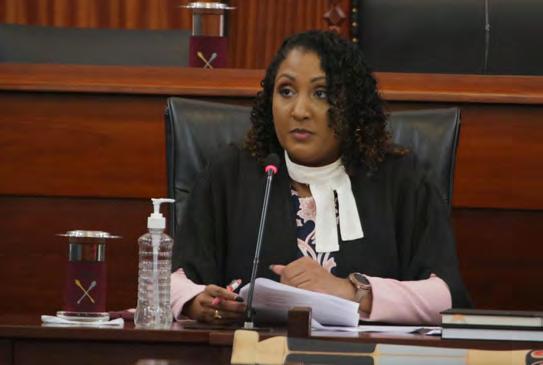
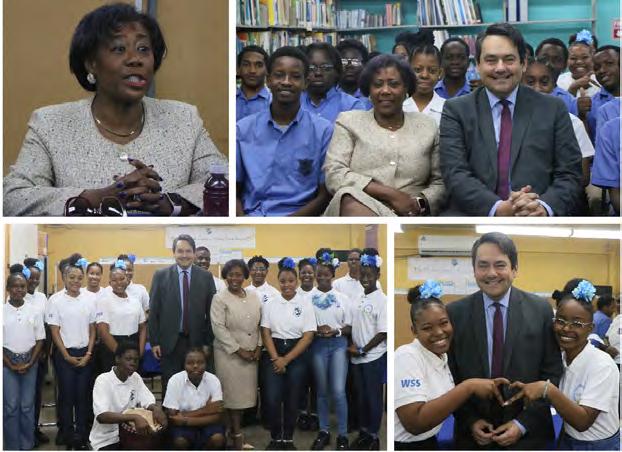
Ahead of the 11th Commonwealth Youth Parliament in Port-of-Spain, Trinidad and Tobago, the CPA Secretary-General Stephen Twigg visited the Parliament of the Republic of Trinidad and Tobago. The CPA Secretary-General met with the two Joint Presidents of the CPA Trinidad and Tobago Branch – the President of the Senate, Senator Hon. Christine Kangaloo and the Speaker of the House of Representatives, Hon. Bridgid Annisette-George, MP at the Red House.

Discussions focused on the CPA’s
the CPA Caribbean, Americas and the Atlantic Region. The CPA Secretary-General also toured the facilities for the forthcoming 11th Commonwealth Youth Parliament. The CPA Secretary-General also accompanied the Speaker of the House of Representatives, Hon. Bridgid Annisette-George, MP and local MP, Hon. Keith Scotland, MP on a visit to Woodbrook Secondary School to speak to young people about the Commonwealth and the CPA. Youth engagement is central to the values of the CPA and aim to connect Parliamentarians with young people in schools, colleges and universities to inspire the next generation of young leaders. The CPA’s youth work also includes the Commonwealth Youth Parliament (CYP) which was held ‘in-person’ in Trinidad and Tobago for the first time since 2019 due to travel restrictions in recent years caused by the COVID-19 pandemic. The Commonwealth Youth Parliament has been organised by the CPA since 1997.
The Parliamentarian | 2022: Issue Four | 100 years of publishing | 357
support for Parliamentarians and parliamentary staff and activities in
CPA NEWS
Images credit: Parliament of Trinidad and Tobago


PARLIAMENTARY REPORTS AND THIRD READINGS FROM PARLIAMENTS AROUND THE COMMONWEALTH THIRD READING REPORTS British Columbia Page 363 New Zealand Page 364 Australia Federal Page 368 CANADA Parliament and Committee reports Page 362 COMMONWEALTH LEGISLATIVE NEWS TRINIDAD AND TOBAGO Budget debates and legislative news Page 370 AUSTRALIA Budget debates in the Parliament of Australia Page 366 358 | The Parliamentarian | 2022: Issue Four | 100 years of publishing UNITED KINGDOM Resumption of UK Parliament and UK Government Upheaval Page 359
UNITED KINGDOM
RESUMPTION OF UK PARLIAMENT AND GOVERNMENT UPHEAVAL
RESUMPTION OF UK PARLIAMENT: OATHS AND AFFIRMATIONS TO THE KING
Following the suspension of parliamentary business after the death of Her Late Majesty Queen Elizabeth II, business resumed in the UK House of Commons on 21 September 2022. Business for the first day after resumption was taken up by Members of Parliament taking oaths or making affirmations to the new sovereign, King Charles III. While it is not mandatory for MPs to take a new oath on the accession of a new monarch – as their allegiance is already confirmed by their prior oath to The Queen “and her heirs and successors” following their election to the UK Parliament – many Members choose to do so as a symbolic indication of their allegiance.
The Speaker of the House of Commons, Rt Hon. Sir Lindsay Hoyle, MP, opened the session, saying that “I should like to inform the House that I have received a great many letters of condolence on the occasion of the death of Her Late Majesty The Queen from our friends and colleagues in other Parliaments and countries around the globe… we are extremely grateful to our fellow Parliamentarians across the world for their thoughts at this time”. He also expressed gratitude to all those who had been involved in the management of the events following the death of The Queen, in particular to parliamentary staff who had taken on roles beyond their typical responsibilities.
ANNOUNCEMENT OF FISCAL POLICY CHANGES AND UK GOVERNMENT UPHEAVAL
The first major parliamentary event after resumption was a fiscal statement to the UK House of Commons made by the new Chancellor of the Exchequer, Rt Hon. Kwasi Kwarteng, MP, on 23 September 2022. He announced that “we will review the tax system to make it simpler, more dynamic and fairer for families” and that a number of tax reductions would be made. Proposals included the abolition of the top rate of income tax, a reversal of a recent increase in national insurance, and a reversal of a planned increase in corporation tax.
Concluding his statement, the Chancellor told the House that “we have promised a new approach for a new era. We have
promised to release the enormous potential of this country. Our growth plan has delivered all those promises and more, and I commend it to the House”. Responding for the Opposition Labour Party, the Shadow Chancellor of the Exchequer, Rt Hon. Rachel Reeves, MP, said that “the Prime Minister and Chancellor have no regard for taxpayers’ interests or the concerns of working people”.
The statement was made on the last day of House of Commons business before the beginning of the annual ‘conference recess’ on 26 September 2022, during which the major political parties host their annual conferences in venues outside London.
The recess period saw considerable political and economic turmoil in the aftermath of the fiscal statement, with the pound falling sharply against the US dollar on global currency markets, and an intervention by the Bank of England to support UK Government bonds following concern about the solvency of pension funds. On 28 September 2022, the Leader of the Opposition, Rt Hon. Sir Keir Starmer, MP, said that “what the government needs to do now is recall Parliament and abandon this budget before any more damage is done”.
DISMISSAL OF CHANCELLOR AND REVERSAL OF TAX PLANS
On 3 October 2022, the first day of the Conservative Party conference in Birmingham, the Chancellor of the Exchequer announced that the Government would no longer abolish the top rate of income tax, stating that it “has become a distraction to our overriding mission to tackle the challenges facing our country” This decision did not ease the pressure on the UK Government, however, and on Friday 14 October 2022 it was announced that Mr Kwarteng had been dismissed as Chancellor, with the Prime Minister, Rt Hon. Liz Truss, MP, announcing on the same day that the Government would no longer proceed with its plan to cancel the scheduled increase in corporation tax. His replacement was Rt Hon. Jeremy Hunt, MP, a former Secretary of State for Health.
On Monday 17 October 2022, the new Chancellor gave a statement to the House of Commons announcing further changes to the fiscal measures proposed;
he told the House that “when the interest of economic stability means that the Government need to change course we will do so, and that is what I have come to the House to announce today”. This meant that proposed changes to dividend tax, alcohol duty and sales tax for foreign shoppers would no longer be introduced. He also said that the UK Government would no longer proceed with a cut in the basic rate of income tax which predated the appointment of the new Prime Minister, telling the House that “at a time when markets are asking serious questions about our commitment to sound public finances, we cannot afford a permanent discretionary increase in borrowing worth £6 billion a year”.
RESIGNATION OF HOME SECRETARY, SHALE GAS VOTE, AND RESIGNATION OF PRIME MINISTER
On Wednesday 19 October 2022, the Home Secretary, Rt Hon. Suella Braverman, MP, announced her resignation following reports that she had used a private email address to share Government documents. This was found to have been a breach of the Ministerial Code, the protocol which sets out the standards of conduct expected of Ministers and how they discharge their duties. She was replaced by Rt Hon. Grant Shapps, MP, a former Secretary of State for Transport.
The same day, a scheduled Opposition Day debate took place on the UK Government’s proposal to allow shale gas extraction through a method known as hydraulic fracturing or ‘fracking’. The Government had previously declared a moratorium on fracking and in its winning 2019 manifesto, the Conservative Party had said that it would not support fracking unless it could be shown by science to be done safely in the UK. On 22 September 2022, the Government confirmed to the House of Commons its intention to lift the moratorium. The Secretary of State for Business, Energy and Industrial Strategy, Rt Hon. Jacob Rees-Mogg, MP, told the House of Commons that “it is important that we use all available sources of fuel within this country. It is more environmentally friendly to use our own sources of fuel than to extract them in other countries and transport them here at great cost, both financially and in terms of carbon”.
The Parliamentarian |
of publishing | 359
2022: Issue Four | 100 years
PARLIAMENTARY REPORT
Parliamentary Report by Simon Keal, Parliament of the United Kingdom.
The Opposition Labour Party used one of its Opposition Day debates to put forward a motion suspending priority for Government business on 29 November 2022. The motion then set out a procedure by which the Opposition would present a Bill to ban fracking, which would go through all of its stages on the specified date. In moving the motion, Shadow Secretary of State for Climate Change and Net Zero, Rt Hon. Ed Miliband, MP, said that “we have called this debate to provide the House with the right, which it should have, to make the decision on whether fracking should be allowed to restart across our country”, noting that the Government had previously indicated that it did not intend to give the House of Commons a binding vote on the principle of the ban. He added that the Opposition had proposed that a Bill be passed because if they had put forward a simple motion of opposition to fracking the “Government would simply have abstained and ignored the vote, as they have done in votes on the windfall tax, fire and rehire, and the cut to universal credit”.
The Government put down an amendment to the Opposition motion, to remove any reference to banning fracking
or setting aside time for a Bill and instead to call on the Government to “to consult to ensure there is a robust system of local consent, and clear advice on seismic limits and safety, before any hydraulic fracturing for shale gas may take place”
During the debate, some MPs had indicated their belief that the Government was treating the motion as a confidence vote. Some media reports also suggested that if Conservative MPs failed to vote with the Government, they may have the whip withdrawn, meaning that they would be removed from the Conservative group in Parliament. The Minister for Climate, Hon. Graham Stuart, MP, stated in his closing speech that “quite clearly, this is not a confidence vote”. Backbench Conservative Hon. Ruth Edwards, MP, said that “many of us have been told today by our Whips that if we vote for, or abstain from voting against, this motion, we will lose the Whip”, to which the Minister replied that “that is a matter for party managers, and I am not a party manager”. The motion was ultimately defeated by 326 votes to 230, though it was noted that over 40 Conservative MPs did not vote with the Government and
there were media reports, denied by the Government, that some Conservatives had been physically pressured or intimidated into voting against the Opposition motion. Events surrounding the fracking vote caused further pressure on the Government and the following day, 20 October 2022, the UK Prime Minister announced her resignation, declaring in a statement outside Number 10 Downing Street that “I cannot deliver the mandate on which I was elected by the Conservative Party. I have therefore spoken to His Majesty The King to notify him that I am resigning as Leader of the Conservative Party”. She also confirmed that plans had been agreed for a new leadership contest to take place within the next week.
It was subsequently confirmed that candidates seeking to be the new Conservative Party leader would need the nomination of at least 100 Conservative MPs, meaning that a maximum of three candidates would qualify for a leadership ballot. The only two candidates to officially declare their interest in the role were Rt Hon. Rishi Sunak, MP, the former Chancellor of the Exchequer; and Rt Hon. Penny Mordaunt, MP, the current Leader of the House of Commons. Both candidates had stood in the previous leadership election which took place in summer 2022 and had finished respectively in second and third place. There were also reports that the former Prime Minister, Rt Hon. Boris Johnson, MP, was considering standing and had sought nominations, but he ultimately declined to put his name forward.
On Monday 24 October 2022, it was confirmed that the only candidate to receive the minimum number of nominations was Rt Hon. Rishi Sunak, MP, who was therefore elected as Conservative Party leader without a contest. The following day, 25 October 2022, Ms Truss attended Buckingham Palace to tender her resignation as Prime Minister to The King, and Mr Sunak was appointed Prime Minister in her place. In the following days, the new Prime Minister announced a new Ministerial team, including the reappointment of Rt Hon. Suella Braverman, MP, as Home Secretary, one week after her resignation. Rt Hon Jeremy Hunt, MP, was confirmed to remain in his role as Chancellor of the Exchequer.

360 | The Parliamentarian | 2022: Issue Four | 100 years of publishing
PARLIAMENTARY REPORT UNITED KINGDOM
ELECTIONS FOR UK HOUSE OF COMMONS COMMITTEE CHAIRS
A number of the Ministers newly appointed to Government in autumn 2022 were incumbent Chairs of House of Commons Committees. On appointment they are required to resign from their Committee position, after which a new Chair is elected in a secret ballot of all MPs. Committee Chair positions are allocated to specific parties by agreement following each general election, meaning that all candidates for each vacancy were from the governing Conservative Party.
Committee Chairs who vacated their positions in the autumn were Rt Hon. Jeremy Hunt, MP, the new Chancellor of the Exchequer, who had chaired the Health and Social Care Committee; Rt Hon. Mel Stride, MP, who became Secretary of State for Work and Pensions on 25 October 2022 and who had chaired the Treasury Committee; and Rt Hon. Tom Tugendhat, MP, the Chair of the Foreign Affairs Committee, who was appointed Minister of State (Minister for Security) on 6 September 2022.
The first election to take place was for the Chair of the Foreign Affairs Committee on 12 October 2022. The winning candidate was Hon. Alicia Kearns, MP, who defeated three other candidates for the position including former cabinet ministers Rt Hon. Dr Liam Fox, MP and Rt Hon. Sir Iain Duncan Smith, MP.
Subsequently, on 2 November 2022, the election was held for the Chair of the Health and Social Care Committee, with the winner being Hon. Steve Brine, MP, who
had previously served as a Health Minister from 2017 to 2019 and beat four other candidates for the role.
Finally, on 9 November 2022, Hon. Harriet Baldwin, MP was elected as Chair of the Treasury Committee, again beating four other candidates. She had previously held Ministerial roles in the Treasury, the Ministry of Defence, and the Foreign, Commonwealth and Development Office.

In addition, Rt Hon. Greg Clark, MP, was reappointed as Chair of the Science and Technology Committee without a contest; he had previously served in the role from January 2020 until July 2022, when he was appointed as Secretary of State for Levelling Up, Housing and Communities, a position he vacated following the appointment of Rt Hon. Liz Truss, MP as Prime Minister in September 2022.
NORTHERN IRELAND PROTOCOL BILL REACHES THE UK HOUSE OF LORDS
UK Government legislation received its customary scrutiny in the House of Lords through the autumn. Of particular note was the Second Reading and Committee stage of the Northern Ireland Protocol Bill, which would enable the Government to override some aspects of the agreement with the European Union (EU) which required checks on goods moving between Great Britain and Northern Ireland as part of a wider EU trade agreement. The motion to pass the Bill at Second Reading was made by Minister of State at the Foreign, Commonwealth and Development Office, Lord Ahmad of Wimbledon, who said that
“this Bill gives the Government powers to address these urgent political challenges by seeking to fix the practical problems created by the protocol”, but stressed that “the Government remain clear that our preference would be to reach a negotiated solution to the protocol with our partners in the European Union”.
An amendment to the motion was proposed by Conservative member Lord Cormack, to add that “this House regrets the early introduction of this Bill, and calls on His Majesty’s Government to delay further consideration of the Bill for six months, so as to allow time to reach a negotiated settlement with the European Union”. In moving the amendment, Lord Cormack said that “it is not helpful, while we continue those negotiations, to have on the statute book a Bill that is, in effect, an implied threat. I believe that there is a case for a pause”.
A further amendment was moved by Labour peer Baroness Chapman of Darlington expressing regret that the Bill “is widely perceived to breach the United Kingdom’s obligations under international law” and called on the Government to “consider and report to the House on whether pausing this legislation would be beneficial to the progress of those negotiations or other processes”. After detailed debate on the principles of the Bill and its implications, neither amendment was moved and the Second Reading was allowed to pass without a vote, as is customary in the House of Lords.
Immediately afterwards the Government put down a commitment motion, to indicate that the Bill should be committed to a Committee of the Whole House for detailed consideration. Lord Cormack had also put down an amendment to this motion, to state that “the Committee should meet not until 18 April 2023, or until His Majesty’s Government has reached a negotiated settlement with the European Union, whichever is earlier”, but this was also not moved. Committee stages of House of Lords Bills typically take place either as a Committee of the Whole House, in the main House of Lords chamber, or in Grand Committee, a smaller venue. In either case, any member of the House may take part in Committee stage; the main procedural difference is that no divisions may take place in Grand Committee, though divisions at Committee stage in the House of Lords are rare in any event.
The Parliamentarian | 2022: Issue Four | 100 years of publishing | 361
REPORT UNITED KINGDOM
PARLIAMENTARY
CANADA
PARLIAMENTARY NEWS FROM FEDERAL PARLIAMENT OF CANADA
Parliamentary Report by Gabrielle de Billy Brown, Parliament of Canada.
CHANGES IN THE SENATE
On 27 September 2022, two new Senators were appointed. Hon. F. Gigi Osler represents the Province of Manitoba. Prior to her appointment, she was a Professor and a surgeon. In addition, Hon. Ian Shugart was appointed to represent the Province of Ontario, after a career as a public servant. Both currently sit as nonaffiliated Senators.
On 2 October 2022, Hon. Vernon White retired after 10 years in the Senate. He represented the Province of Ontario. At the time of his retirement, he was a member of the Canadian Senators Group.
On 23 October 2022, Hon. Larry W. Campbell, who represents the Province of British Columbia, left the Canadian Senators Group. He now sits as nonaffiliated. He had been a member of the group since 2019.
As of 13 November 2022, the standings in the Senate were: Independent Senators Group 39, Conservative Party 15, Progressive Senate Group 14, Canadian Senators Group 11 and non-affiliated 10. Sixteen seats were vacant.
CHANGES IN THE HOUSE OF COMMONS
The seat for the constituency of Mississauga-Lakeshore in Ontario remains vacant following the resignation of Sven Spengemann, MP to accept a position at the United Nations in May 2022. On 6 November 2022, the Prime Minister, Rt Hon. Justin Trudeau, MP announced that this by-election would be held on 12 December 2022.
As of 13 November 2022, in addition to this vacant seat, the standings in the House of Commons were: Liberal Party of Canada 158, Conservative Party of Canada 118, Bloc Québécois 32, New Democratic Party 25, Green Party 2 and Independent 2.
LEGISLATION
On 20 September 2022, the government tabled two Bills to address the increased cost of living for Canadians: Bill C-30: An Act to amend the Income Tax Act (temporary enhancement to the Goods and Services Tax/Harmonized Sales Tax credit) and Bill C-31: An Act respecting cost of
living relief measures related to dental care and rental housing
The purpose of Bill C-30 is to double the tax credit for these sales tax for a period of six months. For its part, the purpose of Bill C-31, which aims to provide targeted support for Canadian households, is twofold. First, it creates a dental care benefit for children under twelve years old for families who do not have access to private dental insurance. Second, it implements a one-time rental housing benefit for those who paid rent on their primary residence.
Bill C-30 received royal assent on 18 October 2022. Bill C-31 has completed its Third Reading in the House of Commons and is currently being considered by the Senate Standing Committee on National Finance.
On 18 October 2022, Bill S-206: An Act to amend the Criminal Code (disclosure of information by jurors) received royal assent. This Senate Public Bill, sponsored by Hon. Pierre-Hugues Boisvenu, amends the Criminal Code to allow jurors and others involved in the proceedings of a jury to disclose information to health care professionals, in certain circumstances. In 2018, a report from the House of Commons Standing Committee on Justice and Human Rights had recommended for a more lenient secrecy rule regarding jury deliberations.
COMMITTEE REPORTS
In September 2022, the House of Commons Standing Committee on Environment and Sustainable Development presented a report on radioactive waste management. While there are environmental, economic and social benefits from the use of nuclear power and medical isotopes, the waste it generates must be managed efficiently to ensure its adequate disposal. The report emphasises that decisions taken today will have long-term consequences. As such, the Committee recommends that scientific knowledge be at the centre of any decision-making process and public education campaigns on the subject. In parallel, in October 2022, the AuditorGeneral of Canada presented a public audit which concluded that the three federal entities responsible for radioactive waste management do a satisfactory job with low-
and intermediate-level radioactive waste, but highlights areas for improvement.
In October 2022, the House of Commons Standing Committee on Foreign Affairs and International Development presented a report regarding vaccine equity in the context of the COVID-19 pandemic. The Committee underwent this study to better understand why vaccination rates so greatly differ between wealthier countries and developing or middleincome countries. The report looks to Canada’s international assistance in response to the pandemic as well as the impact of intellectual property rights on the global response to this crisis. Among its recommendations, the Committee asks that the government of Canada increase funding for countries with lower vaccination rates, including for “community-based projects that combat vaccine misinformation and hesitancy” The Committee also asks for a review of its Access to Medicines Regime to increase the exportation of generic medicines to countries that cannot produce them.
Also in October 2022, the House of Commons Standing Committee on Access to Information, Privacy and Ethics presented a report on facial recognition technology and the growing power of artificial intelligence. The study followed recent investigations by the Office of the Privacy Commission of Canada, an Agent of Parliament, into the use of facial recognition technology by private companies as well as by the Royal Canadian Mounted Police. In its work, the Committee looked to the uses of this technology including by law enforcement, issues regarding its increased use as well as potential areas for regulation. Following witness testimonies on these questions, the Committee recommends that the federal government impose a moratorium on the use of this technology in Canada until it has developed a regulatory framework on activities which might benefit from said technology.
NATIONAL HANDGUN FREEZE
On 21 October 2022, the Prime Minister, Rt. Hon. Justin Trudeau, MP announced new regulations to freeze the sale, purchase and transfer of handguns. This announcement is part of a series of
362 | The Parliamentarian | 2022: Issue Four | 100 years of publishing
PARLIAMENTARY REPORT
measures taken to address gun violence in Canada. This includes Bill C-21: An Act to amend certain Acts and to make certain consequential amendments (firearms), which was introduced in May 2022. As of 14 November 2022, the Bill is under consideration by the House of Commons Standing Committee on Public Safety and National Security.
INCREASING SAFETY FOR INTERPRETERS
With the increase in hybrid and remote meetings since the beginning of the pandemic, concerns regarding the workplace safety of interpreters have been raised in recent months. Official proceedings at the Parliament of Canada are simultaneously interpreted in both English and French, in addition to other languages in certain circumstances. The change from in-person to remote proceedings due to the COVID19 pandemic has caused a decrease in audio quality which affects interpreters’ ability to do their work and can lead to significant injuries if participants are not using appropriate equipment. To address this issue, the House of Commons has adopted preventative measures such as providing witnesses with approved headsets ahead of meetings and mandatory testing of participants’ sound quality before the meeting can begin. On 3 November 2022, at a meeting of the House of Commons Board of Internal Economy, it was agreed that its Chair, Hon. Anthony Rota, MP, Speaker of the House of Commons, would write a letter to Senator Hon. George Furey, Speaker of the Senate of Canada, to recommend that the Upper Chamber adopt similar processes.
THIRD READING REPORT –BRITISH COLUMBIA
The Legislative Assembly of British Columbia passed two Bills which respond to recommendations from independent reviews of money laundering in the Province.
Bill 29, Mortgage Services Act
Introduced on 4 October 2022, Bill 29, Mortgage Services Act, addresses 12 recommendations from the 2022 Final Report of the Commission of Inquiry into Money Laundering in British Columbia by Associate Chief Justice Austin Cullen, known as the Cullen Commission. The Cullen Commission was established in 2019 to investigate and address money laundering in sectors such as real estate, and released its final report in June 2022. To reduce money laundering in the real estate sector, the Bill establishes licensing levels and standards of conduct for mortgage services providers, grants rule-making powers over licensing and licensee conduct to the provincial financial services regulator, and raises financial penalties to a maximum of C$2.5 million for individuals and corporations, up from a maximum of C$200,000. The Bill also enhances consumer protection and the disclosure and reporting obligations of mortgage services providers.
During the Second Reading debate, Hon. Mike Farnworth, MLA, Minister of Public Safety and Solicitor General, on behalf of Hon. Selina Robinson, MLA, Minister of Finance, highlighted the provisions of the Bill that implement Cullen Commission recommendations, including establishing different licensing categories, increasing financial penalties to align with the Real Estate Services Act, amending appeal procedures, and granting the Financial Services Authority rule-making powers over licensing. The Minister noted that, while the Cullen Commission recommended creating separate legislation to govern private lenders, the Mortgage Services Act includes all lenders to leverage the Real Estate Act framework. He also noted the scope of change that has taken place in the mortgage services sector since the Mortgage Brokers Act was enacted in 1972. He stated that government was mindful of the requirements of the United Nations Declaration on the Rights of Indigenous Peoples (UNDRIP), and found that the Bill did not have a distinct effect on Indigenous rights as described in UNDRIP.
Peter Milobar, MLA, Official Opposition Critic for Finance, expressed support for increasing transparency and consumer protection in the mortgage services sector. He expressed broader
concerns about government transparency with respect to provisions that will be set by regulation, such as fees. He also suggested that the success of the Bill will largely depend on the operationalization of the superintendent, who will determine licensing procedures and respond to complaints, and the implementation of aspects like the fee structure.
The Mortgage Services Act passed its Third Reading on 18 October 2022.
Bill 32, Gaming Control Act
Bill 32, Gaming Control Act, was introduced on 5 October 2022 and replaces the Gaming Control Act, 2002. The Bill addresses 10 recommendations from the 2018 Independent Review of Money Laundering in Lower Mainland Casinos conducted for the Attorney-General of British Columbia by Dr Peter German, KC, known as the German report, and the intent of one Cullen Commission recommendation. It clarifies the regulation of gaming in the province and the role of the B.C. Lottery Corporation, and introduces two new offences aimed at preventing money laundering in casinos.
Hon. Mike Farnworth, MLA, Minister of Public Safety and Solicitor General elaborated on the Bill’s provisions during the Second Reading debate. He stated that the Bill addresses regulatory powers regarding detection and prevention of unlawful activity, prevention of problem gambling, security and surveillance. He shared that the Bill also helps prevent money laundering by requiring source of funds declarations, which are accompanied by new offence provisions. He noted that his Ministry undertook consultations with the gaming sector in the development of the Bill and that the sector expressed their support for the stronger regulatory framework.
The Official Opposition Critic for Public Safety and Solicitor General, Mike Morris, MLA, expressed the Official Opposition’s support for the Bill. He spoke to the Province’s struggles with illegal gambling and recalled the previous government’s work in this area. He also commended Associate Chief Justice Austin Cullen and Dr German for their work investigating the issue. He spoke in favour of many parts of the regulatory framework being introduced, including clarifying the role of the Lottery Corporation and increased training for workers within the gaming sector.
On 18 October 2022, the Gaming Control Act passed its Third Reading.
The Parliamentarian | 2022: Issue Four | 100 years of publishing | 363
THIRD READING REPORT BRITISH COLUMBIA
Third Reading Report by Mary Heeg, Legislative Assembly of British Columbia.
THIRD READING REPORT
Maniapoto Claims Settlement Bill
The Maniapoto Claims Settlement Bill passed its Third Reading on 21 September 2022 with unanimous support in the House. The settlement package outlined in the Bill includes an acknowledgment and apology by the Crown for its breaches of Te Tiriti o Waitangi/the Treaty of Waitangi towards the Ngāti Maniapoto iwi (tribe). It also includes cultural redress, including place name changes and the vesting of cultural sites to Maniapoto, and commercial and financial redress of NZ$165,000,000. The iwi is based in Te Rohe Pōtae (the King Country), on the west coast of the North Island of New Zealand.
The Minister for Treaty of Waitangi Negotiations, Hon. Andrew Little, MP (Labour) outlined the background to the Bill, saying that “over the last 180 years, the Crown repeatedly breached the solemn promises it made under Te Tiriti. It indiscriminately killed and injured your people during the Waikato Wars, including women and children, who were noncombatants.” In his First Reading speech, he outlined that “The Crown aggressively acquired large amounts of Maniapoto land, such that by 1935 only 24% of land in Te Rohe Pōtae was in Māori ownership.” Nicole McKee, MP (ACT) said that the Bill represented “a celebration of the mahi (work) that is coming to a conclusion. It’s a celebration of an outcome. It’s a celebration of the future, for our tīpuna (ancestors) in the past, and our tamariki (children) that are still coming.”
As part of the settlement, Ngāti Maniapoto’s treasured taiaha (a carved, decorated wooden weapon) was entrusted to be cared for at Parliament for five years. Joseph Mooney, MP (National) said this was of “extraordinary significance” and would “symbolise that this is a relationship that is beginning on trust between the Crown and Ngāti Maniapoto. This is powerful symbolism of that agreement.”
Hon. Nanaia Mahuta, MP (Labour) had previously worked as a negotiator for Ngāti Maniapoto, her iwi, while her party was in Opposition. She commented that “It’s not often, as a Member of this House, that you get the opportunity to share a story that is intrinsic to who you are, and I get
to do that today, so I’m very grateful. It’s an honour and a pride to be able to speak to this particular Bill.” She thanked Little for his support, noting that “When I went to go and see him to say, ‘Is it possible for me to support my iwi to be able to help to negotiate forward?’, he didn’t hesitate.”
Todd Muller, MP (National) talked about his connection to Maniapoto, saying, “My great-great-grandfather was in the 65th Regiment of Foot and walked to battle against your forebears, your ancestors, whose love and tradition and honour and mana (prestige) you hold in your hearts as you reflect on this Third Reading today… So it means something for me to stand here and to be part of this special occasion of apology for the 150 years of suffering and hurt and loss immeasurable, because it’s not a quantification in a financial sense. It sits in someone’s soul - it sits in your souls.”
Debbie Ngarewa-Packer, MP (Te Paati Māori) argued that the settlement did not fully account for what was taken, and said, “We believe Te Tiriti is to be honoured, not settled, so it’s no surprise that we don’t believe settlements are full and final… and we look forward to supporting you coming back for the other 99%.”
The passage of the Bill was marked with a waiata (song) and haka (ceremonial dance) by members of Ngāti Maniapoto in the gallery of the New Zealand Parliament. The Bill received the Royal Assent on 27 September 2022.
Fair Pay Agreements Bill
The Fair Pay Agreements Bill passed its Third Reading on Wednesday 26 October. The Bill drew on recommendations from the Fair Pay Agreement Working Group, which noted that “New Zealanders work more hours and produce less per hour than in most OECD countries” and that sector-based bargaining could be “most useful in sectors or occupations where competition is based on ever-decreasing labour costs rather than on increasing quality or productivity.” The Bill aims to improve employment terms for employees by establishing a framework for sectorwide fair pay agreements.
The Minister for Workplace Relations and Safety, Hon. Michael Wood, MP (Labour), opened the Third Reading debate, stating, “We’ve talked about the people that fair pay agreements will help - those
who clean, those who care, those who drive, those who serve - workers who … have been left out in the shadows of our deregulated labour market.” Wood explained that minimum standards and sector-based bargaining were abolished 30 years ago, and it was promised that “this would lead to more productivity” and “better terms and conditions for workers.” These promises, Wood argued, “were proven to be false here in New Zealand and all around the world.” Wood said the Bill is “about once again forming a social contract in this country where working people have a voice, where working people receive fair dues for the contribution that they make.” Wood also argued that the competitive system had led to employers wishing to pay employees fairly being “undermined and unable to do what is the right thing.”
Jan Logie, MP (Green) spoke in favour of the Bill. She stated that “New Zealand had the world’s largest increase in income inequality … in the 80s and 90s … It wasn’t a change of the work habits of our people or their ability to bargain; no, it was the decisions made in this place to take away the power and the ability to collectively organise from working people, as well as the slashing of benefits.” Logie added that “poor leadership in our businesses is costing the economy NZ$5 billion a year … The core problem with the leadership is a focus on driving down costs and not recognising the value of people, in investing in them and listening to their experiences and being able to learn from them to improve the business.”
Hon. Scott Simpson, MP (National) put forward an opposing view, stating that “For 30 years … we have had the benefits of a nimble, flexible, and exciting industrial environment.” He argued that the Government were “so out of touch, so out of step with the thinking of a modern, progressive, and interesting world … With this piece of legislation, they want to take us back to the 1970s.” He added that the legislation is “not about fair pay agreements; it is about mandatory union deals.” New Zealanders, he said, did not “want to have imposed mandatory deals thrust upon them by unknown, faceless people who have no understanding of the individual imperatives that make businesses work.”
364 | The Parliamentarian | 2022: Issue Four | 100 years of publishing
THIRD READING REPORT NEW ZEALAND
Third Reading Report by Lizzie Hendy, Parliament of New Zealand.
Chris Baillie, MP (ACT) also spoke in opposition to the Bill. He said, “We don’t oppose fair pay … employees who work hard should be paid really well if they are productive for the business. Good, hardworking, loyal employees are the ones that are going to suffer.” Baillie added, “The Bill takes out the rights of the worker to plan their own destiny out. And even if they don’t want any involvement in a fair pay agreement, they have no choice.” He argued that “after declining through the 1980s, employees’ pay and conditions have improved substantially since the introduction of the Employment Contracts Act in 1991.”
Despite opposition to it, the Bill passed its Third Reading with 76 votes to 43 and received the Royal Assent on 1 November 2022.
Accident
Compensation
(Maternal Birth Injury and Other Matters) Amendment Bill
Prior to the passage of the Accident Compensation (Maternal Birth Injury and Other Matters) Amendment Bill, injuries caused by childbirth were not covered by the Accident Compensation Corporation (ACC), which administers New Zealand’s no-fault accidental injury compensation scheme. The Bill introduces a list of injuries to birthing parents to be included under
ACC, meaning claimants would be entitled to support including weekly compensation for lost earnings. The Bill also addresses policy and technical changes intended to make coverage more equitable and provide greater clarity for claimants.
In December 2021, the Minister-incharge of the Bill, Hon. Carmel Sepuloni, MP (Labour), opened the First Reading debate by stating that “85% of women in New Zealand experience an injury when giving birth. Some of these injuries are severe and share similar features to other physical injuries covered by ACC, so it’s only fair that they are covered too.”
Throughout the legislative process, two key changes were introduced by the Education and Workforce Committee who considered the Bill: expanding the number of birth injuries eligible for compensation and adding a requirement to review the list three years after the passage of the Bill. Erica Stanford, MP (National) reflected on the legislative process in her Third Reading speech, noting that the Bill “will aim to help 28,000 women … important to note that that number has increased by about 10,000 since the First Reading, from 18,000 to 28,000 as new information arose.” Sarah Pallett, MP (Labour), a former midwife who contributed to Select Committee discussions about categories of birthing injuries, agreed that the
28,000 figure was significant, pointing out that “That’s 76 a day that will benefit from the legislation.”
While the Green Party of Aotearoa New Zealand supported the Bill, they felt that the legislation could go further.
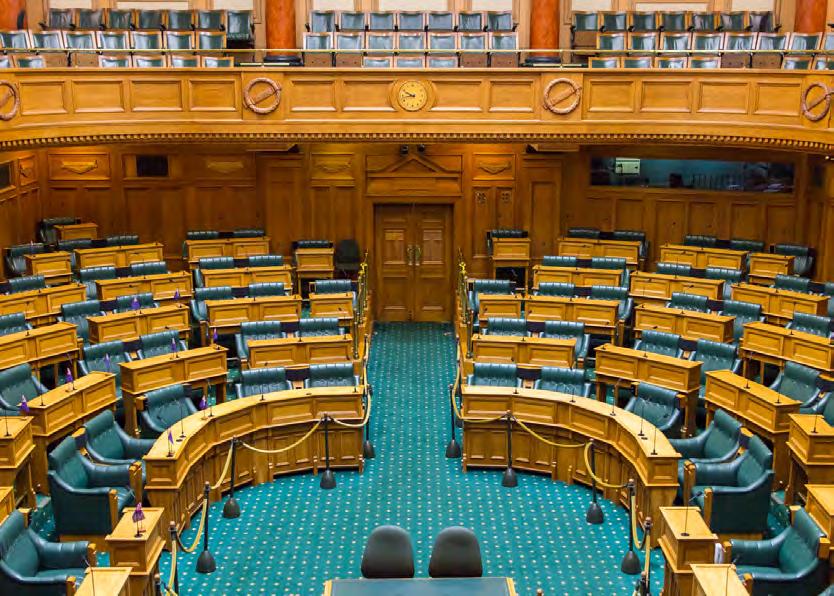
The Education and Workforce Committee’s final report outlined the differing view, that cover should be expanded to provide a “general category of birthing injuries, rather than a closed list approach”. The Green Party also argued that the Bill should cover other potential consequences of childbirth such as injuries to babies and mental injury such as trauma. While Jan Logie, MP (Green) said at the Bill’s Third Reading debate, “Of course this Bill - as we have raised many times - is not perfect in the view of the Greens”, she noted that “This is a very significant day for us as a country” and “Today is a day primarily to celebrate, and I am.”
The National Party also suggested the Bill could have gone further in its coverage. Hon. Michael Woodhouse, MP (National) commented, “I think we do need to have a look at how we cover for babies who are born with injuries … So it’s a good day, but I think there’s some work to do.”
In the Third Reading debate, Toni Severin, MP (ACT) spoke about the importance of the Bill being reviewed after three years, noting that “[The officials] also mentioned to us that they were going to be monitoring the system and, hopefully, they’re going to be putting a robust monitoring system in, so if anything does show up sooner than the three years, it will be added to the list. Now, that’s very important, because as we all know, there are things that constantly happen that we, who are not experts, would not know, but we would hope the medical profession would be able to do that.”
The Accident Compensation (Maternal Birth Injury and Other Matters) Amendment Bill passed its Third Reading on 27 September 2022 with unanimous support in the House. It received the Royal Assent three days later, allowing the legislation to come into effect from 1 October 2022.
THIRD READING REPORT NEW ZEALAND The Parliamentarian | 2022: Issue Four | 100 years of publishing | 365
PARLIAMENTARY REPORT AUSTRALIA

TRIBUTES TO THE QUEEN AND BUDGET DEBATES IN THE PARLIAMENT OF AUSTRALIA
DEATH OF HER MAJESTY QUEEN
ELIZABETH II
On Friday 9 September 2022, the Governor-General of Australia, His Excellency General Hon. David Hurley, AC DSC (Retd), advised Australians that Her Majesty The Queen had passed away the previous day. In his statement, the Governor-General passed on his condolences to members of the Royal Family and said that he joined all Australians in mourning and reflecting on Her Majesty’s lifetime of tireless service, noting that she had served Australia “with enormous distinction for more than seventy years.”
The Australian House of Representatives and the Australian Senate did not meet in the week beginning 12 September 2022, as had been scheduled. Several commemorative activities marked the death of Her Majesty and the accession of the new monarch, King Charles III. These included a 96-gun salute on 9 September, and a ceremony on the Forecourt of Parliament House at 11.00 am on 11 September, at which the GovernorGeneral read the Proclamation regarding His Majesty The King. A National Memorial Service was also held at Australian Parliament House and broadcast to the nation on 22 September 2022.
The House met on 23 September 2022, the date that had been earlier fixed by the Speaker of the House of Representatives, Hon. Milton Dick, MP. The Prime Minister, Hon. Anthony Albanese, MP, moved that the House agree to an address to King Charles III expressing deep sympathy for the great loss sustained in the death of Her Majesty Queen Elizabeth II and extending congratulations to the King on his accession to the throne. The motion was seconded by the Leader of the Opposition, Hon. Peter Dutton, MP. The Deputy Prime Minister, Hon. Richard Marles, MP, and the Leader of the Nationals, Hon. David Littleproud, MP, then addressed the House in support of the motion. All Members present rose in their places to signify their respect and sympathy. A further 109 Members contributed to the debate before the address was agreed to.
In the Senate, an identical motion was moved by the Acting Leader of the
Government in the Senate, Senator Hon. Don Farrell. The motion was supported, with 47 Senators contributing to the debate during the day, before all Senators present joined in a moment of silence.
OCTOBER 2022-2023 BUDGET
In March 2022, Appropriation Bills were introduced into the House of Representatives, but lapsed, having not passed before the dissolution of the House prior to the general election. Supply Bills, passed by the House and the Senate and assented to on 1 April 2022, had provided interim funds to cover normal government and parliamentary activity for the first five months of 2022-23 – that is, until the end of November 2022.
On 25 October 2022, the Treasurer, Hon. Dr Jim Chalmers, MP (Australian Labor Party), introduced Appropriation Bill (No. 1) 2022-2023 (the main Appropriation Bill). During his Second Reading speech, the Treasurer said that the budget “is right for the times and readies us for the
future.” He said that the new Government’s budget “provides cost of living relief which is responsible, not reckless - to make life easier for Australians, without adding to inflation; targets investments in a stronger, more resilient, more modern economy; and begins the hard yards of budget repair.”
Before making funding announcements, the Treasurer set the scene by referring to the uncertainties of the global economy, which he said, “teeters on the edge – with a war that isn’t ending, a global energy crisis that is escalating, inflationary pressures persisting, and economies slowing - some of them already in reverse.” He said that these global challenges, along with high inflation and higher interest rates “will have an impact.” The Treasurer went on to announce a suite of measures, including for:
• natural disasters, including AU$3 billion in response to floods and AU$200 million per year in disaster prevention.
366 | The Parliamentarian | 2022: Issue Four | 100 years of publishing
Parliamentary Report by Fleur Hall, Parliament of Australia.
The Australian Federal Parliament in Canberra.
• cost of living relief, with a package comprising funding for childcare, expanded paid parental leave, medicines and housing, as well as support for workers on the minimum wage.
• vocational and tertiary education.
• renewable energy, and clean-energy manufacturing in Australia.
• transport infrastructure.
Concluding his speech, the Treasurer told the House that “getting through this period stronger than we were before will rely on the very best aspects of our national character - our resilience, our pragmatism, our cooperation and our confidence, and above all else, our belief in each other.”
Following the Budget speech, Appropriation Bill (No. 2) 2022-2023 and the Appropriation (Parliamentary Departments) Bill (No. 1) 2022-2023 were presented by the Assistant Treasurer, Hon. Stephen Jones, MP. Immediately afterwards, the Assistant Treasurer presented Supply Bills (No. 3) and (No. 4) 2022-23 and Supply (Parliamentary Departments) Bill (No. 2) 2022-23, which will provide appropriations for the continuation of normal government and parliamentary activity for the remainder of the financial year. In presenting these Bills, the Assistant Treasurer noted that they did not contain any funding for new financial measures. During debate on Supply Bill (No. 3), the Member for Griffith, Mr Max ChandlerMather, MP (Australian Greens) moved a Second Reading amendment, which was defeated on the voices. The Supply Bills passed the House that evening, and passed the Senate the next day.
On Thursday 27 October 2022, the Leader of the Opposition, Hon. Peter Dutton, MP, gave the Budget reply, in which he described the Government’s Budget as a “missed opportunity to help you at a time when you need help.” Mr Dutton argued that the Budget “didn’t address our economic challenges or inspire confidence. It’s a budget which breaks promises rather than keeps them, it’s a budget which weakens Australia’s financial position rather than strengthens it and it’s a budget which adds to rather than alleviates your cost-of-living pressures.”
Mr Dutton said that the budget is “failing you…in energy, tax relief, housing, filling job shortages, industrial relations and infrastructure in our regions” and that “by Christmas, a typical family will be AU$2,000
worse off under this budget.” However, Mr Dutton said that the Opposition commended “several good measures in Tuesday’s budget: the extension of the childcare subsidy to more Australian families; the commitment to reduce the Pharmaceutical Benefits Scheme co-payment, to lower the cost of medicines; the support for housing for our veterans; the initiatives to combat domestic violence; and the funding to help Australians recover from devastating floods.”
During his speech, Mr Dutton outlined several Opposition policies, including to:
• assist first home buyers by accessing their superannuation through the super homebuyers scheme.
• double the age and veteran service pension work bonus scheme from AU$300 to AU$600 per fortnight, or to AU$1,200 for couples.
Mr Dutton concluded by telling the House that the Opposition “will have a clearly defined positive and bold plan, ahead of the next election, to take our country forward. We will support hardworking Australians. We will support all Australians. And we will rebuild a stronger economy for your family and for our country.”
Debate on the Second Reading of the Main Appropriation Bill resumed on 9 November 2022. As is customary, the debate was a cognate debate that covered Appropriation Bill (No. 2) and Appropriation (Parliamentary Departments) Bill (No. 1). It is expected that many Members will contribute to the Second Reading debate, during which the requirement for debate to be relevant to the subject matter is waived, under the Standing Orders, and public affairs may be debated. While the Second Reading debate is occurring in the House of Representatives, the particulars of expenditure contained in the Bills are being examined by the Senate through its Estimates Committees.
House of Representatives, Member for Scullin for 27 years and inaugural Chair of the Committee), Hon. Ken Wyatt, AM (Member for Hasluck for 12 years, former Minister for Indigenous Australians and the inaugural Deputy Chair of the Committee) and Mr Graham Perrett, MP (current Member for Moreton, former Deputy Chair of the Committee, and current member of the Committee). The discussion was moderated by the Committee’s adviser, Dr Jacqueline Mowbray, Associate Professor at the University of Sydney.
The panel reflected on the establishment of the Committee in 2012, and its remit to develop appropriate recognition of human rights in Australia and human rights issues in legislative and policy development, through the scrutiny of every Bill and every legislative instrument for compliance with international human rights law. It was observed that the Committee has, in the past 10 years, tabled 124 scrutiny reports, eight annual reports, eight inquiry reports and has considered 2,254 Bills of and over 18,000 legislative instruments. The panel discussion was wide-ranging. It included reflections on the challenges and achievements of the Committee in its early years, its role during the pandemic, and how its bipartisan nature has endured as it undertakes its important technical scrutiny work. A paper accompanying the lecture, which also assesses the impact of the Committee, is available at www.aph.gov. au/senate/lectures
CONFERENCE OF SPEAKERS AND PRESIDING OFFICERS OF THE COMMONWEALTH (CSPOC)
On 19 August 2022, to mark the occasion of the 10th anniversary of the Parliamentary Joint Committee on Human Rights, a panel discussion at Parliament House was held as part of the Senate public lecture series. The panel was comprised of Mr Harry Jenkins, AO (26th Speaker of the
The 26th Conference of Speakers and Presiding Officers of the Commonwealth will be hosted by the Parliament of Australia from Tuesday 3 to Friday 6 January 2023. The Conference, which was created as an initiative of the then Speaker of the House of Commons of Canada, Hon. Lucien Lamoureux, in 1969, brings together the Speakers and Presiding Officers of the national Parliaments of the independent sovereign states of the Commonwealth. The 26th CSPOC was to have taken place in early 2022 but was postponed due to the pandemic. The Speaker of the House of Representatives, Hon. Milton Dick, MP, and the President of the Senate, Senator Hon. Sue Lines, look forward to welcoming Conference participants in January 2023.
The Parliamentarian |
Issue Four | 100 years of publishing | 367
2022:
REFLECTIONS ON THE 10th ANNIVERSARY OF THE PARLIAMENTARY JOINT COMMITTEE ON HUMAN RIGHTS
PARLIAMENTARY REPORT AUSTRALIA
AUSTRALIA
THIRD READING REPORT
Social Security (Administration) Amendment (Repeal of Cashless Debit Card and Other Measures) Bill 2022
This Bill was introduced in the House of Representatives on 27 July 2022. The Bill amends the:
• Social Security (Administration) Act 1999 to abolish the cashless welfare arrangements (also known as the cashless debit card or CDC program) and provide for certain exiting program participants to enter alternative income management arrangements, including on a voluntary basis; and
• A New Tax System (Family Assistance) (Administration) Act 1999, National Emergency Declaration Act 2020, Social Security Act 1991 and Social Security (Administration) Act 1999 to make consequential amendments.
The Minister for Social Services, Hon. Amanda Rishworth, MP (Australian Labor Party) told the House that the Bill “delivers on the Albanese government’s election commitment to abolish the cashless debit card and is the first product of ongoing and sincere consultation with many communities around the country.” The Minister said that the CDC had been introduced “by the former government in Ceduna in 2016, but over time it was expanded to the East Kimberley, Goldfields, Bundaberg and Hervey Bay areas, and most recently, the Northern Territory and Cape York….to address some adverse behaviours relating to drug and alcohol misuse in communities, by quarantining a proportion of a person’s income support.”
The Minister argued that “there has never been evidence to show that the cashless debit card is delivering on this objective.” She told the House that the government had “listened to First Nations community leaders, service providers and cashless debit card participants in these communities, and many have told us that the CDC card stigmatises them and makes their lives more difficult because they cannot access the cash economy.”
The Minster said that the more than 17,000 participants would be progressively transitioned from the CDC upon the Bill receiving royal assent and that the government’s priority was to ensure that
this was achieved “in a safe and structured way.”
The Member for Deakin, Hon. Michael Sukkar, MP (Liberal Party of Australia) describing the Bill as “very destructive” told the House that “there are very few times when we can say with so much certainty what the consequences of a government decision will be, but here the evidence is clear: more alcohol and more drugs in these communities will lead to misery…for the most vulnerable people…children who will be neglected by those who will now have more ready access to alcohol and drugs. There will be more children who will be abused in circumstances of drug-affected individuals perpetrating that violence, including sexual violence, on those children.”
In her contribution, the Member for Mayo, Ms Rebekah Sharkie, MP (Centre Alliance) said that “the point of the card was to address anti-social behaviours in many communities.” Ms Sharkie told the House that she was “one of perhaps a handful of people in this place…who have not only spoken on this Bill and researched it in depth…but also visited Ceduna and spent time in Hervey Bay with NGOs and participants to really get a very good understanding of this card.”
Ms Sharkie said that “when I talked with community members, I heard that it was supportive. It had a positive effect. Tourism had come back into Ceduna.” Ms Sharkie said that the trials should be extended, and “concrete evidence” that the CDC works was needed. She described the reports on the CDC as “flawed… lacking in baseline data [and] largely subjective…they were asking people if they wanted to be on the card, rather than asking the police whether there had been a drop in alcohol fuelled violence…and drug offences.” Ms Sharkie concluded by saying that she had “not been ideological on this in any way. I’ve been looking at how we can positively affect the lives of people.”
The Bill was introduced in the Senate on 3 August 2022. The Assistant Minister for Indigenous Australians and Assistant Minister for Indigenous Health, Senator Hon. Malarndirri McCarthy said that “there are thousands of Australians who do not want to be on the card” and that “none of the previous inquiries or reports over four years could say that the CDC was working in such an effective way that it
was reducing trauma, reducing domestic violence or increasing people’s ability to live a life free of all of that.”
The Leader of the Nationals in the Senate, Senator Hon. Bridget McKenzie, reiterated her party’s opposition to the Bill, arguing that the CDC “has actually provided, particularly women and children, a safety net, a security to ensure that they can provide for the very real and essential needs.” Senator McKenzie said that “we all say we want to help…the facts are, as much as you philosophically might not like it, the cashless debit card made it better.” She concluded by calling on the government “to stop playing to your citycentric voters and listen, in particular, to the women of Indigenous and remote communities.”
Conveying the Australian Greens’ support for the Bill, Senator Janet Rice said that “compulsory income management has consistently failed to benefit those who it has been imposed upon and has instead had a demonstrably harmful impact.” She quoted from evidence of the Aboriginal Peak Organisations Northern Territory to the Senate Inquiry on the CDC, saying that “[it]..is a vehicle for disempowerment and perpetuates stigmatisation of Aboriginal people. Rather than building capacity and independence, for many the program has acted to make people more dependent on welfare.” Senator Rice said that the Greens “support an opt-in voluntary option for income management for those who want it.”
During the Committee of the Whole debate, 34 Government amendments and three amendments from the Australian Greens were agreed to. The Bill, as amended, was agreed to and read a third time. The House considered and agreed to the Senate amendments on 28 September. The Bill received royal assent on 30 September 2022.
Fair Work Amendment (Paid Family and Domestic Violence Leave) Bill 2022
This Bill was introduced in the House of Representatives on 28 July 2022. The Bill amends the Fair Work Act 2009 to:
• replace the current entitlement in the National Employment Standards to five days of unpaid family and domestic violence leave in a 12-month period with an entitlement to ten days of paid
368 | The Parliamentarian | 2022: Issue Four | 100 years of publishing
THIRD READING REPORT
Third Reading Report by Fleur Hall, Parliament of Australia.
leave for full-time, part-time and casual employees;
• extend the definition of family and domestic violence to include conduct of a current or former intimate partner of an employee, or a member of an employee’s household; and
• extend the entitlement to paid family and domestic violence leave to nonnational system employees once the International Labour Organization Convention on Violence and Harassment (No. 190) comes into force for Australia.
The Minister for Employment and Workplace Relations, Hon. Tony Burke, MP, told the House that “no worker should ever have to choose between their safety and their income.” The Minister said that “the facts set out by the Fair Work Commission in its recent review are frightening… on average, one woman is killed by her current or former partner every 10 days in Australia.” He argued that it was “not an overstatement to say that this is a workplace entitlement that will save lives” and that the Bill “sends a clear message that family and domestic violence is not just a criminal justice or social issue, but an economic and a workplace issue.”
The Manager of Opposition Business, Hon. Paul Fletcher, MP (Liberal Party of Australia) said that the Bill “builds on the measures put in place by the former coalition government following the independent Fair Work Commission’s 2018 decision to grant five days of unpaid family and domestic violence leave to employees covered by a modern award.” Mr Fletcher
argued that “notwithstanding the research and consultation carried out by the Fair Work Commission, the government has opted to legislate a scheme for paid family and domestic violence leave which is far broader and, potentially, more costly than the Fair Work Commission and industry previously contemplated.”
Mr Fletcher said that the Bill did this by:
• providing for 10 days of paid family and domestic violence leave in a 12-month period for casual employees;
• providing for 10 days of paid family and domestic violence leave upon commencement, rather than have it accrue like other leave entitlements;
• providing for access to paid family and domestic violence leave at an employee’s full rate of pay for the hours that they would have worked had they not taken the leave;
• extending definition of ‘family and domestic violence’ to include conduct of a current or former intimate partner of an employee or a member of an employee’s household; and
• extending the full paid entitlement to all employees when the International Labour Organization convention No. 190, concerning violence and harassment, comes into force for Australia.
Mr Fletcher said that “these issues must be worked through with employers and in particular, small-business employers prior to the commencement of the operation of this entitlement.”
The Member for Indi, Dr Helen Haines, MP, observed that “the rate of family violence in the biggest towns of my electorate of
Indi is staggering” and that she “welcomed the legislation.” Dr Haines acknowledged that “for some employers, this will be a challenge” and that it was necessary to “ensure that there’s education and support, especially for small businesses.” Dr Haines said that for victims of family violence, “leaving their relationship may have already seemed an insurmountable task because of the huge financial cost involved. This [Bill] goes some way to lightening that load, but this is just the beginning.” She added that she hoped “to see much more from the government on prevention.”
In the Senate, the Leader of the Australian Greens in the Senate, Senator Larissa Waters, called the Bill “a huge step in the right direction” and said that “the Greens have been calling for paid family and domestic violence leave for years. We know that it helps victims-survivors, who are predominantly women, to escape abusive relationships, protect themselves and their children and rebuild their lives.”
The Bill was also supported by Senator David Pocock (Independent) who told the Senate that “so far this year, 41 women and 31 children have been murdered. Countless more have been subjected to other forms of coercive control, injury, physical, emotional and financial abuse.” Senator Pocock said that “I wish we didn’t need this leave but, unfortunately, for now, we do”, adding that “there is a huge amount more to do.”
Summing up, the Assistant Minister for Infrastructure and Transport, Senator Hon. Carol Brown (Australian Labor Party) thanked Senators for their contributions and told the Senate that the government would implement the recommendation of the Senate Education and Employment Legislation Committee to undertake an independent review of the provisions of this Bill 18 months after its commencement. Senator Brown said that the review “will assess the effectiveness and scope of the Bill, along with assessing the adequacy of the support and guidance available to businesses to assist with implementation of the Bill.”
During the Committee of the Whole debate, four Government amendments, two Opposition amendments and one amendment from the Jacquie Lambie Network were agreed to. The Bill, as amended, was agreed to and read a third time. The House considered and agreed to the Senate amendments on 27 October. The Bill received royal assent on 9 November 2022.
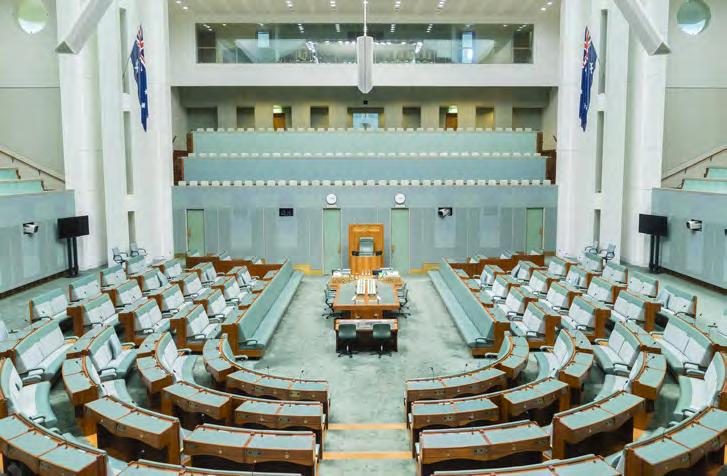
The Parliamentarian | 2022: Issue Four | 100 years of publishing | 369
READING REPORT AUSTRALIA
THIRD
LEGISLATIVE NEWS FROM TRINIDAD AND TOBAGO PARLIAMENT

TRINIDAD AND TOBAGO WORKS MINISTER ANNOUNCES SHORT-TERM PLAN TO FIX ROADS
The Minister of Works and Transport, Senator Hon. Rohan Sinanan has told the Parliament of Trinidad and Tobago that the Ministry has a short-term plan to effect repairs to roads that will commence shortly. He made this disclosure in the 2022-23 Budget debate and explained that a spotpatching programme was developed to engage small contractors. The contract involves labour and equipment only, however the Ministry will supply hot mix asphalt. “This strategy allows the Ministry to control the quality of hot mix being supplied, thereby improving the durability of spot patching. It also promotes the development of small contractors while addressing the real problem facing certain roadways,” the Minister added.
The Minister noted that upon completion of this exercise, members of the public can expect a vast improvement in the driving experience, adding that the Ministry anticipates a continuation of this programme in 2023.
Within recent months, there have been a series of protests across Trinidad and Tobago over the poor conditions of the nation’s roadways, most of which have not been repaired for several years.
NATIONAL SECURITY MINISTER DEFENDS OVERTIME FOR POLICE OFFICERS
Trinidad and Tobago’s Minister of National Security, Hon. Fitzgerald Hinds has strongly defended the TT$360 million bill for overtime payments to police officers. He said that mobile and foot patrols have been increased in an effort to reduce crime in the country. He also announced that the police force has a current strength of 6,514 officers, with an additional 2,383 full-time Special Reserve Officers (SRP).
He added that there 1,189 body cameras in the police stock, but 850 are in use and officers are undergoing training in the standard operation procedure for use of these cameras. Some police vehicles are also outfitted with cameras.
INDEPENDENT SENATOR PRAISES T&T GOVERNMENT FOR KEEPING THE COUNTRY AFLOAT DURING BUDGET DEBATE
“It seems to me that the Minister of Finance and the [Trinidad and Tobago] Government have done a good job in maintaining economic stability during the period of high disruptions and uncertainty. The last couple of years would have been a rollercoaster for whomever was in Government. The Government deserves praise for
keeping the ship of state afloat in the recent turbulent and unchartered waters.”
This was the view of Independent Senator Anthony Vieira during his contribution to the 2022-23 Budget debate in the Parliament of Trinidad and Tobago, adding that the Budget was not perfect, and it continues to underscore an unhealthy reliance on the energy sector. He noted that when the revenue stops rolling in, unless wise decisions are made now, the consequences would be catastrophic.
Senator Vieira noted that the Budget gives lip service to the notion of diversification but offers no pathway or identifiable signposts on how such a transformation might be achieved, but that the Government had implemented fiscal measures to put more disposable income into the hands of consumers and had safeguarded the social protection safety nets. He added: “We should not take anything for granted in this Budget, even in the face of the uncertain global economy. People are officially recognised as the most valuable asset and central to our development. Citizens should be grateful for the Government’s very careful stewardship of the economy over the last couple of years.”
During the Budget debate, the Minister of Finance, Hon. Colm Imbert called on his Ministerial colleagues to use the funds
370 | The Parliamentarian | 2022: Issue Four | 100 years of publishing
PARLIAMENTARY REPORT TRINIDAD AND TOBAGO
Parliamentary Report by Paras Ramoutar, Freelance Journalist based at the Parliament of Trinidad and Tobago.
allocated to the Development Programme, adding that the TT$6.2 billion allocation should be utilised. The Minister pointed out that the Trinidad and Tobago Government had to be careful about increasing the personal income tax allowance, which results in the lowering of the overall tax rate. He said that this was the third time under the current Government that it was increased.
Information provided by the Board of Inland Revenue (BIR) indicated that the increase in the individual income tax allowance from TT$7,000 to TT$7,500 a month would affect 300,000 tax payers, virtually half of those on the PAYE (Pay As You Earn) system. This would incur a loss of TT$450 million annually.
The Finance Minister had consulted a number of international agencies on the question of oil prices, including the International Energy Agency, the United States Energy Information, the World Bank and the International Monetary Fund (IMF).
The Finance Minister also said that under the Public Sector Investment Programme (PSIP) there would be in excess of TT$300 million for road rehabilitation and repairs, in addition to the TT$200 million allocated to the newly-established Secondary Roads Company.
TRINIDAD AND TOBAGO TO ISSUE GLOBAL TENDERS FOR NEW TRANSPORTATION PLAN
A new transportation plan is in the making for Trinidad and Tobago, according to the Minister of Works and Transport, Senator Hon. Rohan Sinanan, speaking in the 2022-23 Budget Debate in the Parliament of Trinidad and Tobago.
The Minister pointed out that the proposed plan will be a roadmap for air, land and sea transportation as it will take in all aspects of traffic management, as well as looking at alternative routes. He added that the plan will guide the country forward for the next 20 years and that his Ministry was working with the Development Bank of Latin America to formulate the plan. “Improving the quality of infrastructure and transport services is essential to foster Trinidad and Tobago’s socio-economic development. The funds are expected to boost productivity and competitiveness and to facilitate business growth and job creation,” he pointed out.
LEADER OF THE OPPOSITION IN THE SENATE WARNS OF ‘POLITICAL ENSLAVEMENT’
The Leader of the Opposition in Trinidad and Tobago’s Senate, Senator Wade Mark has warned that “political enslavement is now a reality”. The Senator told the Upper House in the 2022-23 Budget debate that the Government Budget was “brutal, wicked and callous” and was “an assault of the poor, the vulnerable and the marginalised”. The Opposition Leader said that the failure by the Government to implement its procurement plans was now in its eighth year, and that this represented a direct assault on the principles of good governance, accountability, transparency, value-for-money, integrity and local content.
The Senator said that the Minister of Finance was yet to implement the Government’s promises in the 2019 budget, including addressing the issues around pensions for public workers.
SENATOR CALLS FOR ‘ENLIGHTENED LEADERSHIP’ IN TRINIDAD AND TOBAGO
Trinidad and Tobago needs enlightened, economic leadership in order to graduate from the current economic morass, according to Independent Senator Charisse Seepersad. She underlined this point during her contribution to the 202223 Budget debate in the Senate of Trinidad and Tobago (Upper House).
The Senator noted that there has been an increase in the number of people falling into the poverty cycle and that the living standards of the middle classes are being eroded. “We cannot continue to rely on the oil and gas revenues to finance our future in an environment of price volatility and energy transition around the world. We need, more than before, broad economic diversification for the long-term survival of the country. We need enlightened leadership. We need this now. This is our life and livelihoods.”
She called for a scientific poll and research to be undertaken on living conditions of the people to allow for more efficient targeting of social needs. The Senator lamented the high crime rate in the country which continues to threaten the social and economic development and impact on the national citizenry, and also highlighted the breakdown of many public utilities, such as water and sewage, electricity, telecommunications and the transport
PARLIAMENTARY REPORT
TRINIDAD AND TOBAGO
network. She also pointed out that while Trinidad and Tobago has natural resources of oil, gas, asphalt and fertile land, adding to a creative and resilient people, the country is in an extremely vulnerable position given the limited available resources.
Opposition Senator Jayanti Lutchmedial noted that the Budget contained no useful policies to address the scourge of crime or to ease the burden on the nation. “Every time you stand by that fuel pump you understand why you are deprived of the fuel subsidy you have enjoyed for years, every time your child cannot go to school because the place is flooded out and the regional corporations have no releases to clean the drains in your area, you must remember that millions and millions of your taxpayer dollars have been spent by this government to pursue their political rivals in the most underhanded manner than we have ever seen in this country,” she said.
INDEPENDENT SENATOR SUPPORTS GUN LICENCES FOR CITIZENS
Independent Senator Dr Varma Deyalsingh has urged the Government of Trinidad and Tobago not to punish citizens seeking gun licences. He told the Senate that he had a problem with the Government having second thoughts in granting licences to individuals. “I am trying to figure out what is this Government’s hesitancy or problem with people getting firearms. It is just like a car, if I have a licence I can buy five cars. If I went through the checks and balances which are better than what is obtained in the US. We have to look at permission from spouses, psychological assessment, police character...once those persons have those checks you give them firearms.”
The Senator also pointed out that he had no problem with the Government trying to restrict assault weapons, such as AK rifles, “but one has to understand that having a pistol with eight guys coming into your home, you can’t defend yourself, if each of them gas guns”.
Meanwhile, the Minister of National Security, Hon. Fitzgerald Hinds also told the Senate that the issuing of legal guns has become a problem. The Minister was replying to a motion by Senate Opposition Leader, Senator Wade Mark, who chided the Government for failing to secure the country from violent crimes and that people were living in fear.
The Parliamentarian | 2022: Issue Four | 100 years of publishing | 371
Office Holders
Office Holders of the Commonwealth Parliamentary Association
CPA Executive Committee
Dates of membership below. Some Members are completing terms started by other Members. *TermdatesextendedasnoCPAGeneralAssemblyheldin2018,2020and2021.
CPA Officers
CPA PRESIDENT: (65th CPC to 66th CPC - 2022-2023): Rt Hon. Alban Bagbin, MP, Speaker of Parliament (Ghana)
CPA VICE-PRESIDENT: (65th CPC to 66th CPC - 2022-2023): Hon. Matthew Mason-Cox, MLC, President of the New South Wales Legislative Council
CHAIRPERSON OF THE CPA EXECUTIVE COMMITTEE: (65th CPC to 68th CPC - 2022-2025): Hon. Ian Liddell-Grainger, MP (United Kingdom)
CPA VICE-CHAIRPERSON: (65th CPC to 66th CPC - 2022-2023): Hon. Osei Kyei Mensah Bonsu, MP (Ghana)
CPA TREASURER: (65th CPC to 68th CPC - 2022-2025): Hon. Shri Anurag Sharma, MP (Lok Sabha, India Union)
COMMONWEALTH WOMEN PARLIAMENTARIANS (CWP)
CHAIRPERSON: (65th CPC to 68th CPC - 2022-2025): Hon. Dr Zainab Gimba, MP (Nigeria)
CPA SMALL BRANCHES
CHAIRPERSON: (65th CPC to 68th CPC - 2022-2025): Joy Burch, MLA, Speaker of the Legislative Assembly of Australian Capital Territory
COMMONWEALTH PARLIAMENTARIANS WITH DISABILITIES (CPwD)
CHAIRPERSON: (65th CPC to 68th CPC - 2022-2025): Hon. Laura Kanushu Opori, MP (Uganda)
The CPA Coordinating Committee comprises the CPA Chairperson, Vice-Chairperson, Treasurer, CPA Small Branches Chairperson and the Chairpersons of the Commonwealth Women Parliamentarians (CWP) and the Commonwealth Parliamentarians with Disabilities (CPwD).
Regional Representatives
AFRICA REGION
Hon. Dr Makali Mulu, MP, Kenya (63rd CPC to 66th CPC- 2017-2023)*
Vacant (63rd CPC to 66th CPC- 2017-2023)*
Hon. Osei Kyei Mensah Bonsu, MP, Ghana (64th CPC to 67th CPC - 2019-2024)* - Also CPA ViceChairperson
Rt Hon. Dr Abass Bundu, MP, Speaker, Sierra Leone (64th CPC to 67th CPC - 2019-2024)*
Hon. Solomon Lechesa Tsenoli, MP, Deputy Speaker of the National Assembly, South Africa (65th CPC to 68th CPC - 2022-2025)
Hon. Raymond Nkhata, MP, Malawi (65th CPC to 68th CPC - 2022-2025)
ASIA REGION
Hon. Dr Lal Chand Ukrani, MPA Sindh, (63rd CPC to 66th CPC- 20172023)*
Hon. Mahinda Yapa Abeywardana, MP, Speaker, Sri Lanka (64th CPC to 67th CPC - 2019-2024)* Completing the term started by another Sri Lanka Member.
Hon. Kazi Nabil Ahmed, MP Bangladesh (65th CPC to 68th CPC - 2022-2025)
AUSTRALIA REGION
Hon. Bruce Atkinson, MLC Victoria (63rd CPC to 66th CPC- 2017-2023)*
Senator Hon. Sue Lines, President of the Senate, Australia Federal (64th CPC to 67th CPC - 2019-2024). Completing the term started by other Australia Federal Senators.
Hon. Mark Shelton, MP, Speaker of the Legislative Assembly, Tasmania (65th CPC to 68th CPC - 2022-2025)
BRITISH ISLANDS AND MEDITERRANEAN REGION
Hon. Leona Roberts, MLA Falkland Islands (63rd CPC to 66th CPC- 2017-2023)*
Hon. Chris Elmore, MP, United Kingdom (64th CPC to 67th CPC2019-2024)* Completing the term started by other UK Members.
Hon. Stuart McMillan, MSP, Scotland (65th CPC to 68th CPC - 2022-2025)
CANADA REGION
Hon. Randy Weekes, MLA, Speaker of the Legislative Assembly of Saskatchewan (63rd CPC to 66th CPC- 2017-2023)* Completing the term started by Nova Scotia.
Hon. Terry Duguid, MP, Canada Federal (64th CPC to 67th CPC2019-2024)* Completing the term started by another Canadian Member.
Hon. Ted Arnott, MPP, Speaker of the Legislative Assembly of Ontario (65th CPC to 68th CPC2022-2025)
CARIBBEAN, AMERICAS AND THE ATLANTIC REGION
Hon. Claudius J. Francis, MP, Speaker, Saint Lucia (64th CPC to 67th CPC - 2019-2024)* Completing the term started by another St Lucia Member.
Hon. Gordon J. Burton, MHA, Speaker, Turks & Caicos (64th CPC to 67th CPC - 2019-2024)* Completing the term started by another Turks & Caicos Member.
Vacant (65th CPC to 68th CPC2022-2025)
INDIA REGION
Shri Biswajit Daimary, MLA, Speaker of the Legislative Assembly, Assam (63rd CPC to 66th CPC- 20172023)* Completing the term started by another Assam Member.
Vacant, India Union, (64th CPC to 67th CPC - 2019-2024)* Completing the term started by another India Member.
Smt. Ritu Khanduri Bhusan, MLA Speaker of Uttarakhand Legislative Assembly (65th CPC to 68th CPC2022-2025)
PACIFIC REGION
Hon. Therese Kaetavara, MHR, Deputy Speaker, Bougainville (63rd CPC to 66th CPC- 2017-2023)* Completing the term started by another Bougainville Member
H. E. Hon. Ratu Epeli Nailatikau Speaker, Fiji (64th CPC to 67th CPC2019-2024)*
Hon. Gerry Brownlee, MP, New Zealand (65th CPC to 68th CPC2022-2025)
SOUTH-EAST ASIA REGION
Hon. Lim Biow Chuan, MP Singapore (63rd CPC to 66th CPC2017-2023)* Completing term started by another Singapore Member
Hon. Datuk Wira Dr Mohd Hatta Ramli, MP, Malaysia (64th CPC to 67th CPC - 2019-2024)*
Hon. Dato’ Law Choo Kiang, MLA, Speaker, Penang (65th CPC to 68th CPC - 2022-2025)
Commonwealth Parliamentary Association
372 | The Parliamentarian | 2022: Issue Four | 100 years of publishing
CPA Small Branches Steering Committee
CPA SMALL BRANCHES CHAIRPERSON
Joy Burch, MLA, Speaker of the Legislative Assembly of Australian Capital Territory
AFRICA REGION
Hon. Churchill Gill, MNA Seychelles (2021-2024) - CPA Small Branches Vice-Chairperson
AUSTRALIA REGION
Hon. Mark Monaghan, MLA Speaker, Northern Territory (20202023)
BRITISH ISLANDS AND MEDITERRANEAN REGION
Hon. Juan Watterson, SHK Speaker of the House of Keys, Isle of Man (2020-2023)
CANADA REGION Hon. Nils Clarke, MLA Yukon (2019-2022)
CARIBBEAN, AMERICAS AND THE ATLANTIC REGION
Hon. Barbara Webster-Bourne, MHA, Speaker of the House of Assembly, Anguilla (2020-2023)
PACIFIC REGION
Hon. Tofa Nafoitoa Talaimanu Keti, MP, Samoa (2019-2022)
SOUTH-EAST ASIA REGION
Hon. Hamizan bin Hassan, MLA Perlis (2020-2023)
The CPA Small Branches Steering Committee comprises the CPA Small Branches Chairperson and seven Members who represent the seven out of the nine Regions of the CPA with Small Branches.
Commonwealth Parliamentarians with Disabilities (CPwD) Regional Champions
CPwD CHAIRPERSON
Hon. Laura Kanushu Opori, MP Uganda (2022-2025)
AFRICA REGION Vacant (2020-2023)
ASIA REGION Hon. Zill-E-Huma, MNA Pakistan (2020-2023)
AUSTRALIA REGION
Hon. Liesl Tesch, MP New South Wales (2020-2023)
BRITISH ISLANDS AND MEDITERRANEAN REGION Hon. Paul Maynard, MP United Kingdom (2020-2023)
Steering Committee
CWP PRESIDENT
Vacant Ghana (2022-2023)
CWP CHAIRPERSON
Hon. Dr Zainab Gimba, MP Nigeria (2022-2025)
AFRICA REGION Vacant (2022-2025)
ASIA REGION
Hon. Selima Ahmad, MP Bangladesh (2021-2024)
AUSTRALIA REGION
Senator Nita Green Australia Federal (2022-2025)
BRITISH ISLANDS AND MEDITERRANEAN REGION
Rt Hon. Dame Maria Miller, MP United Kingdom (2021-2024)
CANADA REGION
Hon. Lisa Thompson, MPP Ontario (2020-2023)
CARIBBEAN, AMERICAS AND THE ATLANTIC REGION
Hon. Valerie Woods, MP Speaker of the House of Representatives, Belize (2021-2024) - Also CWP ViceChairperson (2022-2023)
INDIA REGION Smt. Sunita Duggal, MP Lok Sabha, India (2020-2023)
PACIFIC REGION
Hon. Selina Napa, MP Cook Islands (2020-2023)
SOUTH-EAST ASIA REGION
Hon. Alice Lau Kiong Yieng, MP Malaysia (2022-2025)
CPA Regional Secretaries
AFRICA REGION Ms Nenelwa Joyce Mwihambi, Parliament of Tanzania
ASIA REGION Mr Dhammika Dasanayake, Parliament of Sri Lanka
AUSTRALIA REGION Ms Alex Cullum, Parliament of Australia
BRITISH ISLANDS & MEDITERRANEAN Mr Jon Davies, Parliament of the United Kingdom
CANADA REGION
Hon. Dan Coulter, MLA British Columbia (2020-2023)
CARIBBEAN, AMERICAS AND THE ATLANTIC REGION
Senator Hon. Paul Richards Trinidad and Tobago (2020-2023) Also: CPwD Vice-Chairperson
INDIA REGION
Smt. Supriya Sule, MP India (2020-2023)
PACIFIC REGION
Hon. Viam Pillay, MP Assistant Minister for Agriculture, Waterways and Environment, Fiji (2020-2023)
SOUTH-EAST ASIA REGION Senator Ras Adiba Mohd Radzi Malaysia (2020-2023)
CANADA REGION Mr Jeremy LeBlanc, Parliament of Canada
CARIBBEAN, AMERICAS & THE ATLANTIC REGION Mr Pedro E. Eastmond, Parliament of Barbados
INDIA REGION Shri Utpal Kumar Singh, Parliament of India
PACIFIC REGION Ms Amber Walters, Parliament of New Zealand
SOUTH-EAST ASIA REGION Mr Nizam Mydin bin Bacha Mydin, Parliament of Malaysia
CPA Headquarters Secretariat
Stephen Twigg
CPA Secretary-General Commonwealth Parliamentary Association, CPA Headquarters Secretariat, Richmond House, Houses of Parliament, London SW1A 0AA, United Kingdom
Tel: +44 (0)20 7799 1460 Email: hq.sec@cpahq.org www.cpahq.org Twitter @CPA_Secretariat Facebook.com/CPAHQ Instagram @cpa_secretariat LinkedIn | YouTube
A full A to Z listing of all CPA Branches can be found at: www.cpahq.org
InformationassuppliedbyCPABranchesandCPARegionstoCPAHeadquartersSecretariat
Commonwealth Parliamentary Association (CPA)
Commonwealth Women Parliamentarians (CWP)


SUBSCRIBE TODAY
To subscribe to The Parliamentarian, please email editor@cpahq.org Members of Parliament: Please contact your CPA Branch Secretary for print and digital copies. Individual subscriptions also available.
THE PARLIAMENTARIAN


