makers02 digital.qxp_Layout 1 18/01/2019 11:11 Page 124
BACK TO CONTENTS
SERBIA production utopia
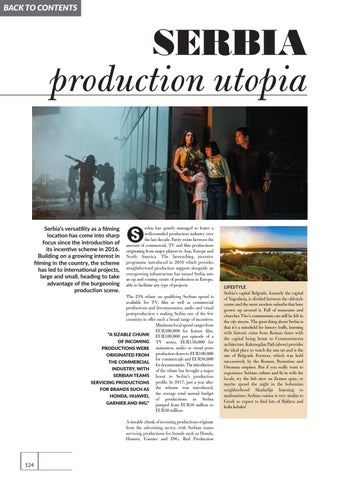
Serbia’s versatility as a filming location has come into sharp focus since the introduction of its incentive scheme in 2016. Building on a growing interest in filming in the country, the scheme has led to international projects, large and small, heading to take advantage of the burgeoning production scene.
erbia has quietly managed to foster a well-rounded production industry over the last decade. Parity exists between the amount of commercial, TV and film productions originating from major players in Asia, Europe and North America. The far-reaching incentive programme introduced in 2016 which provides straightforward production support alongside an ever-growing infrastructure has turned Serbia into an up and coming centre of production in Europe, able to facilitate any type of projects.
The 25% rebate on qualifying Serbian spend is available for TV, film as well as commercial productions and documentaries, audio and visual post-production – making Serbia one of the few countries to offer such a broad range of incentives. Minimum local spend ranges from EUR300,000 for feature film, “A sizAble chunk EUR100,000 per episode of a of incoming TV series, EUR150,000 for productions were animation, audio or visual postoriginAted from production down to EUR100,000 for commercials and EUR50,000 the commerciAl for documentaries. The introduction industry, with of the rebate has brought a major serbiAn teAms boost to Serbia's production servicing productions profile. In 2017, just a year after for brAnds such As the scheme was introduced, the average total annual budget hondA, huAwei, of productions in Serbia gArnier And ing.” jumped from EUR10 million to EUR30 million. A sizeable chunk of incoming productions originate from the advertising sector, with Serbian teams servicing productions for brands such as Honda, Huawei, Garnier and ING. Red Production
124
LIFESTYLE
Serbia’s capital Belgrade, formerly the capital of Yugoslavia, is divided between the old-style centre and the more modern suburbs that have grown up around it. Full of museums and churches Tito’s communism can still be felt in the city streets. The great thing about Serbia is that it’s a minefield for history buffs, bursting with historic ruins from Roman times with the capital being home to Communist-era architecture. Kalemegdan Park (above) provides the ideal place to watch the sun set and is the site of Belgrade Fortress, which was held successively by the Roman, Byzantine and Ottoman empires. But if you really want to experience Serbian culture and fit in with the locals, try the fish stew on Zemun quay, or maybe spend the night in the bohemian neighborhood Skadarlija listening to tambourines. Serbian cuisine is very similar to Greek so expect to find lots of Baklava and kofta kebabs!