FOOD PACKAGING UPDATE
3 better than modified atmosphere packaging (MAP). Although there is still the same amount of packaging, the lack of head space gives the perception of less packaging. The meat has a chance to be noticed unhindered by packaging. However, the Irish also packaged twin steak skin packs with two knobs of the accompanying flavoured butter for basting, taking convenience up a whole notch further. No need to head to the dairy section or condiments section for herbs and butter: the steak comes prepacked with the ideal flavour pairing. However, it was the meal kits that really got me: fresh vegetables and raw meat in twin compartment MAP packages. Consumers literally do not need to spend time in the fresh produce section at all as all the vegetables and sauces are contained within the same package as the meat. Curries and pastas: raw mince kebabs with a rich tomato and spinach curry base, or raw meat balls with par-cooked pasta and a cheese sauce requires only the plastic wrapper to be removed and the foil tray containing the cook-at-home meal be placed in the oven for 30 minutes. Perfect time to empty a meal-kit salad into a bowl, set the table and get the kids to have a shower before dinner. What does this tell us about consumer behaviour and where we are heading? www.propack.pro
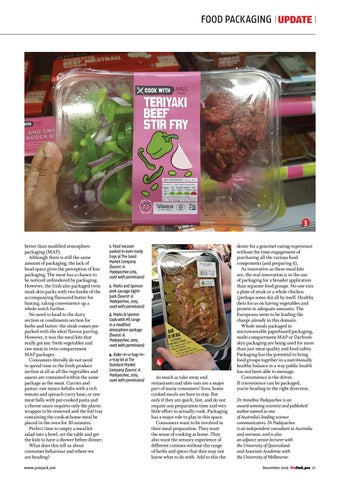
1. Food vacuum packed in oven ready trays at The Good Market Company (Source: A. Padayachee 2019, used with permission) 2. Marks and Spencer pork sausage eightpack (Source: A. Padayachee, 2019, used with permission) 3. Marks & Spencer Cook with MS range in a modified atmosphere package (Source: A. Padayachee, 2019, used with permission) 4. Bake-in-a-bag-ina-tray kit at The Standard Market Company (Source: A. Padayachee, 2019, used with permission)
4 As much as take away and restaurants and uber eats are a major part of many consumers’ lives, home cooked meals are here to stay. But only if they are quick, fast, and do not require any preparation time and very little effort to actually cook. Packaging has a major role to play in this space. Consumers want to be involved in their meal preparation. They want the sense of cooking at home. They also want the sensory experience of different cuisines without the range of herbs and spices that they may not know what to do with. Add to this the
desire for a gourmet eating experience without the time engagement of purchasing all the various food components (and preparing it). As innovative as these meal kits are, the real innovation is in the use of packaging for a broader application than separate food groups. No one eats a plate of steak or a whole chicken (perhaps some do) all by itself. Healthy diets focus on having vegetables and protein in adequate amounts. The Europeans seem to be leading the charge already in this domain. Whole meals packaged in microwaveable paperboard packaging, multi-compartment MAP or Darfresh skin packaging are being used for more than just meat quality and food safety. Packaging has the potential to bring food groups together in a nutritionally healthy balance in a way public health has not been able to message. Convenience is the driver. If convenience can be packaged, you’re heading in the right direction. Dr Anneline Padayachee is an award-winning scientist and published author named as one of Australia’s leading science communicators. Dr Padayachee is an independent consultant in Australia and overseas, and is also an adjunct senior lecturer with the University of Queensland and Associate Academic with the University of Melbourne. December 2019 ProPack.pro 27