EGYPTIAN
ARCHAEOLOGY
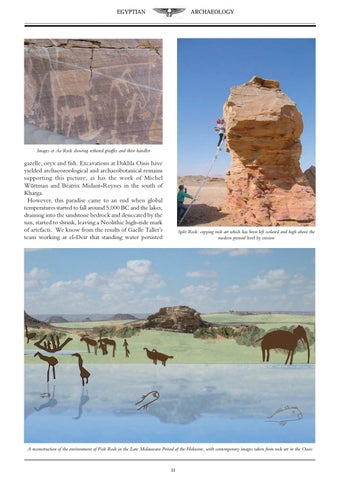
Images at Aa Rock showing tethered giraffes and their handler
gazelle, oryx and fish. Excavations at Dakhla Oasis have yielded archaeozoological and archaeobotanical remains supporting this picture, as has the work of Michel Wüttman and Béatrix Midant-Reynes in the south of Kharga. However, this paradise came to an end when global temperatures started to fall around 5,000 BC and the lakes, draining into the sandstone bedrock and desiccated by the sun, started to shrink, leaving a Neolithic high-tide mark of artefacts. We know from the results of Gaelle Tallet’s team working at el-Deir that standing water persisted
Split Rock: copying rock art which has been left isolated and high above the modern ground level by erosion
A reconstruction of the environment of Fish Rock in the Late Midauwara Period of the Holocene, with contemporary images taken from rock art in the Oasis
11