EGYPTIAN
ARCHAEOLOGY
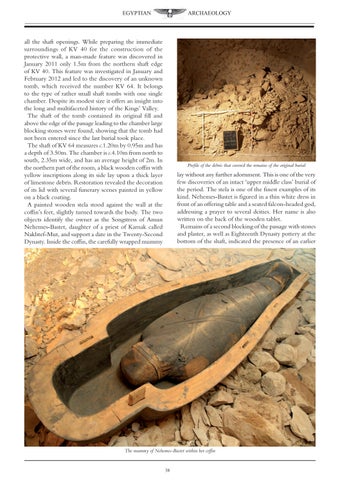
all the shaft openings. While preparing the immediate surroundings of KV 40 for the construction of the protective wall, a man-made feature was discovered in January 2011 only 1.5m from the northern shaft edge of KV 40. This feature was investigated in January and February 2012 and led to the discovery of an unknown tomb, which received the number KV 64. It belongs to the type of rather small shaft tombs with one single chamber. Despite its modest size it offers an insight into the long and multifaceted history of the Kings’ Valley. The shaft of the tomb contained its original fill and above the edge of the passage leading to the chamber large blocking stones were found, showing that the tomb had not been entered since the last burial took place. The shaft of KV 64 measures c.1.20m by 0.95m and has a depth of 3.50m. The chamber is c.4.10m from north to south, 2.35m wide, and has an average height of 2m. In the northern part of the room, a black wooden coffin with yellow inscriptions along its side lay upon a thick layer of limestone debris. Restoration revealed the decoration of its lid with several funerary scenes painted in yellow on a black coating. A painted wooden stela stood against the wall at the coffin’s feet, slightly turned towards the body. The two objects identify the owner as the Songstress of Amun Nehemes-Bastet, daughter of a priest of Karnak called Nakhtef-Mut, and support a date in the Twenty-Second Dynasty. Inside the coffin, the carefully wrapped mummy
Profile of the debris that covered the remains of the original burial
lay without any further adornment. This is one of the very few discoveries of an intact ‘upper middle class’ burial of the period. The stela is one of the finest examples of its kind. Nehemes-Bastet is figured in a thin white dress in front of an offering table and a seated falcon-headed god, addressing a prayer to several deities. Her name is also written on the back of the wooden tablet. Remains of a second blocking of the passage with stones and plaster, as well as Eighteenth Dynasty pottery at the bottom of the shaft, indicated the presence of an earlier
The mummy of Nehemes-Bastet within her coffin 38