EGYPTIAN
ARCHAEOLOGY
example. The image of particular tombs was sufficiently precise to date them, while the mapping not only visualized the distribution of tombs in the necropolis but also verified the plan of structures excavated in the early twentieth century such as the enclosure around the Tetisheri shrine (EA 24, pp.3-6). Finally, magnetic mapping also revealed two previously unknown funeral enclosures of rulers of the First-Second Dynasties. Geophysical methods used on urban sites give an overall idea of the architecture and thus enhance our understanding of the function of particular quarters. Another good example of such research by the magnetic and electrical resistivity methods, apart from Tell el-Daba and Qantir, is the project of the PCMA in Pelusium. Magnetic mapping there has revealed the monumental
of stone building foundations, in front of Nectanebo’s temple, presented an entirely new view of the complex. Magnetic mapping also provided new architectural details of the temple of Psamtik I, traced the extent of Ptolemaic development inside the enclosure and pinpointed areas of industrial activity and their relocation inside the enclosure over time. Mapping data combined with subsequent excavations by the British Museum gave a much fuller idea of the sacred temenos in successive periods. The magnetic method is also useful in understanding the development of cemetery sites, which are an important element of the landscape on the fringe of the Nile Valley. The results of research by the Pennsylvania University/Institute of Fine Arts-New York University/ Yale University mission in Abydos provide a good
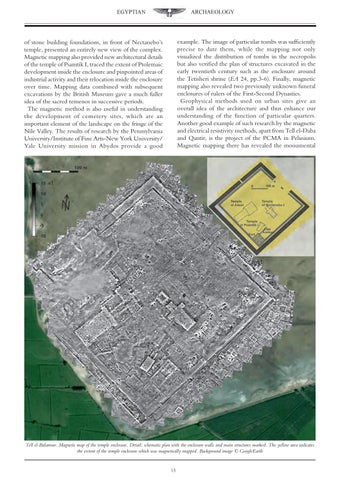
Tell el-Balamun. Magnetic map of the temple enclosure. Detail: schematic plan with the enclosure walls and main structures marked. The yellow area indicates the extent of the temple enclosure which was magnetically mapped. Background image © GoogleEarth 13