EGYPTIAN
ARCHAEOLOGY
The Book of the Dead A new exhibition offers a once-in-a-lifetime opportunity to see some of the finest illustrated funerary papyri from the British Museum, together with key pieces from other major collections – including the longest Book of the Dead in existence. John Taylor explains the aims and content of the exhibition.
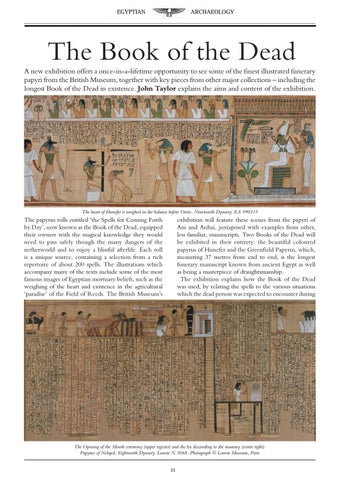
The heart of Hunefer is weighed in the balance before Osiris. Nineteenth Dynasty. EA 9901/3
The papyrus rolls entitled ‘the Spells for Coming Forth by Day’, now known as the Book of the Dead, equipped their owners with the magical knowledge they would need to pass safely though the many dangers of the netherworld and to enjoy a blissful afterlife. Each roll is a unique source, containing a selection from a rich repertoire of about 200 spells. The illustrations which accompany many of the texts include some of the most famous images of Egyptian mortuary beliefs, such as the weighing of the heart and existence in the agricultural ‘paradise’ of the Field of Reeds. The British Museum’s
exhibition will feature these scenes from the papyri of Ani and Anhai, juxtaposed with examples from other, less familiar, manuscripts. Two Books of the Dead will be exhibited in their entirety: the beautiful coloured papyrus of Hunefer and the Greenfield Papyrus, which, measuring 37 metres from end to end, is the longest funerary manuscript known from ancient Egypt as well as being a masterpiece of draughtsmanship. The exhibition explains how the Book of the Dead was used, by relating the spells to the various situations which the dead person was expected to encounter during
The Opening of the Mouth ceremony (upper register) and the ba descending to the mummy (centre right). Papyrus of Nebqed, Eighteenth Dynasty. Louvre N.3068. Photograph © Louvre Museum, Paris 21