RESCUING THE MAMLUK MINBARS OF CAIRO
Minbar thefts, past and present
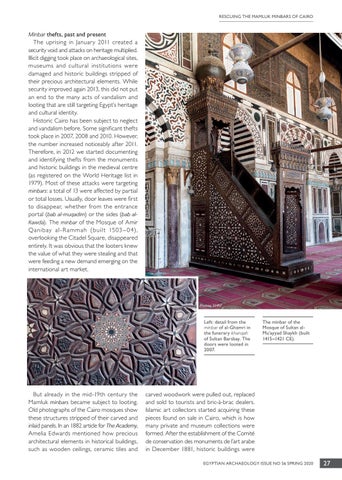
The uprising in January 2011 created a security void and attacks on heritage multiplied. Illicit digging took place on archaeological sites, museums and cultural institutions were damaged and historic buildings stripped of their precious architectural elements. While security improved again 2013, this did not put an end to the many acts of vandalism and looting that are still targeting Egypt’s heritage and cultural identity. Historic Cairo has been subject to neglect and vandalism before. Some significant thefts took place in 2007, 2008 and 2010. However, the number increased noticeably after 2011. Therefore, in 2012 we started documenting and identifying thefts from the monuments and historic buildings in the medieval centre (as registered on the World Heritage list in 1979). Most of these attacks were targeting minbars: a total of 13 were affected by partial or total losses. Usually, door leaves were first to disappear, whether from the entrance portal (bab al-muqadim) or the sides (bab alRawda). The minbar of the Mosque of Amir Qanibay al- R ammah (built 1503 – 0 4), overlooking the Citadel Square, disappeared entirely. It was obvious that the looters knew the value of what they were stealing and that were feeding a new demand emerging on the international art market.
Photos: EHRF
Left: detail from the minbar of al-Ghamri in the funerary khanqah of Sultan Barsbay. The doors were looted in 2007.
But already in the mid-19th century the Mamluk minbars became subject to looting. Old photographs of the Cairo mosques show these structures stripped of their carved and inlaid panels. In an 1882 article for The Academy, Amelia Edwards mentioned how precious architectural elements in historical buildings, such as wooden ceilings, ceramic tiles and
The minbar of the Mosque of Sultan alMu’ayyad Shaykh (built 1415–1421 CE).
carved woodwork were pulled out, replaced and sold to tourists and bric-à-brac dealers. Islamic art collectors started acquiring these pieces found on sale in Cairo, which is how many private and museum collections were formed. After the establishment of the Comité de conservation des monuments de l’art arabe in December 1881, historic buildings were EGYPTIAN ARCHAEOLOGY ISSUE NO 56 SPRING 2020
27