













 A Letter from the Editor-in-Chief
I hope you are doing well and are able to take a moment and check in with yourself. It’s hard to believe we are roughly halfway through this semester! Whether it has own by or has been seemingly slow, I hope it has been good for you. From my time here, I like when I can slow down, at least for a moment, and re ect on where we are and where we are going in life.
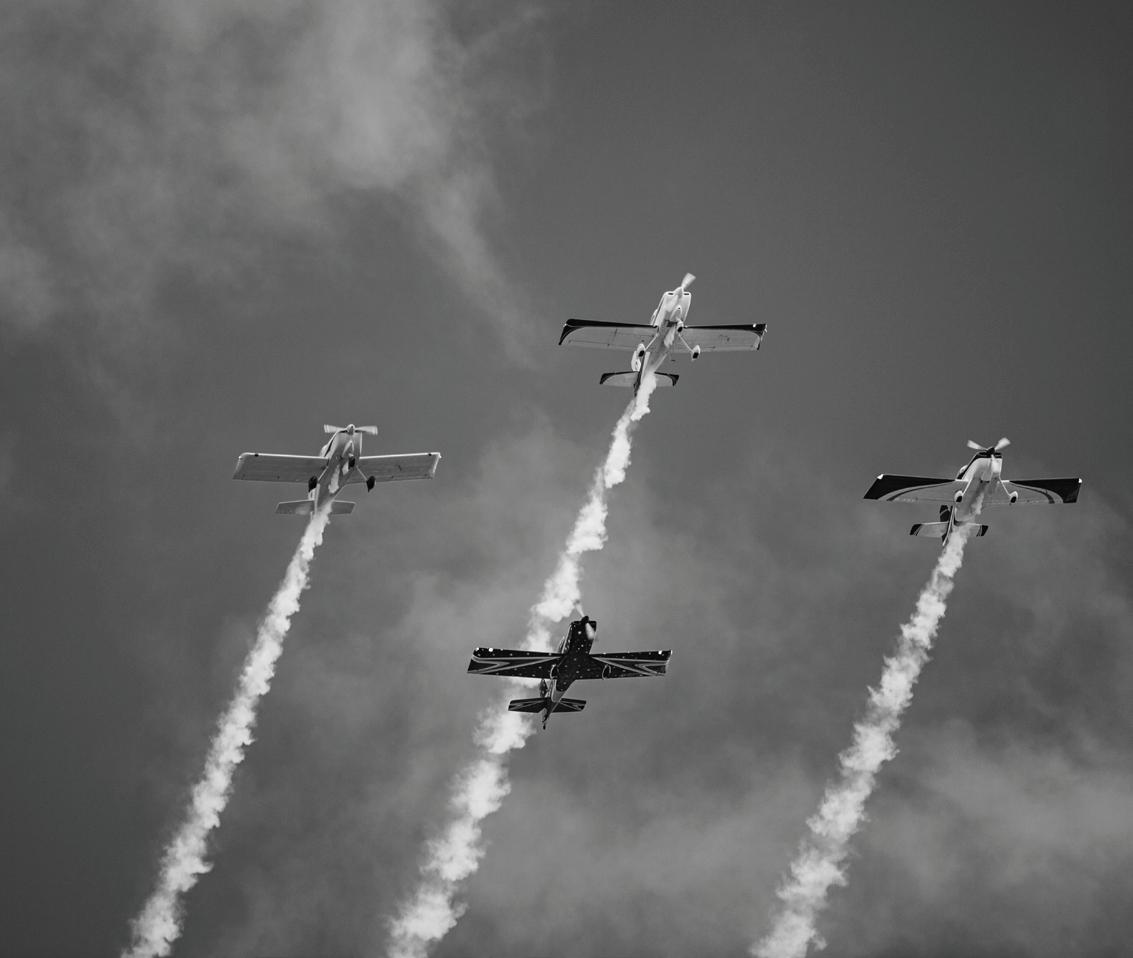
For me, it felt like January dragged on for seemingly ages, and we pushed the throttles to TOGA as soon as we crossed into February. e chaos is still always there, and courses and quizzes never fail to fade away, but occasionally, take an intentional pause to look around and center yourself because this time does y past. Almost as fast as the underbirds ying above campus.
We now enter a new season. Where e Avion takes a pause from our typical magazine issues and puts together the SGA Election materials to inform the student body about who the candidates are. As someone who has always been a strong advocate for voting, I encourage every student able to vote. e choices you make do have an impact on you, even if you might not see it in the moment.
Yet, my encouragement to you is to keep pushing on and put your best foot forward as we nish o this semester strong. We truly are in the thick of it. If you want to break up the monitory, try something new! It’s never too late. Yet, remember to extend kindness and take time to ll the cup you pour from.
Take Care,
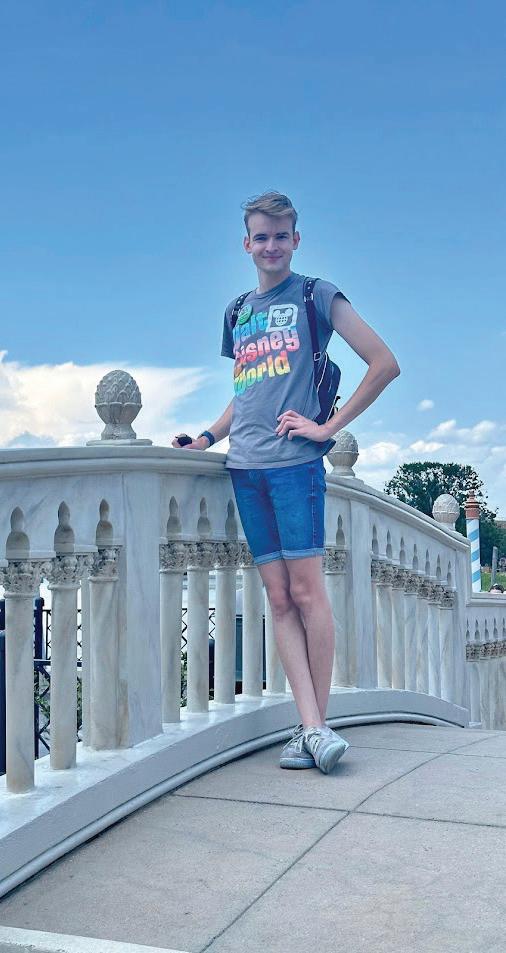
 Andrew Harker Editor-in-Chief,
05 07
Learn more about Embry-Riddle's CubeSat project heading for the Moon.
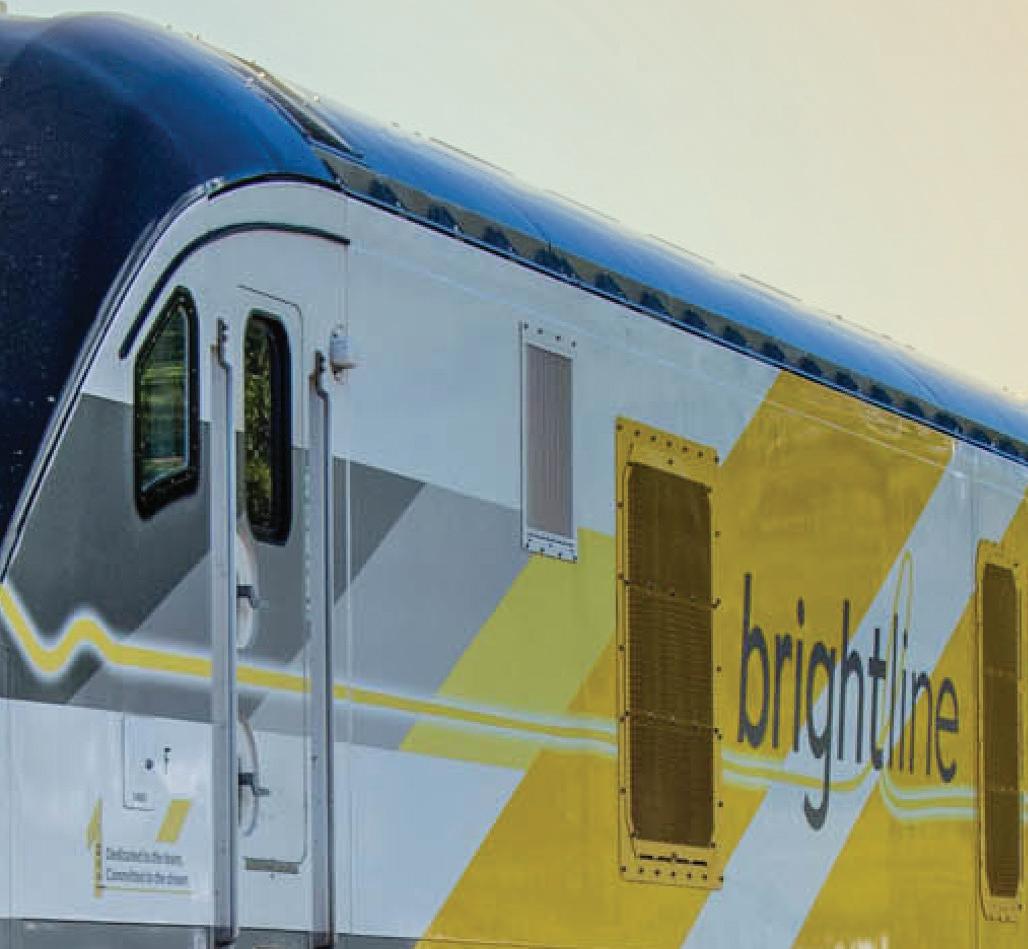
Find out what's going on with the new highspeed railway connecting Orlando to Miami.
13
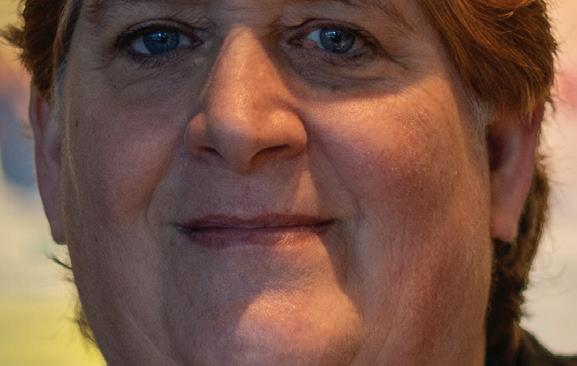
Get to know one of the lovely employees at our very own Starbucks here at Embry-Riddle.
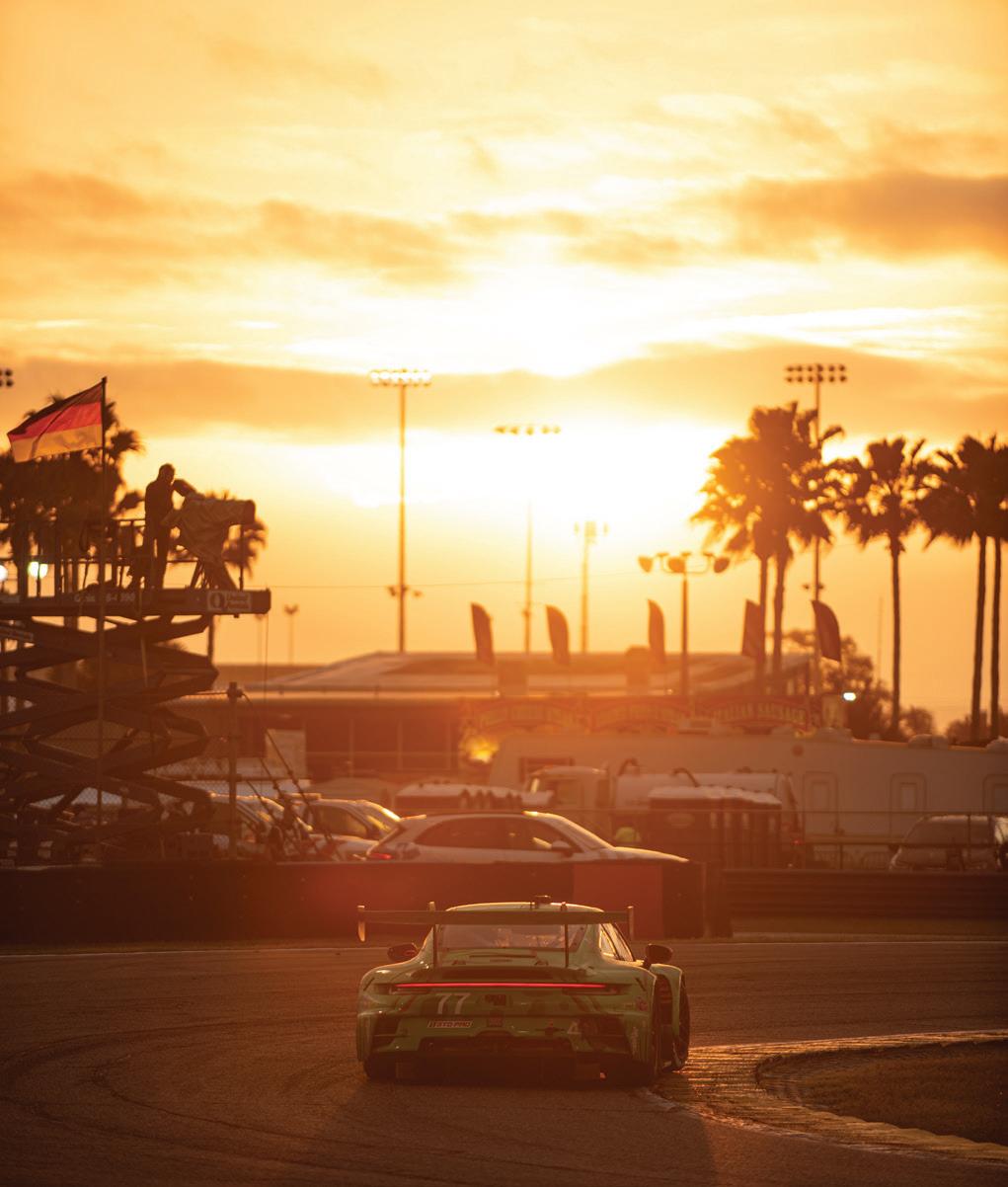
FRONT COVER
The #77 AO Racing Porsche 911 GT3 exiting turn 3 during the early hours of the morning at the Rolex 24 at Daytona,
PHOTOGRAPH BY Brandon Badraoui
(@) BrandonBadPhoto
Celebrate the 65th anniversary of one of the annual races at the Daytona Speedway.
Discover the importance of cybersecurity and how it's going to impact your future career.
Embrace totality with the upcoming total solar eclipse this April.
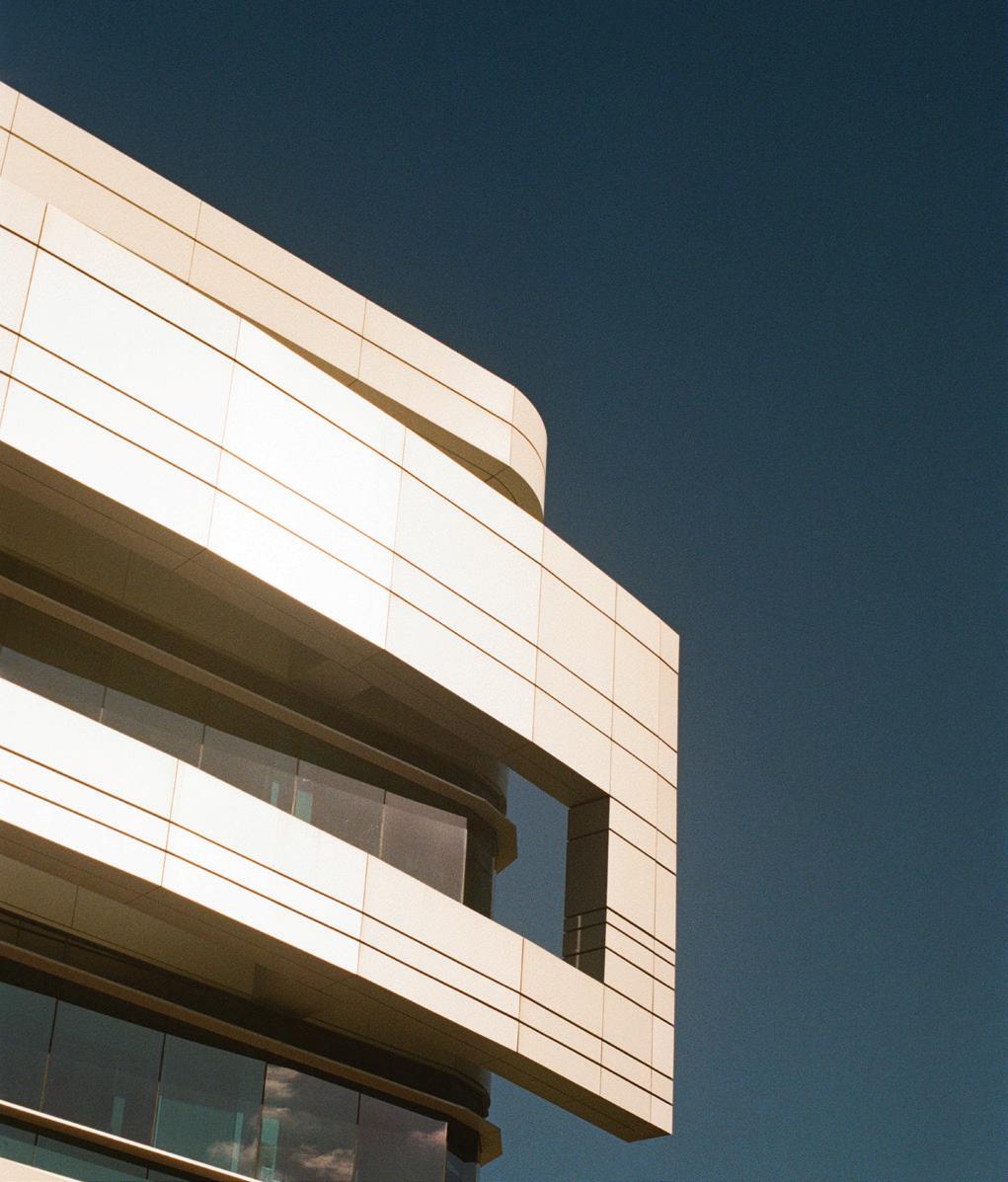
BAC K COVER
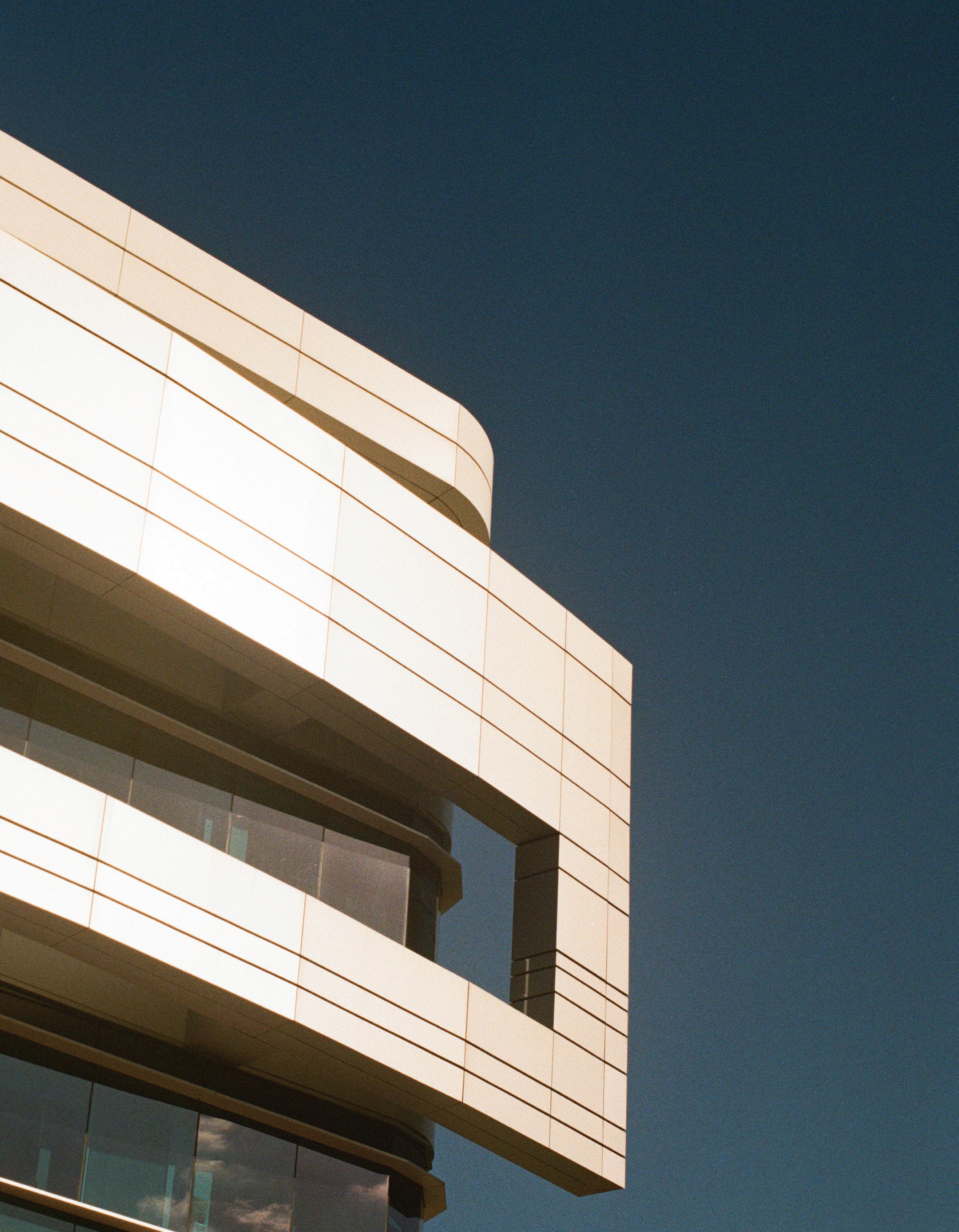
A ground shot looking up at the side of the College of Arts and Sciences building.
PHOTOGRAPH BY Brandon Badraoui
(@) BrandonBadPhoto


irty-eight years ago, on Jan. 28, 1986, the space shuttle Challenger li ed o from Kennedy Space Center, carrying the 25th mission of the Space Shuttle program, STS-51-L. Tragically, a little more than 73 seconds a er launch, when the failure of an O-ring in the right solid rocket booster (SRB) triggered an explosion of the liquid hydrogen and liquid oxygen fuel inside the external tank and the subsequent destruction of the entire stack. is ‘stack’ included the orbiter Challenger, the external tank, and the two SRBs. Challenger’s crew, comprised of seven astronauts, was lost when the crew module section of the orbiter hit the ocean. e crew included Francis Scobee, the commander; Michael Smith, the pilot; Mission Specialists Judith Resnik, Ellison Onizuka, and Ronald McNair; S. Christa McAuli e, the rst teacher in space; and Payload Specialist Gregory Jarvis.



STS-51-L experienced several delays prior to Jan. 28 due to uncharacteristically cold weather and delays on the mission prior, STS-61-C. On the date of the accident, engineers brought forward concerns of the structural integrity of the O-rings, worried that the cold may have impacted them. Signi cant icing had also formed on the launch tower, but managers overruled the engineers and deemed the icing on the tower to be insigni cant, clearing the mission for launch. Following the accident, President Ronald Reagan established a commission to investigate the accident. NASA also put all shuttle missions on pause, with a hiatus lasting 32 months. e commission’s report, dubbed the Rogers Commission Report, found several contributing factors that led to the accident, including pressures both internally and from the federal government to reach the goal of 24 shuttle ights per year. NASA submitted its list of corrective actions to the President on July 14, 1986, and missions resumed in September 1988.




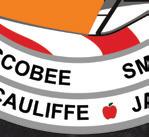
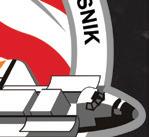
e legacy of the tragedy has not been lost to time. NASA has engraved the crew members’ names into the Space Mirror Memorial, where they are immortalized alongside the crew of the Columbia accident, STS-107, and Apollo 1, AS-204. e families of the Challenger astronauts came together in April 1986 to create the Challenger Center for Space Science Education and the Challenger Learning Centers, with the goals of continuing to pursue STS-51-L’s mission objective, promoting education. Proudly, the Challenger Center has stated on its website that the STEM outreach programs at the 35 learning centers have managed to reach over 6 million students worldwide.
While the Teacher in Space Project that had allowed McAuli e to be chosen as an astronaut was canceled in the wake of the accident, the concept was reborn in 2007 as the Educator Astronaut Project. For this, NASA would select quali ed teachers to become full-time astronauts. One of these Educator Astronauts, Joseph Acaba, was named an eligible astronaut for the Artemis program in 2020. NASA, working with the families of both the Challenger and Columbia accidents, also created a memorial exhibition at their Visitor’s Complex called “Forever Remembered.” is exhibit serves as a reminder that learning from the mistakes of the past is critical in becoming better, as well as a remembrance of the lives lost in the pursuit of space ight. NASA employees hold a Day of Remembrance at the end of January to commemorate the three tragic accidents of the Administration, including Challenger. On the day, employees re ect on the accidents, the steps that led to their occurrence, and the changes made within the Administration to fundamentally improve the safety culture for the future.


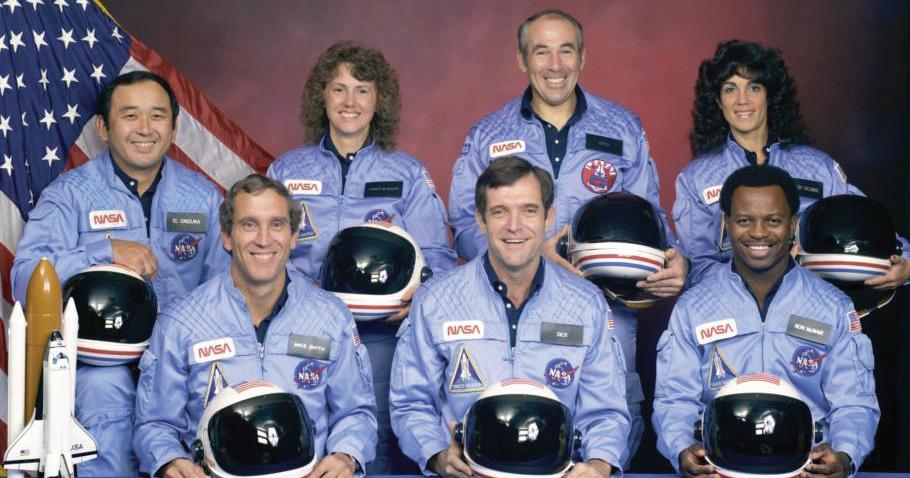

e ultimate lesson taught by the tragedy is that to be safe, is to be vigilant of all aspects of space ight. Flaws in safety become disastrous when individuals partake in the normalization of deviance, meaning that it is easy to get careless when it comes to being comfortable in a routine. Space ight is risky, and failure to remember that will lead to more accidents. Challenger, Columbia, and Apollo 1 should never happen again.




We did it; Embry-Riddle is off to the moon! The EagleCam was originally set to launch just after midnight on Feb. 14, 2024. However, the launch was delayed due to the methane fuel temperature being out of optimal range for a launch. Despite this hiccup, EagleCam successfully took off on Feb. 15, 2024, as a part of the payload on Intuitive Machines Nova-C Lunar Lander. As the lunar lander approaches the moon, EagleCam will separate from it to capture the most out-of-this-world selfie as it will take the selfie of a spacecraft, making an extraterrestrial landing. However, this project is much more than just a spacecraft taking a selfie on the moon.
The project began in late summer of 2019 when Embry-Riddle was challenged to build a CubeSat system that would take the world’s first third-person view of a spacecraft landing. From here, under the guidance of Dr. Troy Henderson, Dr. Eduardo Rojas, and Dr. M. Ilhan Akbas, a total of 26 students worked on this project and blasted it into a completely studentrun, lead, and designed project. For instance, students Daniel Posada, an Aerospace Engineer and doctoral student, and Taylor Yow, an Aerospace Engineering graduate student, are team leaders. Both worked on various teams, such as the engineering team and the sensor team. Over the next five years, students would work tirelessly in the Space Technologies lab to design and develop the EagleCam.
The Avion was personally invited to attend the EagleCam Digital Press Conference as an external news and media organization. This press conference offered a unique view of the scenes and the students’ accomplishments, as well as an opportunity to interview the team. There was calm from the team’s perspective, “We’re here, we’re ready, we’re proud.” Many questions from numerous organizations stemmed around the project, the timeline, landing plan, location, and what would happen to the cam after the mission concluded.
Editor-in-Chief Andrew Harker asked a question that was different from the rest. “What is the hope for the student body to gain from this experience?” Many students will never have the opportunity to send their projects into space, at least as college students, but what should a typical student take away from this? There is a large sense of community at Embry-Riddle. The hope is to get the science back and to inspire students. Not just to see what they can do with their time at Riddle but also to look past the degree program. Another goal is for more student-led projects to have a footing with the success of this project, not just at Embry-Riddle but across the country.
EagleCam is a huge achievement for Embry-Riddle, and it is definitely something the student body should be proud of. After landing on the Moon, EagleCam will be the first to take pictures of a spacecraft as it makes an extraterrestrial landing. However, this is not the only achievement EagleCam will obtain. EagleCam’s landing on the Moon will signify that Embry-Riddle is the first university to have a payload on the Moon’s surface, and EagleCam is the first spacecraft to use WiFi for data transmission on the Moon. While its main purpose is to document its journey to the Moon, EagleCam is more than just a camera. Through its dust plume and lunar surface imagery and dust accumulation analysis, EagleCam will expose us to new scientific discoveries. For now, we wish EagleCam safe travels as it makes its 238,900mile journey to the Moon, and we patiently await record-breaking pictures.













With Apple’s new Vision Pro headset, many believe it is a huge step in technology and its use. So let us look at what Vision Pro is and what it does, and brie y discuss how it may potentially change the world a er its release.
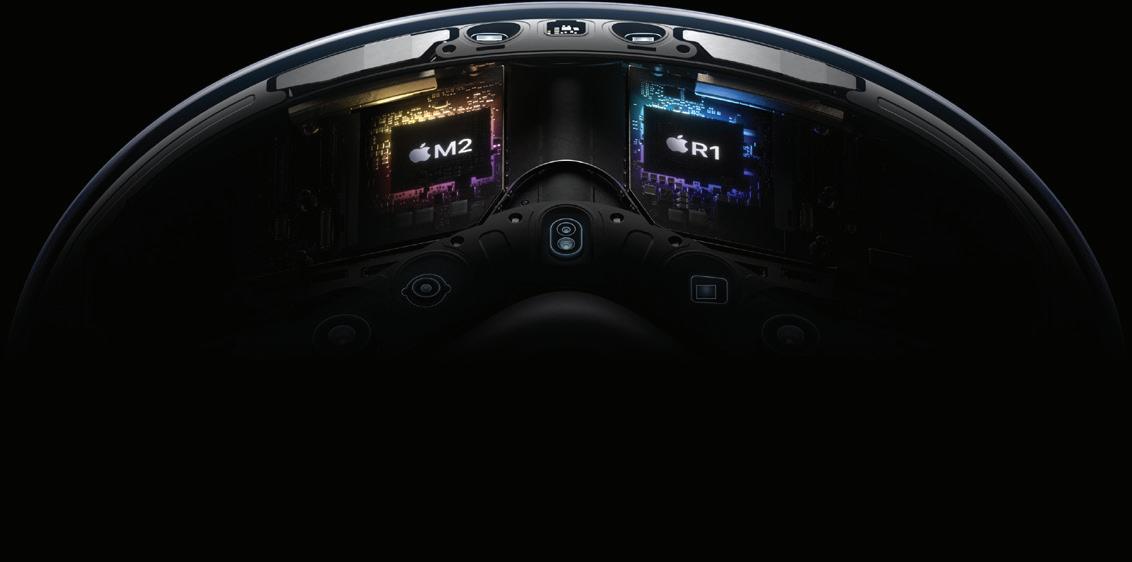
Vision Pro is, to put it simply, a virtual reality headset. It is not quite augmented reality; however, it is one of the closest products to Augmented Reality thus far. is headset is a computer strapped to your face, featuring a binned smaller core M2 chip otherwise found in the current MacBook Airs and a new R1 chip, speci cally for video computing and decreasing camera-display latency. ere are two main cameras for video passthrough, six for exterior tracking, four for interior eye tracking, and other depth and light sensors. e most important part is, of course, what the wearer sees. Each eye lens has a 1.41-inch, 23-megapixel micro-OLED display with refresh rates of up to 100 hertz.
Vision Pro enables the wearer to see an accurate recreation of their space and place apps into this frame. All the Applecreated apps are installed as standard, with others being available in the App Store. Most apps compatible with iPhone or iPad will open, although they will not have any additional features unless speci cally built for it. ere are exceptions, for example, YouTube, Net ix, and Spotify, which cannot be installed due to company relations.
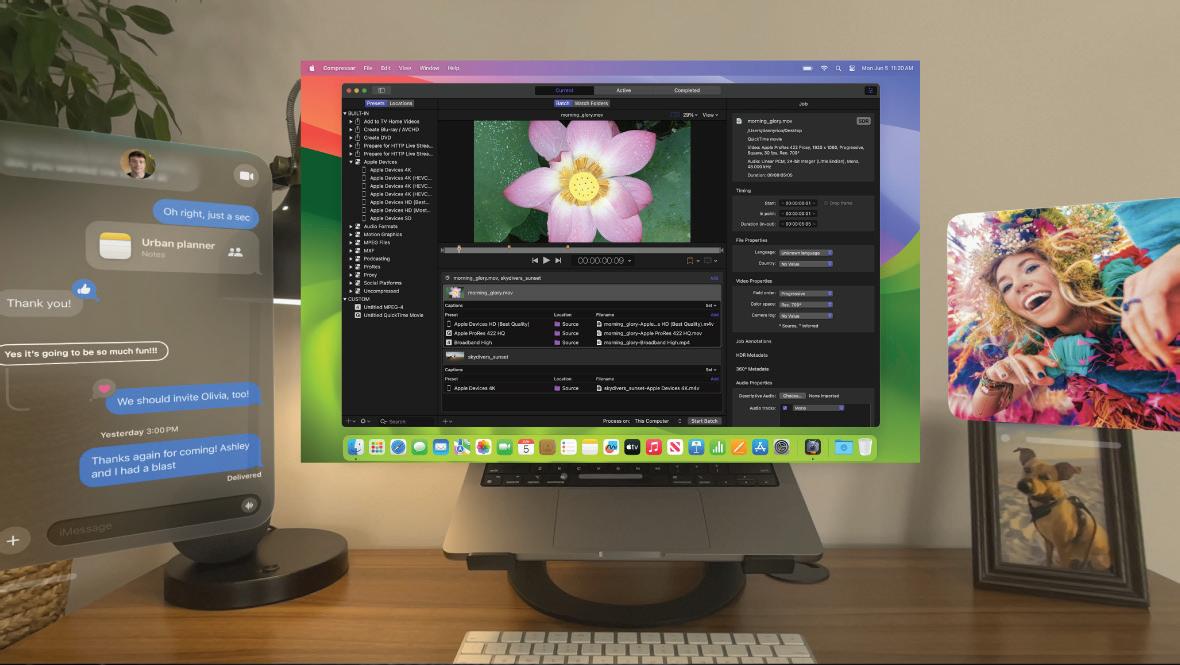
MacBook is your thing, then, once paired and selected, the laptop display turns o , being replaced by a 4K version within the Vision Pro space. Controls from the trackpad and keyboard will still work, similar to Sidecar.
For FaceTime and the exterior display, users must scan their faces and expressions to create a persona. is rendering is then used for any front-facing camera needs and the external display; this is a beta feature as of this article.
e question remains: will it change the way we live?

Navigating VisionOS is di erent from other headsets. ere is no controller; the use of eyes, hand gestures, voice commands, and a digital crown are the only input methods. To select an item, simply look at it and bring the index nger and thumb together. To scroll, pinch your index nger and thumb together and drag. All the external cameras allow for incredible hand tracking and recognition. If connecting to a
It will; however, the impact will be insigni cant in the near future. is headset weighs up to 22.9 ounces, which will be uncomfortable for extended wearing. e external battery pack, while necessary, is also rather cumbersome, not to mention that it has an upfront cost of $3499. It seems like the phone is here to stay, as it is so easy to use and to put away into a pocket. Vision Pro is likely to shine most in the o ce and during travel.
is new technology can transform conference calls. ese conference calls can change where and how we work. It may be not the next iPhone, but, rather, the next iPad. is product is a technological advancement, but whether the world is ready for this innovation remains to be seen.















In Issue 1, I brought up a lot of things regarding the state of our Student Senate and what they were doing. It has been a few weeks since that magazine issue came out. Since then, I have had quite a few conversations with Ander Turueno Garcia, the newly appointed vice president of the Student Senate, who has had a lot to say about the updates from the Senate.
In terms of what to expect in the coming months, this is a breakdown of what each senator has been doing.
• COE: Purchased a lot of merch for COE students! ere are some neat-looking shirts.
• COA: Brought the hurricane hunters’ airplane on campus, put a microwave in the weather lab, and working on getting tutoring for AMS students.
• COAS: Career fair focused on COAS majors coming soon.
• COB: Put trash bins on the second oor of the College of Business, working on getting charging tables or plugs for classrooms and the back patio of the building.
• International: Immigration attorney is now available to students to book appointments. Pushing Career Services to provide more insight and opportunities for international students.
• Student Life: Working with international senators to build an event for di erent cultures for students to enjoy.
• HRL: Working closely with Housing to better accommodate students with disabilities in the dorms.
• Veterans: Made closer connections to the Student Veterans Organization (SVO), and more veterans are engaged with the SGA.

As for Ander, he has been quite busy. He has a lot of things in the works. Here are just a few things about what he has been doing.
Vice President Ander Turueno Garcia
• TEDxEmbryRiddle: Already communicated with the legal team of the university to discuss the idea. A speaker and a topic have already been planned.
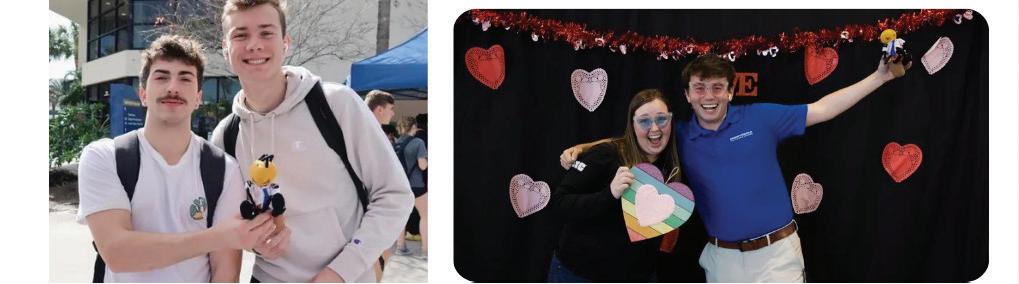
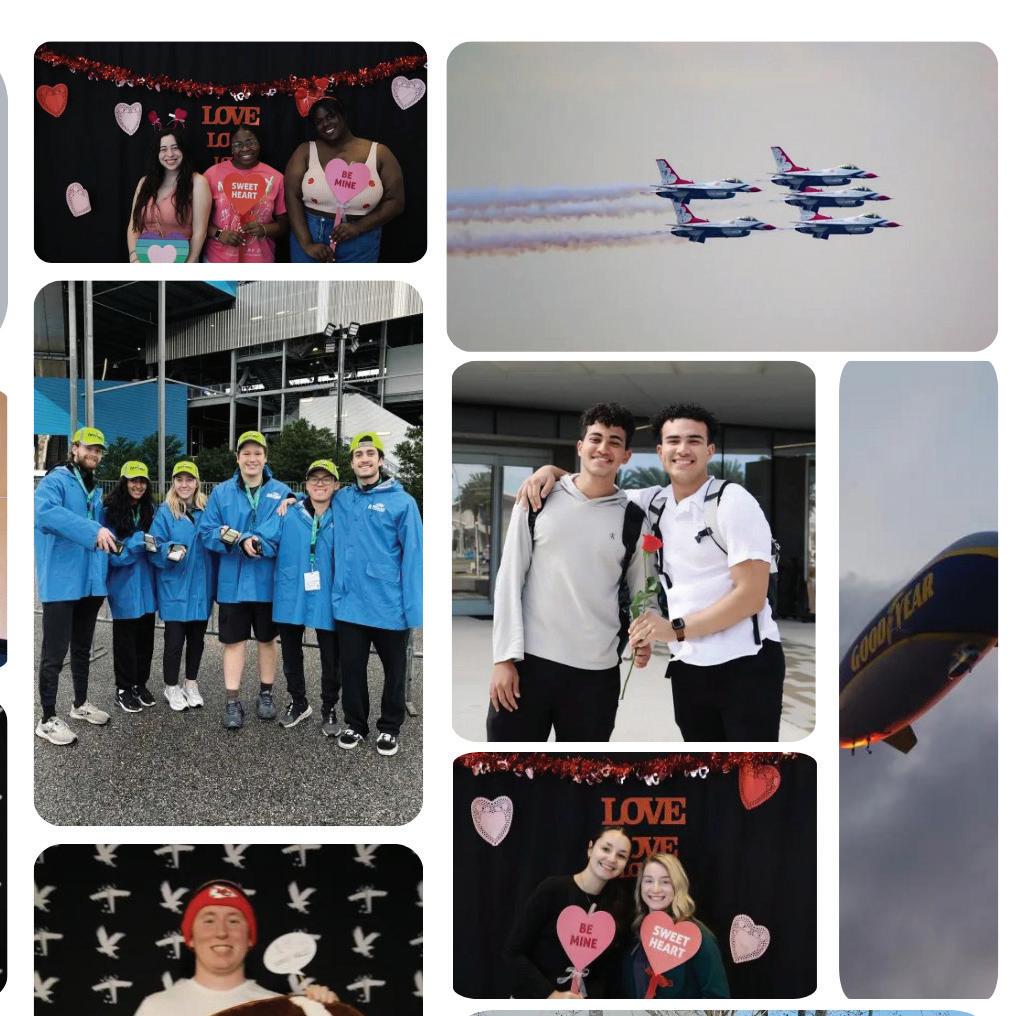
• Valentine’s Day roses: Regardless of whether you are in a relationship, everyone deserves a ower. Five hundred red roses for Valentine’s Day were bought to give out to students for free.
• Senate Forum: A Senate Forum will be held on March 4th, and RSOs will be invited to participate in this event.
• A new app has been implemented to make sure senators are doing their o ce hours by using location and clocking in and out times.
• All vacancies for the Senate have been lled.
Between Ander tting in with the rest of the Senate and all these projects the Student Senate is planning, check back in to see what else will be coming!




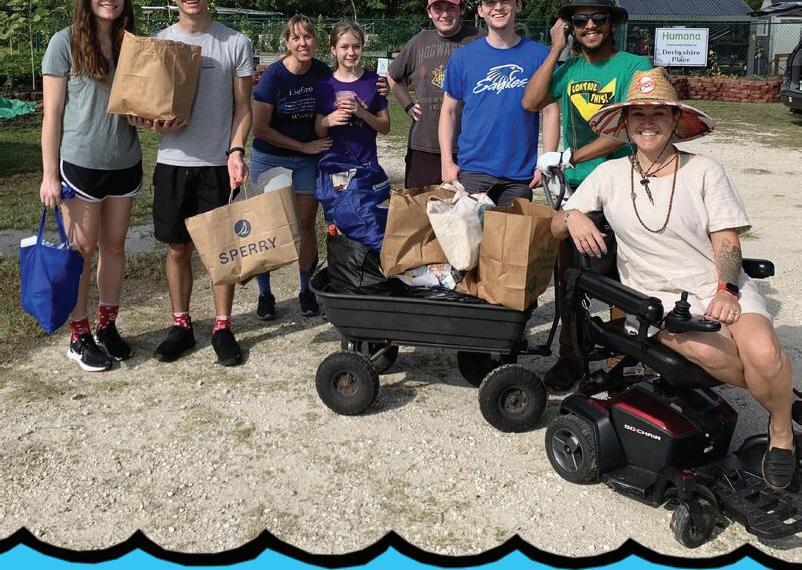


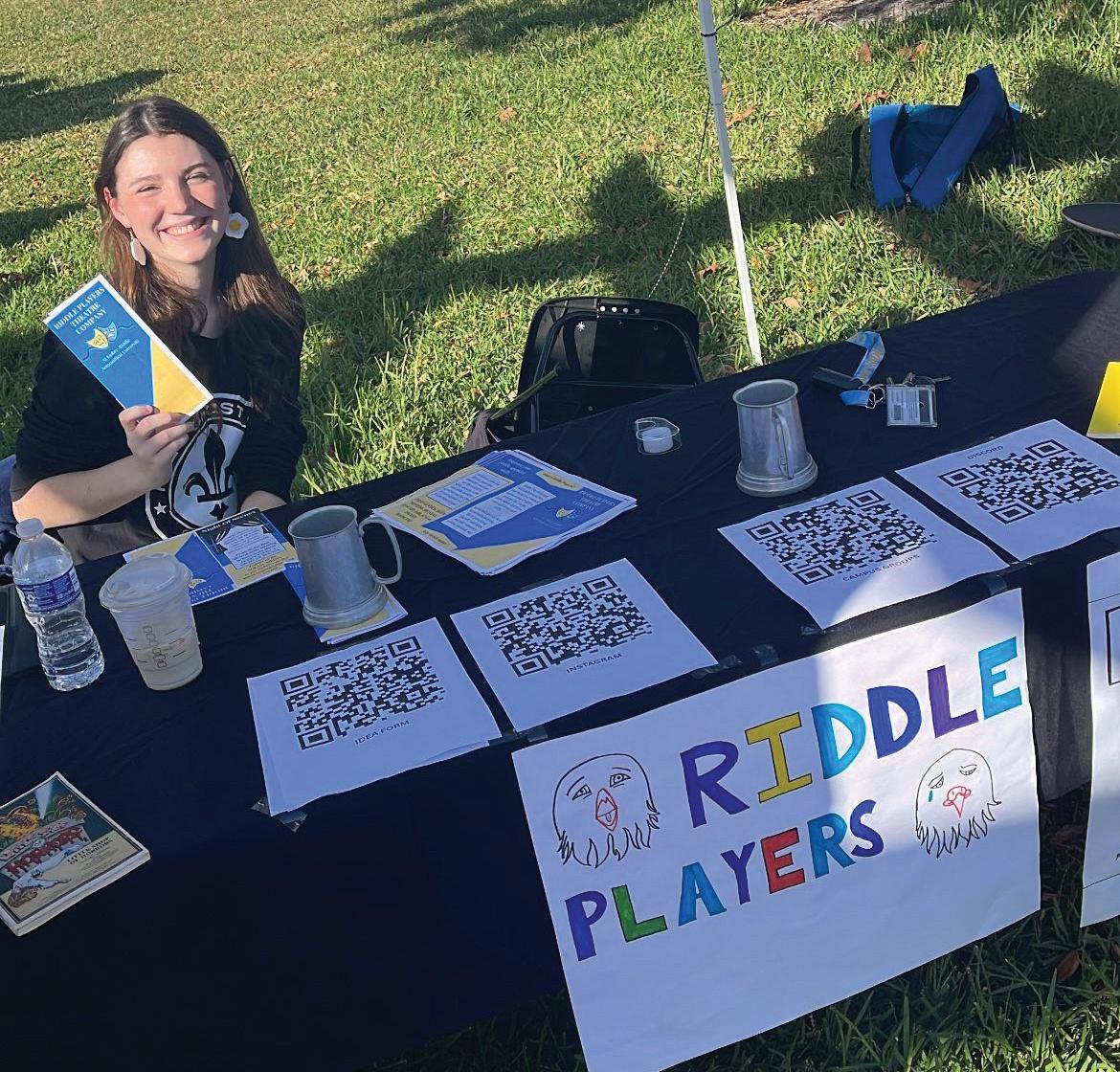
Come one, come all, because the Riddle Players Theater Club is back up and running. One of the oldest Registered Student Organizations in Embry-Riddle history, dating back to the 1980s, the Riddle Players Theater Club is a place where all students can come and express their passion for singing, acting, and theater, no matter if cast or crew! The club went on hiatus due to the effects of the COVID-19 pandemic on campus, but in the past, has produced student-directed and cast productions.
Co-Presidents Brielle Heron and Makayla Winchester, along with the rest of the executive board consisting of Camille Hamblin, Dominic Popolo, Maddyx Poulin, and Aspen Rosica, all led the first monthly general meeting of the restored club at the end of January, where they announced the main project the group will be working on this semester: A Night of Scenes, consisting of different skits, musical numbers, and scenes from a wide variety of shows and musicals. The Riddle Players Theater Club will also be collaborating with other arts organizations, including the Dancing Eagles, at The Night of Scenes, taking place later this semester.
The board emphasized that any student is welcome to participate on or off the stage and expressed enthusiasm that the club is making its debut back on the Embry-Riddle stage. Additionally, the executive board hopes to fundraise and gain traction with the student body so that one day, the Players are able to put on a full-length play or musical. The board hopes that everyone will bring their friends and enjoy a night under the stars supporting the student arts later this spring!
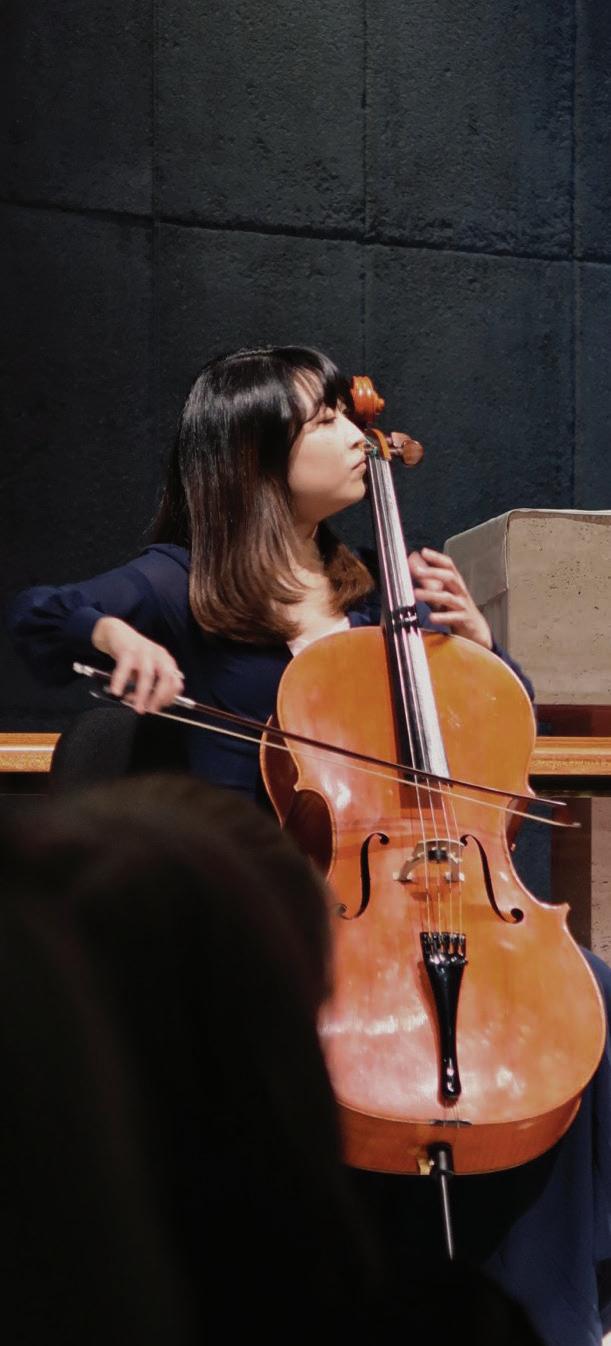
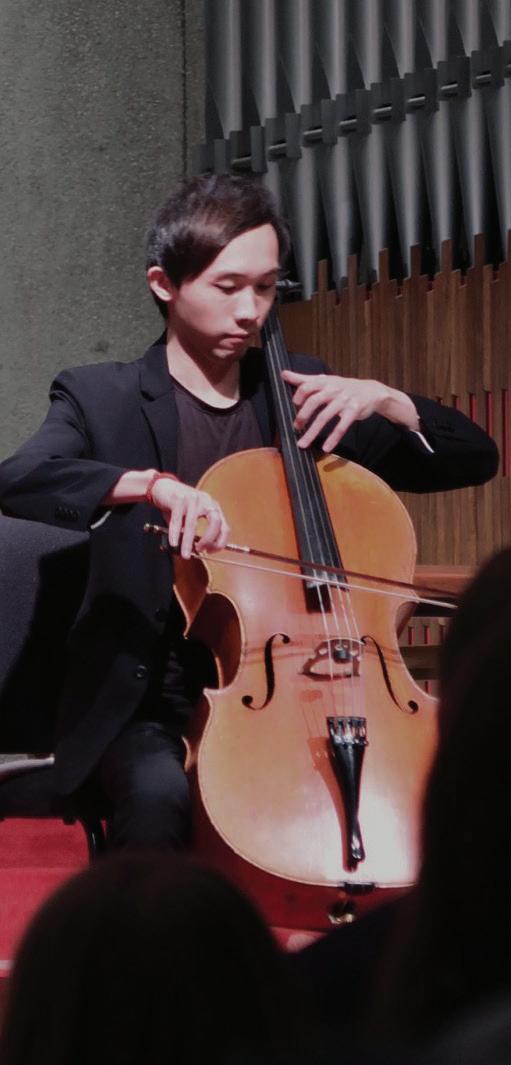
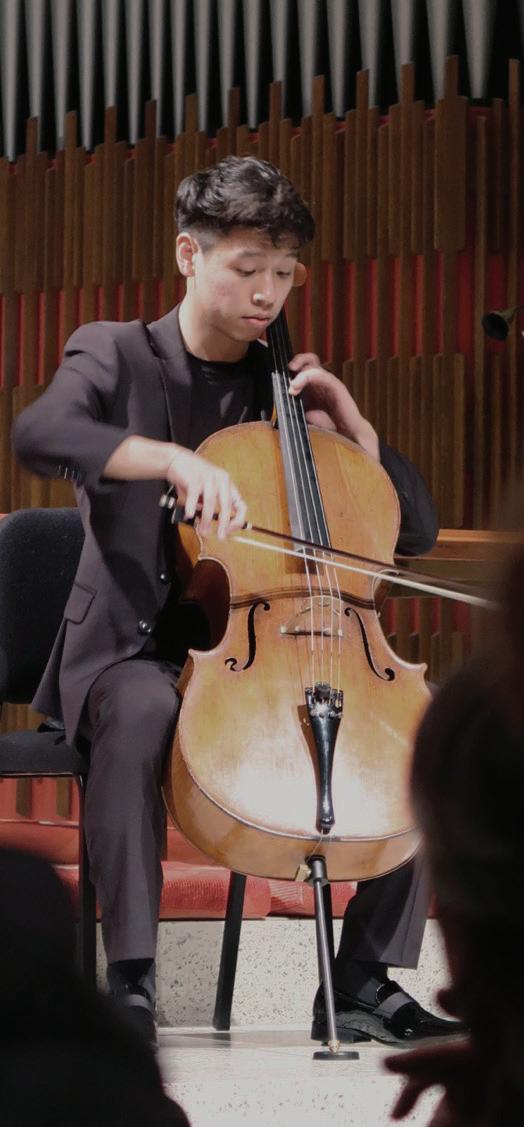
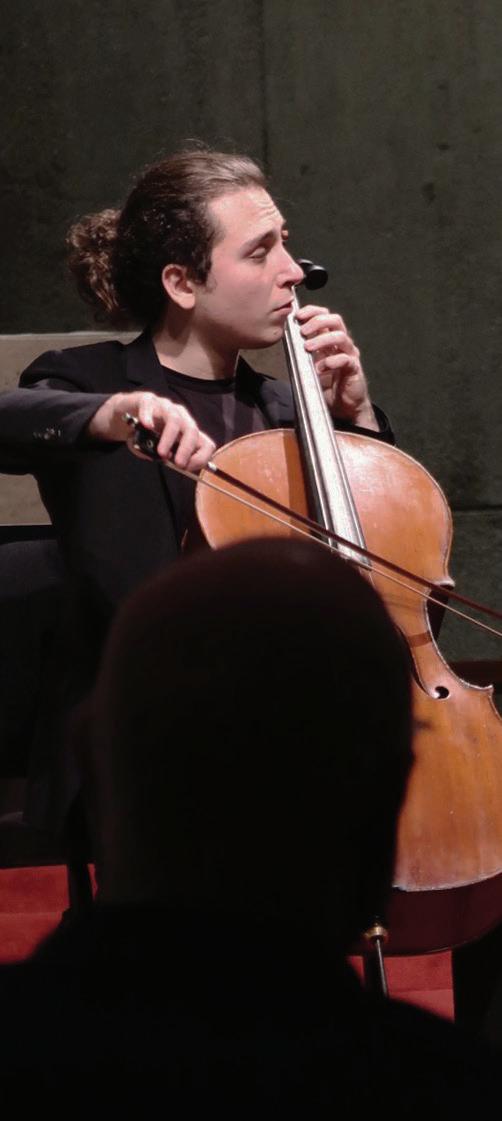
On Jan. 21, the Galvin Cello Quartet performed their program “Coalescence” at the St. Paul’s by the Sea Episcopal Church in Jacksonville. The program included the following pieces:
• Polonaise de Concert, Op. 14, composed by David Popper
• Winter from The Four Seasons. composed by Antonio Vivaldi and arranged by the Galvin Cello Quartet
• Feierliches Stück, composed by Richard Wagner
• Une Larme, composed by Gioachino Rossini
• Leyendas: An Andean Walkabout, composed by Gabriela Lena Frank and arranged by The Galvin Cello Quartet
• La Muerte del Ángel, composed by Astor Piazzolla
The Galvin Cello Quartet is composed of four talented cellists: Sihao He, Sydney Lee, Haddon Kay, and Luiz Fernando Venturelli, all from diverse backgrounds. Sihao He is from Shanghai, China, and has experience in orchestras across Asia and the United States; Sydney Lee, a Korean-American, was born in New York City and has performed in venues all around the world; Haddon Kay, a Chinese-American, has established himself in the United States; and Luiz Fernando Venturelli, from Brazil, has been featured as a soloist in orchestras such as the São Paulo State Symphony. Despite their very different origins, they united as university students at the Bienen School of Music at Northwestern University. Shortly after the meeting, the quartet was formed in 2021, right before the 2021 Fischoff Competition, in which they won a silver medal. Subsequently, in 2022, they won awards at the Victor Elmaleh Competition and the Concert Artists Guild competition. Now, as a part of the Concert Artists Guild, they are on tour and have performed at Universities, such as Texas A&M University in Corpus Christi, and in cities like Jacksonville.
Their program “Coalescence” represents the group’s diverse backgrounds and embraces cultural diversity. It features composers from various cultural backgrounds and includes the arrangement “Leyendas: An Andean Walkabout,” which incorporates elements from Asian, American, and South American cultures. Through this program, the quartet spreads the message that despite our different backgrounds, we can live and work together in harmony.







“it’s okay to make mistakes.”
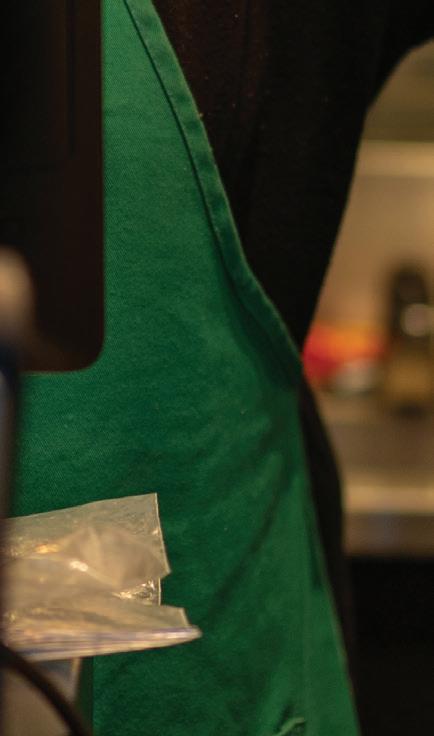
We asked eresa what she does when she’s not at work, and her immediate answer was, “I love to gamble!” Beyond just gambling, though, eresa loves to spend time with her husband, and when she is o over the summer, she goes and spends time with her kids and grandkids. One more fun fact: eresa hates co ee! Not just co ee; she really doesn’t eat anything from Starbucks.
Some nal words from eresa: “I say it like it is, and I just want the students to be happy.”
Next time you are at Starbucks, make sure you return the smile that eresa loves to give. A little act of kindness can go a long way, whether you are on the giving or the receiving end.







WORDS BY: Colin Daily / Photo Editor
PHOTOS BY: Brandon Badraoui, Colin Daily, Horace Huntsberry, Kyle Navarro, Ryan Parris, AND Andrew Zubyk
DESIGN BY: A. Akie Oleszewski / Managing Editor
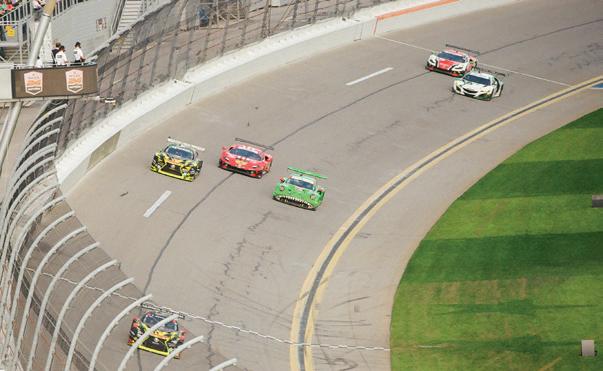
The 65th running of the Rolex 24 took Daytona International Speedway by storm on Jan. 27, running through the night and ending on the afternoon of the 28th. The annual Rolex 24 marks the beginning of the IMSA WeatherTech Championship, bringing in the world’s most prestigious racing athletes to compete in this grueling endurance race. Out of the four classes of cars, Porsche Penske Motorsports’ No. 7 Porsche 963, piloted by Dane Cameron, Felipe Nasr, Matt Campbell, and Josef Newgarden, came out victorious. After a successful season opener, the WeatherTech Championship will continue in March when the series takes on Sebring International Raceway in Sebring, Florida.

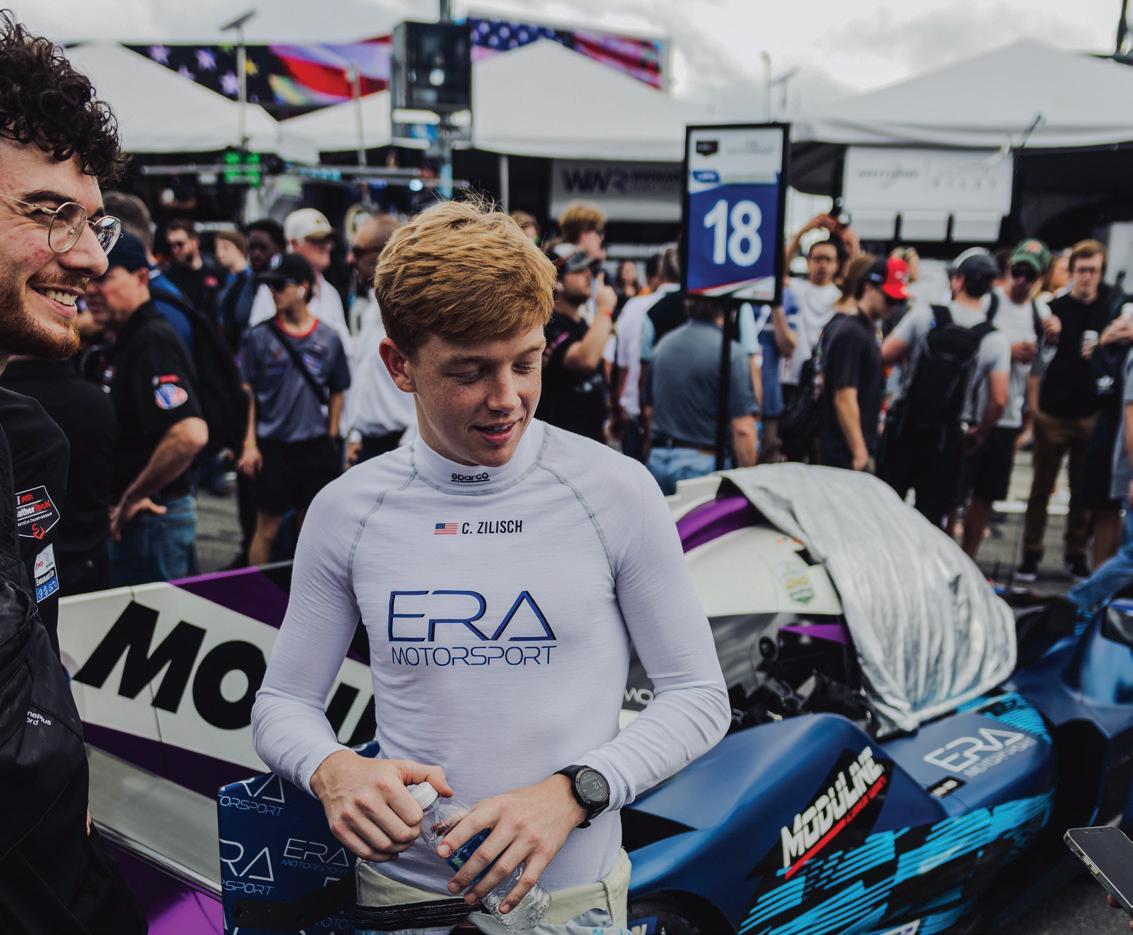
 Connor Zilisch getting ready for a long 24-hour race ahead of him during the grid walk of the Rolex 24.
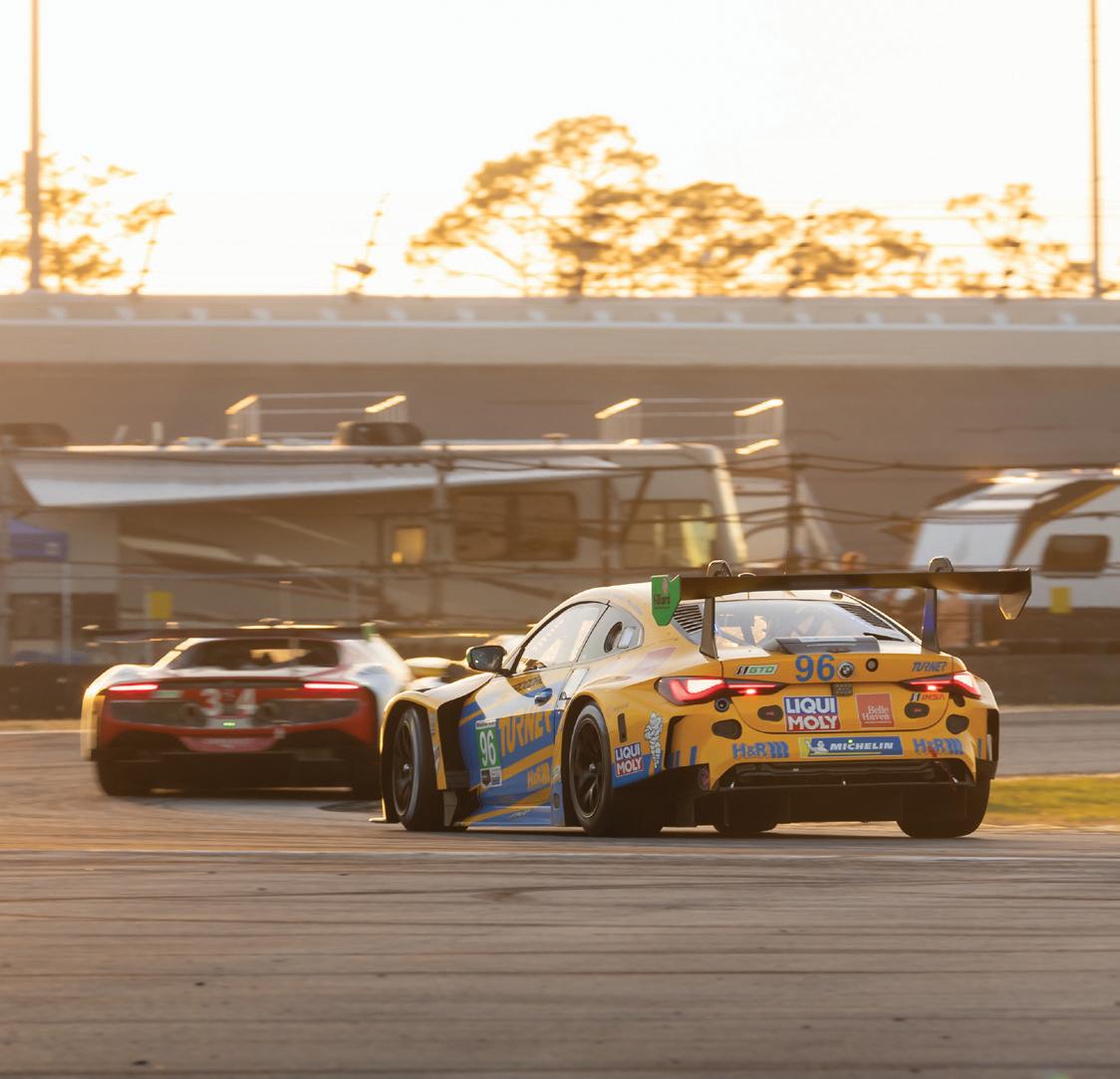
Turner Motorsport’s BMW M4 GT3 chases Conquest Racing’s Ferrari 296 GT3 into the sunset at the 2024 Rolex 24.
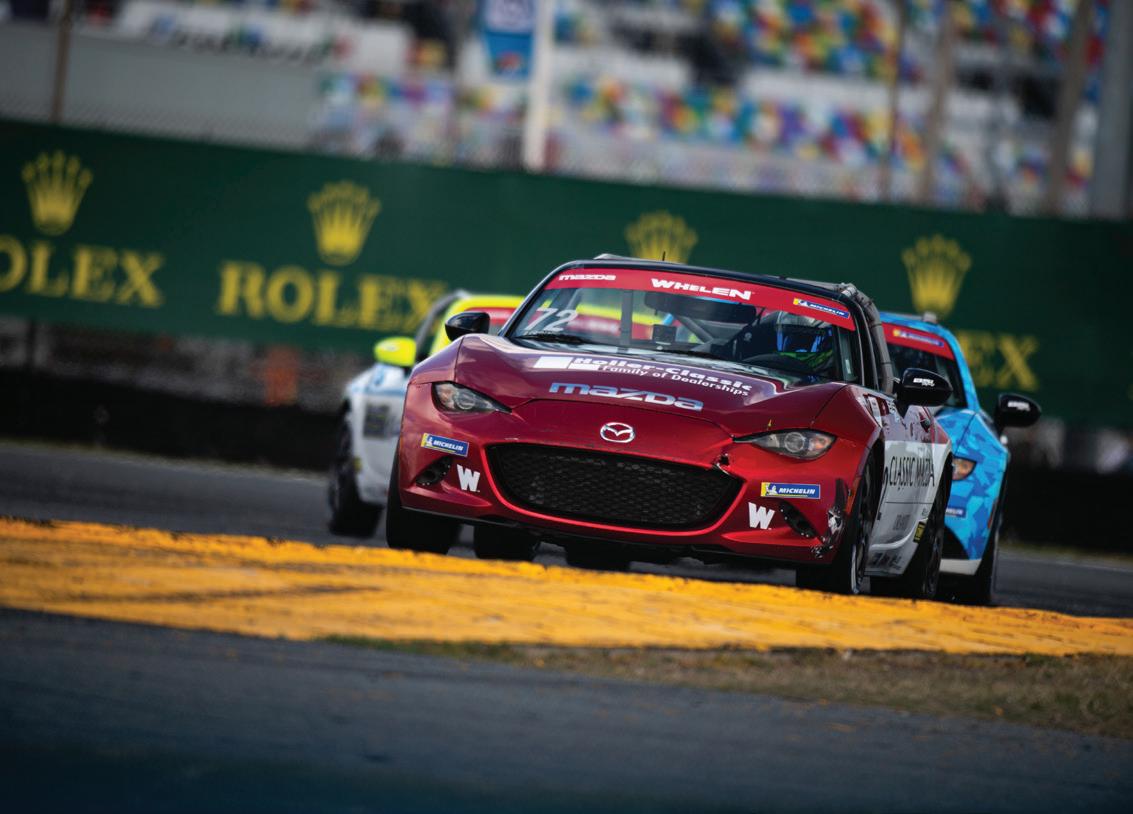
Connor Zilisch fighting for position in his #72 Mazda MX-5 cup car.
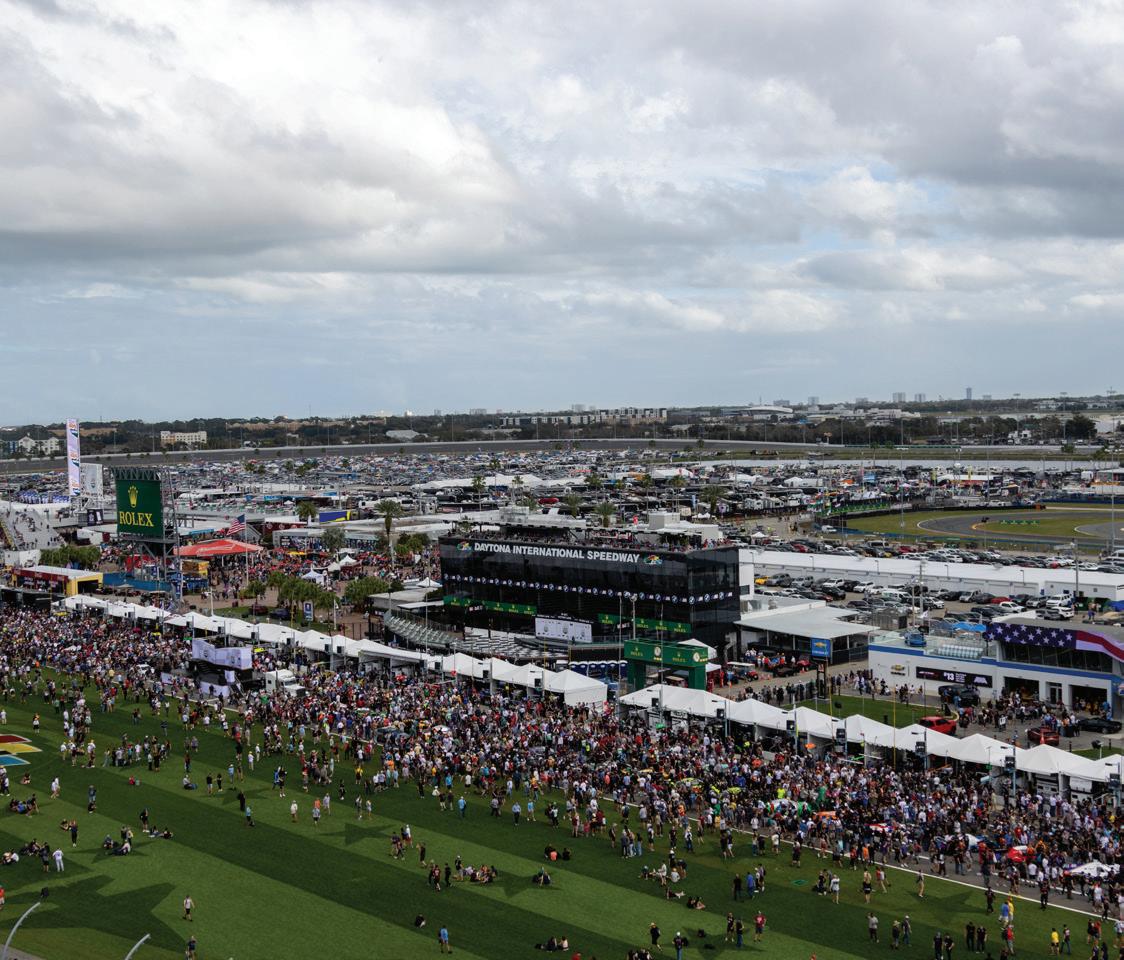
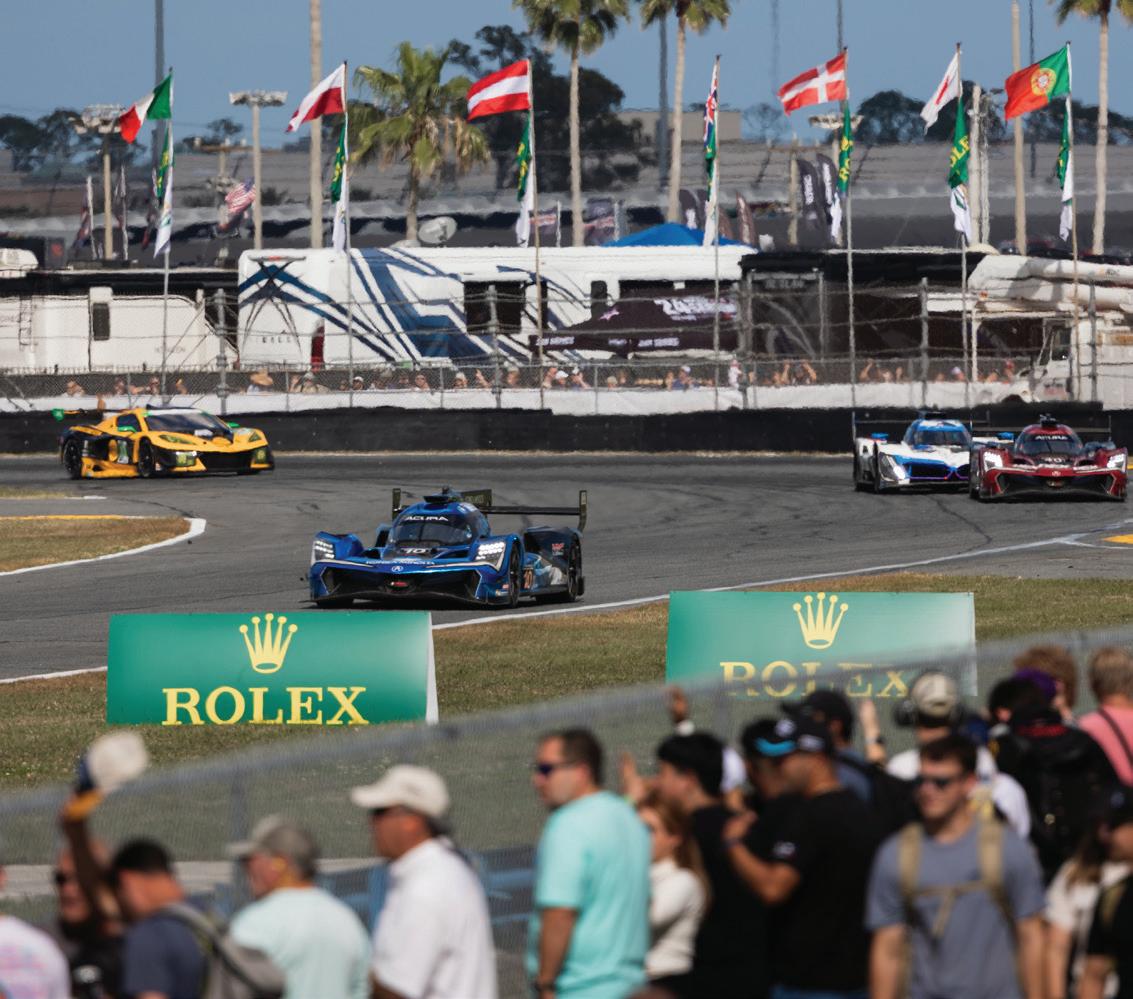
A crowd gathers to witness the opening laps of the 2024 Rolex 24 at Daytona International Speedway.
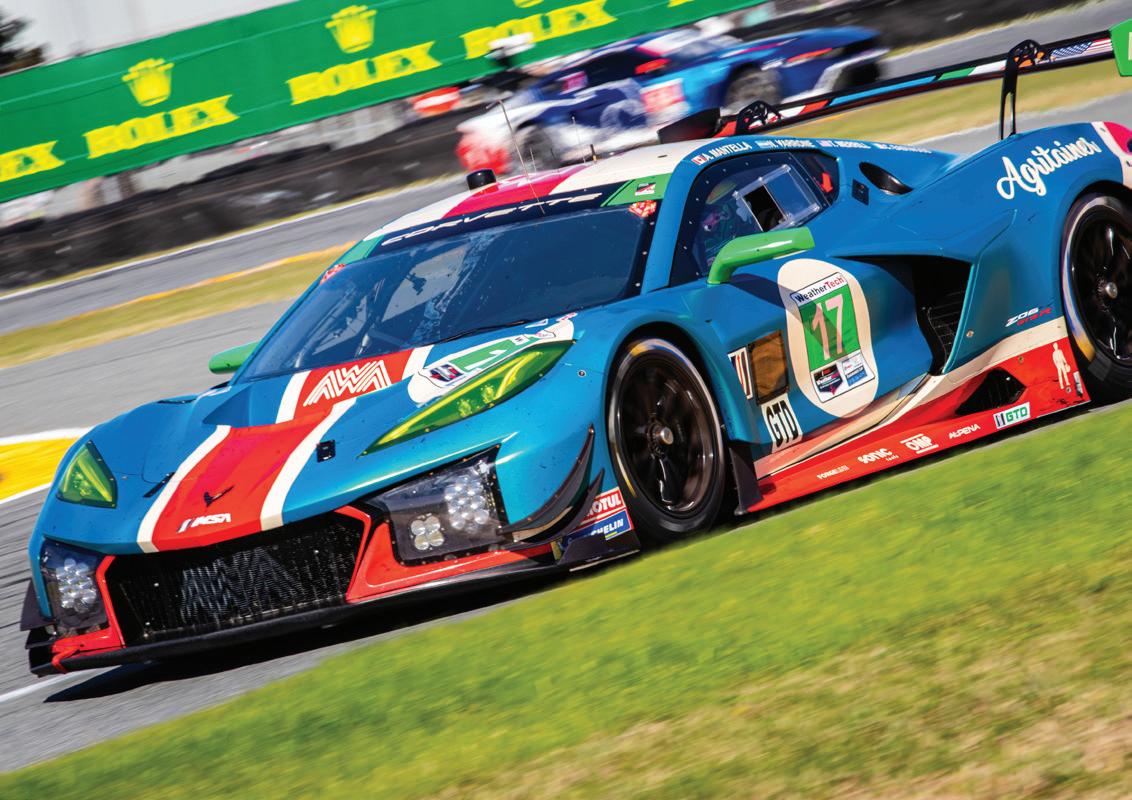
AWA Corvette c8 ZO6 race car in turn 2 in the 24 hours at Daytona.
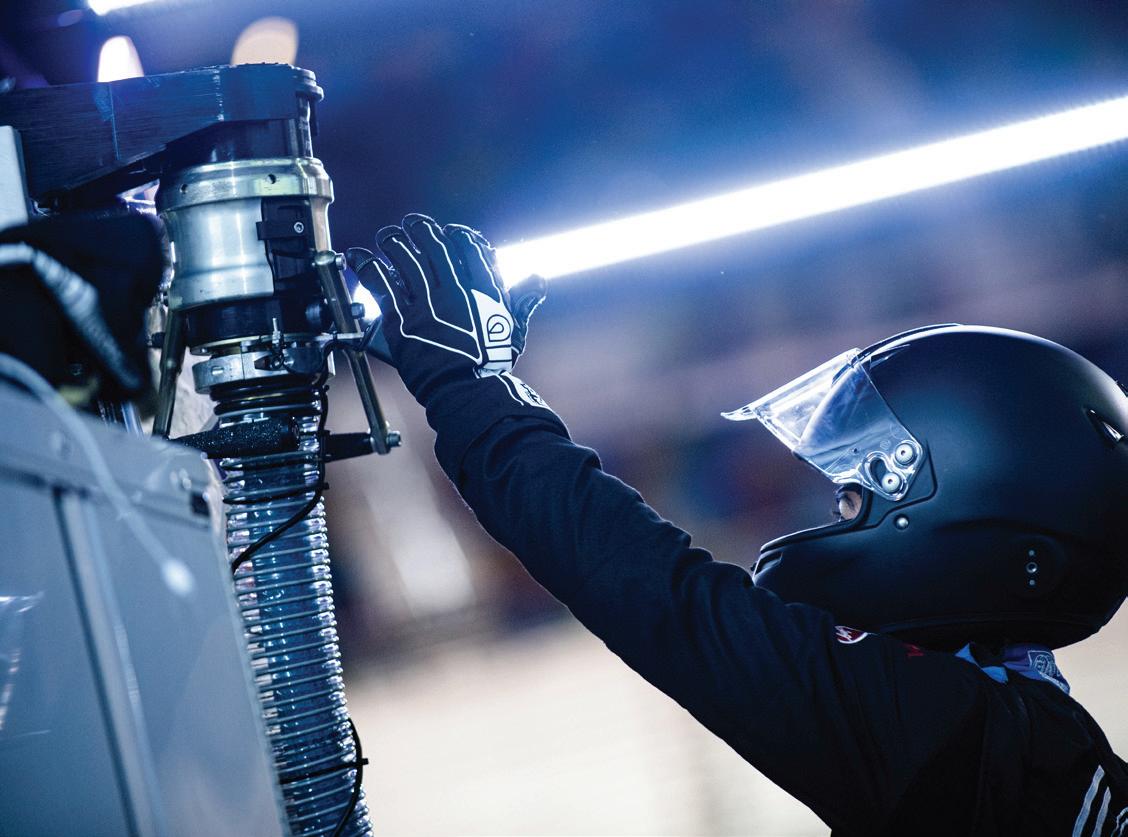
A member of the ERA Motorsports team reaching for something on his toolbox during a pitstop.
Connor Zilisch getting ready for a long 24-hour race ahead of him during the grid walk of the Rolex 24.
Turner Motorsport’s BMW M4 GT3 chases Conquest Racing’s Ferrari 296 GT3 into the sunset at the 2024 Rolex 24.
Connor Zilisch fighting for position in his #72 Mazda MX-5 cup car.
A crowd gathers to witness the opening laps of the 2024 Rolex 24 at Daytona International Speedway.
AWA Corvette c8 ZO6 race car in turn 2 in the 24 hours at Daytona.
A member of the ERA Motorsports team reaching for something on his toolbox during a pitstop.
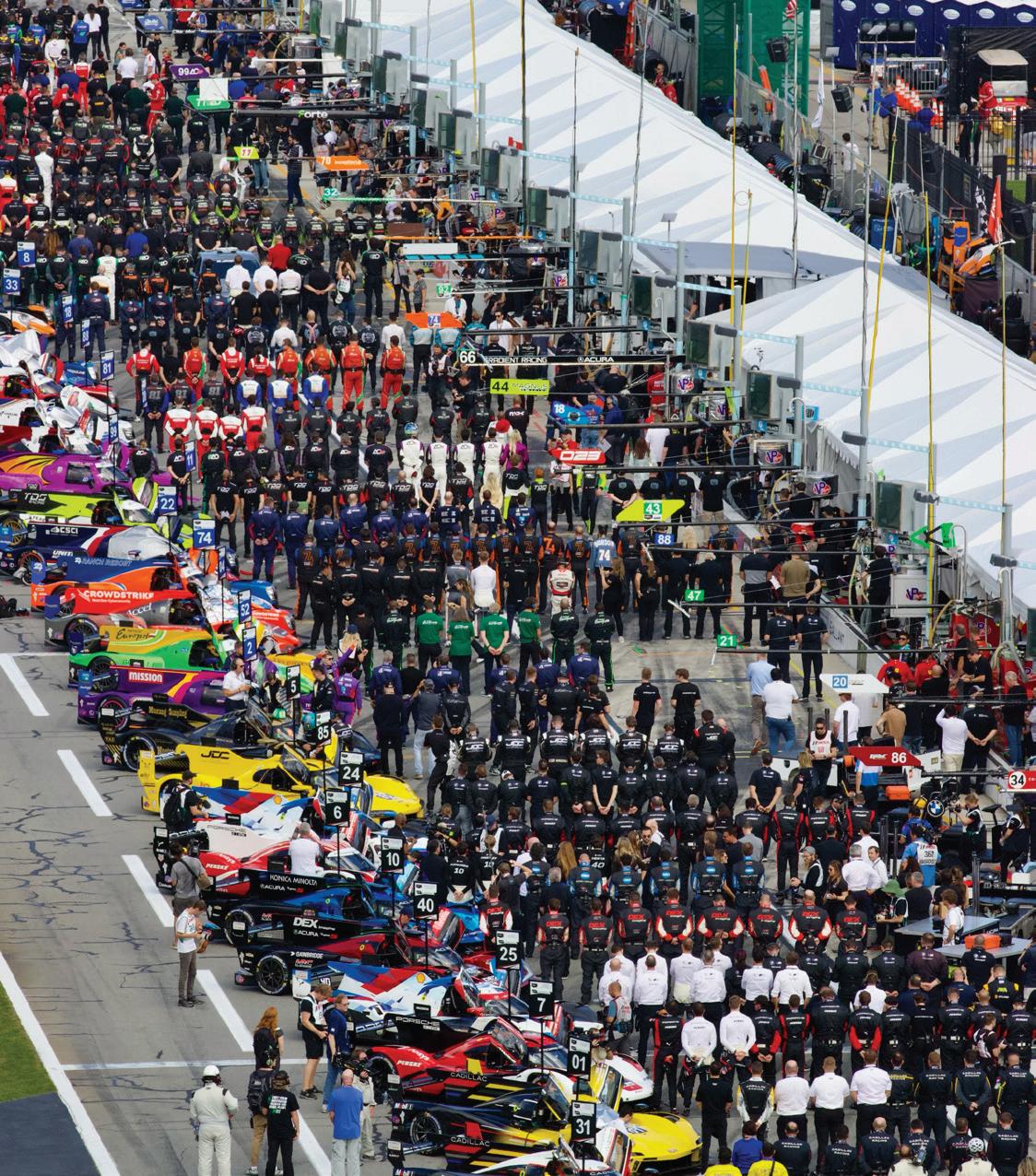
 Race teams lined up on the grid during the national anthem for the 24 hours of Daytona.
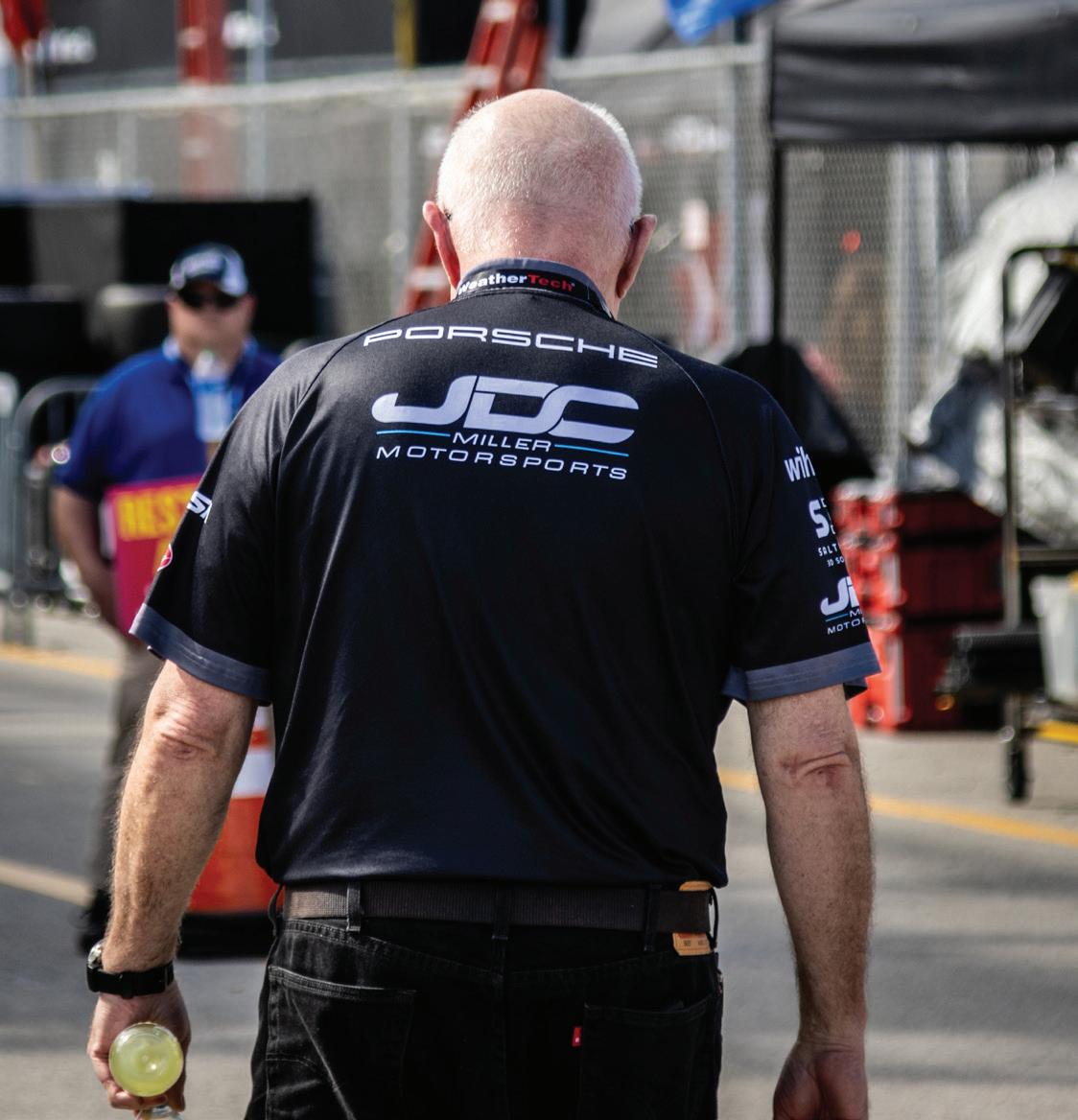
A crew member of the JDC-Miller Motorsports GTP team walks the pits preparing for the start of the 2024 Rolex 24.
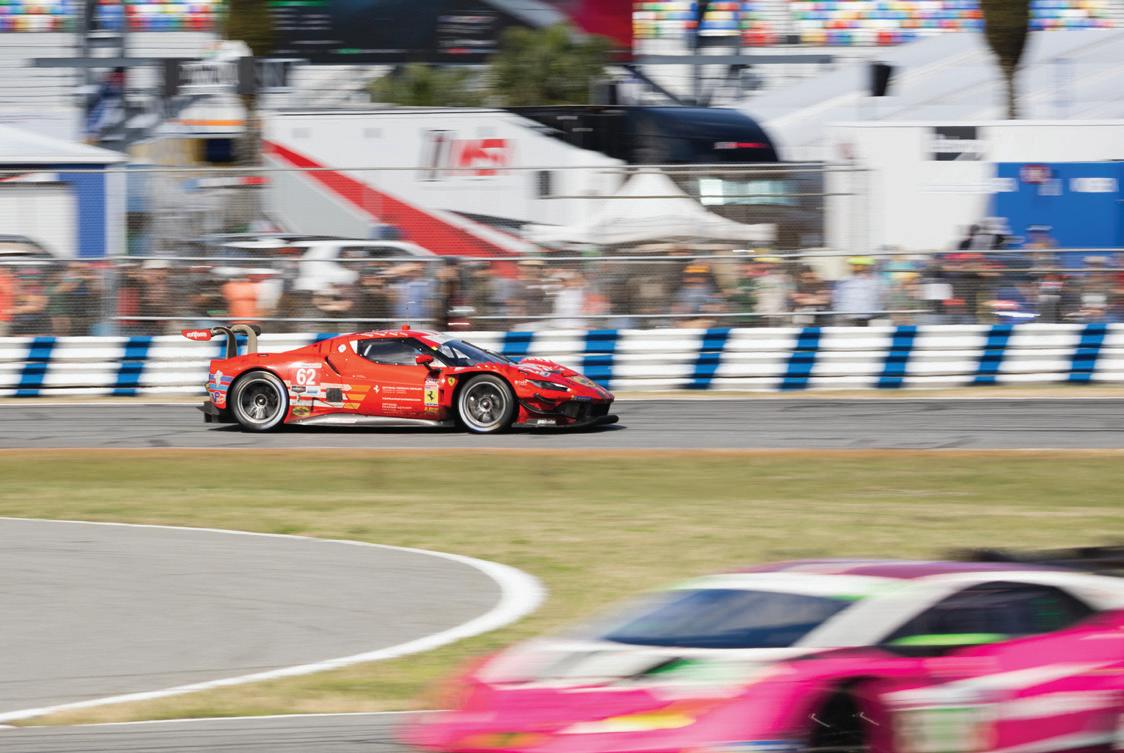
Risi Competizone’s Ferrari 296 GT3 enters Turn 3 at the top of the leaderboard in the GTD Pro class at the 2024 Rolex 24.
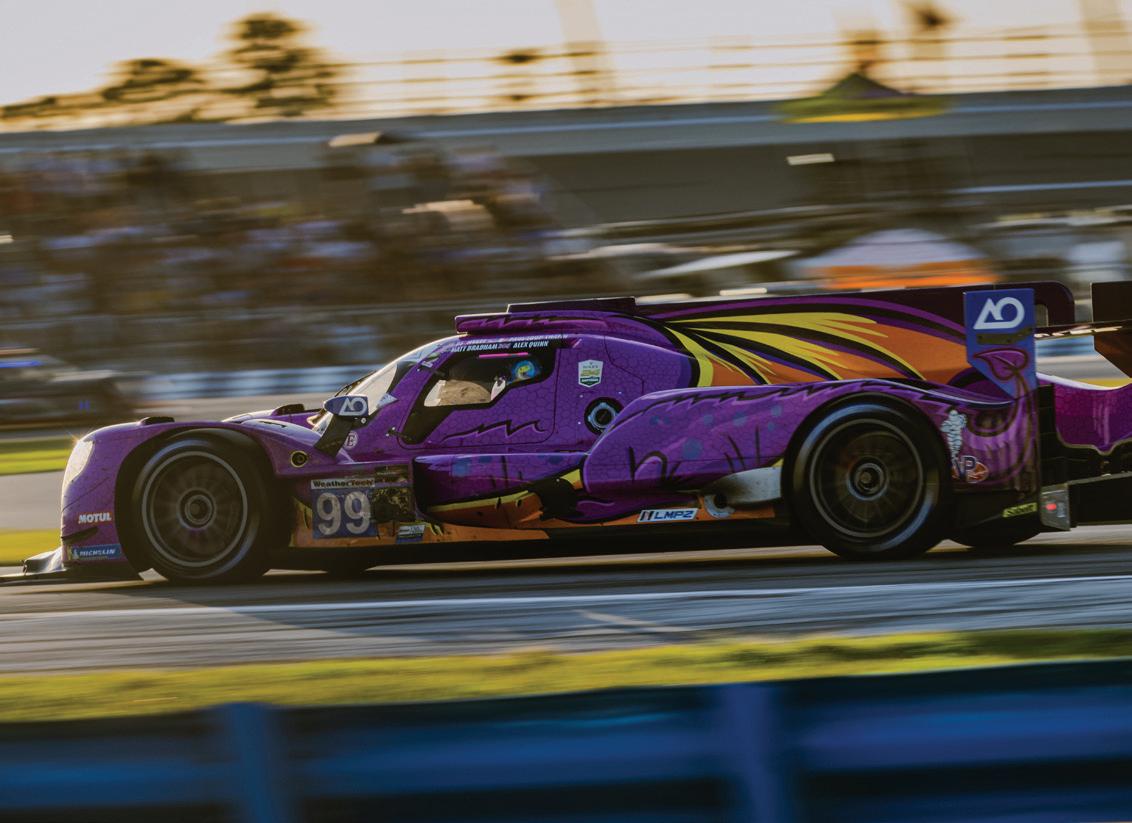
Spike the LMP2 from AO racing heading into turn 5 during sunset while racing the Rolex 24.
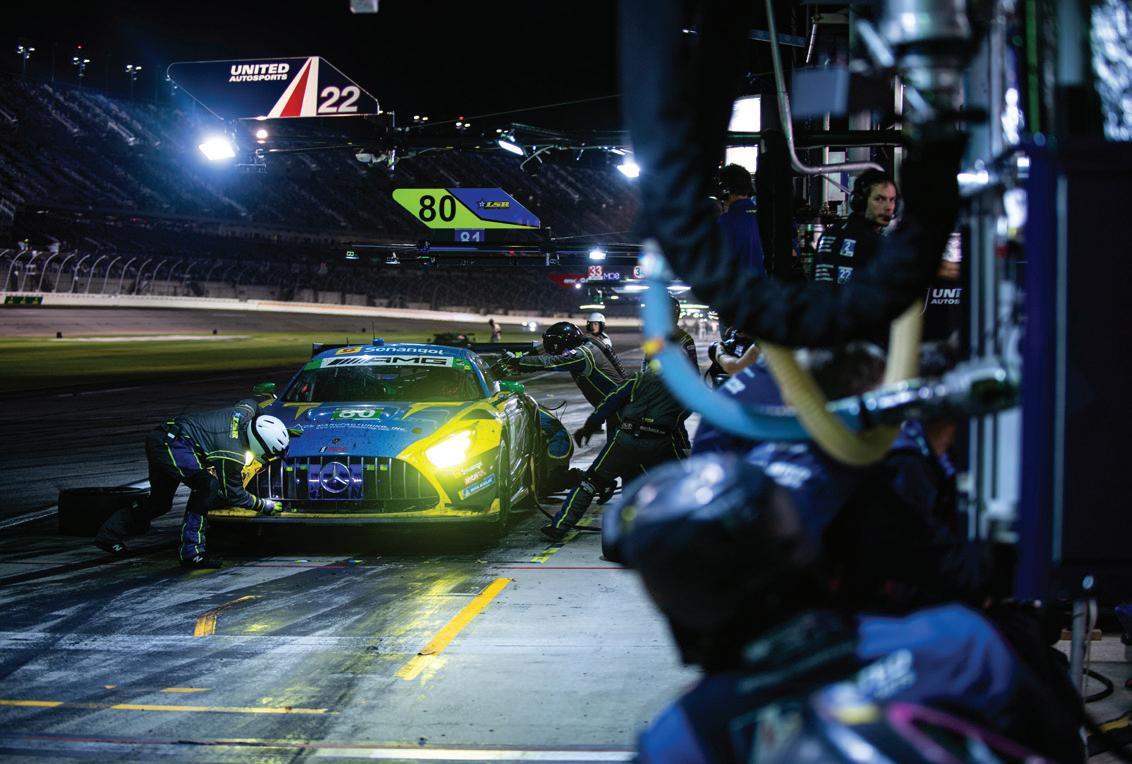
The #80 Lonestar Racing Mercedes AMG GT3 coming in for a pit stop during the late hours of the night.
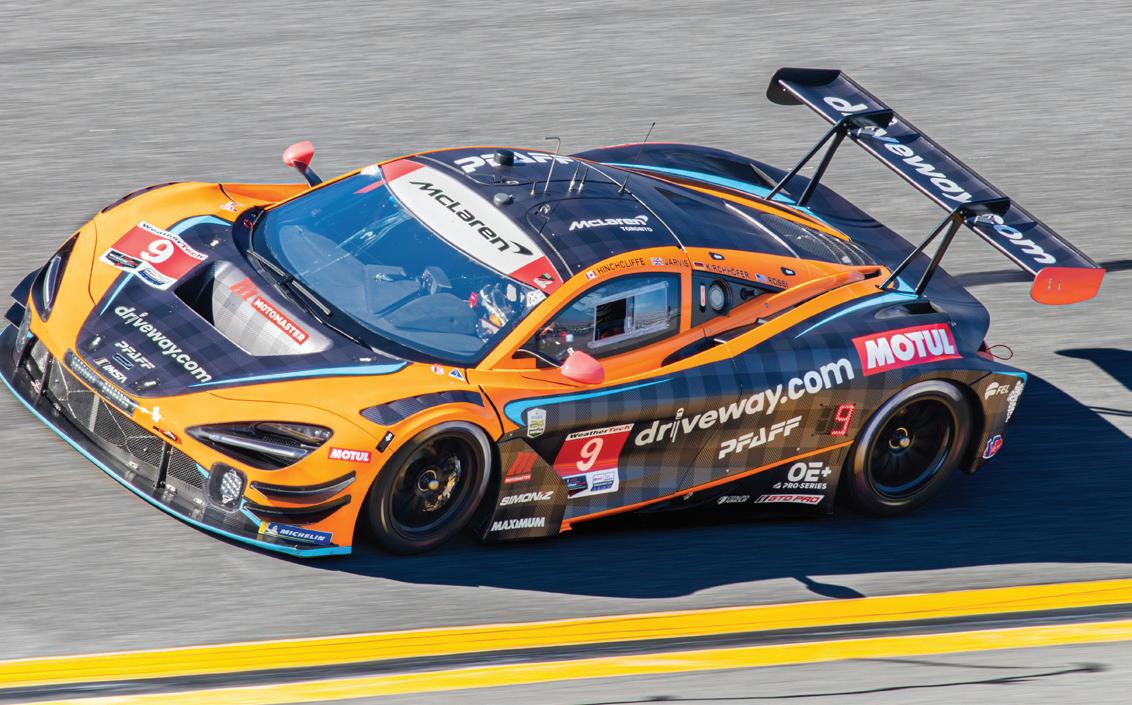
PFAFF McLaren 720 race car on high bank at Daytona 24 hours.
Race teams lined up on the grid during the national anthem for the 24 hours of Daytona.
A crew member of the JDC-Miller Motorsports GTP team walks the pits preparing for the start of the 2024 Rolex 24.
Risi Competizone’s Ferrari 296 GT3 enters Turn 3 at the top of the leaderboard in the GTD Pro class at the 2024 Rolex 24.
Spike the LMP2 from AO racing heading into turn 5 during sunset while racing the Rolex 24.
The #80 Lonestar Racing Mercedes AMG GT3 coming in for a pit stop during the late hours of the night.
PFAFF McLaren 720 race car on high bank at Daytona 24 hours.
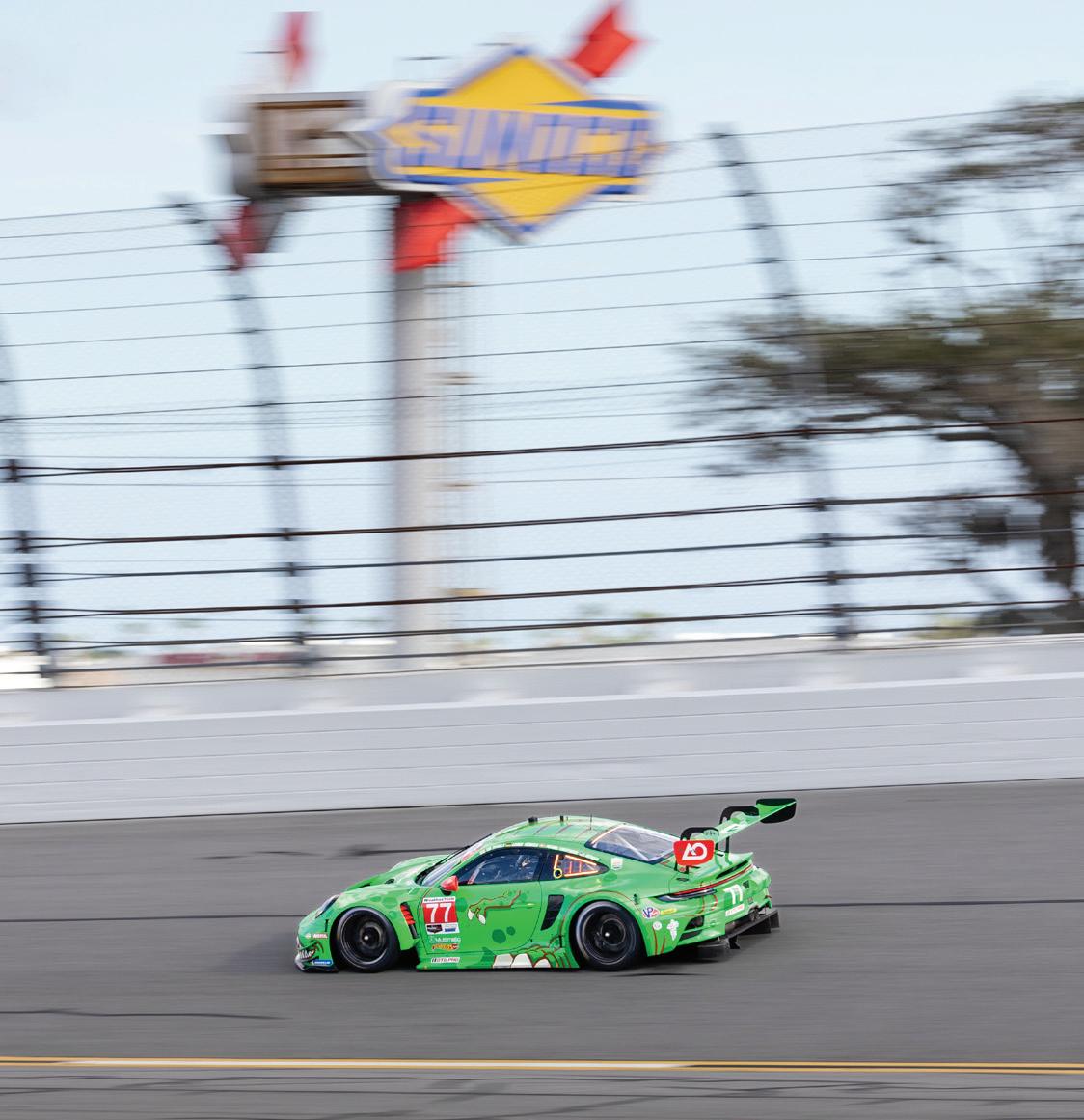
 AO Racing’s Porsche 911 speeds past the infamous Sunoco sign at Daytona International Speedway in the 2024 Rolex 24.
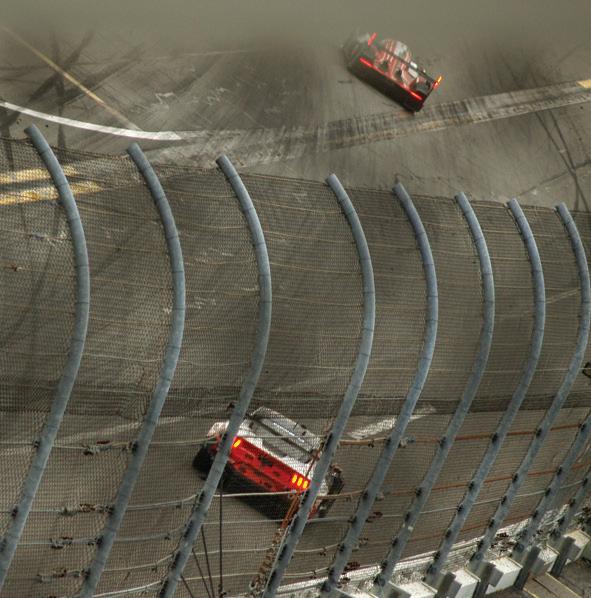
From top to bottom, Porsche Penske Motorsports’ No. 6 Porsche 963 laps Ford Multimatic Motorsports’ No. 64 Ford Mustang GT3.
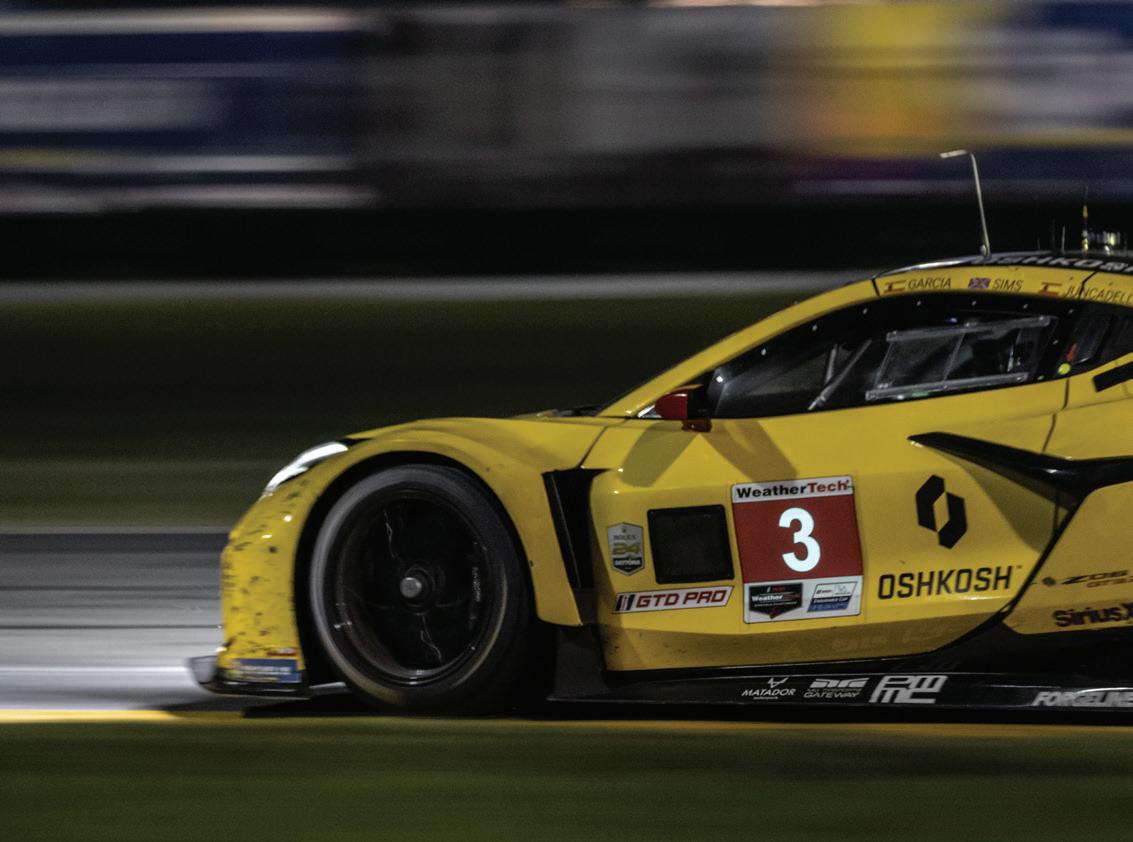
The #3 Corvette Z06 GT3 of Pratt Miller Motorsports accelerates hard of out turn 3 during the night portion of racing at the 2024 Rolex 24.
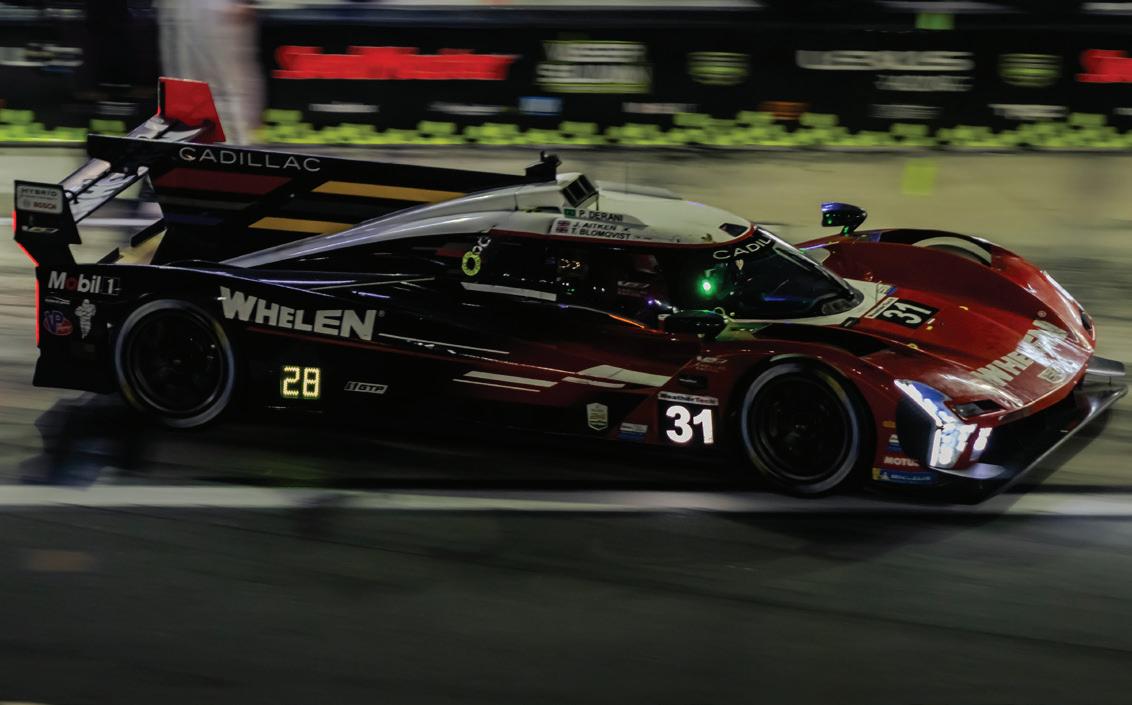
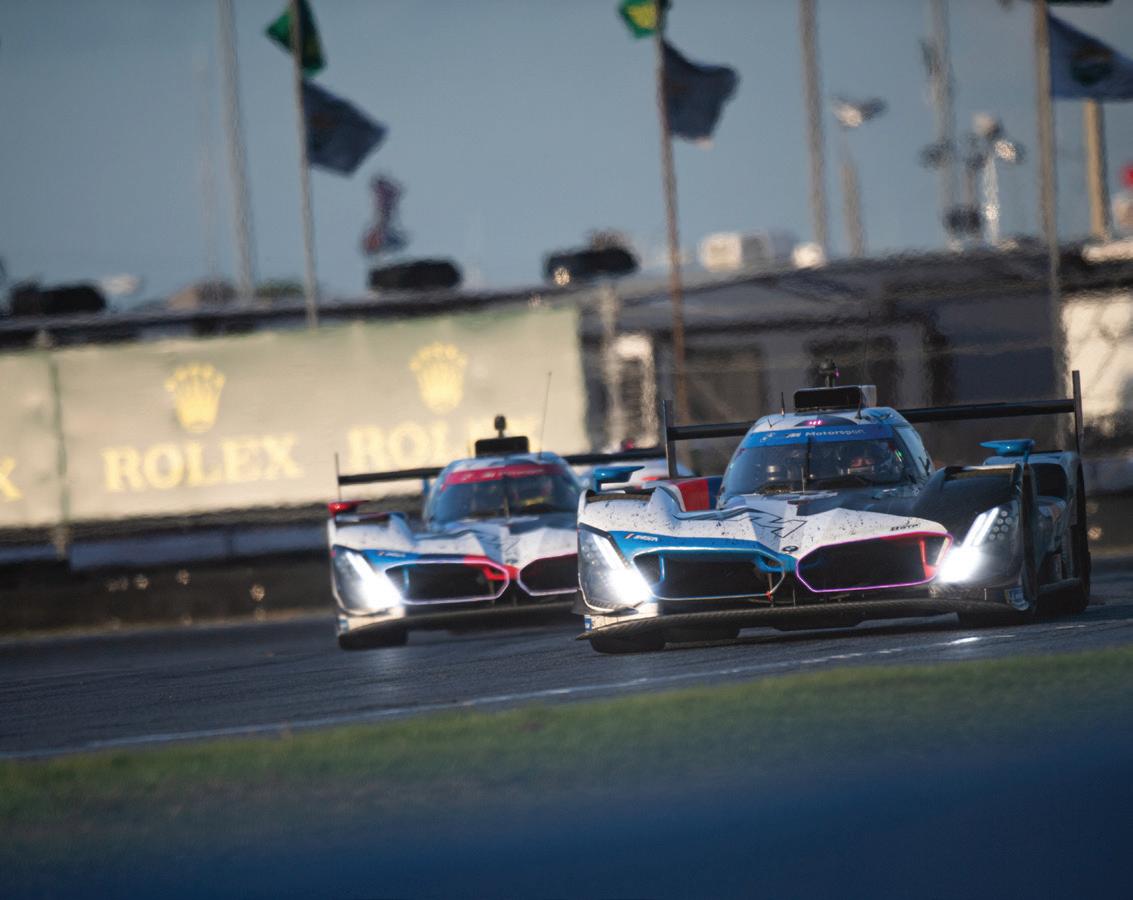
Both RLL Racing BMW M Hybrid’s racing out of turn 3 into the sunset.
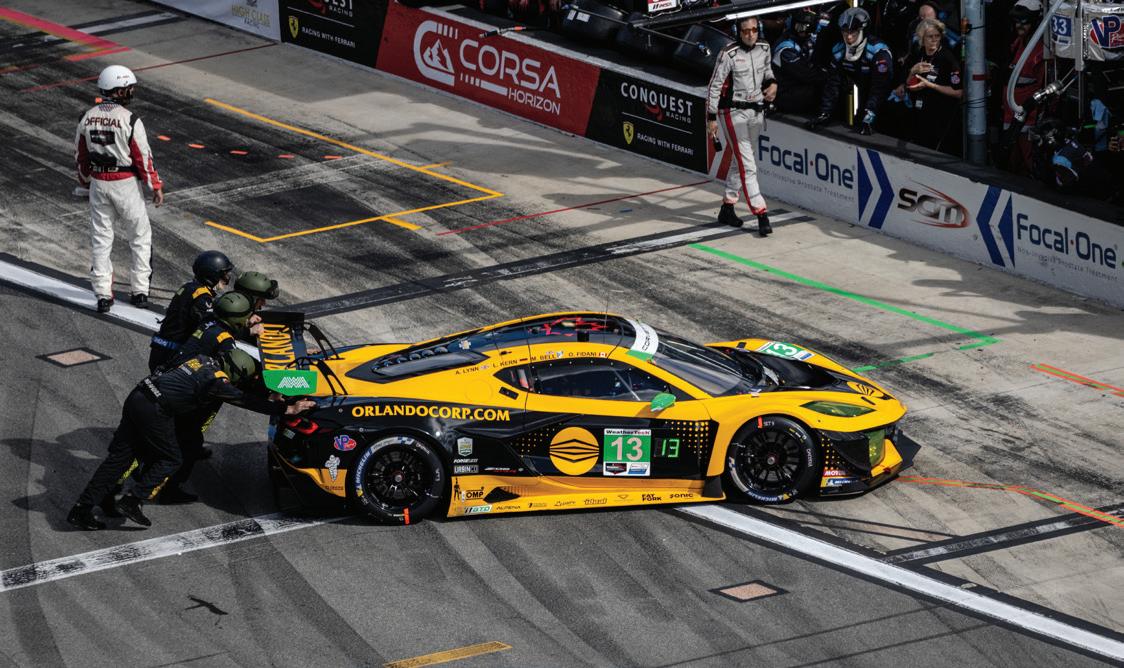
The AWA Racing Corvette Z06 GT3 gets pushed to its pit stall before the start of the race with a mechanical issue as the formation laps begin.
AO Racing’s Porsche 911 speeds past the infamous Sunoco sign at Daytona International Speedway in the 2024 Rolex 24.
From top to bottom, Porsche Penske Motorsports’ No. 6 Porsche 963 laps Ford Multimatic Motorsports’ No. 64 Ford Mustang GT3.
The #3 Corvette Z06 GT3 of Pratt Miller Motorsports accelerates hard of out turn 3 during the night portion of racing at the 2024 Rolex 24.
Both RLL Racing BMW M Hybrid’s racing out of turn 3 into the sunset.
The AWA Racing Corvette Z06 GT3 gets pushed to its pit stall before the start of the race with a mechanical issue as the formation laps begin.

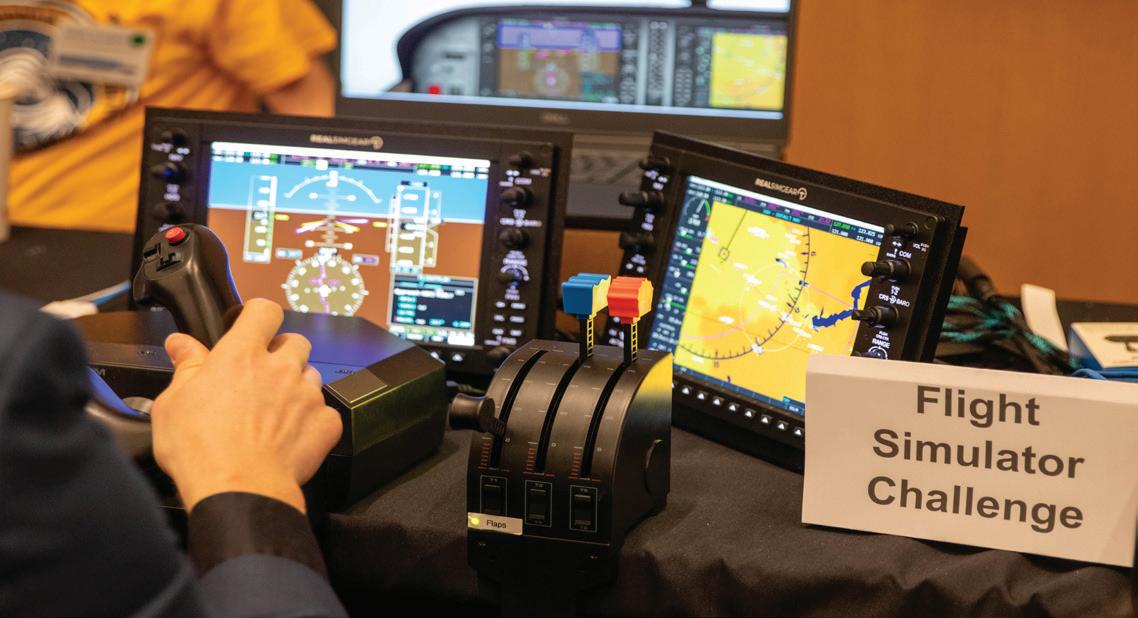
 A Capture-the-Flag team member ying the Cessna 172 ight simulator
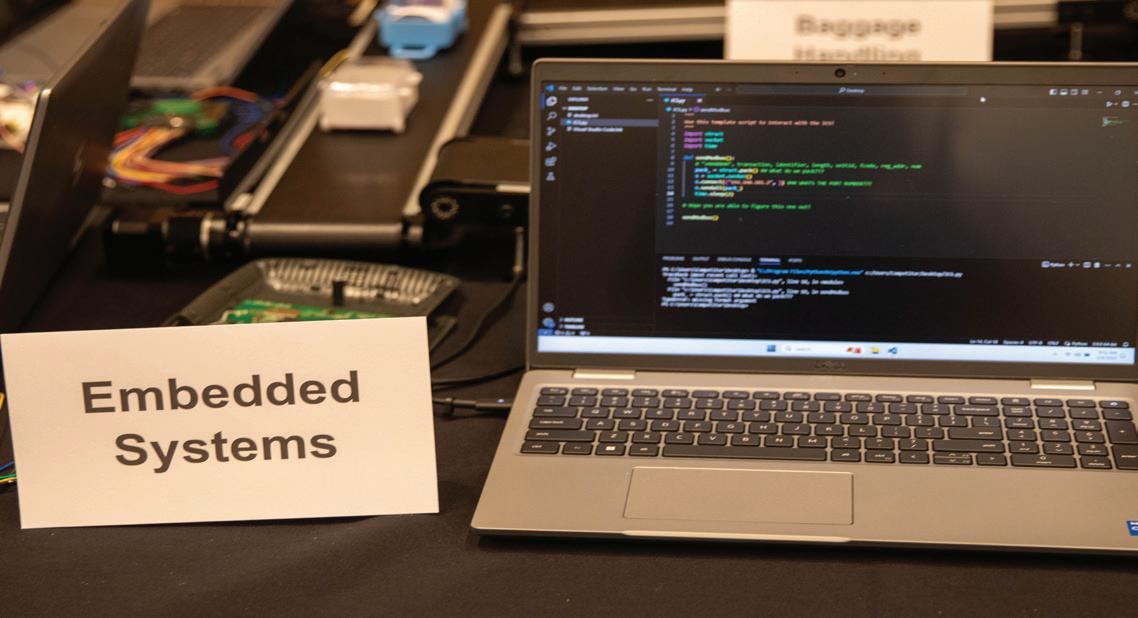
A wall of coding making up the Embedded Systems Challenge
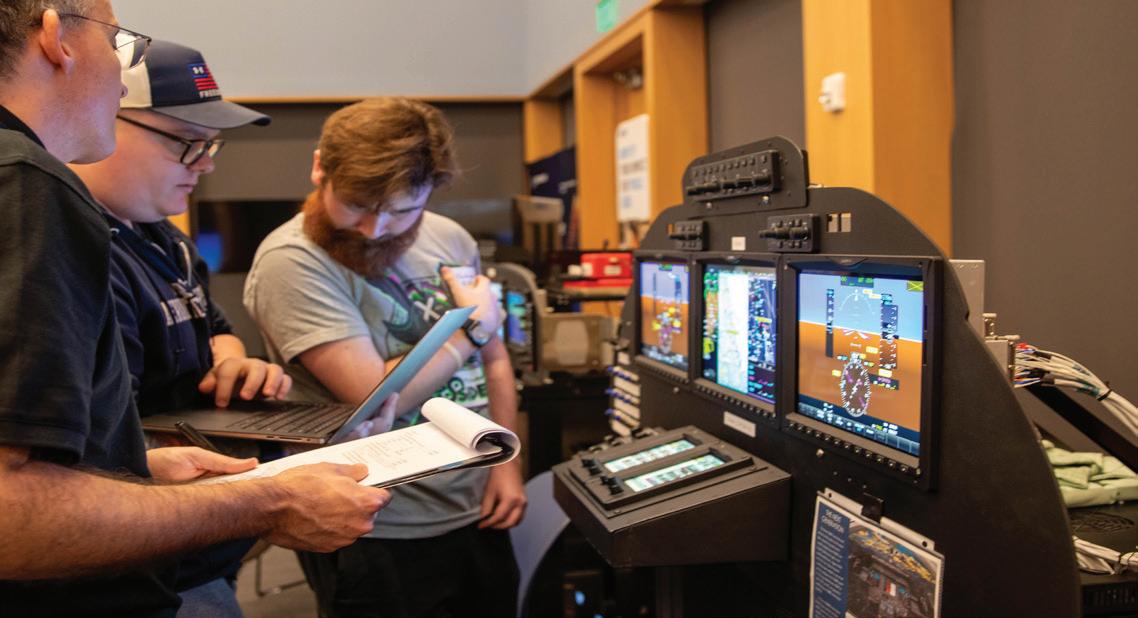
Two coaches work with a team member to operate the instruments of a Cessna Citation
A Capture-the-Flag team member ying the Cessna 172 ight simulator
A wall of coding making up the Embedded Systems Challenge
Two coaches work with a team member to operate the instruments of a Cessna Citation
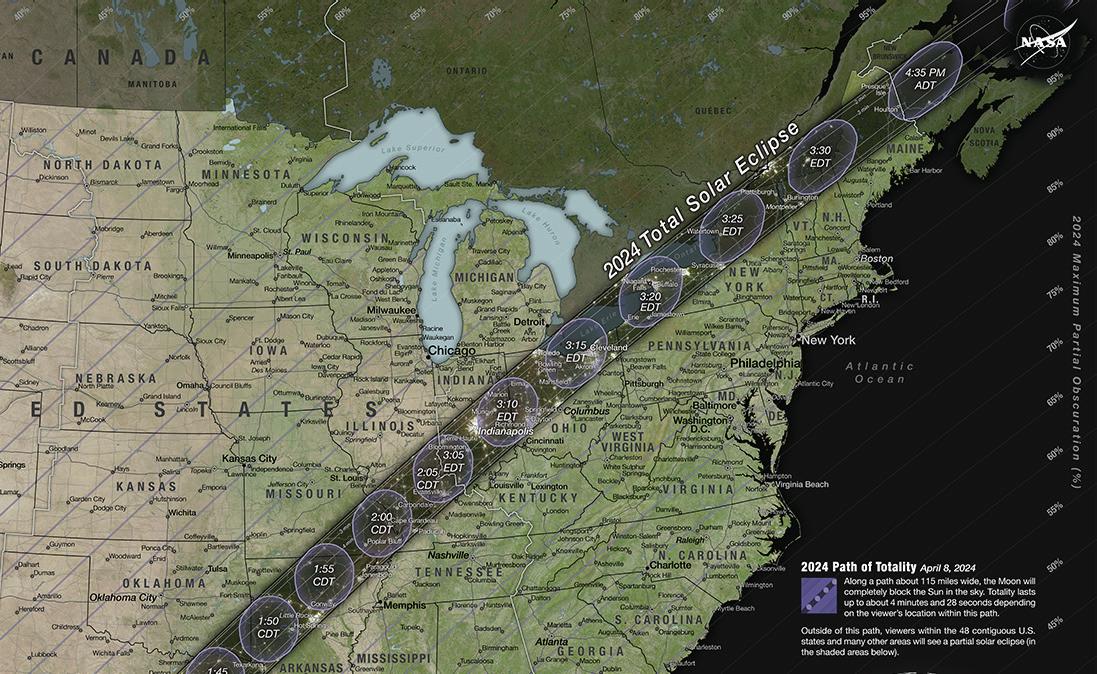
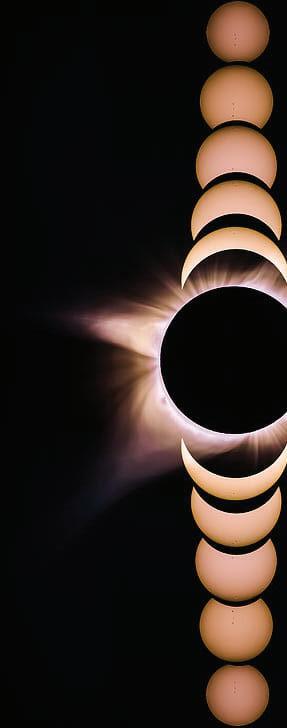
e time is now to see the next total solar eclipse in the United States. On April 8, 2024, this astronomical event will cross North America, passing over Mexico, the United States, and Canada. A total solar eclipse occurs when the moon passes between the sun and Earth, blocking the sun’s light. When the moon lines up perfectly with the sun and blocks all the light, a total solar eclipse occurs. e eclipse will enter the United States, starting in Texas, and then going through Oklahoma, making its way northeast to New Hampshire and Maine. Texas is the rst state to experience the eclipse, starting at 12:23 p.m. CDT and ending at 3:02 p.m. CDT. e last state to experience the eclipse is Maine, which will begin at 2:22 p.m. EDT and end at 4:40 p.m. EDT.
e last time a total solar eclipse passed through the United States was August 2017. It was the rst total solar eclipse to pass through the entire continent in nearly 100 years, and an estimated 12 million people could see it. is year, it is estimated that a total of 31.6 million people will be able to see the eclipse from the 200-mile path of totality. A er the passing of the total solar eclipse in April, the next time the United States will experience a total solar eclipse will be Aug. 23, 2044.
Safety is still a priority when looking at an eclipse, so wearing protective eclipse glasses will help avoid eye injury. It is only safe to look at the sun when it is fully covered by the moon, but parts of the sun will still be visible before and a er the eclipse reaches its totality. A total solar eclipse is the only type of eclipse where the special glasses can be removed momentarily. e event will take around two and a half hours, but totality will only last about four minutes. Here in Daytona Beach, we will not be able to see the total solar eclipse, but will see a partial eclipse. Most cities in Florida will experience the partial eclipse around 1:45 p.m. EDT, with about 50 to 70 percent covered. Try to catch a glimpse of this event, because we won’t see the next one for 20 years!
Issue 2 January News Recap - 2024
ARTICLE BY: Caitlin Stiles AND Mackenzie Seaman PHOTOS COURTESY OF: Wikimedia, NTSB, NASA Mars, AND Aljazeera DESIGN BY: Jan Brychta / CorrespondentJan. 1
Starting on the first of January this year, Steamboat Willie, the first design of Disney’s Micky Mouse, will enter the public domain, making his name and his likeness available for public use.
An earthquake struck the Noto Peninsula in Ishikawa Prefecture in Japan, causing 55 deaths and tsunami warnings across the coast of Japan.
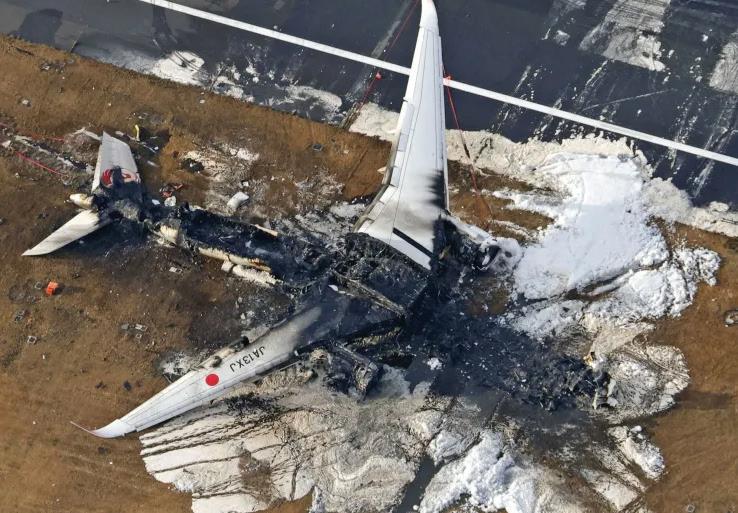
A Japan Coast Guard De Havilland DHC-8-315 was on its way to Hokkaido to bring aid after an earthquake hit the day before, when it collided with a Japan Airlines Airbus A350. The passenger plane made a fiery landing at Haneda Airport before successfully evacuating all of its passengers. All 5 fatalies came from the Coast Guard aircraft, with only 1 member of its flight crew being able to evacuate.
Jan. 8.
Jan. 5
North Korea started firing artillery shells off the coast of Yeonpyeong Island without warning, causing South Korea to evacuate the island to keep its citizens safe.
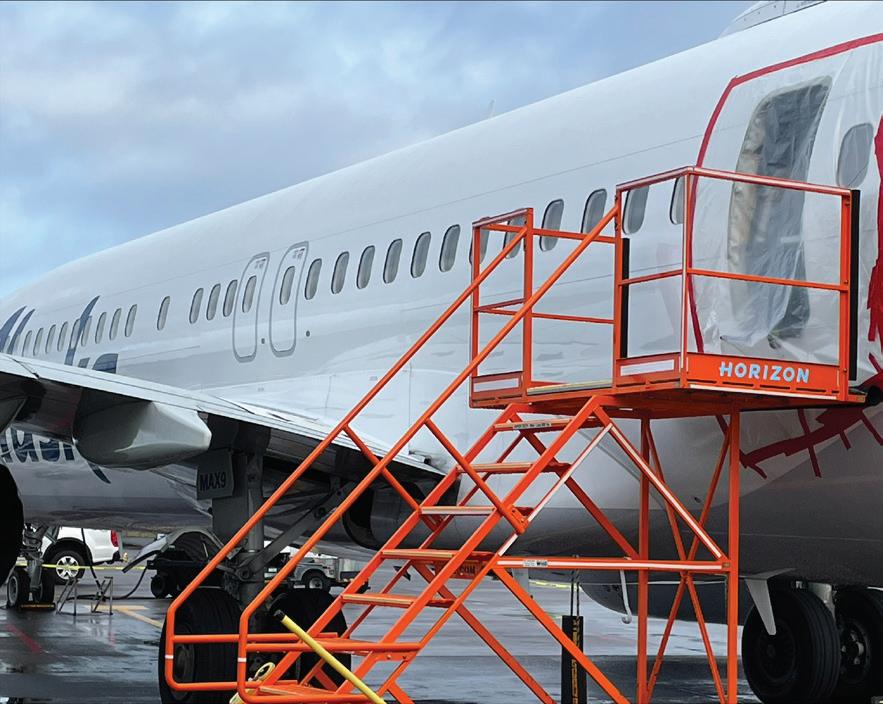
After the plug door of an Alaska Airlines 737 MAX-9 blew off during take-off, the aircraft had to make an emergency landing at Portland International Airport, Oregon. Luckily, no injuries were reported.
After a ruling by Germany’s court that the 2024 budget was illegal, the government conducted subsidy cuts in order to fix the budget. As a result, farmers started protesting by parking over 500 tractors and trucks by Berlin’s Brandenburg Gate.
Page 22
Jan. 9
South Korea Bans the Use of Dogs as Food
To be effective starting 2027, a bill was passed banning the breeding and slaughter of dogs as food for consumption as a result of the changing consumer base.
Jan. 11
In an effort to cut costs, Google has decided to lay off over 1,000 workers in its engineering, voice assistant, and hardware teams.
Since October 2023, Cholera cases in Zambia have been increasing, with about 7,500 reported cases in total. Zambia’s president has urged his citizens to evacuate to rural areas in order to decrease the rate of infections nationwide.
Jan. 13
In Taiwan, Lai Ching-Te is Elected President

Jan. 23
The Presidential Primaries Show Joe Biden and Donald Trump Are the Candidates for the 2024 Elections
Jan. 25
Jan. 14
Iceland Volcano Eruption
With its second eruption in the span of roughly 6 weeks, the Reykjanes Peninsula had to evacuate for a second time. There were no injuries or damage to human life.
Jan. 19
The Leader of the Gulf Cartel, Jose Alberto Garcia Vilano is Arrested
After being wanted for capturing four U.S. citizens and killing two of them in March of 2023, Vilano was finally captured after an anonymous tip was received by the police in Monterrey, Mexico.
Jan. 24
Argentine Workers Go On a 12-hour Strike Because of the President of Argentina’s Policies
Argentina’s largest union started a 12-hour protest due to the new President’s, President Javier Milei’s, policies on tough economic austerity measures and reforms. or damage to human life.
Jan. 27
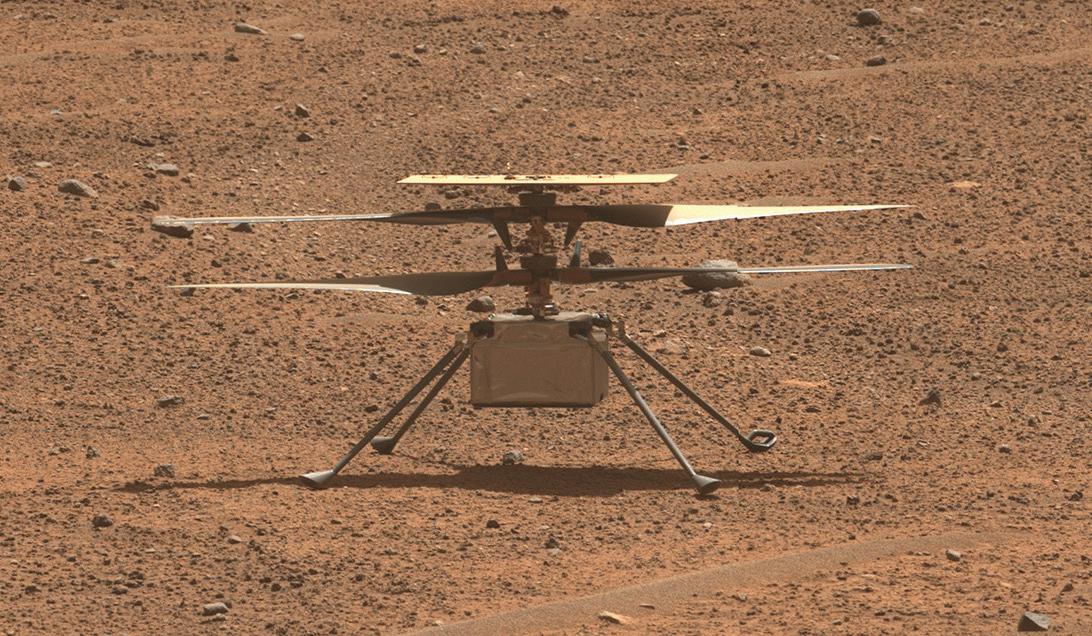
The First Otherworldly Aircraft Mission Has Ended
Ingenuity, the first mission to fly and operate on another planet, lifted off on April 19, 2021, and ended on January 25, 2024.
Largest Cruise Ship “Icon of the Seas” Embarking on a Voyage From Port Miami
Michelle, Caroline, Brandon, and Carmen are graduate researchers in the Research in User eXperience (RUX) Lab in the Department of Human Factors and Behavioral Neurobiology. RUX investigates the usability and user experience of technology in our everyday world. This is a regular column that reports on current research from Embry-Riddle’s EcoCAR EV Challenge Human-Machine Interface/User Experience team.. .
PHOTOS BY:
Brandon Dreslin, David Massey, AND ARENAEVDESIGN BY: Rachael
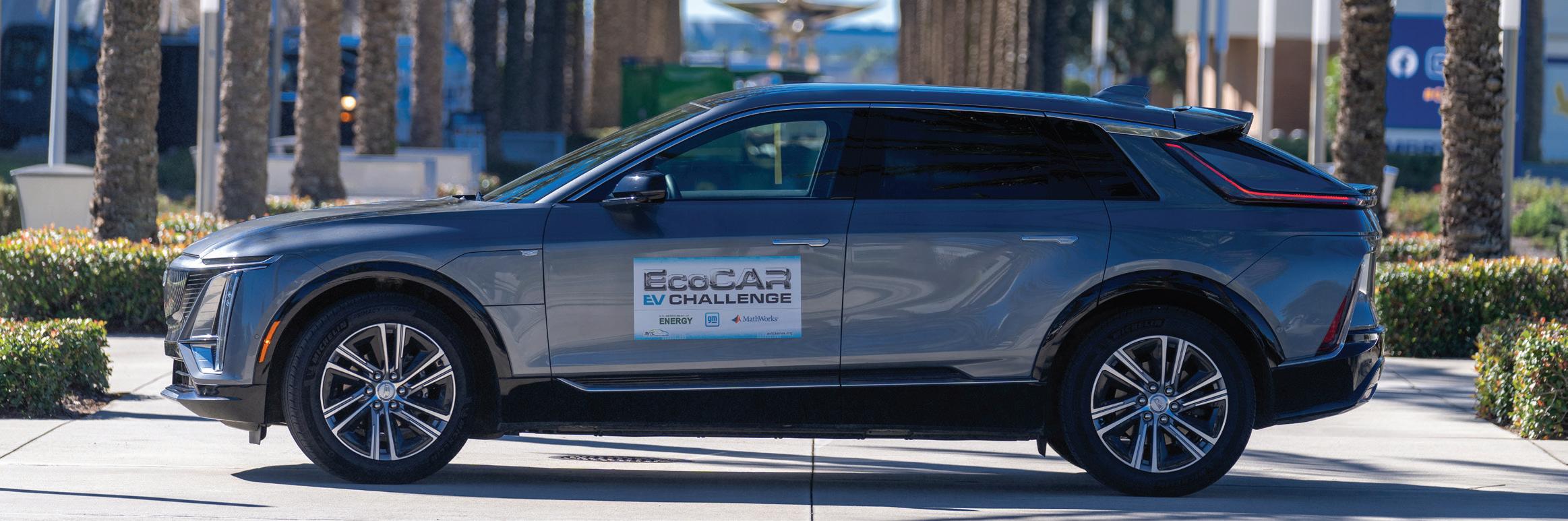
Tran / News EditorA disease is a ‘disorder of structure or function’ inside living entities. But what if these disorders also occur outside these entities and within the environment and systems they interact with? Imagine this: you and your friends are taking a road trip and need to rent a vehicle to fit everyone’s luggage. The rental company gives you the keys to a brand-new Cadillac LYRIQ, the latest all-electric utility vehicle from General Motors. As you admire the car’s sleek styling, you quickly encounter challenges. From struggling to open the driver’s door to grappling with the curved 33-inch touchscreen infotainment system and engaging the semi-autonomous driving capabilities, frustration sets in. Even your friends share your struggles, unable to connect to Bluetooth or adjust the music volume. It becomes apparent that the structures and functions of this vehicle are very different from any you’ve experienced before.
Although the scenario above seems fictitious, it represents participant experiences from user testing with the 2023 Cadillac LYRIQ as part of Embry-Riddle’s involvement in the EcoCAR Electric Vehicle (EV) Challenge. The EcoCAR EV Challenge is a four-year competition engaging 15 universities in the Advanced Vehicle Technology Competition series. This competition focuses on enhancing the LYRIQ in advanced propulsion systems, connected and automated vehicle technologies, as well as human-machine interfaces and user experience (HMI/UX). Embry-Riddle’s HMI/UX team has partnered with Bethune-Cookman University (BCU) to understand how users interact with the vehicle, identify potential issues, and design new systems that improve the user experience
Currently, the vehicle testing working group is exploring the concept of ‘environmental diseases,’ disorders that form during poor interactions between humans, their environment, and the systems within it. To discover how this topic relates to modern vehicle design, our team conducted static and dynamic vehicle user testing with several participants. During static testing, participants were instructed to configure the LYRIQ’s interior features according to their preferences, like they would with any vehicle they drive for the first time. During dynamic testing, two members of the research team drove the car along predefined routes and tested several advanced driver assistance systems. For both static and dynamic testing, we asked participants to discuss their thoughts and feelings while completing each task to gain insight into their behaviors while interacting with the vehicle.
Through our testing, we identified two possible environmental diseases: poor inclusivity/accessibility and inadequate mental models of vehicle systems. Inclusivity/accessibility refers to ensuring all people can use and access the vehicle, regardless of disabilities or individual differences. Mental models are like internal maps or blueprints that people use to help them understand different things, like systems, objects, or how processes work. Our initial results suggest that insufficient consideration of user needs, exclusion of underrepresented populations, not meeting expectations, and unfamiliarity are underlying symptoms that contribute to these diseases of modern vehicle design.
The lessons learned from vehicle testing help the rest of the HMI/UX team fix the symptoms mentioned previously by kickstarting the system design/interface prototyping process. Our multimodal alerts group is looking at how to best use sound and haptic, or vibration alerts to enhance navigation, safety, and assistance in advanced maneuvers such as semiautonomous driving. This semester, our research will examine various touchpoints for haptic alerts to improve safety and provide a more dynamic driving experience. For example, bringing in the same technology used by video game developers may shape the future use of haptics in cars. Additionally, the team is researching which sounds to use for auditory alerts that can accompany visual alerts, which could make the driving experience more engaging, interactive, and safe for all user populations.
The symbology group is dedicated to optimizing the symbology, i.e., icons, used for vehicle functions, feedback, and alerts. Currently, we are discussing how to apply our work to design symbology for an augmented reality (AR) windshield head-up display. This display might show vehicle information in real time while the car is moving to help drivers learn about various onboard systems. Future projects will approach the issue of mental models by experimenting with the implementation of artificial intelligence (AI) technologies in our designs; examples might include gesture recognition, personalized user profiles, and predictive analytics. For all the projects in each of our working groups, BCU’s HMI team will contribute their computer science and programming expertise to develop more lifelike prototypes that will allow our teams to refine ideas through more user testing.
Our research as members of the HMI/UX team shows that although the Cadillac LYRIQ is a luxurious and futuristic car, modern vehicle design is a disease. In fact, there are currently two environmental diseases - poor inclusivity/accessibility and inadequate mental models of vehicle systems - that are known to be human factors issues, both of which have underlying symptoms that have been shown to negatively affect interactions with and user experience of the Cadillac LYRIQ. Can we fix the symptoms? Yes, and we are working towards that goal every day. Can we cure the diseases? We think so! Even though it will take more research, innovation, and collaboration to completely eradicate the diseases, injecting doses of the ‘human factors vaccine’ into the development processes of all modern vehicles is the cure.
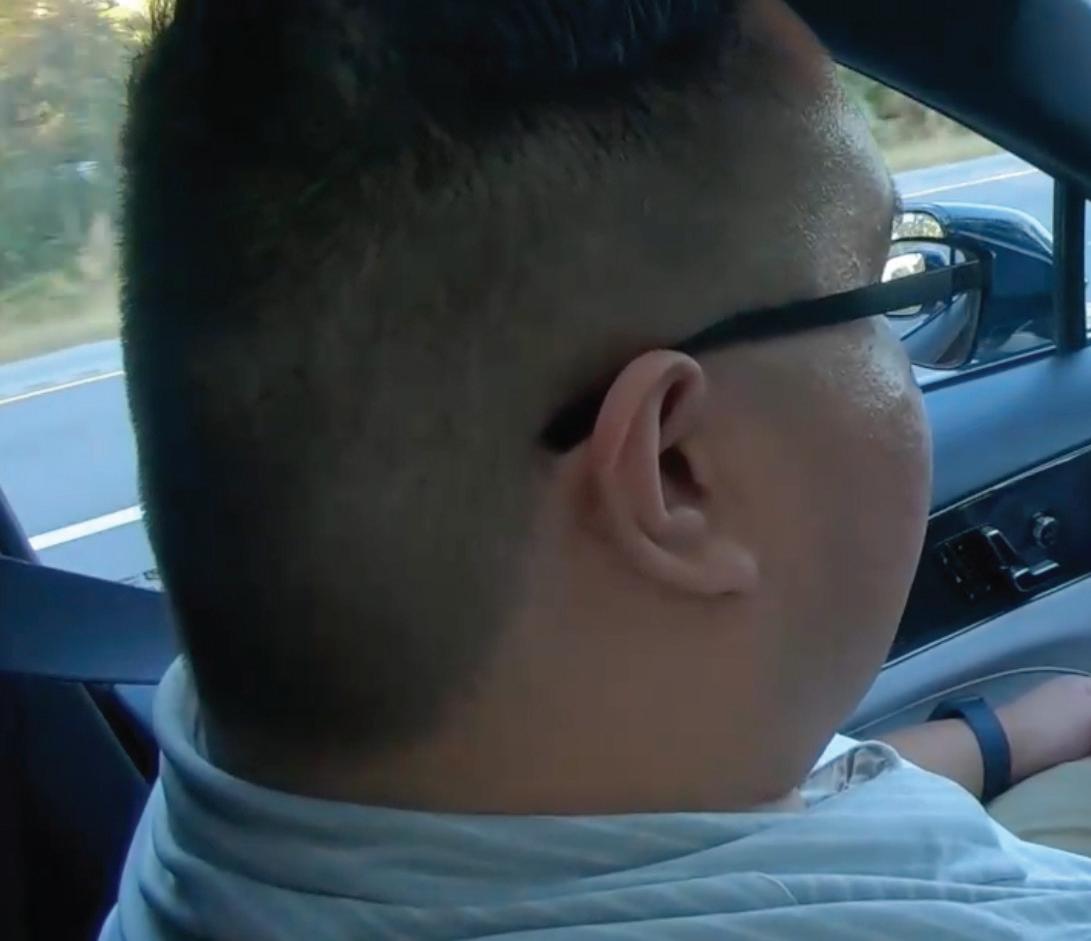
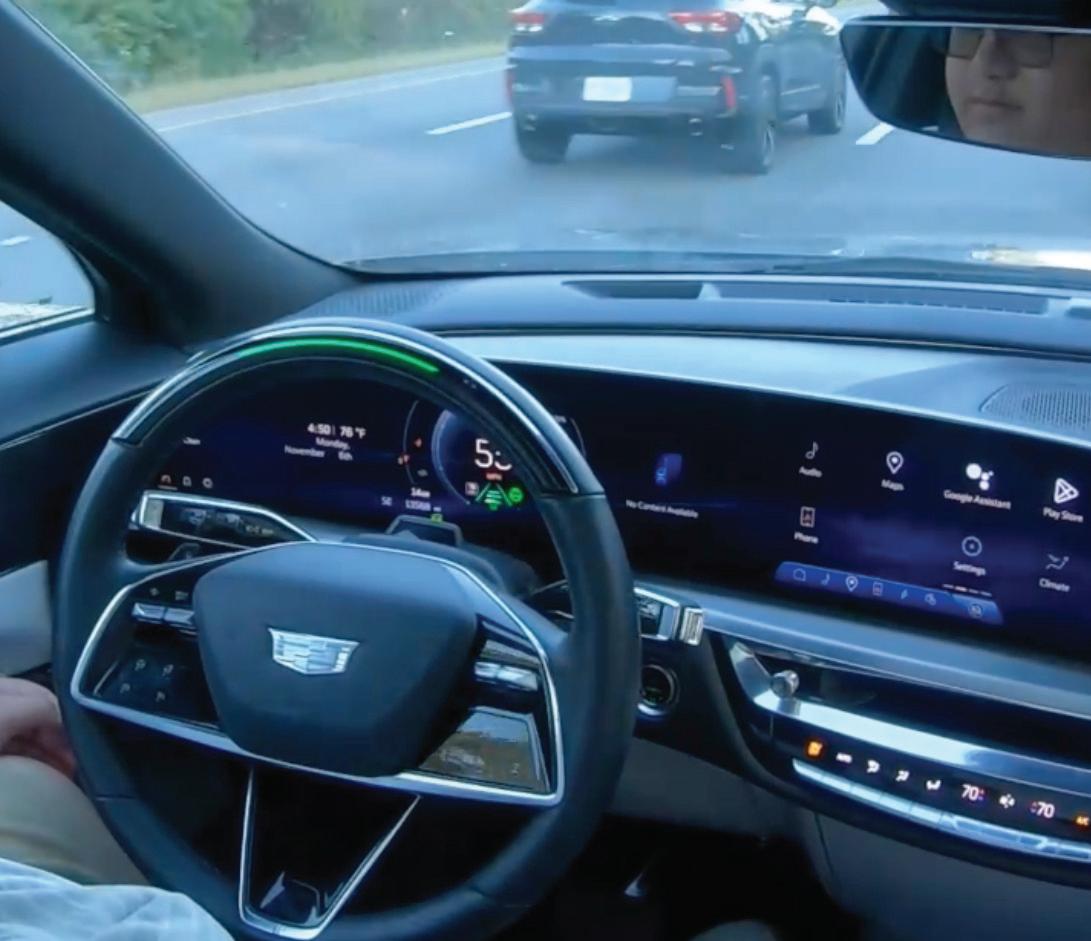
Semiautonomous driving on I-95 during dynamic vehicle testing
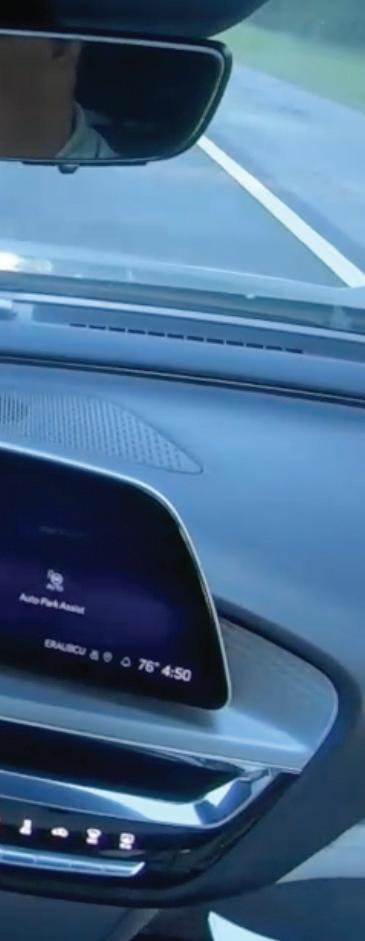
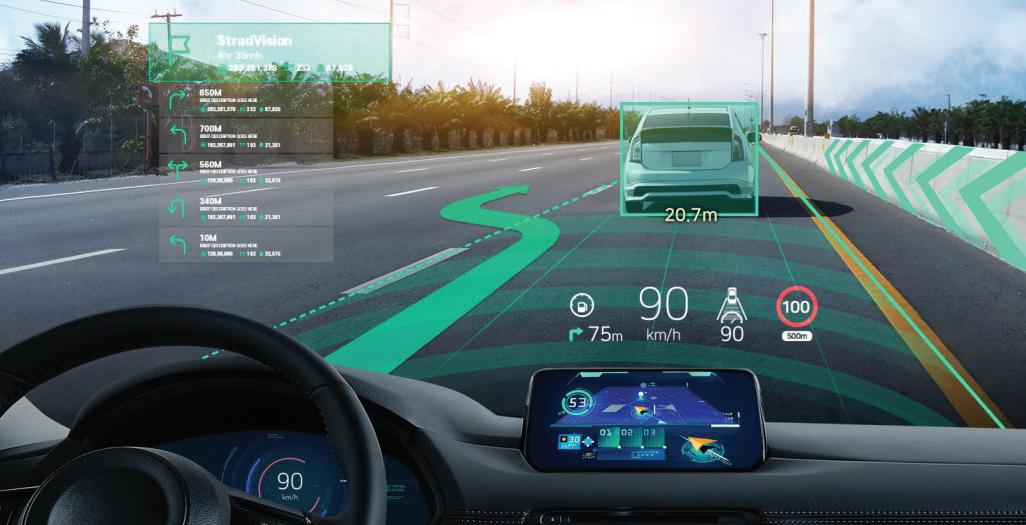
External concept of an augmented reality (AR) windshield head-up display

Delta Air Lines and Aeromexico have one of the strongest partnerships in the airline industry. In addition to being members of the SkyTeam Alliance, Delta and Aeromexico work closely to develop ight schedules and set prices to maximize service between the United States and Mexico. But, on Jan. 26, the U.S. Department of Transportation (DOT) rejected the airlines’ application to renew their joint venture a er eight years of successful operation. is decision had nothing to do with either Delta or Aeromexico but, instead, was a retaliatory move by the United States in response to recent policy changes in Mexico City, which the DOT has characterized as anti-competitive.

e Delta and Aeromexico JV has achieved a combined market share of roughly 20%, on par with American Airlines, the largest carrier serving the United States-Mexico market. Without a joint venture, neither airline could compete with American e ectively. Aeromexico has already canceled plans to add three new routes from Monterrey, and O cial Airline Guide (OAG) data indicates its U.S. capacity will decline 6% this summer.


In an Order-to-Show Cause issued to Delta and Aeromexico, the DOT cited Mexico’s decision to ban all-cargo airlines like UPS and FedEx from Mexico City International Airport (MEX). Moreover, capacity limits have been lowered, and fees have been raised at MEX over the past three International Air Transport Association (IATA) tra c seasons, sti ing growth for American airlines. Mexico contends these measures are necessary to reduce congestion at MEX, and the country has invested billions of dollars in building another airport to serve Mexico City, Felipe Angeles International Airport, creating new opportunities for airlines. Regardless, the DOT, joined by IATA, believes the new restrictions on air service to MEX are unnecessary and put new airlines at an unfair disadvantage, violating the 2016 bilateral air service agreement, which aimed to liberalize the cross-border market.


Two other airlines, Allegiant Air and Viva Aerobus, were caught in the U.S.’s dispute with Mexico. Allegiant and Viva Aerobus have been trying to start a joint venture since 2021. Still, the DOT suspended the regulatory approval process in 2023 and has put their proposal on inde nite hold, citing the same concerns as in the Delta-Aeromexico dismissal.

Despite these regulatory issues, the U.S.–Mexico market is still the largest aviation market in the world. Airline capacity between the U.S. and Mexico will exceed four million seats in February alone, up 19.7% year-over-year, according to the OAG data.

Delta and Aeromexico have already begun the process to contest this decision, and either way, the airlines will still be able to codeshare, o er reciprocal loyalty program bene ts, and sell interline itineraries. However, not being able to coordinate prices and schedules under an immunized joint venture will still put them at a competitive disadvantage.








FALL 2023 to SPRING 2024
Congratulations to those who received their certification!
Abdulmajeed Ahmed A Basharaheel
Abigail Elizabeth Weaver
Adam Christopher Rozsalyi
Anna Ryan Holmes
Anthony Velez
Ashton Thomas Listzwan
Audrey Lynn Foulk
Bailey Christian Hohwald
Brian Anthony Tavoulareas
Byounghwi Ahn
Cameron Douglas Counts
Caroline Anne Kane
Chanwoo Park
Charles Jacob Brouwer
Claudia Marie Koutsantanou
Colin Michael McHugh
Collin Jackson Maynard
Daniele Matias Delsalto Vitola
David Alexander Kohn
Delany Nicole Buckler
Dohwan Kim
Dohyeon Kim
Garrett Michael Linney
Isabella Marie Colasurdo
Jason Todd Holden
Jemima Nsimire Bisimwa
Jordan Nathanael Walters
Joseph Garrett Hocutt
Kaitlyn Louise Kogl
Lacey Renee Bozzuto
Landon Michael Harris
Landyn Allen Cool
Lorenzo Rafael Scoppa
Louis Aiden Augier
Masahiro Arima
Mateo Aury Franqui
Matias Daniel Moreno
Matthew Alexander Flint
Matthew Noah Copes
Abdulrahman Mazen R Abdullah
Abdulrahman Salem O Baghlaf
Aidan Hirsig Korey
Aiden John McDonnell
Alessandra Olivia Mazzini
Alexander Aaron Rivest
Alexander Joseph Kargman
Ander Turueno Garcia
Andrew George Larson
Anna Lee Miller
Anthony John Meo
Ari Ditchek Goldberg
Arthur James Clarke
Austin James Shirley
Benjamin Mark Farris
Benjamin Stephen Jost
Boden David Gould
Bradley Robert Biagiotti
Caitlyn Ky Ling Tang
Chance Obenshain Knowlton
Changsoo Han
Changwook Baek
Christopher Richard Chartier
Clementine Justena Craft
Colin Michael Lombardi
Daniel Liu Richardson
Daniel Min
David Joel Birchfield
David Joseph Warner
Dom Aloysius Bico Mandigma
Dylan Robert Vielhauer
Eliyomar Medina Soto
Ethan Junghyun William Hellofs
Ethan Michael Cochran
Ethan Robert Dovico
Evan Ray Sill
Giovanni James Branaugh
Gordon Andrew Brienza
Heejae Kam
Hi Jun Cho
Ho Jin Jung
Hoang-Long Jonathan Nguyen
Hyun Myung Kim
Jacko Ho
Jackson Scott Gill
Jacob Bradley Donaldson
Jaebeom Park
Jaemin Jang
Jaeseung Lim
James Francis Getz
Jax Steven Banco
Jay Desai Doscher
Jeongju Park
John William Barile Jr
Joshua Lovett Herring
Juin Park
Justin Paul Krentz
Keith Alister Machado
Kwang Mu Lee
Lexi Lynn Ebersole
Longda Wang
Mason Tyler Sereda
Matias Daniel Moreno
Matthew Abraham Fromowitz
Matthew Benjamin Keane
Michael John Giordano
Min Goo Kim
Minhyung Park
Minjae Kim
Mintae Kim
Minwoo Kang
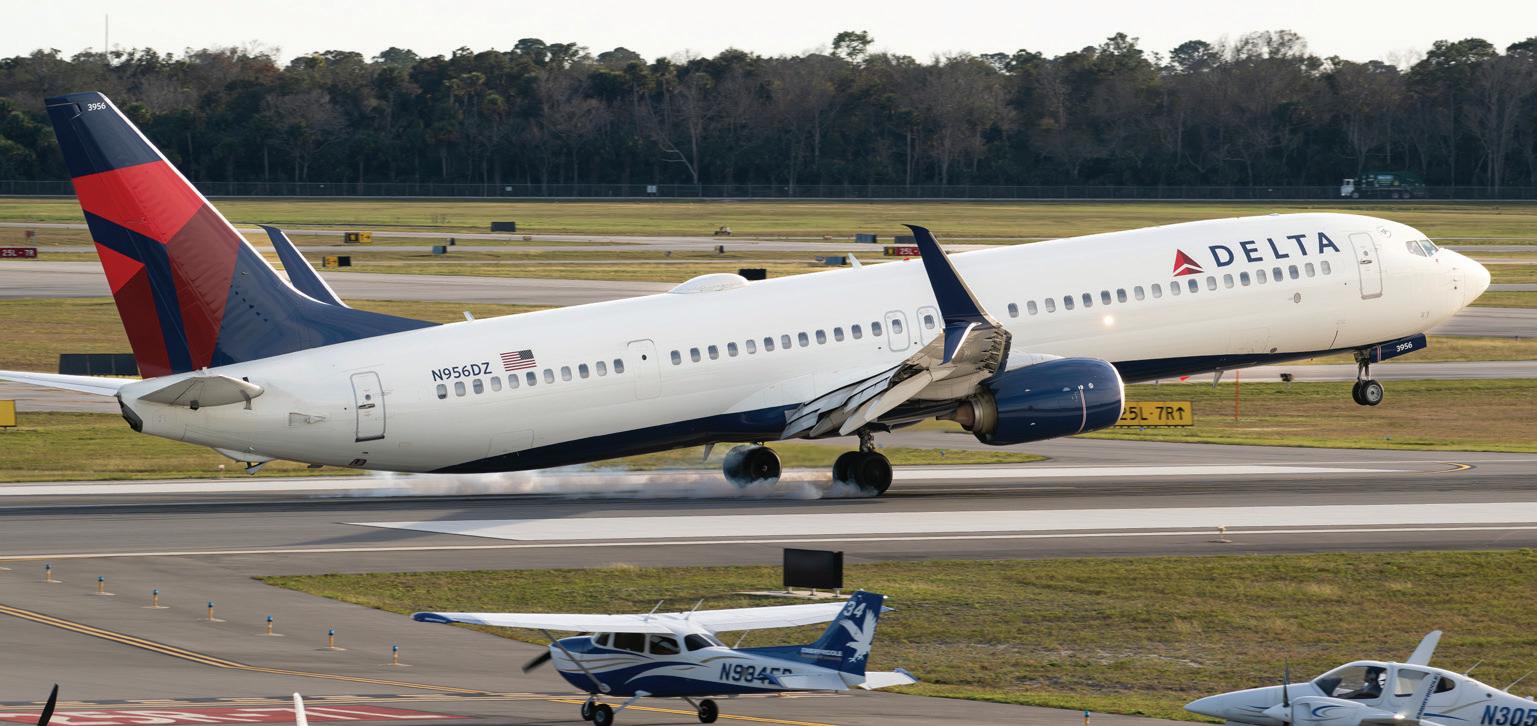
 A Delta Boeing 737-900 landing at Daytona Beach International Airport (KDAB).
Raymon Xu / The Avion
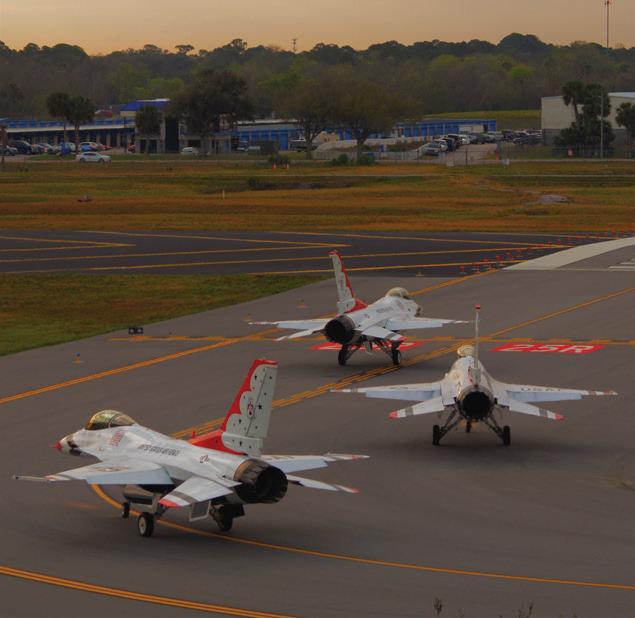
A shot of the United States Air Force Thunderbirds holding short of runway 25R at KDAB.
Horace Huntsberry / The Avion
A Delta Boeing 737-900 landing at Daytona Beach International Airport (KDAB).
Raymon Xu / The Avion
A shot of the United States Air Force Thunderbirds holding short of runway 25R at KDAB.
Horace Huntsberry / The Avion















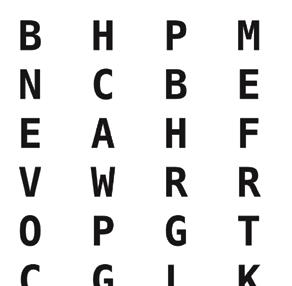
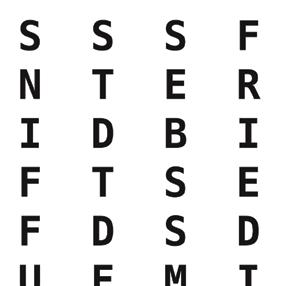
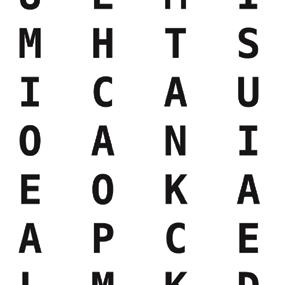
WORDS:
BAGEL BISCUITS BREAKFAST BRUNCH BUTTER CEREAL CREPES CROISSANT EGGS ENGLISH MUFFIN FRENCH TOAST FRIED
GRAVY GRITS HASH MORNING MUFFINS OATMEAL PANCAKES POACHED POTATOES SCRAMBLED TOAST WAFFLES

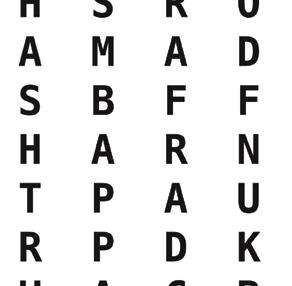
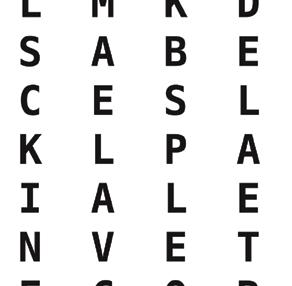
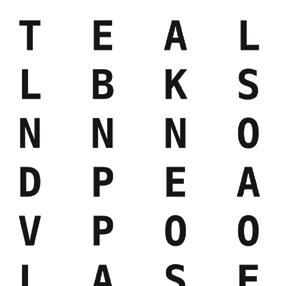
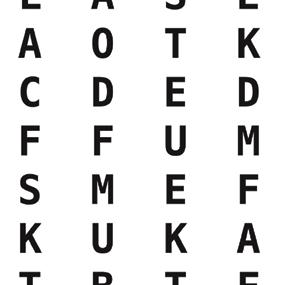
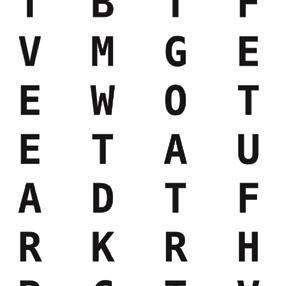

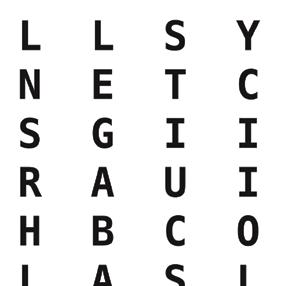
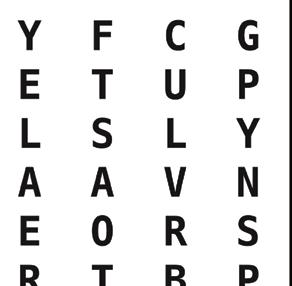
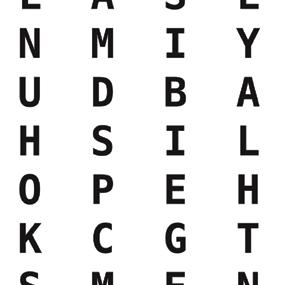
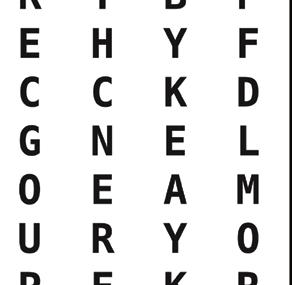
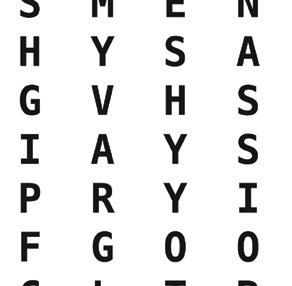
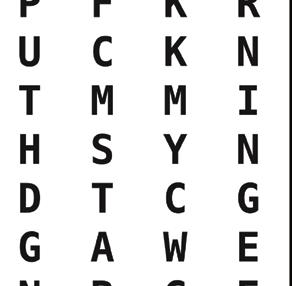

Want to have your own artwork, photograph or comic featured? Email your photos, comics, and more to news@theavion.com to possibly be featured in our next issue!
1. One point south of due east
4. Coagulated blood
8. Fortifying ditch
10. Devotee of Hinduism
11. Trunk of a tree
12. Bank note
13. Capital of Guam
15. Study again
16. Covered with hoarfrost
17. Opening
18. Legendary Rolling Stone
21. Stray
22. Computer storing system
23. Signal
24. Pitching statistic
25. Human being
26. Malaysian isthmus
27. e “Blonde Bombshell”
34. A gland
35. Bluish greens
36. Endangered
37. ree-dimensional
38. In a way, precipitated
39. God associated with dissolution
40. Blemished
41. Flow or leak slowly
42. Disco legends e Bee __
43. Midway between south and southeast
1. A way to board
2. Get down
3. Highly seasoned sausage
4. First day of month
5. Eurasian shrubs
6. e organ that bears the ovules of a ower
7. Small lake
9. Belief
10. Sunrooms
12. Metric weight unit
14. Vasopressin
15. Bravo! Bravo! Bravo!
17. One-time family room staple
19. Got back together
20. Anger
23. Sang merrily
24. Sea eagle
25. Military men
26. Kilo yard (abbr.)
27. Found in the sea
28. Protects from weather
29. Type of medicine
30. City along the Rhine
Guess the individual and send it to news@theavion.com!
I am an actress/singer born in California on February 20, 2003. I started out on television in a series based on the “American Girl” books. I moved on to Disney televison, and later released my debut single about driving past a former flames house.
Finished all the puzzles for this issue? Be the rst to email us a picture of your solutions to business@theavion.com to get a prize!

31. Animal disease
32. Martini ingredients
33. Get away
34. Lack of disunity
36. One-time European Commission o cer
The Avion is produced monthly during the spring term. The Avion is produced by a volunteer student staff. Student editors make all content, business and editorial decisions. The editorial opinions expressed in The Avion are solely the opinion of the undersigned writer(s), and not those of Embry-Riddle Aeronautical University, the Student Government Association, The Avion, or the student body. Letters appearing in The Avion are those of the writer, identified at the end of the letter. Opinions expressed within are those of the identified writer. Letters may be submitted to The Avion for publication, provided they are not lewd, obscene or libelous. Letter writers must confine themselves to less than 1200 words. Letters may be edited for brevity and formatted to newspaper guidelines. All letters must be signed. Names may be withheld at the discretion of the Editor-in-Chief. The Avion is an open forum for student expression. The Avion is a division of the Student Government Association. The Avion is a member of the Associated Collegiate Press. The costs of this publication are paid by both the Student Government Association and through advertising fees. The Avion distributes one free copy per person. Additional copies are $0.69. Theft of newspapers is a crime, and is subject to prosecution and Embry-Riddle judicial action. This magazine and its contents are protected by United States copyright law. No portion of this publication may be reproduced, in print or electronically, without the expressed written consent of The Avion
Interested in joining The Avion and making this magazine happen? Scan to join our Discord server. Go Eagles!