4 minute read
Better Health Security, Greater Self-Reliance - the gem - Feb 2026

CERI attended the launch of ACHIEVE Africa – a five-year, African led initiative designed to accelerate the development of safe and effective vaccines and biologics across the continent.
text: CERI Media, photo: Supplied
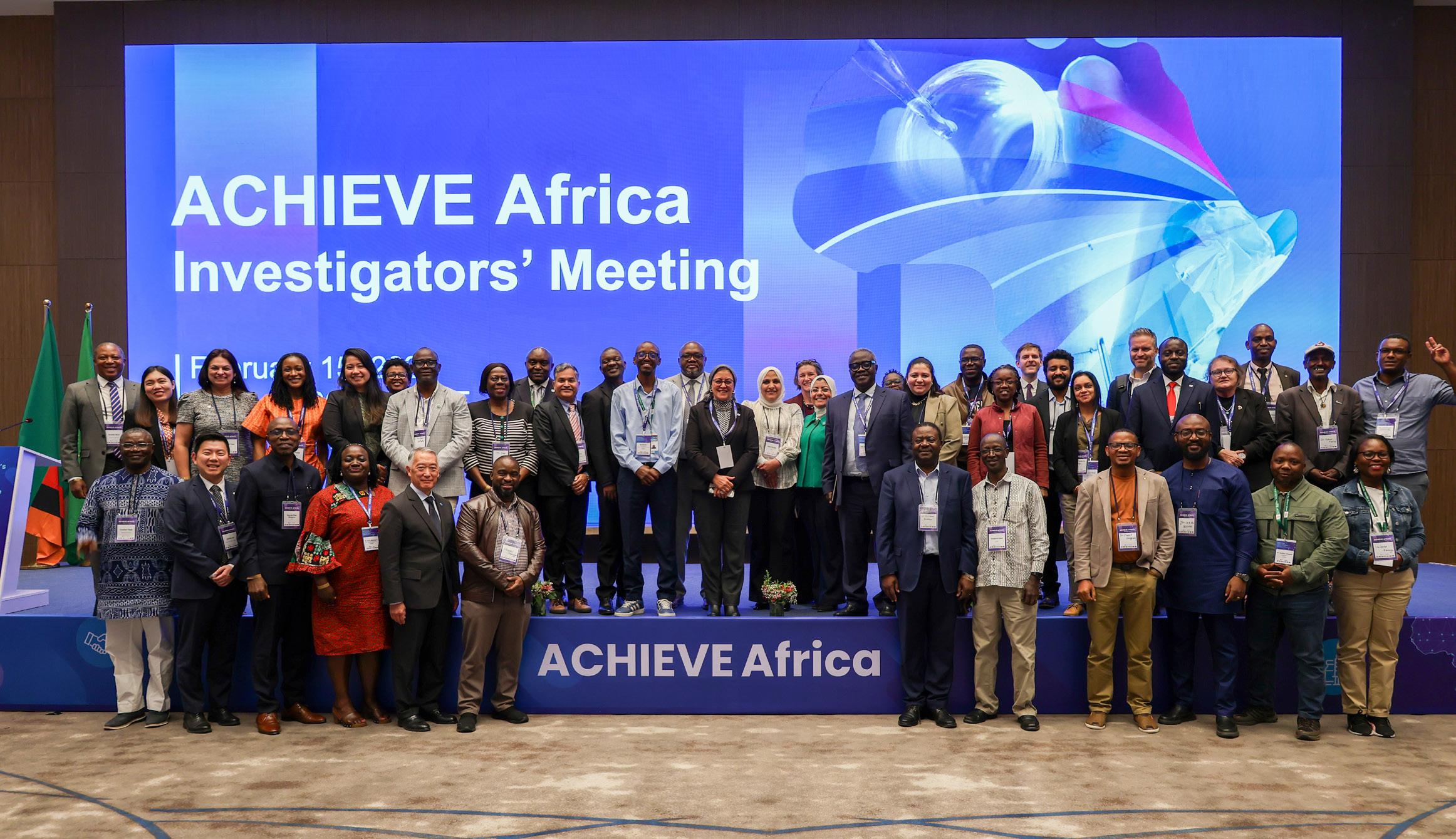
On the margins of the 37th Ordinary Session of the African Union Assembly, African leaders, scientists and global health partners gathered at the Ethiopian Skylight Hotel in Addis Ababa on 15 February 2026 to launch ACHIEVE Africa – a five-year, African-led initiative designed to accelerate the development of safe and effective vaccines and biologics across the continent.
Convened by the Government of Zambia and coconvened by AU Member States including Egypt, Ethiopia, Ghana, Nigeria, Rwanda and South Africa –alongside the International Vaccine Institute and the Africa Centres for Disease Control and Prevention – the programme positions Africa not as a passive recipient of global health solutions, but as a driver of its own research and development agenda. The African Medicines Agency participated as a special guest institution, underscoring the regulatory dimension central to its vision.
Among those attending was Dr Lavanya Singh, Head of Laboratory at the Centre for Epidemic Response and Innovation (CERI), who described the moment as both symbolic and practical in its importance. “This is an important moment for Africa’s path toward better health security and greater self-reliance,” she said. “African-led research and innovation are essential for developing vaccines and biologics that address Africa’s specific health needs. By building local capacity and encouraging innovation, ACHIEVE Africa supports the continent’s shift from dependence on external solutions to home-grown, sustainable approaches that also contribute to global health security.”
The launch took place against a backdrop of expanding scientific and biomanufacturing capacity across Africa, even as global health financing declines. Rather than viewing this as a setback, discussions framed it as a pivotal transition.
“There was strong agreement that global health funding is shrinking just as Africa’s scientific capacity is growing,” Singh noted. “Instead of viewing this as a crisis, the discussion framed it as a turning point. The question is no longer whether African scientists can deliver, but whether financial and governance systems will adapt quickly enough to support their progress.”
For institutions such as CERI, the initiative reflects an evolution from internationally recognised strengths in genomics and pathogen surveillance toward more integrated participation across vaccine development and manufacturing systems. With advanced technology and deep scientific expertise, CERI is well positioned to support disease surveillance and molecular epidemiology as part of this broader continental agenda.
In 2025, CERI launched CERI-BIO to strengthen local biotechnology capacity and bridge the gap between academic research and scalable, regulated biotech products. Its flagship company, Fluorobiotech, focuses on large-scale production of recombinant enzymes used in mRNA vaccine development and manufacturing.
“Through these efforts, ACHIEVE Africa strengthens Africa’s ability to contribute across the vaccine value chain,” Singh said. She emphasised that vaccine and therapeutic sovereignty must be understood in concrete scientific and operational terms.
“Scientifically, it means African institutions can identify priority pathogens, design vaccine candidates, generate and analyse their own data, and control key technology platforms,” she explained. “Operationally, it depends on local GMP-compliant manufacturing capacity, securing supply chains for raw materials, and strong national and continental regulatory authorities.”
With multiple AU member states, Africa CDC, IVI and the African Medicines Agency involved, collaboration is central to the initiative’s design. Singh highlighted opportunities for CERI to contribute genomic and bioinformatic expertise to vaccine design, expand next-generation sequencing training across Africa, integrate into harmonised regulatory and clinical trial systems, and strengthen South–South scientific collaboration. These roles position CERI not only as a leader in genomic surveillance, but as an important node within Africa’s emerging biologics innovation
ecosystem, linking discovery science, translational research and vaccine development.
On a personal and professional level, the event left a lasting impression. “Professionally, the launch underscored that Africa is at a defining moment in its scientific development,” Singh reflected. “Research institutions across the continent have demonstrated technical excellence, resilience and global relevance.”
“On a personal level, attending the event highlighted both the scale and diversity of the continent’s scientific community and the shared commitment driving it forward. Experiencing this firsthand reinforced the significant potential for Africa not only to shape its own scientific and public health future, but also to contribute meaningfully to global research and innovation.”
As ACHIEVE Africa begins its five-year journey, the message from Addis Ababa was clear: Africa’s scientific capacity is established and growing. The focus now turns to ensuring that financial, manufacturing and regulatory systems evolve quickly enough to match that expertise – and to secure a more self-reliant future for vaccine and therapeutic development on the continent.