


The energy storage market is an emerging sector crucial to the energy transition, which has experienced significant growth in recent years. Global efforts towards reaching net zero targets are primarily driving growth in the sector, with storage initiatives usually being directly correlated to clean energy demand. Additionally, these systems are particularly crucial during emergency grid scenarios. The necessity of both renewable energy integration and grid stability has also accelerated the sector’s expansion. In 2024, the number of energy storage projects added to EIC’s EICDataStream CAPEX database was 66% higher year-onyear. However, despite this boom, greater commitment, including more investment and supportive policies for the sector, is needed for stable growth.
Batteries are the most common solution for grid-scale projects, but pumped hydropower storage initiatives are also frequently seen in the sector. Other storage technologies can be utilised, such as compressed air, gravity storage, liquid air and fly-wheel, but are less common among large-scale initiatives. On a smaller scale, batteries in electric vehicles (EVs), also play a key role in energy storage. These batteries can store excess energy and release it back to the grid during periods of high demand. According to the Energy International Agency (EIA), from a global perspective, the emissions of a medium-sized electric battery car are half the emissions of a similar internal combustion engine (ICE). While China is currently the top EV market, Europe and North America are gradually expanding their capabilities as well.
Regarding grid solutions, the intermittent nature of renewable sources poses challenges to grid stability and the reliability of energy supply, while also posing challenges to scaling production to meet net zero targets. In this scenario, storage systems are a great solution to complement green grid infrastructure, especially in hybrid power plants which combine storage solutions with hydropower, solar and wind projects. Lithium-ion batteries have become one of the best solutions due to their high energy density, which facilitates a large amount of electrical energy to be stored in a more compact way.
China and the US lead the energy storage sector in installed capacity, while markets like Australia and Chile are experiencing rapid growth. Government incentives are a major market driver. In parallel, the rapid expansion of renewable energy is increasing the demand for storage solutions. In Australia, the Capacity Investment Scheme (CIS), a revenue support mechanism, is accelerating investment in both energy storage and renewable projects. In Chile, where renewables dominate electricity generation, the energy storage market shows strong potential.

In China, federal authorities have set an energy storage capacity target of 120GW by 2030 for pumped storage hydro and 100GW of battery storage capacity. Additionally, since 2022, a policy mandate has obligated solar and wind developers to add energy storage capacity to projects, with a rate between 5% to 20% of storage capacity in each development, which has hindered the Chinese energy storage market. However, in 2025, the government abandoned the mandate to make renewable initiatives less expensive. This measure may negatively impact the energy storage sector’s growth in comparison to previous years.

In the US, federal support is critical for the sector, particularly through the Investment Tax Credit (ITC), enacted by the Inflation Reduction Act (IRA). Before the ITC, only storage solutions co-located with renewable projects received incentives. The ITC allocated a 30% tax credit for battery systems on development and installation expenses. State-level incentives are also notable, including the Self-Generation Incentive Program (SGIP) in California, which offers rebates for installing energy storage systems based on capacity. After President Donald Trump’s first 100 days, the dismantling of IRA’s provisions pose significant uncertainty for the energy storage market.
As of April 2025 Trump announced higher import tariffs targeting various countries, with China facing the heaviest charges so far. These tariffs impact on a wide range of products – particularly batteries, one of the most affected categories with an 82% tariff; China supplied 70% of all US lithium-ion battery imports in 2023, worth US$13bn in lithium imports alone, according to the US Census Bureau. Trump’s tariffs aim to protect domestic manufacturers and enhance supply chain capacity. However, it also creates economic uncertainty for developers, as the domestic market for energy storage system manufacturing is limited and heavily dependent on imports. Expansion is likely to take time, potentially slowing the growth of the US energy storage market in the interim.
The energy storage sector will remain a critical driver of the energy transition while supported by rapid technological innovation and evolving public policy incentives. However, growing risks – particularly from US-China trade tensions – threaten to disrupt project costs and procurement timelines, potentially delaying development. These risks are likely to be passed from project developers to EPC contractors, then down through the supply chain, ultimately affecting the entire value chain – unless clearer guidance on tariffs and long-term policy incentives is provided.
Gabriela Dantas Junior Energy Consultant gabriela.dantas@the-eic.com
June is here, which means it’s time for the annual Energy Exports Conference (EEC). Taking place on 3-4 June once again at P&J Live in Aberdeen, the EIC’s annual flagship conference is the main event to identify global energy opportunities and meet key decision makers. This year, EEC provides attendees access to hundreds of contacts and will enable businesses to learn about multiple new export opportunities – from oil and gas to decommissioning, from renewables to nuclear power, from hydrogen and carbon capture to sustainable aviation fuel.
Don’t miss the chance to listen, engage and connect with international operators, developers, contractors, government advisors, trade experts and more. It’s free. Register at www.the-eic.com/EEC
In this month’s issue of Inside Energy, we welcome Gabriela Dantas, junior energy consultant at the EIC, to discuss the state of play of the energy storage sector worldwide. According to her, China and the US lead the development of energy storage facilities, with Australia and Chile experiencing rapid growth in this area. Considered a critical driver of energy transition, the success of the energy storage sector depends on quick technological innovation and public policy incentives that are still evolving.

Scott Harding, sales director at Woodcock & Wilson, is the author of the EIC guest editorial this month. He delves into the risks imposed on end-users by selfcertification in ATEX. Companies like Woodcock & Wilson offer best-in-class nonelectrical explosive atmosphere (Ex) equipment that exceed regulatory expectations. In member’s news, HARTING explores fused connectors required by large buildings to increase system availability. HARTING’s Han® Protect not only addresses the issue but also dismisses the need for extensive fuse terminal blocks.
In spotlight on technology, Wolf Safety highlights its TY-300 portable ATEX LED inspection light. Delivering up to 1,390 lumens and certified for hazardous areas, it offers user-friendly maintenance, rugged construction and safe illumination.
Once again, the EIC teams in Europe, the MENA region, Asia Pacific and the Americas complete the publication with regional comments, office notices and local market updates. News from members is also included and readers will be able to keep up with the latest international industry news.

Operator: KazMunayGaz (KMG) Value: US$2bn
KMG has awarded the EPC contract to a consortium comprising Tecnimont KZ and Consolidated Contractors Company (CCC). Tecnimont will oversee the engineering and procurement aspects of the contract, while CCC will be responsible for construction.
For information on these and more than 16,000 other current and future projects we are tracking please visit EICDataStream
Operator:
Government of Saudi Arabia Value: US$600m
Bids for the four solar PV IPPs under the NREP Round 6, including the 600MW Ad Darb project, are due by 1 June, with Synergy Consulting acting as the financial adviser and Fichtner Consulting and CMS serving as the technical and legal consultants.
Operator: FatHopes Energy Value: US$100m
FatHopes Energy has signed a MoU with Topsoe to explore the development of a SAF refinery in Malaysia. Under the agreement, Topsoe will provide the technology to assess the feasibility of establishing the refinery.
Operator: Luxcara Value: US$25m
Having reached FID in January, contractors have been announced. Cyient has been awarded a contract to provide owner’s engineering and detailed plant engineering services for the project. Additionally, the plant will be utilising MAN Cryo technology from MAN Energy Solutions.
Operator: Abu Dhabi
National Energy Company (TAQA) Value: US$1bn
TAQA and EWEC have signed a 24-year PPA to develop a 1GW Al Dhafra OpenCycle Gas Turbine (OCGT) project in Abu Dhabi. TAQA will 100% build, own, operate and O&M, while TAQA Transmission will build advanced infrastructure to integrate the capacity into Abu Dhabi’s grid.
Operator: BP Value: US$500m
BP and Chevron have announced an oil discovery, in a water depth of 1,247 metres, after drilling the Far South prospect in Block 584 of the Green Canyon protraction area, offshore Gulf of Mexico. The discovery was drilled with Noble Corp’s Ocean Blackhornet drillship, and is located 6.5km north of the Constellation field.


Are you up to date on the latest project developments in the energy market? The EIC’s leading market intelligence database – EICDataStream – contains information on energy projects and associated contracting activity from the inception stage all the way through to construction and commissioning.
• Access details on over 16,000 CAPEX projects across all energy sectors
• Identify business opportunities and inform your business development strategies
• Explore a truly global database, updated daily by an international team of analysts
• Stay up to date with project developments, including information on tenders and awards
• Get insights into what your existing clients are doing and identify potential new clients
• Have a direct interface with analysts for local knowledge and insights
• Access insight and country reports with in-depth data on specific sectors and markets

EICSupplyMap maps the capabilities of supply chain companies that operate across all energy industries. These industries cover renewables, oil and gas, power, nuclear and energy transition technologies like energy storage, carbon capture and hydrogen.
• Identify the supply chain local to your region, giving you the opportunity to engage with potential new clients.
• Find the supply chain capability in eight regions, now covering the UK, Germany, UAE, Saudi Arabia, Malaysia, Singapore, US (Texas/Louisiana) and Brazil.
• An in-depth look at profiles of more than 8,800 energy sector supply chain companies.
• Make smarter decisions by targeting your offering to international developers/operators and contractors matching your capability with international energy projects.


with Scott Harding Sales Director, Woodcock & Wilson Ltd



Ensuring safety in explosive atmospheres (Ex) is a critical concern for industries handling hazardous environments. While electrical equipment has long been scrutinised for its potential ignition risks, non-electrical equipment – such as industrial fans – has often been overlooked. This oversight has led to widespread misunderstandings regarding the certification process, particularly within the ATEX framework. The reliance on selfcertification in ATEX 2014/34/EU poses significant risks to end-users, while the IECEx certification scheme offers a more robust alternative through independent verification.
The misunderstanding of Ex non-electrical equipment
Non-electrical equipment, including mechanical components like fans, gearboxes and bearings, can generate ignition sources through friction, static electricity and mechanical failure. Despite their potential hazards, these components are frequently treated with less scrutiny compared to electrical equipment. One of the primary misconceptions in the industry is that ATEX certification ensures comprehensive safety across all elements of Ex equipment. However, this is not necessarily the case, particularly for non-electrical components.
The pitfalls of ATEX self-certification ATEX Directive 2014/34/EU allows manufacturers to self-certify nonelectrical Ex equipment for Category 2 and 3 applications without independent verification.
This means that a manufacturer can assess its own products and declare conformity without thirdparty evaluation. While this approach reduces administrative burdens, it introduces significant safety concerns:
• Lack of independent validation: without third-party testing, there is no guarantee that the equipment meets the required safety standards.
• Inconsistent compliance: different manufacturers may interpret ATEX requirements differently, leading to varying safety levels.
• Over-reliance on documentation: a Declaration of Conformity issued by the manufacturer does not provide the same assurance as an independent Certificate of Conformity.
• Risk to end-users: many buyers and operators mistakenly believe that all ATEX-certified equipment undergoes rigorous testing, leading to a false sense of security.
IECEx vs ATEX: a regulatory comparison
While both ATEX and IECEx aim to regulate the safety of equipment used in explosive atmospheres, their approaches differ significantly. Understanding these differences is crucial for industries looking to minimise risk and ensure compliance with the highest safety standards.
1. Certification process
• ATEX: allows self-certification for Category 2 and 3 non-electrical equipment, meaning manufacturers can approve their own products without external verification.
Only Category 1 equipment requires third-party involvement.
• IECEx: requires independent certification for all equipment, ensuring that every product undergoes rigorous testing and compliance checks before it enters the market.
2. Testing and compliance verification
• ATEX: compliance is based on a manufacturer’s declaration, with little oversight unless an issue arises.
• IECEx: equipment is tested by an accredited IECEx certification body (ExCB), which issues a Certificate of Conformity after verifying compliance with stringent international safety standards.
3. Transparency and traceability
• ATEX: does not provide a public database for verifying self-certified equipment, making it difficult for endusers to confirm compliance claims.
• IECEx: maintains a global online database where end-users can verify product certification details, ensuring greater transparency.
4. International recognition
• ATEX: primarily recognised within the EU but not always accepted in other markets without additional certification.
• IECEx: recognised internationally, including in Australia, the US and parts of Asia and the Middle East, simplifying compliance for global operations. These differences highlight why IECEx is considered a more robust and reliable certification scheme. While ATEX provides a legal framework for equipment sold in the EU, it falls short in ensuring consistent safety standards due to its allowance for self-certification.


The Blue Guide to EU products: where it falls short
The Blue Guide to the Implementation of EU Product Rules serves as an official reference for understanding European regulatory frameworks, including ATEX. While the guide aims to clarify conformity assessment procedures, it has notable shortcomings when it comes to Ex safety:
1. Emphasis on manufacturer responsibility
• The Blue Guide reinforces the idea that manufacturers bear primary responsibility for compliance. While this aligns with EU free trade principles, it places excessive reliance on companies’ internal assessments rather than independent verification.
2. Failure to address self-certification risks
• The guide does not sufficiently address the potential dangers of ATEX self-certification, particularly for non-electrical equipment. It assumes that manufacturers will conduct thorough risk assessments, but history has shown that some companies cut corners to save costs.
3. Limited discussion on non-electrical equipment
• Much of the Blue Guide focuses on electrical Ex equipment, leaving non-electrical ignition sources underrepresented. Given that mechanical components can pose equal or greater risks, this gap in guidance is problematic.
4. Lack of alignment with IECEx best practices
• The guide does not actively encourage alignment with IECEx
standards, missing an opportunity to promote globally accepted safety practices. This omission keeps EU regulations from evolving in line with international best practices.
Woodcock & Wilson: exceeding safety standards
At Woodcock & Wilson, we understand the critical role that safety-certified fans play in hazardous environments. We go beyond ATEX requirements by obtaining full IECEx non-electrical certification for our fans, ensuring that each unit meets the highest safety standards. This commitment includes:
• Independent third-party testing: all Ex-rated fans undergo rigorous evaluation by accredited certification bodies.
• Unit verification: every product is tested for compliance rather than relying solely on design-based certification.
• Enhanced materials and engineering: we implement best practices in material selection, design and construction to mitigate ignition risks.
By taking these extra measures, we provide end-users with a higher level of safety assurance, protecting both personnel and assets from potentially catastrophic failures.
The industry must acknowledge the risks associated with ATEX self-certification, particularly for non-electrical equipment. End-users should:
• Verify certification details: ensure that non-electrical Ex equipment is independently certified under IECEx rather than relying on self-certified ATEX documentation.
• Understand the limitations of ATEX: recognise that not all ATEXmarked products have undergone third-party testing.
• Demand higher standards: push for independent certification to ensure compliance and safety.
A call to action: choose safety over convenience The stakes in hazardous environments are too high to leave safety to chance. A single failure in Ex equipment can result in catastrophic explosions, endangering lives and operations. ATEX self-certification introduces uncertainty, while IECEx offers a proven, independently verified path to safety.
Don’t settle for minimum compliance – demand excellence. Whether you’re an operator, engineer, or procurement specialist, insist on IECEx-certified solutions to protect your workforce and assets. Companies like Woodcock & Wilson lead the way in safety innovation, offering best-in-class nonelectrical Ex equipment that exceeds regulatory expectations.
Make the right choice today. Reach out to Woodcock & Wilson to discuss your Ex safety needs and ensure your equipment is truly fit for hazardous environments. Because when it comes to safety, there should be no compromises. Visit www.fanmanufacturers.com


Large buildings require a building automation system (BAS) to control heating, ventilation and air conditioning (HVAC), lighting, power supply, core IT and security systems.
The control cabinets for those subsystems are built with fused terminal blocks or circuit breakers to protect against short-circuits or overcurrent.
In the event of a short circuit, fixing the fault and finding the broken fuse is a time-consuming task. The fault may be in the switch cabinet or the device itself and several control cabinets may need to be examined before the fault can be isolated.
With Han® Protect, HARTING has developed a new connector that simplifies protection and reduces installation space in the control cabinet. Inside the connector, there is an insulation body that adapts a M12A-coded five-pole connector and integrates a 5x20mm miniature fuse.
In the event of a short circuit, the fuse ensures that the supply to the connected units is quickly interrupted.
A red LED on the Han® Protect clearly identifies the blown fuse and enables quick, tool-less replacement without opening the cabinet. Due to the external mounting of the housings, up to 30% of installation space can be saved inside the cabinet.
The main advantage of Han® Protect is that extensive fuse terminal blocks are no longer required. The control units remain protected, mean time to repair (MTTR) is reduced and system availability is increased.
To learn more about Han® Protect and request your free sample, please visit www.harting.com/ en-GB/data-centres/simplified-troubleshootingto-increase-system-availability or email HARTING salesuk@HARTING.com

SAFETY LAMP COMPANY


Wolf Safety’s TY-300 is a lightweight, portable ATEX LED inspection light delivering up to 1,390 lumens. Hazardous area certified for Zones 1/2 and 21/22, it offers userfriendly maintenance, rugged construction and powerful, low-glare, safe illumination – all without compromise.
Wolf Safety, a global leader in hazardous area lighting, has launched the TY-300 – a new handheld ATEX LED inspection light designed to deliver exceptional performance in potentially explosive atmospheres.
Certified for use in Zones 1 and 2 (Gas), and Zones 21 and 22 (Dust), the TY-300 provides up to 1,390 lumens of low-glare light using patented directional linear optics (DLO) technology. Compact and lightweight, the lamp is ideal for close-up inspections and temporary task lighting, with swivel hooks allowing flexible suspension.
Available in two lengths (640mm or 910mm) and in both 110V and 230V models, the TY-300 is engineered for reliability and ease of use. It features anti-static coated tubes, anti-static handles and a low-maintenance, userserviceable design – reducing downtime on site. Replaceable film to protect against dirt, debris and paint is also available.
With an IP66 rating and ambient temperature certification from -20°C to +40°C, the TY-300 is a trusted choice for those who demand hazardous area lighting without compromise.
Features and benefits
• Up to 1,390 lumens.
• Low-glare DLO (Directional Linear Optics).
• User serviceable and low-maintenance design.
• ATEX and IECEx approved for Gas Zones 1, 2 and Dust Zones 21, 22.
• T4 temperature class.
• Approved for ambient temperatures from -20°C to +40°C.
• IP66 rated.
• 110V and 230V models available.
• Available in 2 sizes: 640mm or 910mm.
• Compact and lightweight – the 640mm model weighs just 1.6kg (excluding cable) – making it ideal for close up inspection tasks.
• Anti-static coated tubes.
• Supplied with 10m of H07RN-F-3 core flexible 1.5mm² cable as standard.
• Can be supplied with ATX, CEAG, Marechal or Stahl Ex plugs.
• Ideal replacement for the SP-600.
You can read more about the TY-300 here... www.wolfsafety.com/temporary-lighting/handheld-leadlamps/ty-300-portable-atex-led-inspection-light
Capeserve
Sdn Bhd
D-06-08, Block D, Level 6
Sky Park, One City, Jalan USJ 25/1 47650 Subang Jaya, Selangor
Malaysia
Contact

Venu Kanna, Business Development Director
Telephone +603 8604 8677
Email sales@capeserve.com
Web www.capeserve.com
Capeserve Energy, headquartered in Kuala Lumpur, Malaysia, is a leading provider of integrated solutions for hazardous and potentially explosive environments globally.
Renowned for its expertise, the company offers ATEX and IECExcertified explosion proof battery management systems (ExBMS), comprehensive hazardous area engineering services and specialised training programmes.
As an IECEx recognised training provider (RTP), Capeserve delivers globally recognised IECEx CoPC training to enhance workforce competency and ensure compliance with international safety standards. Capeserve Energy remains a trusted partner in safeguarding operations within high-risk industries.
Suite A-17-17
Menara UOA Bangsar 5 Jalan Bangsar Utama 1 Kuala Lumpur Malaysia 59000
Contact Alexis Nyeo, CEO

Telephone +65 9818 4923
Email alexis.nyeo@disoleco.com
Web
www.disolecoasia.com
Disol Eco Asia Sdn Bhd is a pioneering provider of 100% organic remediation solutions, delivering sustainable alternatives for hydrocarbon contamination across industries.
Specialising in Disoleco, its green technology molecularly degrades hydrocarbon contamination with non-toxic byproducts. Approved by Malaysia’s Department of Environment and trusted by maritime, oil and gas and the manufacturing sectors, the company combines innovation with compliance to global standards.
As an EIC member, Disol Eco Asia champions eco efficient practices to reduce downtime, protect ecosystems and advance the energy transition. Redefining cleanup, one molecule at a time.
Kuiper-Group
301/310 GRMES
Dusseldorf Business Point
Al Barsha 1, Dubai
UAE

Contact Scott Mcilwraith, Regional Director
Telephone +9715 6466 1903
smcilwraith@kuiper-group.com
Web
https://kuiper-group.com/
Kuiper Group is a global provider of diverse, fully-integrated human resources and recruitment solutions to the energy industry, with an exemplary track record in serving some of the world’s biggest projects and companies. For over 20 years it has successfully connected people to energy projects across the globe.
Kuiper Group’s focus is to deliver market leading recruitment, selection and crewing services to companies throughout the energy sector supply chain. Its success and track record has been founded upon quality of service, integrity and an absolute commitment to delivery. The company’s geographic coverage allows it to combine local knowledge with global quality systems. It is agile, proactive, will partner with clients and candidates to operate


Technical Services LLC
PO Box 1045, PC 130
Building No 2111, Way No 5226
Awam Building, Al Azaiba Muscat, Oman
Contact

Prasanna Alahari, Director – Business Development
Telephone +968 2459 7226/7/8
Email prasanna@majeestech.com
Web www.majeestech.com
Founded in Oman in 2006, Majees Technical Services LLC has experienced dynamic growth, establishing key business verticals in oil and gas, flare systems manufacturing (FLAROMAN) and security and telecom, serving the energy and infrastructure sectors.
A well-regarded mid-sized engineering, procurement and construction (EPC) contractor in Oman, Majees Technical Services LLC specialises in the EPC construction of various types of storage tanks. Its expertise extends to oil and gas facilities, the petrochemical and chemical process industry, renewable energy and power and utility projects, including diverse water treatment solutions such as desalination, produced water treatment and waste and effluent management.
The company’s ISO 9001/14001/45001 certified fabrication shop, holding ASME U, R and S stamps, boasts a 37,000 sq m area and is capable of fabricating tanks, pressure vessels, process skids and pipe spools.
Leveraging strategic partnerships from around the globe, Majees introduces the latest technological and niche products, equipment and services to the Oman market, effectively addressing specific customer needs.
OES Equipment LLC
Suite 202, Palace Tower 1 Dubai Silicone Oasis, PO Box 75971 Dubai, UAE

Contact Shahd Babiker, Marketing Manager
Telephone +9714 326 2822
Email shahdbabiker@oesgroup.com
Web www.oesgroup.com
OES is a global leader in asset integrity within the energy industry. Providing a suite of specialist services that span the life cycle of a range of assets and facilities. Ranging from the planning, design, engineering and reactivation stage, through all phases of operation, maintenance and decommissioning.
Technology remains at both the forefront and background of OES’ services, as it continues to develop and incorporate cuttingedge technologies throughout its business to provide clients with safe, environmentally friendly and efficient solutions.
Having a network of 25 facilities strategically located around the world, providing high quality services, excellent support and experienced staff, OES is the first choice for asset integrity management.

TEADIT® NA Inc
10545 Red Bluff Rd
Pasadena TX 77507
US
Contact

Lindsay Jackson, Client Services Co-ordinator
Telephone +1 281 476 3900
Email lindsayj@teadit.com
Web
www.teadit.com
TEADIT® Group is recognised worldwide as a leader in the development and manufacturing of innovative products for critical fluid sealing processes. The wide variety of sealing solutions developed by TEADIT® have been important tools for many industries including the refining, chemical process and power generation industries.
TEADIT® has helped a number of industries achieve the goal of an emission-free environment within their facilities. TEADIT® is constantly investing in R&D to keep up with the evolution of the industry’s needs.
The variety of sealing solutions developed by TEADIT® is fundamental in order to achieve the leakage-free goal in the many industries it serves.


As the world accelerates towards a low-carbon future, heavy industries face pressure to decarbonise their operations. A joint report by ABB Motion and Fraunhofer IPA provides an insight into cutting emissions in five hard-to-abate sectors (iron and steel, cement, chemicals, mining and oil and gas) offering practical short and long-term solutions for businesses navigating the complex landscape of industrial decarbonisation.
The industrial sector currently accounts for approximately 29% of the world’s total greenhouse gas emissions. The urgency for these hard-to-abate industries to adopt more sustainable practices, such as the use of alternative fuels, has never been greater.
Practical routes for emissions reduction are already available with energy efficiency and electrification playing a contributing role. Another major opportunity lies in electric drives and motors – currently, only 23% of the world’s industrial motors are equipped with a drive. Yet, when paired with an existing motor in applications like pumps, fans or compressors, a drive can typically reduce power consumption by up to 25%.
Feasible actions that leaders can take in emissions reduction, which also reduce total cost of ownership, are appointed through targeted innovations across the industrial sectors mentioned in the report.
The oil and gas industry is intensifying its efforts to reduce leaks and electrify processes – key measures driving significant progress towards decarbonisation. As a result, fuel consumption is reduced, leading to lower emissions from combustion. The sector is also exploring alternative fuels like hydrogen. In the chemical industry, low-temperature applications such as heat pumps present an opportunity for efficiency gains and emission reductions. Electrification is also an option in the decarbonisation journey of the mining and cement industries, where it is possible to electrify a wide range of equipment – including all new and old mining trucks, haul vehicles, belt conveyors, crushers, mills and pumps.
By adopting electrification, energy-efficient motors and drives and alternative technologies, industries can reduce emissions while strengthening operational competitiveness.
Chris Poynter, President, ABB Motion’s
System Drives Division
The ABB and Fraunhofer report shows that the journey to industrial decarbonisation is complex, but actionable solutions exist today. By embracing electrification, energyefficient technologies and alternative fuels, industries can cut emissions while enhancing efficiency and competitiveness. The insights from this report provide a clear roadmap for businesses to drive sustainable change and promote a low-carbon future.
Read the full whitepaper here: https://new.abb.com/about/ourbusinesses/motion/decarbonizeyour-processes-with-abb
ASCO has promoted Morten Nevland, director of freight management in Norway, to a new role within the company to head up and manage the consolidation of freight services; ASCO Freight Management (AFM) UK and AFM Norway into a single entity. Seletar, ASCO’s ship’s agency service will also report to Morten.
The move, which will bring together the strengths of each operation, will maximise the company’s potential as it targets further growth across a range of sectors and markets.
The strategic focus will be to develop a group project freight business that will initially centre on oil and gas, with the potential to expand into new markets, at the same time, further developing its existing portfolio of valuable customers and sectors.
Morten, who has been with ASCO for two years, has more than 30 years’ experience in leadership roles in Norway and Sweden including management of comprehensive logistics projects and supply chains. Morten will divide his time between the UK and Norway, ensuring a strong presence and enhanced continuity in both regions. His new role heads up a wave of promotions and appointments across ASCO’s integrated services.

For more information: www.abb.com




ATPI, a leading travel management company (TMC) and advocate for sustainable operations, has again proved its carbon reduction capabilities following a successful partnership with the IADC’s Southern Arabian Peninsula Chapter (IADC-SAPC).
Collaborating with the IADC-SAPC, the TMC utilised its ATPI Halo service to help the non-profit trade association track and successfully compensate for its CO2 footprint. Commencing the partnership in 2024, ATPI worked closely alongside IADC-SAPC to monitor its footprint for chapter meetings held over the last 12 months.
As a foundational asset of its commitment to sustainability, ATPI Halo provides a holistic CO2 measurement, reduction and compensation service, comprehensively addressing all aspects of travel and events-related sustainability activities. Collecting data at a granular level, the sustainability experts behind ATPI Halo tracked and measured the IADC-SAPC’s chapter meetings existing carbon footprint to generate an accurate carbon report.
This report was shared with members of the chapter to demonstrate a greater understanding and awareness of their individual and collective environmental impact.
The accuracy of the report was aided by working alongside suppliers who shared ATPI’s commitment to sustainability and provided definitive proof of where actions could be taken to reduce avoidable CO2 emissions. As a result, ATPI Halo was able to provide a comprehensive and accurate CO2 calculation for each chapter meeting held in 2024, leading to informed decisions when working with venues and suppliers to drive efficiencies and reduce emissions.
Following the first year of the partnership, IADC-SAPC announced it had achieved carbon-neutral chapter meetings thanks to the support received from ATPI. This milestone was delivered in line with IADCSAPC’s overall objectives of achieving complete carbon neutrality.
This was partially achieved via IADCSAPC’s contribution towards ATPI Halo’s gold standard-certified carbon offsetting project, ‘Improved Kitchen Regimes in Malawi’. Part of ATPI Halo’s carbon compensation portfolio, the Improved Kitchen Regimes project focuses on rehabilitating boreholes to provide clean water to communities across Malawi.
This partnership will continue throughout 2025 as ATPI looks to expand the ways in which it supports IADC-SAPC to effectively measure, advise and compensate its CO2 footprint.

Leading industrial services provider Bilfinger UK is set to hire 60 new apprentices, with up to 30 of these positions based in Scotland, by the end of 2025, as part of a new pledge announced for Scottish Apprenticeship Week in March.
The business, which currently employs over 160 new entrants (apprentices and trainees) across the UK, is creating new opportunities for young talent to help build crucial skills needed for the country’s energy industry.
Bilfinger UK is looking for apprentices across a variety of different roles including mechanical design, process engineering, data analytics and business administration – alongside other specialisms in electrical installation and welding.
The minimum requirement to be eligible for these apprenticeships is an NVQ Level 3 qualification in a relevant field. Those who are successful with their application will then undertake a comprehensive training programme, which ranges from 18 months to four years in duration dependent on the role.
During this time, new entrants will benefit from specialist one-to-one mentorship, as well as Bilfinger UK’s strong relations with local educational bodies to help them develop an extensive skillset in their chosen field.
The new pledge for Scottish Apprenticeship Week forms part of Bilfinger UK’s wider efforts to help develop more young talent in the energy sector, running alongside its wealth of post-graduate training schemes and work placements.
One of the apprentice programmes Bilfinger UK supports includes the APTUS scheme, which provides apprentices with unique onshore and offshore work experiences.

Costain, the infrastructure solutions company, has been successful in a bid to provide strategic advisory services to the Department for Energy Security & Net Zero (DESNZ) as part of its Energy and Net Zero Professional Services Framework.
Costain will provide technical expertise and advisory services for two lots of the framework: nuclear and emerging technologies. This could include providing advisory and technical solutions around the adoption of new technologies that will enable the UK’s transition to cleaner energy sources, including emerging and modular nuclear technologies, such as small modular reactors (SMRs), and net zero innovation, depending on departmental need. Costain is one of 43 suppliers awarded to the Framework, which has a total value of £250m and runs for an initial term of two years, with the option of extending for a further two years.
Costain will lean on its cross-sector and multi-disciplinary expertise in nuclear energy and clean energy projects to advise DESNZ on its complex energy security and net zero challenges. Costain’s staff and engineers will provide technical expertise across three service deliverables: policy and strategy, energy design and delivery and enterprise and innovation.
Costain helps to improve people’s lives by creating connected, sustainable infrastructure that enables people and the planet to thrive. It shapes, creates and delivers pioneering solutions that transform the performance of the infrastructure ecosystem across the UK’s transport, water, energy and defence markets.


Crondall Energy is pleased to announce that its subsidiary, Buoyant Production Technologies (BPT), has successfully cut the first steel for the Demonstrator Project. This milestone marks the beginning of an exciting initiative supported by the project sponsors.
This project represents a significant step forward in advancing our technology and capabilities. We are excited to collaborate with our industrial partners and leverage their expertise to bring this innovative solution to life.
David Steed, Technology Manager, Crondall Energy
The Demonstrator Project aims to design, fabricate, install and operate a reduced-scale version of BPT’s innovative power and control buoy.
The buoy is being fabricated at APCL A&P Falmouth. The buoy will then be installed and tested at the FABTEST site in Falmouth Bay. The Falmouth Bay site offers metocean conditions that will enable performance verification.
The project has several key objectives, including achieving Technology Readiness Level (TRL) 6 and obtaining a certificate of technology qualification.
Project Timeline:
January 2025: First contract awards.
March 2025: First steel cut at APCL A&P Falmouth.
April 2025: Completion of buoy fabrication.
May 2025: Installation of the buoy at the FABTEST site in Falmouth Bay.
June 2025 – December 2025: Testing and data collection to verify buoy’s motion performance and correlate numerical analysis.
January 2026: Project review and evaluation.
February 2026: Achievement of TRL 6 and certification of technology qualification.


Skills development in Teesside has received a £478,000 funding boost from the Engineering Construction Industry Training Board (ECITB) amid growing demand for workers in the region.
The funding, part of the industry-led skills body’s investment in Regional Skills Hubs, will go towards building an immersive pipefitting, welding, mechanical and project-based training rig. This will train workers in key skills needed in the engineering construction industry (ECI).
The ECITB’s investment will see the creation of enhanced pipefitting facilities, as well as provide funding to run the Tees Valley Skills Hub for the first 18 months.
Fifth Ring has once again been recognised as the top independent B2B marketing agency in Scotland, marking its fourth consecutive year at the top.
The company is listed as the highest performing Scottish firm in the prestigious 2025 B2B Marketing UK Agencies Benchmarking Report.

Redcar & Cleveland College and NETA Training, both part of the Education Training Collective (Etc.) in the region, will benefit from the additional capacity to train more than 400 learners over the next five years.
Alongside the ECITB investment, the drive to build these skills has been further enhanced by the development of a welding block at Redcar and Cleveland College, funded by the UK government’s Levelling Up Fund, with equipment and resources funded by the Local Skills Improvement Fund.
This year, it climbed 16 places to secure the 41st spot in the UK-wide list, underscoring its continued growth and impact in the industry.
Widely recognised as the flagship publication for B2B marketing in the UK, the benchmarking report showcases the ‘biggest and best’ agencies shaping the sector. Its league tables provide key insights based on gross income and year-on-year growth.
Fifth Ring – founded in Aberdeen –is also recognised among the top 10 leading specialists in accountbased marketing (ABM) and UK demand generation.
ECITB Regional Skills Hubs funding is designed to boost training provider capacity and grow new entrant numbers in industrial cluster hot spots and other major engineering construction centres of activity to help address skills shortages in the industry.
The project is part of Tees Valley Regional Skills Consortium Group.
i For

It also stands among the industry’s top performers in brand strategy.
Fifth Ring’s recognition comes during a period of significant growth, having secured £750,000 in new client revenue over the past year. This expansion reflects the agency’s growing global footprint, with around 40 new clients across key international markets. The company has also strengthened its team with strategic hires in Aberdeen, Singapore and Houston.


Fugro has successfully tested the DOT-NM Autosampler, a new device developed by Dartmouth Ocean Technologies Inc (DOT) and NatureMetrics. The trial took place in the marina directly outside of the Fugro office in Portchester, UK. This advanced technology rapidly generates biodiversity assessments by collecting environmental DNA (eDNA) samples autonomously, reducing project time and costs.
The compact, programmable and self-cleaning Autosampler enables in-situ collection and preservation of eDNA samples with no human interaction, enhancing safety and efficiency, especially in remote or hazardous environments. Continuous collection of biodiversity data supports monitoring over extended periods. This provides a more representative sample for compliance with Biodiversity Marine Net Gain commitments. Comprehensive monitoring of marine biodiversity is crucial for understanding the impacts of energy infrastructure, such as offshore wind farms, on marine ecosystems.
The device streamlines the process by integrating eDNA collection into routine maintenance, with deployment options available off the back of a vessel, underneath buoys and moorings, or manually in rivers and lakes. Completely autonomous and programmable, it eliminates the need for personnel to be present and allows for tailored data collection over extended periods of time. The results show that the Autosampler provides data as reliable as manual methods, supporting long-term environmental monitoring, crucial for sustainable development projects.

Fulkrum, a global leader in inspection, expediting, auditing and technical staffing services, has announced the successful completion of its vendor surveillance work for Shell’s pioneering Penguins project. The six-figure contract, secured in March 2020, spanned five years and has now reached completion, with the project officially in production.
Fulkrum played a key role in ensuring the quality and compliance of equipment manufactured for the project, conducting extensive vendor surveillance across multiple locations. With numerous vendor visits over the years, Fulkrum’s expert team worked closely with suppliers to uphold the highest industry standards, ensuring that all equipment met the strict requirements necessary for Shell’s first new operated facility in the UK North Sea in over 20 years.
The Penguins floating production, storage, and offloading (FPSO) vessel is one of the most advanced platforms of its kind. It is expected to produce up to 45,000 barrels of oil equivalent per day at peak production and provide enough natural gas to heat approximately 700,000 UK homes annually. The new FPSO will have around 30% lower operational emissions compared to its predecessor, Brent Charlie.
With the Penguins FPSO now in production, Fulkrum celebrates another successful milestone, reinforcing its reputation as a trusted partner for major energy projects worldwide.
Fulkrum provides comprehensive expertise in the provision of inspection, expediting, auditing and technical staffing services across the upstream, midstream and downstream oil and gas and new energy markets.


Glacier Energy is pleased to announce its appointment by SeAH Wind to provide non destructive testing services (NDT) for the Hornsea 3 offshore wind project. With commercial production set to commence in the coming months, Glacier Energy will be located within the 120-acre site located on the south bank of Teesworks.
SeAH Wind will be supplying the monopile foundations for the Hornsea 3 offshore wind project, situated approximately 120km off the Norfolk coast in the North Sea. On completion, it will become the world’s largest offshore wind farm.
Glacier Energy will conduct NDT of welds throughout the manufacturing process, ensuring the highest quality standards and enhancing the reliability and durability of the monopiles to meet both Ørsted’s stringent standards and international offshore wind regulations.


Kent, a global leader in engineering and project delivery, is pleased to announce its integral role in the delivery of a major infrastructure project at the Wormington compressor station in Gloucestershire, UK.
This project, delivered on behalf of United Living Infrastructure Services (ULIS), is designed to enhance the resilience and sustainability of the UK’s gas network.
The Wormington compressor station is a critical node in the national transmission system (NTS) operated by National Gas, connecting gas import terminals in south Wales with the NTS and south west England.
As part of the Medium Plant Combustion Directive (MCPD), the project will significantly reduce emissions and improve efficiency by installing a new, state-of-the-art 15MW gas turbine-driven compressor train on greenfield land. The existing Rolls Royce Avon-driven compressor will be retained for reserve use during peak demand and maintenance.

Kent will bring its extensive knowledge and capabilities in energy infrastructure to the project, ensuring a seamless, innovative and sustainable execution. By leveraging cutting-edge engineering solutions, Kent will support the design and construction phases to deliver a future-proofed facility.
We are proud to continue our front-end and asset health work for National Gas on other compressor stations and to be working on this crucial project that supports the UK’s sustainability and energy security objectives. Our expertise will ensure that the Wormington compressor station is future-proofed with efficient, lower-emission infrastructure.
Usman Darr, Managing Director of Engineering, Kent UK
The project further strengthens Kent’s long-standing relationship with National Gas and expands on its extensive portfolio of projects that enhance the UK’s energy security while reducing environmental impact.
i For more information: https://kentplc.com/
Lloyd’s Register, the UK-based classification society and professional advisory service, will become one of the first maritime organisations to use generative AI for permitting capabilities built upon Microsoft Azure OpenAI Service, to bridge the gap between terrestrial and maritime applications.
The capabilities are designed to enhance the regulatory process for nuclear technology and will be used by Lloyd’s Register to advance the deployment of nuclear in maritime applications.
Azure’s generative AI capabilities work by analysing historic nuclear licensing data and allows licensing engineers to draft new permitting documents more quickly, ready for review and refinement. It can also quickly search for regulations, precedents and other valuable information buried in large regulatory datasets.
The technology enables a faster and more cost-effective pathway through regulation, which is essential for making nuclear a viable, clean energy solution.
AI has the power to break through barriers allowing it to unlock the potential of nuclear across floating nuclear power, offshore and ship power.
Lloyd’s Register is a global professional services group specialising in marine engineering and technology. The company was created more than 260 years ago as the world’s first marine classification society, to improve and set standards for the safety of ships.
Today it is a leading provider of classification and compliance services to the marine and offshore industries, helping clients design, construct and operate their assets to accepted levels of safety and environmental compliance.

Mott MacDonald will provide specialist technical advisory support to the Department for Energy Security & Net Zero (DESNZ), following its appointment to the Energy & Net Zero Professional Services (ENZPS) framework.
Under the framework, Mott MacDonald will help DESNZ deliver on its major work programmes aimed at transitioning the UK to cleaner energy sources and helping to deliver net zero by 2050.
Mott MacDonald has been awarded places on four Lots, the maximum number a single supplier can be awarded:
• Lot 1: Nuclear
• Lot 5: Oil, Gas and Electricity
• Lot 6: Emerging Technologies (including net zero innovation)
• Lot 7: Industrial Transformation (including carbon capture, utilisation and storage (CCUS), greenhouse gas removal and industrial decarbonisation)
Mott MacDonald has long supported DESNZ and its predecessor, the Department for Business, Energy and Industrial Strategy, having provided technical advisory services for its £1bn Net Zero Innovation Portfolio (NZIP); made scientific and technical improvements to the UK National Greenhouse Gas Inventory; and advised on the delivery of the CCUS programme.
Mott MacDonald is an employeeowned engineering, development and management consultancy, with more than 20,000 people in over 50 countries. The company plans, designs, delivers and maintains the transport, energy, water, buildings and wider infrastructure that is integral to people’s daily lives.

Our team will be supporting DESNZ to deliver its critically important major work programmes and overcome the challenges posed by the energy transition to a low carbon economy...and is resolute in helping the UK deliver on its 2050 net zero targets security.
Adina Popa, Programme Director, Mott MacDonald

NRL Group earns position 28 on medium-sized 2025 UK’s
Specialist engineering recruitment and contracting business the NRL Group is delighted to have been recognised on the 2025 UK’s Best Workplaces™ list, following outstanding colleague feedback.
Entering the medium organisations category, the award follows an initiative last year to anonymously survey UK-based colleagues across the organisation through Great Place To Work®, a market leading employee experience platform. The results were overwhelmingly positive, with 97% off colleagues in agreement – earning the NRL Group the Great Place To Work® certification. In comparison, the equivalent satisfaction level for a typical UK business is just 54%.
Organisations who take part in the Great Place To Work® survey are assessed together with other participating businesses, to compile the UK Best Workplaces™ listing each year.
The NRL Group’s business listing recognises the highest scoring employers based on the company’s culture and employee’s experience.
Our role is to be the best employer we can be – whether that’s caring for their professional and personal lives or providing a nurturing environment where they can grow and progress.
David Redmayne, CEO, NRL Group
The NRL Group provides the people that play an integral role on major projects across a range of critical sectors including renewable energy, power generation and infrastructure. From humble beginnings at Sellafield in 1983, today’s diverse global Group supplies a range of innovative recruitment resourcing, outsourcing and language solutions. Technical contracting businesses also provide non-destructive testing (NDT) and rail services in safety-critical environments.

Peterson Energy Logistics has secured a contract to provide a comprehensive suite of services to support Spirit Energy’s operations across the North Sea and east Irish Sea.
Peterson, which has bases in the UK, Netherlands and Qatar, will deliver a range of work including technology, cargo operations, warehousing, quayside services and road transport until end of field life.
Our extensive experience as an integrated logistics provider with a market-leading suite of software applications enables us to add real value to our customers’ operations.
Jason Hendry, Joint Managing Director UK, Peterson Energy Logistics
The two companies have worked together for the past decade and the new contract sees the continued growth of the partnership with a focus on supporting UK energy security today while delivering the country’s net zero goals in the years ahead.
Peterson will also provide warehousing and materials management services specifically tailored to meet Spirit Energy’s operational needs at the Barrow gas terminal and its offshore operations in the east Irish Sea and central and southern North Sea.
Peterson’s Lighthouse suite of technology will offer real-time insights and analysis in order to inform decisionmaking and improve efficiencies.
Peterson Energy Logistics is a world-leading, innovative and highly trusted energy logistics and supply chain solutions company with more than 50 years’ experience in the energy industry.


Roxtec, a leading manufacturer of cable and pipe seals, is reinforcing its commitment to southern England by welcoming Stephen Neville as the new Technical Sales Manager for Infrastructure and Industry.
Based near London in Benfleet, Essex, Stephen will be instrumental in driving Roxtec’s growth strategy across the region. His core focus will be on elevating infrastructure resilience and environmental standards across sectors including ports and airports, advanced facilities, water management works and civil construction.
Stephen will be responsible for managing clients’ specification requirements, business development and overseeing onsite installations and applications across clean rooms, battery plants and sewage treatment plants. This is to ensure testing and compliance are conducted in line with industry safety standards, contributing to Roxtec’s mission to protect lives and assets.
Stephen has a strong background in construction and a wealth of experience gained by working in a wide range of industries over the course of his 18-year career, where he honed his skills as a regional specification manager and sales specification manager.
Roxtec entered the marketplace in 1990 and is now active in more than 80 markets worldwide. The Swedish headquartered company has a turnover of more than £220m and a team of 29 in Bury, UK.
Siemens Digital Industries has signed an exclusive OEM agreement for its EDA business to bring Alphawave Semi’s portfolio of high-speed interconnect silicon IP to market through its sales channel. This includes Alphawave Semi’s industry-leading IP platforms for connectivity and memory protocols such as ethernet, PCIe, CXL, HBM and UCIe (die-to-die) implementations.
This agreement will accelerate customer access to Alphawave Semi’s AI-driven, advanced silicon IP platforms via Siemens’ expansive EDA global sales force.

Solutions consist of complete silicon IP building blocks that customers can license and integrate into advanced system-on-chip (SoC) designs, including implementations of 3DIC and chiplet-based technologies. The solutions are especially critical for customers in major technology growth markets such AI, autonomous vehicles, data networking, hyperscaling and storage – markets where 3D-IC designs, chiplets and advanced manufacturing nodes are critical.
Siemens will serve as a key partner associated with Alphawave Semi’s PHY, Controller and Subsystem platform IP optimised for advanced technology nodes – either individually or in concert with Siemens’ comprehensive range of EDA tools and services.

STATS Group, a global leader in pipeline isolation and connection solutions, is tackling critical challenges in offshore infrastructure and revolutionising subsea pipeline tie-ins with its advanced mechanical hot tap clamps and proprietary intervention technologies.
As the energy sector faces increasing demands for supply security and infrastructure efficiency, STATS Group’s innovative solutions enable operators to connect new oil and gas fields to existing networks without production shutdowns and to re-route pipelines on decommissioning projects.
The company’s subsea mechanical hot tap clamps provide a superior alternative to hyperbaric welding which is traditionally used for connecting new pipelines to existing assets – avoiding the need to engage diving personnel while reducing operational complexity.
In addition to ground-breaking hot tap solutions, STATS’ patented BISEP® line stop technology offers a fully monitored dual seal barrier that meets DNV type approval standards for pipeline isolation plugs. Mid-line isolations for repair or maintenance purposes can be done without halting production operations.
STATS’ expertise in subsea tie-ins has been demonstrated through successful international projects –from the North Sea, to the Gulf of Mexico and Asia Pacific.
STATS has gained an excellent reputation for providing a responsive, client-centred approach combined with expertise and innovative products which enhance safety and environmental performance, reduce system or plant downtime, improve asset performance and support decommissioning and abandonment.


STATS Group is committed to addressing the industry’s most complex challenges with our market-leading subsea technologies.
Andy Norrie, Head of Sales and Business Development for Europe, STATS Group
Vysus Group, a leading technical and regulatory consultancy for the energy sector and other complex industries, is pleased to announce the appointment of Christian Hilstad as its chief financial officer (CFO).
Christian joins Vysus Group from OpusCapita, where he served as CFO and led a successful financial turnaround, transforming the company into a profitable, cashgenerating business. He has held several other senior commercial and financial roles in international companies in the technology sector, as well as within IT and business consultancy.
During his role at Vysus Group, Christian will focus on further strengthening the company’s financial position as part of its strategic global expansion. This appointment comes as Vysus Group strengthens its business model to better connect its specialists and drive exceptional performance and value at every stage of the energy lifecycle. The company currently has a offices across 13 countries.
Vysus Group is an engineering and technical consultancy, offering specialist asset performance, risk management and project management expertise across complex industrial assets, energy assets (oil and gas, nuclear, renewables) and energy transition projects.
This role enables me to combine my experience in finance and commercial strategy to support the delivery of our growth ambitions. I look forward to being part of the next chapter in Vysus Group’s story.
Christian Hilstad, CFO, Vysus Group
Driven by its purpose to help clients manage risk and maximise performance, Vysus Group blends deep technical knowledge and data-driven insights with hands-on expertise. Working on complex and large-scale energy projects around the world, Vysus Group is one of the leading engineering consultancy partners of choice.

WEG, a global leader in motor manufacturing, has launched its new technology, the W80 AXgen electric motor. Designed and engineered for original equipment manufacturers (OEMs), the W80 AXgen uses an axial flux design to meet the increasing demand for compact, efficient and environmentally sustainable solutions.
Axial flux motors feature a distinctive design where the magnetic flux between the rotor and stator is aligned parallel to the axis of rotation – unlike the radial alignment seen in traditional motors. This geometry offers significant advantages, including a smaller size and substantial increase in torque, enhancing overall performance in a wide range of applications.

The W80 AXgen stands out for its compact, space-saving design, enabling OEMs and systems integrators to implement innovative applications while minimising footprint. With frame sizes ranging from 250 to 400, the motor offers flexibility to meet diverse industrial needs, allowing manufacturers to downsize systems, reduce logistical costs and lower their carbon footprint.
The motor is equipped with an advanced cooling system that supports fresh or deionised water and oil (ISO VG up to 46) for cooling. With flow rates of 5 to 15 litres per minute and an inlet pressure of up to ten bar, it ensures reliable performance even in the most challenging conditions.

We want to use every opportunity to connect with our members, so please follow us on LinkedIn –EIC (Energy Industries Council)
Below you’ll find a selection of some of the exciting EIC activities and useful industry information we’ve shared through our social media channels.
EIC (Energy Industries Council)
The EIC has just launched the latest EIC Insight Report: APAC Offshore Wind. Read the full EIC report APAC Offshore Wind here: https://lnkd.in/eTBksbGh

EIC (Energy Industries Council)
The EIC has launched its EIC Insight Report: Europe OPEX. Read the full EIC Insight Report Europe OPEX here: https://lnkd.in/eTBksbGh
EIC (Energy Industries Council)
The EIC is thrilled to announce its EIC Insight Report: South America Offshore Wind.
Read the full EIC Insight Report South America Offshore Wind here: https://lnkd.in/eTBksbGh


9 July Business Presentation EICDataStream/AssetMap
15 July Business Presentation IEW Business Lounge
Sarawak 15 July Business Presentation
23 July LIVE e-vents LNG in APAC
23 July Business Presentation
6 August Business Presentation

7 August EIC CONNECT
EIC CONNECT Energy Brazil 2025 Rio de Janeiro
13 August Business Presentation Discover the Power of EICAssetMap Webinar
20 August Sector Showcase
ETZ Hydrogen Masterclass Marcliffe Hotel and Spa, Aberdeen
20 August Business Presentation
August 2025 • Rio de Janeiro


TUESDAY 3 JUNE – WEDNESDAY 4 JUNE 2025
P&J LIVE ABERDEEN
The Global Events and Campaigns team is gearing up to host the seventh edition of the Energy Exports Conference (EEC), on 3-4 June 2025 at P&J Live, Aberdeen. FREE TO ATTEND, this year’s EEC is set to bring together international energy leaders,
project developers and supply chain companies to explore global project opportunities and unlock export growth. Here’s what you can expect at EEC 2025:
GLOBAL MARKET OUTLOOKS


Senior leaders, operators and contractors will share live and upcoming project opportunities from across Asia, the Middle East, Africa, Europe and the Americas.
MINISTERIAL KEYNOTE
Hear directly from Sarawak’s Deputy Minister of Energy and Environmental Sustainability, outlining Borneo’s ambitious sustainable energy roadmap and the region’s investment and export potential.
ENERGY TRANSITION LEADERSHIP
Strategic sessions will address decarbonisation, supply chain development, emerging technologies and financing solutions for clean energy growth.
Dedicated panels on offshore wind, hydrogen, carbon capture, nuclear, SAF and decommissioning will deliver actionable market insight.
Bureau Veritas, this year’s Strategic Partner, will launch its Energy Transition Forum 2025 and unveil key findings, highlighting its commitment to enabling a safer, cleaner and more sustainable future.
We’re adding even more value to your EEC experience, with a year’s worth of networking in one week:
• GALA DINNER Celebrate day one in style with a three-course dinner, Scottish entertainment and our awards ceremony, from 18:30 at P&J Live.
• GOLF DAY Wrap up your week with a relaxed day of networking and golf at Newburgh-on-Ythan Golf Club, in support of Friends of ANCHOR.

With more than 100 speakers, international delegations and hundreds of companies expected to attend, EEC 2025 offers a unique platform to stay ahead of the global energy curve and forge meaningful commercial partnerships.
Jo Campbell
Director of Global Events and Campaigns jo.campbell@the-eic.com


As we look further ahead to 2025 and into 2026, we look forward to a year filled with new business opportunities across all energy sectors, both in the UK and globally.
The International Trade team has an exciting lineup of world-class energy exhibitions and delegations to support company’s export journeys in oil, gas and renewables. Now is the time to plan your budget, refine your strategy and showcase your innovations on the global stage with the EIC in 2025 and 2026. We’d love to hear from you.

If you are interested in exhibiting as part of the UK and EIC pavilions and joining trade delegations, need more information, or are ready to secure your place, don’t hesitate to reach out to our team. Send us an email at internationaltrade@the-eic.com to start the conversation.
Camilla Tew, Director, International Trade camilla.tew@the-eic.com


September Namibia & South Africa Saudi Maritime & Logistics
I UK & EIC Pavilion 1-2 October Dammam, Saudi Arabia
Trade Delegation to Colombia 6-10 October Colombia
Hydrogen Technology Expo Europe I UK & EIC Pavilion 21-23 October Bremen, Germany
All Energy Australia I UK & EIC Pavilion 29-30 October Melbourne, Australia
ADIPEC I UK & EIC Pavilion 3-6 November Abu Dhabi, UAE
World Nuclear Exhibition (WNE) I UK & EIC Pavilion 4-6 November Paris, France
Trade Delegation to Mozambique 24-28 November Mozambique
World Future Energy Summit (WFES) I UK & EIC Pavilion 13-15 January Abu Dhabi, UAE
Hyvolution I UK & EIC Pavilion 27-29 January Paris, France
Trade Delegation to Angola 23-27 February Angola
Wind Expo Japan I UK & EIC Pavilion 17-19 March Tokyo, Japan
Offshore Northern Seas (ONS) I UK & EIC Pavilion 24-27 August Stavanger, Norway
Wind Energy Hamburg I UK & EIC Pavilion 22-25 September Hamburg, Germany
Rio Oil & Gas (ROG.e) I UK & EIC Pavilion September Rio de Janeiro, Brazil


We are delighted to announce that actor, writer and comedian Matt Lucas will be joining us as this year’s host at the Energy Industries Council’s National Awards Dinner, taking place on Thursday 9 October 2025 at the Grosvenor Square Marriott, London, where over 400 industry leaders will gather to celebrate excellence in our industry.

Matt Lucas rose to fame as George Dawes on Shooting Stars and later co-created the BAFTA-winning Little Britain. His credits span stage and screen, including Les Misérables, Bridesmaids, Doctor Who, The Great British Bake Off and Wonka with Timothée Chalamet.
Matt’s charitable Baked Potato Song raised funds for the NHS and he is working on his first musical novel.
Celebrating innovation and leadership in energy
Since 1955, the EIC has hosted its prestigious National Dinner in London – an iconic industry event that brings together energy professionals for an evening of celebration, networking and recognition.
In 2005, the National Dinner evolved to include the EIC Awards, shining a spotlight on the innovators and trailblazers transforming the global energy supply chain. This event honours companies of all sizes and specialisations across the UK energy sector and brings together industry leaders, pioneers and visionaries to celebrate outstanding achievements and forward-thinking leadership.
How do you apply for a WESCA? It’s simple: You just need to be an EIC member.
Stephen
As the fifth largest energy supply chain trade association in the world, EIC now has around 950 members – so there’s a good chance your company already qualifies. Not a member yet? There’s still time. We’d be happy to arrange a live demo to show the value of EIC membership.

Once you join, you can register to take part in Survive & Thrive, usually opening in December each year. It’s free and we do a lot of the written work for you – with your Survive & Thrive report then becoming your company entry into the WESCA programme at no additional cost.
We are delighted to announce Transcar Projects Ltd as our Headline Sponsor of the National Awards Dinner 2025: Established in 1977, Transcar has been providing world class logistics support, execution and strategic services to many of the world’s leading engineering companies in the oil and gas, petrochemical, renewable and nuclear sectors. The company is small enough to care, yet big enough to deliver.
We’re incredibly grateful to be working in partnership with Transcar Projects and look forward to a successful National Awards Dinner in October.

This flagship event centres around the World Energy Supply Chain Awards (WESCAs) – a global celebration of innovation, growth and resilience. Finalists span 16 categories, from Company of the Year and Energy Transition to Export, Technology, Transformation and Service & Solutions.
WESCA finalists are selected through the EIC Survive & Thrive programme, which saw a record number of applicants this year – each with an inspiring story to tell.
And a big EIC UK thank you to our other partners who have already signed up to support this event, particularly we’d like to welcome back Roxtec for the fifth year in a row as our Prize Draw Sponsor. We would like to thank all of our sponsors to date for their support.
Interested in sponsoring? A limited number of highprofile packages remain. To find out more contact hannah.wood@the-eic.com
Table bookings are also now open – secure your place for an unforgettable evening with industry leaders, innovators and rising stars. Book now www.the-eic.com/Events/EICAwards/EICAwardsUK
See you on the night!
Kim Stephen, Regional Director, UK kim.stephen@the-eic.com
Momentum across the Middle East energy sector continues to accelerate. Every week I’m receiving an increasing number of enquiries from companies eager to explore opportunities here, reflecting growing confidence and appetite for growth. With optimism building and a packed calendar of strategic engagements ahead, there has never been a better time to tap into the region’s dynamic energy market.
Ryan McPherson

The recently concluded EIC Connect UAE 2025 proved once again to be a standout event on our calendar. A sincere thank you to all our speakers and attendees for their enthusiastic participation, helping to highlight the incredible breadth and strength of the UAE’s energy sector. From updates on major projects to insights into digital transformation, the event captured the momentum driving the UAE’s energy landscape forward.
With ADIPEC now less than six months away, we are focused on building on this momentum. Our EIC pavilion is already fully booked and registrations are now open for our exclusive ADIPEC Breakfast, which we expect to sell out quickly once again. Please do secure your place early.
Meanwhile, our recent networking event at the Oman Petroleum & Energy Show (OPES) was a tremendous success, reinforcing our ongoing commitment to supporting Oman’s energy transition. I’m pleased to share that we will be launching our Oman Country Report at a special event in Muscat in September 2025, with further details to follow.
I’m also delighted to report that this year’s Survive & Thrive publication has attracted a record number of entries. Early trends show a strong sense of optimism among Middle East-based companies, many forecasting a stronger 2025 compared to last year, sentiment not as widely shared elsewhere. This reflects why the Middle East remains one of the world’s most dynamic and attractive energy markets. The full publication will launch in July 2025, followed by the World Energy Supply Chain Awards, the world’s largest energy awards programme, taking place in October 2025.
Looking ahead, the Energy Exports Conference (EEC) 2025 returns to Aberdeen from 3-4 June. With several high-profile delegations confirmed, including those from the UAE and Saudi Arabia, this free-to-attend event is an outstanding opportunity for companies seeking to expand into new export markets. I will be in attendance and would be delighted to catch up with anyone attending.
Ryan McPherson
Regional Director, Middle East, Africa, Russia & CIS ryan.mcpherson@the-eic.com
Kuwait’s Ministry of Electricity, Water and Renewable Energy has awarded three contracts worth US$161m for maintenance work at the Sabiya Power Plant. The deals were signed with Heavy Engineering Industries and Shipbuilding Company (HEISCO), Combined Group Contracting Company and Alghanim International. The contracts cover major mechanical, electrical and civil maintenance to enhance operational efficiency and reliability. These awards are part of Kuwait’s broader efforts to modernise its critical power infrastructure and ensure long-term energy security amid rising domestic demand.
Saudi Aramco and China’s BYD have signed a strategic collaboration agreement to develop new energy vehicle (NEV) technologies. The partnership will explore solutions including batteries, charging infrastructure and hydrogen-powered vehicles, reflecting Aramco’s growing investment in the energy transition. This collaboration aligns with Saudi Arabia’s Vision 2030 goals to diversify its economy and promote cleaner technologies.
ADNOC has officially opened a new international office in Beijing as part of its strategy to deepen ties with China, the world’s second-largest economy and a key energy market. The move supports ADNOC’s broader growth plans across upstream, downstream and new energy sectors and reflects the strengthening relationship between the UAE and China. ADNOC aims to enhance collaboration with Chinese partners and investors, boosting trade and investment opportunities across traditional and lowcarbon energy projects.

Last month we were proud to host our exciting EIC Members First event for the Asia Pacific region. The EIC APAC Members First event is designed to be the go-to platform for EIC members to stay ahead of industry trends, gain insights into major energy developments and connect with key decision-makers. As we continue to cultivate strong partnerships and navigate the evolving energy landscape, this event served as a valuable platform for engagement, knowledge sharing and industry advancement.

Looking ahead, we will continue with our second APAC webinar series, which takes place on 19 June. The topic of the webinar is Policy to Practice: Understanding APAC Energy Transition Regulations. The session will explore how policy governance in APAC countries is helping to steer the transition towards sustainable energy solutions. It will also provide insights into how clearly defined national roadmaps can help translate energy transition goals into actionable outcomes.
Azman Nasir Head of Asia Pacific azman.nasir@the-eic.com
Petrovietnam has officially launched the Vietnam bid round (VBR) 2025, inviting qualified companies to bid for offshore oil and gas exploration and production blocks. The bidding includes Blocks 17 (Cuu Long Basin) and 10/11 and 10&11-1 (Nam Con Son Basin). Interested parties may review data and register from 15 April to 30 May 2025, with bid documents issued from 2 to 20 June. Submissions are due by 1 August 2025, following an open tender process.
The New South Wales government has announced that four major wind, solar and battery projects have been granted grid access rights within the southwest renewable energy zone (REZ). These rights will allow the connection of a combined 3.56GW of renewable energy capacity to newly developed transmission infrastructure. The projects include Yanco Delta Wind Farm, Dinawan Energy Hub, Pottinger Energy Park and Bullawah Wind Farm. The selected proposals come with over 700MW of battery storage.
ChloroPlant, a South Korea-based alternative energy firm, has secured a US$17m contract from Singapore’s H1Hydro Group to design, build and operate a 10MW green hydrogen plant in Kuching, Sarawak. The project is scheduled to begin operations in March 2026. The plant will feature advanced European electrolysis and modular technology for efficiency and scalability. Future plans include expanding production and launching a hydrogen container distribution network targeting markets in Korea and Japan.
Amanda Duhon

During the month of April, the North & Central America region had the pleasure of continuing its Market Update series on 24 April 2025 covering the US Gulf of Mexico Oil and Gas Sector. During this session, delegates joined EIC’s own analysts, Victoria Marques, Market Intelligence Intern –Operational Assets and Decommissioning and Mariana Messere, Energy Analyst – Oil and Gas as they discussed: markets of interest for upstream decommissioning, project highlights, LNG export and much more. Analysts used EICDataStream and EICAssetMap to extract all the data presented, so to any non-member looking to learn about the benefits of the EIC’s market intelligence, please do reach out to our business development team at houston@the-eic.com to further discuss.
As a reminder to our members, the North & Central America Business Development team holds EICDataStream and EICAssetMap overviews every other Wednesday beginning at 2pm CST. To register for the region’s bi-weekly overviews please visit www.the-eic.com/Events/Calendar
Lastly, if you have not reserved your seat for our upcoming Opportunities in the Power Sector, Powered by Eaton event taking place on 24 June 2025, please do be sure to reserve your place today, as seats are very limited. During this all-day event, members and non-members will have the opportunity to hear business briefing presentations and a panel discussion from the operators and contractors in addition to participating in one-to-one meetings with our speakers. Most excitingly, all delegates will be provided with a tour of the Eaton facilities. To register for this event or to view the available profile-raising opportunities, please visit www.the-eic.com/EventDetail/dateid/4525
We look forward to welcoming everyone this June.
Amanda Duhon
VP & Regional Director, North & Central America amanda.duhon@the-eic.com
The Mexican government has announced its 2025–2028 energy plan, which forms part of the broader National Electric System Strengthening and Expansion Plan 2025–2030. The strategy outlines the addition of 22.67GW of public generation capacity, backed by MXN620bn (US$36.5bn) in investment. This includes 11 projects scheduled to begin operations in 2025, delivering 2.23GW to the grid. The plan also targets the incorporation of over 6.4GW of renewable capacity through private investment. To support this expansion, the government will invest MXN124bn (US$7.3bn) in transmission and MXN72bn (US$4.2bn) in distribution infrastructure, aiming to improve interconnection and enable further private sector participation in the energy transition.
The US Department of Energy (DOE) has officially rescinded a policy issued in 2023 that required LNG export projects to start operations within seven years of receiving their export authorisation. If they failed to do so, their export licences could be revoked or invalidated. However, many LNG projects faced delays due to factors like supply chain issues, changing market conditions and other unforeseen events. By rescinding the 2023 policy, the DOE now offers more flexibility to LNG developers. The DOE will review deadline extensions on a case-by-case basis, allowing projects delayed for legitimate reasons a better chance of retaining their permits without rushing or risking cancellation. This move is part of a broader strategy under President Trump’s second term to boost US LNG exports and make it easier for developers to get their projects built and operational.
Did you know that Guyana, South America’s latest oil producer, has become a hotspot for project activity in the oil and gas market?
Clarisse Rocha

If you’re interested in meeting key players within the industry, including representatives, operators and international EPC contractors active in Guyana, the EIC’s overseas delegation is confirmed and will take place from 23-27 June. Colombia also has a planned visit later in the year in October.
If you’re attending EEC in Aberdeen on 3-4 June, please schedule a meeting with me while I visit the exhibition.
In Rio, the team will host the workshop: The Biofuels Revolution – Driving Business in New Energies on 10 June. Gabriel Kropsch, specialist with over 30 years’ experience in the natural gas and biogas industry, will provide a general understanding of the current biofuels and advanced fuels landscape, as well as its relationship to the energy transition.
In August, EIC Connect Energy Brazil is back with speakers from Petrobras, SBM, MODEC, bp Bioenergy, UISA, Noxis Energy, amongst others. It will provide a platform for EIC members and non-members to connect with clients and/or potential suppliers through a series of high-level panels and one-to-one meetings.
Brazil’s National Petroleum Agency (ANP) has updated its regulations on local content and incentives for the national oil and gas industry. Among the main changes is the possibility of transferring surplus local content between existing contracts, if managed by the same operator. Additional measures include incentives for shipbuilding, such as accelerated depreciation for tankers built in Brazil and a reduction in royalties for round zero contracts, on the condition that companies implement new stationary production units (UEPs) with satisfactory levels of local content. From 2H 2025, the ANP will issue local content certificates based on standardised technical criteria and publish quarterly reports detailing local content performance by contract.
The inaugural edition of the Energy Procurement Summit is coming up on 9 October. Offering panel discussions, exclusive networking moments and an exhibition area, this event focuses on purchasing and procurement and will bring together industry leaders, experts and suppliers.
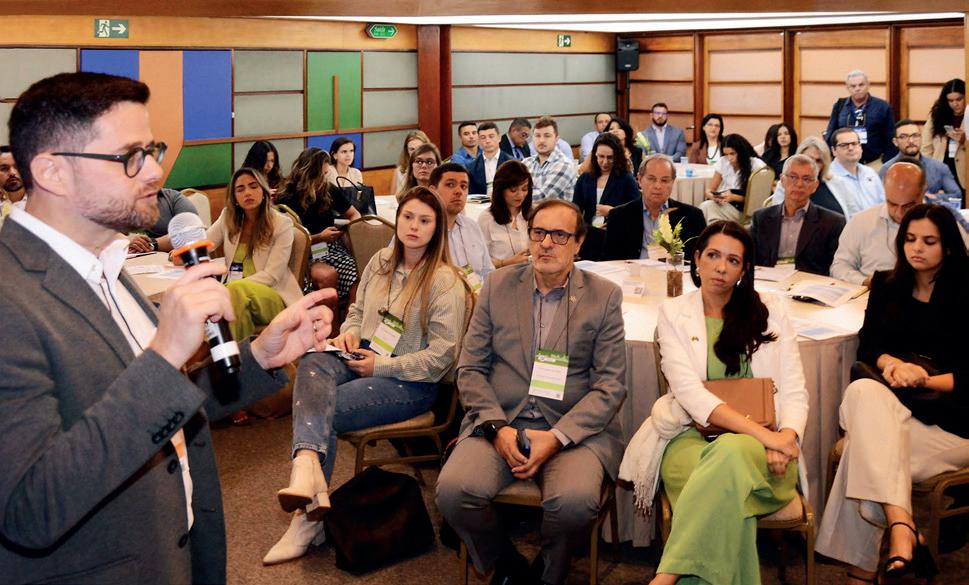
Mora than 100 people participated in Breakfast in Rio: E&P Opportunities with BRAVA Energia and Ventura Offshore, hosted in April. Rafael Justo, Offshore Supply Manager at BRAVA Energia highlighted the company’s consolidated production with growth expected in the coming quarters. Mardonildo Filho, CCO at Ventura Offshore shared that their company operates with three main rigs, with relevant activity in the pre-salt, especially in the city of Búzios, which has already surpassed the 1m boe/day mark and continues to expand.
Clarisse Rocha, Director – Americas clarisse.rocha@the-eic.com
Chile’s development agency CORFO has launched a US$5m subsidy per project programme to boost the green hydrogen sector in the Biobío region. The initiative will co-finance up to 60% of eligible project costs and forms part of the country’s broader strategy to position itself as a global leader in low-carbon hydrogen. Supported projects must address areas such as industrial applications, logistics, workforce development, technological adaptation and knowledge transfer. Applications for the programme remain open until November 2025, with selected projects expected to be announced later that month.
Keeping
