Texas Lone Star
Incentivizing Educators
New program promises bigger paychecks for teachers, but is it right for districts?
What to Wear?
Court battles prompt districts to reexamine dress codes.
The Education Dollar
See a visual breakdown of how every dollar supports a student's education.
A Publication of the Texas Association of School Boards | Volume 40, Number 2 | March 2022
Featured Event
TASB Officers 2021-22
Ted Beard, Longview ISD, President
Debbie Gillespie, Frisco ISD, President-Elect
Armando Rodriguez, Canutillo ISD, Second Vice-President
Rolinda Schmidt, Kerrville ISD, Secretary-Treasurer
Jim Rice, Fort Bend ISD, Immediate Past President
TASB Board of Directors 2021-22
Moises Alfaro, Mathis ISD, Region 2
Jesus Amaya, Los Fresnos CISD, Region 1A
Rose Avalos, Aldine ISD, Region 4H
Carlos Bentancourt, Slaton ISD, Region 17
Kamlesh Bhikha, ESC 2, ESC Representative
Darlene Breaux, Alief ISD, Region 4B
Steve Brown, Ector County ISD, Region 18
Kevin A. Carbo, Mesquite ISD, Region 10D
Dawn Champagne, Katy ISD, Region 4E
Justin Chapa, Arlington ISD, Region 11C
Thomas Darden, Cooper ISD, Region 8
Jason Dohnalik, Cameron ISD, Region 6A
Karen Freeman, Northside ISD, Region 20B
Corinne French, Valley View ISD, Region 11D
Sylvia Sanchez Garza, South Texas ISD, Region 1B
Linda Gooch, Sunnyvale ISD, Region 10B
Mary Jane Hetrick, Dripping Springs ISD, Region 13B
Tony Hopkins, Friendswood ISD, Region 4C
Tricia Ikard, Maypearl ISD, Region 10A
Tami Keeling, Victoria ISD, Region 3
Mark Lukert, Wichita Falls ISD, Region 9
Kathy Major, Liberty Hill ISD, Region 13C
Raymond P. Meza, San Felipe Del Rio CISD, Region 15
Dan Micciche, Dallas ISD, Region 10C
Scott Moore, Conroe ISD, Region 6B
Nicholas Phillips, Nederland ISD, Region 5
Jacinto Ramos Jr., Fort Worth ISD, Region 11B
Tony Raymond, Sabine ISD, Region 7
Georgan Reitmeier, Klein ISD, Region 4A
Cindy Spanel, Highland Park ISD, Region 16
Becky St. John, Grapevine-Colleyville ISD, Region 11A
Yasmin Wagner, Austin ISD, Region 13A
Mildred Watkins, La Vega ISD, Region 12
Greg Welch, Clyde CISD, Region 14
Robert Westbrook, Schertz-Cibolo-Universal City ISD, Region 20D
Terri Williams, North East ISD, Region 20E
Call for submissions to District Voices!
We want to hear more about what is going on in local school districts around Texas and invite you to send us submissions for our new, occasional feature, District Voices. Do you have an interesting program to discuss? Lessons learned as a school board member? For submissions or questions, contact managing editor Laura Tolley at laura.tolley@tasb.org. We look forward to hearing from you and your district!
For more information about these events or deadlines, visit the TASB website at tasb.org or call TASB at 512.467.0222 or 800.580.8272 toll-free.
2 Texas Lone Star | March 2022 | texaslonestaronline.org Calendar
TASB
MARCH 2-5, GALVESTON MARCH 2 • What do I do when...? A Special Education Legal Update, Part 3, Virtual Event 2-5 • TASB Governance Camp, Galveston 9 • TASB Grassroots Meeting – ESC Region 14, Abilene 9-12 • Texas Caucus of Black School Board Members Education Summit, Round Rock 22 • Evaluating and Improving Student Outcomes (EISO/SB1566) Module 1, Virtual Event 24 • Evaluating and Improving Student Outcomes (EISO/SB1566) Module 2, Virtual Event
• Evaluating and Improving Student Outcomes (EISO/SB1566) Module 2, Virtual Event
• TASB HR Services Writing Effective Job Descriptions, Virtual Event APRIL 6 • What do I do when...? A Special Education Legal Update, Part 4, Virtual Event 12 • TASB Facility Services Asbestos Designated Person Training, Spring 13 • TASB Facility Services Integrated Pest Management Training, Spring
• TASB HR Services Determining Employment Status and Benefits, Virtual Event
• TASB Facility Services Best Practices: Maintenance and Operations, Spring
• TASB Student Solutions:
Assessments,
Summaries
Event
• TASB Special Education Solutions SHARS Random Moment Time Study, Virtual Event
• TASB Special Education Solutions SHARS 2022 Conference, Virtual Event
GOVERNANCE CAMP
29
30-31
13-14
14
14
Transition:
Graduation Types,
of Performance, Virtual
20
28-29
8 Incentivizing Educators

New program promises big paychecks for teachers, but is it right for districts?

Departments
2 Calendar 20 Legal News
22 Capitol Watch
24 Technology Today
Columns
5 From the Top
7 Editor's Note
38 A Final Note
12 What to Wear?
Court battles prompt districts to reexamine dress codes.
14 TASB
Teacher Salary Survey
Annual report also details compensation for other school personnel.
16 The Education Dollar
See a visual breakdown of how every dollar supports a student's education.
Texas Lone Star • Volume 40, Number 2
Texas Association of School Boards P.O. Box 400 • Austin, Texas • 78767-0400 512.467.0222 • 800.580.8272
Laura Tolley • Managing Editor
Shu-in Powell • Graphic Designer Virginia Hernandez • Photographer
360 Press Solutions • Printer
Contributors: Sylvia Wood, Dax Gonzalez, Stephanie Butler, Sarah Orman, Leslie Trahan, April Mabry, Joan Randall, Melissa Locke Roberts
Texas Lone Star (ISSN 0749-9310) is published 10 times a year by the Texas Association of School Boards. Copyright© 2022 by the Texas Association of School Boards (TASB). All rights reserved. Reproduction, adaptation, distribution, and exhibition in whole or in part are prohibited under penalty of law without the written license or permission of TASB. Copies of Texas Lone Star are mailed to trustees of TASB member school boards and their superintendents as part of their membership. Subscriptions are available to nonmembers for $36 (1 year), $69 (2 years), and $99 (3 years). Single copies are $5.
Address changes should be sent to Michael Pennant, TASB, P.O. Box 400, Austin, Texas 78767-0400.
Articles in Texas Lone Star are expressions of the author or interviewee and do not represent the views or policies of TASB. Permission to reprint should be emailed to communications@tasb.org or addressed to the Managing Editor, P.O. Box 400, Austin, Texas 78767-0400.
Texas Lone Star does not guarantee publication of unsolicited manuscripts.
Postmaster: Send address changes to TASB, P.O. Box 400, Austin, Texas 78767-0400.
18 High Fidelity
How one district implemented a new math curriculum.
texaslonestaronline.org | March 2022 | Texas Lone Star 3 Follow us: Features
26 News & Events Contents | March 2022
BuyBoard purchases may be Elementary and Secondary School Emergency Relief (ESSER) Fund eligible. With vendors who provide everything from buses and construction services to PPE supplies, you will find almost everything you need to rebuild after COVID-19.
















TASB proudly endorses BuyBoard.

It’s All About Service — and Compassion
Focus must always be on our students
by Ted Beard
Ted Beard
At the start of the military operations Iraqi Freedom and Enduring Freedom (Afghanistan), my duties involved managing operations and soldiers at several Army posts in a few states. The focus of my work was preparing and certifying U.S. Army Reserve units to deploy to Iraq, Kuwait, or Afghanistan.
This involved a lot of travel, and that meant being away from my family. But I remained grateful that I was able to come home after each mission. After all, my job was about service.
I deployed during Desert Shield/ Storm and thought the likelihood of being deployed again would be minimal based on my rank and position. I should have known the Army always had a plan for me. I was deployed again, based in Kuwait. My new duties involved traveling often to Iraq, where I experienced a mortar attack every single time I was there. Some of the attacks resulted in numerous casualties. But again, my job was about service.
The importance of service
Once I was sent to Afghanistan for several days. While in one of the headquarters operation facilities, I came across an award recommendation for a soldier that caused me to reflect on the importance of service to others.
The soldier was aboard a helicopter sent to rescue a team that had come under fire. Several soldiers had been wounded. On arrival, the soldier rappelled from the helicopter to rescue the injured but was shot while doing so. Despite his wounds, he continued to provide aid and
help rescue others. He remained focused on the mission and understood its goals. He did not get distracted. He demonstrated true service to his fellow soldiers and country, even in the face of danger. School board members also must stay committed to the purpose and strategic goals of the board. We must not get caught up in adult drama and chatter but remain focused on the students, because they are the bottom line. We must also never forget our fiduciary responsibilities as board members. After all, it’s about service.

The mark of civilization
Thoughts of service and commitment remind me of a story told by the physician Dr. Ira Byock, who wrote about cultural anthropologist Margaret Mead in his book The Best Care Possible: A Physician’s Quest to Transform Care Through the End of Life:
A student once asked anthropologist Margaret Mead, ”'What is the earliest sign of civilization?” The student expected her to say a clay pot, a grinding stone, or maybe a weapon.
Margaret Mead thought for a moment, then she said, “A healed femur.”
A femur is the longest bone in the body, linking hip to knee. In societies without the benefits of modern medicine, it takes about six weeks of rest for a fractured femur to heal. A healed femur shows that someone cared for the injured person, did their hunting and gathering, stayed with them, and offered physical protection and human companionship until the injury could mend.
Mead explained that where the law of the jungle—the survival of the fittest— rules, no healed femurs are found. The first sign of civilization is compassion, seen in a healed femur.
Serving students is our mission as school board members. We are at our best when we serve others and treat all with compassion and civility.H
texaslonestaronline.org | March 2022 | Texas Lone Star 5
From the Top
Ted Beard, a Longview ISD trustee, is 2021-22 president of TASB.
We must not get caught up in adult drama and chatter but remain focused on the students, because they are the bottom line. We must also never forget our fiduciary responsibilities as board members. After all, it’s about service.
MAKING AN EVERYDAY IMPACT
Through specialized schools; Head Start early childhood education; afterschool programs; school-based therapy services; and a scholastic art and writing awards program, HCDE makes a BIG impact on Harris County communities.
See the Impact at HCDE-TEXAS.ORG/IMPACT

Keeping Good Teachers
New study shows many leave after first year
by Laura Tolley
Teachers taught me how to type, dissect a frog, understand calculus, appreciate Shakespeare, and so much more. My home-ec teacher tried to teach me how to cook, but there was that incident where I accidentally left a huge ball of pizza dough in the school oven overnight. That was my failing, not hers.
I liked and admired many of my teachers, but we all have a favorite, right? Mine was Mrs. Johnson, my fourthgrade teacher at Los Ranchos Elementary School in Albuquerque’s North Valley. She not only taught us, but she also cared about us, laughed with us, got mad at us, respected us. About 14 years

I heard Mrs. Johnson continued to teach for many more years. That was the norm then — teachers had long careers, generally at the same school.
Districts struggle to keep teachers
But that’s not always the case now. A recent study, the “Texas Teacher Workforce Report,” found a worrisome trend regarding teacher retention. Prepared by the University of Houston College of Education for the advocacy group Raise Your Hand Texas, the report studied several issues, including retention rates for teachers first employed in the 2010-11 school year through the 2019-20 cycle. The report found that “teachers are least
Teacher Incentive Allotment, or TIA, which is the subject of this month’s cover story. The TIA was created in 2019 to provide top educators with the opportunity to earn a six-figure salary. Districts can receive a range of funding allotments for each designated teacher, those determined to be the district’s most effective educators. Greater funds are allotted for teachers in high-need and rural districts.
There is also a story about TASB’s statewide 2021-22 District Personnel Survey, which offers the latest, in-depth salary and other compensation data regarding teachers and other school personnel that school districts can use now as they work on their next budgets.
Teacher compensation is an important piece of the complicated puzzle that school leaders have to work out as they strive to provide the best education possible for their students. Keeping the most effective teachers in your schools is a must, and the TIA program and TASB’s salary survey are two valuable tools you may want to use in meeting that goal.
after I left her class, I ran into her one day at the Capitol in Santa Fe, N.M. She was with her students on a field trip. I tapped her on the shoulder and introduced myself; she hugged me and asked what I was doing. When I told her I had gone to college and was now a reporter, she smiled, tossed her head back in excitement, and said she knew I would do something interesting. I walked away beaming. I had made Mrs. Johnson proud, and that really meant something to me. It still does.
likely to be retained from year one to year two.” On the positive side, it noted that teachers who stayed in the classroom beyond the fourth year were more likely to remain in the profession, often at the same school.
The pandemic is only adding to the problem of teacher burnout and departures. Trustees, superintendents, and other school personnel are working hard to hire and keep teachers through competitive compensation.
One tool at their disposal is the
We always remember the best teachers. We still learn from them. I mean, I have never left something in the oven overnight again!
I hope you enjoy this month’s issue of Texas Lone Star.H

texaslonestaronline.org | March 2022 | Texas Lone Star 7
Editor’s Note
Laura Tolley is managing editor of Texas Lone Star.
The pandemic is only adding to the problem of teacher burnout and departures. Trustees, superintendents, and other school personnel are working hard to hire and keep teachers through competitive compensation.
Laura Tolley
Incentivizing Educators
New program promises bigger paychecks for teachers, but is it right for districts?
by Leslie Trahan
8 Texas Lone Star | March 2022 | texaslonestaronline.org
It’s no secret that teaching is a demanding job, and despite the challenges of the profession, large compensation increases have typically been out of reach for educators. A statewide incentive program aims to change that for Texas’ most effective teachers.
The Teacher Incentive Allotment, or TIA, was created in 2019 with the goal of providing top educators the opportunity to earn a six-figure salary. The program was established by House Bill 3, a comprehensive public school funding bill passed by the 86th Texas Legislature.
Through the TIA, districts can receive funding allotments of $3,000-$32,000 per designated teacher. The amount of funding is based on the level of designation each teacher receives, with greater funds being allotted for teachers in high-need and rural districts.
To date, more than 4,000 of the state’s roughly 360,000 public schoolteachers have been designated by the system, resulting in a payout of approximately $43 million to school districts across Texas.
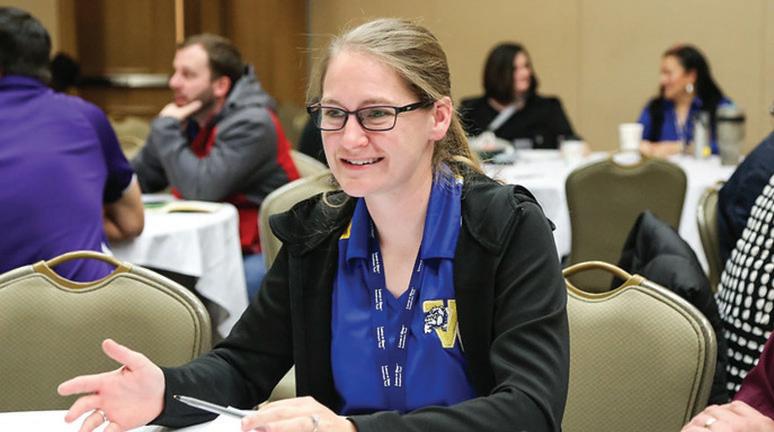
John York, chief human resource officer at Longview ISD, said the program has been “life changing” for teachers in his district, located in East Texas. The district currently has 82 designated teachers. Eleven of those teachers have achieved a six-figure salary for a 10-month contract.
“It puts them on a playing field with other high-paying professions and allows teachers to stay in the classroom and receive high compensation,” said York. “Teachers feel valued and appreciated for the hard work they perform on a daily basis. It is a win-win situation for the students, district, and teachers.”
Measuring teacher effectiveness
Grace Wu, director of strategic compensation at the Texas Education Agency (TEA), believes the incentive program could be a powerful part of a district’s recruitment and retention efforts. “One of the things we know is that teachers want to stay in a place where they feel valued, where they feel recognized, and where they feel they are continually growing,” said Wu. “TIA can be a great part of your human capital system because it will help to codify how the district is measuring teacher effectiveness. That really speaks to teachers knowing when they are doing well and what [areas] they need to grow in.”
For this system to work, districts must be able to determine which teachers are most effective. Districts may opt to develop a local designation system that relies on both teacher observation and student growth data. Local designation systems must be reviewed and approved by the TEA. From start to finish, the process of establishing that local system takes about three years.
Lubbock ISD was among the first districts in the state to submit a local designation system to TEA. The district currently has 86 designated teachers and hopes to double that number in the coming year. Lane Sobehrad, the district’s development coordinator, said the flexibility provided by the program means districts can rely on some of their current processes to develop a local designation system. “You’re required to have teacher
appraisal and student growth measures, but even those are up to your district as to what you want to use to measure success,” said Sobehrad. “You get to pick the weighting, you get to pick what qualifies as a designated teacher, you get to pick your payout scheme and what teachers are eligible.”
Amy Campbell, director of TASB HR Services, said data validation is often the most challenging part of creating a local designation system. For a system to be approved, the district must collect a year’s worth of data showing a correlation between student growth and teacher effectiveness. Drawing that line can be tricky. “Data need to correlate by teaching area, by campus, across the entire district,” said Campbell. “If I’m a big district with 100 elementary schools, I need to be sure that every principal in every elementary school is rating their teacher roughly equivalent, so I have to spend a lot of time calibrating those raters.”
For districts that find this process too cumbersome, there is another route to receiving incentive funds. Teachers may also achieve TIA designation through National Board Certification. Campbell believes this route may be more desirable for many districts because it eliminates the structural work of creating a local designation system. “It doesn’t require overhaul of the teacher appraisals in the district, and it doesn’t require figuring out student growth measures for everyone,” said Campbell. “It is on that individual teacher to achieve that certification and earn the allocation accordingly.”
Although this option is easier for districts, it can be a challenge for educators. National Board Certification is a rigorous professional development pathway that typically requires two years to complete. Many districts use a portion of the TIA allotment funds to provide support for educators pursuing National Board Certification.
Approximately 3% of teachers across the country are National Board Certified. In Texas, this number dips to .3%, representing roughly a thousand teachers across the state. Sobehrad likens the National Board Certification process to achieving a graduate certificate for educators. He said Lubbock ISD does its best to provide the resources these teachers need to be successful. The district uses some of its TIA allotment funds to sponsor a district-run cohort for edu-
“ It puts them on a playing field with other high-paying professions and allows teachers to stay in the classroom and receive high compensation,” said York.
texaslonestaronline.org | March 2022 | Texas Lone Star 9
“Teachers feel valued and appreciated for the hard work they perform on a daily basis. It is a win-win situation for the students, district, and teachers.”
cators who wish to pursue National Board Certification. With support from the Texas National Board Coalition for Teaching, the district provides mentors and additional resources to help teachers succeed. Fourteen Lubbock ISD educators are expected to achieve National Board Certification by the end of the 2022-23 school year. “If they need additional materials or support, we make sure they have those things,” said Sobehrad. “It is a lot of work, but we hope the teachers will see the benefit financially and professionally.”
Using allotment funds
The TIA requires districts to spend at least 90% of their funding allocation on teacher compensation. Any funds not spent on teacher compensation must be used to implement a local designation system or support teachers who are trying to achieve designation.
Districts have some freedom in deciding how to spend the portion of their allotment that is reserved for teacher compensation. Although these funds must be spent on the campus where the designated teacher works, they do not have to be provided directly to the designated teacher. Districts can instead opt to spread the allotment out among student-facing instructional staff.
Campbell said most districts give the funding directly to the designated teacher, but the decision is complicated, especially in rural areas. “It’s really messy in smaller districts to dole out that money,” said Campbell. “If you have 50 teachers in a district, it’s hard to say only three of you will be compensated $30,000 more this year, especially when that extra $30,000 could mean that a teacher makes more than the superintendent that year.”
Dallas ISD was one of the first districts in the state to receive TEA approval for a designation system. In fact, the district’s locally created incentive program served as the model for TIA. Suzy Smith, executive director of performance management for Dallas ISD, said having a system already in place and being part of a large district with a lot of resources has helped get the program off the ground, but nonetheless, there have been difficulties. “It’s challenging to design systems that can get valid data about teacher performance across all those different assignments,” said Smith. “How do I come to a valid evaluation of a teacher outside of a tested subject? When you tie compensation to it, it becomes even more charged.”
Catherine Robert, an assistant professor of educational leadership and policy studies at the University of Texas at Arlington, worries that the inequitable distribution of compensation could cause internal disputes within districts. “Teaching is a group project. You do need a strong team. You do need to reward your people,” said Robert. “But there are much easier ways for additional compensation that would create fewer hard feelings and more equitably award pay for the hard work they’re doing.”
The question of equitable distribution is further complicated for districts because the TIA does not easily accommodate every type of teacher. Patty Quinzi, director of public
Allotment amounts per designation level
The TIA allows teachers to receive one of three levels of designations. District allotments vary based on the designation and on whether the campus is high needs and/or rural. National Board Certified teachers automatically receive a Recognized designation.
Recognized: $3,000-$9,000 (average allotment is $6,181)
Exemplary: $6,000-$18,000 (average allotment is $12,576)
Master: $12,000-$32,000 (average allotment is $22,537)
For more information on the TIA, districts should refer to the TEA’s informational site at tiatexas.org. Reach out to TASB HR Services at HRservices@tasb.org with additional questions.
affairs and legislative counsel for the Texas AFT, a statewide union with 66,000 members, including educators, school employees, and retirees, said the requirement to tie student growth to teacher performance means many educators will not be eligible for the allotments.
“There is a big gaping hole in this process for teachers who aren’t in a tested subject,” said Quinzi. “How are you gauging the success of kids in their classrooms? There are so many different elements and so many different people who go into a child’s success. It’s very unfair to pick and choose who should get rewarded when what we should do instead is provide a solid foundation salary that is comparable to jobs in the private sector that teachers could get with the skills that they have now.”
At a session on the TIA at the TASA Midwinter Conference in January, Madeline Anderson, Ore City ISD’s curriculum director, said her district relies on portfolios to determine student growth in those hard-to-measure subject areas. Anderson said Ore City ISD “felt it was a moral imperative to include everyone.”
Although Lubbock ISD opts to give the 90% reserved for teacher compensation directly to the designated teacher, Sobehrad admitted that it is a complicated decision. He said the district is comfortable with this path “because our stakeholders helped us make this decision and our goal is to get as many teachers as possible eligible for TIA so that nobody is left out.”
The district is currently working on adding more teachers to the program, including some career and technical educators and some fine arts educators, who would not typically be able to achieve a TIA designation outside of the National Board Certification route. Sobehrad said it’s been a “monu-
10 Texas Lone Star | March 2022 | texaslonestaronline.org
mental task” for the district because “not all of these courses have assessments that are good vehicles for a pre- [and] posttest kind of setup, where you can establish growth measures. There is not a STAAR test for us to look at.”



A path forward
Although the TIA was established in 2019, the long lead time for the program means there is no data yet to show whether it impacts recruitment and retention. Most of the districts that participated in the first phase of the TIA already had incentive programs in place that they were able to use as a foundation, but the data from those early programs is not necessarily transferrable. TEA plans to take a closer look at retention and recruitment after the program’s 2021-22 school year data become available.
Robert said the lack of data showing that the program works is troubling. “The high cost of administering this overly complex system is my biggest concern,” said Robert. “It would have been better to have more data before engaging at the full state level.”
“There’s no doubt it’s harder to work in an at-risk campus and that it’s harder to keep teachers in a rural campus,” said Robert. “But there are much easier ways for additional compensation that would create fewer hard feelings and more equitably award pay for the hard work they’re doing.” Robert said she would prefer to see the state “give stipends to every teacher at a high needs or rural campus above and beyond what they make.”
But in the absence of those other solutions, districts will need to determine for themselves whether TIA is a good fit.

“It can be tempting to seek out these payments for teachers because we all want to reward our best and brightest especially now, but it is a heavy lift for a district,” said Campbell. “It takes a lot of time and planning and staff resources. Before you jump in with both feet, just make sure you are ready. Be sure it makes strategic sense for your district, that it makes sense resources-wise, and that you have buy-in and have completed a fact-finding mission first.”
For Lubbock ISD, the key to success with TIA was assembling a stakeholder group immediately. “Our initial group was about 48 or 50 people with all kinds of content area expertise and roles in the district — teacher, instructional coach,
administrator, etc. We wanted all levels of experience, age, gender ethnicity, disability,” said Sobehrad. “We put all the requisite factors in because TIA was an unknown entity and we wanted to make sure all the voices were at the table with us when we were presented the option for what that framework might look like.”
Sobehrad acknowledged that a great deal of administrative work goes into creating a district plan for TIA, but he believes the payoff is too big to be ignored. “If it pays teachers more, it’s worth the effort for [the] central office,” said Sobehrad. “That cost benefit is easily justifiable if you get people across the finish line.”H
texaslonestaronline.org | March 2022 | Texas Lone Star 11
Leslie Trahan is a staff writer for Texas Lone Star.
What to Wear?
Court battles prompt districts to reexamine dress codes
by Leslie Trahan
For decades, Texas public school dress codes have generally gone unexamined by the public. Administrators and school boards have largely had the freedom to determine what’s right for their communities, and for many districts, creating a dress code has been considered a one-time event.
But a recent uptick in legal challenges is causing districts throughout the state to take a second look at their dress code policies. Rules that were once considered standard are now under fire, particularly if those rules single out groups by gender or have a disparate impact on certain protected characteristics, like race, gender, or religion. “Districts have typically had a lot of leeway to create their own dress codes,” says TASB Legal Services Senior Attorney Jasmine Wightman. “But recent court rulings are drawing greater attention to school dress codes throughout Texas.”
School dress codes in the spotlight
State officials don’t make many recommendations when it comes to school dress codes, and as such, districts across the state have been largely on their own in deciding whether a dress code would work for their school community. District policies
12 Texas Lone Star | March 2022 | texaslonestaronline.org
“Districts have typically had a lot of leeway to create their own dress codes,” says TASB Legal Services Senior Attorney Jasmine Wightman. “But recent court rulings are drawing greater attention to school dress codes throughout Texas.”
typically cite a number of reasons for adopting a dress code, including minimizing health and safety hazards, teaching grooming and hygiene, and preventing disruptions. However, research on the benefits of dress codes for students has been inconclusive.
In its FAQ for school district personnel and administrators, the Texas Education Agency states only that “school districts have the authority to adopt dress codes which may apply differently on a gender basis” as long as dress codes do not “infringe on religious expression.” The Texas Education Code provides guidelines for adopting school uniforms, but there are no clear standards for dress code policies. Guidance has mostly come from a string of court cases across the country, including in Texas.
In 1997, the Texas Supreme Court held that districts have the right to differentiate between male and female students with regard to hair length. However, more recent court cases outside the state have found these kinds of gender distinctions to be unlawful, and the issue has picked up steam over the past two years.
An August 2020 case brought a national spotlight to Texas when a Black male student sued his school district after being assigned in-school suspension for having a hairstyle that violated school district policy. A preliminary injunction was issued preventing the school district from enforcing the policy against the student.
Wightman believes issues like these aren’t going away any time soon. “The gender and racial issues we’ve seen come up with dress codes recently are only going to continue progressing,” says Wightman. “Districts that don’t take a proactive stance and address policy changes might find themselves vulnerable to legal action.”
Making changes to dress code policies
Updating a school dress code might seem like a big endeavor, but the process doesn’t have to be unwieldy. Wightman recommends first taking a look at the policies that are currently in place. Districts should review dress codes with an eye for distinctions related to protected characteristics—that is, race, religion, or gender. Dress codes that create different provisions for different types of individuals could be problematic. Challenges to dress codes have often arisen from different interpretations of standards across cultural groups, and districts that have different standards for male and female students have been subject to Title IX complaints by students and parents.
To avoid possible legal challenges, districts should craft a dress code that provides for plenty of gender-neutral
options, like shorts and pants, and that applies standards equally across cultural groups. “Districts have had a hard time convincing judges that policies that make distinctions based on gender or race align with their reasons for having a dress code,” Wightman says. Policies that raise legal concerns should be discussed with the district’s attorney, she advises.
To make sure dress code policies meet the needs of the school’s community, districts should solicit input from a broad range of stakeholders, including staff, students, parents, and community members. When possible, people with diverse backgrounds should also be included. Committees that are currently in place, such as campus advisory committees, can serve as a starting point for these kinds of conversations.
Once a new policy is determined, changes should be shared broadly within the district and the community. Staff, students, and parents should all be made aware of the new guidance as well as any consequences that could result from violations. In addition, a policy should be reviewed on a periodic basis to ensure it is up to date and continues to meet the needs of the school community.
For more information, districts can reach out to TASB Legal Services or review TASB’s detailed guidance on school dress codes by going to schoollawesource.tasb.org and searching for “dress and appearance.”H
texaslonestaronline.org | March 2022 | Texas Lone Star 13
Leslie Trahan is a staff writer for Texas Lone Star.
TASB Annual Survey on Teacher Salaries
Report also details compensation for other school personnel
by TASB Staff
As school districts across Texas struggle to retain teachers and other key personnel, a TASB survey shows that most pay groups received a pay increase from their district, and the median starting teacher salary increased nearly 6%.
TASB’s statewide 2021-22 District Personnel Survey results offer in-depth salary and other compensation information that school districts can use as they work on their next budgets.
Of 1,020 districts, 517 participated in the survey, representing 51% of districts in Texas. For districts with 3,000 or more students, participation was 84%. Key findings for teacher compensation include:
• Median starting salary for a new teacher is $45,800, up 5.9% from last year. The highest reported entry salary is $62,500.
• Median teacher average salary is $53,500, up 2.9% from 2020-21.
• The majority of respondents, 88%, pay shortage stipends to teachers in at least one identified shortage area.
Regarding overall pay increases for school personnel, additional survey findings include:
• Median pay increase across all pay groups (teacher, administrative professional, clerical paraprofessional, and auxiliary) is 2.3%.
The TASB survey gathers comprehensive data that districts can use to compare themselves to local peers for teacher pay at benchmark years, as well as compare about 140 other jobs common to school districts.
14 Texas Lone Star | March 2022 | texaslonestaronline.org
• Of responding districts, 12% did not give a pay increase for the 2021-22 school year, while 3% reported a one-time payment instead.
The TASB survey gathers comprehensive data that districts can use to compare themselves to local peers for teacher pay at benchmark years, as well as compare about 140 other jobs common to school districts.
“The data allow districts to plan for next year’s increases and budget by giving them a firm grasp on the local market as it currently stands,” said Janelle Guillory, assistant director for TASB HR Services. “The information from this survey helps them develop a plan for pay increases and strategic adjustments that will help them recruit, retain, and reward staff.”
The pandemic has had a significant impact on teachers and staff in general. Across the country and in Texas, teacher burnout has prompted many to leave the profession entirely.
“There are fewer people to fill vacancies, which drives up competition for salaries,” said Guillory.
There has long been competition among districts to attract the best teachers and other personnel, but Guillory said the pandemic has heightened the effort to stay ahead of neighboring districts. In addition, many districts are having to be competitive with the entry pay rates that local companies offer for food service, custodial, maintenance, and bus drivers.
TASB conducts the annual survey to provide timely, accurate information to its HR Services members, and it also uses the information in its own compensation consulting projects.
“Just as a district might use it for themselves, we use it for market comparisons and to back up recommendations we make to our client districts,” said Guillory.
“If we didn’t conduct this survey each year, then Texas school districts would not have access to this kind of timely, reliable data to use for determining their salary schedules and compensation plans,” said Guillory.
For more information on the TASB survey, search for TCHR Highlights 2021 at tasb.org.H
texaslonestaronline.org | March 2022 | Texas Lone Star 15
The Public Education Dollar at Work
Texas public schools spend approximately $50 billion per year educating more than 5.4 million students. Here’s a breakdown of how each dollar is spent to support a student’s education:
Instruction
Certified teachers provide a high-quality education to all students in their classes.
Transportation
Many students rely on school buses to safely get to and from school on time.
Facilities
Students learn in buildings that are well-maintained and meet all building codes.
IT/Technology
Websites, secure networks, and student information systems all require IT support.
Health
School nurses care for ill or injured students and manage their medications.
Safety
Security personnel, including police and school resource officers, keep students safe.
16 Texas Lone Star | March 2022 | texaslonestaronline.org
Nutrition
Good nutrition fuels learning through student access to breakfast, lunch, and sometimes dinner.
Extracurricular
Beyond the classroom, there are academic, athletic, and fine arts programs for students.
Campus Leadership
Principals and other administrators support student instruction and campus operations.
Instructional Support
Professional development and curricular support help teachers do their best work.
Counseling
Certified/licensed educators provide academic planning and counseling services for student success.
District Leadership
Superintendents and other administrators handle district business operations, such as payroll.
Source: This graphic was developed using Texas Education Agency data found in the Public Education Information Management System.
texaslonestaronline.org | March 2022 | Texas Lone Star 17
High Fidelity
How one district implemented a new math curriculum
by TASB Staff
Implementing a new curriculum with fidelity — the degree to which it’s enacted as intended — is a perennial concern for administrators and board members. For teachers, “fidelity” can sometimes sound like a four-letter word — a term to be viewed with suspicion for its potential to impede their efforts to serve each student’s specific needs.
But teachers and administrators from Rio Grande City-Grulla ISD (RGCGISD) arrived at the Texas Association of School Administrators (TASA) Midwinter Conference to show that, with the right plan, teachers and administrators can implement a new curriculum together with buy-in at all levels, even in the midst of a global pandemic.
“Implementing a new curriculum with fidelity is difficult to do even in the best of circumstances,” said panel moderator Brett Felten, regional vice president of educational partnerships at Agile Mind. “When you put a pandemic on top of that, and a recent exodus of teaching talent from the district, things get tricky.”
RGCGISD serves a small, rural community that borders Mexico and is located in southeastern Starr County, the second poorest county in Texas. About 95% of the students in the district are economically disadvantaged. As of February 2022, only about 87% of the district’s students have returned to school. With some students still unaccounted for since the pandemic forced everyone online in 2020, there are now just under 10,000 students in the district, spread across 17 campuses.
Why RGCGISD focused on a new math curriculum
Recently, RGCGISD lost a wealth of experience to an early retirement incentive program. As part of the exodus, they said goodbye to all their math teachers at one middle school and six at their largest high school.
“It’s been a very challenging year and a half for all of us, but at the same time, it was a perfect time to implement a new vision that I've had for the district,” said RGCGISD Superintendent Adolfo Peña Jr., who just completed his first year as the district’s superintendent in December 2021.
As the district put a plan together to strengthen its math program, Peña said they determined that getting the highest quality instructional materials was non-negotiable.
“We evaluated what people were using — we surveyed our teachers — and I’m going to say it’s like a bad word, but everybody was using Teachers Pay Teachers,” said Elsa Morris, the RGCGISD director for accountability, assessment, and school improvement.
The district’s teachers were sharing lesson plans and materials with each other that they’d purchased from the Teachers Pay Teachers online marketplace. But without any research to back up the lessons or materials, the quality and coherence in lessons varied wildly.
In addition to ensuring that teachers had high-quality instruction material to teach from, the district committed to making sure that every teacher felt fully supported.
Despite the complications of the pandemic, the 2021 STAAR test shed some light on how RGCGISD was doing. While math scores were falling statewide, RGCGISD’s were headed in the other direction.
For the performance category, Approaches Grade Level, RGCGISD students were 23% above the state average in math; for Meets Grade Level, they were 14% above the state average. There was no STAAR test in 2020 due to the pandemic, and prior to that, the district was not using the new curriculum. Because of that, Peña says they’re looking at how they’re performing against statewide averages to get a feel for how the curriculum implementation is working.
It’s not an apples-to-apples comparison, but Peña says it gives the district confidence in the direction they’ve taken.
18 Texas Lone Star | March 2022 | texaslonestaronline.org
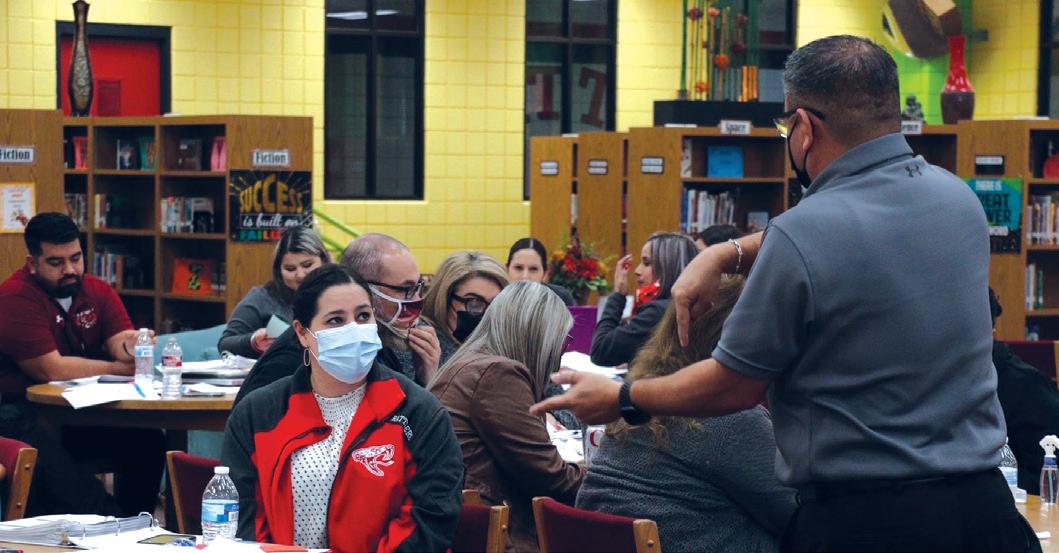
RGCGISD teachers attend Agile Mind Curriculum, High-Quality Instructional Materials training session at Ringgold Middle School.
Photos courtesy of RGCGISD
Coaching and co-teaching brought teacher buy-in
RGCGISD knew that their teachers were essential to making this curriculum rollout a success.
“Our teachers, they’re really our stakeholders, and they’re really the ones in the classroom pushing everything that we do forward,” said RGCGISD Mathematics Director Hermelinda Ayala-Rios.
The district’s Implementation fidelity model focused on supporting teachers in a variety of ways:
• Summer learning and model lesson sessions
• Addressing teacher and leader beliefs about student success
• Coaching and co-teaching with implementation strategists
The RGCGISD team credits their coaching program and in-classroom co-teaching from their implementation fidelity strategists — floating teachers who worked with administration on curriculum rollout and could provide support in multiple classrooms — for a lot of their success.
“We knew that we’d have teachers that are so against this,” said Brenda Treviño, an implementation fidelity strategist at RGCGISD. “We decided that the best thing is — we as teachers, as fellow colleagues — we train our teachers and that's what we started doing.”
Over the summer, middle and high school math teachers trained together on the new curriculum. Learning together helped them better see the value for students.
“We talk about vertical alignment all the time, but when do we really see it in practice?” asked Ayala-Rios. “We went through sixth-grade content, seventh-grade content, eighth-grade content, algebra content, so they could see how it went across.”
Another thing the district did to boost implementation fidelity was regularly use one planning period to bring all the mathematics teachers across the district together to address various needs as they came up.
Treviño says that their teachers feel confident now, and they trust that they can call her or any of the other implementation leads to get support.

“They felt comfortable saying, ‘You know what? I don’t know how to teach this. Help.’ To have a teacher get to that point is hard,” said Treviño. “And we mastered that. They have the support at the district level, and they have the support at the campus level. The key was the vision that our district had.”
Because the curriculum aligns learning from middle school through high school, there has been more communication across grades and campuses between teachers, which has had positive effects on the teaching culture in the district, according to Treviño.
“Mistakes are okay. We’re learning.”
Lastly, the district committed to the belief that all students and all teachers can succeed. The district worked to establish a common language and belief system for students and teachers about success in mathematics.
“I was one of the rebels. I was like, ‘I’m not going to use
Agile Mind {the curriculum},’” said seventh-grade math teacher Esmeralda Garza-Villarreal. “As a teacher, and someone that is OCD {has obsessive-compulsive disorder} and wants everything perfect, I had to accept that it’s okay — oh, I’m getting emotional — but it’s okay to make a mistake. And what taught me this was Agile Mind, and the program was AYD, the academic youth development,” she said.
AYD is a research-backed method developed by the Charles A. Dana Center at the University of Texas at Austin that connects social emotional learning to challenges in school. The goal is to reshape students’ perceptions of themselves as learners. AYD is based on psychological research into student motivation, learning, and persistence. RGCGISD is part of an effective implementation cohort with the Dana Center that is supported by the Bill and Melinda Gates Foundation.
“In RGCGISD, mistakes for our students are expected — they’re expected for us to grow. They’re respected. We respect that you make a mistake. It’s all right. It’s part of learning. And it’s inspected. We learn from it,” said Garza-Villarreal.
The comfort with making mistakes extends beyond students to the teachers learning how to teach the curriculum, too.
“That was our model right over the summer,” said Garza-Villarreal. “Mistakes are okay. We’re learning.”H
texaslonestaronline.org | March 2022 | Texas Lone Star 19
RGCGISD students after completing an Academic Youth Development team activity, "The Marshmallow Challenge."
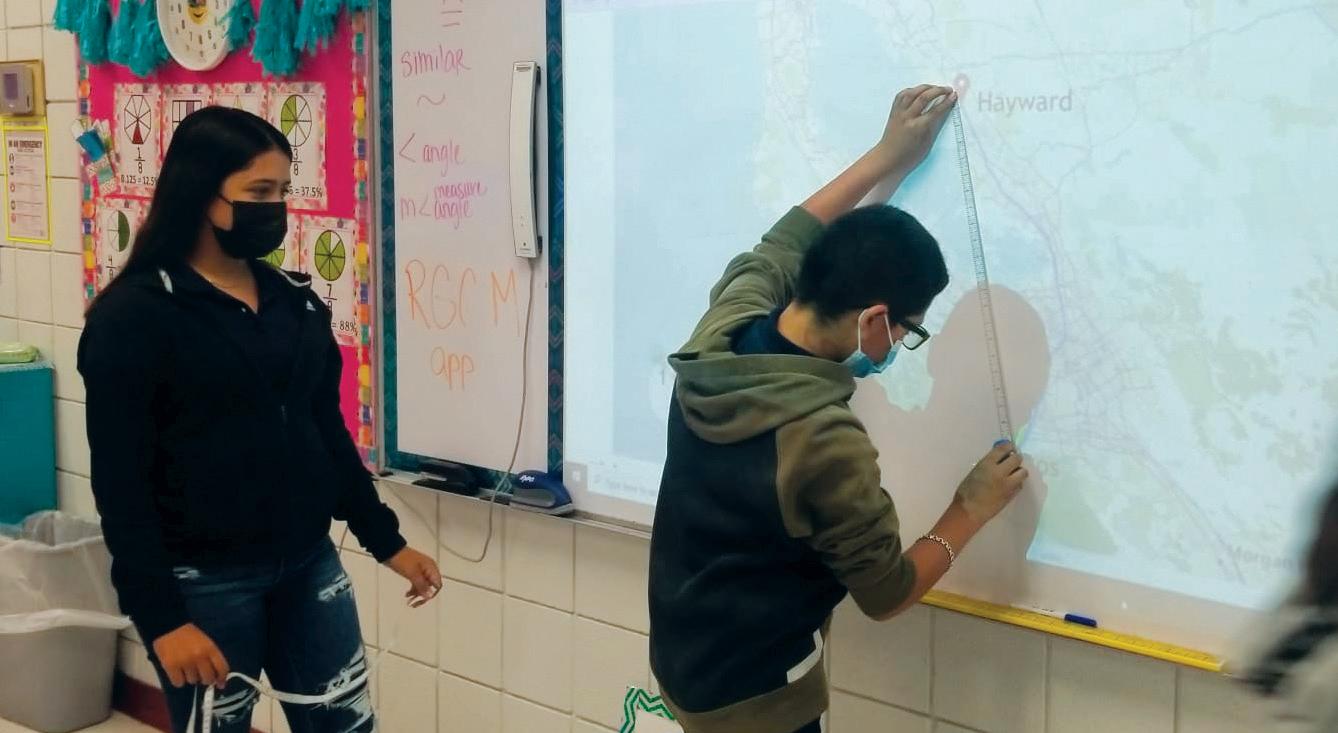
Two RGCGISD students work to solve a problem.
Public School Donations
Helpful tips about giving and receiving school donations
by Sarah Orman
What legal and practical issues do school districts receiving donations need to consider?

When is it permissible for one district to donate to another district? This article provides answers to commonly asked questions on both sides of the donation relationship.
Q: What laws and policies apply when a district receives a donation?
A: Texas Education Code section 11.156 provides that a donation of property for the benefit of the public schools made by anyone, if not otherwise directed by the donor, vests the property in the district board of trustees and may be used “for any purpose designated by the donor that is in keeping with the lawful purposes of the schools” or “for any legal purpose” if no purpose is specified.1
accept and spend PTO funds designated for the 2021-22 school year, assuming the donation meets all the statutory requirements.3
TASB Model Policy CDC(LOCAL) sets out criteria for donations to the school district. Most district policies authorize the superintendent to accept unsolicited gifts, meaning donations that the district has not requested. Before the superintendent accepts a gift, the policy requires considering certain factors, such as whether a donation would result in ongoing costs or inequitable funding among programs.
While not required by law, districts receiving donations may find it useful to explain to potential donors that school districts do not qualify as charitable organizations under Internal Revenue Code section 501(c)(3). School support groups,
plications. Funds received by a district typically become subject to the restrictions in the Texas Constitution on gifts of public funds. Moreover, funds distributed to an employee are likely to be considered reportable income. As an alternative, donations may be directed to a separate activity fund. Donations from a local educational foundation or PTO to district employees would not be subject to the restrictions on public funds.
Q: Can we donate money or property to another school district in need?
Effective Sept. 1, 2021, a newly added provision in Section 11.156 requires districts to accept and spend donations from recognized parent-teacher organizations or associations (referred to here as PTOs) that are designated to fund supplemental educational staff positions at a campus at the direction of, and within the time period specified by, the designated campus.2 According to the Texas attorney general, districts must
like local education foundations and PTOs, can receive tax-exempt donations as charitable organizations if they are duly organized.
Q: Can a district distribute monetary donations or gift cards from outside sources directly to employees?
A: While well-intentioned, a district that agrees to facilitate donations to employees may create unnecessary com-
A: It depends. Donations of school district resources are restricted by the Texas Constitution’s prohibition on gifts of public funds.4 The Texas attorney general has established a three-part test to determine when a public entity may constitutionally make a donation. In order to satisfy the test, the board of trustees of a school district making a donation must determine that (1) the donation primarily accomplishes a public purpose, rather than a benefit to private parties; (2) the donating school district retains sufficient control over the donation to ensure that the public purpose is accomplished; and (3) the donating school district will
20 Texas Lone Star | March 2022 | texaslonestaronline.org Legal News
While not required by law, districts receiving donations may find it useful to explain to potential donors that school districts do not qualify as charitable organizations under Internal Revenue Code section 501(c)(3).
receive a return benefit.5 Note that the burden is on the donor school district to ensure that the constitutional test is satisfied. Even when the donation will benefit another public school district, the district making the donation must ensure that its own community receives a return benefit.







Q: Can we donate gate receipts from a football game to victims of a natural disaster?
A: State law requires a school district to adopt a policy governing the expenditure of proceeds from gate receipts, rentals, vending machines, and other local sources of revenue over which the district has control.6 The required policy, at CFD(LOCAL), calls for discretionary expenditures of these funds to be related to the district’s educational purpose, provide a commensurate benefit to the district or its students, and not be an unconstitutional gift of public funds. However, an education foundation, booster club, or PTO may host an event to raise funds in a manner consistent with the organization’s charitable goals.
(See Donations, page 29.)
•
•
texaslonestaronline.org | March 2022 | Texas Lone Star 21
New year. New look. Same First Public. See the new FirstPublic.com, LoneStarInvestmentPool.com, and TASBBenefits.com All sites are mobile-friendly and designed to get you the information you need with the same expertise and service you’ve come to expect from First Public.
Improved digital experience
•
Enhanced learning and training
Accessible resources
Texas Trustees Visit Washington
School leaders learn about federal education issues
by Dax González
About 60 Texas school leaders joined other trustees and superintendents from across the country in Washington, D.C., in late January. They learned about important federal education issues impacting Texas school districts, such as the Individuals with Disabilities Education Act (IDEA) and heard about federal policy and trends from the U.S. Department of Education and the Federal Communications Commission. During their Capitol Hill visits, members of the Texas delegation met with Texas Republican Sen. John Cornyn’s office and various members of the Texas congressional delegation.
“It was great to see so many trustees making the effort to advocate at the federal level,” said TASB Governmental Relations Assistant Director Ruben Longoria.
“It’s important that the U.S. representatives and senators representing our Texas school districts hear from school leaders as they develop policy that will impact our 5.4 million students.”
response to legislative issues and are submitted directly by member school boards. TASB will accept resolutions from April 1 through June 15, 2022. Begin discussing proposed resolutions with your board now.

“This is the opportune time for school boards to get their specific concerns included in the TASB Advocacy Agenda,” said Grover Campbell, associate executive director of TASB Governmental Relations. “TASB GR often looks to our resolutions as we start getting into the details of legislation being considered in the Texas Capitol.”
The current TASB Advocacy Agenda will expire following the Delegate Assembly on Sept. 24, 2022, so member boards are encouraged to submit new resolutions or resolutions from the current agenda they wish to see carried forward. The new agenda will guide TASB’s advocacy efforts during the 2023 legislative session.
TASB
seeks input for advocacy resolutions
Make sure your district’s advocacy issues are represented in the TASB Advocacy Agenda and submit your board’s resolutions during TASB’s call for resolutions. Advocacy resolutions guide TASB’s
For more information, visit gr.tasb.org or contact Dax González at 800.580.4885 or dax.gonzalez@tasb.org
Current resolutions may be found by going to tasb.org/legislative and clicking on TASB Advocacy Agenda. H
22 Texas Lone Star | March 2022 | texaslonestaronline.org Capitol Watch
Dax González is division director of TASB Governmental Relations.
“This is the opportune time for school boards to get their specific concerns included in the TASB Advocacy Agenda. TASB GR often looks to our resolutions as we start getting into the details of legislation being considered in the Texas Capitol.”
Experience Training for Your HR Needs

September 23 –25
APRIL 1– MAY 1
Session Selector is open for session proposals to be submitted.
MAY 9 –20
Session Selector is open for attendee voting.
RESOURCES
Want to write session titles and descriptions that pack rooms? Ready to submit your session proposal? Visit tasa.tasb.org for details.
texaslonestaronline.org | March 2022 | Texas Lone Star 23
Virtual training available; topics include: • Hiring and employment • Pay administration • Wage and hour rules • Leave and administration • Records management • Supervisory skills hrservices.tasb.org • 800.580.7782 Ideas, Insights, and Inspiration
San Antonio
Henry B. González Convention Center
New Efforts to Expand Broadband Access Will Benefit Students
Editor’s note: The need to expand broadband access in underserved areas and close the “digital divide” increased as the pandemic prompted a dramatic shift to virtual learning for Texas schoolchildren. As the recovery continues, providing more access to broadband across Texas continues to be a priority, especially for students.
Texans revere their wide-open spaces, but digital access is an ongoing issue in rural areas. Broadband access is also an issue in economically disadvantaged urban and suburban areas.
In an effort to narrow the divide, the Texas Legislature last year passed a bill that led to the creation of the Texas Broadband Development Office (BDO), which opened last fall.
Broadband access is important to public safety, telemedicine, agriculture, tourism, business, and other areas, and it is especially vital to education. As the BDO notes: “Today’s students need to be technologically equipped for success in tomorrow’s workforce. … Broadband technology also is key to the use of online, or ‘distance’ learning, used by elementary- to university-aged students before, during, and after the pandemic.”
Identifying areas in need is critical to expansion efforts. One of the BDO’s key objectives is to create an accurate map of areas eligible for financial assistance to increase broadband.
Luis Acuña, a senior policy adviser at Texas 2036, a Dallas-based policy think tank, has written about the new office and its mission to help close the access digital divide to benefit all Texans, including schoolchildren. Texas Lone Star is reprinting his article with the group’s permission.
Positioning Texas to Close the Digital Divide
by Luis Acuña
The global pandemic accelerated the transition to a digital economy. From virtual learning to tele-health to online commerce, broadband internet was no longer a luxury. For over 9 million Texans, though, a lack of access and digital literacy threatened to leave them behind. Recognizing this, the Texas Legislature acted last year by passing House Bill 5 to ensure that all Texans will have access to broadband, and the work to close the digital divide is now underway.
Broadband Development Office
Led by Greg Conte, Texas’ new Broadband Development Office (BDO) opened its doors in September 2021 and created an interagency council that will facilitate different state agencies that want to play a role in providing broadband ubiquity and engaging in local-level broadband events which will help ensure Texas effectively deploys hundreds of millions of dollars in available federal funds with input and support from local governments.
Planning
In addition to coordination, the BDO is developing a statewide broadband plan, which is anticipated in June 2022. Aside from being a best practice for broadband development, such a plan is required to access $500.5 million in existing federal funds from the American Rescue Plan Act

(ARPA) and to draw down funding under the new broadband programs established under the Infrastructure Investment and Jobs Act (IIJA).
Mapping
One of the biggest challenges to addressing digital access in Texas is ensuring state and federal maps correctly identify areas without broadband. To ensure Texas receives the proper amount of federal funding next year, which will be based on the new Federal Communications Commission’s (FCC) maps,
24 Texas Lone Star | March 2022 | texaslonestaronline.org
Technology Today
To ensure internet access for students and families, Lockhart ISD partnered with a local communications company to access towers for “dead spot” areas.
Photo courtesy of Lockhart ISD
the BDO will begin collecting accurate, granular broadband coverage data at the address level and developing Texas’ own maps to ensure the federal maps are accurate. The first Texas maps are expected by January 2023.
The BDO’s mapping program is particularly crucial as it will allow Texas to correct any areas in the FCC maps that overstate broadband coverage and maximize the amount of funding Texas will receive from the IIJA — specifically from the $42.5 billion allocated for infrastructure projects.
Funding
During the third called special session, the Legislature appropriated $500.5 million in federal funding made available from ARPA to the BDO for broadband expansion. A total of $75 million of this funding is allocated to the Pole Replacement Program. The remaining funds will be distributed across the state on a competitive grant basis to support local broadband projects.
For too long, Texas lagged other states in broadband connectivity. Today, Texas is preparing to catch up. Texas 2036 was proud to support the Legislature in creating the Broadband Development Office, and we look forward to working with the BDO and stakeholders across the state to carry out the work over the next several months to achieve broadband ubiquity and digital inclusion for all Texans.H
Luis Acuña is a senior policy adviser at Texas 2036, a policy think tank. Learn more about Texas 2036 at texas2036.org.
texaslonestaronline.org | March 2022 | Texas Lone Star 25 CALL FOR PROGRAMS Do you have a pertinent message, program, or initiative from your home district you would like to share with other trustees and district leaders across Texas? If so, we want to hear about it! Submit your session ideas by emailing kathy.dundee@tasb.org. Visit tasb.org/sli for the most up-to-date SLI information. SAVE THE DATE! SAN ANTONIO June 15–18, 2022 FORT WORTH June 29–July 2, 2022
The Texas Legislature acted last year by passing House Bill 5 to ensure that all Texans will have access to broadband, and the work to close the digital divide is now underway.
Lone Star Investment Pool Celebrates Three Decades of Success
by Sylvia Wood
The Lone Star Investment Pool is celebrating 30 years of success this school year with a look back at key moments in the Pool’s history. They are also preparing for the future with a website redesign to better serve members.
“Our goal over the past 30 years has been to assist local governments, including school districts, with the important work of managing public funds,” said Bill Mastrodicasa, managing director of First Public, which administers the Pool. “We wouldn’t be here today celebrating this milestone anniversary without the support of our participants and their boards. We’re grateful for their commitment and trust.”
Safety, liquidity, and yield
The Pool was established on Sept. 18, 1991, when the Houston Independent School District (HISD) became the first public entity to officially invest. The goal of the Pool was to help public entities manage funds by providing security of principal, liquidity, and the highest possible rate of return — objectives that still guide the Pool. The Pool has grown to serve more than 650 school districts and local governments in Texas, with an average of more than $14.6 billion in annual assets, including continuous growth during the last decade.
An investment pool like Lone Star can purchase securities in large denominations, thereby improving yields and reduc-
ing transaction costs. Larger investment pools also permit the selection of securities maturing at various times, which can enhance the average yield of the pool. These strategies, together with the investment advice of professional portfolio managers, are designed to maximize the total return earned by each fund offered.
The Lone Star Investment Pool benefits from its long relationship with the Texas Association of School Boards. The Pool’s administrator, First Public, is a wholly owned subsidiary of TASB, which has been serving public education in Texas since 1949.

“We’d like to congratulate Lone Star Investment Pool on its first 30 years and wish them continued success in the years to come,” said Dan Troxell, TASB’s executive director. “We know quality financial management is essential to strong public schools, so we’re proud of our relationship with the Pool and its ongoing work with districts and other public entities to make the most of every dollar, with a focus on safety, liquidity, and yield.”
Experience amid uncertainty
The steady expansion of Lone Star Investment Pool is a reflection of its success in navigating the challenges of public funds investing, often during uncertain economic times, including the 2008 Great Recession.
“That was a significant test, and the Pool provided a lot of protection during a tough time,” said Cole Hentschel, First Public’s director of sales. One of the key
26 Texas Lone Star | March 2022 | texaslonestaronline.org News & Events
benefits of joining any investment pool is protection of principal. Under the Public Funds Investment Act, pools are obligated to prioritize safety of principal and liquidity above rates of return.
Another test for the Pool came last year during Winter Storm Uri, when districts needed liquidity to process debt service, payroll, and operating expenses amid outages that paralyzed the state.
“We didn’t skip a beat because we have a dual money manager model,” Hentschel said. “Even though one was down, we were able to transfer everything to the other manager to ensure districts were able to access funds to deal with routine and emergency transactions.”
That dual money manager model is a unique aspect of the Pool and underscores
its commitment to serving investors. “It gives us diversification of investment ideas but also provides flexibility and safety,” Hentschel said. “It’s another check and balance.”
More recently, the Pool is managing an uncertain interest rate environment exacerbated by rising inflation. Although this volatility poses additional demands, Hentschel said the Pool’s two money managers — Mellon Investment Corp. and American Beacon Advisors, combined with parent company Resolute Investment Managers — have been with the Pool since its inception and have deep experience in public funds investing.
“That continuity is an advantage for navigating economic challenges because they have knowledge and history dealing
with similar situations,” Hentschel said.
Klein ISD Chief Financial Officer Daniel Schaefer, who also serves on the Pool’s Advisory Board, said the district’s longtime membership in the Pool — since 1993 — has made sense and offers ongoing value.
“The Pool allows the district to receive competitive interest rates in low-risk investments that are managed by a team of experts,” Schaefer said. “This allows the district to focus on our primary focus of educating children.”
The growth of the Pool has benefited members in terms of scale, with lower transaction costs and rates of return than would be unachievable by a district trying to invest on its own.
“Our Klein ISD board has observed the value in placing our funds with Lone
texaslonestaronline.org | March 2022 | Texas Lone Star 27 Take advantage of our most popular training sessions offered in multiple locations across the state. Relax close to home. The 2022 Spring Workshops are coming to you! TEXAS ELEMENTARY SCHOOL Visit tasb.org/spring-workshops for more information. March 22 .................. Wichita Falls March 30 Kingsville April 7 Nacogdoches April 13 Houston April 19 Lubbock May 3 El Paso May 4 Alpine May 5 Iraan-Sheffield May 10 ......................... Huntsville May 10 ............................ Abilene May 12 ............................. Uvalde May 17 ....................... Commerce May 18 ............................ Canyon May 20-21 ................ South Padre TBD .......................... Stephenville TBD .....................................Waco
Star,” said longtime Klein ISD Trustee Georgan Reitmeier. “With two money managers, no matter the financial climate, our investments were safe and well-invested. It has been a trusted relationship over the years.”
The Pool’s governance model, which includes both a Board of Trustees and an Advisory Board, also ensures responsiveness to the specific needs of school districts and other government entities. “It allows districts to still be part of the process and decision making for the Pool, which ensures the needs of the participants are not only heard but met,” Schaefer said.
Keith Bryant, superintendent of Lubbock-Cooper ISD, agrees. “The greatest asset of Lubbock-Cooper ISD’s membership in the Lone Star Investment Pool is the management of funds by school-minded individuals,” said Bryant, who also serves as vice-chair of the Pool’s Board of Trustees. “Superintendents, school board members, and other school advocates guide the Investment Pool in the best interest of public schools, thereby benefiting the students of Texas, and
providing a fund management service tailored to the needs of educational entities.”
Honoring HISD
In recognition of the 30th anniversary of the Lone Star Investment Pool, Hentschel recently honored HISD for its longtime support of the Pool with a special proclamation, thanking the district for its initial $10 million investment.
The proclamation was approved in November by the 11-member Lone Star Investment Pool Board of Trustees, all of whom serve on boards of school districts that are Pool participants.
“We thought it was important to recognize HISD’s foundational role in the success of the Lone Star Investment Pool,” said Robert Westbrook, who serves as the Pool’s chair and is a trustee from Schertz-Cibolo-Universal City ISD. “Not only was HISD the first investor but it also provided key leadership and support over the years to help us better serve our members.”
Two of the district’s chief financial officers served on the Lone Star Investment Pool Board, beginning with Leonard
Sturm from 1991 to 1997, and continuing with Melinda Garrett from 1997 to 2006.
“Our long history with Lone Star Investment Pool has allowed us to make the most of every taxpayer dollar so we can take care of our students and staff,” said HISD’s Chief Financial Officer Glenn Reed.
New website for members
Looking to the future, the Pool is slated to debut a new website in early 2022 to better serve current and prospective members. “We’re very excited about the changes,” Hentschel said. “Our new website will be mobile-friendly, easier to navigate, and more visually appealing. It’s part of our commitment to ensuring Lone Star Investment Pool continues to meet the needs of our members through great functionality and modern design.”H
Disclaimer: The testimonials, statements, and opinions presented here are applicable to the individuals depicted and may not be representative of the experience of other customers. Results will vary and there is no guarantee of future performance or success.

Trust Matters
28 Texas Lone Star | March 2022 | texaslonestaronline.org
For 30 years, members of the Lone Star Investment Pool have known...
“Our long history with Lone Star Investment Pool has allowed us to make the most of every taxpayer dollar so we can take care of our students and staff.”
Testimonial may not be representative of the experience of other customers and is no guarantee of future performance or success. FIRST PUBLIC IS A SUBSIDIARY OF DISTRIBUTED BY Helping school districts succeed for 30 years. 800.558.8875 • customer.service@firstpublic.com
— Houston ISD Chief Financial Officer Glenn Reed
Achieve Student-Centered Staffing with a Special Education Workload Analysis

Caseloads shouldn’t be about the number of special education staff members— they should be about the intensity of services needed by the student. We’re here to help.
Learn more at tasb.org/workload-analysis.
Donations (from page 21)
Q: May a school district donate surplus property to another school district?
A: A school board may dispose of property that is no longer necessary for district operations in an appropriate manner.7 If property does not have a resale value, or if the cost of resale would exceed the value of the property, the property may be donated to another entity, including another school district.
Q: What is the procedure for loaning facilities or property to another school district?
A: After a disaster, school districts frequently look to their neighbors. Temporary leases are not subject to the notice-and-bidding rules that normally apply to sales of district real estate.8 Therefore, a district should be able to provide property, even real property, to another district in need in a relatively
efficient manner. However, some legal formalities will protect both districts in this situation.
If the loan is for no consideration, the donor district may need to adopt a resolution setting out the public purpose of the loan in order to satisfy the test for gifts of public funds. Districts should also consider entering into a simple written agreement. For example, the receiving district could agree to waive any potential claim against the loaning district, return the property in the same condition, and maintain its own insurance. A written agreement can also spell out the timeframe of the loan and which district is responsible for picking up or delivering borrowed property. A district’s school attorney can help administrators approach these issues.H
This article is continually updated, and references to online resources are hyperlinked, at tasb.org/Services/Legal-Services/ TASB-School-Law-eSource/Business/doc-
uments/donations_public_schs.pdf. For more information on this and other school law topics, visit TASB School Law eSource at schoollawesource.tasb.org.
This article is provided for educational purposes only and contains information to facilitate a general understanding of the law. It is not an exhaustive treatment of the law on this subject nor is it intended to substitute for the advice of an attorney. Consult with your own attorneys to apply these legal principles to specific fact situations.
1Tex. Educ. Code § 11.156.
2Tex. Educ. Code § 11.156(c).
3Tex. Att’y Gen. Op. No. KP-0387 (2021), https://www. texasattorneygeneral.gov/sites/default/files/opinion-files/opinion/2021/kp-0387.pdf
4Tex. Const. art. III, § 51.
5Tex. Mun. League Intergovernmental Risk Pool v. Tex. Workers’ Comp. Comm’n, 74 S.W.3d 377 (Tex. 2002); Tex. Att’y Gen. Op. No. GA-76 (2003).
6Tex. Educ. Code § 44.908.
7Tex. Educ. Code § 11.151(c). See TASB Policy CI(LEGAL).
8See Walker v. City of Georgetown, 86 S.W.3d 249 (Tex. App.—Austin 2002, pet. denied) (holding that 10-year lease with renewal option did not require bidding under Local Government Code chapter 272).
Sarah Orman is a TASB Legal Services senior attorney.
texaslonestaronline.org | March 2022 | Texas Lone Star 29
studentsolutions@tasb.org 888.247.4829
Leadership TASB Session Focuses on Advocacy, Learning
by Jennifer Rodríguez
LEADERSHIP TASB
Editor’s note: Leadership TASB is a unique board development program designed to take experienced board members to a new level of service and leadership by exposing them to a variety of issues, people, activities, and locations. Leadership TASB columns, written by class members, track the progress and share the experiences of each year’s class throughout the year.
Advocacy and learning are at the heart of the mission of Leadership TASB (LTASB), and the class of 2022 put both into action when they met recently for three days in Austin.
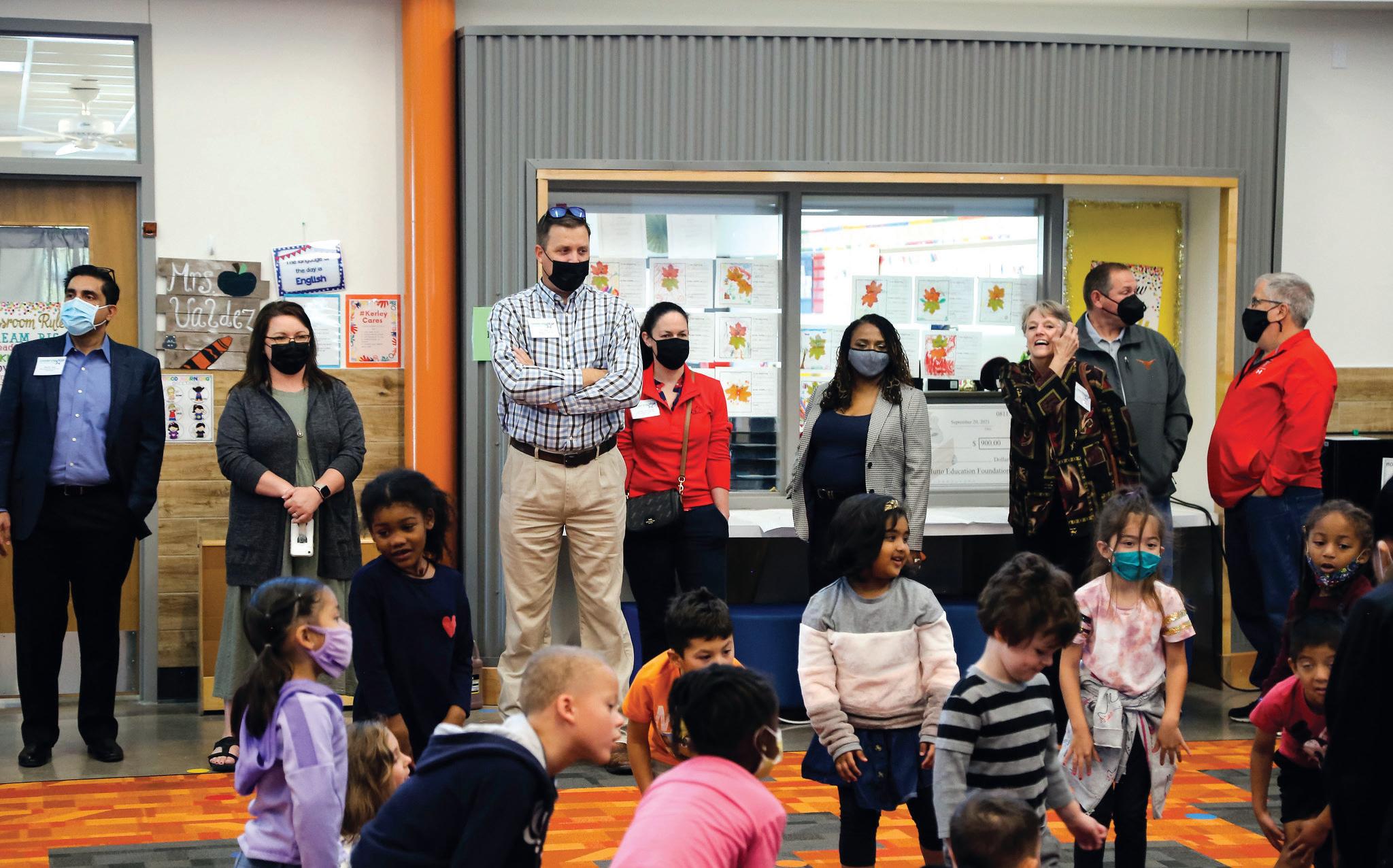
The November session began with the class engaged in deep learning about the history and current experience of Black Texans during visits to Huston-Tillotson University and the Bullock Texas State History Museum. At Huston-Tillotson University, trustees toured the campus and heard a presentation by the admissions team that highlighted the unique place of Historically Black Colleges and Universities (HBCUs) in the higher learning landscape. In particular, the small campus community is tightknit and makes sure that students are supported financially and academically at each step in their academic journey. At the Bullock Museum, trustees paid close attention to a special exhibit on Jim Crow laws in Texas and the long-term impacts they had on Black citizens in Texas.
Trustees also thoroughly enjoyed a comprehensive visit to Hutto ISD, where they learned about the district’s work in the areas of diversity and equity and how the district has adjusted to rapid growth in the area. The class got a firsthand look at some of the unique programs available in the district, such as dual-language instruction, and the new agricultural barn. The visit was topped off with a delicious, seasonal lunch served by the high school culinary program.
A focus on advocacy shone through during a presentation to the group by Grover S. Campbell, associate executive director of TASB Governmental Relations. He explained how TASB’s advocacy process is structured and encouraged all board members to become active in the advocacy process. He highlighted TASB’s Legislative Advocacy Game as a creative way for board members to engage with their community while advocating for public education. The group also heard from TASB Executive Director Dan Troxell, who empathized with board members about the difficulties of serving in this moment. He challenged the class to stay true to their vision and commitment to public education.
The true heart and soul of the LTASB program is the relationships participants build among each other and the learning
that comes from discussions throughout the program. Each trustee makes a presentation about their district, highlighting unique initiatives and speaking frankly about challenges. Trustees are also grouped into research teams, which focus on a topic they will research throughout the experience and make presentations on during the final session.
The November activities gave participants rich material for discussion and reflection. The LTASB class looked forward to another three days of camaraderie, learning, and advocacy in Corpus Christi in February.H
30 Texas Lone Star | March 2022 | texaslonestaronline.org
Jennifer Rodríguez, a Judson ISD trustee, is a member of the LTASB Class of 2022, whose members will meet five times before their graduation in July. Applications for the next LTASB class will open in May.
LTASB Class of 2022 visited Hutto ISD in November 2021 session.
Photo by TASB Media Services
The true heart and soul of the LTASB program is the relationships participants build among each other and the learning that comes from discussions throughout the program.
Raise Your Hand Texas Announces Inaugural Trustee Advocates Program Cohort
Raise Your Hand Texas announced last month that nine Texas public school districts will comprise the inaugural cohort of its Trustee Advocates Program.
“This initiative is welcome news for all of us who care about board development programs that provide locally elected trustees the tools to educate, engage, and advocate for public education,” said TASB Executive Director Dan Troxell, who praised Raise Your Hand Texas for its work to promote public education across the state.
“What’s especially encouraging is that more than two dozen school districts from across the state applied to be part of the inaugural cohort, which speaks to both the need and enthusiasm for this type of training,” he said.

From the 27 applicants, Raise Your Hand Texas selected nine through its application and interview process. “After a competitive selection process that
demonstrated considerable appetite and interest from across our state in building a meaningful advocacy program, we welcome this inaugural class of districts representing the diversity of our great state,” Dr. Libby Cohen, Raise Your Hand Texas’ director of advocacy and outreach, said in a news release. Districts include:
• Amarillo ISD


• Austin ISD
• DeKalb ISD

• Ector County ISD
• Gregory-Portland ISD

• Katy ISD
• Lake Worth ISD

• San Elizario ISD

• Tornillo ISD
The Board of Trustees and superintendent from each of the nine districts will take part in an initial onsite training session. Subsequent two-day sessions for the superintendent and up to three
school board members will be held in Austin. Grant funding will cover the costs of the program. Those who complete the course will earn the designation of Master Advocate.

“When I looked at the list of districts selected, I was especially pleased to see that we’ll have some leaders from TASB and affiliated entity boards taking part in this 18-month fellowship by virtue of their board service,” Troxell said. “I’m looking forward to hearing about their experience and watching how they put their training into practice on behalf of public education policy and advocacy.”
Those leaders include: TASB Director Yasmin Wagner of Austin ISD; TASB Director and TASB Risk Management Fund Trustee Steve Brown of Ector County ISD; The Local Government Purchasing Cooperative Board Trustee Carrie Gregory of Gregory-Portland ISD; and TASB Director Dawn Champagne of Katy ISD.H
texaslonestaronline.org | March 2022 | Texas Lone Star 31
TASB Administrator Receives Prestigious Award for Excellence in Leadership
Dubravka Romano, associate executive director for Risk Management Services at TASB, has been named recipient of the prestigious Award for Excellence in Leadership from the Association of Governmental Risk Pools (AGRiP).
Romano has served in her role with the TASB Risk Management Fund — one of the largest and oldest risk pools in the U.S. — since January 1988. Her transformative leadership and commitment to the important purpose of public entity pooling have allowed her to navigate and guide the Fund through several challenges and transform it into the successful entity it is today.

In response, Romano helped develop and implement a multi-year remediation strategy to gain reinsurance support. The success of the Fund today is a direct result of Romano’s insight and guidance.
“TASB is fortunate to have Dubravka at the helm of the Fund to provide leadership, experience, and excellent customer service to our membership,” said TASB Risk Management Fund Chair Ted Beard, who also serves as TASB’s president. “She is relentless in her commitment to serving Texas public school districts and other education entities across the state so that they’re prepared with proactive risk prevention and mitigation strategies. She is certainly deserving of this prestigious honor and we’re extremely proud of her and her work.”
Romano also transformed TASB’s four distinct property/casualty, employee benefits, workers’ compensation, and unemployment compensation pools with separate operations into a single multiline pool.
Throughout her career, Romano has been a staunch advocate for Texas school districts and their employees through TASB and its Fund. She’s also been a notable influence across the public entity pooling community. As a frequent speaker at AGRiP conferences and an active participant in a variety of pool gatherings, Romano takes time, energy, and care to share her knowledge and experiences with her pooling peers.
“We’re all indebted to Dubravka for her lifelong work in pooling,” said Jon Shull, AGRiP board president. “Her tireless efforts at TASB, the Fund, and beyond have deeply benefited our community.”
AGRiP is a multinational organization for public entity risk pools with over 200 members from the U.S., Canada, and Australia.
When Romano assumed her role as the Fund’s top administrator, the workers’ compensation program was struggling.
Consolidating the pools provided broader and more comprehensive coverage for members, financial leverage for various exposures, and a reduction of the Fund’s administrative costs. She moved claims in-house more than 25 years ago, increasing the responsiveness of the Fund with an ongoing dedication to ensuring excellent customer service and claims management. During her tenure, Romano has been a leader in service and coverage enhancements and operational improvements for the Fund.
“Few are more passionate, experienced, and credible than Dubravka Romano,” said industry colleague Amy Guilford, chief program administrator with the MASB-SEG Property/Casualty Pool. “She recognizes that the future of pooling is dependent upon the leaders of tomorrow, and her mentorship and commitment only strengthen and secure the future for all governmental risk pools.”
Established in 1974, the Fund is a multiline pool offering workers’ compensation, property, auto, liability, cyber, and unemployment compensation coverage that responds to risks faced by more than 1,000 public education members across
Alba-Golden ISD. Superintendent. Deadline: March 1
Medina Valley ISD. Superintendent. Deadline: March 2
Roma ISD. Superintendent. Deadline: March 22
32 Texas Lone Star | March 2022 | texaslonestaronline.org
Executive Search Services is currently accepting applications for the positions listed below:
information about vacancies or services provided by TASB’s Executive Search Services, call 800.580.8272, email executive.search@tasb.org, or visit
TASB’s
For
ess.tasb.org
Throughout her career, Romano has been a staunch advocate for Texas school districts and employees through TASB and its Fund.
Dubravka Romano
Photo by TASB Media Services
Texas. For more information about the Fund, visit tasbrmf.org. For more information about AGRiP, visit agrip.org H
Submit Your Nomination for Superintendent of the Year Award
School boards are encouraged to submit their nominations for the 2022 Superintendent of the Year (SOTY) award.
The deadline for 2022 applications to be submitted to the regional education service center (ESC) is April 22. To be eligible, superintendents must have served in their district for three years at the time the award is presented at the fall 2022 TASA | TASB Convention.
SOTY recipients exemplify strong leadership skills, dedication to strengthening public education, and commitment to community engagement. They also exhibit a strong and effective relationship with their board. The award has been presented annually since 1984.
The selection process begins in late spring with regional interviews that are conducted by each ESC. A regional winner is named in all ESC regions where a superintendent is nominated.
The State Selection Committee interviews the regional winners in August before selecting and announcing five finalists. The SOTY winner is presented with $5,000 for use by their district, and finalists receive $1,000. The award program is underwritten by Balfour, and winners receive a custom Balfour ring.
The 2021 SOTY winner was Dr. H.T. Sanchez, Plainview ISD.
See past winners and find more details on eligibility, nominations, and the process at tasb.org/soty.H
texaslonestaronline.org | March 2022 | Texas Lone Star 33
SUPERINTENDENT OF THE YEAR ● 2022 ● Follow us on Instagram @tasbphotos Find us on Facebook Texas Association of School Boards TASB Risk Management Fund TASB HR Services Follow us on Twitter @tasbnews @tasbrmf TASB Risk Management Fund @tasbhrs TASB HR Services @tasblegal TASB Legal Services
Honoring leadership, dedication, and commitment to public education
H-E-B Announces Finalists and Recognizes School Boards in Excellence in Education Awards
H-E-B announced in January that eight school districts and five early childhood facilities have been selected as finalists for the retailer’s 20th annual Excellence in Education Awards program. H-E-B is also recognizing five public school boards to highlight the importance of strong leadership at the board level.
Since the program’s inception, H-E-B has awarded more than $12 million in funding to benefit outstanding Texas public schools. This year, H-E-B will award a total of $82,500 to the finalists and school boards, who will go on to compete for even greater cash prizes at the statewide level. Each finalist in the district and early childhood categories, as well as the five recognized school boards, will receive $5,000; the three finalists in the small district category will receive $2,500.
To determine overall statewide winners, a panel of judges visits each district, early childhood facility and school board, tours campuses, and talks with administration, staff, parents, and community members.
Winners will be announced at the H-E-B Excellence in Education Awards ceremony on April 30 at the Fairmont Hotel in Austin. The winning large district will receive $100,000; the winning small district $50,000. An early childhood facility will receive $25,000. If selected, one or more school boards will receive up to a total of $25,000.

Forty teacher and principal finalists are being announced in February and March during a series of surprise visits to schools and classrooms across Texas.
The 2022 school district and early childhood finalists, as well as recognized school boards, are as follows:
LARGE SCHOOL DISTRICTS
United ISD — Laredo
McAllen ISD — McAllen
Pasadena ISD — Pasadena
Klein ISD — Klein
Wylie ISD — Wylie
SMALL SCHOOL DISTRICTS
Medina Valley — Castroville
Canutillo ISD — El Paso
Kerrville ISD — Kerrville
EARLY CHILDHOOD EDUCATION FACILITIES
Lone Star Early Childhood Center/ New Braunfels ISD — New Braunfels

Bryan’s House — Dallas
Melinda Webb School — Houston
Austin Achieve Public Schools — Austin
Small Steps Nurturing Center — Houston
SCHOOL BOARD FINALISTS
North East ISD — San Antonio
Alvin ISD — Alvin
Allen ISD — Allen
Frisco ISD — Frisco
McAllen ISD — McAllenH
34 Texas Lone Star | March 2022 | texaslonestaronline.org Advertise in Texas Lone Star! Let us help you reach more than 12,000 education leaders and decision makers across Texas. tasb.org/TexasLoneStar ads@tasb.org


texaslonestaronline.org | March 2022 | Texas Lone Star 35 Locating exemplary leaders and visionaries to take your district to the next level. The TASB Executive Search Services Difference: Hands-on, relationship-focused service Broad local and state knowledge Personalized and thorough search process Education industry specialist Satisfaction guaranteed tasb.org/ess executive.search@tasb.org 800.580.8272 “Education is the movement from darkness to light.”
Bloom
—Allan
26 Texas Schools Nominated as 2022 National Blue Ribbon Designees
The Texas Education Agency recently announced the nomination of 26 Texas public schools as 2022 National Blue Ribbon School designees.
Initiated by the U.S. Department of Education (USDE) in 1982, the National Blue Ribbon Schools program recognizes public and private elementary, middle, and high schools that have high student achievement and/or highlights where exemplary progress has been made in closing achievement gaps among student subpopulations. Since the program’s founding, 9,000 schools across the nation have received this prestigious designation.
In the Lone Star State, public schools are considered for nomination based on student performance on the first administration of the previous year’s STAAR assessments, as well as college and career data and graduation rates if applicable.
This year’s nominees highlight the diverse learning environments found across the state, with the inclusion of traditional elementary, middle, and high school campuses, along with magnet and early college high schools. These nominees also represent 12 of the state’s 20 Education Service Center regions, spanning from the Panhandle down to the Coastal Bend and from the Piney Woods of East Texas to the Plains of West Texas.
The nominated schools must now complete a rigorous application process conducted by the USDE. National award winners will be announced in September. Schools that receive the designation will be recognized at the National Blue

Ribbon Schools Awards Ceremony in Washington, D.C.
For more information on how Texas campuses are nominated each year, visit tea.texas.gov/texas-schools/accountability/blue-ribbon-schools
Texas nominees for 2022 National Blue Ribbon
Exemplary High-Performing Schools
Kerr High School
Alief ISD
East Elementary
Brownwood ISD
School for the Talented and Gifted
Dallas ISD
School of Science and Engineering
Dallas ISD
Devers Elementary
Devers ISD
Garden City Elementary
Glasscock County ISD
Grand Prairie Collegiate Institute
Grand Prairie ISD
Gruver Elementary
Gruver ISD
Gruver Junior High
Gruver ISD
Happy High School
Happy ISD
Early College High School at Midland College
Midland ISD
Nursery Elementary
Nursery ISD
Vega Elementary
Vega ISD
Exemplary Achievement-Gap-Closing Schools
Bynum School
Bynum ISD
Claude Schools
Claude ISD
DeKalb Elementary
DeKalb ISD
Terrell Elementary
Denison ISD
J. L. Everhart Magnet Elementary
Longview ISD
Muleshoe High School
Muleshoe ISD
Smyer Schools
Smyer ISD
Somerset Elementary
Somerset ISD
Sonora Secondary School
Sonora ISD
Springlake-Earth Elementary/ Middle School
Springlake-Earth ISD
Three Rivers Elementary
Three Rivers ISD
Valley Mills High School
Valley Mills ISD
Wink Elementary
Wink-Loving ISDH
36 Texas Lone Star | March 2022 | texaslonestaronline.org
Bulletin Board
TEA Announces Availability of School Report Cards
The 2020–21 School Report Cards (SRC) are now available on the Texas Education Agency (TEA) website.
The SRC combines accountability ratings, data from the Texas Academic Performance Reports (TAPR), and financial information to give a broad view of campus performance. Available for each campus in Texas, the SRC is intended specifically to inform parents and guardians about a school’s individual characteristics and its academic performance.
Due to COVID-19, campuses and districts received a label of Not Rated: Declared State of Disaster for the 2020–21 school year. Also, the commissioner of education waived Student Success Initiative requirements under Texas Education Code, Section 28.0211, and as such, this section was removed from the SRC.
All campuses that reported student enrollment on the TSDS PEIMS October 2020 snapshot will have an SRC and are required by law to distribute the SRC to parents and guardians. Campuses that opened in the 2021–22 school year will not have a 2020–21 SRC and are therefore not required to distribute a report.
Access report cards at http://tea.texas.gov/perfreport/src/index.html.
For information, contact the TEA Performance Reporting Division at 512.463.9704 or performance.reporting@tea.texas.gov
Former TASB Executive Director Receives PIE Award
Raise Your Hand Texas honored former TASB Executive Director James B. Crow in January by presenting him with their Partners in Education award.
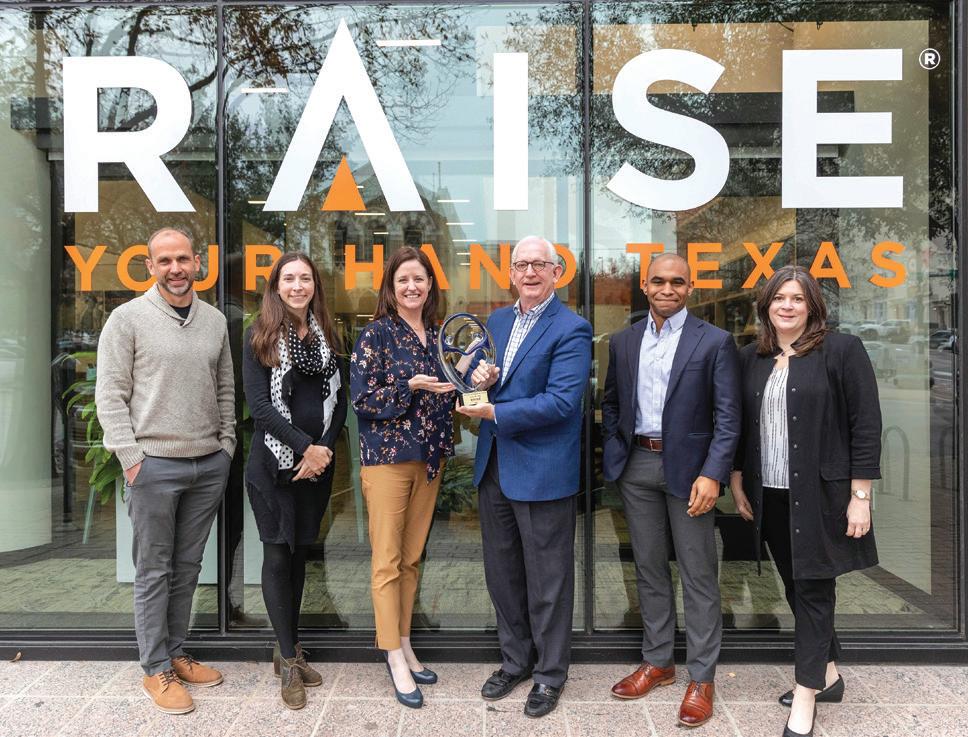
The organization made this statement at the time of the award: “With 40 years of service at the Texas Association of School Boards, we celebrate and honor the work of James B. Crow. His contributions to Texas public education are evident, and Raise Your Hand Texas is proud to have presented him our Partners in Education award to commemorate his service.”
Crow retired from TASB in August 2021.
Raise Your Hand Texas, a 501(c)(3) nonprofit, identifies and pilots promising ideas to improve public education and support the conditions and policies needed to scale proven approaches to benefit all Texas students.
Black School Board Members to Hold Education Summit
Registration is open for the 2022 Education Summit being held by the Texas Caucus of Black School Board Members (TCBSBM) March 10–12. The summit will feature sessions addressing the challenges and opportunities for Black public school students in the Lone Star State.
The theme of the event, being held at the Kalahari Resorts & Conventions Hotel in Round Rock, is “Building the New Educational Transformation Model During the Recovery.” It will include professional development and networking opportunities with educational and leadership experts from across the state and beyond. TASB is a partner in the 2022 Education Summit.
For more information about the 2022 Education Summit, please visit tcbsbm.net Registration is open to all school board trustees from across the state.
Celebrate School Libraries!
April is School Library Month. The American Association of School Librarians honors school librarians and school libraries throughout the month. School librarians will host activities to help their schools and local communities celebrate the essential role that strong school libraries play in transforming learning.
Learn more about School Library Month at ala.org
We want to recognize school board members’ extraordinary work in TLS! If you have received any awards or honors, please send your news and photos to tls@tasb.org.
texaslonestaronline.org | March 2022 | Texas Lone Star 37
RYHT Executive Director Michelle Smith presented James B. Crow with the PIE award in January. Also pictured are (from left) RYHT staff members Bob Popinski, Libby Cohen, Charles Gaines, and Anne Lasseigne Tiedt.
Photo courtesy of Raise Your Hand Texas
Finding Common Ground
Survey shows broad support for Texas teachers
by Dan Troxell
Dan Troxell
Editor's Note: For this issue, I am yielding my column space to TASB Executive Director Dan Troxell, who has an important message to share about Texas public education and schoolteachers. —
 Tiffany Dunne-Oldfield
I’ve spent a lot of time in recent days reflecting on my life’s work and one of my greatest passions — public education. My love of teaching, learning, and ensuring every student has the opportunity to grow and to reach their fullest potential has sustained me for more than 30 years — as an educator, principal, superintendent and, most recently, as executive director of the Texas Association of School Boards.
Over the years, I’ve spoken to hundreds of parents, teachers, school board members, and other elected officials. We could usually find common ground by focusing on the role of public education in bringing communities together to build a better future for our kids and our state.
Call me an idealist but I’m still hopeful, despite the contentious discourse we so often hear in the news. Most Texans understand and appreciate the importance of their local school district and the educators working hard to support their community’s students. Two recent events helped remind me that we can still agree on more than the headlines might suggest.
Teachers are the backbone of public education
First, the Charles Butt Foundation released the results of its annual survey on Texans’ attitudes toward public education. I would recommend everyone look at the key findings, but I want to highlight a takeaway that resonated deeply with me — namely, that Texans, and especially
public school parents, are broadly confident in our state’s teachers.
Second, when I attended the Texas Association of School Administrators (TASA) Midwinter Conference, the most pressing matter being discussed was teacher resignations and the lack of a strong pipeline of new teachers from colleges of education. Every district in the state and nation is struggling to recruit and retain educators.
What we can all agree on
That’s why it’s essential we start finding common ground. Amid all the contentious discourse on K-12 issues, no one should be surprised that many teachers are leaving the profession. Discussions on how to improve learning and instruction must start from a place where the work of educators is appreciated and respected, and where public education’s role in bringing people together to learn from one another is valued. Doing this will help our state become stronger and more unified. There are other areas where most of us can come together. I took some time to write them down. For me, the process of thinking about where we might agree rather than disagree is a reminder that we can bring some balance to divisive conversations. Here’s what I hold true, and I hope you do, too:
• Parental rights and responsibilities are essential for a strong public education system.
• Schools have the greatest potential to succeed when district leadership and locally elected school boards work together with parents and the community to improve student outcomes.
• Public school classrooms are the
best places for most Texas schoolage children to learn, grow, and become responsible citizens.
• The goal of equitable educational opportunities that lead to positive student outcomes — ensuring every student can reach their full potential — can be attained if the appropriate resources are provided to frontline educators and public schools.
• Local school governance — a longstanding tradition here in Texas — is the best approach to ensuring that publicly funded schools are responsive to parents and community members.
• Our Texas State Board of Education’s process for approving curriculum must continue to include community input — to ensure accountability to voters and parents.
• Progress has been made in ensuring that schools are welcoming and safe environments for all students. This must continue.
• Progress has been made in removing barriers to opportunities in Texas public schools. This must continue.
Most importantly, I believe in the potential of all Texas schoolchildren, especially when they have consistent, caring, and committed teachers in the classroom. Let’s all agree that nothing is more important to the future of our state, both economically and as a great place to live, than a strong public education system.
Over the next few weeks, I’ll be sharing out these truths on my Twitter account. Follow me @DanTroxellTASB
.H
38 Texas Lone Star | March 2022 | texaslonestaronline.org A Final Note
Dan Troxell is TASB executive director.
Looking for training?
The Online Learning Center (OLC) offers on-demand, high-quality board development courses available to meet your schedule.

Course options include:
• Top 10 Things to Know
◆ Minicourses for a quick overview of important topics such as school safety and human resources
• Understanding School Finance
• Child Abuse Prevention: What Trustees Need to Know about Sexual Abuse, Sex Trafficking, and Other Maltreatment of Children
These courses fulfill some of your continuing education credit requirements. Log in to the OLC using your myTASB credentials to have your credits automatically recorded.
Register at onlinelearning.tasb.org
Additional opportunities for convenient training
We deliver customized team building to meet your board’s unique need.

Popular topics include:
• Board Self-Assessment
• Evaluating and Improving Student Learning Outcomes (EISO/SB 1566)
• Understanding Governance Roles to Improve Decision-Making
texaslonestaronline.org | March 2022 | Texas Lone Star 39
For information on any of these offerings: 800.580.8272, ext. 2453 • board.dev@tasb.org tasb.org/board-dev
development opportunities designed to help you make better decisions to improve student success
Board
us about our customized team-building services!
Ask

NONPROFIT ORG US POSTAGE PAID AUSTIN TEXAS PERMIT NO 1422 Texas Association of School Boards P.O. Box 400 Austin, Texas 78767-0400 tasb.org/specialeducation DISCOVER THE POSSIBILITIES CONFERENCE APRIL 28–29 NOW A VIRTUAL EVENT