TASA’s mission is to promote, provide and develop leaders who create and sustain studentcentered schools and develop future-ready students.
We envision innovative, future-focused leaders for every public school student.
OFFICERS
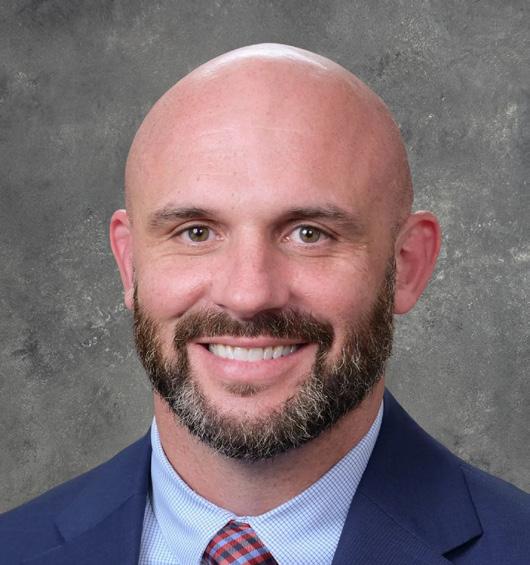
Chris Moran, President, San Angelo ISD
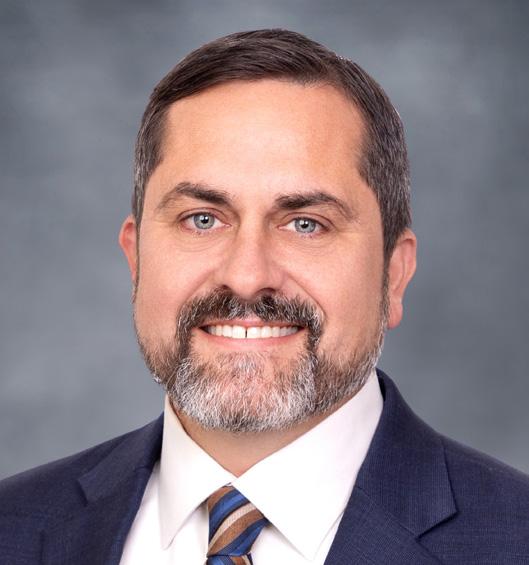
Roosevelt Nivens, President-Elect, Lamar CISD
Jeannie Meza-Chavez, Vice President, San Elizario ISD
Martha Salazar-Zamora, Past President, Tomball ISD
EXECUTIVE COMMITTEE
Alejos Salazar, Jr., Region 1, Lasara ISD
Sharon McKinney, Region 2, Port Aransas ISD
Robert O’Connor, Region 3, Edna ISD
Walter Jackson, Region 4, La Porte ISD
Stacey Brister, Region 5, Little Cypress-Mauriceville CISD
Darol Hail, Region 6, New Waverly ISD
Carnelius Gilder, Region 7, West Sabine ISD
Jason McCullough, Region 8, Mount Vernon ISD
Brad Owen, Region 9, Burkburnett ISD
John “JJ” Villarreal, Region 10, Rockwall ISD
DesMontes Stewart, Region 11, Gainesville ISD
Bobby Ott, Region 12, Temple ISD
Mark Estrada, Region 13, Lockhart ISD
Bryan Allen, Region 14, Clyde CISD
Aaron Hood, Region 15, Robert Lee ISD
Greg Brown, Region 16, Perryton ISD
Scott Harrell, Region 17, Sudan ISD
Jay McWilliams, Region 18, Big Spring ISD
Diana Sayavedra, Region 19, El Paso ISD
Burnie Roper, Region 20, Lackland ISD
AT-LARGE MEMBERS
Sanée Bell, Katy ISD
Tory Hill, Channelview ISD
Nicole Poenitzsch, Bellville ISD
Tiffany Spicer, Waco ISD
COMMITTEE CHAIRS
Lauralyn Arterbury, Advocacy
Dana Bashara, Professional Learning
Donny Lee, Member Engagement
Roland Hernandez, Legislative
EDITORIAL ADVISORY COMMITTEE
Jeannie Meza-Chavez, San Elizario ISD, Chair
Lauralyn Arterbury, New Braunfels ISD
Dana Bashara, Alamo Heights ISD
Roland Hernandez, Corpus Christi ISD
Donny Lee, Wichita Falls ISD
Michael O'Malley, Texas State University
TASA Professional Learning Calendar
For
Chris Moran
PRESIDENT’S MESSAGE
The success of our state, and indeed our nation, hinges our commitment to educate every child who walks through our doors.
CALLED TO SERVE
The Moran family genetics are undeniable. If you place a childhood photo of my son next to one of my father at the same age, you see a mirror image. The same eyes, the same tilt of the head, the same legacy. We’ve all felt that spark of recognition when looking through old family albums, marveled at how we pass our characteristics from one generation to the next. But in the Texas public school system, I have discovered a resemblance that goes even deeper.
The success of our state, and indeed our nation, hinges on our commitment to educate every child who walks through our doors. This isn’t just a modern sentiment but our foundational promise. In 1876, the Texas Constitution declared: “A general diffusion of knowledge being essential to the preservation of the liberties and rights of the people, it shall be the duty of the Legislature ... to establish and make suitable provision for ... an efficient system of public free schools.”
But for the educator of faith, this duty is more than a constitutional mandate. It is a divine commission. If we believe that humanity was created in the image of God, then our hallways are filled with image-bearers of the Almighty. These children were crafted by Him, for His purposes, and placed in our care. It is good to be reminded that children do not choose their parents. While I was blessed with a home rooted in love and service, many of our students face incredible challenges in the home.
As public school educators, we are called to serve all students, regardless of their lot in life. When we view a child not as a data point or a burden, but as a magnificent creation of God, our perspective shifts. We are no longer merely going to work. We are engaging in an act of worship. We are serving children who desperately need to be challenged, encouraged, and equipped to thrive in a world that hasn’t always been kind to them.
The image of Christ washing the feet of His disciples is the ultimate blueprint for the Texas educator. It is a reminder to pause and remember the “why” behind the “what.” Every time we kneel to help a student, we change the trajectory of a life.
By building a robust public school system, we honor the vision of Marsh and Wright in our state song:
God bless you Texas! And keep you brave and strong, That you may grow in power and worth, Thro'out the ages long.
The future of this glorious, wide empire doesn't just rest on policy or test scores — it rests on our willingness to kneel and serve. When we see the divine image in every student, we ensure that Texas remains “supremely blest.”
Above all, students first!
Chris Moran TASA President Superintendent, San Angelo ISD
Kevin Brown EXECUTIVE DIRECTOR’S VIEW
Leadership rooted in a shared common vision and direction, built on trust and buy-in and collaboration with teachers, are the keys to the kingdom.
THE TEXAS PROMISE AND A CULTURE OF TRUST
When I was a superintendent, I would often ask our central office leadership team, “When are we the problem? Where are we getting in the way of our teachers and schools doing excellent work? Do our teachers view us as a help or a hindrance to excellent classroom experiences?”
Sometimes the answers to these questions were humbling. Even with the best of intentions, we sometimes did things that got in the way. Often, though, the answers helped us find ways to remove barriers for our teachers and provide them with the supports they needed and wanted. So I think each district and state leader should ask these questions.
Another essential question everyone should ask is this: Can we achieve excellence in education in a culture of compliance? My strong opinion on this matter is “No, we cannot.” Don’t get me wrong; there is definitely a place for compliance. It’s important to comply with, if not exceed, the standards set for student safety as well as financial accountability and transparency. It’s also critical that we comply with legal and ethical standards.
However, when it comes to building a district team that focuses on delivering excellent, engaging instruction for children that inspires learning for life, I would argue that rather than embracing a culture of compliance, that we embrace a culture of trust, high expectations, collaboration, and yes, accountability that reflects the entirety of student experiences (not just those easy to measure on a standardized test).
Leadership rooted in a shared common vision and direction, built on trust and buy-in and collaboration with teachers, are the keys to the kingdom. You can’t mandate excellent classroom instruction by following a lesson plan “with fidelity” (which basically means reading a script) or even clicking on the correct response on a state test. Our state leaders and agencies can’t micromanage our way to excellence despite their best efforts to do so.
Our best and brightest teachers and school leaders, those we most want to attract and retain in the profession, those mostly likely to reach the aspirations of The Texas Promise, don’t want to be micromanaged by our state or local leaders. They want to feel like they are part of something bigger than themselves, not like a factory worker on an assembly line of state mandates.
They want to engage and inspire and equip our students for a very dynamic future. They want to see children as individuals, not data points, provide deep and rich educational experiences, and be thrilled by seeing the light bulb turn on when a child learns a new concept. They crave the space to be creative and innovative and trusted and supported.
With the publication of The Texas Promise, I am inspired by your collective desire to communicate what you stand for and your commitment to excellence for every child in Texas. Rather than limiting your vision for public education to the confines of the Texas A-F Accountability System, you have aspired to do far more for children than preparing them for state tests. You have committed to the entirety of the educational experience, creating innovative organizational cultures and supportive systems for engaging and rich experiences that inspire learning for life.
We are in an odd time in our state. All at once, we have decided to give state money through Education Savings Accounts (ESAs) to private schools that do not have to follow the same rules or regulations as public schools. This means ESAs don’t allow for any real kind of accountability or transparency to taxpayers.
Private schools can pick and choose who to serve, what to teach, and how to educate their students. Meanwhile, local public schools are overloaded with rules and regulations and incentives and bureaucracy like never before. The burden of over-regulation weighs down the system and causes frustration, disappointment and disillusionment for all who serve on the front lines of education. This disparity between systems is alarming and unsustainable.
Although we can’t control how the state funds or regulates our public schools, and we can’t avoid using precious resources on so many mandates, we can control what we can control. We can use the limited flexibilities we have to do more for our students. If we anchor our leadership in a more aspirational view of public education, if we expend as many of our resources as possible to developing ourselves as innovative leaders, learning from one another, and listening to those in our organizations, we can achieve excellence despite the many challenges we face.
That is the beauty of The Texas Promise. It gives us the shot in the arm, the common direction, the inspiration and aspiration to build schools and students that achieve excellence in spite of … everything. Thank you for taking up the call to lead in these challenging times, and may you find joy in anchoring your leadership in a culture of excellence.
Kevin Brown TASA Executive Director
TASA President-Elect Roosevelt Nivens Year named National Superintendent of the
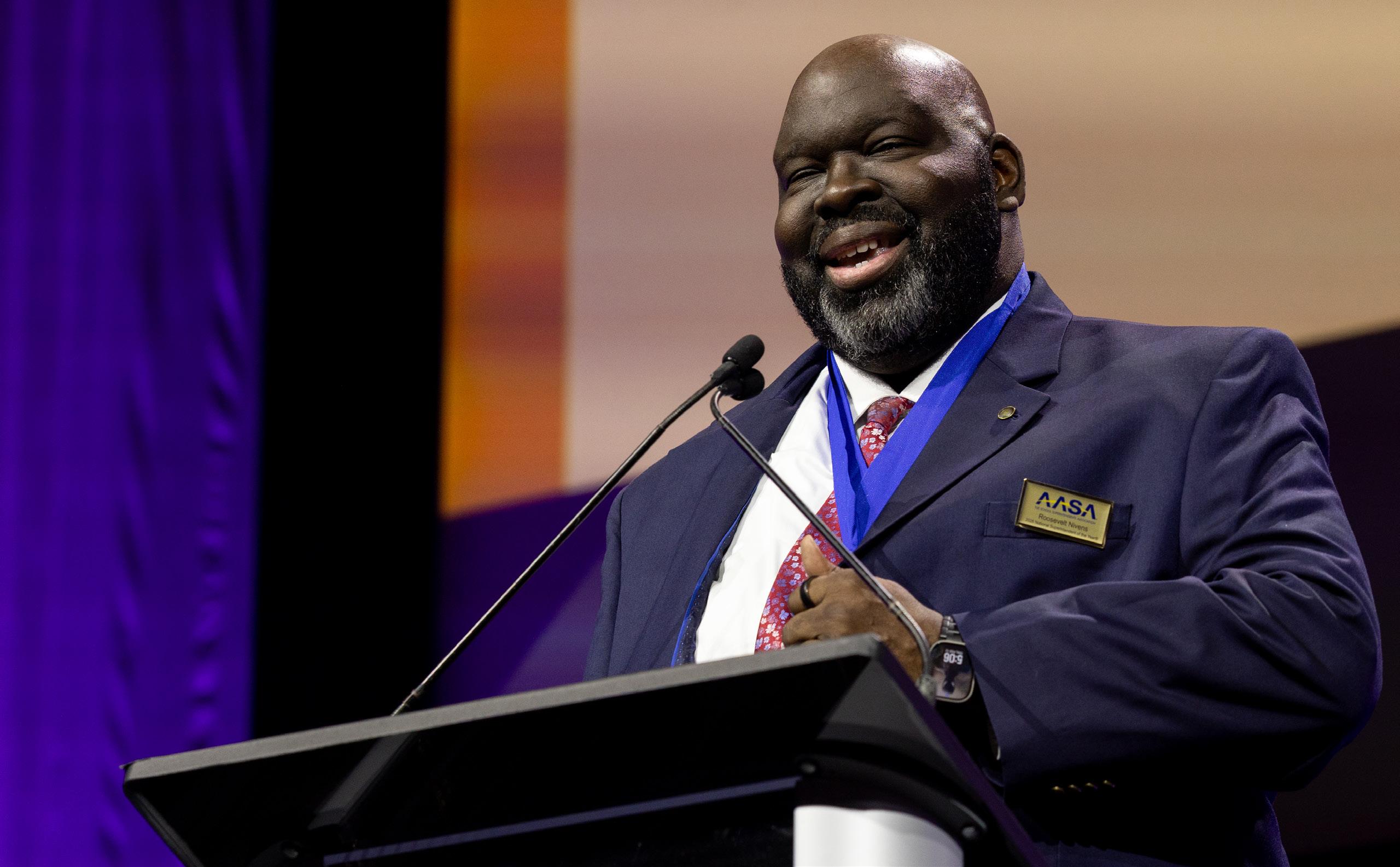
On Feb. 12, 2026, amid a flurry of virtual confetti, Dr. Roosevelt Nivens, superintendent of Lamar CISD, was named the 2026 National Superintendent of the Year during the AASA National Conference on Education in Nashville. He is only the second Texan ever to receive the honor, and the first to do so in 25 years.
For those who have watched Nivens lead, the announcement wasn’t a shock — it was a confirmation.
“It is no surprise to anyone who knows Dr. Nivens that he has received this tremendous honor,” says Kevin Brown, TASA executive director.“ He is a passionate public education champion who knows first-hand the life-changing impact of great teachers.”
To understand why a man who oversees the fastest growing school district in Texas (with currently about 49,000 students) still hands out his personal cellphone number to parents on cards he carries in his pocket, you have to look back to an elementary classroom in Langston, Oklahoma.
Photos by Angelea Yoder/AASA
The power of "speaking life"
Long before he was an awardwinning administrator, Nivens was a struggling student. He remembers the sting of standing in front of his fourthgrade class, fumbling through a reading assignment while his teacher and classmates laughed. By the sixth grade, his academic confidence was in the basement.
The trajectory of his life changed when he walked into Ms. McKinney’s classroom. She didn’t just teach him; she “spoke life” into him. She saw the potential that the laughter of others had obscured.
“She made me believe in myself and completely changed my life,” Nivens says. That experience became the bedrock of his educational philosophy, a mantra he now carries as the hashtag #SpeakingLifeToOurKids.
Upon receiving the award in Nashville, Nivens thanked his board and his wife Karla, along with his two children, Naomi and Roosevelt III. He then addressed his peers in the room, offering a glimpse into his own challenging background and extending hope to those who have also dedicated themselves to serving students.
“Continue to fight,” he told his fellow administrators. “This world is struggling. And every obstacle we face in public education gets bigger and bigger every single year. If you are in your purpose, you are unstoppable and you are undefeated. Keep working hard for kids, they need you. They need an adult to advocate for them and speak life into them.”
From the gridiron to the boardroom
Education was the family business. Nivens’ mother, Barbara, taught science for 43 years, and his father, Roosevelt Sr., was a teacher and coach for half a century. Despite this pedigree, Nivens took a detour through the world of professional sports. After earning a scholarship to Liberty University, he played as an offensive tackle for the Baltimore Stallions in the Canadian Football League.
A training camp injury ended his football career early, but the leadership skills he honed on the field translated seamlessly to the classroom. He began his 29-year career as a teacher and coach in Dallas ISD in 1995, eventually working his way through the administrative ranks in Lancaster ISD and serving as superintendent in Community ISD before taking the top position at Lamar CISD in 2021.
Managing hypergrowth
Leading Lamar CISD is no small task. Stretching across 385 square miles southwest of Houston, the district is adding roughly 2,000 new students every year. While many districts across the country are experiencing a decline in enrollment, Nivens is managing what he calls "hypergrowth."
Since 2021, Nivens has overseen the opening of 15 new schools, five of which opened their doors just last August. To keep up with this pace, he has led the passage of two massive infrastructure bonds totaling nearly $3.5 billion. His approach to this expansion is both high-tech and grounded. He reviews quarterly demographic reports featuring drone-flyover photos of the district to see exactly where new rooftops are appearing.
“We won’t grow like this forever,” Nivens says with char-
acteristic foresight. “Once the growth slows down, it’s our job as leaders to make sure the district is always set up for success in the future.”
Perhaps what makes Nivens stand out most in his field are his accessibility and humanity. He’s known to share his personal cellphone number with parents to help them navigate system hurdles. He often refers to his students as his “babies,” and on social media, he connects with the community by sharing videos of himself dancing, a move he says “breaks the ice.”
“Dancing helps people see that I’m a real person,” he says. “Plus, they’re surprised when a big guy like me has good feet.”
A legacy of service
As the 2026 National Superintendent of the Year, Nivens will receive a $10,000 scholarship in his name, to be awarded to a student at the high school from which he graduated. But
for Nivens, the real prize is the platform to advocate for the profession he loves. As the current president-elect of TASA, he is already looking toward his 2026-27 term, focusing on solving the teacher shortage and restoring respect to the calling of education.
"Teaching is a huge responsibility. There are students in our district whose lives literally depend on their classroom teacher and on their principal," Nivens says. "I want teachers to know how powerful and important they are."
Asked what it means to be named 2026 National Superintendent of the Year, Nivens responds that the honor is truly humbling.
“Words can’t express how honored I am,” he says. “This recognition will allow me to continue to try to speak life into educators as much as I can. We all know the job is hard. Our kids need us to stay strong for them. And so I want to keep
reminding people how valuable they are and how valuable this work is and how important it is to young people.”
As he stands at the pinnacle of his career, Nivens remains the same man who was once a struggling fourth grader. He is a leader who understands that while bonds and buildings are necessary, the true work of a superintendent is found in the “grace” given to a student and the “life” spoken into a community.
In the words of Lamar CISD Board President Jacci Hotzel, Nivens is the steady hand in the storm.
“One of the things he’ll tell me is, ‘Jacci, you’ve got to ride the bull longer than eight seconds.’”
In the fast-paced, high-stakes world of Texas public education, Roosevelt Nivens is doing much more than just staying on for the ride. He’s leading the way.
New Texas Superintendent Workforce Report
TASA has partnered with the Texas Education Leadership Lab at The University of Texas at Austin on a second annual report that provides a comprehensive statewide analysis of the Texas superintendent workforce. Drawing on the Statewide Longitudinal Data System (SLDS) and the National Longitudinal Superintendent Database (NLSD), the report examines trends from 2010-11 through 2024-25. Over the next few pages, review data, visualizations, and insights into how the superintendent workforce has evolved in Texas over the past 15 years. Download the report at https://bit.ly/2nd-Supt-Workforce-Report.
The Texas Superintendent Workforce 2.0
Stability & Turnover
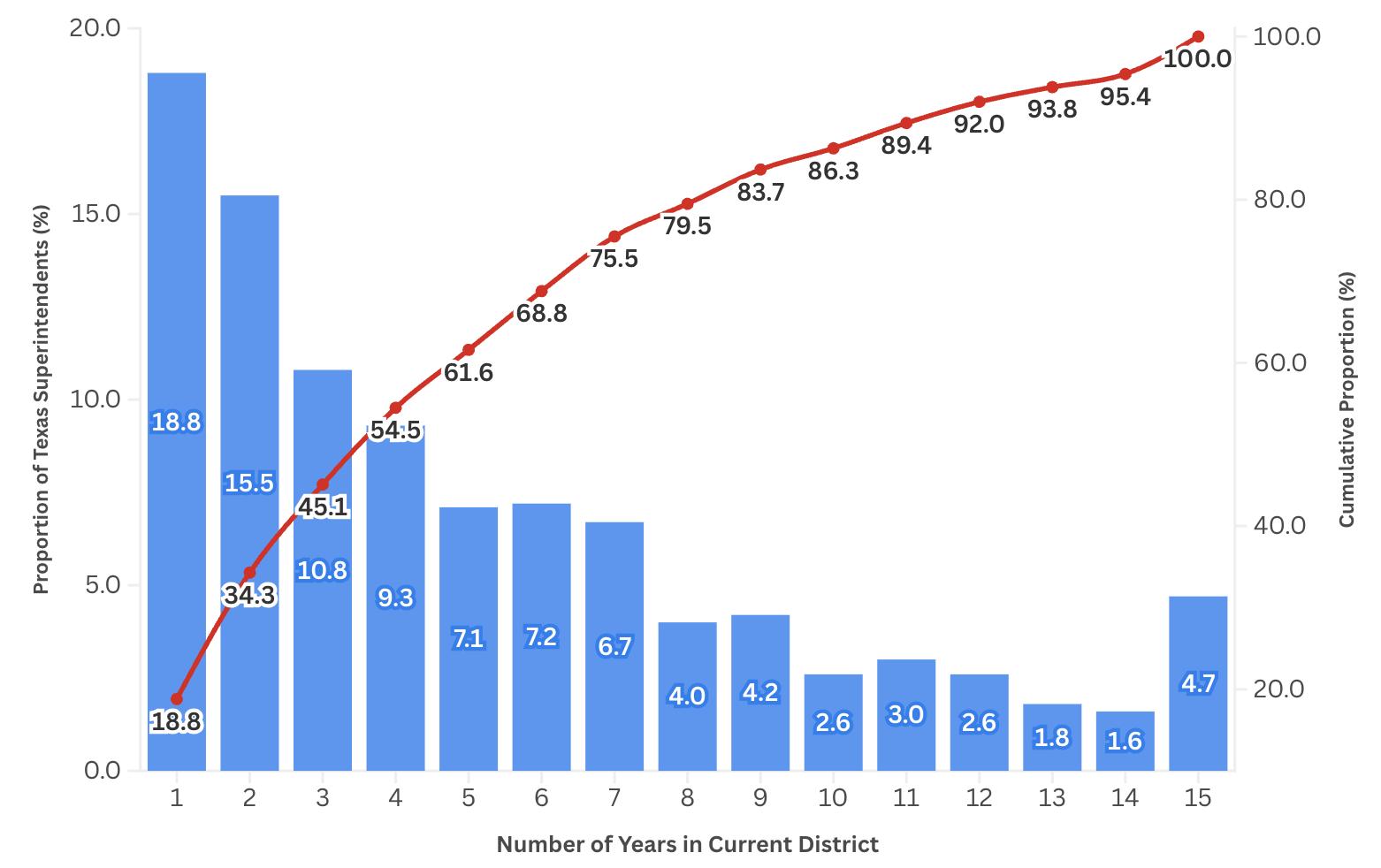
Figure 1: Superintendent Tenure in Current District
of Texas superintendents have been in their current district 3 or
years
Figure 2: Superintendent Turnover Rates Over Time, Overall and by Gender
"Texas
public schools need bold and courageous leadership now, more than ever. Strong superintendents will be instrumental in guiding communities through challenging times with the singular purpose of providing hope for all Texas children. Our future depends on it!"-
Dr. Chris Moran, Superintendent San Angelo ISD
The Texas Superintendent Workforce 2.0 Leadership among Females
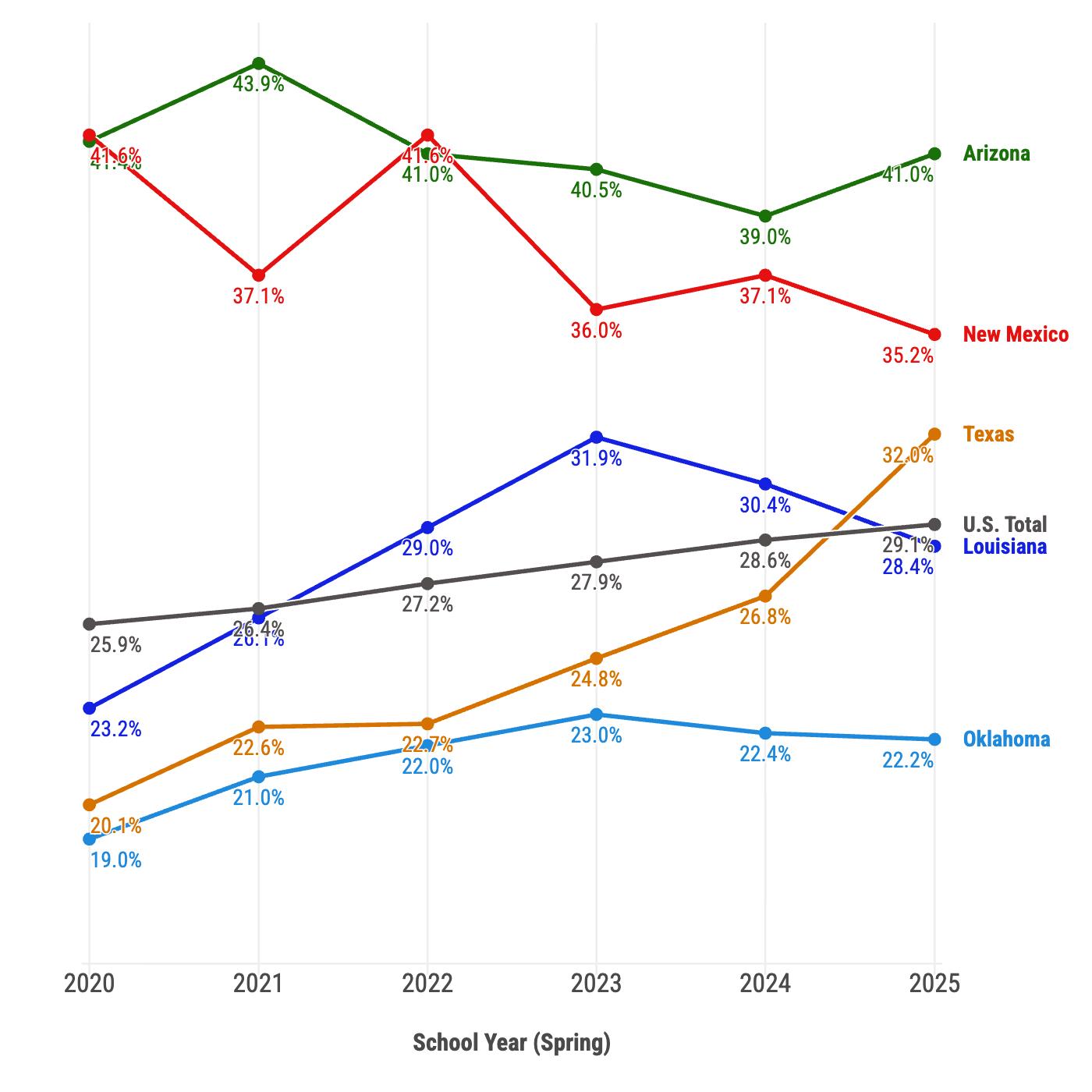
Figure 3: Percentage of Female Superintendents, by Year
The rate at which the gender gap is closing has increased nearly three-fold in recent years, from an average of ppc between 2020-2025. an average of School Year
+0.54 +1.27 percentage point change (ppc) between 2011-2019
At the current 15-year average rate of change, Texas could see gender parity in the superintendency in
Figure 4: Regional Comparison: Percentage of Female Superintendents, by Year
Figure 5: 2024-25 Median Superintendent Pay by District Size, by Gender
The largest gender pay gaps inn 2025-26 are in districts with less than 500 students and those with 5,000-14,999 students -- where female superintendents salaries are, on average, $10k-$17k less than their male counterparts.
In 2025-26, female superintendents, on average, made $10,106 more than they did in 2024-25; male superintendents made $6,886 more, on average
The Texas Superintendent Workforce 2.0
Figure
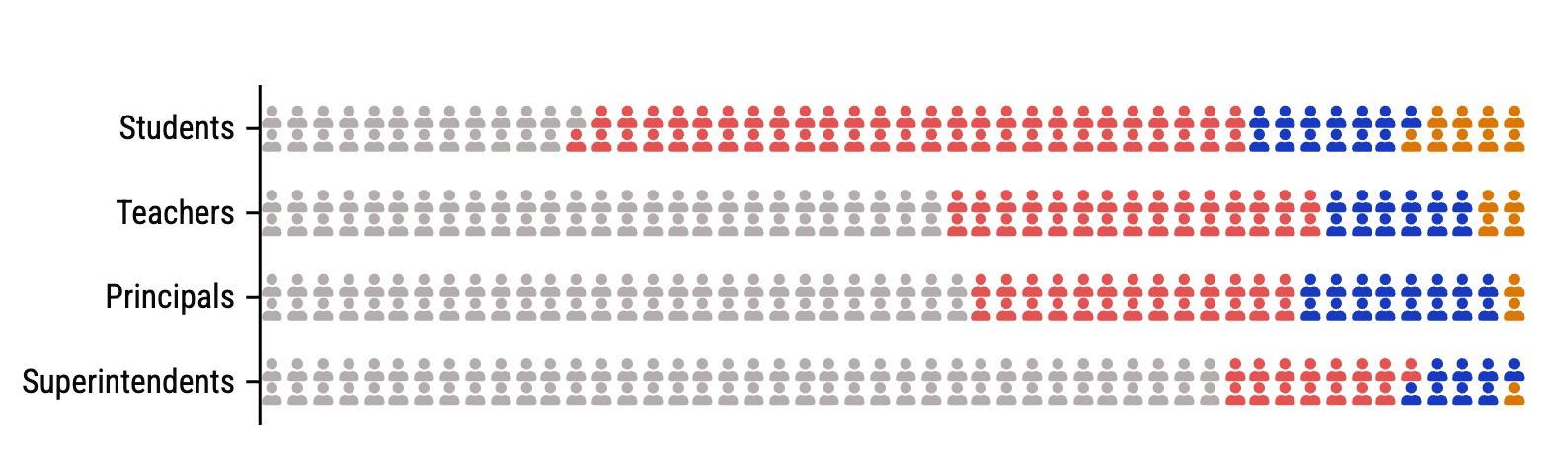
6: Racial/ethnic makeup of Texas K-12 public school students, teachers, principals, and superintendents, 2024-25 school year
7: Racial/ethnic makeup of Texas superintendents, by gender, 2024-25
Note: All other races include, American Indian/Alaskan Native, Asian, Hawaiian/Pacific Islander, and Multiracial
"I am encouraged by what this data shows about the strength and resilience of the superintendent role in Texas. The gains in representation and compensation tell me that intentional leadership and support are making a difference. This report reinforces my belief that when we invest in people and stability, the work gets better for kids and communities.” - Dr.
Roosevelt Nivens, Supt, Lamar CISD
Figure
N2 Learning and TASA are excited to partner to help districts transform the learning experiences for students, teachers, and administrators.
Our strategic initiatives in partnership with TASA are designed to create learning opportunities for school leaders across Texas. These initiatives cultivate purposeful networks of leaders engaged in meaningful work that advances the principles in the New Vision for Public Education
Scan the QR code or visit N2Learning.org for information, testimonials and registration for our institutes with TASA.
N2P
New 2 Principalship
#TXN2P
New principals will collaborate to share leadership strategies, explore innovative solutions, and build strong, accountable professional networks across diverse districts.
$2,500 * per principal
APL
10 SESSIONS
Ten, 90-minute online coaching sessions
Assistant Principal Leadership Academy
#TXAPL
APL equips assistant principals with the skills and inspiration to become transformative leaders, preparing them for principal roles through targeted learning and leadership development.
$1,000 * per assistant principal 6 SESSIONS
Six, four-hour sessions during the school year
*Pricing excludes travel expenses.
Executive Leadership Institute
#TXELI
ELI empowers district leaders to drive system-wide improvements in teaching and learning, offering strategic development sessions and year-round support from an Executive Coach.
$4,500 * per administrator
4 SESSIONS
Four, two-day sessions during the year rotating between Austin, Dallas, and Houston
Principals’ Institute
#TXPVI
The Principals’ Institute is a year-long professional development series that equips principals with the knowledge and skills to lead and sustain transformative change in public education.
$6,000 * per principal
6 SESSIONS
Six, two-day sessions during the year rotating between Austin, Dallas, and Houston
TLI
Teacher Leadership Institute
#TXTLI
The boundary-breaking Teacher Leadership Institute empowers teachers to collaborate, move beyond traditional accountability standards, and create innovative, student-engaging classrooms.
$800 * per teacher
6 SESSIONS
Six sessions during the year customized for individual or regional consortium of districts
Meet TASA’s Inspiring Leaders
Now more than ever, Texas public school staff members are looking to leaders to inspire them in their day-to-day work as we all cope with an ever-changing educational landscape. TASA’s “Inspiring Leaders” tagline is not just a reminder of TASA’s commitment to leadership development — it describes our members themselves. In this and future issues of INSIGHT, you’ll meet some of those Inspiring Leaders, and it’s our hope that they will guide you and invigorate you in the work that you do. To nominate a leader for inclusion, email drivers@texasschoolbusiness.com.
Dustin Bromley
For the past year, Dustin Bromley has held the superintendency in Splendora ISD, having previously served as deputy superintendent of administration and support services in La Porte ISD. Bromley was nominated as a TASA Inspiring Leader by Shane Conklin, deputy superintendent in Splendora, who says that since taking the role, Bromley has consistently embodied the district’s ongoing mission of cultivating exceptional people while advancing a new vision: Connected by purpose. Driven by excellence.
“What makes Dr. Bromley stand out is his ability to strengthen an already positive culture while simultaneously increasing academic accountability — a difficult balancing act that many leaders struggle to achieve,” Conklin says. “He has elevated expectations without diminishing morale, and he has done so by leading with both energy and enthusiasm and with clear purpose.”
Finding himself at home in Splendora, Bromley says what makes him most proud of the district is the sense of community that surrounds all SISD schools.
“Our students, teachers, staff, families, and community members all work together with a shared commitment to helping every child succeed,” Bromley says. “Our educators go above and beyond every day to support students not only academically, but also socially and emotionally, ensuring our kids graduate not just college or career ready, but truly life-ready.”
Bromley’s peers are inspired by his leadership methods, as he focuses on lifting up others in their careers to help strengthen the district.
“He is intentional about putting the right leaders in place, building capacity, and ensuring every campus has the support necessary to thrive,” Conklin says of Bromley. “He prioritizes developing leadership teams, strengthening systems, and aligning decision-making to the mission and vision so that progress is sustained long after any single initiative.”
To Bromley, mentorship is an important part of leadership.
“I believe mentoring other administrators is important because strong leadership builds strong schools. When we support and learn from one another, we grow as leaders and ultimately create better opportunities and outcomes for our students.”
Bromley also points to several TASA events and programs that have helped him build his leadership skills.
“Programs like the Future-Ready Superintendents Leadership Network, the Executive Leadership Institute [offered by N2 Learning], and opportunities through the TASA Midwinter Conference have been especially valuable in my growth as a leader,” he says. “They provide opportunities to collaborate with other superintendents, share ideas, and learn from leaders across Texas who are working through many of the same challenges.”
In a career that can often be challenging, Bromley is bolstered by his mentorship and association connections along with his own personal philosophy to keep going, no matter what.
“My philosophy is to always keep students at the center of every decision. The work can be challenging, but knowing we’re helping prepare our kids to be truly life ready makes it incredibly meaningful and keeps me motivated every day.”
It’s that passion and purpose that make Bromley an inspiring leader to those around him, and help create a positive and supportive culture in SISD.
“In an era when school leaders are frequently forced to choose between maintaining culture and enforcing accountability, Dr. Bromley demonstrates that you can do both — and do them well,” Conklin says. “His leadership has brought clarity, momentum, and unity across our district. He is helping us become even stronger, not by changing who we are, but by deepening our shared purpose and raising our collective commitment to excellence.”
Brandon Enos
Last summer, Brandon Enos was named superintendent of Gunter ISD, after having served as superintendent in Cushing ISD for nearly four years. He was nominated as a TASA Inspiring Leader by one of his peers, a fellow North Texas superintendent, Chris Mason of Quitman ISD.
“Dr. Brandon Enos is a dedicated advocate for public education, committed to empowering students and supporting educators,” Mason says. “Known for his growth mindset and forward-thinking leadership, he is completing his national superintendent certification while continuing to shape impactful change in the field.”
Enos says that mentoring and collaboration with other superintendents has helped him to grow as an administrator and that partnership is an important component of strengthening Texas school districts as a whole.
“Sharing experiences, learning from one another, and building supportive professional relationships ultimately benefits students, staff, and the broader community,” he says.
Upon coming to Gunter, Enos has been impressed by the way the entire school district community comes together to support staff and students.
“At Gunter ISD, we strive to create an environment where everyone feels valued, encouraged, and empowered to succeed, and the genuine care people show for one another is inspiring every day.”
Having seen Enos’ leadership in action, Mason describes him as “a true change agent,” who “champions staff and student empowerment, fostering environments where leadership is shared, voices are valued, and potential is unlocked at every level.”
Serving in district leadership is a tall order at times, and Enos maintains his drive and dedication by remembering the students he serves and focusing on what’s best for them.
“I believe in students until they learn to believe in themselves,” he says. “I lead through action rather than words, showing up consistently to support, guide, and make a difference in real ways that impact lives.”
HIGHER EDUCATION
Leading under digital pressure: safeguarding school integrity in an age of instant interpretation
by Rick Martinez, Jennifer T. Butcher, and Darlene Breaux
An online post goes live at 8:12 p.m.
By 8:20, comments are multiplying.
By 8:45, the narrative is forming.
By 9:00, the superintendent may be legally constrained from responding.
Digital platforms circulate partial narratives at a pace that outstrips the procedural, ethical, and legal processes required in responsible decision-making. While the ethical pace of leadership has not fundamentally changed, the tempo of public reaction has accelerated. As a result, leadership is increasingly experienced not through deliberation, process, or evidence, but through immediate digital interpretation.
Traditional leadership theories continue to offer enduring insight into values, communication, and ethical reasoning. However, many of these frameworks were developed in slower information environments, where public understanding formed through meetings, local media cycles, and sustained relationships. In contemporary settings, perception frequently forms before clarification is possible. Leadership behavior and perception are now unfolding on separate timelines, with judgment emerging before a responsible response can occur.
This article introduces Leadership Under Digital Pressure as a conceptual construct designed to clarify this evolving condition. Rather than centering individual communication style or personal resilience, Leadership Under Digital Pressure identifies the structural pressures created by digital acceleration and examines how they reshape leadership practice itself. By reframing modern leadership strain as a systemic timing divergence rather than a personal deficit, Leadership Under Digital Pressure invites reconsideration of how institutional integrity is protected in digitally mediated environments.
Conceptual approach and scope
Leadership Under Digital Pressure is presented as a conceptual construct rather than the outcome of a single empirical study. The framework emerges from an integrative reading of scholarship on superintendent decision-making (Holmqvist & Lantz Ekström, 2024), rural leadership strain (Davidson & Butcher, 2019; Menchaca & Estrada, 2021), emotional labor (Brotheridge & Lee, 2003), administrative victimization (Quade et al., 2019), and digital crisis communication (Noor et al., 2024).
Collectively, these strands of research describe emotional burden, symbolic responsibility, ethical restraint, and institutional communication in public leadership roles. What they do not consistently name is the accelerating force linking them: digital speed. This construct is informed by both scholarship and contemporary leadership contexts. It reflects observed patterns across superintendent
practice and leadership preparation, where interpretation frequently precedes verified communication. Leadership Under Digital Pressure offers language for a structural condition that is increasingly visible but insufficiently theorized. This article clarifies a rapidly evolving leadership context in K–12 schools and offers a framework to help leaders navigate it with confidence and integrity.
Speed of judgment
Leadership scholarship has examined values, decision-making, and public accountability for decades. It has also described emotional burden (Brotheridge & Lee, 2003), community alignment in leadership (Davidson & Butcher, 2019), leader mischaracterization under ethical restraint (Quade et al., 2019), and limited structural support in smaller systems (Menchaca & Estrada, 2021). However, most of this work was developed in environments where public interpretation unfolded more gradually.
What has changed is not the existence of leadership pressure, but the tempo of judgment. Digital environments compress the time available for context, verification, and due process. As a result, leaders are often judged by whether their response matches digital expectations for immediacy, emotional tone, and availability rather than by measured reasoning or ethical process. This shift creates a central gap in how leadership strains are understood. Researchers have studied what leaders must do; however, findings have not fully captured the conditions under which those actions are now interpreted.
Superintendent decision-making has always required careful judgement, balancing policy, ethics, community expectations, and long-term district stability. That has not changed, what has changed is the environment in which those decisions are observed and interpreted. Today, information moves quickly. Conversations form in
real time and in many situations, public reaction develops before districts have completed the verification, consultation, and procedural steps required for responsible leadership. The pace of interpretation has accelerated, even though the pace of due process has not.
Superintendents now operate in a landscape where the timelines for professional decision-making and public reaction often move at different speeds. By the time a district is prepared to communicate responsibly, the community may already be discussing the issue. This is not a matter of leadership quality. It reflects the structure of the current communication environment. Leaders have always managed confidentiality, demonstrated professional composure, and upheld ethical standards to maintain stability. Those responsibilities remain constant, what is different today is visibility. Digital platforms expand the audience and compress the timeline. Community members, stakeholders, and observers engage simultaneously, often before full information is available.
In small districts, leadership has always carried visibility and relational responsibility. Digital communication extends that visibility beyond local boundaries. As a result, institutions are often expected to respond at the speed of conversation, even when responsible leadership requires careful review, legal consultation, and alignment with policy. Decision timelines remain deliberate whereas public timelines move quickly. Recognizing that difference helps clarify the leadership conditions many superintendents are navigating.
Implications for practice and policy
Leadership preparation often emphasizes transparency and communication competence, but rarely prepares leaders for situations in which transparency is
restricted. Programs can strengthen readiness by directly addressing how leaders navigate public reaction cycles while maintaining confidentiality and due process. This is not media training. It is an ethical formation for modern conditions such as how to hold steady when the public demands answers that leaders cannot ethically provide. When the reaction moves faster than ethical disclosure, communication planning cannot rest on a single person. Districts can strengthen trust by distributing communication roles, clarifying who releases what information and when, and developing protocols aligned with legal constraints. Leaders should not be the only accountability anchor for reaction cycles that the institution cannot ethically control.
Legal silence protects individuals, but it does not protect leaders from suspicion when they are obligated to remain silent. Digital acceleration reveals a policy gap. leaders are penalized for confidentiality without a widely understood public mechanism that explains why limits exist. Policymakers and professional organizations could support due process by normalizing neutral institutional statements that acknowledge protected information and outline process timelines without disclosing private details. That approach does not reduce accountability. It protects accuracy and prevents institutions from trading integrity for immediacy.
Conclusion
Leadership Under Digital Pressure identifies a structural condition in which digital interpretation accelerates more rapidly than responsible leadership processes. In this environment, public reaction frequently precedes verification, ethical consultation, and due process. The resulting divergence between ethical timelines
and digital timelines alters the conditions under which leadership is evaluated.
Leadership scholarship has long examined the emotional demands of leadership, public perception, the symbolic responsibility carried by superintendents, and the evolution of crisis communication. These conversations have helped clarify what leaders manage each day. In recent years, however, another dynamic has become more visible, which is the role digital acceleration plays in shaping how these responsibilities unfold simultaneously.
Leadership Under Digital Pressure names that environment as a structural condition of modern leadership. Rather than viewing communication, perception, and professional composure as separate challenges, Leadership Under Digital Pressure recognizes them as interconnected realities influenced by the speed of visibility of contemporary communication. When information moves quickly and audiences expand instantly, leadership practice unfolds in a more compressed and transparent environment. Understanding the broader context allows superintendents to interpret their experiences with clarity. It shifts the focus from isolated incidents to the broader communication structure in which they occur. In doing so, leaders can respond with steadiness, maintain alignment with policy, due process, and continue guiding their districts with confidence.
By naming the timing divergence between responsible action and public interpretation, Leadership Under Digital Pressure reframes leadership strain as a contextual condition rather than an individual deficit. This distinction has implications for professional preparation, institutional communication design, and policy frameworks governing confidentiality and due process. As
leadership roles continue to operate within digitally networked environments, further empirical inquiry is needed to examine how communication structures, policy protections, and system-level design can better align ethical leadership practice with contemporary reaction conditions. Clarifying this alignment is central to sustaining institutional integrity in an era defined by instantaneous interpretation. n
References
Brotheridge, C. M., & Lee, R. T. (2003). Development and validation of the emotional labour scale. Journal of Occupational and Organizational Psychology, 76(3), 365–379. https://doi. org/10.1348/096317903769647229
Rick Martinez serves as Superintendent of Denver City ISD in West Texas and brings more than two decades of service in public education, including 14 years in campus and district administration. He is a doctoral candidate in the EdD in Educational Leadership program at Abilene Christian University Dallas. He contributes to scholarship on Leading Under Digital Pressure and the evolving responsibilities of superintendents in sustaining institutional integrity amid rapidly evolving digital communication.
Dr. Jennifer T. Butcher is the Vice Provost for Research, Writing and Special Initiatives at Abilene Christian University Dallas. She also teaches and serves on dissertation committees in the EdD in Educational Leadership and Organizational Leadership programs. Dr. Butcher was also a teacher and administrator in public schools for 25 years. She is a past president of the Texas Council of Professors of Educational Administration. Dr. Butcher currently serves on the TASA Higher Education Committee.
Dr. Darlene Breaux is an awardwinning leader, visionary, and advocate who has received numerous honors, including being named one of the Top 30 Influential Women in Houston and the recipient of the 2024 Presidential Lifetime Achievement Award from President Joseph R. Biden. Dr. Breaux holds a doctorate in organizational leadership. She currently serves as the Program Director for the EdD in Educational Leadership program at Abilene Christian University Dallas.
Davidson, S. L., & Butcher, J. (2019). Rural superintendents’ experiences with empowerment and alignment to vision in the application of principle-centered leadership. The Rural Educator, 40(1), 63–72. https://doi.org/10.35608/ruraled. v40i1.533
Holmqvist, M., & Lantz Ekström, M. (2024). A systematic review of research on educational superintendents. Cogent Education, 11(1). https://doi.org/10.1080/ 2331186X.2024.2307142
Menchaca, V., & Estrada, V. L. (2021). Exploring common challenges of superintendents in small rural school districts. Journal of Behavioral & Social Sciences, 8(3), 200–211.
Noor, N., Okhai, R., Jamal, T. B., Kapucu, N. K., Ge, Y. G., & Hasan, S. (2024). Social-media based crisis communication: Assessing the engagement of local agencies in Twitter during Hurricane Irma. International Journal of Information Management Data Insights, 4(2), 100236. https://doi.org/10.1016/j. jjimei.2024.100236
Quade, K., Beaver, A. K., Fry, L., Bulmini, D., & Miller, E. (2019). Being thrown under the bus and rising above the fray: A qualitative exploration of victimization and self-preservation in postsecondary administration. Journal of Instructional Research, 8(1), 92–98. https://doi. org/10.9743/JIR.2019.1.9
A course like AP Business with Personal Finance is not only going to help bridge the skills gap in the labor market but will also help students really understand their personal impact on our economy.
Build Financially Smart, Business-Savvy Leaders
Explore the new career-connected AP® course that helps students understand business and make confident financial decisions: AP Business with Personal Finance.
Complements existing CTE Programs of Study or can be offered as a standalone course
Engages students with real-world financial scenarios
Helps students earn college credit and an employer-endorsed credential
Learn more about AP Business with Personal Finance. cb.org/ap-business-pf
Grassroots greatness: how public schools build loyalty through modern PR
by Jennifer Garza
In today’s fast-paced, hyper-connected world, public schools can no longer rely on a single communication channel to engage their communities. As public school advocates, we must embrace a multilayered approach that blends traditional visibility with authentic, grassroots storytelling to win hearts and minds; and ultimately, build lasting public school loyalty.
It starts with meeting people where they are. For some, that’s the morning commute past a schoolbranded billboard. For others, it’s scrolling through Instagram, Facebook, or even TikTok, where students and alumni proudly showcase their school spirit. A successful communications strategy isn’t about choosing one platform over another: It’s about creating a coordinated and consistent presence across all of them. Hence, meeting people where they are.
At Hidalgo ISD, we’ve seen how pairing traditional media with modern digital tactics amplifies our message. Billboard campaigns build broad visibility, while short-form videos on social media give our students, parents, and alumni a platform to tell their stories in their own words. This happens across school districts all over the state, when a proud alum goes viral for their success, or a parent shares a heartfelt post about their child’s first day of school, it resonates far beyond the reach of any official statement.
But technology alone doesn’t build trust, people do.
That’s where grassroots efforts shine. Parent ambassadors, alumni advocates, and student voices are among our most powerful marketing tools. These individuals bring credibility, authenticity, and heart to our message. When a community member shares a positive experience they had at our school district, it carries more weight than any flyer or social media ad ever could.
One of our most effective initiatives has been cultivating parent and student ambassadors. These are individuals who naturally share their positive school experiences in the community, online, and at events. PR professionals support them with talking points, visuals, and the confidence needed to represent our district. However, it’s their words that are their own, and that’s what makes them effective; it makes them stand out.
Alumni success stories also help paint a picture of what’s possible in our schools. Whether it’s a graduate starting a small business, attending a top university, or, as in our case, a former student joining a nationally recognized music group, their achievements inspire current students and reassure families that they’ve made the right choice by staying with public schools.
At the end of the day, real loyalty isn’t built through flashy slogans or polished ads, it’s built through people. The parents, students, teachers, and alumni who believe in what we do, who share their experiences, and who remind others why our schools matter; that’s where real magic happens. Our job is to lift their voices, to tell their stories, and to use every tool we have in social media, videos, and conversations. This reminds our community that public schools are worth believing in because when we do that, we’re not just promoting schools, we’re building pride, trust, and a stronger future for all of us.
Sharing these types of values, student experiences and success stories in a strategic and creative way can help districts tell the whole story of public education. n
Jennifer Garza is chief public relations officer for Hidalgo ISD and TSPRA regional vice president, Gulf Coast Region.
TECH TAKE
AI: TRAIGA, FEDs, NIST & ISDs
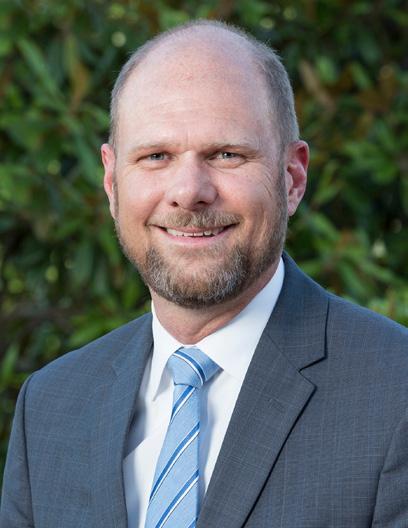
by Steve Barnwell and Kim Bowlin
The Texas Responsible Artificial Intelligence Governance Act (TRAIGA) took effect on Jan. 1, 2026, placing Texas among the first states to adopt a comprehensive AI policy. Texas Local Education Agencies (LEAs), including local school districts, must now meet new compliance requirements that also align with best practices in voluntary federal frameworks such as NIST’s AI Risk Management Framework (AI RMF). This article examines the firm boundaries for school districts in terms of adherence to state law and how those steps can both assist and measure risk management actions. Understanding how these pieces fit together is essential for district technology leaders as they navigate responsible AI adoption.
Defining TRAIGA
Texas law applies TRAIGA to AI developers, organizations that deploy AI tools, and governmental entities. Local public school districts, acting as branches of local government, are explicitly covered by this legislation (Section 552.001). Compliance begins with disclosure. A covered organization that deploys an AI system intended to interact with consumers must disclose that the person is interacting with an AI system. This disclosure must occur before any AI interaction. For school districts, both students and parents are included in the legislative definition of consumers.
In addition to disclosing a deployed AI interaction tool, TRAIGA requires explicit clarity in the language used, visually conspicuous notices, and that this information be relayed through a new webpage hyperlinked from the disclosure statement. All chatbots, virtual assistants, and automated systems that schools use to interact with students, parents, staff, or the community require this clear disclosure, even if the tool is obviously AI-driven to a reasonable person.
Continuing with compliance requirements beyond disclosure, Texas has also defined some parameters for prohibited and inappropriate uses of AI. The law limits the misuse of AI for social scoring, discrimination, or invasive biometric identification. This could apply to AI-driven discipline tools, predictive analytics tools, and surveillance systems in school settings. These protections could indirectly strengthen student civil liberties and require districts to update data practices. Because the law imposes civil penalties requiring certain disclosures, school districts will likely need to revise contract language to ensure vendors comply with state AI regulations.
Additionally, districts will need to develop internal policies to evaluate AI risk and privacy implications. Tracking and reporting systems for the AI tools used will also be required. The TRAIGA bill preempts local AI regulations, meaning districts cannot adopt their own separate AI regulatory frameworks that conflict with state law.
Practical implications for school district leaders include auditing current and proposed AI tools. Leaders should work to identify AI systems used in curriculum delivery, scheduling, evaluation, predictive modeling, or student services. District leaders should begin to update their privacy and data governance policies. They should ensure alignment with the law’s definition and protections, especially regarding biometric data and AI disclosures. Districts should train staff and procurement teams so they understand what qualifies as AI under the law, compliance requirements, and risk management expectations. Finally, districts should review and revise vendor contracts to include certification of AI compliance, data protection commitments, and liability clauses related to AI misuse.
Federal involvement
In addition to keeping apprised of state AI laws, educational leaders need to be aware of current developments at the federal level. The Executive Order (EO) 14179, “Ensuring a National Policy Framework for Artificial Intelligence” (11 December 2025) directs the federal government to create a unified national approach to AI governance to sustain and enhance U.S. leadership in AI technologies. Key to this EO, the Attorney General must establish a task force to identify and legally challenge state AI laws that are inconsistent with federal policy. Additionally, there is potential for federal funding (such as broadband funds) to be conditioned on states' AI regulatory choices. Furthermore, the Federal Communications Commission (FCC) and Federal Trade Commission (FTC) are directed to develop federal policies that may preempt state laws, especially those that require alterations to AI model outputs or impose specific reporting mandates.
As federal agencies work to craft policy and legislative recommendations, Texas education leaders have an opening to engage through comment periods, advocacy with the Texas Education Agency (TEA), and collaboration with national education organizations to ensure that K-12 interests are reflected. Our voice is critical around student privacy, transparency, equity, and safety safeguards. Texas school leaders will need to monitor federal agency outputs (FCC, FTC, Commerce) as they interpret and implement the EO. Districts may need to update local AI governance policies to align with emerging national standards. Districts should ensure contracts are flexible and address both state and federal compliance obligations. Educational leaders should note that impact litigation could reshape current policy.
NIST
The National Institute of Standards and Technology (NIST 2024) released its AI Risk Management Framework (AI RMF) on Jan. 26, 2023. Its purpose is to provide a voluntary, consensus-driven framework for managing risks in AI systems. For Texas K-12 Technology leaders, the AI RMF offers a practical governance model built around four core functions: Govern, Map, Measure, and Manage. This framework is particularly relevant in schools as we see AI-powered tutoring systems, learning analytics and early warning systems, automated grading and feedback tools, chatbots and generative AI platforms, behavioral or safety monitoring systems, and AI-enabled cybersecurity tools. Because AI systems are influenced by human behavior and context, risks may emerge from how systems are used. This is relevant for schools as students are minors, data sensitivity is high, equity considerations are critical, and public trust is essential.
The AI RMF emphasizes that governance must be infused throughout the AI lifecycle. Strong executive leadership is critical, given the risk culture that spans the entire organization. Texas school districts should establish an AI governance committee composed of all stakeholders (Technology, Curriculum, Legal, HR, Special Education, Equity, Communications). Districts are implored to create board-approved AI policy guidance. Each district will need to define its AI risk tolerance, document the AI systems in use, and clarify ownership of AI decisions.
The second function, Map, identifies context, risk, and potential impacts before deploying any AI tool. School districts are strongly encouraged to review tools and make informed “go/no-go” decisions before procurement. Districts should
identify the intended purpose and the educational value they seek to achieve. Potential benefits and risks should be documented. Unintended uses should be considered. Additionally, districts should evaluate the impacts on vulnerable populations.
The third function, Measure, evaluates the AI system's performance and impacts. This requires both quantitative and qualitative review. School districts should validate data accuracy and conduct bias-impact reviews. AI systems should perform accurately and consistently. Districts should document privacy safeguards and are encouraged to use the Texas Data Privacy Agreement (NDPA). Even after purchasing and deploying an AI tool, districts should continue to monitor performance and establish a process for incident reporting. Districts are encouraged to use independent reviews of AI tools (e.g., internal audit, external consultants, or cross-functional teams) to strengthen oversight of the evaluation.
The fourth function, Manage, is continuous. This function prioritizes and acts on risks. School districts should prioritize high-impact systems, such as discipline, grading, and safety. Each district needs a mitigation strategy and should document residual risk with its AI tools. District leaders should be prepared to pause or sunset high-risk tools when necessary. Technology staff should provide regular updates to district leadership and boards. The AI risk management should integrate with the district’s enterprise risk, cybersecurity, and privacy programs.
Artificial Intelligence is a fantastic tool with unique benefits and risks. AI cannot be ignored. As AI maturity grows, school staff, parents, and customers will demand its benefits. Staff will use AI tools regardless of whether the organization has a strategy, which entails associated risks.
ISDs
In light of the federal executive order, state laws, and the benefits and risks of AI, there are several implications for Texas school district leaders. Districts will need to align local AI policies with the emerging federal AI frameworks as the executive order drives consistency in how AI is adopted and governed across the United States. This could benefit districts by reducing legal ambiguity when adopting AI technologies. Federal emphasis on data protection and secure AI deployment may require districts to strengthen data governance, with a focus on how student data is used, stored, and shared with AI systems. As AI becomes a federal priority, Texas districts may be able to secure new funding opportunities and resources for AI implementation. However, that funding will require compliance with the policy requirements tied to it.
Next, there are state law considerations. Because the executive order encourages minimizing state barriers to AI policy, Texas districts will need to review state and local policies to ensure they do not conflict with federal guidance. This is especially key to data privacy, student safety, and equitable access. The order promotes principled, transparent, and accountable use of AI. As such, the district will face increased expectations around ethical AI use, ensuring that AI tools are fair, explainable, and free of bias. This will be particularly important with studentfacing applications.
The authors recommend the following best practices for Texas K-12 districts: First, districts should establish a clear AI governance policy. Each district should establish an AI oversight committee that includes administrators, educators, technology staff, and legal advisors. Districts should develop policies that clearly define acceptable AI use, risk levels, and review processes for new tools. Second,
districts should prioritize student privacy and safety. District leaders should ensure that AI tools comply with the Family Educational Rights and Privacy Act (FERPA) and state privacy laws. Districts should review contracts to confirm that student data is protected and not shared without consent. Third, districts should thoroughly review products before purchasing. AI tools should be evaluated for bias and fairness prior to adoption. Additionally, districts should monitor outcomes to ensure equitable impacts across all student populations.
The authors strongly recommend that professional learning be provided for staff. Staff should be trained on how AI tools work, how to interpret AI outputs, and ethical and staff use in instructional and administrative settings. Additionally, the authors recommend creating a culture of data literacy. Capacity should be built across the district so that staff understand the data driving AI systems, including their limitations and risks.
Districts should maintain transparency with stakeholders. Educational leaders should communicate AI use policies to families and the community. Opt-out options or safeguards should be offered when appropriate.
Lastly, educational leaders need to stay informed about federal and state AI guidance. The Texas Responsible Artificial Intelligence Governance Act (TRAIGA) has imposed clear legal obligations on Texas school districts, which became effective on January 1, 2026. HB 149 (also known as TRAIGA) establishes firm guardrails that range from the disclosure of AI interactions with students to prohibitions on social scoring, discriminatory practices, and specific biometric uses. In parallel, federal actions and the national AI policy will evolve. Federal and state laws, coupled with the NIST AI Risk Management Framework (AI RMF), which outlines the core functions of Govern, Map, Measure, and Manage, district leaders can develop a practical roadmap for responsible AI adoption in the K-12 education space.
Texas school leaders need to act now. Leaders must be aware of all AI systems in use in their districts, ensure required disclosures are in place, update vendor contracts to comply with TRAIGA and federal policy, and establish a crossfunctional AI governance committee. Leaders should align local practices with NIST’s AI RMF to strengthen data privacy protections and implement ongoing monitoring and staff training. Additionally, leaders are urged to engage through
TEA, professional associations, and federal comment opportunities to ensure that the K-12 voice is heard and helps shape emerging state and national AI policy. Decisions made today will define compliance, public trust, student protections, and the responsible future of AI in Texas schools. n
Steve Barnwell is director of technology in Schertz-Cibolo Universal City ISD.
Kim Bowlin is assistant director of Technology Support Service/Purchasing in Cypress-Fairbanks ISD.
References
National Institute of Standards and Technology. (2024). NIST artificial intelligence risk management framework (AI RMF 1.0) (NIST.AI.100-1). U.S. Department of Commerce. https:// nvlpubs.nist.gov/nistpubs/ai/NIST.AI.100-1.pdf
Texas Legislature. (2025). House Bill 149, 89th Legislature, Regular Session. https://capitol.texas.gov/tlodocs/89R/billtext/pdf/HB00149F.pdf
The White House. (2025, December 11). Eliminating state law obstruction of national artificial intelligence policy. https://www.whitehouse.gov/presidential-actions/2025/12/ eliminating-state-law-obstruction-of-national-artificialintelligence-policy/
LEADERSHIP PERSPECTIVE
What the Promise asks of us
by Quintin Shepherd
Vision documents are often read quickly and referenced occasionally. They are quoted in presentations, printed in reports, and framed in boardrooms. But the most meaningful visions are not merely read. They are received.
The Texas Promise can be read for what it says. It outlines aspirations for excellence, profound learning, meaningful accountability, safety, and partnership. Yet the more pressing question for leaders is not what it says, but what it asks of us.
We are leading in a time defined by turbulence. Legislative shifts alter expectations. Political narratives fragment public discourse. Fiscal compression forces difficult choices. Operational urgency fills calendars. In such an environment, urgency can masquerade as importance. But leadership is not measured by how quickly we respond to turbulence. It is measured by whether we remain oriented amid it.
Orientation determines trajectory. Activity does not.
It is possible to be extraordinarily busy and slowly lose direction. Meetings, memos, and compliance reports can create the illusion of motion while eroding coherence. The Texas Promise invites leaders to resist that drift. It calls us back to orientation.
If the Promise articulates a vision for cultivating excellence, designing profound learning, broadening accountability, and strengthening partnerships, then our responsibility is not simply to reference those aspirations. Our responsibility and frankly, our charge, are to filter our decisions through them.
At its best, vision becomes a decision filter.
It clarifies what we prioritize and postpone.
It sharpens what we defend and release.
It exposes misalignment and demands coherence.
In moments of pressure, the temptation is to narrow our field of vision. We reach for what is measurable, actionable, defensible. Yet the Promise widens the lens. It asks whether our decisions align with the kind of system we claim to value. It asks whether we are reinforcing compliance or cultivating excellence. Whether we are multiplying activity or deepening learning. Whether our definitions of accountability reflect human growth or merely institutional reporting.
These are not operational questions; they are orientation questions.
Activity can satisfy urgency. Orientation safeguards purpose.
The Texas Promise does not function as a checklist. It functions as a compass. It does not prescribe uniform implementation. It calls for disciplined alignment. It does not remove complexity. It requires steadiness within it.
This steadiness is not passive. It demands clarity and courage. As Texas education leaders, we must hold long term purpose steady while navigating short term volatility. We must communicate vision without ignoring reality. We must make tradeoffs without surrendering aspiration.
Strategically, this means asking different questions at decision points. Not only “Can we do this?” or “How quickly?” but “Does this move us closer to the kind of system the Promise envisions?” Not only “What will this solve?” but “What will this shape?”
As education leaders, we know that orientation influences architecture. Architecture shapes experience. Experience determines outcomes. And a well-executed strategy creates culture.
If we accept the Promise as a shared declaration of what public education in Texas ought to be, then our collective leadership becomes the bridge between aspiration and architecture. Local systems, structures, and cultures will either embody the Promise or contradict it.
The invitation to us is not to implement more. It is to become more deliberate.
In the next few issues of INSIGHT, colleagues across Texas will use this “Leadership Perspective” space to explore how this orientation influences organizational design, learning culture, accountability, and civic partnership. Each dimension reflects a different expression of what the Promise asks of us as leaders.
Ultimately, the Promise declares who we aspire to be for students and communities. Whether that aspiration becomes lived reality depends less on what is written and more on how we lead at the local level.
The Texas Promise will not be implemented in a single initiative. It will be embodied in a thousand decisions.
Practically speaking, you will finish reading this article and return to your calendar. An email will require a response. A meeting will require direction. A conversation will demand clarity. In the next few minutes, orientation will either guide your choice or yield to urgency.
That is where the Promise lives. Not in publication, but in practice. Not in next year’s plan, but in today’s decision. The question is not whether we agree with the Promise. It is whether we are willing to let it shape what we do next. n
Dr. Quintin Shepherd is the superintendent of Pflugerville ISD. He works as an adjunct professor at University of Houston-Victoria and has served as superintendent for the past 19 years in three states.
Create custom booklists for your district or school with Scholastic. Our experts can identify gaps in your libraries, correlate titles to your academic standards, and recommend books to enhance your core literacy program and drive results. With a massive catalog of student favorites, we can build classroom libraries that are just right for your curriculum and your students.
To learn more, please visit scholastic.com/classroomlibraries
TASA Corporate Partners
TASA is grateful to our 2025–26 corporate partners for their support. Each level of the Corporate Partner Program is designed to offer our partners quality exposure to association members. Partners at the President’s Circle, Platinum, and Gold levels may customize special events and opportunities.