CHEESEMAKING from Cultures for Health
drained by hanging the cheesecloth bag, then transferred to the press, or it can be put directly into a cheesecloth-lined press, depending on what kind of cheese you are making. Discard the pot of whey, or save it for further use. Pressing
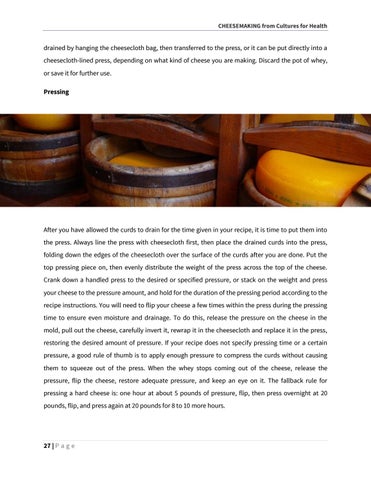
After you have allowed the curds to drain for the time given in your recipe, it is time to put them into the press. Always line the press with cheesecloth first, then place the drained curds into the press, folding down the edges of the cheesecloth over the surface of the curds after you are done. Put the top pressing piece on, then evenly distribute the weight of the press across the top of the cheese. Crank down a handled press to the desired or specified pressure, or stack on the weight and press your cheese to the pressure amount, and hold for the duration of the pressing period according to the recipe instructions. You will need to flip your cheese a few times within the press during the pressing time to ensure even moisture and drainage. To do this, release the pressure on the cheese in the mold, pull out the cheese, carefully invert it, rewrap it in the cheesecloth and replace it in the press, restoring the desired amount of pressure. If your recipe does not specify pressing time or a certain pressure, a good rule of thumb is to apply enough pressure to compress the curds without causing them to squeeze out of the press. When the whey stops coming out of the cheese, release the pressure, flip the cheese, restore adequate pressure, and keep an eye on it. The fallback rule for pressing a hard cheese is: one hour at about 5 pounds of pressure, flip, then press overnight at 20 pounds, flip, and press again at 20 pounds for 8 to 10 more hours.
27 | P a g e