S
P
O
T
L
I
G
H
T
Robin Osborn By Willy MacMullen ’78
U
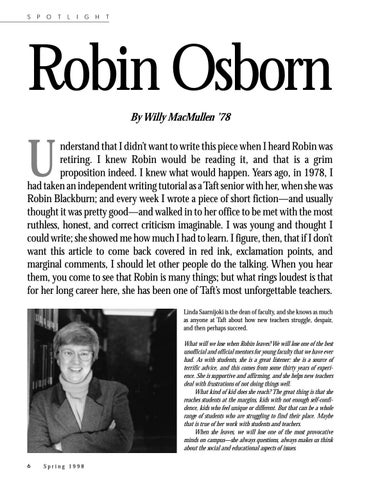
nderstand that I didn’t want to write this piece when I heard Robin was retiring. I knew Robin would be reading it, and that is a grim proposition indeed. I knew what would happen. Years ago, in 1978, I had taken an independent writing tutorial as a Taft senior with her, when she was Robin Blackburn; and every week I wrote a piece of short fiction—and usually thought it was pretty good—and walked in to her office to be met with the most ruthless, honest, and correct criticism imaginable. I was young and thought I could write; she showed me how much I had to learn. I figure, then, that if I don’t want this article to come back covered in red ink, exclamation points, and marginal comments, I should let other people do the talking. When you hear them, you come to see that Robin is many things; but what rings loudest is that for her long career here, she has been one of Taft’s most unforgettable teachers. Linda Saarnijoki is the dean of faculty, and she knows as much as anyone at Taft about how new teachers struggle, despair, and then perhaps succeed. What will we lose when Robin leaves? We will lose one of the best unofficial and official mentors for young faculty that we have ever had. As with students, she is a great listener: she is a source of terrific advice, and this comes from some thirty years of experience. She is supportive and affirming, and she helps new teachers deal with frustrations of not doing things well. What kind of kid does she reach? The great thing is that she reaches students at the margins, kids with not enough self-confidence, kids who feel unique or different. But that can be a whole range of students who are struggling to find their place. Maybe that is true of her work with students and teachers. When she leaves, we will lose one of the most provocative minds on campus—she always questions, always makes us think about the social and educational aspects of issues. 6
Spring 1998