Culture
Many-hued performances
Theatre
Theatre lovers in Bangalore can on almost any given day pick from performances in Kannada, English, Hindi, Urdu, Tamil, Telugu, Marathi, Kodava and Tulu.
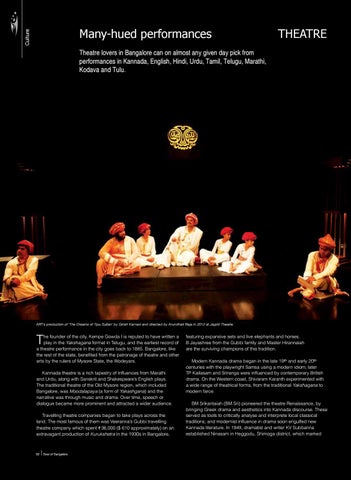
ART’s production of ‘The Dreams of Tipu Sultan’ by Girish Karnad and directed by Arundhati Raja in 2012 at Jagriti Theatre.
T
he founder of the city, Kempe Gowda I is reputed to have written a play in the Yakshagana format in Telugu, and the earliest record of a theatre performance in the city goes back to 1885. Bangalore, like the rest of the state, benefited from the patronage of theatre and other arts by the rulers of Mysore State, the Wodeyars. Kannada theatre is a rich tapestry of influences from Marathi and Urdu, along with Sanskrit and Shakespeare’s English plays. The traditional theatre of the Old Mysore region, which included Bangalore, was Moodalapaya (a form of Yakashgana) and the narrative was through music and drama. Over time, speech or dialogue became more prominent and attracted a wider audience.
Travelling theatre companies began to take plays across the land. The most famous of them was Veeranna’s Gubbi travelling theatre company which spent ₹ 36,000 ($ 610 approximately) on an extravagant production of Kurukshetra in the 1930s in Bangalore,
50
Best of Bangalore
featuring expansive sets and live elephants and horses. B Jayashree from the Gubbi family and Master Hirannaiah are the surviving champions of this tradition. Modern Kannada drama began in the late 19th and early 20th centuries with the playwright Samsa using a modern idiom; later TP Kailasam and Sriranga were influenced by contemporary British drama. On the Western coast, Shivaram Karanth experimented with a wide range of theatrical forms, from the traditional Yakshagana to modern farce. BM Srikantaiah (BM Sri) pioneered the theatre Renaissance, by bringing Greek drama and aesthetics into Kannada discourse. These served as tools to critically analyse and interprete local classical traditions, and modernist influence in drama soon engulfed new Kannada literature. In 1949, dramatist and writer KV Subbanna established Ninasam in Heggodu, Shimoga district, which marked