The technical magazine for those involved in the design, construction and refit of superyachts





































www.multiplexgmbh.com






















EDITORIAL
EDITOR IN CHIEF
EDITOR | HOW TO BUILD IT
EDITORIAL CONTRIBUTOR
NEWS EDITOR
FEATURES WRITER
FEATURES EDITOR
WRITER
SOCIAL MEDIA MANAGER
CONTENT CREATOR
Francesca Webster
Justin Ratcliffe
Charlotte Thomas
Sophie Spicknell
Enrico Chhibber
Leona Caanen
Andrea Pefianco
Marina Vargas
Nick Smits
DESIGN PRODUCTION
CREATIVE DIRECTOR
GRAPHIC DESIGNER
Ivo Nupoort
Beatriz Ramos
INTELLIGENCE
HEAD OF INTELLIGENCE
RESEARCH ANALYST
DATABASE MANAGER
Ralph Dazert
Adil Zaman
Syrine Mellakh
SALES & ADVERTISING
HEAD OF SALES
SALES MANAGER
SALES MANAGER
SALES MANAGER
SALES MANAGER
CLIENT SERVICE MANAGER
SALES ITALY
Marieke de Vries
Justus Papenkordt
Daniel Van Dongen
Charly van den Enden
Nuri Ozkaya
Johanna Borreli
info@admarex.com
CORPORATE
FOUNDER & DIRECTOR
TECHNOLOGY DIRECTOR
FINANCE DIRECTOR
Merijn de Waard
Fabian Tollenaar
Laura Weber
SuperYacht Times B.V. Silodam 256, 1013 AS, Amsterdam, The Netherlands
31 (0) 20 773 28 64 info@superyachttimes.com www.superyachttimes.com
Cover Images:
Baltic Yachts by Eva-Stina Kjellman Akerboom by Justin Ratcliffe
Royal Hakvoort by Guy Fleury
How to Build It is published by SuperYacht Times B.V., a company registered at the Chamber of Commerce in Amsterdam, The Netherlands with registration number 52966461. The magazine was printed in February 2026.

This issue of How to Build It explores topics and projects that reflect how the convergence of advanced technology, heritage principles, and environmental awareness is reshaping both the yachts themselves and the processes used to design and build them.
A standout example is the 45-metre motor yacht designed by Hoek Design under construction at the family-owned Royal Hakvoort Shipyard. The long-range cruiser exemplifies the balance between timeless aesthetics and modern performance by blending retro-inspired design elements with hybrid-assisted propulsion.
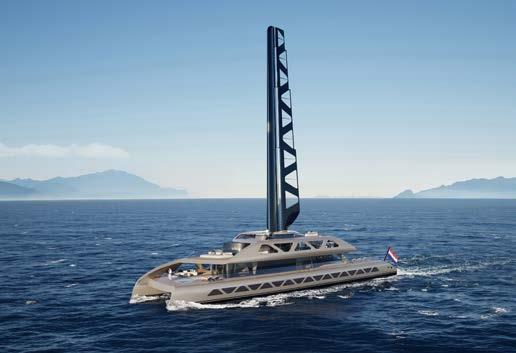
In a similar vein, the Aera catamaran concept by Royal Huisman harnesses that most ancient source of renewable energy – the wind – with a free-standing wing sail, adding a hybrid dieselelectric architecture and hydrogeneration system for good measure. The result is a vessel that minimises environmental impact while delivering uncompromising performance and comfort.
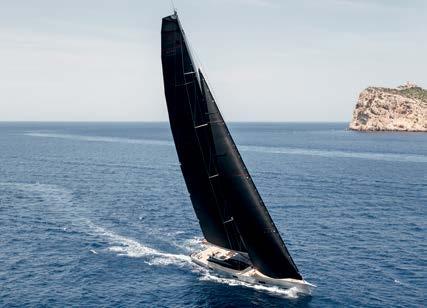
Another notable multihull project, the Baltic 107 currently in build, presents a fresh challenge for the Finnish shipyard known for its lightweight, high-performance monohulls. While it carries a traditional rig, it too has a hybrid propulsion package and the brief for this all-carbon catamaran mirrors much the same goals as Aera: elevated comfort, maximum efficiency, extended autonomy, and a reduced environmental footprint.
Originating from NASA’s space programmes in the 1960s, digital twinning is a game-changing technology beginning to make its mark. By creating virtual replicas of physical vessels, digital twins offer unmatched insight into every stage of a yacht’s lifecycle – improving design, streamlining construction, and enhancing operational efficiency.
Nuclear propulsion has been around on vessels for more than 70 years. It is a technology that has long been viewed with distrust, even fear, but advances in compact modular reactors coupled with proactive Class initiatives mean it is fast gaining traction and nuclear-powered superyachts may be just around the corner.
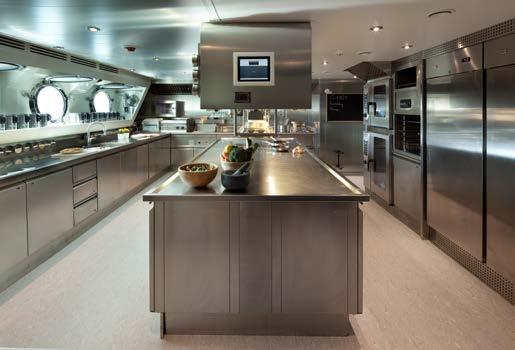
And finally, no matter how advanced the tech, the essence of a yacht remains the experience it offers its guests. With this in mind, we deep dive into the ins and outs of galley design, where culinary creativity meets rational functionality.
Enjoy the read!
Justin Ratcliffe - Editor
The CEO of synthetic decking specialists Bolidt talks us through
26 Business Brief: The Jet Set
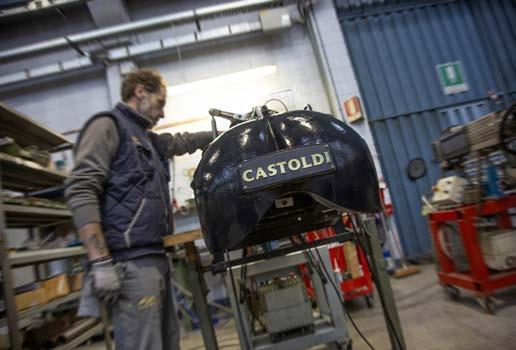
Active across the military, commercial and superyacht sectors, Castoldi in Italy is now applying its waterjet technology and construction know-how to the specialist market for limousine tenders.
36 Build Report: When the Stars Align
The retro styling of a 45-metre steel and aluminium motor yacht under construction at Royal Hakvoort in the Netherlands masks a modern and highly capable cruiser engineered for long-distance voyaging.
50 Concept in Focus: Wings of Change
Royal Husiman’s Aera catamaran is more than a speculative future concept. Both feasible and buildable, it represents the convergence of mature technologies.
59 Power & Propulsion: Nuclear Is Nearer
Despite the hurdles still to be overcome, new lightweight modular reactors and a proactive approach from Class mean we could see the first nuclear yacht by the end of the decade.

68 OEM: Custom as Standard
Akerboom Yacht Equipment has earned a prominent position in the superyacht supply chain, but the engineering philosophy behind its custom-designed solutions is based on a well-established modular approach.
80 Inside Angle: Know Your Spec
Former superyacht captain Simon Finlayson talks about working with both project management and production teams to close the knowledge gap between owner expectations and shipyard execution.
84 New Tech: Double Vision
Digital twinning is fast becoming standard form of virtual modelling. But what is a digital twin, and how can we use them to streamline superyacht design, construction and operation?
93 Crew & Services: Cooking Up a Storm
If home is where the hearth is, then the galley is certainly a fundamental element of any yacht. We take a look at how to avoid second-rate cooking spaces and equipment.
104
Build Report: Crossing the Finnish Line
The Baltic 107 catamaran represents a departure for the Finnish shipyard known for its high-performance monohulls, but it relies on the same mastery of carbon composite engineering and obsession with weight control.
117 Startup: Hybrid, Rewired
Startup company Propulsion House has developed a compact, modular methanolelectric propulsion system for yachts up to 70 metres that challenges the big marine technology brands.
123 Industry Insight: Lighting for Wellbeing
Michael Meeneghan, founder of system integrators MP Tech in the UK, looks into engineering circadian-friendly lighting at sea.
Following a leadership change in at the end of 2025, Sunseeker has unveiled a new strategic direction to be implemented over the next 18 months. Speaking at boot Düsseldorf, interim CEO Scott Millar outlined plans for a refreshed product roadmap, including new models to be developed over the next five years. He described the opportunity to redefine modern yachting while securing the company’s long-term success:
“Over the next 18 months, putting in place this strategy and returning the company to full momentum will be the core priority for the leadership team.”
Millar also highlighted Sunseeker’s recent financial backing from Cheyne Capital and Cross Ocean Partners. In the near term, the funding is being deployed to strengthen the supply chain, improve build efficiency and ensure more reliable on-time delivery.Sunseeker is also working towards a major digital manufacturing system upgrade, alongside a significant expansion of its global dealer network into new and emerging markets. Ongoing investment in both physical and technological infrastructure will support the acceleration of the yard’s “Superyacht Strategy”.
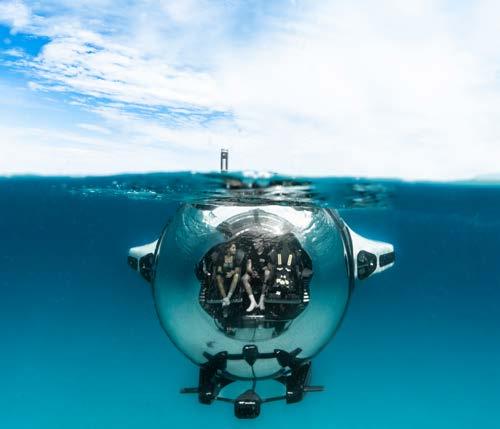
Following sea trails, U-Boat Worx has secured full DNV classification for its Super Sub submersible, clearing the vessel for operational deployment. The approval marks the entry of the high-speed submersible into service. DNV surveyors were involved throughout the Super Sub’s design, construction, and testing phases, reviewing structural integrity, propulsion, control systems, and life-support arrangements in accordance with class requirements. The certification process addressed the challenges associated with higher operating speeds and advanced maneuvering capabilities compared with conventional personal submersibles.
Designed as a sport-oriented submersible for private and yacht-based use, the Super Sub features 100kW of horizontal thrust and a reported top speed of 9 knots. The vessel is capable of pitch angles of up to 45 degrees and is equipped with a terrain-awareness sonar system for automated depth and trajectory management at depths of up to 300 meters.
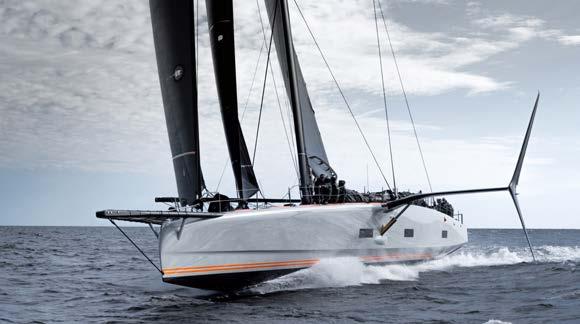
The 33.8-metre Baltic 111 sailing yacht Raven set a new monohull race record in January after taking Monohull Line Honours in the 2026 RORC Transatlantic Race. Skippered by Damien Durchon, Raven was the first to cross the finish line off English Harbour, Antigua, completing the 3,000-nautical-mile passage from Lanzarote in six days, 22 hours, 27 minutes and 47 seconds at speeds exceeding 30 knots.
Alongside her record-breaking run, Raven also secured the IMA Transatlantic Trophy as the first maxi yacht to finish the race.
The event marked her first major offshore race since delivery in 2023. The previous monohull record was held by the 30.5-metre Comanche, which completed the 2022 race in seven days, 22 hours, one minute and four seconds. “Comanche remains the global benchmark for VMG downwind, but Raven has clear advantages at certain angles,” said navigator Will Oxley, who sailed on both yachts. “In this race, when we sailed our angles, we were faster. What we’ve achieved here sets a very serious benchmark.”
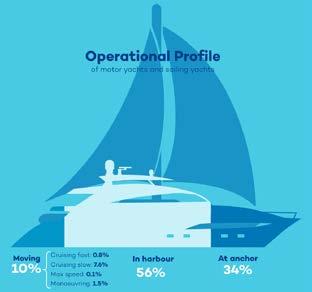
ISO has formally approved ISO/TS 23099, marking a major step forward in sustainability for the superyacht sector. Developed under ISO Technical Committee 8 and inspired by the Yacht Environmental Transparency Index (YETI) led by Water Revolution Foundation, the new Technical Specification establishes the first harmonised, science-based method to assess and compare the environmental performance of yachts over 30 metres.
Approved by national standardisation bodies from key yacht-building nations including Italy, The Netherlands, Germany, the UK and the US, ISO/TS 23099 provides an internationally recognised reference tailored specifically to yacht operations, which differ significantly from commercial shipping. The methodology is based on a statistically derived operational profile covering cruising, anchoring and port time. The specification is the result of a five-year joint industry effort involving yacht builders, naval architects, research institutes, classification societies and technical experts. It introduces both CO₂-equivalent scoring and more advanced Life Cycle Assessment–based EcoPoints, enabling clearer comparisons and scenario analysis for new builds and refits.
Clippership, a company developing autonomous, wind-powered cargo vessels, has announced the completion of the RINA-approved design for its first 24-metre class zero-emission ship and the signing of a build contract with Dutch shipyard KM Yachtbuilders.
Naval architecture is led by Dykstra Naval Architects with Glosten providing structural engineering. KM Yachtbuilders in the Netherlands is recognised for its robust, aluminum expedition yachts, including Bestevaer, Pelagic and Qilak. Clippership has developed the vessel’s autonomy software and rigid-wing propulsion system in-house.
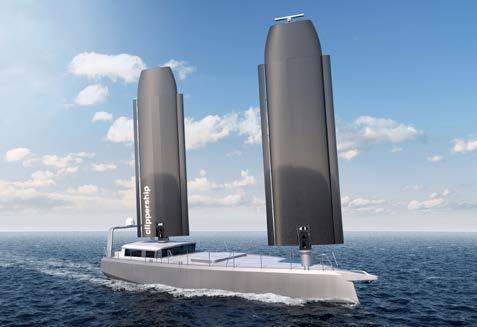
The vessel is designed for open-ocean autonomous operations and features twin, foldable rigid wings for primary wind propulsion. It will be built in accordance with RINA rules and classed as a “General Cargo Ship – Powered Sailing Ship,” including the Wind Assisted Propulsion System (WAPS) additional class notation. The vessel will sail under the Maltese flag with launch scheduled for late 2026.
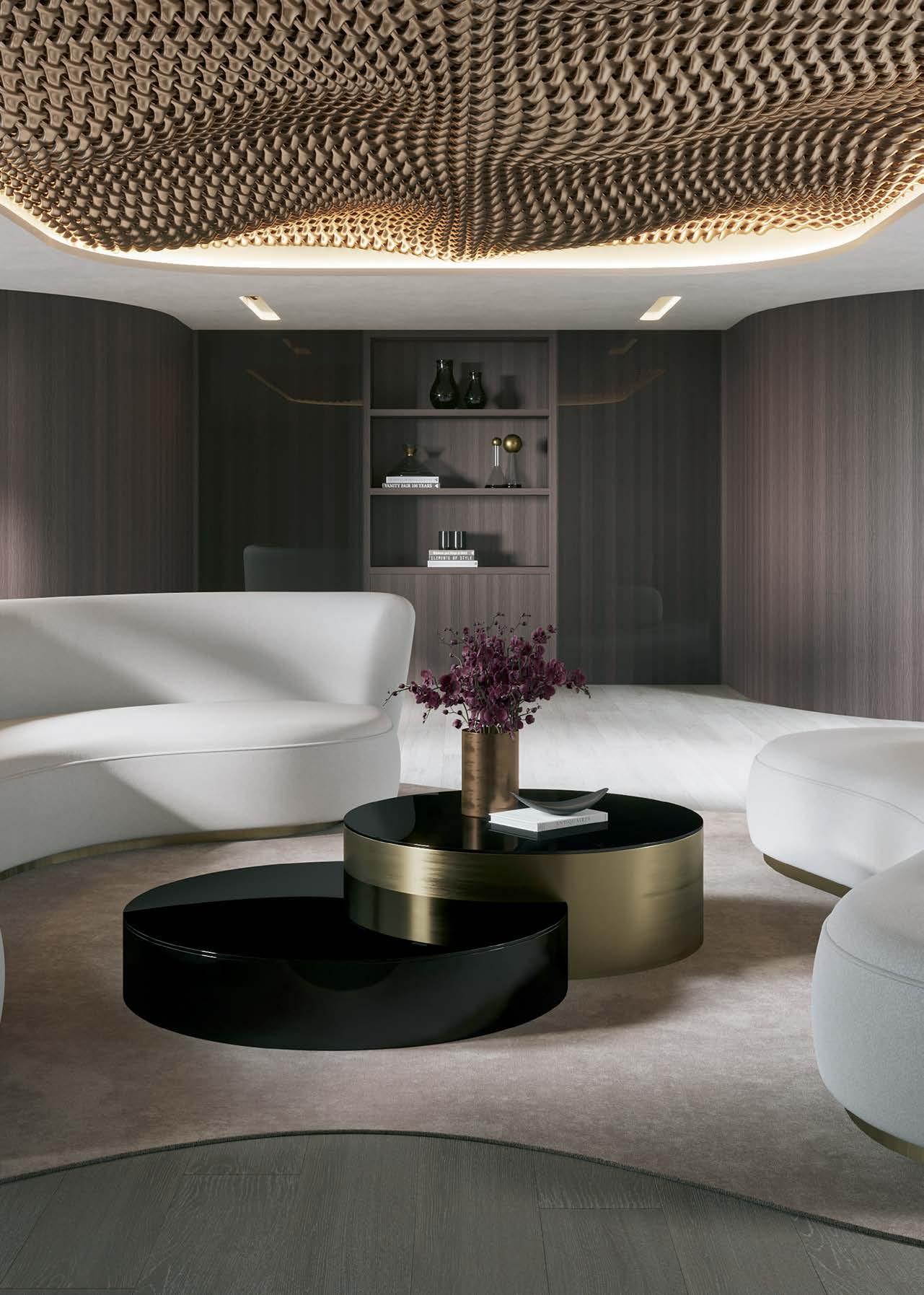
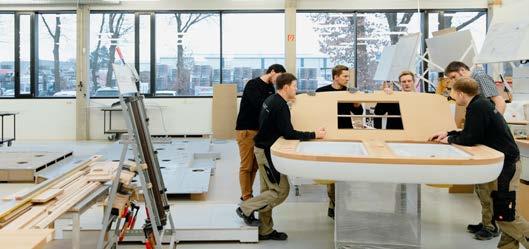
Böwer General Contractor GmbH is a leading provider of exclusive interior fittings and customised layouts. Founded in 1888 as a traditional joinery, the north-German company today specialises in luxury super and mega yachts. As a general contractor, Böwer is responsible for all aspects of its international interior fit-out projects: from initial idea, to technical planning and design, to precise implementation. All skills are pooled in-house — which, for clients, means clearly structured processes, fast access and reliable realisation under one roof.
‘We are a company with a long tradition and a corresponding wealth of experience – that is our basis’, says Stefan Böwer, who, together with his sister Anja Böwer, is the fourth generation to run the family business.
‘But we actually see ourselves as a very young company. Our mentality is more like that of a start-up: We are constantly looking for new, unconventional solutions, and are very flexible, thanks to our comparatively small team.’
Some 75 specialists work at the Böwer factory and its adjoining offices. Anja and Stefan Böwer have been at the company’s helm since 2000. They purposefully pushed ahead with their strategic focus on exclusive interior fittings, increasingly specialising in the international yacht business. In 2022, their commitment led to the successful founding of Böwer General Contractor GmbH, followed by the establishment of a subsidiary in the USA the following year. Another milestone came in 2024, when Böwer expanded its range of services to include a new business segment: DigitalCraft. Craftsmanship meets digital production methods.
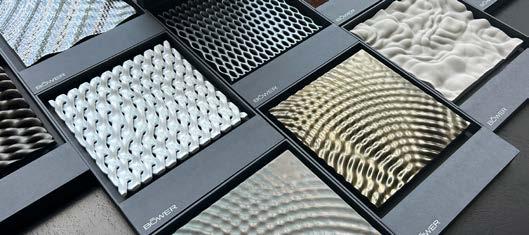
Using additive processes such as 3D printing, Böwer DigitalCraft facilitates highly complex geometries, architectural elements and surfaces. Combined with the craftsmanship of an almost 140-year-old manufactory, DigitalCraft unlocks an unprecedented range of possibilities: from 3D-printed lattice structures with matte lacquer finish, to undulating shapes with textile-like surfaces, to concentric structures made of polished metal.
‘With DigitalCraft, there are virtually no limits to our clients’ vision’, says Anja Böwer. ‘Thanks to the combination of 3D printing, our craftsmanship expertise and many years of experience in interior design, we are able to implement ideas that, until recently, were not feasible using traditional methods alone.” This enabled Böwer to occupy a niche in the market early on, as Stefan Böwer adds: ‘We have had a great industry response to DigitalCraft. The field offers great potential, and we are only just beginning to discover the possibilities.’
What makes Böwer stand out in the industry is its combination of technical precision, craftsmanship and architectural understanding. Anja Böwer, a trained architect, and Stefan Böwer, a trained interior designer, always contribute their aesthetic expertise to the process – expertise that is highly relevant in the sophisticated luxury sector. Personal support and a trusting, co-operative partnership are just as much of a given as innovative solutions tailored precisely client wishes.
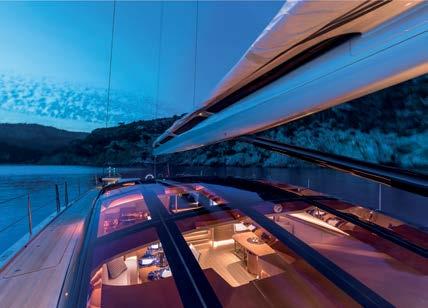
YOUR BEST CHOICE FOR NEWBUILD AND REFIT.
PE Marine Designz Ltd has developed a newly engineered 3-way adjustable hinge to replace the standard pressed-steel cabinet hinges commonly used in furniture applications. Standard units often suffer from rapid corrosion, reduced structural integrity and unreliable adjustment when exposed to moisture and salt. This new design addresses those failure modes through both material selection and a revised mechanical architecture.
“Milled from solid aluminium or stainless steel, the hinge provides a significant improvement in corrosion resistance, stiffness and long-term dimensional stability,” says Paul Edmondson of PE Marine Designz. “Despite the more robust construction, it also retains the existing industry-standard mounting interface, enabling drop-in replacement without modification to door leafs or carcass panels.”
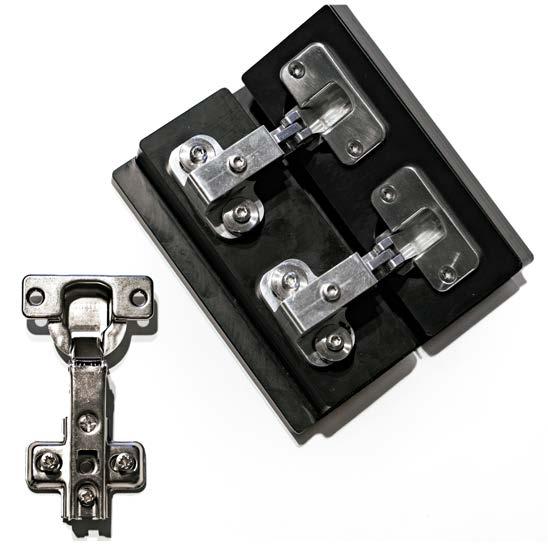
Instead of conventional screw-based adjusters, an elliptical cam integrated into a precision-machined mechanism provides controlled, incremental adjustment along both the vertical and horizontal axes, eliminating the common issues associated with fine threads in corrosive environments – seizure, galling and loss of repeatability. The slightly increased profile compared to typical residential hinges allows for greater load-bearing capacity, making it suitable for heavier wardrobe doors, deck furniture and wet-area cabinetry. The hinge body can be anodised or polished depending on specification.
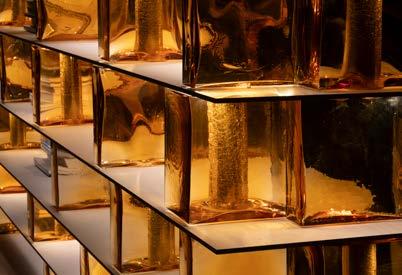
HYLEtech is a newly patented lighting technology that integrates lighting directly into high-resistance aluminum panels with a thickness of just 1 cm without visible cabling, resulting in a clean, continuous surface. The panels are produced using recycled aluminum and weigh 10 kg/m², around half the weight of wood-based panels – making them especially suitable for marine applications where weight is critical. The low weight also contributes to reduced transport requirements and a lower environmental footprint, estimated at 7 kg CO₂ per panel versus 25 kg CO₂ for traditional alternatives.
The integrated lighting element, Nex-S, is a high-efficiency LED technology produced and patented by Luce5, an Italian leader in the lighting sector, specifically for HYLEtech. The system is globally certified and powered at 24V through multipole rails built into the panels, allowing electrification in any position without the need for visible screws or external cables. The LED modules are supplied in 6-cm units that self-configure and synchronise automatically, providing granular control across 65,536 lighting levels. Patented optics allow adjustable beam angles and eliminate glare. Surface treatments with high reflectance maximize optical efficiency.
“The HYLEtech system supports straightforward installation and maintenance, with built-in thermal dissipation and quick disassembly features,” says Stefano Cetoloni, CEO and co-founder of Luce5. “This technology provides a consolidated structural–lighting solution aimed at reducing weight, improving recyclability, and streamlining design and construction processes.”
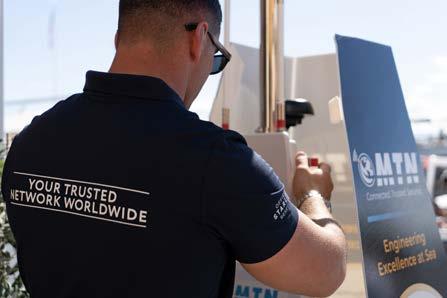
MTN has unveiled StarEdge Horizon, a private connectivity service that routes vessel traffic over a dedicated path on Starlink. The solution delivers greater security, predictable performance and integration with secondary links such as OneWeb, LTE/5G and VSAT. Wider availability for the maritime sector is planned for Q1 2026.
StarEdge Horizon uses a Layer 2 architecture, allowing vessels to connect to MTN’s regional points of presence as if they were on the same local network. By bypassing public internet routes, the service offers more consistent speeds and avoids the extra latency typically introduced by using standard VPNs and tunneling. The service supports network segmentation, QoS prioritisation and private cloud peering, as well as static IP addressing and subnet allocation, enabling reliable remote operations and improved cybersecurity. “StarEdge Horizon represents a fundamental shift in how LEO connectivity is deployed at sea,” says Emmanuel Cotrel, CEO of MTN. “We are moving beyond simple internet access to provide a secure, private network with guaranteed high speed and seamless redundancy.”
MTN has also launched a new Performance Mounting System in marine-grade fibreglass designed specifically for the 2025 Starlink Performance Antenna. Built with a fixed 8-degree tilt to keep water from pooling and to support fast, reliable gigabitlevel connectivity, it includes a built-in 5G/4G-LTE antenna as backup.
OceanLED, the manufacturer of superyacht-specific underwater lighting, has unveiled two new upgrade solutions: the F-Series to Hybrid E8 Upgrade Kit and the L-Series to Hybrid E9 Upgrade Kit.
These kits allow vessels with existing F-Series or L-Series lighting to upgrade to the Hybrid Explore Series without replacing driver cabinets, cabling or cofferdams.
“These solutions provide an efficient path to updated underwater lighting without major changes to existing infrastructure,” says Giles Truscott, Group Sales Director at OceanLED, who points out the aim is to reduce installation time and disruption during refits.
The F-Series to Hybrid E8 and L-Series to Hybrid E9 kits can be installed directly into existing cofferdams, reducing the need for welding, new cable runs, or control cabinet replacements. Each kit delivers up to 13,000 lumens per fixture and a 26% improvement in energy efficiency, while maintaining compatibility with future Explore Series products.
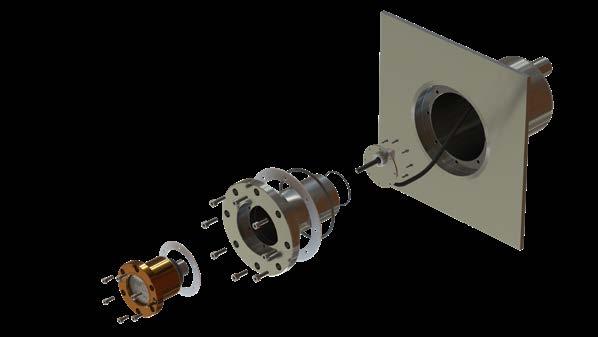
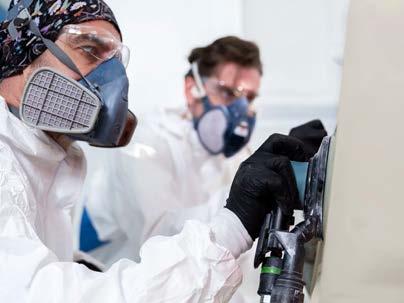
Awlgrip Gloss Finish Primer is a new product that combines the role of a finish primer and show coat into a single application. Veteran yacht applicator and founder of Excellence Yachtpainting, Mike Voogd, has more than 20 years’ industry experience, including 17 years at Feadship. Aware that conventional paint systems typically involve multiple coating stages and repeated sanding cycles, increasing labour hours and the risk of schedule overruns, he used Awlgrip Gloss Finish Primer on a recent 27-metre newbuild in the Netherlands. Its high-gloss finish allows surface imperfections to be identified earlier in the process, reducing rework later in the build.
“The gloss enables you to identify more imperfections so you have time to repair the defects, and it sands really easily,” says Voogd. Voogd estimates a time saving of two to three weeks. Supported by AkzoNobel Yacht Coatings and distributor Van Dongen Verf, the system also offers sustainability benefits, with up to 50% VOC reduction per square metre compared to traditional methods.
In a sector where precision, innovation and clientcentric service define success, F/YACHTING is carving a unique niche, focusing on bespoke solutions for the yachting sector, under the leadership of CEO Werner Kartner. At the same time, F/LIST, where Kartner also serves as Chief Commercial Officer, specialises in aviation and exclusive residences, delivering tailored solutions from concept to completion.
By leveraging insights across these sectors, the group can anticipate needs long before design plans are finalised. “When we get invited very early in the process, we can assemble the right integrated project team,” explained Kartner. “No matter whether it’s a yacht, an aircraft, or a residence, our specialists adapt to support the client from the very start.”
F/YACHTING’s process revolves around collaboration rather than control. “We start with co-creation,” added Kartner. “It’s not about leading the project; it’s about supporting the client. We work side by side with shipyards, designers and stakeholders to create the best-case scenario for the client.”
From defining room layouts and centralised systems, to engineering both interiors and exteriors, F/YACHTING ensures designs are practical, certifiable and aligned with client expectations: “If we’re not deeply involved, projects often require loops and adjustments. Our role is to prevent that from the beginning.”
A hallmark of F/YACHTING is its holistic, vertically integrated approach to design. “We don’t subcontract to subcontractors. We have our own stone shop, metal shop, engineering, production, integrated project teams and installation teams,” explained Kartner. “We focus on the next 40 years of a yacht, not just the warranty period. Maintenance-friendly materials, easy refits and lifecycle planning are central to our work.”
F/YACHTING’s global reach further strengthens the company’s group capabilities, with facilities in North America, the Middle East and Europe enabling timely production, refit support and direct client engagement. “Despite our company being based in Austria, if a client asks where maintenance should happen, it doesn’t have to be Europe. We can support projects from Dubai to Florida, thanks to our worldwide network.”
BY SOPHIE SPICKNELL
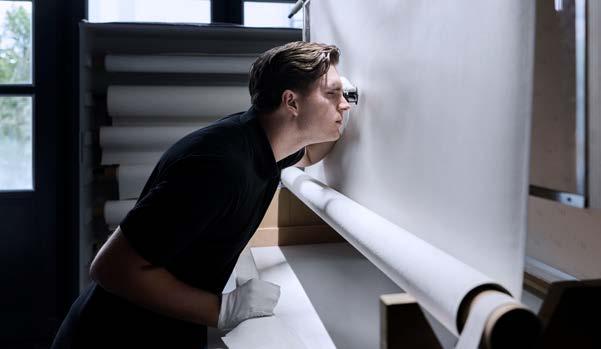
With their systematic approach, sustainability is central to F/YACHTING’s strategy. “We analysed every project from the past 10 to 15 years to define the most sustainable build-ups for interior and exterior constructions. It’s not upselling, it’s ensuring the next generation of clients receives a complete, responsible solution.”
Size is also no issue for F/YACHTING, with the company confidently handling vessels of every size. “Whether it's a 50-metre project, or a 150-metre yacht, we integrate engineering across multiple complex systems, with each project receiving a bespoke integrated project team tailored to its needs.”
Based in Thomasberg, Austria, F/YACHTING plans to expand its capabilities and markets over the next five years. “We’re focused on R&D, maintainability, transparency and risk mitigation. We’re also expanding our service model globally, including a new showroom in London. Our aim is to provide complete support for clients throughout a vessel’s lifecycle.”
From cutting-edge materials to certification expertise, F/YACHTING combines innovation, craftsmanship, and a client-first philosophy. As Kartner puts it: “Every project is about co-creation, sustainability and delivering the highest quality. That’s what sets us apart in yachting, aviation and residential projects alike.” f-yachting.at
With over three decades of dedicated superyacht refit experience, we are your trusted partner to navigate the future with confidence.
Our Refit for the Future plan offers a 360º environmental performance assessment and a tailored roadmap to integrate verified sustainable upgrades over time - enhancements that improve efficiency, elevate performance, and protect your yacht’s long-term value.
Scan to start planning today and be ready for tomorrow.
New projects in early stages of construction that present opportunities for OEMs, suppliers and subcontractors.
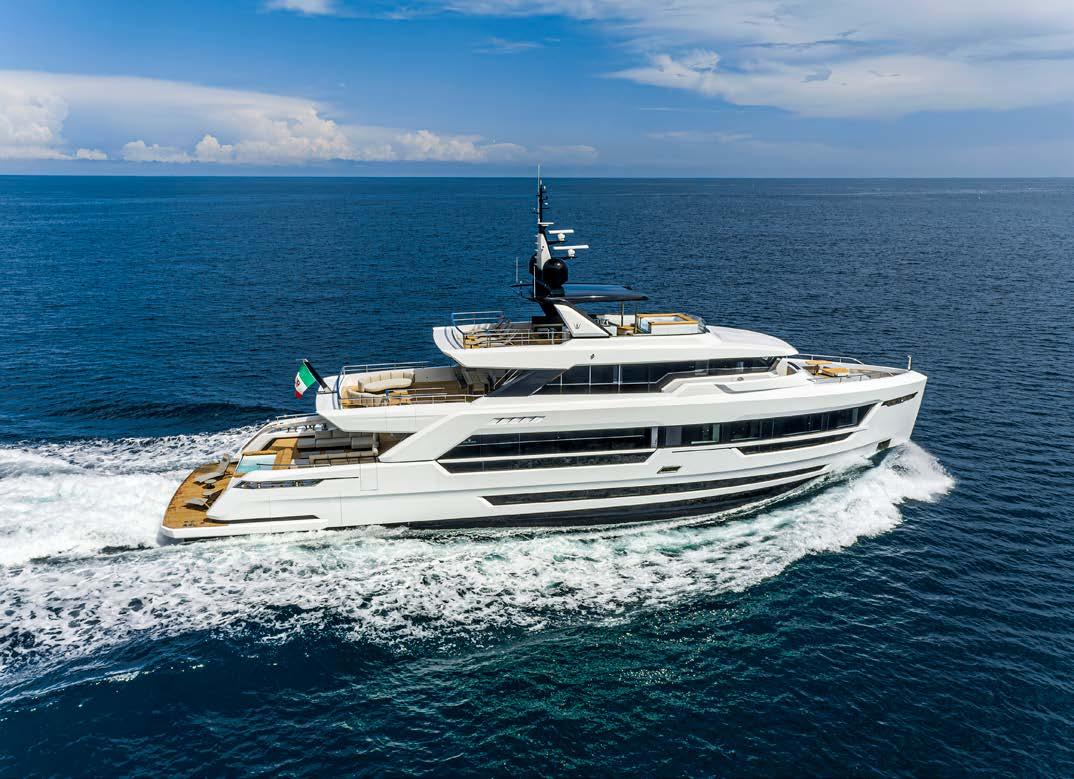
In January Palumbo announced the sale of a 68-metre ISA Gran Turismo to an American client. The new ISA GT 68M yacht builds on the platform of the 66.14-metre Okto, which was launched in 2014. With delivery scheduled for 2028, the yacht is the fourth unit in the GT series and she features an exterior from Studio Vallicelli Design, with interior design penned by Team for Design – Enrico Gobbi.
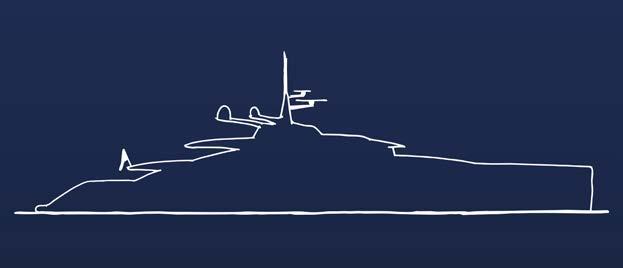
LENGTH: 68-metres BUILDER: ISA Yachts GT: 1,200 GT
ARCHITECTURE: ISA Yachts EXTERIOR DESIGNER: Studio Vallicelli Design
OF BUILD: Italy DELIVERY YEAR: 2028 NAVAL
DESIGNER: Team for Design - Enrico Gobbi
With the build scheduled to start in April 2026 and a delivery date planned for June 2027, the Baltic 80 Café Racer yacht is the larger sistership of the smaller Baltic 68 Café Racer yacht and is described by her builder as a “performance-led, lifestylefocused sailing yacht.”
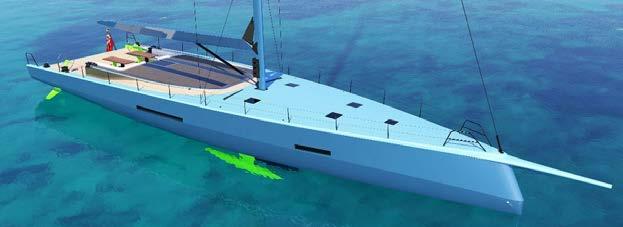
LENGTH: 23.93-metres BUILDER: Baltic Yachts GT: 70 GT
ARCHITECTURE: Surge Projects
DESIGNER: Surge Projects
OF BUILD: Finland DELIVERY YEAR: 2027
The Pearl 100 hybrid’s exterior styling and naval architecture are the work of Dixon Yacht Design. At the same time, her refined interior is penned by Kelly Hoppen, continuing the long-standing creative partnership behind Pearl’s flagship models. According to the press release, the buyer, a discerning British owner and longstanding member of the Pearl family, has chosen to continue his journey with the shipyard.
LENGTH: 29.43-metres BUILDER: Pearl Yachts
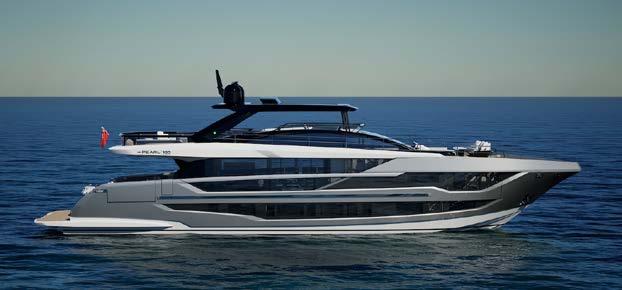
NAVAL ARCHITECTURE & EXTERIOR DESIGNER: Dixon Yacht Design
Spanning five decks, the 499GT yacht is fitted with a nine-metre beam and is designed to combine the seakeeping and autonomy of Bering’s steel explorer DNA with an onboard luxury lifestyle. Accommodation is designed with flexibility in mind, comprising five guest staterooms and a dedicated owner’s deck. Spanning nearly 70-square-metres, the owner’s deck is conceived as a private sanctuary.
LENGTH: 49.4-metres BUILDER: Bering Yachts
NAVAL ARCHITECTURE: Eureka Yachts
DESIGNER: Kelly Hoppen Interiors
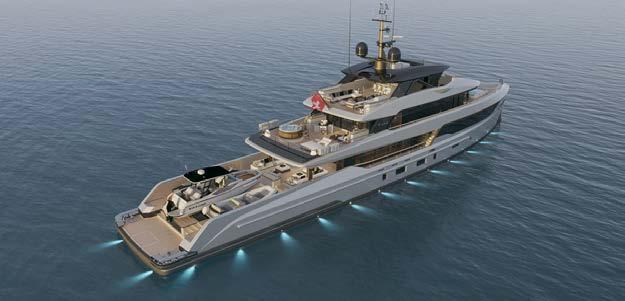
EXTERIOR DESIGNER: Valentin Design INTERIOR DESIGNER: N/A
The first hull of the SW100X series was sold at the end of 2025, with the yacht’s build having begun in 2023 on speculation. Unlike the traditional split centre moulds, she features a three-part mould, with tool joints located along the waterline, avoiding the highly loaded keel area. Described by Southern Wind as a “performance explorer”, her deck design combines a sleek single-level cockpit, with an extended swim platform.
LENGTH: 32.7-metres BUILDER: Southern
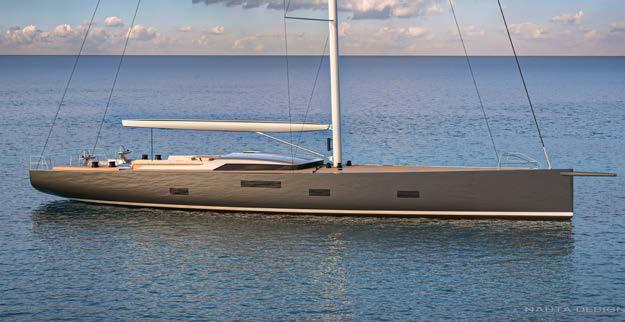
NAVAL ARCHITECTURE: Farr Yacht Design EXTERIOR & INTERIOR DESIGNER: Nauta Yachts
Nautor Swan has unveiled the first renders of the 44-metre Swan Alloy 44, its first aluminum supermaxi, during Swan Talks at the Cannes Yachting Festival 2025. Designed by Malcolm McKeon in collaboration with Swan’s New Product Development and Technical Office teams, the Swan Alloy 44 represents a significant milestone for the Finnish shipyard. She will be the first hull built in Italy.
LENGTH: 43.45-metres BUILDER: Nautor Swan
NAVAL ARCHITECTURE: N/A
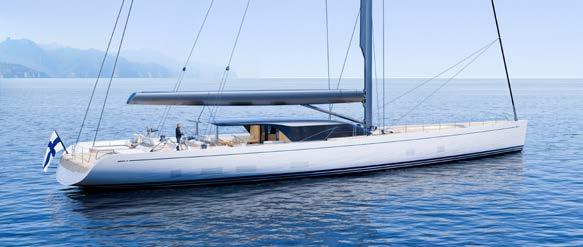
EXTERIOR DESIGNER: Malcolm McKeon Yacht Design INTERIOR DESIGNER: N/A
The yacht is arranged across three levels, with a mezzanine connecting the main and lower decks. The living area is located aft, featuring a lounge, bar and helm station. The main saloon and cockpit are seamlessly connected, complemented by full-height glazing. SHE, short for Sanlorenzo Heritage, conceived as an exclusive, one-off production offering.
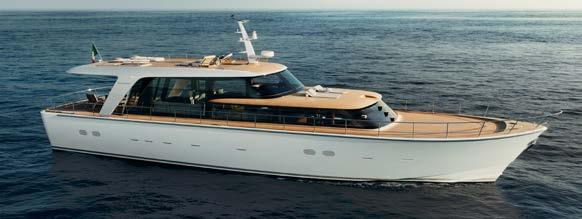
LENGTH: 25.5-metres BUILDER: Sanlorenzo GT: 90 GT COUNTRY OF BUILD: Italy
NAVAL ARCHITECTURE: Sanlorenzo EXTERIOR DESIGNER: Zuccon International Project INTERIOR DESIGNER: Lissoni & Partners




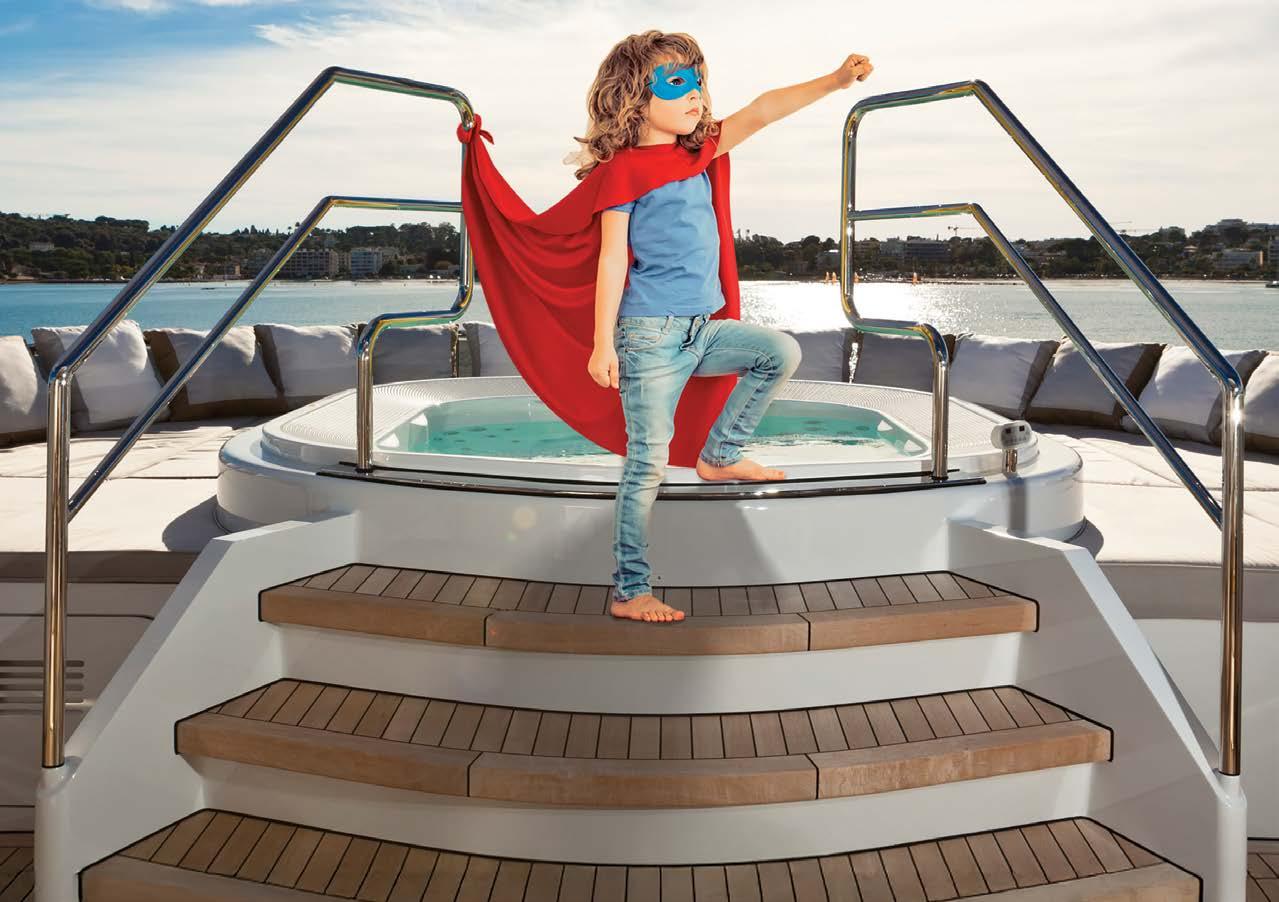





TAKE CHARGE & EXPLORE THE WORLD!
No matter what the mission, consider the popular XT™ Fin Stabilizer. Incredible technology — a fin that extends for zero speed, and retracts for underway. Ok, time to go get ‘em!





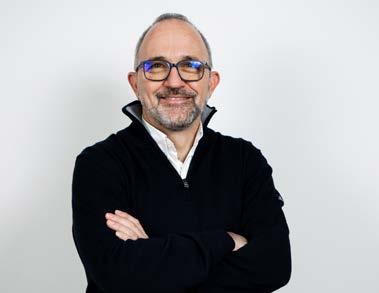
“Without data you’re just a person with an opinion,” says Giovanni Palamà. For the data & measurement specialist, entrepreneur, and founder of SailADV, the quote is not a provocation – it is the premise on which he built an entire company.
BY JUSTIN RATCLIFFE
After years as a professional sailor on the international race circuit, Giovanni Palamà understands that performance on the water is never the product of instinct alone: it is the result of consistent, objective and repeatable measurement.
“When I left racing and moved into consultancy, I realised the superyacht industry lacked this scientific discipline,” he says. “Extremely complex vessels were being delivered, yet there was no standardised way to quantify whether they actually performed according to their design. I founded SailADV In 2015 to answer that question.”
By not only gathering but also precisely interpreting data, SailADV is going beyond the limits of “traditional” industry processes. It works with the major Italian shipyards to provide seatrial analyses, onboard monitoring and long-term performance assessment via a broad spectrum of diagnostic data, including vibration readings, power-management behaviour, thermographic imagery, 3D scans, strain-gauge load measurements, and its onboard AI platform D.gree.
The goal is not simply to identify faults, but to understand how every component behaves within the broader system. This is where the approach becomes transformative. Indeed, at Metstrade 2025 the company presented itself as SailADV Group, where “group” is intended as a set of multidisciplinary services and brands, organised into specialised areas covering the entire yacht lifecycle, from management and analysis to value preservation and innovation.
With operational offices in Ancona, Pisa and La Spezia in Italy, a service point in Palma de Mallorca, and an innovation hub in Palo Alto, California, SailADV employs technologies rarely seen outside high-end industrial sectors. Motion Amplification, for example, transforms ordinary video into a magnified analysis tool that reveals vibrations far too subtle for the human eye to see – vibrations that can lead to premature wear, reduced efficiency, or outright failure. And as diesel-electric and hybrid propulsion systems become the norm, high-frequency sampling is used to detect issues that traditional monitoring
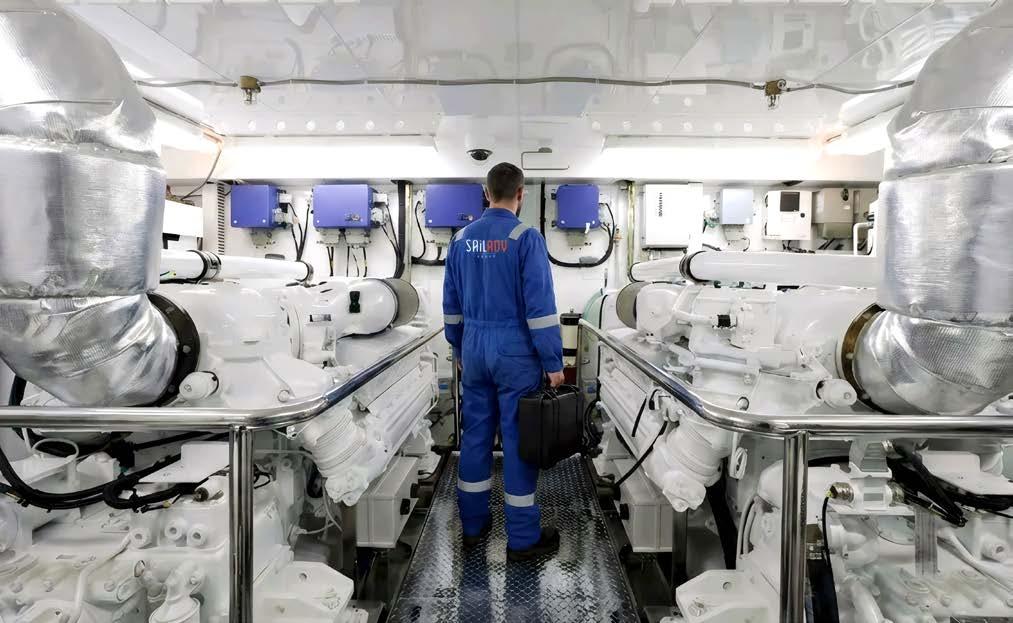
systems would miss. These measurement techniques allow shipyards and crew to shift from reactive maintenance to true condition-based maintenance.
“In commercial shipping, predictive maintenance is standard,” says Palamà. “But superyachts behave differently. Their operational profiles vary dramatically from vessel to vessel, making uniform maintenance intervals unreliable. A charter yacht that spends its summer shuttling between Sardinia and the Amalfi Coast wears very differently from one that crosses the Atlantic or spends long periods at anchor.”
Because every supplier uses its own communication protocol, SailADV has designed its systems to ‘speak’ with virtually every machine on board, from the main engines to the stabilisers and HVAC system. The company has a multiyear programme with both Azimut|Benetti and Sanlorenzo to optimise the performance of their superyacht fleet. During sea trials of all Benetti’s 100-metre-plus yachts, for example, it used its own certified technology to log up to 5,000 variables.
“The results are measurable,” continues Palamà. “For example, after monitoring a Benetti Tradition for several seasons, we recommended switching propellers – a change that saved roughly €30,000 in fuel in a single season.”
Also during Metstrade, SailADV presented its newest development: D.gree V26, and its first
AI Agent, Sailly, as the industry moves toward intelligent autonomy at sea. Offered in three configurations – One, Pro and Ultra – D.gree V26 is designed to adapt to both new-build and refit projects by fully leveraging intelligent node technology. Accessible both locally and remotely, the system is aboard a current fleet of around 70 yachts (expected to grow to 300 within three years), processing over 5 million data points per hour and predicting failures before they occur.
D.gree can also track external conditions, such as weather, to provide an even more complete picture of the yacht’s actual operating environment. The benefits ripple across the industry: owners gain transparency and asset protection; captains receive a clear overview; engineers can plan work rather than firefight; fleet managers can monitor multiple vessels through a single coherent system; and shipyards are able to draw on a continuous closed loop between design, operations and service.
As younger, more tech-oriented owners enter the market, expectations are shifting. They demand accountability, connectivity and smarter systems. Anchored by solid engineering and strengthened by data, SailADV is working to meet those expectations. In a sector built on craftsmanship, beauty and tradition, the company aims to bring something more tangible: proof. And as Palamà likes to remind people, in modern yachting, proof is power.

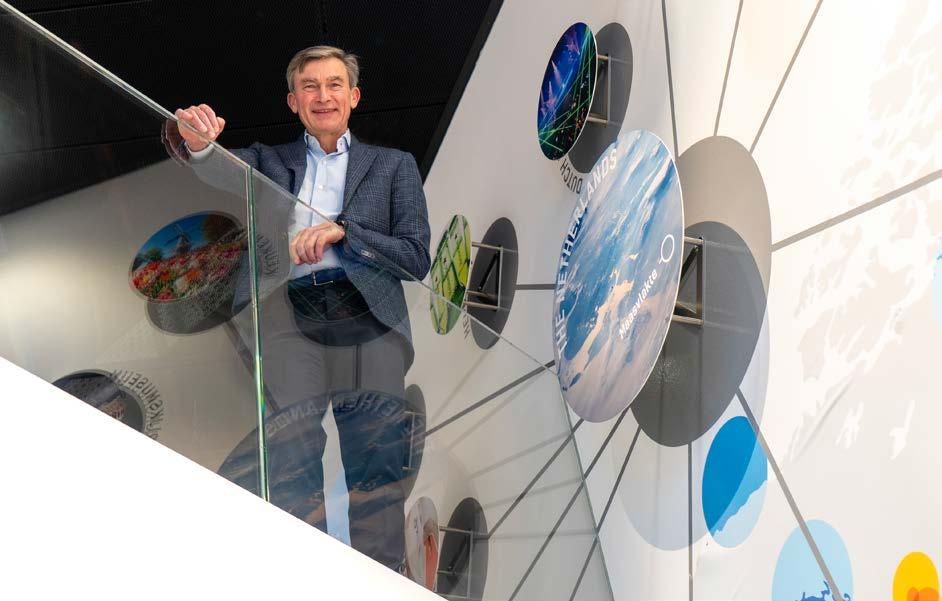
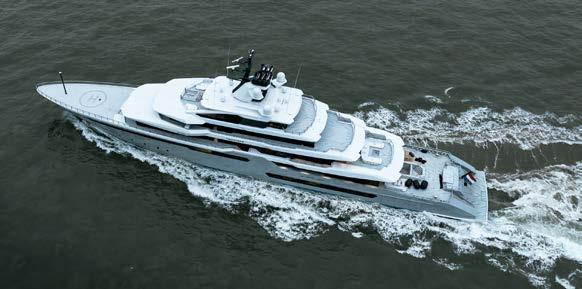
Bolidt, The Netherlands-based synthetic decking specialist, has been serving the superyacht industry since the late 1960s. Over that time it has witnessed major shifts in expectations, materials and regulations – including the EU’s 2021 ban on old-growth teak from Myanmar – that have encouraged owners and shipyards to seek out high-performance alternatives. Fresh from completing one of its most technically demanding projects to date, Oceanco’s 111-metre Leviathan, CEO Rientz Willem Bol discusses the company’s recent expansion, material R&D, and long-term strategy.
BY GEORGIA TINDALE
Last year, you acquired Nautifit in the Netherlands and Boteka in Florida. What was the rationale behind this?
By bringing Nautifit into Bolidt, we increase customer value and expand our prefabrication capacity in Europe. This accelerates the development of new prefab applications and makes us faster, sharper and more creative in what we can offer our clients.
Boteka has been a trusted partner of ours in the cruise ship sector for more than 14 years. The acquisition was driven by two key objectives. First, vertical integration. By bringing Boteka fully into the Bolidt organisation, we can keep everything we produce under one roof. Second, geographic reach. Having a strong base in the US allows us to operate across multiple continents and serve the global market with the same consistent standards.
What made Leviathan such a complex project for Bolidt?
What made this project unique was the close collaboration between the owner’s team, Oceanco, and Bolidt throughout the design phase and execution. Compared to the scale of some of the cruise ship decking we’ve worked on, Leviathan is actually quite small. We were working with just a few thousand square metres compared to 10-20,000 square metres on some of our larger projects. However, the time investment was comparable. This is because of the level of complexity and detail it required. We were working to an inspection tolerance of just 1.5 millimetres over three metres – an unprecedented level of flatness and consistency for a yacht of this size. Achieving this meant deploying up to 16 highly skilled specialists on the project. Material choice added another layer of difficulty. The design required a blue pigment, which is among the most challenging colours to stabilise in resin-based systems. In many ways, we weren’t simply delivering a deck – we were realising a design object in its own right.
How is R&D currently shaping the development of synthetic decking?
UV resistance is a major focus. Owners expect colour stability over many years, even with constant exposure in extreme climates, so improving long-term performance under UV load is critical. We’ve also developed socalled “cool pigments” and techniques to reduce surface temperature, making decks more comfortable to walk on in hot regions. We can now embed functional lighting directly into the deck. One example is helicopter landing areas: using gyroscopically informed lighting, the system changes colour in response to vessel movement, giving pilots immediate visual feedback on whether conditions are safe to land. This technology originated from our work on naval frigates, where safety requirements are uncompromising. Beyond materials, we are becoming much more data-driven as a company. By integrating sensors into decks, we can analyse how people move and behave onboard, allowing us to optimise functionality and safety.
We still see a lot more teak decks on new builds than synthetic ones and it appears that, outside of technical areas, owners still want wood. What are your thoughts on this?
We do see a shift in mindset, but we’re in a transition phase. When something old and familiar comes under pressure or begins to disappear, people initially look for something that comes as close as possible. Designers and owners often fall back on materials that reference familiar imagery and heritage, driven by aesthetics and emotion. In that search, choices are frequently made based on visual similarity, even if that means compromising on performance or longevity. That tendency usually persists until real-world use reveals that these materials age differently from the original, for example, by degrading more quickly or lacking essential properties such as wear resistance, or resistance to porosity and water absorption. At that point, the question shifts away from what looks similar, towards materials that not only feel right aesthetically, but also perform demonstrably in practice.
As CEO, how do you see the future of Bolidt?
The COVID period pushed many businesses into short-term, crisis-driven thinking and disrupted the relationship-building that normally underpins innovation. Now, in 2026, we can once again focus on long-term strategy. My focus is on innovation and striving to have a continuous process. At Bolidt, that means an extended horizon and we talk about thinking 500 years ahead – not because it’s literally achievable, but because it shapes how we make decisions today. That mindset encourages durability, adaptability and responsibility in everything we develop. Finally, we are very excited about showing people all the innovative things we can achieve as a company and so we’ve built a two-storey Experience Centre of 4,000 square metres where architects, designers, and industry professionals can see what’s technically possible. We’re keen to actively challenge the industry’s thinking and we want people to engage, question assumptions, and reimagine what’s possible with decking.
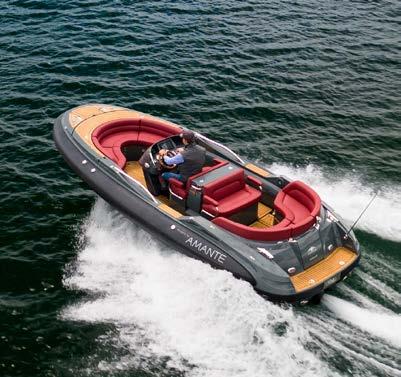
Castoldi is both a leader in the field of waterjet technology and a point of reference for serial production tenders. Active across the military, commercial, and superyacht sectors, the Italian brand is now applying its propulsion and manufacturing know-how to the specialist market for limousine tenders.
BY JUSTIN RATCLIFFE
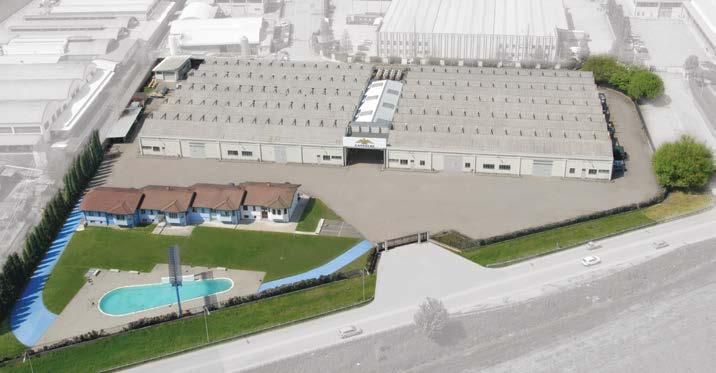
The small town of Albairate in landlocked Lombardy might seem a strange place for a boatbuilder to set up shop, but it is closely linked to the brand’s origins in one of Italy’s richest agricultural regions. Luigi Castoldi was a pioneering engineer in the agricultural machinery sector through his company BCS, which is still extant today. He began exploring waterjet propulsion –still a novelty in the early 1960s – because boats were damaging their propellers on the shallow bottom of the nearby River Ticino.
After importing a waterjet drive, he set about re-engineering it to create a more durable and effective design. His first mass-produced Castoldi waterjet, model Jet 05, made its debut at the 1969 Genoa Boat Show.
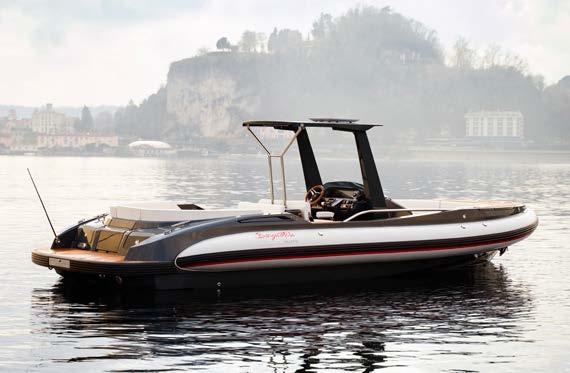
Since then, over 40,000 Castoldi waterjets have been delivered around the world, from the compact 224 unit up to the mighty 600 HCT drive that can support installed power of up to 2,700 horsepower. Today, the company is still family-owned under the directorship of Giacomo Castoldi, Luigi’s grandson, who with his father Franco spearheaded the company’s diversification into the tender market with its own range of diesel-powered jet tenders. The first model, the JT 18 Pro in 1998, served as the blueprint for the current range, from the entry-level Jet Tender 14 up to the 10.5-metre Jet Tender 34. The latter also provides the technical platform for the Jet Tender 34 Limo, the company’s first venture into the limousine market.
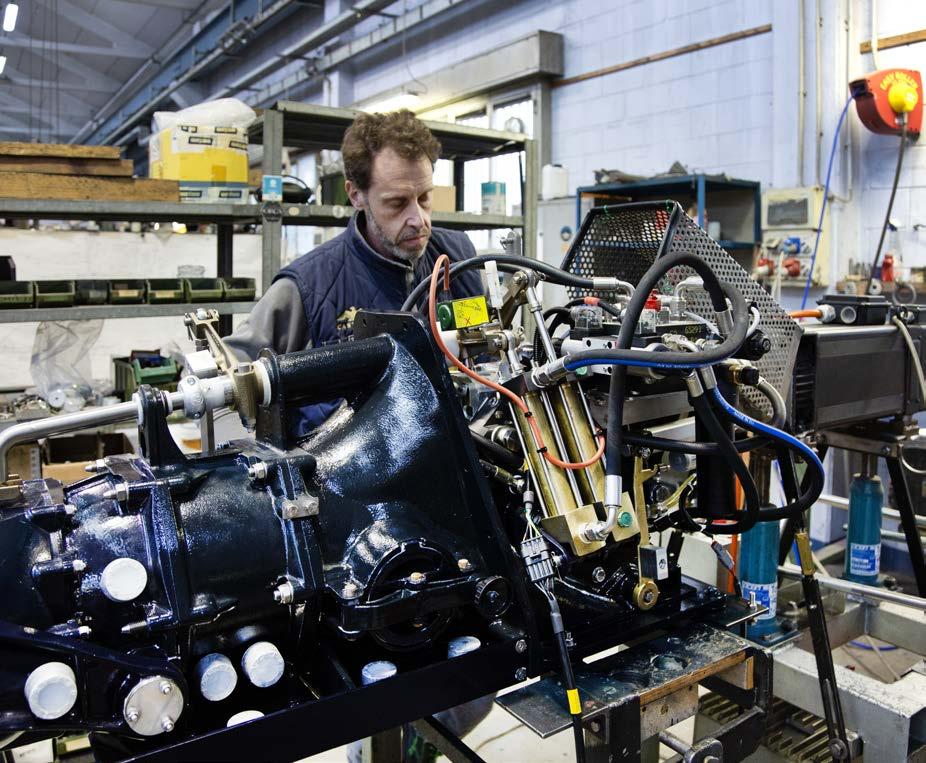
Above: Calibrating a waterjet on the test bed. Facing page: One of the earliest Castoldi waterjets ever produced and (below) the powerful 600 HCT model.
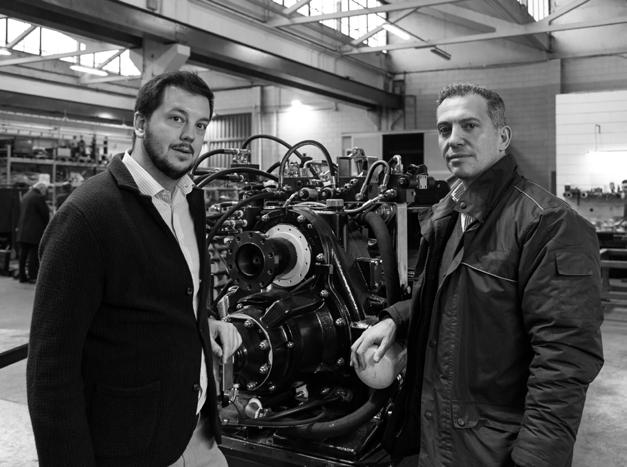
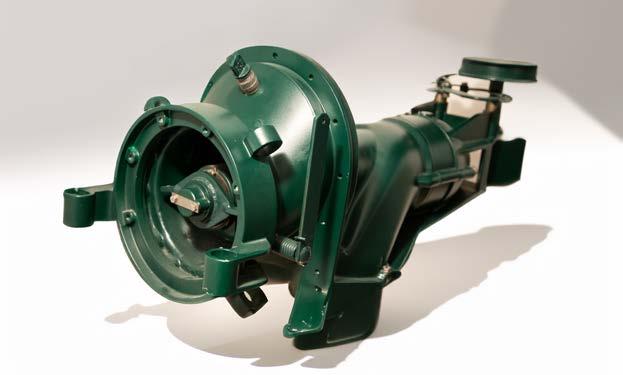
Waterjet propulsion for superyacht tenders offers several advantages over traditional propeller-based systems. These include enhanced manoeuvrability, higher efficiency and durability, lower noise and vibration, and the reversing bucket can ‘crash stop’ a boat in less than twice its own length. But arguably the most critical feature – as Luigi Castoldi was quick to realise – is shallow draft.
“Jet tenders can drive right up to a beach, and most of our models are equipped with bow ramps as standard,” says Giacomo Castoldi. “Combined with a folding console, low draft also means they occupy less vertical space inside the tender garage, while the lack of exposed propeller blades reduces the potential for injury to swimmers, divers, or marine life.”
Over the years, Castoldi has finessed its waterjet technology. Unlike other systems requiring external gearboxes, all Castoldi waterjets except the entry-level Turbodrive 224 DD have integrated gearboxes. This results in a more compact overall footprint, which means more space for passengers and luggage storage, and simplifies the installation process while reducing the potential for errors or rework. They are also equipped with a patented anti-clogging system that enhances the waterjet’s reliability in challenging conditions. The Clear-Duct unclogging system works by reversing the direction of the impeller and simultaneously opening the protective intake grid to flush out any debris that may have accumulated.
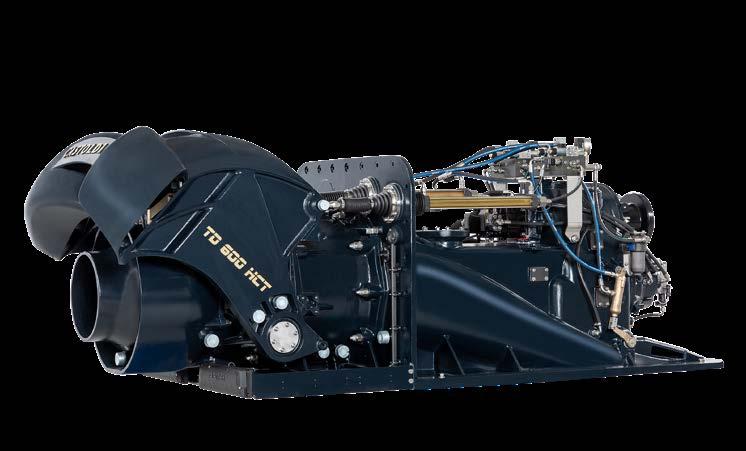
Castoldi’s latest waterjet drives that carry the HCT acronym have been redesigned to offer a 12% increase in performance compared to previous iterations. Advancements in impeller design, a pre-stator vane system, and an updated post-impeller stator work together to improve the flow of water through the system, reduce cavitation, and ultimately deliver more thrust combined with lower fuel consumption.
“These enhancements are largely thanks to investment in CFD analysis,” says Giacomo, “Combining fluid dynamics with our own practical engineering know-how has generated a lot of new ideas."
When Castoldi began production of jet tenders in the mid-90s, it decided from the start to take a platform-based approach with fixed hull forms designed around its own propulsion system.
Castoldi also produces its own control systems, from simple mechanical options to the sophisticated ACES system developed in collaboration with Xenta. Powered by a 32-bit embedded processor and utilising a proprietary CAN bus network protocol, the ACES system delivers precision control of engine RPM, waterjet steering nozzles and reversing buckets when transitioning between docking and cruising modes. Additional functions include dynamic positioning and smart anchoring, which simulates mechanical anchoring by swinging around a virtual GPS point. Adaptive steering logic can even provide ‘propeller mode,’ which recognises when the vessel is in reverse to simulate conventional propeller behaviour – a useful feature for operators transitioning to waterjets.
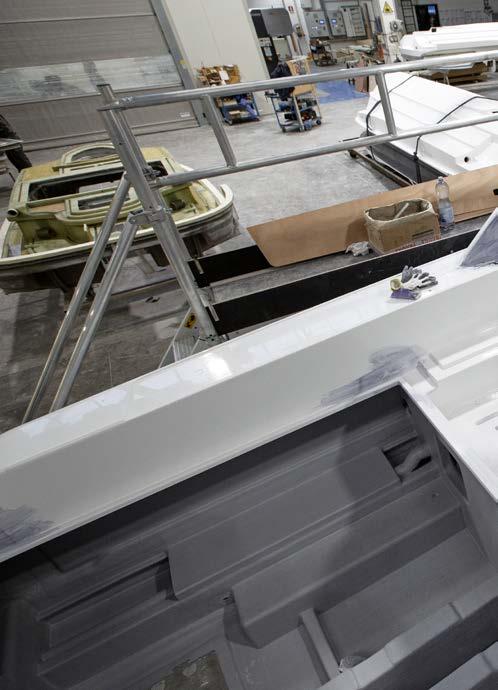
To maintain quality control, most of the waterjet components are machined in-house, an exception being the Duplex stainless-steel impellers that rely on precision investment casting technology. With regard to tender production, the whole process – from the 3D design, hull lamination and tube fabrication
to the hydraulic and electrical systems – is carried out internally before final testing in its own water basin in front of the factory. When Castoldi began production of jet tenders in the mid-90s, it decided from the start to take a platform-based approach with fixed hull forms designed around its own propulsion system. By standardising the production process, Castoldi ensures consistent quality while reducing unit costs through repeated tooling and manufacturing processes. Additionally, serial production provides opportunities for continuous optimisation, further enhancing the performance and quality of each new upgraded model. As the range evolved, customised interior materials, finishes and layouts have become the norm to meet the specific needs of individual clients without having to build costly and time-consuming one-offs. The company has applied exactly the same production philosophy to its new Jet Tender 34 Limo designed by Nauta Design. Conceived initially for a fleet of luxury cruise ships currently under construction, each ship will carry four Castoldi Jet Tender 34 Limo tenders to deliver a sophisticated ship-to-shore guest experience.
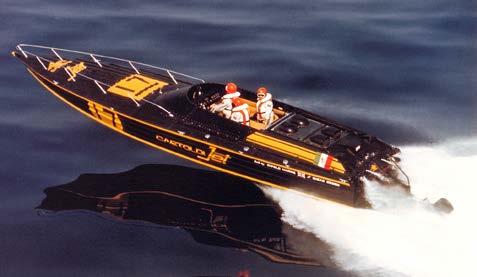
Luigi is not the only member of the Castoldi family to have made his mark on the (aero) nautical world. His brother, Achille Castoldi, achieved legendary status in offshore racing by becoming a five-time World Champion. His victories were not just about speed, but also mastering the art of controlling highpowered boats in challenging conditions. In 1953 he achieved a world water speed record for the 800 kg class, reaching a speed of 241.7 kph on Lake Iseo – a record that remains unbeaten to this day. He was piloting the hydroplane Arno XI built by the Cantiere Timossi boatyard and powered by a 4.5-litre V12 engine from a Ferrari 375 F1 car, which had been modified with twin superchargers to produce over 600 horsepower.
Mario Castoldi, Achille’s cousin, was another prominent family member. An engineer for the Macchi Aircraft Company, he designed the Macchi M-39 racing seaplane. Built specifically to compete in the Schneider Trophy, the plane was powered by a water-cooled, normallyaspirated Fiat V12 engine producing 880 horsepower. In 1926 at Hampton Roads, Virginia, USA, Major Mario de Bernardi piloted MM.76 (one of three M-39s competing in the event) to set a new world speed record for seaplanes of 416.6 kph. MM-76 is proudly displayed in the Italian Air Force Museum in Lazio, Italy.
Giacomo’s father, Franco Castoldi, won the Santa Margherita–Montecarlo–Santa Margherita offshore race in 1974. He covered the 200 nautical miles at an average speed of 57.2 knots in a boat equipped with two 600-hp engines and a special twin-stage, counter-revolving waterjet drive that he designed himself. To date, this is the only long-distance offshore race to be won by a non-propeller-powered boat.
“This project represents a new chapter for Castoldi that expands our offerings to new markets.”
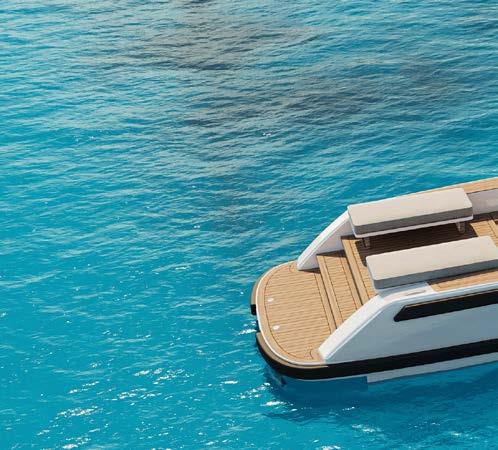
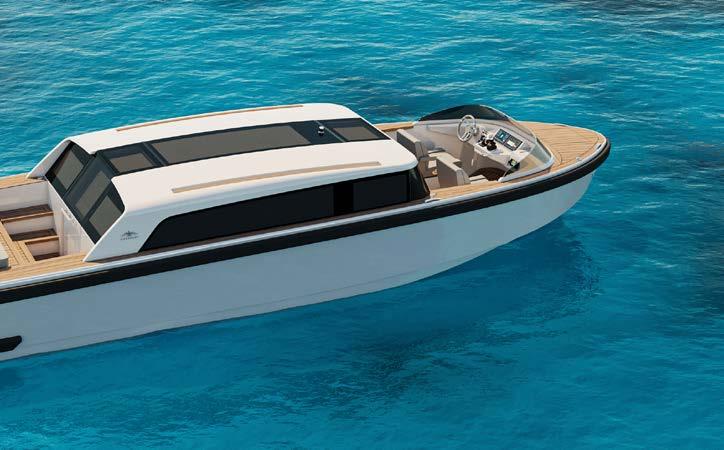
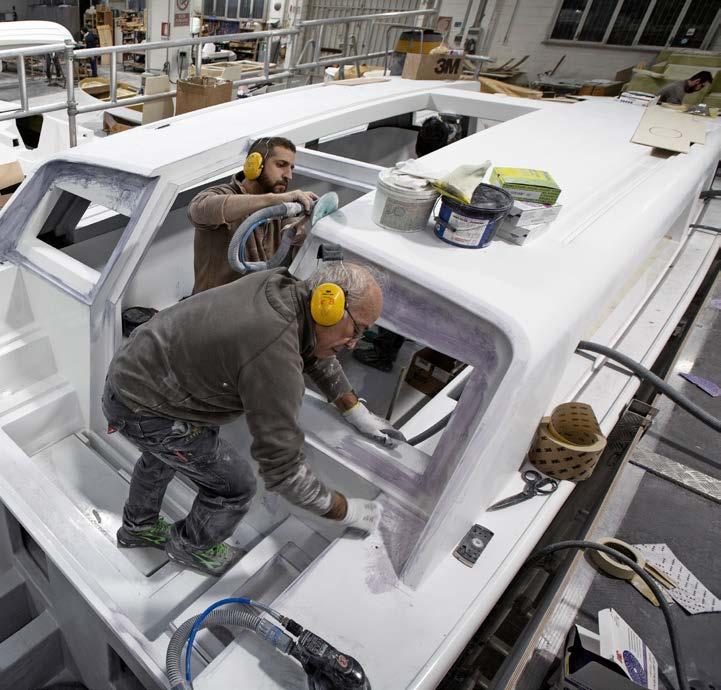
Historically, the limousine tender segment has been defined by high levels of customisation, where each unit is tailored specifically to the design and needs of a particular superyacht. While this approach allows for alignment with the mothership’s aesthetic, it often results in longer lead times, higher costs, and compromises in terms of performance and systems integration.
Castoldi’s entry into this market introduces a shift toward standardised, platform-based design, which allows for quicker production times and greater system optimisation, while still providing owners with a high degree of personalisation, particularly in the interior architecture. Two primary interior layouts are offered: one with all-seated configurations for maximum comfort, and another combining seating with a pantry and bathroom for longer transfers. Material finishes can also be tailored to suit individual preferences.
"This project represents a new chapter for Castoldi that expands our offerings to new markets, while maintaining the commitment to innovation, quality, and luxury we are known for,” says Giacomo. “The opportunity arose to enter the limousine tender market with a semi-serial product that embodies our construction philosophy of creating optimised vessels rather than one-offs.”
“In practical terms, we estimate that our serial-produced limousine tenders are priced at least 35% lower than equivalent full-custom examples,” adds Castoldi’s commercial director Luca Taccani, “without sacrificing the luxurious finish or technical sophistication that clients expect.”
In addition to the four limo tenders, Castoldi is also supplying the cruise ships with two customised Jet Tender 28 SV units. The ‘SV’ stands for ‘Support Vessel,’ and the model is specifically designed to work in tandem with the limousine tenders, with an enhanced bow sun-pad, extensive storage, pantry, and premium features like a T-top.
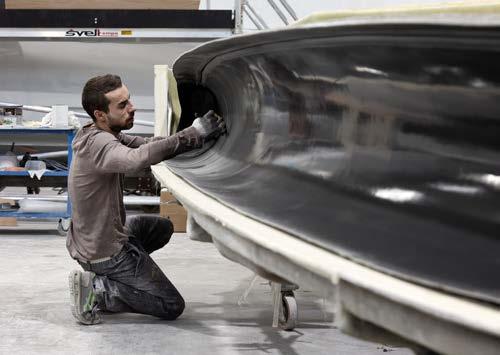
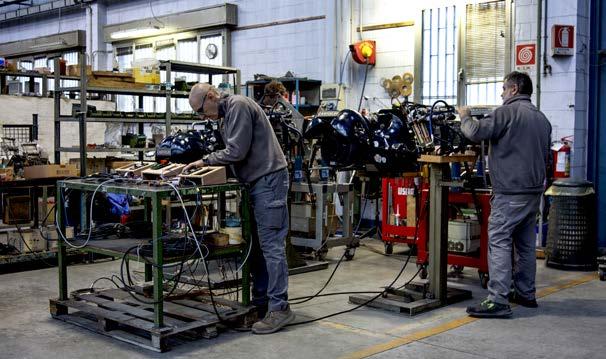
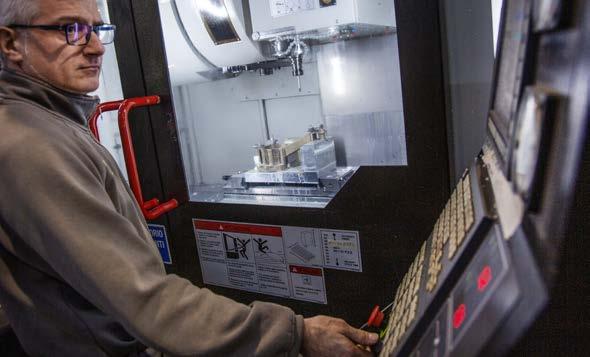
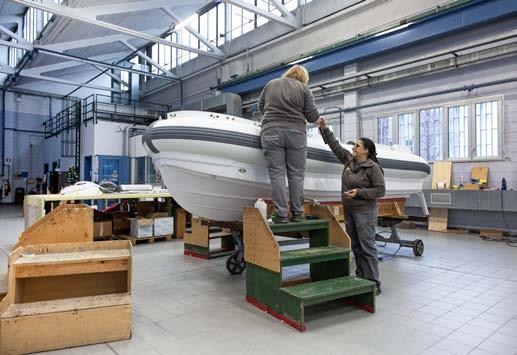
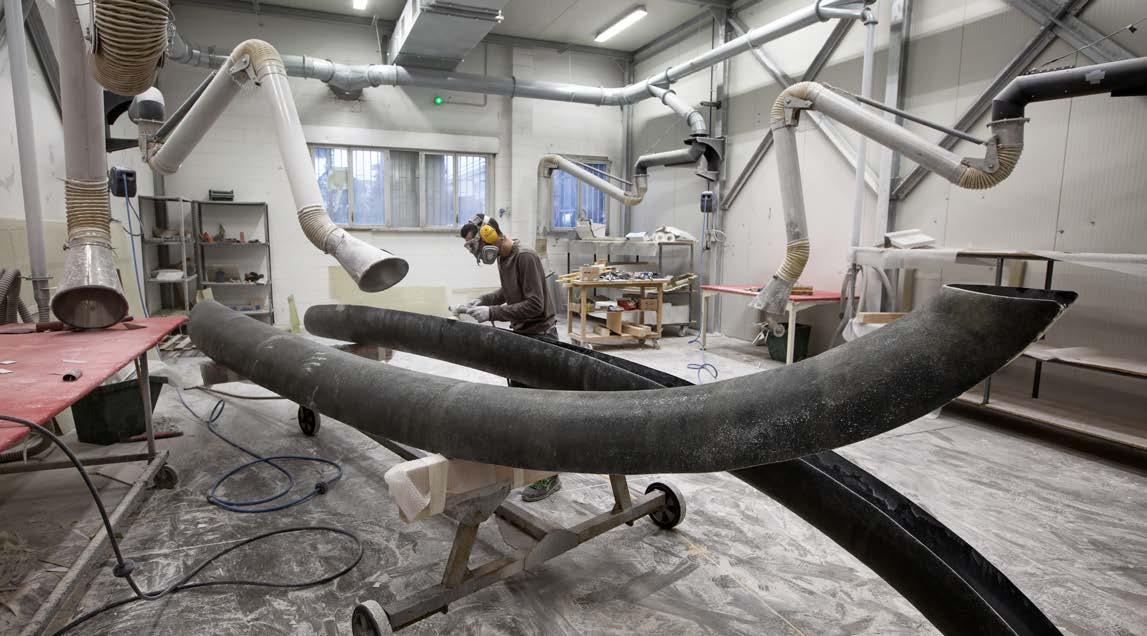
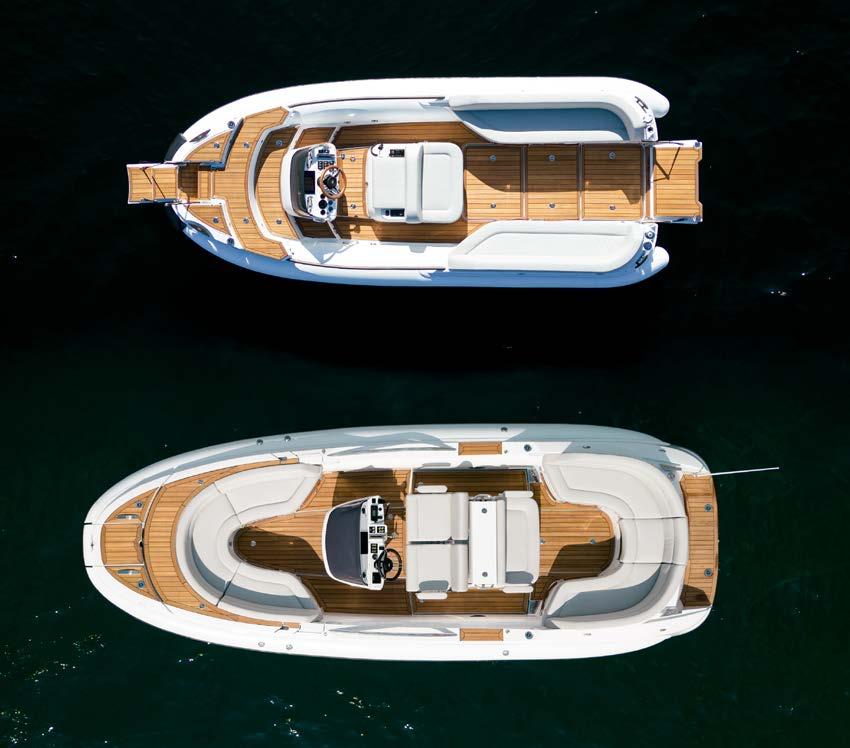
As Castoldi has expanded its offerings and capabilities, its workforce has grown accordingly and is now nearing 100 direct employees. In terms of business performance, the company has seen consistent growth, especially over the past two years since Luca Taccani joined the company. Annual turnover is currently distributed fairly equally across the waterjet and tender markets (50% and 40% respectively) with the remainder from spare parts and commissioning activities.
Although Castoldi builds its tenders in series, each sale is essentially a one-off transaction with an end client. Its propulsion products, on the other hand, can generate recurring clients that expect reliable and ongoing service. Naval procurement involving multiple waterjet units is an expanding sector for the company, for example. To meet this demand, Castoldi has made a deliberate effort to ensure the availability of components, stocking spare parts for older models well beyond customary timelines – often for more than ten years.
“We’ve focused strongly on spare parts and after-sales support with dedicated backoffice staff for service management,” says Luca Taccani. “This long-term outlook not only boosts customer loyalty but has also proven financially advantageous. As raw material costs have risen sharply, having a ready stock of components means we’ve been able to avoid significant cost increases.”
Castoldi’s trajectory over the past few years reflects a competitive company that is expanding its product range while also refining its operational efficiency and service capabilities. By focusing on technical innovation and long-term service, it has effectively created a “flywheel” effect, whereby small but consistent wins build momentum over time in a self-sustaining cycle of growth. Moreover, the brand’s entry into the limo tender market aims to demonstrate how serial production methodologies, when combined with proprietary propulsion and rigorous quality control, can challenge the prevailing bespoke approach.
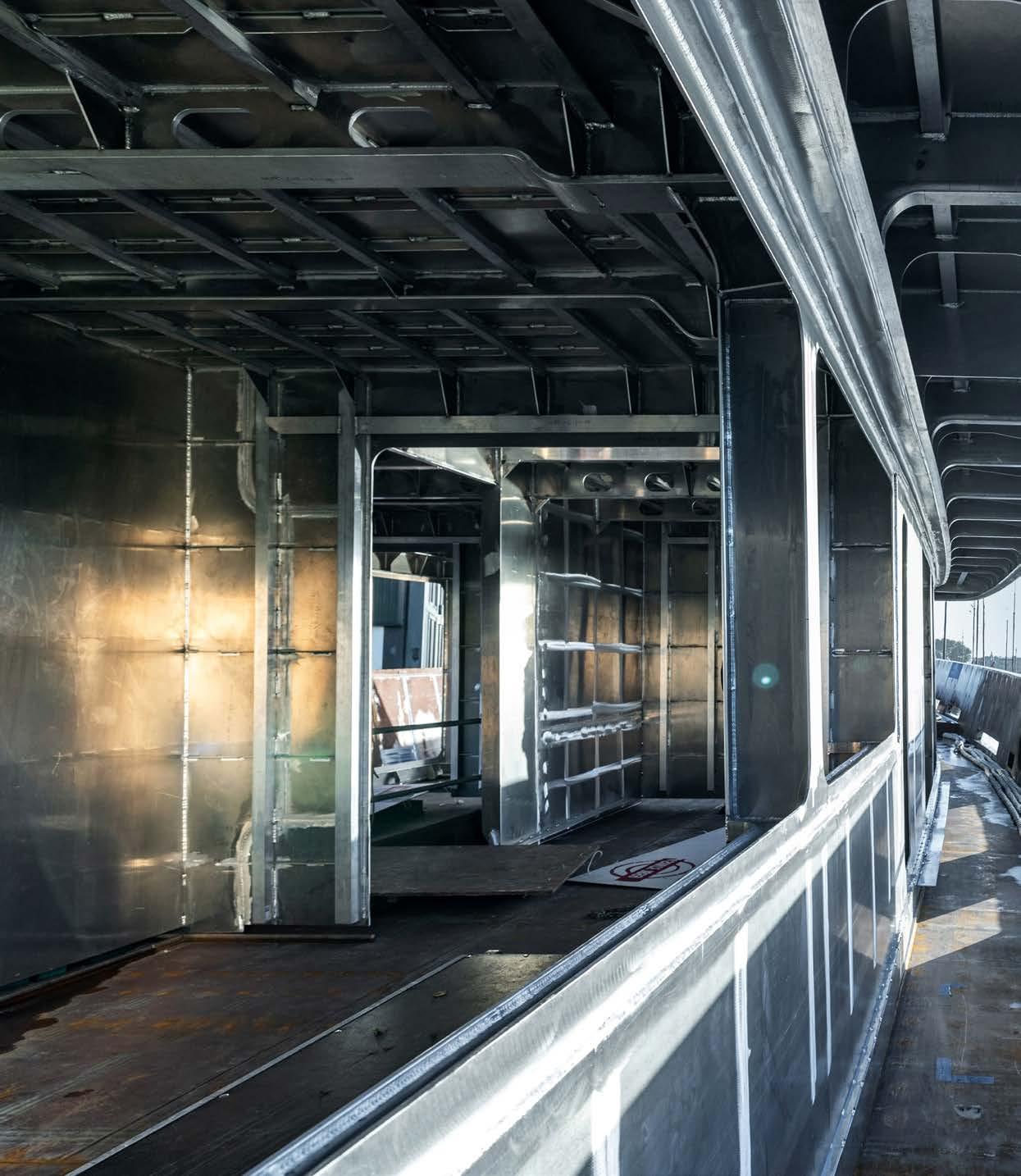
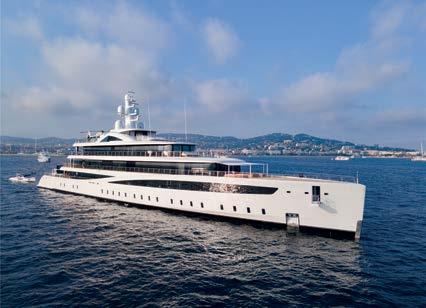
Project YB256 is a 45-metre steel and aluminium motor yacht under construction at Royal Hakvoort Shipyard in the Netherlands. The first collaboration between the family-run yard and Hoek Design Naval Architects, the yacht’s retro styling masks a modern and highly capable cruiser engineered for long-distance voyaging.
JUSTIN RATCLIFFE
“The hull and superstructure were conceived to balance classic proportions with today’s efficient hydrodynamics.”
The impossibly picturesque village of Monnickendam on the western shore of the Markermeer, a vast freshwater reservoir not far from Amsterdam, has been home to the Royal Hakvoort Shipyard for more than a century. Wedged into a narrow strip of dockland between the old town centre and the water’s edge, space is as precious as the custom yachts it builds, but over the years the management has perfected a choreography of space and timing to ensure multiple projects can progress without tripping over one another.
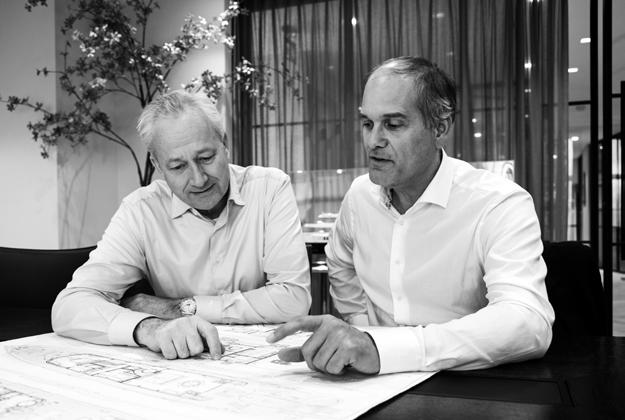
“Hoek Design is just a few kilometres down the road and we’ve often wanted to work with them, but the stars never aligned,” affirms Klaas Hakvoort, fourth generation director of the shipyard with his brother Albert Jr. “In this case, the client wanted Dutch pedigree, was happy with our pricing, and the complexity of the project was a perfect match for a custom builder like us.”
Project YB256 was inspired by Blue II, the 56-metre expedition vessel with classic lines by Hoek Design launched by Turquoise Yachts in 2020. Hoek Design partners Andre Hoek and Ruurt Meulemans translated the client’s admiration for the retro-influenced yacht into a more compact platform that would echo the same timeless elegance free of nostalgic mimicry, while embracing modern technology and efficiency. The owner’s exacting brief included full wheelchair accessibility, an elevator connecting all deck levels, and transatlantic capability.
“The hull and superstructure were conceived to balance classic proportions with today’s
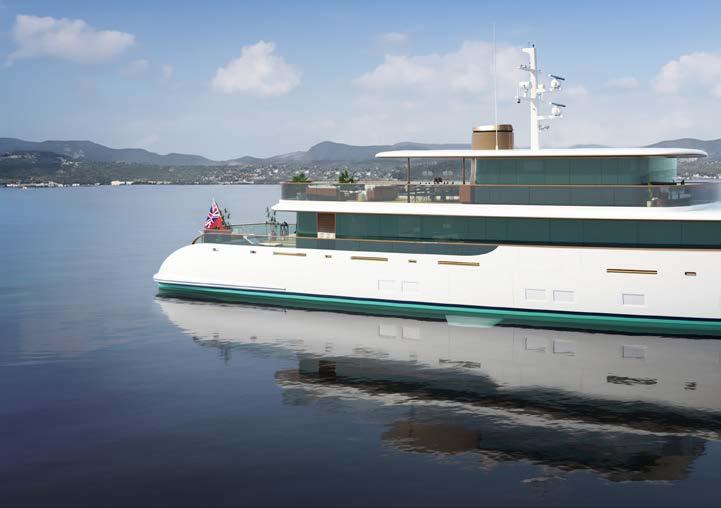
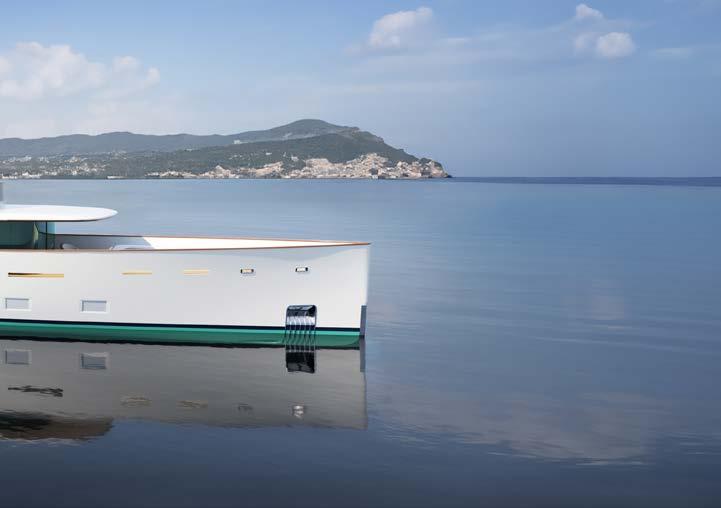
Bottom: A render of the retro-styled motor cruiser in build at Royal Hakvoort.
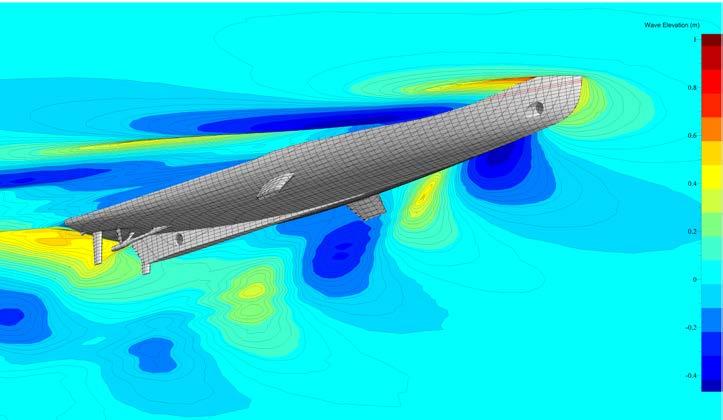
Below: A CFD study of the hull designed for long-range cruising.
efficient hydrodynamics,” says Ruurt Meulemans. “Computational fluid dynamics [CFD] analysis informed every curve, refining the bow shape and optimising volume distribution to reduce resistance as much as possible and improve wake flow to the twin propellers. The objective was a smooth, efficient ride across a transatlantic cruising envelope of close to 4,000 nautical miles – no small achievement for a vessel under 400 gross tons.“
Meeting these requirements called for some clever engineering based on robust, proven solutions. Finite element analysis (FEA) guided the placement of bulkheads, stringers, and the keel to ensure structural integrity under long passages without compromising interior volume. The challenge was compounded by hybrid-assisted propulsion comprising twin 1,000-hp MAN diesel engines paired with electric motors and supported by a lithium-ion battery bank. The system integrated by Eekels Technology allows for flexible operational modes. Electric mode provides a few hours of silent propulsion at low speed, ideal for manoeuvring in harbours or environmentally sensitive zones. In diesel mode the electric motors can function as shaft generators to reduce fuel burn on extended passages. The electric motors also add redundancy for additional peace of mind far from home. Royal Hakvoort had direct experience of the latter: during sea trials of 61-metre Asia, an electrical fault caused an engine shutdown, but the gearbox-mounted e-motors allowed the crew to manoeuvre safely away from an offshore wind farm.
“By the time everything is installed, the engine room will be very full, but accessible and maintainable. Not cluttered – engineered.”
A signature feature of the yacht is the continuous ribbon of wraparound glazing on the main and bridge decks – 17 tonnes of it. The bulwarks are also glass and the hull windows incorporate a dot-fade pattern that blends with the white hull from a distance. Combined with the classic sheer line and bronze-metallic funnel, the green-tinted glass adds a touch of understated elegance that hints at an era that never quite existed – but should have. The wheelhouse windows are not fullheight, but the aluminium surfaces beneath will be clad with glass and the same green reflective finish to create the visual effect of uninterrupted glass.
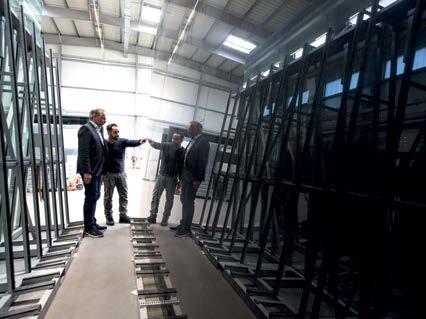
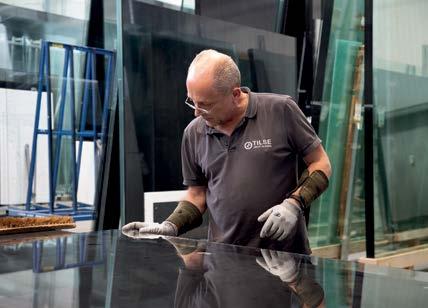
Extensive glazing has a downside, however: heat. Solar load becomes a critical issue, especially for a yacht destined for hot climates. One option is to increase HVAC capacity, but a smarter one is to engineer better insulation. Hakvoort chose the latter. A two-year development programme with glass specialist Royal-Maritiem sought the ideal balance of solar control, privacy, clarity, structural strength, and colour uniformity. Each double-glazed laminated pane is filled with argon gas and coated with a low-emissivity metal film tuned to deliver the desired green tint. The result is a 50 precent reduction in heat transfer compared to conventional marine glass.
But heat is not the only issue. Full-height windows also eliminate the storage units and hidden cavities normally used to route ducting, wiring, and AC trunking, pushing the technical infrastructure inward. As a result, space became the defining constraint and the build team had to fight for every cubic centimetre. Hoek Design has deep experience of designing sailboats where space is always at a premium, but it was up to the shipyard to find ways to integrate complex systems into tight envelopes.
“Nothing fitted, so we had to make it fit,” says Klaas, which could be the unofficial motto of the project. “By the time everything is installed, the engine room will be very full, but accessible and maintainable. Not cluttered – engineered.”
The electrical switchboards span the full height of the engine from port to starboard across, an unavoidable result of the hybrid system. The engine room itself relies on seawater-fed heat exchangers because there wasn’t room for conventional air-cooling systems. The pool doubles as a tender bay with a dump tank and its own dedicated crane compartment that closes flush with the teak deck. Under the sunbed on the foredeck is a two-storey garage for the crew tender and a pair of PWCs. Add the elevator, wider side decks and interior passages sized for wheelchair access, and every available every void had to serve a purpose.
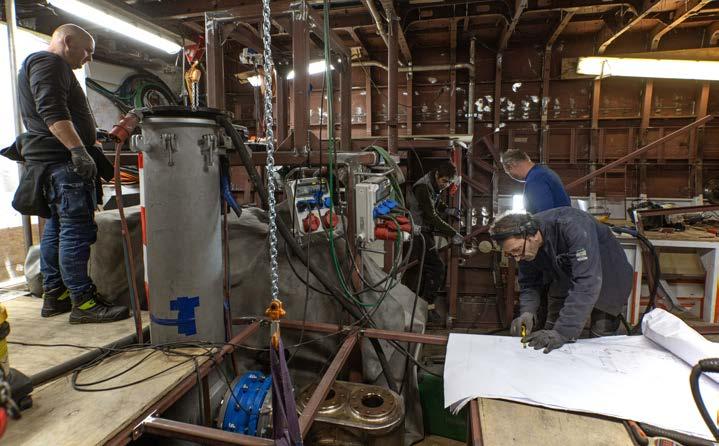
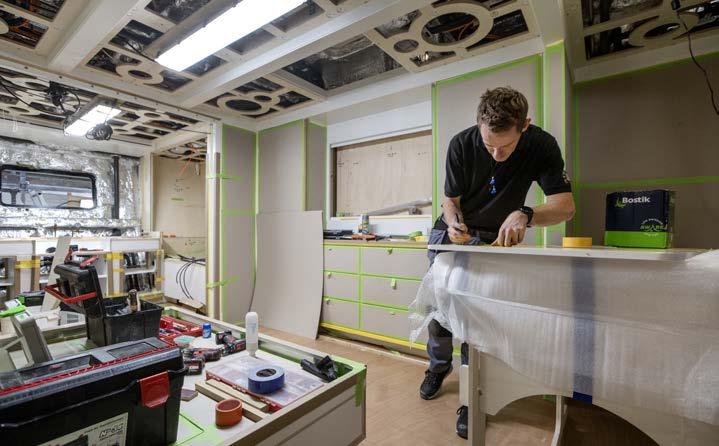
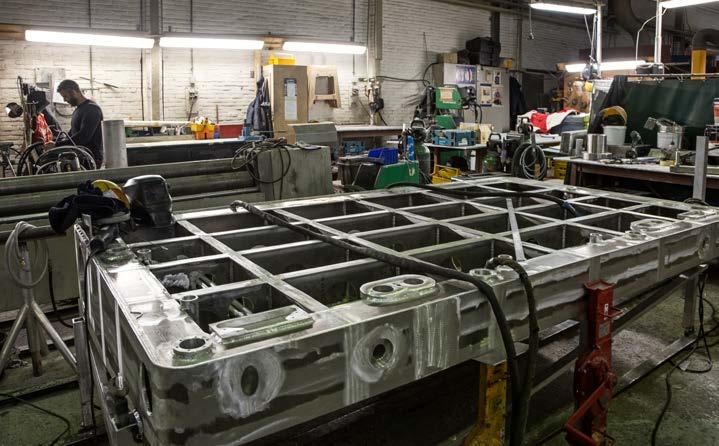
Royal Hakvoort traces its origins to 1919, when Albert Hakvoort Sr. began building wooden fishing boats. After the Second World War, the yard transitioned to steel construction, eventually shifting toward luxury yachts in the 1980s when the US owner of a Striker sportfisher came seeking a new yacht. The yard has remained fiercely independent through four generations and received the prized “Royal” warrant in 2020, recognising its reputation for high-quality custom superyachts.
Key projects include 61-metre Asia, 64-metre Scout, and 49-metre Mirgab VI Alongside YB256, a 65-metre yacht (YN254) is also under construction, nearly filling the 66-metre shed. With a new 70-metre project signed – its largest to date – Klaas laughingly admits that “something will stick out a bit!” Expansion landward is impossible, and waterside space is already maximised. When necessary, however, the yard is permitted temporary extensions resting on a reinforced slipway that was rebuilt in 2010 to support larger superyachts.
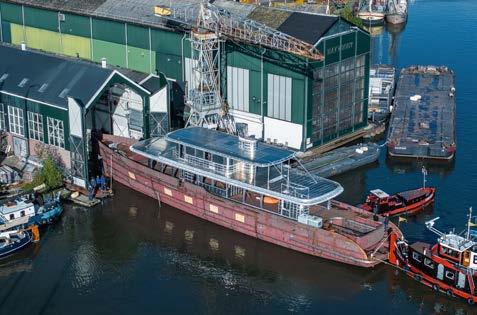
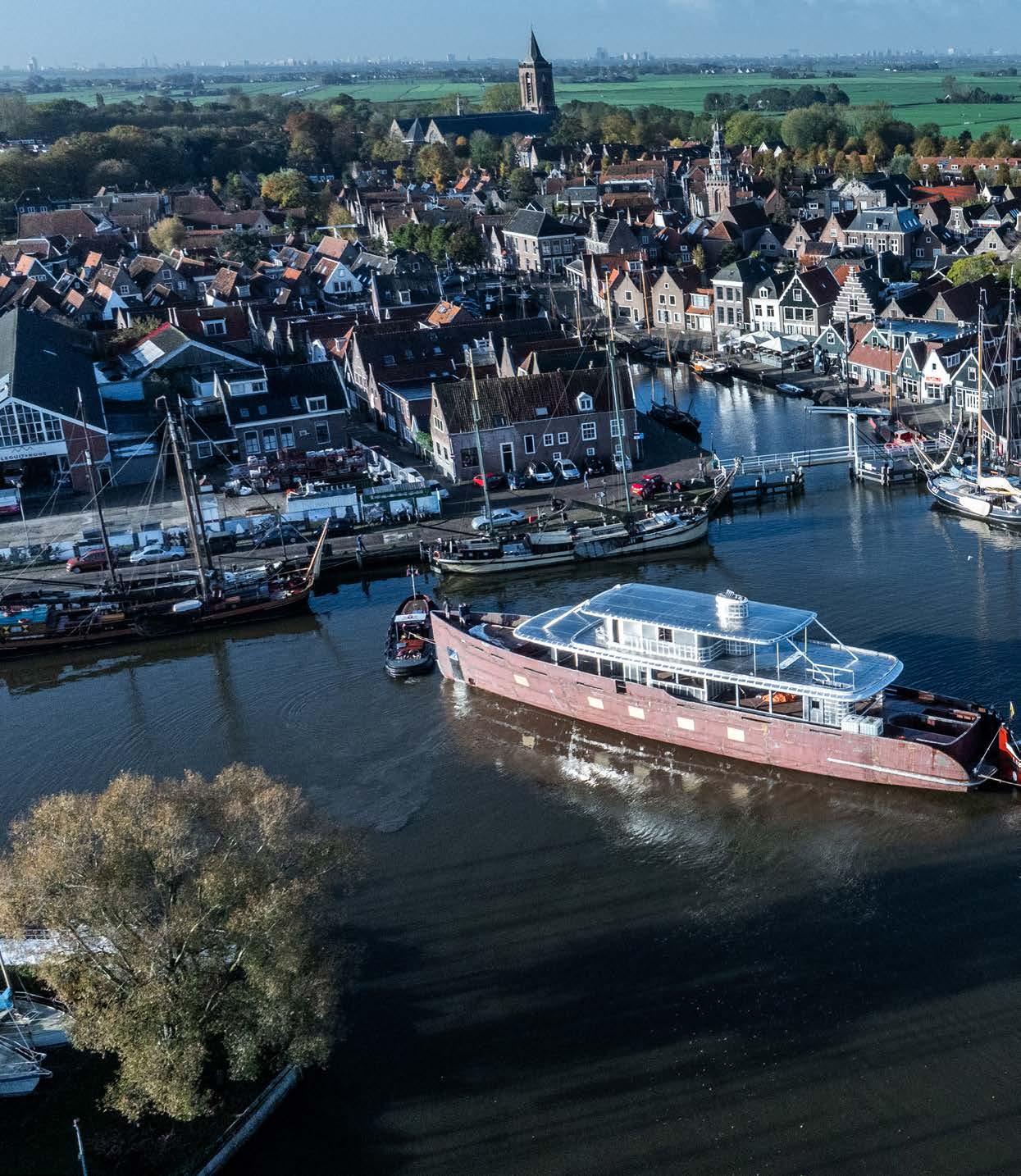
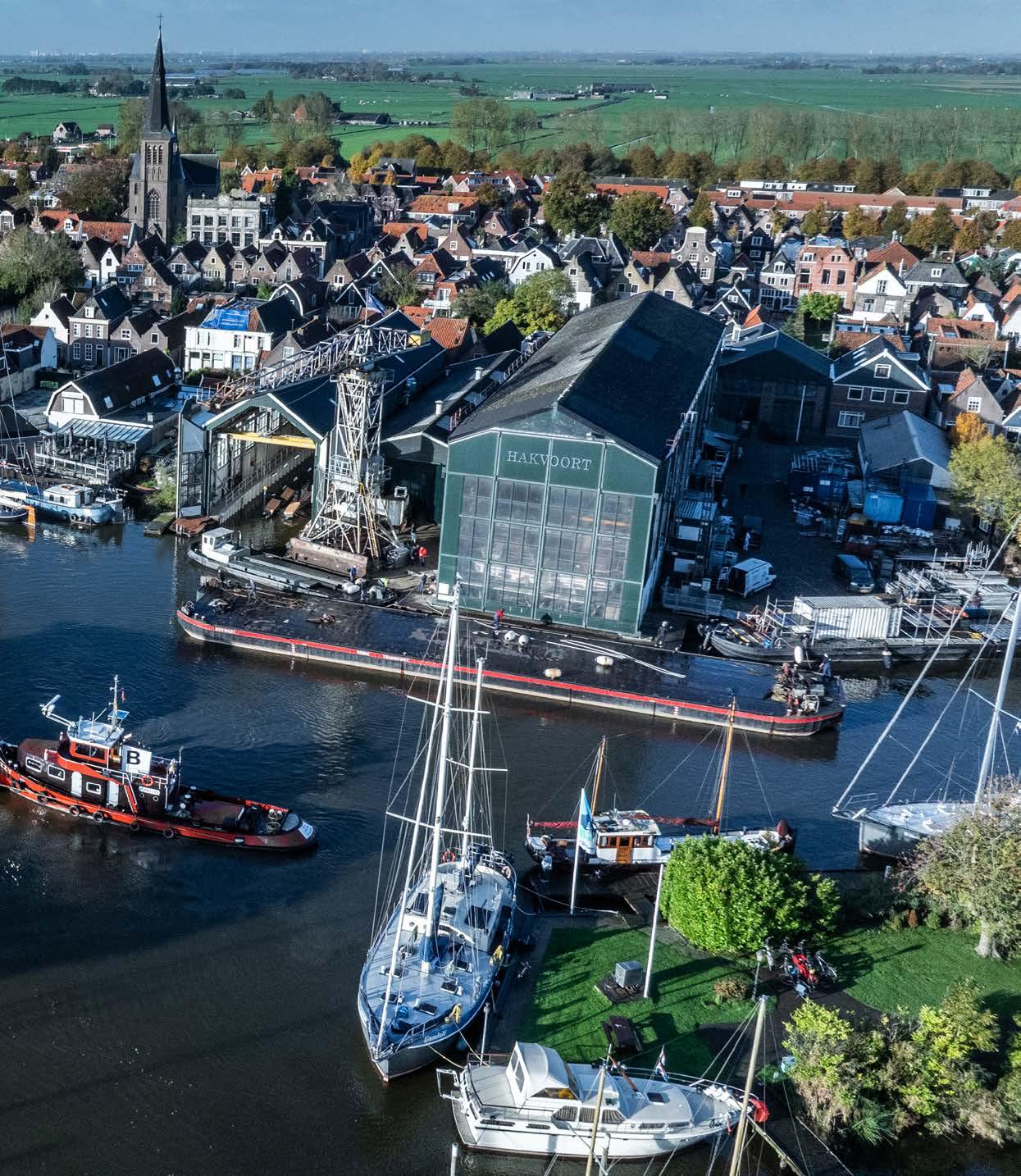
The metallic bronze faux funnel is more than a charming styling cue; it also highlights the kind of engineering concealment that defines the whole project. Since the yacht has underwater exhausts, there was no need for a traditional dry stack – nor was there space to route ducting up to one. Instead, the funnel became the home of the freshair unit that draws in and purifies outside air for the HVAC system. Fitting it inside that tight volume meant some early design assumptions had to be reworked. Routing the air quietly around the yacht from high up in the vessel posed further challenges. The onboard noise targets are uncompromising and the owner’s suite is engineered for a harbour maximum of 44 decibels, although Hakvoort typically achieves lower. Underway, the expected levels sit in the low 50s – quiet enough that the only audible sound should be the soft splash of water along the hull. Modern superyachts achieve such low mechanical noise levels that airflow has become the primary acoustic concern, not the engines or generators.
“You won’t hear machinery these days –you’ll hear air moving through the ducting,” confirms Klaas. “That’s why we focus obsessively on silencing ducts, bends and terminations.”
Consider the HVAC ducting for the crew quarters. To reach the lower deck forward, it has to pass under the bed in the owner’s stateroom, negotiating several dog-leg bends in the process. Air accelerates noisily through tight turns due to mass conservation and pressure shifts, so the yard routinely uses flexible elbow sections with larger diameters and internal damping to reduce turbulence and suppress sound.
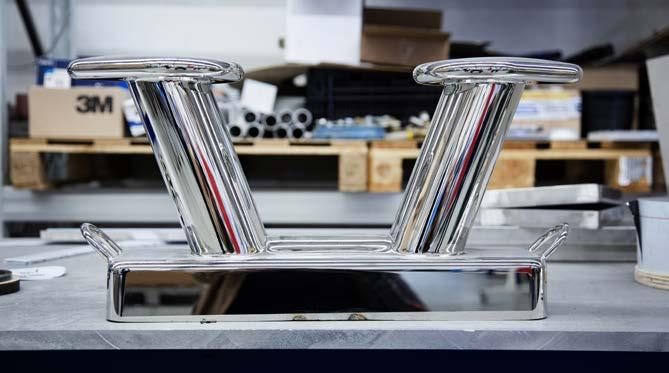
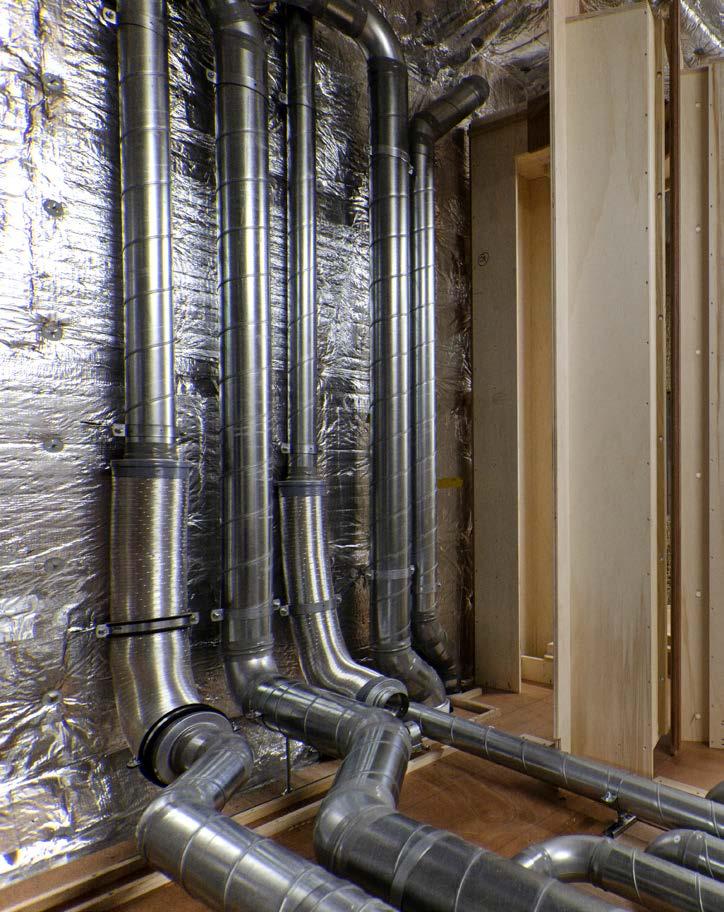
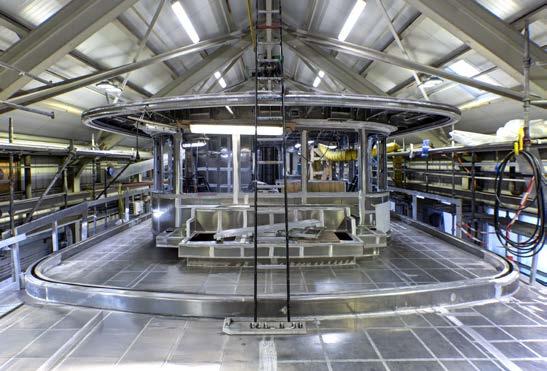
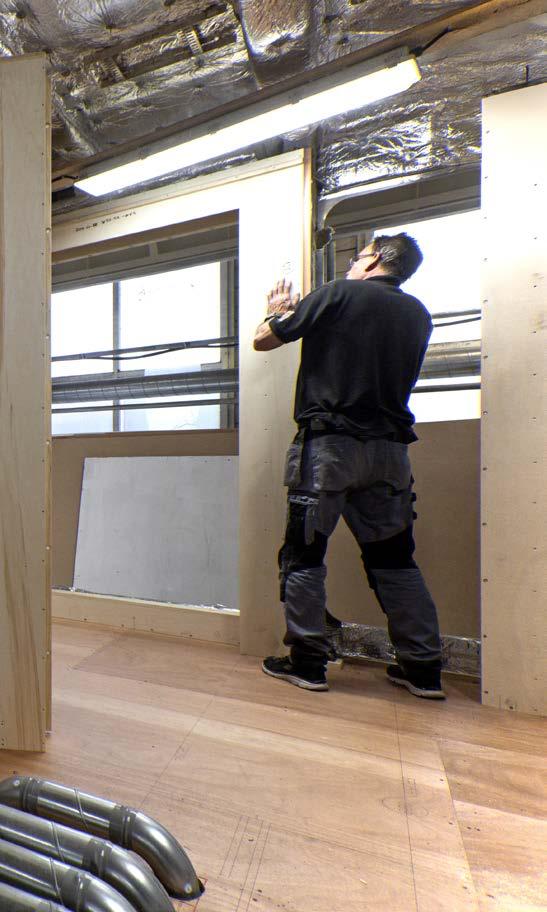
from bottom: Note the insulated, flexible sections for the HVAC ducting that passes under the owner’s bed; the shipyard fabricates its own stainless steel
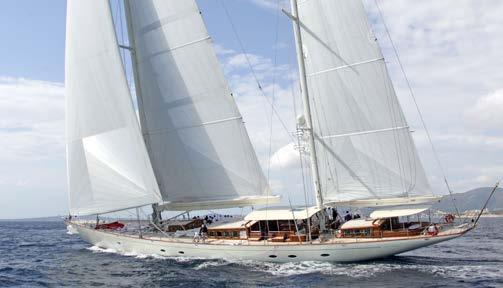
Hoek Design Naval Architects was founded in 1986 by Andre Hoek and quickly gained recognition for blending classic aesthetics with modern performance. After joining the studio as a specialist in aeronautics and hydrodynamics, Ruurt Meulemans became a managing partner in 2011 and now leads the design office.
The firm is best known for pioneering the “classic above/modern below” design approach, which integrates traditional yacht styling with modern underwater configurations like wing keels and spade rudders. Milestones include the development of its Truly Classic range in the 1990s and the launch of designs such as Adele, Athos, Elfje, Wisp, Meraki – all demonstrations of the “modern classic” concept. Today, the firm is applying the same design DNA to powerboats with Blue II and the 45-metre retro design in build at Royal Hakvoort.
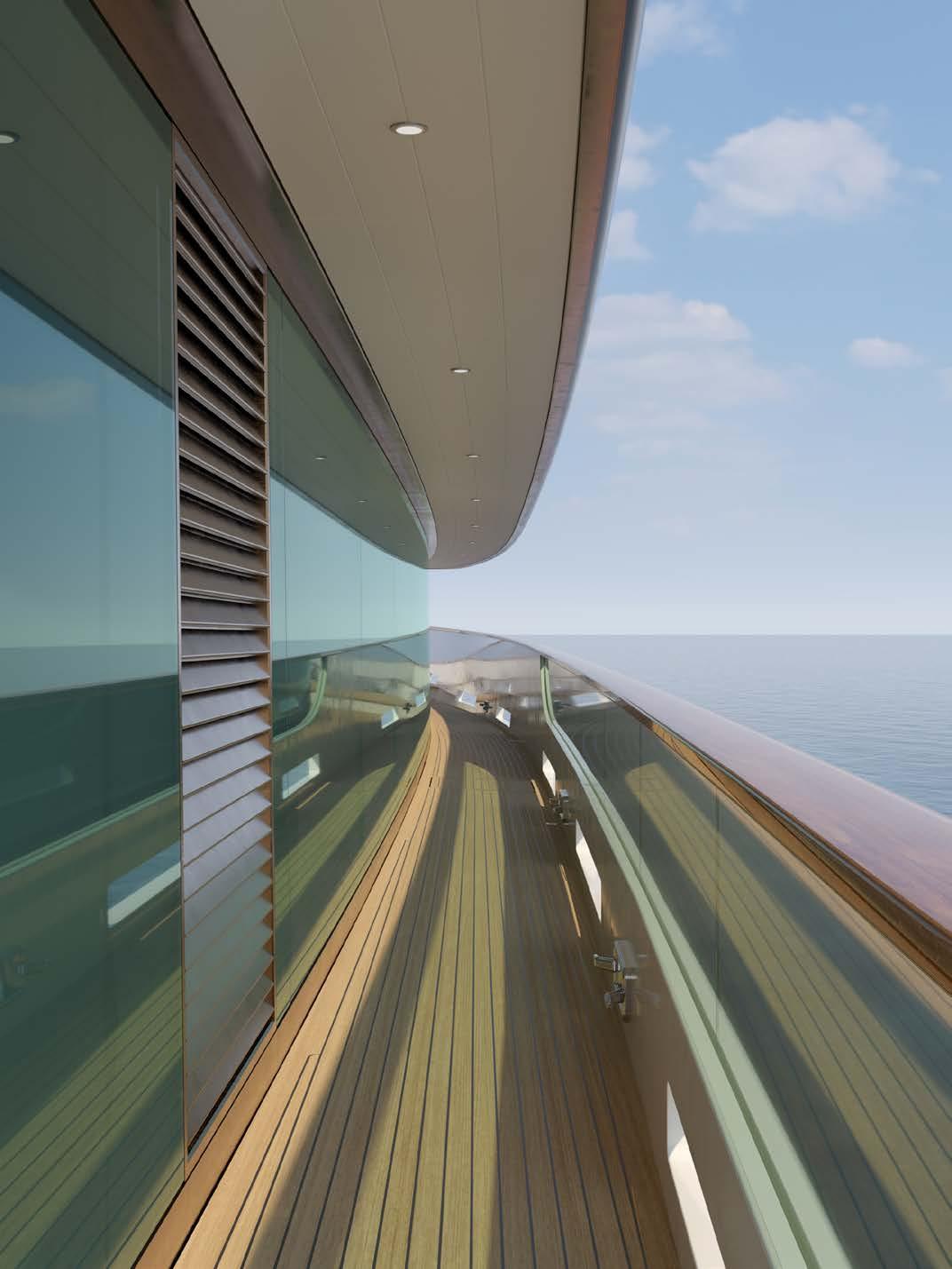
A signature feature of the yacht is the continuous ribbon of wraparound glazing on the main and bridge decks – 17 tonnes of it.
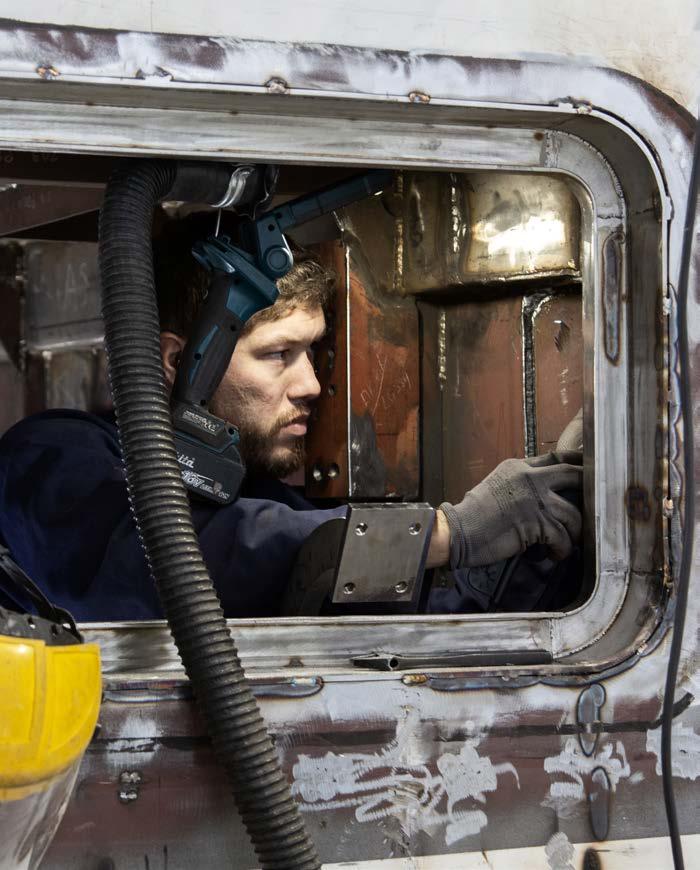
The aluminium superstructure was built at Alubouw Fryslan in Franeker and joined to the steel hull at Buijs Shipyard – the hull builder – before being towed to Monnickendam, but Royal Hakvoort has its own joinery division and stainless-steel department that produce most of the fixed furniture and deck hardware in-house. Klaas points out the customengineered hinges used for the exterior doors as an example of the shipyard’s handson approach. During development, these hinges were tested in the most practical way imaginable: by suspending 40 kg weights to a toilet door heavily used by shop-floor workers. Any weaknesses that surfaced were corrected before installation.
Another example is the aluminium hull platform that folds out from the topsides amidships and connects to the main deck by way of a boarding ladder for tender access. The platform being assembled in the metalworking department uses a hydraulic rotary or slew drive – more compact than conventional rams and able to generate high torque in tight spaces, it is a solution that has been refined by Royal Hakvoort over years of building canoe-stern vessels. Although capable of crossing the Atlantic, YB256 will primarily be used for short, comfortable runs with the frequent returns to port and high hospitality demands typical of most operational profiles. Every aspect of the interior has been conceived with wheelchair accessibility in mind, including a transformerstyle platform in the stern. Guest and crew flows remain fully separated, which is not always the case on yachts of this size.
The lower deck houses two full-beam VIP suites arranged around the main lobby and elevator; a third space will be used as an office/gym with a built-in recess for a running machine. The bridge deck is reserved for the owner’s sky lounge, while the captain’s cabin has been relocated to the lower deck. Crew areas have been configured to maximise discretion and operational efficiency with service and storage areas scaled to support day-use cruising.
After touring the shipyard and the yacht, the lasting impression is that YB256 is not just a modern yacht in retro clothing. It is a study in constraint-driven design and smart engineering by a shipyard for whom “custom” is a vocation, not a marketing term. Its timeless elegance is more than skin deep, the result of many difficult decisions made in the belief that contemporary and classic can comfortably coexist – both in appearance and in engineering.
By Georgia Tindale
What is the winning recipe for building a custom superyacht in 2026? It is the combination of a blank canvas, inquisitive minds, plenty of creativity and the bold willingness to take risks.
As just one example, at the time of publication, the industry is waiting with its breath collectively bated for the launch of the 69-metre superyacht Project Zero, due to take place this spring.
Set to be the world’s first fossil-fuel-free and zero-emission superyacht, Project Zero will operate without engine, generator or fuel tanks and be powered through a combination of solar, wind and hydro-generation. Dubbed ‘the yacht of tomorrow’, there are many ways in which Zero is unlike any other build before her.
However, she can also be viewed as the logical culmination of the build philosophy of her maker: Vitters Shipyard in the Netherlands. Developed in collaboration with the non-profit Foundation Zero alongside Dykstra Naval Architects and Vripack, Project Zero epitomises what it means to be custom.
As Bas Peute, Vitters’ Sales and Marketing Manager, explains: “Every detail of Zero has been shaped by the same question: How can we do this better?”
Vitters has a fleet of 35 full-custom superyachts on the water, befitting its 35 years in existence. A hugely diverse portfolio, its extraordinary range of vessels includes one of the world’s largest highperformance sailing ketches, the 85-metre Aquijo; the ultra-modern, 32.6-metre Malcolm McKeondesigned carbon sailing sloop Ribelle; and the 42.6m competitive J-Class yacht Svea
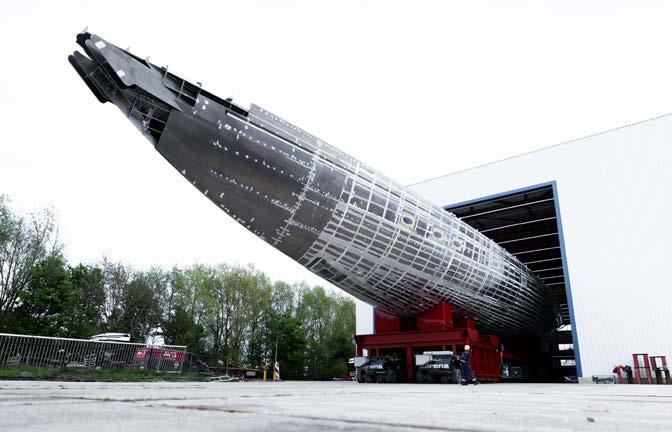
Vitters’ ongoing custom projects include Project Dreamer, whose keel was laid in September 2025 and which is slated for delivery in spring 2028. A 63-metre high-performance flybridge sloop – the first of its kind to be constructed at this size – the sailing yacht features exterior design by Malcolm McKeon Yacht Design (MMYD), with interiors by the Italian studio M2Atelier. For Greg Monks of Monks Large Yacht Consultancy, Owner’s Representative for the project, it was both Vitters’ adaptability and level of custom-building experience which cinched them as the logical shipyard for the build.
As he explains, “It was vital to appoint a shipyard with the flexibility, experience and know-how to execute what we were designing. Of course, we want to be developing designs and pushing the boundaries to create something better than what’s been done before, but this innovative spirit needs to be balanced with risk to ensure we achieve the right result for the owner, delivered on time. We have never doubted that Vitters will be able to build what is on paper, and it has been a great collaboration so far.”
On the designer’s side, for Project Dreamer, MMYD was tasked by the client to conceive the largest yacht possible within a volume of 500 GT, which revolves around both speed and comfort.
As Malcolm McKeon explains, the collaboration with Vitters has been extremely positive: “Vitters’ team brings an exceptional level of craftsmanship, experience, and openness to dialogue, which has made the design process both efficient and creatively rewarding. Their ability to engage with complex design ideas, while offering practical insight, has ensured that the original vision for Project Dreamer has been maintained while being enhanced through the realities of construction.”
Expected to launch in late 2026/early 2027, the classically styled 69-metre ketch Project 3095 is the 10th collaboration between Vitters and Hoek Design. A development on previous Vitters-Hoek yachts in this style, and whose performance, styling, overall layout and concept have been optimised, Project 3095 is a timeless beauty, built with tested and proven technology to enable independent, long-distance deep ocean cruising to remote areas.
Designed to pass under the bridges of the Panama Canal as well as to be dry-docked in the US East Coast, she has a shallow draft fixed keel with a trim tab, carbon spars and rigging, as well as side boarding platforms and two large tenders which can be launched quickly, thanks to her
retractable hydraulic crane.
As Andre Hoek explains, it was the impressive track record between Vitters and Hoek which encouraged the owner’s team to choose Vitters for Project 3095. “This was a repeat client for us, and we have done so many projects with Vitters before. They are a very hands-on and smaller-scale organisation, which fitted very well for the client, both in the professional way in which they handled the whole project and their enthusiasm.”
Notably, the shipyard also demonstrates its substantial expertise in refits, with a 66-metre Vitters-built sailing yacht currently undergoing work at the shipyard, and the company looking to expand its service offering in this area over the next 24 months.
However, it is in the creation of its remarkable full-custom sailing superyachts for both today and tomorrow’s owners where Vitters finds its raison d'être
As Bas Peute highlights: “It is the owner’s vision and our values. This is what shapes every yacht we build. A yacht built by Vitters is a superyacht in every sense of the word: intrinsically unique, expertly crafted to meet personal requirements, and elevating the on-water experience and lifestyle in new ways. It is this approach which has positioned us as the market leaders in this sector for full-custom aluminium sailing yachts.”
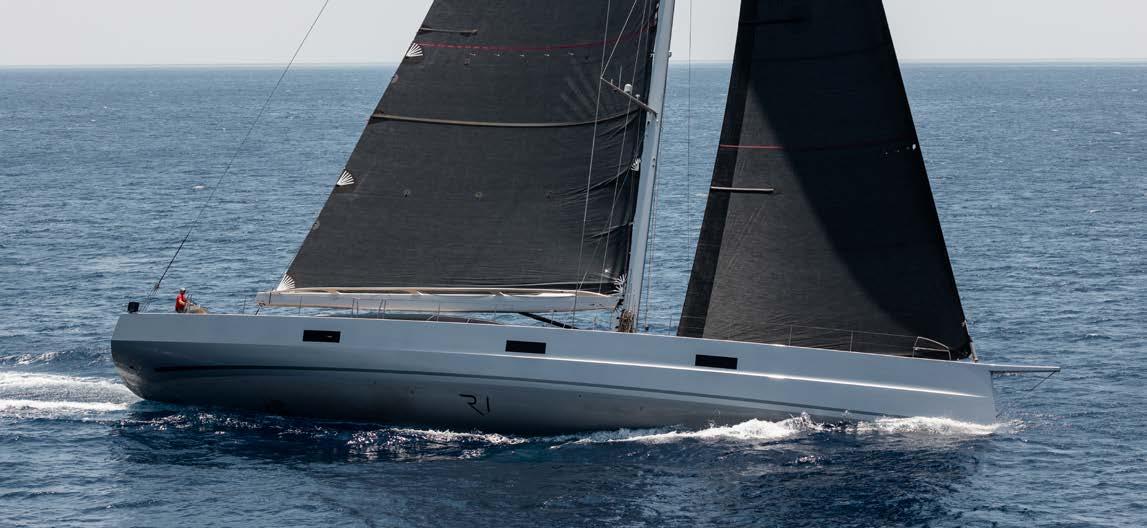
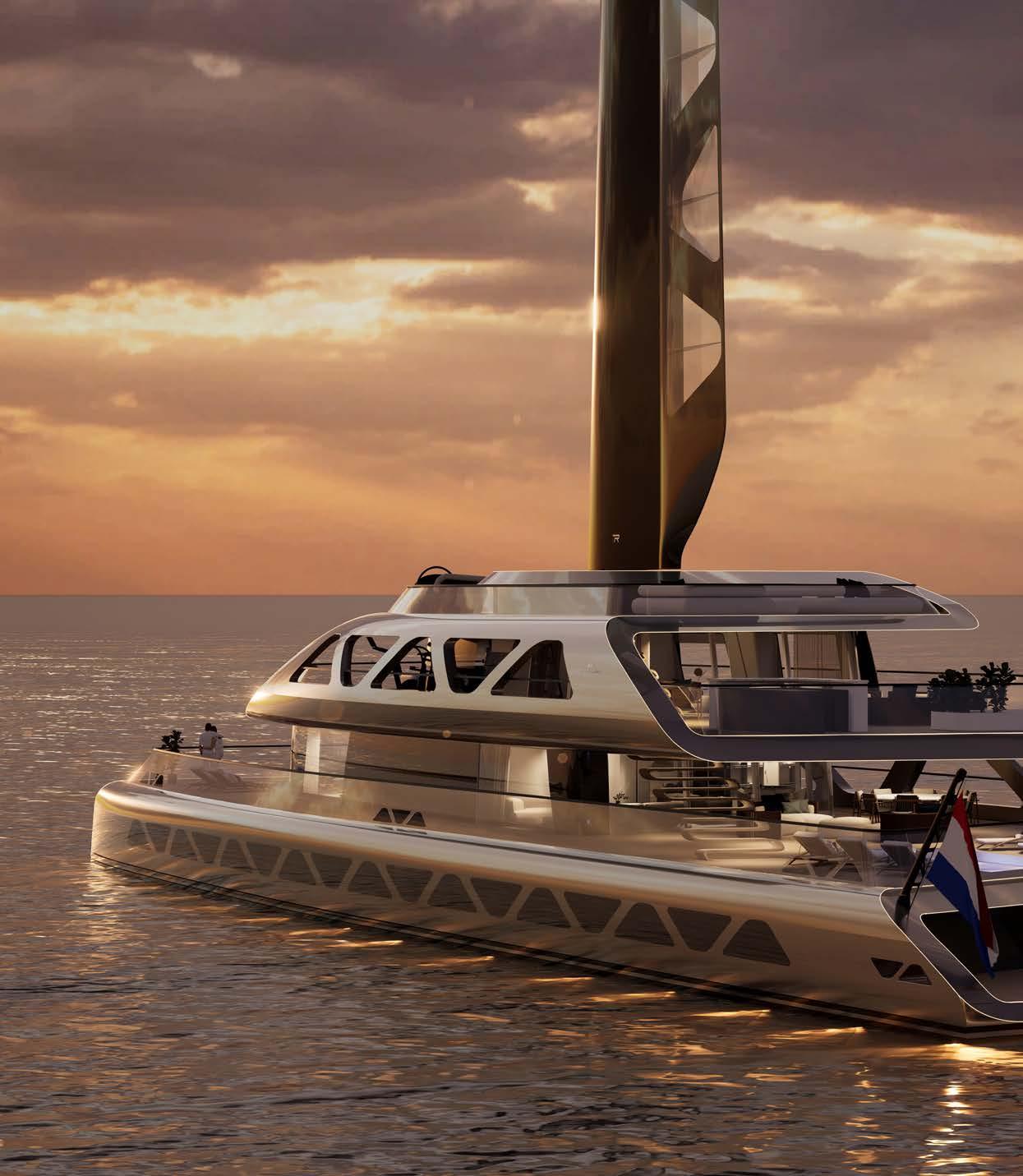
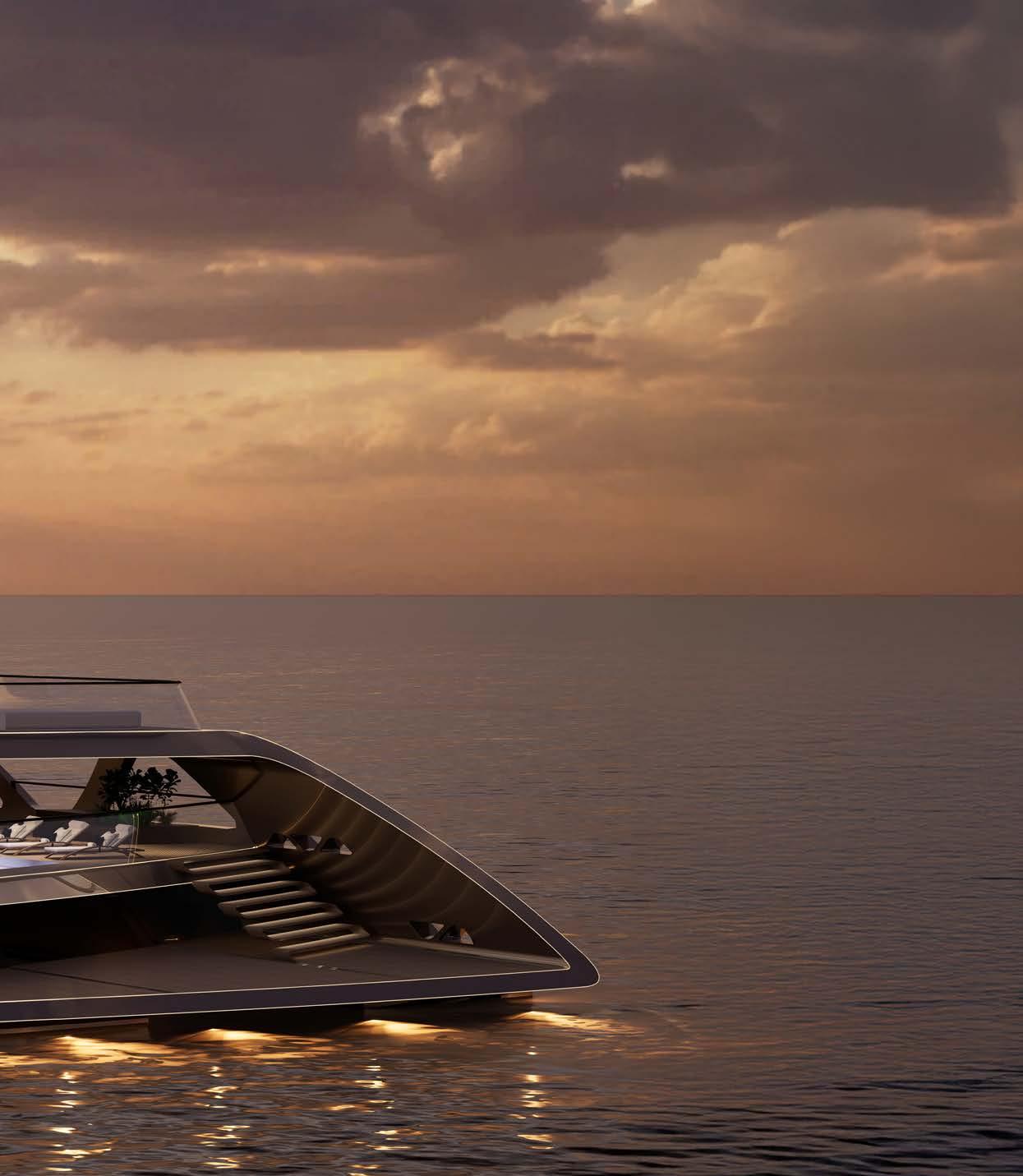
More than a speculative future concept, Royal Huisman’s Aera catamaran represents the convergence of mature technologies assembled with an emphasis on simplicity and sustainability. Research and testing have shown the project is both feasible and buildable. The focus now is on systems integration and production scaling.
BY JUSTIN RATCLIFFE
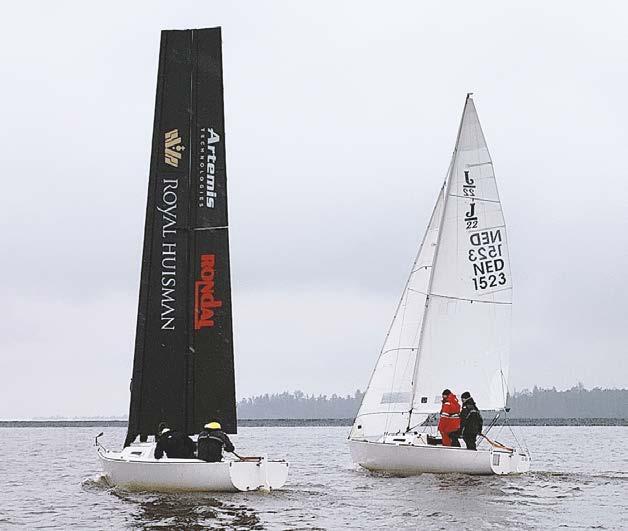
Below: Initial testing saw a wing mast mounted on a J22.
Facing page, top: Rondal’s hydrogenerator.
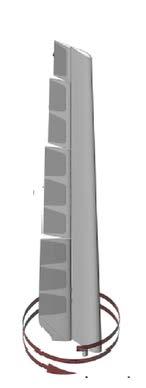
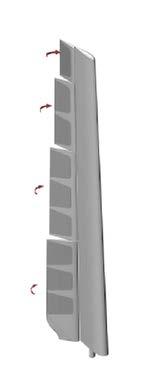
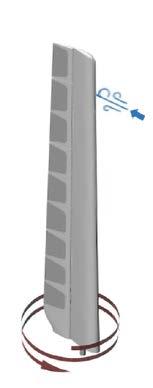
Bottom: Diagram showing the free-standing, rotating carbon-fibre wing with four feathering flaps. The rig can be lowered for maintenance or passing under bridges.
Developed by Royal Huisman in collaboration with sister company Rondal, Artemis Technologies, and designer Cor D Rover, Aera is a technical study into the feasibility of combining wind-dominant propulsion, low-drag hydrodynamics and alternative energy systems within the constraints of a large luxury yacht.
The 50-metre catamaran builds on the shipyard’s Project Tidal Shift, an internal innovation initiative that identified increased utilisation of sail power and systemic reductions in energy demand as the most effective pathways towards sustainability. From the outset, the project followed an engineering-first methodology in which energy demand and drag were reduced before alternative energy sources were applied. This approach informed decisions across platform selection, structural engineering, rig design and onboard energy systems.
“Early concept development did not initially assume either a multihull platform or a wing sail,” says Herman de Jong, innovation manager at Royal Huisman. “Our initial investigations focused on automation of conventional rigs and the use of delivery sails to reduce dependence on costly sail inventories.”
Collaboration with Artemis introduced the possibility of wing-based propulsion, with early consideration given to soft wing concepts derived from high-performance foiling monohulls. These were ultimately rejected due to the large structural loads required to shape the membrane, the resulting rig forces transferred to the hull, and the limited suitability for the operational profile of a superyacht. A rigid wing sail was identified as aerodynamically superior, functioning as a true air-foil with 10 times lower drag than a conventional tube mast (even with the sails lowered), while also allowing passive feathering when unloaded.
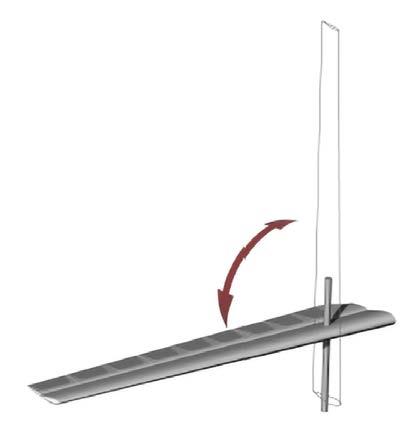
“Wing sails have been proven in racing environments such as the America’s Cup and SailGP,” argues Dr Iain Percy, founder and CEO of Artemis Technologies, himself an AC veteran and double Olympic champion.
“The challenge here is adapting that performance into a reliable, low-maintenance system suitable for a superyacht. To do that, a significant part of the development has focused on active control to manage performance, comfort and manoeuvring across a wide range of conditions.”
Initial testing of the wing concept was conducted using a free-standing, rotating carbon-fibre wing mounted on a J22 test platform. The trials confirmed the wing’s ability to passively align with the wind and maintain low drag, but also revealed some dynamic coupling between the wing’s oscillatory behaviour and the natural roll frequency of the monohull. These findings convinced the team to focus on a multihull configuration, as the increased initial stability of a catamaran minimises roll-induced excitation of the wing system and the loads on the two sets of bearings inside the yacht, although Royal Huisman does not preclude monohull applications in the future.
“The wing sail concept is better suited to a catamaran platform as the rig remains upright and is not subjected to large heelinduced load variations,” explains de Jidde Looijenga. “By limiting heel angles, the vessel also avoids one of the primary deterrents for owners transitioning from motor yachts to sailing yachts, not to mention the absence of flogging sails and running rigging.”
The wing comprises a thin aerodynamic Mylar skin supported by a carbon-fibre framework of spars, ribs and transverse plates, which manage the global bending and torsional loads much like the wings of an airplane. Controlled flexibility is incorporated into the design to allow the wing to twist under load, improving lift distribution and reducing peak stresses.
Automation is fundamental to the operational viability of the wing system. Conventional sail handling is replaced by wing rotation and deflection of the four trailing-edge flaps, actuated by hydraulic cylinders at the root of each flap. Sensor-driven software continuously adjusts the wing’s angle of attack and flap configuration in response to wind conditions, reducing crew workload and minimising the risk of human error. The control algorithms are the result of CFD models developed in collaboration with Artemis, drawing on experience from highperformance sailing applications.
Feathering is a critical safety feature, so if the active system fails the wing naturally aligns with the wind and minimises drag. In extreme or turbulent conditions, it is designed to depower automatically to a lowload, low-drag state without requiring crew intervention. Although it’s meant to remain upright in all weather conditions, a hydraulic hinge mechanism allows the entire wing to be lowered to reduce air draught for bridge clearance or maintenance purposes.
From a lifecycle standpoint, Dr Percy points out that a wing sail replaces a consumable system with a permanent one. Conventional sails degrade and require regular replacement, whereas a properly designed wing can last for the life of the yacht. This permanence shifts cost and maintenance considerations away from periodic sail replacement towards upfront engineering and long-term reliability.
“Manufacturing feasibility has also been a central consideration throughout development,” says Bart van der Meer, sailing system engineer at Rondal. “Each rib of the wing requires a unique mould due to the changing airfoil geometry along the span. We expect production-scale moulds are expected to be fabricated from milled aluminium to ensure dimensional accuracy and repeatability.”
Although these challenges are not trivial, they are a question of process optimisation rather than unresolved technical risk.
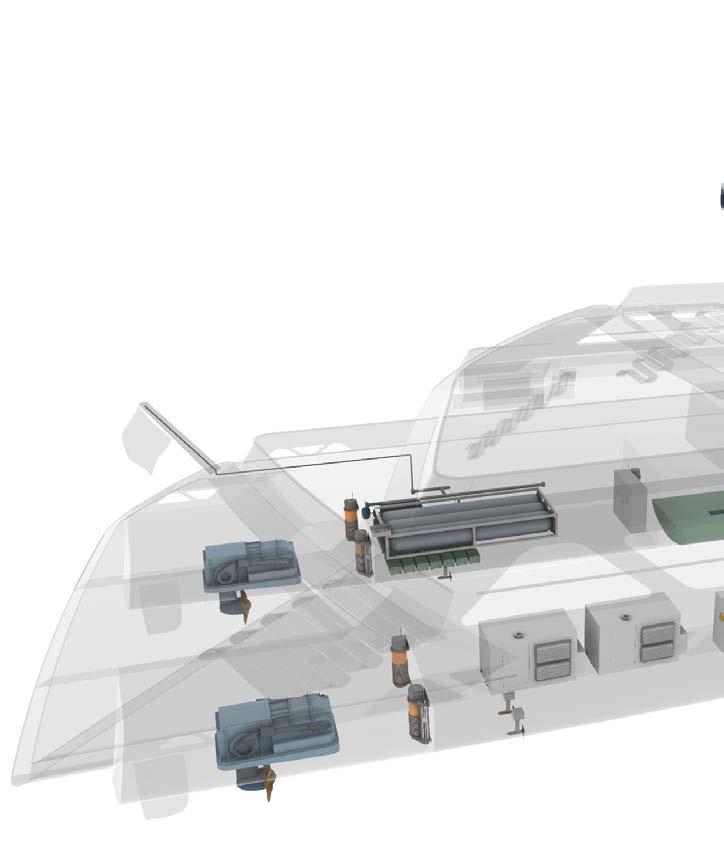
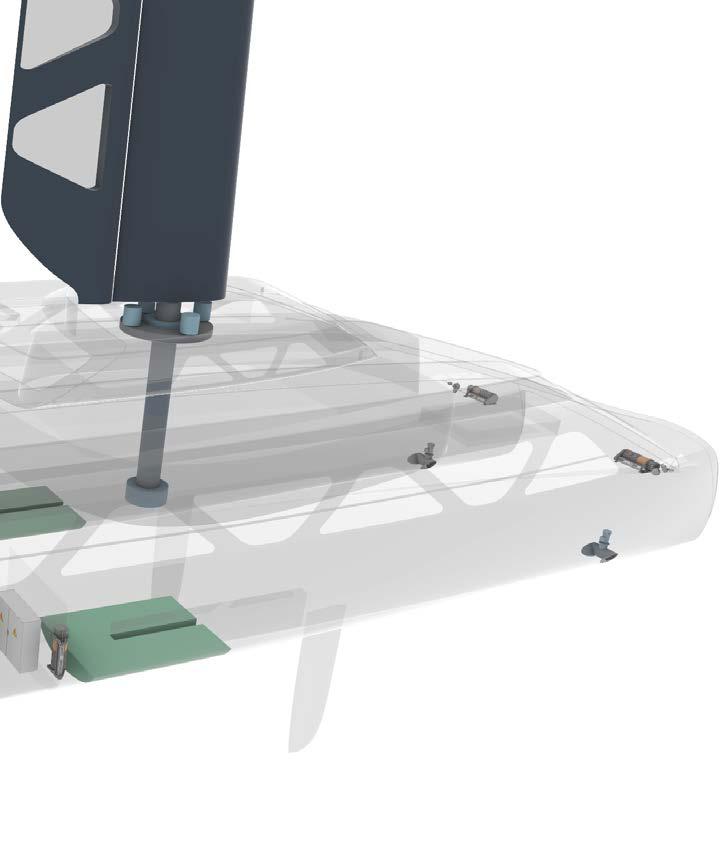
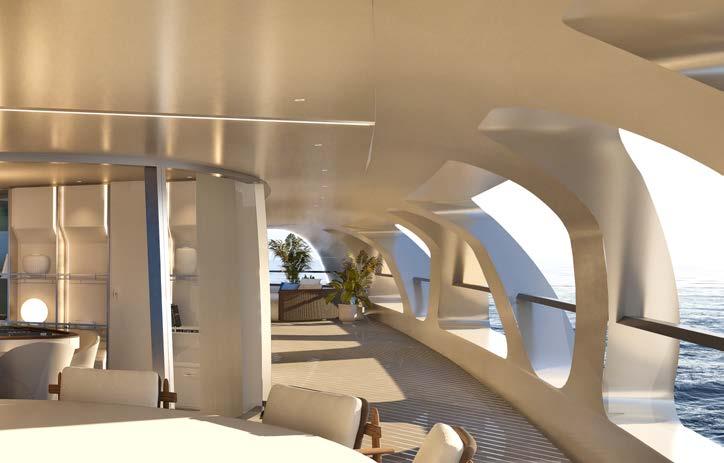
Left: Aera’s energy generation is organised around a hybrid diesel-electric system with battery bank and hydrogen fuel cell.
Below: The truss-like exterior geometry allows for large distances between supporting pillars.
Structurally, the Aera catamaran departs from conventional multihull architecture through the use of principles derived from cantilevered bridge design – notably the historic Koningshaven Bridge (also known as ‘De Hef’) close to Cor D Rover’s studio in Rotterdam. The triangulated geometry spans large distances between pillars, enabling open-plan interiors and extensive glazing. The asymmetrical geometry of the vessel is a functional response to spatial and structural requirements rather than an aesthetic gesture. Although the deck levels appear unsupported, structural integrity is maintained through clearly defined global load paths disguised in features such as staircases.
“The geometry follows the forces rather than being applied as a stylistic layer,” explains Cor D Rover. “Structural cut-outs allow semi-open areas to remain outside the tonnage calculations while still contributing to stiffness and spatial articulation. Despite this unconventional arrangement, the enclosed volume is carefully controlled at approximately 1,880 cubic metres, keeping the vessel below the 500 GT threshold.”
Material selection for the hull and superstructure is centred on aluminium, chosen for its strength-to-weight ratio, recyclability, and compatibility with Royal Huisman’s expertise in working with lightweight aluminium alloys. Weight control is particularly critical for a catamaran, as increased mass directly raises wetted surface area and drag. Artemis Technologies was closely involved in optimising the hull forms to balance hydrodynamic efficiency with superyacht functionality.
“Our naval architects actually found the constraints of the superyacht design space to be a valuable tool in refining the hull shapes,” says Dr Percy. “By working within a predefined functional window that takes into account accommodation needs, utilities and other essential factors, they were able to focus on local optimisation and maximise the efficiency of the hull design.”
Equipped with two retractable, forward-facing, azimuthing thrusters, Aera’s energy generation is organised around a hybrid diesel-electric architecture and 580-kWh battery bank for efficient integration of multiple power sources. Royal Huisman installed a similar system on 60-metre Sarissa in 2023, but on Aera has added compressed hydrogen tanks for supplying a low-temperature PEM hydrogen fuel cell. With Approval in Principle from Lloyd’s Register, the system is designed to provide approximately 72 hours of silent hotelload operation.
As with Sarissa, hydrogeneration plays a primary role during sailing with under-hull generators optimised for operating speeds between 11 and 12 knots. At these speeds, continuous power output of around 40 kW is achievable, sufficient to cover hotel loads and allow generators to remain offline. The fixed, low-drag hydrogenerators deliver optimal performance without the added complexity of retraction mechanisms – a solution that aligns with Aera’s ethos of simplicity and high efficiency.
“Our simulations show that during a typical cruising week, including one visit shoreside when shore power is available, the yacht will not need to run her variable-speed gensets for hotel loads,” says Looijenga. “They are needed only during motoring or motor sailing to generate electricity for the retractable propulsion system. Naturally, they can also run on HVO for substantial reductions in CO₂ and Nox emissions.”
Together with Cor D Rover, the shipyard team is exploring the integration of wind turbines to generate electrical power at anchor or in port. Any such system would be supplementary rather than critical and, as the designer notes, “would need to operate with very low noise and vibration to be acceptable in a yacht environment.” These ideas are not on the project’s critical path, but they illustrate potential future extensions of Royal Huisman’s renewable energy strategy.
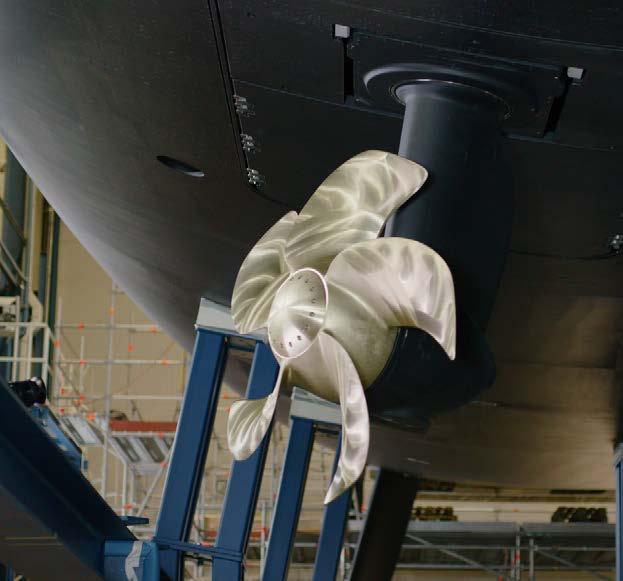
Beyond technical feasibility, the Aera concept also addresses usability and the owner experience. The combination of automation, reduced manual sail handling, and increased comfort is intended to make sailing more accessible and as straightforward as operating a motor yacht.
“Combined with reduced fuel consumption and lower operational emissions, this positions Aera as a bridge between motor and sailing yacht ownership,” says Looijenga.
Overall, the catamaran represents a convergence of proven technologies and disciplined system integration rather than reliance on untested innovations. With its emphasis on simplicity, sustainability and lifecycle efficiency, the concept demonstrates that a wind-dominant, low-emission superyacht is technically achievable within available engineering and classification frameworks.
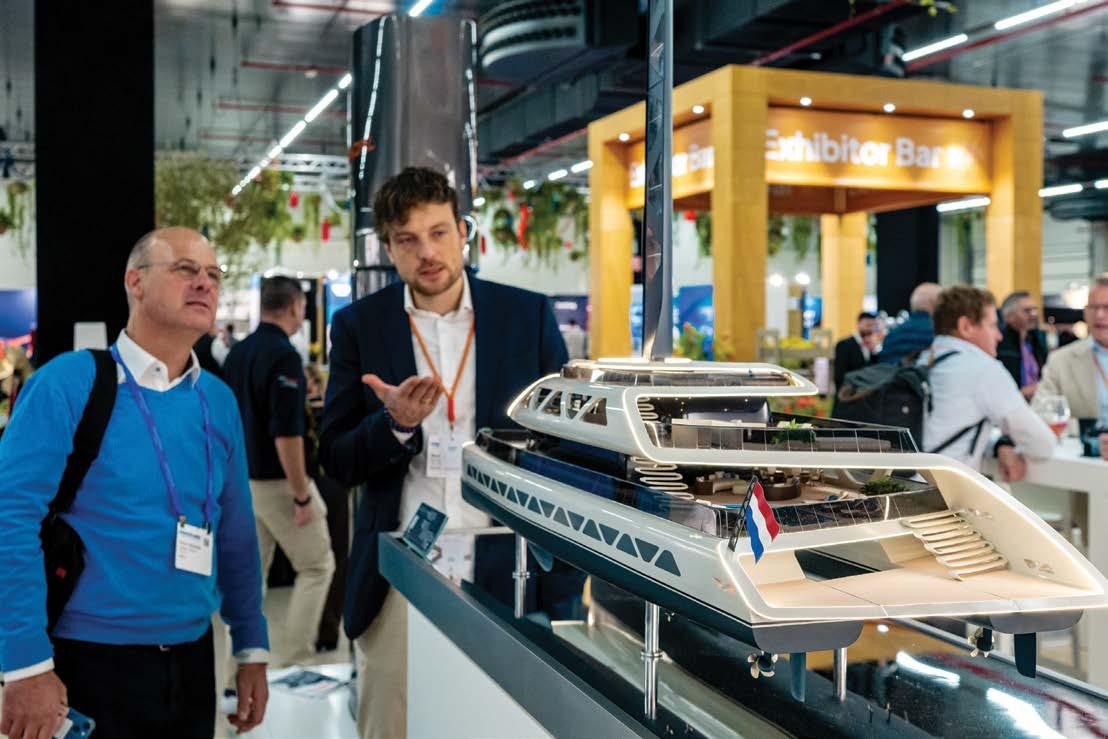
Metstrade’s Superyacht Zone is the gateway for the superyacht industry, spotlighting luxury solutions, advanced innovations, and cutting-edge technologies, including a dedicated area for refit clusters. Experience unparalleled networking and exclusive insights at the Superyacht Stage, the prestigious Captains’ Club, and exceptional fine dining at Harbour 8.
Enhance your experience by attending The Superyacht Forum, taking place just before Metstrade, where industry leaders shape the future of superyachting.
country pavilions 1,700 exhibitors
halls
16 → 17 November 2026 The Superyacht Forum
17 → 19 November 2026 Metstrade
RAI Amsterdam


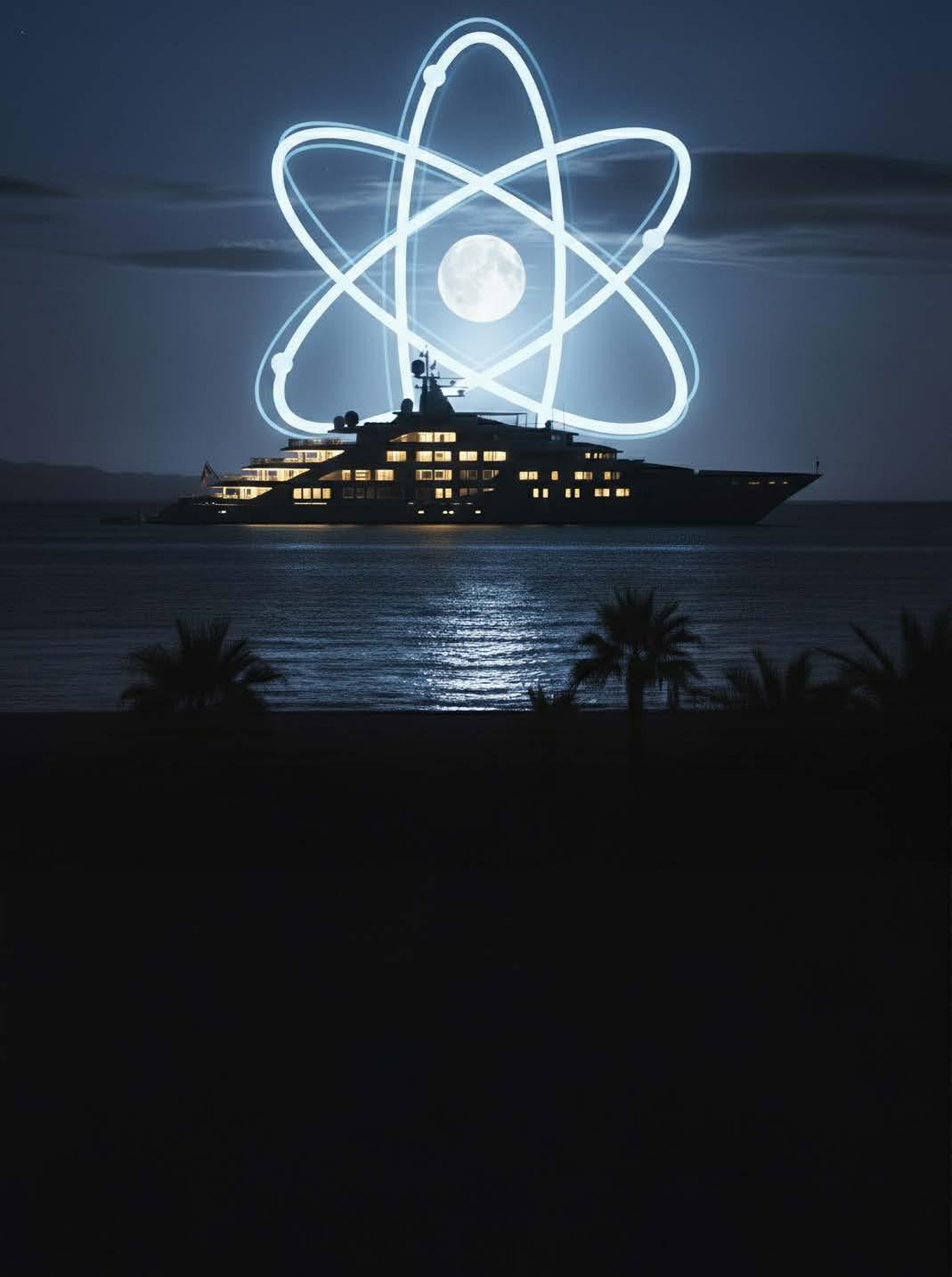
Despite the apparent hurdles, new lightweight modular reactor technology and a proactive approach from Class might usher in the first nuclear superyacht by the end of the decade.
BY CHARLOTTE THOMAS
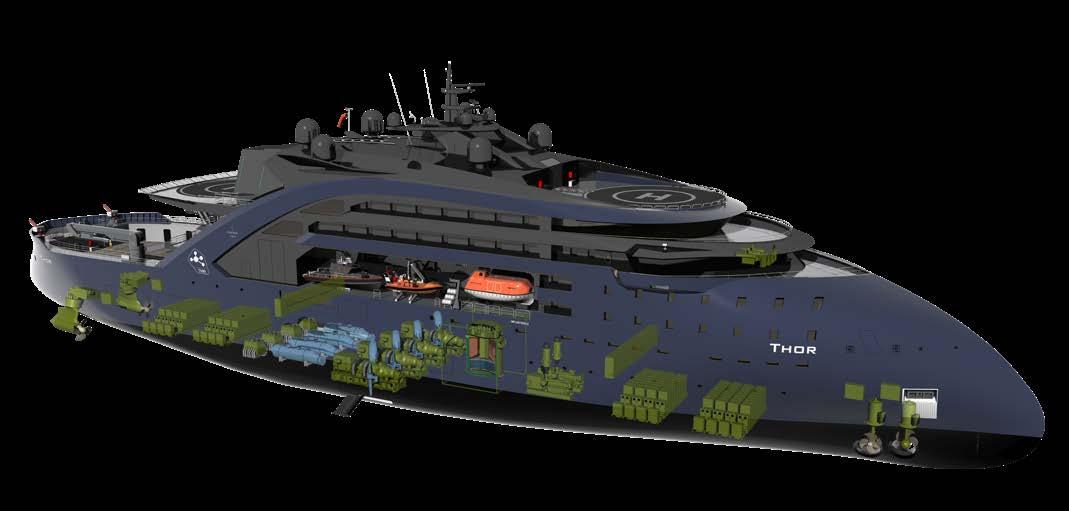
Wa net-zero future, there’s another technology that is starting to make its presence felt: superyachting could be about to go nuclear. The idea is not entirely new. Back in 2012, Feadship’s Relativity future concept explored nuclear power, with the team concluding that although technically feasible, its advantages were outweighed by the practical considerations and public opinion. More recently, developments in 4th generation reactor technology have rekindled interest in nuclear as a viable option for large yachts. In 2022, Ulstein proposed its Thor concept with a thorium molten-salt reactor largely as a floating recharging station for electrified yachts and commercial vessels; Espen Øino unveiled a 120-metre nuclear-powered design at the 2025 Monaco Yacht Show; and Feadship has also revisited the idea, formally joining the Nuclear Energy Maritime Organisation (NEMO) last year.
All of these initiatives, and most of the discussion about the nuclear option, revolve around Small Modular Reactors, or SMRs. These units present design and logistical challenges that limit their appeal, not least because of the size and weight of shielding needed to ensure the safety of crew and guests. Most ships and submarines use SMRs. They produce between 9–50 MW and with the steam generators take up roughly the size of a two-storey house. This implies that
nuclear power will only ever be suitable for very large yachts and, most likely, those with an operational profile that benefits from extreme range without the need to refuel. However, a new type of tech – the Micro Modular Reactor (MMR) – may well be a way for nuclear power to find its feet in superyachting. MMRs produce up to 8 MW and are both a lot more compact and modular in nature, making them scalable for yachts from 40 metres and up. NOxFree – a collaboration between Yacht Consultancy, Laurent Giles Naval Architects, and Rasmussen Marine – is working with a manufacturer of MMRs to offer a compact, modular solution for yachts as small as 40 metres.
Rather than adding 450 tonnes of power unit and shielding for the sort of SMR system proposed by Ulstein or Øino, the Unity Module MMR is a self-contained power pack that weighs just 17.5 tonnes in total and occupies the footprint of a six-metre container. With each module producing up to 1 megawatt (MW) of power, and with the unit essentially being plug-and-play with no userserviceable parts to worry about, the system could be scaled to cater to a wide range of yacht lengths.
Above: Ulstein’s thorium-powered Thor
Right: ION is a new 55-metre concept by ThirtyC with the option of a NOxFree Unity Module power system.
Different reactors run different types of fuel, and the nature of that fuel can dictate availability, cost and complexity of disposal. Military applications – particularly submarines – use highly enriched uranium (HEU), often at 85% enrichment or higher for decades of autonomy, while civilian reactors use lower grade fuel.
The 1 MW Utility Module uses low enriched uranium dioxide (LEU) at just 4-5% enrichment. LEU is 120,000 times more energy dense than coal or 86,600 times more energy dense than diesel, and can easily deliver continuous full power for five to six years straight in the case of the Unity Module MMR. That equates to between 10 and 25 years for a yacht depending on operational profile, from a fuel payload weighing just 20 kg and taking up two jerrycans of volume.
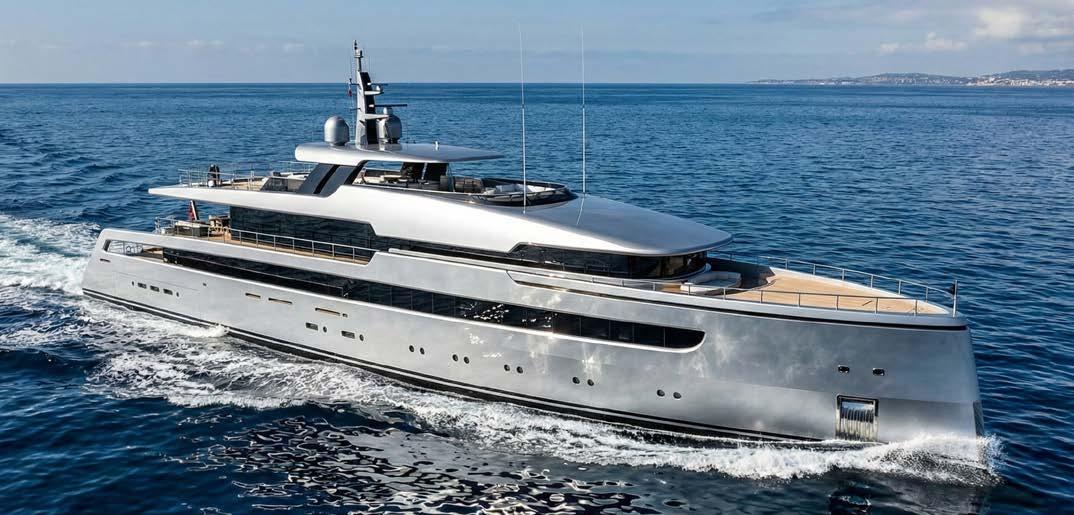
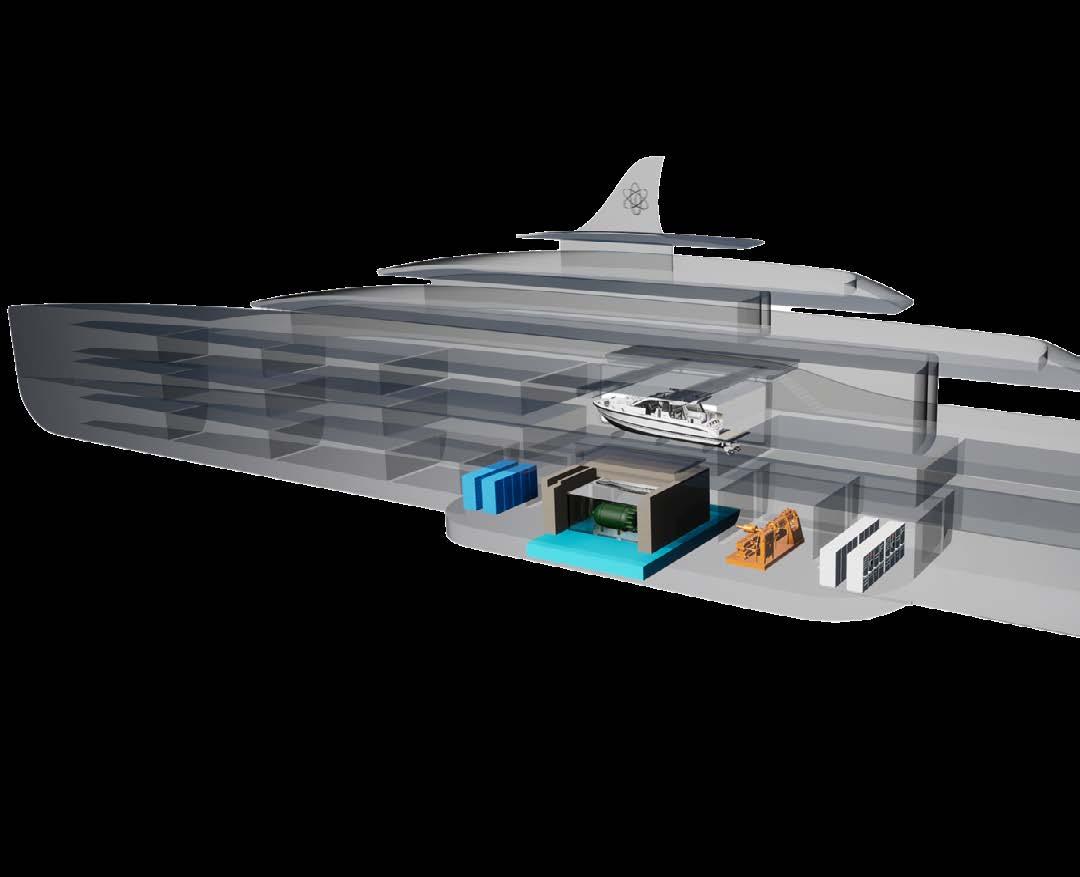
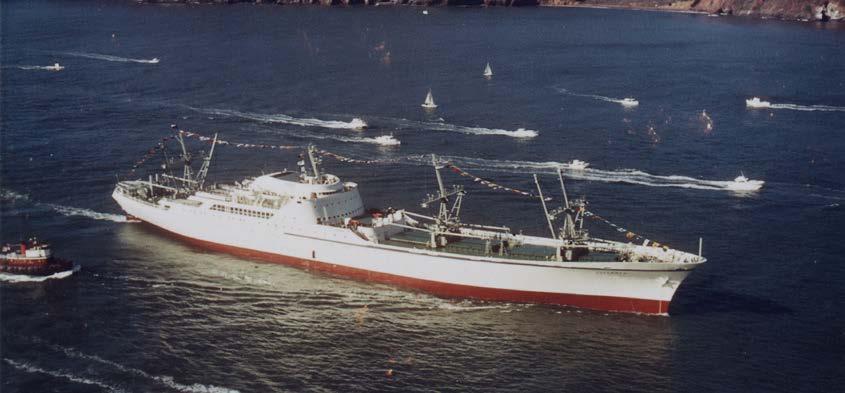
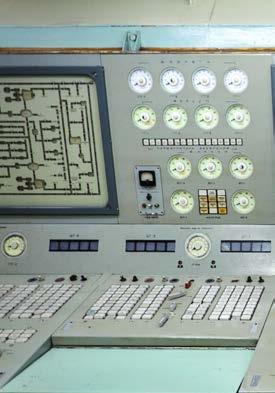
“It began when a client approached me in June 2021 and requested a feasibility study on using nuclear to power a yacht,“ says Derek Munro, Director of Divergent Yachting & Project Lead at Yacht Consultancy. “I called in David Lewis from Laurent Giles, and Steve Rasmussen who, before joining the yachting industry, had been an engineer on Royal Navy nuclear submarines. We presented the client with a 287-page feasibility report on the first day of the 2021 Monaco Yacht Show.”
In that report, the team concluded that it would be possible to have nuclear power on a superyacht by the early 2030s. Since then, their prognosis has shifted thanks to technology having advanced from large, 18-MW reactors to 5-MW units and now
the 1-MW Unity Module. For naval architect David Lewis, the move to nuclear makes the most sense out of all the transition fuels.
“It’s the only power source that you can say is not using any fossil fuels and has no environmental impact,” he argues. “People have been hesitant because of all the layers of complexity you’ve got to go through –from the power pack itself and its integration into the vessel to the regulatory bodies. But that is changing.”
“The biggest fears people have is shown in the questions they ask: can it be turned into a bomb, and is it inherently dangerous?” adds Steve Rasmussen. “The answers are no, and no – end of story. The challenge is getting people’s minds around that concept and overcoming their fears.”
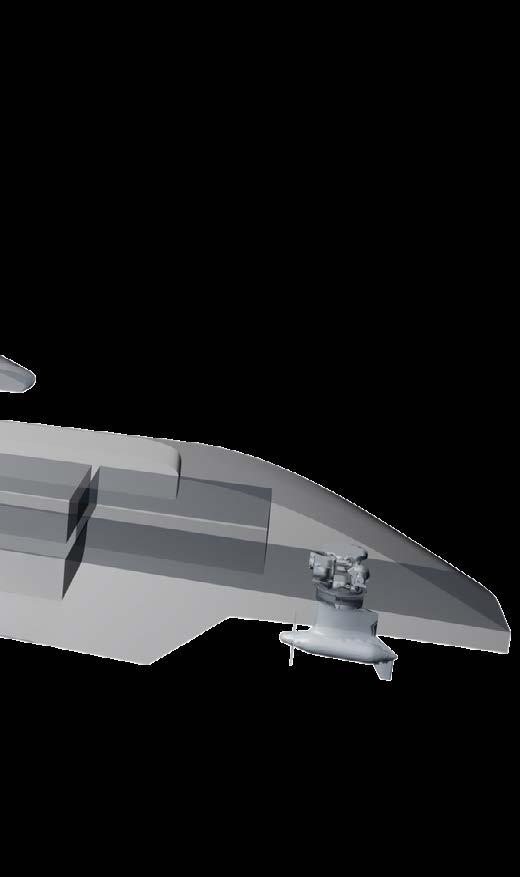
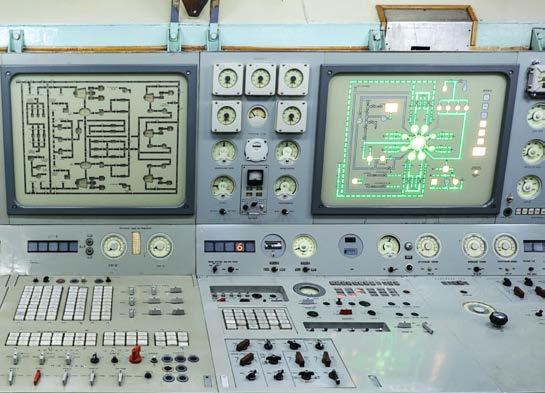
The Unity Module MMR is self-contained, and doesn’t need any additional shielding, which is what makes it ideal for smaller vessels and superyachts. To ensure absolute radiation safety, the uranium fuel is clad in zircaloy, which forms the first boundary. The reactor pressure vessel is the next set of shielding, which is surrounded by boronated water – the third layer of protection – and the whole lot is contained in a steel compartment that forms a fourth layer.
“You don’t need tonnes of concrete for this unit,” Rasmussen confirms. “A piece of A4 paper is enough to stop alpha radiation, and aluminium foil will stop beta, while the boronated water, steel and elements of lead stop the gamma radiation. Nothing stops neutrons, but they are reflected back to carry on the generation process.”
The Unity Module feeds electricity into an 800V DC bus bar, and from there the systems are the same as any diesel-electric installation. The MMR modulates power output depending on demand. It can take up to 30 minutes to spool from 10% power (idling) to 100% power, so to bridge the gap – when leaving harbour, for example –the NOxFree system comprises graphene supercapacitors for energy storage. Once the reactor is up to full power, excess energy is used to recharge the supercapacitors, which Lloyds has verbally approved as emergency back-up power, negating the need for an emergency generator.
The impact on yacht design is considerable as the Unity Modules can be located anywhere in the yacht, and all the systems and architecture associated with conventional diesel or alternative fuels can be deleted. That includes everything from fuel tanks and engines to exhaust systems and ventilation ducting through the superstructure. Further, with zero fossil fuels onboard, the vessel requires no ventilation systems, unlocking significant spatial advantages and a unique design approach. To demonstrate the impact, NOxFree has already developed two MMR-based design concepts of 118 metres and 60 metres in length.
“The Unity Module is basically just a battery, albeit a nuclear battery which uses uranium to produce heat, which is then converted into mechanical energy, which produces electrical energy,” Rasmussen explains. “The beauty is that the system is self-contained and self-regulating, so if anything goes wrong or it needs to shut down, it does so without human intervention. You don’t need any specific training to watch-keep the system, and you don’t have to worry about exposure to radiation – you get more exposure getting an X-ray at the dentist than you do standing next to one of these things for a month.”
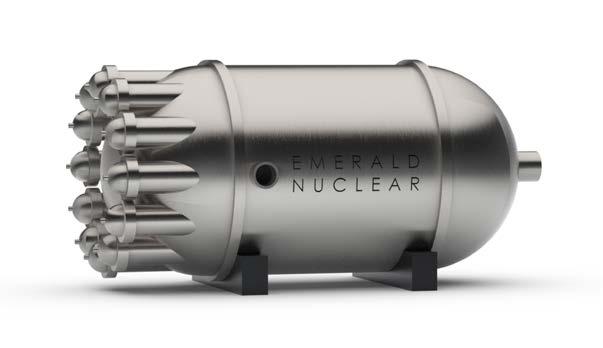
“A fossil-fuel vessel over its lifetime will cost you four to five times more when you include fuel, servicing, maintenance, mandatory surveys and other elements that just don’t apply to nuclear.”
Key to the NOxFree proposal is that owners won’t own the MMR outright, but will lease the units and also pay a per-kilowatt rate for electricity used. Over the lifespan of a module – for the typical superyacht’s operational profile, anything from 10 to 25 years – the cost savings could be considerable.
“A fossil-fuel vessel over its lifetime will cost you four to five times more when you include fuel, servicing, maintenance, mandatory surveys and other elements that just don’t apply to nuclear,” says Munro. “We’re currently looking at a charge of around 16 euro cents per kilowatt, which is cheaper than the cheapest shorepower available in the Med. And if you’re really smart, you could actually sell your excess back to the marina when berthed as the reactor is always producing power and never drops below ten
around 700 nuclear vessels operating on or under the water globally, the rules and regulations are based on the first commercial nuclear vessel, NS Savannah, which was commissioned in 1959.
“They were slightly updated in the early 1980s, then the MCA had an attempt at updating them in 2024, but nobody really addressed any of the concerns or, importantly, the massive developments in technology,” says Rasmussen. “It’s still based on the original pressurised water reactor tech from the 1950s.”
Things are changing. In June 2025, the IMO agreed that it needed to address the regulations for nuclear power, not least because it could offer a critical component of the Net-Zero Framework, which aims for net-zero emissions across commercial
NOxFree (60-80m)
ESS: Energy Storage System
PP: Power Pack
TA: Turbine Assembly
Conventional (60-80m)
FO: Fuel Oil
ME: Main Engines
EDG: Engine Ducting
DG: Diesel Generators
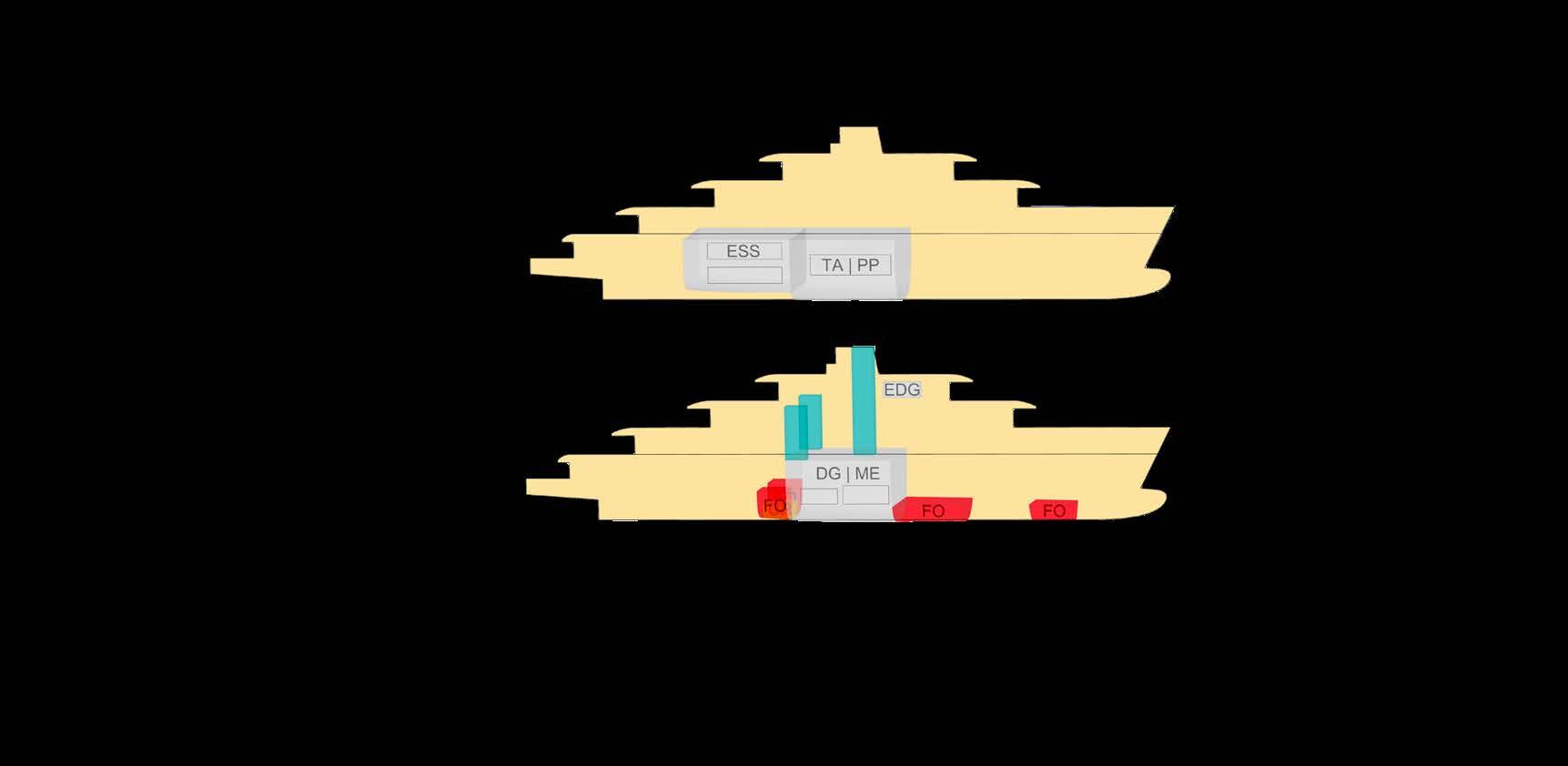
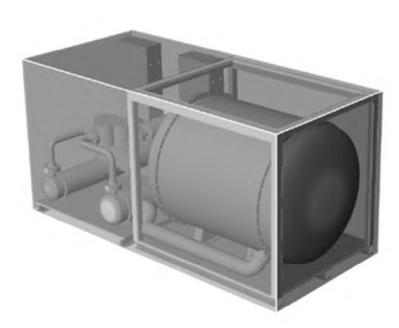
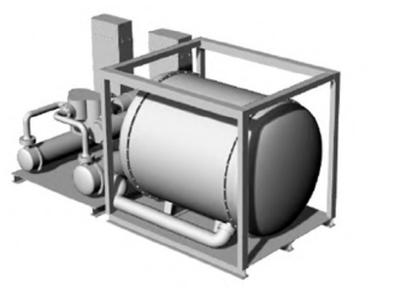
The modular MMR concept addresses one of the key concerns people have about going nuclear: dealing with radioactive waste. In the NOxFree system, the MMR unit is simply unplugged at the end of the contract or service life and removed for transport back to the manufacturer, with a replacement unit dropped in, if required.
Spent fuel is stripped away from its zircaloy cladding and processed, with about 65% being reused. The rest of the system – the pressure vessel the fuel sits inside, and the auxiliary systems – is 95% reusable. The whole process is handled by the module producer at their own facilities.
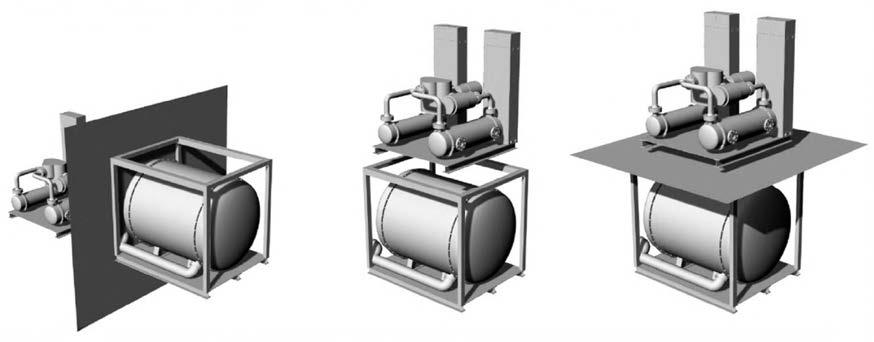
When NOxFree started it was working with Chapter VIII of SOLAS and the old Nuclear Code (the Safety Code for Nuclear Ships), written for power plants of 50 megawatts or more using old technology and unsuitable for superyachts.
“But for the first time, we’ve been able to sit down with the guys writing the rules,” says Munro. “We‘ve been working with Lloyd’s since 2022, so they know what we've been developing and they know very well the MMR unit we're working with now. They granted a statement of endorsement in 2025.”
Class will likely be the catalyst, with Lloyd’s Register and RINA already releasing extensive white papers on nuclear power, suggesting a willingness to adopt it and refine their rules. This will help expedite adoption by local ports and harbours, which currently present
a barrier for practical usage on yachts.
“Nuclear power has the potential to be a game-changing technology for the yacht industry, offering far more than just an incremental improvement,” says Lloyd’s Register. “It represents a fundamental shift that could redefine luxury yachting.”
There is also the issue of insurance. Nuclear is specifically excluded from limited liability, meaning an owner, under current conditions, could face unlimited liability in the event of an incident. However, new technologies are changing the game in terms of the potential risks.
“It will just be a matter of time as to how quickly the regulators and insurance market can react to the new nuclear technology that is on the horizon,” comment Tom Walters and Johanna Ohlman from law firm HFW.
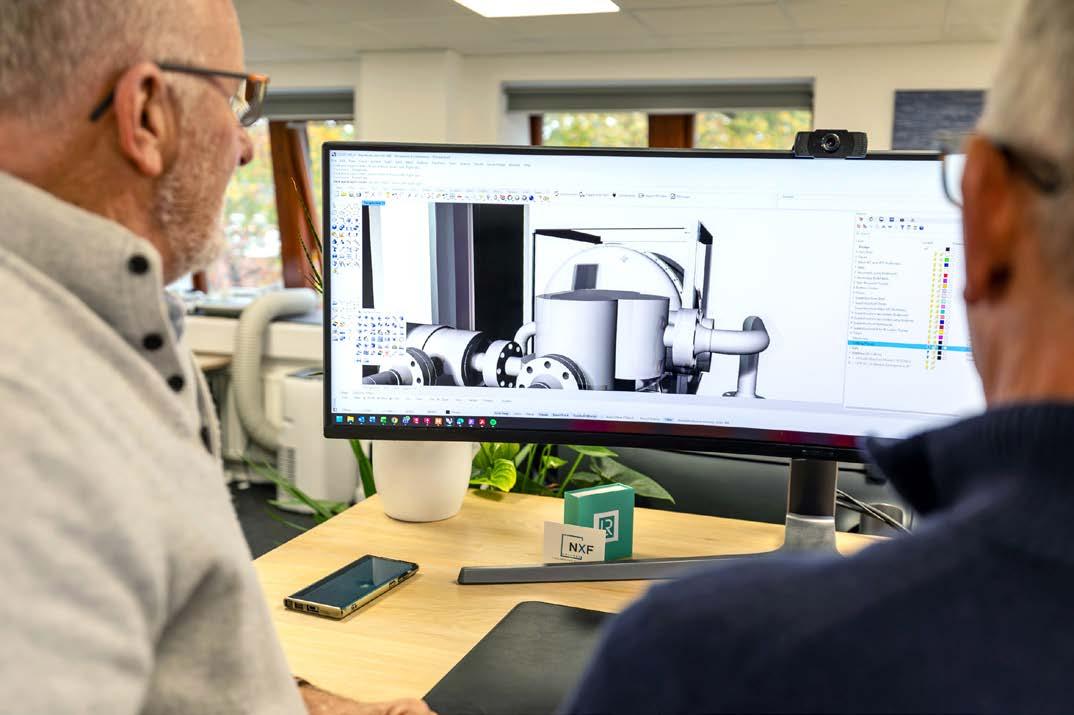
“For the first time, we’ve been able to sit down with the guys writing the rules.”
Last but certainly not least is the barrier of public perception. High-profile, land-based accidents at Chernobyl and Fukushima along with outdated misconceptions about nuclear power have created wariness, even fear of nuclear energy. It’s a challenge that the NOxfree partners and other proponents of maritime nuclear power have to overcome, not just by convincing owners that sitting on a nuclear-powered superyacht is safe, but also by demonstrating to national governments and coastal communities that nuclear vessels and yachts do not present a risk. After all, having a yacht with unlimited, emissions-free range is moot when you are barred from harbours, ports or even territorial waters.
The drive for positive PR has already begun, and will be a core part of NOxFree’s
mission over the next four years, alongside demonstrating the Unity Module’s advantages to potential owners, shipyards and designers. In early 2026, the NOxfree team are heading out on a tour of northern European shipyards to discuss using MMRs with their engineering teams.
“There are a couple we’re working with who are sending us GAs to put our units in so they can show clients the amount of space you save by going nuclear, as well as the cost benefits and other advantages,” Munro confirms. What is clear is that nuclear superyachts are closer than we think, and the regulations won’t be far behind the availability of the MMRs, a fact not lost on Derek Munro: “The reason we’re talking about it now is because we’re just one build cycle away from MMRs being available for installation in 2029.
Alexseal Yacht Coatings has significantly expanded its Color Configurator, adding four new yacht models and three distinctive new color shades.
“Shortly after the 2025 launch, many of our customers were using the tool and even asked for more model variety,” says Thomas Schultz, Global Sales Director of Alexseal Yacht Coatings.
“The highly positive feedback from Color Configurator users pushed us to extend the configurator massively.” In doing so, Alexseal aimed to reflect the realities of the global yacht market even more closely. New to the portfolio are a large sailing yacht, a Dutch motor yacht, a motor catamaran, and a compact center console.
Until now, the existing models (superyacht, small motor yacht, small sailing yacht, sportfish, and picnic boat) were manufacturer-independent designs. For this expansion, Alexseal partnered with well-known shipyards that provided their yacht models. Contest Yachts contributed the brand-new Contest CS56 for the sailing yacht category and Boarnstream Yachting provided the Boarncruiser 1440 Elegance for the Dutch motor yacht. Also a motor catamaran and a center console were added to the yacht portfolio.
In addition to the four new models, Alexseal is adding three new shades to its color portfolio: SOUR, a vivid yellow-green; TREE HOUSE, a rich brown; and ICE WATER, a light blue-gray. These shades are based on the Colors of the Year 2026 released annually by coatings manufacturer Mankiewicz, the parent company of the Alexseal Yacht Coatings brand. The selections reflect broader social developments and global color trends. The Colors of the Year are shown exclusively in the Configurator.
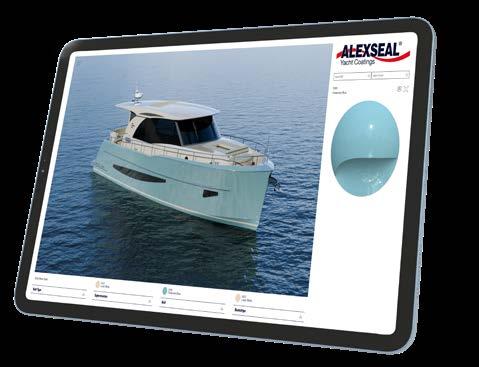
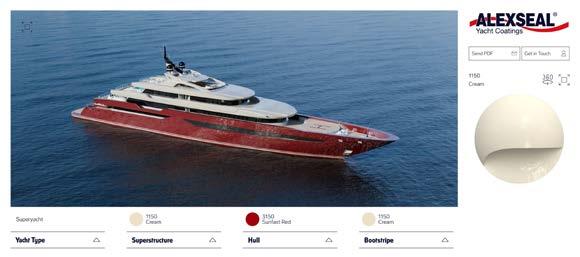
The original Color Configurator launched in spring 2025 as a digital tool. It lets users apply Alexseal standard solid and metallic colors digitally to the hull, superstructure, and boot stripe of various yacht types quickly, intuitively, and with minimal effort. This makes it easy to explore color choices and experiment with different combinations. The tool is designed primarily to support yacht owners and prospective owners, helping them evaluate how colors work and perform across a yacht’s geometry and large surface areas. As such, it is an ideal complement to the smaller color chips typically provided by coatings manufacturers, to make an ideal color choice.
To see how all nine yacht types look across nearly 130 colors, visit the Alexseal Color Configurator at: https://www.alexseal.com/color-configurator
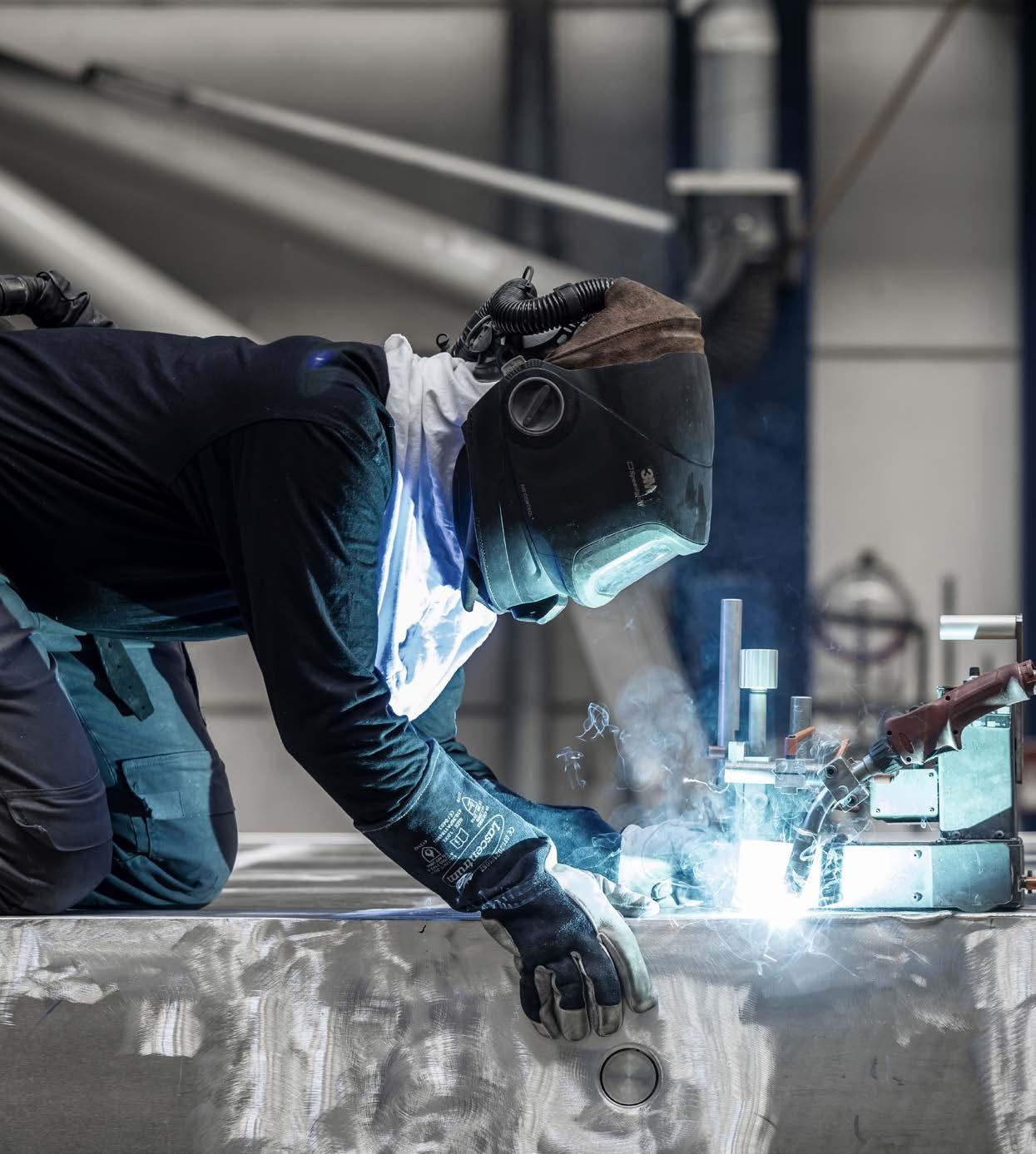

Akerboom Yacht Equipment has earned a prominent position in the superyacht supply chain for its bespoke boarding equipment, platforms, cranes, watertight doors and integrated control systems. Yet the engineering philosophy behind its custom-designed solutions is based on a resolutely modular approach.
BY JUSTIN RATCLIFFE
Facing page, far right: Modular components are now reused across the product range, reducing design complexity and streamlining production.
Below: All employees receive their Akerboom certified yearly training at the AYE Tech campus. Each year at least three new employees start while still in school.
When Mervyn van der Ploeg was appointed managing director of Akerboom Yacht Equipment in 2015, the company was going through a bad patch. It routinely redesigned everything from scratch for each new yacht project, leading to prototype-level inefficiencies and financial strain. A small but telling example is that it used to produce 32 different types of locking pins. Today, through a process of standardisation and modularisation, that number has been reduced to just two sizes.
“Previously, when designing a platform for a yacht, four different locking pins might have been specified, requiring multiple suppliers,” explains van der Ploeg. “Now, we buy 200 locking pins per year in two sizes from a single supplier at half the cost.”
The process began by redesigning a prototype passerelle from scratch using a fully modular approach, which then became a template for other equipment. While remaining a supplier of custom equipment, modular components are now reused across Akerboom’s product range, reducing design complexity and streamlining production.
“A key technical insight came from looking outside the yachting industry,” continues van der Ploeg. “For example, swivel joints originally designed for excavators have been incorporated into our gangways. These components are proven, industrial-grade and standardised, which means we can build highly reliable systems without reinventing core mechanisms.”
In the ten years since van der Ploeg joined the company, turnover has more than doubled from €12 million to €25 million, driven by increased efficiency along with larger yachts and a rising demand for integrated equipment.
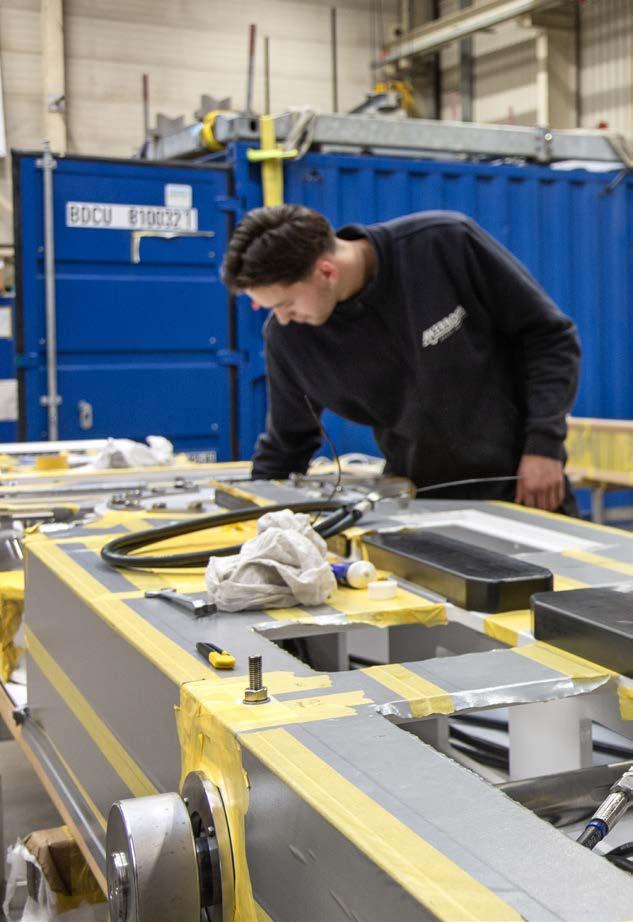
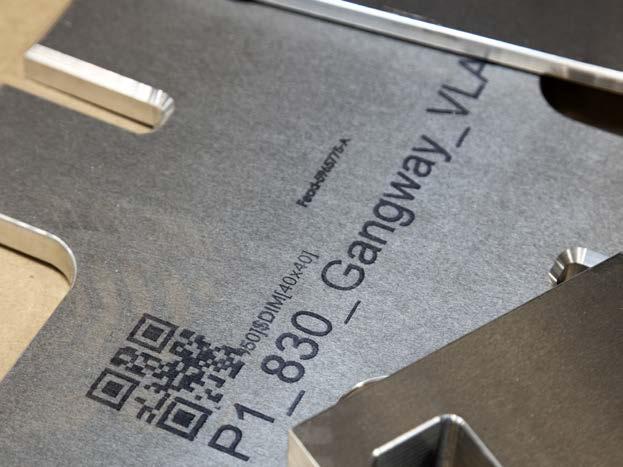
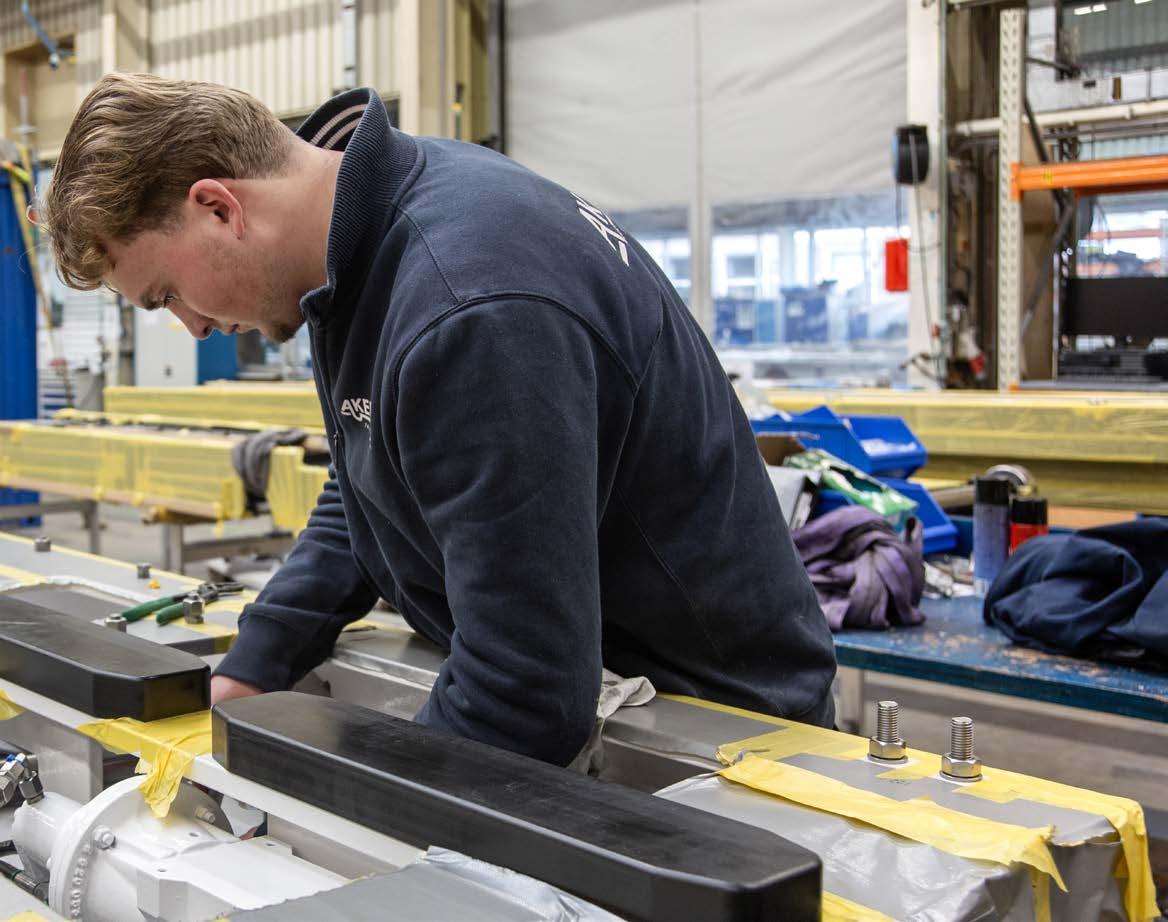
The spin-off from Akerboom’s modular way of thinking are innovations designed to maximise open space while eliminating visual clutter. Many of these solutions revolve around relocating drive systems into hinge lines and the platform structures themselves. In one recent project, a large side platform was initially conceived as two separate elements with a manually installed infill piece. While technically feasible, it was operationally awkward. Instead, by introducing an internal hinge drive already proven elsewhere, the entire system was reengineered as a single monolithic platform. The infill was eliminated, deployment became faster, crew workload was reduced, and the geometry became cleaner.
The Sliding Stairs Access Hatch is another example. Developed in response to a request to optimise the passage from the main deck to the beach platform on Feadship’s 79.5-metre Valor, Akerboom’s engineers merged door, hatch and boarding equipment components to create a completely new solution. Essentially, the staircases on each side of the pool form the hatch itself, with half of each staircase retracting into the deckhead like a gangway to provide access to the beach club.
“This marked a next step in modular engineering for Akerboom,” says van der Ploeg. “Our approach not only accelerated the development process, but also showed how modularity enables flexible, cross-disciplinary solutions without compromising quality.”
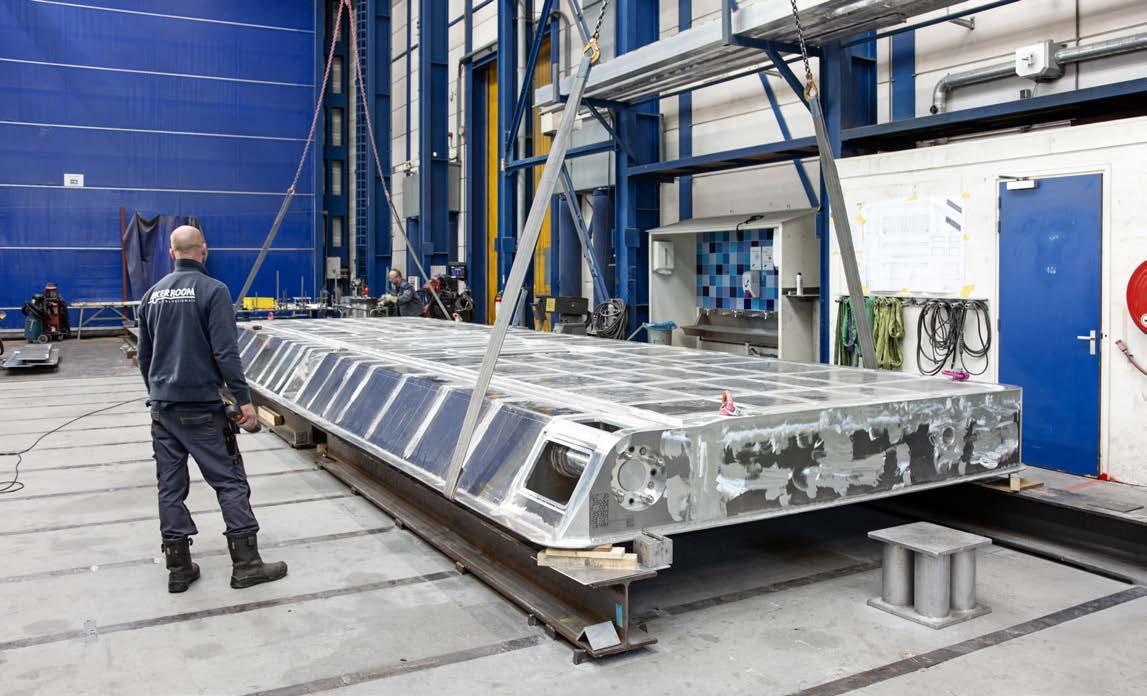
As both staircases form part of the watertight boundary of the vessel certified by Class, one of the main challenges was ensuring watertight integrity, given the angle at which the stair hatches are installed, as well as aligning the treads between the hatches and the fixed structures. In fact, sealing has become a central issue as stern structures grow more complex – folding, rotating and closing at compound angles. While inflatable seals are often the go-to solution and offer excellent theoretical performance, they also represent a single point of failure. Akerboom typically prefers D-profile rubber seals, which wear gradually, remain locally manageable, and allow temporary mitigation.
“This approach is especially critical for Lloyd’s-
certified watertight items such as split transom doors closing at different angles, where corners and junctions between curved surfaces become critical failure points,” van der Ploeg points out. Such solutions highlight how Akerboom has evolved beyond developing hardware to innovating the onboard experience, a strategy that has resulted in multiple patented solutions, from pop-up gangways embedded in the stern platform to protective cabrio covers engineered to fold, stack or nest completely out of sight when not in use. At the last edition of Metstrade, the company presented five interactive aft deck models through immersive 3D visualisations showcasing how engineering, design and user experience increasingly converge in the early phases of yacht development.
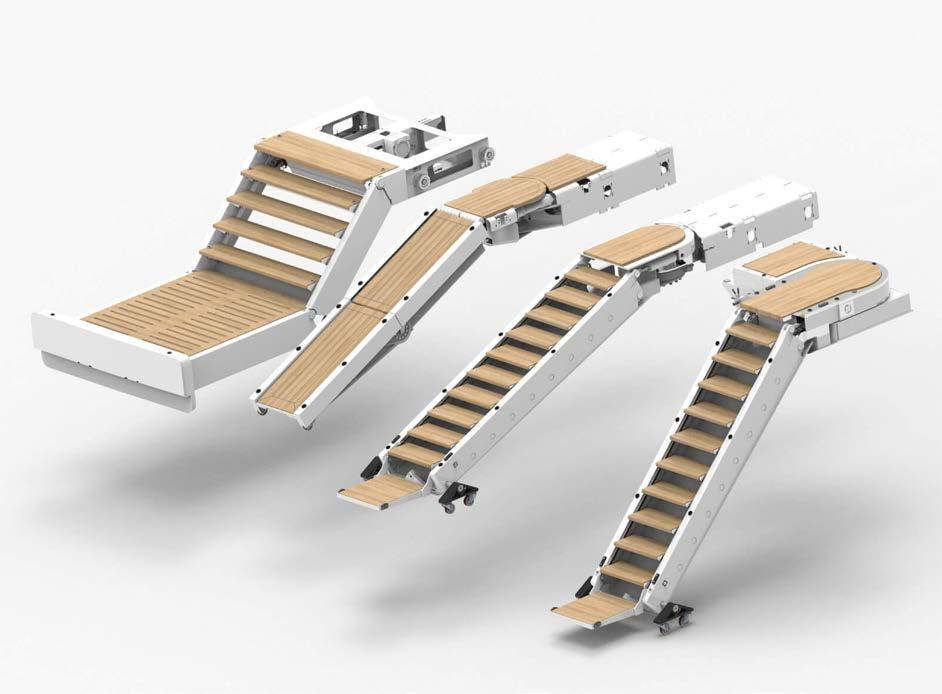
Another defining feature of Akerboom’s approach is that its control systems and programming are all developed inhouse. Precise timing between electronic commands, hydraulic oil flow and mechanical motion is critical, as are programmed delays that account for inertia and mass. Most systems employ frequency-driven power packs rather than simple on/off hydraulics, resulting in smoother movement, lower noise levels and the elimination of hydraulic ‘hammer’ effects. Automated operating cycles manage sequencing, speed and end-of-stroke deceleration automatically, reducing the risk of impact damage and operator error. Before delivery, full functional testing is carried out in-house, often with owner representatives present.
Enclosed helicopter lifts represent some of the most complex control systems Akerboom has delivered. On yachts such as Ecstasea, Sophia (ex-Faith), Madame Gu and Ulysses, these lift assemblies rely on synchronised spindles and highly precise control algorithms to ensure uniform vertical motion. Ironically, real-world usage of helicopter lifts has revealed an interesting pattern:
“On some yachts, the heli hangars are no longer actively used and instead function as static storage platforms,” reveals van der Ploeg. “In such cases, owners may even suspend servicing altogether – an illustration of how operational reality can diverge from original design intent.”
Developments in control systems are being matched by advances in data intelligence. During the COVID period, Akerboom expanded its remote-support capabilities and identified a recurring issue: when faults occur, crews often cannot describe what happened beyond “pressing the button”. To address this, its latest systems incorporate data logging that records each operating cycle, sequence order, timing, load condition and fault event with precise timestamps.
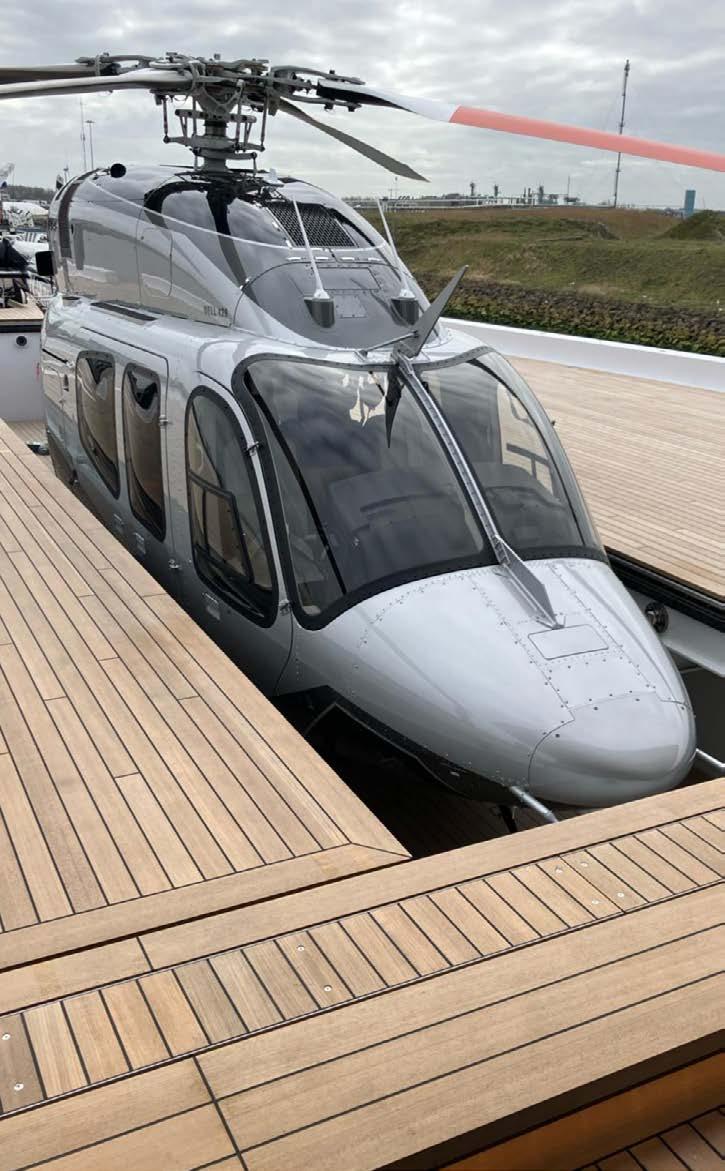
Left and bottom: Many of Akerboom’s solutions revolve around relocating drive systems into hinge lines and the platform structures themselves.
Facing page: Helicopter lifts require some of the most complex control systems.
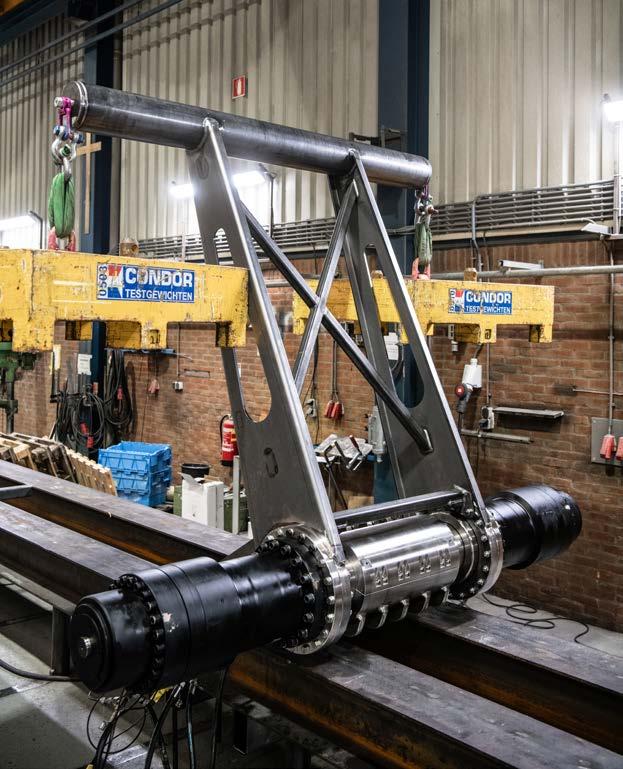
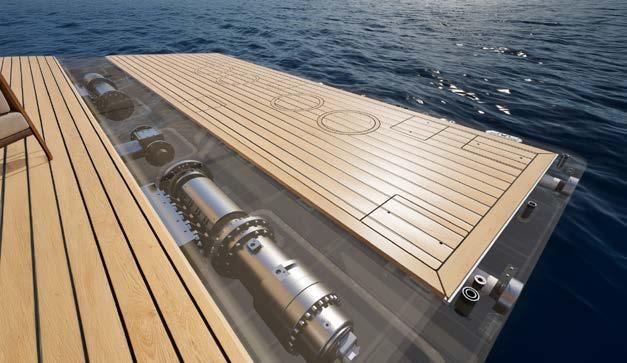
“When an issue arises, engineers can trace it back to the exact operating condition that caused it,” explains van der Ploeg. “While still being rolled out primarily on new-build projects, data logging represents a shift towards evidence-based rather than purely scheduled maintenance.”
Across Akerboom’s predominantly hydraulic product range, failures rarely originate in the actuators themselves. Instead, the most vulnerable areas are where forces converge – locations where multiple loads are transferred into a single structural interface. Passerelles are a prime example:
“Forces are transmitted through long, slender structures back to a limited number of mounting points,” explains van der Ploeg. “When additional functionality is introduced, such as lateral slewing rather than straight-line deployment, those forces increase substantially.”
Akerboom Yacht Equipment can trace its roots back to 1860, when Henricus Akerboom began building wooden workboats in Lisse. Over the decades, the business survived two world wars, bankruptcy and a change of ownership before returning to the Akerboom family at its current site in Leiden. By the early 1980s, the company was widely known as Akerboom Yacht Equipment, although it is officially registered as Shipyard & Machine Factory Akerboom. Family members still live in the historic properties surrounding the shipyard, preserving a living connection between past and present. Earlier generations literally grew up above the yard and attended the nearby school, now the company canteen.
De Vries, one of the two founding partners of Feadship alongside Van Lent, acquired the company in 1986. In the years that followed, Akerboom primarily built aluminium superstructures for De Vries at a time when yachts were much smaller and deck equipment was minimal – usually a single stern platform and a passerelle or side-boarding ladder. It also produced closed-loop, oil-lubricated shaftline systems valued for their exceptionally low noise levels. These became a defining part of the company’s engineering identity, although further development has been discontinued following Feadship’s strategic shift towards more sustainable propulsion systems, such as diesel-electric and pod drives.
Akerboom gradually moved away from superstructures as hull dimensions exceeded the physical limits of its production space.
With the yachts increasing in size and complexity, demand for deck, boarding and access equipment grew exponentially. Whereas early yachts required only two or three systems, a modern superyacht may incorporate 20 or more individual Akerboom installations, including multiple hull platforms, swim stairs, boarding ladders, passerelles, wing stations, transom doors, cranes and helicopter lift systems.
Space constraints – typical of longestablished Dutch waterfront facilities – have driven Akerboom to adopt a distributed manufacturing model. Around 120 full-time employees work across three waterside production halls in Leiden, enabling oversized components to be transported by barge. Two additional halls across the street focus primarily on welding and fabrication, while a large rented facility in Katwijk supports further assembly work.
Because the company designs, programmes, commissions and usually maintains its own equipment worldwide, serviceability is a central design driver. Supported by regional offices in Barcelona within the MB92 refit hub, and in West Palm Beach, Florida, its technicians deploy globally (at the time of our visit to the Leiden headquarters, a senior technician was en route to Tahiti to service a swim platform ahead of an owner’s Christmas arrival). Armed with feedback from these technicians on issues such as limited access, overly complex interfaces or components requiring excessive dismantling, modules can be refined, access routes improved and interfaces simplified based on real-world experience.
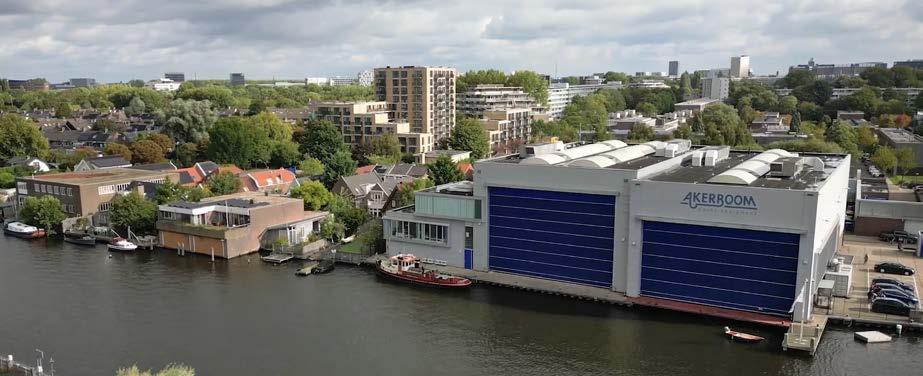
Some Akerboom passerelles now extend up to 16 metres in length, pushing the limits of lightweight structural engineering while maintaining stiffness, safety margins and regulatory compliance. Designing these interfaces requires careful attention to geometry, material thickness and fatigue behaviour.
Marine-grade aluminium remains the primary structural material, selected for its high strength-to-weight ratio and corrosion resistance. Steel is used selectively in highload interfaces where stiffness and wear resistance are critical. Carbon fibre has also been deployed strategically, particularly in the outermost sections of passerelles. Reducing mass at the extremity lowers bending moments throughout the structure, enabling greater reach without adding reinforcements.
A more recent addition to Akerboom’s fabrication methodology is the introduction of structural adhesive bonding. In lightweight aluminium constructions, particularly passerelles, welding thin sections sometimes caused unacceptable deformation due to heat input. To address this, Akerboom now uses a hybrid method: components are positioned with bolts to prevent movement, while the structural adhesive provides the primary load-bearing bond. In this configuration, the bolts act purely as locators and the adhesive carries the load.
Another key evolution is the move towards bolt-in housings for boarding equipment such as passerelles and swim ladders. Historically, these housings were built directly into the hull, placing installation and testing squarely on the shipyard’s critical path. This new approach uses self-contained housings that are assembled and factory-tested in-house, accepted by owners or representatives, and installed later as plug-and-play units.
“Once delivered, the housing is bolted into place, hydraulics and electrics are connected, and functionality is assured – eliminating the risk of delays, rework and repainting,” says van der Ploeg.
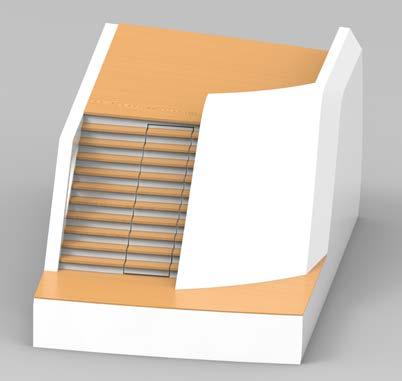
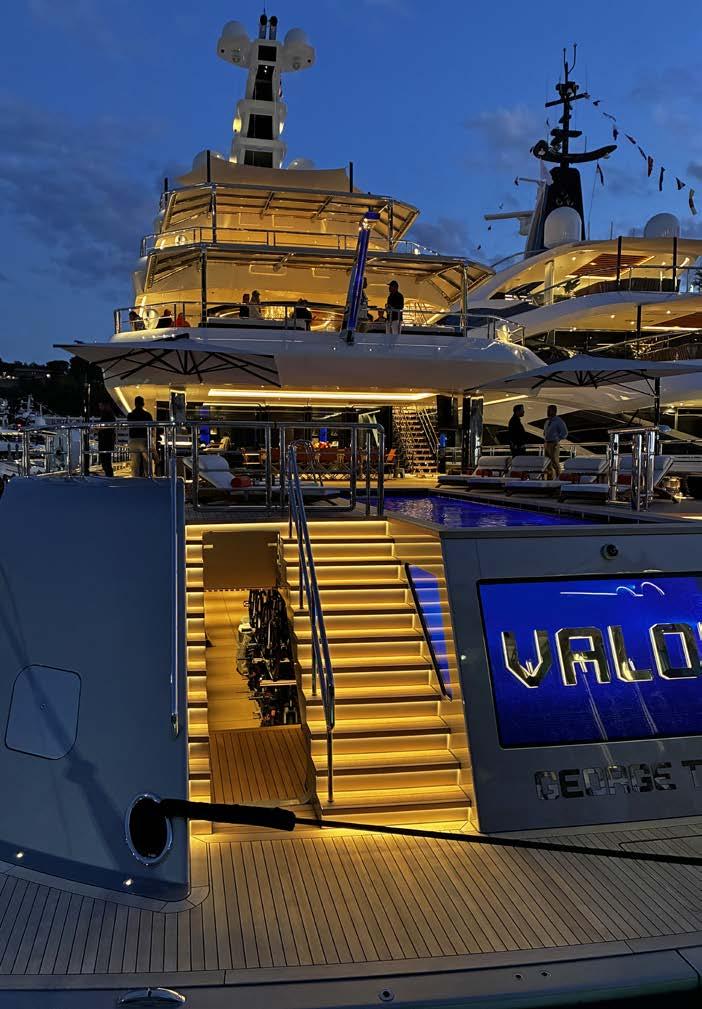
Solely owned by Koninklijke De Vries (see sidebar), until recently Akerboom worked exclusively within Feadship. It is now pursuing a more open strategy, with roughly 60% of turnover derived from Feadship new-build projects, 25% from service and refit work on existing Feadships, and the rest from other shipyards – a share that continues to grow as the company expands its marketing network.
An early major non-Feadship contract was with AKYACHT in Turkey for its 120-metreplus project (NB012) due for delivery in 2030. Another is the new ISA Custom 80 currently under construction at ISA Yachts in Ancona. The ISA client, an experienced Feadship charterer,
specified Akerboom to supply the boarding systems with which he directly interacts – in total, five independent mechanical systems with fully integrated control logic.
Across all these developments, a clear evolution emerges. Akerboom has progressed from boatbuilder to specialist supplier, system integrator and, ultimately, lifestyle collaborator. Each project begins by asking what experience the owner, designer or shipyard wants to achieve. From there, complexity is carefully analysed and engineered so that systems are notable precisely for their absence – seeming to disappear once installed, leaving spaces that feel more open, intuitive and fully resolved.
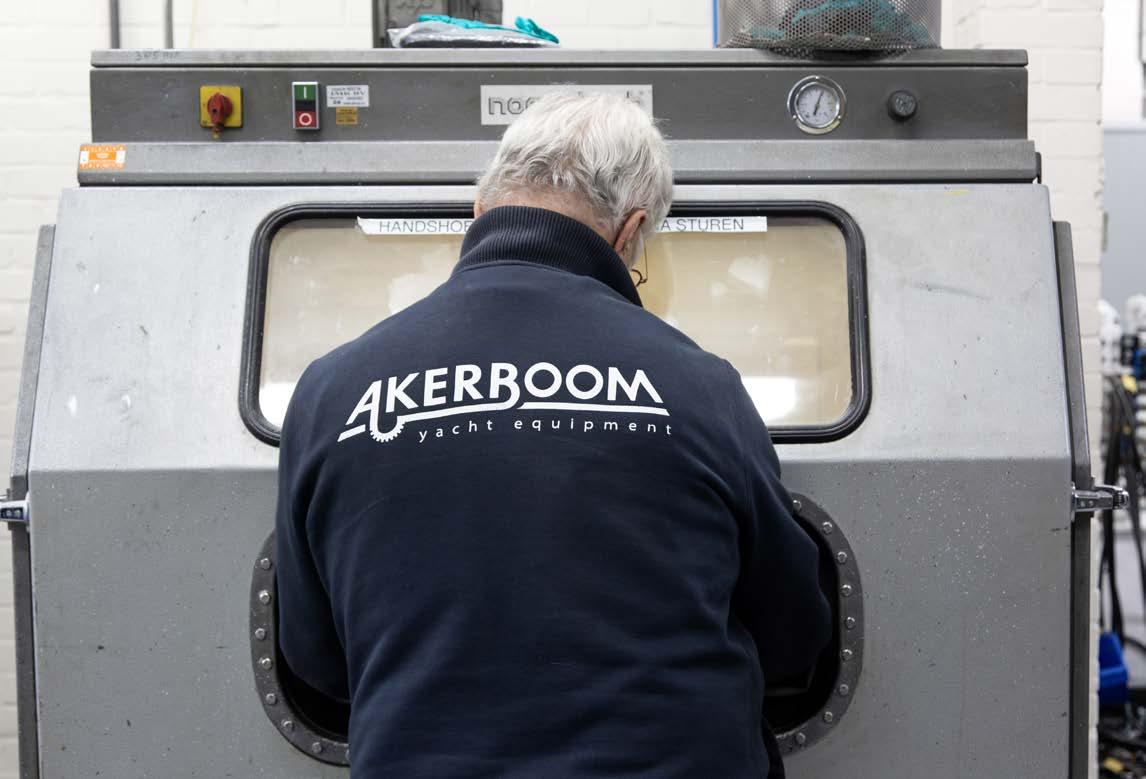
BY ALEXANDER GRIFFITHS
Which cities can truly claim that their ports are as old as the cities themselves? Hamburg is one of the few. Its maritime heritage permeates every corner, thanks in large part to Hermann Blohm and Ernst Voss.
The two German entrepreneurs, whose names still proudly brandish the shiplifts that define Hamburg’s skyline, founded Blohm & Voss in 1877. They chose the island of Steinwerder to establish what would become a 451,000 square metre shipbuilding operation –roughly the size of the Vatican City. Initially focused on ship repair, Blohm & Voss prepared commercial ships for the daring Atlantic passages before the company started building its own vessels. Today, Steinwerder operates under the custodianship of Lürssen and has returned to its core principles: refit and repair.
Specialising in complex refit programmes for private yachts, Lürssen Werft Hamburg has maintained Steinwerder’s legacy of being one of the world’s most trusted ports of call for refits. The yard also continues Hamburg’s longstanding tradition as a free-flowing hub of maritime knowledge, where expertise is shared across teams, suppliers, and partners.
This open-source approach to expertise gives the crew a unique opportunity to learn directly from the wider supply network. When suppliers and technical partners converge in one place, crew gain insight into oftenoverlooked nuances, ensuring optimal understanding for vessel longevity. Training is regular, problems are solved collaboratively, and the collective intelligence of Hamburg’s maritime ecosystem is fully accessible. The city itself is also just a tunnel away from the shipyard, and delivers a genuine quality of life – cultural offerings, international dining, green spaces along the Elbe –rather than an isolated shipyard town.
"An effective yacht refit or repair does not necessarily require a shipyard appointment," says York Ilgner, Managing Director of Lürssen Werft Hamburg. "Smaller details can often be addressed at sea, at anchor, or at layberth with the right knowledge. As part of our service, we aim to impart as much expertise as possible so the crew can operate self-sufficiently. Our phones, of course, remain open when additional support is needed."
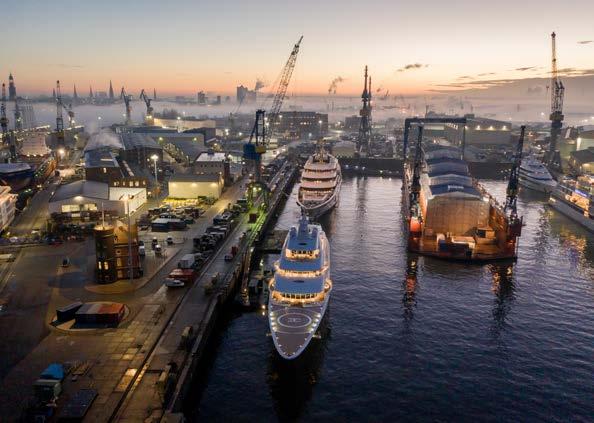
Informal networks, however valuable, can be fragile when reliant on chance encounters or individual relationships. To address this, Lürssen has formalised initiatives such as its annual Chief’s Day. The second edition, held recently in Hamburg, brought together more than 80 chief engineers, suppliers, partners, and management teams for a day of technical exchange. From innovations in stabilisation systems to advances in propulsion efficiency, the event brought forward many voices too often absent from strategic conversations. Over the course of the day, one theme surfaced repeatedly: institutional memory. The big question is just how much data should be recorded, and what benefits this brings to ensure seamless maintenance. Which metrics truly predict issues before they escalate? How can maintenance histories transfer between teams without overwhelming them? The difference between a reactive refit and a strategic one often lies in whether the previous decade's lessons are accessible or lost.
Shipbuilding has shaped the identity of Hamburg for more than eight centuries, and Lürssen sustains its culture of maritime excellence. This culture develops through exchange, one conversation at a time. Hamburg remains what it has always been: a place where ships are built and repaired, and where the knowledge to do both better continues to evolve.
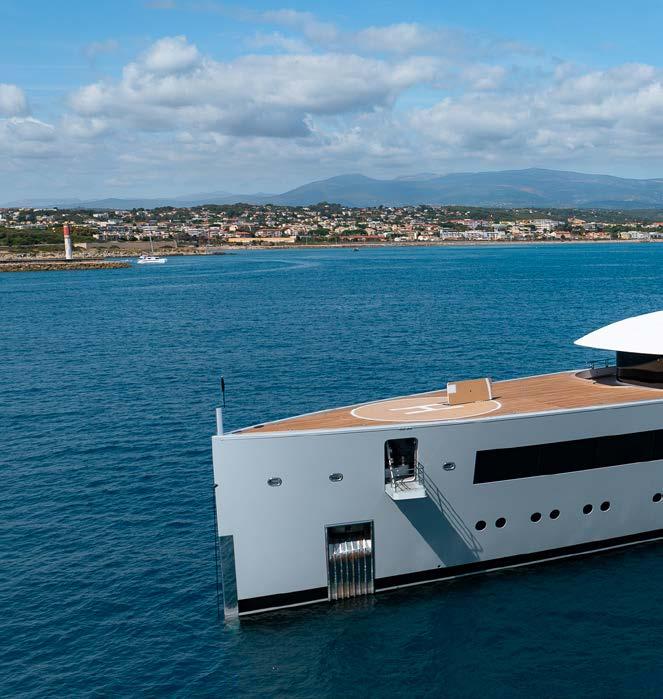
Starting out as a captain, Simon Finlayson quickly found himself drawn into the mechanics of new-build decision-making – first as a build captain, then as an owner’s representative. Recognising the value of understanding how yachts are built from the inside out, he moved into the yards, working within both project management and production team, to close the knowledge gap between owner expectations and shipyard execution.
BY FRANCESCA WEBSTER
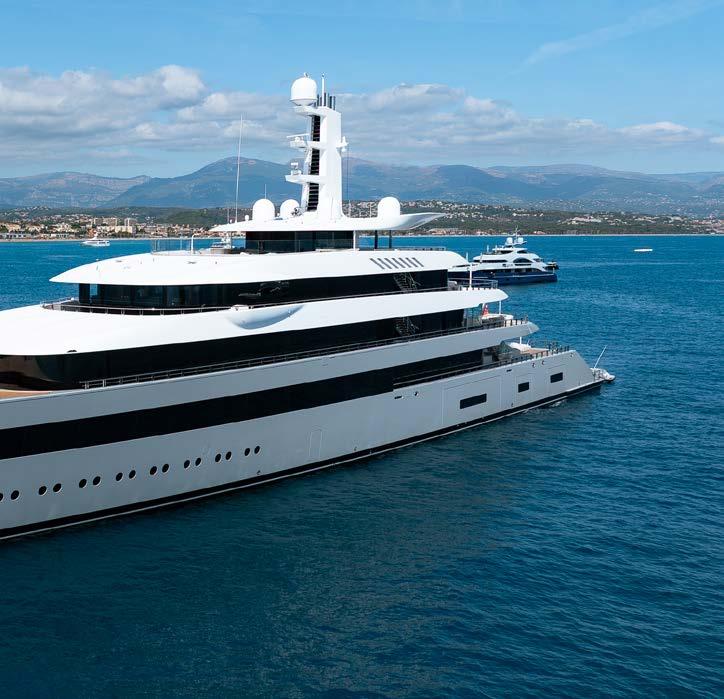
Where do sailing yacht builds demand the most attention during construction?
Construction and engineering discipline – particularly strength versus weight and load management. Sailing yachts face more dynamic load cases than motor yachts. Rig, structure, deck gear, and load paths have to be correct because the forces are very real and move around the boat depending on sail plan and conditions. Then there’s the constant balancing act between complexity, available space, and operational simplicity. You can specify incredible technology, but someone has to operate it while also sailing the yacht. It’s very easy to spiral into systems that are elegant on paper yet impractical at sea.
You mentioned technology can become a “rabbit hole”. What does that mean in practice?
You’ve worked across both sailing and motor yachts. What’s the biggest practical difference from a build perspective?
A sailing yacht spends much of its life heeled over, while a motor yacht generally operates upright but rolls. That single reality drives countless knock-on decisions. Something as basic as getting suppliers to confirm their equipment will operate at heel sounds simple, but it’s a major consideration that can be overlooked until late in the process. Beyond that, industry culture differs. Sailing yacht teams often have more human connection and personal involvement in material choices and how the boat comes together. Motor yacht projects, especially at the larger end, tend to be more contract-led – lines are more clearly defined, and communication can become more formal and legalistic.
It often starts with good intentions: more automation, more integration, more capability. Engineers are focused specialists and can build something technically impressive. But if the operational interface becomes too complex, the crew won’t embrace it, faults become harder to diagnose, and the yacht ends up carrying systems that don’t truly help. The challenge is finding a workable middle ground – systems that deliver performance without turning routine operation into an engineering exercise.
You’ve been brought into projects to assist with re-aligning goals and expectations. What’s your go-to framework for getting control quickly?
I try to keep it simple and scaleable: what did you say you would do, what are you doing now, and does that still fit our expectations?’ Then keep looping that conversation until everyone agrees on what “done” looks like. It’s mostly expectation management – but grounded in facts, not opinions.
“Getting from a dynamic production environment to a finished, accepted space or system requires a high level of coordination.”
How do you bring shipyard processes into sync with specialist contractors and designers?
By respecting expertise. If I come to you for doors, it’s because you’re the best at doors –you should advise how to solve the problem. Shipyards can sometimes push a “we always do it like this” approach, but many suppliers have good reasons for their preferred methods. In the Netherlands especially, you see deep specialisation. The industry is successful because experts can operate within a niche at the top end of their field. The best outcomes come when you give that expertise space, listen, acknowledge it, and then clearly define demarcation and deliverables.
Where do schedules most commonly come under pressure on new builds?
There are typically two pinch points. First is the start of construction. Different yards approach engineering and production differently. Some “engineer, then build”, while others start building early to protect the programme. Either way, you need clear decision gates — moments to say, “we know enough to proceed,” or equally, “we don’t know enough yet, so stopping now prevents rework later.” Then there is finishing and acceptance. Getting from a dynamic production environment to a finished, accepted space or system requires a high level of coordination. Someone has to confirm it is correct – yardside or owner-side – and that acceptance can proceed based on facts rather than opinions. It requires checking, testing, cleaning, closeout, and a shared understanding of what remains outstanding. It’s easy to reach the end of hours or budget and declare, “it’s done.” In reality, that’s often the start of the hard part: delivering something that can be signed off with confidence.
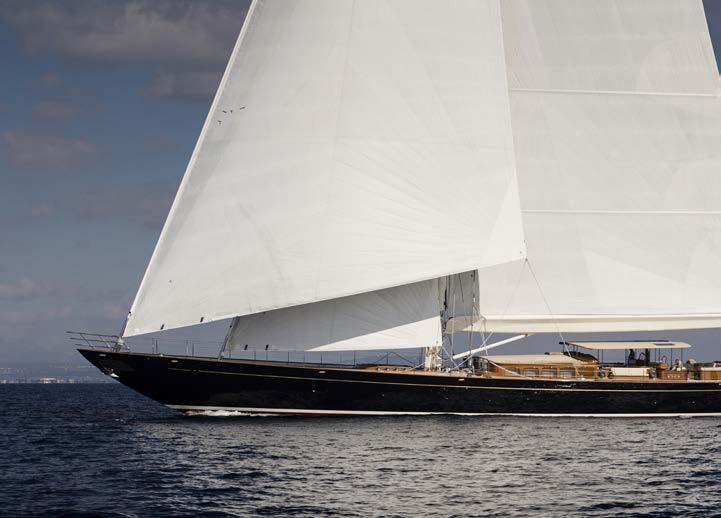
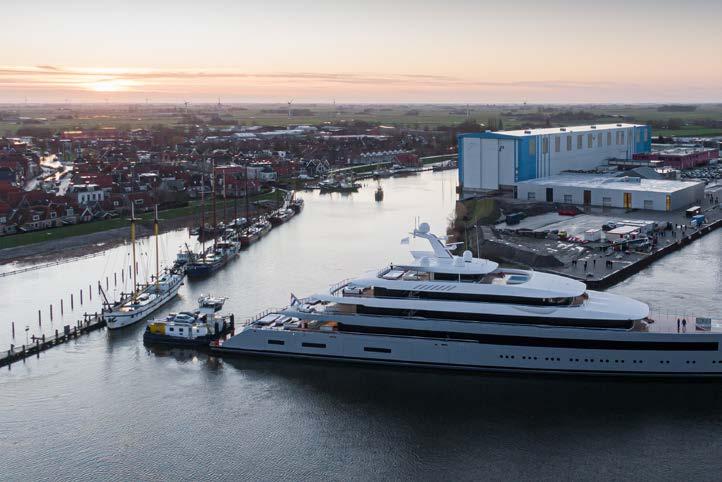
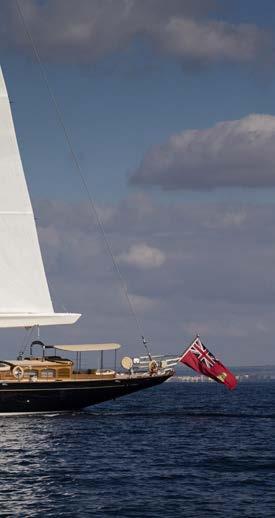
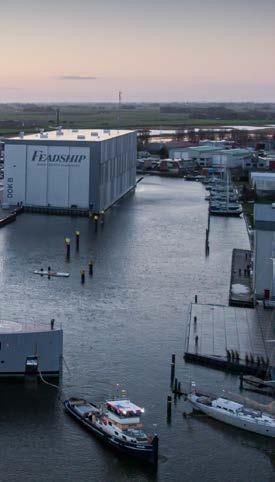
Change orders can lead to major timeline extensions. Can they be prevented?
Not always. The first question is whether the change is driven by necessity or desire. Sometimes change is essential for safety, practicality, compliance, or evolving technology. The key is catching it early enough to minimise impact, and that brings us back to the one tool that matters at every level: the specification. Every conversation –with the owner’s team, suppliers, and within the yard – should orbit the spec. The moment you realise you’re discussing something that wasn’t agreed, you stop and reset: why are we talking about this change, what decision is required, and how do we proceed? If you lose the spec, you lose control.
What technical trends are most likely to influence yacht building over the next decade?
Propulsion and energy architecture will determine the technological backbone of future yachts. Moving toward batterydriven propulsion and DC-based electrical systems rather than traditional AC isn’t a bolt-on change – it affects the entire vessel. It requires a shift in engineering knowledge, build experience, and operational capability. You can design these systems, but they must be simple enough for the crew to operate. If nobody can operate it, you can’t build it – at least not responsibly.
Another major theme is materials availability, with teak decks becoming a particularly visible battleground. It’s not only about sourcing; it’s about persuading stakeholders to rethink what a “proper” deck should look and feel like. The industry is, by nature, building the future using the past. That’s powerful, but it can also trap you in familiar solutions when the best answer is changing.
You’ve been involved in some standout yachts. Which projects most shaped your approach as a project manager?
Wisp was a pivotal learning curve – a classic sailing yacht build that showed me how much I still didn’t know about shipyard reality, even when deeply involved on site. Later, working inside a shipyard environment at De Vries on major deliveries such as Moonrise and Bliss accelerated my understanding of just how complex coordination can be.
The real benchmark for me, though, has been the Moonrise programme, because I experienced it from both sides – first for the shipyard and then within the owner’s team on the subsequent project, Moonrise II. That provided a complete view of how decisions, quality control, documentation, and delivery pressures differ depending on where you sit. When design intent is clear and the drive for quality is genuinely high, you get something rare: a yacht where you walk through and everything feels right – layout, flow, system logic, and finish. Being part of that elevates your own performance and sets a standard you try to carry into every other project.

Just as physical tank test models are giving way to computational fluid dynamics, so another form of virtual modelling is coming to the fore – the digital twin. But what is a digital twin, and how can we use them to streamline superyacht design, construction and operation?
BY CHARLOTTE THOMAS
Providing an exact definition of a digital twin can be tricky, not least because different people use the term in different ways. With conceptual origins tracing back to NASA in the 1960s, the truth is that digital twins come in a variety of forms and offer multiple applications – all of which have the potential to change the approach to design and enhance the operational effectiveness of superyachts.
“I haven’t found a consistent way that people use the term,” says software developer Boudewijn van Groos. “For example, some call a simple 3D model a digital twin, even if it doesn’t make predictions. It might show live sensor data from the vessel, but it’s really just a portal into the actual ship. That is fundamentally different to a software model that mimics the behaviour of a system based on physical or statistical calculations. Yet people refer to both as digital twins.”
Models created in a software environment are arguably the purest form of digital twinning. They are increasingly being used both to train AI and to enable systems developers to code the core parts of a yacht’s controllers while the physical yacht itself is still in build – a decisive factor when faced with tight construction and delivery schedules.
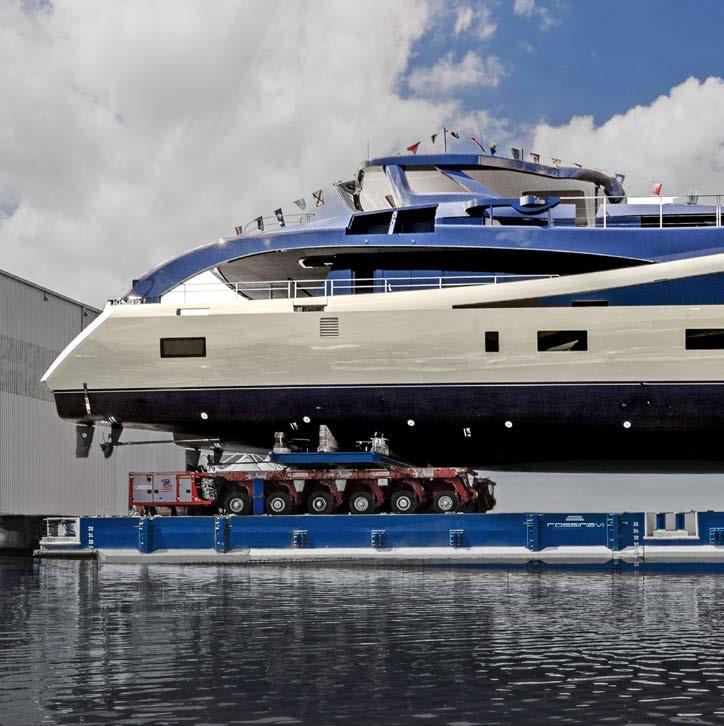
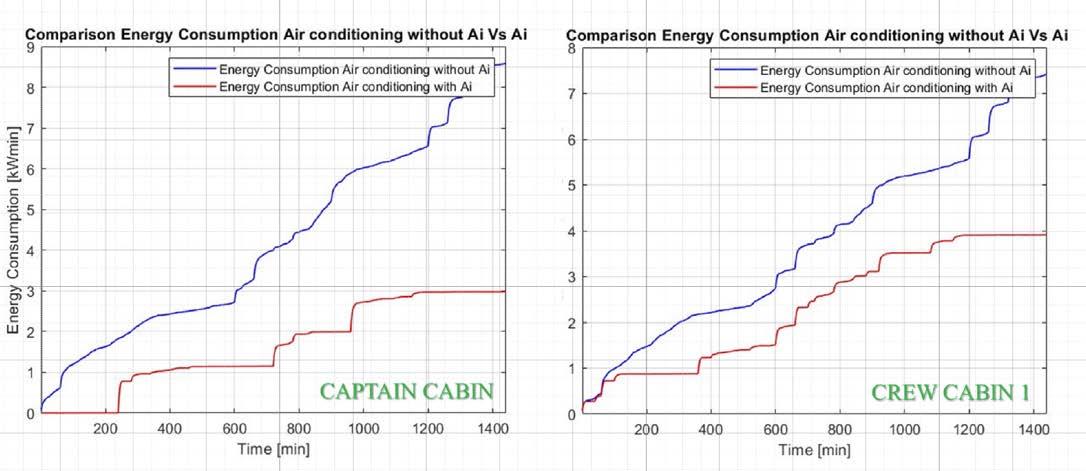
The system has been designed to be modular for use across multiple yacht designs and configurations.
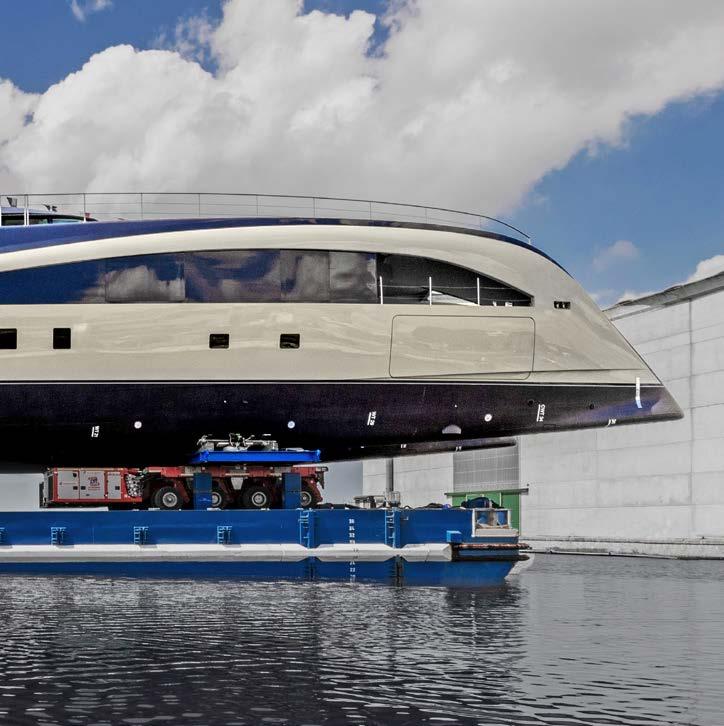
Van Groos is leading a team of software developers who are undertaking the coding of a multifaceted monitoring and control system aboard Project Zero , the renewables-powered sailing yacht under construction at Vitters Shipyard. In collaboration with German company XRG Simulation, they have been building a virtual version of the yacht’s systems in Modelica, which allows them to write the code for the programmable logic controller (PLC) for the thermal harvesting and recovery system, for example, and test it before the physical system has been completed. While the team has also been using a current sailing superyacht as a test bed, creating a digital twin has brought additional benefits.
“For everything we’re doing we first write the physical thing into code to form the digital twin,” van Groos explains. “That simulation can be very basic, or a deep mechanical simulation. It gives us an opportunity to prevent regression bugs and it means we can avoid having to run our code on a physical system that means needing the real machine every time, which is just a hassle.”
Developing a digital twin not only creates a platform for virtual testing, it also provides an opportunity to explore or to train AI, which can have real-world applications in a finished project. Indeed, this is the approach that Videoworks and Rossinavi took, in collaboration with the University of Pisa, to develop the systems on the Seawolf X catamaran.
“On a yacht you have a lot of very high-tech systems, each optimised and each with sensor actuators,” explains Maurizio Minossi, CEO and CTO of Videoworks. “The idea is to create a sort of manager that grabs the data coming from the different subsystems and, thanks to the use of AI algorithms, gives it added value in terms of monitoring and control.”
“AI algorithms need to train on something – you need a story,” adds Sergio Saponara, director of the Department of Informational Engineering at the University of Pisa. “But if the technology is new, how do you create that story? Creating a digital model of a yacht allows you to fill the AI with data. You analyse the chiller in a model, then you combine it with all the other models to create the whole ship.”
The system they have developed, which has been designed to be modular for use across multiple yacht designs and configurations, integrates various network-connected sensors, smart plugs, and actuators, such as HVAC systems, lighting, and automated blinds, orchestrated by an advanced AI algorithm. The digital twin enables the simulation of different configurations and operational scenarios, generating virtual data that can be used to train AI models – a useful approach given the challenges of limited experimental data on energy consumption and passenger habits.

Simlab is a technology company based in Poland specialising in digital twin platforms originally developed for land-based construction projects. Its software sits on top of digital scanning technologies, using Matterport as a core visualisation layer to connect 3D scans, CAD and Building Information Modelling (BIM) data, schedules, and documentation into a single, intuitive environment.
By unifying disparate datasets into a continuously updated digital twin, Simlab provides project teams with a shared visual source of ‘as-built’ reality. This improves coordination across disciplines, reduces rework, and enables timelinedriven monitoring of construction progress by area, system, or phase. Crucially, data generated during construction is not lost at handover but carried forward into operation and maintenance.
“When we talk about digital twins, it’s important to separate two approaches,” explains Artur Dachowski, Sales Director at Simlab. “One is simulation – using models to optimise processes –which isn’t our focus. Our work is about capturing the current state of construction, documenting every critical stage, and creating a full lifecycle record of the asset.”
This approach translates directly to yacht building, where projects involve complex systems, long build cycles, multiple subcontractors, and demanding handovers. By consolidating 3D scans, production schedules, and technical documentation into a single
digital twin, shipyards gain real-time visibility into build progress and greater control over coordination and delivery.
“From a technology perspective, very little needs to change,” Dachowski continues. “We’re capturing real-world spaces as they are. Whether that space is a building or a yacht doesn’t fundamentally alter the process.”
Paul Shersby of Film360 experienced this firsthand while working on the 72-metre Admiral yacht designed by Giorgio Armani, now called No Rush. Film360 was commissioned to produce multiple Matterport 3D scans that document the entire build over several months.
In all, he scanned every inch of the project on eight different occasions.
“After the first few models, it became difficult to navigate between different build stages,” says Shersby. “That’s when I found Simlab, which had developed a construction solution allowing multiple 3D tours to be viewed side by side. In theory, the platform allows an unlimited number of models to be compared simultaneously, both ‘as built’ scans and ‘as designed’ 3D visualisations.”
Working with Simlab, Film360 helped refine a system that allowed owners and build teams to easily compare build stages and collaborate directly within the model. Engineers could add and update information in real time, creating a time-stamped record of work completed. The digital twins were also used to familiarise new contractors and crew with the yacht’s layout, while preserving a permanent record of what lies behind walls, ceilings, and deck panels.
“Once a yacht is built, you’re normally left with plans and photos,” Shersby notes. “A digital twin lets you see through walls and understand exactly what’s there.”
The long-term value becomes especially clear during refits. Film360 scanned the 55-metre Heesen yacht Quite Essential in 2018 and again after a major refit in 2022, when it was renamed After You. During strip-out, the original digital twin proved invaluable when the build crew needed to locate forgotten fittings – demonstrating how digital twins preserve critical knowledge long after construction ends.
What’s more, the same technology can be adapted to model multiple emergency scenarios, including the likely spread of fire based on the materials used in the build, or identifying areas where air pockets may form during flooding.

It’s not just in systems design that digital twins are being utilised. For Dale Morris, Group Head of Global Design at Southern Spars, the development of digital twins has enabled advanced, in-the-box testing before a rig is stepped – a serious advantage given the one-off nature and complexity of superyacht masts and sail plans.
“The outcome is what’s on the water, but the model that came before it has been through all the conditions,” he says. “It starts with base mast properties, rigging pretension and tuning, but we add in the actual moulded sail shape and structural files from North Sails, and then we can assess the rig to a whole other level.”
This allows the team to see the effect of their rig design choices even down to its impact on the actual shape of the sails. They can go into a whole CFD loop, where the fluid structure interaction (FSI) loops back into the non-linear FEA – non-linear because the mast is flexible. That essentially means they can sea-trial the yacht before any carbon fibre even gets laid in the mast mould.
“That also flows through into how we communicate the safe operation to the customer with all the sheet runs and all the load interfaces, so that boatbuilders can buildin the right safety factors,” Morris explains. “You can assess all that within the digital twin.” It also impacts the initial sea trial phases because, rather than the traditional method of stepping a mast and eyeballing the rig to tune it and ensure it is set up symmetrically, it can effectively be pre-set. Gone are the days where you put the rig in, go sailing and flop from tack to tack, make changes, rinse and repeat, which can be a two-day operation.
“We are able to virtually go sailing before we even put carbon in the mast tooling, and for yacht designers, owners and crew that’s a huge benefit because it elevates confidence before you get further into the project,” says Vincent Guiot, Group Sales Director at Southern Spars.
Further, the applications extend to the operational phase. By using the information from the load sensors from specific conditions. If something doesn’t look quite right, the team can plug that data back into the digital twin and help someone on board diagnose the issue more efficiently.
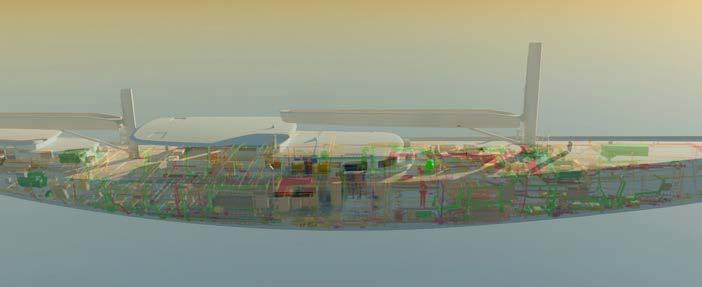
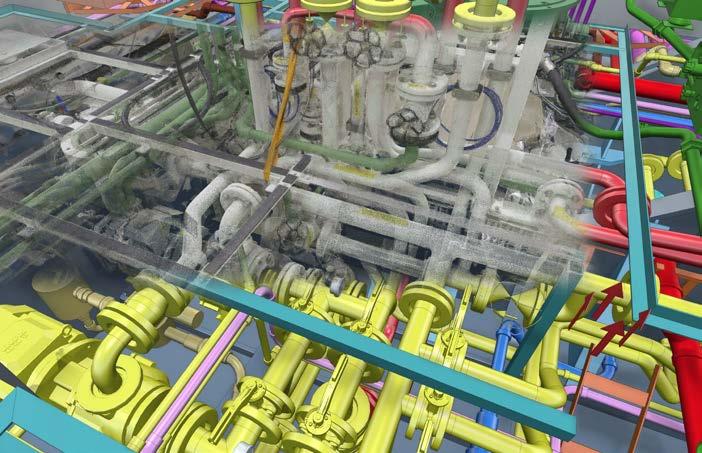
As CAD has advanced, so 3D models have become commonplace, not only in terms of determining the underlying engineering layout of a vessel but also to ensure the vessel can be built as efficiently as possible. But when one superyacht project approached Dutch company Goltens to take that 3D model further, the potential for an all-encompassing digital twin quickly became apparent.
“Normally we design, engineer and create 3D models, and during that process a lot of information on the components – size, material, capacity, make, model – is put into a database,” says Sandra Jutte of Goltens’ Green Technologies division. “But when the vessel departs, most of that information, which can number thousands of data files, stays behind. For this project, we were asked how we could collect all the engineering data in one place during construction and use it to make the yacht smarter in operation.”
To achieve that, the Goltens team combined ongoing 3D scanning during the build with CAD and engineering drawings to create a digital version of Project Zero that is a perfect match for the real thing. The result is that all the information on the build, systems and components is available for easy access – especially useful when it comes to faultfinding or in the event of a system alarm.
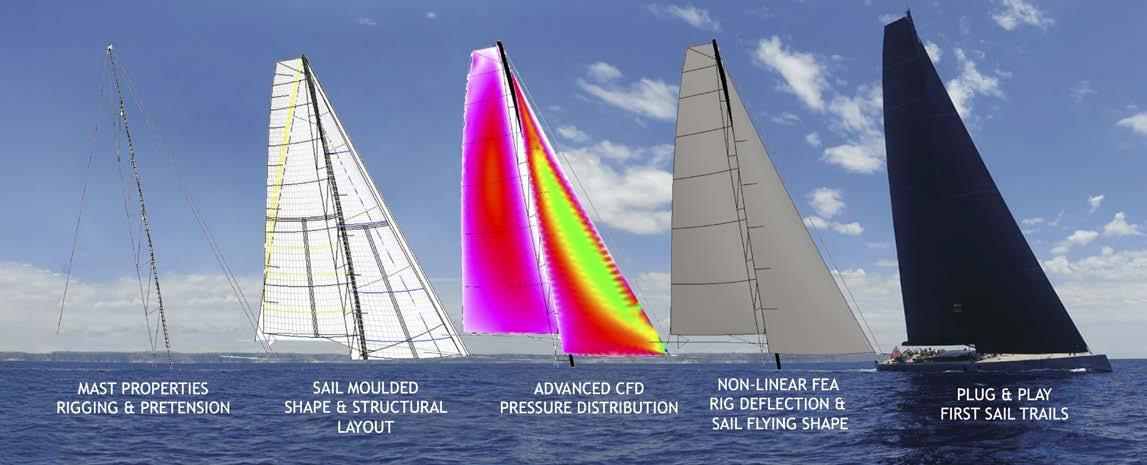
“Our work is about capturing the current state of construction, documenting every critical stage, and creating a full lifecycle record of the asset.”
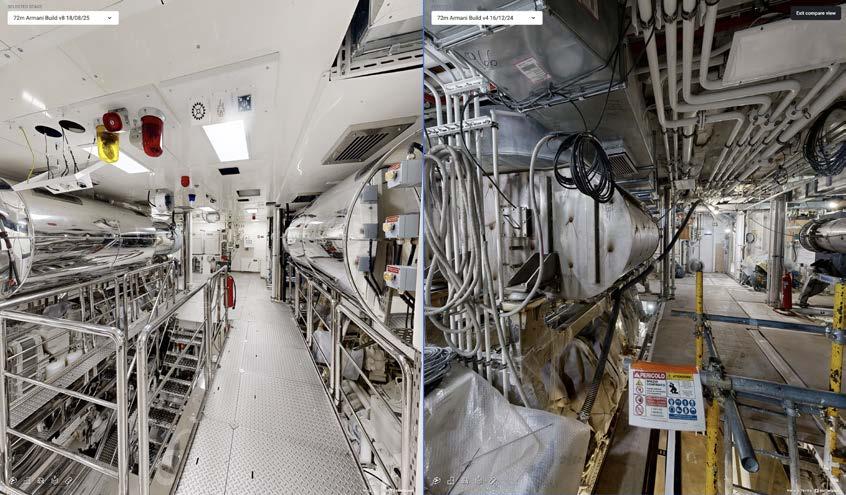
“You need an exact copy of the yacht, so during the entire build our team has been on site with a 3D scanner capturing every stage of the build,” says Jutte. “We’ve scanned every detail, including 100,000 metres of cables and six kilometres of piping.”
Every pump, pipe and system is connected and with e-sharing it’s possible to click into the engineering drawing and instantly jump to the same spot in the 3D model, and vice versa. All relevant details and spare parts listings are available with a click. What’s more, the digital twin will form the backbone for predictive maintenance and, potentially, AI-rooted energy efficiency and systems analysis during the operational phase – an aspect that could have huge impact for a project where every kilowatt counts. The potential goes further, however, because wherever the vessel goes, the digital twin goes too. This means designers
can use the digital twin to experiment with new ideas or test layouts without ever touching the real vessel, while engineers can follow system performance and simulate improvements, and and owners can explore their yacht anytime, anywhere.
Such a comprehensive scan-based digital twin improves maintenance aspects – with all manuals and spare parts lists easily accessible, and with the potential to add predictive maintenance algorithms – but also aids efficiency in a refit phase.
“Refits and repairs are no longer a guessing game,” says Jutte. “Because if a component needs to be replaced or a new component fitted, the digital twin already knows what’s there currently and if the new one will fit. It means you can order or prefabricate parts with confidence. It’s a complete feedback loop between design, operation, maintenance, fault-finding and improvement.”

If home is where the hearth is, then the galley is certainly a fundamental element of any superyacht. Whether enjoying a 10-course taster menu or a teppanyaki treat on deck, food is central to the onboard experience. We take a look at how to avoid second-rate cooking spaces and equipment.
BY CHARLOTTE THOMAS
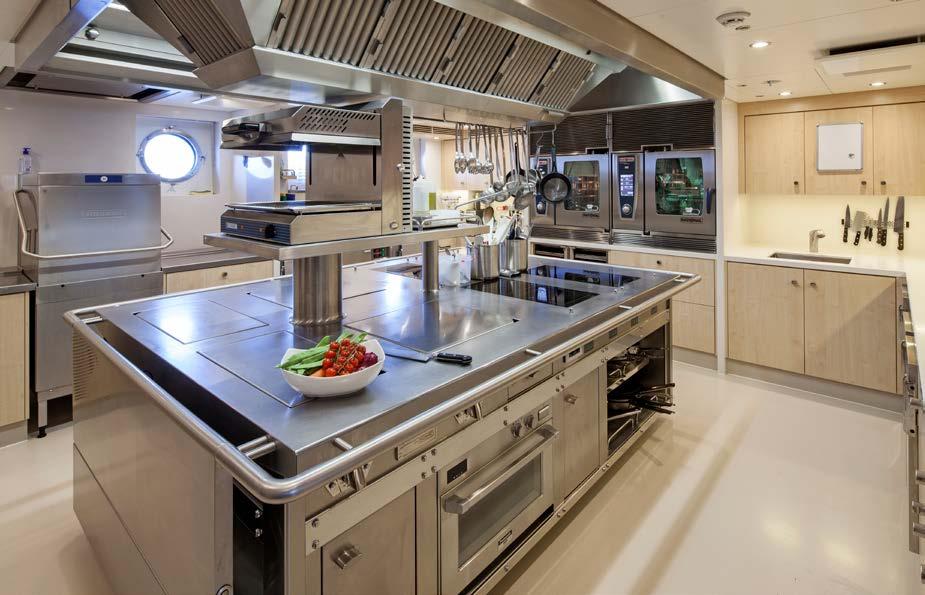
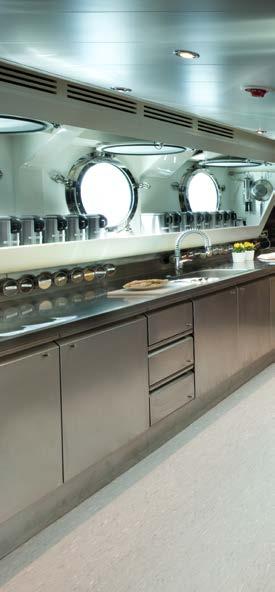
When people talk about superachts, the highlights always seem to revolve around the same things: the beach club, the sundeck, the pool, the master stateroom. The galley barely gets a second thought, until you spend time on board – then the food and its service take centre stage and any issues to do with layout, design or installation become belatedly obvious.
Naturally, safety is paramount. Galleys present a host of hazards from deep fryers and steamers to rotating equipment and sharp blades. Fire suppression, hygiene, ventilation, materials, and so on, are governed by classification society rules, but small details like having rounded internal radii instead of sharp corners in stainless steel cabinets help prevent dirt accumulation and make cleaning much easier for galley staff. Ergonomics and design are equally important:
“The galley layout is defined according to the capacity of the yacht, considering both
guests and crew,” says Costanza Pazzi, project architect at CRN. “It is usually designed with three clearly distinct areas: washing, cooking, and preparation.”
Separate traffic flows for clean and dirty dishes help prevent cross-contamination and accidents. Adequate lighting is a sometimes overlooked consideration, especially for galleys on the lower deck with smaller windows where the artificial lighting should emulate daylight temperatures (4000K-5000K) to show the true colour of the food being prepared.
“Each custom superyacht galley is different,” Pazzi continues. “The spaces dedicated to galley and pantries should be discussed as part of the technical specifications at contract completion, with guidelines coming directly from the owner’s team. A fundamental requirement is that ducting and systems need to be defined in the general plans from the outset.”
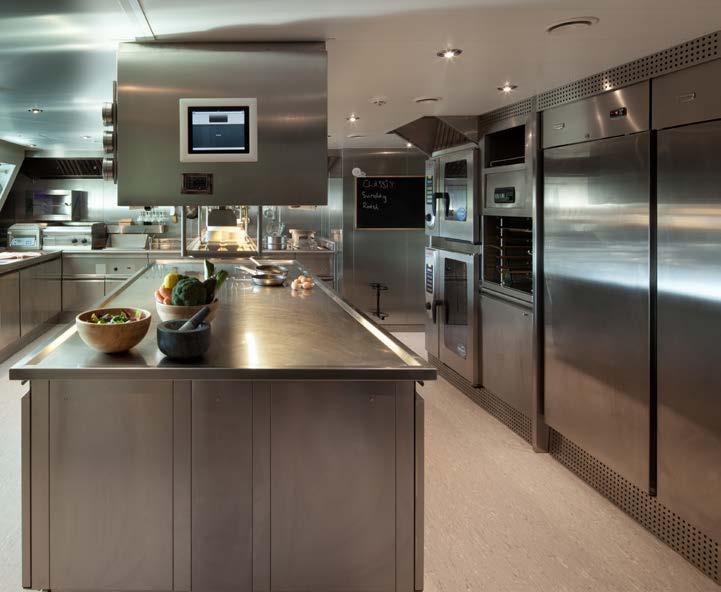
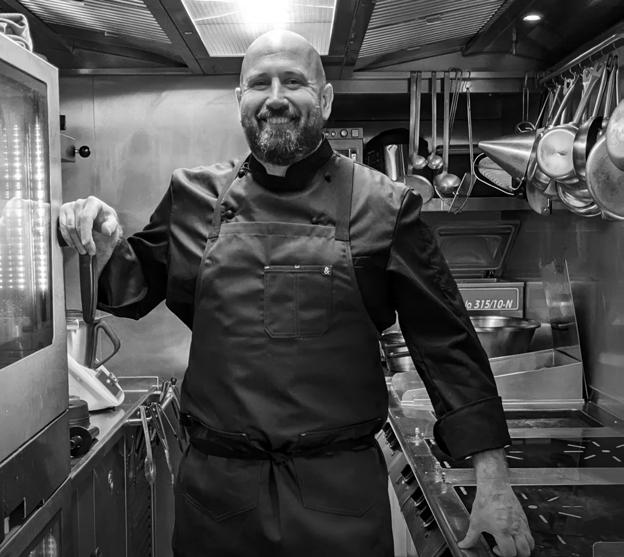
“The galley is not just one room – it’s an entity,” says Brennan Dates, a chef with more than 25 years’ work experience on superyachts. Currently head chef aboard 88-metre Project X, he also consults on galley design through his company Superyacht Galley Designs,. His refit and new-build galley projects includes Ecstasea, Mogambo, Dragonfly, Obsidian, the first and second Moonrise yachts, and a 100-metreplus vessel currently under construction.
“Where does the food come into the boat, especially on larger yachts when you’re talking about shell doors and pallets of produce?” he asks. “How does the food get stored, and where is the cold storage located? Which deck is the galley on? Where are the pantries and which decks are the guests eating on? Some food is stored in the galley, then it gets prepped, possibly stored again, then gets heated or reheated, plated and served, and now you’re talking about pantry flow.”
It’s also important to consider the operational profile of the yacht, because there’s a difference between a purely private yacht and one that’s going to be busy chartering. Is it going to be doing extended cruising to remote locations, which may require bigger dry stores and cold rooms?
“I can walk into a galley and within five minutes know if there was a yacht chef involved in the build,” says Dates. “But no one’s really listening to chefs at this point, and I think that negatively impacts on the whole guest experience, but also the crew.”
One thing for sure is that dumb waiters are mostly a thing of the past, with crews preferring to use the space for additional storage or fridges. Dates further warns against the use of domestic kitchen appliances on board in what are essentially commercial kitchens, where stuff tends to break down much faster. “Rational is the number one in the world for ovens, and MKN is up there,” he advises. “There’s a precipitous drop after those two.”
Right: To save energy, Project Zero’s galley extractor system will use an air curtain that draws up the cooking fumes without pulling in too much air-conditioned air from the room.
Bottom: A photo of the partially installed galley overlaid on a technical render of the ducting systems.
“I can walk into a galley and within five minutes know if there was a yacht chef involved in the build.”
These days, the galley is only one centre of chef action on board. There will likely be outdoor cooking stations in the build plan, particularly on charter yachts. Lürssen’s Flying Fox, for example, features an extensive outdoor kitchen on the bridge deck aft, where guests can watch the chef working a wok station, a Spanish Josper grill, a rotisserie, and pizza/teppanyaki/tandoori ovens.
“At a bare minimum there needs to be a sink and refrigeration, just for basic sanitation,” Dates says. “If you can have a little trash compartment that’s sealed away that’s useful, and then it comes down to equipment – there’s a really good oven by MKN that fits under the counter and which takes care of its own exhaust and accepts standard 535x325 millimetre gastronomic trays.”
“There is an ever-increasing demand for the inclusion of pizza ovens, particularly for yachts over 60 metres,” adds Pazzi, “There is also a trend for a table in the main galley where guests have the chance to see the chef working and enjoy a food tasting, aimed at creating a sensory experience.”
Open-plan, country kitchen-style layouts are increasingly popular on smaller yachts, and on “galley-up” catamarans where the cooking area become an integral part of family life on board. The Sanlorenzo 64Steel Attila even has a custom-made barbecue pit inside the main deck dining area for preparing Argentinian-style steaks.
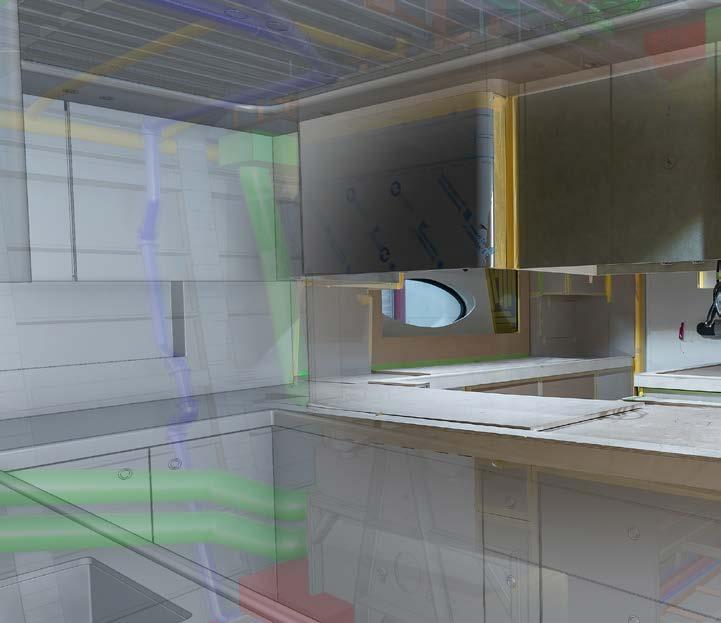
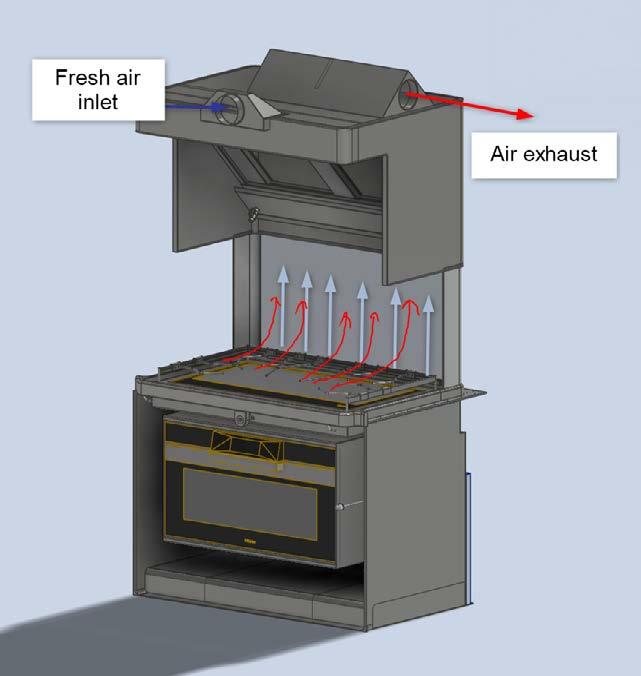
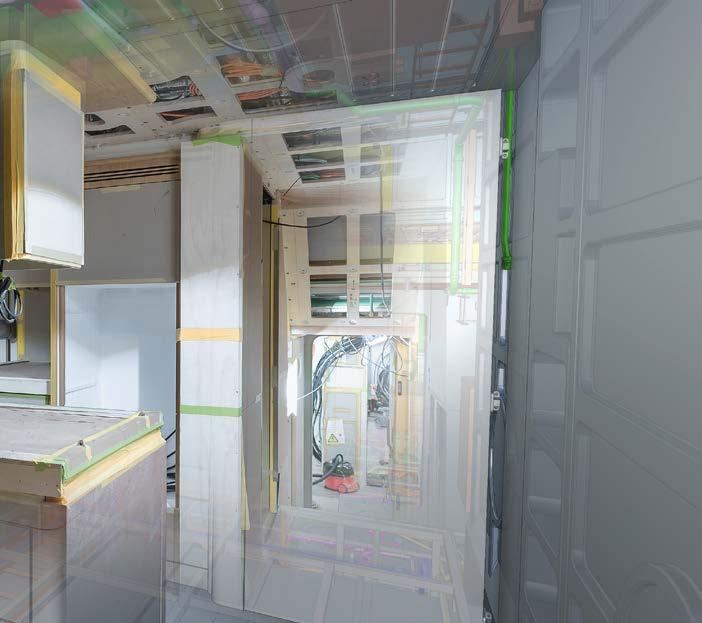
Limited space and the need to operate at angles of heel all add to the complications for the galley design on sailing yachts.
For Project Zero, there’s an additional consideration: the 69-metre ketch will be powered entirely by renewable energy, so efficiency is paramount.
Galley extractor systems exacerbate consumption by drawing in air-conditioned air which, once mixed with galley fumes and steam, then has to be re-treated. According to the Zero project team, removing 1kg of water vapour requires around 2,500 kJ of energy (roughly equivalent to 0.7 kWh).
To counter this, they settled on a solution that uses an air curtain at the back of the hob to draw up the cooking fumes without pulling in too much air-conditioned air from the room – similar to when you walk into a supermarket and there’s a wall of warm or cold air, designed to stop the air-conditioned air inside from escaping.
The system draws on the Venturi effect – air blown along a glass panel creating a lowpressure zone that entrains fumes – and the Coanda effect, where airflow sticks to a glass surface. Tests show a 90 percent reduction in airflow compared to conventional hoods, meaning less air-con air drawn in, and an 80 percent reduction in required fan power. In addition, the team has integrated a hoodmounted sensor array to continuously monitor temperature and vapour levels across the cooktop. Combined with air-curtain extraction, the system reduces total energy demand by up to 70 percent – significant for a project where every kilowatt counts.
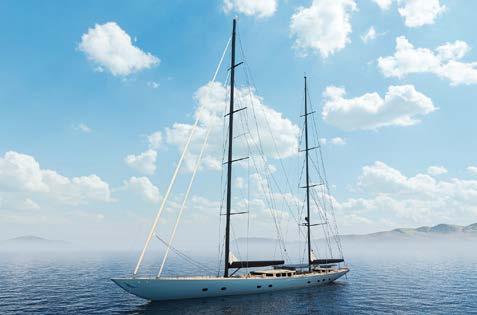
With cooking comes the risk of odours, which can quickly infiltrate indoor guest areas if ventilation and extraction aren’t properly designed. During the design of the second Moonrise, for example, the owner requested a taller mast to avoid galley fumes being blown back onto the sundeck after being vented. For outdoor cooking stations, ventilation is a challenge, with opinion divided on whether to install some form of extraction system or not. Outdoor grills present a different problem:
“Now you’re talking a lot of flame, so you have to worry about deckheads, flammability and flame-retardant materials, which is something that needs to be figured out with the build team early on,” says Dates. Galley design extends to the handling of waste produce, which includes both garbage and wastewater treatment. The latter is particularly pertinent, because food contaminants and grease can wreak havoc with onboard water treatment systems (this topic is specifically addressed in issue 9 of How to Build It).
“Fat, oil and grease (FOG) need to be separated – this is very important not only for the wastewater treatment process, where they can affect the biological process or clog filters, but also to prevent clogging of pipes,” confirms Georgios Kariofilis, Sales Manager at Hamann. “Having a grease trap and a pre-filter system is the first step to avoiding such problems.”
Organic trash handling, typically resolved by storing garbage in a refrigerated room or in a deck locker, is also making advances. Dehydration plants, such as those offered by Evac and Eco-Smart, remove water content from food waste by heating it to around 80ºC and evaporating it off as steam. The sterile and odourless residual food waste is roughly 15 to 20 percent of its former volume and can be stored more easily on board for later disposal or composting. Essentially, it means you don’t need as big a trash storage room.
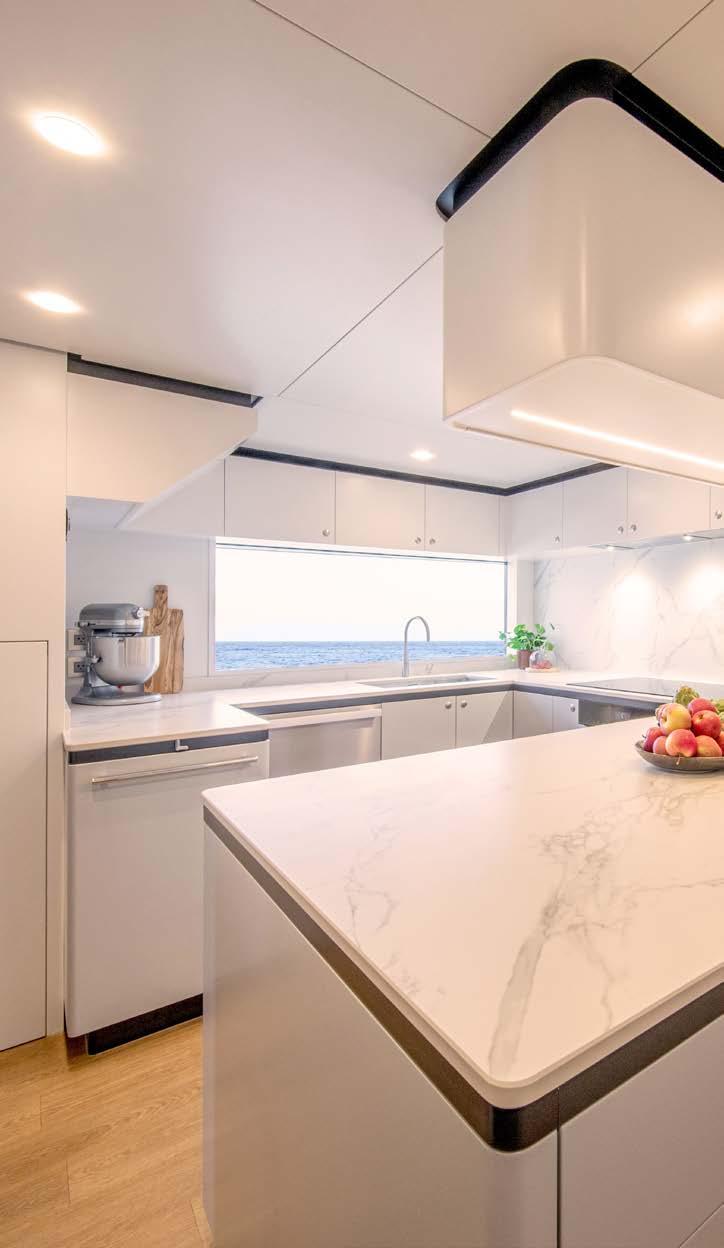
“From day one the client had the idea that a proper galley would mean the crew could serve them better while also being happier.”
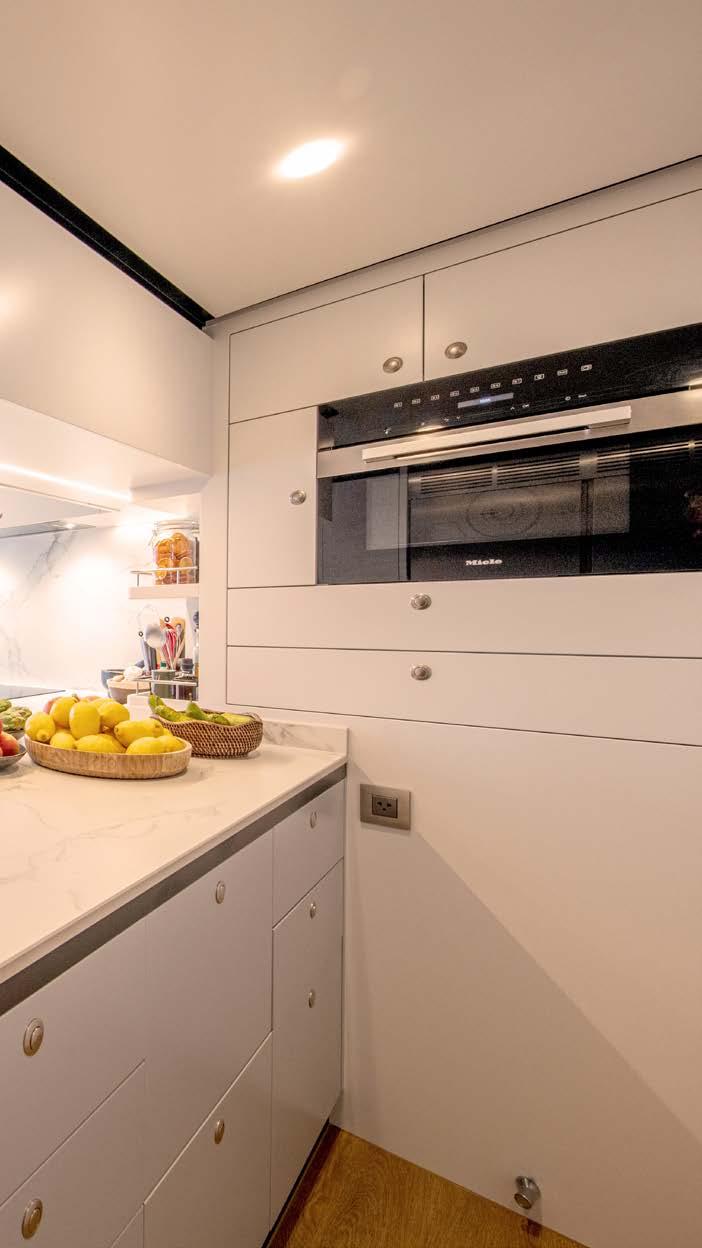
The compact spaces aboard 35-metre Lalabe were felt acutely by Van der Valk and the design team at Guido de Groot tasked with creating a galley that could cater to parties of up to 10 guests for extended liveaboard stints, while also feeding eight permanent crew.
“The client wanted to be sure he didn’t make any mistakes,” says Guido de Groot. “So we suggested working with a chef for advice, and I reached out to Mutlu Sayar, a professional chef with experience from really large yachts. She was able to dismiss ideas that we thought would be helpful, such as incorporating a place where the chef could sit, as well as emphasising the amount of heat that builds up in the galley and the need for ventilation.”
In addition, prioritising equipment placement became paramount, such as moving wine coolers and coffee machines into a crew pantry rather than taking up valuable real estate in the galley itself. While some aspects of Lalabe’s galley operations are compressed compared to larger yachts, the design still allows for adequate cold and dry storage as well as pantries on the main and bridge decks.
“From day one the client had the idea that a proper galley would mean the crew could serve them better while also being happier,” adds De Groot designer Paolo Calado.
“Owners always ask for the biggest possible saloon and owner’s cabin, particularly on a smaller yacht like Lalabe. But you can’t forget the galley, because someone is going to be working really hard in there!”
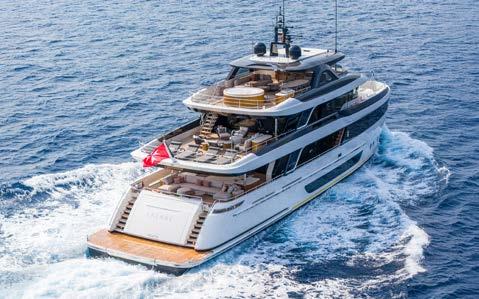
For the owners of 67.5-metre Amor à Vida delivered by CRN last year, outdoor living and dining is not just an occasional activity but a core part of life on board. The American bar on the upper deck aft features an outdoor barbecue area with alfresco dining, while the bridge deck aft hosts a pizza oven and a teppanyaki grill. At the owner’s request, each of the four pantries –one each on the main and upper decks, and two on the bridge deck – has a dedicated wine cellar with the dumb waiter eschewed in favour of more storage and cooler space.
For such extensive alfresco cook stations it’s not as simple as just building in a grill or barbecue to an existing countertop –aspects such as ventilation, fire and safety compliance have to be integrated alongside the need for food storage and prep, waste disposal and wastewater management. These considerations are particularly pertinent given the yacht will be chartered extensively.
“The most challenging aspect was finding space between the storage areas for all the equipment and for the chef to work,” says Costanza Pazzi. “The goal was to find the perfect fit for all these needs, and we succeeded.”
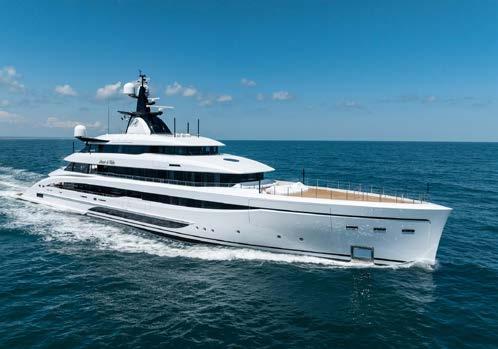
Clockwise from top: An overhead render of the galley area on the Sherpa XL from Arcadia Yachts; smart use of storage aboard the Vitters ketch Adele; Yersin, the 78-metre explorer yacht built by Piriou, has an expansive pro-spec galley. Like Project Zero, the air extraction system is designed to reduce energy consumption and maximise efficiency.
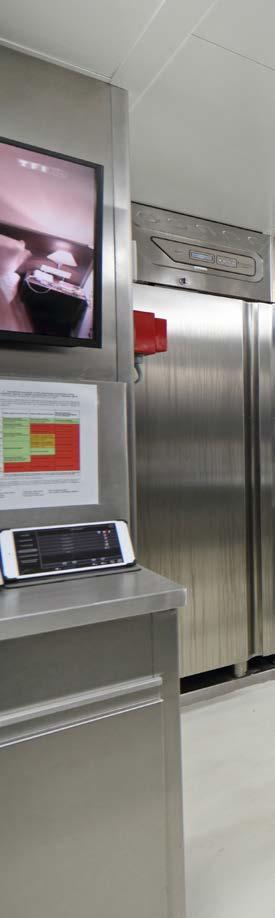
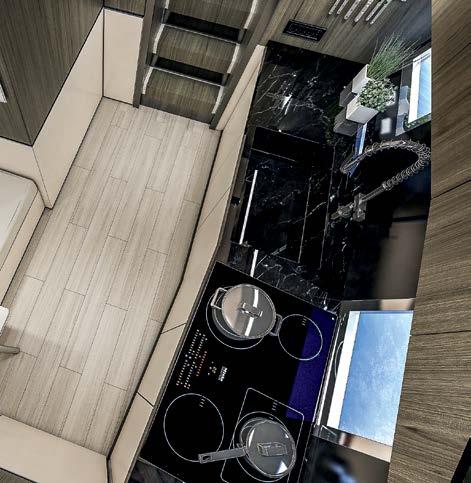
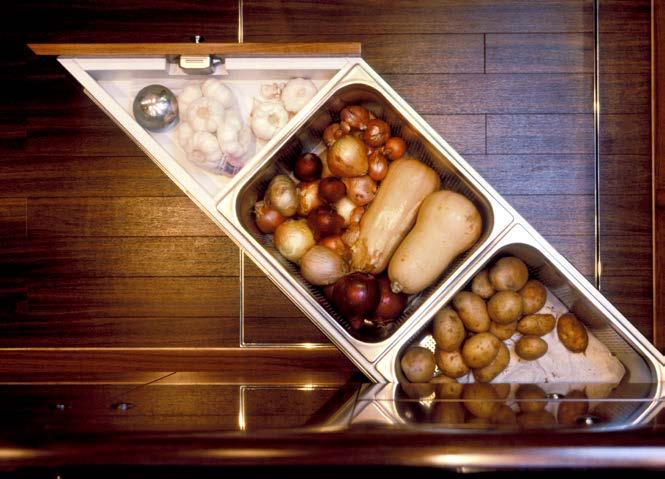
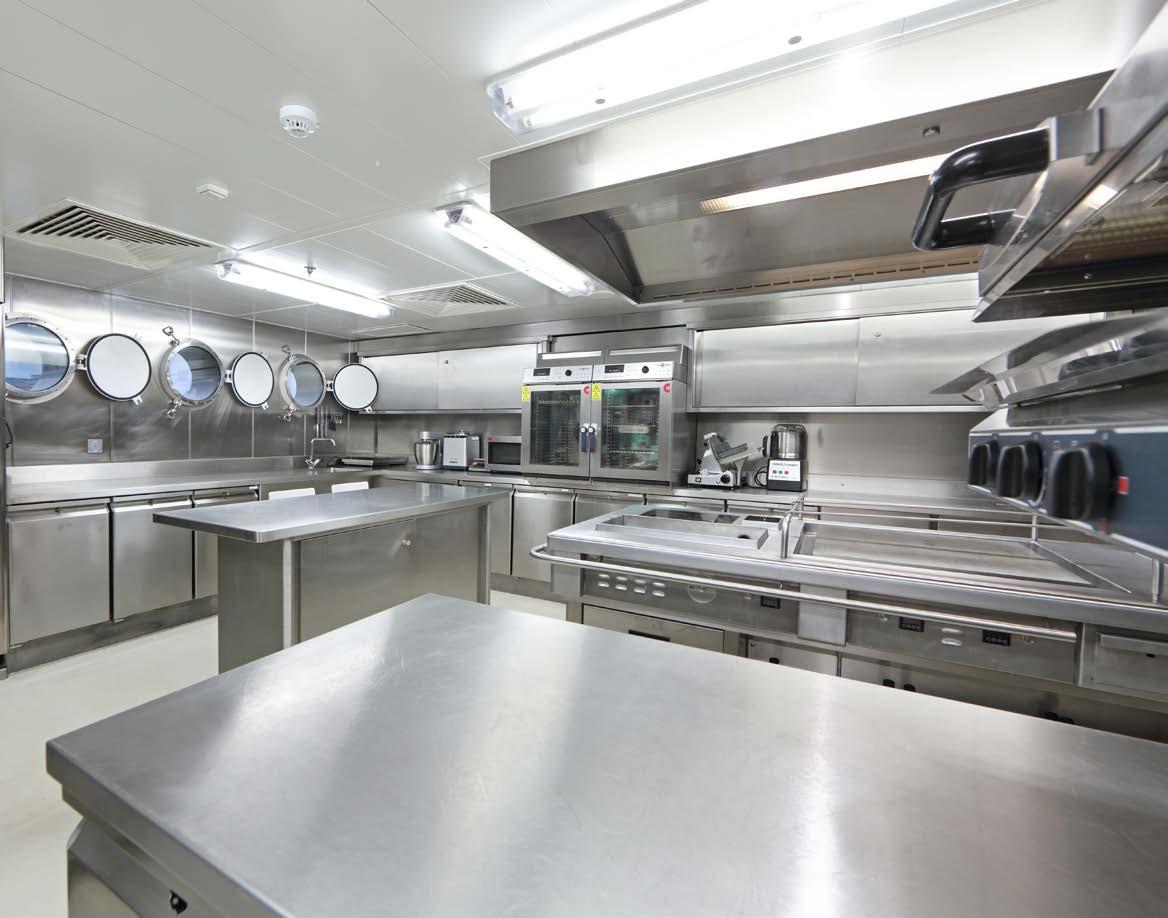
“Not including a superyacht chef in the build is like building a race car and not talking to the driver."
The advice from designers and chefs is basically to bring in an expert at the layout stage of design, and to argue for more space rather than less, no matter the size of yacht. Speciality companies like UK-based GN Espace offer expert advice for superyacht galley layouts and equipment spec, including full commercial galleys and upgrades such as adding a robust powder coated finish to stainless steel doors to match the rest of the yacht.
Large or small, yacht designer Guido de Groot argues that the galley is generally in fulltime use – especially on charter vessels. He compares the 10 guests plus eight crew aboard the 35-metre Van der Valk yacht Lalabe with a 50- or 60-metre vessel that might have 12 guests and 14 crew (see sidebar).
“It’s a similar number of guest and crew, so you can’t just halve the size of the galley on the smaller yacht,” he points out. “It requires a lot of smart thinking to get everything into a more compact space.”
“Give the galley and associated areas the space they deserve,” insists Dates. “Is luxury jamming the galley in the bottom of the boat and having food travel up four decks, or is it spending resources to have the galley on the main deck nearer to where guests will eat?
Because that’s what I would want.”
Shipyards looking to streamline the planning process with standardised solutions sometimes argue against bringing in a consultant chef at the design stage. All chefs have their own routines, preferred equipment, likes and dislikes, but individual chefs do not stay with a yacht indefinitely. The galley, on the other hand, will remain for many years, or at least until a major refit.
“Not including a superyacht chef in the build is like building a race car and not talking to the driver because they’ll want different buttons in different places,” counters Dates. “It doesn’t make any sense to have someone who’s never done the job be the one to put it all together.”
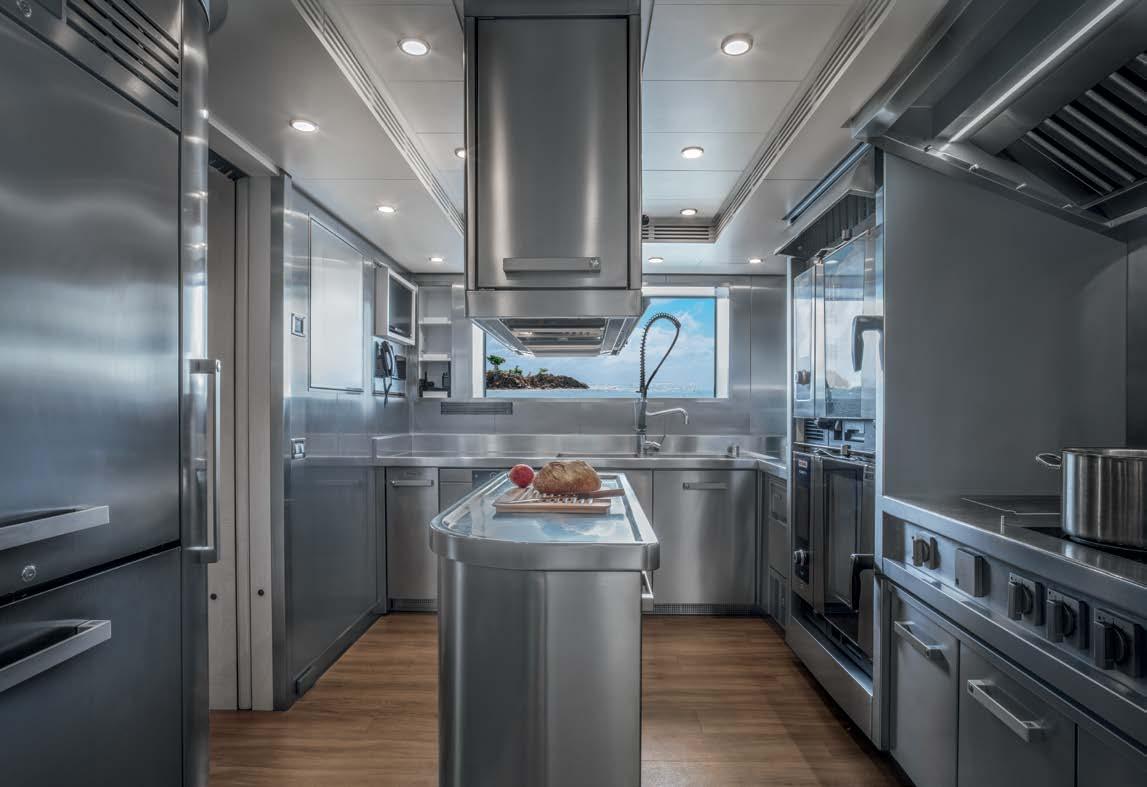
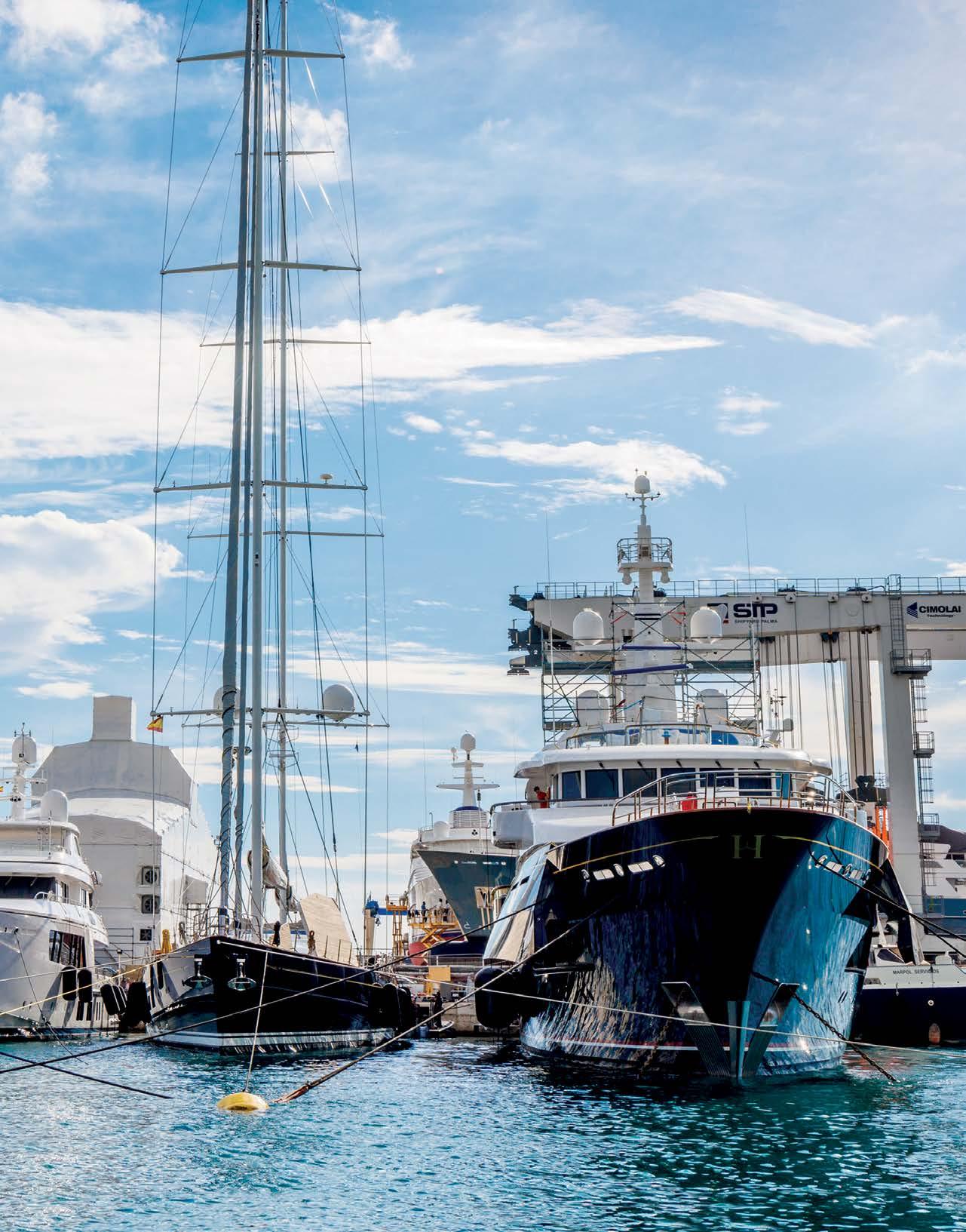
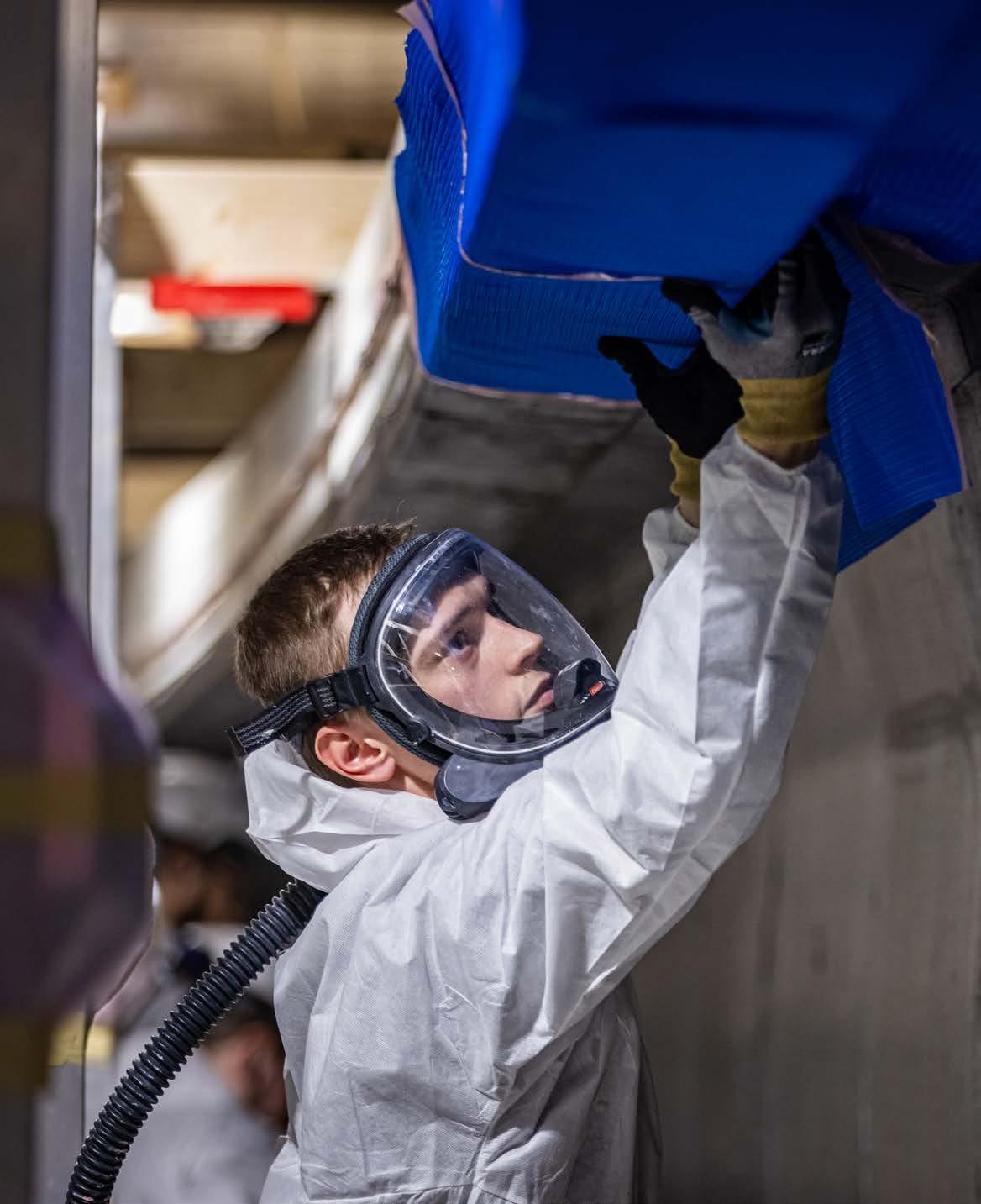
The Baltic 107 catamaran Project Zeteo represents a new challenge for the Finnish shipyard known for its high-performance carbon monohulls. The structural forces, load paths and production sequence of the multihull platform differ from anything it has attempted before. We visited the build in Jakobstad as the deck modules were still in the lamination phase, but outfitting of the hulls was already underway.
Below: Building the negative mould for
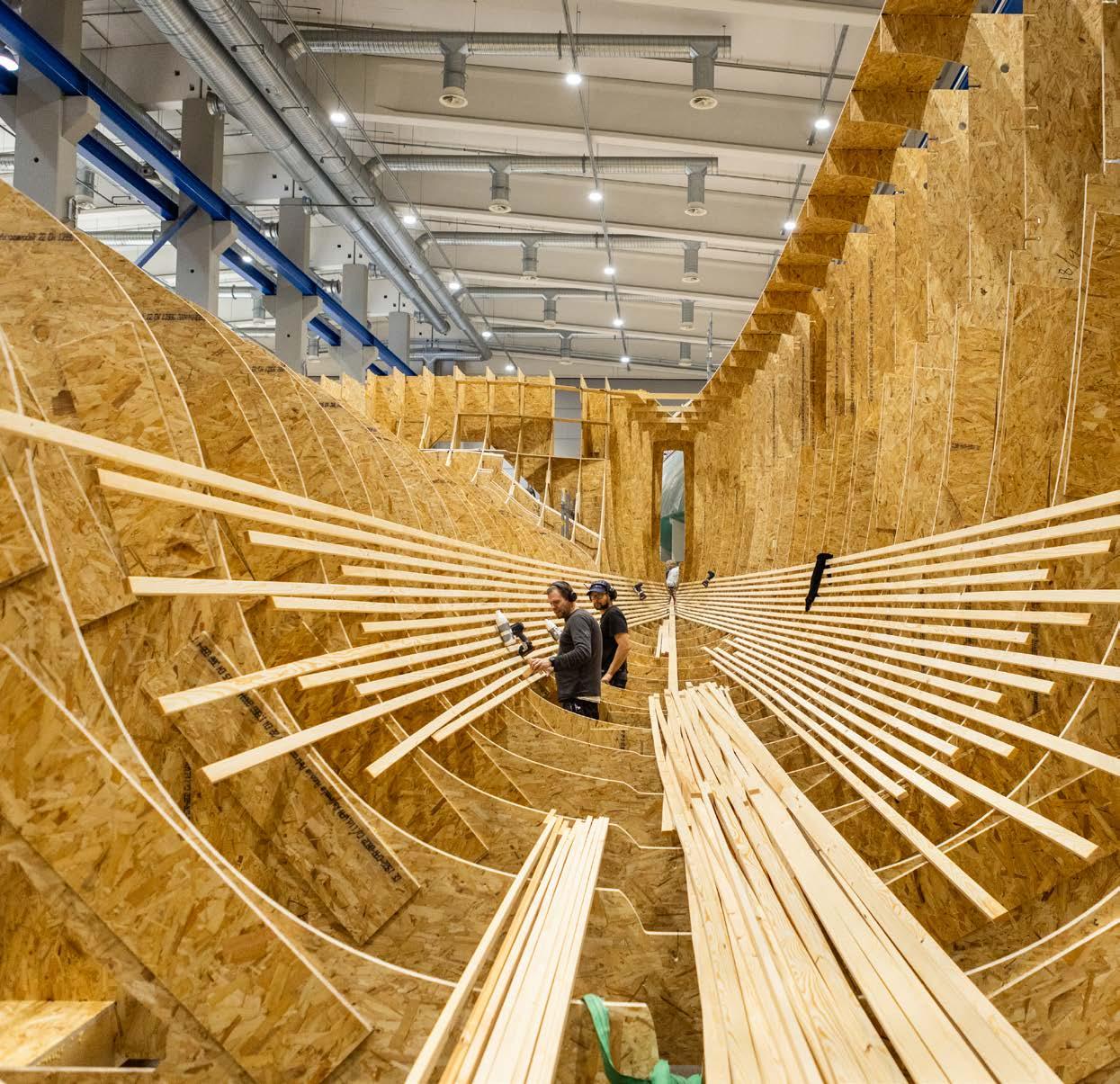
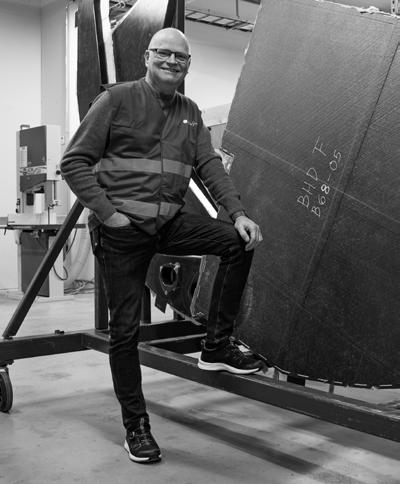
Baltic Yachts is no stranger to advanced composite engineering, which is precisely what was needed to meet the owner’s brief for a stylish yet functional cruising catamaran with excellent sailing performance in all conditions and a high degree of autonomy from shoreside support. The design further placed a strong emphasis on environmental thinking and sustainable solutions, both in terms of the yacht’s construction and its longterm operational footprint.
Using a combination of epoxy sprint and prepregs, the carbon fibre sandwich construction for the 33-metre catamaran with a beam of just under 13 metres begins in Baltic’s new CNC cutting room. Each fibre panel is cut, labelled, tracked and matched to its exact position in the build. Sprint is easier to handle and can be vacuumed quickly for rapid, large-scale lay-ups, while pre-preg requires progressive debulking to remove trapped air, consolidate the plies and increase the fibre volume fraction before final curing. What is used where depends on a careful negotiation between weight targets, performance requirements and handling efficiency.
Weight, as always at Baltic Yachts, is more than a performance metric: it’s a governing principle, especially on a multihull where every kilogram affects pitching inertia and the yacht’s capacity to behave properly under sail. If the catamaran is overweight its skinny hulls will sink deeper in the water, negatively affecting performance and possibly inducing wave slamming under the crossbeam. But this is not the only factor that sets it apart from a monohull.
“Catamarans have a massive righting moment compared to monohulls, which go on absorbing forces as they continue to heel,” explains Sales Director Kenneth Nyfelt, whose father was one of the five founders of Baltic Yachts. “Baltic’s interiors are traditionally built as lightweight modules bonded into the carbon skeleton, maintaining tight control over weight distribution. On the catamaran we’ve pushed this approach still further: cabinetry, bulkheads and fixed furniture elements are all part of the load-bearing system.”
Aside from providing panoramic views, the main saloon is a study in how to balance large, unsupported openings with the required structural stiffness. The flybridge steering positions impose further demands by concentrating the mechanical loads of steering and sail handling into a high, central point (steering is hydraulic due to the distance between the helm and rudders, with plans for an optional electric feedback system in the future). Baltic has responded with a network of carbon beams and ring frames that distribute load across the entire platform, avoiding heavy reinforcements that would compromise the boat’s weight targets. Composite construction has been Baltic’s signature for decades and it knows that a stiff carbon-fibre boat can translate into a “boomy” boat. In a catamaran the size of the Baltic 107, that risk is exacerbated and calls for new levels of acoustic, thermal and vibration control.
“We’ve added insulation layers, floating floor sections, and localised damping compounds to ensure that the stiffness of the structure does not translate into unwanted noise transmission,” says Executive Vice-President Henry Hawkins, formerly captain of the Baltic 97 Pink Gin IV who brings operational acumen to the design and construction process. “The aim is to build a catamaran that behaves as quietly and comfortably as our large monohulls, despite the inherently different acoustic geometry of having twin hulls.”
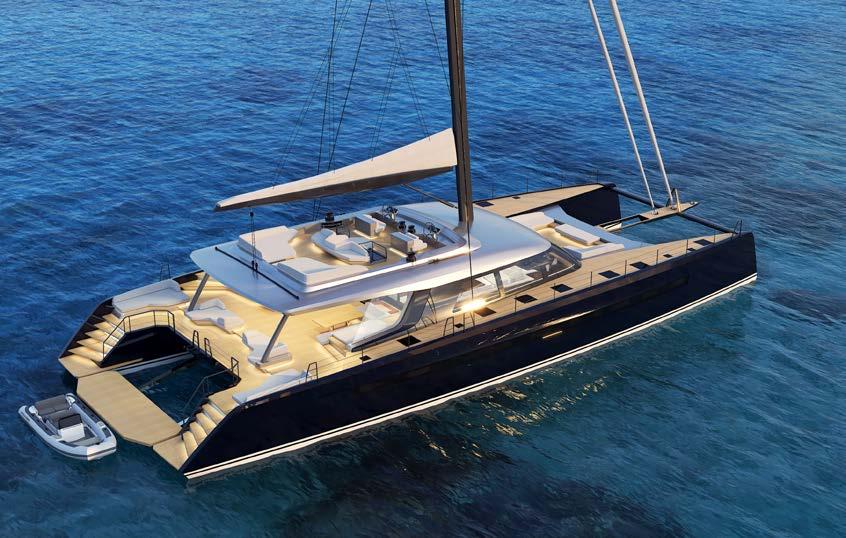
A lighter boat is inherently more efficient under both sail and power, and the multihull platform is particularly well-suited to hybrid propulsion, battery banks and energyrecovery systems to support extended autonomy and reduced dependency on diesel fuel, continuing Baltic’s steady evolution toward more eco-friendly systems.
The basic power package comprises twin Cummins diesels (129kW @ 1800 RPM) paired with Danfoss electric motors acting as propulsion units, generators and hydrogeneration sources. The lower installed power means exhaust filtering meets Class standards without requiring bulky urea-based selective catalytic converters. Future-proofing considerations include the potential to integrate solid-state batteries to eventually upgrade the 250 kWh of Lehmann air-cooled lithium batteries.
The hybrid system can operate in four modes: diesel-only, electric-only, hybrid assist, and regeneration mode under sail when the freewheeling propellers can backdrive the electric motors, turning them into generators to recharge the batteries, reducing reliance on the diesel generators.
“The system architecture draws heavily on operational experience from the Baltic 142 Canova, whose hybrid system has logged more than 85,000 nautical miles,” says Hawkins. “Under sail the catamaran will be
able to generate most of the electrical power required to keep all the systems running. For example, on a transatlantic passage in a typical range of wind conditions, hydrogeneration means the yacht will only need to run one of her diesel generators for about half an hour per day to keep the batteries charged.”
Efficient energy recovery also relies on matching propeller pitch, RPM, and torque profile to avoid drag spikes. Two propeller configurations were analysed: controllable pitch and folding.
“Both systems demonstrated comparable energy recovery potential,” adds Nyfelt. “The CP propellers offer finer pitch control, which can reduce noise and improve efficiency under certain hydrodynamic conditions. The Brunton 4-blade folding props, on the other hand, produce less drag while sailing, are lighter and require less maintenance, which made them a practical compromise in a performance cruising catamaran.”
System redundancy is built-in with duplicated bilge circuits, fire suppression loops, ventilation paths and cooling systems in each hull to ensure autonomy – the core requirement of an explorer yacht designed to go almost literally anywhere. In addition to the primary propeller-driven regeneration, freestanding hydro-generating units were considered but rejected as they mean added hull penetrations and complexity.
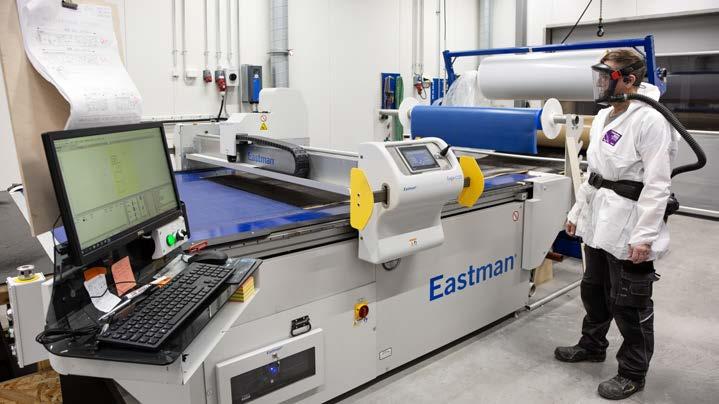
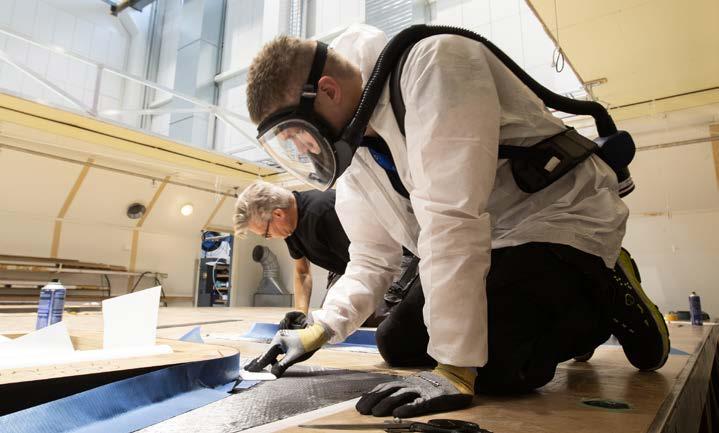
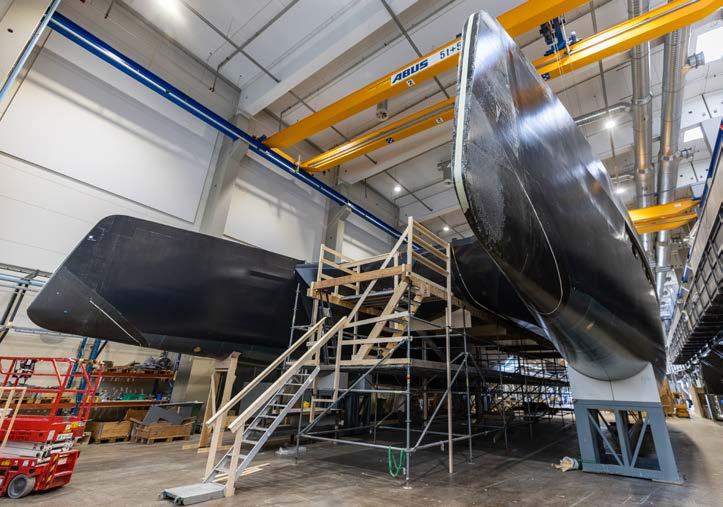
Founded by five former employees of Nautor's Swan, Baltic Yachts set up shop in 1973 in Bosund, Finland, aiming to build lighter, faster high-tech sailing yachts in composites. The company grew by steadily expanding production, embracing innovation and moving into superyachts.
In 2023, it moved into new, expanded premises in Jakobstad that brought all operations under one roof. The relocation of key departments brought them alongside the yacht construction and assembly halls, far improving production efficiency. The move was backed by investment in cutting-edge technology, including fibre-cutting machines, laser projection systems for composite alignment and three advanced paint booths. With the exception of metal fabrication, almost all work is handled internally.
Across all these developments, Baltic’s defining strength continues to be its mastery of composite engineering and its obsession with weight control. It keeps systems and structural engineering in-house as much as possible, validating every structural drawing, weight estimate and system routing to ensure the conceptual design remains feasible, safe and within the aggressive weight budgets expected. Although Baltic began with mostly serial yachts, its production today is almost entirely custom with only the Baltic 68 Café Racer and 67 Performance Cruiser remaining as semi-series boats.
“Over the past 15 to 20 years, the market has shifted increasingly toward custom yachts, a trend that aligns with the personnel, mindset and capabilities at Baltic,” says CEO Tom von Bonsdorff, who joined Baltic from the automotive sector. “Many of our clients commission multiple yachts over time, starting with smaller models and gradually moving to larger, highly customised projects.”
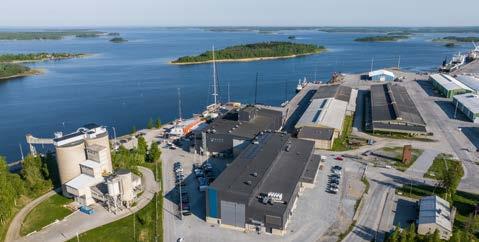
Another distinctive feature of the build is the pair of pivoting centreboards, one under each hull. Their purpose is simple – deep draft for sailing performance, shallow draft for anchoring – but their engineering is far from it. A pivoting blade of this size (the wetted surface for each daggerboard is 7.5m2 with a draft of 5m) must distribute loads cleanly into the surrounding hull without the hard points and weight penalties that traditional casing designs impose. Baltic’s solution is a reinforced carbon “torsion socket” integrated directly into the hull skin, allowing smooth rotation and the full structural continuity required for offshore use. It is the sort of detail that looks simple only once the engineering is complete.
The Lorima rig is an owner-supplied item and features slab reefing and a fixed vang system with no hydraulic functions to keep things simple and manageable. Safety systems include load sensors on stays, hydraulic pressure monitoring, and an automatic release system for the mainsheet. Headsails (working jib, genoa and a big asymmetric for offwind and downwind sailing) remain on furlers, simplifying deck operations. The rig is paired with a low-maintenance deck layout that supports a wide range of wind conditions without excessive crew intervention, making it suitable for both owner-operated and professional-crewed operation.
“The system architecture draws heavily on operational experience from the Baltic 142 Canova, whose hybrid system has logged more than 85,000 nautical miles.”
A catamaran’s narrow hulls can sometimes mean cramped sleeping quarters. The Baltic 107 resolves this issue by raising the cabin soles to just above the waterline, where the hulls are a lot wider. On the starboard side, there is a captain’s double cabin, a guest cabin and the master suite forward. On the port side, there are two guest cabins, the galley, and crew quarters comprising two double cabins and a crew mess. The master suite and guest cabins each have an island bed facing outboard, with ample space to walk around it. In the master suite there is space left over for an office, a walk-in closet and an exercise/ wellness room.
The main deck benefits from the volumetric advantage of the catamaran configuration with a very spacious saloon that has direct access to the foredeck. All sailing functions are placed on the flybridge – a solution that keeps the main deck free of daily sailing operations. A hydraulic platform in the stern capable of handling a 6.5-metre tender extends aft as it lowers and retracts as it lifts to stow the tender at main deck level. With the platform submerged, the tender and toys can be driven straight on and off. It is also useful for lifting scuba divers in and out of the water with their heavy gear, which can be washed down and directly stowed in the starboard hull lazarette.
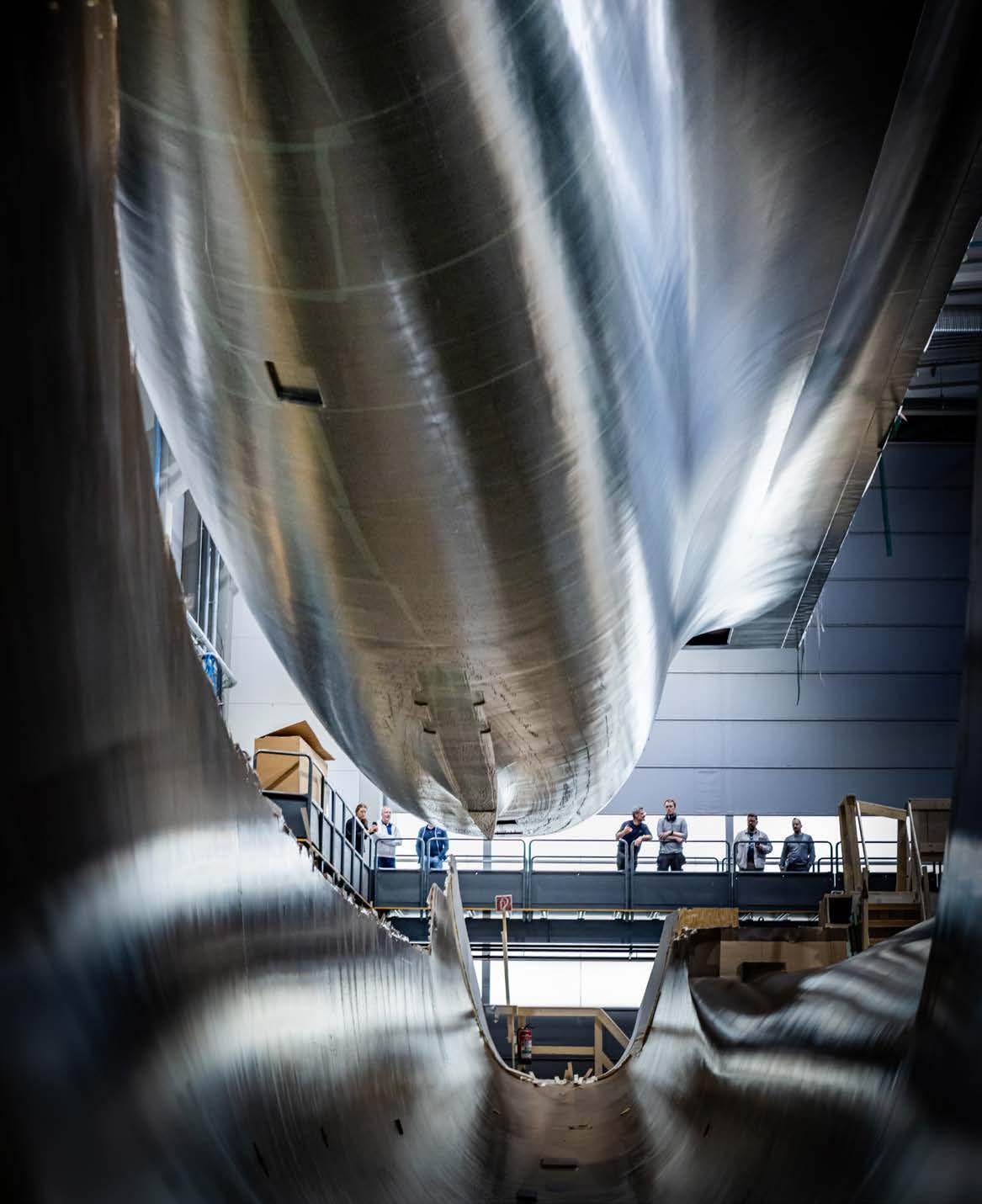
In the mid-1980s, Baltic Yachts was involved in an assignment far removed from yacht building when it supported a classified Soviet program to develop the Mir-1 and Mir-2 submersibles for deep-ocean research and rescue duties. Baltic’s engineers contributed laminate design and materials methodology for the pressure-resistant hull structures. Baltic later produced the glass-and quartz-composite structures for the Mir vehicles used by film director James Cameron in his Titanic expedition. These craft could dive to depth of 6,000 metres, when the hulls compressed by as much as 60 mm under load. The experience gave Baltic a uniquely deep understanding of lamination behaviour under extreme compression.
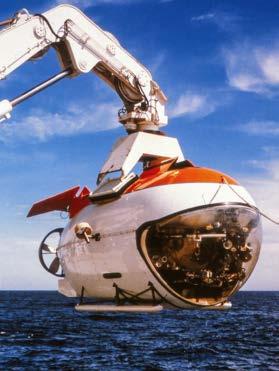
Today, Baltic’s composite technicians are continually refining materials and processes for both technical and aesthetic purposes. Prototypes such as spike-pattern rollers help remove trapped air between laminate layers, reducing debulking time for pre-pregs. Faux-wood composite surfaces – painted to imitate walnut or teak –offer lightweight, low-maintenance alternatives for clients seeking natural aesthetics without the upkeep. The Baltic 111 Raven, for example, features interior materials like bamboo and rattan to save weight. The bamboo poles proved too heavy, however, so some furniture pieces are made from carbon fibre that has been textured and coloured to be virtually indistinguishable from the real thing. Material research also includes natural composite fibres. Baltic trialed carbon/flax hybrids and bioresins on its 68-foot Café-Racer. More than 50 percent of the hull structure used Bcomp ampliTex flax as a reinforcement – a circular solution that can help reduce CO2 emissions as well as high specific stiffness and vibration damping. NFCs are not a panacea as they absorb moisture and require perfect sealing, but Baltic sees this research as part of a longer evolution towards sustainable composites.
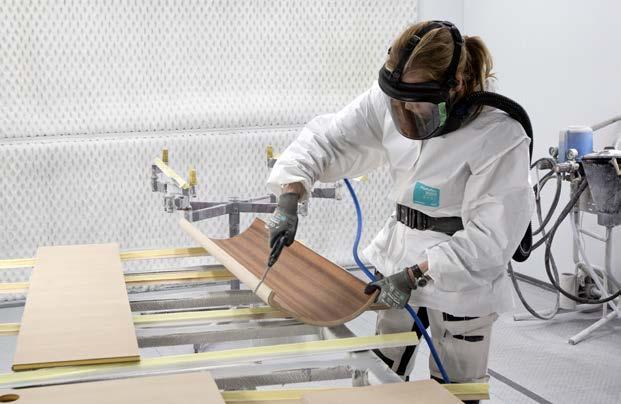
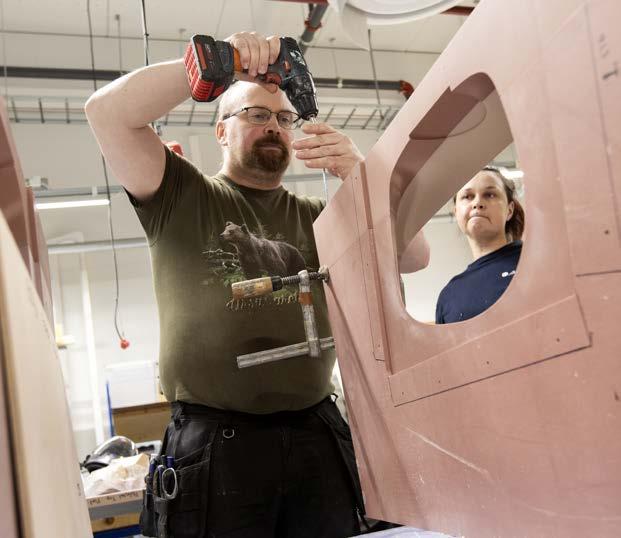
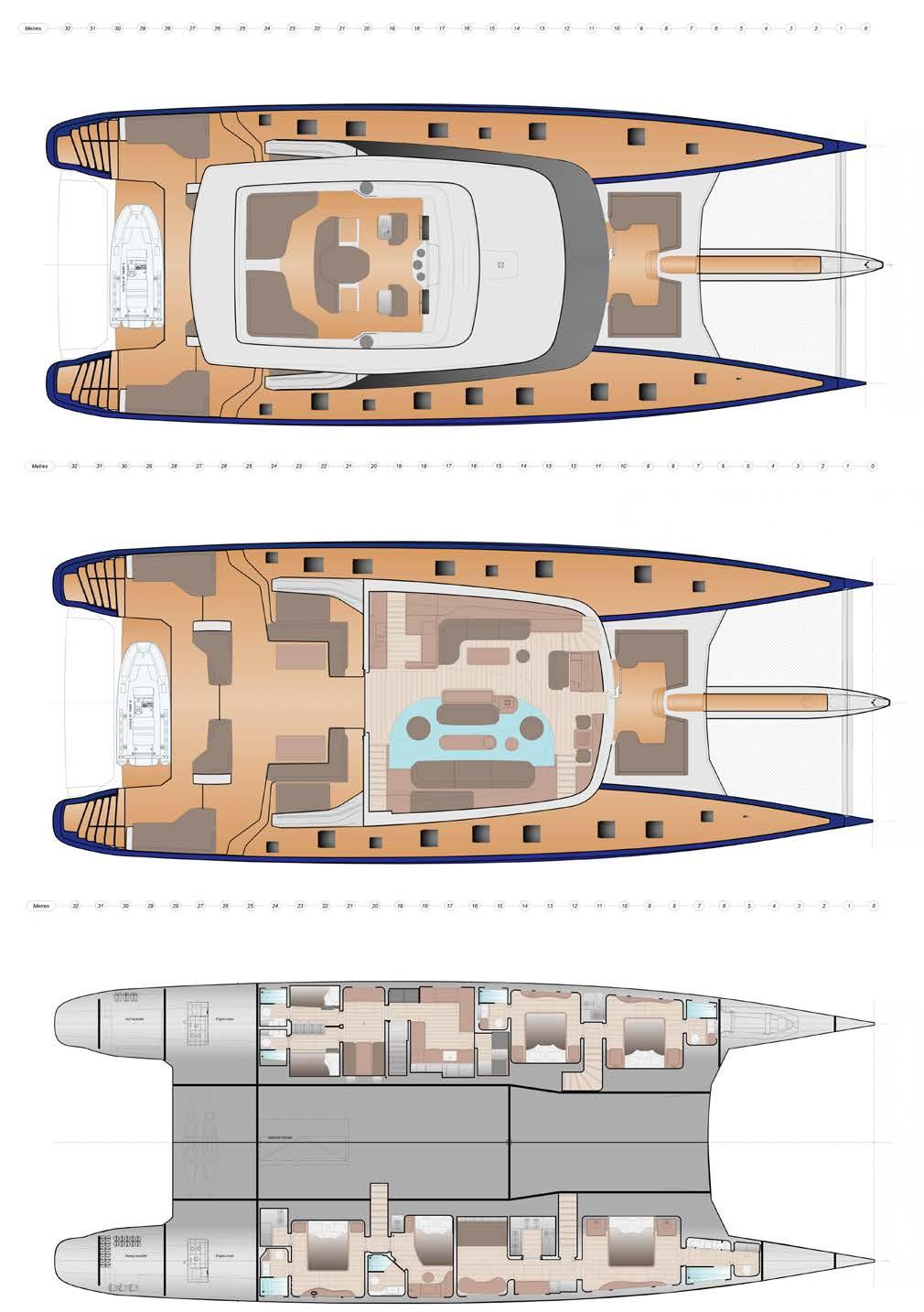
Baltic’s defining strength continues to be its mastery of composite engineering and its obsession with weight control.
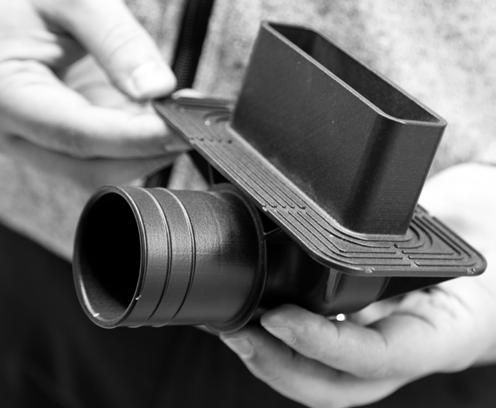
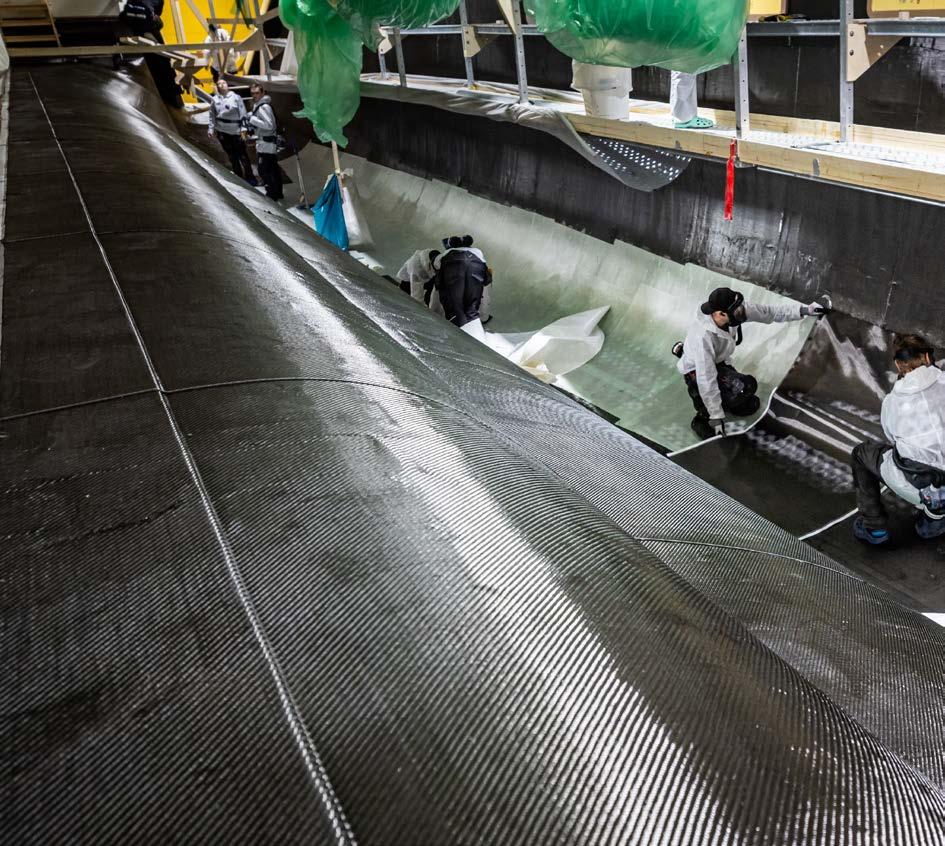
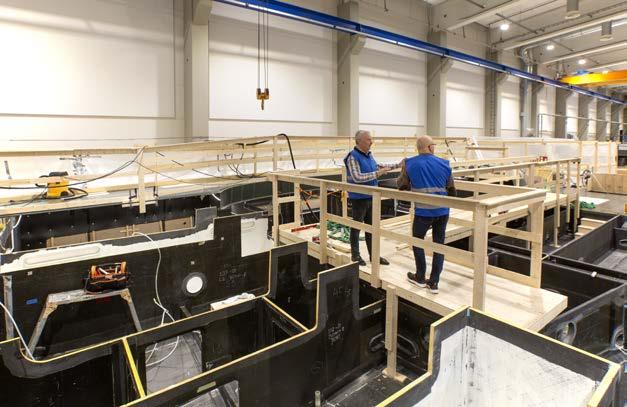
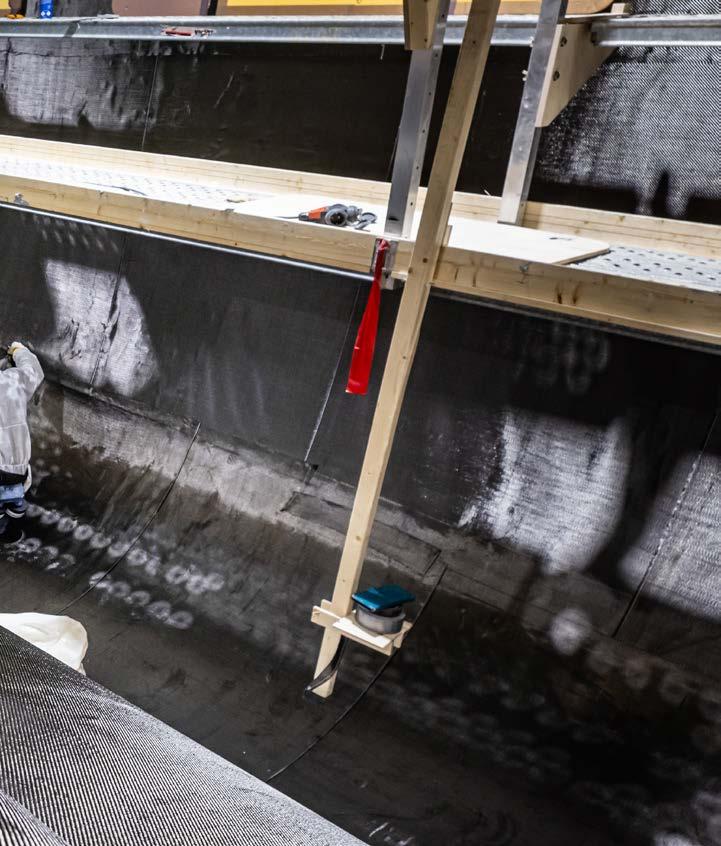
Sustainability and efficiency are ingrained into Baltic’s work practices. Drill bits, for example, are sharpened rather than replaced and electric tools are refurbished rather than discarded, all the electricity used at the Jacobstad facility is locally produced by nearby windfarms or hydropower, and a dust-collection plant compacts waste into combustible pellets for heating.
Tucked away in another corner of the shipyard is an amphibious Sealegs tender. The owner drives it straight from his house into the water and out to his Baltic yacht, where an automated boarding ladder deploys at exactly the right height. The original Sealegs unit was petrol-powered, but Baltic retrofitted it with electric motors and a substantial battery bank. The result is a system that is cleaner, quieter and far more refined – the kind of bespoke engineering the yard performs routinely.
Additive manufacturing also plays a growing role within the company. Nylon-based, 3D-printed components – brackets, scuppers, hinge housings – are replacing many handfabricated processes. A 16-hour print run can produce a dozen identical pieces that once required hours of individual craftsmanship, and a digital library ensures exact replication at any time. The combination of innovative materials, CNC processes and additive manufacturing enabled faster, more precise and sustainable production.
Building a catamaran may be a first for Baltic, but it’s a natural extension of its heritage. The composite know-how and lightweight build techniques that define its carbon monohulls is now shaping a different platform but with similar goals: maximum efficiency, luxurious comfort, low noise, extended autonomy, and a reduced environmental footprint. Pushing these boundaries is at the company’s core, but it’s not something it likes to shout about. In fact, as my shipyard visit comes to an end Henry Hawkins points out that you will not see the Baltic name or logo on any of its yachts – a subtle but unique distinction that aligns with an ethos whereby quality and exclusivity are communicated through nuance rather than proclamation.
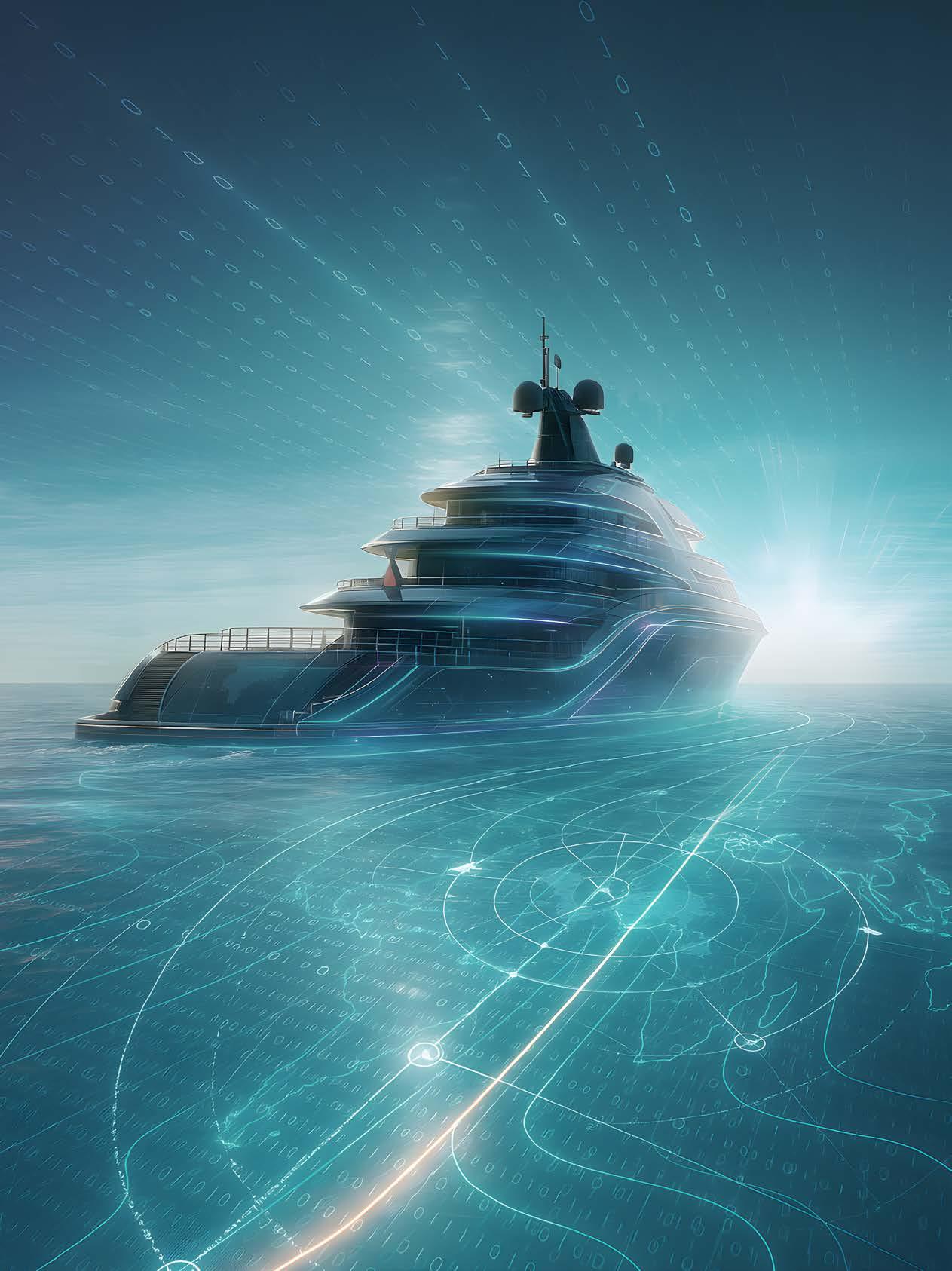
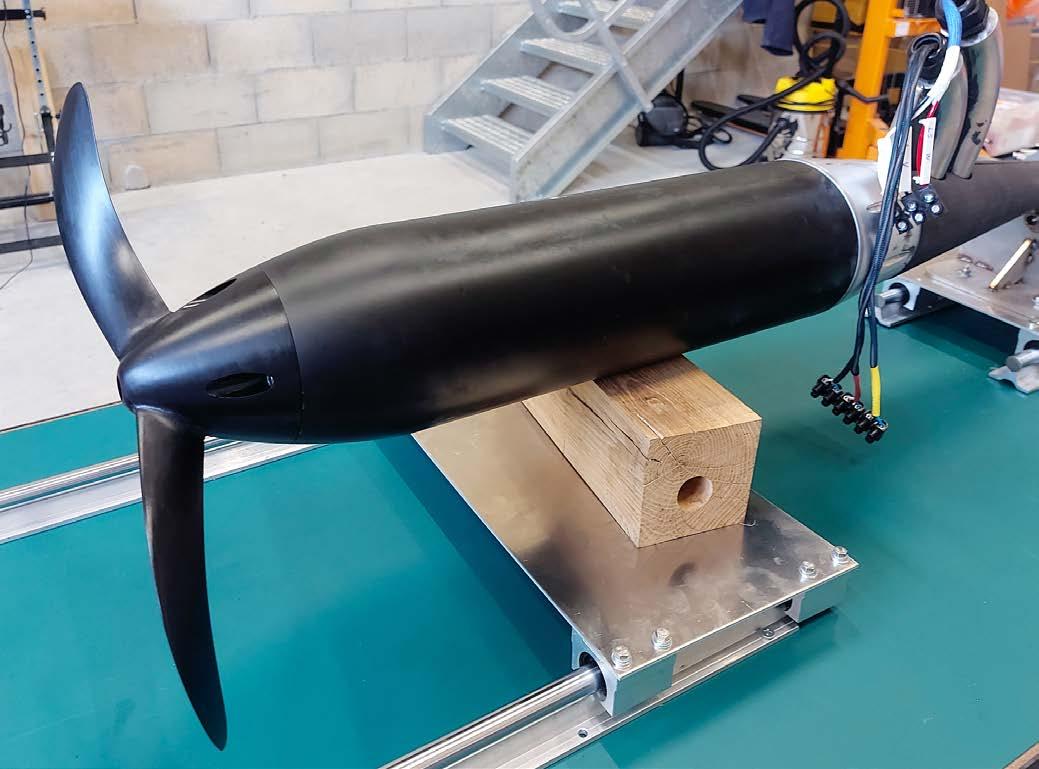
As the yachting industry begins to take alternative fuels seriously, Heikki Bergman, CEO and design manager of start-up company Propulsion House, is several steps ahead. His company has developed a compact, modular methanol-electric propulsion system for yachts up to 70 metres that challenges the big marine technology brands.
JUSTIN RATCLIFFE
Drawing on more than two decades of experience in marine electrical propulsion, Heikki Bergman brings an engineering-driven approach to hybrid systems, with a sharp focus on real-world viability, space efficiency, and the practical constraints of small and mid-size vessels.
“There’s good will in the market,” he says, “but not many customers or shipyards truly understand what they’re buying when it comes to electric or alternative-fuel systems. That’s where things often fall apart.”
Now, Bergman and his team have unveiled a hybrid system he claims is capable of delivering over 5,000 nautical miles of range using methanol reformers, hydrogen fuel cells, batteries, and lightweight electric pod propulsion – all within the general arrangement footprint of an existing 45-metre, steel-hulled explorer hull designed by Frank Neubelt.
“We’ve eliminated the need for a switchboard room altogether.”
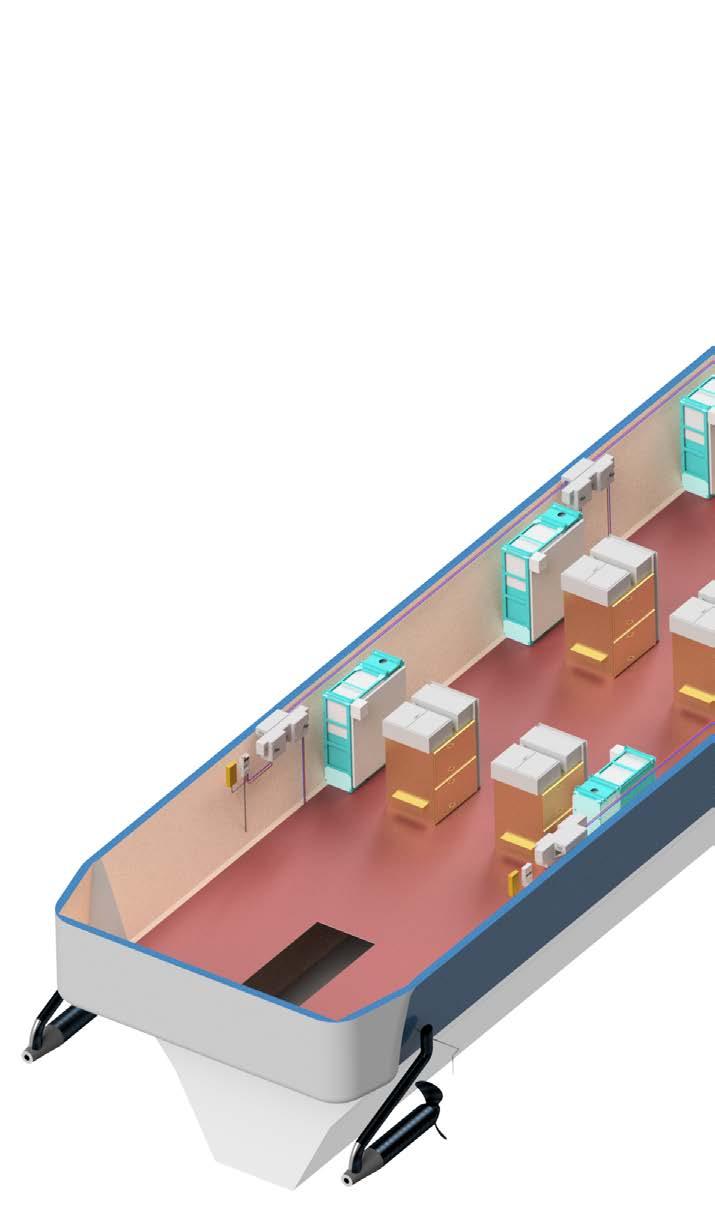
Above: The DeeCee Microgrid is a methanolfuel-cell architecture comprising six methanol reformers, six hydrogen fuel cells, and two battery banks for peak shaving and full-electric operation.
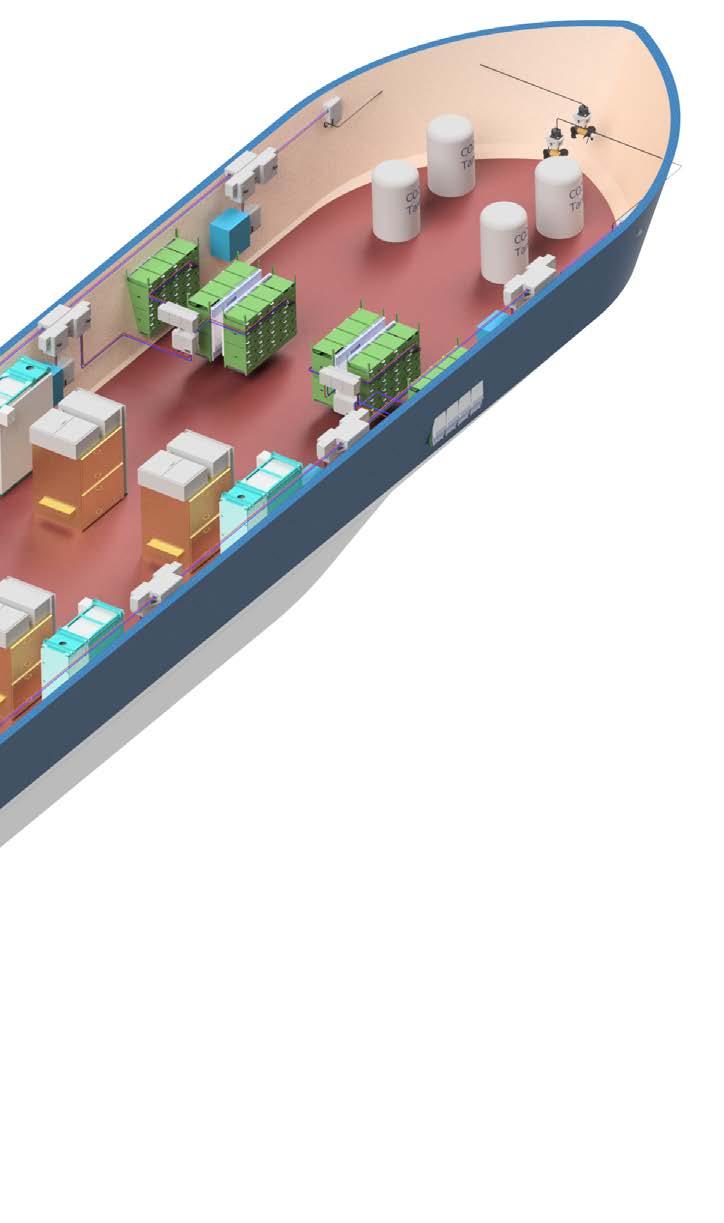
Bergman’s journey began at ABB, the Finnish leader in electrification and automation technology, where he worked on large commercial projects across Europe, particularly in the passenger vessel segment. In 2015, he identified a knowledge gap in the smaller vessel markets: while electrical and hybrid systems were becoming standard on larger ships, few people understood how to scale them down effectively for smaller yachts.
"The big players don’t cater well to anything below 1 MW per propeller," he explains. "They come with massive project organisations and million-euro tickets, which just doesn’t work for yachts below 70 metres. We start from seven horsepower, up to 600 kW."
He founded Propulsion House in 2017 as a consultancy, but it quickly evolved into a product development company. The firm now works across multiple sectors – including oil and gas – but yachting remains a core focus. The team doubled in size last year and is expected to grow again in 2026.
The in-house propulsion system is a methanol-electric hybrid setup using the existing 45-metre explorer hull as a baseline that began with the team asking a simple but critical question: could a vessel of this size achieve 5,000 nautical miles of range using alternative fuels, without compromising usable interior volume? The answer: Yes, by completely rethinking how propulsion integrates with vessel design.
At the heart of the system is the trademarked DeeCee Microgrid – a methanol-fuel-cell architecture designed for endurance, redundancy and modular installation. The system includes: six methanol reformers, which convert a methanol/water mixture into hydrogen and CO₂; six 200 kW hydrogen fuel cells, fed by the reformers to generate electricity; and two 600 kW battery banks, offering load balancing, peak shaving, and full-electric operation in port or during silent cruising.
All the system components – fuel cells, batteries, converters – are already commercially available. Combined, they enable propulsion via two 600 kW electric pods, with no shaft lines or central switchboards. Instead, the vessel uses a distributed DC network through localised electrical control units – each managing its zone independently and able to switch within milliseconds in case of blackout.
“We’ve eliminated the need for a switchboard room altogether,” says Bergman. “This frees up interior volume, reduces cabling, and improves safety and redundancy.”
The reforming process produces a controlled volume of CO₂, which the system can capture and store onboard for recycling. The volume of this captured CO₂ is significantly lower than from internal combustion engines – about 40-60 percent less than a diesel generator. Moreover, when taking into production methods of green methanol and e-methanol, some of which actually consume CO2 rather than release it into the air, the overall CO2 emission reduction is even higher.
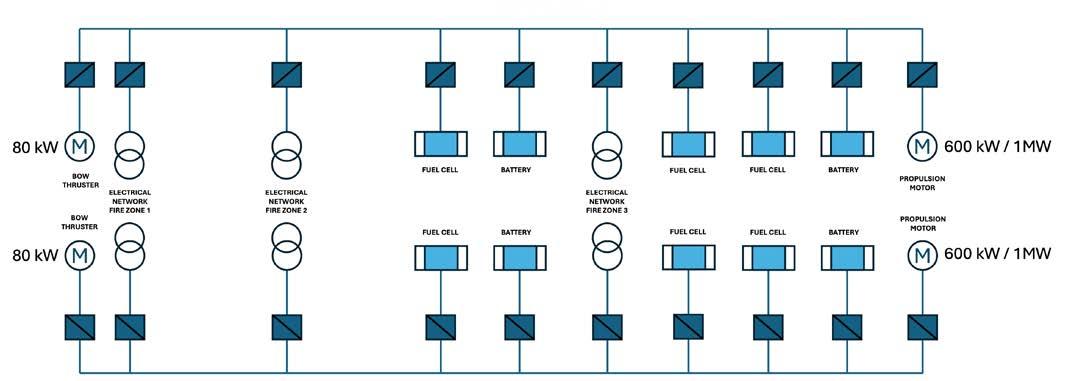
Perhaps the most radical part of the concept is the proprietary Pulling-e Propulsion pod design. It resembles a torpedo: long, narrow, and hollow, with a stationary internal body, an outer rotating propeller shell and a 2-bladed propeller offering a good balance of efficiency and drag. Containing a permanent magnet synchronous motor and scalable from 7-600 kW per propeller [NB: 100kW corresponds to 125kW diesel engine performance], there is no shaft, no gearbox, and minimal mechanical complexity. The pod can be steerable for shallow water use, or fixed with a rudder integrated into the strut that connects it to the hull.
The unit is designed to be modular and installation-agnostic. It can be fixed horizontally to the hull, retrofitted into an old rudder socket, or even fitted with lift-enhancing struts to improve hydrodynamic flow. Unlike traditional azimuthing thrusters, which rotate 360 degrees, the pods limit steering angles but compensates via bi-directional rotation. The result is full-vector thrust control, achieved with a simpler, lighter system.
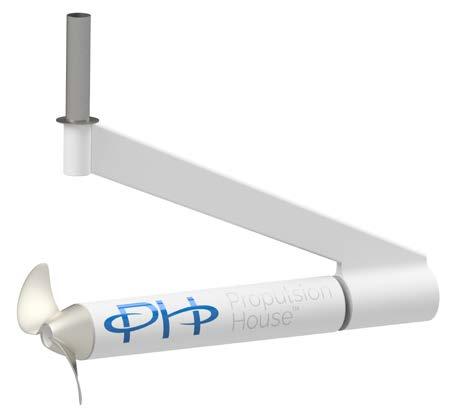
This method also benefits noise reduction. The methanol-electric propulsion is already quiet, so the remaining main source of noise is from propeller-generated pressure pulses hitting the hull. The propellers, positioned aft as far outboard as possible away from the hull, significantly reduce this underwater radiated noise—a growing concern for marine ecosystems.
The concept isn’t just theoretical. Cambridge University’s Monaco Energy Boat Challenge team recognised the potential and Propulsion House has been working with MARIN’s top designers on the propeller optimisation, using a 15-kW test unit to refine efficiency. The propellers were optimised using PropArt and PROCAL computations. A speed-power prediction based on the resistance was provided, and additional analysis was carried out in terms of steering forces and cavitation behaviour.
“We achieved 89 percent propeller efficiency – among the highest on the market,” says Bergman. “And when we scale up to the size used on yachts, efficiency actually increases due to the larger central hole in the propeller. And that’s just the first iteration available.”
The system is also suited for retrofits. In theory at least, shaft lines could be removed entirely and the new propulsion unit installed into the existing rudder sockets, reducing the need for invasive hull perforations. The structural load is carried in a way similar to rudder mechanics, with reinforcement achieved by increasing material thickness inside the torpedo's cooling pipe.
Perhaps the most radical part of the concept is the proprietary Pulling-e Propulsion pod design that resembles a torpedo.
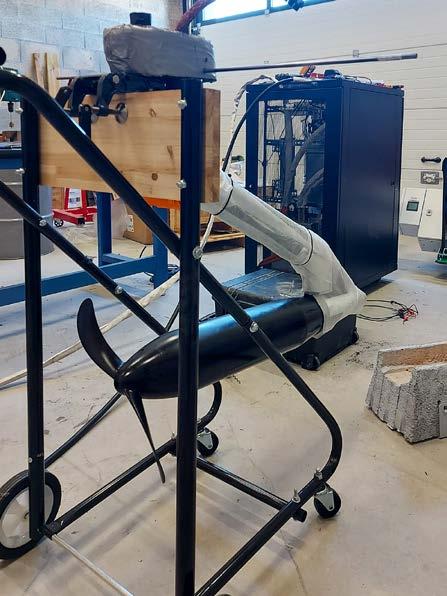
The company’s bold approach to vessel design itself is another differentiator. “We start from the underwater section,” Bergman explains. “First the hull, then the propeller location, and then everything else. Not the other way around.”
This inverted design process contrasts with the traditional method of selecting offthe-shelf propulsion systems first, which often forces compromises in hull shape, hydrodynamics and interior layout.
With partners already on board for further testing in 2026, and interest growing among shipyards and owners, Propulsion House is positioning itself not just as a technology provider, but as a strategic design partner. By simplifying systems, reducing space usage, offering real redundancy, and embracing cleaner fuels, Bergman believes a better class of hybrid yacht is not only possible – it’s ready to build. “There’s no fantasy here,” says Bergman. “This could be built tomorrow.”
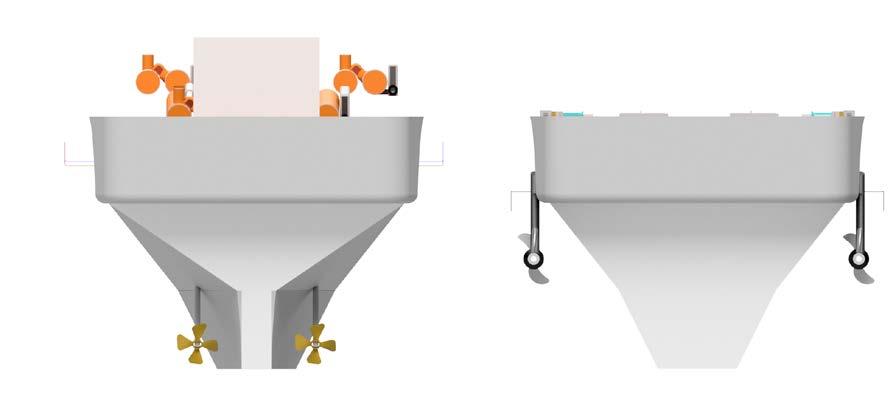
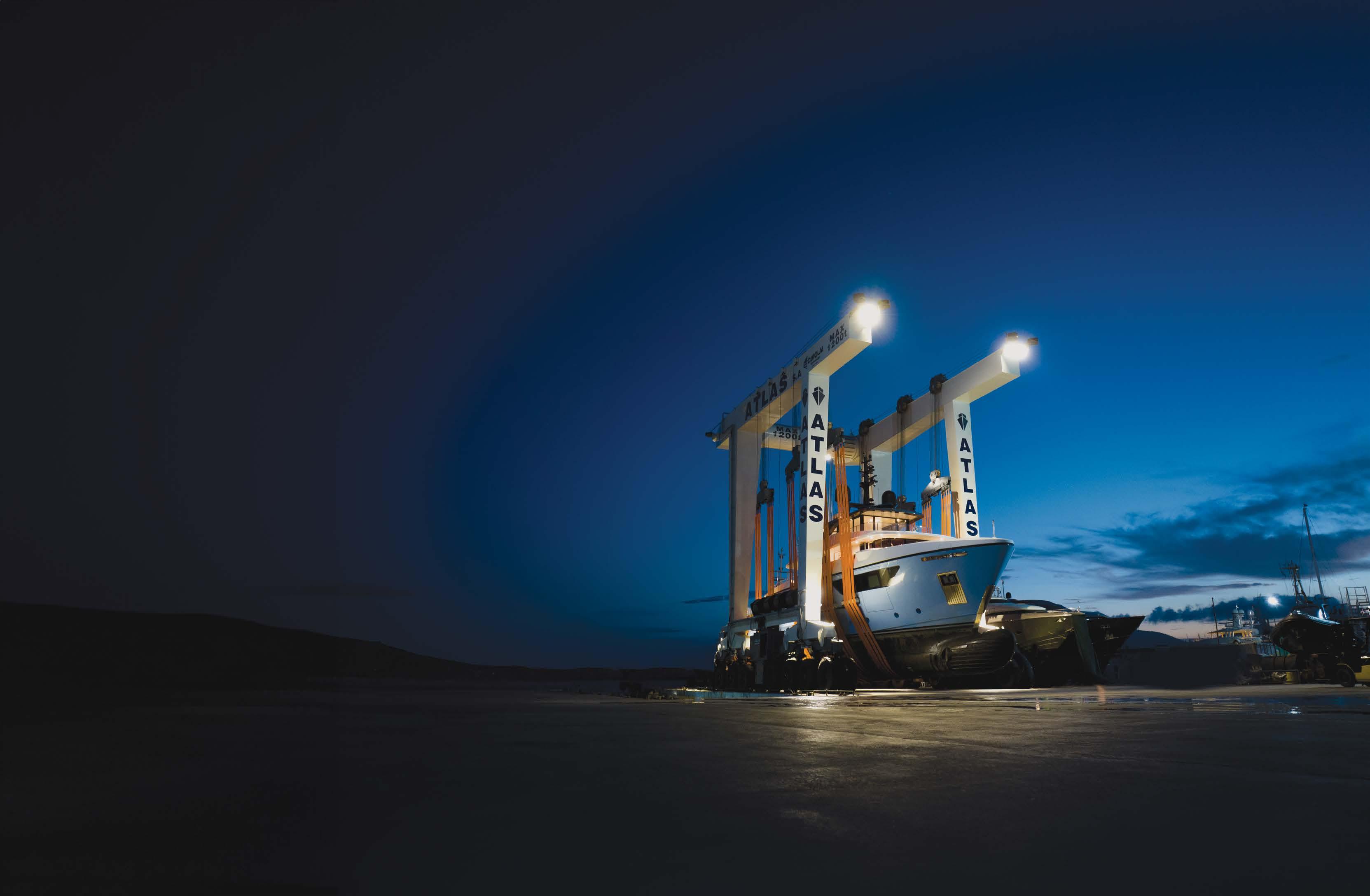

There are over 50 billion light bulbs in circulation globally, the vast majority LED-based. But the evolution from incandescent to fluorescent and now LED has come with unintended consequences, particularly for our biology. Increasingly, that means bringing wellness into the heart of onboard systems, and lighting is one of the most powerful tools for doing that. Michael Meeneghan, founder of system integrators MP Tech in the UK, looks into engineering circadian-friendly lighting at sea.
BY MICHAEL MEENEGHAN
Modern mass-market LED luminaires are predominantly built around a “blue pump” architecture. This architecture boosts luminous efficacy by amplifying the blue portion of the spectrum (typically ~450nm) and then converting some of it into other wavelengths using phosphors. While technically impressive and energyefficient, the issue is spectral imbalance. Blue-rich white light, especially in the evening hours, suppresses melatonin production, the hormone responsible for sleep onset. This leads to circadian rhythm disruption (SCRD), manifesting in poor sleep quality, fatigue, cognitive decline, and longterm health risks. For those at sea, crossing time zones, working night shifts, or living in enclosed, artificially lit environments, the risks are magnified.
Circadian lighting is about aligning artificial illumination with the body’s internal 24-hour clock. Human-centric lighting (HCL) systems do this by varying both colour temperature and intensity throughout the day: – Cool, bright light (~5000–6500K) in the morning stimulates alertness and cognitive performance.
– Warm, dimmed light (~1800–2700K) in the evening promotes relaxation and sleep readiness.
But HCL is not just about colour temperature; it’s also about spectral fidelity, flicker control, and CRI (colour rendering index). Truly circadian-supportive lighting delivers high CRI (ideally 95+), flickerfree performance, and a balanced spectral output that respects human biology.
These are the standards that MP Tech has adopted when designing and commissioning lighting schemes for yachts, with a focus on ensuring biological alignment without compromising visual quality.
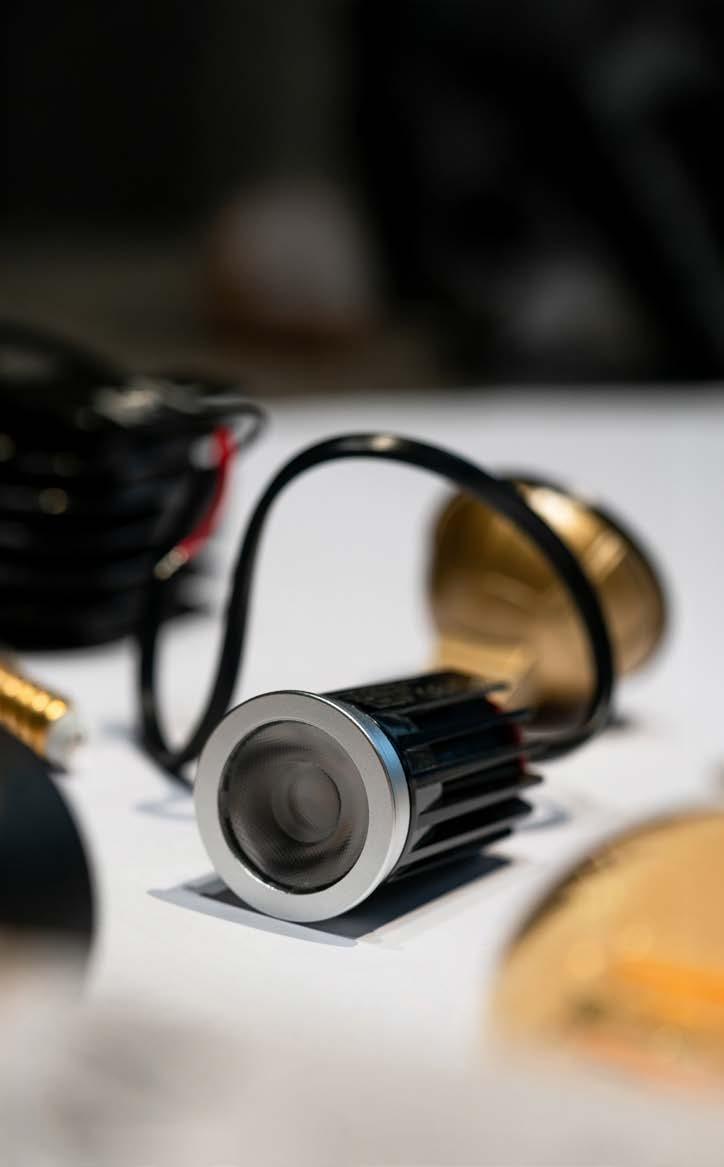
Guests move across time zones, crew work nontraditional shifts, and spaces are often enclosed with limited exposure to sunlight.
Unlike land-based homes, yacht interiors are removed from natural daylight cycles. Guests move across time zones, crew work non-traditional shifts, and spaces are often enclosed with limited exposure to sunlight. In such conditions, artificial lighting becomes the dominant environmental cue for the body. For crew, this means supporting shift-work without compromising health. For guests, it means enhancing comfort, reducing jet lag, and creating spaces that feel intuitively “right”, whether waking up in the Med or winding down in the Caribbean. Sleep and Circadian Disruption (SCRD) isn’t always dramatic – it accumulates. But its impact is real and can lead to reduced sleep quality, lower productivity, mood volatility and slower recovery. In luxury hospitality, where every detail matters, lighting becomes both an aesthetic and a physiological asset.
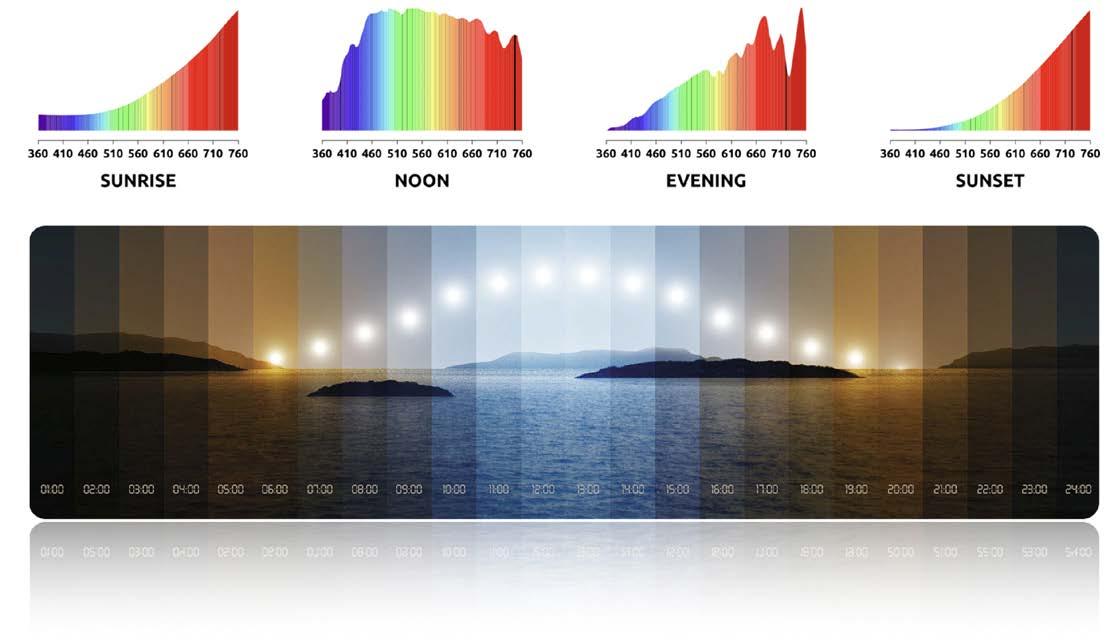
While guest areas are often the focus of design, crew quarters, corridors and service areas require just as much attention.
It’s not uncommon to find beautifully crafted, high-value luminaires aboard yachts that are fitted with subpar light engines. The result?
Ornate fixtures delivering flickering, low-CRI, spectrally imbalanced light that undercuts both wellness and visual impact. This dissonance between decorative quality and lighting quality requires thoughtful re-engineering to resolve. The key is to respect the design intent while addressing performance shortfalls that can affect wellbeing.
Fortunately, the lighting industry is progressing. New human-centric lighting standards now prioritise:
– Flicker-free drivers with high-frequency PWM or DC dimming
– High CRI LED chips, often approaching CRI 98+
– Tunable white modules with dynamic CCT from warm white to cool white
– Full-spectrum LEDs that eliminate blue spike and restore spectral balance
– These technologies are more compact, marine-compatible, increasingly retrofitfriendly, and typically combine:
– Tunable white luminaires with dualchannel or multi-channel LED modules
– Intelligent controls that adjust scenes automatically or via user inputs
– Sensors and automation that adapt to time of day, presence or ambient light
When lighting designers work closely with yacht architects and AV-integrators to specify, program and commission these systems, the result is lighting that flows with the rhythm of life, not against it.
For new builds, early engagement is critical. Lighting design conversations should be had at concept stage to ensure that both technical and experiential requirements are addressed holistically. Each project starts with a light-use audit, mapping the way each space is used throughout the day and night. From there, tailored control strategies are developed and appropriate luminaires and drivers supplied, managing installation and commissioning through to final handover. For refits, improvements can still be significant, from replacing existing fittings and fixtures with flicker-free, high CRI LED, all the way to upgrading ornate and bespoke fixtures through re-chipping – replacing old LED modules with high-spec, flicker-free alternatives – preserving visual continuity while delivering a measurable step forward in performance and wellbeing.
While guest areas are often the focus of design, crew quarters, corridors and service areas require just as much attention. Lighting in these spaces influences alertness, fatigue and productivity – key factors in operational excellence.

Wellness lighting is not just a design upgrade; it’s a performance investment:
– Guest satisfaction improves with better sleep, reduced jet lag, and enhanced ambience
– Interior finishes benefit from accurate, flattering colour rendering
– Energy savings increase with smarter dimming and zoning
– Crew health and performance are measurably supported by biologically aligned lighting
These benefits add up, particularly in long-term charter and private use, where lighting contributes directly to the onboard experience.
Whether you’re designing from scratch or planning a refit, the following criteria should guide luminaire selection:
– Flicker-free dimming with constant current or high-frequency PWM - CRI 95+ and TM30 metrics for colour fidelity
– Blue-suppressed spectra in evening-use areas
– Modular construction for easy upgrades or maintenance
– Customisable control protocols (DALI, DMX, KNX, etc.) for integration into wider systems.
As understanding of circadian biology continues to evolve, so too does lighting technology. We are now exploring fullspectrum lighting profiles that better simulate sunrise, midday and dusk; the integration of near-infrared (IR) and UV elements for skin stimulation and environmental hygiene; and wearable data integration to adapt lighting in real time based on user chronotype or sleep cycles. These innovations will likely become part of the next generation of wellness-centred yacht systems. Whether in a new build or a smart retrofit, lighting doesn’t just illuminate, it enhances life at sea.
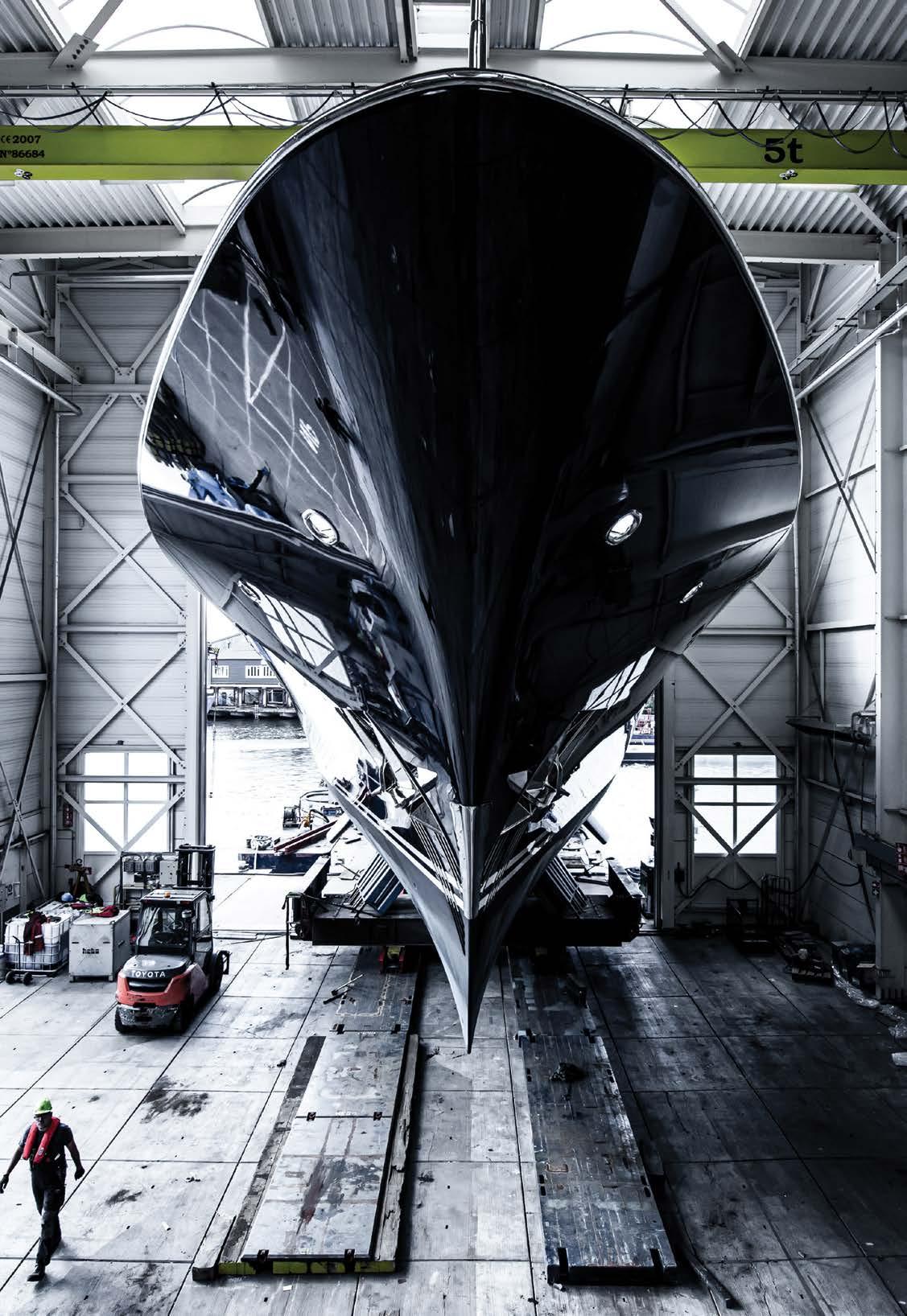
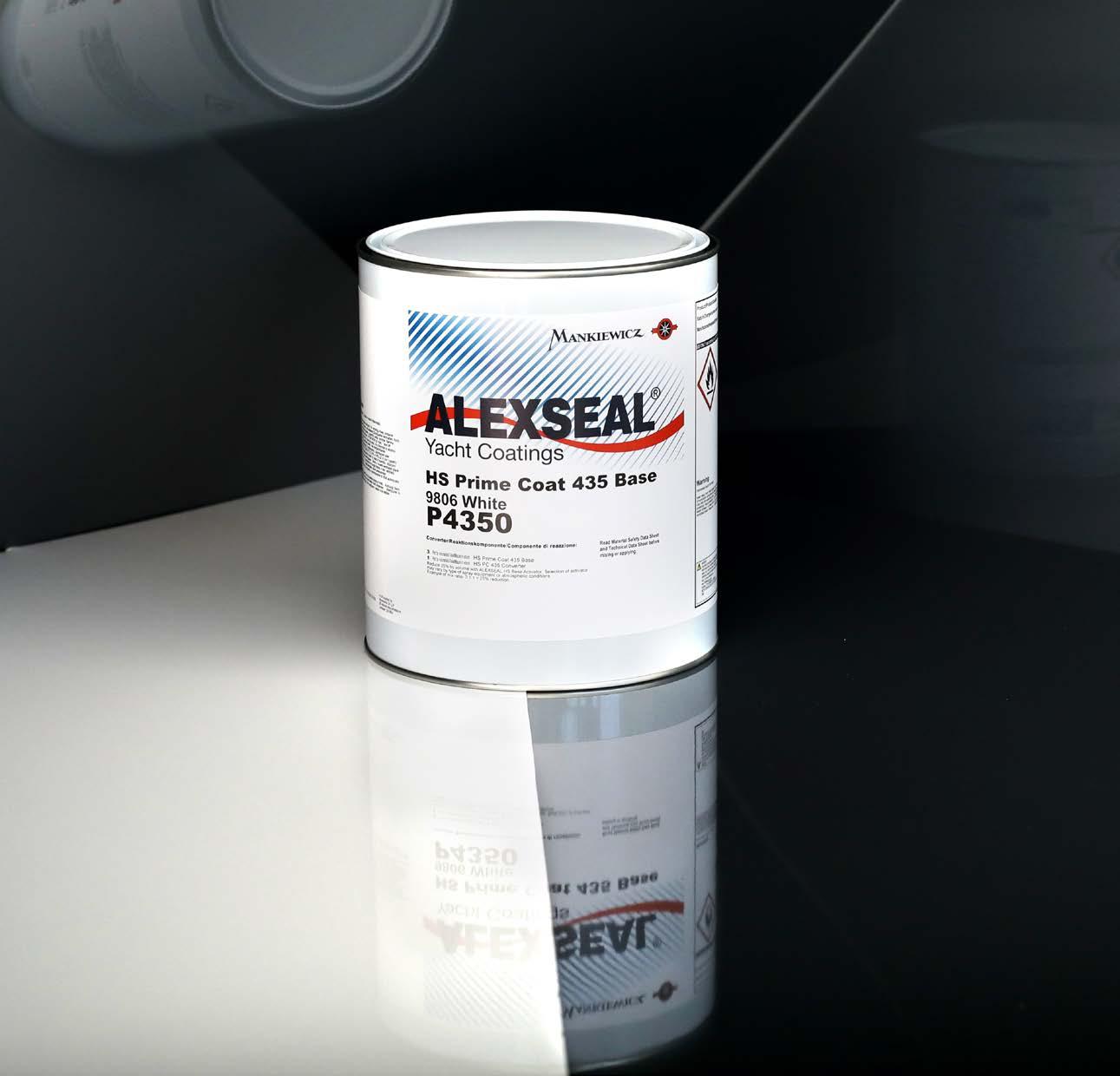
Skip the showcoat – get faster and more efficient with Alexseal HS Prime Coat 435 –it is primer and showcoat in one product.
Visualize even the smallest irregularities of the previous layers with our glossy primer. Boost your primer work with all you need for a professional application: High solids for less VOC and better hiding power, minimized shrinking and easy sanding.
Find all glossy details here →
instagram.com/alexsealpaint linkedin.com/company/alexseal-yacht-coatings
WWW.ALEXSEAL.COM