IF WE DON’T HAVE ENOUGH DATA ON WHO OUR CUSTOMER IS, AND WHAT THEY WANT, WE’VE LOST THE GAME.
Nwabisa Makunga
AS ADVERTISING PROFESSIONALS, WE’VE BEEN MAKING LEMONADE OUT OF LEMONS FOR YEARS. LET’S KEEP DOING THAT.
Chris Botha
BRANDING, WHETHER CORPORATE OR NATIONAL, HINGES ON ONE FUNDAMENTAL CORE PRINCIPLE: PERCEPTION IS REALITY.
Mathabo Sekhonyana
THE MEDIA SECTOR FACES A SIGNIFICANT TALENT GAP, DUE TO A NOTABLE EXODUS OF SENIOR PROFESSIONALS IN RECENT YEARS.
Koo Govender
THE BUSINESS OF THE MEDIA
ON THE RECORD...
The annual Reuters Digital News Report landed with an ominous (virtual) thud in our inboxes this June.
Not surprisingly, online influencers and personalities are seen as the biggest threat to news publishers worldwide, as purveyors of false or misleading information. South Africa, the report says, has “high concern about information integrity” at 67%, with 73% of respondents concerned about their ability to discern true from false information online. As for the power of influencers and personalities, 56% of us see this as a threat.
Still, news consumption via TikTok stands at 33% and YouTube at 42%, not numbers to be sniffed at. In terms of WhatsApp, 41% of South Africans use the channel as a news source, and for 50%, Facebook is still the go-to. We’re no longer so keen on Elon Musk’s X, with news use languishing at 16% on that platform.
The report certainly makes a case for taking the news to the people where they are, rather than hoping they will come to us – something legacy news operations around the world are struggling with.
There was one nugget that could be regarded as golden where South Africa is concerned, and that is that we rank fifth in the world for trust in news, at 55%. That number is slightly down from last year – but it’s notable.
For advertisers, this is vital. Research by Media Science in 2024 posited that customer connections and measurable results are more effective when advertising with trusted news publishers.
The TEADS value of news study said unequivocally that: “Investing in premium publishers not only provides a stable and trusted advertising environment but also supports credible journalism, enhancing both brand equity and societal impact.”
That has to be worth something. And it is – if we take care not to betray that trust.
As Arena’s deputy chief sales officer, Pierrette Spadoni, says in her contribution: “Credibility has never been more valuable – or more at risk. Transparency in how we report, a stronger commitment to fact-checking, and better communication about our editorial standards are all non-negotiable going forward.”
In this issue, which focuses on the business of the media, our contributors share their insights into South Africa’s media outlook. Ruthlessly honest, but cautiously optimistic, we are, as Park Advertising’s Chris Botha says, “making lemonade out of lemons”.
Our heartfelt thanks to everyone who took time to contribute to this issue.
The Media.
Got to love it.
Glenda
www.themediaonline.co.za
PUBLISHED BY
Arena Holdings (Pty) Ltd
Hill on Empire, 16 Empire Road (cnr Hillside Road), Parktown, Johannesburg, 2193
Contributors: Chris Botha, Livia Brown, Kirsty Carlson, Paulo Dias, Eric D’oliveira, Reneilwe Dinkoanyane, Steve Duck, Candice Garner, Koo Govender, Trish Guilford, Cheryl Ingram, Elouise Kelly, Howard Lonstein, Wayne Bishop, Paul Middleton, Emma Rijkers, Thérèse Roux, Mathabo Sekohnyana, Alungile Sixishe, Pierrette Spadoni, Zodwa Vundla, John Walls
Copyright: The Media No portion of this magazine may be reproduced in any form without written consent of the publisher. The publisher is not responsible for unsolicited material. The Media is published by Arena Holdings. The opinions expressed are not necessarily those of Arena Holdings. All advertisements/ advertorials have been paid for and therefore do not carry any endorsement by the publisher.
ON THE COVER
Chris Botha, Koo Govender, Nwabisa Makunga, Mathabo Sekhonyana
CONTENTS
Despite the external noise, advertising and marketing professionals will continue making lemonade out of lemons, writes Chris Botha
South Africa’s brand has taken a bit of knock recently. And perception is often reality. Where to next for brand South Africa, asks Mathabo Sekhonyana
Alungile Sixishe on a media stalwart.
Glenda Nevill catches up with Arena’s managing director of news and media, Nwabisa Makunga, six months into her new role.
12 RESIST THE HERD MENTALITY
One only needs to look at local resources to realise how readily we parrot GenAI as the modern solution to our marketing problems, writes Wayne Bishop 16 MEDIA, IGNITED
Reneilwe Dinkoanyane and Thérèse Roux report back on what a cast of media personalities discussed at the revived AMASA Igniters Forum.
17 FAST TAKE: MEDIA AGENCIES
Paul Middleton on attracting the bold and the curious.
18 FAST TAKE: OUT OF HOME
Howard Lonstein and Trish Guilford on OOH in 2025.
19 SOBERING REALITY
Pierrette Spadoni assesses the strengths, weaknesses, opportunities and threats to the media owner advertising environment.
20 COUNTERING AD FATIGUE
Audiences are now ‘prosumers’, choosing their platforms, consumption time and advertising appetite, Zodwa Vundla believes.
21 FAST TAKE: COMMERCIAL RADIO
Eric D’oliveira, John Wall s and Paulo Dias on the audio environment in 2025.
24 E-COMMERCE EXPLOSION
In the fast-changing e-commerce environment, agility and expertise will be paramount, writes Cheryl Ingram.
25 AVOD AND AFRICA
Ad-supported video on demand is not a fallback; it’s a strategic growth engine, says Elouise Kelly
26 OUT - OF - HOME SUPERPOWER
OOH – particularly DOOH – offers significant opportunities to deliver both intention and attention, says Candice Garner
27 FAST TAKE: OUT-OF-HOME EVOLUTION
Steve Duck joins Kirsty Carlson and Livia Brown to deliver the insights.
30 CAUTIOUS OPTIMISM
Digital innovation, AI integration and mobile-first consumer are defining the pace and direction of change in Africa’s media, says Koo Govender
31 OY, CHEESEBOY!
Up&Up Group’s Neo Mashigo’s creative team deliver a case study on MTN’s ‘Cheeseboy’ ad and the Today We Make Moves campaign.
ANOTHER DAY IN PARADISE
This year, I celebrated working in the advertising and media business for 25 years. I’ve now officially spent more than half my life in this industry. Quite astonishing.
Over the past 6 000 days of working in this madness, I’ve become a little immune to the ‘next big thing’ that will wipe us all out.
Every year, there are countless articles from industry experts warning us that [insert latest crisis here] will be the downfall of our businesses, render us all redundant, and cause absolute havoc.
In 2025, three things are predicted by many to end us all. These are:
1. Big network consolidation
2. Artificial intelligence
3. Political madness I’m fairly confident that none of these will wipe us out. Here’s why.
BIG NETWORK CONSOLIDATIONS
Big network consolidation is nothing new. Networks expand and contract –like lungs – on an ongoing basis.
The latest news is that Omnicom has bought IPG and will be consolidating the businesses. WPP has also announced the consolidation of some of their brands. Consolidation invariably means retrenchments for some in the long run.
AI WILL REPLACE THE JOB OF PEOPLE WHO DON’T USE AI; THOSE WHO DO USE IT WILL FIND THEY CAN GET MUCH MORE DONE, AND DONE BETTER.
This volatility has caused some to throw in the towel, take up their estate agent licence and jump industry ship. But my fellow agency folks, there’s no need to run for the hills just yet; it’s a season.
Meanwhile, local agencies are thriving. Odd Number, Joe Public, Avatar, Juno
As advertising and marketing professionals, we’ve been making lemonade out of lemons for years. Let’s keep doing that, says CHRIS BOTHA.
and Halo are just a few examples of South African agencies that are growing and winning.
The big networks will, over the next five years, start multiplying and launching new brands at a rapid rate, no doubt. In the meantime, let’s celebrate and ride the wave of success with the many local agencies that are doing well.
It’s a power shift – not a catastrophe.
ARTIFICIAL INTELLIGENCE
Artificial Intelligence has long been predicted to take the job of every agency person. In the 1980s, when Steve Jobs launched the Apple Mac, many thought it would take the job of the graphic designer or art director. Well, it didn’t. It became a tool that designers and directors used to do their jobs better.
AI is the same. It’s a tool.
The agencies – and their people – that will succeed are the ones who embrace
those who do use it will find they can get much more done, and done better.
The role of the prompt engineer will be massive in the years to come. Those who can make AI produce what others can’t, will thrive.
It’s an opportunity – not a catastrophe.
POLITICAL MADNESS
“Trump will end us all.”
“Ramaphosa is selling the country.”
“Putin will bomb the world.”
Yawwwwnnnn.
Remember George Bush and the global financial crisis?
Remember Covid-19?
Remember the Zuma years?
Remember the wars in Iraq and Afghanistan?
We made it through all of those.
One thing is certain: the next megalomaniac is around the corner. They’ll stir things up, create noise, and distract many from what really matters.
As advertising and marketing professionals, we’ve been making lemonade out of lemons for years.
Let’s keep doing that.
In South Africa right now, the GDP is 0.6%. Yet most businesses are growing faster than that. Why? Because we’re making plans. We’re hustling.
We can’t let the utterances of the political elite dictate our day-to-day realities. We need to keep doing what we do best: Connecting brands with consumers and helping businesses grow by promoting and selling what they offer. Despite the madness.
It’s life – not a catastrophe.
We are privileged to work in a very cool, cutting-edge industry. Let’s embrace the challenges of every day. Let’s never, ever give up on doing our best – bobbing, weaving and moving with the punches.
It’s another day in paradise.
Chris Botha
Chris Botha is group managing director of Park Advertising , which owns two of South Africa’s most prominent media agencies: The MediaShop and Meta Media
WHY WE NEED TO RECLAIM OUR NARRATIVE
Branding, whether corporate or national, hinges on one fundamental core principle: Perception is reality, says Mathabo Sekhonyana, the marketing specialist who questions the international status of brand South Africa.
South Africa has been trending for all the wrong (and a few right) reasons lately. Whether it’s the awkward Oval Office encounter between President Cyril Ramaphosa and US President Donald Trump, or the fiery exchanges on a recent Piers Morgan Uncensored panel featuring local voices like Dan Corder, Sophie Mokoena, Gareth Cliff and Ernst Roets, one thing is clear: South Africa is under the global microscope.
The country has long been burdened by its reputation as a murder capital and a haven for violent crime, and battling to redefine our image as a nation with depth, dignity and hope for a better future. So when Piers Morgan dedicates an entire YouTube episode to unpacking our political, racial and ideological fault lines for a global audience, it’s obvious that our story is no longer ours alone.
DIPLOMACY OFTEN CALLS FOR RESTRAINT, AND BRANDING DEMANDS CLARITY – BECAUSE IF WE DON’T DEFINE OUR IDENTITY WITH CONVICTION, OTHERS WILL DEFINE IT FOR US.
In today’s world ruled by algorithms, outrage and cancel culture, one careless soundbite can undo years of deliberate nation-building, especially when it comes from a powerful president with poor intelligence or a sensationalist media personality chasing clicks and comments.
All this begs question: who really owns brand South Africa right now?
BETWEEN SOFT POWER AND HARD TRUTHS
Mathabo Sekhonyana
According to the 2025 Global Soft Power Index released by Brand Finance, South Africa is making tangible gains. We’ve climbed to 41st globally, improving in categories like familiarity and influence. Even more promising is our leap in the business and trade category, where we rose 11 spots. Far from being just vanity metrics, these leaps reflect growing interest and trust in what the country offers on the world stage.
But let’s not get too comfortable. The 2024 IMD World Competitiveness Yearbook tells a sobering counternarrative. Ranking 60th out of 67 countries, we’re being held back by weak infrastructure, stagnant economic performance and troubling questions about government efficiency. In short, the story being told about us is outpacing the reality on the ground.
Ramaphosa’s measured, diplomatic tone during his exchange with a somewhat uninformed Trump was praised in some quarters as cool, calm and composed. However, others felt it was too soft and a missed opportunity to put the record straight and draw a clear line in the sand.
Diplomacy often calls for restraint, and branding demands clarity – because if we don’t define our identity with conviction, others will define it for us.
WHY THE NARRATIVE MATTERS
Branding, whether corporate or national, hinges on one fundamental core principle: perception is reality.
In marketing, we say: The brand isn’t what you say it is; it’s what they say it is.
So, what is brand South Africa saying? And more importantly, what are we doing about it?
For brand strategists, marketers, and policymakers alike, South Africa’s recent international exposure holds three key lessons:
1. We need to start telling our story before someone else does it for us. Reacting to narratives is not the same as owning them. Yes, our government swiftly corrected misinformation, but the real power lies in proactive storytelling and amplifying stories of innovation, resilience and success before having to go on the defensive.
2. We then need to lead with substance. The rainbow nation has world-class talent in arts, science, sport and entrepreneurship, all levers of soft power that require consistent global showcasing.
3. Finally, we need to match our messaging with our experience. You can’t brand your way out of a governance crisis. If our infrastructure is crumbling, our power supply is failing and corruption remains unchecked,
COMMUNITY RADIO, MEDIA’S UNDERRATED STALWART
Community radio remains one of the most powerful, authentic and hyperlocal channels for engaging audiences. It speaks directly to the people, in their languages, from their neighbourhoods. Over the years, it has proven to be a trusted source of information, inspiration, and identity for millions.
Yet, like many grassroots platforms, community radio faces long-standing challenges – particularly around understanding audiences more deeply, and ensuring that brand messages are delivered and verified accurately. These challenges have prevented the sector receiving the recognition and support it deserves.
Still, the strength of community radio lies in the communities themselves. These are not passive listeners –they are active participants, cultural standard bearers and drivers of local economies. Community radio doesn’t just broadcast to the people, it broadcasts with them.
global audiences will spot the disconnect. Nation branding must go hand in hand with nation-building. It’s not enough to just polish the image; the foundation must be solid too.
South Africa isn’t just appearing in global headlines; we’ve become the headline. If we’re going to be the topic of global conversations, let’s make sure we’re at the table, not on the menu.
While polarised views and international soundbites risk distorting a complex, evolving story, there is opportunity to seize the story and invest in optics and in outcomes. This is our chance to turn global moments into a springboard for deeper engagement, bolder leadership and more authentic storytelling that reflects who we truly are.
This isn’t about spin. It’s about the sovereignty of our voice, our vision and our values.
Mathabo Sekhonyana is a seasoned marketing specialist recognised as a Mail & Guardian Top 200 Young South African (2024) in Technology & Innovation and a Rising Star at the 2024 Africa Career Summit.
unmatched access to the hearts and minds of South Africans – and when used with intention and respect, it can drive meaningful change.
This makes it one of the most effective mediums for connection, influence and real-world impact. It offers
Today there is renewed energy and focus on how we support this space. Emerging approaches are taking shape to address long-standing needs, with the aim of strengthening both confidence and consistency across the sector. We remain hopeful about the road ahead – one where the value of community radio is not only recognised, but fully realised. By continuing to listen, adapt and collaborate, we can ensure this platform grows in ways that benefit both the communities it serves and the broader media ecosystem.
Alungile Sixishe IS CEO of Motherland OMNi
Alungile Sixishe
FAST TAKE:
SWITCHED ON AND IN FOCUS
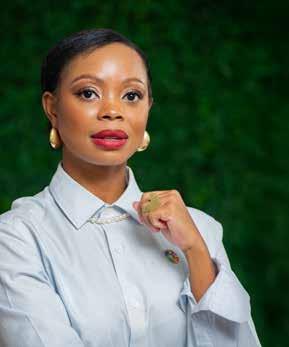
Six months into her role as managing director of Arena Holdings’ news and media division, Nwabisa Makunga tells Glenda Nevill she has a whole new perspective on the business of media.
Nwabisa Makunga’s 20-year career in news has been as journalist and editor. She moved from editing The Sowetan to Mahogany Row – the term long used to describe Arena’s C-suite – last November.
“I had a pretty solid understanding of the newsroom, be it at Arena or anywhere else in the world – but the last six months have turned that on its head,” she says.
“I’ve got a completely different perspective now, about how we need to think about journalism and sustainability; how we need to run it as a business, while maintaining our journalistic integrity.”
IF WE DON’T UNDERSTAND OUR CUSTOMER, IF WE DON’T HAVE ENOUGH DATA ON WHO OUR CUSTOMER IS, AND WHAT IT IS THAT THEY WANT, THEN WE’VE KIND OF LOST THE GAME.
She’s now confronted with hard choices: “Not so much about today, but whether or not we’ll be sustainable in a year, in two, in five years, or in a decade.”
The transition from editor to manager hasn’t been without its challenges.
“I think it probably challenged me for the first two weeks or so. But I had to claim that space immediately and didn’t have time to think about it.
“I am constantly forced to think about how we’re going to be sustainable; how to protect journalists on the one hand, while also actively pursuing financial opportunities on the other,” she explains.
“I think perhaps the challenge for me was to try and translate that to colleagues, because suddenly I was no longer talking about a great story!”
Another transition was to thinking about the reader as a customer rather than someone simply consuming content. How to keep them, make them stay and “buy stuff”.
“We’re looking at integrating how we put the customer at the centre of everything we do. How we make it easy for you, for example, to buy from us; how we make it easy for you to engage with us.
“If we don’t understand our customer, if we don’t have enough data on who our customer is, and what it is that they want, then we’ve kind of lost the game.
“So, since I’ve gotten here, the focus has been on building the system that will help us understand our customer and therefore, engage much better with them; to personalise experiences as much as possible. From a business strategy point of view, it’s the one thing we need to get right.”
That, of course, feeds into what advertisers want and need from Arena’s titles. “They’re the flipside of that coin,” Makunga confirms. “Advertisers keep our doors open – and we see our entire ecosystem as placing the people who do business with us at the centre of that system.”
Makunga’s time spent serving on industry bodies such as the South African National Editors Forum and the World Association of News Publishers has made her critically aware of the massive disruption artificial intelligence has on the news business.
She leads the AI steering committee at Arena and is “leaping into the unknown” to understand the opportunities this presents. Staff are participating in an AI-readiness survey, which the committee will use to gauge adoption and usage –and the company’s AI policy.
Despite all this busyness in business, Makunga says her work/life balance has actually improved. “While my life has become a lot more demanding mentally, it’s also a lot more structured, to
be honest,” she says, admitting to a previously unhealthy relationship with urgency, as an editor.
“Everything that had to be done had to be done now – because I was chasing deadlines every single day. Now, I’ve learnt to shut down when I finish my day.
“I also had an unhealthy relationship with my phone and WhatsApp. I was always fidgety. I had to be on social media because I needed to know what was going on in the news. And I realised that I just don’t know how to sit back and relax.” Makunga is getting better at switching off but, she says: “It’s hard.”
With an AI framework to be introduced company-wide, and the macro issues of making media sustainable, Makunga will be more switched on than switched off as she completes her first year in the hotseat.
Nwabisa Makunga
EXERCISING A DOSE OF MARKETING CAUTION IN 2025
Failure to look critically at everything that tomorrow promises is likely to leave marketers and agencies in a position where we have thrown too much at solutions based on psychological sentiment than considered, factual analysis, writes Wayne Bishop for the Advertising Media Forum.
The marketing landscape in 2025 looks more like a playground, littered with the promises of transformation, technological innovation and AI-powered solutions, than it does a thriving metropolis of commerce.
While it’s easy to get drawn into the sentiment of ‘the new’, the more astute marketer will be exercising a dose of caution when approaching the year, simply because the future remains uncertain –as murky and unclear as ever. The battle of ideas a cacophony of chaos amid an over- stimulated consumer.
It only takes a short stroll down memory lane to remind the reader about NFTs, blockchain, IoT and the Metaverse as “the next big thing in marketing and communications”.
IF WE WANT TO BE BETTER PREPARED, WE NEED TO START WEIGHING UP THE RISKS OF HERD MENTALITY WITH THE LONG-TERM ADVANTAGES OF EVIDENCED-BASED DECISIONS.
One only needs to look at local resources to realise how readily we parrot GenAI as the modern solution to our marketing problems. Or sit through an agency credentials presentation to see how fast we have adopted the global narrative on digital transformation, AI-powered creative solutions or connected commerce.
If we want to be better prepared, we need to start weighing up the risks of herd mentality with the long-term
Wayne Bishop
advantages of evidenced-based decisions. Failure to look critically at everything that tomorrow promises is likely to leave marketers and agencies in a position where we have thrown too much at solutions based on psychological sentiment than considered, factual analysis.
LOOKING BACK
According to a recent article by Forbes, Amazon, Alphabet, Microsoft and Meta have announced plans to increase their capital investment in AI by 45%. However, there is growing evidence among analysts that the return on these investments remains negative, placing pressure on free cash flow and offering an insight into how the share price may be affected in the medium term.
It has become increasingly difficult to monetise AI-based products, and the benefits have simply not lived up to the promises contained in the glossy prospectus in the board reports.
The net result is an overvaluation of AI-based stocks, which will likely lead to an even greater push by the world’s largest investors, generating more and more positive sentiment around these products to protect their investments in the face of potential and catastrophic losses further down the road.
It’s as if fate has a degree of manufactured irreverence.
EVERYONE NEEDS AN ASSISTANT
One area in which investors are seeing some returns is in Agentic AI, which is the fusion of traditional coding with Large Language Models (LLMs). Agentic AI solutions (or ‘AI agents’) are becoming more and more prevalent within the marketplace and are typically backed by smaller VCs and independents, targeting businesses seeking to automate processes, operations and repetitive tasks across typically labour-intensive functions.
In marketing, applications such as Agentforce (Salesforce) are helping manage the end-to-end marketing process including helping to generate briefs, recommending audience segments, creating personalised content and analysing performance against a set of KPIs, all seamlessly integrating into other tools, workflows and systems.
On the agency side, the holding companies are using a combination of in-house agents such as Omnicom’s Omni Assist, a highly advanced agentic model
WHILE SOCIAL MEDIA IS SET TO GROW IN TIME SPENT BY 50% TO REACH A FORECASTED 17.5 BILLION ANNUAL HOURS BY 2028, THIS GROWTH PALES IN COMPARISON TO CONNECTED TV AND MUSIC STREAMING, WHICH IS SET TO ACHIEVE 190% AND 205% GROWTH RESPECTIVELY.
providing audience insights, image generation, development assistance, analysis and even idea generation, and external resources like GPT, Gemini, Dall-E and Claude.
Publicis’s Marcel is another example of an AI-powered solution dedicated to connecting the agency’s workforce to foster stronger collaboration and deliver better solutions with both in-house and external AI-powered assistants which surface up through workflows4.
In 2025 there is likely to be an increase in off-the-shelf and customisable agents such as Quartile, an e-commerce solution helping marketers manage Amazon, Walmart and Google Ads, autonomously adjusting keywords, bids and product targeting. Or CreativeX, an AI solution that evaluates and enhances ad creatives by analysing visual and messaging elements against a brand’s CI.
Even if a business successfully launches a customised version of an agent at the start of the year (and after many internal steering committee meetings) without continual development, it may be out of date by quarter two, which begs the question: How much time are we actually saving if most of our effort goes into keeping the Agent in service?
PRAGMATISM FAVOURS THE BRAVE
In 2024, WARC researched around 700 senior marketers and agency experts in order to gauge the level of AI understanding, usage and preparedness. Surprisingly, despite 30%of the respondents believing that “generative AI should be utilised to an extreme or high extent”, only 22% of the respondent base is utilising AI at this level. 42% of respondents described their current understanding of AI as “advanced” yet only 14% scored two or more out of five on an AI knowledge test that was part of the study.
This illustrates, with glaring palpability, the complete over-confidence of the industry even though we are operating under a dark cloud of uncertainty and within a context where AI capability is still generally too new to have a meaningful effect on the marketing function. We are like the proverbial deer in the headlights running straight towards the lights.
Ultimately, the role of a marketer is to provide a distinctive, favourable experience to a disinterested consumer so that the product or service is selected more often in a buying situation.
In the end, it’s all about behaviour and we have become increasingly distracted by shiny objects which may or may not deliver on the requirement of every marketer or agency specialist.
A good place to understand behaviour is to measure and trend it over an extended period of time. According to a recent Future of Media study which looked at actual & forecasted time spent by media type over a 15-year period, digitally served media will account for 78%of all media consumed by 2028.
While social media is set to grow in time spent by 50%to reach a forecasted 17.5 billion annual hours by 2028, this growth pales in comparison to connected TV (CTV) and music streaming, which are set to achieve 190% and 205% growth respectively.
2025 is the year in which CTV officially overtakes linear TV as the primary channel for premium audio-visual content, which means that traditional consumption of marketing communications will need to be optimised for a variety of screens, devices and moments.
Wayne Bishop is PHD ’s global business lead, based in London.
META MEDIA’S ‘LOVE SCORES’ FRAMEWORK: TRANSFORMING CLIENT RELATIONSHIPS
Doing just 1% more may not seem like much, but at Meta Media, it’s become a core principle for strengthening client relationships and delivering consistent results.
This mindset is embedded in our innovative Love Scores framework – a practical, values-driven system that tracks, nurtures and improves the way the agency engages with its clients.
More than a metric, Love Scores reflects a deeper philosophy: strong, long-term relationships don’t happen by accident; they’re built through intentional, everyday actions. From customised strategies to celebrating shared milestones, Meta Media uses Love Scores to go beyond the brief and become an essential part of each client’s growth journey.
“As we continue to build and evolve our client relationships, our focus remains on driving growth and achieving the best possible outcomes for each partner,” says Kagiso Musi, group managing director at Meta Media. “Our goal is to be more than a media agency; we aim to be a pivotal part of our clients’ success stories,” she adds.
The Love Scores framework is built on three key pillars that shape how Meta Media shows up for our clients:
1. EXPERTISE AND CUSTOMISATION
Rather than rely on generic solutions, Meta Media tailors each strategy to match the client’s goals, says Claire Herman, media director at Meta Media Johannesburg. “We celebrate setting new benchmarks in client satisfaction within the media sector.
Innovation is about revolutionising the status quo by finding new ways to solve old problems and delivering cutting-edge solutions. “Powerful testaments to the efficacy of this innovative approach are our long-standing relationships with
Capitec Bank and Bonitas, our growing relationships with Hollard, Dromex and MediClinic, and our new relationships that we are building with Roman’s Pizza and Viu.” concludes Herman.
2. CARE AND CONNECTION
Relationships are managed with intention, says Andrea Leeuwner, media director at Meta Media Cape Town. Industry expertise is matched with contextual insight to create meaningful, goal-oriented outcomes.
Meta Media’s execution teams are designed to be focused and effective, ensuring every interaction adds value. “Progress is tracked, wins are celebrated and check-ins are purposeful. The result is a rhythm of support and recognition that strengthens client bonds over time,” she adds.
3. LONG-TERM COMMITMENT
The agency’s dedication to client growth is unwavering. Meta Media boasts a track record of long-term relationships that evolve and grow in scope over time, promising mutual indelible success.
This isn’t by chance; it’s because Meta Media commits fully. We don’t just serve; we invest. Clients benefit from continuity, clarity and a shared vision that evolves with their business.
4. THE POWER OF 1% MORE
Meta Media’s approach shows
how consistent micro actions can deliver macro results. Whether following up on a campaign insight, sharing a strategic recommendation ahead of time, negotiating exceptional savings or owning the hard conversations – doing just 1% more creates a cumulative impact that clients don’t just notice, they rely on. The Love Scores framework ensures that these extra efforts are measured, refined and rewarded. It transforms relationship management into a strategic tool – and gives the agency a clear edge in a competitive media landscape.
At Meta Media, client relationships aren’t managed – they’re grown. With Love Scores as the foundation and a “1% more” mentality driving the day-to-day, the agency isn’t just aiming for retention. It’s becoming an indispensable partner in its clients’ long-term success. This is sponsored content.
Claire Herman Kagiso Musi
Andrea Leeuwner
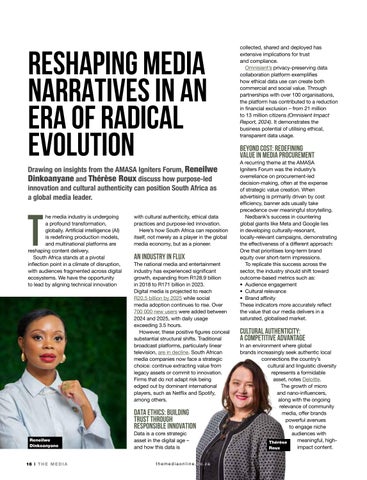
RESHAPING MEDIA NARRATIVES IN AN ERA OF RADICAL EVOLUTION
Drawing on insights from the AMASA Igniters Forum, Reneilwe Dinkoanyane and Thérèse Roux discuss how purpose-led innovation and cultural authenticity can position South Africa as a global media leader.
The media industry is undergoing a profound transformation, globally. Artificial intelligence (AI) is redefining production models, and multinational platforms are reshaping content delivery.
South Africa stands at a pivotal inflection point in a climate of disruption, with audiences fragmented across digital ecosystems. We have the opportunity to lead by aligning technical innovation
with cultural authenticity, ethical data practices and purpose-led innovation.
Here’s how South Africa can reposition itself, not merely as a player in the global media economy, but as a pioneer.
AN INDUSTRY IN FLUX
The national media and entertainment industry has experienced significant growth, expanding from R128.9 billion in 2018 to R171 billion in 2023.
Digital media is projected to reach R20.5 billion by 2025 while social media adoption continues to rise. Over 700 000 new users were added between 2024 and 2025, with daily usage exceeding 3.5 hours.
However, these positive figures conceal substantial structural shifts. Traditional broadcast platforms, particularly linear television, are in decline. South African media companies now face a strategic choice: continue extracting value from legacy assets or commit to innovation. Firms that do not adapt risk being edged out by dominant international players, such as Netflix and Spotify, among others.
DATA ETHICS: BUILDING TRUST THROUGH RESPONSIBLE INNOVATION
Data is a core strategic asset in the digital age –and how this data is
collected, shared and deployed has extensive implications for trust and compliance.
Omnisient’s privacy-preserving data collaboration platform exemplifies how ethical data use can create both commercial and social value. Through partnerships with over 100 organisations, the platform has contributed to a reduction in financial exclusion – from 21 million to 13 million citizens (Omnisient Impact Report, 2024). It demonstrates the business potential of utilising ethical, transparent data usage.
BEYOND COST: REDEFINING VALUE IN MEDIA PROCUREMENT
A recurring theme at the AMASA Igniters Forum was the industry’s overreliance on procurement-led decision-making, often at the expense of strategic value creation. When advertising is primarily driven by cost efficiency, banner ads usually take precedence over meaningful storytelling.
Nedbank’s success in countering global giants like Meta and Google lies in developing culturally-resonant, locally-relevant campaigns, demonstrating the effectiveness of a different approach: One that prioritises long-term brand equity over short-term impressions.
To replicate this success across the sector, the industry should shift toward outcome-based metrics such as:
• Audience engagement
• Cultural relevance
• Brand affinity
These indicators more accurately reflect the value that our media delivers in a saturated, globalised market.
CULTURAL AUTHENTICITY: A COMPETITIVE ADVANTAGE
In an environment where global brands increasingly seek authentic local connections the country’s cultural and linguistic diversity represents a formidable asset, notes Deloitte
The growth of micro and nano-influencers, along with the ongoing relevance of community media, offer brands powerful avenues to engage niche audiences with meaningful, highimpact content.
Reneilwe Dinkoanyane
Thérèse Roux
However, this opportunity will only be realised through investment in:
• Local content development
• Content distribution infrastructure
• Strategic support for community-based media platforms
Addressing the current neglect of these sectors is not only a matter of equity and a moral obligation but also an economic opportunity.
INNOVATING THROUGH INTENTIONALITY
South African media companies can lead through intentional innovations in media formats that align with local realities and creative traditions, without emulating the expensive models of global media. High-potential formats include:
• Interactive digital storytelling
• Community-driven content curation
• Augmented and virtual reality (AR/VR) experiences tailored to African contexts These innovations offer cost-effective differentiation without requiring large-scale production budgets and help ensure that emerging technologies serve rather than dilute local culture.
LEADERSHIP FOR A COMPLEX ERA
Navigating the future of media requires a new kind of leadership; one that bridges creative, technological, regulatory and economic domains. What is needed is brave, interdisciplinary leaders equipped to:
• Challenge global mandates that overlook local contexts
• Integrate procurement within broader strategic frameworks
• Champion new ownership models and experimental formats Leadership development programmes such as the Executive Programme in Media Leadership led by the Gordon Institute of Business Science (GIBS), that integrate creative vision with commercial expertise, are critical for transforming the industry. These initiatives should focus on building core skills like systems thinking, cultural awareness and technological integration to prepare media executives for future challenges.
CONCLUSION: A STRATEGIC CHOICE BETWEEN REACTION AND LEADERSHIP
South Africa’s media sector faces a defining choice:
• Will it continue reacting defensively to global trends; or
• Will it proactively shape a future that blends technological innovation with cultural integrity?
Imperative now is strategic intent, sustained investment and the courage to redefine – not solely in terms of revenue –but in terms of success, relevance, impact and global influence.
* The revived Advertising Media Association of South Africa (AMASA) recently hosted an Igniters Forum at GIBS. Among the cast of media characters were Anton Grutzmacher (co-founder,
FAST TAKE:
Omnisient), Michael Markovitz (director, GIBS Media Leadership Think Tank), Nwabisa Mda (creative strategist), Tembinkosi Sikupela (head of strategy), Samu Makhathini (head of group media, Nedbank) and leading voices from the AMASA Igniters Forum.
STILL HERE. STILL SHARP. STILL SIDELINED?
In a year where mediocrity masquerades as strategy, media agencies remain the unacknowledged backbone of communication planning.
Media agencies hold the deepest, rarest skillsets in the ecosystem. They are the last bastion of true integration –where legacy meets digital, where eyeballs still equal impact.
They’re often the only ones in the room who know how the whole machine fits together. They understand audiences in ways algorithms still don’t; it’s a skill that blends data fluency and human insight.
They’re fluent in both legacy and emerging media, and they’re fluent in platforms most brands only pretend to understand. Programmatic precision, AI-powered planning, and the ability to find and convert niche audiences through ABM? This is not just targeting – it’s a science.
And yet – despite this mastery – they’re often bolted on like an afterthought. Treated as channel implementers instead of idea architects. By the time the media brief lands, the big thinking is done, the budgets are thin, media’s job is often to “make it fit” and the space to shape real outcomes is gone.
Here’s the good news: the bar has never been lower.
Clients are overwhelmed, drowning in a
confusion of options. Media owners are under-resourced and chasing targets – not the best media placement to meet objectives. Strategy, as a discipline, is being diluted by decks with no data. Everyone’s chasing impressions, not outcomes.
If media agencies step up – not as service providers, but as solution designers – they can lead again by offering clarity, cohesion, and commercial results. With the right tech stack and thinking cap, media agencies can become the architects of marketing effectiveness – but only if they stop playing safe.
But who will lead the charge? The talent pipeline is broken. We’re training platform operators, not media thinkers. And without fresh, curious minds to ask better questions, we’re just optimising decline.
If we don’t attract and grow bold, curious, multi-skilled, cross-disciplinary people, AI won’t kill media agencies. Irrelevance will.
Media agencies have never been more needed. But need alone doesn’t guarantee influence. This year is a tipping point: Either media takes the lead – or it gets left behind.
Paul Middleton is a director of Ebony+Ivory, the longest standing independent, specialist services agency in South Africa.
Reneilwe Dinkoanyane is marketing manager at GIBS and an AMASA council member.
Thérèse Roux is full professor of marketing at Tshwane University of Technology.
Paul Middleton
CONSIDERING THE OOH LANDSCAPE…
The out-of-home (OOH) advertising sector in South Africa has experienced growth in the expansion of digital screens across various environments.
The medium is now more accessible, especially for SMEs and brands and the lower cost of entry for digital out-of-home (DOOH) formats has opened opportunities for broader participation.
In parallel, the integration of data into campaign planning is improving the trust and accountability in OOH media buying and creative deployment.
The increasing demand for credible data and performance accountability has also contributed to a rise in Outdoor Measurement Council membership, which plays a vital role in standardising measurement across the sector.
While the industry has made progress, long-standing challenges – including bylaw compliance, consistency, relevance
and enforcement – remain. With each municipality applying different rules, the growth of new billboard installations has exploded, impacting the sector in multiple ways.
The rise in unapproved or non-compliant billboards presents both regulatory and commercial risks. Many local authorities lack the resources or legal support to enforce compliance, thus undermining legitimate media owners, reducing municipal tax revenue and creating an uneven playing field –which erodes industry trust and discourages long-term investment.
The industry has made substantial advances in embracing data and measurement tools, yet to remain competitive in today’s media environment more investment is needed in areas like real-time data access and campaign performance tracking.
ON THE ROAD TO REAL REACH
Out-of-home reach is deep and long – yet OOH is still an agency afterthought, writes Trish Guilford.
n array of OOH opportunities in various environments are available for advertisers to take a brand’s message to the audience in new, unexpected and new places – from padel courts and indoor soccer venues to airports, taxi ranks and golf courses. OOH is always ON. Consumers can’t turn it off at any point in time. There are no distractions, and consumers can’t skip the messaging.
Unfortunately, OOH continues, in many media strategies, to remain the last media type to be considered or included.
The industry at large is taking a considerable amount of time to embrace the rich audience measurement that the OMC offers – but this should be turned into an opportunity for the brave advertisers who are bound by ROI measurements.
• The use of programmatic companies for digital planning results in an unnecessary loss of revenue for media owners who could be doing their own scheduling and reaping the rewards.
• OOH formats allow advertisers to align messages with real-world context, such as location, time of day, weather or even nearby events.
There is also a growing need for deeper collaboration between media owners, creative teams, and media agencies. As client expectations evolve, demands for data-driven planning, customised creative builds, campaign accountability, and measurable outcomes increase.
Creative excellence in OOH is not accidental; it relies on understanding the medium’s particular strengths, such as scale, location context, and high-impact formats.
Agencies that work closely with reputable media owners can unlock more value, leading to improved results and stronger client outcomes.
• Quick turnaround times to getting advertising messages out thanks to the digital formats.
• The measurement allows for more strategic OOH planning by utilising points of interest when selecting static and digital billboards. Advertisers question the impact of OOH, especially digital billboards, even though international research shows that ads are remembered nearly six times against ads flighted on digital channels.
Media type selection should be planned around the client’s objective, yet agency teams are often siloed so budgets and objectives are often not shared or discussed with the entire team – therefore budget allocation for OOH is usually an afterthought.
Trish Guilford is general manager of the Out of Home Measurement Council , a non-profit Joint Industry Committee that aims to market and grow the OOH advertising industry within South Africa.
Howard Lonstein is trade marketing specialist at JCDecaux South Africa
Trish Guilford
TAPPING INTO THE UNTAPPED EDGE
The media industry doesn’t need more talk. It needs direction. The threats are real, but so are the solutions – if we’re willing to embrace them, Pierrette Spadoni believes.
Let’s face it. Traditional media is at a crossroads: Reader habits are shifting fast; legacy revenue streams are drying up, and digital disruption is shaking the very foundation of the publishing industry.
For media owners, it’s a sobering reality. Disinformation is rampant, audiences are scattered across countless platforms, and big tech continues to siphon off the lion’s share of ad spend.
This is not just a moment of crisis – it’s a moment of opportunity. If we act boldly and think strategically, the media industry can reclaim its relevance, diversify its revenue, and rebuild the public’s trust.
To get there, we need to be honest about what’s working, what’s broken, and where we still have leverage.
LEVERAGE LOYALTY
Consumers are more selective than ever, and brand loyalty is fragile. Yet established media brands still carry weight. The key is to use that trust to build loyal communities through members-only benefits, must-listen podcasts, and well-curated newsletters that feel personal, not mass produced.
While content is now scattered across a dizzying array of platforms, that fragmentation can be flipped into a strength. We should be squeezing more value from every story – adapting and repackaging it across digital, print, events, and social. Done right, the return on investment can be significant.
REINVENTION IS A REQUISITE
Let’s be blunt: print and banner ad revenue is in decline, and that trend isn’t reversing. Let’s stop chasing what’s fading and start building around what’s growing: Premium digital products, branded content
partnerships, and subscription models that actually serve users.
Meanwhile, audiences are drowning in content. The answer isn’t more content; it’s smarter content. Media companies need to embrace data and use it to create targeted, high-impact narratives that rise above the noise.
TAP INTO THE UNTAPPED EDGE
Newsrooms are stretched thin. That’s a given. But ignoring the role of AI and workflow automation is no longer an option. With the right tools, we can streamline editorial operations, summarise content efficiently, and even make smarter recommendations that increase engagement without draining our people.
And let’s not pretend banner ads are the future; they’re not. Marketers are looking for more immersive, more engaging options. Media platforms need to offer
branded storytelling, live events, and deeply integrated campaigns.
We also need to stop acting like news is one big monolith. Broad, generic reporting is easy to overlook. What sells – and what sustains – is niche: Whether it’s health, finance, or hyperlocal stories, these are the spaces where loyal, paying audiences still show up.
WHY NOT EVOLVE?
The biggest platforms – Google, Meta –are gobbling up digital ad budgets, and we’re still too dependent on them. That’s a dangerous place to be. We need to rebuild our own ecosystems – newsletters, direct traffic, proprietary apps – places where we own the audience relationship.
WHAT SELLS – AND WHAT SUSTAINS –IS NICHE: WHETHER IT’S HEALTH, FINANCE, OR HYPERLOCAL STORIES, THESE ARE THE SPACES WHERE LOYAL, PAYING AUDIENCES STILL SHOW UP.
Then there’s trust – or rather, the lack of it. Credibility has never been more valuable – or more at risk. Transparency in how we report, a stronger commitment to fact-checking, and better communication about our editorial standards are all non-negotiable going forward.
And yes, privacy laws are changing the game. But that’s not a barrier – it’s an opening. First-party data strategies, such as account registrations and subscriber insights, can still deliver value to advertisers and respect user privacy.
This industry doesn’t need more talk. It needs direction. The threats are real, but so are the solutions – if we’re willing to embrace them. Reinvention is tough, but the alternative is slow decline. The future belongs to those who understand their audience, diversify their revenue, and tell stories that matter. Are we up for it?
Pierrette
Spadoni is deputy chief sales officer at Arena Holdings
Pierrette Spadoni
ABC: AUTHENTIC BRANDS CONNECT
Content, consumption and consumer trends in media have changed – as has the audience’s approach to advertising, writes Zodwa Vundla.
Brands are seeking to connect with ears and eyeballs while people are displaying ad fatigue. From sponsored searches, embedded web pop-ups, blatant placement and an obvious ‘social listening’ element, it’s impossible to consume any content without being served some kind of advertising.
Much as commercial breaks in television and radio programming were an opportunity to run to the bathroom or check another channel, digital adverting faces ad blindness: Audiences are scrolling past, ignoring or simply tuning out of the constant stream of digital ad delivery.
With audiences becoming prosumers –choosing their platforms, consumption time and advertising appetite – are we still able to connect brands to audiences?
The answer is a resounding ‘YES’ –but it requires a change in our marketing methods; a business unusual attitude and approach.
CANDID CONVERSATIONS
At MediaHeads 360 we build relationships based on a deep understanding of our clients’ brand and strategic goals, and candid conversations around impact, timing and outputs. We focus on building lasting brand equity through genuine content connections rather than short-lived digital messages.
To create relatable and relevant brand experiences we design platform interactions around authentic conversations and “high dwell time”. In essence, creating memorable moments, stories and hooks that keep the audience engaged without swiping, clicking or changing the channel or platform.
WHAT DOES THIS LOOK LIKE IN PRACTICE?
Picture your favourite television or radio show featuring characters and personalities
you already love and have affinity to. Now immerse a brand that amplifies the entertainment experience with those characters and their story. It’s not product placement; it’s integrated content creating organic moments and becoming part and parcel of the content offering.
WHY DOES THIS APPROACH WORK?
Firstly, people are naturally attentive and emotionally invested when engaging with their favourite programs, making these environments perfect for brand integration. Familiar characters build emotional connections, providing relatable contexts that audiences remember.
When brands become part of a narrative rather than an interruption, audiences
recall the interaction far better than they would traditional advertising.
Our strategy addresses the root of consumer fatigue by placing brands within engaging environments. Instead of competing for fragmented digital attention, we position brands within content that audiences want to consume and engage with. This ensures they remain receptive and engaged.
This subtle yet powerful method naturally bypasses ad blindness, increasing the effectiveness of brand messaging and product impact.
The clear advantage of our approach is authenticity. Brands achieve organic reach through genuine connections rather than forced messaging. This organic integration generates natural conversations and stronger audience recall, building lasting relationships between brands and their consumers. When coupled to a linear campaign we can amplify brand messaging and audience action.
Adopting this approach requires brand teams who have the courage to rethink traditional approaches and embrace creative, strategic partnerships. We tailor solutions to align with a brand’s unique identity, positioning and audience. We avoid the average, the obvious and the safe approach.
Bold results require bold creative energy and ideas. When we build partnerships, we foster a deep understanding of each brand and build trust through creative collaboration and execution.
Success isn’t a chance encounter; it is a curated journey of brand intelligence, conceptual and creative input, and flawless execution.
Recently, a colleague quipped that he never looked at the message on a digital billboard on a busy Johannesburg highway, as the structure was so invasive it changed the colour of the night sky.
Louder and brighter might catch your eye, but do they command your attention? If you want pictures that move and audio that creates action, remember the ABC.
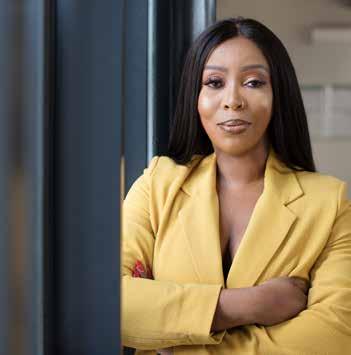
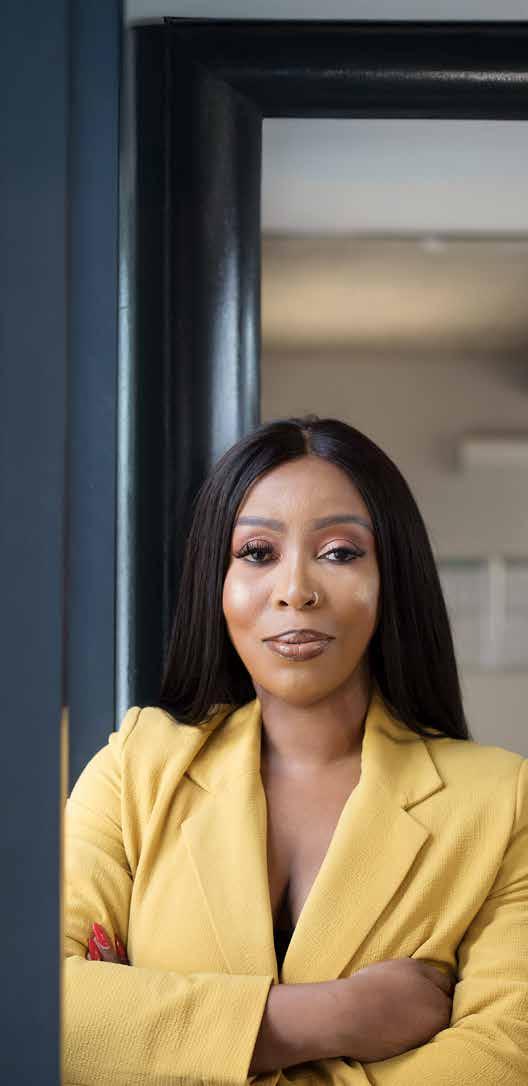
Zodwa Vundla is the head of sales & partnerships at MediaHeads 360 . With over 20 years of experience in media sales, commercial strategy and business development, she is known for her ability to align brand goals with audience insight, and for building strategic partnerships that deliver real value in an evolving media landscape.
Zodwa Vundla
Spiced and flavourful
Market data points, symptoms, temperature, sentiment, and the pulse of the commercial radio space have all occupied discussion in industry forums and C-suite boardrooms over the past year. A singular point emerges from these discussions: radio, with its proven qualities and new capabilities, remains ever relevant, and more so than ever in the world of brand building.
This outcome is endorsed by the latest global edition of Share of Ear 2024. This is an invitation by radio – one that calls for a reset. Radio is more alive than ever, with a time spent listening substantially ahead of other reach mediums.
A library of local research affirms this fact: Radio remains the unmatched reach medium, with its power further amplified by transactional capability and a growing digital audio extension.
And in this attention economy, with messaging wars, radio will continue to healthily support brands through its storytelling prowess. This is important: It points missed opportunity; radio is the buying zone – acting as lead, complimentary or multiplier discipline in rich testimonial form.
At its core, it continues to cater for brand needs, the stories brands want to relay and its ability to answer all brief types. Add in the ‘new’ consumer metrics of trust, brand safety, ad fraud, vanity avoidance, transparency, and measurement and what emerges is radio’s calibre, breed and competencies. Radio’s own story is therefore never closed.
own the funnel
Two posts on LinkedIn highlighted the opposing views on where radio is headed. Chris Botha (group MD at Park Advertising), unpacked the latest media inflation figures. With almost all traditional media becoming more expensive than last year, he noted: “Google, Facebook and TikTok are licking their lips.”
The second was from Dave Sturgeon, a radio market manager and agency owner in the US, who reminded us of radio’s staying power. His post included this gem: “Forward-thinking marketers are pouring budget into ads that get skipped, scrolled past, or worse – accidentally liked.”
These posts reflect two sides of the same coin: the continued growth of digital ad spend. Conventional wisdom says digital does two things better than radio: it’s easier to buy and you can (sort of) measure it. But radio can do both, and exceptionally well.
Radio is easy to buy if you opt for an optimised, cost-per-thousand audience approach, instead of the traditional
labour intensive, station-by-station discount model. Media agencies, under pressure with limited resources, often default to digital simply because it feels less time-consuming.
Measurement is the other perceived gap – but it’s not reality. Radio is highly effective at driving conversion. Its massive reach (significantly higher than digital) and unfragmented audiences, along with the influencer power of trusted presenters, can push engaged listeners to conversion platforms in volumes digital can’t match. We call it ‘frictionless conversion’.
Radio integrates seamlessly with WhatsApp, station apps, geo-tools, augmented reality, TikTok, Instagram, influencer aggregators, and many more. What ties them together is that radio delivers across the entire funnel.
John Walls is the co-founder and managing director at Ultimate
PODCASTING OUTLOOK
The South African podcast industry is growing – but we’re not scaling sustainably. Yes, it’s a win that brands now talk about where they’re spending podcast budgets, not whether podcasts deserve one. Let’s be clear: we’re still building on sand.
Too many players are copying the US podcasting model, forgetting that America has a bloated ecosystem where 1% of shows rake in 90% of the revenue.
That system is broken – and it certainly won’t save us. In South Africa, that copy-paste thinking is keeping us stuck: no consolidated measurements, no shared currency, no unified listenership. So, brands don’t know where to place their bets, and podcasters are stuck guessing.
The South African Podcasters Guild (SAPG) is actively working to change this. From launching the SA Podcharts for independent creators, to advocating for local standards from measurement to responsibility, SAPG is leading the charge to build an industry that reflects our reality – not someone else’s blueprint.
But we’re also battling a fragmentation crisis. Ad spend is leaking into international shows, YouTube, or traditional media rebranded as podcasts. Local creators get left behind. Here’s the shift: brands need to stop asking, “What can this podcaster do for us?” and start asking, “How can we open new pathways for this creator to grow with us?” That’s the kind of thinking that builds ecosystems, not just campaigns. Podcasting in SA won’t thrive by mimicking an international model. It will thrive when we build systems made for South African ears, voices, and audiences. The answer isn’t offshore – it’s right here. If you think a Joe Rogan model is the answer, I really don’t want to know what the question is.
Paulo Dias is head of innovation for Ultimate Media and head of industry relations at the South African Podcasters Guild
Media , the independent radio & audio specialist agency.
Paulo Dias
Eric D’oliveira is chief revenue officer at Mediamark
John Walls
Eric D’oliveira
E-COMMERCE, OPTIMISED
Cheryl Ingram outlines the growing role of AIpowered features and tools in e-commerce advertising, and why utilising them is key to local success.
The e-commerce advertising ecosystem across the globe is undergoing a dramatic shift that will fundamentally change how retailers engage with their customers.
In the last six months, we have seen artificial intelligence (AI) shift from a supporting tool to becoming the primary driver of strategies, with platforms like Meta and Google introducing gamechanging AI-powered features that are redefining campaign performance and customer acquisition.
Meta’s all-encompassing generative AI advertising tools are increasingly sophisticated, moving beyond simple automation to intelligent creative generation and audience prediction. The most significant shift has been in campaign optimisation.
PREDICTIVE ANALYTICS
Among the many platform updates that are underpinned by AI, Meta’s Advantage+ campaigns now leverage predictive analytics to identify users ‘more likely’ to complete your desired action. In essence, this should mean increased outputs at less cost.
For e-commerce brands, this offers the ability to predict purchasing behaviour with unprecedented accuracy, crucial in a market where online retail is expected to reach R400 billion by the end of 2025.
It’s not just Meta. In early May, Google introduced AI Max – a comprehensive suite of creative and targeting features aimed at optimising messages to customers in real time.
Currently in beta, Google’s Smart Bidding Exploration is arguably their biggest bidding update in over a decade. This ‘opt-in’ feature uses Google’s AI to bid opportunistically on searches that may have been out of reach, unlocking the potential to engage customers that might not have been reached in previous campaign setups.
Google’s integration of AI-powered creative tools is equally transformative with their Veo and Imagen models being integrated directly into Google Ads and Merchant Centre.
SEO’S DRAMATIC TRANSFORMATION
Search engine optimisation has perhaps experienced the most dramatic AI-driven transformation. AI overviews are fundamentally changing how consumers discover information, with search becoming less about keywords and more about conversational, multimodal capabilities.
Businesses that fail to optimise for AI agents risk being excluded from critical digital conversations.
This evolution means brands must now optimise for multiple platforms with different content requirements – from YouTube and TikTok to LinkedIn and Meta, each with unique ranking factors and discovery algorithms. This shift is particularly relevant for local retailers, where 61% of e-commerce users are between ages 25 and 54, and almost 70% use smartphones for purchases.
The local market presents extraordinary opportunities. According
to ecommerce.co.za: “South Africa’s e-commerce industry will exceed a value of R400 billion before the end of this year, reaching more than one billion transactions in 2025.”
USERS ON THE INCREASE
Statista’s Digital Market Outlook estimates that about 11.7 million local e-commerce users will be registered in 2025, increasing to 21.52 million users by 2029.
In this fast-changing environment, agility and will be paramount. TDMC stands uniquely positioned as one of a handful of Shopify Select Partners in South Africa. Combined with their Google Premier Partner status and Meta Business Partner certification, this triple accreditation provides TDMC with several competitive advantages:
1. Platform intimacy: Unlike large network agencies burdened by bureaucracy, TDMC’s independent status allows rapid adaptation to platform changes and direct access to beta features and training.
2. Local market knowledge: TDMC boasts a deep understanding of local consumer behaviour, payment preferences and logistical challenges – while maintaining global platform expertise.
3. AI-first approach: With certified experts across all major platforms, TDMC can leverage AI-powered tools for keyword research, content optimisation, and predictive analytics, enabling precise targeting and enhanced personalisation.
For agencies like TDMC, the convergence of AI advancements with the South African market maturation creates unprecedented growth potential. AI-driven targeting will enable more detailed understanding of audience preferences and purchase intent, driving better ad performance and higher return on ad spend.
The next 12 months will separate industry leaders from followers. Those who embrace AI-powered advertising – while maintaining strategic human oversight – will capture the lion’s share of South Africa’s explosive e-commerce growth.
Ingram is the founder and managing director of the innovative Durban-based The Digital Media Collective (TDMC), one of only four accredited Shopify Expert Partners in Southern Africa; also a Google Expert Partner and Meta Business Partner.
Cheryl
Cheryl Ingram
STREAMING VS TV
As global subscription growth tapers off, Africa has become the new frontier for streaming. With a mobile-first population, rising demand for digital content and a strong creative culture, the continent holds promise – for platforms willing to rethink the rulebook, writes Elouise Kelly.
TV still offers unmatched reach in many African markets, especially in households where digital adoption is slow or data costs are prohibitive. It’s familiar, accessible and often free-to-air. However, its linear format is losing appeal among younger, digitally native audiences who expect on-demand access.
Streaming’s strength lies in its scalability and adaptability, as well as its on-demand nature. Viewers can watch what they want, when they want.
In South Africa, over 8.4 million people now access paid or subscription-based streaming services, according to the MAPS dataset (July 2023 – June 2024).
Local industry forecasts predict compound annual growth of 8% in the sector by 2028. These numbers highlight streaming’s growing appeal – especially when platforms adapt to African realities.
At Viu, we’ve found that success depends on access, affordability and deep relevance. Our low-cost daily bundles and mobilefriendly platform cater to South Africans who toggle between Wi-Fi and mobile data, prefer short-term subscriptions, and expect content in their home languages.
A one-size-fits-all approach simply doesn’t work.
DIPPING IN AND OUT
While TV’s dominance is waning, it still benefits from simplicity: No data costs, no log-ins, no buffering. Streaming, by contrast, faces structural challenges: Data is expensive, connectivity uneven and access often dictated by income level. Even in relatively mature markets like South Africa, cost remains a barrier. Consumer behaviour reflects this. Viewers dip in and out of streaming services depending on affordability or content preference. Retention isn’t guaranteed – and that’s okay. The real challenge is reducing friction and clearly communicating value.
Telco partnerships are essential here. Bundled offers and zero-rated content are gamechangers for price-sensitive users.
Fragmentation is another concern. Many platforms chase international licensing deals or attempt to replicate Western subscriber video on demand (SVOD) models without local nuance. This approach risks alienating users who are hungry for African content that reflects their language, culture and daily lives.
A NEW AD ECONOMY
Ad-supported video on demand (AVOD) is not a fallback; it’s a strategic growth engine. In Africa, it represents a viable route to scale, especially among unbanked or lower-income segments.
AVOD opens access for new users and creates meaningful touchpoints for advertisers seeking engaged, mobile-first audiences.
These audiences are not passive. They are brand-conscious, aspirational and responsive to culturally relevant messaging. Local languages, relatable narratives, and regional cues make a difference. Smart advertisers are starting to embrace this, shifting from premium-
only placements to more inclusive, mass-market campaigns.
Hybrid models that blend AVOD and SVOD are showing real traction across emerging markets. We’ve seen that this dual approach – supported by intuitive user experience and compelling content –delivers sustained engagement.
Then there’s the biggest opportunity of all: local content. Africa’s creative industries are brimming with potential. The global success of musical artists like Wizkid and Tyla proves that the world is listening. Video is next – but only if the ecosystem is nurtured. That means investment in writers, directors, dubbing artists, translators and marketers. It’s about more than entertainment – it’s economic development.
ONE-SIZE THINKING
Streaming platforms risk failure if they import global models without adapting to local realities.
Too many platforms still treat Africa as a monolith. But it’s not one market – it’s 54 countries, each with distinct cultural, linguistic and economic nuances. A streaming strategy that succeeds in Lagos may not work in Mamelodi.
Another concern is underinvestment. African audiences are ready: Smartphone penetration is high, infrastructure is improving, and demand for culturally resonant content is growing. But global players often hesitate to invest in local stories at scale. One-off productions
Sustained support and regional commitment are needed.
If advertisers, media owners and platforms want to win in this space, they need to show up with intention – not just
Elouise Kelly
THE CASE FOR OOH ADVERTISING IN 2025
Out-of-home advertising is becoming non-negotiable in the 2025 marketing landscape, offering a powerful way to capture the attention of diverse audiences, writes Candice Garner.
From the Las Vegas Sphere, Tokyo’s Shibuya Crossing, Times Square, or Piccadilly Circus, OOH is strategically placed in high-traffic areas where people live, work, shop and socialise – offering unmatched visibility and engagement, driving immediate talkability and lasting impact.
With measurable ROI, extensive reach, and cutting-edge technology like programmatic digital out-of-home (DOOH), OOH is a dynamic platform that complements digital strategies, boosts brand awareness and fuels business growth.
OOH’s superpower lies in its ability to connect with diverse demographics in real-world settings.
According to a study by the Out-ofHome Advertising Association of America, 73% of consumers view DOOH favourably, strengthening its role in building credibility and positive brand associations.
ATTENTION ≠ INTENTION
Darren McKinon, commercial sales director at Epic Outdoor, often highlights that attention is not the same as intention and that this distinction needs consideration when determining campaign objectives. Attention might involve having eyes glued to a screen while waiting for an ad to finish playing, but the intention at that point might be to get back to a game.
OOH, particularly DOOH, offers a significant opportunity to bridge this gap and deliver both intention and attention. Whether it’s a billboard on a busy highway or a digital screen at a padel court, OOH drives foot traffic, boosts sales, and amplifies online activity, as
safeguards, DOOH often lacks consistent standards, leaving brands exposed to poor-quality displays or inadequate content management that can affect trust in the platform.
Given the lower barrier to entry compared to other platforms, issues like blinding nighttime brightness due to low-quality screens without dimmers, or power outages, can erode brand and consumer trust and damage brand identity.
High-quality screens and advanced systems are essential to protect brand integrity, ensuring ads are displayed as intended, following brand CI and reinforcing OOH’s credibility as a premium medium.
demonstrated in-depth by neuroscience case studies from Ocean Outdoor. Its seamless integration with other platforms allows for effective omnichannel strategies, making it imperative for marketers navigating today’s digital landscape.
PDOOH: THE NEW DIGITAL?
One step further than DOOH is programmatic DOOH (pDOOH), which advances data-driven personalisation, enabling real-time dynamic content optimisation, mobile integration, and precise audience targeting – all familiar aspects of the digital realm.
pDOOH allows brands to deliver contextually relevant ads without wastage, embodying the principle of reaching the right person, on the right platform, at the right time.
The flexibility of pDOOH helps it stand out, while dynamic creative optimisation enables ads to be tailored to specific conditions like weather or time of day.
With location-based targeting, crossscreen integration, and advanced analytics, brands can drive foot traffic, create seamless experiences, and measure ROI, ultimately increasing dwell time and engagement with their target audience.
BRAND SAFETY AWARENESS
The incredible opportunities presented by DOOH comes with concerns – significantly, brand safety. Unlike online platforms with
OPPORTUNITIES AND CHALLENGES
As traditional media declines and digital continues to rise, OOH emerges as a resilient and forward-thinking choice for brands and agencies. pDOOH is revolutionising the industry, empowering advertisers and media owners with data-driven insights that enable smarter campaigns. However, the industry must navigate challenges like market oversaturation and inconsistent governance, adhering to bylaws to ensure continued growth. The influx of new players brings opportunities but also risks further fragmentation if quality and delivery aren’t prioritised. Investing in reliable inventory and cutting-edge technology is crucial for maintaining brand safety and elevating industry standards.
With media inflation at 5% (MIW Index 2024), OOH stands out as a smart investment compared to other media types facing significant cost-per-thousand increases of up to 25%. By leveraging these strengths, brands can achieve their goals without sacrificing quality or return on investment.
Despite its benefits, OOH receives only 5% of annual ad spend. This raises questions: Is it due to a lack of understanding, or are clients and agencies stuck in traditional ways of thinking?
Candice Garner is head of digital at Epic Outdoor
Candice Garner
Time to set some standards
The OOH sector continues to grow its share of the overall media pie, distinguishing itself as one of the few above-the-line (ATL) mediums experiencing consistent upward momentum. With increased urbanisation and mobility, OOH gives unmatched visibility in high-traffic environments. It remains one of the most effective ways to deliver unskippable brand messaging at scale and, with innovations in DOOH, it’s becoming more data-led, targeted, and measurable than ever before.
A major challenge in the OOH sector is the lack of industry-wide cohesion. Fragmentation exists across media owners, with inconsistent format sizes,
differing audience metrics, and varied research methodologies.
This inconsistency complicates media planning and undermines confidence in OOH’s ability to deliver unified reach. The absence of standardised measurement tools also makes it harder to prove performance compared to digital media, placing the burden on individual owners or agencies to interpret and translate value for clients.
Streamlining processes – particularly for pDOOH – will position OOH as a seamless, data-rich channel that complements digital campaigns. Industry-wide collaboration on metrics, formats and trading protocols would not only simplify planning but also
OOH: A SWOT snapshot
The country’s out-of-home (OOH) sector is evolving rapidly, bringing a mix of power, possibility and pressing challenges. Strengths
• New place-based digital networks are reshaping the landscape and options available. From Virgin Active gyms (Reveel) to padel courts (Epic Outdoor, Relativ) and more. OOH is reaching audiences in high dwell-time, high-affinity environments.
• More impactful anamorphic and 3D DOOH is being implemented, across various format sizes, and environments are opening up doors for brands to draw consumers in.
• Increased investment in classic/ traditional OOH, following a call by Tom Goddard, President at World Out of Home Organisation) to the industry globally, to “awake the sleeping giant”.
• Data accessibility and availability is growing, too. With OMC Road 2.0 measuring over 50% of roadside media and looking to add new environments, plus notable players like AllUnite, Luxon, TapTap, IRL Consulting and Vicinity with additional data offerings, OOH is becoming more measurable and effective –
for both planning and reporting.
• Research continues to prove its value. BrandMapp shows 76% of SA’s consumer class recalls OOH, and Kantar ranks it as Gen Z’s top channel. And as per Chris Botha’s media inflation watch post: OOH is becoming a more effective buy in South Africa vs other mediums.
Weaknesses
enhance transparency and trust, making it easier for media planners to justify and increase OOH investment.
Disregard for municipal bylaws –by both media owners and advertisers –is a serious threat to the credibility and ultimately the sustainability of the OOH sector.
The bigger concern is that clients often don’t care about compliance, prioritising price and placement over legality or ethics.
• With great growth comes complexity: The sheer volume of data, varying methodologies, and a widening skills gap results in mean measurement still being misunderstood and therefore not always utilised, or utilised incorrectly.
• Add to this the sector’s fragmentation, with 350+ media owners in play and it’s an overwhelming space for buyers to navigate.
Opportunities
• From gamification to AI-driven dynamic content, innovation is ripe for the picking.
• More dynamic pDOOH and OOH
gamification, AI dynamic creative and deeper audience engagement tactics remain largely untapped in SA, offering massive potential for brands willing to push boundaries.
• There is opportunity for more owner collaboration, across mediums or channels and within the OOH sector. More media suppliers that start offering combined packages across platforms could potentally see more growth.
Threats
• Low barriers to entry for suppliers fuel clutter and inconsistent quality: Gauteng alone saw 115+ new sites in six months and 100 screens in South Africa in one year.
• The boom means greater possibility of issues in DOOH scheduling, execution, monitoring and reporting. Third party DOOH verification is becoming more important.
• Poorly maintained structures, unlabelled sites, and generic service responses from vendors undermine the sector’s credibility. Clutter also deters client spend. To thrive, OOH must double down on quality, measurement and innovation because the demand is there, and the future is bright for those who deliver.
Beyond the Billboard ’s Livia Brown and Kirsty Carlson are senior thought leaders in the OOH industry: Brown owns What3Things and Carlson is the founder of Synapse Media
Steve Duck is chief revenue officer: media at Glynt , previously Tractor Outdoor Holdings.
Steve Duck
Livia Brown
Kirsty Carlson
MEDIA24 UNLOCKS SMARTER MARKETING FOR BRANDS
These days, reach alone won’t cut it. Brands need smart solutions that turn heads, hold attention and drive growth. That’s why Media24 has launched its advertising and content marketing team –combining deep audience insight with creative and commercial firepower to deliver real impact.
“This is strategy, storytelling and scale brought together to make a difference,” says Nerisa Coetzee, chief revenue officer of Media24 Advertising & Content Marketing “With one trusted team, our agency and client partners can connect with the right audience and see measurable results.”
A TRUSTED MEDIA ECOSYSTEM
News24 has just earned the highest score for trust among South African news brands featured in the Reuters Institute for the Study of Journalism’s Digital News Report – for the seventh year running. Meanwhile, lifestyle communities like Huisgenoot, Sarie, Weg, Tuis, Drum and TrueLove are household names, engaging millions of loyal readers every month. Whether it’s breaking news, lifestyle inspiration or real talk, brands can connect with audiences through South Africa’s most iconic platforms – and make their mark.
The advertising and content marketing team has launched two flagship solutions in this environment. Adnami combines high-impact display formats with state-of-the-art technology to bring precision, visibility and creative execution to digital advertising. Match24, meanwhile, uses artificial intelligence-powered contextual targeting to deliver smarter, privacy-conscious ads that lead to higher engagement.
CONTENT THAT CREATES LASTING CONNECTIONS
Media24 also empowers organisations to become publishers themselves through its content marketing expertise. New Media,
Media24’s new advertising and content marketing team delivers strategy, storytelling and scale across trusted environments such as News24 and Netwerk24.
a pioneer of this form of marketing in South Africa, is now fully integrated into Media24 Advertising & Content Marketing. This internationally award-winning team has long helped brands like Woolworths, Mediclinic and Vodacom create platforms of influence by crafting strategic content that audiences genuinely want to consume and share.
Its specialist internal communications team division has developed a reputation for being real experts in workplace trends and employee engagement for several multinationals, including Nestlé and CCBA.
• Advertising: smart, data-backed campaigns across print, digital and social
• Content marketing: editorial precision that builds long-term loyalty
• Video, podcasts and events: memorable moments that take brands from awareness to action
• Scalable tech tools: digital solutions powered by in-house software developer Swipe iX
• Data-led results: audience analytics and artificial intelligence-powered tools that drive impact
POWERED BY EXCEPTIONAL PEOPLE
Communication demands precision, which is why Media24 uses advanced targeting and audience analytics to ensure every campaign hits the mark. However, data alone isn’t enough. It takes heart and smarts to transform numbers into strategies that resonate. “That’s where our people shine,” says Coetzee. “They combine deep audience understanding with analytical skills to craft campaigns that truly connect. They know how to decode data because they understand the people behind the numbers. That’s the difference. Our work does not just reach people – it matters to them.”
Ready to make your marketing matter?
Visit advertising. media24.com.
This is sponsored content.
Skilled storytellers capture the moments that matter
The Media24 Advertising & Content Marketing team crafts content that deepens connections between brandssuch as Woolworths - and their audience
AFRICA’S MEDIA MOMENT
The media agency landscape in South Africa and broader Africa is undergoing a transformation. Digital innovation, AI integration, mobile-first consumer behaviour and demand for localised storytelling are defining the pace and direction of change.
Publicis Groupe Africa is shaping and responding to these shifts in real time.
THE OUTLOOK: AN OVERVIEW
The outlook is one of cautious optimism. While global economic volatility and local market pressures persist, the sector is showing resilience and adaptability.
Digital ad spend continues its upward trajectory, driven by the proliferation of social media, video-on-demand, and over-the-top (OTT) platforms.
In South Africa digital ad spend is expected to surpass R17 billion in 2025, up nearly 10% from the previous year, according to PwC’s Entertainment and Media Outlook
Mobile penetration is nearing 95% across many African markets, creating unprecedented access to audiences. Consumers are increasingly seeking hyper-personalised, culturally resonant, and purpose-driven content. This is reshaping how agencies think about creative execution, media planning, and brand storytelling. Artificial intelligence is becoming a major enabler, supporting everything from predictive analytics to automated campaign optimisation. However, human creativity and insight remain irreplaceable, especially in markets where cultural nuance is critical.
Publicis South Africa draws its strength from its global affiliation with Publicis Groupe. This access to global insights, best in
KOO GOVENDER outlines how one of the continent’s leading agency networks is both shaping and responding to transformative shifts in real time.
class case studies, category experience, tools, and resources, paired with local cultural intelligence, creates a strong foundation for success.
The Media Practice at Publicis has grown over 150% in the past two years, testament to the increasing demand for integrated, innovative and tech-enabled media solutions.
Our model of ‘Connected Creativity’ allows us to leverage synergies between strategy, media, creative, and data –which is critical in delivering modern, omnichannel solutions for brands.
NARROWING THE TALENT GAP
Despite strong growth, the media sector continues to face a significant talent gap, due to a notable exodus of senior professionals in recent years. Agencies are working hard to close the gap.
Publicis Groupe
Africa is accelerating investment in youth development and leadership pipelines through initiatives like the Le Cub programme and specialised academies focused on digital, data, and media leadership.
Clients are also increasingly seeking the ‘boutique’ experience: Small, agile partners who can respond quickly and be available around the clock. Since Covid, this
trend has led to an increase in independent practitioners. In response, we’ve focused on building agility within our Groupe structure, offering clients the responsiveness they want, backed by the scale, stability and resources of a global network.
ROLLING WITH DIGITAL ACCELERATION
As mobile usage, e-commerce, and digital payments expand across the continent, media agencies can play a central role in driving connected brand experiences. The growing appetite for programmatic advertising and performance-based campaigns is another area of growth. New channels and tools for communicating and marketing are also being developed every day. To remain at the forefront of entrepreneurship and innovation, we must keep adapting and be ready for platforms that do not exist yet.
NAVIGATING GEOPOLITICS
Geopolitical tensions have created uncertainty for multinationals. Yet many continue to operate across the continent –and need local partners with relevant experience to help them avoid missteps that could have dire repercussions. That is why business has not stalled for the African media agency sector. We continue to adapt, innovate and invest locally. Instead of depending solely on Western markets, we are leaning into regional collaboration, localised content development, and mobile-first strategies to meet the evolving needs of African consumers.
The African media sector is not immune to global shocks, but it is also not defined by them. While global brands may “sneeze,” African agencies are increasingly building resilience by focusing on local growth, innovation, and value creation.
This is not just about surviving; it’s about thriving in a world where relevance, agility, and cultural insight are more valuable than ever.
Koo Govender is CEO of Publicis Groupe Africa
Koo Govender
MAKING MEANINGFUL MOVES IN TELECOM ADVERTISING
Telco ads are best placed to highlight modern interactions and the spirit of connectivity – and MTN’s Cheeseboy shows how they’re bringing meaning back into brand advertising.
Some would argue that advertising in the telecommunications sector had become somewhat generic as the country got on with the grind of being a democracy. “Especially after the 2008 economic downturn, and with increased competition both in and adjacent to the category, advertising work has been centred on beating competition to the consumer,” explains Neo Mashigo, chief creative officer at The Up&Up Group. This approach often discounts the need to connect deeply with the customer through meaningful brand advertising.
A key tenet of the zeitgeist in the early years following the country’s transition into a constitutional democracy was a telecommunications industry that produced highly creative, engaging and distinctive advertising campaigns. South Africans from all walks of life remember these ads fondly as true markers in the cultural mind of the time.
MAKING MOVES
MTN seeks to elevate advertising in the industry once more by producing authentic, African, emotive advertising with its Today We Make Moves brand platform.
The work zones in on the need to connect with the customer while emphasising MTN’s role in its customers’ lives: connection and connectivity.
Bringing the magic of connection back into telco advertising requires distilling a deeply resonant local zeitgeist into the campaign.
The Today We Make Moves campaign launched in early March, with the initial phase running to the end of April. A series called Cheeseboy was designed to create work that people ‘feel’ rather than just ‘watch’, bringing back the creativity that once made telco ads so memorable.
Mashigo explains that Cheeseboy is a story resonant of the real, lived experiences of many South Africans who, for various reasons, spread their rural roots to the city. Cheeseboy chronicles a boy’s journey to reconnect with his homeland, emphasising the significance of heritage in local culture.
TAPPING INTO THE CULTURAL ZEITGEIST
Set against the stunning backdrops of KwaZulu-Natal, the series captures the beauty of rural life, immersing viewers in the country’s rich landscapes and cultural fabric, while inferring the reach of MTN.
“The story communicates the universal themes of friendship, resilience and the importance of family, resonating with audiences by highlighting relatable, authentic human moments,” says Mashigo.
Technology is initially a reflection of the “distance” between the family members –then becomes the catalyst to bring them together, bridging two different lived experiences to find common ground.
The narrative illustrates the evolving friendship between the boy and his cousin, portraying how shared experiences can bridge cultural gaps, despite initial differences.
COMMUNICATING CONNECTIVITY
Mobile technology has levelled access to information and communication. Today, identity is often shaped through online interactions and social media. The telco industry is well-placed to explore how these modern interactions foster relationships and create a sense of belonging, reflecting contemporary societal experiences.
Ads can showcase how connectivity empowers individuals and communities, enabling them to share their stories
and connect with one another in meaningful ways.
“Ads in this sector can emphasise the emotional drivers of connection –family reunions, friendships and shared experiences – allowing audiences to tap into their own lived experiences and emotions. The extensive reach of telcos allows brands to weave complex stories that reflect the realities of everyday life, showcasing how connectivity facilitates personal growth, cultural exchange and community building,” explains Mashigo.
Today We Make Moves provides an opportunity to tell authentic stories that reflect MTN’s African DNA, and return to distinctive storytelling that taps into the cultural moment.
The campaign acknowledges that progress isn’t just about technology, it’s about the drive one puts into their ambitions every day, powered by the possibilities MTN enables.
The Today We Make Moves campaign has been rolled out across multiple channels, including internal communications, television, cinema, static and digital outdoor media, radio, social media and digital platforms, ensuring nationwide reach and visibility.
Ultimately, by returning telco advertising to the pulse of the zeitgeist, the goal was to enrich creativity and storytelling across the industry, adds Mashigo.
The We Make Moves campaign was conceptualised and created by the Up&Up Group , formerly M&C Saatchi Abel.
MTN’s Cheeseboy
INDEPENDENT INDUSTRY INTELLIGENCE
GETTING THE OUT OF THE MEDIA
The Media magazine’s October 2025 issue celebrates the work of media owners and media agencies in South Africa, recognising the changes in and evolution of the industry.
As always, our content covers everything from publishing to platforms, advertising, marketing, social media, broadcasting, media research, creative media to advertising and marketing technology.
The MOST Awards, launched in 2009, are back in 2025 after a year’s breather to refresh and reassess the awards and their special place in the media market.
The Media’s October issue offers an excellent opportunity to share space with the who’s who of the media industry.