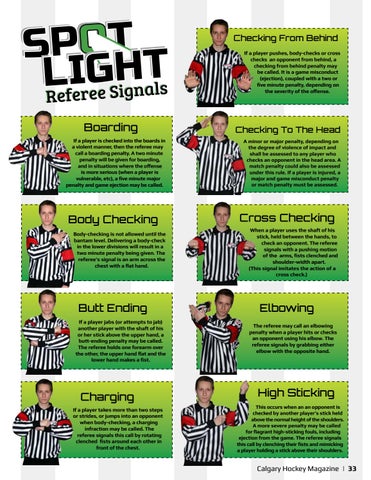
SPOT T H G I L s l a n g i S e e r e f e R Boarding If a player is checked into the boards in a violent manner, then the referee may call a boarding penalty. A two minute penalty will be given for boarding, and in situations where the offense is more serious (when a player is vulnerable, etc), a five minute major penalty and game ejection may be called.
Body Checking Body-checking is not allowed until the bantam level. Delivering a body-check in the lower divisions will result in a two minute penalty being given. The referee’s signal is an arm across the chest with a flat hand.
Butt Ending If a player jabs (or attempts to jab) another player with the shaft of his or her stick above the upper hand, a butt-ending penalty may be called. The referee holds one forearm over the other, the upper hand flat and the lower hand makes a fist.
Charging If a player takes more than two steps or strides, or jumps into an opponent when body-checking, a charging infraction may be called. The referee signals this call by rotating clenched fists around each other in front of the chest.
Checking From Behind If a player pushes, body-checks or cross checks an opponent from behind, a checking from behind penalty may be called. It is a game misconduct (ejection), coupled with a two or five minute penalty, depending on the severity of the offense.
Checking To The Head A minor or major penalty, depending on the degree of violence of impact and shall be assessed to any player who checks an opponent in the head area. A match penalty could also be assessed under this rule. If a player is injured, a major and game misconduct penalty or match penalty must be assessed.
Cross Checking When a player uses the shaft of his stick, held between the hands, to check an opponent. The referee signals with a pushing motion of the arms, fists clenched and shoulder-width apart. (This signal imitates the action of a cross check.)
Elbowing The referee may call an elbowing penalty when a player hits or checks an opponent using his elbow. The referee signals by grabbing either elbow with the opposite hand.
High Sticking This occurs when an an opponent is checked by another player’s stick held above the normal height of the shoulders. A more severe penalty may be called for flagrant high-sticking fouls, including ejection from the game. The referee signals this call by clenching their fists and mimicking a player holding a stick above their shoulders.
Calgary Hockey Magazine | 33