educating through adversity
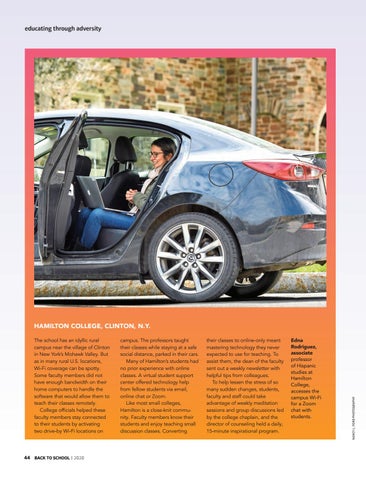
The school has an idyllic rural campus near the village of Clinton in New York’s Mohawk Valley. But as in many rural U.S. locations, Wi-Fi coverage can be spotty. Some faculty members did not have enough bandwidth on their home computers to handle the software that would allow them to teach their classes remotely. College officials helped these faculty members stay connected to their students by activating two drive-by Wi-Fi locations on
44 BACK TO SCHOOL | 2020
campus. The professors taught their classes while staying at a safe social distance, parked in their cars. Many of Hamilton’s students had no prior experience with online classes. A virtual student support center offered technology help from fellow students via email, online chat or Zoom. Like most small colleges, Hamilton is a close-knit community. Faculty members know their students and enjoy teaching small discussion classes. Converting
their classes to online-only meant mastering technology they never expected to use for teaching. To assist them, the dean of the faculty sent out a weekly newsletter with helpful tips from colleagues. To help lessen the stress of so many sudden changes, students, faculty and staff could take advantage of weekly meditation sessions and group discussions led by the college chaplain, and the director of counseling held a daily, 15-minute inspirational program.
Edna Rodriguez, associate professor of Hispanic studies at Hamilton College, accesses the campus Wi-Fi for a Zoom chat with students.
NANCY L. FORD PHOTOGRAPHY
HAMILTON COLLEGE, CLINTON, N.Y.