high school
Anti-Social Media Do digital connections lead to isolation? BY EDWARD C. BAIG AND JAYNE O’DONNELL
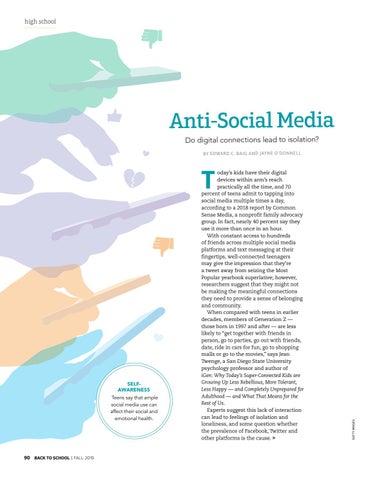
SELFAWARENESS Teens say that ample social media use can affect their social and emotional health.
90 BACK TO SCHOOL | FALL 2019
GETTY IMAGES
T
oday’s kids have their digital devices within arm’s reach practically all the time, and 70 percent of teens admit to tapping into social media multiple times a day, according to a 2018 report by Common Sense Media, a nonprofit family advocacy group. In fact, nearly 40 percent say they use it more than once in an hour. With constant access to hundreds of friends across multiple social media platforms and text messaging at their fingertips, well-connected teenagers may give the impression that they’re a tweet away from seizing the Most Popular yearbook superlative; however, researchers suggest that they might not be making the meaningful connections they need to provide a sense of belonging and community. When compared with teens in earlier decades, members of Generation Z — those born in 1997 and after — are less likely to “get together with friends in person, go to parties, go out with friends, date, ride in cars for fun, go to shopping malls or go to the movies,” says Jean Twenge, a San Diego State University psychology professor and author of iGen: Why Today’s Super-Connected Kids are Growing Up Less Rebellious, More Tolerant, Less Happy — and Completely Unprepared for Adulthood — and What That Means for the Rest of Us. Experts suggest this lack of interaction can lead to feelings of isolation and loneliness, and some question whether the prevalence of Facebook, Twitter and other platforms is the cause. >