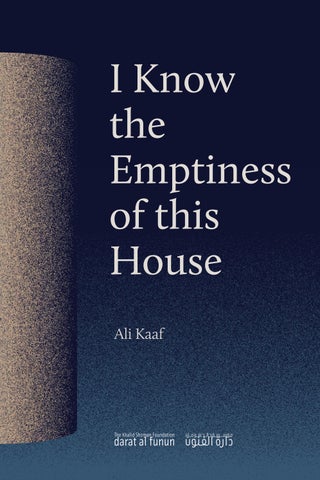

Ali Kaaf

Artworks: © Ali Kaaf
Texts: Rana Beiruti, Ali Kaaf
Translation: Thaera Akrabawi
Editing: Ahmad Ameen, Sara El-Jazara
Design: Rasha Tabbalat
Published in 2023.
© Darat al Funun – The Khalid Shoman Collection
Ali Kaaf is an Algerian-born Syrian visual artist based in Berlin. He graduated from the Institut des Beaux-Arts in Beirut, Lebanon, and studied under Marwan Kassab Bashi, first as a student of Darat al Funun’s inaugural Summer Academy in 1999. He then continued his studies at Universität der Künste (UdK) in Berlin under the supervision of Professors Marwan and Rebecca Horn. He previously showed his work in numerous exhibitions including a solo exhibition at Darat al Funun in Amman in 2004, as well as in Damascus, Beirut, Berlin, Rome, San Francisco and lately, at the Pergamon Museum in Berlin (2021), and at Documenta 15 in Kassel (2022).
Exhibition at Darat al Funun - The Khalid Shoman Foundation March - September 2023
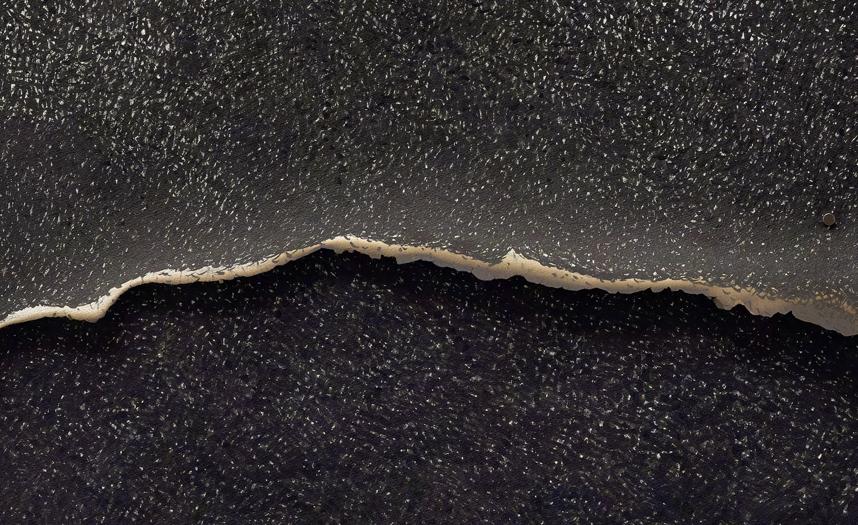
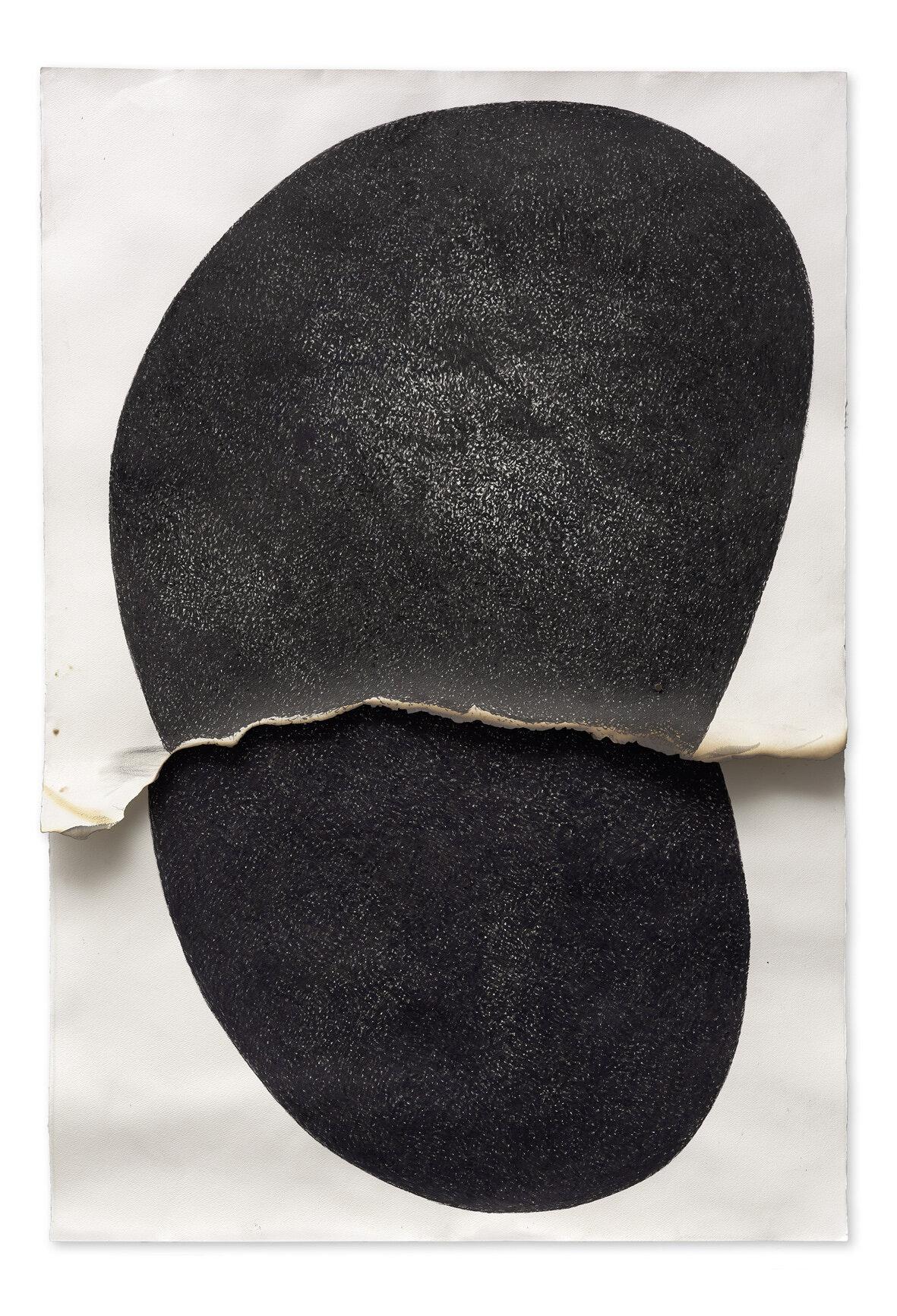
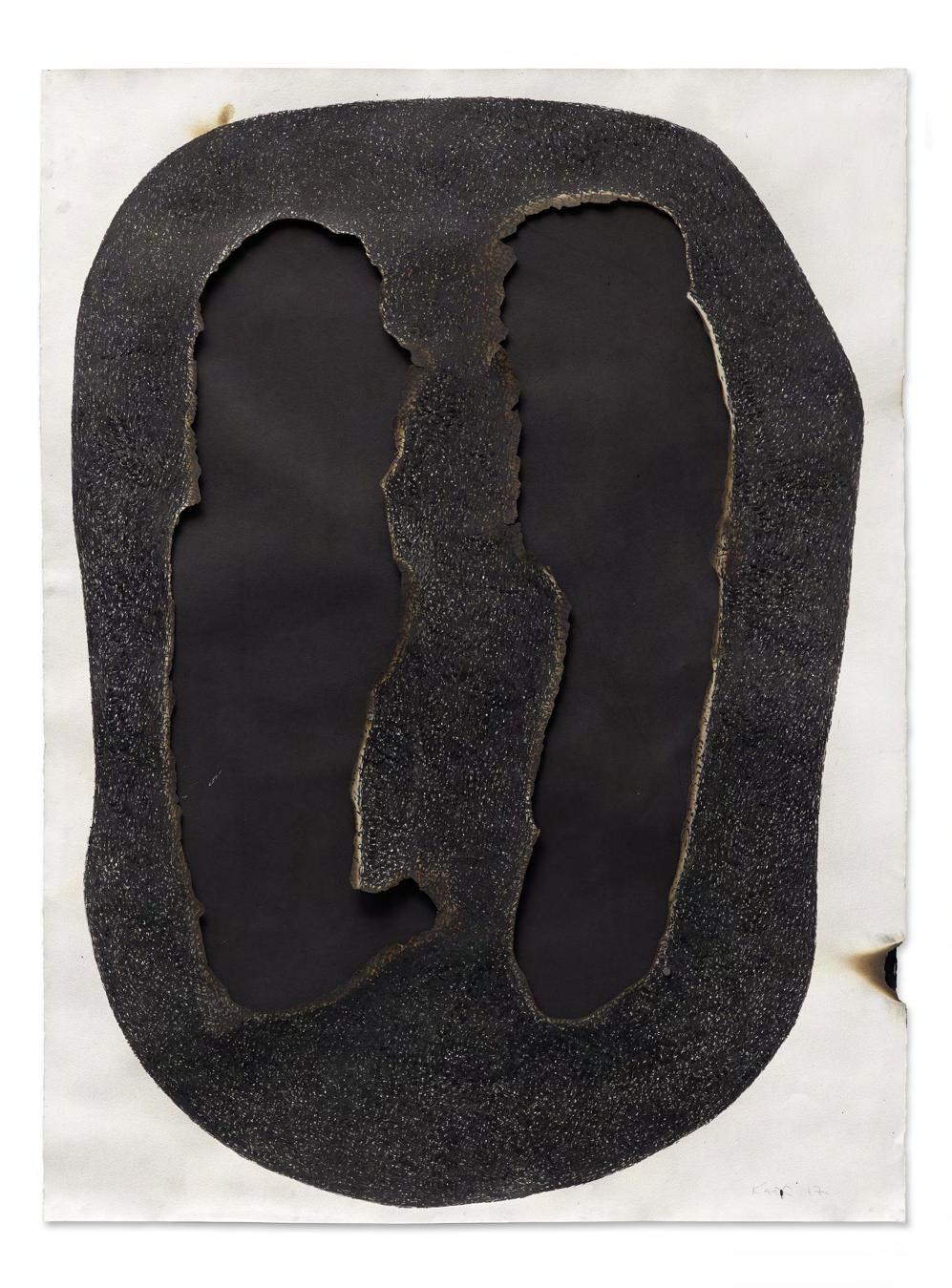
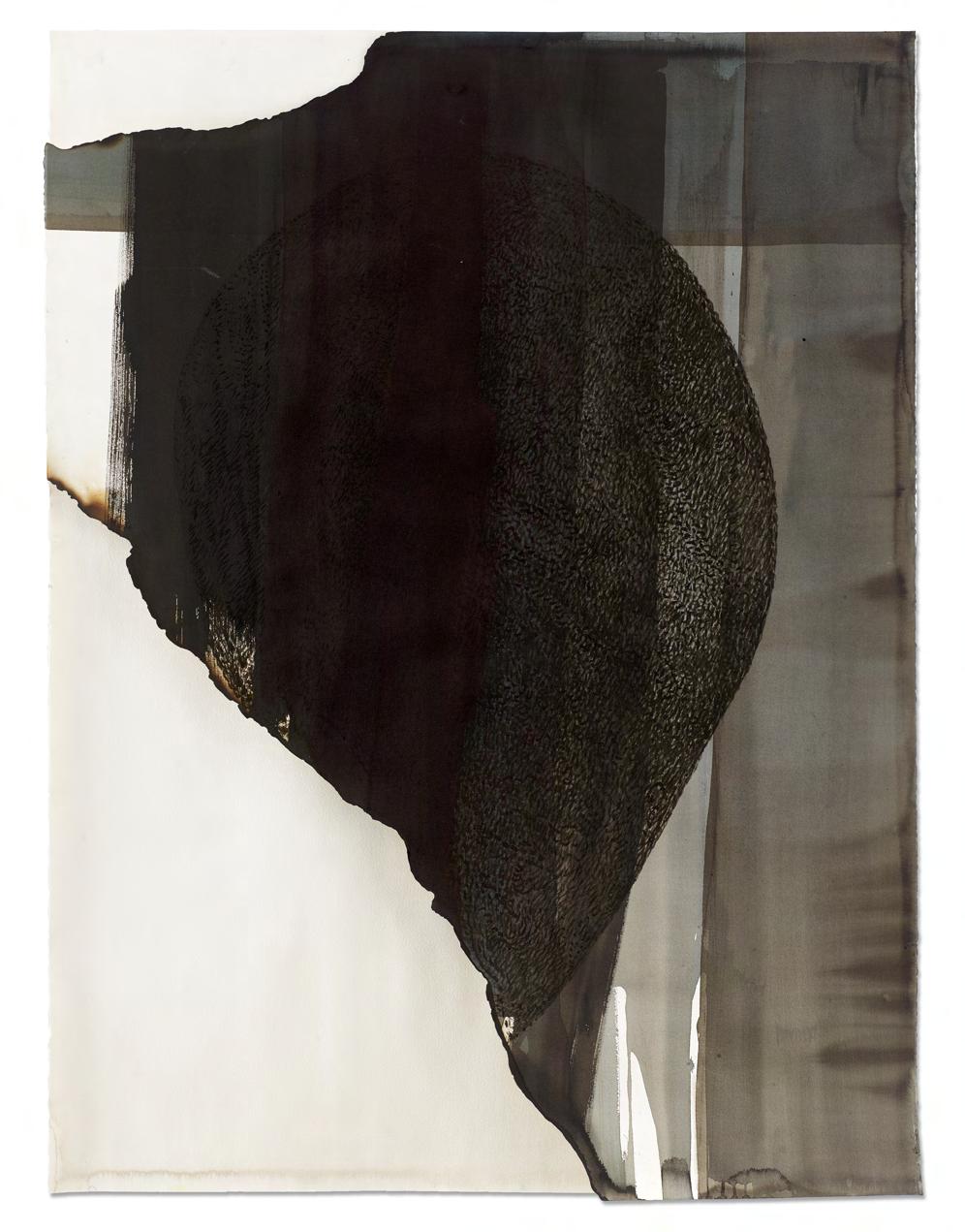
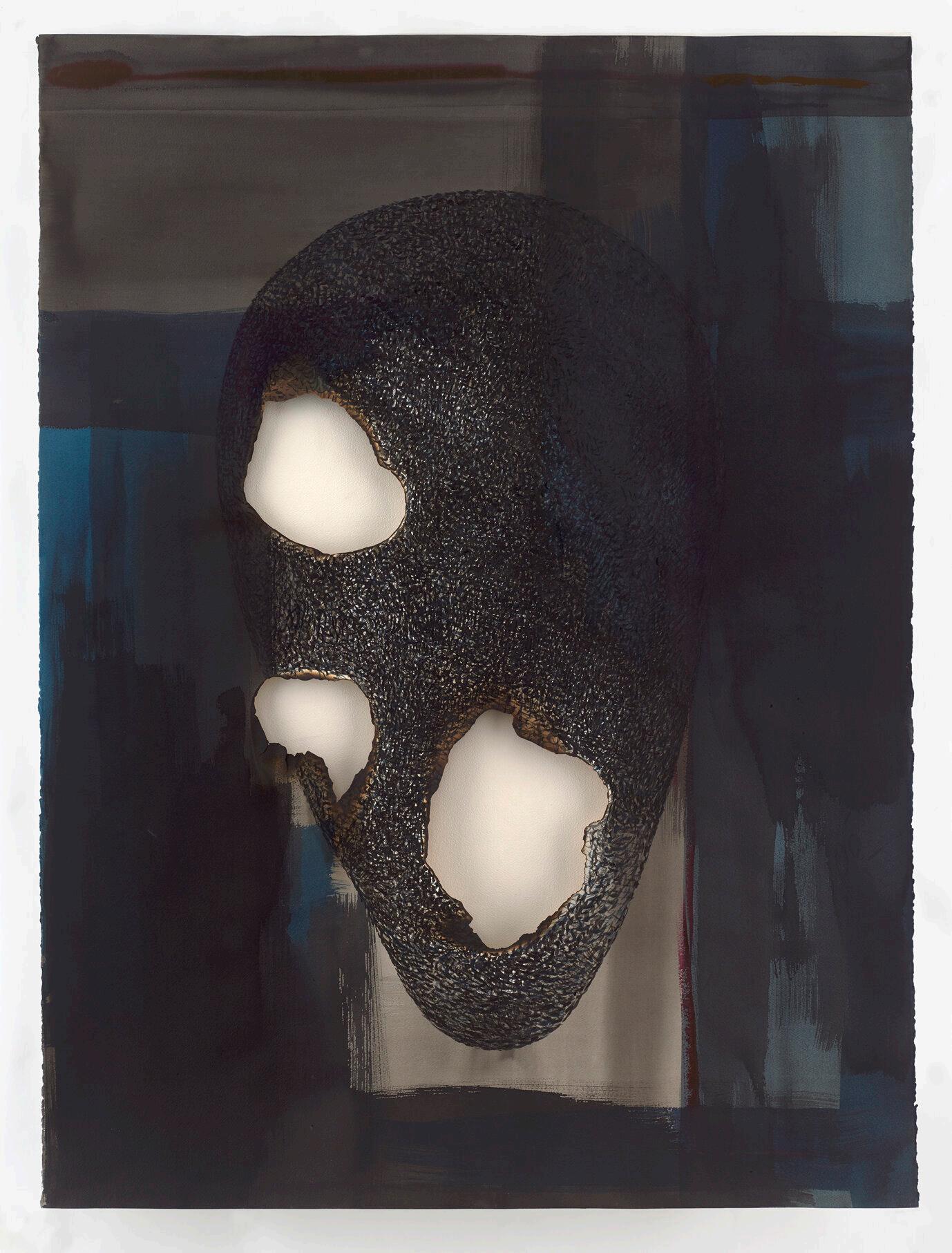
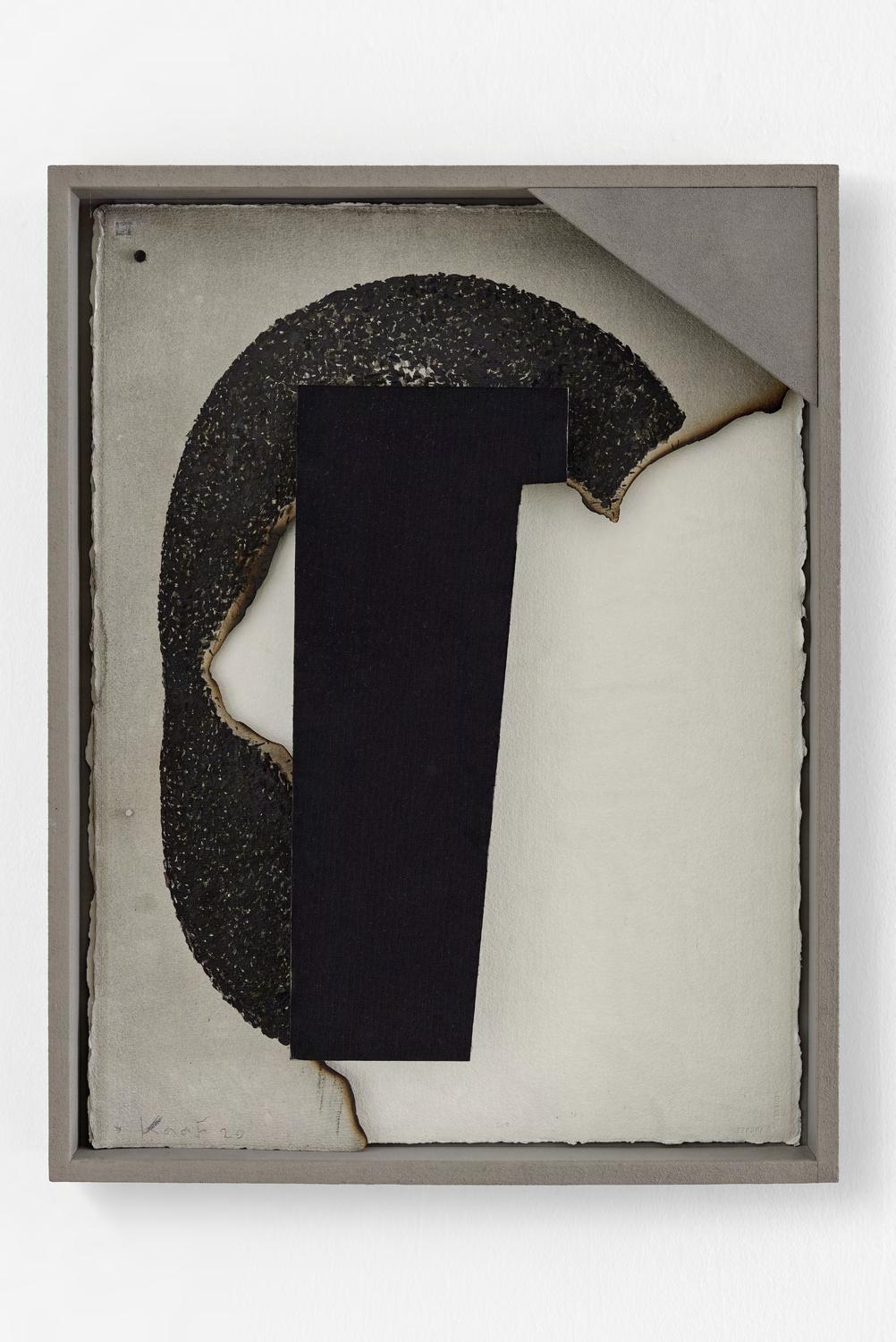
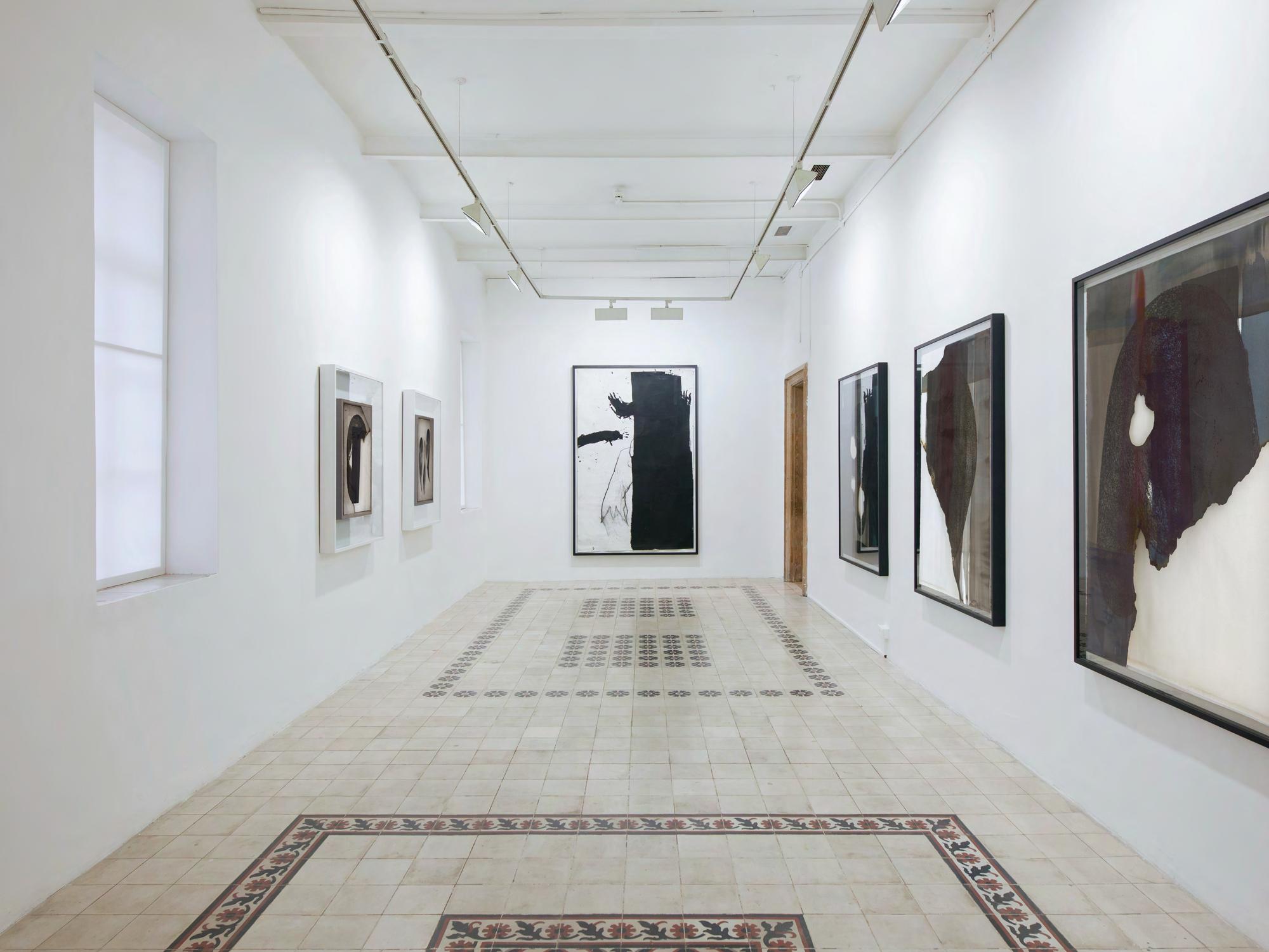
The abstract art of Ali Kaaf is the result of his interests and dealings with script, architecture, and history. Kaaf’s abstractions are inspired by important cities in his life—Damascus, Beirut, and Berlin—and concepts such as Sufi mysticism and Islamic philosophy. His works explore the fragility and the melancholy of loss, as seen in works such as the Rift (2011-2023) series; large-format works using paper, ink, and fire, characterized by dramatic burnt edges that create skins, or layers, where the spaces are defined by emptiness. The dramatic interruption in the expanse of the canvas creates a play of oppositions; solid and void, presence and absence, action and silence, movement, and stillness; where a sculptural volume is created through a process of meditative destruction.
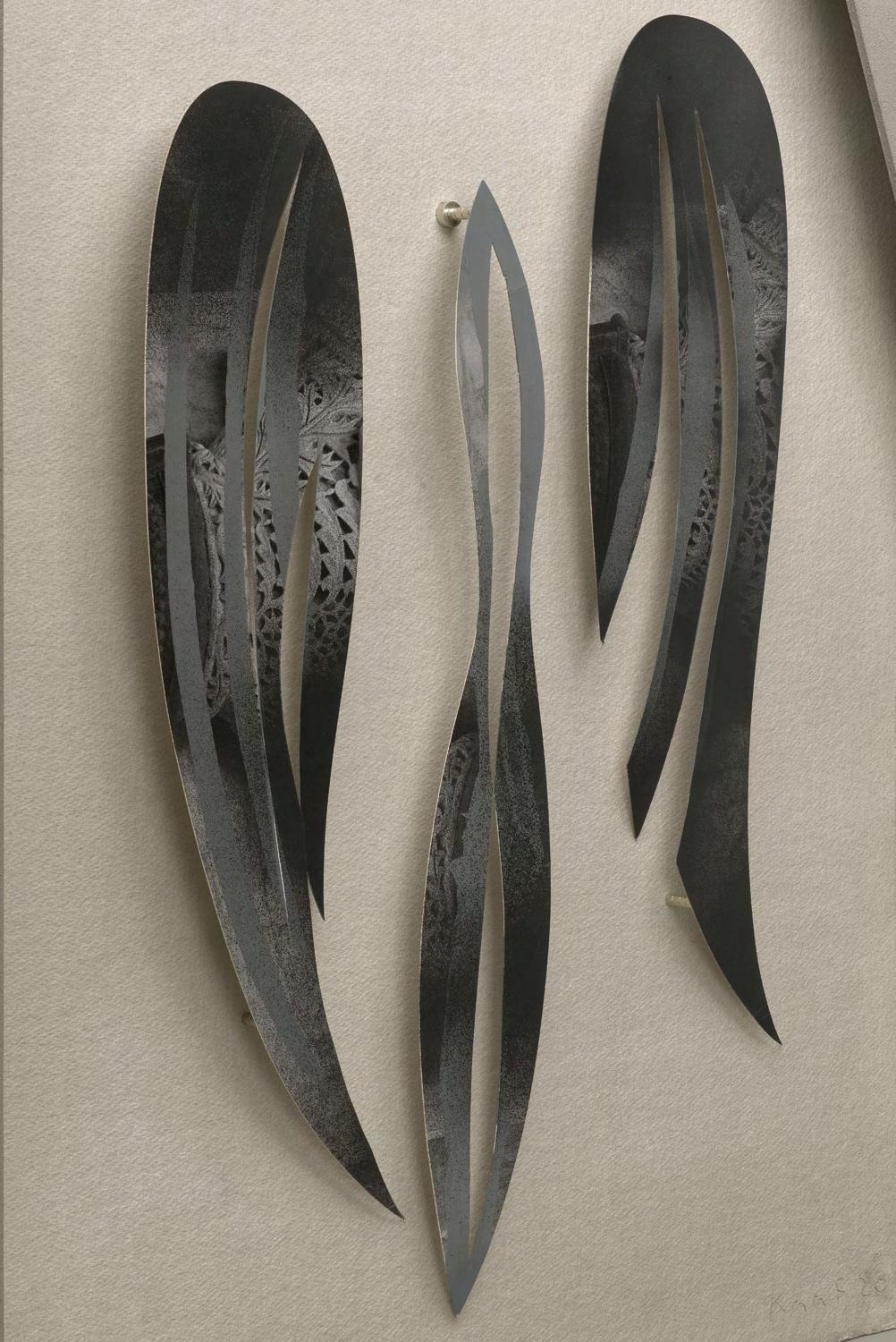
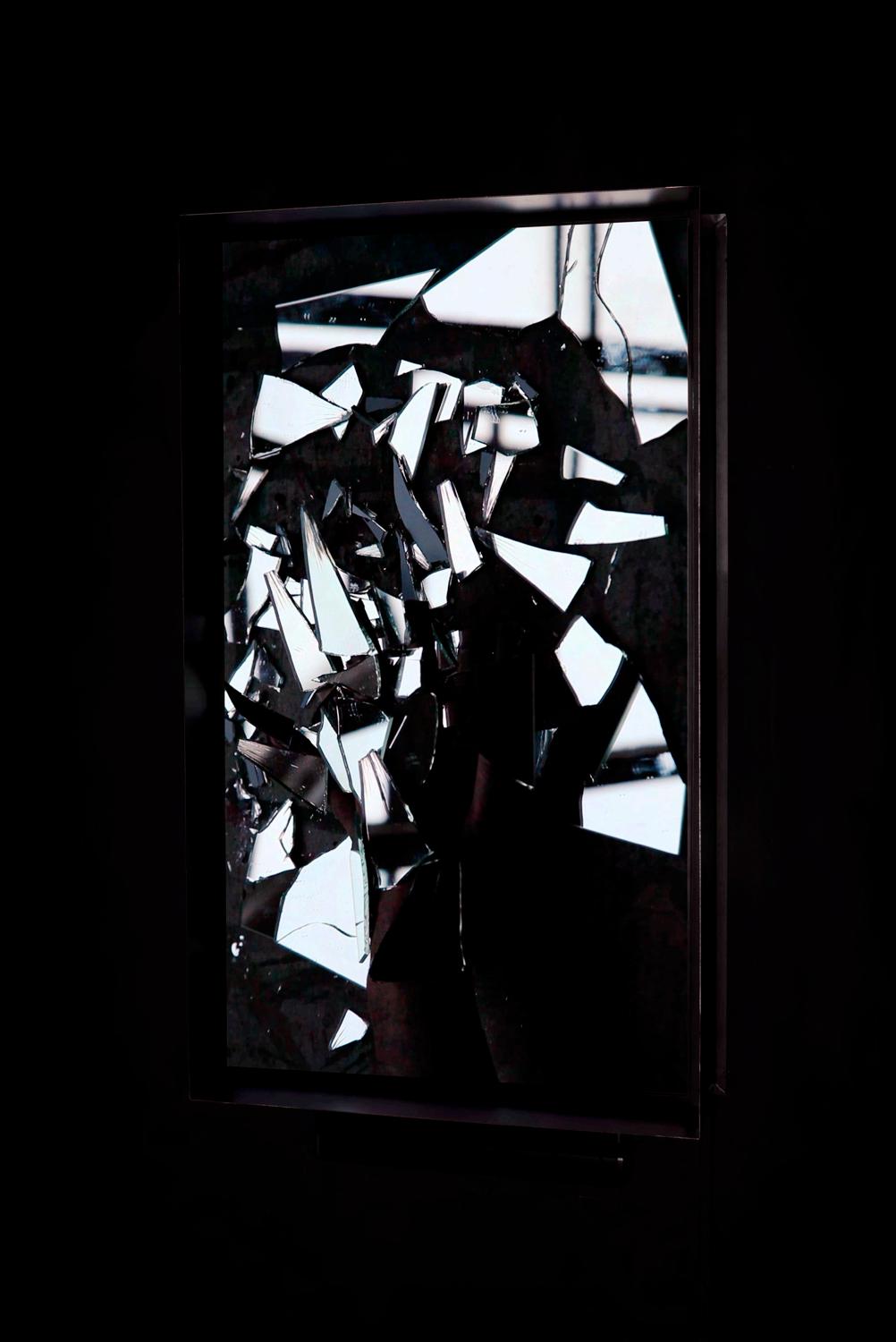
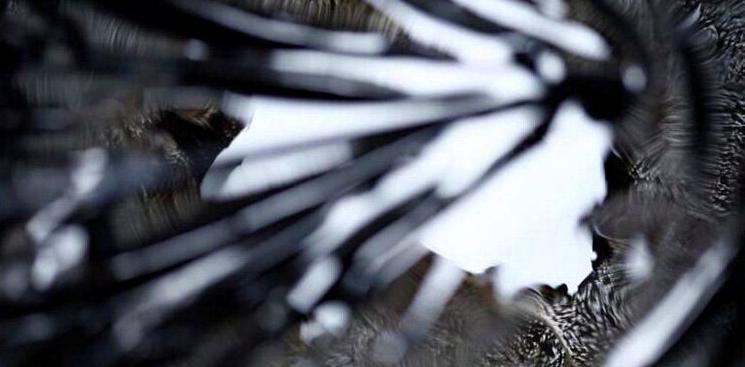
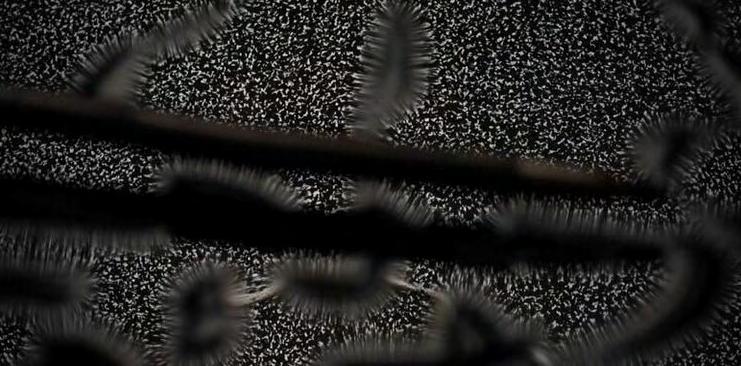
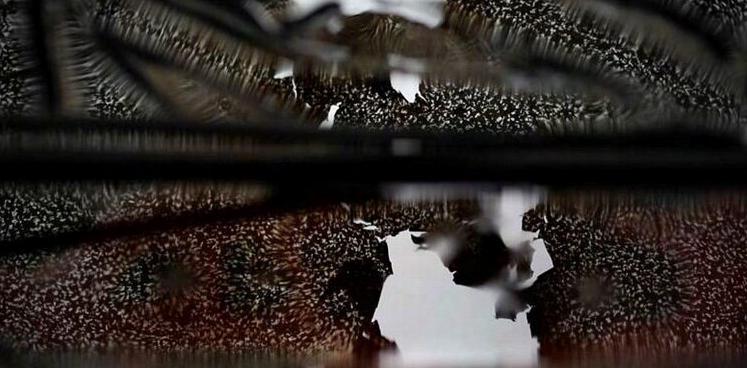
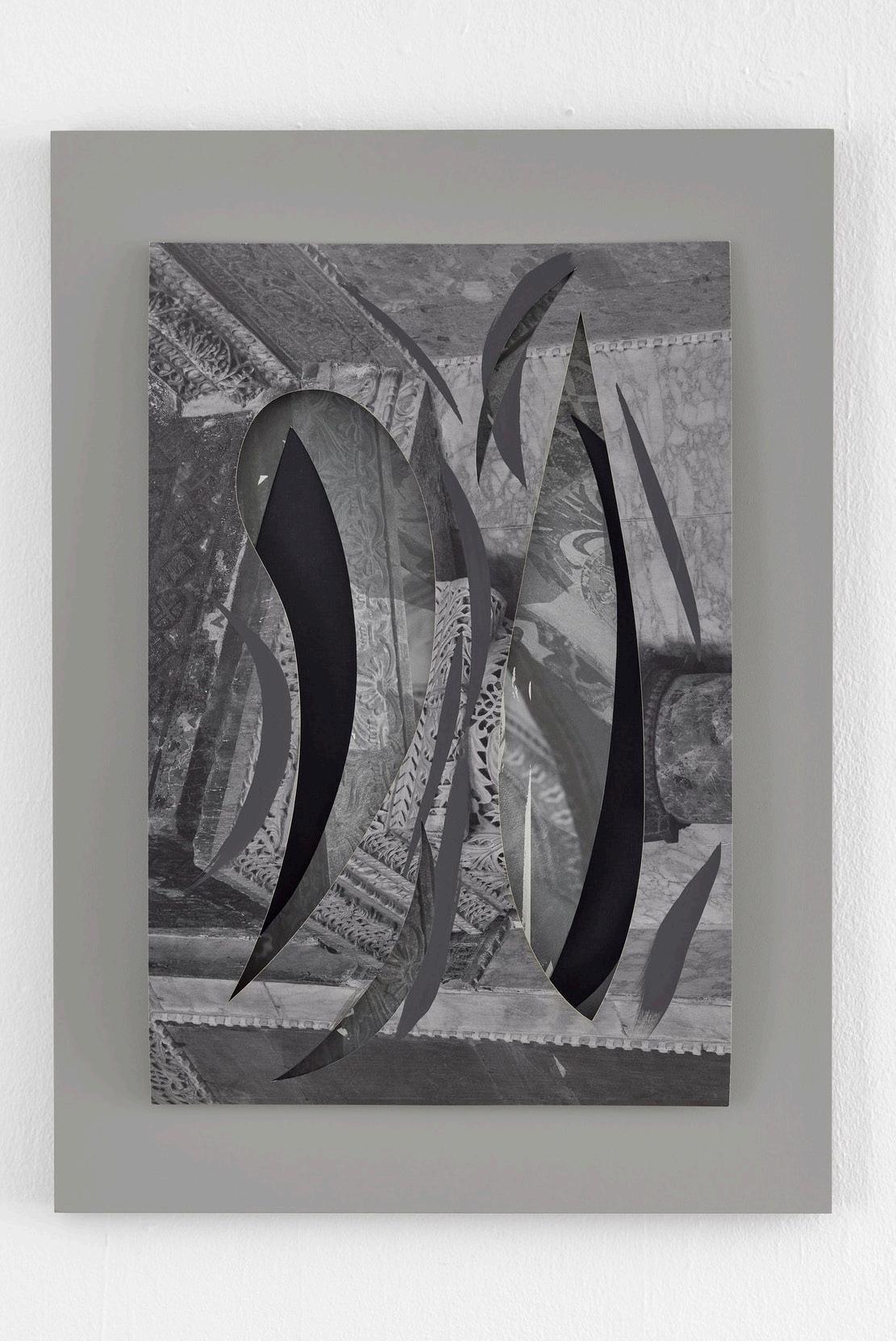
In his series Byzantine Corner (2018-2023), these ruptures occur in the form of knife-to-paper cuts that sever photo-collages of a Byzantine corner taken at the Hagia Sophia in Istanbul; an architectural moment reminiscent of the artist’s own first experiences with historical buildings in Syria. Contrasting this are two video works Box of Pain (2016) and Scherben Mantra (2014) that reveal the emotions with which the artist contends with Syria today. Using a similar visual language but new techniques, the video works investigate the spatial and visual relationship between home and exile.
At the center of this exhibition, Kaaf presents a new commission titled I Know the Emptiness of this House (2023), a spatial installation reflecting on Qusair Amra, the historical building built during the Umayyad era (between 723 and 743 AD) by Walid Ibn Yazid in the eastern deserts of Jordan. Built to be a hammam (bathhouse), observatory, and hunting lodge, the small structure was constructed almost as an instrument for the purpose of leisure, pleasure, and connection to the divine. The installation relies on numerology and geometric abstraction of the form and scale of this unique historical site.
The installation and exhibition, I Know the Emptiness of this House, is a verse from a poem written by Walid Ibn Yazid, a fluent poet and lover of art. It follows a previous commission by the Pergamon Museum in Berlin, titled I Am a Stranger. Twofold a Stranger (2021), in which Kaaf attempts to deconstruct and reconstruct the displacement of the Mshatta facade.
R: Your work connects history and archaeology with a profound sense of personal identity. How did you, as a Syrian artist living in Berlin, come to make the work I am a stranger Twofold a stranger which was done reflecting on Qasr Mshatta, an early Umayyad castle, displaced from Jordan and taken to the Pergamon Museum in Berlin?
A: As a museum, the Pergamon was built at a time when the first era of colonialism was coming to an end, and there was an idea to make a monumental museum, not only to contain small objects, but also to include monumental slices of architecture. In a way, the facade of Qasr Mshatta is encased as a space within another space.
When I start working on any project that has a historical or archaeological dimension, I conduct research, but avoid getting lost in too many details. I remain subjective and look at it through a personal lens. After all, I’m not a research artist or a historian or archaeologist. My interest in history stems from it being a reflection of my personal journey.
I have a strong affinity to the landscape where I grew up, in Damascus and in the south of Syria, where I often visited with my family, and where there is a wealth of Roman and Byzantine archaeological sites and ruins. Often, in villages, these sites are not strictly protected, and are therefore openly accessible. For a child growing up in that environment, these ruins were part of nature, and became part of my daily lived experience.
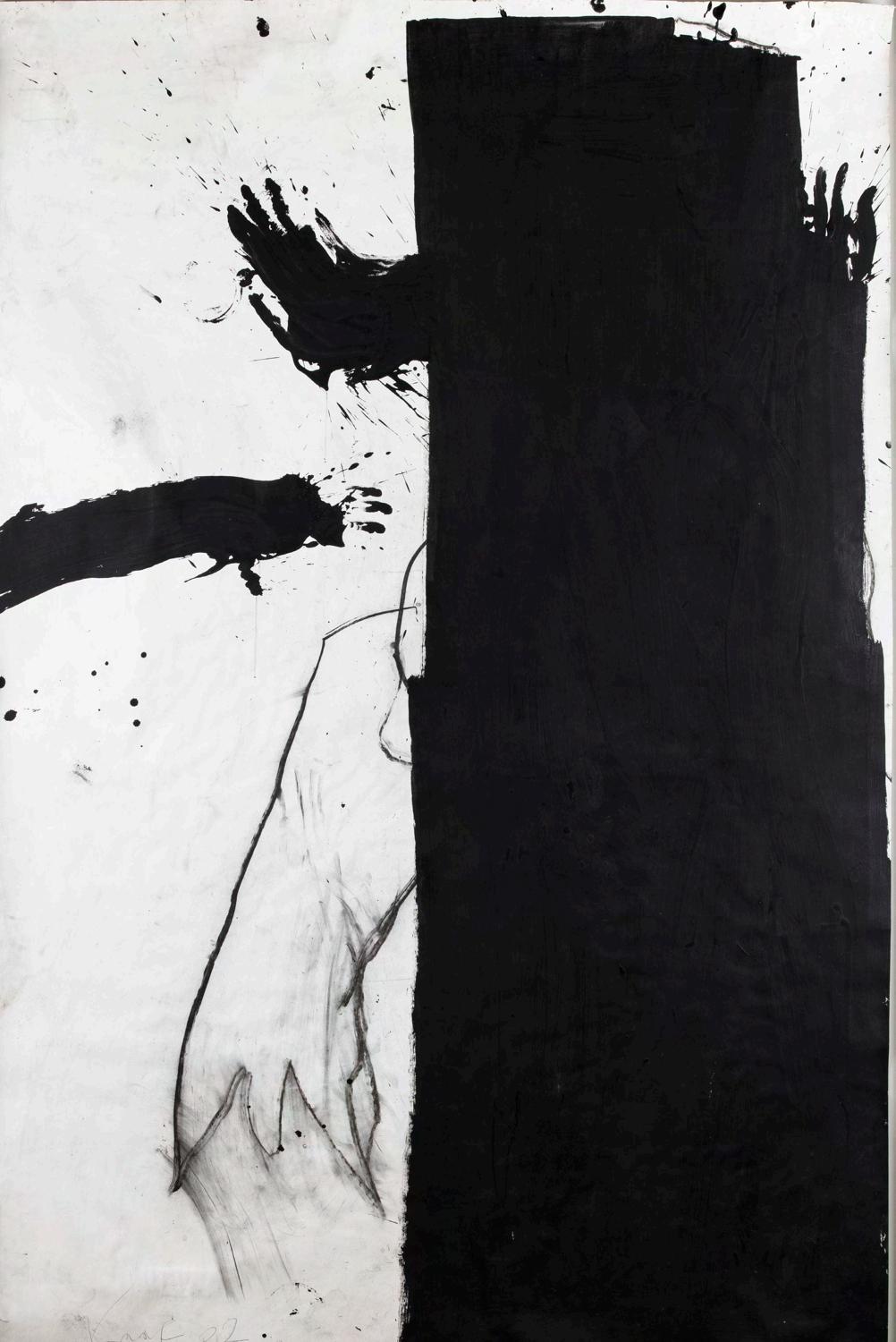
pigment and charcoal on paper, The Khalid Shoman Collection.
The way the facade of Qasr Mshatta is locked in becomes symbolic of the questions that trouble me regarding notions of modernity, and the control of historical narratives.
When I was researching Qasr Mshatta, I was in Berlin, far away from Jordan, the place of origin from which the Qasr was taken. Because of this distance, I had to rely on memories of my relationship with this region having grown up not too far away, in Damascus. There seemed to be an intertwined destiny; being emotionally tied to the region while being physically present in Berlin. This duality, and the idea of “a space within a space”, and the idea of being “twofold a stranger” was the core of the artwork.
The installation was inspired by the common typology of the mashrabia of the Arab world, which allows you to look at the outside world from an inner space. It is composed of aluminum panels framed by a wooden edge in the shape of a triangle. The panels create fragmented openings, allowing viewers to look at the facade of Mshatta at the Pergamon Museum through cutouts. From the front of the work, you see fragments of familiar photographs, but on the other side, the surface is free of motifs and thus also of narrative. Nevertheless, the numerous fragments form openings that offer a completely free and new way of looking and interpreting this installation. In a way, the work has an “official” facade, and an “unofficial” facade, a feeling of being outside and of being inside. It’s meant to be viewed from all angles.
R: When we talk about the concept of the ‘stranger’, we talk about a disconnect with the idea of ‘home’. When it came to the new installation commissioned by Darat al Funun reflecting on Qusayr Amra, you called it I Know the Emptiness of this House. What is the connection between the two installations and why did you choose this name?
A: The names I use are the result of research and often have very direct meanings, but I like to leave that up to interpretation.
I am always searching for moments of melancholy in classical Arabic and Islamic cultures, and I find it particularly present in poetry. The idea of ruins, the feeling of awe in abandoned spaces — these are common themes in classical Arabic poetry that carry a lot of melancholy and play on notions of memory.
Normally, I wouldn’t be interested in the figures and rulers who lived in or built these structures. In my opinion, it’s not my task to shed light on patriarchy or authority, I usually like to subvert it. But, while doing research on Qusayr Amra, I found the character of Al Walid bin Yazid to be peculiar and mysterious. When I read the poetry he wrote, I saw him as a sensitive figure. His poetry carries a lot of subjectivity – he was an artist, not the typical figure of authority. So the phrase “I know the emptiness of this house” was taken from his poetry.
The name, “I am a stranger. Twofold a stranger,” is a phrase from a poem by the 10th century Sufi philosopher, Abu Hayyan al-Tawhidi. So, “I know the emptiness of this house” responds to that in a way. If we consider the installation at the Pergamon as posing a question, then perhaps this is the answer. They both start with the word “I”; they’re both a reflection of myself.
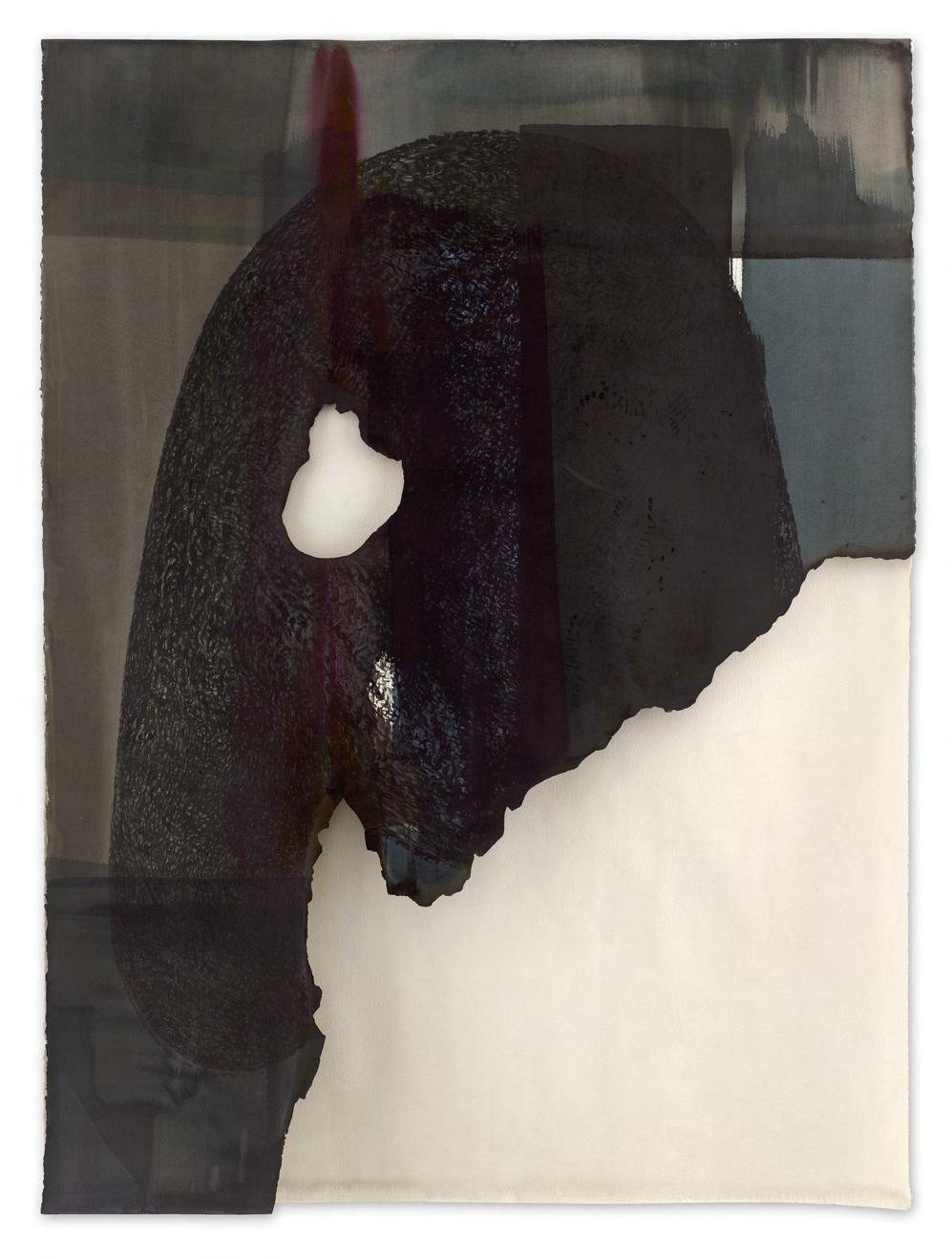
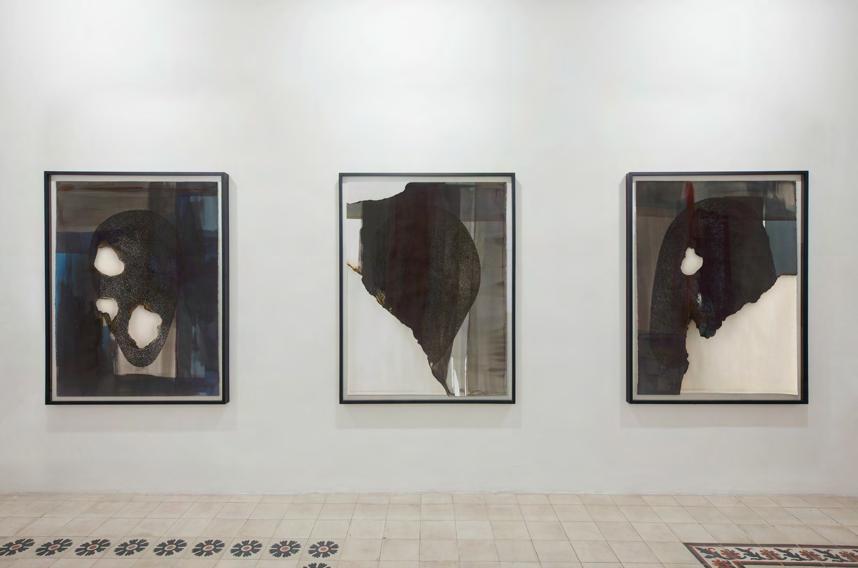
From right to left: Rift 8, 2019 Rift 10 2019 Rift 9, 2019 Rift 10 2019, ink and burning on handmade paper.
R: Qusayr Amra is a unique structure, not just as an archaeological site, but even for its time. What elements of Qusayr Amra’s unique architectural typology, scale, and form resonated with you and what did you translate into the installation?
A: The most striking elements that stand out in Qusayr Amra are the frescoe-covered walls on the inside of this architectural mass. Frescoes are painted using powder-based pigments, and over the years, time erodes the image. This process of erosion and erasure is one that I often invite into my work, often through the use of fire and burning paper. I am interested in the visual effect of eroded material, and in presence and void. The disappearance of material over time carries a feeling of melancholy and ruin that drives the work.
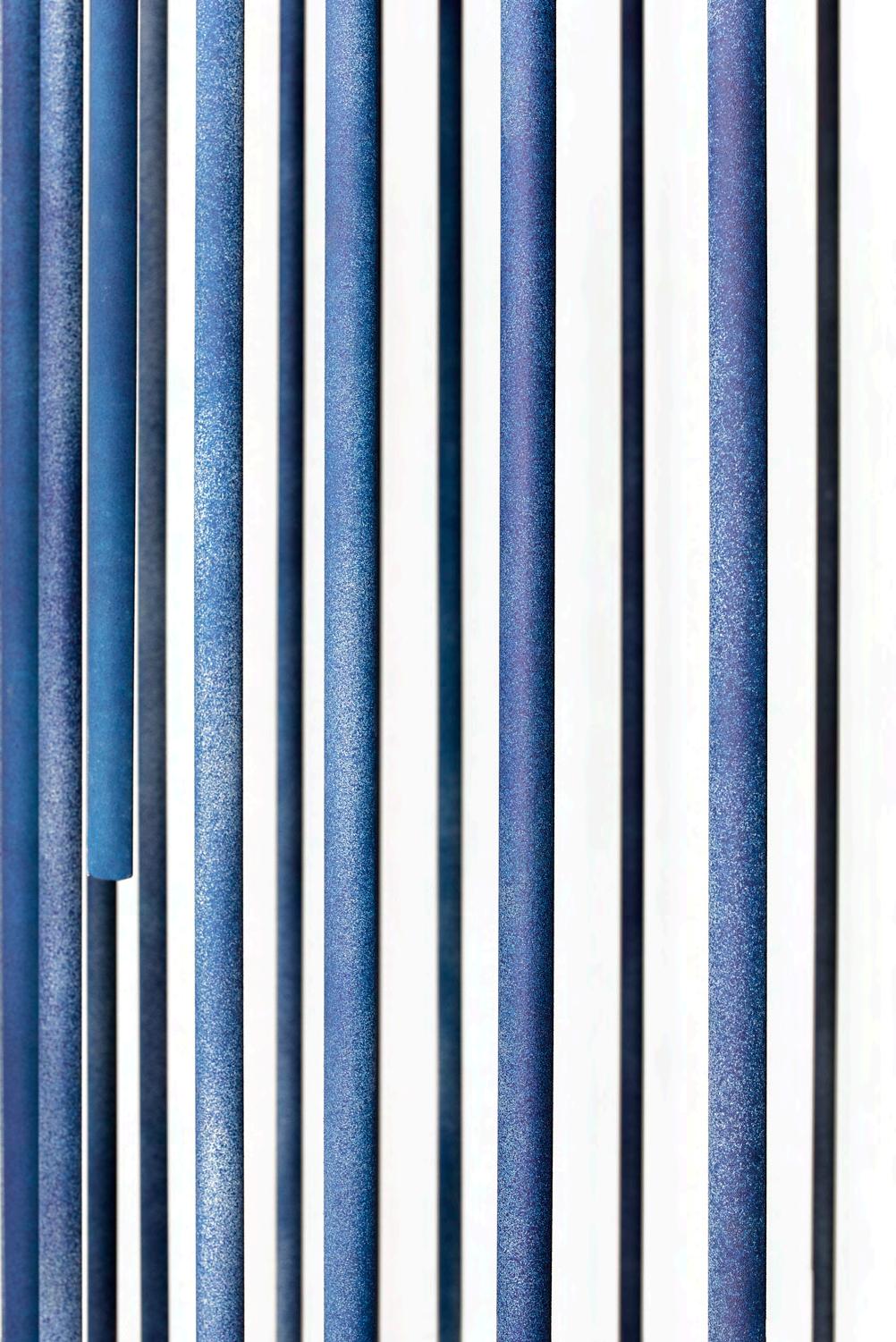
Each artwork I conceive of is composed of a body that sits within space, and has a surface or skin. To me, it was this eroded skin of Qusayr Amra, with its shades of blue azure that fascinated me. The blue azure is a dye that was quite
expensive at the time of building Qusayr Amra and is a reflection of the wealth they were living in. It’s an indication of luxury.
Inspired by this, I applied a coated blue powder to the rods of the installation to create a texture that only appears when you come very close to the surface of the work. The rods create a play of oppositions: solid and void, presence and absence, action and silence, movement and stillness. They lead to this feeling of remains and emptiness.
For the body of the work, or the form of the installation, I highlighted the parallel between Qusayr Amra and the Main Building at Darat al Funun which housed the work. The library of the Main Building, designed by Ammar Khammash, has a three-vaulted ceiling like that of Qusayr Amra. So, that was my starting point — to mirror the vision of the architects. I chose to orient the shape of the three vaults with a verticality rather than the original horizontal position to ‘liberate’ it, in a way.
R: We spoke about the form, the surface, and the body, but what about the essence of this building? What’s the meaning behind the work as it relates to the building’s unique function as an informal and private place; a hammam (bathhouse), observatory, and hunting lodge?
A: After visiting Qusayr Amra during my residency at Darat al Funun, I returned to Berlin – where I had time to reflect, research, and develop my thoughts about the place, and what it meant to me personally. Like you said, Qusayr Amra was a place for leisure and pleasure and this is clearly reflected in the frescoes of the building. It was designed as a place tucked away from the public eye, a place for freedom and liberation, located at a distance from Damascus, which was the center of the Umayyad Empire, and disconnected from the common cultural and social norms of urban life. There’s an informality to it.
R: It’s a challenge to work on a place like Qusayr Amra, which can be easily misread by an uninformed audience through the lens of orientalism and with some contemporary bias. There’s a tendency to exoticize early Arabic or Islamic cultures, when in fact history reveals a very natural trajectory for the evolution of cultural norms.
A: Through art, we can try to break the subjectivity of such perceptions, to be able to read a place like this with freedom and without lending to taboos. To many people looking at the work, they may find it hard to relate back to Qusayr Amra. But we have to not be lazy or literal when we work on topics of history and identity. We have to try to create shapes beyond the orientalist view of what Islam, or history, or identity should and should not look like. There is no must. We need to be at liberty to interpret it, to keep it alive, and to not subject it to a museumification or represent it solely as a straightforward archaeological relic.
R: To put it more generally, I Know the Emptiness of this House, is both a figurative and geometric abstraction of Qusayr Amra. As an artist, your work, whether in drawings of paper and ink to photography, sound, video, and installations, always tends towards abstraction. Is there a commonality in the approach across media?
A: In our time, I’m not sure there is a really clear definition of an “abstract artist” as opposed to a figurative artist. In my process, there’s always a sense of urgency; something from within that needs to come out. I approach each topic I work on differently, but I do so with caution and a bit of reservation. I never immerse myself in it or integrate with it fully. I look for provocations or questions and I create connections. This allows me to work on a variety of subjects, as opposed to embracing one subject fully. I start with a thread and take it elsewhere.
The act of making the work is therefore disconnected from the original narrative. When I create an artwork, I am interested in producing a physical and emotional experience in space. I don’t want people to simply “read” something in a
Silence 2020, ink and burning on handmade paper, metal plate, wood and sand.
literal sense. I’m interested in more subtle forms of expression; solid and void, light and dark, the surface and the body. I like to create a physical experience and provocation with the work. For the viewer, or for someone on the receiving end, art opens up to existential levels beyond the original message.
For many years I have observed the connection between fire and paper; how the paper reacts to burning, and how the fire shapes and changes the paper. In the series Rift this process creates a kind of depth to the painting, where the burnt edges reveal layers beyond. As a result, it felt like a natural trajectory to move more towards working with collage, as in the series Byzantine Corner. With this kind of layering and depth, an image transforms to become an object-like sculpture.
The video installations that are presented in the exhibition represent my emotions regarding what transpired in Syria. In making these works, I used a language of abstraction to speak for the feelings of violence and pain around us. I worked with liquid and reflections, fragmented mirrors and echoes of sound, composed in a complex layering.
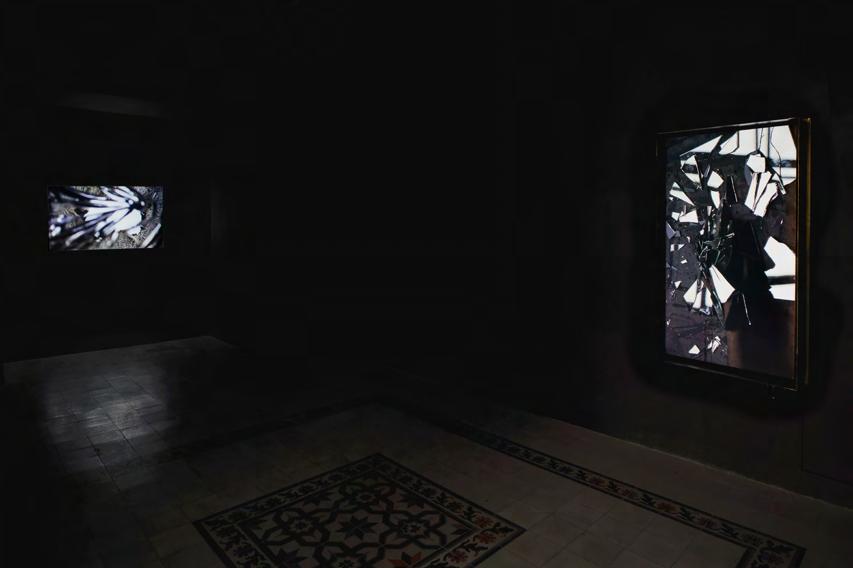
Scherben Mantra, 2013 video, 6 minutes.
From right to left: Scherben Mantra, 2013 video, 6 minutes.
Box of Pain 2016, video and sound installation, 6 minutes.
R: In the case of I Know the Emptiness of this House you were also inspired by Sufism and Islamic philosophy. Can you explain how you used numerology in conceiving of this installation?
A: Islamic Sufism is one of many pillars that shape Islamic thought and deals greatly with existentialism. In its philosophy, one can find an abundance of inspiring connections with music, poetry, and architecture.
The numerous long bars in the installation testify to the potency of the number nineteen in Islamic numerology. Multiples of nineteen feature frequently in sacred texts — one example being the phrase Bismillah Arrahman Arrahim (In the name of Allah, most gracious, most merciful) which is spelled
using nineteen letters. So I built the installation around this number; the number of rods, their circumference, the length of the cuts, and the circumference of the circular form. It’s a sacred geometry that drives the poetics of the installation.
There’s also the additional layer of sound which I added to the installation. Sound and light strengthen and activate our perception by adding the dimension of time to space. I collaborated with Khaled Kurbeh, a composer, as well as a nai player who produced sounds by blowing into the rods in the installation. The looping sounds, although distant and abstracted, carry a rhythm that is also based on the number nineteen, sharing the same resonance and composition as the installation.
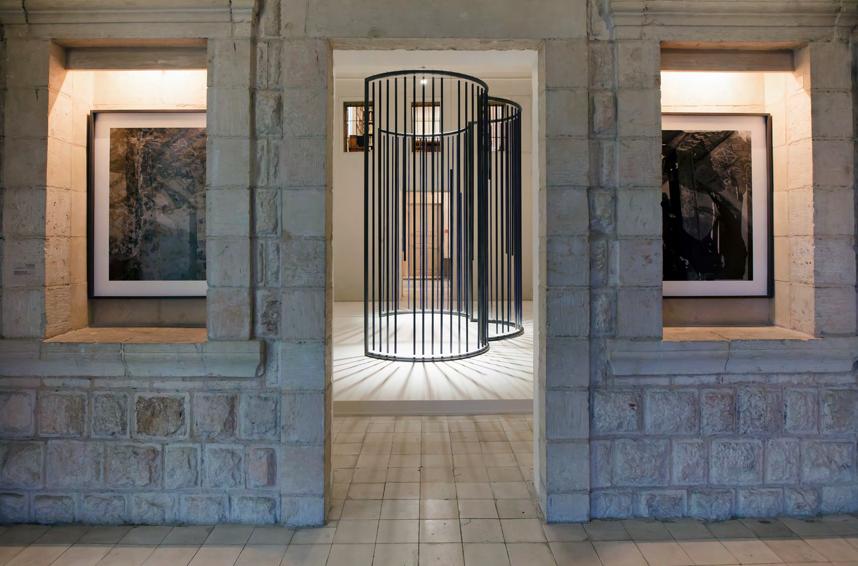
From right to left: The Byzantine Corner 8 2018. I Know the Emptiness of This House, 2023. The Byzantine Corner 9 2022.
I Know the Emptiness of This House, 2023, powder coated and raw metal pipes.
R: You first came to Darat al Funun as a student in the Summer Academy in 1999, studying under Marwan, and then again in 2004 to do your first ever solo exhibition. Now, in 2023, you’re here presenting an exhibition such as this, and in a building such as the Main Building, which in and of itself is an archaeological and historical site. How has your relationship with Darat al Funun been part of your influences and journey?
A: When I first came to Amman in 1999, it was after I finished studying in Beirut. When I was part of the first Summer Academy under the guidance of Marwan, I was relatively young, merely 22 years old.
This was a really important stage in my life because at that point, Darat al Funun was like an oasis and we were thirsty. Back then, the geographical distances between Beirut, Damascus and Amman made it hard to connect with other artists. It’s not like it is today with the internet. It was harder to be aware of what was going on in each city.
My first experience in Darat al Funun left a strong impression on me. There are things that stuck with me and that I carry with me until today. At Darat al Funun, I saw artworks by Iraqi and Palestinian artists for the first time — works by Shaker Hassan Al Said and Kamal Boullata. These were really fundamental moments for me. If it weren’t for the Summer Academy, I would’ve never met fellow young Arab artists from different cities: from Gaza, from 1948 Palestine, and from Amman.
Through art and culture, we have the privilege and ability to generate and engage in important conversations. This kind of knowledge exchange is a major motivation for me to continue as an artist, despite all of the financial and emotional challenges of this profession.
For me, Darat al Funun, as a space, as a site, and as a vision, carries a similar motivation. Despite working against obstacles, it embodies strong values and a belief that yes, we can make a difference. For me, exhibiting in such a space has great meaning and value – much more so than exhibiting in institutions around the world.
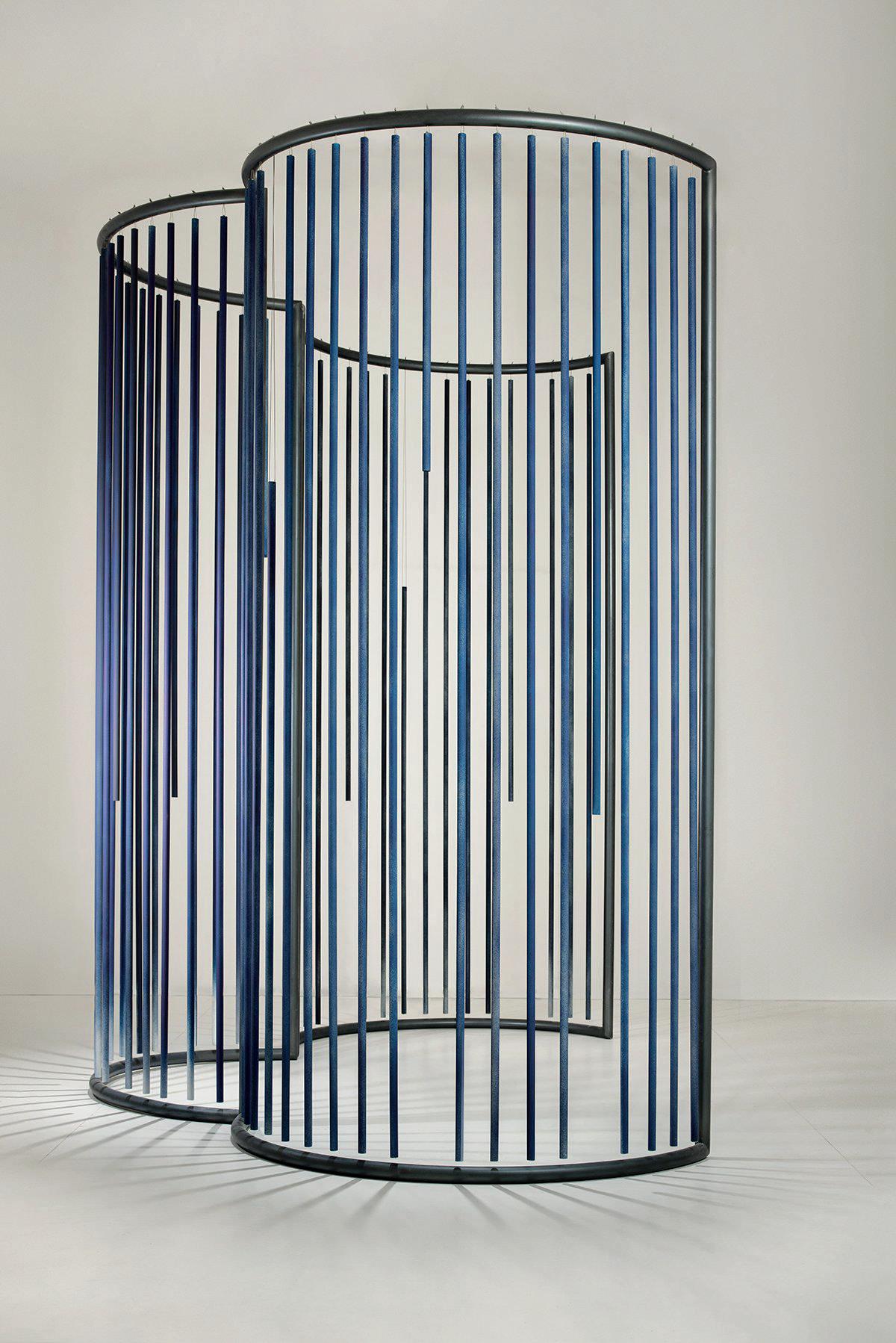
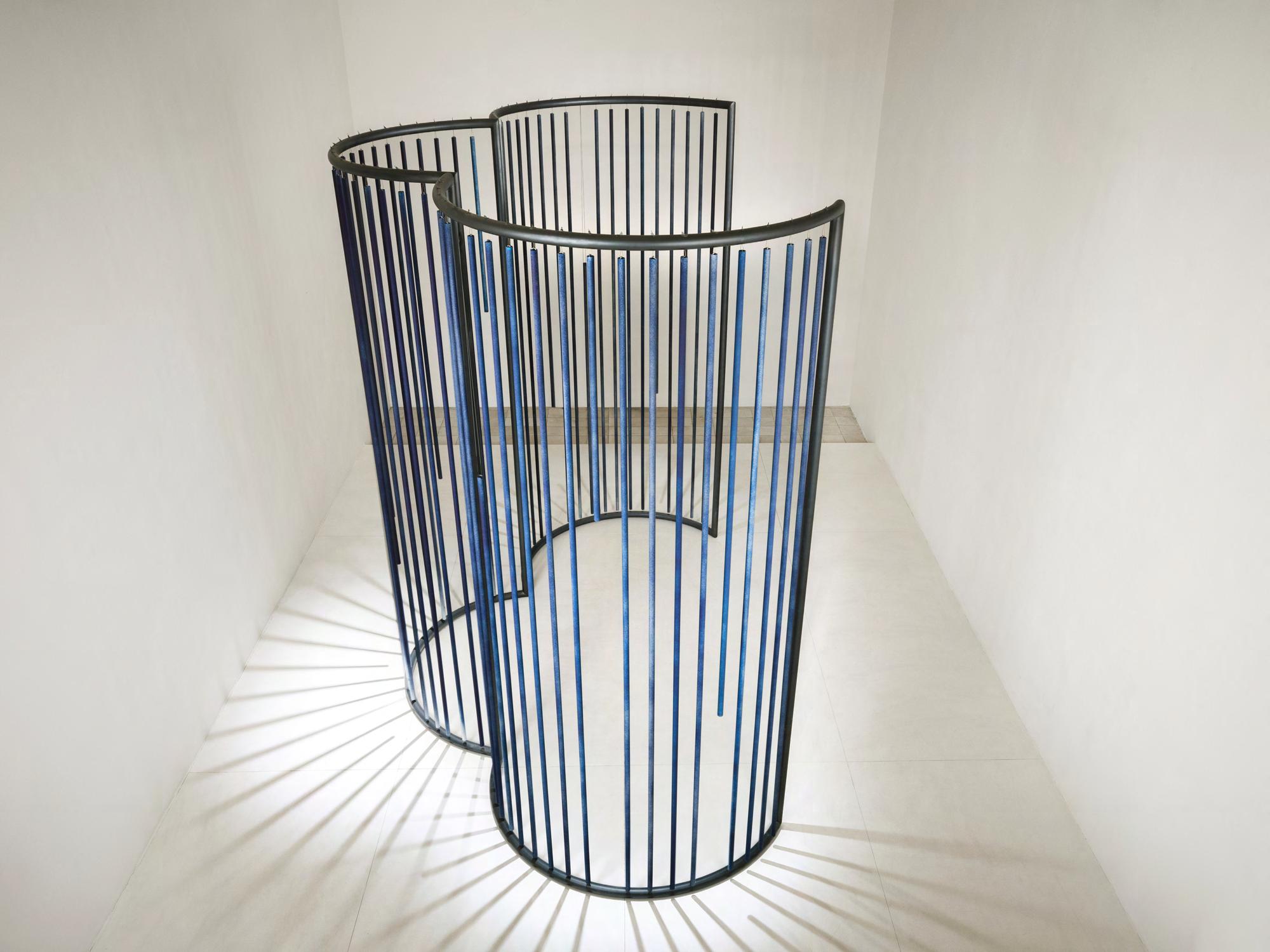
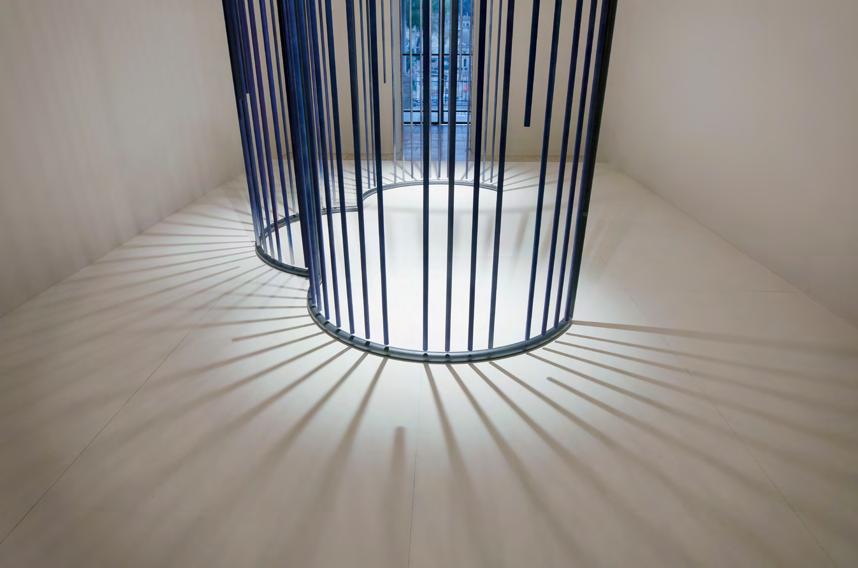
I Know the Emptiness of This House, 2023, powder coated and raw metal pipes.
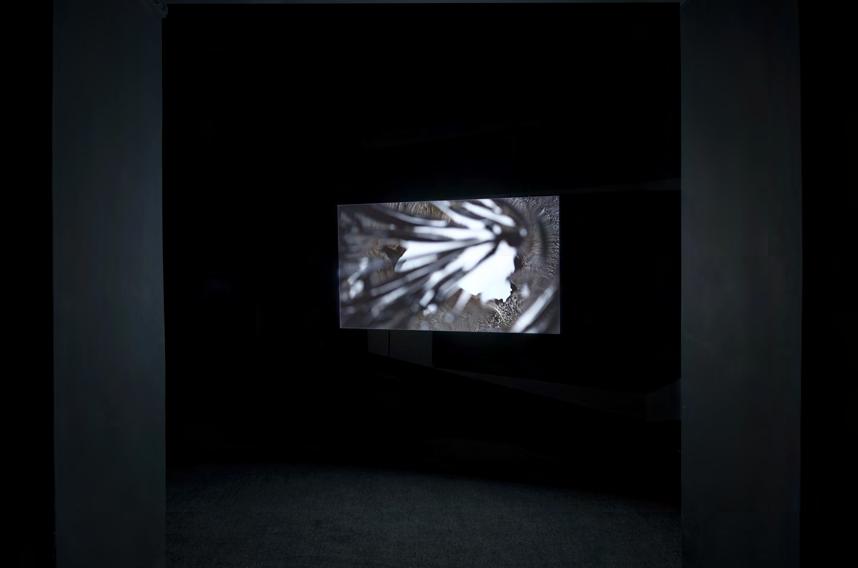
Box of Pain 2016, video and sound installation, 6 minutes.
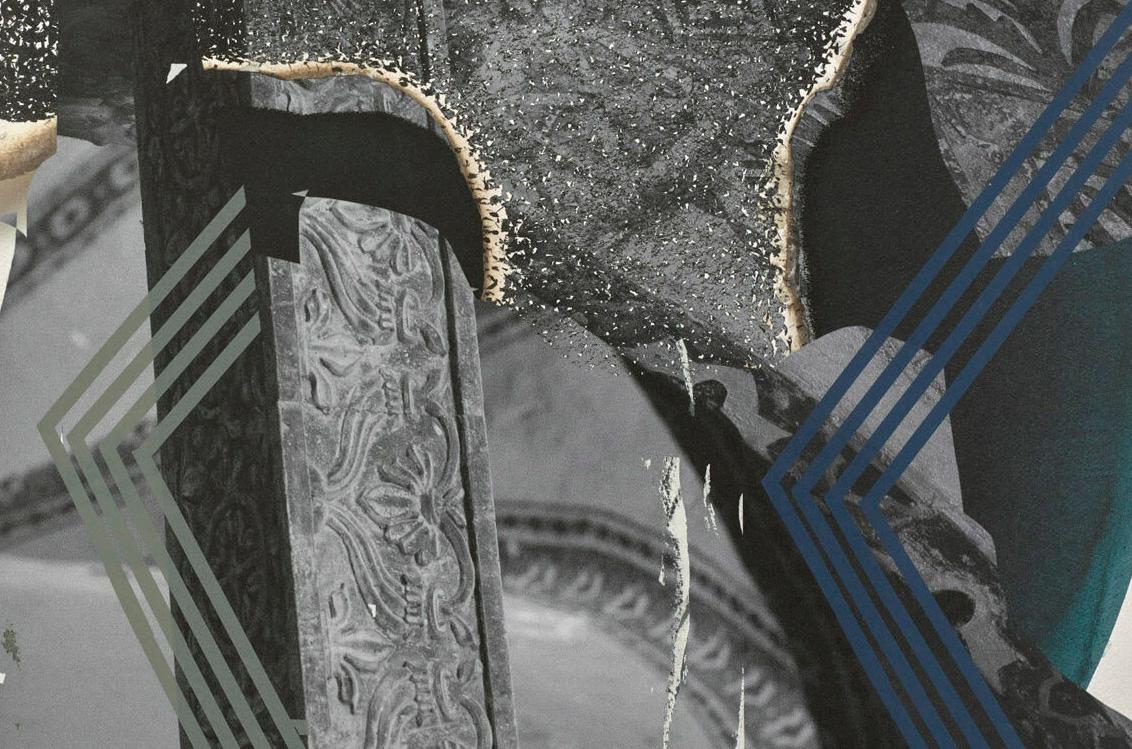
The Byzantine Corner 10, 2023, gouache, incisions with burning, inkjet print on art paper. The Byzantine Corner N 7 2018 photomontage, silkscreen, inkjet print on Hahnemühle
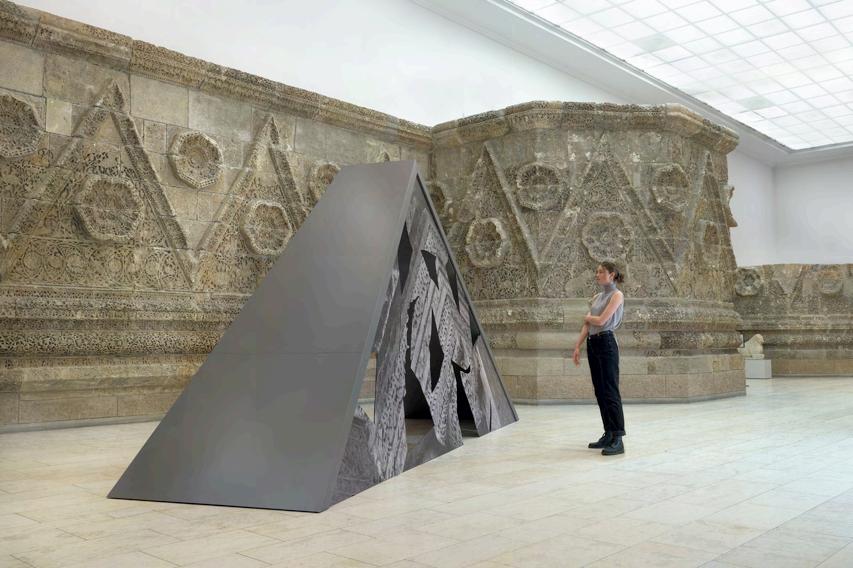
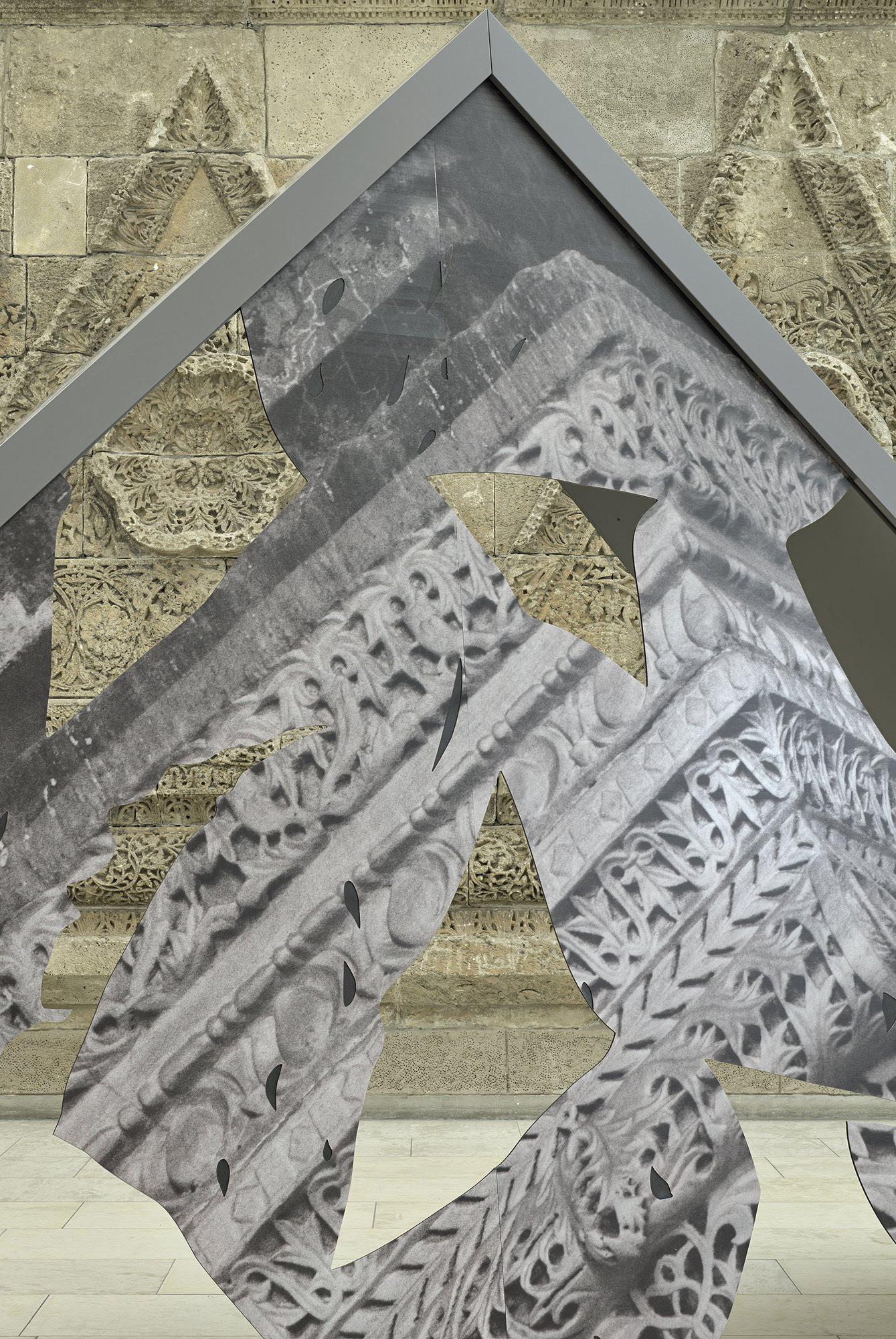
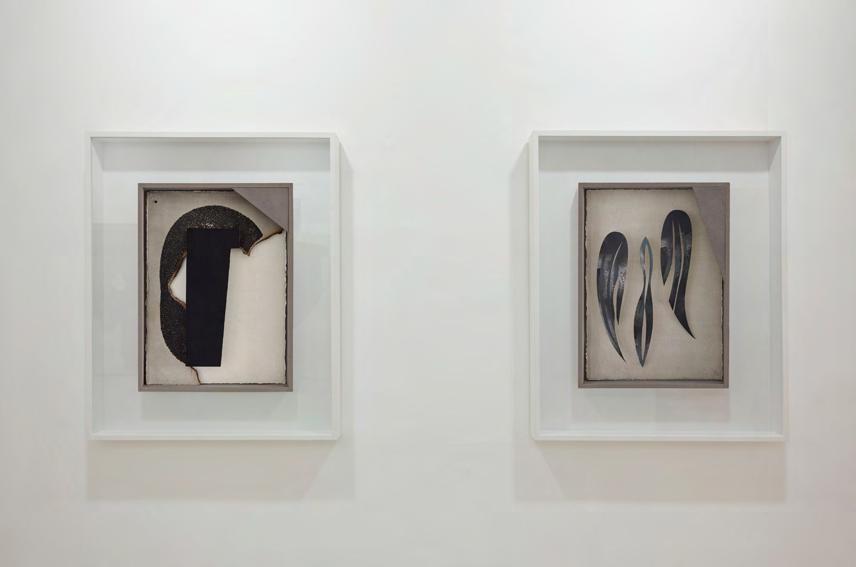
From right to left:
One 2020, photograph, gouache, spray, inkjet print with incisions, metal plate, wood and sand. Silence, 2020, ink and burning on handmade paper, metal plate, wood and sand.
One, 2020, photograph, gouache, spray, inkjet print with incisions, metal plate, wood and sand.