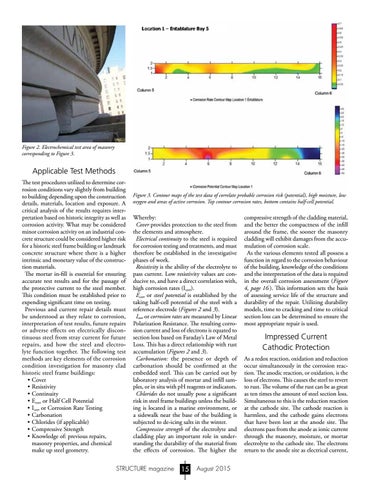
Figure 2. Electrochemical test area of masonry corresponding to Figure 3.
Applicable Test Methods The test procedures utilized to determine corrosion conditions vary slightly from building to building depending upon the construction details, materials, location and exposure. A critical analysis of the results requires interpretation based on historic integrity as well as corrosion activity. What may be considered minor corrosion activity on an industrial concrete structure could be considered higher risk for a historic steel frame building or landmark concrete structure where there is a higher intrinsic and monetary value of the construction materials. The mortar in-fill is essential for ensuring accurate test results and for the passage of the protective current to the steel member. This condition must be established prior to expending significant time on testing. Previous and current repair details must be understood as they relate to corrosion, interpretation of test results, future repairs or adverse effects on electrically discontinuous steel from stray current for future repairs, and how the steel and electrolyte function together. The following test methods are key elements of the corrosion condition investigation for masonry clad historic steel frame buildings: • Cover • Resistivity • Continuity • Ecorr or Half Cell Potential • Icorr or Corrosion Rate Testing • Carbonation • Chlorides (if applicable) • Compressive Strength • Knowledge of: previous repairs, masonry properties, and chemical make up steel geometry.
Figure 3. Contour maps of the test data of correlate probable corrosion risk (potential), high moisture, low oxygen and areas of active corrosion. Top contour corrosion rates, bottom contains half-cell potential.
Whereby: Cover provides protection to the steel from the elements and atmosphere. Electrical continuity to the steel is required for corrosion testing and treatments, and must therefore be established in the investigative phases of work. Resistivity is the ability of the electrolyte to pass current. Low resistivity values are conducive to, and have a direct correlation with, high corrosion rates (Icorr). Ecorr or steel potential is established by the taking half-cell potential of the steel with a reference electrode (Figures 2 and 3). Icorr or corrosion rates are measured by Linear Polarization Resistance. The resulting corrosion current and loss of electrons is equated to section loss based on Faraday’s Law of Metal Loss. This has a direct relationship with rust accumulation (Figures 2 and 3). Carbonation: the presence or depth of carbonation should be confirmed at the embedded steel. This can be carried out by laboratory analysis of mortar and infill samples, or in situ with pH reagents or indicators. Chlorides do not usually pose a significant risk in steel frame buildings unless the building is located in a marine environment, or a sidewalk near the base of the building is subjected to de-icing salts in the winter. Compressive strength of the electrolyte and cladding play an important role in understanding the durability of the material from the effects of corrosion. The higher the
STRUCTURE magazine
15
August 2015
compressive strength of the cladding material, and the better the compactness of the infill around the frame, the sooner the masonry cladding will exhibit damages from the accumulation of corrosion scale. As the various elements tested all possess a function in regard to the corrosion behaviour of the building, knowledge of the conditions and the interpretation of the data is required in the overall corrosion assessment (Figure 4, page 16 ). This information sets the basis of assessing service life of the structure and durability of the repair. Utilizing durability models, time to cracking and time to critical section loss can be determined to ensure the most appropriate repair is used.
Impressed Current Cathodic Protection As a redox reaction, oxidation and reduction occur simultaneously in the corrosion reaction. The anodic reaction, or oxidation, is the loss of electrons. This causes the steel to revert to rust. The volume of the rust can be as great as ten times the amount of steel section loss. Simultaneous to this is the reduction reaction at the cathode site. The cathode reaction is harmless, and the cathode gains electrons that have been lost at the anode site. The electrons pass from the anode as ionic current through the masonry, moisture, or mortar electrolyte to the cathode site. The electrons return to the anode site as electrical current,