How Office-to-Residential Conversions Are Reshaping Manhattan Real Estate
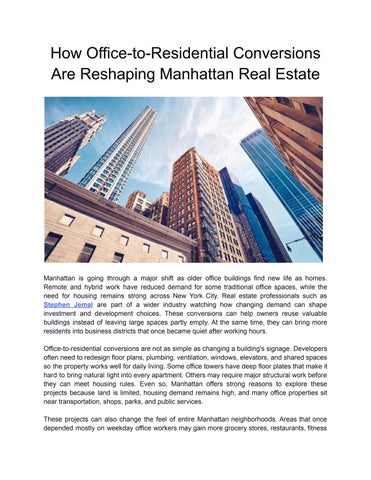
Manhattan is going through a major shift as older office buildings find new life as homes. Remote and hybrid work have reduced demand for some traditional office spaces, while the need for housing remains strong across New York City. Real estate professionals such as Stephen Jemal are part of a wider industry watching how changing demand can shape investment and development choices. These conversions can help owners reuse valuable buildings instead of leaving large spaces partly empty. At the same time, they can bring more residents into business districts that once became quiet after working hours. Office-to-residential conversions are not as simple as changing a building's signage. Developers often need to redesign floor plans, plumbing, ventilation, windows, elevators, and shared spaces so the property works well for daily living. Some office towers have deep floor plates that make it hard to bring natural light into every apartment. Others may require major structural work before they can meet housing rules. Even so, Manhattan offers strong reasons to explore these projects because land is limited, housing demand remains high, and many office properties sit near transportation, shops, parks, and public services. These projects can also change the feel of entire Manhattan neighborhoods. Areas that once depended mostly on weekday office workers may gain more grocery stores, restaurants, fitness
centers, schools, and other services for full-time residents. More people living in former business districts can create evening and weekend activity, which may support local businesses throughout the week. This shift can also make some parts of Manhattan feel more balanced. Instead of separating office zones from residential zones, conversions can create mixed-use communities where people live, work, shop, and spend free time within the same area. For property owners and investors, converting an office building may provide a path forward when traditional leasing becomes difficult. However, each property requires careful study before starting a project. Location, building age, floor depth, window access, zoning rules, construction costs, and housing demand all affect whether a conversion can succeed. City policies and development incentives may also influence the financial outcome. Because Manhattan real estate is expensive, developers must plan carefully and avoid assuming every underused office tower can become profitable housing. The strongest projects usually match the building's physical design with real market demand. The long-term impact of office conversions may reach far beyond individual properties. More successful projects could add housing, reduce unused commercial space, and bring new energy to parts of Manhattan adapting to modern work patterns. They may also encourage planners and developers to rethink how existing buildings can meet changing community needs. As this trend develops, Manhattan housing transformation may become an important part of the city's broader real estate story. Reusing suitable office buildings will not solve every housing challenge, but it can help Manhattan become more flexible, active, and prepared for future changes.