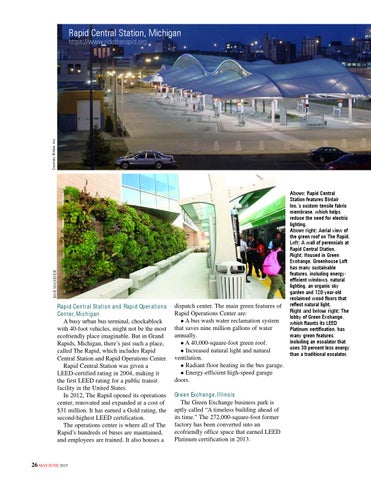
Rapid Central Station, Michigan
DAVE MACKENZIE
Courtesy Birdair, Inc.
https://www.ridetherapid.org
Rapid Central Station and Rapid Operations Center, Michigan A busy urban bus terminal, chockablock with 40-foot vehicles, might not be the most ecofriendly place imaginable. But in Grand Rapids, Michigan, there’s just such a place, called The Rapid, which includes Rapid Central Station and Rapid Operations Center. Rapid Central Station was given a LEED-certified rating in 2004, making it the first LEED rating for a public transit facility in the United States. In 2012, The Rapid opened its operations center, renovated and expanded at a cost of $31 million. It has earned a Gold rating, the second-highest LEED certification. The operations center is where all of The Rapid’s hundreds of buses are maintained, and employees are trained. It also houses a
26 MAY/JUNE 2015
dispatch center. The main green features of Rapid Operations Center are: A bus wash water reclamation system that saves nine million gallons of water annually. A 40,000-square-foot green roof. Increased natural light and natural ventilation. Radiant floor heating in the bus garage. Energy-efficient high-speed garage doors. Green Exchange, Illinois The Green Exchange business park is aptly called “A timeless building ahead of its time.” The 272,000-square-foot former factory has been converted into an ecofriendly office space that earned LEED Platinum certification in 2013.
Above: Rapid Central Station features Birdair Inc.’s custom tensile fabric membrane, which helps reduce the need for electric lighting. Above right: Aerial view of the green roof on The Rapid. Left: A wall of perennials at Rapid Central Station. Right: Housed in Green Exchange, Greenhouse Loft has many sustainable features, including energyefficient windows, natural lighting, an organic sky garden and 120-year-old reclaimed wood floors that reflect natural light. Right and below right: The lobby of Green Exchange, which flaunts its LEED Platinum certification, has many green features, including an escalator that uses 30 percent less energy than a traditional escalator.