Examples of reuse and upcycling may be as small as a family using a plastic disposable grocery bag as a bin liner, or as large as multinational corporations committing to produce zero net waste. For instance, Walmart, the American discount retailer, has announced an aspirational goal of zero waste and claims that more than 80 percent of the materials that flow through the company are diverted from landfills. Upcycling- and reuse-focused companies partner with corporations to help them reduce their ecological footprint. For instance, in Portland, Oregon, Looptworks partners with a diverse group of companies, including clothing manufacturers and airlines, to repurpose their scrap material into high-end bags and luggage. New Jersey based TerraCycle solicits trash, like protein bar wrappers and bicycle chains from landfills, to make everything from birdfeeders to picture frames. Habitat for Humanity ReStores receive usable material donations from renovations and demolitions, as well as overstock construction supplies, which they offer to bargain hunters at a substantial discount.
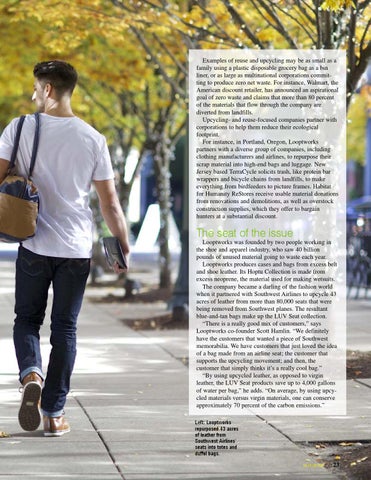
The seat of the issue Looptworks was founded by two people working in the shoe and apparel industry, who saw 40 billion pounds of unused material going to waste each year. Looptworks produces cases and bags from excess belt and shoe leather. Its Hoptu Collection is made from excess neoprene, the material used for making wetsuits. The company became a darling of the fashion world when it partnered with Southwest Airlines to upcycle 43 acres of leather from more than 80,000 seats that were being removed from Southwest planes. The resultant blue-and-tan bags make up the LUV Seat collection. “There is a really good mix of customers,” says Looptworks co-founder Scott Hamlin. “We definitely have the customers that wanted a piece of Southwest memorabilia. We have customers that just loved the idea of a bag made from an airline seat; the customer that supports the upcycling movement; and then, the customer that simply thinks it’s a really cool bag.” “By using upcycled leather, as opposed to virgin leather, the LUV Seat products save up to 4,000 gallons of water per bag,” he adds. “On average, by using upcycled materials versus virgin materials, one can conserve approximately 70 percent of the carbon emissions.” Left: Looptworks repurposed 43 acres of leather from Southwest Airlines’ seats into totes and duffel bags. MAY/JUNE 2015 23