slhl SPOT LIGHT
How to strike a balance when selecting kitchen materials
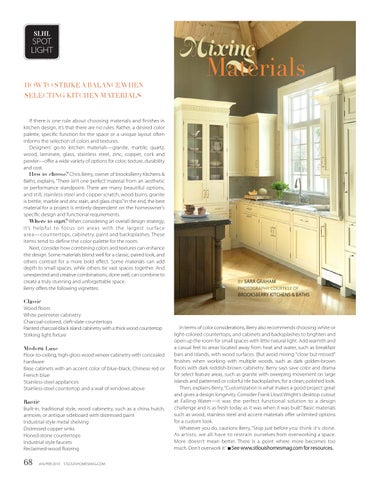
If there is one rule about choosing materials and finishes in kitchen design, it’s that there are no rules. Rather, a desired color palette, specific function for the space or a unique layout often informs the selection of colors and textures. Designers’ go-to kitchen materials—granite, marble, quartz, wood, laminate, glass, stainless steel, zinc, copper, cork and pewter—offer a wide variety of options for color, texture, durability and cost. How to choose? Chris Berry, owner of brooksBerry Kitchens & Baths, explains, “There isn’t one ‘perfect’ material from an aesthetic or performance standpoint. There are many beautiful options, and still, stainless steel and copper scratch, wood burns, granite is brittle, marble and zinc stain, and glass chips.” In the end, the best material for a project is entirely dependent on the homeowner’s specific design and functional requirements. Where to start? When considering an overall design strategy, it’s helpful to focus on areas with the largest sur face area—countertops, cabinetry, paint and backsplashes. These items tend to define the color palette for the room. Next, consider how combining colors and textures can enhance the design. Some materials blend well for a classic, paired look, and others contrast for a more bold effect. Some materials can add depth to small spaces, while others tie vast spaces together. And unexpected and creative combinations, done well, can combine to create a truly stunning and unforgettable space. Berry offers the following vignettes: Classic Wood floors White perimeter cabinetry Charcoal-colored, cleft-slate countertops Painted charcoal-black island cabinetry with a thick wood countertop Striking light fixture Modern Luxe Floor-to-ceiling, high-gloss wood veneer cabinetry with concealed hardware Base cabinets with an accent color of blue-black, Chinese red or French blue Stainless-steel appliances Stainless-steel countertop and a wall of windows above Rustic Built-in, traditional style, wood cabinetry, such as a china hutch, armoire, or antique sideboard with distressed paint Industrial-style metal shelving Distressed copper sinks Honed-stone countertops Industrial style faucets Reclaimed-wood flooring
68
By Sara Graham Photography courtesy of brooksBerry Kitchens & Baths
In terms of color considerations, Berry also recommends choosing white or light-colored countertops, and cabinets and backsplashes to brighten and open up the room for small spaces with little natural light. Add warmth and a casual feel to areas located away from heat and water, such as breakfast bars and islands, with wood surfaces. (But avoid mixing "close but missed" finishes when working with multiple woods, such as dark golden-brown floors with dark reddish-brown cabinetry. Berry says save color and drama for select feature areas, such as granite with sweeping movement on large islands and patterned or colorful tile backsplashes, for a clean, polished look. Then, explains Berry, “Customization is what makes a good project great and gives a design longevity. Consider Frank Lloyd Wright's desktop cutout at Falling Water—it was the perfect functional solution to a design challenge and is as fresh today as it was when it was built.” Basic materials such as wood, stainless steel and accent materials offer unlimited options for a custom look. Whatever you do, cautions Berry, “Stop just before you think it's done. As artists, we all have to restrain ourselves from overworking a space. More doesn't mean better. There is a point where more becomes too much. Don't overwork it.” See www.stlouishomesmag.com for resources.
JAN/FEB 2015 STLOUISHOMESMAG.COM
SPOTLIGHT_0115.indd 70
12/9/14 2:49:16 PM