SOS CHILDREN’S VILLAGE ASIAKWA Ghana
future, including family-strengthening support. • Youth facilities at the location currently provide transit facilities for young people who have completed junior high school
DURATION: Since 1992 (ongoing) RUNNING COSTS 2020: €340,465 – paid for by sponsorships
towards integration and self-reliance. • Seven social clubs were established where young people can further develop their talents and skills to an advanced level and earn an income, and work on interpersonal skills to facilitate their integration in the
Project description
Sustainable Development Goals
community.
SOS Children’s Village Asiakwa, located in Southern Ghana, provides a loving home to
Impact
children who have lost their parental care, for
The healthy growth and development of 105
a variety of reasons.
Main activities and results
children by giving them the loving care of a
• Two SOS families were successfully
family and a safe home. They can go to school,
In and around the Children’s Village are:
moved to the communities. The mothers
have access to medical care and can simply
• 12 family houses where SOS mothers
and children have been closely involved in
be children. The strength of family forms the
provide 105 children with the loving care
the process of selecting the community, the
basis for self-reliance and a bright future.
and protection they need;
family house and school. They received
• An SOS nursery attended by 90 children
extensive psychosocial support and the
from the Children’s Village and the
integration will be carefully monitored. The
community;
families are living an independent life,
• Two Hermann Gmeiner primary schools in the community; • The SOS medical centre; • The community centre from which the
interacting with the larger community and the 17 children are attending community schools.
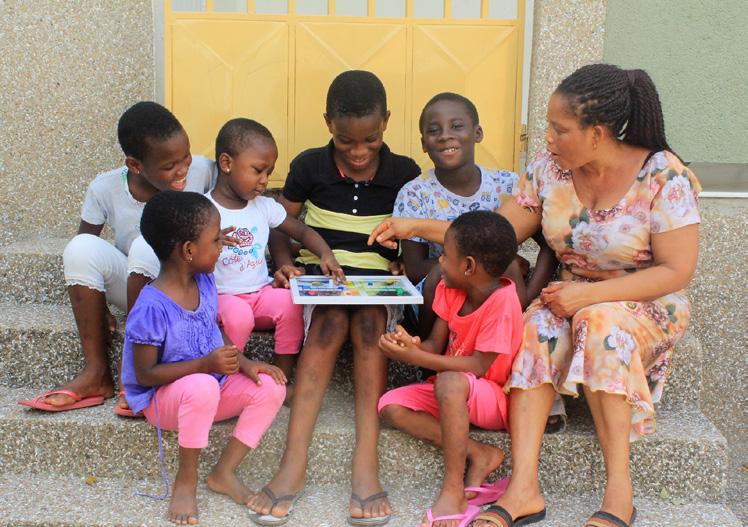
Akosa and her SOS family start life in the community
• After having carefully followed a complete
family-strengthening programme is
gatekeeping procedure to guarantee that
Nine-year-old Akosa*, her seven siblings and
making friends immediately as I joined my new
from a diverse group of people. Of course I
coordinated.
the alternative care option provided is in
their SOS mother Agnes moved from the SOS
school,” she says, beaming.
keep my children connected to their long-time
the best interests of the child, 22
Children’s Village to a family home in the
In line with the child care reform in Ghana,
vulnerable children were admitted and
community at the end of 2020. The whole family
Schools re-opened in January 2021, with
regularly and they talk on the phone. And yes
the number of children per SOS family will
integrated well in SOS family care in the
was closely involved in the move.
students and teachers wearing masks and
there were also challenges. With six children
be reduced to a maximum of seven children in the coming years. It simultaneously
keeping social distance. Akosa and her siblings
under the age of ten, that’s bound to happen.
“The children and I were eager to move to the
are thrilled to be in class again. “I am happy to
They all needed extra attention at the same time.”
Children’s Village. • Because of Covid-19, children received
friends in the Children’s Village. We go there
improves the quality of care. To improve the
home schooling in the village during 10
community to get a taste of life there,” says
be back in school to study my best subjects
integration of the children in our care in the
months, the IT training mothers and
Agnes. “Because the children were well
English and Twi. My dream is to become the
community, we are also working on
aunties received early on in the year
prepared for the move and were very much part
best student in my class so I can be invited to
Concluding: “For me, life in the community
expanding to and moving family houses into
helped them to support the children in
of decisions like what neighbourhood to live in
join the Hermann Gmeiner International College
gives me more independence to create a caring
the community.
accessing the virtual classrooms to
and what school to go to, they quickly adjusted
(school of top students), and then proceed to
family environment. In my family I uphold unity
participate in the lessons.
to the new environment. The neighbours also
University. I hope to become an English teacher
and love because with love, strong bonds
received us very well and the children quickly
in the future.”
develop, and there is respect and concern for
Target group
• Mainly because of Covid-19, no children
Children (0-18 years) who have lost their
have been reintegrated with their families
made new friends.” Her daughter Akosa joins
parental care or are growing up in an unsafe
of origin. However, the families of children
her: “Life in the community is very interesting,
More independence
environment and who need (temporary)
who might be reintegrated, are being
there is so much to see and experience. That
Agnes: “The integration of my family into
family-based care.
involved in the child development plans to
made the transition a little easier for us. We
community life is good for their development. In
facilitate integration in the foreseeable
have already made many new friends. I started
the open society, they will interact and learn
22 | SOS CHILDREN’S VILLAGES ANNUAL REPORT 2020
one another.” *Name changed to protect the privacy of the child.