Somerville College Report 12 13
Somerville College
This Report is edited by Liz Cooke (Tel. 01865 270632; email elizabeth.cooke@some.ox.ac.uk) and Amy Crosweller.
Visitor
The Rt Hon Christopher Patten CH, Chancellor of the University
Principal
Alice Prochaska, MA, DPhil, FRHistS
Vice-Principal
Almut Maria Vera Suerbaum, MA, (Dr Phil, Staatsexamen, Münster), Tutor in German
Fellows (in order of seniority)
Joanna Mary Innes, MA, (MA Camb), Winifred Holtby Fellow, Tutor in Modern History
Karin Erdmann, MA, (Dr rer nat Giessen), Tutor in Pure Mathematics
Fiona Jane Stafford, MA, MPhil, DPhil, (BA Leicester), FRSE, Professor of English, Tutor in English
Sarah Jane Gurr, MA, (BSc, ARCS, PhD Lond, DIC), Daphne Osborne Fellow, Professor of Plant Sciences, Tutor in Biological Sciences (until January 2013)
Richard Stone, MA, DPhil, FIMechE, CEng, Professor of Engineering Science, Tutor in Engineering Science
Lois McNay, MA, (PhD Camb), Professor of the Theory of Politics, Tutor in Politics
Roman Walczak, MA, (MSc Warsaw, Dr rer nat Heidelberg), Reader in Particle Physics, Tutor in Physics
Benjamin John Thompson, MA, (MA, PhD Camb), FRHistS, Tutor in Medieval History
Charles Spence, MA, (PhD Camb), Professor of Experimental Psychology, Tutor in Experimental Psychology; Dean for Hilary and Trinity 2013
Jennifer Welsh, MA, DPhil, (BA Saskatchewan), Professor of International Relations, Tutor in International Relations
Matthew John Andrew Wood, MA, DPhil, (MB, ChB Cape Town), Tutor in Medicine, Keeper of the College Pictures
Helen Morton, MA, (MSc Boston, MA Camb), Treasurer (until Dec 2012)
Philip West, MA, (PhD Camb), Times Tutor in English
Julie Dickson, MA, DPhil, (LLB Glasgow), Tutor in Law
Jeremy Donald Whiteley, MA, (PhD Camb), University Director of Personnel and Administrative Services
Manuele Gragnolati, MA, (Laurea in lettere Classiche, Pavia, PhD Columbia, DEA Paris), Reader in Italian Literature, Tutor in Italian
Annie Sutherland, MA, DPhil, (MA Camb), Rosemary Woolf Fellow, Tutor in Old and Middle English
Daniel Anthony, MA, (PhD Lond), Tutor in Systems Pharmacology
Michael Hayward, MA, DPhil, Tutor in Inorganic Chemistry; Dean (Michaelmas 2012)
Beate Dignas, MA, DPhil, (Staatsexamen Münster), Barbara Craig Fellow, Tutor in Ancient History
Natalia Nowakowska, MA, DPhil, University Lecturer in History, Tutor in Early Modern History
Jonathan Burton, MA, (PhD Camb), University Lecturer in Organic Chemistry, Tutor in Chemistry
Mason Porter, MA, (BS Caltech, MS, PhD Cornell), Tutor in Applied Mathematics
Nicolai Meinshausen, MA, MSc, (PhD Zurich), Tutor in Statistics
Steven Herbert Simon, MA, (PhD Harvard),Tutor in Theoretical Condensed Matter Physics
Hilary Greaves, BA, (PhD Rutgers), Tutor in Philosophy
Luke Pitcher, MA, MSt, DPhil, (PGCert Durham), Tutor in Classics
Michael James Ashdown, BCL, MA, (MA Camb), Tutor in Law
Matthew Kenneth Higgins, BA, (PhD Camb), Tutor in Biochemistry
Simon Robert Kemp, BA, MPhil, (PhD Camb), Tutor in French
Alex David Rogers, (BSc, PhD Liv), Professor of Conservation Biology, Tutor in Conservation Biology
Julie Christiane Hage, (ICS, BA, MA Roskilde, DEA Paris), Development Director (until Jan 2013)
Anne Manuel, (LLB R’dg, MA, MSc, PhD Brist), ACA, Librarian
Christopher Hare, BCL, (Dip d’Etudes Jurid Poitiers, MA Cantab, LLM Harvard), Tutor in Law
Stephen Rayner, BA, (PhD Durham), FRAS, MInstP, Senior Tutor
Andrew Parker, (BA Liv), ACMA, Treasurer (from January 2013)
Stephen Weatherill, MA, (MA Camb, MSc Edinburgh), Jacques Delors Professor of European Law
Rajesh Thakker, MA, (MA, MD Camb), FRCP, FRCPath, FMedSci, May Professor of Medicine
Stephen Guy Pulman, MA, (MA, PhD Essex), FBA, Professor of Computational Linguistics
Aditi Lahiri, (DPhil Brown, MA, DPhil Calcutta), Professor of Linguistics
Stephen Roberts, MA, DPhil, Professor of Engineering Science
Richard Ashdowne, MA, DPhil
Zsolt Bagi, (PhD Semmelweis University Budapest)
Amalia Coldea, (MA, PhD Cluj-Napoca)
Samir El Andaloussi, (PhD Stockholm)
John Hawthorne, MA, (PhD Syracuse)
Muhammed Kassim Javaid, BMedSci, MBBS, (PhD Lond), MRCP
Philip Kreager, DPhil
Boris Motik, (Dr rer pol Karlsruhe)
Tessa Rajak, MA, DPhil
Simon Reddy, (MSc Aberd)
Owen Rees, MA, (PhD Camb), ARCO
Nigel Saunders, (BMedBiol, MB, ChB, MSc, PhD, DipRCPath)
Stephanie Dalley, MA, (MA Camb, Hon PhD Lond), FSA
Charity Anderson, (PhD SLU), Templeton Junior Research Fellow
Andrew Edward Armitage, DPhil, Fulford Junior Research Fellow
Lucy Audley-Miller, (BA Newc) MPhil, DPhil, Woolley Junior Research Fellow
Matthew Benton, (PhD Rutgers), Templeton Junior Research Fellow
Charlotte Dodson, (MA, PhD Camb), Fulford Junior Research Fellow
Alfred Gathorne-Hardy, (BSc Edin, MSc, PhD ICL), Special Fulford Junior Research Fellow
Martina Hallegger, (MA, PhD Vienna), Fulford Junior Research Fellow
Suzan Hammond, (BS Cincinnati, PhD Northwestern University, USA), Fulford Junior Research Fellow
Vanessa Harrar, (BA, MA, PhD York, Toronto), Mary Somerville Junior Research Fellow
Brian Hedden, (PhD MIT), Templeton Junior Research Fellow
Clare Howarth, (MSci Imp, PhD KCL), Fulford Junior Research Fellow
Taeyoung Koo, (BSc Kyung Hee, MSc Yonsei UCM, PhD Lond), Fulford Junior Research Fellow
Rodrigo Ledesma-Aguilar, (MSc Mexico City, PhD Barcelona, MC IEF), Fulford Junior Research Fellow
Edward Macaulay, DPhil, (MSci Imp), Fulford Junior Research Fellow
Stephen Montgomery, (BA, PhD Camb) Fulford Junior Research Fellow
Mate Nagy, (MSc, PhD, ELTE Budapest), Fulford Junior Research Fellow
Dani Rabinowitz, BA, DPhil, Templeton Junior Research Fellow
Tyler Reddy, (BSc, PhD Dalhousie), Fulford Junior Research Fellow
Laura Ross, (BSc, MSc Groningen, PhD Groningen/Edinburgh), Fulford Junior Research Fellow
David Sergeant, MA, DPhil, Mary Ewart Junior Research Fellow
Gerardo Licenciado Simari, (Magister Bahia Blanca, Argentina, MSc, PhD Univ. of Maryland College Park), Fulford Junior Research Fellow
Devin Terhume, (BA Concordia Univ. Montreal, MSc Liverpool, PhD Lund, Sweden), Fulford Junior Research Fellow
Elizabeth Tuncliffe, (MPhys Manc, MSc UCL, PhD Camb), Fulford Junior Research Fellow
Sebastiaan Verweij, (MA Amsterdam, PhD Glasgow), Fulford Junior Research Fellow
Allison Wetterlin, (MA, DPhil Konstanz), Fulford Junior Research Fellow
Lee Walters, (BSc LSE, MSc, PhD Lond, MA, MPhil UCL) Philosophy
Donna Harris, (MPhil, PhD Camb) Economics
Margaret Adams, MA, DPhil
Pauline Adams, MA, BLitt, (Dipl Lib Lond)
Rachel Jean Banister, MA, (BSc Edinburgh) (d. 15 February 2013)
Lesley Brown, BPhil, MA
Anna Morpurgo Davies, DBE, MA, (Dott Lett Lib Doc Rome), FBA
Miriam Tamara Griffin, MA, DPhil
Mary Jane Hands, MA
Barbara Fitzgerald Harvey, CBE, MA, BLitt, FRHistS, FBA
Judith Heyer, MA
Julianne Mott Jack, MA
Carole Jordan, DBE, MA, (PhD Lond), FRS
Norma MacManaway, MA, (MA, MPhil Dublin, DEA Paris)
Hilary Ockendon, MA, DPhil, (Hon DSc Southampton)
Josephine Peach, BSc, MA, DPhil
Evelyn Christina Mervyn Roaf, MA, DPhil
Olive Lenore Sayce, MA, DLitt (d. 25 February 2013)
Frances Julia Stewart, MA, DPhil
Adrianne Tooke, MA, (BA Lond, PhD Camb)
Angela Vincent, MA, MB, BS, (MSc Lond), FMedSci
Katherine Duncan-Jones, MA, BLitt, FRSL
Marian Ellina Stamp Dawkins, MA, DPhil
Lady Elliott (Margaret Whale, 1945), MBE, MA
Sir Geoffrey Leigh
Mr Gavin Ralston, MA
Evelyn Christina Mervyn Roaf, MA, DPhil
Baroness Thatcher of Kesteven, LG, OM, PC, FRS, BSc, MA (d. 8 April 2013)
Baroness Williams of Crosby, PC, MA
Elizabeth Millicent Chilver (Mrs), MA
Anne Marion Warburton, DCVO, CMG, MA
Kathleen Mary Ollerenshaw, DBE, DL, MA, DPhil, FIMA, FCP
Kiri Jeanette Te Kanawa, DBE, Hon DMus
Jean Ruth Fraser Wilks, CBE, MA, FCP, (Hon LLD Birmingham)
Carolyn Emma Kirkby, DBE, OBE, MA, Hon DMus, FGSM
Joyce Maire Reynolds, MA, (Hon DLitt Newcastle-upon-Tyne), FBA
Hazel Mary Fox (Lady Fox), CMG, QC, MA
Louise Napier Johnson, DBE, (PhD Lond, Hon DSc St Andrew’s), FRS, MA (d. 25 September 2012)
Averil Millicent Cameron, DBE, MA, (PhD Lond), FBA, FSA
Baroness O’Neill of Bengarve, CBE, MA, (PhD Harvard), Hon DCL, FBA, Hon FRS
Kay Elizabeth Davies, DBE, CBE, MA, DPhil
Baroness Jay of Paddington, PC, BA
Irangani Manel Abeysekera (Mrs), MA
Paula Pimlott Brownlee, MA, DPhil
Julia Stretton Higgins, DBE, CBE, DPhil, Hon DSc, FRS, CChem, FRSC, CEng, FIM
Catherine Eva Hughes (Mrs), CMG, MA
Doreen Elizabeth Boyce, MA, (PhD Pittsburgh)
Ruth Hilary Finnegan, OBE, MA, BLitt, DPhil, FBA
Janet Margaret Bately, CBE, MA, FBA
Margaret Constance DaviesMitchell (Lady Mitchell), MA, Docteur de l’Université de Paris (d. 25 August 2013)
Margaret Kenyon (Mrs), MA
Tamsyn Love Imison, DBE, BSc, FRSA
Clara Elizabeth Mary Freeman (Mrs), OBE, MA
Alyson Judith Kirtley Bailes, CMG, MA
Nina Mary Bawden (Mrs Kark), CBE, MA, FRSL (d. 22nd August 2012)
Jenny Glusker, MA, DPhil
Ann Rosamund Oakley, MA, (PhD London, Hon DLitt Salford), AcSS
Theresa Joyce Stewart (Mrs), MA
Lucy Jeanne Neville Rolfe (Lady Packer), DBE, CMG, MA
Judith Ann Kathleen Howard, CBE, (BSc Bristol), DPhil, FRS
Victoria Glendinning, CBE, MA
Jennifer Jenkins, DBE, Hon FRIBA, Hon FRICS, Hon MRTPI, MA
Nicola Ralston (Mrs), BA
Antonia Byatt, DBE, CBE, FRSL, BA
Anna Laura Momigliano Lepschy, MA, BLitt
Rosalind Mary Marsden, DCMG, MA, DPhil
Sarah Broadie, MA, BPhil, (PhD Edinburgh), FBA
Harriet Maunsell, OBE, MA
Mary Midgley, MA
Hilary Spurling, CBE, BA
Catherine Jane Royle de Camprubi, MA
Nancy Rothwell, DBE, BSc, DS, PhD, FMedSci, FRS
Baroness Shriti Vadera, BA
Elizabeth Mary Keegan, DBE, MA
Carole Hillenbrand, OBE, MA, PhD, FBA, FRSE, FRAS, FRHistS
Angela Mclean, BA, (MA Berkeley, PhD Lond), FRS
Michele Moody-Adams, BA, (BA Wellesley, PhD Harvard)
Judith Parker, DBE, QC, MA
Esther Rantzen, CBE, MA
Ruth Thompson, MA, DPhil
Caroline Barron, MA, (PhD Lond), FRHistS
Fiona Caldicott, DBE, BM, BCh, MA, MD (Hon), DSc (Hon), FRCPsych, FRCP, FRCPI, FRCGP, FMedSci
Emma Rothschild, MA, CMG
Venkatraman Ramakrishnan, PhD, Nobel Laureate
Hannah Cornwell, BA, MSt Ancient History
Xon De Ros, DPhil, (Fellow of LMH) Spanish
Mark Jonathan Ebden, DPhil, (BASc Toronto) Engineering
Andrew Elliott, (BA Cantab), MPhil Economics
Christian Hill, (PhD Cantab) Chemistry
Sofia Massa, (PhD Padua) Statistics
Alistair Matthews, MA, MSt, DPhil Modern Languages
Quentin Miller, DPhil, (BMath Waterloo) Computer Science
Sian Piret, MBioChem, DPhil Medicine
Benjamin Skipp, MA, MSt, DPhil Music
Graeme Smith, MPhys, DPhil Physics
Helen Stolp, (PhD Melbourne) Medicine
Matthias Winkel, (PhD Paris) Statistics
Anne Manuel, (LLB Reading, MA, MSc, PhD Bristol), ACA, Librarian and Archivist
Susan Elizabeth Purver, MA, (DipLib London), Assistant Librarian
Matthew Roper, MA , (MA Durham), Library Assistant
Steve Rayner, MA, (PhD Durham), FRAS, MInstP
Joanne Ockwell, (BA, MA University of Gloucester)
Julie Christiane Hage, (ICS, BA, MA Roskilde, DEA Paris), Development Director (until Jan 2013)
Sara Kalim, BA, Development Director (from May 2013)
Amy Crosweller, (MA Warwick), Access and Communications Officer (until August 2013)
Clare Finch, Development Services Manager
Antoinette Finnegan, (MA London), Annual Fund and Alumni Relations Officer
Alexandra Hemming, MA, Senior Development Officer
Somerville Association Secretary
Elizabeth Cooke, MA
Christopher Bamber, (BTEC, BSc Leeds)
Daniel Moulin, MSc, (BA Nottingham; PGCE Bristol)
David Crown, (MA Camb)
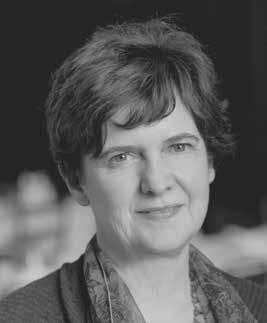
This was a year of expanding horizons for Somerville. The Pew Environment Group, Adessium Foundation and other partners are funding the Global Ocean Commission(GOC) whose offices are based in the College; and we have received significant funding from the Government of India and the University’s Graduate Scholarship Fund for our Indira Gandhi Centre.
Somerville offers an ideal base for enterprises that will thrive on interaction between scholars and students in different disciplines; and both the Commission and the Centre bring new insights and exciting opportunities to the academic community. Members of the University, from the Chancellor and Vice-Chancellor and senior officers to academics and students in departments and colleges in the rest of Oxford, have supported these initiatives generously with finance, time and expert advice. Somerville alumni have also been enormously supportive and engaged.
These two initiatives are founded on understanding how the natural environment underpins all human activity and how best we manage social and economic development in a way that does not compromise the goods and services that ecosystems provide to us. The Global Ocean Commission, (http://www.globaloceancommission. org/) held a formal launch in February in London. The Commissioners are high-level international figures drawn from careers in government or industry, with co-chairs David Miliband, José María Figueres (ex-President of Costa Rica) and Trevor Manuel (ex-Finance Minister, South Africa). They met for the first time in Cape Town in March, with a programme including a presentation by Somerville’s Professor Alex Rogers. Some truly revolutionary thinking was present as they considered how to improve the governance and management of the high seas. A subsequent meeting took place in New York, and the next one will be held at Somerville in November. Several Somerville students have been awarded internships to work with the Commission, providing a wonderful opportunity for them to learn more about the oceans, international governance and politics and many other connected subjects. The range of subjects that
these first GOC interns are studying includes Biology, Biochemistry, Chemistry, English, History, Modern Languages, PPE and Psychology: an apt illustration of the academic richness the college brings to this project.
The Indira Gandhi Centre for Sustainable Development (IGC) grew out of proposals put together more than two years ago by Somerville Fellows including Dr Michael Hayward and Professors Alex Rogers, Stephen Roberts and Richard Stone, to create a ‘natural capital research school’. Developing opportunities for support in India led us to refocus this interdisciplinary initiative as the IGC. The Centre will provide a base for research connected to India and for Indian postgraduate students working on Oxford courses that are broadly related to sustainability: they will return to India in due course to help and lead programmes of change. The IGC commemorates Mrs Gandhi’s insistence on sound environmental policies, which she was the first world leader to champion and consistently promoted for the rest of her life. With a £3 million grant from the Indian Government and matching funding for studentships from the University, we have appointed our first Indira Gandhi Scholars and Junior Research Fellows for the academic year 2013-14. It was a special honour to receive the endorsement of Mrs Sonia Gandhi, President of the Indian National Congress Party, and the Chancellor of the University, Lord Patten of Barnes, who have agreed to act as joint Patrons of the Centre. Numerous friends and especially Oxford and Somerville alumni in India and Britain have given invaluable support. Fund-raising continues for a new building to house the IGC, which we hope to open in 2017, the centenary year of Indira Gandhi’s birth.
Also on the College’s agenda is an international fund-raising programme in the name of Margaret Thatcher. Britain’s first woman Prime Minister studied Chemistry at Somerville from 1943 to 1947, partly with the aid of a College bursary. Becoming an Honorary Fellow in 1970, she acknowledged often in later life how important her Oxford education had been to her and how much she loved her time here. Together with two student representatives, I attended the extraordinary funeral ceremony in St Paul’s Cathedral in April. It is notable that Margaret Thatcher stayed in touch not only with the College as an organisation, but also with her tutor, the great Nobel Prize winner Dorothy Hodgkin; indeed as Prime Minister she listened to Professor Hodgkin unfailingly with respect bordering on awe. These two illustrious Somervillians, coming from opposite ends of the spectrum of political belief, exemplify the college’s proud tradition of openness to opposing ideas. A correspondence about Lady Thatcher’s legacy with alumni of every persuasion has been circulated widely and will form part of the
College’s archive. Our campaign will provide permanently endowed scholarships and bursaries, we hope eventually for over one hundred students each year from all over the world, undergraduate and postgraduate, without regard to their beliefs or national or cultural background. It will support those who otherwise would lack the means to come to Oxford. During this past year, much groundwork has been done for this ambitious project. Most grateful acknowledgement is due to the constant advice and support given by Lord (Charles) Powell, Lady Thatcher’s former Private Secretary, close friend and adviser, who has enlisted the endorsement of a stellar list of international Patrons. Here again we are indebted also to alumni who give liberal time and support, led by Clara Freeman and the Development Board that she chairs.
Staff and Fellows of the college have moved and multiplied during the year. It is with sadness that I record the deaths of two much loved Emeritus Fellows, Jean Banister and Olive Sayce. Last year’s report noted the impending retirement of Helen Morton after more than ten years of distinguished service. She is much missed although, happily, remaining in Oxford she is able occasionally to take up some of the privileges of an Emeritus Fellow. Her replacement as Treasurer is Andrew Parker, formerly Finance Director of the Royal Shakespeare Company. Andrew has made an impact already. He takes on responsibility for the full range of bursarial duties (formerly shared with the domestic bursar, who left at the end of 2012) and among the recent arrivals in his department are Lodge Manager Mark Ealey and Nursery Manager Jane Long. All of Andrew’s departments make an important contribution to Somerville’s friendly and inclusive spirit. Julie Hage left Somerville in January after three highly successful years as Director of Development and she is much missed by colleagues and alumni alike. She has been succeeded by Sara Kalim (who read Classics at Somerville from 1990 to 1994) joining us from a distinguished career in media, most recently at the Reuters Institute for the Study of Journalism.
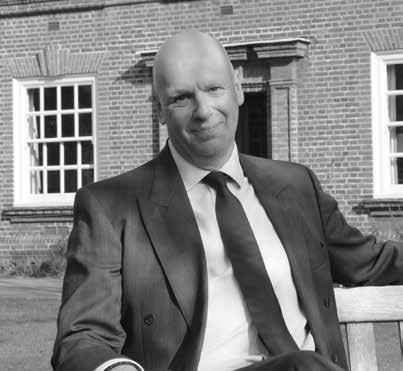
Andrew Parker, Treasurer
Sara is addressing the task of building up our development capability, which was sadly depleted in the past year by staff sickness and other departures. She and I meanwhile enjoy unstinting support from our external Development Board, and from key members of the staff.
Dr Michael Ashdown leaves this year for a career at the Bar after a highly successful three-year term as an early career Fellow. Michael too will continue to live in Oxford and we may call him in aid for further help with matters relating to the College as a Trust (which he has given most generously while here). The new Fellow and Tutor in Law, Chris Hare, is an expert in banking and commercial law. Professor Stephen Roberts, Fellow in Engineering Science, received a promotion to a senior research post (recognising some notable successes in cutting-edge research in the field of computing systems and artificial intelligence) which enables the College to retain him as a Fellow and much-valued member of the Governing Body, but also to replace him as Tutor in Engineering with our new Fellow Dr Bhaskar Choubey. Bhaskar, who came to Oxford first as a Rhodes Scholar, was a Junior Research Fellow at Somerville a few years ago, and knows the College well. Professor Sarah Gurr left the College after more than twenty years as Fellow and Tutor in Biology, to take up a prestigious chair in plant science at the University of Exeter, together with the directorship of the Rothamsted Research Station at North Wyke. She leaves a hole in Somerville’s senior ranks and is greatly missed. Her role as Fellow and Tutor, combined with a lectureship in the Department of Plant Sciences, will be filled by Dr Renier van der Hoorn, a protein biochemist and molecular biologist from the Max Planck Institute in Cologne.
We celebrate two further additions to the Fellowship. A new University Lecturership in Etruscan and Italic Archaeology, combined with the Woolley Fellowship at Somerville, results from a successful fund-raising campaign in the name of the leading Etruscan scholar Dr Sybille Haynes; and Dr Charlotte Potts joined the college in that post in April. Thanks to a notably successful fund-raising campaign, we were able to secure the Fellowship in Philosophy which Lesley Brown vacated in 2011. Lesley’s retirement was a sad loss to the College, although she has continued with some teaching, and continues to engage with College life. Her role was filled in part and very ably by Career Development Fellow Dr Lee Walters, who is leaving for a permanent post at the University of Southampton. We are delighted that Lesley’s former post is now endowed in perpetuity together with the lectureship that she held in the Department of Philosophy. It is all the more cause for celebration because a huge gift from an alumna
(who wishes to remain anonymous) added to numerous gifts from other students of Lesley’s, made it possible. The College then matched the challenge from the University’s Teaching Fund. Thanks to this wonderful gift, we are now joined by Ancient Philosopher Dr Karen Nielsen.
Current students and our alumni are the backbone of the Somerville community. The student body now exceeds 550, with growing numbers of graduate students ever more involved in the life of the College. Students graduating this year include one, Joanna Demaree-Cotton, who won the top first-class degree in her year in Experimental Psychology, several (e.g. in History) who came near the top of their year, and a solid record with almost all of this year’s finalists obtaining first class or 2:1 degrees. The College received accolades both this year and last from the Student Barometer survey of student opinion: while Oxford scores in the top 10% of UK universities, Somerville scores at or near the top of Oxford colleges, especially for the quality of our Tutors, and the Library. Student life at Somerville is lively. The Boat Club won the accolade of most improved club on the river this year, and brought home two sets of blades. These may be displayed in our new Terrace bar and social hub, the most recent addition to student facilities, adjoining the Vaughan Building, opening in October 2013. Individual students have shone too, for instance in lacrosse and javelin at a national level. There is heightened interest in the JCR, with heated debates (e.g. on the legacy of Margaret Thatcher, on whether to seek the abolition of High Table, and on ‘meat-free Mondays’) and contested elections for student office. For the second year running, after a long run of male JCR presidents, Somerville students have elected a woman, with Rachel Hutchenson, a Geordie, succeeding Australian Marsha Sudar. At the request of the JCR, the College flies the Rainbow flag in honour of Gay Pride day in February. In other words, diversity reigns.
At the opposite end of the age spectrum, friends and admirers of our Honorary Fellow Dame Kathleen Ollerenshaw, a leading mathematician and public servant, attended a luncheon in college to celebrate her 100th birthday in October. New Honorary Fellows, who honour the college greatly by accepting this association, are Professor Venki Ramakrishnan, Nobel Prize winner and a recent Dorothy Hodgkin Memorial lecturer, and the economic historian Professor Emma Rothschild. A group of Honorary Fellows gathered in February for a symposium and dinner (which we hope to repeat in future years) to help think about the college’s future policies. They showed a particular interest in the college’s work to enhance access for those from disadvantaged backgrounds.
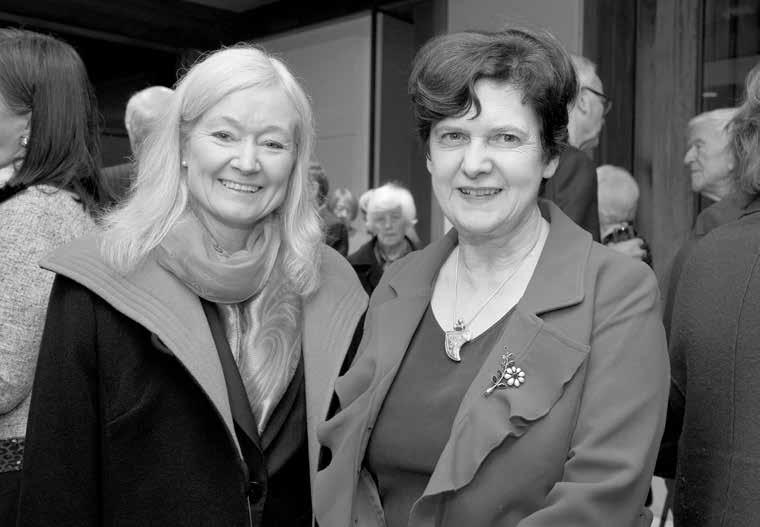
Among those present was Baroness Shirley Williams, whose portrait we have just acquired. The new extension to our Wolfson building consists of a large, elegant room adjoining the Flora Anderson Hall, useful for receptions, conference group meetings and quiet conversations. We propose to name it the Brittain-Williams Room in honour of Lady Williams and her mother Vera Brittain. In 2014 there will be occasion to mark the centenary of the outbreak of World War I with a celebration of Vera Brittain’s writings and her lifelong campaign for peace. The year to come promises to be just as rich as that just past in celebrations of the notable and world-wide contributions made by Somervillians past and present.
As I conclude this piece, I am delighted to hear the news that Dame Lucy Neville-Rolfe (PPE, 1970) has been made a Peer and I offer her Somerville’s warmest congratulations.
MATT HIGGINS’ group has continued their research into the parasites that cause malaria and sleeping sickness, focusing on an investigation of the interactions that their surface proteins make with proteins from the human host. These interactions are the key targets for vaccine development.
Their major achievement this year was described in a paper recently published in Nature. In this study, they addressed the question of what causes some malaria infections to be severe while some are mild. In collaboration with colleagues in Copenhagen the group has shown that parasites that cause severe disease produce a protein that binds to a brain receptor, EPCR. This binding interaction impedes antiinflammatory responses in the brain, causing severe disease.
In addition, Matt’s research group was recently awarded a New Investigator Award from the Wellcome Trust. This £2 million award will provide core funding for research into key malaria vaccine candidates for the next seven years.
Biological sciences has seen some extraordinary changes over the last year with MARIAN DAWKINS retiring in 2012 and SARAH GuRR leaving to take up an exciting new post as Chair of Food Security in the School of Biosciences at the University of Exeter. Both Marian and Sarah have a deep passion for their respective branches of science and their engaging teaching styles and care for their students have influenced generations of biology students at Somerville.
We are extremely fortunate that TIMOTHy WALKER, Director of the Botanical Gardens of the University of Oxford, has stepped in to assist in the teaching of our students from January. Tim brings great enthusiasm and a wealth of knowledge on plants, their ecology and their importance to humankind. Among Tim’s other achievements, this year saw the publication of Plants: a very short introduction (Oxford University Press), of which he is sole author; and the co-authored paper ‘Plant Conservation: the seeds of success’ (T Walker, SA Harris and KW Dixon) in Key Topics in Conservation Biology 2 (edited
by
David MacDonald and Kathy Willis; Wiley-Blackwell). Currently we are finalising arrangements for a new Lecturer or Fellow in Biological Sciences to be appointed at Somerville and will provide an update on this exciting new development as soon as we can.
ALEX ROGERS has taken over as the Reporting Tutor for Biological Sciences students at Somerville and spent the year consolidating research associated with cruises over the last four years. This saw the publication of papers on deep-sea ecology, including a nice paper on the evolution of the popular yeti crabs, with his DPhil student Christopher Roterman (see http://rspb.royalsocietypublishing.org/content/280/1764/20130718.full. pdf+html). Members of Alex’s team participated in cruises to Antarctic hydrothermal vents, surveys of penguins on sub-Antarctic islands and surveys of coral reefs in Kenya, the Chagos Archipelago and Honduras. For more details of the Ocean Research and Conservation group’s activities see: http://www.zoo.ox.ac.uk/group/oceans/. In terms of conservation work Alex has focused this year on work with the Global Ocean Commission and also with the Pew Environment Group and Antarctic Ocean Alliance on conservation of Antarctic ecosystems. This has seen significant progress on the protection of the marine environment around South Georgia and the South Sandwich Islands. Alex also visited NGOs and scientists in China to discuss recent proposals for marine protected areas in the Antarctic. Unfortunately these proposals are still being blocked, mainly by Russia within the Convention for Conservation of Antarctic Marine Living Resources (CCAMLR). Linked to Antarctic work was an appearance on Hugh’s Fish Fight to discuss the importance of Antarctic krill. Alex also presented to the All Party Parliamentary Group for Biodiversity at the Houses of Parliament on the current situation with Marine Conservation Zones (MCZs) around the United Kingdom. His presentation stimulated considerable discussion around matters related to the data that had been used to establish MCZs and the overall effectiveness of the network of protection. Alex was awarded the ZSL-Marsh Prize for Marine and Freshwater Conservation at London Zoo in June.
As well as teaching on courses in Adaptations to the Environment, Ecology and Marine Ecology Alex also led the first year ecology field course to Orielton in Pembrokeshire. Despite a poor weather forecast they only had a single day of rain and students were treated to a multitude of activities including field surveys on dunes, in forests and on the shore, bird ringing, camera trapping and bat surveying. It was an enjoyable field course with enthusiastic students and several Somervillians won prizes for their work!
Since the last Report, LuKE PITCHER has published translations and commentaries on several fragmentary Greek historians: Themistogenes of Syracuse (who may have been Xenophon in disguise) and the anonymous targets of Polybius’s spleen. He has also authored an article on how the horror writer H. P. Lovecraft used Petronius in his fiction. He has lectured in locales ranging from Somerset to Hammersmith to Thessaloniki. As Secretary to the Oxfordshire Branch of the Classical Association, he has continued to organise lectures and reading competitions for local schools.
QuENTIN MILLER has been organising an international symposium on High-Level Parallel Programming to be held in Paris this July, which revives a series of symposia which he instigated at l’Université d’Orléans in 2001. In the intervening years parallel programming has become a widespread feature of mainstream computing, and his group is therefore planning to make this an annual event.
STEPHEN PuLMAN returned from a year’s sabbatical in January 2013 and resumed his position as Deputy Head of a rapidly growing Computer Science department. During the academic year he contributed a chapter to a book Quantum Physics and Linguistics (OUP), a conjunction he never expected to see, and co-authored around eight conference papers, the title of one of which included the phrase ‘Frobenius algebras’, another unexpected intellectual adventure. One contribution (on computer generated feedback on student essays) won a best paper award at the 2013 International Computer Assisted Assessment Conference. He reviewed EU projects in Gothenburg and Barcelona, and was a keynote speaker at a conference in Zurich. The start-up he co-founded in 2011, TheySay Ltd, continues to grow and has attracted significant new investment as well as growing its customer base.
DONNA HARRIS began the academic year with the benefit of a two-year research grant from the John Fell Fund of the University of Oxford for her research into ‘AntiEndowment and Novelty-Seeking in Human Behaviour’. This has also been the final academic year for her prestigious joint ESRC/MRC Research Fellowship for her research
project ‘Understanding the Impact of Group Membership on Individual Behaviour: an Interdisciplinary Approach of Experimental Economics, Social Psychology, and Neuroscience.’ She has been invited to Columbia University, New York, for a one-month research visit in August 2013 and she has also been invited to deliver a number of talks over the course of the year, including at the National Audit Office in April 2013, and the University of Cambridge in October 2013. She has two papers currently under review: ‘When to Favour Your Own Group? The Threats of Costly Punishments and In-group Favouritism’ with B. Herrmann (European Commission) and A. Kontoleon (Cambridge); and ‘In-group Favouritism and Out-group Discrimination in Naturally Occurring Groups’ (with Klaus Abbink, Monash University), and a number of other on-going research projects in collaboration with scholars from international institutions.
BHASKAR CHOuBEy joined Somerville this year as a tutorial fellow. He conducts research in nanoelectronics, particularly design of digital cameras as well as environmental sensors. This year, he has started two new industrial projects, both funded by the European Commission. One of these aims to build next generation cameras, particularly for radiotherapy, while the other aims to improve on traffic cameras for assisting drivers.
MARK EBDEN co-wrote two papers on data analysis. He continued as a Stipendiary Lecturer this year and was selected for a new post in the university from January 2013: the Oxford/BP Decision Analytics Research Assistant. As such, he helps to compare industrial safety, reliability, and other needs with the enthusiasms found among Oxford’s researchers.
STEPHEN ROBERTS continues his research applying probabilistic models to a variety of application domains. This year he has made particular impact in the development of algorithms for analysis of astrophysical data (to find exoplanets and pulsars), biological data (joint work in animal welfare with Prof Marian Dawkins) and in information aggregation in very large crowd-sourced experiments (for use in biodiversity projects and astrophysics research). Stephen was elected a Fellow of the Royal Statistical Society earlier this year.
RICHARD STONE saw the publication of the 4th edition of his engine book in Michaelmas Term and he has already started collecting material for the 5th edition. He
has now entered his second year as the editor of the Journal of Power and Energy, and this has required calling in help from many contacts as the journal coverage is quite broad. His research in the Department now includes more involvement with the Cryogenics Group, and, despite the name, coverage is from cryocoolers to solar collectors and Stirling engines.
DAVID SERGEANT has made a significant contribution to the English School this year and full details of his work are set out in the following Report on Junior Research Fellowships. David was recently appointed to a permanent lectureship at Plymouth University, and so will be bidding a sad but fond farewell to Somerville in September!
FIONA STAFFORD spent last summer working on an edition of Wordsworth and Coleridge’s Lyrical Ballads, which has now been published as an Oxford World’s Classic. As 2013 is the Bicentenary of Pride and Prejudice, she has been invited to give a number of lectures on the book, and students have experienced the odd interruption to tutorials from journalists around the world phoning up in search of ‘an angle’. A highlight of the year was the trip for second and third year English students to Austen’s House at Chawton, where we spent the day thinking about her life and surroundings, and had a seminar in the garden. Fiona also wrote and recorded a series of programmes for Radio 3, which were broadcast in December on ‘The Meaning of Trees’; those who know her will realise that the biggest challenge was having to sit motionless while she delivered the talks. She has also completed articles on ‘Wordsworth and the Poetry of Place’; ‘Clare’s Colours’; and ‘Crabbe’s Poetry and the Sea’. In Trinity Term she took up the role of Vice-Principal of the College.
PHIL WEST has enjoyed a particularly busy year of teaching, examining, and committees, and is looking forward to some research time during the Long Vacation. Currently he is working on the Bodleian’s manuscripts of John Donne’s sermons, transcriptions of which (made collaboratively by the editorial team preparing The Oxford Sermons of John Donne) are available online at http://www.cems-oxford.org/donne. Also this summer he will be annotating Shirley’s songs, satires, and elegies for his critical edition of the complete poems, and writing a chapter (for a forthcoming collection of essays) about Shirley’s reputation as a lyric poet during his heyday as a dramatist from 1625-42.
A comprehensive summary of the work of the English School at Somerville would not be complete without mentioning Junior Research Fellow SEBASTIAAN VERWEIJ, whose research into the sermons of John Donne has made significant progress this year, as has his work on the literature and book history of Early Modern Scotland. The full detail of his achievements is included in this publication’s Report on Junior Research Fellowships.
CHARLES SPENCE has continued to work extensively on the multisensory perception of flavour. He has been working with a number of chefs in order to design enhanced dining experiences. Currently, he has a Franco-Colombian chef visiting the laboratory and he is looking at the effects of serving participants a salad that has been plated to look like one of Kandinsky’s paintings. The crossmodal research laboratory that Charles directs currently has around 10 researchers including composers, product designers, marketers and psychologists, and has published over 50 articles over the last year. A new book on touch should be coming out with Oxford University Press later in the year, and together with Betina Piqueras-Fiszman, he is currently very close to finishing a book entitled The Perfect Meal.
We continue to appreciate our good fortune in being able to make awards to further our students’ development, through study or travel, thanks to the generosity of a former Principal, Catherine Hughes. We also appreciate the imagination of those who’ve made other opportunities available to our students: once again, a former student and his father have been able to offer to some current students summer internships in their museum design consultancy, Appelbaum Associates. Furthermore, several history students are working on small projects for the Global Ocean Commission, which is based in Somerville College. Our students have found their history-derived skills more easily transferable than they had anticipated.
This year we have been joined by ALEX WRAGGE-MORLEy, during Natalia Nowakowska’s leave: he has replaced her by serving as a departmental lecturer for both the college and the faculty. He’s also been able to find some time to pursue his research in the history of aesthetics, science and medicine in the early modern period,
publishing an article in Notes and Records of the Royal Society on the poetics and rhetoric of the seventeenth century, and writing a book chapter to be published next year on eighteenth-century osteological illustrations. We’re happy to report that in 2013-14 he will hold a postdoctoral fellowship at the Huntington Library and Caltech, pursuing further publication projects and arranging events on the theme ‘Materialities, Texts and Images’, as part of the joint Huntington-Caltech programme of the same title
CLARE COPELAND started at Somerville this year on a two-year Mellon Postdoctoral Fellowship in Early Modern Catholicism. Based at the new Oxford Research Centre in the Humanities (TORCH) on the ROQ site, Clare has steered a new research network in early modern Catholicism, setting up a seminar series and several workshops drawing participants from across the Humanities. Alongside this she has been working on a monograph on canonisation in seventeenth-century Italy to be published by OUP. In addition, she has held a three-month AHRC Cultural Engagement Fellowship for a project looking at music and confessional identities in early modern Europe. A book she has co-edited, Angels of Light? Sanctity and the Discernment of Spirits in the Early Modern Period, was published by Brill in December 2012.
JOANNA INNES has been spending Leverhulme ‘international network’ funds on organising a series of meetings across southern Europe on the theme of ‘Re-imagining Democracy in the Mediterranean 1750-1860’. She’s also been co-organising a reading group/seminar on Ottoman and Arab perspectives on this topic, which has brought together staff and students from History, Politics, Area Studies and Oriental Studies. A book she has co-edited with Mark Philp, Re-imagining Democracy in the Age of Revolutions: America, France, Britain, Ireland 1750-1850 was published, by OUP, in July 2013. Joanna will become next year one of the History Delegates of the University Press: the Delegates are consulted on all academic titles published by the Press.
NATALIA NOWAKOWSKA has been on research leave, funded by a British Academy Mid-Career Fellowship (2012-13). This grant was awarded in order to enable her to finish her current book, entitled The Elusive Church: Poland, Luther and the Early Reformation, which will be the first monograph in over a century on the early Reformation in this kingdom. She has much enjoyed studying the Reformation from the perspective of someone trained as a late medieval historian, and seeing where Poland fits within wider European stories. She has also published two articles about the project in the run-up to the book itself. The British Academy Fellowship also enabled her to attend a conference in Budapest, and spend some time in the wonderful church archives
of Olsztyn, in north-eastern Poland.
Apart from chairing the Preliminary Examination in History, BENJAMIN THOMPSON has been juggling a number of balls this year to complete various projects. The interdisciplinary Somerville medievalists’ book on Polemic reached its climax with a final workshop and editing of the essays; Benjamin’s traces the use of violent language, usually by churchmen themselves, to describe the execrable condition of the church, long before it was appropriated in the statutes of the English Reformation. Amongst other topics he has written about the different reactions of French abbots and English bishops to the alien priories, which demonstrates tension and competition within the late-medieval church, and the lack of respect for specifically monastic property, even though clerics did defend the ecclesiastical possession of land.
JENNIFER WELSH has been appointed as United Nations Special Adviser on the Responsibility to Protect. The Special Adviser to the UN Secretary General on the Responsibility to Protect is charged with the development and refinement of the Responsibility to Protect concept and with continuing a political dialogue with UN Member States and other stakeholders on further steps toward implementation.
MICHAEL ASHDOWN has continued his research on the law of trusts, and in particular on the duties of trustees when exercising powers and discretions. He was on research leave in Hilary Term 2013, during which time he planned and began to write a new book on this subject, as now understood in the light of the recent Supreme Court decision in Pitt v Holt [2013] UKSC 26, which has vindicated much of his earlier work in this field. He has also continued his teaching for Somerville and for the Law Faculty in trusts, land law and Roman law. In 2013, Michael is leaving his post at Somerville, after six years as law tutor, to pursue a career in legal practice as a chancery barrister in London. He hopes, however, to maintain close links with Somerville, including through some continuing undergraduate teaching.
JuLIE DICKSON has continued with her research in legal philosophy and in the philosophy of European Union Law. Amongst other research projects, she was the
co-editor of and a central contributor to a book of collected essays, J. Dickson and P. Eleftheriadis (eds.), Philosophical Foundations of European Union Law, which was published by Oxford University Press in late 2012, and published an article on Professor John Finnis’ work which appeared in a landmark festschrift honouring Professor Finnis, published by OUP USA in spring 2013. In Trinity Term 2013 she was on research leave from her College and Faculty teaching and administrative duties and worked on planning a new book on methodology in the philosophy of law which she intends to start soon, and on an article exploring the particular methodology of transnational legal theory. Dr Dickson also continued with her College and Faculty teaching in Jurisprudence and in EU Law, at both undergraduate and postgraduate level, and undertook editorial work as the review articles editor of the Oxford Journal of Legal Studies, and as a member of the editorial boards of several major legal philosophy journals. She was and remains a committed member of the (reasonably successful) Somerville pub quiz team.
The European Union limps on, and what has it ever done for us, apart from guaranteeing trading opportunities on a reciprocal and credibly enforceable basis, challenging discriminatory practices and seeking to solve in common problems that cannot be solved by States acting unilaterally, such as climate change and migration, and all on a basis of consensus and co-operation rather than conquest. STEPHEN
WEATHERILL limps on too, albeit with rather less grand ambition. Three big books appeared under his name as co-editor this year: The Oxford Handbook of The European Union (co-edited with Erik Jones and Anand Menon), The Protection of Fundamental Rights in the EU after Lisbon (co-edited with Sybe De Vries and Ulf Bernitz) and The Involvement of EU law in Private Law Relationships (co-edited with Dorota Leczykiewicz). In each, as well as editing others’ work, he contributed a chapter of his own: respectively, ‘The Constitutional Context of (Ever-Wider) Policy-Making’, ‘Economic Rights and Fundamental Rights’, and ‘The Elusive Character of Private Autonomy in EU Law’. He continued to work on topics such as harmonisation of laws in the EU’s internal market, sports law, abuse of rights in EU law, and EU consumer law. As well as classroom teaching, he is heavily involved in supervising graduate students working in the area of EU law, and he is currently in the middle of his term as Director of Graduate Research Students in the Law Faculty.
KARIN ERDMANN has been an invited speaker for a couple of conferences, including one in Japan. She also spent three weeks in Singapore at a workshop that she helped to organise. Last June, Karin was co-organiser of a conference at Oxford (where the participants mostly stayed in Somerville). Among various publications over the last year is one paper with co-author Alison Parker, who was a JRF at Somerville a couple of years ago.
MASON PORTER continues to churn out papers on various topics in complex systems and nonlinear science. In the past year, this has included topics such as modelling collective online behaviour, recasting the problem of modularity optimization as a problem related to compressed sensing, prey switching with preference trade-offs (via piecewise smooth dynamical systems), solitary waves in Bose-Einstein condensates, noise-induced synchronization and desynchronization in coupled oscillators, coreperiphery organization in human brain dynamics, decentralized routing in spatially embedded networks with stochastic edge weights, network centrality measures, and billiard systems. He is currently working on projects in multiplex networks, human mobility, evolutionary game theory, and many other topics.
Mason is on the inaugural editorial board of the Journal of Complex Networks, and he has spearheaded outreach efforts to teach network science to teenagers in schools.
RAJESH THAKKER has served as: Chairman of the Department of Health National Institutes of Health (NIHR) / Medical Research Council (MRC) Efficacy and Mechanisms Evaluations (EME) Board; Editor-in-Chief of the NIHR EME journal; Associate Editor of the Journal of Bone and Mineral Research (journal of the American Society of Bone and Mineral Research); and as Chairman of the University of Oxford Panel of Electors for the Newton Abraham Visiting Professorship. He has been invited to speak at several events, including the American Society of Nephrology (ASN), San Diego, USA (2012); American Society of Bone and Mineral Research (ASBMR), Minneapolis, USA (2012); and the 13th International Workshop on Multiple Endocrine Neoplasia, Liege, Belgium (2012). He was awarded the Jack W. Coburn Endowed Lecturer at the meeting of the America Society of Nephrology (2012) and received the Parathyroid Medal, presented by Fondazione Raffaella Becagli (FIRMO), Florence, Italy, (2012). His research activities are
funded by the Medical Research Council, Wellcome Trust, Kidney Research UK, and the EU, and his group have had several publications including in Nature Genetics, Proceedings of the National Academy of Sciences (USA), and the New England Journal of Medicine.
MANuELE GRAGNOLATI has completed the manuscript of a book entitled ‘Amor che move’: linguaggio del corpo e forma del desiderio in Dante, Pasolini e Morante, which proposes a diffractive reading of Dante’s works and some of their late-twentieth-century re-appropriations and explores the relationship between a type of proto-modern subjectivity, like that expressed by Dante’s texts, and a postmodern one, like that expressed by Pier Paolo Pasolini’s and Elsa Morante’s. He also wrote a lectura of the XIV canto of Dante’s Paradiso focusing on the relationship between memory, corporeality and individuality in medieval eschatology, and a chapter on the different forms of queer aesthetics and subjectivities in Pasolini’s and Morante’s last novels. He was invited to give talks on Dante (Florence; London), Elsa Morante (Washington, DC; Milan) and Pier Paolo Pasolini (BFI, London; Warwick). Manuele spent the Hilary Term as Associate Director of the Berlin Institute for Cultural Inquiry and throughout the year was Chairman of the Oxford Preliminary Examinations in Modern Languages and related Joint Schools.
SIMON KEMP helped inaugurate Somerville’s new interdisciplinary humanities symposium this year, contributing a paper entitled ‘Do You Believe in the Devil, Doctor? French Catholic Novelists versus the Secularists’ to an MCR/SCR workshop on the sacred and the secular. He has been publishing research on a variety of topics related to current and prior research projects. These include two journal articles on aspects of literary theory (one asking whether it is possible to write parody or pastiche without meaning to, and another examining how time and meaning in narrative are displaced by metaphors of distance and direction whenever we try to talk about stories), a book chapter on contemporary French women’s writing, and an article in a journal of pedagogical research on the role of teaching translation in the undergraduate degree. He was invited to talk at a conference at Durham University on overlaps between literary fiction and crime fiction in French, the proceedings of which are pending publication, and has also been invited to contribute to a special issue of the French journal Itinéraires on a similar topic. Relating to his current project, he has published an article in the Literary Encyclopedia on the Catholic novelist, Georges Bernanos, and
a journal article on the French Catholic novel more generally and its representation of consciousness. A further article on ‘Post-Psychoanalytic Proust’ is due out next year. Simon has been on research leave in Trinity Term, putting the finishing touches to his book, Writing the Mind: Representing Consciousness from Proust to Darrieussecq.
CATHERINE (MARy) MACROBERT gave a paper at a memorial conference organised by the Institute of the Russian Language in the Russian Academy of Sciences and Ryazan′ State University. She published the article ‘On Using P. A. Gil′tebrandt’s Spravočnyj i Ob″jasnitel’nyj Slovar′ k Psaltiri’, in Schnittpunkt Slavistik. Ost und West im wissenschaftlichen Dialog. Festgabe für Helmut Keipert zum 70. Geburtstag. Teil 1: Slavistik im Dialog – einst und jetzt, ed. by I. Podtergera (Bonn: V&R unipress, Bonn University Press, 2012) and the afterword to Bosanski Psaltir iz izbornika Hvala Krstjanina, ed. by Lejla Nakaš (Forum Bosnae, 60/12) (Sarajevo: Međunarodni Forum Bosna, 2013). She submitted the paper ‘The problem of the negated imperative in Old Church Slavonic’ to a memorial volume for Franz Miklosich, and completed her contribution (critical apparatus and text-critical analysis) to the publication of MS Sinai Slav 3/N (‘Dimitri’s Psalter’) by a European research team co-ordinated by Professor Heinz Miklas (Vienna).
For ALMuT SuERBAuM, the academic year started with an international conference on ‘Medieval Women and Their Books’, hosted at Somerville and the Taylorian, coorganised with two of the Marie Curie early stage researchers, Racha Kirakosian and Monika Studer. Being able to open the conference by showing delegates one of two medieval manuscripts owned by Somerville, a small book of hours produced in the Low Countries, possibly for use at Wenlock Edge, and given to the college by an anonymous donor in the 1960s, was a particular pleasure. This was part of a series of conferences, lectures, workshops (and resulting publications) on medieval religious writing in Antwerp, Leiden and Freiburg in the course of the year.
The next project of the Somerville medievalist group, afforced this time by the early modernists, is nearing completion: the group held a one day colloquium on ‘Polemic –language of violence in medieval and early modern discourse’ in Trinity Term; Benjamin Thompson, George Southcombe (former British Academy post-doc and lecturer, now at St Catherine’s) and Almut will be editing the resulting volume in the autumn. The group looks forward to its publication in the next academic year, and is currently debating the next topic, because the unique mode of interdisciplinary research which the College setting enables is something which many of us consider to be especially fruitful.
In January, Almut was grateful to pass on the baton of admissions co-ordinator for Modern Languages to a colleague from another college: chairing a process with 1000 applicants across 8 languages, about 50 combinations of subjects, and over 100 colleagues for the faculty has been complex but fascinating and has provided an even better understanding of how much work goes into demystifying the process to applicants, ensuring that the best candidates get places across the collegiate university – and how committed colleagues are to making this all happen. Alongside teaching, research, and faculty initiatives, the second year as Vice-Principal has given her a chance of seeing the college’s activities in the round: not just committee meetings, but all aspects of university life, from the nursery to memorial services, from building works to exam preparations in the library, from academic appointments to new funding initiatives. It’s a reminder that teaching and research, at the heart of Somerville, are supported and made possible by a large, diverse and very vibrant community.
HILARy GREAVES has been working on a number of issues lying at the intersection of ethics and economics, including the connections between the economic literature on the value of human life and the debate over population size, and contributed a critical review article on the economics and ethics of discounting to the WIREs Climate Change series. In parallel with those lines of research, her forthcoming article in formal epistemology explores the extent to which theories of rational decision-making initially designed for practical contexts can be adapted to provide theories of epistemic rationality.
LEE WALTERS has continued his work on his two main research projects: the meaning and logic of ‘if, then’ sentences, and the philosophy of art. On the former he has a paper forthcoming with the Review of Symbolic Logic and an edited volume under contract with OUP. Lee’s work in the philosophy of art resulted in him winning the British Society of Aesthetics Essay Prize for 2012 and the prize-winning essay is forthcoming with the British Journal for Aesthetics. On the teaching side, Lee has continued to teach in his main research areas but has also taught the Philosophy of Religion this year for the first time which he has greatly enjoyed. He also gave a talk to a school party from London and discussed with the pupils their ideas on the perennial problem of personal identity.
LOIS MCNAy recently finished her fifth book, entitled The Misguided Search for the Political. It will be published early next year by Polity Press.
STEPHANIE DALLEy’S research hit the headlines this year after her book The Mystery of the Hanging Garden of Babylon: an elusive World Wonder traced was published by Oxford University Press in May. After 18 years of research, the book argues that the garden, one of the seven wonders of the ancient world, was never in Babylon at all, but in the Assyrian capital of Nineveh, 300 miles to the north. Her talk about it at the literary festival in Hay-on-Wye attracted a very large audience. A documentary film for television, to be filmed partly in Iraqi Kurdistan, is now at the planning stage.
KATHERINE DuNCAN-JONES has delivered lectures to the ‘Early Modern Society’ at Birkbeck College, London; The Early Dance Circle, meeting at the Art Workers’ Guild; and to the ‘Literature and Medicine’ seminar in Oxford, her topic being ‘ “To move wild laughter in the throat of death”: palliative mirth in the age of Shakespeare’. An article on a long poem surviving in manuscript, ‘The Corrected History of Gwy Earle of Warwick’, appeared in a British Library publication, In Prayse of Writing; another, ‘The Life, Death and Afterlife of Richard Tarlton’, in The Review of English Studies; and various reviews appeared in the Times Literary Supplement.
For MIRIAM GRIFFIN, this year saw the completion of two long-term projects, her own book on a much neglected work of Seneca entitled Seneca on Society: a Guide to De Beneficiis, and a collection of unpublished and republished papers by the erstwhile Camden Professor of Ancient History P. A. Brunt, Studies in Stoicism, co-edited with Alison Samuels. There has also appeared a contribution to a Festschrift for Professor Malcolm Schofield in Cambridge: ‘Latin Philosophy and Roman Law’, Politeia in Greek and Roman Philosophy, edd. V. Harte and M. Lane (Cambridge, 2013), 99-116.
The Mary Ewart Junior Research Fellow, DR DAVID SERGEANT, has written a monograph, Kipling’s Art of Fiction, 1884-1901, which has been accepted by Oxford University Press and will be published in October. In addition, David has contributed a chapter on Ted Hughes’s inner music to Ted Hughes: From Cambridge to Collected, which also contains contributions from Seamus Heaney and Simon Armitage. The collection of essays on Robert Burns that David edited with our own Professor Fiona Stafford is due to be published in paperback later this year. He has had poems accepted by Stand and London Magazine, and was one of twelve poets selected for inclusion in the latter’s 2014 Literary Diary. David also read at the St Ives Literary Festival and, with two other poets, to a full house in Oxford for the ‘Poets for PEN’ series of readings, run by Oxford Student PEN. He gave a paper at the Ted Hughes International Conference in Cambridge last October, and is currently co-organising a conference on ‘Poetry and Happenstance’, to be held in Cambridge next Easter. He is also a panel co-convenor and will be a panel chair for a Smith School/TORCH conference on interdisciplinary approaches to the environment in September.
The Joanna Randall MacIver Junior Research Fellow, DR CéCILE BISHOP, has been adding insight into the work of French photographer, Denise Colomb, in the Antilles between 1948 and 1958. Cécile has been challenging the notion that research into photography of non-‘Western’ cultures is a purely political phenomenon in post-colonial studies, and aims to highlight that appreciation for and commentary on the aesthetic dimension of the works are relevant considerations as well as the documentary, political and ethical aspects and how all these factors intersect. Cécile has recently won a contract to publish her PhD thesis as a book. She has published an article on photography and post-colonial approaches with reference to photography from the Belgian Congo in the International Journal of Francophone Studies. Cécile has just accepted the offer of a permanent position as a lecturer at Royal Holloway, University of London.
The Katherine and Leonard Woolley Junior Research Fellow, DR LuCy AuDLEyMILLER, has been publishing widely in her field of Classical Archaeology. A monograph on Tomb Portraits and Cultural Change under the Roman Empire is due to be published by
the Oxford University Press shortly. Lucy is also publishing an article on the banquet in Palmyrene funerary contexts in a collection co-edited by Dr Cathy Draycott, Lucy’s predecessor as Woolley JRF. Lucy is working with our own Dr Beate Dignas to organise an international conference with a very distinguished speaker list which will be held in Somerville in April 2014.
DR DEVIN TERHuNE, one of our Fulford JRFs, is continuing his work into synaesthesia, hypnosis and time perception. Devin’s work has shown that synaesthetes, who involuntarily experience one sensory perception when another is stimulated (in these studies, where certain letters and numerals trigger colour perceptions), have higher levels of a particular neural chemical in the part of the brain associated with colour memory. Devin also uses hypnosis to induce and modify synaesthesia, which offers insight into both hypnosis and synaesthesia. Finally, Devin has been studying time perception and has shown that it is possible to disrupt the normal phenomenon of novel events being perceived to last longer than they actually do by stimulating, noninvasively, that part of the brain responsible for attention. This suggests the sense of the event lasting longer is driven by attention to the novel stimulus.
DR SuSAN HAMMOND, a Fulford JRF, is developing gene-based therapies for treating muscular and neuromuscular disorders such as duchenne muscular dystrophy and spinal muscular atrophy. Susan works in the laboratory run by our Fellow, Professor Matthew Wood. In particular, Susan is focusing on novel mechanisms for drug delivery that will get the active therapeutic substance to targeted tissues such as skeletal muscles and the heart.
DR GERARDO SIMARI, a Fulford JRF, is working on a project, funded by Google, to work towards ascribing meaning to non-verbal objects on the web and a way of capturing relationships and links between web objects. This could revolutionise how we search for things on the web since the current keyword-based approach is already proving to be inadequate for many web users.
DR CLARE HOWARTH, a Fulford JRF, is investigating the factors that control blood flow in the brain. Cerebral blood flow is important since this is stimulated in certain parts of the brain when that area is active. This variation forms the basis of the functional MRI technique that has been used to map which parts of the brain are responsible for particular senses and thought processes. Clare has identified that when levels of a key chemical, glutathione, fall in the brain then the ability to control blood flow is inhibited. Clare has given research presentations in the USA, Oxford and China.
DR TyLER REDDy, a Fulford JRF, is developing computer models of the human influenza virus. Using the model, it is possible gain insights into the biophysical properties of the virus. In turn, this allows Tyler to draw conclusions about how long the virus can survive outside the body and what environmental effects are likely to damage it.
DR ALLISON WETTERLIN, a Fulford JRF, investigates how the brain encodes speech and how language is represented in the brain. Allison is a member of a major research project team led by our Professorial Fellow in Linguistics, Professor Aditi Lahiri FBA. Allison has been conducting experiments into how people perceive and recall two Norwegian dialects. In addition, Allison has also conducted experiments in India in linguistic duration among native speakers of Bengali.
DR SEBASTIAAN VERWEIJ, a Fulford JRF, is researching the sermons of John Donne who was a prolific preacher in addition to composing the poetry for which he is more famous in the twenty-first century. Sebastiaan has found an important set of manuscripts, the first known collection of ‘hearer’s notes’, written while Donne was preaching, in a private collection. This new source material will make a major contribution to Donne studies and an article in the Times Literary Supplement is imminent. Last year, Sebastiaan was appointed as an Executive Officer of the Scottish Text Society. Sebastiaan edits the open access online Journal of the Northern Renaissance and recently recoded the entire website – see http://www.northernrenaissance.org/.
DR ED MACAuLAy, a Fulford JRF, is a cosmologist, studying the growth rate of structure in the Universe. Ed has been particularly interested in the growth rate implied by the recent Planck survey of the cosmic microwave background and the comparison between that set of measurements and the predictions from models. The Planck results show a systematically higher growth rate than that previously measured and anomalously low scatter in the data suggests the presence of a systematic effect.
DR MATTHEW BENTON is a JRF associated with the Templeton research project on the epistemology (theory of knowledge) of religion. Matthew focuses on ‘social epistemology’, considering issues about how knowledge gets passed on to others through testimony and how an understanding of ‘knowledge’ helps us distinguish between different speech acts, such as assertions, predictions, guesses, hedged statements. Matthew plans to move from this topic to consider the distinction between knowing a person and knowing about them and the implications this has for such ideas as trust.
DR ANDREW ARMITAGE, a Fulford JRF, is investigating the relationship between iron level handling in the body and infections. Many infectious agents are dependent on iron for their own survival and growth so it may not always be beneficial to provide iron supplements where patients are anaemic since this could benefit the infection as much as the patient. This is particularly relevant in the developing world, where iron deficiency is common and often co-located with areas of, say, malaria infection. Normally, it would be standard procedure to treat the iron deficiency by dietary supplementation but this can have disastrous consequences if the human absorbs the iron less effectively than the infection. Andrew has developed a technique that will measure how well iron supplements will be taken up by the patients so that it becomes possible to identify who can safely take the supplements.
DR MARTINA HALLEGGER, a Fulford JRF, is investigating techniques for early diagnosis and novel therapies for Parkinson’s disease. One of the factors involved in Parkinson’s disease is the overproduction of a key protein due to a genetic defect. Key to developing both diagnosis and therapy is to elucidate the mechanism by which this happens. Martina and her team are working hard to find the answers. Martina will be taking a break from her JRF in 2013/14 to go on maternity leave.
DR CHARITy ANDERSON is a JRF associated with the Templeton research project on the epistemology (theory of knowledge) of religion. Charity is exploring concepts of knowledge and whether knowledge is invariant or whether it can evolve in response to practical factors.
‘I think that we should abolish High Table.’ I will never forget the unease I felt when I heard these very controversial words proclaimed by a history student in an early JCR meeting. How would the JCR react? Was a big argument about to erupt? If the JCR voted for an abolition, how was I going to tell college staff? I was certainly a little worried; however, as the discussion progressed I realised that this was a perfect example of Somervillians doing what they do best – examining the world and saying that just because something is the way it is, doesn’t mean it should be.
Somervillians have never been ones to go by the book. We are proud of being at one of the first women’s colleges in Oxford and are proud of maintaining a tradition of pushing boundaries. This becomes very clear when looking through our impressive list of alumni. Aspiration and sheer hard work are indeed key characteristics but a genuine sense of unity and togetherness is what is particularly special. The Somerville community and its strong identity is what I have had the absolute pleasure of witnessing and taking part in as JCR President.
The JCR had such a wonderful year. Freshers’ Week was a huge success and we began the year with the great news that our gym had been refurbished and that Governing Body had generously approved the building of a new social hub (on the terrace area adjoining the Vaughan building, on the Little Clarendon Street side). Involvement in college life boomed this year. We had a very involved discussion about the symbolic and traditional value of High Table and unanimously voted to keep it. There was Collegewide controversy and debate on the issue of banning the serving of meat in Hall on Mondays. Following the passing of Baroness Thatcher we discussed her legacy as a politician and as a woman. We celebrated in each others’ achievements and all came together to enjoy in a glorious summer ball.
From the moment we arrive at Somerville, we are made to feel that we are part of a special and historic place that will be the scene of our great personal triumphs and our great struggles, the place where we work hard and create the paths to our futures and the place where we form the beautiful friendships and memories which we will surely hold dear for many years to come. ‘And now you are Somervillians, you always will be. This great College, with its great traditions and its open, forward-looking values, is your
college.’ These were the closing words of the Principal’s speech at the 2011 Freshers’ Dinner. Indeed, Somerville is a place of great community and a place where we are encouraged to excel in all endeavours. The JCR has certainly done so this year.
As an undergraduate student body we must thank all of our tutors. The hard work that our tutors put into our teaching and their determination to ensure that we are confident in our understanding and that we are always being challenged is greatly appreciated. We also thank all members of college staff: we are indebted to them for their care and consideration and for everything that they have done to ensure that our university experience at Somerville is as positive and fruitful as it can be.
I must mention and thank Zoe Fannon, a brilliant PPE-ist and our incredibly hardworking VP/Treasurer. This year would not have been such a success if it were not for her dedication, kindness and friendship. And of course our Principal, Dr Alice Prochaska, who is affectionately referred to as Ali P by her admiring JCR. There could be no better example of a strong woman who has achieved such success and is so loved and valued by all for her genuine care and genuine interest in the wellbeing of every student.
I must also thank every member of the JCR: you are the reason that we have had such a wonderful year and the reason I have learned so much from being the President of the JCR. Somervillians are positive, energetic, hard-working and strive for the best in all aspects of life. It has been a privilege to represent you. I thank my housemates for their unrivalled sense of humour and finally, I thank the Somerville men’s rowing captain and now president for his unwavering positivity and encouragement.
I wish Rachel Dickenson, next year’s JCR President, all the very best. I am certain that, as always in Somerville, the next chapter will bring even more opportunities to set new challenges, to achieve greater heights, to learn, to laugh and to enjoy our very limited time in this very special place.
MARSHA SUDAR, JCR PRESIDENT
This year the Somerville MCR continued to grow both in size and in diversity. With the temporary addition of 15 graduate rooms nearby college, the MCR was more active and exciting than previous years. MCR members continued to excel in sport as both rowing and football teams earned many victories. Many MCR members also achieved excellence academically with many earning Distinctions in their taught Masters courses, and many research students were invited to present their work at international conferences.
The major change to MCR life this year was the renovation of part of an unused part of the Margery Fry building to create a teaching room in addition to more study space. Having been completed over the Easter holiday, these renovated rooms are already a favourite study space amongst MCR members. I expect come the next academic year the many MCR members who are involved in teaching will appreciate the renovation even more.
The MCR continued the fine tradition of sharing knowledge across common rooms at the twice termly MCR-SCR Symposiums, and through shared social activities with the JCR. In addition, this year we invited all 4th year undergraduates to take up MCR Associate membership to increase the interaction between common rooms. We also built relationships across the University by pioneering a Super Bar Crawl which saw the participation of more than a dozen different Colleges.
Despite the discussion of many controversial topics, from the Israel-Palestine conflict to climate change and Meat-Free Mondays, the MCR community has remained strong and supportive. We were sad to say goodbye to the many valued members who have finished their courses. We wish them well in all future endeavours.
Finally, I wish to thank everyone who helped this year be a roaring success. Thanks to the rest of the committee for their hard work. Thanks to Dr Alice Prochaska and Dr Steve Rayner for their support and advice. Thanks to Mrs Helen Morton, Mrs Teresa Walsh, and Mr Steve Johnson for their work on the teaching room. And thanks to all the Somerville MCR members and associate members. Best of luck to next year’s MCR committee (although they won’t need it).
TALLULAH ANDREWS, MCR PRESIDENT
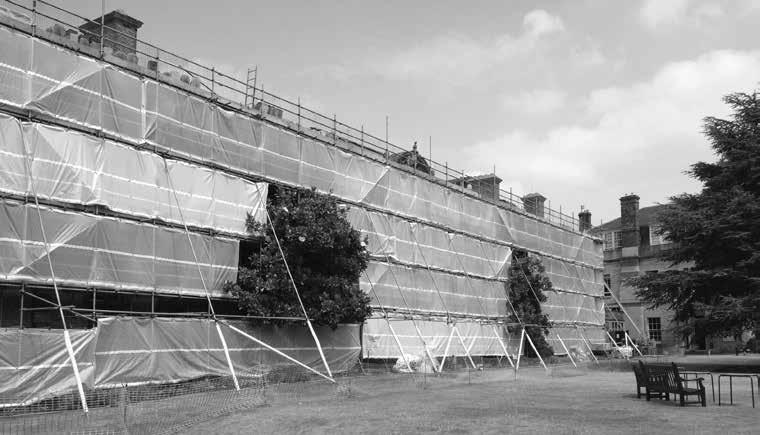
As I write from my temporary office in Maitland, I am looking across at a library swathed in scaffolding and plastic with only the two Magnolias still to be seen! The roof is being replaced after over one hundred years’ service and the opportunity is being taken to clean the stonework as well. We are all looking forward to the transformation and, as importantly, an end to the leaking roof in the upper library.
Inside the library we have been making some changes too. We have finally abolished the practice of ‘nesting’ (the creation of piles of books/papers/stationery on desks and then leaving them there for days and sometimes weeks at a time). It was becoming increasingly untenable to allow this practice to continue with the library busier than ever following increased student numbers living in College. In order to facilitate this culture change we have brought in a number of shelves and storage spaces so that users have somewhere to keep things without blocking desk space. Everyone seems happy with the change and the library is looking a lot tidier!
We have accessioned 2,072 books this year (2,300 last year) of which 563 have been gifts (last year 1,100). The largest gift received was from the bequest of Olive Sayce, Modern Languages Fellow 1965-1990. She left the college library her German, French and English literature collections which, with the help of Dr Suerbaum, we are sorting and accessioning where appropriate. Other generous gifts were received in the form of funds from Valerie Mendes and Margaret Lee (1943) whilst Mary Laing (1948) has kindly provided 21 limited edition books published by the Trianon Press representing facsimiles of William Blake’s published works, on long term loan. It is intended that we put on a small exhibition of the works in the new academic year. As ever, we have been overwhelmed by the generosity of Somervillians who have presented us with books this year and would like to thank you all for your gifts. A list of donors is appended to this report.
More thanks are due to two volunteers who have made major contributions to the library – Stine Berg was in Oxford for six months with her husband Petter, an academic visitor to the College from Norway. Stine came and helped out as a library assistant for three days a week in Michaelmas Term. We were very sorry to see her go but I think that we might have persuaded her that a career in librarianship might be a good move
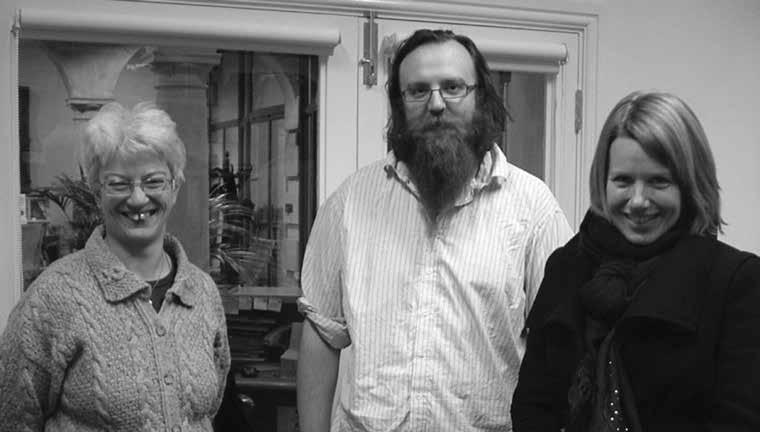
for her back home! Also providing a very valuable service has been Kate O’Donnell, a qualified archivist who has been a chef for many years and is now returning to the archive profession. She has been helping us make large steps forward in cataloguing our archives and thinking about our records management policies. We are fortunate enough to be able to retain her services and she will be working part-time next year in the College archives.
The archives have been used by researchers on 17 occasions this year on subjects as diverse as Mrs Humphry Ward, Internationalism in the twenties and student protests in the sixties. They also featured in teaching for second year historians preparing for their dissertations, as in previous years, and, for the first time, some of the Greek and Roman pots from the Amelia Edwards collection were used for teaching ‘Texts in Context’ to first year Classicists. The Special Collections have also been well used with a further 21 researchers looking at the papers of Vernon Lee, Amelia Edwards and the books of John Stuart Mill, amongst others. With the approaching centenary of the start of the First World War, the Vera Brittain collection has also experienced renewed interest this year and we are currently considering ways of making a Somerville contribution to the national commemoration of the Great War. Items from our Philippa Foot collection were borrowed by Kingston University in May as part of their major exhibition at Kingston Museum on the friendship between Iris Murdoch and Philippa Foot. The exhibition was mounted as a result of their recent acquisition of a large collection of Foot’s letters to Murdoch. As a follow up to the exhibition a group of 20 students from Kingston schools came to visit the College in July to look around and see more of the items in our own collection here.
The major achievement this year, however, was the completion of the Mary Somerville Online catalogue project which was funded by the Gladys Krieble Delmas Foundation. Over 9,000 items were reviewed, curated and catalogued with an online record being made available by the Bodleian library. Some of the items that have been highlighted as a result of the exercise are a physical description of Mary Somerville by Maria Edgworth, a letter from Charles Darwin commenting on Mary Somerville’s work on Orchids and an invitation to the Somervilles from Charles Babbage to join him and John Herschel
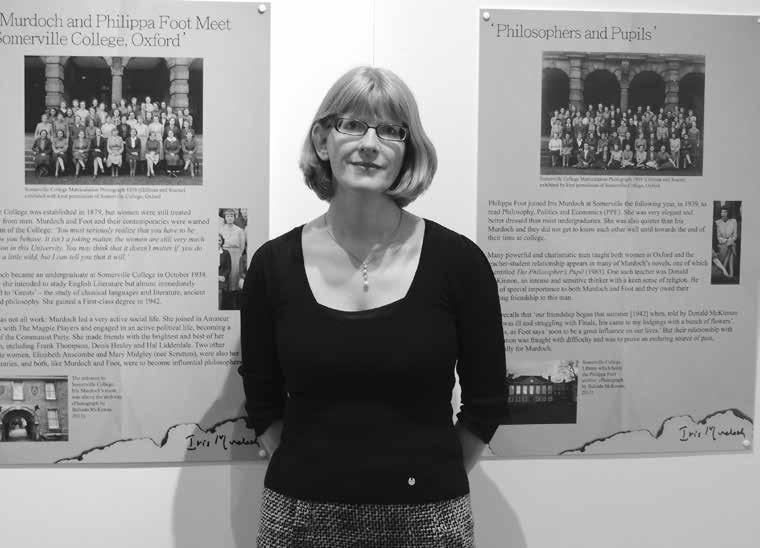
in a demonstration of his Calculating Engine (prototype computer). Soon after its completion in March, I gave an illustrated talk to the Edinburgh Alumni group on Mary Somerville, showing some of the items emerging as a result of the cataloguing project. This can be found on the College library website. The next phase will be to digitise parts of the collection so that we can encourage more people to study the collection whilst preserving it at the same time. We have already received a generous donation from Gillian Falconer (1944) towards this. If anyone else is interested in helping us with this project, I would be delighted to hear from them anne.manuel@some.ox.ac.uk
ANNE MANUEL, LIBRARIAN AND ARCHIVIST
Caroline Alexander*
Alyson J. K. Bailes*
Adiya Belgibayeva
Gill Bennett*
Rosie Bennison
Paula Boddington*
Mark Bostridge*
Lesley Brown*
Nadine Brummer*
Margaret Chatterjee*
Judith Collier
Stephanie Dalley*
Claudine Dauphin*
Louise Dennis*
Julie Dickson*
Ruth Finnegan*
Melanie Florence*
Katherine Fricker*
Manuela Galan
Daphne Gloag*
Manuele Gragnolati*
Charlotte Graves-Taylor*
Peter Grbac
Julia Griffin
Miriam T. Griffin*
Alessandro Gualtieri*
Susan Hancock*
Barbara Harvey
Alison Heath*
Carole Hillenbrand*
Beatrice Hitchman*
Richard Hitchman
David Hoffman*
Mary Thornton Howard*
Sophie Huxley*
Joanna Innes
Ruth Jolly*
Daniel Kurowski*
Naomi Layish*
Margaret Lee
Patrick McCormick
Kate McLoughlin*
Valerie Mendes*
Caroline Morrell*
Helen Morton
Hilary Ockendon
Rosie Oliver*
Bogdan Panait
Harvey Pitcher*
Stephen Pulman*
Susan Purver
Dani Rabinowitz
Dinah Rajak*
Reef Publishing
Matthew Roper
Sarah Ryle*
Olive Sayce
Laura Schack
Marjorie Senechal*
Naomi Shepherd*
David Smith*
George Southcombe*
Fiona Stafford
Richard Stone*
Lorna Sutton
Ursula Szulakowska*
Benjamin Thompson
Briar Thompson
Gervase Vernon*
Viking Publishers
Miranda Villiers*
Jenifer Wates*
J. S. Watts*
Stephen Weatherill*
Regina Weber*
Betty Williams*
Alison Wolf*
Anny Wynchank*
*Gift of donor’s own publication
Education has the power to transform lives. Finance should never be a barrier to education. At Somerville we are working harder than ever to ensure that we can support these values and continue to make them central to our ethos.
Philanthropy, therefore, has never been more vital to ensuring the everyday running of the College and we are profoundly grateful for the support we receive from our generous alumni and friends who continue the Somervillian philanthropic spirit through their life-changing donations and legacies. Someone once gave for us and now we give for the next generation of brilliant young talent. We cannot thank our supporters enough for their continued loyalty and belief in the value of a Somerville education.
Ensuring that we attract the most able students to Somerville, and not simply those who can afford to take up a place, is our greatest test in these challenging times of reduced government funding and increased tuition fees. Some students may expect to leave Oxford with a burden of debt of up to £50,000 and for many young people that prospect is simply an overwhelming deterrent, even though they will not have to pay it back at a burdensome rate. With the help of our alumni and friends, we are working hard to respond to this urgent need for student support. At Somerville, we are proud to be able to offer financial support in the form of bursaries or hardship funds to almost 30% of our students.
Clear testament to the generosity and commitment of our supporters to studentships and teaching at Somerville is the exceptional progress we have made in the fundraising efforts towards the £25m campaign which was launched in 2009. We are delighted to report that we are now tantalisingly close to realising our target, having raised an
impressive £24.5 million in cash and pledges, which includes the support from the government of India and the University mentioned in the Principal’s report. We hope to reach the final target figure in the coming months but when we do achieve this, it will in no way reduce the energy we commit to college fundraising as long as we face this incredibly challenging funding environment.
Our tutorial system, offering one-to-one or one-to-two supervision with its emphasis on critical thinking , requires ongoing financial support. It costs £2 million to endow a tutorial fellowship post. The Oxford Teaching Fund, a University matched funding initiative, offers Somerville a unique opportunity to secure the future of some its most significant teaching posts. As many alumni will be aware, by working together and boosted by some inspirational individual gifts we were able to raise the £1.2 million required to unlock the further £800,000 to endow the Philosophy Fellowship.
Our next challenge is to replicate this success with the French Fellowship. Somerville College has a long and rich tradition of teaching French Language and Literature. We have made some pleasing progress towards that target but we still seek significant donations to protect the study of French language, literature, culture and heritage at Somerville in perpetuity. Not only does the College have the oldest commitment to modern languages in the university, it also has the most sustained commitment up to the present. Our five Fellows in modern languages and linguistics put the subject at the heart of the College in a way that few other colleges can match. Our library provisions in modern languages are the most extensive anywhere in the university. We are a real focus for the study of modern languages, in the university, and in higher education more generally. Any reduction of the provision of French within those languages would end Somerville’s role as a hub for the subject. We are enormously grateful for the substantial donations made towards the support of modern languages as well as the advice and introductions offered by our distinguished alumni and volunteers on the Development Board. The Teaching Fund opportunity is also a race against time with a deadline of September 2014 to reach our target and we appreciate all the ongoing efforts to help secure the French Fellowship within this timeframe.
The Annual Fund supports the immediate financial needs of the College and allows us to deliver on the essential service and excellence of teaching and student support required to maintain our high standards and aspirations. At the start of this academic year the fund was once again bolstered by the intensive two weeks of the Telethon. We
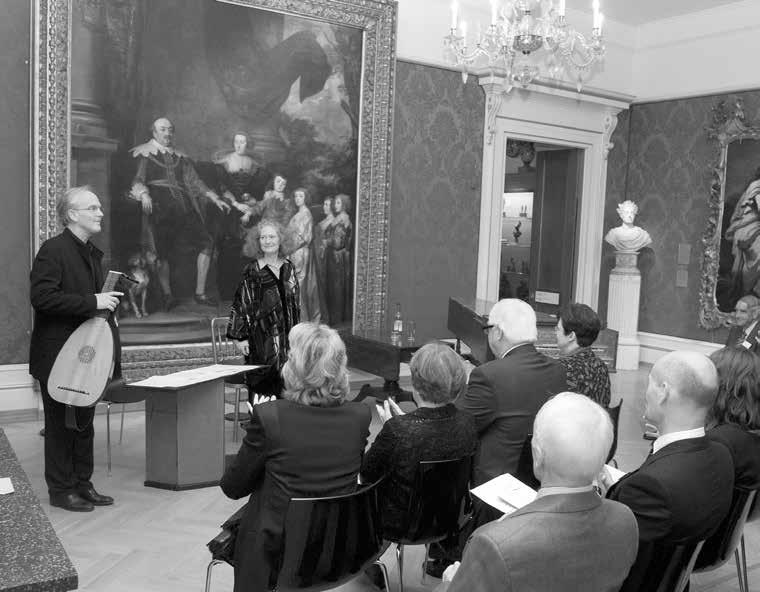
raised £156,000 for which we are enormously grateful. It was a tremendous achievement considering the many other ways alumni were supporting us at the time through the new buildings and philosophy appeals. Our dedicated student callers worked night and day to make 785 fundraising calls and we achieved a 57.45% giving rate – our highest to date. It is highly rewarding to hear the feedback from alumni after the calls. Hearing about the student experience first-hand continues to be a source of interest and we are grateful for the support that is given in return. These conversations offer an invaluable experience to our students too who often receive so much more than a donation or regular gift: they receive a historical perspective, wise counsel and career development advice from our alumni with their vast spectrum of experience, not to mention a set of skills which will serve them well for the future.
The year also brought another impressive line-up of alumni events, organised by the development office and heavily supported by many of the other college departments. One of the highlights was a glittering gala concert for our leading donors in the Ashmolean Museum, in the presence of the Chancellor and his wife, Lord and Lady Patten, in aid of our campaign to fund Fellowships in Philosophy and French. The great Somervillian soprano alumna Dame Emma Kirkby and her lutenist colleague Jakob Lindberg performed a beautiful programme of baroque music and it was a magical evening. We were also treated to a fantastic concert given by the Somerville choir in the College Chapel followed by a suitably festive reception for supporters of Somerville and Oxford-based alumni, an event we will repeat again in the coming year. Special thanks must go to the endlessly energetic Liz Cooke who comes up with such a creative and interesting programme of events for alumni to enjoy.
As the Principal describes in her opening report, the projects and campaigns which will further establish Somerville’s reputation in the global arena, from the Global Ocean Commission to the Indira Gandhi Centre for Sustainable Development to the ambitious scope of the Thatcher scholarships, all serve our efforts to maintain and enhance the College’s standards of excellence. I am thrilled to have returned to Somerville, my own alma mater, and I am grateful for and humbled by the unbounded energy, creativity and commitment from all those who support our efforts: they include my predecessor Julie Hage who made such a tremendous contribution to development at Somerville, the respected Fellows and staff at the College, the talented development team, the distinguished members of our Development Board and the army of generous and engaged alumni and friends of Somerville.
SARA KALIM, DEVELOPMENT DIRECTOR
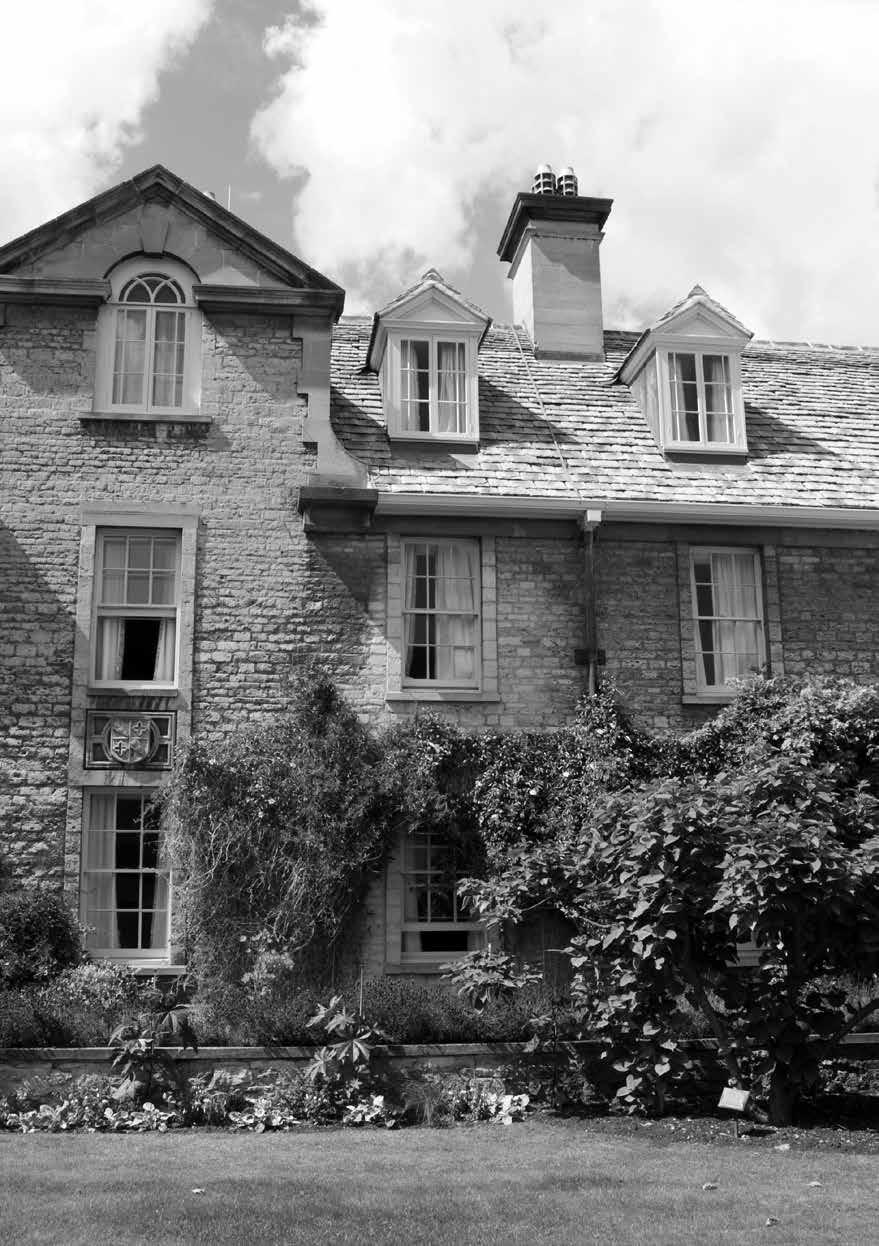
The Somerville Association plays a vital role in strengthening links between past and present members of the College and students, to mutual benefit and enjoyment. That role has never been more critical than now, in such challenging economic times, particularly for young, talented people who seek work. But never have there been so many new as well as traditional ways to support those links and networks and help students find their way into worthwhile employment.
I have greatly valued the friendships first formed over 30 years ago at Somerville, in both my personal and professional life. It has been a real pleasure to keep in touch with new generations of students and fellows, whether in Oxford, (or usually for me) in London, or increasingly overseas, to meet a distinguished Somervillian who has carved a career in the arts or sciences, in business or the voluntary sector, in politics, law, diplomacy or public service. So I was touched and honoured to be elected President of the Association this March.
Thanks to the wise guidance of my predecessor, Karen Richardson, and the total commitment of Liz Cooke, our superb Secretary and essential contact for every network (elizabeth.cooke@some.ox.ac.uk), I am delighted to say that the Association goes from strength to strength.
In April, the College hosted a Medics’ Day and we also made up perhaps the largest contingent at the great Oxford University European Reunion in Madrid.
May brought a moving memorial for Olive Sayce, followed in June by the annual Commemoration Service. Every year the Association invites the families and friends of those Somervillians who have died in the past twelve months to lunch and a service of thanksgiving in the Chapel. This year, Professor Katherine Duncan-Jones gave a wonderfully warm and witty address in celebration of their lives and you can read this address on the College website (http://www.some.ox.ac.uk/CMS/files/ Commemoration%20service%202013.pdf).
Other events in June were a superb talk by the former Chief Historian at the Foreign and Commonwealth Office, Gill Bennett, at the Oxford and Cambridge Club, organised by the Somerville London Group, and in College a reunion for Biologists and a Somervillian Teachers’ Symposium. The Gaudy for 1967-1977 closed a very busy month
on a high note, including an impromptu and brilliant lecture by our Principal, Dr Alice Prochaska, on the work of a group of British and American academics within the US Army in the Second World War to preserve historical sites and artefacts during the North African campaign.
We are delighted that five Somervillians have been awarded Honours this year. In the New Year’s Honours list, Professor Joanna Haigh (1972, Physics) received a CBE for services to physics, Eleanor Fuller (Breedon, 1972, Modern Languages) received an OBE for services to human rights and diplomacy and Shiban Akbar (1987, English MPhil) received an OBE for services to the community and voluntary services to the Muslim community. In the Queen’s Birthday Honours list, Professor Helen Apsimon (Hollingsworth, 1960, Mathematics) received a CBE for services to air pollution science and Mary Rimington (1968, History) received an MBE for services to further education. Just as this Report goes to print, we have the news that Lucy Neville-Rolfe (PPE, 1970) has been elevated to the peerage. We offer them all our warmest congratulations.
SUSAN SCHOLEFIELD, PRESIDENT
This year, because of a fall in investment income, the Somerville Senior Members’ Fund has not contributed towards a Bursary for a Somervillian wishing to continue graduate studies at Somerville. We hope to resume this support in the next academic year.
However, over the past year we have received several applications for grants and were able to respond quickly with small sums to help with unforeseen expenses and hardship. We hope that people who find themselves in need will not hesitate to call upon the Fund. We are always glad to hear from third parties who think help would be appreciated. And we are always grateful for donations to the Fund.
Applications for grants should be made to elizabeth.cooke@some.ox.ac.uk or Lesley.brown@some.ox.ac.uk
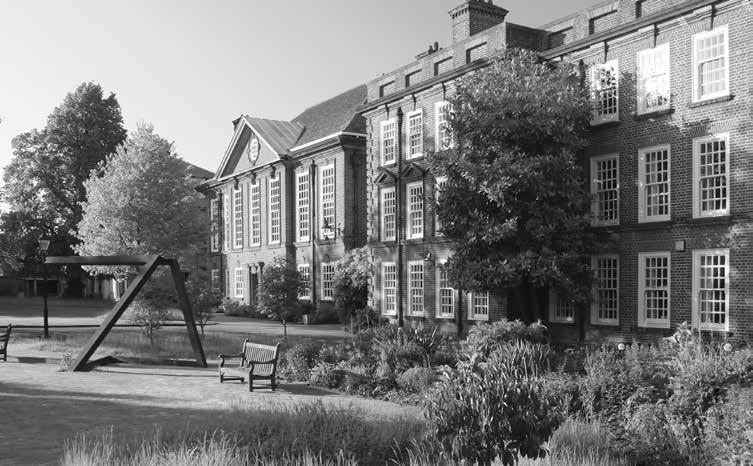
SuZANNE HEyWOOD (née Cook) came up to read Zoology at Somerville in 1987. In 1993 she received a PhD from King’s College, Cambridge before joining HM Treasury as a fast stream trainee. She is now a Director (senior partner) at McKinsey & Co and is also on the Boards of the Royal Opera House and Royal Academy of Music. She lives in London with her husband Jeremy and their three children. See photograph at page 70.
I remember the day of my Somerville interview very clearly. I had never been to Oxford and had felt rather daunted walking into the college the night before. In advance of getting there I had not really thought about what it would be like or how others would see me. But on the morning of my interview I was very conscious – as only a teenage girl can be – of how different I looked, wearing my long, pleated, blue wool skirt that I had made myself (and had been very proud of back in New Zealand) and clutching a photograph album full of pictures of whales and dolphins I had taken myself off the side of our boat.
Although I felt different I don’t think I realised – perhaps luckily – quite how different I was. I quickly discovered that the first question everyone asked was ‘Where did you go to school?’ The answer – ‘I didn’t – I grew up on a boat’ –rarely elicited further questioning, just baffled looks from my peers.
Looking back, the fact that I was at Somerville for that interview, with at least some of the right qualifications, is almost incredible.
A year before it had looked far less likely. At that time I was living with my younger brother Jon in a small holiday house an hour’s drive from Rotorua – a
beautiful town in central New Zealand famed for its black swans and sulphuric smell. My parents had left us to it – in order to bring in some family income by chartering our boat Wavewalker up through the Pacific. Apart from a fleeting visit from my father, they did not return for the best part of a year.
It was a very rapid way to grow up. My 15 year old brother and I were living in a beautiful location overlooking Lake Rotoiti. It was very isolated with only basic amenities (even by New Zealand standards a twin tub washing machine and a small, wood-burning, stove was prehistoric as was a car with bench seats). As I was alone in the house most of the time, when things broke (as they often did), I had to sort them out myself. My brother had a more normal existence, going by bus to school each day. I, meanwhile, stayed at home, completing my A-level equivalents by correspondence through Australia. I had not actually been to normal school for more than a year since I was 7 years old.
I have always been determined to go to university. I don’t know why as there is no history of it in my family. Both of my parents had gone to teacher training college but I certainly cannot point to previous generations of Somervillians in my family. Whiling away the hours alone in that house in New Zealand I became ever more convinced that education would be the way to find myself a place in the world. The tricky issue was how, as a 16 year old girl living in rural New Zealand with no family apart from a younger brother, I should get myself into university.
Before we set sail my life was relatively conventional – or at least far more so than it was soon to become. I was born in Southampton while my father was setting up the Motor Museum at Beaulieu. Then my family moved to Warwick, to live under the walls of the castle while my father worked with Lord Brooke to make the castle pay for its own upkeep.
Apart from occasional encounters with castle ghosts, life was good. I was attending Emscote Lawn School in Warwick while also learning the violin and riding horses.
What I did not notice was that my father was not only working at Warwick Castle, he was also building a boat on the Isle of Wight: a 69-foot wooden schooner (double masted). With a family name of Cook and a Yorkshire background, he was concerned that not enough was being done to celebrate the 200th anniversary of Captain James Cook’s voyages around the world. Various attempts by others to celebrate the anniversaries of
Cook’s first or second voyages had not gone ahead so my father was determined to be ready for the third.
So, having told the headmaster of our school that we were leaving (he dolefully predicted that, despite some early successes, our academic careers were over), we duly set sail on Wavewalker in July 1976 leaving behind us a Britain in the midst of economic crisis. On board were my parents, two crew members, my brother and me. Very little went with us given the space constraints. The violin was sadly left behind, as well as my beloved dolls house. But I did insist on taking one prized possession – my favourite teddy, Old Blue Eyes, who survived all of what followed and is still with me today, propping up the pillows in our spare room.
We sailed from Southampton down to South America via Madeira and the Canaries. Crossing the South Atlantic by sail is a long voyage but my brother and I quickly acclimatized, as children do, and were soon very agile and confident in moving around the boat, even in heavy weather. Our cabins became kingdoms with their own flags, toy citizens and diplomatic skirmishes. Days at sea quickly merged into one another although mid-voyage we had the highlight of our first crossing of the equator at sea, which we celebrated in traditional fashion by being soaked by buckets of salt water by King Neptune.
After many weeks at sea we arrived in Rio in September 1976. We stayed for several weeks of rest, then headed on across the South Atlantic to Cape Town, stopping at Tristan Da Cunha en route, arriving in November. It was a good crossing: again several weeks at sea, but we were used to that by then. We were also used to battling into the wind (unfortunately Cook sailed the ‘wrong way’ around the world, into the prevailing wind all the way, so 200 years later we were following in his wake and battling the same winds).
We arrived in a Cape Town disfigured by apartheid. I remember vividly the shock and bemusement of seeing the lines of public toilets each labelled with the precise race that was allowed to use it. We stayed for several weeks restocking and making the boat fully sea-worthy as we knew the most difficult part of our voyage was the next one – across the Indian Ocean to Australia. We had no idea how difficult that crossing would be.
We set sail from South Africa in early December 1976 and celebrated a memorable Christmas in a storm at sea, our small, plastic Christmas tree tied down on top of a
cupboard in the main cabin. Despite the circumstances, somehow Santa arrived, so my brother and I still had presents.
The weather continued to worsen after Christmas. We heard on the radio that there was a cyclone chasing us from Cape Town and, unfortunately, travelling far faster than we could. A day or so later it hit us. We prepared as much as we could by lashing everything down on deck and dragging ropes behind Wavewalker to slow us down. But the cyclone did not hit us and move on as we had expected. Instead it paused and circled around us for another 48 hours, the waves increasing hour by hour. Eventually we found ourselves surfing down immensely high waves – measured against the height of our mast most were 40 or 50 feet high. Somehow we managed to do that without damaging the boat. But my father, the only person skilled enough to manage the helm for most of this time, was utterly exhausted with the physical and mental effort required.
And then it happened. We don’t know why or how but several waves combined together and when my father looked behind him he saw a wave that was half as high again as our main mast – about 90 feet high – towering over the boat like a thunderous, black cloud. It broke over us, missing the first 35 foot of our deck, crashing straight through several inches of wood into the deck below and then leaving out of the side of the boat, damaging the main ribs of the hull. The force was so strong that it took our dinghy (the small boat we used to get to and from shore when moored) with it and left it smashed into pieces in the bilges below the floorboards.
I know now that we were very lucky to survive. My father went overboard when the wave hit but, as the boat righted, was flung back on board before he drowned. He broke several ribs and his nose (which he later had to re-break himself). I too was badly hurt –I had been down in the galley (kitchen) with my mother and was flung against the side of the boat when the wave hit, fracturing my skull and gaining a blood clot on the brain. Thankfully we did not get into the life raft – no matter how badly damaged the boat was our chance of survival was far better on board. And finally, through an amazing feat of navigation, my father managed to determine a course that took us three days later to our salvation – in the form of the small volcanic island, Isle Amsterdam. Although this was little more than a volcanic rock with a small scientific base, it was enough to enable us to make some basic repairs and for me to receive multiple head operations (unfortunately without anaesthetic).
Eventually we did make our way to Australia – my brother, mother and I were airlifted off Isle Amsterdam and went by cargo ship to Australia and my father struggled on with our two crew members and arrived in February 1977. We stayed for several months in Fremantle, Australia repairing the boat and then were able to complete our reconstruction of Cook’s voyage, sailing up through the Pacific to arrive in 1979 in Hawaii. Cook himself had an eventful third voyage (even before he was killed and eaten in Hawaii), so would probably have appreciated our reconstruction.
By this point I was 10 years old and my formal education had been rather interrupted to say the least! My mother had taught us the primary maths and English curriculum using the textbooks we had been given by our primary school. When we finally reached Hawaii, the local schools near the boatyard were so rough my parents did not want to send us there. So we had well over a year with very little formal education.
After running an exhibition on Cook’s life in Hanauma Bay on the North Shore of Oahu in Hawaii, which marked the end of our main voyage, my parents decided that, rather than returning to the UK through the Panama Canal, as originally intended, we would instead turn west and sail back down through the Pacific Ocean to Australia. By this time they had fallen in love with sailing and were in no hurry to return to conventional life in a UK in the midst of a recession.
This meant a further delay in any schooling. When we finally made it to Queensland, Australia in 1981 we were enrolled in the nearest state school – Maroochydore State High. Though this was the nearest secondary school to the harbour where we were moored, it had very little else to recommend it. But for me it was the first structured education I had had in a long time and I grabbed everything I could from it, spending long hours in the library reading whatever I could find. My enthusiasm for learning did not always go down well with my peers – particularly when it translated into going to find teachers who had not shown up for lessons.
This lasted for a year – till I was turning 13 and beginning to make some good teenage friends. But soon we had to set sail again. My father had taken on various odd jobs in Queensland (everything from working on a building site to selling awnings and blinds) but our boat remained the best way of making money so we started selling cruises –taking people for 6 to 8 week voyages around parts of the South Pacific, looking for whales and dolphins and teaching them to sail. We could fit 4 or 5 cruises into a year,
with up to 12 paying crew on each, before returning to either Australia or New Zealand for the cyclone season (November to February).
I was very keen to keep going with my schooling so we signed up with the Queensland Correspondence School which is based in Brisbane. This school is set up to teach children living in the outback, in prison and on boats (the smallest group!). At the start of each year we were given a stack of books and lesson papers and asked, each week, to answer the questions at the end of each chapter for each subject and send them back to the school.
This then became my schooling right through to Somerville. In this pre-internet age it was not easy. When I became stuck, which happened all too often, I had no source of information other than the written materials from the school and the text books. The system depended on getting marked lessons back from the school each week with corrections and comments. On a sailing boat this rarely happened as we frequently changed destination and rarely visited cities with post offices in them. There were subjects I could not study, like chemistry, as the experiments were too dangerous to do on board. For less popular subjects (like senior physics) the school had not yet written any lessons so all you had was a text-book – not a good way to learn quantum mechanics.
What it did teach was determination and I certainly had that. In fact my determination grew as I fought to find space and time to learn. I had no private space to study on board so I used to wedge myself in the corner of the main cabin, focus in on my books and ignore up to 15 people milling around talking, eating, playing games and arguing. I was also, by this time, considered to be a fully working crew member on a boat full of novices so finding time for studying became increasingly difficult between working on deck or in the galley. As my love for biology increased I was determined to do the practical work despite the challenges of doing so – for example before I could do a dissection I first had to find and catch my own frog.
When I was 15 we arrived in New Zealand. By this time my brother and I had completed our junior certificates and I was one year into my senior certificate. The plan was for my younger brother, who had found correspondence school more difficult, to go to day school, while I completed my correspondence course. My father had a job in New Zealand and was going to look after us, while my mother chartered the boat with a hired skipper. Of course that did not happen. The skipper did not work out and my father
left to join my mother within a few weeks. So that is how I ended up, with my younger brother, in that house in New Zealand, for a year, completing my schooling.
When the time came to apply to university I had no idea how to do it. My aunt in England kindly sent me a copy of a newspaper I had never heard of – the Times Educational Supplement – and, based on that, I wrote to all the universities around the world who were known for their academics and, in particular, for biology. Some did not reply (I suspect many were wrongly addressed) and others, like London University, replied to say that they could not consider me. Oxford, and then Somerville, did reply and that is why I ended up that day in Somerville waiting for my interview having flown from New Zealand on a one-way ticket.
I still remain immensely grateful to Somerville, and particularly to Marian Dawkins, my tutor, and Daphne Park, the then Principal of Somerville, for considering my application, and awarding me a place. I think they saw something in me that many others would not have seen. I am also grateful to a highly inspirational biology teacher at the correspondence school who was passionate both about his subject and about helping me to get to university. Finally I must also thank the other girls in my year for their tolerance in dealing with my reintroduction into ‘normal’ society. To this day they have kept to themselves what they thought of that fresh-faced ingénue with a kiwi accent in her long, pleated wool skirts and a prized collection of whale and dolphin photos!
The editors of this Report welcome contributions and in particular we should love to hear from anyone who led an unusual life before coming up to Somerville and would be willing to write about it.
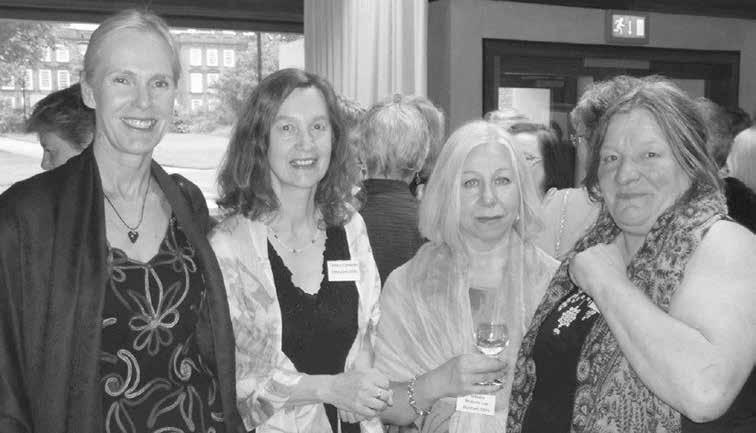
The sense of anticipation in advance of a Somerville Gaudy is often tainted with apprehension, but why? I had three wonderful years at Somerville, 1974 to 1977, and left with a Class II degree in Zoology, a rose-tinted view of the world and no idea what I was going to do next. Returning for a Gaudy, I look forward to meeting friends, catching up on news and enjoying the buzz of being back at Somerville.
Why the apprehension? It’s not easy to pin down all the reasons but I think one inevitably takes stock of one’s life on these occasions. When I sailed forth in 1977, what were my hopes and expectations? How has life measured up and how have I performed? Of course, it is inevitable that one looks around at the Gaudy, hears other stories and wonders how one did. Did you meet your own standards, reach your full potential,
succeed against the odds, soar above the horizon or sink below the waves? How do you see yourself now – and, at the much-anticipated Gaudy, how do others see you? The latter is the question that troubles us most: how do we measure up in comparison to our contemporaries? For many, how we look is also an important criterion, though I think we all accept that this is less important as we get older (or is that just me?).
Amongst us there are definitely some high-flyers, as you might expect of an Oxford college, but there are many that live what might be considered ‘ordinary’ lives. After the drinks reception and the excellent wine at dinner, I tried to articulate the value of those who take on the unremarkable but essential roles of everyday life and work to the best of their ability with an Oxford education behind them. Some of us, me included, are now ‘economically inactive’. That is: not in paid employment, not retired, not claiming any state benefit. Some have reduced their working hours and work part-time. Of my little group of four friends, all of us do some kind of voluntary work, whether it is akin to a full-time occupation or additional time, unpaid, on top of part-time work.
The point I tried to make over dinner was that there is a great deal of fantastic work, paid and unpaid, that goes completely unrecognised by society in general. Somerville, in addition to producing scientists, politicians, diplomats and authors who have names we all recognise has produced a wonderful cohort of women (and now men too) who are pillars of our communities. This is something to be acknowledged and celebrated and the Gaudy was a fine opportunity to do it.
In answering those self-searching questions, I might come across as a bit disappointed with life as I don’t feel I have done anything remarkable in the last forty years, but I do consider myself extremely lucky to have a happy marriage, two fine children and a series of enjoyable jobs. It is a matter of perception: I don’t want, or feel I deserve, gratitude for my voluntary work, I enjoy it and do it willingly; I just wish it had some kind of acceptable status. Our social standing is defined by the status of our job; work done voluntarily just doesn’t count. When people ask what I am doing now, my selfesteem plummets and I quickly change the subject as it would take too long to explain.
Next year, it will be forty years since the four of us (Gail Sperrin, Teresa Clements, Sohaila Malone-Lee and Erica Wildgoose; see photograph at page 58) first met at Somerville in 1974. We hope to meet up and celebrate, as we all look back on our time at Somerville with gratitude and affection. We will also remember those friends we haven’t seen at the Gaudies; Somerville can be proud of them too. Those quiet, modest
contributions to society should also be valued and the contributors are worthy of our appreciation and celebration.
Going back to College somehow spurs me on and feeling re-established as part of the College community is very uplifting. If apprehension put you off attending a Gaudy, cast it aside, I thoroughly enjoyed all the events and look forward to the next invitation.
I would like to add my strong endorsement of Teresa’s views about the huge value of voluntary work undertaken by many, perhaps most, Somervillians. It is difficult to imagine a flourishing civil society without the immense amount of work done so often by highly educated women. Public service, paid and unpaid, is one of Somerville’s finest traditions and I know from my three years’ experience of talking to undergraduates how strong that tradition still is in the younger generation. Somerville students have been running Molly’s Library in Ghana for ten years now, and individual students constantly impress and humble me with their range of creative volunteering: overseas in hospitals and in remote areas building facilities and teaching, and closer to home in schools, community centres, reading to prisoners, visiting hospices, and establishing fullyfledged charities of their own, like the medical student who is running a programme to coach and encourage young women from her home area to aspire to university. I should love to hear more about what you are all doing and I hope that we shall be able to feature some of this in the next issue of the College magazine.
The College organises a 2-day reunion each year to celebrate the 50th anniversary of matriculation. The year of 1963 will be celebrating 18-19 September this year and they have prepared an extensive biographical report, which is available to members of the year. On 17-18 September 2014 it will be the turn of 1964.
If you are keen to organise a reunion for your year – perhaps the 10th? 25th? 40th? or 60th? – please contact elizabeth.cooke@some.ox.ac.uk
Olga Robb (Mrs Olver) writes: ‘I have a great-grandson. His name, in case you should come across it in 2030 or thereabouts, is Peter Dunville. So far (July 2013) he hasn’t spoken, but you can see he is thinking (possibly, of course, about lunch).
Mary Vernon (Mrs Grodecki) reports that her granddaughter, Anna Lewis, has had her first collection of poetry published and her grandson, Adam Grodecki (St Peter’s, 2006), is co-founder and chairman of trustees of Student Hubs, a charity founded to encourage and organise student volunteering locally and globally.
Daphne Swan (Mrs Sleigh) has published The Artist in the Cloister: The Life and Works of Father Dunstan Massey (Heritage House Publishing, 2013). It is a biography of a British Columbian artist who gave up the prospect of a brilliant career to become a Benedictine monk. Daphne’s object was to try to bring him greater public recognition than has been possible so far, given the obscurity of the monastery.
Margaret Whale (Lady Elliot) and her husband, Sir Gerald Elliot, have been most generous benefactors to Somerville over many years; in March 2013 they hosted an elegant reception for the College at their Edinburgh home, at which the guest speaker was Professor Carole Hillenbrand (1968, Hon. Fellow). We are delighted to congratulate
the Elliots on the award in 2012 of the Prince of Wales Medal for Philanthropy for their Binks Trust.
Audrey Butler now has two greatgranddaughters and is looking forward to the marriage in Oxford later this year of her grandson, a Worcester graduate, to a graduate of Lincoln College.
Barbara Lockwood (Mrs Forrai) writes: ‘In August I had a fantastic expedition trip to Franz Joseph Land (FJL), NE of Spitzbergen, on a Russian ship, the MV Ortelius, a Class 1 ice-strengthened vessel. It was incredibly exciting to be standing on the spot where Nansen stumbled into Jackson’s camp after his 3 Arctic winters. One day we saw 60-70 whales of varying species and another, we sailed through the pack-ice filming the families of Polar Bears and the ice cracking away from our bows. The sound of the ice and the wind on the video brings all the elation back unbelievably clearly. That day we came within 500 miles of the North Pole!’ See photograph at page 67.
Rosalind Rewcastle (Dr Maskell) is delighted that her son Giles (Merton, 1974) has been elected President of the Royal College of Radiologists.
Mary Shorter had cataract surgery at one hospital on 3 April, which went horribly wrong; she was subsequently referred to another hospital, where repair work was not initially successful. She had no lens
on the eye for fourteen weeks and is still (July) suffering soreness after three more operations. ‘This has rendered reading, writing and typing almost impossible, so becoming illiterate.’
Bridget Hoare (Mrs Fielding) writes: ‘I am now 82 years old and have reached a reflective stage of my life. I have completed the family tree as far as I can, with some professional help. I did get one or two surprises. I have also written (and printed on my computer) our family story which included many family photographs. Two of my granddaughters are carrying on the family tradition studying physics. One is at Durham and the other at Leeds (in the department where my father was professor).’
Ruth Finnegan, using the name Catherine Farrar, has published The Little Angel and the Three Wisdoms (ISBN 978-1-61897-360-3). It can be ordered through the publisher’s website http://sbpra.com/ CatherineFarrar or from Amazon (www.amazon.com or www.amazon. co.uk) or www.barnesandnoble. com. Any profits are to go to a family charity giving grants towards welfare, education, research, perhaps including Somerville Library, still after 60 years very close to Ruth’s heart.
Judith Mundlak (Dr Taylor) has founded an essay competition at the City College of San Francisco to
honour the memory of the librarian at the SF Botanical Garden who died in 2010.
Doreen Vaughan (Dr Boyce), former President of the Buhl Foundation, Pittsburgh, and Chairman of Trustees of Franklin & Marshall College, currently Chair of Directors of Dollar Bank, was honoured with a Lifetime Achievement Award by the Three Rivers Chapter of the National Association of Corporate Directors (NACD) at a special luncheon on 20 February 2013. Doreen, described in the award as an iconic leader in Pittsburgh’s corporate and not-for-profit communities, was recognised for her remarkable leadership in corporate governance, women’s advocacy and for her role in creating three wellrespected organisations, the Three Rivers Chapter of the NACD, the Executive Women’s Council and the International Women’s Forum. For full details please see http://bmobile. reuters.com/article/pressRelease/ idUSnPnNE55937+160+PRN20130206
Hilary Maunsell (Dr Brown) writes: ‘We continue to enjoy living amidst the varied weather and scenery of northwest Scotland. I am a volunteer guide at Inverewe Garden during the summer months. After this year’s cold spring the rhododendrons both there and in our own garden gave a magnificent display of bloom. In February, on a beautiful winter day, we went to the funeral service for Jean Banister in the little church at Ardgour, close to her house. We were able to tell her friends and neighbours, who knew her only in her long retirement,
something of her Oxford life in Laboratory and College.’
Miranda McKenna (Mrs Villiers) has published with her husband a history of the Society of Our Lady of Lourdes, In the Service of Our Lady, to celebrate the Society’s Centenary in 2012. She and Angela Gillon (Spear, 1961) sit on the Council and on the Finance Committee of Queen Alexandra’s House, Kensington, a hostel offering full board and lodging for women in education in a Grade 1 listed building near the Albert Hall in the 1851 Exhibition complex. It is now 130 years old, and its repair and maintenance requires constant attention.
1955
Helen Ross has two publications this year: S. Nicolas, H. E. Ross and D. J. Murray, ‘Charpentier’s papers of 1886 and 1891 on weight perception and the size-weight illusion’ in Perceptual and Motor Skills 115:1 (August 2012); and H. E. Ross, ‘Is the moon illusion an illusion?’, chapter 6 in C. Calabi (ed.), Perceptual Illusions: Philosophical and Psychological Essays (Palgrave Macmillan, 2012).
Judy Spark (Mrs Grossman) is a writer and retired college professor of English, living in Massachusetts. She has been primary carer for her partner with Alzheimer’s disease for the last eight years and he has recently moved into a nursing home.
1956
Sonia Abrams (née Edelman, Professor Jackson), Professor Emerita of the Institute of Education, University of London, has published papers in Children and Youth Services Review and Journal of Education Policy (2012). She was Guest Editor of a special issue of the European
Journal of Social Work (February 2013); the 3rd edition of People Under Three (Routledge) and three other books are in press or preparation to be published 2013/14. Her 16th grandchild, Freyda, was born on 9 May 2013.
Hannah Oppenheimer (Mrs Edmonds) now has ten grandchildren. She and her husband are busy in their retirement with travel, voluntary work, theatre, concerts, exhibitions, gardening, etc. They raised over £6,000 for their local hospice by swimming ‘the Channel’ in a pool over 13 days!
1957
Alison Graham (Mrs Heath) has published the biography of her step-grandfather: The Life of George Ranken Askwith 1861-1942 (Pickering & Chatto, April 2013; publisher’s website www.pickeringchatto.com/ askwith). Lord Askwith was a key player in industrial relations for the first two decades of the twentieth century. The book represents 15 years of research mainly in the National Archives, but Alison was fortunate enough to have access to her grandmother’s diary and some personal correspondence.
1958
Frances Kaldor (Professor Stewart) is a co-winner of the 2013 Leontief Prize for Advancing the Frontiers of Economic Thought. The prize recognises outstanding contributions to economic theory that address contemporary realities and support just and sustainable societies.
Janet Treloar is delighted to press on with Russian-focused work and to have been invited to take part in the St Petersburg Biennale (November 2013), and also to be guest of honour
at the Chelsea Arts Club Whistler Dinner at which the guest speaker will be the Russian art historian, Dr Galina Andreeva.
Eleanor Aitken (Dr Arie) and her husband Tom enjoyed a tropical weekend in Norfolk in early July with a family gathering of 13 to celebrate their fiftieth wedding anniversary. The College is delighted to offer belated congratulations!
Onora O’Neill (Baroness O’Neill) has become the Head of the Equality and Human Rights Commission.
Carol Bishop (Dr Morrison) writes: ‘I have just completed a project started in 2008 to paint portraits of victims of injustice using information provided by Amnesty International. This project involved forming an Amnesty International Urgent Action Circle, who wrote letters on behalf of the victims. The first ten portraits and copies of the letters were shown at the Immigration Museum in Halifax in 2010, and after two more portraits were added the portraits were shown around Nova Scotia and in New Brunswick. The portraits are now available for sale, with 50% of the proceeds going to Amnesty International. Two have already been sold, with one on its way to Singapore. Details of the project can be seen on my website at www. carolsfineart.ca .’
Helen Hollingsworth (Professor Apsimon), who is Professor of Air Pollution Studies at the Centre for Environmental Policy, Imperial College, London, was awarded a CBE in the Queen’s Birthday Honours List, 2013, for services to Air Pollution Science.
Carol Saunderson (Dr Huber) and her husband are now fully retired and enjoy good health. They do as much travelling as feasible, particularly to Switzerland (where they have family) and Japan (where they have friends).
Christine Lee writes: ‘In July, at the World Federation of Hemophilia (WFH) World Congress held in Paris, I was given the WFH International Lifetime Achievement Award. The citation reads: “This award is given to an individual for a body of work over a period of time. Recipients have made outstanding contributions to furthering the mission and goals of the WFH throughout their career and for a significant part of their lives. The recipient’s involvement typically spans a range of activities including WFH committees and programs on blood safety, healthcare development, advocacy, fundraising, communications, congress or involvement in national member organisations.” In particular, I founded the international peerreviewed journal Haemophilia, published by Wiley-Blackwell, and have edited it for the past 20 years.’
1967
Carolyn Beckingham is still working as a legal interpreter (French) and doing voluntary work for the International Liberty Association (formerly Iran Liberty Association –they changed the name so as not to be mistaken for supporters of the present régime), which is trying to bring about democratic change in Iran. She is also helping to set up a new campaigning organisation, the Link for Freedom Foundation, with the same purpose. Her translation from French of Face to Face with the
Beast: Iranian Women in Mullahs’ Prisons by Hengameh Haj Hassan, was published last year by HOMA Association.
Alison Potter (Professor Wolf) published in 2013 The XX Factor: How Working Women are Creating a New Society (Profile Books, UK; Random House, USA), in which Somerville features prominently.
1968
Mary Rimington, Deputy Principal for Curriculum at City and Islington College, has been awarded an MBE in the Queen’s Birthday Honours List for services to Further Education. This award recognises the work that Mary has delivered at the College since she began working there as a part-time lecturer in 1982 when it was known as City and East London College.
1969
Jill Harries, Professor of Ancient History at the University of St Andrews, published in 2012 Imperial Rome, AD 284-363: The New Empire, volume 7 in the Edinburgh History of Ancient Rome, 2012.
1970
Catherine Butler has published ‘“The Song is You”: How music works in Sesame therapy for clients with dementia’ in the Journal of Applied Arts and Health 3:3 (January 2013), pages 321-336.
Sabina Lovibond has two new publications: ‘Selflessness and Other Moral Baggage’ in Iride 25:3 (no. 67, December 2012); and ‘“Ethical Living” in the Media and in Philosophy’ in Nick Couldry, Mirca Madianou and Amit Pinchevski (eds), Ethics of Media (Palgrave Macmillan, 2013).
In January she was on the panel for a discussion on Iris Murdoch at the LSE, organised by the Forum for European Philosophy. During the long vacation she has been the invited speaker at two conferences on Wittgensteinian themes, at Leipzig and Leuven.
Judith McClure has become a Member of the Court and Governor of the Staff Committee at HeriotWatt University. Dr McClure is also Convener of the Scotland China Education network (SCEN).
Eleanor Fuller, formerly UK Permanent Representative to the Council of Europe, was awarded an OBE in the New Year’s Honours List for services to Diplomacy and Human Rights.
Joanna Haigh, Professor of Physics, Imperial College, London, was awarded a CBE in the New Year’s Honours List for services to Physics and has been elected to a Fellowship at the Royal Society.
Julia yeomans, Professor of Physics at Oxford and Fellow of St Hilda’s College, has been elected to a Fellowship at the Royal Society. Her research combines her expertise in statistical physics with the power of modern computers and focuses on theoretical and computational physics, particularly in statistical physics, soft condensed matter and biological physics. She has developed novel numerical and analytical modelling tools to investigate a wide range of complex fluids.
Sue Barratt (Mrs Williamson) from 12 August 2013 is going to be Head of Library Services in St Helens after having spent 14 years with Cambridgeshire libraries.
Ruth Coggan (Mrs Mayes) writes: ‘With the federation of my school and the adjoining primary school in September 2013 my job is changing to Executive Head Teacher of Saltburn Learning Campus. A very exciting time for staff, children and the community.’
Judith Wilson (Mrs Main) is a part-time GP and her husband is the Rector of the Hackney Marsh Team Parish. In September 2012 they moved from Highbury N5 to Homerton E9. They now live in a grand old rectory close to the Olympic Park and are learning what life in Hackney is really like. In her practice she is feeling the pressure of the squeeze on the NHS and the fallout of the reorganisation.
Kate Davies, who is on the Faculty at the Center for Creative Change, Antioch University, Seattle, and Clinical Associate Professor, School of Public Health, University of Washington, teaches graduate courses in sustainability, environmental policy and other related topics. She writes: ‘My book, The Rise of the US Environmental Health Movement, has been published by Rowman & Littlefield in the US. This is the first book to offer a comprehensive examination of the US environmental health movement which, unlike many parts of the environmental movement, focuses
on preventing the effects of toxic chemicals and other hazardous agents on human health and wellbeing. Born in 1978, when Lois Gibbs organized her neighbors to protest the health effects of a toxic waste dump in Love Canal, New York, the movement has spread across the US and throughout the world. By placing human health at the center of concern, it has achieved many victories in community mobilization and legislative reform. Book website: www. environmentalhealthmovement.org’
Carole Fairbairn (Professor Perry) has just returned from an academic year (2012-2013) in Cambridge, MA, where she was Edward, Frances, and Shirley B. Daniels Fellow and Wyss Fellow at the Radcliffe Institute for Advanced Study, Harvard University. During her time in Cambridge she also held a visiting professorship in the Department of Civil and Environmental Engineering at MIT. In January of 2013 she was awarded a five-year Royal Society Wolfson Research Merit Award for studies of the biomolecule-mineral interface and towards new materials.
Rebecca Pope and Susan Leonardi write: ‘With the Supreme Court rulings against Prop 8 and the Defense of Marriage Act, we did the deed and were married on July 11 here in California. We think we might hold the record for “Longest Somerville Romance Leading to Marriage”. We met in the Margery Fry building in the summer of 1984 [when Rebecca was working on her dissertation for the University of Chicago and Susan doing research in the Somerville archives for her book Dangerous by Degrees: Women at Oxford and the Somerville College Novelists (Rutgers UP)]. So, rather a
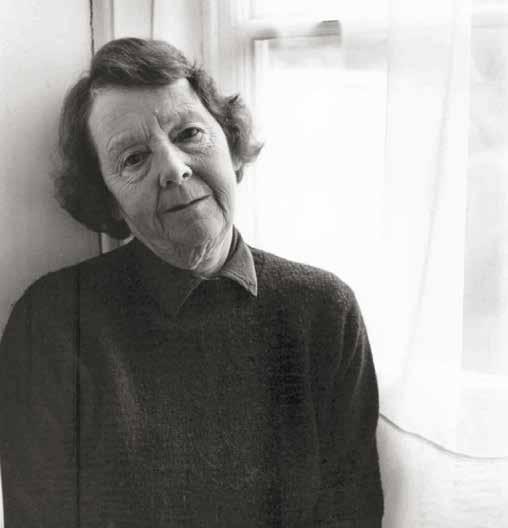
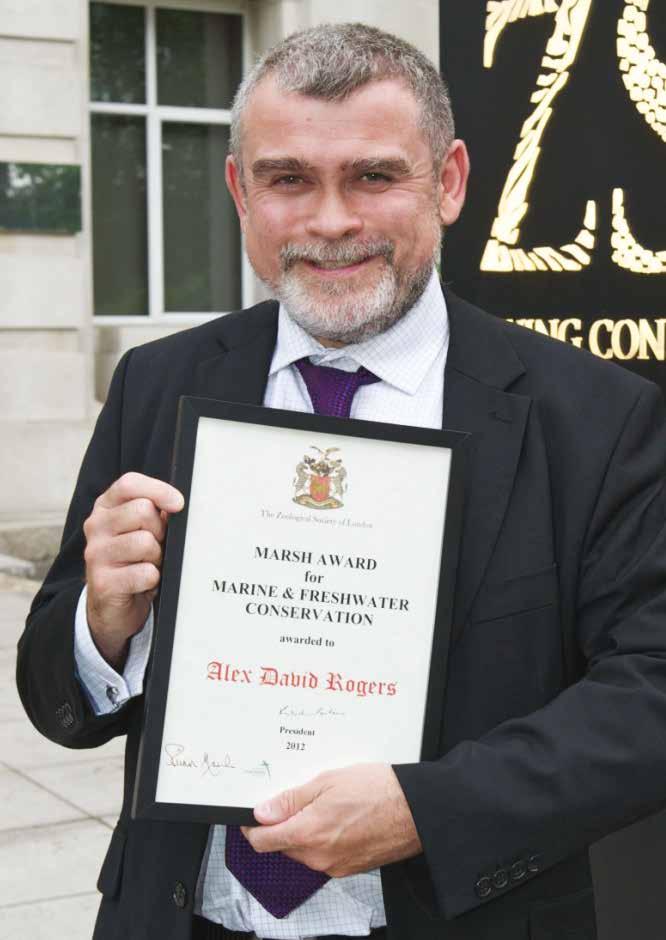
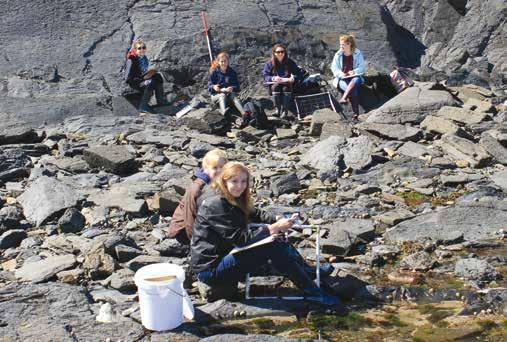
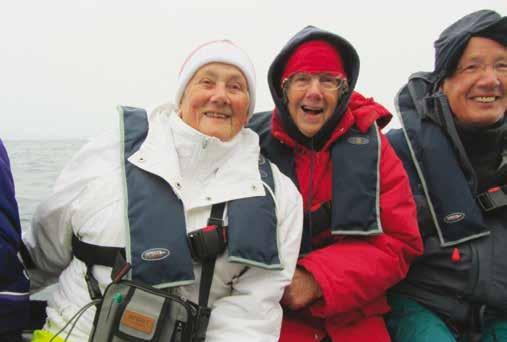
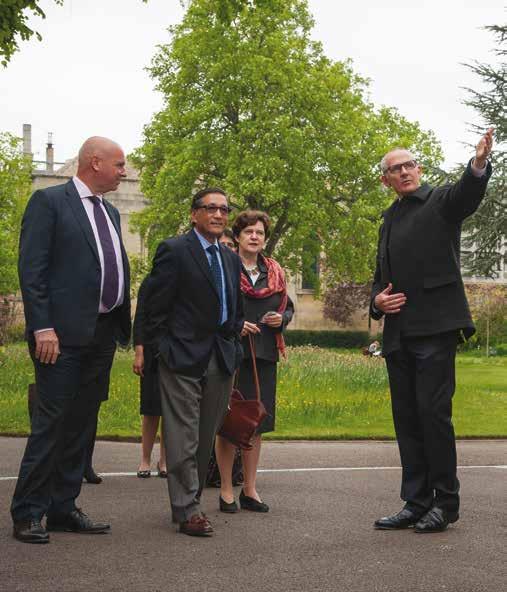
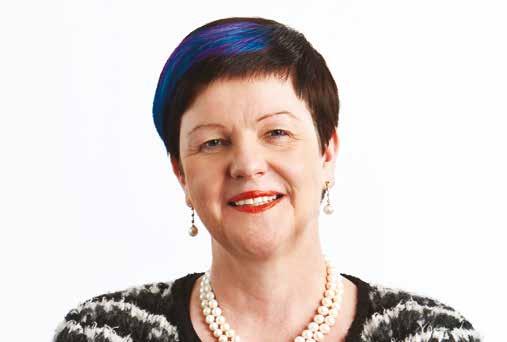
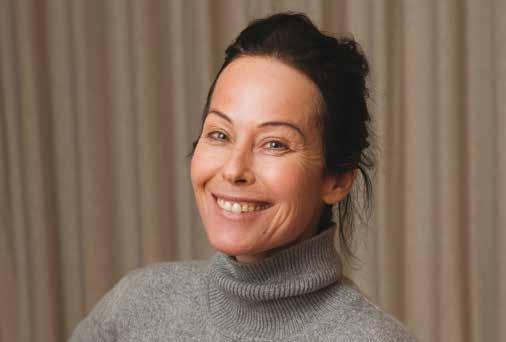
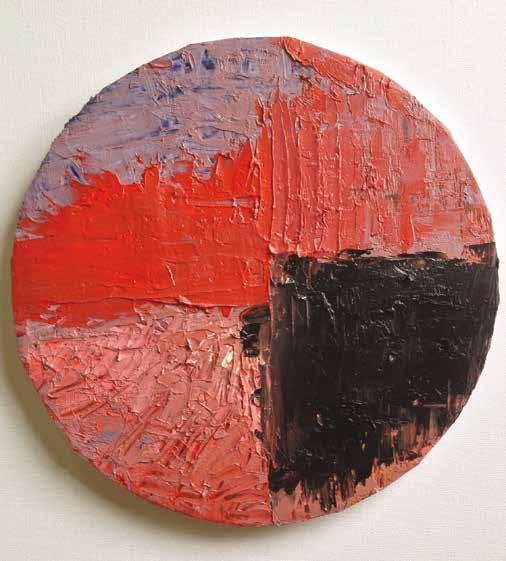
long “engagement”. After so many years, we don’t imagine that this will change anything between us, but it helps with practicalities.’
Carrie Tsang (Mrs yau) led a team of youngsters to participate in the World Skills competition held at Leipzig, Germany, in early July. This is a biannual event for young people to show their vocational education skills and to have a chance for exchange.
Julia Gasper has had her book on King Theodore of Corsica accepted for publication by the University of Delaware Press. She has also been elected chairman of the Oxford branch of UKIP. She has a contract from Lexington Books, Maryland, USA, to publish her biography of the Marquis d’Argens entitled The Marquis d’Argens: A Philosophical Life. It should appear some time in 2013. Theodore von Neuhoff, King of Corsica: The Man Behind the Legend was published in 2012.
Amanda Sowden (Mrs Martin) writes: ‘In May 2013 I was re-elected for a third consecutive term as a member of the Council of the Isles of Scilly, a unitary authority. On May 21st I had the honour of being elected unopposed as the Chairman of this Council.’
Jacqueline Watts’ second book of poetry, Songs of Steelyard Sue, was launched in August 2012 and her debut novel, A Darker Moon, was published in autumn 2012. Both have been well received critically and the poetry book is up for a hat-trick of literary nominations. For further details see: www.jswatts. co.uk. She is already working on her next three books.
Margaret Casely-Hayford has been appointed by the Government as a Non-Executive Director of the NHS Commissioning Board. The Board has responsibility for overseeing the effective, efficient and appropriate use of the £95 billion budget for commissioning services for the whole country. Power and oversight responsibility for the NHS transferred to the Board in April this year. http:// cno.dh.gov.uk/2012/06/18/newdirector-appointments-to-the-nhscommissioning-board/. Margaret is currently Director of Legal Services and Company Secretary, John Lewis Partnership plc and Board member, British Retail Consortium. She has previously been a Trustee and Special Trustee of Geffrye Museum and of Great Ormond Street Hospital Charity.
Alexia Tye has joined the Institut Océanographique (Fondation Albert 1er, Prince de Monaco) as CFO. The Oceanographic Institute (founded in 1906) is committed to enhancing the knowledge of the richness and fragility of the oceans, and promoting their sustainable management and protection. It bridges governments and NGOs, the business world and the general public. Besides running the flagship oceanographic museum in Monaco, where it organises themed exhibitions (this year’s theme being ‘Sharks’), the Institute organises conferences, films, exploration activities, medal awards, etc. Alexia Wai-Chun Tye works out of the Institute’s offices in Paris, and in addition to financial responsibilities she is also tasked with developing global partnerships.
Frances Benn (Mrs Nestor) was ordained a priest in the Church of England in September 2012 and officiated at a traditional service of Anglican Evensong in the Somerville chapel on Sunday 3 February 2013.
Sr Mary Dominic (Penny Brumfitt) made solemn vows (until death) as a cloistered Dominican nun in Buffalo, New York, on 15th August 2007. She became a US citizen in April 2011. She apologises for late appearance of this news.
Meena Bhardwaj (Ms Heath), general counsel, Genesis, and global ambassador and founder at Global Leaders in Law, has won the Gold Stevie Award in 2013 International Business Awards in the Executive of the Year (Legal) category. Global Leaders in Law is also recognised with a Silver Stevie Award in the Most Innovative Company of the Year in Europe category. Meena will be speaking at the Legal Week Corporate Counsel Forum in September.
Dawn Bazely has co-edited Environmental and Human Security in the Arctic (Routledge, September 2013).
Debbie Jeffrey (Mrs Starrs) is enjoying a change of direction, moving into education after management consultancy and then being a full-time Mum! ‘Having run the London Marathon, I have developed a late enthusiasm for exercise and am now in training for next year’s Marathon.’
Claire Preston has moved from Cambridge after being there for 21 years. In 2011 she transferred to a Chair in Early Modern English Literature at the University of Birmingham. The Complete Works of Sir Thomas Browne (eight volumes, forthcoming OUP), of which Claire is the general editor, was recently awarded £940,000 in research support by the AHRC.
Bonnie Effros writes: ‘Since 2009 I have directed the Center for the Humanities and the Public Sphere at the University of Florida and taught in the Department of History. This summer (2012) was a busy one with the birth of our second son and the publication in June of my fourth book, Uncovering the Germanic Past: Merovingian Archaeology in France, 1830-1914, Oxford University Press.’
Angela Ellis (Mrs Pearce) started working in April 2013 as PA to the Director of Music at Eton College, which she says is a wonderfully stimulating environment. She has been married to David for twelve years and has a ten-year-old daughter and a seven-year-old son.
Sue Hutchison (Mrs Canderton) has a new job as Head of Development at the Clean Break theatre company http://www.cleanbreak.org.uk/ mission.
Suzanne Cook (Lady Heywood) has been made a Director of McKinsey (their most senior level); she is the first woman to be in this position for a very long time. She juggles her career with looking after three children, her mother-in-law, and a husband with a very ‘heavy’ job. She
is also a trustee of the Royal Opera House and of the Royal Academy of Music. For Suzanne’s ‘Life Before Somerville’, see pages 51-57 and photographs on pages 51 and 70.
Caragh Devlin (Mrs Little) writes: “Since August 2012 I have been a regular blogger for the Huffington Post UK. I am determined to develop my writing further in the little time left over from full-time teaching. I am reading for an M.Ed part-time at the University of Ulster.”
Rose George has published a new book in September 2013: Deep Sea and Foreign Going: Inside Shipping, the Invisible Industry That Brings You 90% of Everything, Portobello Books.
Anna Poole is now a Queen’s Counsel, in Scotland.
Tina Dalton married in October 2010 and now has two children. She is currently (October 2012) on maternity leave from AstraZeneca.
Claire Jameson (Mrs Long) writes: ‘I now work full time as a global utilities fund manager, balancing that with looking after 5 children (3 of my own and 2 step-children, ranging in age from 6 to 12). Home is currently a rented thatched cottage in ‘rural’ Surrey, while my architect husband finds the ideal plot for our future home.’
Jacqui Chetham (Mrs Adams) writes: ‘Our family faced 2013 (the 10th anniversary of my husband Brian’s near fatal heart attack) with some trepidation. However, I am near completing my Postgraduate
Certificate in Creative Writing with Newcastle University, Midnight has made a success of her first year at boarding school, and Richard is partway through the selection process for pilot training with Aer Lingus. Onwards and upwards !’
Sarah Knight, who teaches early modern English and Latin literature in the School of English at the University of Leicester, published an article in the TLS in February 2013, following the identification of Richard III’s skeleton http:// www.the-tls.co.uk/tls/public/ article1208757.ece
Brenda Neece (Dr Scott), who is a fine art photographer and a cellist, has an exhibition of her photography, Stagville: Black & White, scheduled at the North Carolina Museum of History, March 2014 –January 2015.
Eve-Külli Kala, the former Ambassador of Estonia in Prague, has been Ambassador of Estonia in Vienna since 2010.
Stephen Allen, Professor of Music at Rider University, Lawrenceville, New Jersey, has had a good year. The Princeton Brass Band, which he founded in 2004 and of which he is Musical Director, were crowned National Champions of North America (NABBA XXXI, 2013) in Cincinnati, OH. For the Benjamin Britten Centenary he has a chapter titled ‘“O Hurry To The Fêted Spot Of Your Deliberate Fall”: Britten’s Creative Exploitation of Religious Crisis in the Late 1930s and Early 40s’
to be published in Rethinking Britten, edited by Philip Rupprecht (OUP, 2013). He has initiated and installed a new BA in Popular Music Culture at Rider University this year – one of the first of its kind in the world –focusing on the historical and critical aspects of the subject.
Christopher Bruner, who is Professor of Law, Washington and Lee University School of Law, writes: ‘My book, Corporate Governance in the Common-Law World: The Political Foundations of Shareholder Power, was published by Cambridge University Press in March. The aim of the book is to explain why – contrary to popular belief – shareholders in the UK, Canada, and Australia are more powerful and more central to the aims of the corporation than are shareholders in the US. I argue that regulatory structures affecting other stakeholders’ interests – notably, differing degrees of social welfare protection available to employees – have decisively impacted the degree of political opposition to shareholder-centric policies across the common-law world.’
Noah Bulkin has left Lazards and is setting up his own independent advisory and principal investing business.
Sam Gyimah, MP for East Surrey, was appointed Parliamentary Private Secretary to the Prime Minister in the ministerial re-shuffle of September 2012. He is now working closely with David Cameron and his team in Downing Street. Speaking after the announcement, Sam said, ‘I am thrilled and excited to be taking on this new challenge.’ It was an important month for Sam who also got married on 29 September.
Henry Potts is a Senior Lecturer at UCL and has published: K. Woolf, H. W. Potts, S. Patel and I. C. McManus, ‘The hidden medical school: a longitudinal study of how social networks form, and how they relate to academic performance’ in Medical Teacher 34:7 (2012), pages 577-586.
Graham Cookson has been appointed Professor of Economic and Public Policy from 1 September 2013 at the Faculty of Business, Economics & Law, University of Surrey. From the same date, he has also been awarded a Leverhulme Trust Research Leadership Award of £1 million. The Award will focus on delivering better for less – improving public service productivity.
Christiana HJI Panayi is a lecturer in tax law at London University and has recently published her second book: European Union Corporate Tax Law (Cambridge University Press), part of the Cambridge Tax Law Series.
Neil Spring has written a novel, The Ghost Hunters; for details see www.neilspring.com
Alistair Fair has been awarded a three-year Early Career Fellowship by the Leverhulme Trust for research on aspects of the environmental design of non-domestic buildings between the 1850s and 1970s. He remains based in the Architecture Department at Cambridge University. In late 2011 his co-written book on theatre design, Geometry and Atmosphere, was published by Ashgate.
Amanda Morgan has started a new job working as an Associate for a Singapore listed company (that operates in all business sectors) called Yoma Strategic/SPA Group in Yangon, Burma.
Kelvin Ng has written a chapter titled ‘Reappraising the Aftermath of War: The Problems of the British Military Administration and Singapore’s Place in the Changing Strategic Environment of Empire, 1945-1946’ which was published late last year by the National University of Singapore Press. It is part of an edited volume Studying Singapore’s Past: C. M. Turnbull and the History of Modern Singapore (edited by Nicholas Tarling). The volume was put together in memory of the late Mary Turnbull, who had the distinction of being the first female officer in the Malayan Civil Service, and whom Kelvin came to know well while he was studying in Oxford. Kelvin is still serving as an officer in the Singapore Civil Service (the successor service to Mary Turnbull’s blue-ribbon MCS).
Kim yahya for the second year has a painting exhibited at the Royal Academy (245th) Summer Exhibition in Burlington House. The painting is called ‘Evening’ and is an exploration of colour and the textural malleability of oil paint. This painting is for sale for £11,250 and 30% of the proceeds will go to the Royal Academy to support its work. Pictures and other works can be seen on www.kimyahya.com. Kim is a researcher at the Institute of Cancer Research.
Gyimah–Black
on 29 September 2012 Sam (1995) to Nicky Black
Green–Hatchett on 10 August 2013 Caroline née Green (2004) to Michael Hatchett (2003)
Harris–Deeves
on 9 February 2013 Charlotte née Harris (2000) to Simon Deeves
Jameson–Long
on 14 June 2013 Claire née Jameson (1989) to Andrew Long
on 27 October 2012 Dan (1997) to Suzannah Baker
Mann–Robinson on 8 December 2012 Eleanor née Mann (2000) to Edward Robinson
Pope–Leonardi
on 11 July 2013 Rebecca Pope (1978) to Susan Leonardi. See Members’ News at page 64
Shenker–Morris
on 28 October 2011 Natalie née Shenker (1997) to Andrew Morris
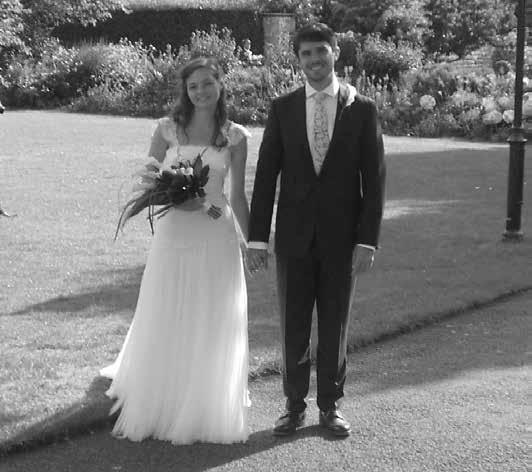
Buckley
to Hannah (1999) and Adam Duffen on 10 January 2013 a daughter
Josephine Rosa Duffen
Cookson
to Graham (1997) and Jayne on 25 February 2013 a son Amos Alexander
Cross
to Anushka née Wijesooriya (1997) and Jonathan on 13 September 2012 a son Robin Toby Wijesooriya Cross, a sister for Penelope Araliya Cross
to Bonnie (1985) and David Laber on 23 April 2012 a son Simon Jonathan Laber, a brother for Max Nils Laber
Evans
to Laura (2000) and Tim Wharton on 4 December 2011 a daughter Luna Sunday, a half sister for Xanthe and Zoë
Gould
to Amelia (Resheph, 1996) on 18 June 2012 a daughter Leila Rose Gould, a sister for Dylon
Guhathakurta-Cook
to Eva (1990) and Jonathan Cook on 28 April 2013 a daughter Leia, a sister for Kara
Hamilton
to Rosie née Patterson (1999) and James Hamilton (1999) on 28 March 2013 a son Francis William Rory
to Anna née White (2002) and Aidan on 9 October 2012 a daughter Nell Alma Jones
to Kate née McCleery (1992) and Bernard on 10 June 2013 a daughter
Lilian Charlotte Jones, a sister for Susanna Daisy (Susie) Jones
to Essaka (1988) and Richard Cross on 13 February 2013 a son Frederick Richard Hayward Cross
to Natalie née Shenker (1997) and Andrew on 7 October 2012 a daughter Sophia Leah Morris
to Colette née Hooper (1999) and Ian Mulheirn (1999) on 9 December 2012 a daughter Emmaline Anna Mulheirn.
to Rebecca née Wilcox (1999) and James Moss (1998) on 25 July 2012 a son Benjamin Desmond Moss
to Tristan (1999) and Indika on 19 April 2013 a daughter India Ceylon Neagle
to Hannele (2000) and Joseph Eddy on 2 July 2012 a son Torian Eddy Nicholson
to Sheena (1994) and Gautam Patel on 31 December 2012 a daughter
Tara Patel Patel
to Josephine née O’Donoghue (2004) and Tom on 29 June 2012 a son
Arthur Rupert Francis Saunders, a brother for Leo
to Ruth née Greenwood (1999) and Michael on 1 March 2012 a daughter Sorcha Grace Sidhom, a sister for Gabriel
to Gemma née Spector (1996) and Nicolas on 21 January 2013 a son
Samuel Small
to Meg née Wilson (1992) and Giles on 25 February 2013 a daughter
Stella Seraphina Margot Stewart, a sister for James, Zoe and Freya
to Angela née Cleary (1998) and Adam on 13 June 2012 a daughter
Amber Fleur Tucker, a sister for Ayla Rose
The editor wishes to apologise to Jo Anne Breckon and her husband Paul for an error in last year’s Report. Sam is their only son and does not have a brother Max.
Rachel Jean (Fellow 1951-1984; Emeritus Fellow 1984-2013) on 15 February 2013 Aged 95
Johnson
Professor Dame Louise (Fellow 19731990; Honorary Fellow 1990-2012) on 25 September 2012 Aged 71
Davies-Mitchell
Margaret (Professor Davies, Lady Mitchell) née Brown (1941; Honorary Fellow, 1999) on 25 August 2013 Aged 90
Olive (Lecturer 1946-62; Research Fellow 1962-65; Fellow 1965; Emeritus Fellow 1990) on 25 February 2013 Aged 90
Thatcher
Baroness Margaret Hilda née Roberts (1943; Honorary Fellow 1970) on 8 April 2013 Aged 87
Hilary May (1933) on 14 February 2013 Aged 98
Annette Claire née Stoop (1952) on 2 November 2012 Aged 83
Marie née Woolf (1943) in November 2012 Aged 87
Janet Elizabeth née Powell (1954) on 3 January 2013 Aged 77
Bridget Rosemary (1956) on 10 May 2012 Aged 74
Rita Harriet née Harradence (1939) on 6 November 2012 Aged 97
Kathleen Elizabeth (1937) on 31 October 2012 Aged 94
Alison Gwen (1950) on 14 May 2012 Aged 80
Brenda Mary (1934) on 8 February 2013 Aged 98
Prudence Catharine née Underwood (1945) on 6 May 2013 Aged 85
Marianne (1950) on 15 December 2012 Aged 88
Margaret Ann née McFadyean (1946) on 9 September 2012 Aged 87
Sarah Louise née Charlton (1980) on 25 April 2012 Aged 50
Andrée née Welch (1935) on 20 June 2012 Aged 96
Aelfthryth Georgina née Buzzard (1958) on 31 December 2012 Aged 73
Elizabeth Eve née Sowerby (1934) on 12 November 2012 Aged 96
Susan Jacqueline née Cox (1935) on 22 December 2012 Aged 96
Lucienne Marie née Palmer (1941) on 29 December 2012 Aged 89
Hazel Christine née Gill (1943) on 27 May 2013 Aged 87
Pauline née Clarke (1940) on 23 July 2013 Aged 92
Margaret Howell née Gwyther (1943) on 21 October 2012 Aged 86
Mary Jennifer (1949) on 23 May 2013 Aged about 83
Pamela Frances née Lawrence (1949) on 3 July 2012 Aged 81
Virginia Rose Cecilia (1957) on 7 January 2013 Aged 73
Mustill
Beryl Reid née Davies (1950) on 18 February 2012 Aged 79
Newton
Jennifer Margaret née Clapham (1961) on 2 March 2013 Aged 76
Norman
Patricia Margaret (1939) on 12 August 2013 Aged 93
Margaret Anne née Timmis (1950) on 28 July 2012 Aged 80
Joan Mary (1934) on 4 February 2013 Aged 96
Palmer
Alison née Oates (1969) on 7 December 2012 Aged 61
Ramsbotham
Zaïda Mary née Megrah (1943) on 17 March 2013 Aged 87
Robbins
Betty née Spice (1943) on 14 March 2013 Aged 87
Moira Enid née Armstrong (1945) on 8 May 2013 Aged 85
Marianne (Mary) Viktoria née Kelemen (1954) on 30 June 2013 Aged 81
Marguerite Elizabeth Hope née Lapham (1944) on 2 June 2013 Aged 86
Marcia Isobel Pamela née Harvey (1938) on 4 February 2013 Aged 93
Rachel Fell (1940) on 9 October 2012 Aged 91
Shirley née Ashton (1952) on 7 December 2012 Aged 78
Robyn née Vennings (1991) on 20 June 2013 Aged 40
Audrey Geraldine Northcliffe née Stokes (1939) in May 2013 Aged 93
Rosemary Ethel née Lambert (1948) on 6 February 2013 Aged 84
Moira Jill née Woodhead (1950) on 28 September 2012 Aged 80
Jean née Atkinson (1949) on 9 January 2013 Aged 80
Joan née Darnell (1942) on 22 July 2013 Aged 88
Mary Margarite (1942) on 22 January 2013 Aged about 89
Rachel Jean Banister, Lecturer 1949; Fellow 1951; Vice Principal 1969-72 and 1979-81; Emeritus Fellow 1984.
An obituary of Jean Banister appeared in The Times of 21 February 2013. Copies are available by emailing elizabeth.cooke@some.ox.ac.uk .
There will be a Memorial Service for Jean in the College Chapel at 2.30pm on Saturday 2 November 2013; all are welcome to attend. A copy of tributes given at this Service will subsequently be made available on the College website.
Olive Lenore Sayce (Davison), Lecturer 1946; Research Fellow 1962-5; Fellow 1965-90; Emeritus Fellow 1990-2013.
An obituary of Dr Sayce appeared in The Times of 12 March 2013. A Memorial Service was held in the College Chapel on Saturday 25 May 2013. Four tributes were read during the service, by Dr Michael Hawcroft of Keble, by Dr Almut Suerbaum of Somerville, by Liz Sayce, Olive’s younger daughter, and by Andrea Davison (1980). Andrea’s tribute is printed below. Copies of the other three and of The Times obituary are available by emailing elizabeth.cooke@some.ox.ac.uk.
In September 1980 I came up to Somerville to read French and German. As a tutor Olive took our education very seriously in all respects, not just academically. She was interested in us as people as well as our minds. Olive was unfailingly kind, considerate, helpful, polite and most importantly, she always had time for us. I can honestly say that she exuded integrity.
But Olive was no fool and students who thought they could pull the wool over Olive’s eyes soon realised their mistake. Olive was never afraid to tackle problems or unpleasant situations directly, although with tact and diplomacy. She certainly knew our limitations and didn’t pretend otherwise. Lazy students who wrote less than academically rigorous essays were left in no doubt as to their shortcomings. Olive was
never afraid to be forthright when required and I’m sure there are a few people here today who wince at the memory.
Meeting Olive for the first time, who would have believed this seemingly mildmannered don of the old school could be a highly respected world authority on the Medieval Period? One of my favourite anecdotes about Olive, often repeated with affection when I was a student, concerned her lecture style. Part way through a lecture she was well known to begin leafing through a text, looking for a specific quotation to illustrate her point and when she couldn’t find it, she would admit it cheerfully to the students, saying, ‘But you can take my word for it.’ And they did. Because they knew she was right.
I will freely admit I’m far from Olive’s most illustrious old student and I’ve often thought thank goodness I never chose to embarrass myself (or her!) by studying the Medieval Period. A few years ago when Olive’s last book was published she showed it to me and gave me a flier for it, making it clear, with a big smile, that she knew the content would be beyond me and didn’t expect me to read it. How right she was.
Then there were Olive’s tea parties at 16 Crick Road. She taught us simple good manners through drinking tea out of proper cups with saucers, how to make conversation with people from all backgrounds and cultures and how to become socially competent.
Skills which have stood me in good stead ever since! However, we clumsy students were not allowed to help with the washing up afterwards as the china was too fragile and valuable for our well-meaning efforts.
Olive also had a sense of fun and was not above joining us for a punting party on the river.
I know that the happiest period in Olive’s professional life was working with Adrianne Tooke. In conversation with me years later Olive referred to them as ‘the dream team’. To sum up Olive as a tutor I unashamedly quote Adrianne Tooke’s words on Olive’s retirement: ‘It was not only the students who said Olive was the iron fist in the velvet glove.’
I left Somerville in 1985 to become a teacher of French and German in Colchester. And that’s when I got to know Olive as a friend. She invited me to park my car on her drive when visiting Oxford. And I did. The added bonus was I always called in to see Olive, for tea, a chat and often a haven from my own daily life. I found I could talk to Olive about anything.
When I think about Olive I would have to say that ‘modern’ is not the first adjective to spring to mind when describing her. And yet she taught herself to use a computer, which she loved, and to her everlasting credit she forced herself to get to grips with changing attitudes in the modern world. Olive’s attachment to Somerville never lessened and she always kept me up to date with developments in College and in the University, saving articles she thought would be of interest to me. She was a tireless attender of College events. Among many others we attended many Literary Lunches together with family and friends.
Olive was funny, too. I have to admit I’ve always thought it particularly appropriate that Olive had a tortoise as a pet and through Olive, typically, I learned all about them. I particularly enjoyed the annual exploration of Olive’s lovely garden to see if Henrietta had emerged from hibernation beneath the compost heap. I am especially fond of Olive’s story of pursuing an adventurous and elusive tortoise down Crick Road after a careless visitor had left the back gate open and Henrietta had escaped. And any autumn visitor to Olive’s house invariably left with a bag of windfalls – of varying quality I have to say.
It may surprise some of you to learn that in stark contrast to Olive’s serious, academic side there was nothing she loved better than a drive around the Oxfordshire countryside in a powerful sports car with the roof down.
You may have noticed that Olive’s maiden name was Davison. By coincidence, the same as my surname. Olive once delicately asked me if I thought we could be distantly related. Sadly I knew we couldn’t be, but I would have been delighted if we had.
When I think about the people who have influenced me Olive has to be among the most important. She taught me, by example, to be a kinder, more considerate person; to try and put myself in someone else’s shoes, no matter how difficult. I once asked her, with some exasperation, how she could do that and she said: ‘You see a fellow human being suffering and you have to do something about it.’
Olive and I shared many interests, above all Somerville. Therefore I would like to conclude by saying that to me Olive was Somerville and Somerville will always remind all of us here today of Olive.
I am proud to have been her student and her friend.
ANDREA DAVISON (1980)
Professor Dame Louise Johnson, Fellow of Somerville 1973-1990; Fellow of Corpus Christi College and David Phillips Professor of Molecular Biophysics 1990-2007.
Obituaries may be found in the Telegraph (http://www.telegraph.co.uk/news/ obituaries/9594182/Professor-Dame-Louise-Johnson.html) the Guardian (http://www. guardian.co.uk/science/2012/oct/10/louise-johnson), and in The Times of 18/10/2012. If you would like a copy of The Times obituary, please email elizabeth.cooke @some.ox.ac.uk
The following tribute has previously been published in The Biochemist (magazine of the UK Biochemical Society), and in the magazines of the American and British Crystallographic Associations.
Louise Johnson, biophysicist and structural biologist, died on 25/9/12 after a 13-month illness which she bore with quiet fortitude and grace. Her life and work impacted very many people worldwide, due both to her scientific activities in protein crystallography and enzymology, and her tireless interest and effort in supporting and encouraging scientists in developing countries to establish effective research laboratories as far apart as South America, the Middle East and Pakistan.
I am one of those whose life course was changed by a chance conversation with Louise, whom I first met in 1987 when I was tutoring physics at Somerville College where Louise was then a Fellow. Over lunch she asked me what I was going to do when my fixed term contract at Somerville expired and since there was still a whole year to go, I threw away the comment: ‘Oh, I don’t know, I will probably have to change fields since nuclear physics [my then research area] is no longer being funded in Oxford.’ She visibly brightened and said, ‘We are looking for someone with just your skills at the moment to look after our new cutting-edge X-ray equipment for protein crystallography which is about to arrive.’ As a result of my rash statement and Louise’s quiet persuasiveness, I visited her the very next day at the Laboratory of Molecular Biophysics (LMB) where she and her research group were then working on the mechanism of action of glycogen phosphorylase, a large protein (842 amino acids) present in muscle which turns inert glycogen into the sugar needed to power physical activity. They had succeeded in obtaining a structure and showed how the enzyme was regulated by reversible phosphorylation and allosteric effects. Her group were in the vanguard of those using
synchrotron radiation at Daresbury Laboratory near Runcorn for macromolecular crystallography in the early 1980s. Louise’s lifelong interest in applying new techniques to structural biology questions came to the fore much later when she became Life Sciences Director of Diamond Light Source in 2003. There she oversaw the building and development of this highly effective national facility which is now bearing great fruit for the UK physical and biological sciences research community.
As a result of my visit to LMB that day I went to work there a few months later, and, when Louise was appointed to the David Phillips Chair in Molecular Biophysics in 1990, worked under her until her retirement in 2007. Her management style was ‘hands off’ but ‘attention on’ in that she was always there if advice or guidance was needed, but did not offer it unless it was requested. She encouraged a highly cooperative working environment among the different groups and Principal Investigators in LMB which was extremely productive. Since synchrotron data collection time was allocated in aliquots of 24 or 48 hours and was much more efficient as a team effort, we regularly had the opportunity to work together closely with colleagues, thus developing a highly effective research effort. Although Louise did not normally accompany us on these trips to the synchrotron, during one of her sabbatical terms she asked to be brought up to speed in using the current X-ray equipment and software for crystallography. She determinedly and methodically worked her way through our usual training programme for new researchers, asking penetrating and pertinent questions at every stage. This was a great example to us of how a senior scientist should keep in touch with what the daily research really involved, so that challenges faced by students and postdocs could then be better appreciated and overcome.
Her book Protein Crystallography, written with Tom Blundell and published in 1976, although now a collector’s item judging by the price of a second-hand one on Amazon, is a classic text in the field worthy of attention today: I still regularly consult my wellthumbed copy. Louise, with Wolfgang Baumeister, Alasdair C. Steven and Richard Perham, had just completed work on a book entitled Molecular Biology of Machines and Assemblies before she became ill, and it will be published in 2013.
Louise was very modest and unassuming about her many achievements and honours, and this quality was brought home to me forcefully on one occasion in June 2010 when she very kindly offered to substitute in giving a conference lecture for me. At the time my husband was critically ill and I was unable to go and deliver it. We were trying to work out over the phone if she could give it on a Tuesday afternoon, and she mentioned
she had to go to Cambridge on Sunday evening and for the whole of Monday and then to London on Tuesday morning, but that she might be free later in the afternoon. I assumed that the Cambridge trip was to visit her twin granddaughters, and asked after them, upon which she hesitantly told me that actually she was going to collect an honorary ScD degree from Cambridge. After some more convoluted discussion, it gradually transpired that the London engagement was at Buckingham Palace at a garden party given by the Queen, and that getting to Cardiff in time to give the conference lecture was unfortunately just not going to be possible. I was left wondering what her Wednesday commitments might be! Her schedules were punishing, and her energy amazing.
When Louise’s death was announced, I received many e-mails from ex-LMB members expressing their appreciation for Louise’s role in their lives, and retrospective realisation of the positive atmosphere she nurtured: e.g. ‘After working in other places, only now do I realise what a special place it was under her leadership’, ‘A great lady’, and ‘Such a big presence within the field’.
Thus because of Louise I am a protein crystallographer and no longer a nuclear physicist. She had an enormous and lasting influence on my life, as she also had on the lives of many others. Along with her numerous colleagues throughout the world, I will miss her inspiration both scientifically and personally. I feel privileged indeed to have known her and worked with her.
PROFESSOR ELSPETH GARMAN, SOMERVILLE PHYSICS LECTURER 1985-7.
My grandmother would have been tickled to have been in the same list of alumni obituaries as Margaret Thatcher. She was a Somervillian through and through, and talked of her time at Oxford with pride. She was always rather dismissive of her fellow student, but secretly I think she enjoyed the fame or perhaps infamy of the 1943 matriculation photo that they both shared.
Along with Margaret Thatcher (née Roberts), Nina came up to Oxford in 1943, but soon switched to PPE and politics remained a love all her life. A consummate entertainer, her home in north London, which she shared with her beloved second husband, Austen Kark, and where I lived for a time before and after Oxford, was always alive with political discussion. Judges, poets, politicians, diplomats and journalists populated the dinner table most nights, all with tales to tell and the knowledge to challenge any unsubstantiated statement from across the table.
All this was a long way from Ilford where she was born. Her father was a merchant seaman, away from home for long periods, her mother was a Norfolk girl and our family still have a life-long love of East Anglia, where I now live close to Nina’s remaining son and where her brother has a home in Swaffham.
What connected Nina’s modest start in life to her Islington dinner parties with the great and the good were stories. Everything that Nina observed and experienced was woven in some way into her work as an author. The hidden sister she discovered at the age of 26, her father’s Italian heritage, the tragic death of my father at 33 all feature in her fiction as well as her acclaimed autobiography, In My Own Time (1994). Nina’s use of what she saw around her was not always totally appreciated by her friends and family, but she ploughed on, sure in the knowledge that the richness of life she saw coloured and deepened the stories she wrote.
Nina’s writing started after Oxford where she met my grandfather, Harry Bawden, first as a journalist and then as a young mother. Nina wrote more than 50 books over half a century. She was one of the few British writers to write equally successfully for children and adults. She was not afraid to draw on the complications of life and relationships that both face children and adults experience, and was able to adapt her style to each audience. Reading Carrie’s War (1973) again, as an adult, I felt the same nervousness and
excitement around Carrie’s evacuation to the Evans’ house in Wales but discovered another layer of sympathy for the adult characters, even the bullying Mr Evans.
Nina went on to win the Guardian Children’s Fiction Prize in 1976 for Peppermint Pig, one of a number of Nina’s books that was successfully adapted for television, including Circles of Deceit and Family Money, both nominated for the Booker Prize. She really enjoyed the retrospective shortlisting of The Birds in the Trees (1970) for the ‘Lost Booker Prize’. Nina would deny it but there was certainly a competitive streak to her and a friendly rivalry with her author friends.
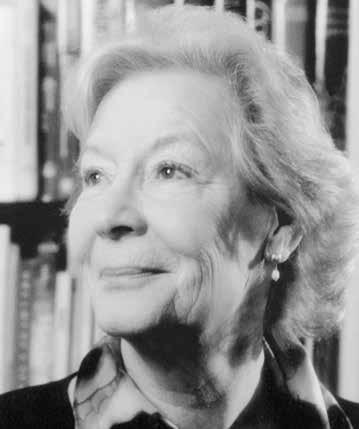
Nina’s last book was Dear Austen (2005), a letter written to her husband who was killed in the Potters Bar train crash in 2002. She and our family battled with Network Rail and their maintenance contractor Jarvis, which went into administration in 2010, for an acknowledgement of their failure to maintain the track that led to the death of seven people and the injury of 76, including Nina herself. While this was Nina’s last published work, she continued to write articles and campaign against the Potters Bar injustice right up until her death. Nina and Austen’s daughter, Perdita, fought alongside her and the loss of ‘P’ to cancer in March 2012 was the last sadness Nina had to suffer.
Nina died at home with her family on 22 August 2012. I was with her for her last days and we talked about Oxford, the dalliance with Richard Burton she had there and her slight disappointment with rereading of Jane Austen. We had shared Claire Tomalin’s biography of Samuel Pepys and our shock at his philandering. She thought of stories to the end. Nina leaves a son, brother, two step-daughters, nine grand-children and six great-grandchildren.
Nina was born on 19 January 1925 and died on 22 August 2012.
JESSICA BAWDEN (1988)
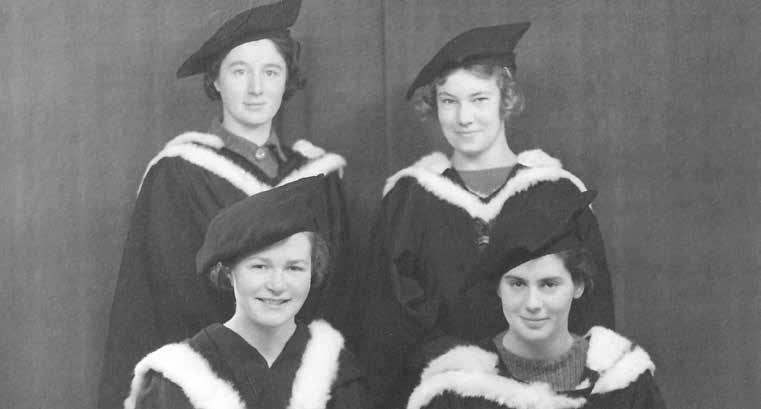
My godmother, Hilary Alpin, was born in December 1914 and came up to Somerville in 1933 to read Modern History. Two contemporary history undergraduates were to be among her close friends: Margaret Yvonne (‘Bill’) Williams and my mother Dorothy Phillips (née Muir).
Hilary’s father had been in the Army, and Hilary opted in her final year for military history as a special subject. This prompted some concern, if not outright resistance, among the university history faculty but Hilary’s customary determination prevailed, and eventually the (male) don who was the specialist in the subject agreed to accept her as a pupil.
On graduating in 1936 Hilary was obliged to care for her increasingly infirm parents so was not able to take a job. After their deaths she was called up during the Second World War and served with distinction in the A.T.S. in radar. After the war she worked for the African Institute in London before moving with an elderly relative to live in Canterbury.
She lived in Canterbury for most of the rest of her life and was involved with several local organisations including the Canterbury Society, of which she was for many years
the secretary. (This organisation, with Hilary as a driving force, was largely responsible for preventing the local planners from inflicting upon Canterbury damage arguably even more serious than that wrought by the Baedeker raids of 1942.) She was a founder member of the Canterbury Art Fund and had a deep appreciation of the arts (except music). She loved animals, especially cats, which tended to adopt her, and was a keen cook and gardener, with an allotment within sight of Canterbury cathedral. She had a naturally enquiring mind and a knowledge of and interest in a wide range of subjects.
Hilary agreed to be my godmother after being reassured that she would not be required to hold me at my christening! My parents told me that they had chosen Hilary as a godmother not only for her practical kindness but also for her innate good sense, and they knew that she could be relied upon to encourage me to concentrate on my education and to aim for high standards in all things. It seemed appropriate that Hilary was staying with us in December 1972 when I received the telegram from Somerville offering me a place.
Hilary never married but was a devoted and much loved aunt to her niece Sheila and family; in 2010 she moved to Blackheath to be nearer to them. She died on 14th February 2013.
ANNE MORTON (PHILLIPS, 1973)
Joan Paddon, who died on 4 February 2013, read Modern Languages at Somerville, graduating in 1937. After working as a teacher in the North of England during the war she served with the Control Commission in Germany from 1946-1949. On her return she went into local government and within a few years became deputy director of education in Westmoreland. She taught herself Russian to A-Level and visited the USSR several times. In 1962 she was appointed education officer for Woking which post she held until her retirement in 1976. Feeling in need of a new challenge she trekked to the Everest base camp. She loved Nepal and India and went there every year until she was in her mid-eighties, also visiting (inter alia) the Yukon, Ecuador, Peru and China. Sadly her last years were clouded by Alzheimer’s Disease but although she lost most of her memories she never lost the ability to converse in perfect German.
JEAN AGNEW (NIECE)
Susie was born in Bayswater, London on November 30th 1916.
In 1935 she got into Somerville at the second attempt.
She reported later in the Oxford Magazine her sense of disappointment that becoming an undergraduate did not put her on an equal status with men. She studied Latin and Greek for Pass Mods and finally got second class honours in French. Her occupations included walking, talking, wining and dining, frequenting the Labour and French clubs and flirtations. A student magazine published an article comparing the attractiveness of female undergraduates with the town girls. Its photographs of the three prettiest undergraduates included Susie. This led to her meeting the editor, Woodrow Wyatt, later a Labour politician. The attraction was instant. They got married when Woodrow was about to join up to fight in the Second World War. While he was in the Army Susie worked with him in editing two volumes of short stories. But their personal relationship was not good. Before the stories were published she had met and fallen in love with Reg Hicklin on a theatre outing in Oxford. Susie was then working for AC Nielsen, processing statistics. She did war work as an assistant Principal in the Board of Trade and Reg also worked there. Woodrow agreed to a divorce.
The department was run by the poet, publisher and wartime civil servant Sir Francis Meynell who became a friend. Her job was to do reports on shortages of essentials on the Home front.
Reg and Susie got married and Susie briefly taught French in a school. Around this time Susie started making pottery, having broken a favourite pot and pottery being scarce in wartime.
In 1943 Simon was born, followed by Judy, Frances and Stephen. The bombing and Doodle Bugs eventually drove them out of London. By 1945 they were in Wraysbury and Susie, despite being pregnant, helped Benn Levy get elected Labour MP for Eton and Slough. A move to Weybridge followed. They stayed for eighteen years. Reg became managing director of Lintas, the advertising company for Unilever. Then Susie suffered an attack of Polio and though she recovered it was its recurrence that led to her final illness.
A friend got Susie involved in freelance journalism. She had considerable success. She became a regular contributor to Picture Post, covering a wide range of subjects and
interviewing a host of celebrities, then contributing small items to the Guardian and finally, the Evening Standard got her to write for the Woman’s Page.
She was appointed JP to the Chertsey Bench at the age of 31. She sat in the Juvenile Court and Chaired the Matrimonial Court for 5 years. She turned down the chance to stand for Parliament but was Activities Secretary of the Walton and Weybridge Labour party. She and Reg helped found the Weybridge Family Planning Association Clinic, and North West Surrey Branch of the Spastics Society.
In the sixties they decided to move to Southwold. She had fallen in love with the area on a childhood visit. They found the seaside house that was to be Susie’s final home. Reg was now retired. She established a pottery and sold her work locally. This led her to found Craft Co, which owned a shop in Southwold for local artists to sell their work. In 1970 she stood for Southwold Borough council but as a newcomer was defeated by a long-time resident.
Outside these activities, she loved swimming and France. Well into her eighties she would be up early for a dip in the sea. Her academic study of French was accompanied by a love of the country itself, where she had many friends that she visited. She had another activity which she kept quiet about. By letting her outhouse as a holiday home she raised over £25,000 for Save the Children and she never ignored charitable appeals making hundreds of donations over the years.
Reg’s death in 1991 was a great blow. The recurrence of the Polio together with failing sight and hearing were burdens to her despite Frances’s devoted care. Her own green burial and memorial service in Southwold brought a host of friends and family together to bid a remarkable character farewell.
MICHAEL IMISON
I first met Elizabeth (Liz to her friends) in, of all places, the lift of a retirement community (Judson) in Cleveland, Ohio while visiting my mother. Somehow, between floors, we discovered that we were both Somervillians and immediately felt a connection.
Bristol-born, Liz went up to Somerville to read History in the same year as Indira Nehru Gandhi. They lived down the hall from one another, and Liz recalled helping her with
Latin. By the time Liz left Somerville, war had broken out. She taught at a girls’ school for a few years before deciding to study psychology at London University and the London Child Guidance Training Centre. In 1948 she arrived at the newly established Hampstead Child Therapy Clinic which grew out of Anna Freud’s desire to care for children affected by war. In 1956 Liz was recruited by Dr Anna Katan, a friend and colleague of Freud, to help establish a psychoanalytic preschool in Cleveland, Ohio (eventually the Hanna Perkins School). Another Hampstead recruit was Erna Popper Furman (a survivor of Terezin concentration camp). The three women were to remain lifelong friends and colleagues.
Liz had a long and distinguished career. She was Associate Professor of Child Therapy in the School of Medicine, Case Western Reserve University and a faculty member of the Cleveland Psychoanalytical Institute as well as the Hanna Perkins Center, her professional home. She was a founding editor of the journal, Child Analysis: Clinical, Theoretical, and Applied, and published widely. Adhering to Anna Freud’s principles, she encouraged therapy through the parent and worked with nursery teachers, social workers and paediatricians. A close colleague, Barbara Streeter, described her as a ‘brilliant, clear, respectful teacher and thinker.’ ‘When a child shares his inner life with you,’ Liz once remarked, ‘it’s a privilege.’ She lived through a period of great social change in Cleveland and the country as a whole and, in an early publication, addressed the challenges posed by the city’s school integration laws and mandatory bussing.
Liz made Cleveland her home, and there she pursued her passions for classical music, literature, bird-watching and bridge while travelling a great deal. She kept up with old friends and family, also certain British institutions, Wimbledon in particular. Erna Furman’s daughter recalls how in the early days Liz joined their family on July 4th, not to celebrate Independence Day but to sit glued to the tiny television set watching the tennis. Decades later she unravelled the mystery of cable television at Judson in order to cheer on Andy Murray. It was at Judson that she met the love of her life, Dr Raymond Glaubinger. At her memorial service Dr Glaubinger’s daughter, who became a close friend of Liz, spoke of her zest for life, sense of humour, kindness and loyalty.
Our meeting in that lift in Cleveland made an impression on us both. Liz wrote a little piece about it in the Judson newsletter. I am pleased to be following suit, paying tribute to Liz and bringing her story back to Somerville.
PAMELA NEVILLE-SINGTON (1981)
Marcia (Micky) Harvey read medicine at Somerville in 1943. Her sisters, Eleanor and Patricia, read Chemistry and PPE at Somerville respectively. As a student, she collected foxgloves so that digitalin could be extracted. However, she still managed to obtain a blue in tennis and a half-blue in lacrosse.
While a junior doctor at the Radcliffe Infirmary, Marcia was involved at a lowly level in the development of penicillin with Howard Florey: she collected urine from patients treated with the precious drug so that it could be re-cycled.
Marcia was widowed twice, in 1944 and 1956, but unusually for those days, she continued to work full time even with 2 children under 3.
After qualifying she became house physician to the neurologist Lord Brain and coauthored with him her first publication, in 1947, on the surgical release of carpal tunnel syndrome, which was a landmark paper. In 1949, she was Nuffield Research Fellow in the Institute of Pathology at the London Hospital, studying cervical spondylosis. This became the subject of her DM thesis and further publications.
In 1953, it was almost impossible for a woman to become a consultant in a mixed hospital. However, the Elizabeth Garrett Anderson Hospital (EGA) welcomed Marcia, and she stayed till 1984. In 1957, she became consultant neurologist at Hackney Hospital. In the late 1950s she obtained her Doctorate in Medicine from Oxford, writing her dissertation in the evenings after work. She was also one of the first women to become a Fellow of the Royal College of Physicians.
In 1963, Marcia became director of the neurological unit at the Eastern Hospital, setting up a rehabilitation unit for young disabled patients with severe head injuries. Patients stayed as long as they seemed to improve – on average five months. The then current norm was a stay of 4-6 weeks. Patients divided their time between physiotherapy and occupational therapy, including gardening. Marcia persuaded the NHS to provide each patient with 2 pints of Guinness a day for medicinal purposes, which may have been equally beneficial. The results were impressive, with 87% of survivors returning home.
Marcia’s other venture in 1963 was setting up a migraine clinic at the EGA. She was strongly influenced by Anderson’s 1870 doctoral thesis in French on migraine which she translated into English, and she followed in her own practice the fundamental
principles of good meals, regular habits, and treating migraine attacks with effective medication, plus rest and hot tea.
In 1970 Marcia became first Medical Director of the City Migraine Clinic (later the Princess Margaret Migraine Clinic, and then the City of London Migraine Clinic), the first clinic in the world to treat migraine patients during an attack. It became a model for similar clinics worldwide. She always focussed on talking to patients to develop an accurate diagnosis. Her work was ground-breaking and controversial. In particular she discovered that a leading migraine treatment actually increased the number and severity of attacks, and that restricting dosage significantly improved the patient’s recovery. This did not make her popular with the pharmaceutical giant concerned.
Marcia was a founder of the International Headache Society, its president from 1985 to 1987, second editor in chief of its journal, Cephalalgia, from 1989 to 1992 and chair of the education committee until 1994. She became an honorary life member in 1997. Marcia received the first Elizabeth Garrett Anderson award in 2000, for a woman who has made an extraordinary contribution to relieving the burden of headaches. She was an honorary fellow or member of the American Neurological Association, the Scandinavian Migraine Society, the British Association for the Study of Headache, and the Anglo Dutch Migraine Association, which created an annual lecture given in her name.
Marcia had a lifelong interest in healthcare. Following a trip in her 70s along the Silk Road and Karakoram Highway, she wrote to the Aga Khan to complain that many women were dying in childbirth, for lack of a woman doctor. There were female midwives, but only male doctors who were not allowed to examine women. He duly paid for the training and support of a female doctor to cover the region.
Marcia was delighted that her daughters became a Somervillian and a doctor respectively.
OTTILIE SEFTON (1972)
She was born Zaïda Megrah on 11 July1925, her exotic-sounding name prompting much speculation as to her origins. In fact she was, as her youngest son, Peter, described her, an English Rose. Any suggestion of the Middle East was disposed of by her family on the prosaic grounds that ‘her parents knew someone called Zaïda and liked the name’. She was educated at St Paul’s Girls School, read Medicine at Somerville College, and started her professional career at St George’s Hospital London. She gained a doctorate and initially trained to be a chest physician. The procession of letters (BM, BCh, MA, DM, DPM, DCH, FRCP and FRCPsych) after her name that she acquired later give some idea of her lifelong dedication to medicine and to her progress from respiratory diseases to psychiatry and from there to the frontiers of psychotherapy in her work with the victims of sexual abuse, and other deeply sensitive problems, both urgent and, unfortunately, topical. When her first husband, Ruthven Hall, became Bursar of Winchester College and the family, now including four sons, moved to Hampshire, she found a community with which she could identify, and her subsequent achievements were often associated with hospitals and institutions in the Wessex area in which she lived for the rest of her life. Yet a career of such conviction inevitably had an international dimension, and on her death tributes to her from many parts of the world spoke of her dedication to her work and especially her support as a teacher and trainer for women in medicine. She continued to work into retirement, only finally ceasing at the age of eighty.
Zaïda was extremely musical, and loved the arts. So it was a source of great pleasure and pride to her that one of her sons trained as an architect and has spent his working life as a theatre designer. She herself sang for more than 40 years with the Bach Choir, which could be said to have brokered her marriage to Ruthven Hall; they were both devoted members, as was my father. So the Bach Choir also brokered my connection with Zaïda’s youngest son, Peter, then a student at Bristol University; he and I were both fundraising for our respective amateur opera companies and finding it hard going. Bach Choir friends thought it likely that we would have more success if we pooled our information. This approach brought us together in a friendship which, despite the great difference in our ages, has endured to this day. I was immediately introduced to Zaïda, and marvelled at how, despite her professional workload, she presided over her family: what a pleasure to be the mother of four lively, argumentative boys, all graduates of different disciplines in different universities! Music was a bond, of course, and a further
bond between us was established by our both being graduates of Somerville. I was struck immediately by her expansive spirit and quick sympathies, as well as by her beauty. Over the next thirty years we met often.
She was widowed tragically when Ruthven Hall died shortly after retirement, but her marriage a few years later to the widower Sir Peter Ramsbotham brought romance into both their lives; this marriage lasted for another twenty-four years till he died in 2010. Sir Peter was a former Ambassador to the United States, who shared Zaïda’s love of the arts. Zaïda was a great help and support to him in his many social activities, and in caring for him at the end of his life. Sir Peter brought his own grown-up children to the marriage, so Zaïda, alongside her work, presided for many more years over a family which soon extended to grandchildren and then to great-grandchildren. In all this, as her son Richard said, ‘it was her instinct to provide and care without fuss’.
Zaïda was a remarkable woman whose long life was unusually varied. Perhaps her greatest achievements lay in the service which she gave to others. I quote again from her son Richard’s tribute: ‘What a life! One world war, two beloved husbands, three medical specialisations ….’ He could have added: as wife, doctor, psychiatrist or mother of a family, what love and devotion!
MIRANDA VILLIERS (MCKENNA, 1954)
Betty studied Chemistry under Dorothy Hodgkin from 1943–1947, taught Chemistry, and later was an examiner in Chemistry for the Oxford and Cambridge Examinations Board. However, most of her time and energy over the years was spent as a fully committed vicar’s wife in parishes from Manchester to Kent and Hampshire, with retirement in Staffordshire: Tamworth then finally Lichfield.
She was a notable and exceptional bell-ringer, with skills that had been learned before her Oxford days but which matured and flourished in the city belfries. Remembered as one of the leading post-war female ringers, she remained active in ringing circles until her late seventies, and as a gifted teacher she instructed many novices to ring properly over the years.
Her Somerville roots were a source of great pride throughout her life and her two daughters, together with one granddaughter, are also Somervillians. Happily married for 61 years, her husband and their four children survive her.
CATHERINE SHAKESPEAR (ROBBINS, 1972) AND MARGARET ROBBINS (1977)
Margaret was born in Solihull in 1927, two years before the onset of the Great Depression. She was 12 years old when the Second World War broke out. Living about midway between Birmingham city centre and that of Coventry, she spent most of her teenage years with her bed under the stairs on the bombing run between the two towns. Margaret was the only child of Dora and James Smith, the Head of a small primary school. She became early convinced that the way to a better life was through education and hard work. While she took a keen interest in sports at school she also won one of the two scholarships to Oxford awarded per year in the county of Worcestershire. Her mother was initially not keen on the idea of university for girls and in insisting on this Margaret displayed the determination that she was to show in later life. At Somerville she was secretary of the Conservative Club and had much in common with the President, a girl in the year above, later to marry Denis Thatcher. Margaret Anne, however, read Politics, Philosophy and Economics and obtained a University Blue in women’s hockey.
On graduating in 1947 she was employed by the Commonwealth and Colonial Office in London as a research assistant. Her first boss was a young empire builder who was unable to delegate responsibility and in any case the atmosphere for women graduates at that time was not exciting. Margaret left the Civil Service to return to Oxford on a Somerville scholarship to do graduate work in Anthropology. Here she was taught by Professor Christopher Hawkes who was setting up Prehistoric Archaeology in Oxford for the first time, previous work having been entirely the Classical version. She became Hawkes’s research assistant and travelled extensively alone, especially in Spain and Portugal, in the immediate postwar period when this was still rather unusual for a young woman by herself. Back in Oxford, Hawkes, in company with Lord Cherwell and Teddy Hall, of Hall’s Brewery, who was providing the funding, set up the Oxford Research Laboratory for Archaeology and the History of Art. Margaret joined in the work here, publishing work particularly on the Bronze Age in Europe.
In 1958 James Brown, who had known Margaret from his days in Oxford after demobilization in 1945 until he had departed to Lingnan University in South China, came on a conference visit to Europe from the University of British Columbia and invited her to visit the Brussels World Fair and also to go on a car tour of Scotland. They were married in August and flew out to Vancouver. Unfortunately Vancouver, while a beautiful city with a great future, had rather little Bronze Age material and Indian Anthropology was not yet a serious study. It was common for English girls transplanted to B.C. to feel not at home but with Margaret the feeling was particularly strong and in 1965 the family moved to the new University of Kent at Canterbury. Working from home she now carried out a number of translations from Spanish and French for the Cambridge University Press and in particular published a large review, ‘Swords and Sequence in the British Bronze Age’ (Archaeologia, vol. CVII, 1982), in which she organised the life-time European photographic research material of the archaeologist John Cowan, who had died suddenly.
Margaret enjoyed travel and organised for the family skiing holidays in Austria and Italy, vacation tours of Ireland, France and Scotland and, while the Soviet Union was still flourishing, a bus tour over the old Russian military highway across the Caucasus mountains down to Erevan. In later years she came out to Hong Kong while her husband was on a year teaching there and made with him an unescorted trip to the warriors of Xian. Her life was a full one and she is greatly missed.
JAMES BROWN
Rosemary’s father (Classics, Exeter) was a barrister in Rangoon, Burma, so she spent her early childhood there and discovered her lifelong love of swimming. Early schooling was at a boarding school in Ilfracombe in the UK. She returned to Burma when she was 13 because of the war but eventually had to flee to Simla, India, when the Japanese invaded. Her family later returned to London where she did A-levels in pure maths, geography and French because she was at a girls school so there were no sciences or applied maths.
In 1948 she went up to Somerville to read maths. During her first summer vacation she worked at Metro Vicks in Manchester where she discovered that engineering had a significant applied maths component so she switched courses to engineering. She was the third woman ever to graduate in engineering from Oxford University. In addition to her academic studies she took up rowing and gained a Blue for competing in the women’s eight and a half Blue for diving. In one summer vacation she and a Somerville friend, Jean Hamblin, cycled through France and Belgium.
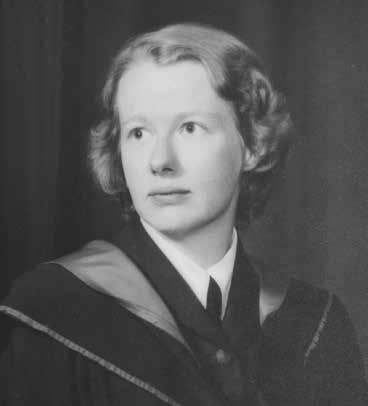
After graduating she worked as a postgraduate apprentice with the General Electric Company where she met her husband, Gordon West, and they were married in 1955. Later while still at the GEC she worked on test equipment for the Blue Streak and Black Knight missiles. It was at this time she became a member of the Institute of Electrical Engineers and became a chartered engineer.
In those days there was no such thing as maternity leave so just before the birth of her first child Susan in 1958 she was handed her P45. To keep her company she got a Dachshund but quickly got bored with the child crying and the dog barking so she took a job teaching maths at the local convent school. Her sons Geoff and Dave were born in 1959 and 1962 respectively.
In 1964 Gordon’s job moved to Newport Pagnell, Buckinghamshire, and Rosemary continued to teach maths in a nearby secondary school. When in 1968 the family followed Gordon’s job to Kirkcaldy, Fife in Scotland, Rosemary approached the local technical college with a view to refreshing her engineering skills. As it happened they didn’t have a teacher for that course but they saw from her CV that she had an Oxford engineering degree so asked her if she’d like to teach the course which she happily agreed to do. 1971 saw the family relocate again to Barrow upon Soar in Leicestershire where she taught maths to HND and HNC engineering students at Loughborough Technical College. Later in 1971 Gordon and Rosemary set up their own company where they designed printed circuits for one of the first desktop computers. In 1979 she joined the Computer Services department at Loughborough University where she remained until 1994 when she retired.
From early in her career she was a member of the Women’s Engineering Society and in 1980 she became its president.
Rosemary and Gordon had always wanted to live near the sea so when they retired they moved to Cowes on the Isle of Wight. She continued to be very active, kept swimming even in the sea, and took up line dancing.
She will be much missed by her family and friends.
SUSAN WEST (1976)
Pamela Lawrence attended Somerville College from 1949 to 1952 where she read Mathematics. She then trained to be a maths teacher at Cambridge and started her teaching career. In 1953 she married Hans Liebeck, a fellow maths student at Oxford. In 1955 they moved to South Africa where Hans took up a lectureship at Cape Town University. They stayed there for six years, during which time Pam did some teaching at the university, studied for a music degree, and brought up her two small children. In 1961 Hans was offered a new post at Keele University and they moved back to England. They had their third child in 1963. As the children were growing up, Pam resumed her interest in teaching maths and took up a post in teacher training in mathematics at Madeley College of Education and later at Keele University. Dave Miller (Department of Education, Keele) wrote that she was ‘a truly wonderful colleague who had impact on
all who met her through her enthusiasm and her great knowledge and understanding of maths and how it is learnt by children’.
Her Penguin book How Children Learn Mathematics, first published in 1982, is still in use in teacher training courses to this day.
Alongside her studies at Somerville, Pam was a keen sportswoman. She was a cricket and hockey Blue and captain of the college tennis team. In later life she played squash at county level and tennis both competitively and for fun, only stopping through illness at the age of 77.
Pam loved the arts and especially music. It was through playing the cello that she met Hans when they started playing string quartets together at Oxford. They continued to play chamber music throughout their lives. Pam was also a pianist, singer, and composer. Her works included string quartets, piano music, songs, and the score for a silent comedy film called One Man and His Dog, produced by her friend from Cape Town, Donald Black. This won a national best sound award in 1973 and can still be found on the internet, through the East Anglian Film Archive.
Pam leaves three children and five grandchildren.
ANN LIEBECK (DAUGHTER-IN–LAW; SOMERVILLE MCR 2007).
Jean Atkinson was born in 1932 at Heckmondwike, a small town in the West Riding of Yorkshire. Her family was working class: both her parents worked in the cloth industry that then dominated the area, her father’s occupation being given on her birth certificate as ‘Woollen card cleaner’. She went to Heckmondwike Grammar School, and in 1949 became the first of her family to attend university when she matriculated at Somerville College, Oxford. She graduated with a First in Modern History in 1952 and became a graduate student at Nuffield. There she met John Wright, an economics student from Sheffield; they married in 1954. John was appointed Fellow and Tutor in Economics at Trinity College the next year, and also became Estates Bursar – a role he relinquished 41 years later on his retirement in 1996. Jean’s own ambitions for a formal academic career were overtaken by circumstances: the social attitudes of the time towards married women’s careers; the demands of marriage, and especially John’s bad
health in the 1950s; and, finally, the arrival of children – Edmund in 1959 and Matthew in 1961. However, once they were grown, in 1978 she became a lecturer in politics at Trinity. Initially this was to teach the political institutions paper in PPE prelims as short-term cover for a Fellow on sabbatical, but the arrangement proved successful and continued throughout the 1980s. At this time Jean once described herself as a ‘part-time self-employed academic’. From the early 1990s she had to care increasingly for John and her own mother, who died in 2001 and 2002 respectively. Jean continued to live a determinedly independent life until March 2012, when a heart attack made it clear this could not continue. She moved to St Luke’s Hospital, Headington, on a permanent basis, but her heart condition resurfaced at the end of the year and she died on 9 January 2013.
Alison Davies was born in Halifax, Yorkshire, in 1931, from Welsh-born Quaker parentage, and never lost her North-country vowels and Welsh intonation. Possibly under Quaker influence she decided at about fourteen to become a scientist and, more particularly, an agronomist. This presented problems at her school, which had no established science sixth, but with the help of a committed chemistry teacher and the local Technical College, where she joined a group of would-be electricians to learn physics, she achieved her ambition of a place at Somerville, obtaining in 1953 a degree in Botany with a view to research on grassland and pasture management. Having been advised that the best place for this was the Welsh Plant Breeding Institute in Aberystwyth (now the Institute of Grassland and Environmental Research) she went there as a research student. After Oxford, it was a shock to the system; not only were the days long and the work hard, mainly outside and in all weathers, but most of the staff at all levels were Welsh-speaking, local and male. They disapproved of the young lady from Oxford and told her in no uncertain terms that the job was unsuitable for a woman. She felt isolated by age, background, gender and inexperience. However, encouraged by a somewhat more humane and sympathetic supervisor, she was seconded to the Institute for Biological and Chemical Research on Field Crops in Wageningen, Holland. Working there was a mind-blowing experience for Alison, and she loved every minute. Their approach to research and their up-to-date equipment was at that time considered to be
the best in Europe, if not the world. She finished her MSc, became fluent in Dutch, and returned to Aberystwyth confident that she was going in the right direction. Equipment and working conditions had improved and she became a highly valued member of staff. Alison remained there until her official retirement in 1991, but in fact continued working in a specially allocated office on a part-time basis until the late 1990s, making her career in plant ecology/agronomy research at the Welsh Institute span over 40 years. Her many publications, both individual and in collaboration with other agronomists, were mainly on research into the growth and productivity of perennial rye-grass and white clover in managed swards under a range of conditions in the UK, the Netherlands and as far afield as Canada, South America and New Zealand. Her expertise and knowledge of her subject made her a much respected speaker world-wide; she enjoyed travelling for both work and pleasure and always relished the challenge of another language or new way of approaching research. She had tremendous enthusiasm for all aspects of plant science and a very energetic approach. As one tribute from a colleague at WPBI says, ‘with Alison’s death, grassland science has lost a uniquely knowledgeable but always approachable figure’.
In her leisure time, Alison’s love of amateur dramatics lasted throughout her life, in Halifax, Oxford and in Aberystwyth. She was an active member of West Wales National Trust, Secretary of the Institute of Biology’s mid-Wales branch and treasurer of the local Archaeological Society. She much enjoyed having visitors to stay in her home and was a keen gardener and enthusiastic cook. She was an accomplished pianist. Devoted to her family, young and old, in later years she would drive from Aberystwyth to Halifax most weekends to help care for her mother. After developing Alzheimer’s she eventually went into a care home where she appeared content and still maintained her sunny disposition. She died in Halifax on May 14th 2012, cared for by her nieces. Alison’s happy, somewhat eccentric personality is remembered with much affection by her many colleagues and friends.
PATRICIA CHANCELLOR (HUMPHRYS, 1949) and MAUREEN SCURLOCK (OLIVER, 1950)
Marianne was born in 1924 in Timisoara, Romania, the older of two daughters. Her mother was Viennese and her father was a Hungarian Jew. In October 1939, the family fled to New Zealand as refugees from Nazism, and settled in Christchurch. The years in New Zealand laid the foundations for the rest of Marianne’s life, coming at a crucial time (between the ages of 15 and 25) and bringing her into contact with a number of people who had a lasting influence on her. Among them was the philosopher, Karl Popper, who had come to Canterbury University Christchurch as a lecturer in 1937. Marianne went to his philosophy evening classes, got to know him well, and through him developed a life-long interest in philosophical problems, particularly the mindbody question.
Marianne studied Medicine at the University of Otago, in Dunedin, from 1943-48. The newly arrived professor of Physiology was Jack Eccles, later a Nobel prize winner. He was an inspirational teacher, and his approach had a profound influence on Marianne. Eccles had been an Australian Rhodes scholar in Oxford before coming to New Zealand, and influenced by him Marianne came to Somerville in 1950 to do a DPhil. She remained in Oxford for the rest of her life, and against the backdrop of earlier disruption and displacement it became her much loved home. Her life here revolved around two main axes – her work and her family. She met her future husband John Clarke, a Rhodes scholar from Western Australia, in June 1950 and they were married soon afterwards. Their lifelong partnership was one in which John played a genuinely equal role in looking after their three children so that they could both pursue their scientific careers. With her DPhil completed, Marianne was appointed to a college lectureship at St. Hilda’s and a demonstratorship in the Department of Physiology, where she encountered some unenlightened attitudes on the part of her male colleagues – her own head of department advising her to spend less time in the lab and more time with her family. Undeterred, she went on to develop an international reputation as a neuroscientist, making contributions to the understanding of various aspects of brain function, particularly the role of neurotransmitters, in collaborations with a number of individuals and research groups in Oxford and elsewhere, leading to the award of a DSc by the University in 2000. Her last scientific paper, on the life and work of Jack Eccles, was published in 2012.
As well as a highly productive research scientist, Marianne was a devoted and much loved teacher. After a decade as a college lecturer at St. Hilda’s, she was appointed in 1963 to a Tutorial Fellowship in Medicine at St. Anne’s College where she found a permanent academic home, a place at which she met some of her closest and most important friends, and a college to which she became passionately committed. She took great pride in her students and their many achievements, developing long-lasting friendships with many of them. Having overcome the negative prejudices of male colleagues towards combining the roles of mother and scientist, she inspired many of her own women students and collaborators to feel that it was something that they too could do.
If her work and her family were central to her life in Oxford, this by no means exhausted Marianne’s talents and interests. She was an excellent pianist, and an enthusiastic and critical concert-goer who at the age of 85 enrolled for musical analysis classes, which she followed with great commitment. Alongside music she was passionately interested in theatre and visual art. She was a voracious reader – of fiction, biography, philosophy, politics and history – anything and everything in English and German, often two or three different books on the go at the same time. With political views on the left, and fiercely critical of the Iraq invasion, she became a volunteer member of the Iraq Body Count – helping to record the human cost of the war. Her sharp mind and appetite for knowledge, combined with her interest in and love of people, brought her a wide circle of friends and admirers, by whom she will be greatly missed.
ERIC CLARKE (SON OF MARIANNE FILLENZ)
Writing as one of those students to whom Eric refers, I can say that Marianne was indeed an inspiration to me and many others. She was the archetypal personal tutor and a fantastic role model, combining her teaching and research duties with her family responsibilities, always without apparent difficulty.
She was supportive even when challenging, and I valued Marianne’s opinions increasingly as my undergraduate days receded.
Without her I would not ultimately have come to Somerville, in an unexpected role, to fulfil the aspiration that I had had as schoolgirl when I applied to read medicine. But for that I had to go to St Hilda’s!
FIONA CALDICOTT
She has been called a hero of our time, a great soldier of human rights, a formidable and fearless warrior, the voice of voiceless millions across the globe, ‘our mentor, who never left any stone unturned in the pursuit of human rights’; and: a trusted friend who trusted you in return, a lamp in the darkness, bodhisattva, the only person in Survival’s first 44 years to whom the organisation is truly indebted. Her life was characterised by a deep internationalism, altruism, self-sacrifice, and ego-less humility. She said: ‘Look, I never begged anyone in my life for myself.’
Lists, like litanies. She was anthropologist, scholar, linguist, Somalist, expert witness, campaigner, advocate, benefactor, fundraiser, writer, teacher, lecturer, intrepid traveller, sister, aunt of twelve, great-aunt, friend, so self-effacing that nobody, including Somerville, knew the extent of her. Till she died. Now she is mourned and written of with a vast sense of gratitude, love and loss by Bushmen, Ogiek, Oromo, Somalis, and other peoples of the Horn of Africa and beyond, by anthropologists, scholars, campaigners, exiles, refugees. For her Quaker memorial meeting in London Oromo people prepared a 36-page book of her, and a wonderful feast.
Virginia was a third-generation Somervillian, her mother the distinguished novelist Sylvia Thompson. Of her two much older sisters, Rosemary is also a writer. Elizabeth died while we were at Somerville, leaving two little girls, Miranda and Deborah, and in 1968, after her mother’s death, Virginia was called home from her doctoral fieldwork in Somalia to care for them, and her father, at her parents’ house near Reigate.
At Somerville Virginia read Classics, then English with Old Norse, studying under JRR Tolkien, whose thought influenced her entire life, both intellectually and spiritually. For the centenary conference of the Tolkien Society in 1992 she wrote her characteristically witty An Anthropologist in Middle-earth.
At LSE she studied Social Anthropology. Her MA research into the institutions of the Oromo of Ethiopia, and her PhD fieldwork in the village of Afgooye in Southern Somalia, where she lived for three years, sparked a lifelong association with the Horn of Africa, whose peoples and conflicts were always with her. All her working life she maintained a steady output of scholarly writings, including dozens of papers and essays on Somalia; a series of children’s books (Surviving Peoples); with others, a SomaliEnglish Dictionary; and, perhaps her magnum opus, Somali Sultanate: the Geledi city-state
over 150 years (2002). Her unpublished research notes and other papers she left with the School of Oriental and African Studies, where in 2011 she held an exhibition of her Afgooye photographs.
Virginia worked for Survival International for 35 years from soon after its launch in 1969: twenty as a volunteer and fifteen (1989-2004) on the staff, as Africa Case Officer. For six years she edited Survival’s newsletter. From its beginning Survival’s focus, and Virginia’s, was the indigenous peoples of the Amazon rainforest, their rape, murder and displacement as roads were driven through it. Later, her African field trips were always carried out with fortitude and gusto on the thinnest of shoestrings. Her first night in the Kalahari was spent sleeping soundly under the stars next to the broken vehicle leaving her Bushmen companions huddled inside, out of reach of marauding lions!
Ogiek tribespeople in Kenya say they will forever remember her for her role in building the network of human rights activists that would eventually become the Ogiek Welfare Council. Her trip to Ethiopia in the 1980s to investigate allegations of a large-scale government programme of forced resettlement would have yielded few results for anyone with less resolve and ingenuity, but Virginia saw through her government monitors and published several damning reports which brought the scandal to the world’s attention.
In London in 1981 began her involvement with the Oromo Relief Association, of whose activities she remained ‘the soul and heart’ until she died.
Virginia was secretary of the Anglo-Somali Society, and – as an expert on clan provenance in Southern Somalia and a Somali-speaker – she provided expert testimony and reports over the past two decades to the Home Office for hundreds of asylum cases, and was in constant demand by solicitors and by the courts alike. The great weight that was given to her presentations before the Asylum and Immigration Tribunals led, in some instances, to a change in judicial rulings and official country guidance notes for Somali asylum seekers.
‘She never told her feelings, but all her life / She gave away the substance that was hers.’ Virginia’s private generosities are beginning to be told among us: for a refugee girl in Nairobi to go to school, for example; or, most especially, for Reziya’s younger brother Aref, years of visits, friendly listening and practical guardianship.
She met death, from lung cancer, with an equal grace and generosity, returning to the God in whom she had ‘decided to believe’. A school in Kenya is named for her, as is a rolling internship position at Survival in London ‘to encourage young campaigners to follow in her giant footsteps’.
CLARE ARMSTRONG (COLLINS, 1957), REZIYA HARRISON (AHMED, 1957), FELICITY SAVAGE (1957), with help from Virginia’s family and friends.
Alison was the youngest of three sisters. Her father was, at the time of her birth, a civil servant with a scientific background, and her mother was a teacher of mathematics. Her childhood was spent in Maidenhead, Paris and in Reading where she attended the Abbey School from the age of eight, winning a ‘free place’ at eleven on the strength of her 11+ results (The Abbey was a Direct Grant school). Alison showed an early interest in things mechanical and her Hornby trains and her Meccano sets were among her most treasured possessions. She was the first Abbey girl to read Engineering and among the first to make an application to Oxford before sitting her A-levels. Alison came up to Somerville to read Engineering Science in 1969, inheriting my beloved bicycle which, having gone down that year, I had left for her.
In her last year at school Alison was house captain and although perhaps not startlingly athletic played in goal in the school’s first hockey eleven. She was also a talented musician. Like many ‘well brought up’ girls she played the piano, joining in duets and even eight hands on two pianos with her mother and sisters, but she was, too, an excellent cellist, and she began as she grew up to develop a strong and attractive singing voice. Both the cello playing and her voice were put to good use at Oxford. Before that, however, playing her cello in the Reading Youth Orchestra had led to her meeting a clarinet player, and gifted pianist and mathematician, called Peter Palmer who became, as she so often said, the love of her life.
Alison took her degree in 1972 and followed it with an MSc in Hydraulics, focusing on water flow in rivers, at Imperial College, London. Alison and Peter were married in September 1973 and they both returned to Oxford as DPhil research students, Alison at Somerville and Peter at Merton. Alison subsequently began teaching mathematics, initially at Matthew Arnold School, Oxford, and then at Kendrick School, Reading. The arrival of three small boys between 1978 and 1981 inevitably changed Alison’s
outlook but there were other changes in the offing. In the year after their youngest child was born ICL asked Peter and several colleagues to relocate to its office in Dalkeith and the family made its first major move. No sooner had Alison and Peter committed themselves to the purchase of a house just south of Edinburgh than ICL proposed moving its staff back to the south of England. Peter and some of his colleagues decided at this point to stay in Scotland and to set up their own business. And so the first of a number of highly successful software companies was born. Its nursery was Alison’s house and she found herself initially taking on a supporting role here, particularly as catering manager, in addition to running the family.
Alison’s time in Edinburgh was, I believe, ultimately a rewarding one. It was hard work, although Alison was never afraid of that, and she had to cope with an episode of serious illness for Peter, and its treatment. But Peter recovered well, his businesses flourished, their boys settled into George Watson’s College, and they built up a good network of friends. Alison took on some IT teaching and a research assistantship at the Edinburgh University Management School and she was awarded the postgraduate Open University Computing Diploma in 1994. More change however was in the air.
Peter’s customers were largely to be found in the United States. It became increasingly obvious that the US was the place to be. An extended visit to New York State in 1982, when the children were still very small, had not been entirely a success from Alison’s point of view but eventually the decision was made and in 1995 the family moved to Boston. Their eldest son, Jon, stayed in Edinburgh to finish his last year at George Watson’s – he then came to Somerville to read Mathematics – while the younger two were enrolled in Boston schools.
Peter and Alison bought an unusual but striking house in Belmont, a pretty suburb of Boston, and Alison set about making it a haven of hospitality for friends and family
from the UK and for a growing network of new friends and colleagues based in the Boston area and beyond. Her house, and more precisely her kitchen, was open to all. Guests rapidly became part of the family and everyone found a listening ear, good advice, comfort when required and a warm and positive atmosphere. For a while Alison worked as a research analyst for a Boston software company but she found this too restrictive in the light of the demands of her immediate family in Boston and the need and the wish to stay in close touch with both her own family and with Peter’s family in the UK. Family, in all its aspects, was centrally and increasingly important to her. She liked nothing better than a good party. Christmas, Thanksgiving, the big birthdays, anniversaries and many other occasions gave her the reason to gather friends and family and celebrate. These included the weddings of her two elder sons – two celebrations each in fact. Both Jon and Geoff married American girls in the US but both couples had a second reception in the UK for family and friends over here.
In 1996, soon after arriving in Boston, Alison joined Chorus pro Musica of Boston. This is a choir with a long history and a strong reputation. For the rest of her life Alison devoted a large amount of her time to its interests. Apart from singing, and providing much valued support to the contralto line, she was for 16 years closely involved with the management of the choir, planning of the programme, organisation of concerts, hosting new members’ dinners in her own home, and fundraising. She was herself a generous donor. She was President of the Chorus from 1999 to 2002 during which time it celebrated its 50th anniversary with the world première of Leon Biriotti’s Sinfonia da Requiem and performances of Mahler’s 8th Symphony at both Boston’s Symphony Hall and Carnegie Hall, New York. In 2003 she masterminded the arrangements for a performance of L’Enfance du Christ to mark the 200th anniversary of Berlioz’ death which was a triumph despite the very worst that Boston could inflict in terms of weather. She was then Chair of the Board of Trustees from 2006 to 2008. Above all, though, Alison loved the music and trips home to the UK had to be carefully timed so that she did not miss too many precious Monday night rehearsals.
For the last few years Alison was involved in a project which allowed her to exercise all her practical, design and creative skills. She and Peter had early fallen in love with New Hampshire and had spent many weekends and holidays there. They bought some land on the shore of Lake Winnipesaukee at Wolfeboro and Alison set about building her dream home. It was finished, or finished enough, to welcome visitors for her 60th
birthday in the summer of 2011, and is now a peaceful holiday retreat: a comfortable and elegant home in a beautiful place and a fitting memorial to a much loved wife, mother, sister and friend.
The nature of Alison’s illness meant that for a year or so we all knew we would not have her with us for long. For Alison this meant that she had the opportunity to make detailed plans for her last months and days. It was, too, a real joy to her that she was able to meet the two little girls who arrived during 2012 to join the two small grandsons who had brought her so much pleasure and delight, and that her youngest son Chris was happily settling into a rewarding permanent relationship. Alison’s funeral was largely planned by herself. Close friends and family spoke movingly about what she meant to them and others gave readings Alison had chosen. And members of Chorus pro Musica sang the hauntingly beautiful Alleluia by Randall Thompson. This was followed, at Alison’s express wish, by ‘a good party’ at her house.
Much missed by her immediate and extended family, and many friends, Alison lives on in our hearts and minds. She endured much in her last months but rarely let it show. Her response to a tearful friend is typical: ‘Don’t cry for me; I have had a wonderful life.’
In recent years Alison was a much valued member of the Somerville Development Board and a major benefactor, with an especial interest in promoting College IT. An IT room in College is named in her honour.
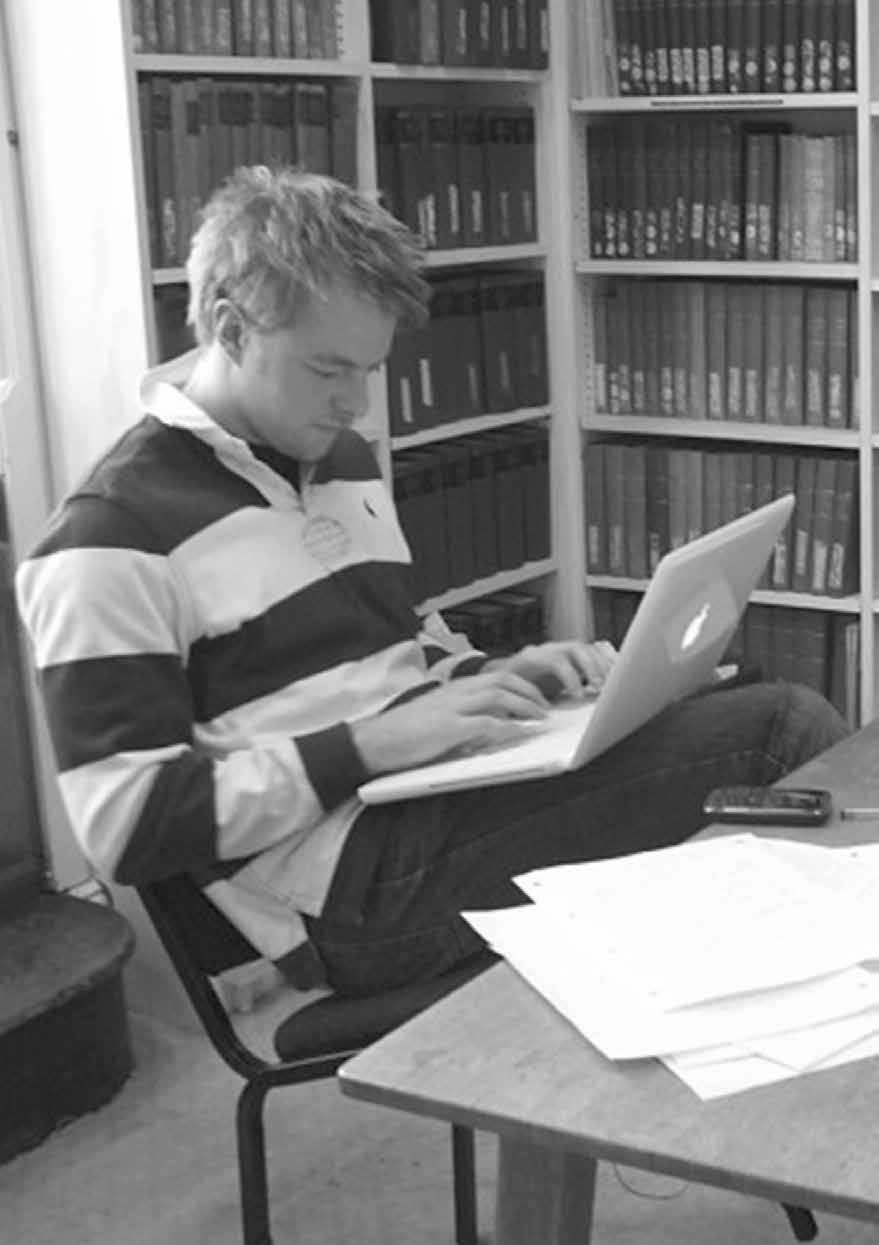
Ancient and Modern History
Class II.1
Elizabeth Denham
Isabel Saunders
Biochemistry
Class II.1 Elizabeth Clarke
Jake Shelley
Jessica Wong
Biological Sciences
Class I Kathryn Finnis
Class II.1 Rebecca Nohl
Claire Taylor
Class II.2 Harry Spencer
Chemistry
Class I Ceri Cairnduff
Alexander Portz
Helen Thorbjornsrud
Class II.1
Qianqi Lin
Class II.2 Pei Ni
Richael Chua
Pei Yi He
Tao Lu
Classical Archaeology and Ancient History
Class II.1 Flora Graham
Maxwell Panter
Engineering Science
Class I Dona-Maria Sandu
Class II.1
Samuel Akinfala
Yat Shing Tsang
Thomas Varley
English
Class I Benedict Hardy
Helen Joslin
Rachel Lovibond
Class II.1 Hannah Blyth
Molly Bridges
Christina Doran
Edward Eban
Mary Flanigan
Huw Fullerton
Emily Iredale
Ella Waldman
English and Modern Languages
Class I Alexandra MacEwan
Experimental Psychology
Class I Sophie Turnbull
Class II.1 Daniel yon
History
Class I Thomas Allsup
Class II.1
Tess Little
Alexandra Dutson
William Fell
Andrew Kerr
Daniel Purcell
Rosa Schiller Crawhurst
Lorna Sutton
History and Economics
Class II.1 Kartik Aiyar
Jurisprudence
Class II.1 David Chew
Fergal Duggan
Rachel Hutchings
Krishan Neelandra
Anish Patel
Class II.2
Oussama Mezzoui
Literae Humaniores
Class II.1 Jennifer Butler
Mathematics (BA)
Class II.1 Jessica King
Mathematics (MMath)
Class I Joseph Page
Class II.1 Alexander Gems
Tim Saunders
Mathematics and Computer Science
Class II.1 Bogdan-Alexandru Panait
Stephen Parish
Mathematics and Philosophy
Class I Rachel Stirrat
Class II.1 Richard Nias
Mathematics and Statistics
Class II.1 Yapei Zhang
Medical Sciences
Class II.1 Sarah Billingsley
Grace Dowling
Sophia Godsland
Vikram Nagarajan
Katie Paul
Modern Languages
Class II.1 Katherine Corkum
Isabel Lam
Katie McInnes
Hannah Riley
Katherine Travers
Music
Class I Douglas Knight
Philosophy, Politics and Economics
Class I Stephane Roux
Samuel Talalay
Thea Tan
Class II.1 Julia Au
Daniel Balderson
Olivia Moorby
Peerapol Vayakornivichit
Hugo Wallis
Timothy Williams
Physics (BA)
Class II.1 William Boyer
Cuneyt Karapinar
Yu yu
Physics (MPhys)
Class I Charlotte Daniels
Stanislav Zavjalov
Class II.1 Nathaniel Jowitt
Psychology and Philosophy
Class I Joanna Demaree-Cotton
Note: All students are offered the choice, at the start of their course, of opting out of any public list that the University or College may produce. There are therefore the following results to announce, without reference to subject or name:
Class II.1 = 11
Class II.2 = 3
Distinction Deeksha Manchanda
Zachariah Sammour
Pass Michael Harper
Sreemeena Sethu
Stephanie Tsang
Pass Shaiq Bhutto
Distinction Roman Kaiser
Pass Adhemar Autrand
Pass Alexios Kirillov, Wasin Lertwalaipong
Distinction: Elizabeth Brown
Ruth Corrigan
Maya James
Pass Joseph Collinson
Applied Statistics
Pass Naxian Wang*
Computer Science
Distinction John Dalton*
Alexander Wilson*
Contemporary India
Pass Harry Staight
Economic and Social History
Distinction Samuel Bjork*
Mathematical and Computational Finance
Distinction Ludovic Dannaoui
Goncalo Pereira
Simoes Matos
Pass Duwei Xu
Mathematical Modelling & Scientific Computing
Pass Carlos de Figueiredo*
Mathematics and Foundations of Computer Science
Distinction Daniel Siebel*
Refugee and Forced Migration studies
Distinction Peter Grbac
Pass Briar Thompson
Classical Archaeology
Distinction Glenn Lacki
Pass Philippa Smithson
English (1800-1914)
Distinction Lawrence Gibson
Pass Nele Pollatschek
Global and Imperial History
Pass Jonathan Ward*
Greek &/or Roman History
Pass Elliot Claydon-Knights
Medieval History
Pass Angela Albanese*
Medieval Studies
Distinction Margaret Scarborough
Modern British & European History
Distinction Christy Ford
Modern Languages
Distinction Sabrina Beck
Sarah Morris
Martin Prechelmacher
Pass Lauren Clark-Hughes
Lucy Russell
Music (Composition)
Pass Alexander Scott
Music (Musicology)
Pass David Hughes
Music (Performance)
Pass Emyr Honeybun
Psychological Research
Pass Rita Halpert*
Jixing Li*
Islom Nazarov*
Bachelor of Philosophy
Philosophy
Pass Hamish Bridges
Economics
Distinction Adiya Belgibayeva
General Linguistics and Comparative Philology
Distinction Tam Blaxter
International Relations
Pass Evelyn Pauls
Claire Peacock
Politics: Political Theory
Pass Daniel Hutton Ferris
Biochemistry
Ian Robertson
Comparative Philology & General Linguistics
Franziska Hack
Computer Science
Pia-Ramona Wojtinnek
English
Matthew Kerr
Law
Ciara Kennefick
Management Studies
Siddharth Arora
Organic Chemistry
Steven Ferrara
Fiona Truscott
Pharmacology
Yvonne Couch
Philosophy
Dani Rabinowitz
Robert Simpson
Zoology
George Busby
Note: All students are offered the choice, at the start of their course, of opting out of any public list that the University or College may produce. There are therefore the following results to announce, without reference to subject or name:
Distinction = 1
Pass = 3
This list is accurate at the time of print and some exam results may be released after this date. Graduates with an * after their names completed in 2011/12, but their results were released after going to print, and are therefore included here.
Scholarships and Exhibitions awarded to undergraduates in residence for work of especial merit:
Barraclough Scholarships
Rosie Carpenter (History and Modern Languages), Rowan Lyster (Modern Languages and Linguistics)
Beilby Scholarships
William Juan (Mathematics and Computer Science), Richard Nias (Mathematics and Philosophy), Albert Slawinski (Mathematics and Computer Science), Fabian ying (Mathematics)
Bryant Scholarships
Ceri Cairnduff (Chemistry), Jessica Eastwood (Chemistry), Marcin Konowalczyk (Chemistry), Susan Leung (Chemistry), Jack Twilton (Chemistry)
Bull Scholarships
Dominic Stanford (English and Modern Languages), Will Truefitt (English)
Cobbe Scholarships
Charlotte Daniels (Physics), Martin Engelcke (Engineering), Linda Perkio (Engineering), Rory Robinson (Mathematics)
Coombs Scholarship
Robert Smith (History)
Dukinfield Scholarships
Ewan Blackledge (PPE), Zoe Fannon (PPE), Philip Oddie (Medical Sciences), Youlin yuan (PPE)
Haynes Scholarship
David Chew (Law)
Hodge Scholarships
Elaine Chow (Law), Xuan Du (Law)
Barraclough Exhibitions
Francesca Betkowska (Modern Languages), Rebecca McKie (CAAH), Emma Hardie (History)
Beilby Exhibitions
Helena Connors (Biological Sciences), Kathryn Finnis (Biological Sciences), Sam Levin (Biological Sciences), Rebecca Nohl (Biological Sciences), Claire Taylor (Biological Sciences)
Bradshaw Exhibitions
Ian Buchanan (Physics), Petra Kohutova (Physics), Jun Jie Leong (Physics), Richard Nicholson (Physics), Jamie Parkinson (Physics)
Bryant Exhibition
Rachel Porter (Chemistry)
Bull Exhibitions
Molly Bridges (English), Helen Joslin (English)
Cobbe Exhibitions
Nick Shinder (Engineering), Will Travis (Engineering)
Dukinfield Exhibitions
Radhika Sholapurkar (Medical Sciences), Matthew Titterington (Medical Sciences)
Hodge Exhibitions
Brendan Brett (Ancient and Modern History), Charles Northcott (History), Stephen O’Driscoll (History)
Pope Exhibitions
Laura Schack (Modern Languages), Daniella Shreir (Modern Languages)
Seymour Exhibition
Anthony Graves (Classics)
Cobbe College Prize
Mei Kwan Fung (Physics), Stanislav Zavjalov (Physics)
Eileen Gonner
College Prize
Andrew Kerr (History)
Archibald Jackson Prizes (for Graduates with a Distinction in their exams in 2013)
Sabrina Beck (Modern Languages), Adiya Belgibayeva (Economics), Samuel Bjork* (Economic and Social History), Tam Blaxter (General Linguistics and Comparative Philology), Elizabeth Brown (Clinical Medicine), Ruth Corrigan (Clinical Medicine), John Dalton* (Computer Sciences), Ludovic Dannaoui (Mathematical and Computational Finance), Christy Ford (Modern British & European History), Lawrence Gibson (English 1800-1914), Peter Grbac (Refugee and Forced Migration Studies), Maya James (Clinical Medicine), Glenn Lacki (Classical Archaeology), Deeksha Manchanda (BCL), Sarah Morris (Modern Languages), Goncalo Pereira Simoes Matos (Mathematical and Computational Finance), Martin Prechelmacher (Modern Languages), Zachariah Sammour (BCL), Margaret Scarborough (Medieval Studies), Daniel Siebel* (Mathematics and Foundations of Computer Science), Alexander Wilson* (Computer Science)
Graduates with an * after their names completed in 2011/12, but their results were released after going to print, and are therefore included here.
Robert Adam (History), Gabriel Asman (Computer Science), Livia Bridge (Experimental Psychology), Lydia Bruton-Jones (English), Guy Bud (Ancient and Modern History), Elaine Chow (Law), Ming Kwong Chung (Mathematics), Peru D’Ornellas (Physics), Xuan Du (Law), Mei Kwan Fung (Physics), Liam Garrison (Chemistry), Richard Higson (History and Economics), Jonas Hoersch (PPE), Daniel Khan (History), George Pearson (Chemistry), Richard Nicholson (Physics), Andrew Smith (Physics), Tsz Long Tang (Biochemistry), William Thomas (PPE), James Thompson (Mathematics and Computer Science), Matthew Western (Music), Chengzhi Zhou (Engineering)
Thomas Allsup (History), Ceri Cairnduff (Chemistry), Charlotte Daniels (Physics), Joanna DemareeCotton (Psychology and Philosophy), Kathryn Finnis (Biological Sciences), Benedict Hardy (English), Helen Joslin (English), Douglas Knight (Music), Tess Little (History), Rachel Lovibond (English), Alexandra MacEwan (English and Modern Languages), Joseph Page (Mathematics), Alexander Portz (Chemistry), Stephane Roux (PPE), Dona-Maria Sandu (Engineering), Rachel Stirrat (Mathematics and Philosophy), Samuel Talalay (PPE), Thea Tan (PPE), Helen Thorbjornsrud (Chemistry), Sophie Turnbull (Experimental Psychology), Stanislav Zavjalov (Physics)
Brendan Brett (Ancient and Modern History), Charlotte McLean (Literae Humaniores), Lucy Nolan (Music), Aimee Taylor (Music)
Rosie Bennison (Modern Languages, 2008), Mary Chater (Music, 1977), Charlotte Daniels (Physics, 2009), Joanna Demaree-Cotton (Philosophy and Psychology, 2010), Elizabeth Denham (Ancient and Modern History, 2010), Mary Flanigan (English, 2010), Maeve Gill (Experimental Psychology, 2002), Peter Grbac (Refugee and Forced Migration studies, 2012), Michael Harper (BCL, 2012), Sarah Harris (English, 1986), Matthew James (PPE, 2009), Emma Ladds (Medical Sciences, 2007), Samuel Newton (Literare Humaniores, 2008), Andy Ormerod-Cloke (PPE, 2008), Maxwell Panter (CAAH, 2010), Rosa Schiller-Crawhurst (History, 2010), Philippa Smithson (Classical Archaeology, 2012), Samuel Talalay (PPE, 2010), Katherine Travers (Modern Languages, 2009), Sophie Turnbull (Experimental Psychology, 2010), Ella Waldman (English, 2010), Daniel yon (Experimental Psychology, 2010)
Sarah Billingsley (Medical Sciences, 2010), Douglas Knight (Music, 2010), Vikram Nagarajan (Medical Sciences, 2010), Daniel Purcell (Modern History, 2010), Briar Thompson (Refugee and Forced Migration studies, 2012)
Helen Thorbjornsrud (Chemistry)
Tsz Long Tang (Biochemistry)
Gibbs Prize
Joanna Demaree-Cotton (Psychology and Philosophy), Sophie Turnbull (Experimental Psychology)
Sally Stevenson (Chemistry)
Elaine Chow (Law), Xuan Du (Law)
Martin Wronker Prize
Christopher Derry (Medicine)
Turbott Prize
Alexandra Bogdanova (Chemistry)
Ancient and Modern History
Guy Bud, Abingdon School
Samuel Packer, City of London School
Samuel Taylor, Oundle School
Biochemistry in Molecular and Cellular Biochemistry
Olivia Conroy, St Bernard’s Convent School
Hans Dias, St Joseph’s School
Tooba Qadri, Wolverhampton Girls High School
Katharine Robinson, Farnborough Sixth Form College
Tsz Tang, German Swiss International School
Biological Sciences
Tom Carruthers, Saffron Walden County High School
Fergus Chadwick, St Leonard’s Comprehensive School
Amber de Vere, Sir William Borlase’s School
Amy Fairchild, King Edward VI Grammar School
Megan Wallace, Trinity Academy
Timir Weston, Westminster School
Natalie Wood, Ashton Sixth Form College
Chemistry
Alexandra Bogdanova, Faringdon School
Liam Garrison, Bournemouth School
Abigail Morris, Rosebery School
George Pearson, King’s School
Rachel Backshall, King George V College
Jasmine Clark, Barton Peveril College
Uxue Rambla Eguilaz, University of Zaragoza
Computer Science
Gabriel Asman, High School
Alexandru Ioan Cuza
Piotr Nosalik, IV Liceum
Ogolnoksztalcace w Sosnowcu
Engineering Science
Kamilla Abilova, John Leggott College
James Breitmeyer, Dexter School
Robert Chalmers, European School of Frankfurt
Tsun Cheung, Carmel Secondary School
Eden Harrison, Peter Symonds College
Edmund Moss, Kings College School Wimbledon
Chengzhi Zhou, Kilmore International School
Lydia Bruton-Jones, Bacup and Rawtenstall GR School
Polly Fullerton, Tudor Hall School
James Gore, Hampton School
Megan Hill, St Benet Biscop High School
Clara-Laelia Laudette, Ecole Active
Bilingue J Manuel Paris
Andrew McLean, City of London School
Maire Power, Cardinal Vaughan School
Elizabeth Pugh, Ipswich High School
Karun Sandal, Warwick School
Isabelle Thompson, Dauntsey’s School
Experimental Psychology
Livia Bridge, Richmond upon Thames College
Anna Cartwright, Stratford-upon-Avon Girls’ GR School
Callum Clifton, Canford School
Anna-Sophia Warren, Bolton School
History
Robert Adam, Silverdale School
Olivia Anderson, Benenden School
Augustus Gayford, Winchester College
Daniel Khan, Franklin Sixth Form College
Di Wei Lee, Raffles Junior College
Simon Mitchell, Roundhay School
Georgina Salzedo, Lancaster Girls’ Grammar School
Jodie Spencer, Forest School
Molly Vaughan, Bishop Vesey’s Grammar School
Sasha Ward, The Ridings’ Federation
Winterbourne International Academy
Annie Whitton, High Storrs School
Samuel Williams, Eton College
History and Economics
Richard Higson, Judd School
History and Modern Languages
Brigitta Summers, International Grammar School
Jurisprudence
Edward Austin, Clitheroe Royal Grammar School
Elaine Chow, Washington University in St Louis
Xuan Du, Raffles Junior College
Luke Hannigan, Overton Grange School
Fredrik Hellstrom, Nacja Gymnasium
John Tertan, Markham District High School
Literae Humaniores
Luke Barratt, Reading School
Alice Jamison, Lady Eleanor Holles School
Helen MacVicar, Benenden School
Charlotte McLean, Camden School for Girls
Anuoluwapo Oyefesobi, Columbia Senior High School USA
Aditya Pandey, Manchester Grammar School
Floriane Van Den Brande, Onze-Lieve-Vrouwecollege Antwerpen
Mathematics
Timothy Camfield, Peter Symonds College
Ming Chung, Royal Latin School
Xiaofan Ji, Shenzhen College of International Education
Andrew MacFarlane, Perth High School
Cicely Robinson, Bedales School
Brigitte Stenhouse, St Thomas More High School
Cheng Zhu, Cambridge International Centre of Shanghai
Mathematics and
Computer Science
James Thompson, Norwich School
Mathematics and
Statistics
Wenjing Zhang, National Junior College Singapore
Medical Sciences
Kimberley Monks, Bishop Vesey’s Grammar School
Rebecca Oram, Prudhoe Community High School
Emma Pencheon, Hills Road Sixth Form College
Gabrielle Todd, Kendrick School
Kin Tong, Methodist College Kuala Lumpur
Medicine
Fiona Britton, University of Manchester
Matthew Evans, University of Oxford
Modern Languages
Emma Beddall, Pate’s Grammar School
Anna Branford, Lancaster Girls’ Grammar School
Mark Bourke, Royal Grammar School Guildford
Rachel Dickenson, Emmanuel College
Marco Farrugia, Holy Cross College
Anna Haddesley, Invicta Grammar School
Marina Holden, Worth School
Peter Johnstone, Hills Road Sixth Form College
Jonathan Lawrence, Coventry School Bablake
Eleanor Makower, James Allen Girls’ School
Modern Languages and Linguistics
Georgia Tutt, Highworth School
Music
Antony Beere, Farnborough Sixth Form College
Matthew Western, Ilkley Grammar School
Philosophy, Politics, and Economics
Leo Bentley, Latymer School
Abigail Carroll, Cardinal Newman College
James Gardner, Winchester College
Amelia Hamer, St Catherine’s School
Jonas Hoersch, Deutsche SchuelerAkademie
Abdul Huson, City of London School
Stratis Limnios, Westminster School
Lawrence Meats, Merchant Taylors’ School
Imogen Morley, Guildford High School
Thomas Smith, Alton College
William Thomas, Brynteg Comprehensive School
Physics
Peru d’Ornellas, Latymer Upper School
Natalie Fuller, Mildenhall Upper School
Matthew Khan, Eastbourne College
Menglai Liu, U-Link College of International Culture
Christina Pontin, Caterham School
Andrew Smith, Bishops Stortford College
Sam Walker, Stafford Grammar School
Certificate in Diplomatic Studies
Shaiq Bhutto, University of Karachi
Bachelor of Civil Law
Michael Harper, University of Oxford, Somerville College
Deeksha Manchanda, National Law Institute University, Bhopal
Zachariah Sammour, London School of Economics and Political Science
Sreemeena Sethu, NALSAR University of Law
Stephanie Tsang, London School of Economics and Political Science
Bachelor of Philosophy in Philosophy
Jacob Williamson, University of Oxford, Somerville College
Doctor of Philosophy in Biochemistry
Chih-Chao Liang, University of Oxford, Oriel College
Doctor of Philosophy in Clinical Medicine
Anne Ndungu, Kenyatta University
Kenya
Doctor of Philosophy in Comparative Philology & General Linguistics
Kinga Kozminska, University of Chicago
Noriko Tanigawa, San Francisco State University CA
Doctor of Philosophy in Engineering Science
Farrukh Siddiqui, University of Engineering and Technology, Lahore
Richard Wong, Universiti Sains
Malaysia (University of Science)
Mohd Nazri Bin Bajuri, Universiti Teknologi Malaysia (Technological University of Malaysia)
Doctor of Philosophy in International Development
Andrea Ruediger, University of Oxford, St Antony’s College
Doctor of Philosophy in Mathematics
Christoph Aymanns, Imperial College of Science, Technology & Medicine
Teresa Conde, University of Coimbra, Portugal
Jochen Kursawe, University of Munich, Germany
Doctor of Philosophy in Medieval and Modern Languages
Friederike Wolpert, University of Edinburgh
Doctor of Philosophy in Oriental Studies
Jonathan Ward, University of Oxford, Somerville College
Doctor of Philosophy in Plant Sciences
Olga Sedelnikova, University of East Anglia
Doctor of Philosophy in the Systems Biology
Doctoral Training Centre
Elizabeth McMillan, University of Sheffield
Doctor of Philosophy in Zoology
Benjamin Cowburn, University of Oxford, Hertford College
Magister Juris
Alexios Kirillov, Université de Paris II (Université Panthéon-Assas), France
Wasin Lertwalaipong, Thammasat University
Master of Philosophy in Economics
Lukas Kleine-Rueschkamp, University of California, Berkeley
Master of Philosophy in General Linguistics & Comparative Philology
Nok Sze Christie Lam, City University of Hong Kong
Master of Philosophy in Greek/Roman History
Juliane Zachhuber, University of Oxford, Somerville College
Master of Philosophy in International Relations
Evelyn Pauls, Universität Mannheim, Germany
Claire Peacock, Lund University
Master of Philosophy in Modern British and European History
James McAuley, Harvard University
Master of Philosophy in Politics: European Politics & Society
Frederick-Christoph Richters, University of Glasgow
Master of Science (by Research) in Chemical Biology
Anne Makena, Moi University, Kenya
Master of Science (by Research) in Experimental Psychology
Chii Fen Hiu, University of York
Master of Science in Applied Statistics
Shu Wang, Heriot-Watt University
Master of Science in Biomedical Engineering
Yunus Msayib, University of Manchester
Master of Science in Computer Science
Abdur Khan, University of Warwick
Zhenzhou Yin, University of Warwick
Xingwei Zhu, Peking University
Master of Science in Contemporary India
Harry Staight, University of Durham
Master of Science in Integrated Immunology
Philippos Demetriou, Imperial College of Science, Technology & Medicine
Master of Science in Mathematical and Computational Finance
Ludovic Dannaoui, Diplôme d’Ingénieur de l’Ecole Polytechnique
Goncalo Pereira Simoes Matos, Instituto Superior Tecnico, Lisbon, Portugal
Duwei Xu, Fudan University, China
Master of Science in Mathematical Modelling & Scientific Computing
Doireann O’Kiely, University College
Dublin
Tomislav Plesa, Victoria University of Manchester
Master of Science in Mathematics and Foundations of Computer Science
Gregory Cousins, McMaster University
Master of Science in Neuroscience
Sinead Brady, University of Toronto
Master of Science in Refugee and Forced Migration Studies
Peter Grbac, Harvard University
Walter McCormick, University of Notre Dame
Briar Thompson, University of Waikato
Master of Studies in Classical Archaeology
Glenn Lacki, University of Oxford
Philippa Smithson, University of Oxford, Somerville College
Master of Studies in Creative Writing
Hannah Hardy, Langara College, Vancouver, Canada
Daisy Johnson, University of Lancaster
Master of Studies in English (1800-1914)
Louis Fletcher, University of Oxford, Somerville College
Lawrence Gibson, University of Warwick
Nele Pollatschek, Ruprecht-Karls Universität Heidelberg, Germany
Master of Studies in Greek and/or Roman History
Elliot Claydon-Knights, University of Oxford, Somerville College
Master of Studies in Legal Research
Zachary Vermeer, University of Oxford, Somerville College
Master of Studies in Medieval Studies
Margaret Scarborough, University of Oxford, Somerville College
Master of Studies in Modern British and European History
Christy Ford, University of Oxford
Master of Studies in Modern Languages
Sabrina Beck, Albert Ludwigs Universität Freiburg
Lauren Clark-Hughes, University of Oxford
Martin Prechelmacher, Universität Konstanz (Constance), Germany
Lucy Russell, University of Bristol
Master of Studies in Music (Composition)
David Hughes, University of Oxford, Somerville College
Alexander Scott, University of Cambridge, Selwyn College
Andrew Watts, New England Conservatory of Music
Master of Studies in Music (Performance)
Emyr Honeybun, Cardiff University
Joyce Tang, Royal Academy of Music
Karen Richardson (Law, 1972), retired 9 March 2013.
Susan Scholefield (Classics, 1973), CMG, elected 9 March 2013 susanscholefield@ btinternet.com
Susan joined the Civil Service in 1981 and worked in a fascinating range of departments, finally as Director General for Human Resources and Corporate Services for the Ministry of Defence. Since June 2012 she has been School Secretary at the London School of Economics and Political Science.
Mrs Elizabeth Cooke (Greenwood, History, 1964)
(Tel. 01865 270632 or Home tel. 01608 683346; elizabeth. cooke@some.ox.ac.uk)
Practised at the Bar for 10 years; has worked for Somerville since 1987. Lives in North Oxfordshire.
Nick Cooper (Psychology and Philosophy, 2008) nicholas.cooper@sjc.ox.ac.uk
Nick is doing graduate work in Psychology at St John’s College, Oxford.
Richard Forrest (Classics & Modern Languages, 1994) rich.forrest@ pensionsadvisoryservice.org.uk
Richard works for an offshoot of the Department for Work & Pensions. An alumnus of the first mixed year at Somerville, he lives in London and Oxford with his wife Emily (née Freedland, 1994).
Verity Holland (Psychology, 2002), from July 2008
Verity.holland@gmail.com
Verity is completing a Doctorate in Educational Psychology at the University of Southampton (2009-2012).
Mrs Juliet Johnson (Adams, History, 1975) jvljohnson@gmail.com
Neeta Patel (Chemistry, 1980) neeta1_patel@hotmail.com
Neeta is CEO of the New Entrepreneurs Foundation
Ben Pilgrim (English, 2006) bjmpilgrim@gmail.com
Ben works for the advertising agency AKA, where his main client is the Royal Opera House. When at Somerville he was President of the JCR.
Ms Virginia Ross (MCR, 1966) alchemy@dircon.co.uk
Retired as Head of Finance & Administration, Undergraduate Admissions Office, University of Oxford.
Ms Beth Seaman (Physiology & Psychology, 2004)
beth.seaman@gmail.com
Beth qualified as a chartered accountant with PricewaterhouseCoopers and is now Commercial Finance Manager at Arcadia Group. She was JCR secretary whilst at Somerville.
Karen Twining Fooks (Twining, English, 1978) ktf@karentf.com
Karen is an International Development consultant, working with International NGOs, with a focus on Africa. She also manages Alumni groups for Oxfam, ActionAid and others.
Frances Walsh (Innes, History, 1956)
Frances.walsh@hmc.ox.ac.uk
Frances is a retired History Tutor and Emeritus Fellow, Harris Manchester College, Oxford.
Dr Benjamin Thompson (Fellow and Tutor in Medieval History)
benjamin.thompson@some.ox.ac.uk
His mother is a Somervillian (Joy née Taylor, 1951). Dean 2001-4. He sings and is involved in College music, and co-ordinates the annual College Commemoration Service.
Professor Fiona Stafford (Fellow and Tutor in English)
fiona.stafford@some.ox.ac.uk
There is a photograph and profile of Fiona on page 9 of the Somerville Magazine 2010.
In 2014 two members of the Committee will retire and nominations are invited for these vacancies; they should be sent to the Secretary of the Association by 1 January 2014.
Clara Freeman OBE (Jones, History, 1971), Chair
Former Executive Director of Stores and Personnel, Marks & Spencer; deputy Chairman of the University of the Arts, London; Honorary Fellow
Hilary Newiss (PPP, 1974), Deputy Chair Lawyer; former Head of Intellectual Property, Denton Hall
Basma Alireza (PPE, 1991)
Director and Company Secretary, Blossom Mother & Child Ltd
Tom Bolt
Franchise Performance Director, Lloyds
Ayla Busch (PPE, 1989)
Managing Director and owner, Busch Holding GmbH
Sam Gyimah (PPE, 1995)
Managing Director, Workology; MP for Surrey East
Lyn Haight (Schofield, Classics, 1966)
Chief Operating Officer, Foresters (Toronto, Canada)
Niels Kroner (Philosophy & Mod. Lang., 1996)
Barclays Capital Professor of Applied Finance (European University at St Petersburg) and Chairman, AEF Renewables plc
Nicola Ralston (Thomas, History, 1974)
Director and Co-Founder, PiRho Investment Consulting; Non-Executive Director; Honorary Fellow
Sybella Stanley (Ancient & Mod. History, 1979)
Director of Corporate Finance, Reed Elsevier Group Ltd
Sian Thomas Marshall (Biology, 1989)
Former Brand Manager at Proctor & Gamble and Account Director at Saatchi & Saatchi
Dr Alice Prochaska, Principal of Somerville
Honorary Development Board Members
Harriet Maunsell OBE (Dawes, PPE, 1962; Honorary Fellow)
Doreen Boyce (Vaughan, PPE, 1953; Honorary Fellow)
Paddy Crossley (Earnshaw, Chemistry, 1956)
Margaret Kenyon (Parry, Mod. Lang., 1959; Honorary Fellow)
Nadine Majaro (PPE, 1975)
Roger Pilgrim
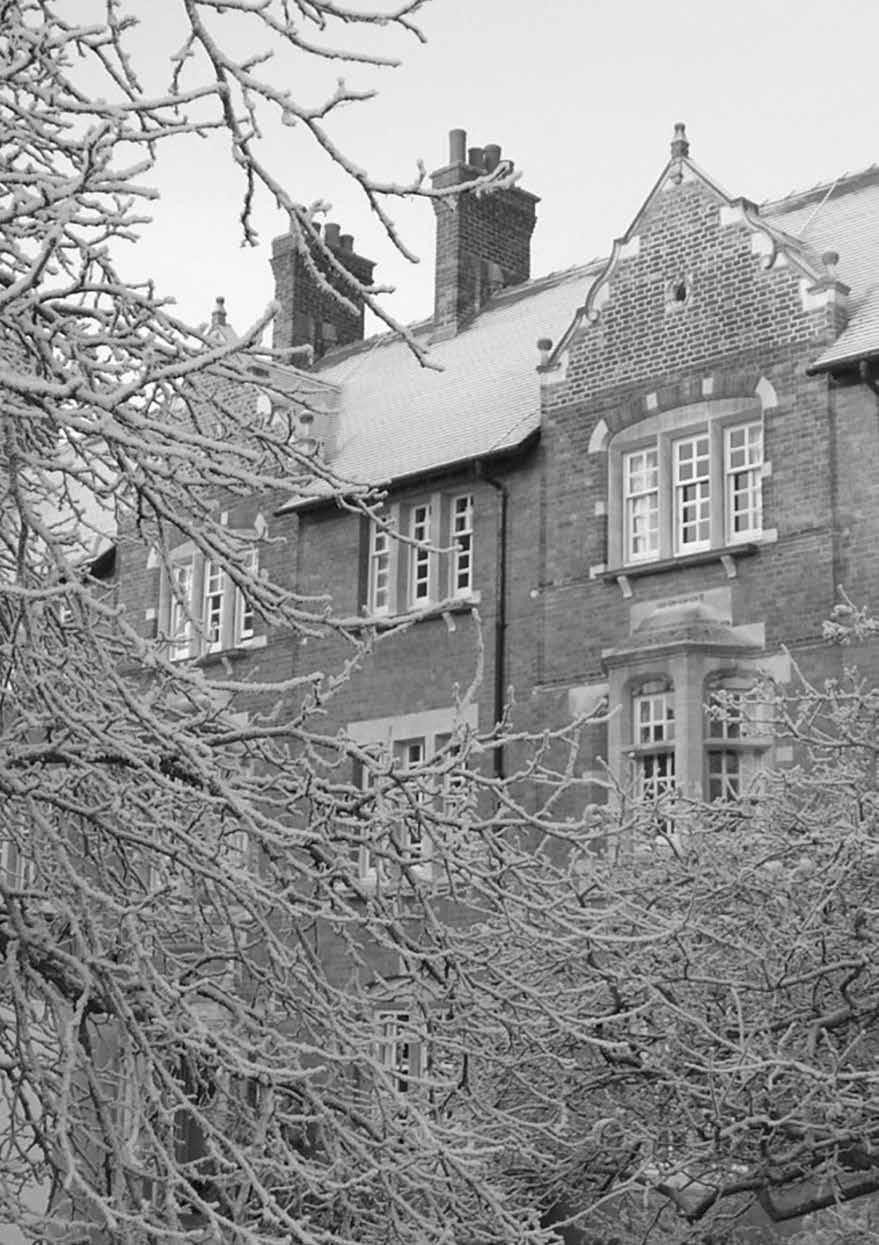
Since its foundation, Somerville has benefited from a tradition of legacy philanthropy. These gifts have made possible numerous initiatives from building programmes to student support to enhancing our tutorial fellowship. You can make a difference in the lives of future generations by leaving a general bequest in your will. It is, in fact, the one gift nearly all of us are able to make. Such a bequest will allow Somerville to meet the demands of the time without being tied to specific instructions. If you do wish to specify a particular use for your gift, we will be very happy to discuss possibilities with you.
Bequests to UK charities, such as Somerville, are completely free of Inheritance Tax and will help to reduce the inheritance tax payable by your estate (in 2013 this threshold is £325,000 and tax is payable at 40 per cent once the net value of your estate exceeds this sum). However, the Government provides a further incentive when you leave 10 per cent or more of your chargeable net estate to charity; in that case, the inheritance tax rate on the whole of your estate will be reduced from 40 per cent to 36 per cent. The saving, after your gift is made, is passed on to your remaining beneficiaries.
For more information about leaving a gift to Somerville in your will or on Planned Giving, please contact Sara Kalim, Development Director, at:
Development Office
Somerville College Oxford
OX2 6HD
Tel: 01865 280596
Email: sara.kalim@some.ox.ac.uk
All conversations will be held in the strictest confidence.
Somerville’s charity number is 1139440.
Alumni and friends often ask for precise information about how best to leave a gift to Somerville in their will. It is always advisable to consult your solicitor when drawing up a new will but we are able to suggest this wording:
As a testamentary clause when drawing up a new will:
A Pecuniary Bequest
I bequeath to the Principal and Fellows of Somerville College in the University of Oxford for their general purposes the sum of £…………….(pounds) free of tax and I declare that the receipt of the Treasurer of the said College for the time being shall be a sufficient discharge to my Executors for the said bequest.
OR
A Residuary (or percentage share) Bequest
I give all (or a share) of the residue of my estate absolutely to the Principal and Fellows of Somerville College in the University of Oxford for their general purposes, and I direct that the receipt of the Treasurer of the said College for the time being shall be a sufficient discharge to my Executors for the said bequest.
Somerville College is a member of a consortium of 38 colleges and the University which offers a cost effective Planned Giving service for our alumni and friends in America. Charitable Remainder Trusts benefit both the donor and the joint non profit beneficiary. Charitable Remainder Gifts have been around since the 1970s and combine the ability to gain a significant tax write off and avoid capital gains tax. These instruments typically provide income for life for both donor and spouse.
(Events in College unless otherwise stated)
2013
7 October Lawyers’ event at Matrix Chambers, WC1R 5LN
12 October Literary Luncheon : Charles Moore on Margaret Thatcher
2 November Memorial for Jean Banister
7 November Somerville City Group meeting: The role of non-executive directors
21 November Somerville London Group : Fashion evening at Peter Jones
2 December Somerville London Group at Persephone Books, WC1N 3NB
5 December Carol Concert and At Home for those living in Oxford area
2014 (all dates in 2014 are subject to confirmation)
15 March
The Winter Meeting/AGM of the Somerville Association Speaker Catherine Royle (PPE, 1982), Deputy Ambassador, Afghanistan
11-12 April University North American Reunion
10 May Medics’ Day
14 June Commemoration Service
28-29 June Gaudy for matric years 1978 – 1988
17-18 September Golden Reunion for 1964
19-21 September University Alumni Weekend
Details of some of these events are already on the College website (www.some.ox.ac.uk/alumni/). Further details will be supplied in due course and any enquires should be directed in the first place to Liz Cooke at Somerville (tel. 01865 270632, email elizabeth.cooke@some.ox.ac.uk)