6 minute read
Windsor Framework is no solution Working-class struggle can point way forward


Parties such as the Alliance Party have majored on demands to “reform the institutions and end ransom politics”. Tony Blair has joined the discussion and expressed an openness to reforming the institutions towards more “normal” political arrangements. What is being articulated in the calls for reform is effectively a return to some form of majority rule. This is not a solution. This would effectively mean the formation of the executive excluding the largest party of Unionism. Such proposals would be anathema to the vast majority of the Protestant population. It would further add to a sense of alienation and abandonment that is already felt. It is a recipe for an upswing in sectarian tensions and violence.
No hardening of borders
Below is an abridged version of a longer article available on socialistpartyni.org
ON THE 25th anniversary of the Good Friday Agreement (GFA) Stormont was not sitting. The DUP is continuing its boycott of the institutions over the continuation of the “Irish Sea Border”. The new Windsor Framework is proving incapable of satiating concerns.
DUP at a crossroads
Jeffery Donaldson, the current leader of the DUP, finds himself trapped. On the one hand there is pressure to keep Northern Ireland “open for business”, and restore Stormont. Businesses in Northern Ireland issued an open letter backing the new framework wholeheartedly. Rishi Sunak heralded the economic opportunities for business that this deal could present. Likewise Joe Biden, the US President, dangled a carrot of $6bn (£5bn) to boost NI’s economy with US investment if power sharing is restored.
On the other hand the opposition to the protocol emanating from workingclass Protestant areas prevents the DUP from re-entering the institutions. This pressure is illustrated in some opinion polls. Overall they show that two-thirds of people in Northern Ireland back the framework but nearly three quarters of DUP voters oppose it.
The joint-Unionist Declaration signed by the major unionist parties (DUP/TUV/PUP/UUP) was published, symbolically on Ulster Day in 2021, the anniversary of the signing of the Ulster Covenant. This declaration stated the implacable opposition to the NI protocol and any border existing in the Irish Sea. This declaration alongside the 7 tests published by the DUP makes it exceptionally difficult for the DUP to return to Stormont while the border is still effectively in place.
The DUP were forced into taking such a categorical opposition to the protocol arrangements. Their initial support for the first incarnation of the protocol under Boris Johnson was a serious underestimation of the strength of feeling that many working-class Protestants had towards a border in the Irish Sea. The TUV rocketed in the polls and undermined the DUP’s position as the only show in town when it came to political unionism. The need to recover that support pushed the DUP into taking a more hardline stance. A stance that is now not easy to retreat from. The DUP’s position now both reflects the opposition from below and fuels it.
While Donaldson and others in the DUP may wish to restore Stormontseeing no way to wrest further concessions from the EU and British Government and under pressure from business in Northern Ireland they cannot do so easily.A organiser of some of the anti-protocol rallies at which Donaldson participated, spoke to the Belfast Telegraph and summed this up: “They’ve allowed us to walk them to a place where there’s no way back now.”
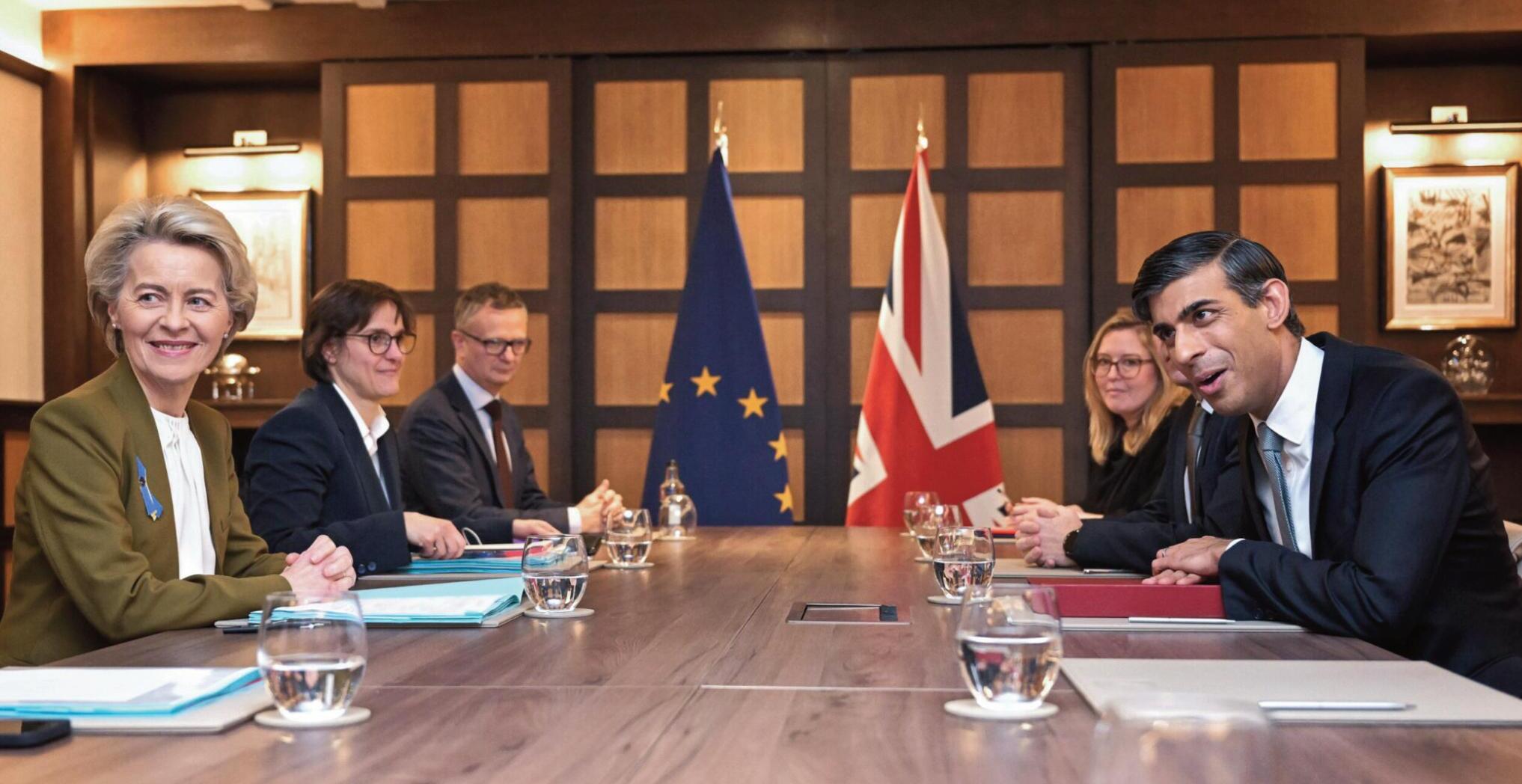
Protocol is about more than trade European and British capitalism can reach agreement when it comes to managing trade arrangements. At the moment it is in their interests to do so.The real weaknesses in the British economy are pushing British capitalism towards closer ties with the European Union. The Tory Brexit dream of a strong British economy standing alone is proving to be a fantasy. The “Covid recession” in 2020 was worse than in any other European country. The same is predicted to be the case for the recession we are now entering.
The IMF predicts that the UK will have the longest and deepest recession of any major Western economy. Likewise the war in Ukraine is acting as a pressure for “western unity” against China and Russia. Being drawn into a trade war against the EU would be a nightmare for the British economy and run contrary to a united western bloc. However, the issues surrounding trade and checks on goods do not go to the heart of opposition to the protocol. Rather, it is the placing of a border that divides Northern Ireland from the rest of the UK. Northern Protestants feel they are being pushed towards a united Ireland against their wishes.
Paramilitarism on the rise
This tension between the interests of big business and the support base of the DUP places it in a weak position. It is unable to satisfy its support base and appease the interests of capitalism. As it attempts to straddle these competing interests the space for more hardline forces to develop is growing.
The Loyalist Communities Council (LCC) has warned of being unable to “hold back” a younger, militant section of paramilitaries. And the increase of paramilitary violence is becoming more apparent day by day.
The UDA feud in Newtownards speaks to this reality. Masked men patrolling the streets, multiple petrol bomb, pipe bomb and gun attacks, over 30 families have already fled the area. It is reminiscent of scenes from the 1980s. The press have reported this as largely being a feud between rival drug gangs and that is undoubtedly an important aspect of it. However this is also an element of UDA leadership cleaning house and ousting the worst excess of criminality from its ranks. That the so-called “real UFF” have issued threats against Jamie Bryson speaks not only to a battle between outright criminals for control of the loyalist paramilitaries but also reflects the political conflict for control between forces in loyalism. The redevelopment and rearming of Loyalist paramilitaries is a real threat. They are building in the context where the mainstream of political unionism, the DUP, are unable to adequately articulate a way to defend Northern Ireland's position in the union.
There is an urgent need for workers and young people to build an alternative that can challenge these organisations. Hundreds of women in West Winds, Newtownards organised a “walkabout” in protest over the UDA feud in that area. Such initiatives show the potential of communities to challenge paramilitaries and those who wish to drag us back.
Will Stormont return?
This side of the local elections Stormont will not be restored. The DUP will be looking over their shoulders at the threat posed from the TUV and other more hardline unionist forces. Looking past May 18 the ability for the DUP to restore the institutions without risking a split in their own ranks and undermining their support base seems marginal. In this context discussions about the future of the GFA are rampant in the press.
While there can be understandable frustration at the lack of Stormont when workers are told that pay rises cannot be secured and budgets must be cut in its absence, its return is also no real solution. This is the same administration that oversaw decades of austerity, cuts in real wages and attacks on working-class communities. Waiting times for the Northern Trust are by far the longest across the UK. Low-wage earners in Belfast are 10% poorer than our counterparts in the rest of the UK.
Unionism's alternative to the framework centres around proposals from the Westminster think tank ‘Center for the Union’ backed by the DUP, TUV and key loyalist figures. Its solution amounts, to moving the responsibility of checks onto the Southern government. This would create a border between north and south. This is no solution either. It would act only to enrage the Catholic population, to see a physical manifestation of them being beleaguered inside the Union. The truth is that placing a border anywhere, either in the Irish Sea or on the island, is a recipe for increased tensions and conflict.
Working-class unity
Instead we need a fundamental break from the politics of Green and Orange. Sectarian politics and division find ample kindling in the conditions of poverty that capitalism in Northern Ireland doles out. It is not a coincidence that paramilitarism finds its strongest expression in deprived working-class areas that have been particularly left behind by the peace process.
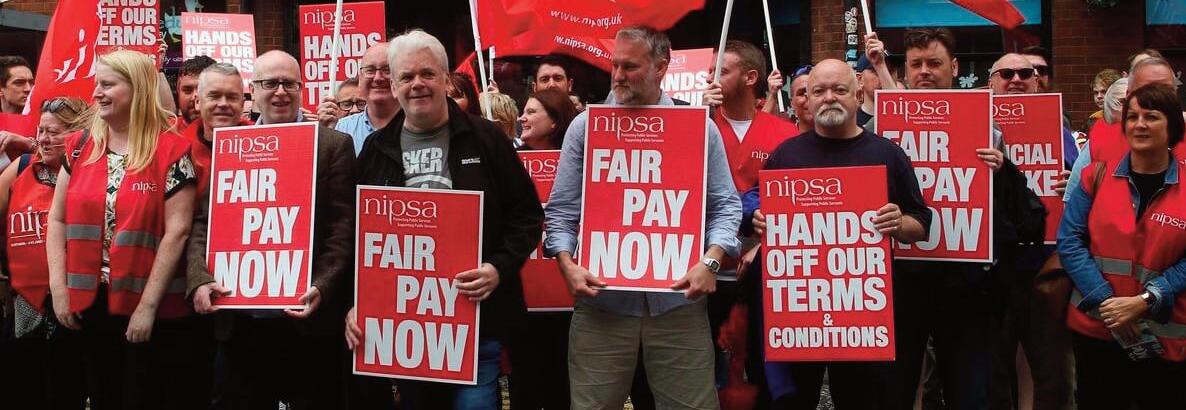
The unity we have seen on the picket lines of recent strikes in the private sector and across the NHS and other public sector workplaces demonstrates where a solution can be found. Thousands of workers have stood together united in common cause against the employers and the government. This power should be harnessed and channelled to challenge the forces of sectarianism.
The trade union movement should not wait for further escalation by sectarian forces. Unions currently engaged in struggles should organise anti-sectarian conferences to discuss how we can build a political alternative to the sectarian status quo, including clearly opposing any ‘solution’ to the border question that would inflame sectarianism.
Most importantly, it means there is an urgent need to build a cross-community party based on workers and young people in all working-class communities, with anti-sectarian and socialist politics. Only in this way, on the basis of mutual respect and solidarity, can we find solutions to issues that divide people.