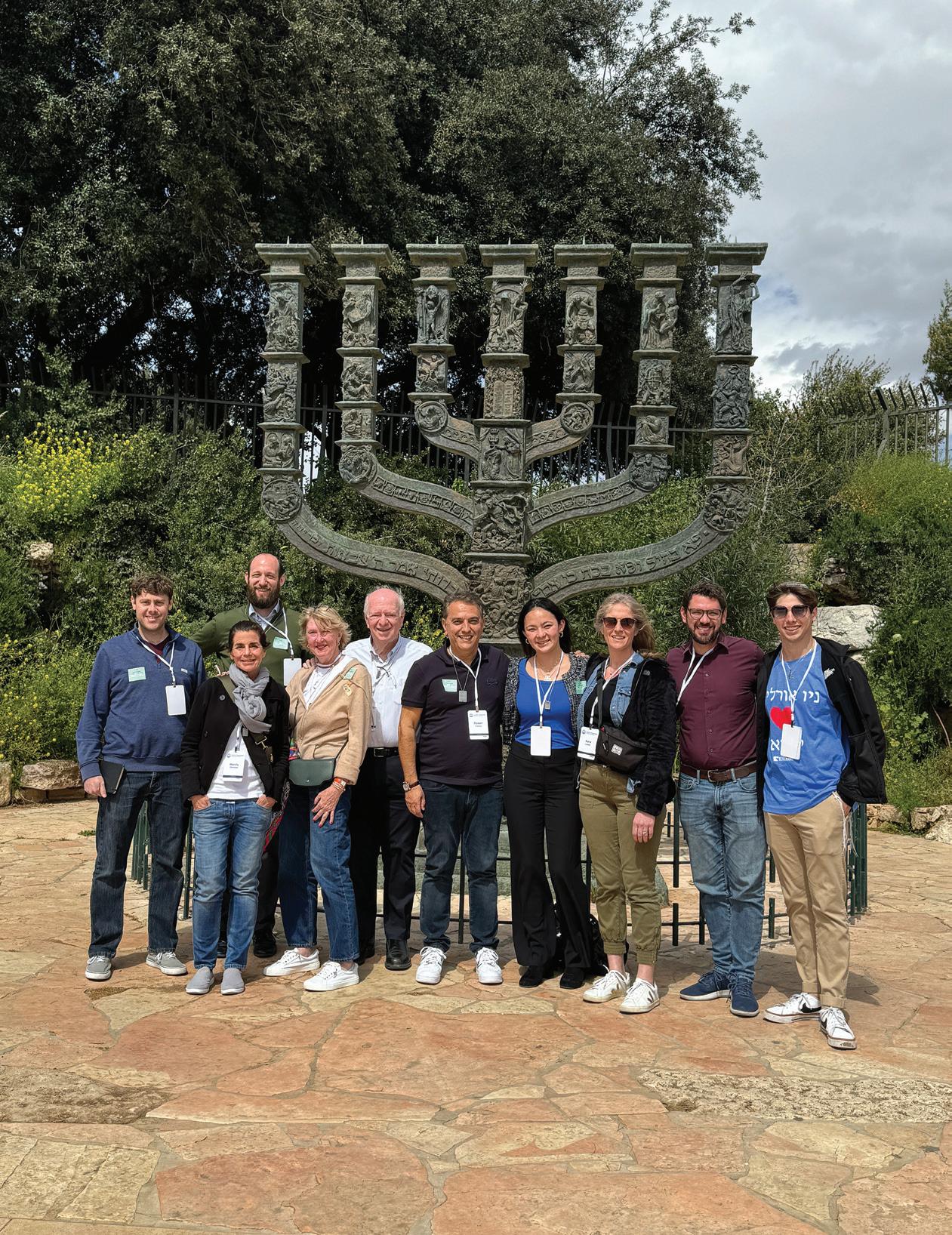
Southern Jewish Life April/May 2024 Volume 34 Issue 2 Southern Jewish Life P.O. Box 130052 Birmingham, AL 35213 DEEP SOUTH New Orleans solidarity mission to Israel in March




Find a Store or Buy/Ship at: https://shop.righteous-road.com Shipping Across USA • In Stores: CA, FL, IL, MO, MD, NJ, NY contact@righteous-road.com • (314)-800-1026 ‘ The Cup Above Redemption ’ A Delightful Blend of Apricots, Figs, Dates, Pistachios & Almonds Enjoy Neat, Mixed or on the Rocks
So many things to say and so little space.
One of the more egregious things demanding a response is the tendency to label campus protests and ceasefire calls as coming from “pro-Palestinian” activists.
Why the criticism? They’re simply trying to support a people who are caught in a war zone under terrible conditions. They’re concerned about people who have lost their homes, who face starvation.
Of course, we are seeing that claims of starvation and famine are way overblown and lapped up by credulous Westerners, as Hamas has stolen much of the aid and the rest of the aid that is supposed to be free to Gazans is being sold at inflated prices — though because of oversupply, prices are coming down as of press time.
Hamas is abusing its own people for its profit but the “pro-Palestinian” people ignore that and blame Israel.
Even some of the “better” news outlets fall into this trap, leading to false conclusions. A recent piece about how a Muslim valedictorian was barred from speaking at the University of Southern California’s graduation said the issue was that she has “advocated for Palestinians.” Makes the pro-Israel forces seem incredibly petty, thin-skinned and unreasonable, doesn’t it?
But that wasn’t the issue. The speaker in question calls for the abolishment of Israel, calls it an apartheid state and accuses Israel of dehumanizing Palestinians as inferior to other humans. She accuses Israel of ethnic cleansing, and states Israeli soldiers used rape of Arab women as a war tactic in 1948.
But she’s just an “advocate for Palestinians.” Surely she wouldn’t use something as sacred as graduation to spread her smears?
The demonstrators place all blame on Israel, and a shocking percentage advocate
continued on page 45
Southern Jewish Life is an independent Jewish periodical. Articles and columns do not necessarily reflect the views of any Jewish institutions, agencies or congregations in our region.








April 2024 • Southern Jewish Life 3
shalom y’all
subscribe, email subscribe@sjlmag.com SJL Online: sjlmag.com
To
Southern Jewish Letters
SJL coverage anti-leftist and out of touch
If you recall, I reached out previously to express concern about the anti-left bias of Southern Jewish Life, and I just wanted to echo that point again. The most recent issue of Southern Jewish Life takes to task the NOLA teachers’ union, for example, without presenting their perspective fairly or adequately (“Failed History: N.O. teacher union trashes Israel in call for ceasefire,” March 2024.)
More broadly, I’m afraid SJL has become deeply out of touch with the views of most Jews under 40, who are resoundingly in favor of a cease-fire and critical of the occupation and Israeli government, as almost all polls indicate.
SJL is of course welcome to disagree with those views; reasonable people can and should disagree on these things. But your magazine appears to be consistently denigrating those who hold those views, and, in the process, antagonizing Jews like me who deeply care about Israel and have, in fact, served in its army.
I would ask that you please tone down the anti-leftist rhetoric and instead try to encompass the variety of views — and debates — that characterize American Jewry, especially in the South.
Josh Bernstein Via email

Publisher/Editor
Lawrence Brook editor@sjlmag.com
Associate Publisher/Advertising
Lee Green lee@sjlmag.com
Associate Editor
Richard Friedman richard@sjlmag.com
Creative Director
Ginger Brook ginger@sjlmag.com
Social/Web
Emily Baldwein connect@sjlmag.com
Contributing Writers
Kiara Dunlap, Keila Lawrence, Rivka Epstein, Belle Freitag, E. Walter Katz
Columnist
Doug Brook brookwrite.com
Birmingham office: P.O. Box 130052, Birmingham, AL 35213
New Orleans office: 3747 West Esplanade Ave., 3rd Floor, Metairie, LA 70002 (205) 870-7889 • (504) 249-6875 (888) 613-YALL (9255)
ADVERTISING: Contact Lee Green, (205) 870-7889, lee@sjlmag.com
SUBSCRIPTIONS: Subscriptions for the print edition are $24 for one year, $40 for two years. Southern Jewish Life Regional, available online, is $24 per year.
Copyright 2024. All rights reserved. No part of this publication may be reproduced in whole or part without written permission from the publisher. Views expressed in SJL are those of the respective contributors and are not necessarily shared by the magazine or its staff. SJL makes no claims as to the Kashrut of its advertisers, and retains the right to refuse any advertisement.
Documenting this community, a community we are members of and active within, is our passion. We love what we do, and who we do it for.

4 April 2024 • Southern Jewish Life
Southern Jewish Life Staff To subscribe, email subscribe@sjlmag.com The South’s Most Comprehensive Weekly Jewish E-Newsletter Stay Informed Between Print Editions
agenda
interesting bits & can’t miss events
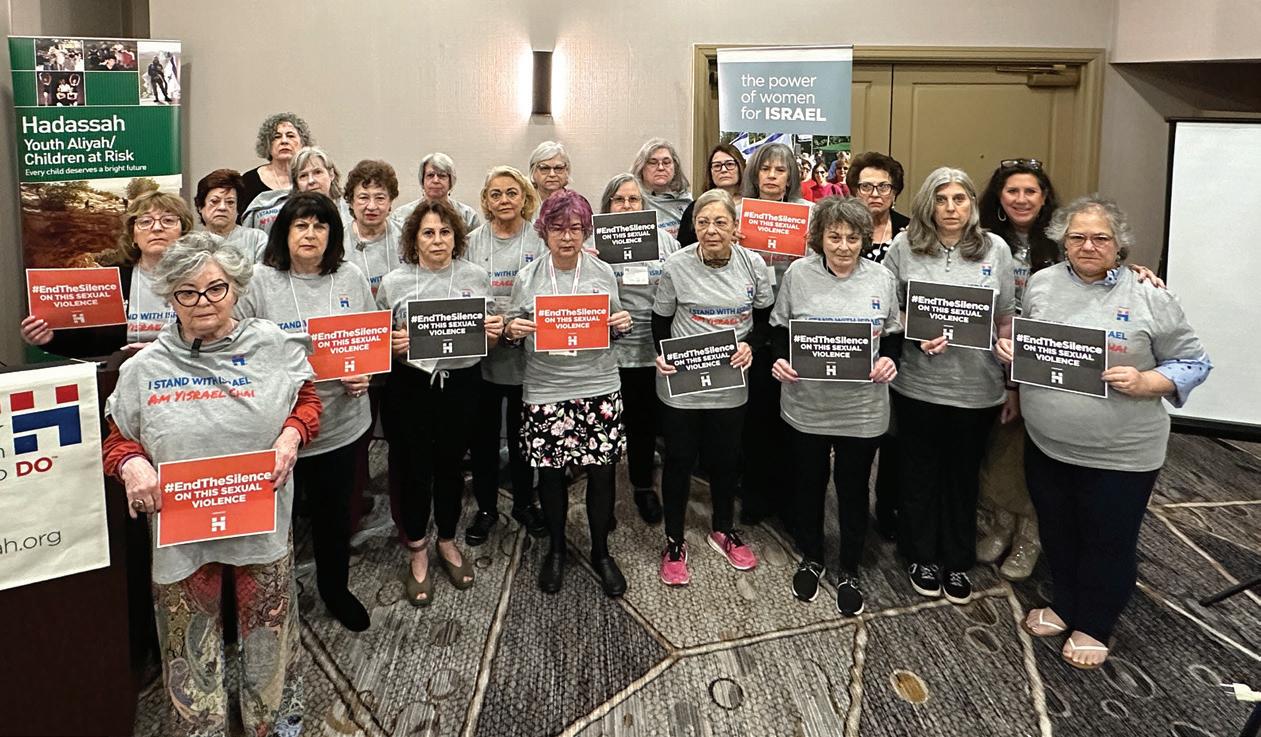
For International Women’s Day on March 8, Hadassah members and supporters participated in a historic mobilization at nearly 190 events in 17 countries around the world — and 176 events across 32 states in the U.S. — to #EndTheSilence on Hamas’ sexual violence. As part of Hadassah’s largest-ever global campaign, 130,000 people from 118 countries and 116 global organizations have signed Hadassah’s petition and letters to UN Secretary-General António Guterres demanding an independent, unbiased investigation of Hamas’ use of rape and gender-based violence as weapons of war on October 7 and beyond. In preparation for March 8, Hadassah Southern filmed a video at their regional conference in Birmingham, held Feb. 23 to 25. Chapters represented included Baton Rouge, Birmingham, Chattanooga, Dothan, Knoxville, Memphis, Nashville and New Orleans. Susan Smolinsky of Baton Rouge is regional president.
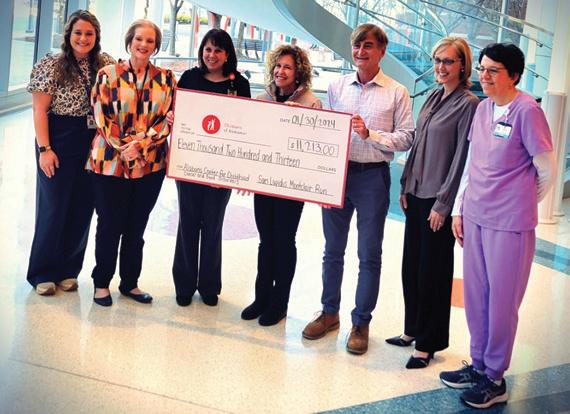
On Jan. 30, Levite Jewish Community Center Executive Director Brooke Bowles (second from right) was joined by Billy and Susan Lapidus (third and fourth from right) to present an $11,000 donation to Children’s of Alabama, from the Sam Lapidus Montclair Run held on Thanksgiving. Receiving the check was Pediatric Nurse Practitioner Meredith Weintraub (far right) and other members of the Children’s team. In 14 years, the Run and the Jam4Sam have raised over $122,000 for the Alabama Center for Childhood Cancer and Blood Disorders.
Gary Brandt to lead Tulane Hillel
Tulane Hillel, which supports a campus community of over 2,500 Jewish undergraduates and 500 graduate students, announced that Gary Brandt will be the new executive director.
He succeeds Ron Gubitz, who has led Tulane Hillel since 2020 and is moving to St. Louis in June.
Brandt joined Tulane Hillel in 2022 as assistant director. He said he is excitedabouthisnewrole,but“ourstudentsaretherealleadershere,and we work hard to support them in creating vibrant Jewish life on campus”
Headded,“I’mhonoredtoworkwithourstaffandstudents,ourBoard and supporters across the country, and with Tulane University”
A main focus of collaboration with the university in recent months has been maintaining a positive campus climate for Jewish students. “Our large, dynamic community is a point of pride,” he said. “I am committed to keeping Jewish students safe and engaged, continuing to diversify our outreach, and building bridges across differences.”
Kevin Wilkins, a Tulane Hillel board member who led the search, said “Inhistimeoncampus,GaryhasimpactedtheJewishstudentexperience in countless ways. The Board looks forward to working closely with him as he begins his leadership of our special Tulane Hillel community”
Wilkins added that Brandt has enjoyed great mentorship from Gubitz, “whose remarkable leadership has made Tulane Hillel one of the best in the system. We are grateful for all Ron has done for Jewish life at Tulane and wish him the best in his next chapter”
Gubitz said he is grateful for his time at Tulane Hillel. “Helping Jewish
April 2024 • Southern Jewish Life 5
Photo courtesy Sherrie Grunfeld

LOCAL. FRESH. THAI.
Thai flavors crafted with local ingredients, served in a shared small plate format that allows you to enjoy them in Thai style

Popups



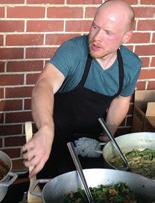



students explore their identity in new, creative ways is a privilege. I’m confident that under Gary’s leadership, Tulane Hillel will continue to play an important role in building community and looking out for the best interests of the thousands of students we serve.”
Tulane hosts a wide range of programs, from learning sessions to social events to holiday celebrations. The signature Tulane Jewish Leaders Program brings together a diverse and strategic group of Jewish students to create Jewish programming and leadership opportunities for others, and the model has been replicated on a wide array of campuses nationwide.
Taking Action Together programs continue
The Alabama Holocaust Education Center’s Taking Action Together series of virtual lunch programs continues on May 1. Jonathan Wiesen and Jordan Kiper will lead a session on “Decoding Propaganda and Hate Speech,” examining how to identify what is true and what is deliberate deception in an age of conspiracy theories, half-truths and the ability of anyone to go online and make accusations. They will discuss the challenges of misinformation, through two historical examples of propaganda and hate speech.
Kiper, an assistant professor of anthropology and faculty associate at the Institute for Human Rights at the University of Alabama at Birmingham, will discuss hate propaganda in the Balkans in the 1990s, and the ideology of collective violence and mass atrocities.
Wiesen, professor of history and department chair at UAB, will discuss how propaganda worked in Nazi Germany and give examples of xenophobia and anti-Jewish stereotyping. He is currently writing a book on U.S. anti-Back racism in the German imagination from 1918 to 1968, and is most recently the author of “American Lynching in the Nazi Imagination: Race and Extra-Legal Violence in 1930s Germany.”
On May 15, Bassam Aramin and Rami Elhanan will discuss “The Choice to Reconcile,” in partnership with the American Friends of the Parents Circle-Families Forum.
The PCFF is a joint Israeli-Palestinian organization with over 700 bereaved families who have lost loved ones in the conflict. They travel to promote peace and reconciliation, and show the human side of the conflict. In 2022, the organization visited the South, including programs at Touro Synagogue in New Orleans and Beth Israel in Jackson, and an International Peace Day webinar, “Reconciliation from the West Bank to Selma.”
Aramin and Elhanan have both lost daughters in the conflict. Elhanan, former Israeli co-director of PCFF, is a seventh-generation Jerusalemite who lost his 14-year-old daughter
6 April 2024 • Southern Jewish Life agenda
• Private Catering • Speakeasy Dining • Cooking Classes
josh@alloythai.com alloythai.com @alloythai alloybirmingham
agenda
in a suicide bombing in 1997 on Ben Yehuda Street, on the first day of school. One of his sons is a member of Combatants for Peace, a grassroots Israeli and Palestinian organization “working together to end the occupation and bring peace, equality and freedom to our homeland.” The other son wanted to serve in the IDF but refused to serve at checkpoints.
Elhanan is the son-in-law of the late Matti Peled, who became known as the “peace general.” General Peled’s son Miko has become a leading voice in the anti-Zionist movement.
Aramin spent seven years in an Israeli jail starting at age 17, renouncing violence during that time. A resident of Jericho, he is the former Palestinian co-director of PCFF and its current international spokesman. He joined Parents Circle in 2007 after his 10-year-old daughter, Abir, was killed by an Israeli border policeman who struck her with a rubber bullet.
In a civil trial where the family was awarded compensation, the judge said the bullet that hit Abir was fired in violation of orders. Initially, the government said she had likely been hit by a rock from nearby stone throwers that the border police were trying to disperse, but evidence showed it was the rubber bullet, and the judge said she was in an area where there were no rock-throwing youth.
The programs are free, but registration is required through the AHEC website. Past programs are also available on video.
The Alabama Holocaust Commission’s state Yom HaShoah Gathering of Remembrance will be on May 7 at 11 a.m. at the Alabama Department of Archives and History in Montgomery. Rabbi Ed Boraz of Springhill Avenue Temple in Mobile will be the keynote speaker. A Zoom option is available, at tinyurl.com/ MAY72024
The 41st annual Holocaust Remembrance Service of Northwest Louisiana will be on May 5 at 3 p.m. at the Louisiana State University Shreveport’s University Center ballroom. Holocaust survivor and award-winning author Sonia Levitin will be the speaker.
Temple Beth El Sisterhood in Pensacola is holding its second annual Sock Hop, BeatleJews, May 4 at 6 p.m. Admission is $20 per person and there will be a cash bar, foods and drinks from the 1960s, a silent auction, and costumes are encouraged. There will be free babysitting for ages 3 and up. Reservations are requested by April 28.
Birmingham’s Levite Jewish Community Center and the Alabama Holocaust Education Center will present “An Evening of Inspiration” with Holocaust survivor Mark Schonwetter. Born and raised in Brzostek, Poland, Mark, his
CJFS CARES Respite Is Growing!
To learn about volunteering at CARES, email lise@cjfsbham.org or call 205.879.3438
To learn if CARES is right for your loved one, email pam@cjfsbham.org or call 205.960.3411

Collat Jewish Family Services www.cjfsbham.org 205.879.3438

April 2024 • Southern Jewish Life 7


agenda
mother and his sister spent six years hiding from the Nazis. Walking miles by foot, the Schonwetters ran from ghettos to forests to righteous families’ attics while dodging the Nazis. The program will be on May 2 at 6:30 p.m., reservations are requested.
The Jewish Federation of New York will be visiting Montgomery and hosting a Shabbat dinner at Temple Beth Or on May 3. Those who want to attend should contact the Beth Or office by April 25.
Birmingham’s Temple Emanu-El will dedicate the Piassick Lobby with a wine and cheese gathering on May 3 at 5 p.m., followed by the 6 p.m. Shabbat service. A dinner will follow, celebrating the 45th anniversary of the Rabbi Grafman Endowment Fund. Reservations are required for the dinner.
The Birmingham Jewish Federation and Secure Community Network will present a Traveler Safety Course, practical advice for staying safe while traveling abroad in these tumultuous times. The training will be on May 9 at 6 p.m. at Temple Emanu-El, reservations are required.
The Jewish Federation of Central Alabama will host an Israel Independence Day celebration on May 8 at Temple Beth Or in Montgomery. A Mediterranean buffet-style dinner will be at 5:30 p.m., followed by a program with Israeli Consul General for the Southeast Anat Sultan-Dadon. Members of the Israel Defense Forces who are stationed in Montgomery will be in attendance. There will be a separate program for children. Reservations are requested by May 1.
The Temple Emanu-El Brotherhood in Dothan will hold a fundraiser BBQ cookout on June 9, in conjunction with the congregation’s annual meeting at noon.
Dothan’s Temple Emanu-El will have a day ay the ballpark, May 5 at the Montgomery Biscuits. Tickets are $13.25, reserve by April 28, and first pitch is 3:33 p.m.
The Alabama Holocaust Education Center in Birmingham will have its annual commemoration on May 5 at 3:30 p.m. in the Harrison Theater at Samford University. Part of the program will be a musical tribute to Amnon Weinstein, founder of Violins of Hope, who died recently. Local violinists will play one of the violins, which is on permanent loan to AHEC. The event is co-sponsored by the Samford University Department of Christian Ministry and the Department of Biblical Studies
Chabad of Pensacola will have a Moshiach Meal celebrating the end of Passover and focused on redemption, April 30 at 6 p.m.
A group of rabbis and cantors signed a letter through T’ruah, the rabbinic call for human rights, urging President Biden to end the war in Gaza, saying there is no military solution, and stating that during the Gaza war, Israel has ramped up attacks on Palestinians in the territories, including driving resident out of over a dozen villages. The statement also references fears of a wider war because of “continued fighting along the Lebanon border.” The only signatories in this area are Rabbis Matt Dreffin of Birmingham, and Debra Kassoff and Salem Pearce of Jackson.
The Birmingham Jewish community will celebrate Israel’s 76th birthday with a Tikvatenu Extravaganza at the Levite Jewish Community Center. From 5 to 8 p.m., there will be Israeli cuisine, including falafel, hummus and shawarma, and a variety of activities for all ages, along with lively music.
The final session of Season 2 of Southern Jewish Voices will be on May 22 at the Levite Jewish Community Center in Birmingham. Rabbi Adam Wright of Temple Emanu-El will be interviewed. The collaborative effort between the LJCC and Temple Beth-El preserves stories about Jewish life in Birmingham and in the South. The noon session includes a complimentary lunch, registration is required.
8 April 2024 • Southern Jewish Life
From Medicine to Intelligence:
How the Hebrew University of Jerusalem’s unique partnership with the Israeli Defense Forces is bettering the world
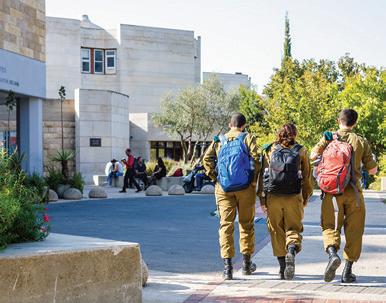
Since the Oct. 7 terrorist attacks against Israel, the students and faculty at the Hebrew University of Jerusalem have been focused on their continued mission of making the world a better place.
Yishai Fraenkel, vice president and director general of the university, says the campus communities of the 100-year-old institution are experiencing a range of psychological and emotional traumas. There are those who have lost friends or family members or have suffered physical injury themselves. Still, they strive for a sense of normalcy.
“We are not stopping. We are not halting or looking for excuses,” says Fraenkel. “Hebrew University is one of the most important civilian institutions in Israel, and we want to continue offering a world class education and world class research.”
While their academic offerings cover a broad spectrum of disciplines from social sciences to medicine, the university’s partnership with the Israeli military has resulted in multiple programs that have been advancing research and development on a global scale for decades.
“We have three major programs done in collaboration with the Israeli military: Havatzalot, Tzameret and Talpiot,” explains Fraenkel. “These military programs are very important because this is an army to protect democracy, which is very precious.”
Havatzalot: Training future military intelligence leaders
More than a decade ago, the Military Intelligence Division established a program to recruit members of the Israeli Defense Forces with the potential to excel as officers in the field of intelligence. The program has been at Hebrew University of Jerusalem since 2019.
“Havatzalot is a three-year program that allows young students who are also cadets to complete a double-major bachelor’s degree with a combination of military studies and one other science like mathematics, computer science, economics and sometimes philosophy,” says Fraenkel. “They finish their training, and they serve basically as the backbone of Israeli intelligence.”
Troops who join the program graduate with the rank of lieutenant and must join the Military Intelligence Unit for at least six years.
Tzameret: Elite military medicine that save lives
Serving as a military doctor is not for the faint of heart, and admission to the Tzameret program is highly competitive. Candidates for the program must meet rigorous cognitive and physical fitness requirements. While participating in the program, students are allowed to defer their military service and later give five years as military doctors in the IDF.
One of the main objectives of the program is to increase the number of career military physicians. The more highly trained doctors in the field, the better for anyone in need of critical care. The program is in its tenth year. As of the 2018-2019 academic year, the total number of new military
physicians in training, including those that have already finished training, exceeds 590.
Like many of their other programs, Tzameret has a global reach. Up to 20 students in their sixth year of study are selected to participate in a onemonth exchange program with other military-oriented medical programs around the world.
Talpiot: Cultivating the next generation of leaders in defense and technology
When you think of Talpiot, think of it as training people who develop technologies like the Iron Dome. The Talpiot program is one of the most prestigious academic and military programs in Israel, selecting exceptionally talented individuals from across Israel for training in science, technology and leadership.
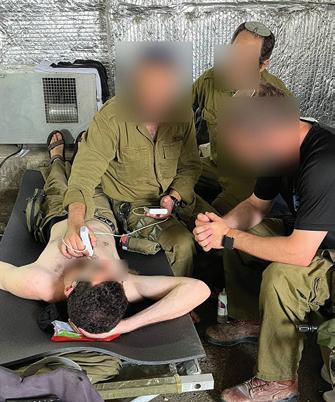
“Talpiot takes those extremely bright scientific minds, those who excel in mathematics and physics so they can apply their talents to the development of military technology,” says Fraenkel. “Many graduates of this program go on to have a successful military career and later make their way into civilian life as successful entrepreneurs. They’re idea generators.”
Though these three programs might be the most well-known, you’ll also find programs like the Institute for Research in Military Medicine where research and development in the areas of post-traumatic stress disorder, combat casualty trauma and forensic medicine (or identifying victims) takes place. Additionally, the six-year-old Bina Elite Dentistry Reserve Track allows student-soldiers to maintain rigorous combat training standards. The Bina cadets serve as critical dental officers as needed.
Solidarity across an ocean
These programs, Hebrew University and the wider community are receiving critical support through the We Are One campaign, a special initiative organized by American Friends of Hebrew University along with the international chapters of the organization.
“First and foremost, the We Are One campaign shows the solidarity of people throughout the world,” says Fraenkel. “Secondly, given these hardships as a university, the campaign makes it possible for us to continue our mission. We’re not just pursuing life, but the fullness of its potential.”
Resources from the initiative support a wide range of immediate community needs from mental health services and legal assistance to hosting displaced individuals and funding unique scholarships for reservists called to duty. The initiative is also looking at rebuilding the future with programs promoting mental health, a shared society between Arabs and Jews and even agricultural innovation.
Show your solidarity with the Hebrew University of Jerusalem by giving to the We Are One campaign.
Learn more or donate at
April 2024 • Southern Jewish Life 9
AFHU.org
Photo from The Hebrew University of Jerusalem
Photo by Yoram Aschheim
Bearing Witness to the Unbearable

New Orleans delegation tours Israel to see the aftermath of
Oct. 7
It is one thing to read about it on the news. Seeing what happened, where it happened, is something completely different.
From March 19 to 21, a diverse group from the New Orleans area Jewish community visited Israel on a solidarity mission, learning about Oct. 7 and its aftermath, and visiting with Partnership2Gether community Rosh Ha’Ayin.
The mission was organized by the Jewish Federation of Greater New Orleans, chaired by Susan Green.
Linda McFadden-Bogates said “I felt the bullet holes on the kibbutz walls with my own hands, stood in the Nova field that has changed from celebration to mourning and smelled the smoke from the Gaza strip. We heard stories and exchanged hugs with survivors who lost their loved ones.”
Rabbi David Gerber of Gates of Prayer in Metairie said that Israel was unusually quiet, with many of the normally busiest areas “eerily” quiet from a lack of foot traffic. Part of it was the collapse of tourism, but also many businesses were closed due to military callups.
“I have also never felt so appreciated by Israelis,” Gerber said. “They were touched that even in a time of war we would come to visit. They can feel our support from afar and it is not taken for granted.”
Luke Prest, a senior at De La Salle High School, noted that “Throughout this trip, I realized how much diaspora Jews matter to Israelis. Being there meant the world for these people.”
On the final day, Prest went to the Mahane Yehuda market with a friend, and met three soldiers. They paid for the soldiers’ lunch, and gave them letters of support from back home. “Speaking with these guys, who are my age and risk their lives for Israel and the Jewish people was truly




10 April 2024 • Southern Jewish Life The Greater New Orleans Area’s Premier Custom Home Builder for over 30 Years 504-909-9092 | titanconstruction.com | stephen@titanconstruction.com
Kibbutz Be’Eri Southern Jewish Cover
inspirational and I will never forget their faces and how happy they were to just talk to us,” he said.
After arriving in Israel, the delegation met with Mordechai Rodgold of the Ministry of Foreign Affairs. Then, they met with Natalia Ben Zvi, whose 24-year-old son, Sagiv, was murdered on Oct. 7 at the Nova festival. As with many others, Sagiv’s murder was filmed by the perpetrators, and his mother viewed it.
She told the group that she knew her son’s final thoughts as he stared directly into the terrorist’s eyes — “You can kill me today. You can win now. But you will not win. The people of Israel will win, and the people of Israel will prevail.”
On that day, around 1,200 Israelis were murdered by Hamas operatives who broke through the fence separating Gaza from Israel. Others paraglided over the fence, looking to kill as many Israelis as they could. Another 250 Israelis were taken hostage and brought back to Gaza.
The group visited Shalva, Israel Association for the Care and Inclusion of Persons with Disabilities, seeing the range of services they provide for thousands of people. “What struck me were the perceptive words on one of its walls, ‘Color My World with Hope’,” Federation CEO Robert French said.
They also visited the Jewish Agency, where regional program director Algom Ben Horin discussed the Fund for Victims of Terror.
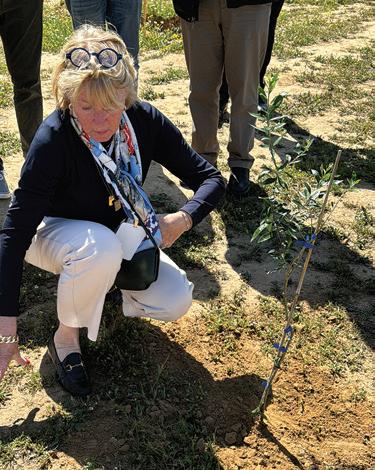
To get the full story of Oct. 7, the delegation headed to the Israeli areas near the Gaza border, including the site of the Nova Music Festival, where 364 were murdered in the early morning. It has become a national memorial, with visitors planting trees among makeshift tributes to the young people who did not escape. The New Orleans delegation planted an olive tree as a symbol of peace.
“It’s very moving to be here, and very powerful,” French said.
Prest said “it was personal because these party goers were my age. These free souls, who loved life and simply wanted peace, could have been my best friends.”
The group also visited Kibbutz Be’eri, seeing the devastated houses and talking with one of the survivors. The community of 1,100 saw over 100 killed and 26 taken hostage, and at least half of the buildings burned to the ground.
They saw a bomb shelter that had long been a lifesaver from Hamas rocket attacks. But on the day of the invasion, it was the opposite, as terrorists were able to corner people in the shelters. That bomb shelter, painted with a cheerful forest scene, was where 40 had taken refuge in a space meant for 10, and all were killed.






April 2024 • Southern Jewish Life 11 Louisiana’s Leading Addiction Treatment Network Nationally Accredited Residential and Outpatient Services Call 504-446-1111 for more information www.noladetox.com Lafayette • Pineville Baton Rouge New Orleans • Metairie Covington • Houma • Boutte Chris Copeland and Dan Forman, Co-Founders Spend a service year in New Orleans with the Jewish Service Corps. AVODAH JEWISH SERVICE CORPS | avodah.net/serve
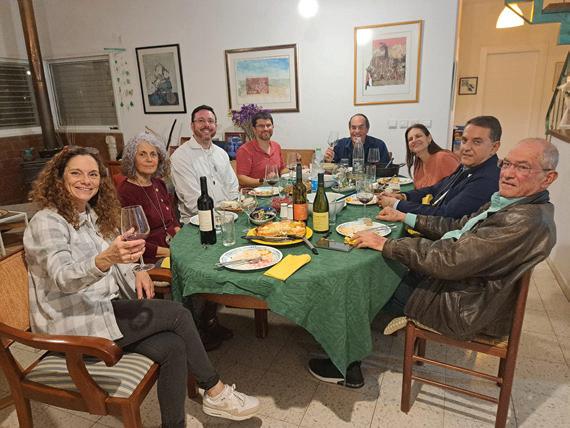
Dinner with friends in Rosh Ha’Ayin
Now Serving Jewish Communities Throughout the South
Southern Jewish Life, the independent, award-winning Jewish news magazine of the Deep South for the last 33 years, is now covering the entire South. Check out our latest issue and subscribe today!

Subscribe using the QR code here, or go to https://issuu.com/store/ publishers/sjlmag/subscribe

After seeing what Hamas did, McFadden-Bogantes said that calling the terrorists inhuman “would be to excuse them from accountability” for their evil.
Gerber also referred to Hamas as evil, as “they actively seek to end as many Jewish lives as they can while simultaneously hiding in civilian clothes in populated areas.” For Hamas, he said, “dead Jews fulfill their mission. Dead Palestinians help their cause.”
Despite everything, the overriding goal for Israel continues to be peace, Gerber observed. “Even a surviving member of Kibbutz Be’eri, who lost hundreds of neighbors to the Oct. 7 attack, felt no ill will toward the Palestinian people. He wants Israel to live in peace, and he wants the Palestinians to live in peace.”
But, McFadden-Bogantes said, “to live in peace with our neighbors, we need neighbors who want to live in peace with us.”
Mission participants were thankful for the opportunity to go to Israel and bear witness.
October 7 was Prest’s 18th birthday, the celebration of civic adulthood. Instead, as he saw the news from Israel on television, he “felt like a little boy. Alone and scared.” Even more so afterward, because nobody asked how he was doing or expressed concern. Since then, he had longed for the chance to go to Israel. “I couldn’t move on until I showed my family that I was there for them.”
McFadden-Bogantes said she arrived angry and left even more so, feeling that there must be Jewish unity at a time like this. “This war goes beyond politics and the differences in our beliefs and practices,” she said. “This is OUR family hurting and we must stand in solidarity together with them, not against each other divided.”
For Sara Lewis, the trip put what she had seen in the news into context “and made clear to me something I couldn’t put into words: Hamas did not complete an attack against Israel on Oct. 7. Oct. 7 is the continuation and escalation of a war.”
The 3,000 Hamas terrorists, backed by Iran, had a coordinated effort to attack villages in Israel, while Iran-backed Hezbollah continues its attacks in the north. “The battle at the police station in Sderot lasted for three days,” she noted. “For weeks, people remained in their homes afraid that one of the 3,000 terrorists who entered Israel would be at their front door.”
Lewis said that the media portrays Oct. 7 as a single event “and Israel as an aggressive retaliator,” but for Israel “the attack is ongoing” with Iran’s proxy war using Hamas and Hezbollah, and the anticipation of an attack from Iran itself, which would come a few weeks after the New Orleans

12 April 2024 • Southern Jewish Life
Memorials at the Nova Festival grounds
mission.
The most prevalent ongoing part of Israeli life post-Oct. 7 is the desire to have the hostages back, Gerber said. Hamas has entertained offers of large numbers of Palestinian prisoners who have been convicted of terrorism in exchange for the Israeli hostages, but in recent weeks has kept upping the price and rejecting the deals, and Gerber feels Hamas will continue to not accept the proposals.
Gerber said the group’s tour guide is a terrorism survivor, and the terrorist who attacked her and killed her friends had been freed in an earlier prisoner swap.
Back in Jerusalem, the delegation visited one of the tents where families of hostages and of those murdered on Oct. 7 have been living for months, near the residence of Prime Minister Benjamin Netanyahu. While the tents are to maintain visibility for the hostage issue, displays bearing the images of the hostages are everywhere throughout the country.
They also visited the Knesset, meeting with members representing several parties, from northern and Southern Israel.
A highlight of any trip to Israel is a visit to Rosh Ha’Ayin, New Orleans’ Partnership2Gether community, where the group heard about how the community has been affected by the war. Several residents of Rosh Ha’Ayin have been killed on and since Oct. 7.
The visit included musical presentations and home hospitality for dinner.
Prest concluded, “I will be back, and I promise to my people that through what I learned on this trip, I will do everything I can to stop the lies and hatred that is spread about Israel and my people.”


ONE STOP KOSHER FOOD SHOPPING
Dine In — Take Out — Catering

Mon-Thu 10am-7pm • Fri & Sun 10am-3pm (Closed Saturday)

3519 Severn, Metairie (504) 888-2010

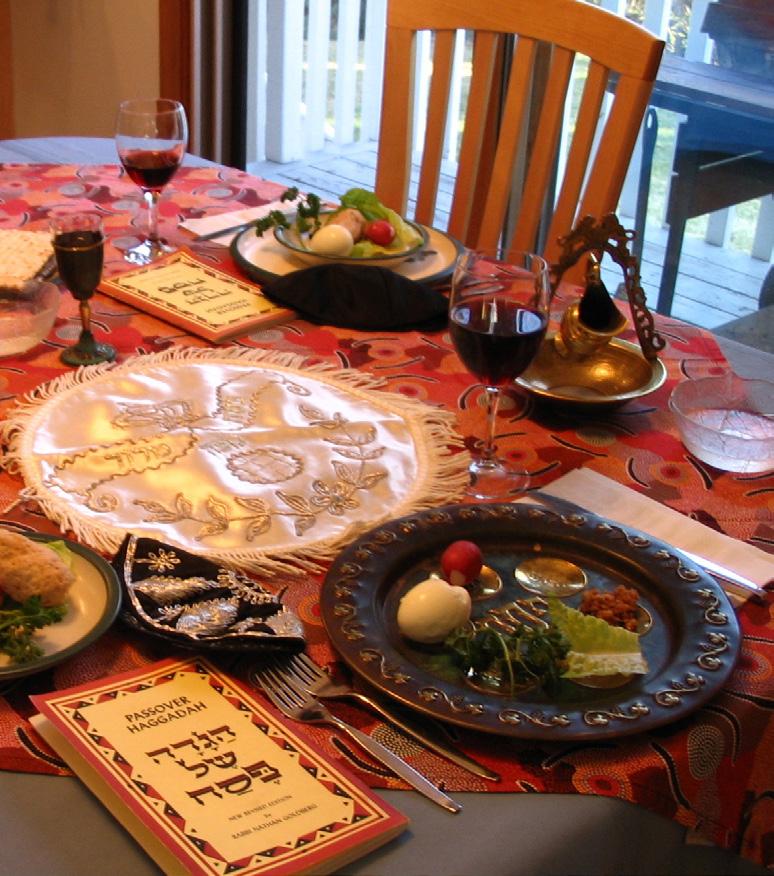
As we celebrate the seder, we remember those who should still be with us. Some of those seats belong to Magen David Adom medics, who gave their lives trying to save others. Your donation provides the equipment MDA needs so that next year only Elijah’s seat may be empty. Join the effort at afmda.org or call 866.632.2763.
April 2024 • Southern Jewish Life 13
WON’T BE THE ONLY EMPTY SEAT AT THE TABLE.
THIS PASSOVER , ELIJAH’S
the New Orleans area?
will
www.koshercajun.com Outside
We
ship your order to you!
Planting a tree for peace


Polina Schlafer Wheeler, REALTOR
“Putting You First since 2009” 2016-2023 TM Top Producer and Multi-Million Dollar Producer
TM Realtors - Oxford 2092 Old Taylor Rd. Oxford MS 38655
Direct 662.401.4632
Office 662.234.5344
polina@tmhomes.com www.tmhomes.com



Navigating uncertain legal waters
Amidst Alabama IVF battles, Jewish Fertility Foundation works to handle the twists
The controversial ruling by the Alabama Supreme Court that stated frozen embryos are to be regarded as children in terms of their legal rights caused a frenzy of activity, from those whose in vitro fertilization procedures suddenly became a legal quagmire, to the Alabama Legislature that found itself cleaning up a predictable mess of unintended consequences.
After the ruling, IVF providers across the state shut down, causing Birmingham’s office of the Jewish Fertility Foundation to scramble to serve the 50 clients who were undergoing the procedure.
The Atlanta-based Foundation offers fertility grant funding, emotional support and education for families — and a lot of support was needed after the ruling came down.
The Feb. 16 ruling stemmed from a wrongful death of a minor lawsuit filed against a Mobile fertility clinic. Three couples who had undergone treatment at the clinic and had successful pregnancies filed suit over a December 2020 incident. As is typical, the couples had extra embryos in frozen storage at the clinic in case they wanted to pursue another pregnancy.
A patient entered the preservation room and opened one of the units, grabbing some embryos. Because the embryos were deep-frozen, the patient was freezer-burned and dropped the embryos, destroying them.
While the trial court said a claim could not be made under the Wrongful Death of a Minor Act, the Supreme Court overturned that opinion on appeal.
Many in the anti-abortion movement subscribe to what is called personhood, which defines human life at the moment of fertilization or conception, which would label all abortion and many forms of birth control as a form of murder.
The ruling that a frozen embryo could be considered a person under law has the implications that discarding or destroying an embryo could be considered murder.
HIGH AVAILABILITY
Same Day Delivery is available 7 days a week.
FAST
Orders placed by 6pm will be delivered on the same day.
FLEXIBLE We can deliver to your home or o ce.
CONVENIENT No more carrying large heavy bags! We do all the heavy lifting for you.
FREE DELIVERY On Same Day Delivery orders over $49.

“This decision creates legal chaos with far reaching consequences on medical providers — leaving fertility clinics unsure if they can provide services in Alabama and those who already have embryos frozen in clinics wondering if they will go to jail if they discard them,” said Sheila Katz, CEO of the National Council of Jewish Women.
Another quandry is what to do with extra embryos once a couple is done having children — or if the couple splits up. Would the embryos have to be stored in perpetuity, and who would pay for the storage?
Rather than risk the consequences, clinics across the state shut down, causing major issues for couples whose procedures were in process and dependent on certain timing.
Julie Cohen, who heads the Birmingham office of JFF, said “Before the clinics closed, I had a client reach out about what to do if they closed; I never thought clinics closing would become a reality. As soon as they started announcing closings, I immediately began receiving text from clients about whether they could travel for treatment. I am thankful JFF has the partnership clinics in Atlanta, so we were able to help them get appointments quickly.”
She added, “this truly feels like a nightmare and something I never imagined becoming a reality.”
The Foundation is helping with the added expense of having to pursue the procedure in Atlanta. Nationally, NCJW provided an emergency $15,000 grant to help Alabama clients, the first grant from the organization’s Jewish Fund for Abortion Access, which was established after the Dobbs decision.
One issue with Alabama clients going to Atlanta for the procedure is
14 April 2024 • Southern Jewish Life
Try Our Same Day Delivery Service!
community
Intelligent Insight Innovation Integrity Superior Personal Service

that in some cases, insurance does not cover outside the state.
They also organized an online forum with an Alabama fertility attorney, a similar program is being organized with NCJW for May. There was also a support group meeting for Birmingham clients on March 6.
After the Dobbs decision of 2022, where the U.S. Supreme Court overturned Roe v. Wade and returned the issue of abortion to the states, JFF officials warned that procedures like IVF likely were in danger, because the IVF procedure creates embryos, and many states had passed laws declaring that life begins at conception.
Alabama’s anti-abortion law, though, refers to ending a pregnancy “in utero,” which would allow room for IVF.
The Supreme Court ruling came under heavy criticism by Jewish groups. The Central Conference of American Rabbis, a Reform group, said it was “appalled” by the ruling and noted how “Alabama Chief Justice Tom Parker makes explicit that the Court’s ruling is a religious, not a legal, act.” By extensively quoting Christian theologians, “this ruling is therefore a violation of the First Amendment to the United States Constitution, which prohibits the establishment of a state religion.”
In his argument, Parker summarized “the theologically based view of the sanctity of life adopted by the People of Alabama,” including that “human life cannot be wrongfully destroyed without incurring the wrath of a holy God, who views the destruction of His image as an affront to Himself.”
Parker concluded, “Even before birth, all human belingshave the image of God, and their lives cannot be destroyed without effacing his [sic] glory.”
The CCAR noted the Jewish legal view that personhood is not granted to a fetus or embryo at any stage of a pregnancy, but said that they

We treat your family like our family.
When it comes to senior living, you want more than a place to live — you need a place to thrive. That’s why at Brookdale University Park, we help take care of the challenges of aging for you.
Amenities:
• Variety of floor plans
• Social events and activities
• Walking paths
• On-site putting green
• Pet-friendly accommodations
• Close to medical and shopping centers
To learn how we can help you connect with new friends and interests, call (205) 506-0214 today.
Brookdale University Park
Living | Assisted Living
& Dementia Care | Rehabilitation & Skilled Nursing 400 University Park Drive | Birmingham, Alabama 35209


April 2024 • Southern Jewish Life 15 community
brookdale.com ©2024 Brookdale Senior Living Inc. All rights reserved. BROOKDALE SENIOR LIVING is a registered trademark of Brookdale Senior Living Inc. 1080400 BP
Alabama Governor Kay Ivey signs emergency bill protecting access to IVF procedures following the controversial state Supreme Court ruling.
Independent
Alzheimer’s


are not asking for Jewish law to be enshrined in U.S. law, either. “We demand, however, that individuals in this free country be permitted to make their own choice about engaging the use of in vitro fertilization and other reproductive technologies.”
NCJW’s Katz called the Supreme Court decision “wildly outrageous and sets a harmful precedent that violates separation of church and state and will make it nearly impossible for families in Alabama to access fertility treatments such as in-vitro fertilization.”
She added that the Christian references in the opinion were “a clear violation of religious freedom as the Alabama Supreme Court — indeed the Chief Justice — has made clear that it seeks to impose a narrow Christian interpretation of theology on all people in Alabama.”
The NCJW statement noted that Jews in the United States disproportionately rely on IVF, with 17 percent of Jewish women utilizing fertility treatments to get pregnant, as compared to 12.5 percent of the general population. In addition, LGBTQ couples rely on the procedure as a way to start a family.
Rabbi Jen Gubitz wrote in Lilith magazine about her thus-far unsuccessful experiences with IVF, saying “I really wished our embryos were kids. But not because an Alabama judge has decided they are.”
“Jewish tradition understands that life begins when a baby takes a first breath of oxygen, allowing for the soul to enter into its body. We cannot let state or federal legislation determine when life begins, forcing the hegemony of Christian scripture on our wombs or on our dreams,” she wrote.
“Fixing” the problem
The widespread condemnation of the ruling led the Alabama Legislature to scramble to ensure access to IVF, as many who oppose abortion nevertheless favor IVF because the goal is to produce babies.
The Legislature passed SB 159, shielding IVF providers from lawsuits or criminal charges over “death or damage to an embryo.” Governor Kay Ivey signed the bill on March 6, saying “Alabama works to foster a culture of life, and that certainly includes IVF.”
The bill does not rescind the Supreme Court decision, it simply says that one may not be prosecuted over an embryo. However, in 2018, an amendment to the Alabama constitution recognized rights for unborn children, so another round of legal proceedings is possible.
In his concurrence, Parker noted that IVF in the U.S. is unregulated, and in other countries, usually one embryo at a time is made, unlike the multiples made in the U.S. The U.S. should follow that example, he suggested, saying predictions that the court’s ruling would end IVF in the state do “not seem to be well-founded,” though that is what happened when the ruling was issued.
He said the Legislature is free to decide how the IVF industry operates, “provided that it comports with the Alabama Constitution, including the Sanctity of Unborn Life Amendment.”
That uncertainty is making many couples reconsider their procedures in Alabama, said Elana Frank, CEO and founder of JFF. They have spoken with transportation and storage companies with an eye on moving embryos out of Alabama, assuming the clinics would allow it. “Some people still want to move their embryos despite the SB 159 passing,” she said.
Frank said that while the bill is good, and some clinics have already reopened, it isn’t the end of the story, because the personhood issue has not been addressed. Nevertheless, “Some staff members were watching the proceedings via the Alabama State Legislature live stream and became very emotional. One sobbed uncontrollably.”
She said there is concern nationally that other states focusing on personhood laws would have similar issues over IVF.
16 April 2024 • Southern Jewish Life
community
community
Louisiana passes nitrogen gas execution option
Jewish groups express opposition
On March 5, Louisiana Governor Jeff Landry signed a bill making Louisiana the fourth state to allow executions using nitrogen gas.
The approval comes a month after Alabama conducted the first-ever nitrogen-gas execution. Kenneth Eugene Smith was executed on Jan. 25 for a 1988 murder-for-hire where a pastor hired him and another man to kill his wife.
The bill passed during a special legislative session on Feb. 29. Mississippi and Oklahoma have also voted to allow the procedure, but neither has implemented it.
Though Louisiana now allows the procedure, Rep. Nicholas Muscarello, who drafted the Louisiana bill, said he figures lethal injection will continue to be the state’s primary method. The last execution in Louisiana was in 2010.
The Alabama execution of Smith was a second attempt, as he was scheduled to die by lethal injection in 2022, but officials could not properly connect an IV line.
The Jewish Community Relations Council of the Jewish Federation of Greater New Orleans, passed a resolution on Feb. 18 opposing the implementation of nitrogen gas execution. “We unequivocally call for the rejection of suffocation-based executions, whether through the use of masks or any form of gas chamber, within the state of Louisiana,” the resolution read. “This position is rooted in our historical experiences, moral teachings, and commitment to justice.”
The method evokes “painful memories of the Holocaust,” and while “we do not suggest comparisons to the atrocities of Nazi Germany… we cannot imagine it possible that Jewish communities anywhere could stand by while prisoners are executed in our names, using any variation of that mechanism.”
Naomi Yavneh Klos, the Rev. Emmett M. Bienvenu, SJ Distinguished Chair of Humanities at Loyola University New Orleans, and activist Jacqueline Stern, said in a column that “as Jewish citizens of Louisiana, we find the use of any form of gas for state executions a violation of our ethical principles and of Judaism’s deep commitment to innate human dignity,” and that the Talmud requires an “extremely high threshold” for a death sentence.
They noted that since 1973, 12 Louisiana citizens on death row have been exonerated.
In their piece, they said that the Nazi regime introduced gassing because mass shootings were “too emotionally grueling” for the soldiers. While they stated that gassing of innocents in the Holocaust is different from executing a convicted criminal, “even a murderer is created with innate human dignity” and all people are called on to demonstrate compassion.


Jump In To Summer with Camp Judaea




April 2024 • Southern Jewish Life 17





Bermanator’s season ends early
Auburn’s Berman suffers ACL injury, eyes pro career
The Bermanator was on a roll, and now his season is over.


WALLACE BURKE

Fine Jewelry • Local Art • Furniture Restoration
1811 29th Ave South Homewood, AL 35209 205-874-1044
wallaceburke.com
Lior Berman, a 6-foot-4 guard for the Auburn University basketball team, suffered an ACL injury during the March 2 game against Mississippi State. At first, the fear was that he had completely torn his ACL, but additional tests showed it was not a complete ligament tear.
Berman, from Mountain Brook, had been averaging over 10 minutes per game recently off the bench.
“He meant a lot to our program over the last five years, both on and off the court,” Auburn coach Bruce Pearl said on March 5. “So disappointed for Lior… He’s such a great example of when you don’t always get what you deserve, stay with it. I probably should’ve been playing him more sooner almost every year that he’s been in the program.
Pearl said it is hard to understand why the injury occurred. “To miss March, he’s worked so hard to put himself in this position. He’s going to be fine. He’s going to recover.”
Two days later, when the extent of the injury turned out to not be as severe, Pearl added that Berman was “playing 10 to 15 minutes behind Chad Baker-Mazara and doing a really, really good job. It was a tough injury.”
Berman will undergo rehabilitation for three or four weeks, Pearl said. “I don’t anticipate him being back this year. It depends how far we go.” But instead of a six month recovery, it will be four to six weeks, enabling Berman to do professional tryouts. Pearl said Berman is looking to play professionally in Israel, if not the NBA.
Berman played his high school ball at Mountain Brook, which won the state championship three times. He had offers from Division II and Division III schools, but after a two-hour recruitment visit at Auburn, Pearl offered him a spot as a walk-on.
Pearl would say that he wanted to give Berman a scholarship, but Auburn was dealing with the fallout of the 2017 Chuck Person bribery scandal that drew the attention of the FBI. The loss of a scholarship was part of the NCAA penalties.
Last year, after Berman’s fourth year with the program, that spot became available again, and without fanfare, Pearl shifted Berman to scholarship status for his fifth year of eligibility.
Though Berman likely could have had more playing time elsewhere, there were unforgettable experiences along the way, including being a Jewish player playing for a Jewish coach in the Power 5 level.
He also was able to experience two NCAA tournament games at home in Birmingham, including a highlight-reel reverse layup in a win against Iowa on his 22nd birthday.
After his junior year, the Auburn basketball team made a historic trip to Israel, becoming the first Power 5 program to do so. When the team arrived, Berman was already in Israel, having just finished a gold medal run in the World Maccabiah Games, the fourth in a row for Team USA —
18 April 2024 • Southern Jewish Life
You’ve never heard a story quite like that of Natchez, Mississippi - a city of change and transformation. Where our iconic historic homes set the stage for diverse and fascinating local characters...and our present is just as lively. Plan your experience at VisitNatchez.org
Courtesy Auburn Athletics
Lior Berman in Auburn’s March 2023 game against Tennessee.

a streak that began in 2009 when the team was coached by Pearl.
In the championship game, Berman had 11 points, 4 rebounds and 3 steals against France. In an earlier game against France, he had 21 points, including 3 3-pointers, and 6 rebounds. He also scored 16 against Israel and 13 against Argentina.
This year at Auburn, he averaged 6.4 minutes, 1.7 points and 1.1 rebounds per game. In his final three games, against Georgia, No. 4 Tennessee and Mississippi State, he averaged 11 minutes, 4.8 points and 1.3 rebounds, shooting .750 from the field.
He was first-year SEC Academic Honor Roll his freshman year, and then was on the SEC Academic Honor Roll the next three years.
Pearl said Berman “does it the right way on and off the court. He is going to be incredibly successful in life because he’s incredibly successful in everything that he does. He’s great for all the guys to kind of learn from. Just be like Lior. At the same time, if you’re not being like Lior, you recognize that you’re going to have challenges on and off the court.”
Berman said “I want to give thanks to my coaches, staff, administration, teammates and the Auburn Family. I have loved every second here and wouldn’t trade it for anything.”
Southern and Jewish
ISJL rebrands annual educator’s conference, invites everyone
The Goldring/Woldenberg Institute of Southern Jewish Life’s annual June conference isn’t just for educators any more.
For two decades, congregations using the ISJL’s standardized religious school curriculum have gone to Jackson for a couple days of forums and networking. Now, the agency is re working the conference for a diverse range of interests and renaming it “Southern and Jewish.”
Over the past few years, ISJL reorganized into three main areas — Culture, Education and Spirituality. When in-person conferences resumed in 2023 following the pandemic, the conference broadened its of ferings, including small-congre gation resources, and content for culture and spirituality.
come to the education track, congregational presidents, lay leaders, parents and professionals, or anyone interested in Jewish life in the South, are invited to attend the conference.

With the new conference, there will be offerings in each of the three areas. While teachers and religious school leaders are encouraged to
Presenters who have already been announced include interfaith musical duo Lapidus & Myles of Atlanta, and Rabbi Stacy Rigler, a rabbi-educator currently serving as executive director of the Association of Reform Jewish Educators.
The conference will be held from noon on June 23 to noon on June 25 at the Sheraton Flowood, just east of Jackson. There is no registration fee for the conference itself, just for the hotel and meals. Early-bird rates were extended through Passover, and are $500 for double occupancy, $660 for single occupancy. A Saturday night extension before the conference is $162. Registration is due by June 1.

20 April 2024 • Southern Jewish Life
community
Leading from a different perspective
The non-Jewish directors of two Birmingham Jewish institutions reflect on their experiences
By Richard Friedman
They both are tall, friendly, energetic and passionate. They’ve each spent the bulk of their careers in fields different from what they are doing today. They are admired and valued. And they both have stepped forward to provide leadership for the Jewish community since Oct. 7, guiding and inspiring their constituencies.
Brooke Bowles and Brian Cain also have one other thing in common. They are not Jewish, yet they head two of Birmingham’s major Jewish institutions. Bowles has been executive director of the Levite Jewish Community Center for 15 months and Cain has been head of school at the N.E. Miles Jewish Day School for three years.
During their tenure, they have overseen a period of significant growth and prosperity for each of their institutions. The LJCC is more financially healthy today than it has been in recent memory and the NEMJDS is experiencing an influx of students that it has not seen in years. Many give much of the credit to Bowles and Cain for these achievements, pointing to their strong and focused leadership.
They also have skillfully built a vast array of relationships, mostly with people they didn’t even know a few years ago — from Jewish community members to donors to families that use their institutions and staff colleagues within the Jewish community.
Most Jewish agencies, in local communities and nationally, have Jews leading them professionally. Yet, while it is atypical to not only have one director who isn’t Jewish but also to have two, especially in a smaller community, Bowles and Cain said they felt welcomed from day one.
At the same time, they acknowledge there were questions about making them, both of whom started out as interim directors filling vacancies, permanent heads of their agencies. Still, both the LJCC and NEMJDS boards thought it was the right way to go.
Today, many Jewish community members agree that Bowles and Cain have turned out to be great assets and ambassadors for Birmingham’s Jewish community. They literally walk the walk as they often can be found roaming the corridors of their institutions, exuding warmth
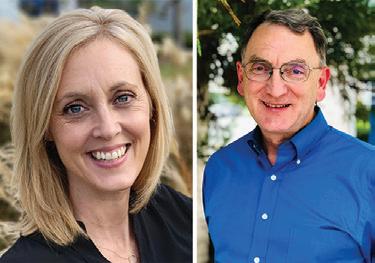
and creating connections with everyone they encounter.
“Still learning”
Bowles came out of the non-profit sector where, among other things, she started an agency to help people with disabilities prepare for and enter the job market. She first became involved with the LJCC as a volunteer, then joined the staff as development director, then became interim director before becoming permanent

April 2024 • Southern Jewish Life 21 community
Brooke Bowles and Brian Cain





community director.
“I never imagined myself in this role and have had a lot to learn — and am still learning,” said Bowles. “However, I love the work I am doing, believe that we can have a great LJCC that not only enriches our Jewish community but also serves the broader community and I am so proud of what we are achieving.”
Since coming aboard, the LJCC has expanded its Jewish offerings and its outreach to vulnerable communities in Birmingham, such as adults with autism and inner-city kids who otherwise would not have access to the kind of facilities the LJCC offers. “Even at a young age, I cared about people in need and have quickly learned that my passion for helping people fits perfectly within the Jewish commitment to Tikkun Olam — repairing the world,” said Bowles.
Allison Weil, a past LJCC president, said Bowles “embodies dedication and passion. She is a warm, funny and compassionate leader; one who shows through her actions that she is a true leader. Through her tireless efforts and exceptional work ethic, Brooke quickly rose through the ranks. Her ascent is a testament to her outstanding performance and devotion to our agency’s cause. Brooke’s leadership exemplifies the inclusivity and diversity that the LJCC embraces, showcasing how individuals from all backgrounds can contribute meaningfully to our success.”
Cain was a long-time educator in the Vestavia and Hoover school systems. A member of the Jewish community who knew Cain suggested him as an interim head of school, and that grew into the permanent position he holds today.
He loves the NEMJDS. Cain glides through the school like a Pied Piper, drawing teachers, kids and parents to him. He is a passionate and effective ambassador for what the school offers and is committed to advancing the well-being of his students, encouraging them at every turn. “What we have here is extraordinary,” he said as he walked through the school. “It is a best kept secret, and my job is to tell the story far and wide.” His energy and love for kids animates every conversation.
A past NEMJDS board president, Brooke Kaplan, reflected on Cain’s impact: “What we did not expect was how quickly he would embrace not only the Day School family but also the greater Jewish community. What makes Brian a natural leader in an educational setting is his absolute love of teaching which reaches across all age groups. This passion even draws in parents and lay leaders to support the success of the Day School students.”
These two agency leaders have become good friends. Bowles and Cain talk almost every day, support each other and advocate for the other’s institution. The collaboration between
their agencies — from sharing space and staff to promoting the other’s mission — has been exemplary.
“Never any question”
Like everything else in the Jewish world, their institutions — and their lives — turned upside down on Oct. 7. Bowles and Cain instinctively understood what the impact of that day meant for the Jewish community and swung into action, making sure their agencies were secure and the people within them felt safe.
Bowles turned the LJCC lobby into a community living room for people to support one another and had the LJCC host a community rally with 700 people in attendance and another 1100 watching online. She also began helping the Birmingham Jewish Federation by speaking to groups in the broader Birmingham community about the conflict and rising antisemitism, and raising dollars for the BJF’s Israel Emergency Campaign.
“Only by being in the Jewish community, could I begin to understand what Oct. 7 meant to the Jewish community. The impact on me professionally and personally was and still is profound,” said Bowles, who was scheduled to go on a BJF trip to Israel on Oct. 10, which was cancelled, and on a national Jewish Community Centers directors trip a few weeks ago, which also was cancelled.
Cain’s post-Oct. 7 challenge was something he — and no one else — could have imagined. Israeli families who had connections to Birmingham were arriving almost without warning, and Cain and his faculty had to make plans in real-time to accommodate an influx of students that tested the capabilities of the school.
“There was never any question,” said Cain. “We were going to rise to the challenges, step forward and embrace these families and affirm to our students, parents, faculty and community the teaching that I have become familiar with through my work: All Jews are responsible for one another.”
What’s ahead for these two Jewish community leaders? Plenty.
Even with the challenges that continue to stem from Oct. 7, they are poised for continued growth, filled with optimism about the future of their institutions and say over and over that fate and good fortune have brought them to the right place at the right time in their lives.
“The school has become a second home to me. It is where I belong. It is where I continue to grow. It is a place that I love,” said Cain as he adjusted his kippah.
“I never could have imagined that I would come to know Shabbat and so many other beautiful aspects of the Jewish faith and culture,” said Bowles, as she watched a LJCC pre-school Shabbat program, covering her eyes as Jewish women do as the candle-lighting blessing was said.
22 April 2024 • Southern Jewish Life
Helping You Build a Practical Plan for Multi-Dimensional Wellness Yoga • Massage Therapy • Energy Therapy Studio Art Classes • Counseling Cobb Building: 924 Montclair Rd., Suite 108 205-201-6895 openchannelswellness.com Space available! Join our team of dedicated, compassionate practitioners!
Stay and shop
New Orleans landmark Rubensteins celebrates a century of fine clothing by opening a boutique hotel
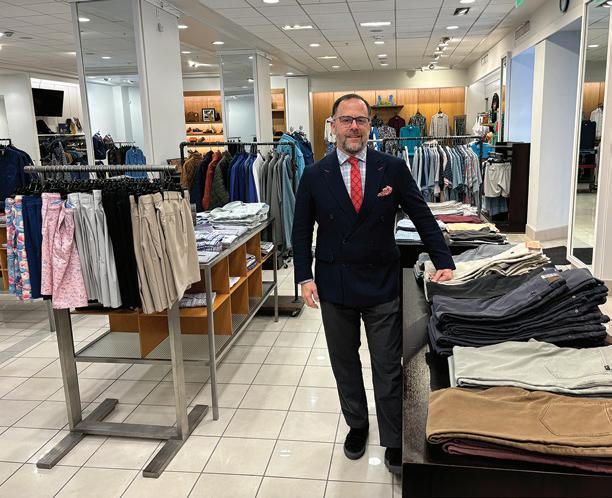
One of the oldest continuously-operating menswear stores in America, Rubensteins in New Orleans is celebrating its 100th anniversary this year with a legacy of trying new things and adapting to the times.
At the 100-year mark, trying new things includes a completely different kind of venture — a boutique hotel, located upstairs from the store. The Rubenstein Hotel has 40 rooms in the upper floors of the six buildings they own.
The hotel opened at the beginning of the year, just in time to offer Mardi Gras packages, as the hotel is right on the parade route on Canal Street, with balconies for viewing the festivities. They offer king and double rooms, corner suites and a presidential suite with a loft bedroom and kitchenette.
“We are proud to showcase our family’s enduring commitment to downtown and the city of New Orleans,” said second-generation owner David Rubenstein. “Despite the challenges posed by the pandemic, we are optimistic about the timing of our hotel’s debut and its contribution to tourism in New Orleans.”
A century of change
In a room overlooking Canal Street, with family portraits on the wall, third-generation owner Kenny Rubenstein recounts the store’s first 100 years of history.
Rubensteins — the clothing store — began in 1924 when Morris Rubenstein used his experience from the family’s dry goods store on Rampart Street, and opened a store selling “white shirts, with collars and cuffs.” Soon, Morris’ brothers, Elkin and Sam, joined, and the store became Rubinstein Bros.
Rubenstein said that they soon realized that “they had to expand and add product, and see where the niche was.” They sought out high-end items, and played a large role in introducing Italian fashion to the country.
Even their American suits were $300 or $400, “and that was a big deal, but it was the finest things made in the U.S.”
After expanding their space every two years in the rest of the 1920s, the Great Depression hit, and business fell. They approached the building owner asking for a reduction in rent, and the landlord figured that not only was some rent better than none, but when good times returned, the store would once again be successful. After the Depression, the Rubensteins were able to buy their building and embarked on an expansion,


WINNER OF THREE BOOK AWARDS
Based upon the true story of an injured Confederate soldier’s friendship with child Sophia Strauss in Culpeper, Va., in 1862

“A product of love and of intellect” — Rabbi Steven Silberman
April 2024 • Southern Jewish Life 23
copies at www.sophiasgiftbook.com
Ahavas Chesed, Mobile Author-signed
which was promoted in the Times-Picayune on Dec. 7, 1941.
Of course, World War II then greatly affected the business. “Everybody was gone,” Rubenstein said. It was “hard to sell men’s product, it was hard to get men’s product.” They added women’s wear, but in 1945 went back to just menswear.
After the war, they offered free white shirts to every soldier they knew, along with new charge accounts. That helped the store prosper after the war, and expansion continued, eventually encompassing six buildings along Canal at St. Charles.
As more New Orleans young men headed to the northeast for college, they weren’t as interested in shopping where their fathers shopped, so Rubenstein’s opened the Madison Shop around the corner on St. Charles, with a separate entrance. That entrance is now the hotel entrance, and The Madison Bar, a nod to its history. Despite it being separate from their fathers’ store, much of the merchandise was the same.
Elkin’s sons, Andre and David, ran the Madison Shop. In the 1970s, as the hippie revolution started, Andre and David launched the All American Jeans division.
The family also branched out geographically, for a while. When Lake Forest Plaza opened in East New Orleans in 1974, Rubensteins was one of the original stores. In the 1980s, another location was added, in Lakeside Shopping Center in Metairie.
Kenny and Mark Rubenstein joined the business in the 1990s, along with Andre and David’s wives, Robbie and Niki. In 2000, David’s children, Hilary and Allison, also joined.
Rubenstein said one way to stay on top of the trends, especially among the next generation, is to have members of that generation at the table to give their observations and expertise.



24 April 2024 • Southern Jewish Life
www.galatoires.com for LUNCH & DINNER TUESDAYS! Now Open on
The late 1990s saw the decline of the Plaza, so the family closed that location, along with the Metairie location, preferring to expand and invest in the downtown location.
A ladies’ department was added, and to reflect the broader representation in the family, the name was changed from Rubenstein Bros. back to the original Rubensteins.
Decades ago, Rubensteins added valet parking, “trying to make it easy for people to come to the store.” James, the long-time valet, knows regular customers by name.
Many of the other employees have been at the store for very long times, building long-term relationships. Rubensteins offers 30-minute complimentary style sessions, where one can define or change their own personal style, with the expertise of the staff, and no obligation to buy.
Rubenstein said that the strongest part of their business comes from made-to-measure, something they have always offered. “People want to do something unique, something for themselves.”
They recently opened a custom desk for Munro, one of several of the world’s best brands that they work with. Rubensteins was the first retailer in the United States to offer the luxury Italian label Zegna, and the Italian Trade Commission honored Rubensteins for that distinction.
In a corridor with historical photos and awards, there is the Order of Merit medal of the Italian Republic given to Rubensteins “for their role in introducing Italian clothing to the USA.”
Biggest challenges
Of course, in 2005, Hurricane Katrina and the aftermath “was a mess,” as the flooded city emptied out.
The family gathered in Houston and decided that they were going to

return, then “sat down and made a plan.” They continued to pay their employees and didn’t lose anyone. Seven weeks later, they were the first retail store on Canal Street to reopen, and they had 40 customers that day.
The first customer was Mark Schroeder, a New Orleanian who had been on “The Amazing Race” and was heading to New York that day to be interviewed on “The Early Show” the next morning, and because of the flood, didn’t have anything to wear on national television.
Part of the post-Katrina plan was relying on the relationships they had developed over the decades. One example Rubenstein cited was seeing a clothing line you are pretty sure you won’t be interested in, but you know


April 2024 • Southern Jewish Life 25 community






the salesperson is starting out, and the fact you took the time to look at it is meaningful — and when that salesperson has something you are interested in down the line, the early gesture is remembered.
With that sort of philosophy, after Katrina, “they are calling you — ‘what can we do?… Don’t worry about paying anything right now’.” Customers also called, from New Orleans and around the country, saying “they want to help, want to buy.” Those who made it back to New Orleans “were trying to get together and they had no wardrobe left.”
While times change and the current trend is much more casual — Rubenstein noted he has seen that trend at Shabbat services — New Orleans is still “a dressy town. We dress in a tuxedo to go to the zoo.” Because of the sheer number of events in New Orleans, everyone has to own a tuxedo, while in most other cities, one can get away with the occasional rental.
But even the dressier fashions are more casual — softer, unlined sports coats are an example. “It goes between dressy and casual,” Rubenstein said.
While there may be more of the casual dressy look, he added, “the fully dressy look isn’t going to go away any time soon.”
Canal Street has also changed with the times, from department stores to the current mix of hotels, gift shops and restaurants in the “gorgeous buildings.” Rubenstein said the area is “definitely in a renaissance,” with far fewer empty storefronts. For buildings that had stores, most of the time upper floors were sitting empty. A combination of tax credits and developer interest has changed that, and many buildings now have shortterm rentals upstairs, or other uses.
The upper floors at Rubensteins had been used for storage and executive offices, but over the years had become underutilized, so they started looking for innovative ways to use the space. They partnered with Joe Jaeger of J Collection Hotels and Development.
Jaeger said “My family is committed to New Orleans and, as the largest operator of independent hotels in the city, we are always looking for opportunities to introduce projects that embrace the city’s uniqueness and character. Working with the Rubenstein family, who share our love of the city, to bring The Rubenstein Hotel to life was both an honor and a privilege.”
A larger-scale project, like the hotel, is more unusual in upper levels of older buildings, but in this case, Rubenstein’s owns six buildings in a row, making it feasible. “Just one building is not enough space,” Rubenstein said, and having several in a row owned by the same individual or group is unique.
The location is ideal, not quite in the French Quarter “but close enough… everything from here is walking distance.”
Even though the six buildings were side by side, they did not have the same floor heights, so in planning the hotel they had to do 3D imaging and figure a way to have a cohesive second and third floor throughout the property.
A much longer closure than Katrina came with the Covid pandemic in 2020, as the store was closed for three months. Still, loyal customers in town and around the country supported them, and business came back strong after the pandemic.
The pandemic also slowed down the hotel, as few people were traveling. Construction had already begun on the first phase in February 2020.
As part of the hotel construction, the store itself was remodeled.
While about a quarter of the store’s business is from tourists, there’s another 10 to 15 percent who are regulars but do not live in New Orleans. They have a second home, an annual convention or other reason for frequently coming to the city, “and when they do come, they come to shop.”
The new hotel will give them a convenient place to stay and shop.
26 April 2024 • Southern Jewish Life community (800) 951-0051 www.alscaninc.com VIDEO SURVEILLANCE PERIMETER PROTECTION ACCESS CONTROL MASS COMMUNICATION

A Flower for Hadar

Hadar Cohen will never marry, have children or comfort her parents in their old ages. She was a heroic, 19-year-old Border Policewoman stationed at the Damascus Gate of the Old City of Jerusalem when she was murdered by terrorists, February 3rd of 2016. She and a partner had confronted two suspicious men and, in the ensuing gunfight, Hadar took down a bomb-laden terrorist. In the final seconds of her life, she also managed to save the life of her fellow Border Policewoman but gave up her life in doing so. No one can accurately estimate how many lives and injuries Hadar prevented by her heroic actions.
The firm policy of Israelis is to not honor individuals who commit heroic acts. They say that every life is precious, every martyr is a hero. They cannot honor just one out of the thousands that they have lost in the long struggle to establish a homeland for all of us.
When you travel around Israel, you’ll find almost no sites designated as tributes to individuals. It was truly astonishing when, three years ago, the City of Jerusalem decided to pay tribute to Hadar and another Policewoman, Hadas Malka, by putting their names on the steps down into the Damascus Gate. This has now been formally done and the Cohen family is comforted to know that in the memories of many thousands, worldwide, Hadar will not be forgotten.
We should not forget either. Alongside the cup of wine for Eliyahu, the cup of water for Miriam and the seder plate, I ask you to pay tribute to her heroism by placing a single flower on your seder table in her name and telling her story to the attendees, particularly the children.
In our home, we make this the 5th question, “Who was Hadar Cohen?” The flower is in her name but it represents all of those incredibly brave soldiers and civilians we have lost in Israel, including those from October 7th and since.
We suggest that you use this poignant letter as a reading, in explanation of the inclusion of the flower on your Seder table. It was written by Jewish author Naomi Ragen as a tribute to the heroism of Hadar Cohen.
https://www.naomiragen.com/my-dear-hadar/
May G-d bless you all and may G-d bless the State of Israel.
The Conn Family, Birmingham Alabama
April 2024 • Southern Jewish Life 27


New JLI course explores Jewish medical ethics
The newest Jewish Learning Institute series deals with how Judaism intersects with difficult life and death decisions.
“Decisions of Fate: Your Jewish Compass for Navigating Questions of Medical Ethics” will begin nationally in May. As of press time, Chabads in New Orleans and Baton Rouge have announced class schedules.
The four-week course starts with a discussion of experimental treatments — is the risk justified? The second class deals with how Judaism balances the desire to reduce suffering with the value of preserving life.
The third question, germane to today’s political climate, is whether a woman in good conscience may carry to full term a pregnancy that endangers her life. The fourth class is about respect for the deceased and how the sanctity of human life continues after death.
Those taking the class in person can receive CME and CLE credits.
Chabad New Orleans will hold the class at the Btesh Chabad House Uptown on Wednesdays at 7 p.m., starting May 15, or at noon at Egenberg Trial Lawyers on Poydras Street, Thursdays starting May 16.
Chabad in Metairie will hold the class on Tuesdays from May 14 to June 4, online and in person. The course will meet at 10:30 a.m. or 7:30 p.m. A standalone sample class is offered on May 14, with dinner at the evening class.
Rabbi Peretz Kazen will lead the course in Baton Rouge, meeting on Mondays from May 6 to June 3, at 11 a.m. at the main library at Goodwood, or on Zoom at 7 p.m.
Registration is available at myjli.com.
Rabbi Weinstein retiring from Lake Charles
Rabbi Barry Weinstein is stepping down as visiting rabbi of Temple Sinai in Lake Charles, effective in May. He has been with the congregation for 13 years, including two years where he led 140 remote Shabbat services from Baton Rouge as Covid and hurricane damage interrupted in-person services.
He had also begun to move to Lake Charles in August 2020, but a few days after starting the move, Hurricane Laura hit, damaging what would have been his new home, so he had to go back to Baton Rouge. The congregation’s building was also damaged, and they finally moved back in during this past High Holy Days after the restoration work was done. The congregation is in discussions with Beth Israel in Houston for visiting rabbinic services along a similar schedule.
Weinstein was rabbi of the former B’nai Israel in Baton Rouge from 1983 to 2007, and is rabbi emeritus at the newly-merged Unified Jewish Congregation of Baton Rouge.
28 April 2024 • Southern Jewish Life community

Southern Jewish Camp
New athletic complex underway at Henry S. Jacobs Camp
When campers arrive at the Henry S. Jacobs Camp in Utica this summer, a new athletic complex will be waiting for them.
Camp Director Anna Herman said “we have dreamed for years about renovating and expanding our athletic complex,” as well as adding air conditioning throughout. “Thanks to the generosity of a donor, we were able to make that happen in time for this summer.”
The renovated facility is the first result of a capital campaign that has yet to be launched, but the anonymous donors liked the idea of going ahead and getting the athletic facility done. The campaign, which will fund additional improvements throughout the Reform movement’s camp, will be announced later this year.
Development Director Jacob Fijman said the campers were “delighted and wowed” at the news when the renovations were announced during last summer’s camp sessions.
The athletic complex is an expansion and renovation of the facility that was built in 1985 and dedicated by the Berman family. “We’re beyond appreciative to the Berman family,” Herman said.
She said they were “thrilled” to be able to expand and renovate an existing building. During Covid, they found they could renovate existing buildings “and get everything we needed and more” with a renovation.
The expansion provides additional space for a wider range of activities, reflecting the growth in the number of campers, along with possible future growth. “We’ve been able to kind of make it work,” she said, but “the space we are going to have will allow all our dreams to come true.”
Central to the new complex is a high-school sized basketball court that can be used for many things, and a new scoreboard. There are two new classrooms, a gymnastics room, a fitness center and an indoor rock climbing wall, along with a flexible outdoor space for small group activities.
There will also be improved accessibility for Dream Street campers. “We cannot wait for all our campers to enjoy this fabulous space,” Herman said.
While the camp has done numerous facility enhancements in recent years, including the construction of a new pool house in 2022, this is the largest project in years, “and our biggest need,” Herman said.
It is also a learning program for the campers, as it is a “very intentional” opportunity to teach about philanthropy, supporting the community and expressing gratitude.
The new complex has helped with camper recruitment, and Herman said parents of younger, first-time campers “are very excited about this building.”
Last year was the biggest summer the camp has had, and with a very high camper retention rate and a lot of new campers, “we are thrilled for this summer.”
Jacobs Camp strives to be “a summer home and year-round home for our Jewish community.”
She noted that “while the world is certainly a hard place right now, people are looking for Jewish life and Jewish community… we are seeing more than ever that our community wants to be together.”

Where Forever Begins
Experience timeless elegance at InterContinental New Orleans' renovated ballroom, overlooking St. Charles Avenue. Let us make your wedding day as enchanting as the Crescent City itself With seamless wedding planning assistance and a prime location in the heart of New Orleans, your dream wedding awa



April 2024 • Southern Jewish Life 29
Photo by James Henry Brook
Work continues on the new athletic complex at Jacobs Camp
504.585.4379 New Orleans, LA 70130

This Week In Southern Jewish Life


Ramah Darom starts on new program center
First part of long-term strategic plan for the summer camp and year-round retreat center
Ramah Darom has embarked on its biggest construction project in a decade, with a new 10,000 square foot Program Center in the heart of the campus.
This is the first major project in the Kadima! campaign for the Conservative movement’s camp in the picturesque north Georgia mountains near Clayton. The campaign is an outgrowth from the strategic plan adopted in 2020, just before the camp’s 25th anniversary celebration.
The Program Center will replace the Beit Am Katan, which was originally constructed for the environmental camp that existed on that property before Ramah Darom was established. It served as the original dining hall until the much larger Levine Center was constructed.
Located above the amphitheater, the building will include meeting and event spaces, a music and multipurpose room, Leadership Lounge, a new staff lounge and coffee bar, outdoor programming space, a fitness center and large porches.
“The new Program Center will be the perfect addition to our beautiful facility,” said Wendy Heller, Chair of the Ramah Darom Facilities Committee. “This new building sits at the heart of our campus, and we are confident it will quickly become a favorite space for our summer campers and year-round retreat center guests.”
The new building is scheduled to open in late 2024.
As part of the Kadima campaign, the waterfront is being reworked, with new docks and blob tower, water slides and additional kayaks and canoes.
Future projects include a refresh in the lower roads area, including a new program building and new cabins, additional housing for vocational education and accessible hotel rooms for program guests. A teaching kitchen is also planned.
Gesher Village, a new center for the oldest campers, is also in the works, with three new cabins, a new outdoor pavilion, bike trail, Zipline circuit and rock climbing. Gesher Village will be on 45 acres the camp acquired in 2019, across the street from the main campus and overlooking the lake.
New Theatre Program
Programming enhancements include Ramah Darom’s new musical theatre camp, which took center stage in 2023 with over a dozen campers in the specialty camp. They put on a production of “Into The Woods” after the two-week session.
“It really was a huge success,” said Ramah Darom Director and Head of Education Anna Serviansky. “The campers learned about how Judaism interacts with musical theatre. And the camp is already filling up for 2024. Teens entering eighth and ninth grades are encouraged to apply.” This summer’s performance will be “The Sound of Music: Youth Edition.”
30 April 2024 • Southern Jewish Life
Artist rendering of the new Program Center at Ramah Darom
The South’s Most Comprehensive Weekly Jewish News Email To Subscribe, send an email to subscribe@sjlmag.com

Southern Jewish Camp
Serviansky said this summer, kids will be able to learn about and play pickleball. “We’re updating our tennis courts with new lines to accommodate pickleball, which is the fastest-growing sport in the nation,” she said.
In 1994 a group of enthusiastic supporters gathered in Charlotte, N.C., to launch the creation of a new Southeastern location to join the national family of Ramah summer camps.
Since its first summer of camp in 1997, thousands of children have attended Ramah Darom. Thousands of adults and kids have joined Ramah at the Kaplan-Mitchell Retreat Center for year-round programs and retreats.
Recent programs included a Winter Break Family Camp with over 300 in attendance, Southern Schmooze Shabbaton for small communities, a regional teen retreat, Book It to Shabbat with PJ Library, and the B’Teavon four-day exploration of Jewish food culture, with several guest chefs from around the country.
One of the camp’s longest-running programs, which almost always sells out quickly, is the annual Passover Retreat, where families can head to camp instead of changing over their kitchens. Participants can go for all of Passover, April 21 to May 1, or just the first or second half, with April 26 as the dividing date.
The Passover retreat includes communal or family Seders, kosher-for-Passover menus, classes and discussions with visiting scholars, and camp-style recreational activities. There are counselor-led activities for children.
Over Labor Day weekend, Ramah Darom hosts Georgia’s LimmudFest,
a celebration and festival of Jewish thought, arts, culture, life, learning and teaching. This year’s educational weekend will be Aug. 30 to Sept. 2.
This year’s Jewish Women’s Getaway will be Nov. 10 to 13.
The newly-established Machzor Gimmel is a retreat for adult camp alumni and staff, 21 and over, to spend a weekend at camp, and often introducing their non-camp partners to the camp experience. This year’s event will be Dec. 13 to 15, with an optional “long weekend” start on Dec. 12.
“Ramah Darom inspires a lifelong love of Jewish values, tradition and community by bringing people together for immerse experiences in Jewish living and learning at every stage of life,” said Serviansky.
Levitt stepping down
On March 19, Ramah Darom announced that Wally Levitt will be stepping down as CEO at the end of 2024. He has led the camp since 2018.
“Making the decision to hand over the reins later this year was not an easy one,” Levitt said. He plans to return to Toronto.
Board Chair Angela Cohen said that thanks to his leadership and the camp staff, “2024 is poised to be one of Ramah Darom’s most successful years. We will welcome the largest number of summer campers in a decade, serve more people than ever before at Ramah Darom retreats, complete the first phase of our campus construction with the Program Center” and be in “a place of strong financial health despite the unthinkable challenges of the pandemic and increased operating costs over the past few years.”
A search committee is being established for his successor.

32 April 2024 • Southern Jewish Life

Simchas
a semi-annual special section
A Haven for special events
By Lee J. Green
What was started in 2016 as a “gift to Birmingham” has blossomed into a Haven for community events and celebrations.
“Our first event at Haven was Mayor Randall Woodfin’s inauguration party,” said Haven General Manager Heather Roberts-Wood. The Southside event space was started by Milo’s Tea CEO Tricia Wallwork and her husband Troy, the CEO of DataPerk. “Troy and Tricia were born and raised here. They wanted a place that Birmingham could be proud of.”
Roberts-Wood said that Haven’s space is versatile and can be arranged to accommodate 1,500 people in standing-room or a 900-patron seated dinner.
In September 2021, they hosted the Sydney Black and Nathan Pastron wedding, a traditional Jewish wedding with a chuppah, a 16-piece band and more than 300 guests.
“They really transformed the space on a major level,” she said. “And they did it in the round so everything flowed so well.”
Haven has hosted many community and non-profit events, including those for Mitchell’s Place, Crohns and Colitis of Birmingham, the Birmingham Civil Rights Institute, the Alabama Business Hall of Fame, the Women’s Fund, Girls Inc. and the afterparty for the 25th annual Sidewalk Film Festival.
Roberts-Wood said that they have a preferred vendor list but they are open to adding new vendors to the roster.
Earlier this year, Haven started hosting public events every Monday. They rotate event themes and they’ve included music, trivia, movies, even miniature golf. The last Monday of every month is a Jazz Night featuring the group Magic City Standard.
The Monday night events are free with a cash bar, and tours of the space are available. Roberts-Wood said was inspired by her event coordination work with New Orleans Jazzfest.
“We thought it was a great way to open up to the public and let everyone see what can be done with the space,” she said. “It’s a great way to show off our diversity.”
Celebrating on St. Charles
InterContinental New Orleans hosts wide range of events
Centrally located and steeped in local tradition, the InterContinental New Orleans is in the heart of the city. The bustle of the French Quarter is a couple blocks away, and the St. Charles streetcar line is just outside.
In addition, about 30 parades pass the hotel’s front doors each year. The Queen of Rex brunch
is held at the InterContinental, after which she and her court await the King of Carnival to toast her in the private Mardi Gras Stands.
Built in 1984, the hotel has 484 guest rooms and suites, with all the comfort and amenities guests need for the most rewarding and memorable stay. Many of the rooms have private






April 2024 • Southern Jewish Life 33 Camp Questions? Email camp@ramahdarom.org, call 404.531.0801 and visit us online ramahdarom.org Adventure, connection, joyful Judaism and non-stop fun in the North Georgia mountains! www.tacomamaonline.com dine in - take out - catering Let Mama feed your Amigos!
Sydney Black and Nathan Pastron wedding at Haven in September 2021
Southern Jewish Simchas
balconies, and all are a quiet oasis in the middle of the business district.
The InterContinental has the only ballroom overlooking St. Charles Avenue, with floor-to-ceiling windows. The newly-renovated event space is flexible for all manner of events, with 33,000 square feet of space available. In the past few years, there have been dozens of wedding receptions, for 150 to 500 guests, and many gala events for local organizations.
There are 19 event and meeting rooms, and a state-of-the-art “legal war room.”
The hotel also has a casual on-site pub, Pete’s, and the Cajun-Creole Trenasse.
B&A Warehouse a hot spot for simchas in Birmingham
By Lee J. Green
Birmingham’s B&A Warehouse continues to build upon its reputation as the B’nai Warehouse.
The popular Railroad Park area event-hosting space welcomed 200 guests for the B’nai Mitzvah for the Nelson twins in November 2023, and will host another B’nai Mitzvah for twins on Memorial Day weekend. They are working out the details for two other Bat Mitzvahs on Sept. 21 and Nov. 19.
“We’ve had many Bar and Bat Mitzvahs here” since B&A opened in 1999, said Marketing Director Hailey Roebuck. “The great thing about this space is that we can accommodate smaller or large events and the space can be personalized to fit with the celebration,” with up to 800 for a reception-style event.
The B&A offers non-profit rates to organizations, and hosts several fundraiser events during the year. Coming up May 5, they will again host the Birmingham AIDS Outreach Arty Party.
Even those not having or attending events at the B&A can still enjoy their cuisine. “We have some new corporate drop-off menu options in Hot and Boxed-lunch formats for people who want a custom feel to their lunches,” said Roebuck. Prices start at $10.95.
Located in the historic warehouse district, the B&A Warehouse building had been Jefferson Plumbing and Mill Supply Company, and the transformation into an event facility 25 years ago preserved much of the building’s historic early 20th century charm.

happened Her cure
Kennedi is cured of sickle cell disease thanks to a life-changing bone marrow transplant she received from her sister here at Children’s of Alabama. The amazing treatments, discoveries and innovations for pediatric blood disorders and cancer happening here are helping change lives for the children of Alabama, across the country and around the world.
34 April 2024 • Southern Jewish Life
ChildrensAL.org CURE_Kennedi-Jewish-Life-7.75x5-PROD.indd 1 8/7/23 1:45 PM
Inside the InterContinental New Orleans

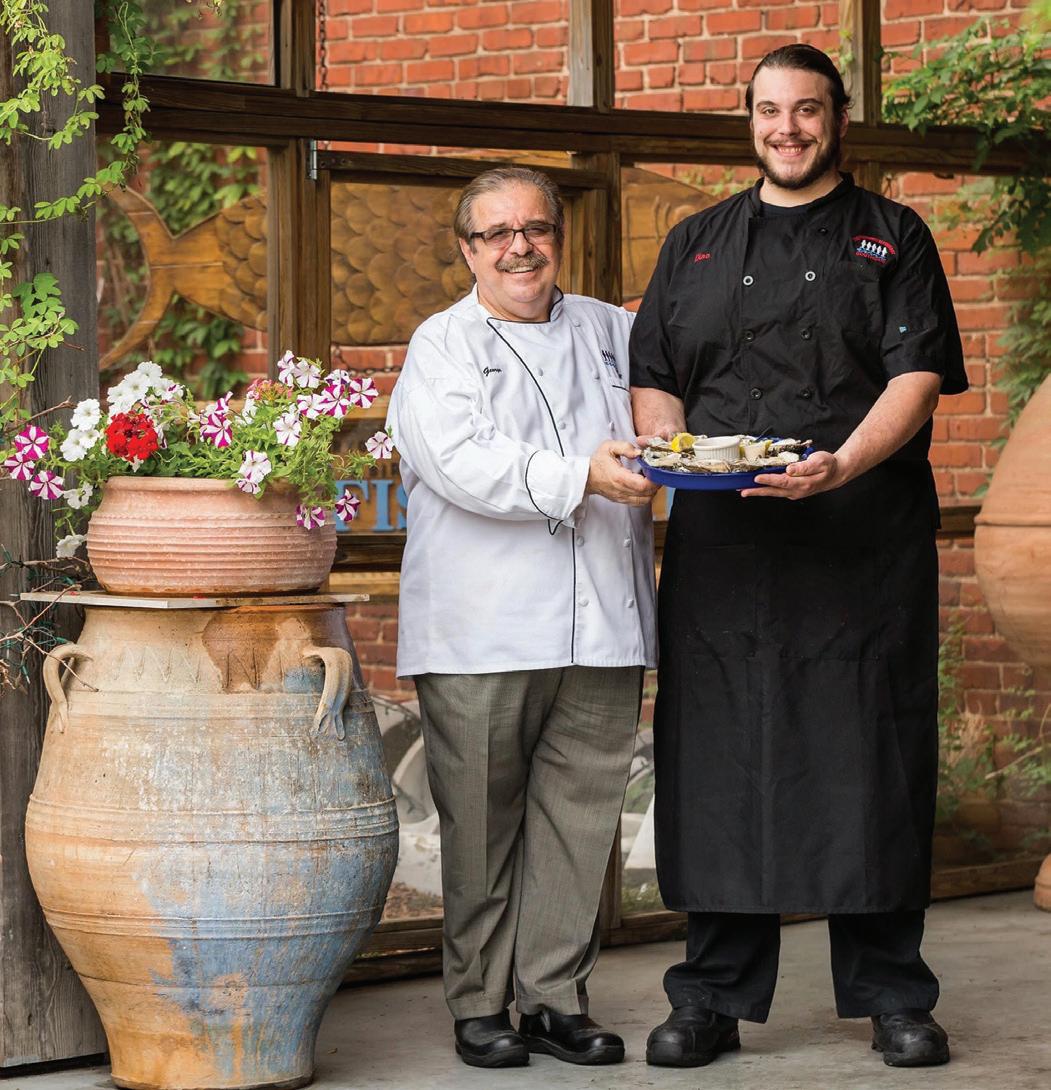


April 2024 • Southern Jewish Life 35 Kosher-Style Menu Items • Order At Table option Open Mon-Thu 11-8:30, Fri-Sat 11-9 Seafood Market Open Mon-Sat 9-6 612 22nd Street South, Birmingham 205.322.3330 thefishmarket.net Let Us Cater Your Simcha! Bar/Bat Mitzvahs, Weddings, Birthdays, Corporate Events, Fundraisers, Reunions, Holiday Parties We Can Cater Kosher In Your Kitchen Olive Jars • Turkish Pillows • Ceramics • Handmade Terra Cotta Urns and Pots GEORGE SARRIS’ THE FISH MARKET SOUTHSIDE
Southern Jewish Simchas
Ritz-Carlton New Orleans unveils Maison Orleans
With the opening of its exclusive Maison Orleans Club, the Ritz-Carlton, New Orleans has completed a multiphase enhancement of the historic property.
Often referred to as a hotel within a hotel, the Maison Orleans combines intimacy, comfort and exclusivity with The Ritz-Carlton, New Orleans’ legendary personalized service, providing an unparalleled stay within the destination.
With Joanna Kerr Design at the helm, classical interior architecture is enhanced by contemporary accents including an eclectic mix of
furniture, art and accessories throughout the accommodations and Club Lounge. Honoring the layered heritage and expressive artistry of New Orleans, cultural insights help shape the design story found throughout each renovated space.
The fresh interiors weave playful and whimsical elements, much like the French Quarter that awaits outside the Maison Orleans guest windows. Alongside an elevated design, guests can expect the hotel’s signature Club Lounge amenities including dedicated concierge and culinary offerings throughout the day to be an integral part of the Maison Orleans experience.

A standout element of the transformation is The Ritz-Carlton Suite, as this premier accommodation emerges as an enclave that harmoniously celebrates contemporary luxury while embracing a timeless classical aesthetic and charm found within the historic Garden District.
Nestled at the top of the hotel, the suite features an expansive great room adorned with plush seating and bil-


liards for entertaining, and a decadent dining space to gather, with furnishings designed to capture the essence of multi-generational furniture and art collections that have graced the neighborhood’s grand estates for generations. This is evident in the intricate details thoughtfully woven throughout the space. Step outside to a private terrace that unveils sweeping vistas of the enchanting French Quarter and the majestic Mississippi River.
The Maison Orleans and Ritz-Carlton Suite join the recent debut of the Residence Suite and luxury spa renewal. The Residence boasts over 6,500 square feet of indoor and outdoor space high above the French Quarter. Available as an elegant suite for overnight stays, or as a venue for private events of up to 100 people, The Residence made its debut in late 2021.

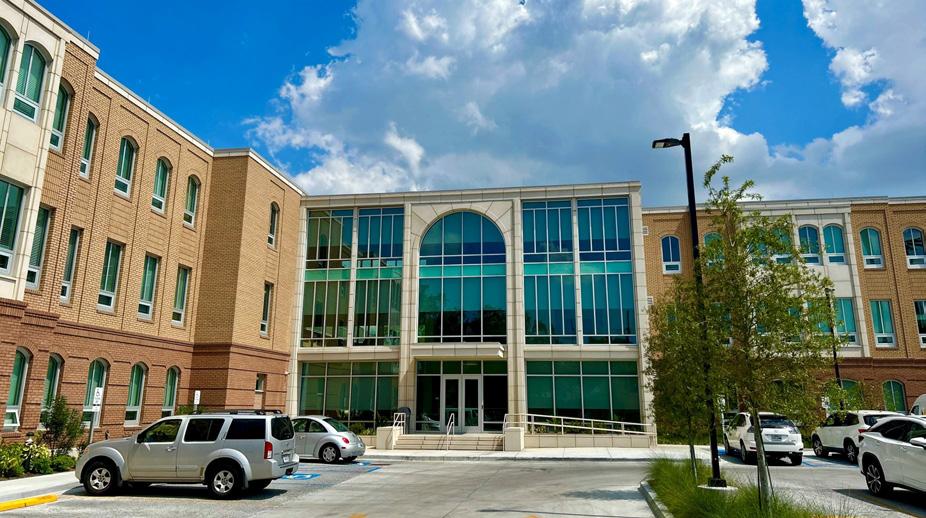

36 April 2024 • Southern Jewish Life Visit PoydrasHome.com or call 504-897-0535 to learn more. Experience Poydras Home Reimagined Move Into New Construction

Southern Jewish Dining
Righteous Road in good spirits for Passover
By Lee J. Green
Putting his Judaism into his product creations has led to high spirits for St. Louis entrepreneur David Hermelin.
He founded Righteous Road in 2018, and his kosher craft spirits company now ships to over 40 states, while also being in stores across Missouri, New York, New Jersey, California, Florida, Illinois and Maryland.
“In 2014, the craft bourbon market really started to soar,” said Hermelin. “I thought about the creativity in craft bourbons and how that might translate into creating unique spirit brands that partnered with Jewish themes.”
“The kosher market (for craft liquors) was also underserved,” he said. “It seemed that there was an opportunity to do something innovative and but also spiritually meaningful. ”
Hermelin concocted the idea of branding his first product Righteous Seven. This premium liqueur is a blend made from all seven fruits and grains (the seven species) that praise the Land of Israel in the book of Deuteronomy as “a land of wheat, barley, grapes, figs, pomegranates, olives, and dates (honey).” Since its launch, Righteous Seven has won multiple Double Gold Medals.
As part of his previous career in the pharmaceuticals industry, one of Hermelin’s jobs was to research and come up with new product ideas that had some kind of competitive advantage.
“If I was going to try and compete in the craft spirits market, I knew I needed to develop concepts that weren’t already being done,” he said. After coming up with the idea for his company, Righteous Road Craft Spirits, he began collaborating with a distiller in Kansas City to research and develop Righteous Seven.
Once the product was refined with the right combination of the seven species and ready to launch, he found a distiller in the St. Louis area to manufacture and bottle the product.
“Winning the Double Gold Medals at some of the national craft liquor competitions really inspired confidence that we had something to really build off of,” said Hermelin.
Righteous Road now manufactures five different kosher craft liquors. In 2021, the company launched The Fifth Cup Liqueur. It contains no wheat or grains, and is kosher for Passover.
“It has dates, figs, apricots, almonds and pistachios,” he said. “Historically there was a custom of drinking a fifth cup on Passover night after the four cups of wine. I thought it was a fitting and unique name for a brand that could be enjoyed on Passover.”
Hermelin grew up Conservative and has “grown in his level of observance” as an adult. He lived in Israel for a few years in the 1990s, studied at a Yeshiva, and has a couple of brothers who currently live in Israel with their families.
“I came up with the name Righteous Road because to me, the road of
continued on page 39
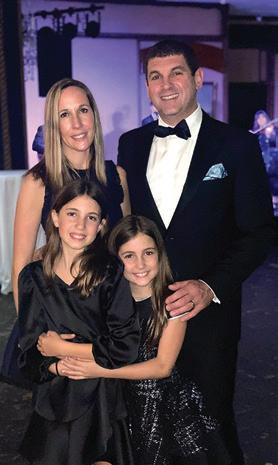

Weiss Realtor and Assistant Manager (205) 876-3052 cell

2850 Cahaba Road, Suite 200 Mountain Brook AL, 35223 lahsothebysrealty.com
Critical (acclaim)
“He periodically spells my name right.”
– Moses
“Yes, we gave him a graduate degree. We’re looking into it.”
– chancellor, Jewish Theological Seminary
“Half of the things he says I said, I never said. Including this.”
– his mother
“He knows more about Judaica than most, and you won’t find any of it in this book.”
– his fourth-grade teacher
“His translation skills are second to none, and it’s a very close second.”
– his Hebrew professor
“I’ll deal with him.”

– The Almighty Big G


April 2024 • Southern Jewish Life 37
Available Through www.rearpewmirror.com Or Order on Amazon Findthis withthe afikomen! From the back page of this magazine to under your drink on the coffee table Whether it is selling your current home or finding a new one, let me help you make the right decision.
Hillary
hillaryw@lahsothebysrealty.com
New Orleans
Southern Jewish Dining

Rosie’s on the Roof
1000 Magazine St., New Orleans (504) 528-1941
This stunning Higgins Hotel rooftop bar and lounge with sweeping views of the New Orleans skyline is the perfect place to start — and finish — your night in New Orleans. Serving small plates, sandwiches and specialty cocktails.
English Tea Room
734 E. Rutland Street Historic Downtown Covington (985) 898-3988
The Windsor High Tea is comprised of sandwiches, mini-savories, mini desserts, two chocolate dipped strawberries, two scones with house-made clotted cream, lemon curd or preserves.
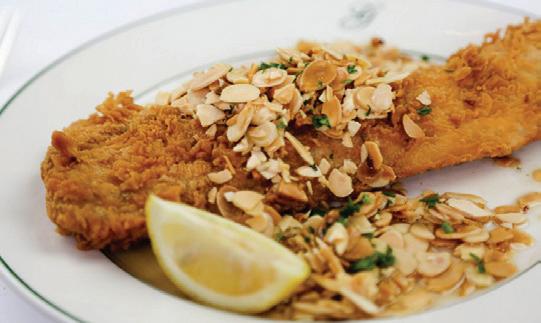
Galatoire’s
209 Bourbon Street (504) 525-2021
The grand dame of New Orleans’ time-honored restaurants, Galatoire’s is a 119-year-old, James Beard award winning restaurant located in the heart of the French Quarter.

Galatoire’s 33 Bar and Steak
215 Bourbon St. (504) 335-3932
The premier destination in the Vieux Carré for enjoying the finest cocktails and traditional steakhouse fare. Galatoire’s “33” Bar & Steak is New Orleans’ next great tradition in a restored historic building that begins a new chapter in Galatoire’s storied history.
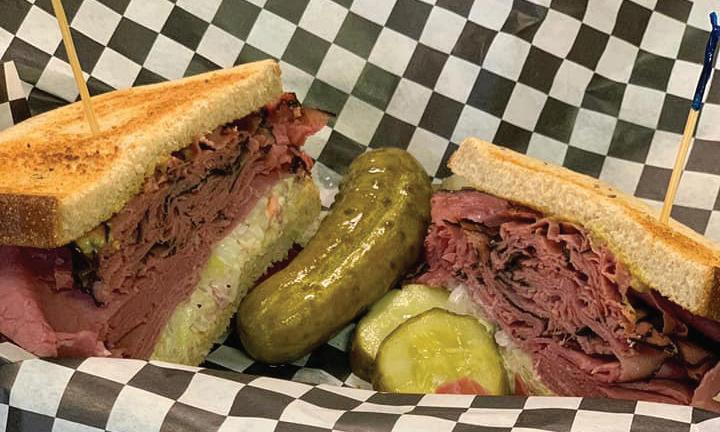
Kosher Cajun
3519 Severn Avenue, Metairie (504) 888-2010
Kosher Cajun New York Deli & Grocery has authentic New York specialties — all Kosher certified. Enjoy classic eats like Reubens and matzah ball soup, plus kosher grocery staples too.
M Bistro
921 Canal Street, New Orleans inside the Ritz-Carlton
M bistro’s menu is an indigenous approach to the preparation of the finest meats, seafood and produce from growers in Louisiana, Texas, Mississippi and Alabama.
38 April 2024 • Southern Jewish Life
Southern Jewish Dining New Orleans


Apolline
4729 Magazine Street, Uptown New Orleans (504) 894-8881
Apolline features contemporary French cuisine with Creole influences and locally-grown ingredients. Confit Duck Bowl: Potato hash, peppers, poached eggs, cracklin and hollandaise

Cafe Normandie
1000 Magazine St., New Orleans (504) 528-1941
The Higgins Hotel’s full-service restaurant, Cafe Normandie offers an elevated dining experience showcasing French-influenced cuisine. Open for breakfast and lunch, and Sunday brunch.

Lebanon’s Cafe
1500 S. Carrollton Ave., New Orleans (504) 862-6200
A New Orleans favorite for over 22 years, Lebanon’s Cafe offers authentic Middle Eastern dishes in traditional and fusion varieties, bringing people together through food. Now also open on Tuesdays.
Commander’s Palace
1403 Washington Avenue New Orleans (504) 899-8221
A New Orleans landmark since 1893, Commander’s Palace is one of the most-awarded restaurants in the nation, serving Haute Creole cuisine with whimsical Louisiana charm in a welcoming atmosphere.

Bywater Brew Pub
766-8118
A full-scale brewery, bar and restaurant serving Cajun/upscale Gastropub food. Locally owned and operated by Nahum Laventhal, the space also features art from local artists.
>> Righteous
continued from page 37
life should be traveled righteously. A person that aspires towards a meaningful path guided by the Creator,” he said. “It’s about bringing goodness to the world while also defending the principles of moral virtue in the face of challenge and depravity.”
Hermelin said that while Righteous Road is a Jewish-owned company that makes kosher products, he has seen increased business from outside of the Jewish community.
“The market in the Jewish world is a perfect fit, but you don’t have to be Jewish to enjoy Righteous Road,” he said. “America is founded on Judeo-Christian principles and our products resonate with that historical connection as well as the love for the land and country of Israel… and really, it’s also about having products that taste good!”
Hermelin said he is continually thinking of new products, including the development of a Righteous Road bourbon whiskey and other special release bourbons that are finished in Righteous Road liqueur barrels.
“We’re building off of our core and trying to come up with ideas that fit with our brand, but also lead us into some new directions,” he said.
April 2024 • Southern Jewish Life 39
3000
Street New Orleans
Royal
(504)
Birmingham
Southern Jewish Dining


Umami The Fish Market
2808 7th Avenue South Birmingham (205) 201-4337
A wide variety of Sushi and unique Asian-inspired cuisine, with cold bites, hot bites, Asian-influenced tacos, using carefully selected ingredients intended to create a meticulously crafted flavor.

Rojo
2921 Highland Avenue South, Birmingham (205) 328-4733
A nice place for nice people since 2002, Rojo is a casual restaurant in the heart of Highland Park, featuring Latin and American cuisine, with a large patio overlooking Rushton Park.

121 20th Street North, Birmingham (205) 518-0035
Now open in downtown Birmingham at the former New York Style Deli spot, AHKI brings Mediterranean influenced New York street food to the area, with customizable rice bowls, salads and gyros.
612 22nd Street So., Birmingham (205) 322-3330
A Birmingham classic, The Fish Market on Southside offers the freshest seafood around, live music and an oyster bar. Private and semi-private dining available, along with catering.

Rele Street, Mountain Brook (205) 238-5360
Global flavors that are fast and casual: Maro’s Asian fusion by Chef Abhi features appetizing salads, hot and fresh bowls, all crafted with a dedication to using the finest, locally-sourced ingredients.

939-3805
Taj India, Birmingham’s original Tandoori Grill and Curry House, celebrates its 26th anniversary with a new location, serving authentic Indian dishes with a daily lunch buffet and extensive dinner menu.
40 April 2024 • Southern Jewish Life
Maro 361
AHKI Taj India 3028 Clairmont Ave., Birmingham (205)
Southern Jewish Dining Birmingham

Abhi
2721 Cahaba Road, Birmingham Mountain Brook Village (205) 783-1123
Abhi serves the food Chef Abhi grew up with in Kathmandu, including his famous Momos, sushi rolls, salads, skewers, and innovative dishes with influences from Japan, the Philippines, Thailand and more.

Taco Mama
Nine Birmingham locations, and Tuscaloosa tacomamaonline.com
Echoing the cool, hole-in-the-wall taco shops in California, Texas and Florida, Taco Mama offers great tasting, fresh food and an extensive margarita menu in a fun, funky and creative atmosphere.

Alloy Thai
Birmingham alloythai.com (205) 243-5660
Chef Josh Haynes studied in Thailand and brought back authentic flavors and specialties, with traditional family style servings. He caters events and private dinners, and does occasional popups.




When It Comes To Your Health Experience Matters
Call us for an appointment if you’re having having trouble hearing. ENT Associates of Alabama, P.C. is the largest ear, nose and throat practice in Alabama with 9 locations, 15 physicians, and over 600 years of combined staff and physician experience.
Our practice includes general ear, nose, and throat, head and neck diseases and surgeries, cosmetic surgery, robotic procedures, in-office balloon sinuplasty, allergy treatment, and hearing solutions. We concentrate our training and experience in these areas to provide the best possible medical care for our patients.

April 2024 • Southern Jewish Life 41
Huh... What Was That... Would You Say It Again, Please... Birmingham - Princeton - Hoover - Cullman - Gardendale Alabaster - Jasper - Pell City - Trussville www.entalabama.com or call toll free 888-368-5020 It Could Be Time To Check Your Hearing
Now Open in our New Location

3028 Clairmont Avenue (205) 939-3805
Lunch Buffet
Seven Days a Week
New Fall Menu
Coming Soon

Private Room Available for Your Simchas Seats Up to 60
Alabama’s Original Indian Restaurant

Southern Jewish Dining
Jewish artist takes the cake… to the people
By Lee J. Green
Birmingham’s Cliff Simon has made cakes for celebrities including Madonna, Ella Fitzgerald, the Rockettes, Sting and Alabama’s own Lionel Richie.
And every day he has been in town since late December, one lucky visitor to Simon’s house (that he shares with his husband, Julian Hazlett) can “take the cake.”
In the summer of 2022, the cakemaker retired from his day job of 20 years as a scenic design professor at UAB. He had been spending his retirement traveling, making some cakes for clients and doing art when Julian found an article that piqued his interest.


“It was about a woman in Texas who baked sourdough for her family during the pandemic. She would make extra loaves and post on social media that she was putting them outside her door for anyone to take,” said Simon.
“Ever since I retired, I was looking for something to do that I love and that is of value. This fulfills me creatively and allows me to connect with more people out there,” he said. “It’s a double mitzvah because it brings me so much joy to bring joy to others.”
Open 11a.m.-2 p.m. and 5-9 p.m. Mon-Sun tajindia.net
WALLACE BURKE

1811 29th Ave
205-874-1044 wallaceburke.com
Simon makes a cake or sweet treat every day — some inspired by his family recipes, some he is trying for the first time and others he has seen in cookbooks. In his daily Facebook post, he often gives a story behind the creation, some history and announces that it’s outside for the taking.
Shortly after coming to Birmingham from Santa Fe, he self-published a book about the memorable cakes he made, entitled “They Ate My Cake.” Southern Jewish Life, in its previous incarnation as Deep South Jewish Voice, was the first to do an article on the book.
“For a few years, I’d make a lot of the cakes for artists coming into Radio City Music Hall,” said Simon, who was working during the day as a graphic artist for what was then called United Jewish Appeal. “It was really exciting, especially when they let me be really creative.”
He grew up in New York City with a mom who loved to cook and loved Broadway. “My mom started taking me to Broadway shows when I was 10 years old. I think I knew from a young age I wanted to be involved in theatre, art and making cakes,” said Simon.
After graduating from the High School of Performing Arts in New York, he would go to the Parsons School of Design after a stop in SUNY Buffalo.
“I was cast in some shows and I would also work on a lot of sets,” he said. “I really admired design and when I first saw ‘Fiddler on the Roof,’ it really connected with me not just because of the story but with the art of the beautifully designed scenery.”
Cliff met Julian, who is an artist, while on a trip to San Francisco more than 38 years ago. “We’re so compatible. For a while we had a ‘coast to coast’ relationship and I told him I would move out there if he found a house with a ‘Julia Child kitchen’,” he said.
They would move back to New York before settling in Santa Fe. When he was offered the job at UAB, he had never been to Birmingham before, but it seemed to fit well with him.
“Everyone here is so nice,” he said. “I feel comfortable here and I need to feel comfortable to be able to create. And there’s something to be said about Southern hospitality,” he said.
Simon said he plans to continue making and giving away treats to share that Southern hospitality. “I’ve got a really good Jewish cookbook and I’ve started making challah regularly. I’d also like to challenge myself to make rugelah, hamantaschen, Black and White cookies to share,” he said. “Doing this has gotten me excited about trying new things.”
42 April 2024 • Southern Jewish Life
• Local
• Furniture Restoration
Fine Jewelry
Art
South Homewood,
AL 35209
a monthly feature from Collat
Jewish Family Services
People Need People
By Pam Leonard
Socializing with others makes most of us feel better about ourselves and about the world. For people affected by dementia, social interaction has a proven additional benefit: improved communication and cognitive function.
This is certainly the case at CARES, CJFS’ respite program for people affected by memory and movement disorders such as dementia and Parkinson’s. CARES, which stands for Caring for Adults through Respite, Enrichment and Socialization, provides a friendly environment where casual conversation, laughter and camaraderie are the norm. Every day, we witness the way that social activities stimulate clearer thinking and more effective communication among our participants. In fact, I have noticed that for many of our clients, socialization seems to be more beneficial than the trivia and other adapted games we play.

Our participants’ caregivers tell us that, at home, they often struggle to engage their loved ones in conversation and other activities. They wonder why their loved ones seem more eager to join in conversations or activities at CARES than at home.
One reason is that, in a group setting, people with dementia or Parkinson’s feel empowered to choose whether and how they want to participate. A one-on-one conversation can provoke anxiety in someone who isn’t sure they’ll be able to effectively communicate; conversely, in a group conversation, listening quietly is always an option. This freedom of choice often helps participants relax enough that they ultimately decide to join the conversation, game or other activity.
The issue of choice is important, because the loss of choice and autonomy often goes hand in hand with a loss of cognitive function. At CARES, participants have a few hours during which they get to decide how much, and how, they want to interact with others.
In addition, humor and laughter are a constant at CARES. The way laughter stimulates our brain is different than the way it is stimulated by recalling and reminiscing. As others share creative ideas, we are encouraged to be more creative and expressive ourselves.
People with dementia often have difficulty communicating — and communicating can be easier in a social setting. At CARES, laughter, hand motions, singing and other non-verbal forms of communication often take the place of speech. Without words, participants are able to connect with others and feel included. The energy of a group setting, on its own, can trigger our brains to be more alert and active; as a result, we want to participate.
In a social setting, those with dementia are able to be accepting of others and be accepted. This opportunity helps restore the self-respect and self-esteem that can be lost when we lose our cognitive abilities.
Finally, socialization can give dementia patients a much-needed opportunity to help others. At CARES, participants help each other and cheer each other on throughout the day, whether we are singing, creating artwork, or playing games. When they help others, our participants realize they are still needed and still have something to offer socially. When we lose our ability to think clearly, we do not lose out desire to be productive, to have purpose, and to be accepted.
Pam Leonard, LBSW, CDP, is program director of the CJFS CARES Respite Program, which provides four hours per day of cognitive, social and physical engagement for those affected by dementia and related disorders. Pam is also a facilitator of CJFS’ monthly caregiver support group. To learn more about CARES and caregiver support, contact pam@cjfsbham.org or 205.960.3411.


April 2024 • Southern Jewish Life 43
counselor’s corner

Caryn Corenblum
LICSW
Professional Certified Coach Somatic Experiencing PractitionerTM
WHO CAN BENEFIT?
Executives, Emerging Leaders, Parents, Retirees and other Curious Individuals
WHAT CAN WE ACCOMPLISH?
• Increase your emotional and social intelligence
• Find your current purpose and take action towards attaining it
• Strengthen, restore and understand your boundaries
• Improve your decision making
• Improve your emotional regulation and emotional courage
205.936.9675
caryn@coachcaryn.com www.coachcaryn.com

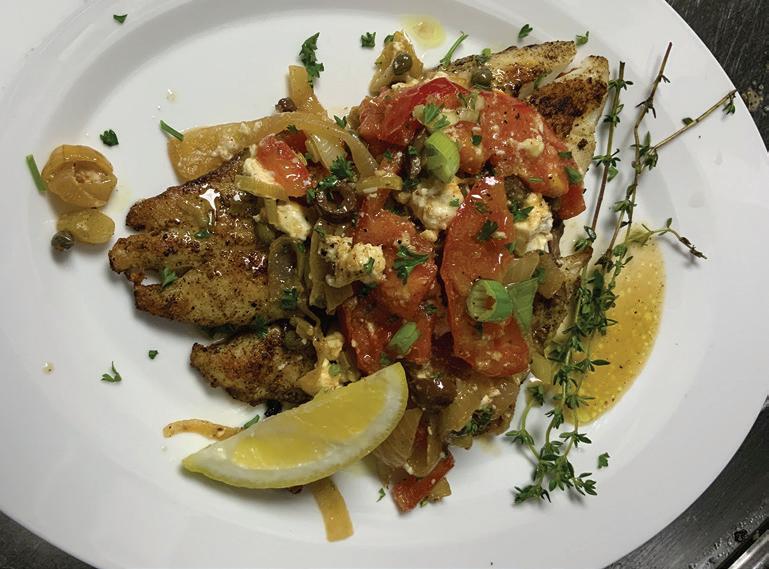
Fish Market
Athenian Snapper
Ingredients:
1 8-oz. filet of fresh Red Snapper
1 tbsp Greek seasoning
1/2 cup Extra Virgin Olive Oil
1 tomato, sliced or chopped
2 green onions, chopped
1/2 white onion, sliced thinly
1/2 cup crumbled feta cheese
1/2 cup kalamata olives, sliced
Instructions:
The fish can be cooked on a grill at home, or in a skillet, or even in the oven. The trick is to cook both sides evenly (three minutes per side) starting with the skin-side down.
To check if the fish is done, the meat should

The Fish Market
By Lee J. Green
Sanders Painting
Residential Repaint Specialist
• Interior/Exterior Painting
• Wood, Plaster, & Sheet Rock Repair
Family Owned and Operated 205/563-9037

For 42 years, The Fish Market has hooked in many loyal customers through focusing on high-quality, fresh Greek/Mediterranean food, family and a unique atmosphere.
George Sarris started The Fish Market in 1982, and in 2007 they moved across the block into their current location. “We’ve been grateful for the Jewish community and the Birmingham community being so supportive of us for so many years running,” said George’s son, Dino.
In addition to the restaurant, The Fish Market has a seafood market that sells uncut and unscaled fish for kosher home preparation.
Dino Sarris said they have hosted and catered many kosher and kosher-style celebrations over the years. At the restaurant, they have rooms that can accommodate a small group or up to
be paper-white all the way through to the center. Cook your fish in olive oil separate from the other ingredients, applying Greek seasoning before flipping over.
In a skillet, add olive oil and cook white onions and tomatoes until slightly soft. Add in olives and green onion for another minute and remove from heat.
Once taken off the heat, add crumbled feta cheese to the mixture and then serve on top of your grilled fish. This goes great over a bed of rice, or with a vegetable of your choosing. Garnish with a sprig of fresh thyme and enjoy!
100 people.
The Fish Market continues to build upon what has made it a Birmingham institution. They continue to add new items to the menu, including a traditional spinach pie and the VIP Snapper. Last year they also implemented a new lunch menu with 15 entrees priced at $13.95.
“We will always continue to offer our customers quality and value,” said Sarris.
Before or after customers dine at The Fish Market, they can shop for treasures. The restaurant imports pottery, art, copper urns, dishes, packaged foods, spices and gifts from the Mediterranean.
“It’s more than just getting a great meal,” he said. “We want coming in to be a cultural experience and to share with people the beauty that comes from (Greece/the Mediterranean).”
44 April 2024 • Southern Jewish Life
J.D.,
ICF
EXECUTIVE COACHING • LIFE COACHING LEADERSHIP COACHING
Involved Members of Birmingham’s Jewish Community
Southside 612 22nd St. So. Birmingham thefishmarket.net (205) 322.3330
>> Rear Pew Mirror
continued from page 46
lated to skin diseases, and then many more rules about human interaction and a lot of ways to refrain from it.
Toward the end of the book, Leviticus includes one of the Torah’s greatest hits, “an eye for an eye, a tooth for a tooth.” This is often misinterpreted as justification for ruthless revenge, but context matters. When this was written, it wasn’t unusual that people would over-compensate in reaction to injury. Given that context, there’s an implied “only” which at the time would’ve simply been understood in its at-the-time progressive approach.
To put it another way, look no further than the Twentieth-Century Jewish authority from Babylon (New York), Rodney Dangerfield, who famously said in the classic 1986 film “Back to School,” “they’re not so tough. The football team at my high school, they were tough. After they sacked the quarterback, they went after his family.”
Doug Brook says if you must cuss, try Leviticus. To acquire the new FIVE-star rated book “Rear Pew Mirror: Reflections From the Back of the Sanctuary,” read past columns, or listen to the FIVE-star rated Rear Pew Mirror podcast, visit http://rearpewmirror.com/
continued from page 3
>> Opinion community
for Israel’s elimination. And those who claim “from the river to the sea, Palestine will be free” is a wish for peaceful coexistence aren’t listening to Palestinian leaders, or their fellow demonstrators. Those same people would never accept an explanation of the Confederate Battle flag as “heritage not hate,” yet they expect us to believe their whitewash.
There’s never talk of peace or real coexistence at those demonstrations.
A pro-Palestinian position would have been to let Israel go into Rafah weeks ago and finish the job of rooting out the Hamas forces that promised repeats of Oct. 7. Had that happened, we’d be well into the rebuilding phase for Gazans, and the Hamas reign of terror and outright theft would be over.
That would be a massive improvement in the lives of Palestinians.
But no, being “pro-Palestinian” means allowing Hamas to survive, continuing its oppression and abuse of its own cannon-fodder — oops, we mean citizens — and regrouping so they can attack Israel again, and drag Gazans into yet another round or four of war.
That’s what the “pro-Palestinians” call for.
They are portrayed as peaceful while calling for a global intifada — a global wave of terrorism — and chant “Death to America.”
They call for “ceasefire now” yet cheer when Iran tries to lob missiles, and they justify Hamas’ actions on Oct. 7 — even the use of rape — as “resistance.”
These people are simply anti-Israel. Many are anti-West. They are pro-Hamas.
They are nowhere near being pro-Palestinian in any genuine sense of the term, just in how far the Palestinians can be used and abused in going after Israel. Otherwise, they would have spoken up against the shocking abuse of Palestinians in places like Lebanon and Syria, far worse than anything Israel could dream of.
Referring to these demonstrations as “pro-Palestinian” is absolutely misleading. They’re anti-Israel, end of story.
 Lawrence Brook, Publisher/Editor
WALLACE BURKE


Fine
wallaceburke.com



April 2024 • Southern Jewish Life 45
Jewelry • Local Art • Furniture Restoration 1811 29th Ave South Homewood, AL 35209 205-874-1044
Now Online… from the team at Southern Jewish Life Announcing the new magazine for Israel’s Christian friends… To view our Debut Issue, scan this QR code, or go to issuu.com/ israelinsight


Support group for spouses/partners of women battling Ovarian & other GYN cancers.
3rd Tuesday of each month at 5:30 PM Homewood Public Library 1721 Oxmoor Rd., Homewood, AL 35209
ashley@nlovca.org 205-999-8021 cureovariancancer.org


Torah’s Funniest Moments: Leviticus
Weeks before Jewish palates are strained by the alleviation of leavening, mental palates are similarly strained by the annual Torah cycle reaching Leviticus.
This third book of the Torah is best known for being unknown to most people. Rules. Levites, one assumes. And lots of sand, as if there’s much mention of the Israelites still being in the desert. Story? We don’t need no stinkin’ story.
Thus, it’s time to explore – not merely what happens in Leviticus – but the funniest things in this book that, on the surface, seems drier than a dry martini.
The first several chapters, and several more after them, describe various sacrifices that Israelites were to bring to the Levites to offer up to the Almighty Big G. Of course, the closest to burnt offerings in modern times are tailgating barbecues before the Iron Bowl.
Services and scripture related to sacrifices are relevant today not for the literal altarnative act, rather for the intent behind the sacrifices. They matter today for the timeless reasons why anyone would sacrifice, such as: reparations, thanksgiving, well-being, atonement, or a man on second and nobody out in a tied or one-run game.
Leviticus describes the ingredients and recipe for each sacrifice in such detail as would daunt any bachelor. The description of every animal sacrifice, entrails and all, ends with the aesthetically incongruous, “an offering by fire, of pleasing odor to the Almighty Big G.”
Story? We
Apparently, the ABG enjoys Passover year-round, because at all times “no meal offering shall be made with leaven.” The recently discovered tractate Bava Gump extends this to not preparing meals with anyone named Levin.
don’t need no stinkin’ story
For various animal offerings, the Levites are instructed to “sprinkle blood against all sides of the altar,” presumably because there’ll be a mess anyway so it might as well be by design.
If a priest unwittingly incurs guilt, his sacrifice includes “bringing the bull to the entrance of the tabernacle,” which is good training for what they’d need to bring if they enter politics later in life.
If one must bring an offering for having sinned and they are too poor to bring a goat, they can instead bring two turtledoves. Or two pigeons, but not a partridge nor a pear tree.
After the many chapters instructing how to offer sacrifices, Moses has a formal public installation ceremony where Aaron is consecrated as the high priest. In recognition of this, the Israelites offered a special sacrifice, just as outgoing presidents are similarly roasted at contemporary synagogue board installations.
When that sacrifice was ready, “fire came from before the Almighty Big G and consumed the offering” and everyone saw it, cried out, and fell to the ground. Despite that demonstration of divine disintegration, two of Aaron’s sons decided to spontaneously burn an unrequested offering. The Almighty flame combusted them both. Aaron and his other two sons were cautioned not to mourn them, because there’s more where that came from.
Next comes a long list of rules for the Health Department about what’s allowed in a kosher restaurant, followed by similarly appealing rules re-

46 April 2024 • Southern Jewish Life rear pew mirror • doug brook
continued on previous page connection CAREGIVER