innews the work place
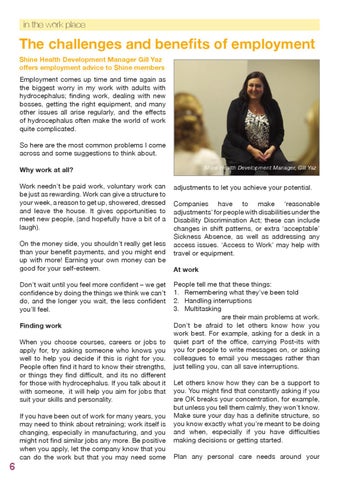
The challenges and benefits of employment Shine Health Development Manager Gill Yaz offers employment advice to Shine members Employment comes up time and time again as the biggest worry in my work with adults with hydrocephalus; finding work, dealing with new bosses, getting the right equipment, and many other issues all arise regularly, and the effects of hydrocephalus often make the world of work quite complicated. So here are the most common problems I come across and some suggestions to think about. Shine Health Development Manager, Gill Yaz
Why work at all? Work needn’t be paid work, voluntary work can be just as rewarding. Work can give a structure to your week, a reason to get up, showered, dressed and leave the house. It gives opportunities to meet new people, (and hopefully have a bit of a laugh). On the money side, you shouldn’t really get less than your benefit payments, and you might end up with more! Earning your own money can be good for your self-esteem. Don’t wait until you feel more confident – we get confidence by doing the things we think we can’t do, and the longer you wait, the less confident you’ll feel. Finding work When you choose courses, careers or jobs to apply for, try asking someone who knows you well to help you decide if this is right for you. People often find it hard to know their strengths, or things they find difficult, and its no different for those with hydrocephalus. If you talk about it with someone, it will help you aim for jobs that suit your skills and personality.
6
If you have been out of work for many years, you may need to think about retraining; work itself is changing, especially in manufacturing, and you might not find similar jobs any more. Be positive when you apply, let the company know that you can do the work but that you may need some
adjustments to let you achieve your potential. Companies have to make ‘reasonable adjustments’ for people with disabilities under the Disability Discrimination Act; these can include changes in shift patterns, or extra ‘acceptable’ Sickness Absence, as well as addressing any access issues. ‘Access to Work’ may help with travel or equipment. At work People tell me that these things: 1. Remembering what they’ve been told 2. Handling interruptions 3. Multitasking are their main problems at work. Don’t be afraid to let others know how you work best. For example, asking for a desk in a quiet part of the office, carrying Post-its with you for people to write messages on, or asking colleagues to email you messages rather than just telling you, can all save interruptions. Let others know how they can be a support to you. You might find that constantly asking if you are OK breaks your concentration, for example, but unless you tell them calmly, they won’t know. Make sure your day has a definite structure, so you know exactly what you’re meant to be doing and when, especially if you have difficulties making decisions or getting started. Plan any personal care needs around your