Liturgical Design and Sacred Art
Paige Stransky ’01 [COVER STORY]
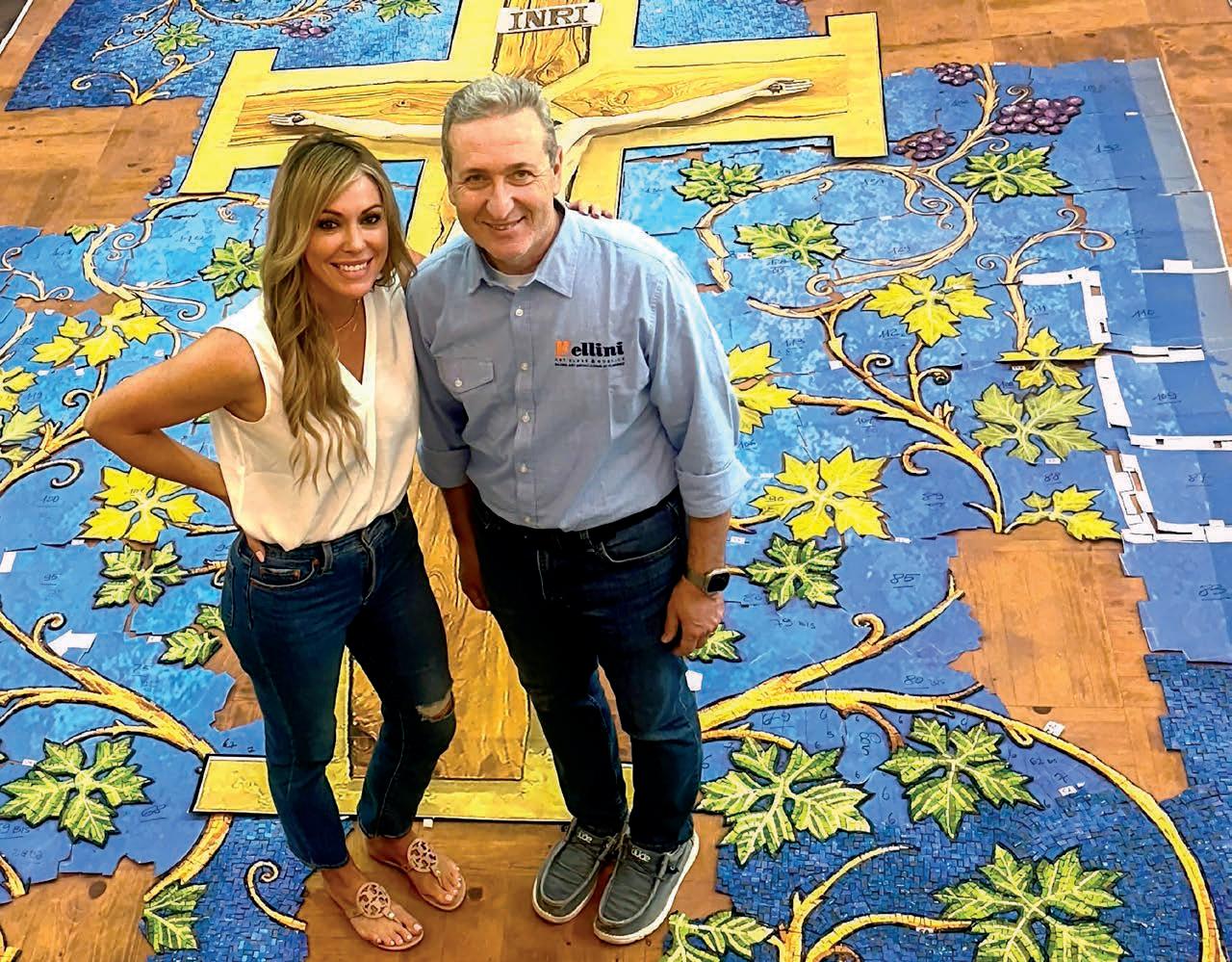
Lofty Dreams Ascend Flynn Cross ’93 and SOUL Aerial
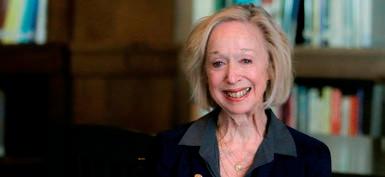
A Higher Calling for Case Management Melinda Hayes ’75
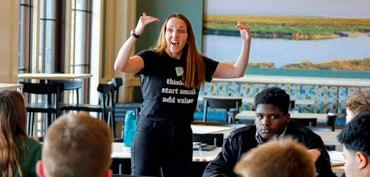
Think Big, Start Small, Add Value Kelly Geary ’93
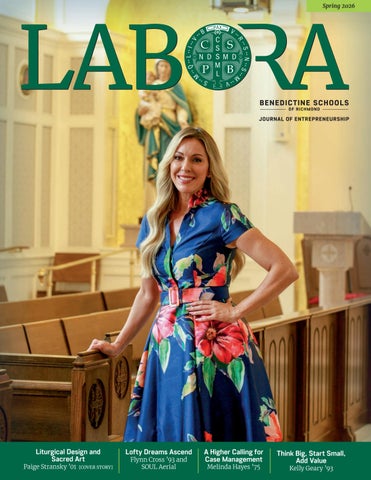
Inside the leadership of three businesses founded by Saint Gertrude alumnae, and the powerful impacts they will leave behind.
THE LABORA MAGAZINE
LABORA is a publication of the Benedictine Schools of Richmond, focusing on entrepreneurship, innovation and the evolving world of business.
BENEDICTINE SCHOOLS OF RICHMOND
PRESIDENT Jesse Grapes
VICE-PRESIDENT OF MISSION
Del Smith ’01
VICE-PRESIDENT OF OPERATIONS
Ann Michele Sweeney
DIRECTOR OF COMMUNICATIONS
AJ Parson
BENEDICTINE HEAD OF SCHOOL
Greg Lilly
SAINT GERTRUDE HEAD OF SCHOOL
Amy Roussy Pickral ’95
LABORA
CONTRIBUTING WRITERS
Andy Garrigue, Kelly Geary
CONTRIBUTING PHOTOGRAPHERS
AJ Parson, Andy Garrigue, Wendell Powell Studios, Dave Pearson, Ben Jones
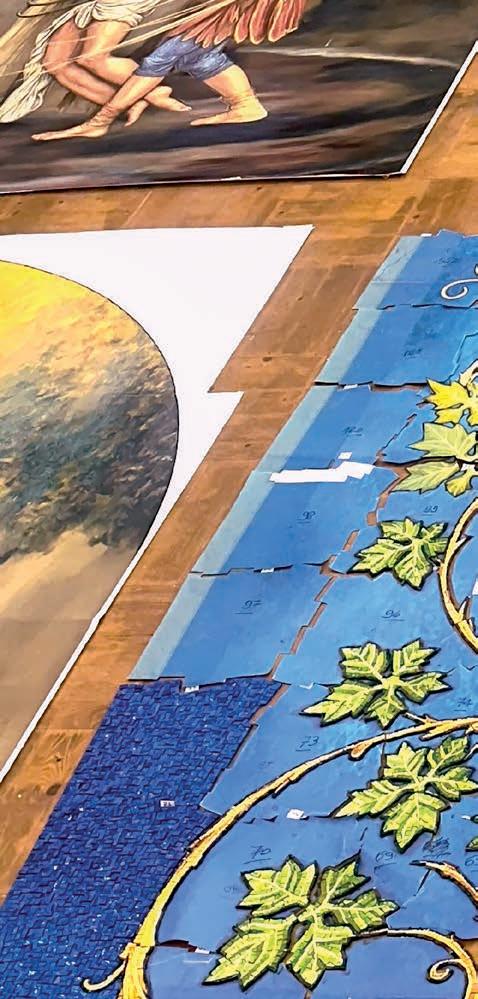
FEATURE | 4
Under the leadership of Paige Stransky ’01, New Jerusalem Design helps communities across the nation strengthen and deepen their faith, inspiring generations of devotion.
FEATURE | 16
Up in the Air and Down the Rabbithole: SOUL Aerial, founded by Flynn Cross ’93, offers unforgettable learning experiences, spectacular performances, and joy that may live forever.
FEATURE | 28
Seeing her employer going in another direction, Melinda Hayes ’75 started her own company and went her own way. She lifted her entire industry, and had suitors aplenty, looking to buy the company she created.
. AROUND CAMPUS | 38 Your Legacy, Their Future Legacy giving strengthens our mission and inspires future generations of Cadets and Gators.
. STUDENT ENTREPRENEUR | 40
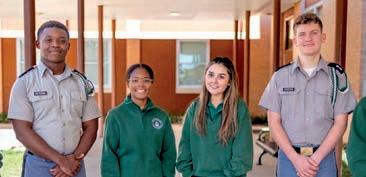
Griffin Lang ’27 started a woodworking business in the spring of his freshman year. Three years later he has tripled his production, and learned valuable lessons through the BSoR Entrepreneurship Program.

. EDUCATION | 44
Kelly Geary ’93 on the BSoR Entrepreneurship Program’s growth into a tangible experience where students find that entrepreneurship is within their reach.

Benedictine and Saint Gertrude Family,
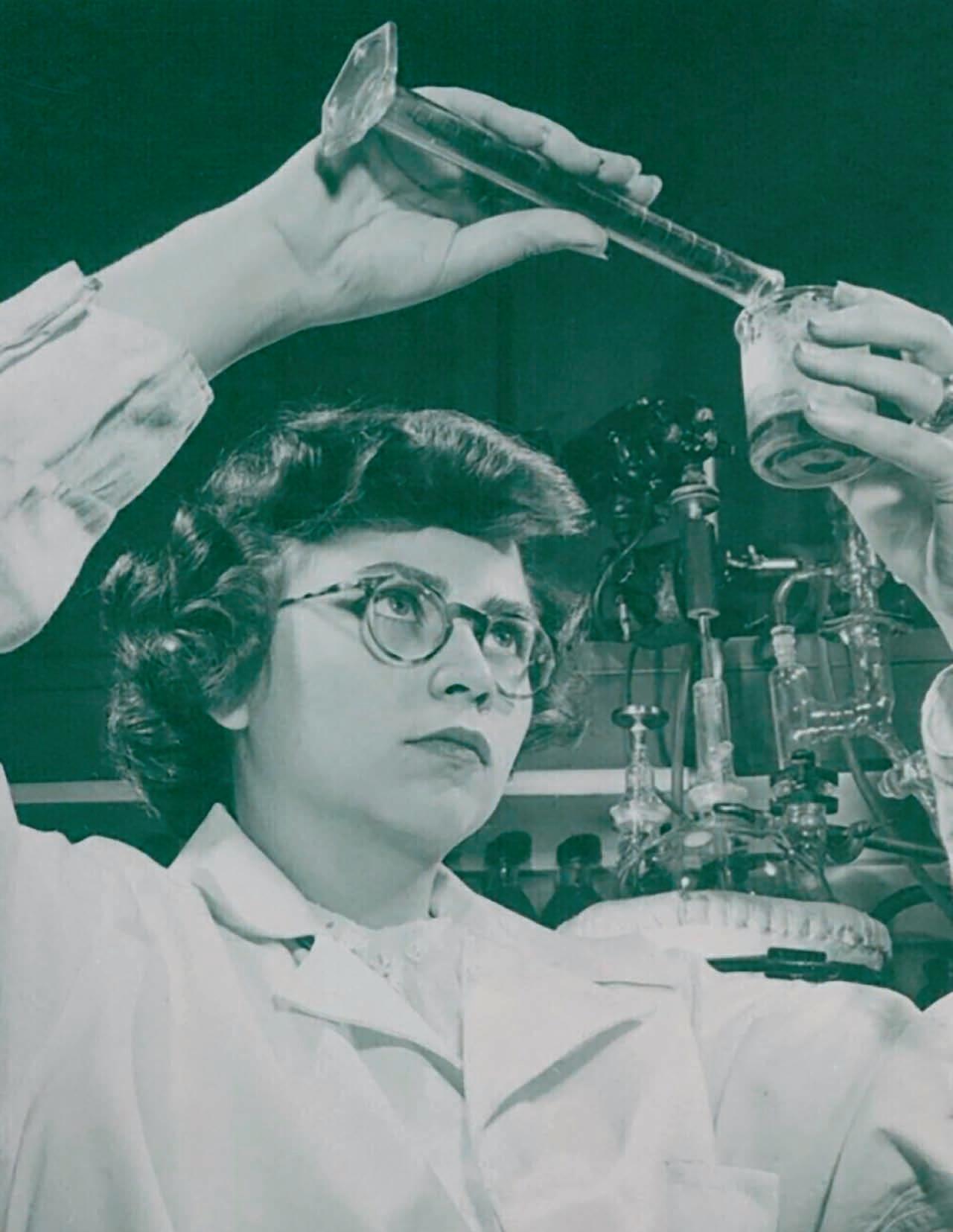
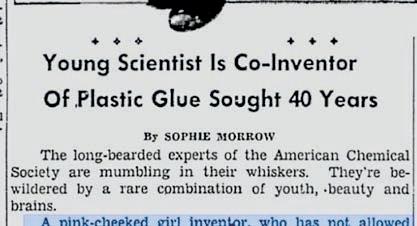
“Young Scientist is Co-Inventor of Plastic Glue Sought 40 Years,” ran the headline of an article in The Pittsburgh Press on July 13, 1947. Newsworthy beyond the 40-year quest was that the scientist profiled was a woman, 21-year-old Elisabeth Mechtild Ackermann. The article portrayed some stereotypes of the day: the experts at the American Chemical Society are “long bearded experts,” some possessing a “bald pate.” The scientists searching for 40 years were “the IQ boys.” In contrast, “Meccy” Ackermann is a “pink-cheeked girl inventor” who loves sports and dancing, engages in pranks and plans to marry someday.
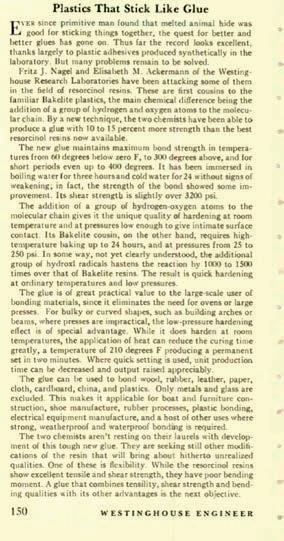
The rest of the article focused on what she and co-inventor Fritz Nagel had developed, described by The New York Times as “a new plastic glue, 10 to 15 percent stronger than the best now available.” The article also outlined what Meccy had next on her plate at the Westinghouse Research Laboratory — developing other improved plastics, offering practical advantages and commercial potential. Possessed of a brilliant, creative mind filled with ideas, Meccy’s innovative work with plastics provided important links in a chain of discoveries that led to Super Glue — introduced in 1958 and used all over the world ever since.
When Meccy Ackermann was a senior in high school her father Otto Ackermann, a Westinghouse engineer, celebrated her decision to study chemistry, rather than following her ambition to be an interior decorator. Partly due to his encouragement, and partly due to society gradually opening up to the possibilities women offered in science and elsewhere, Meccy became a ground-breaking scientist, responsible for improvements to our daily lives.
Elisabeth “Meccy” Ackermann was my grandmother.
While the perky, non-threatening interloper in the laboratory may have been an aberration back in 1947, these days courageous, barrier-busting women like Meccy are much more prevalent. They are respected and influential leaders in science, business and beyond. Innovative, creative and solution-minded, they deliver largescale, long-lasting impact.
In this issue, we profile three impactful entrepreneurs who are graduates of Saint Gertrude High School. They are creative, courageous leaders in three different industries. Bolstered by the foundations nurtured at Saint Gertrude — faith, values and confidence — they have applied their passions, talents and creativity in ways that have powerfully served their communities. Showing the beauty, joy and humanity possible when women of principle are able to create, decide and execute, we are proud that these entrepreneurs are not simply selling a product — they are impacting people’s lives, and their communities. Businesses offering profound impact — that may be the difference that entrepreneurs with a Benedictine educational background bring to the table, and to our world.
Yours in prayer and work,
JESSE GRAPES PRESIDENT, BENEDICTINE SCHOOLS
OF RICHMOND
More than a Business, New Jerusalem Design is a Calling for Paige Stransky ’01
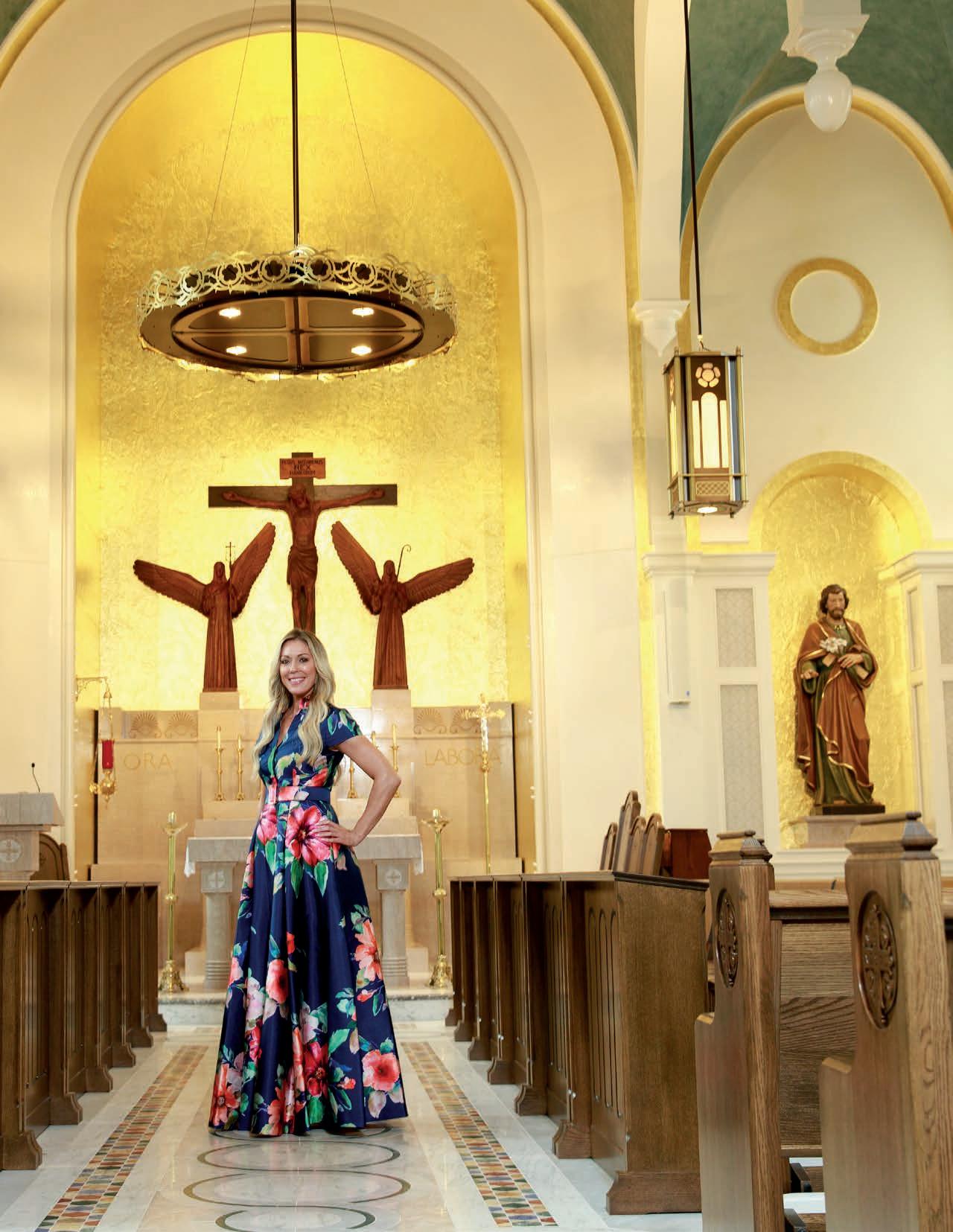
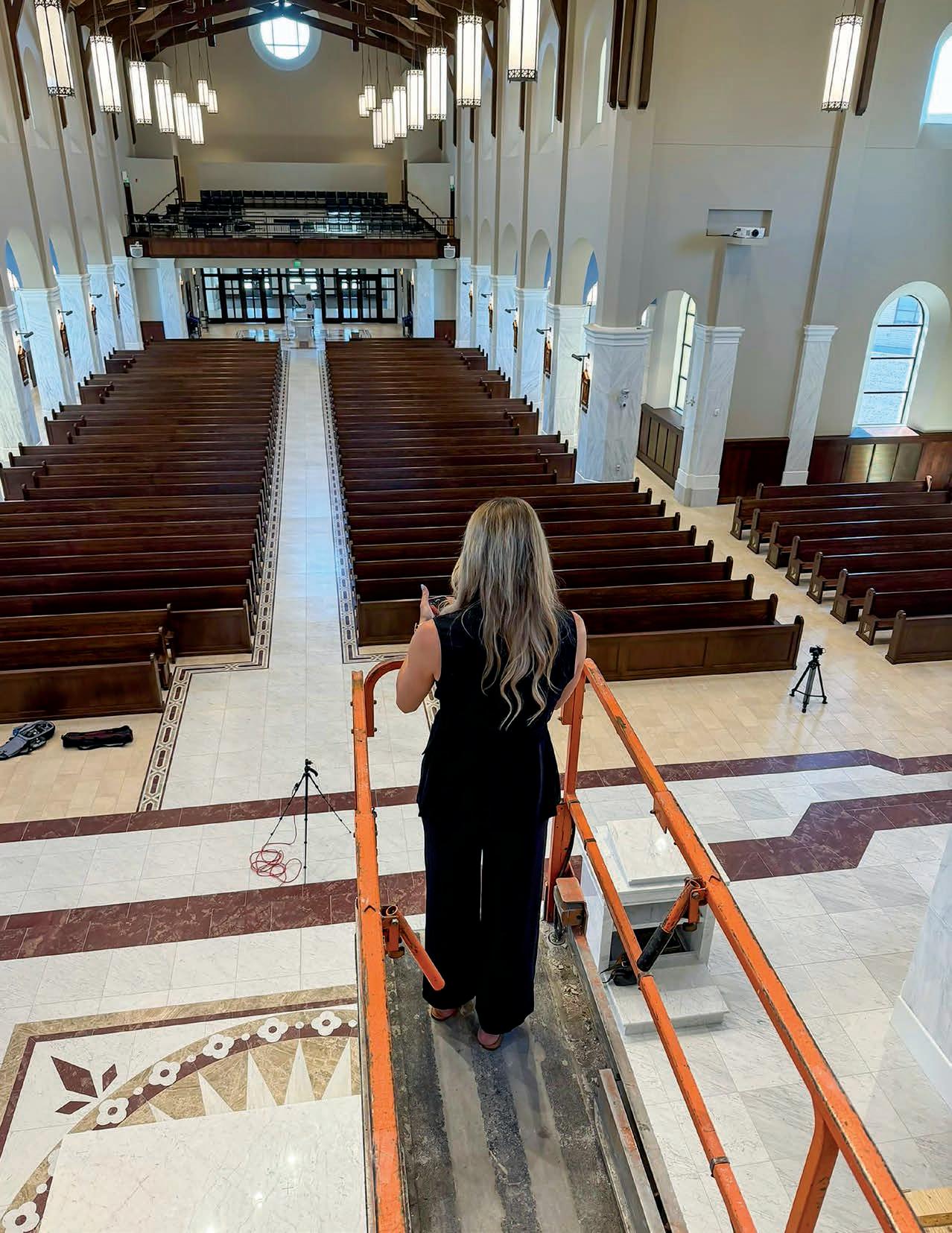
Her faith had always been central in her life, but now, surrounded by cathedrals and immersed in sacred art in Italy as she sourced marble for a church in Hampton, Virginia, she felt a calling — to go deeper into her faith, to find a vocation focused on faith.


“I felt more connected to this work than anything else I’d been exposed to.”
In Italy, she was able to touch the materials of what would become an altar. She could touch 900-year-old stained glass. She felt a powerful connection, “a connection to her fellow sisters in Christ,” and it was through design. She saw that sacred art and sacred spaces were “a design of the heart” for Christ, and the Church. She “felt the connection through the material,” adding that “I felt a calling.” Once she returned to the United States, and continued to pursue work in that arena, there was a moment where she realized she “felt more connected to this work than anything else I’d been exposed to.” Always committed to discernment, she said a prayer that this might be a path for her, something along the lines of “If it be Your will, I’ll give You everything.”
She sensed the great power held in the beauty of sacred art and sacred spaces, and she saw the potential for her talents and knowledge to be a part of creating those things. In doing so, she would be helping people access their faith, express their faith, inspire their faith, deepen their faith. Knowing the power of faith, and the extent of its reach, she also realized she would be enhancing people’s lives, and the lives of their communities, for generations.

The call was strong. She felt its power and its opportunity. Her mission was now to pursue the niche business of sacred art and liturgical design.
For many entrepreneurs, faith is an important part of their foundation, but it’s not part of the business plan, or the skill set. For Paige Mahefky Stransky ’01, who founded New Jerusalem Design six years ago this coming July, faith is front and center, integral.
After Stransky’s return from Italy, she pursued the calling, and her first real stop — her professional training you might say — was working with Rolf Rohn of Rohn Design. One thing led to another, one mentor led to another, one set of learning led to another, and all those led to her being fully equipped with the business
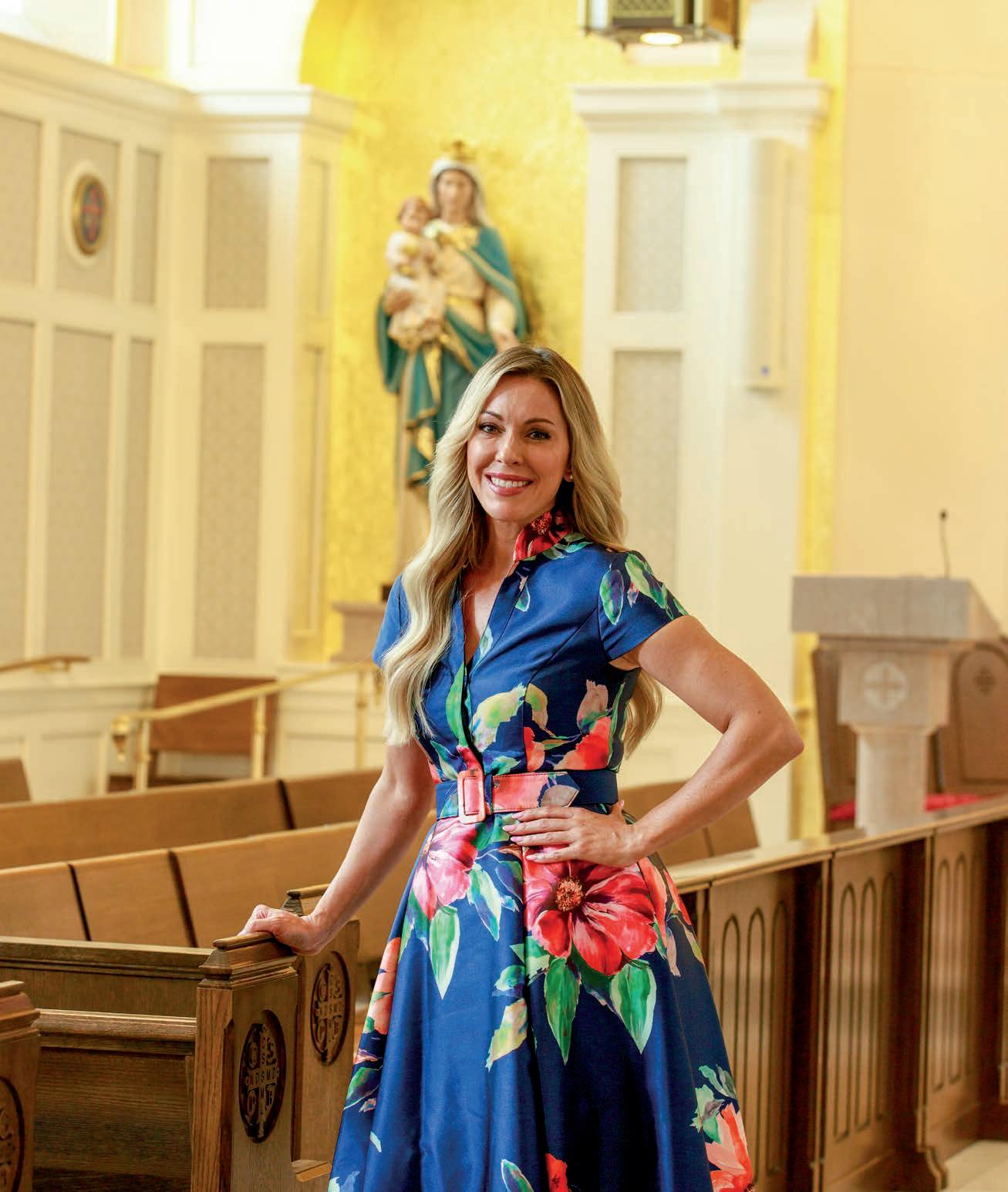
Stransky holding a virtue of Saint Gertrude bas-relief.
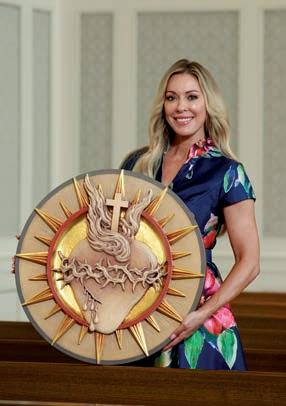

“I was always drawn to the arts.”
skills, product knowledge and courage to set out on her own. She aspired to have more control. She had developed confidence in the value she could offer, and clients were seeking her out, asking to work with her directly. She would offer her own services as a liturgical designer, be a conduit between churches and their congregants, between artists and her vision for what churches were seeking. She wanted to help create sacred art and sacred spaces that would speak to people, reach their hearts, touch their faith, inspire them — and more greatly fulfill their lives.
Stransky came to Saint Gertrude by virtue of her father, Paul Mahefky, who was impressed that it was Catholic and an all-girls environment. He felt that was a great foundation to build leadership. Stransky was involved in the vocal ensemble, drama club, basketball and tennis. Looking back, she realizes that “I was always drawn to the arts,” and in her senior year she received the academic achievement award in Art, for her ceramic teapot.
Upon graduating, she did not yet discern that art and faith would ultimately become her career path. She pursued a political science degree at VCU and considered getting a law degree. She married in 2011, and soon after her husband, who was in
the 173rd Airborne Brigade, was deployed to Italy. Her father, a deacon at Saint Benedict Church who had also taken on the role of Director of Properties for the Diocese of Richmond, learned a church in Hampton needed marble, and he engaged Paige in the search.
That experience in 2012 would be one Stransky describes as “the initial spark for this work.” Sourcing stone — particularly in places like Carrara, Italy — was a “formative moment” for her, and she encountered firsthand “the level of craftsmanship and artistry that goes into sacred spaces.” For Stransky, “there was something deeply moving about seeing how materials were treated with such intention and reverence, and how that translated into spaces that felt truly elevated and enduring.” It was an experience that really stayed with her. She reflects, “It wasn’t just about the beauty itself, but about understanding that beauty is the result of discipline, tradition, and a deep respect for the purpose of the space. It was the moment where I began to connect material, craft and faith in a very real way.” As she recalls, she was “totally enveloped in all the art and beauty” in the churches in Italy, and thought to herself: “I could do this forever.” But, she acknowledges, “I never thought I would.”
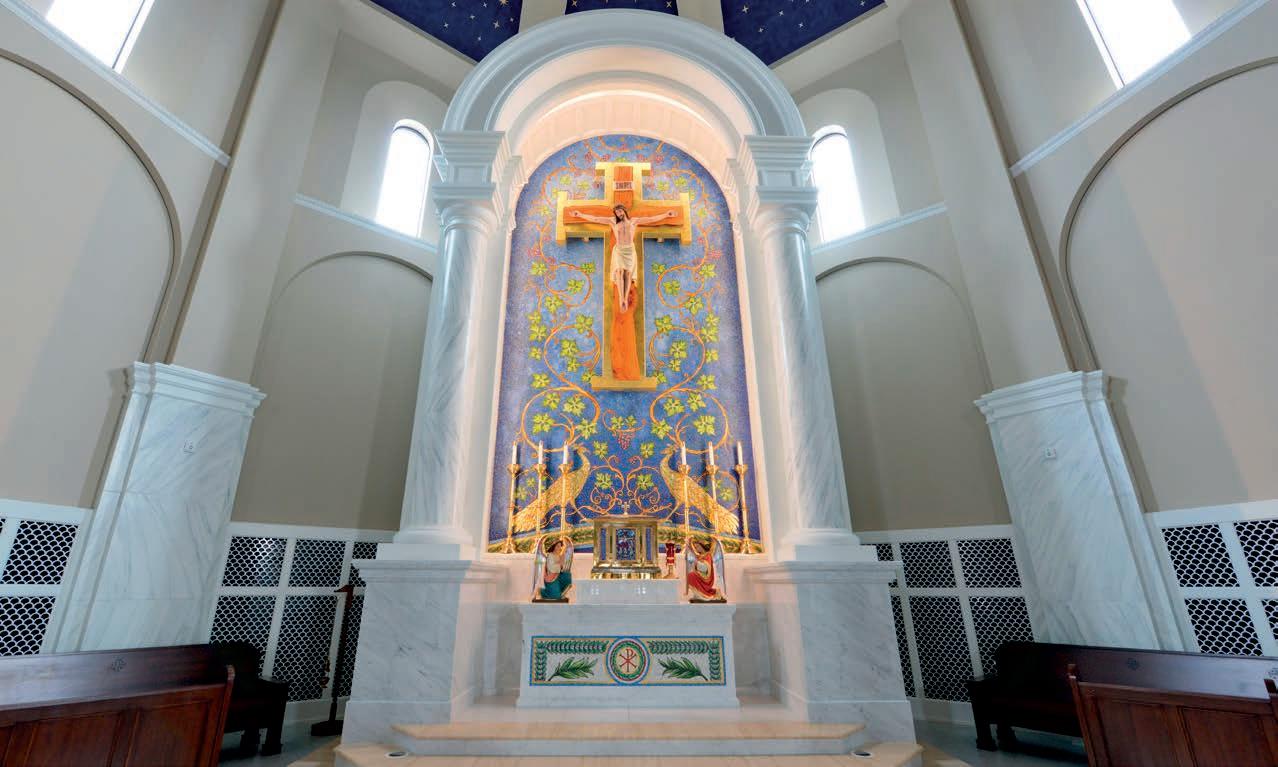
A deeply thoughtful and faithful woman running a business focused on creating the designs and objects that will honor and deepen faith, Paige Stransky keeps three key points about Liturgical Interior Design in mind when taking on any project. These key points describe her company’s mindset, aspirations and commitments.
Sacred spaces should draw the heart toward God, creating an atmosphere of reverence, peace and transcendence. True beauty serves the liturgy, drawing the soul deeper into the mystery of the Mystical Body without distraction.
When beauty feels authentic and meaningful, it guides people gently toward the Divine. True beauty leads us to God, quietly, powerfully and without words.
In an interview, Stransky also commented, “Beauty shapes how people feel and connect. I try to create spaces that offer calm, clarity and a sense of meaning, places where people can settle in and feel grounded, so that a church offers a place where people of all backgrounds and all ethnicities can come to experience beauty and all share the same connection together.”
Effective design begins with listening, understanding both the mission of the space and the people who will use it. When rooted in this, the environment can truly support meaningful encounters with Christ and foster a deeper sense of connection within the community. This is achieved by:
• Client consultations and parish listening sessions
• Concept development and research of sacred art traditions to assist the design
• Collaboration with architects and artisans
• Project site visits and design refinement
Every worship space should help people feel both at home and drawn into deeper connection with God.
In an interview, Stransky also commented, “My work begins with intention and listening. I always start by understanding the purpose of the space and listening closely to the church and community so the design truly serves the people who use it.”
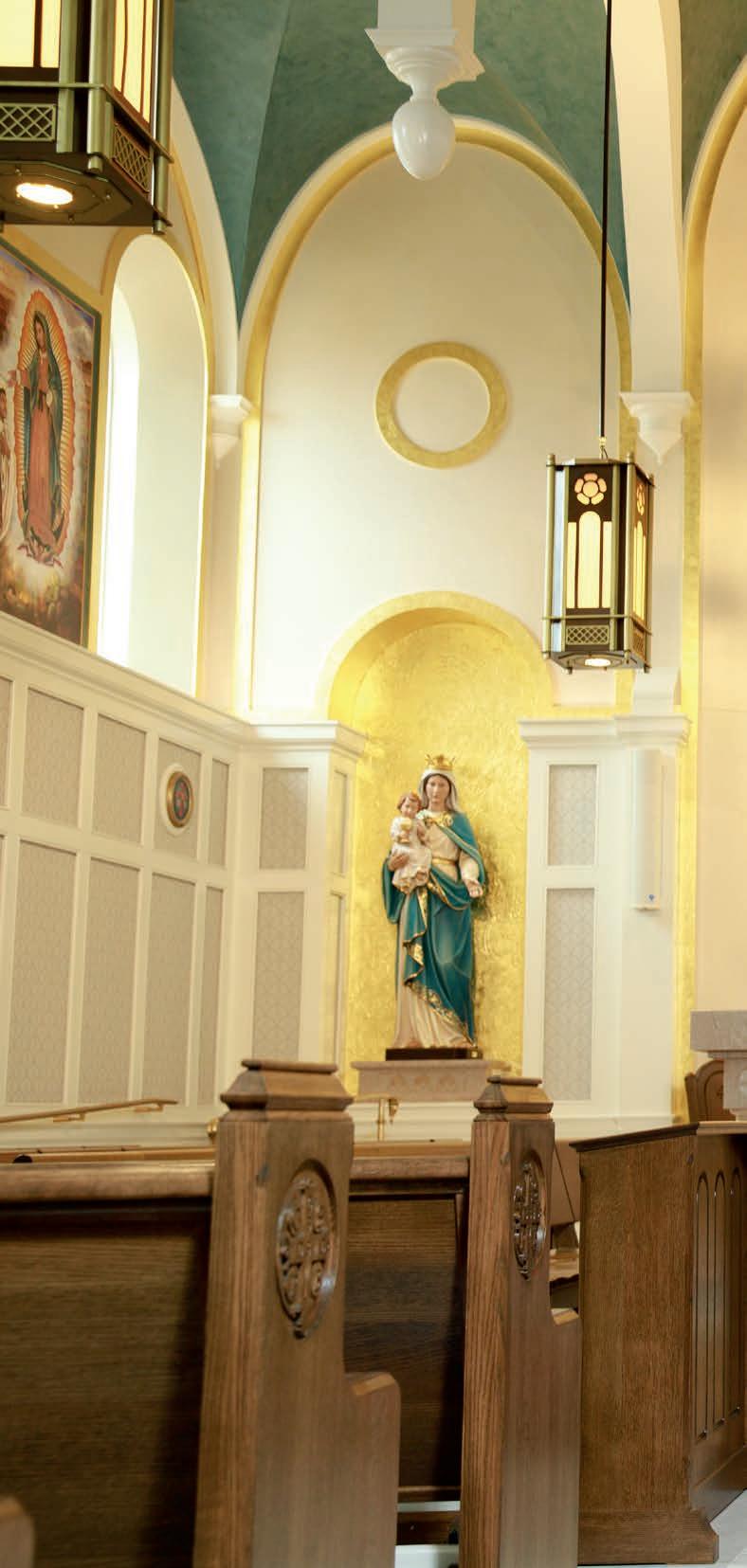
This focus on listening “with the ear of your heart,” a primary Benedictine attribute from the first lines of the Prologue of the Rule of Benedict, has been on full display during Stransky’s extensive work since 2023 on the Sullivan Chapel at Saint Gertrude. In discussing her contributions to the Sullivan Chapel, Stransky said, “As a Saint Gertrude alumna myself, I know this community very well, and it was a joy to be able to listen to the new needs that they have now and to be able to facilitate their needs to the current space today.”
My goal in design is to create environments that lead people beyond the moment and beyond self. Liturgical interior design points toward the eternal, forming spaces that are enduring, rooted in beauty and ordered toward God.
Theology shapes the space, guiding timeless design that serves and inspires generations to come.

Stransky also commented, “I design for timelessness. It’s not about selfexpression. It’s seeing where we are today but knowing that this is going to last for a very long time. My goal is to create environments that feel rooted, peaceful and lasting.”
“I ask ‘what is this beauty that You want to be revealed?’”
She came back to the states in 2013, and her husband headed into the Special Forces, leading them to Colorado Springs in 2016. While there, in 2017, she started to work with Rolf Rohn of Rohn Design, a leader in the liturgical design field, whom she had met in Richmond in 2013. He was based out of Fresno, California. While working with him, she traveled to California, North Dakota, Texas — and “learned a tremendous amount.”
As her skills developed and her relationships grew, she found that churches were approaching her to just do liturgical design, and to just work with her. This offered more creative control, expanded the possibilities of whom she could work with. In working with churches, she found strong connections where “we spoke each other’s language, as to how the design should be.” She found herself wanting “to pursue my own creative designs.” Over the next couple of years she did two “very meaningful” projects for the Diocese of North Dakota, and was also a manager for a stone company, Planet Granite. “I learned everything you could possibly know about quartz, quartzite, marble, granite. I learned about colors, sources, coloration, how porous certain stones were. It really opened up my world,” she notes.
Adding that product knowledge helped, and she knew she had to add to her design skills as well. She became one of two people in the nation selected for a program involving becoming more skilled with CADMUS Design. While the primary function of that opportunity centered on kitchen design, she found it “helped me design sacristees.” By 2020, she felt ready to take the leap — a leap of faith — and launch her own company.
An opportunity with Holy Cross, North Dakota “was a now or never moment” for her to do something on her own.
She and her husband had divorced in 2019, and she was now a single mom. Struggling to straddle the demanding worlds of her profession (both interior design and liturgical design) and motherhood, she saw the attraction of having her own business. She often reflected on the adage that “God doesn’t want you to live in two worlds.
“My daughter was my top priority,” she notes. “Having my own business gave me the opportunity to do both.” Looking back, Stransky says “the entrepreneurial spirit is a beautiful thing. Mine was a byproduct of my passion. Christ wanted my full attention.” She continued, “my insight into the window of the soul” is a talent that comes from Him, and is in partnership with Him. “I ask ‘what is this beauty that You want to be revealed?’ And that’s the truth.”
Part of Stransky’s success has been realizing her talents — and her limitations. “I am not an artist,” she admits. “I can see it. I just can’t draw it.” Able to envision what is possible, and what will work, she has a process where she comes up with inspirational images for artists to work from, and supplements that by giving them enough contextual background, including historical considerations, to create an accurate and appropriate piece of sacred art that will fulfill all the requirements and still leave room for their own authentic artistry to come through. Her role goes from communicating with her clients at a very deep level, to
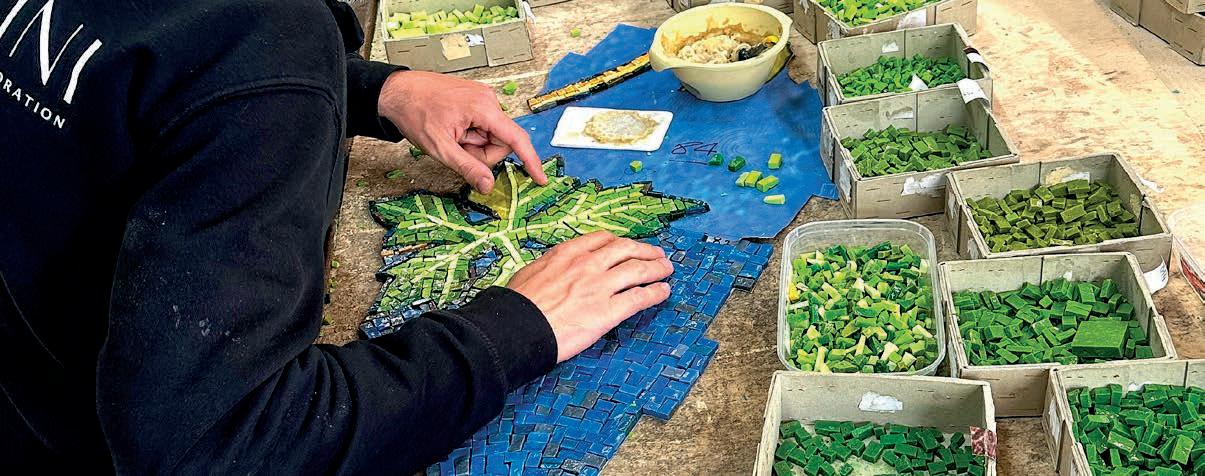
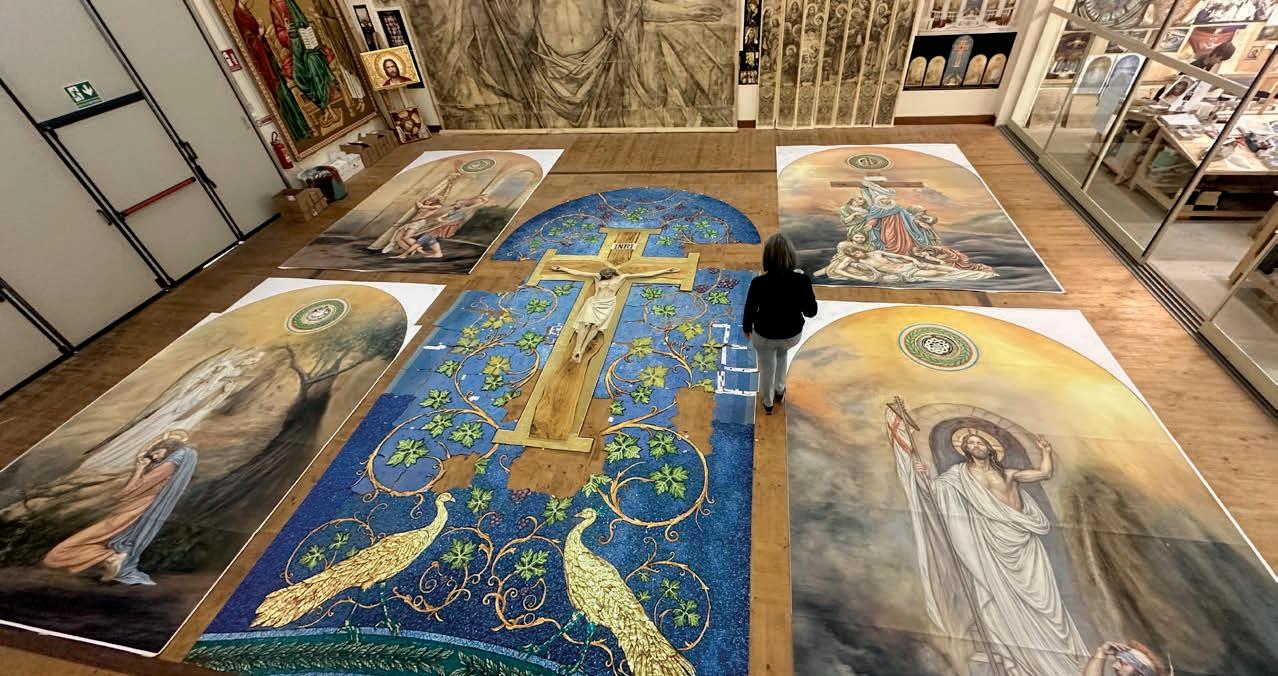
be sure she understands their needs, hopes and ambitions, to envisioning and developing a workable concept, to then providing inspiration and guidance to artists who can bring it to life in a truly beautiful way that will resonate with congregations, and become a timeless part of that faith community.
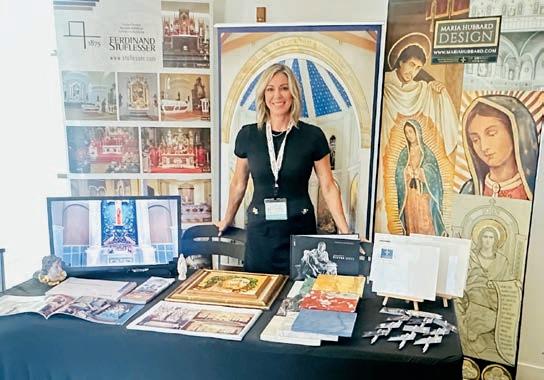
Over the years, Stransky has developed an international network of trusted artisans she can depend on to deliver the level of beauty and artistry required by sacred art. These relationships have been built over time and allow each project to be approached in a very tailored and intentional way. A few key collaborators include:
• Stuflesser Studio (Ortisei, Italy), who fabricated the statues and the virtues medallions in the Sullivan Chapel at Saint Gertrude, bringing generations of carving expertise to each piece.
• Mellini Studios (Pietrasanta & Florence, Italy), a stained glass and mosaic studio.
• Pedrini Studios (Carrara, Italy), who have worked on several projects for the fabrication of altars, ambos, tabernacle thrones, baptismal fonts, and flooring.
• Maria Hubbard Studio (San Antonio, TX), who creates the presentation renderings of sacred art for review and approval and also paints the murals. (Hubbard is the artist responsible for the Our Lady of Guadalupe murals in the gorgeous new Sullivan Chapel at Saint Gertrude.)
• YCD Studio (San Diego, CA), a 3D graphic artist who prepares dimensionally accurate renderings so clients can clearly visualize a full renovation or design within their church.
Part of Stransky’s work is finding agreement with her clients on what is needed and how it should look, and for those presentations to her clients, when those important early layers of the business relationship are being conducted, Stransky actually goes back to a technique she experienced at Saint Gertrude. A history teacher she loved, Mrs. Smith, “really made it come to life. She had great energy, and she told a story so well. I use that today. When I put a piece of art or design concept into context, I put it in story form.” She explains that she puts a lot of effort into “learning the story behind it, giving a context and the history behind it, and connecting it to the faith.” Doing it that way, in story form, “engages. It pulls everything together for them. You see the light bulb go off!”
Another teacher, theology teacher Mrs. Riley ’84 (current Chair of the Theology Department at Saint Gertrude), was also instrumental. “She was one of my favorites. She gave us a faith understanding.” Those experiences in theology at Saint Gertrude “helped me with understanding the ‘why’ of it. The Catechism became a foundation for my work today.”
“...learning the story behind it, giving a context and the history behind it, and connecting it to the faith.”
“... I thought of the brides that are going to walk up this aisle and have Mass and celebration of this new life that they’re starting...”
In 2020 she officially started on her own, with a project for Saint Benedict Church of Wild Rice in Horace, North Dakota. “They were in a flood zone and they had to move. It was a very delicate project, involving Prairie Gothic architecture.”
Armed with the confidence that had been built at Saint Gertrude — that she could succeed in numerous disciplines and that she did not have to be limited to a single path — she combined her religious, design and historical backgrounds, business savvy and faith into a business — New Jerusalem Design. Her father had run his own company, and “I had already seen that there could be success on that path, that you could be independent and you could achieve great things.” She enacted core business principles to attract and retain clients: clear, thoughtful, effective communication, deeply committed service, a spirit of collaboration — with both her clients and her artists — and a commitment to delivering results that would not only match and meet the hopes and requirements, but exceed them. Each project would be pursued as a unique opportunity to reveal the identity and spirit of a particular parish.
Reflecting on her journey as an entrepreneur, she says, “I have so much more understanding of everything. I knew I could do it, but now I’ve proven I can, so now I have this confidence — this ability that is a proven ability. I also have an understanding that it’s not just about me. It’s about what they want.”
It’s also about who can produce it. “With each and every subcontractor that I work with, I give the design over to them and they fulfill the vision. There’s a lot of coordination that goes with that — because any aspect of the design that does not reflect well reflects on me. It is a challenge in each and every project not to micromanage, to oversee it, but to be able to work with people that you trust immensely, that can bring a whole design together.” Stransky accepts the responsibility but knows it’s the team she built and guides that delivers it. “It’s me, but it is definitely a team effort to have it all come together just the way I envisioned it.”
This deeply committed, purposeful and collaborative approach was exemplified in Stransky’s extensive work on the Sullivan
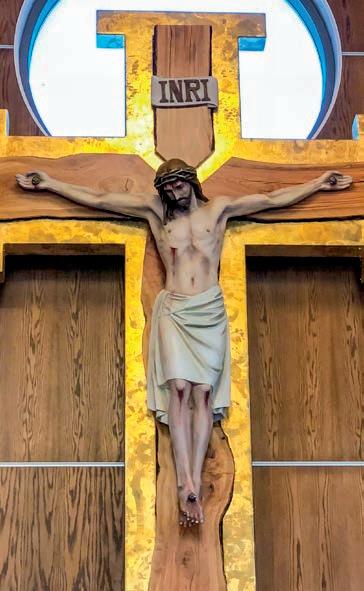
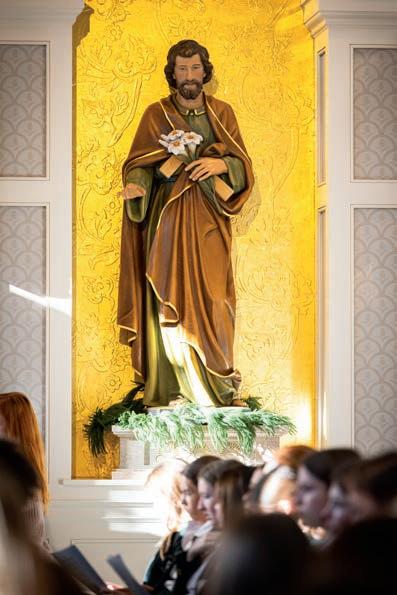
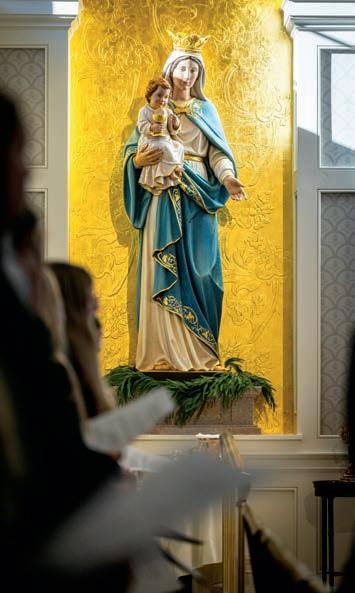
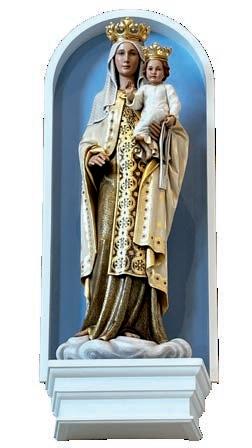
Chapel. She worked with the entire Design Committee, with BSoR President Jesse Grapes, with numerous artists and artisans spread out across the country and overseas, and with the local contractors on installations. Her touch and design can be seen throughout the deeply inspiring sacred space — in the Our Lady of Guadalupe murals, the Stations of the Cross, the Marian symbols, the statues, the pews and, most recently, the bas-relief virtues of Saint Gertrude, which arrived in late February from Italy, and were recently installed.
_____
Almost six years since she took the leap of faith to be an entrepreneur, Stransky was asked to describe one of the most fulfilling moments along the way. She did not hesitate, connecting that special moment that came to mind to the tactile experience she had had back in Italy, when the path first revealed itself.
where I could touch it, for this loving sacrifice.” She halted, tearing up at how powerful and profound that moment had been. “I hope every altar I have designed has that kind of moment for me. It was a moment that is still very, very powerful. It seems to me like I’m where I’m supposed to be, doing what I’m supposed to do — with God’s will. I knew at this moment — by being able to create this altar — how many people this is going to serve, this little speck that I am. I thought of the brides that are going to walk up this aisle and have Mass and celebration of this new life that they’re starting. I thought of the people who have died and their caskets are going to be brought forth and that hopefully the people gathered around will be elevated by this ethereal beauty — having hope and faith that these people they love are going to have eternal life. I’m thinking about how many lives this church is going to change, because of this one altar, and it really gave me the gravity of the church and how important it is and how many lives it changes and shapes.
“The moment that hits me, hits my heart, was the first altar I ever designed — touching it. That was in the Holy Cross Catholic Church, in West Fargo, North Dakota. It’s a 10-foot altar. It’s huge and it’s beautiful, because it has a mosaic of the Alpha and Omega. I can remember at the dedication Mass running my hand over the stone of the Mensa and just feeling this total connection to Christ, and just feeling so honored at that moment. It was a realization of my design coming from love — and now here,
To be a part of that — I mean you really are connected through faith, all through life, through God’s creation — to be a part of that continuation is…I think it’s the greatest honor of my life. I mean other than being a Mom which also is creating life. I want my daughter to see this and to know that beauty really means connecting yourself to God’s creation, to God’s church — and to fulfill your purpose in life that He’s given you.”




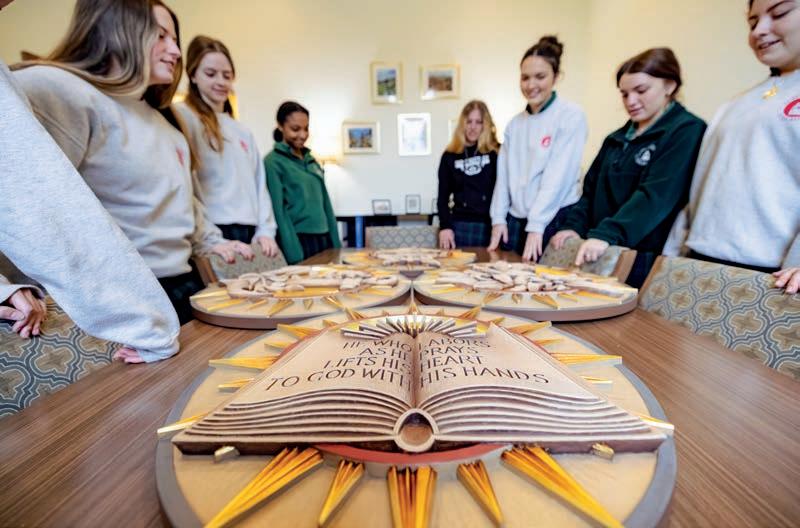
Featuring the virtues of Saint Gertrude in the Sullivan Chapel wasn’t part of the initial plan. As part of her process with every client, Paige Stransky keeps her heart, mind and eyes open for inspiration — and opportunity. Such was the case with what became the gorgeous bas-relief sculptures representing four of the virtues of Saint Gertrude. Stransky describes here the initial spark for that, and traces the path leading to installation, and the new possibilities for meditations by Saint Gertrude students, who will see these symbols of Saint Gertrude for generations.
“
The very first day that I saw the interior of the chapel, one of the spaces that immediately drew my eye were these four golden framed circles — that were just completely empty and I knew…that was the precise place where beautiful art could be placed. It was almost as if it was begging for it. I saw the symmetry of them, knowing they were a perfect placement, right up front on either side of the sanctuary — which is a perfect place for a visual reference for art. They were also on the back wall, visible when you’re walking towards the narthex — so you have the connection from the front of the chapel to the back of the chapel. My inclination would be to align that with things in the church that have that number of symbolic meanings. I began thinking — typically we start with the virtues we receive in baptism — faith, hope and love. But that’s three, not four. My way of getting the dialogue going with Jesse Grapes was to pitch him to consider a new concept, as in ‘what do you think about this as an idea?’
He loved the idea, and then through dialogue with him we came to the idea that those circles tie in architecturally to the exterior, where there are some reliefs. Jesse then suggested ‘let’s have them be reliefs similar to the style of the exterior.’”
“Then we worked on the themes. I suggested a connection to Saint Gertrude. Jesse’s idea was ‘let’s have the virtues of Saint Gertrude.’ I listed out all the virtues we could reference for Saint Gertrude. I think there were seven of them. I recommended the ones I thought would be best represented through symbolism, because not all of them really relate to a certain symbol. We both picked out the ones we ultimately chose. The ones that he felt were the strongest — that represent the school and the mission of the school — but also the ones that I recommended — which can also connect to the best imagery.”
“When we had those, I started to create a conceptual idea for the artist of the style of
Close-ups of the bas-reliefs of the virtues of Saint Gertrude.
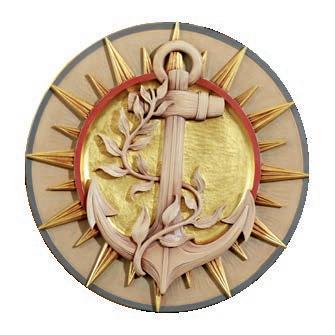


the symbol I wanted, like how big I wanted the book in the space, how I wanted the lily to look, how I wanted the heart to look, and to give her a jumping-off point — of saying this is how it could look. I generated an ‘inspirational’ image from different images that I pulled together, and then she takes that and makes it authentically artistic. It’s not even close to a replication of that photo. She takes it and she sees my vision through it and then her artistic vision is very good — and she takes it to that level.”
“Next, we make recommendations about things that we could improve upon — maybe adding some gold detail. That was my idea — of having the gold detail behind so it would really pop. I recommended that we could just do some dark stain as an accent to give more dimension to the relief and then add the gold to not only tie into the rest of the space, but allow it to accentuate the artwork itself, and have more of a connection with people in the sanctuary. I showed him the example, my artist went in and added that detail, and I

worked with the studio to make sure it wasn’t going to change the price significantly. We have them agree on that, and confirm the design and look it over — making sure the artist can execute the specific design.”
“The next step is…we’re going to use these people in Italy, and they’re going to find the right sculptor to actually do it. I have worked with them enough to know he’s going to execute that very faithfully. I know how dedicated they are to it, that everybody has a strength that they bring to one of these projects. You have to go to different sources to find the person who has this specific strength. They need to have a specific strength in order to bring to this project the beauty that was needed for those virtues.”
As it turned out, the “right” sculptor was not available for a month, and all involved agreed it was prudent to wait for him. Once the scupltures were completed and shipped here, Taylor and Parrish stepped

in — to install them. Installation was held back, at Head of School Amy Pickral’s request, so the current students could get a chance to see them up close and really appreciate them before they were hung up high in the chapel. Stransky loved that idea. “You know, they never had a chance to see anything up close before it went into the chapel.”
For Stransky, the inclusion of the virtues of Saint Gertrude fulfills a long held ambition. “I always wanted to have a connection here to Saint Gertrude — whether it was a statue at the school or something else. I think she needs to be here, and be a part of the spiritual journey with the girls, the scholastic journey with them. These virtues are a way to connect the girls with her, with her spirit, with her in heaven, and help her in interceding for them and guiding them. Through these virtues, she’s able to pray with them and guide them.”
FOUNDED BY FLYNN CROSS ’93, SOUL AERIAL IS KNOWN FOR VIRAL DEMAND AND STUDENTS WHO SOAR BEYOND ALL EXPECTATIONS.
“Alice had begun to think that very few things indeed were really impossible.”
s a mother and experienced educator, Flynn Cross ’93 is deeply committed to seeking out the best education for her own two children, and she has developed a great awareness of what works, and what is possible. A life-long dancer, choreographer and actor, starting with her years at Saint Gertrude, Cross parlayed that passion and experience into an award-winning career teaching the performing arts, for both Henrico County Public Schools and Virginia Commonwealth University. A devoted lifelong learner who attends seminars and conferences regularly, she is strongly
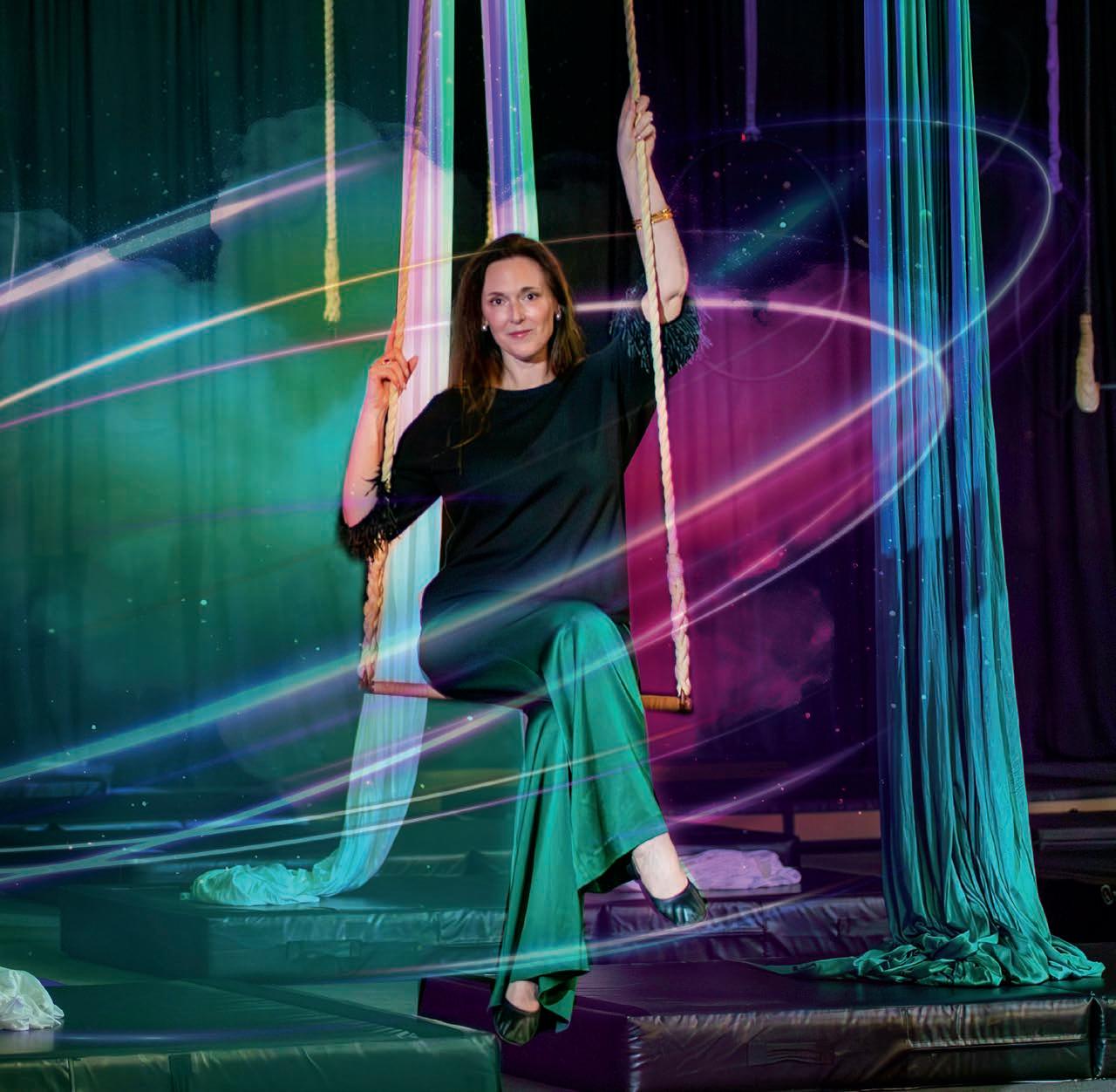
committed to being the best teacher she can be. She is especially attuned to the area of education where it concerns students who are “exceptional” or “twice exceptional,” as in intellectually gifted but possessing one or more learning challenges, such as ADHD or dyslexia.
Cross is keenly aware that educational experiences can be profoundly impactful, negatively and positively. She knows, from personal experience, that a sensitive, caring, and informed learning environment and experience affects what
children can do, what they believe themselves capable of, and even what they dream can be possible.
Uniting those two defining components of her identity, the performing arts and education, Cross founded a company, SOUL Aerial, a decade ago that is a performing arts center dedicated to providing joy, and the most memorable, lifechanging educational experience possible. She wants SOUL Aerial to be the learning experience for her students that is unforgettable, pivotal, an inspiration in their lives. Such
“We got to opening night and we were sold out — and Dominion couldn’t believe it.”
aspirations are lofty, for sure. But, like her student aerialists, who twist and maneuver gracefully up to 30 feet in the air, like Cirque du Soleil, Cross is hitting the mark.
The best way to learn about SOUL Aerial is to discuss Alice in Wonderland, their landmark show, which they have now performed over a dozen times. Alice is an innovative, transformative aerial stage show that tells the familiar story of Alice’s adventures in a magical and inspiring way. Relating the story behind this production coming to life offers a perfect encapsulation of what Cross is trying to achieve. And its progress, from its first nerve-wracking performance in 2019 to now selling out the Dominion Center, ably sketches the development of SOUL Aerial from a humble venture into a resoundingly successful performing arts center, with enormous demand for its classes.
Cross explains the impetus for the show. “I wanted to do something special. We have the Nutcracker every year, and the Richmond Ballet has led the charge. And I thought, well, why can’t we have something that no one’s ever seen anything like before? When Alice came to life, I knew that I had something special.”
In terms of her mindset, Cross admits to being fairly fearless, a characteristic that not only takes in her decision to stage Alice but even the original idea to found her company. “When it comes to taking a chance, I’ve always been the kind of person to be like, well, what’s the worst that could happen? If it doesn’t go well, okay, I’ll think of a way to make it better.”
At a certain point when she felt the need to head back into the work force, Cross looked into her heart and decided to go down the rabbit hole of opening her own business. “Instead of going back to teaching in a regular school where I knew that I would have healthcare and all those things, I looked at my parents and said, ‘I’m going to open a performing arts center and I’m going to make it aerial and dance!’”


She remembers her father’s protective reaction. “My father said to me, ‘What do you mean you’ll start with 6,000 square feet? Let’s go down to 1500. Do it for a couple of years and see how it goes.’ My Dad is the one that will always be cautious.”
Cross wasn’t swayed — she had faith. “I was like, it’ll be fine,” she recalls. “Because I believe that everything works the way it’s supposed to. It’s faith that whether a door closes or whether a door opens, it’s meant to be that way.”
more details). Staging it at Dominion was an enormous, costly venture. It was stressful wondering if the crowds would come. The first year, she only held one performance, meaning she had to fill 1700 seats to recoup the considerable outlay of cash that had been required.
Cross recalls the first time Dominion Energy Center was the venue. “We got to opening night and we were sold out — and Dominion couldn’t believe it. They said, we’ve never seen a local company come in here and sell a show out on their very first time. I had been too afraid to do multiple nights. What if it was a total flop? Well, we sold every single seat, and I broke


in her Sponsor days


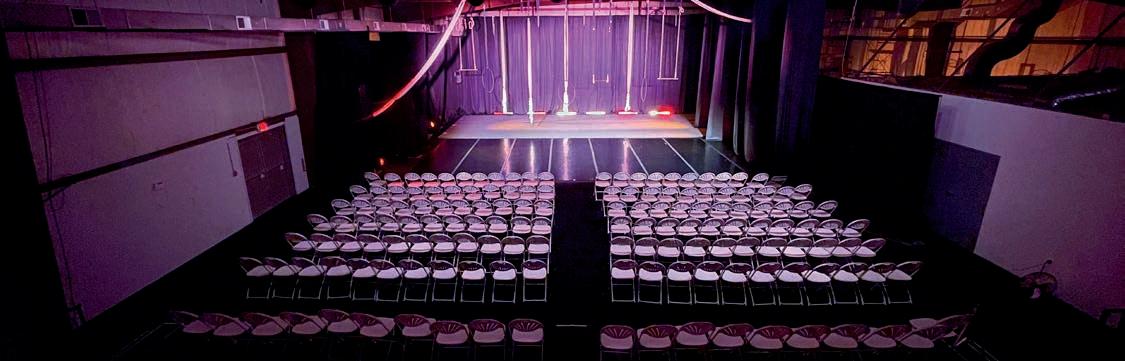
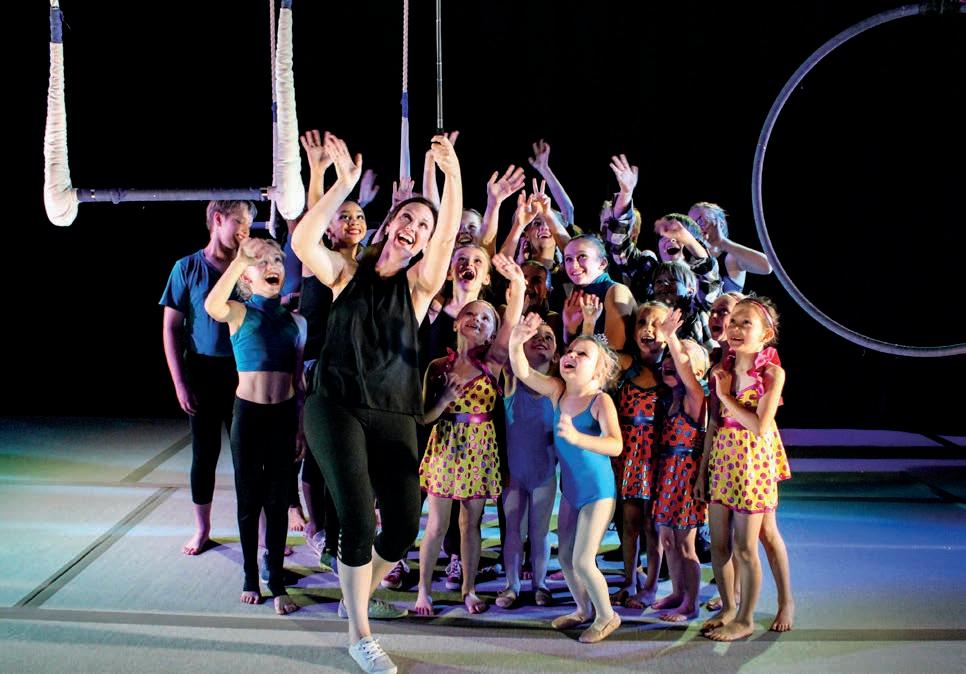
SOUL Aerial’s studio space converts into a 250-seat theater for all of their in-house shows and recitals.
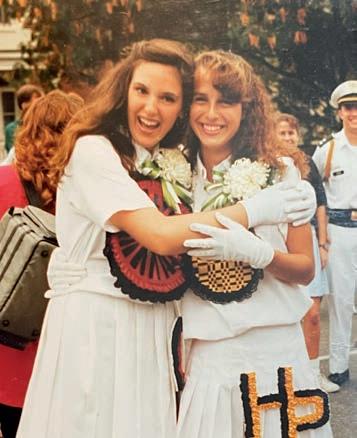
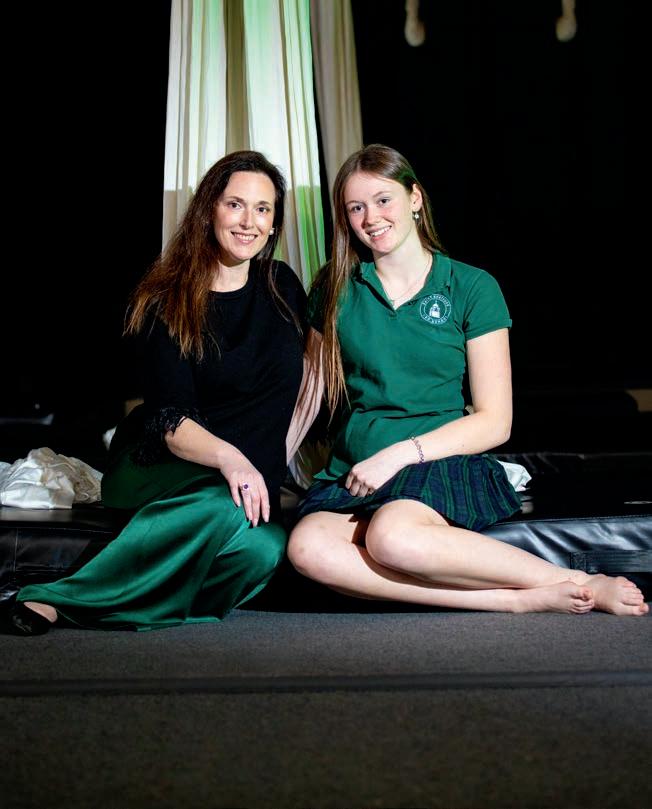
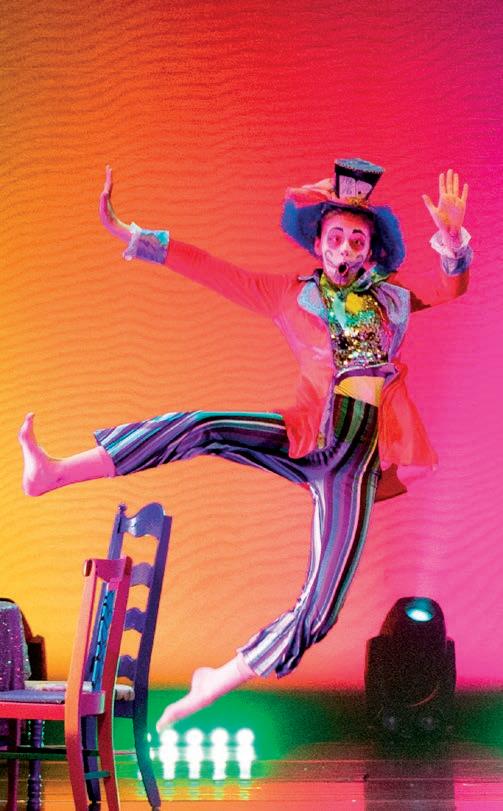
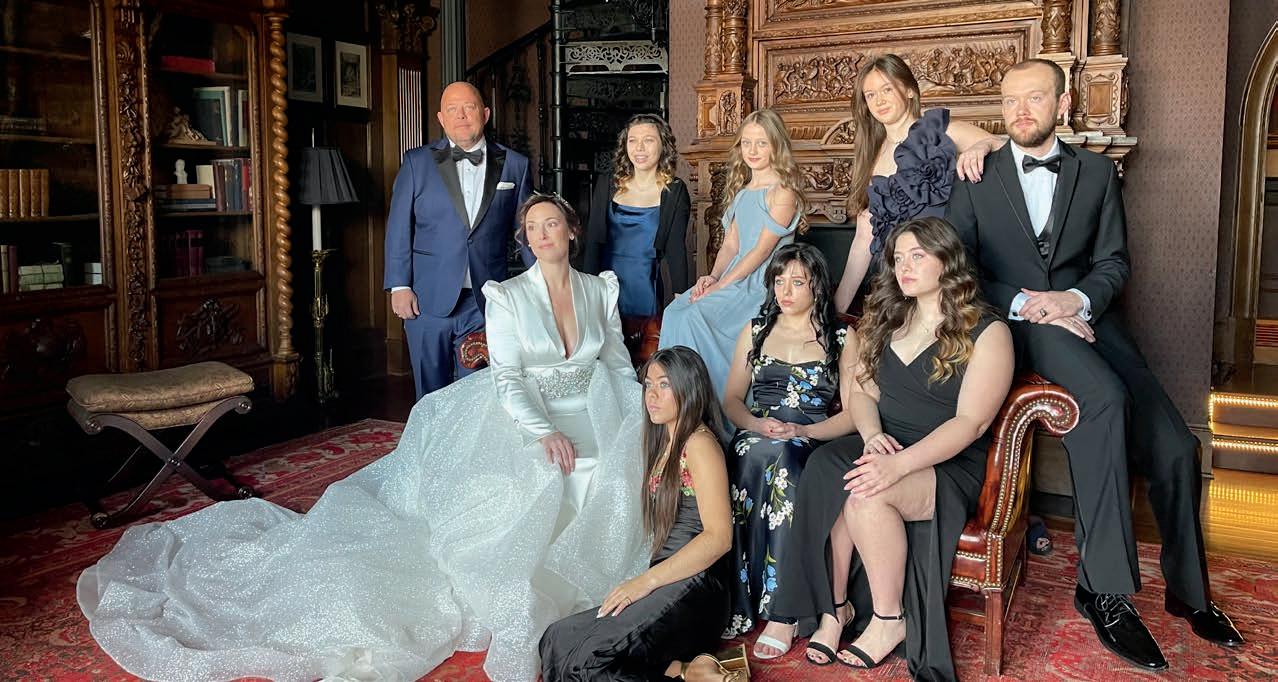
Family Affair: (left to right) Cross with her daughter Bennett, SGHS Class of 2029, Bennett as the Mad Hatter in Alice, Cross’s wedding portrait with husband Blue and their children. At back right is Cross’s son Davis, who received his Bachelor of Applied Science degree in Architectural Stone Carving in May 2026.
even. So, of course, that got my wheels turning! I have four core choreographers I work with, and I looked at them and said, ‘We’re coming back next year, and we’re going to do a Friday night, a Saturday matinee and a Saturday night and maybe a Sunday. Let’s go!’”
If Alice is a mighty oak, the beginnings of SOUL Aerial were definitely just an acorn. Cross shares the journey from her earliest days to where the business is now.
“I started in 2015 with one studio space with two aerial spaces and a dance studio. My first students were mostly adults, then I added children. In 2017, I had 14 children and two were my own. There were four of us on the faculty. I was barely getting by. I grew and the next year I had 32 children. I was still barely scraping by, not making much money, if any at all, not paying myself and hanging on by a thread for the first couple of years.”
Cross believes strongly in learning as a way to come up with ideas to grow her business, and her brand. Having worked at Tiffany’s on Fifth Avenue in New York City, and as a huge Disney fan, she knew the importance and value of creating unforgettable experiences.
Being in the performing arts business, she started researching and studying Disney. She recently went to a conference for studio owners, took the Disney’s Approach to Quality Service course at the Disney Institute (a gift from her supportive husband) and got some very useful advice. “I’ve always believed that learning is essential,” she shares. “And you have to continue to learn, and you have to be open to other people’s ideas to help you grow and learn. I wasn’t a business owner, I was a dancer. But I’m pretty smart. I was able to look at it from an analytical point of view. I was like — I need to go learn, and I’m going to have to spend money to learn, but I’m going to see what I can find. So I started going to conferences early on, started learning, and working on projects. And I really started to get traction. And that’s when COVID hit.”
But while COVID was tough, it wasn’t terrible for the business. She made some hard financial choices — out of loyalty, and out of feeling the need to do the right thing. She stopped all tuition payments for the parents. She still paid her faculty fully. But, she relates, “Because I had the traction and because I had learned a lot, we grew during COVID. The next year I grew again. From right after COVID until 2024, I grew 150%. We were bursting at the seams. We sold out every single time I opened up classes. Once the floodgates for fall enrollment were open on the platform, we would sell out in minutes!”
Cross has been wise enough to have wait lists and to create things like priority enrollment, to ensure her best customers don’t lose out. “I’ve run wait lists since 2018, and I still have wait lists. Now that I’ve got my feet underneath me, I know exactly how to do enrollment. That’s why I keep it full. This company’s grown and grown and grown.”
An informed business owner, Cross studies the trends of her enrollment. “My retention rate was at about 95% for years. Now, as it’s become a little bit larger and a little more recreational, we do see a little bit more of a trend of children trying it and then stopping, but at the heart of it, I still have about a 78% retention rate. Every year I continue to grow. Last year when I opened enrollment, we sold out in six minutes online.”
So what does that all add up to? Cross rattles off some information to try to come up with an answer. “We run just like school, September to May. In the summertime we run for eight or nine weeks and it’s drop-in style. We now have just over 200 children. That does not include the adult program. As for classes, we can have five classes every hour on the hour. We’re open Monday through Thursday and some on Saturday, so 60 classes a week, roughly. Plus we have all of the Alice rehearsals on the weekends.”
“...you have to continue to learn, and you have to be open to other people’s ideas to help you grow and learn.”
The numbers keep coming: “Most of my students take about four classes a week. Aerials are limited to 12 students in a class, because safety is always first and foremost, but dance and acrobatics can have up to 20 students.”
Cross then drops the bomb.
She holds two fingers a half inch apart. “I am this close to seven figures.” She focuses as she runs the numbers in her mind, perhaps remembering some of what it took to get here. “If I get to that goal, who knows what I will do next?!”

One thing she knows she’s going to do is create another big signature production — based on The Wizard of Oz. That’s right, SOUL Aerial is going to “ease on down” the ropes, following the yellow brick road to the Emerald City in a way that only Flynn Cross could imagine and devise.
FLYNN CROSS SENSED THE VALUE OF CREATING A SPECIAL SHOW THAT HER COMPANY COULD PUT ON, YEAR AFTER YEAR.


She wanted to “create an aerial Cirque production” of Alice in Wonderland. She brought the idea to her team, telling them she already had the music. She created a vision board of how she wanted the story to be told and the scenes to add. She picked all the costumes. Her team was on board. She’d nickname it Alice
It was 2019. They did their first run at the Modlin Center at the University of Richmond. Her plan was to do it there for a couple of years. Over time, with word of mouth, she’d hopefully get more people to come. There was no professional advertising or marketing. It was a 500-seat theater. She sold about 400 seats, and “it was really well received. Everybody loved it. Everybody was blown away because these children were doing professional-level work, and they were only 12 to 17 years old. It’s a cast of all kids with the exception of me. It was pretty spectacular to see. It was special.”
Beyond special, Cross also wanted the show to be magical. Based on her experiences with Disney shows, Disney World and her own stage career, Cross and knew what she was after: “If you can create an experience that is filled with magic, filled with excellence, filled
with an incredible experience that makes memories and it really touches at the heart and the soul of people — you can create something truly special.”
Looking back on the 2019 product, Cross is proud. “The fact that I got the show off the ground was an achievement.” And costly. “That first show probably cost me almost a hundred thousand dollars, because you have to consider paying the venue, the rigging, the riggers, the rental of the equipment, how to get it in the air, all those costumes, and the children had only paid a minimal tuition to be in it.”
After COVID, she wanted to do Alice again. But due to post-COVID university regulations, she could no longer do it at the Modlin Center. And because she needed a professional theater that could handle rigging equipment, she ended up at the Dominion Energy Center downtown, a 1700-seat theater.
The cost of doing it at Dominion was daunting. It was $26,000 just to rent the venue. The scale of the show was huge. As Cross recalls, “We rolled in there with almost an 18-wheeler full of set pieces, props, all the things to do this as an aerial show.” It takes a day and a half and a
team of about 10 union riggers to get the show “in the air.”
The head rigger, Steve Sweet, came over from the Altria Theater to make sure that everything was safe. “We inspect everything, every single show,” Cross explains. She was also introduced to Tim Posey, who was the head electrician and a lighting designer who ended up partnering with her. Tim has been an integral
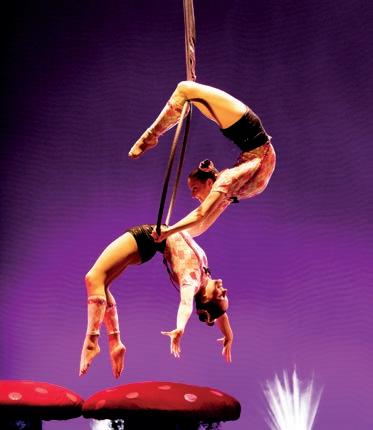
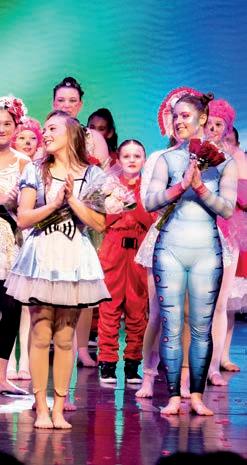
The cast of Alice in Wonderland salutes a sold out crowd in January 2026. The role of Alice was performed by Madison Hoyt, SGHS ’30.


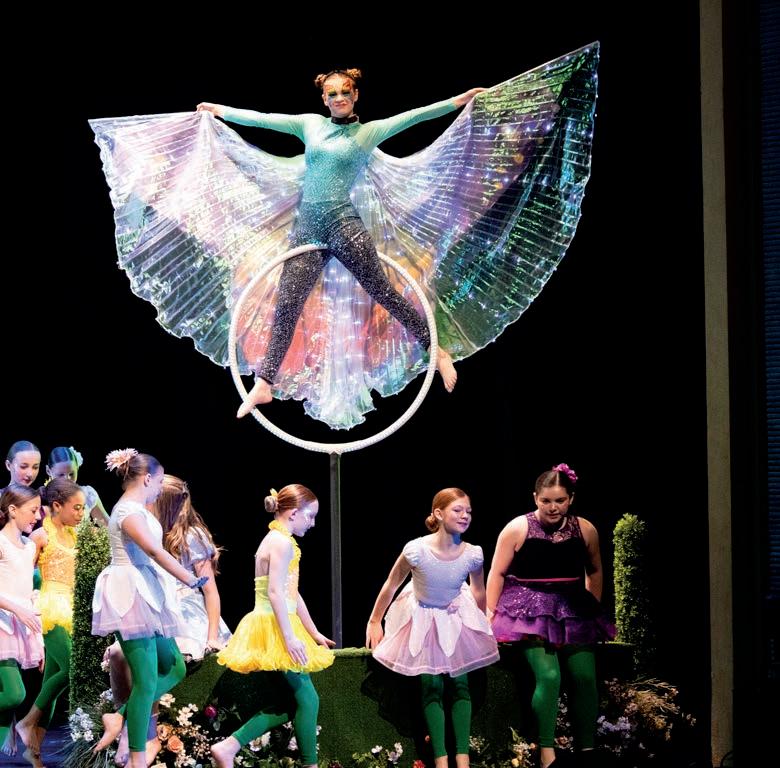
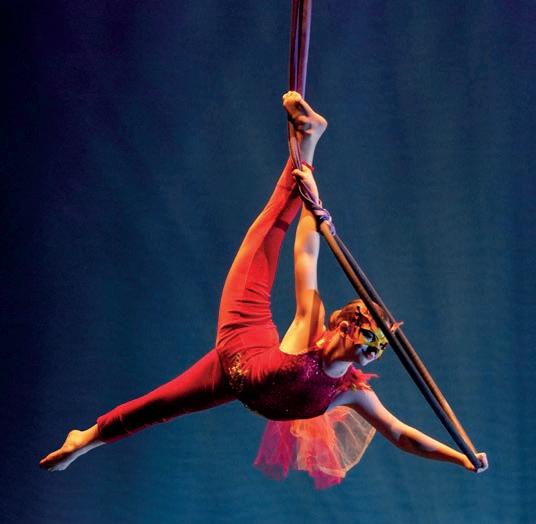
part of this show, a great friend, and true artist! He just wanted to be a part of something magical. And he got to create art on stage with lighting. If you’ve seen the show you know that the lighting is spectacular.”
While “we were just a bunch of artists who wanted to make art,” Cross notes “you have to have that thick skin too, where you almost get to be fearless.” The stakes were high. The total bill
from Dominion Energy Center was about $150,000. Hedging her bets by only putting on one show, Cross would need to sell out. The show had “more costumes, a cast of 65 kids, and a new scene — we had added a lot.”
Cross priced it like a professional show and billed it as a professional show. She would give the cast a report of ticket sales every week at Saturday rehearsals.
Considering the amount of money at risk, Cross had more than the usual share of opening night jitters. “We got to opening night and we were sold out. Dominion couldn’t believe it. We sold every single seat and I broke even.”
Naturally, she had to come back, and bigger. The next year, she added more performances… and merch. “I built this beautiful spread of merchandise,” Cross says. “We rolled in there the next year


like we were the circus. We had light-up wands. I had designed buttons and an autograph book because, you know, at Disney, that’s what you get.”
Alice has now played to over 17,000 people. And demonstrating how far she’s come from the early days of only wordof-mouth advertising, there are now “billboards up all over I-95 and I-64.”


• Lyra: steel spinning hoop
• Silks: 30′ fabrics
• Static Trapeze: stays in one place but can swing
• Dance Trapeze: spinning trapeze that is raised and lowered by a flyman backstage
• Lollipop Lyra: a stationary ground supported steel hoop that was lighted
• Corde Lisse: a covered rope, used when Alice falls down the rabbit hole
• Spanish Web: a corde with an attached loop at the top which holds either a hand or foot and the rope is spun by a base who spins you. Cross says, “The timing for that entire ending sequence takes a ton of practice to get the spin just right so she can take her hand off of the rope and be spun only by her hand in the loop. The shoulder strength required and personal understanding of how to hold your body in that movement is incredible due to the force of the spin.”
On the day before she was going to reopen during COVID, Flynn Cross experienced a life-changing event. To put it in the very simplest of contexts, the story of what happened and its aftermath makes the accomplishments of SOUL Aerial, and Flynn’s continuing resolve, even more inspiring. Here is her story, told in her own words:
The car accident was on June 20, 2020, one day before I was able to reopen during COVID. The reason I think this part of my story is important is that I have grown exponentially since 2020 even with a severe Traumatic Brain Injury, which was the result of the car accident that also retired me from fully teaching movement due to the injury. Here’s the story:
Blue (my husband) and I were coming home from the river on the evening of June 20th. I had just finished a training session the day before for my entire team on how we would reopen due to COVID. I was scheduled to teach 15 classes upon our re-opening. Everything was set for a comeback story with a company that would grow.
We were coming home to make a grilled cheese sandwich and relax after a fun day at the river. We were about to cross Broad Street at Hamilton when we were hit by a woman who ran a red light going 80 mph. Blue was instantly ejected from the car and struck by another car and landed in the middle of Broad Street. I was instantly knocked unconscious — and when I woke up I thought we were in a protest because of all of the people.

I began to talk to Blue, asking him what happened, in a veil of smoke and unsure of what had occurred. He didn’t respond. I went to turn to him — from the crumpled space I found myself in — quickly realizing that I was injured. Using my arms, I pushed myself up and around to face the driver side, and seeing Blue wasn’t there, I looked in the back of the car — he wasn’t there either. I felt a panic set in. He wasn’t there. Where was he? I called for him over and over, and then a man appeared and said ‘He’s okay, he is sitting over there.’ I called for him one more time. Under inconceivable odds, Blue slowly walked toward me, hurt so badly, as we both tried to understand what had just happened. After a few minutes, paramedics arrived. I lost consciousness again and awakened to a paramedic trying to get me to wake up. They put us in the ambulance and off we went to trauma, in the middle of a pandemic. Blue had five broken ribs and road rash that you couldn’t believe, but more importantly — how did he fly out of a car window, get struck by another car and land on the road? It was a miracle…
The doctors were sure I had broken my hips and leg and had internal injuries. Somehow, after all the tests they came in to say that they couldn’t believe not one bone was broken and I was just bruised… Blue came to stay with me after a day in the hospital saying they did not have a bed for him because of COVID. Somehow
I went into survival mode, to care for him, to call an attorney and to take care of us. My parents were angels and helped with the children, but somehow I felt okay, sore but okay. Blue went back to his house with his girls two days later, and then it happened.
I got sick, so sick. My head was fuzzy and I was confused. I had been in shock and they had missed the head injury. I found out later that I had a massive concussion that had been missed. I became like Drew Barrymore in 50 First Dates, I couldn’t remember day to day. My words slurred, and moving in any way made me sick. I was sent to rehab where I was told my short term memory was at 1% out of 100. I couldn’t turn my head — with vertigo that would make even the sturdiest sailor sick. It retired me from dance, unable to move or spin without getting sick or a headache… On days of thinking too hard or working too much, my face would go numb and it felt like a stroke.
After years of physical therapy, doctors, neurologists and more, I have post concussive syndrome, a TBI and my short term memory is still not at 100%. I continue to stumble over words, especially when I’m tired or overloaded with work, I forget conversations on a daily basis and am surrounded by a team at work who have been my brain when mine doesn’t

work. The love and care of my team at work makes me eternally grateful to the friends who have stayed with me, stepped in so many times and held us up when I could not.
All of this could be so much worse… I have been nothing but grateful and feel so blessed to be alive and to have Blue alive, as well. We would have left seven children and our families. Somehow we survived. I am consistently forgetful, although my long-term memory is still sharp. I cannot dance or spin like I once did. But I am grateful beyond words for the blessing of my family, my colleagues who stood firm in the storm and carried my company when I could not, and so grateful I can still build a thriving business that continually grows. Through all of this, I stayed focused on building a business, being a Mom, being an advocate for my children and combining our families into one with Blue.
I feel like I was left here for a purpose. My time is not done. I’m a fighter and have faith in that purpose to give as much as I can and create a legacy of inspiration and positivity in the lives of my students, clients and family.

Not surprisingly, for a woman who has founded an awardwinning performing arts center, one of Flynn Cross’s favorite places to be is on a film or television set. A SAG-AFTRA actor in addition to being a professional dancer and choreographer, Cross has worked on many films and television shows that have come to the Richmond area. Her credits include:
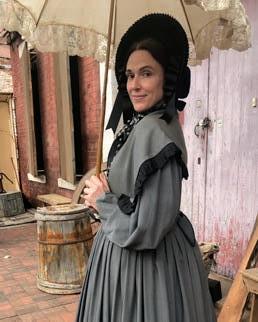
Raymond & Ray | Background, Jazz Club Patron 2021
Harriet | Background & Featured in Photograph, Abolitionist 2018 I Can Speak | Featured Background, Congresswoman 2017
Juanita | Featured Background, Doctor 2017
Loving | Background 2016
Walking Dead: The World Beyond | Featured Background, High Ranking CRM Officer 2021
Dopesick | Stand In “Beth Sackler” (Andrea Frankle) 2021
Dopesick | Featured Background, Nurse 2021
Dopesick | Featured Background, Pharma Convention Attendee 2021
The Good Lord Bird | Stand In “Annie” (Maya Hawke) 2019
Walking Dead: The World Beyond | Background, Faculty 2019
Swagger | Pilot Background, Mother 2019
Homeland | Stand In “President Elizabeth Keane” (Elizabeth Marvel) 2018
Homeland | Featured Background & Featured Photograph 2018
Homeland | Stand In “Local Police Officer” (Erica Frene) 2017
TURN: Washington’s Spies | Stand In 2017
Mercy Street | Stand In, several of lead actresses 2016
Mercy Street | Background, Nurse 2016
Mercy Street | Featured Background, Mary Todd’s Lady in Waiting 2016
Cross and her SOUL Aerial studio have also been singled out with a number of awards, including:
Entreprenista 100 | Top 100 Women Entrepreneurs 2024
Best of Virginia | Best Studio – Virginia Living Magazine
Best Dance Event or Series | Richmond Magazine (Alice in Wonderland)
Best of Richmond | Best Studio, Style Weekly
Best of Family Favorites | Best Studio, Style Weekly
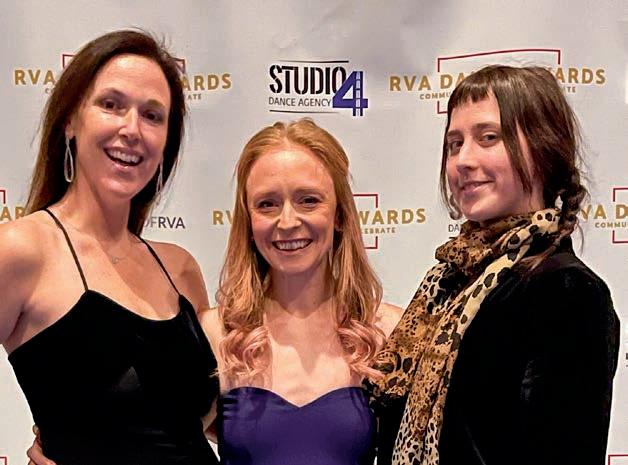
RVA Dance Awards | Best Fitness Dance Studio
RVA Dance Awards | Best Teacher (for faculty member Ryan)
Cross’s daughter Bennett, Saint Gertrude ’29, is also pursuing a performing arts path. Most recently taking on the lead role of The Mad Hatter in Alice, Bennett has steadily honed her skills as a character actor, and was cast in Dopesick as well. Recently, she sent in her reel for Cirque du Soleil’s new TV show about aerialists.
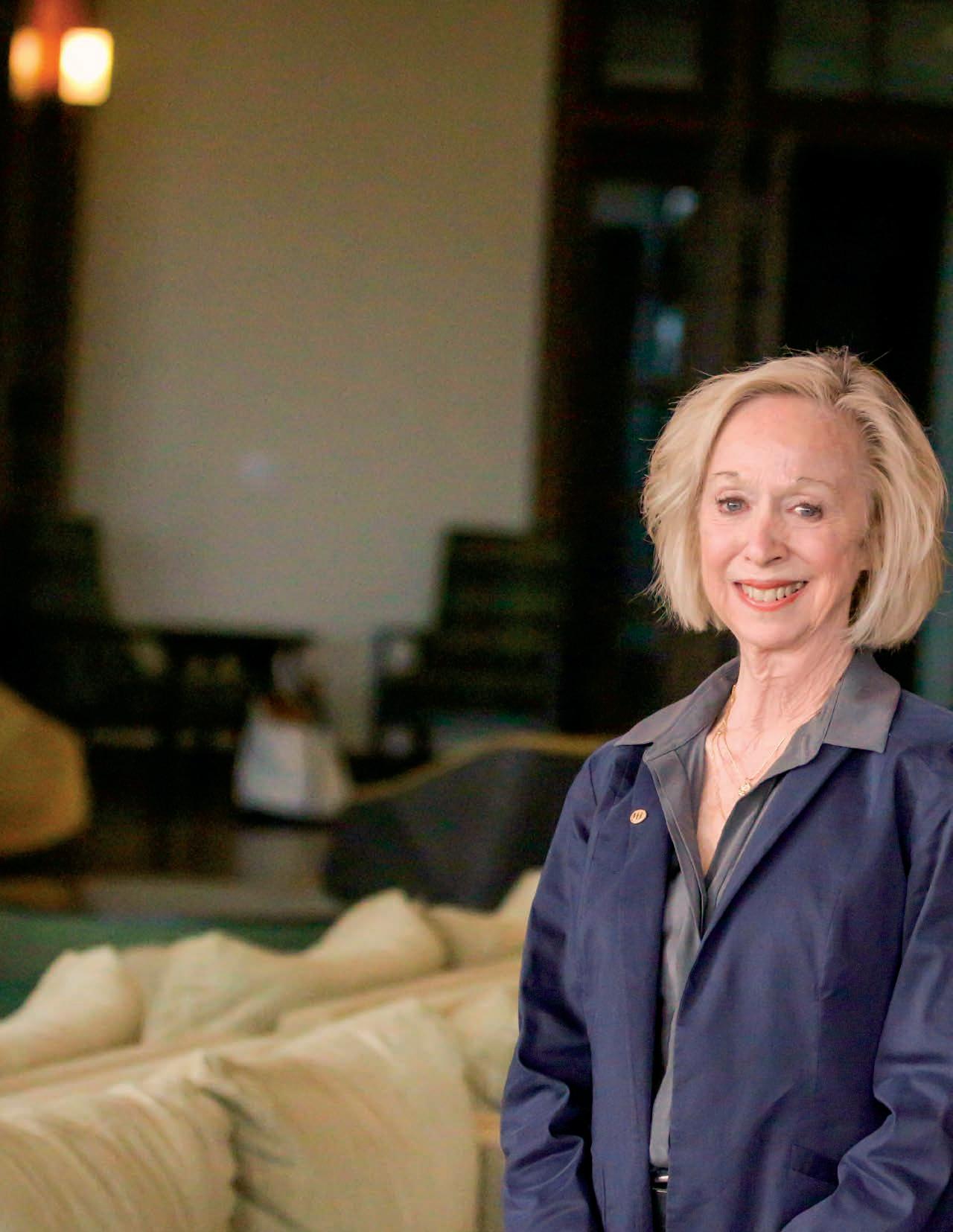
Steadfastly Serving Others – and Helping an Entire Industry
Raise Their Game

or
Melinda Hayes ’75, the call of entrepreneurship represented risk, but she saw the opportunity as well — an opportunity to do things better, to make a difference in people’s lives and to, hopefully, even improve an entire industry. She could see the potential of what could be achieved, if only she and her devoted, intelligent colleagues were given the chance. Realizing she would not be given that chance working for her employer, Hayes — a natural leader — took it upon herself to make it happen. She remembers that time when it all became clear to her that she needed to set out on her own.
It was time. Time to start her own business. To do things her way. To leave Crawford & Company, an international risk-management and claims-administration firm, where she had climbed the corporate ladder for over 16 years.
Hayes could see the direction the company was going in. They treated case management as a commodity instead of an essential service that should be done as well as possible. Hayes saw it differently. She saw the work of case management as being grounded in serving others — as well as you possibly can. This aspiration was critically important to her, perhaps even a sacred obligation. As far back as her days as a student at Saint Gertrude High School, she had committed herself to serving others.
Someone suggested to her that leaving Crawford & Company (an international risk management claims administrator) at that time was like “a salmon swimming upstream.” But that’s not how Hayes and her close colleague Helen Froehlich saw it. Hayes recalls, “What we thought was — it’s absolutely the right time.”
“And, oh, by the way, women in positions of breaking glass ceilings — it was time for us to help those women...”
MELINDA HAYES ’75
Hayes recognized that beyond meeting the needs of patients and clients and improving overall outcomes, there was an equally important gap within the organization itself. The professionals delivering the work — nurses and vocational counselors serving as case managers — were often not viewed as business-minded and, as a result, were not taken as seriously within the broader corporate structure. The idea that strong financial performance could coexist with meaningful improvements in patient outcomes was not widely understood. Yet, within the insurance industry, enhancing patient outcomes should inherently be part of the business model. Hayes believed both objectives could — and should — be achieved together, and that the time had come to embrace that reality.
She knew it was important to “become more engaged in innovation” as this division wasn’t investing in those things necessary to the case management industry. She adds, “And, oh, by the way, women in positions of breaking glass ceilings — it was time for us to help those women. We found men in business and men in insurance who wanted that, too.” Like Hayes, they had daughters who they saw as deserving of a seat at the table. She notes, “They saw the assets of a female leader, a female business person.”
every one of those folks wanted in, not because they wanted out of where they were, but because they wanted to help create something. They wanted to be a part of it because they knew it could be a great opportunity and that we were going to do good things, which we did.”
The ironic thing is, as a young adult, Hayes was deadset on avoiding the business world. Having earned a degree in social work from James Madison University, her focus was squarely on a career as a social worker — little did she know her plan would change as life presented new opportunities and influence from her father.
While the original inspiration for a lifelong commitment to serving others came from her mother, who had developed this commitment after seeing it on full display from her parents during the Great Depression, Hayes notes that her days at Saint Gertrude High School, where she was surrounded by nuns who had devoted themselves to lives of service, was foundational for her own steadfast commitment to it. She credits Saint Gertrude with forming her faith — a critical part of her identity to this day.
Hayes also credits Saint Gertrude with giving her confidence in her own abilities, and providing an assurance, based on her faith, that if she took risks, aimed high, and took challenges head on, rather than being held back by fear, things would be all right. That confidence made her strong, decisive, bold and creative.

All those attributes might not have been fully utilized in the field of social work, nor would a social worker reap the worldly rewards of a business career — or so thought Hayes’s father, Erwin Hayes, a branch manager for the claims division of Crawford & Company. A bit sour on social work, thinking of it in simple terms as a life of low income and often administering handouts to the possibly undeserving, he encouraged his daughter Melinda to think of going into business instead. Crawford & Company had acquired a health care/case management company he saw as having great potential. He knew
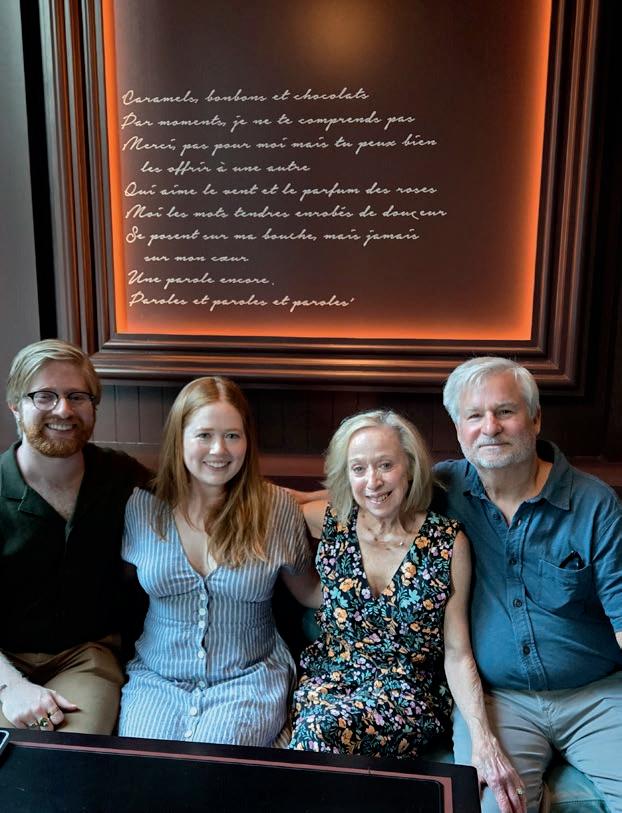
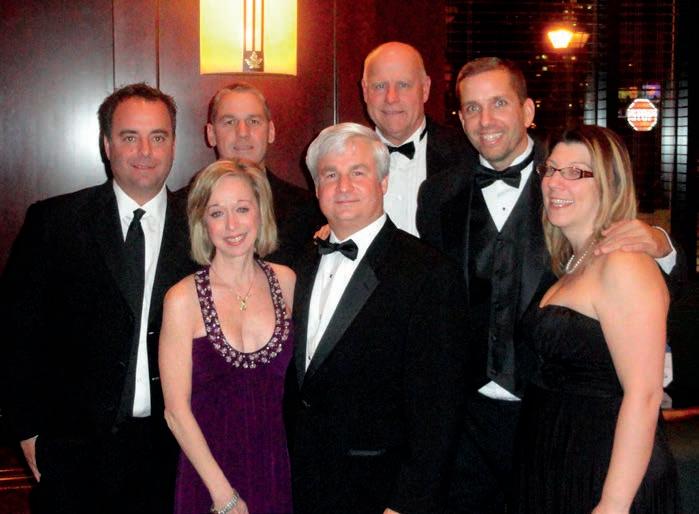
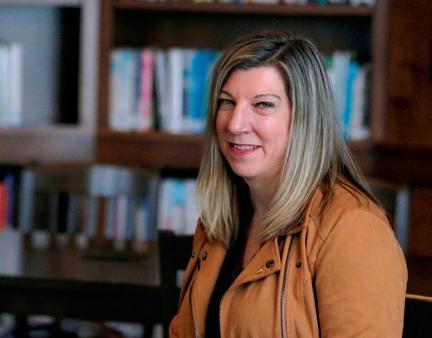
the new healthcare manager in Richmond, who shared with him the opportunity for a scholarship at Virginia Commonwealth University. According to Hayes, “my father was no visionary, but he saw this opportunity for me.” The scholarship opportunity arose for her to get a master’s degree in rehabilitation counseling at VCU. She pursued it and loved it. When she graduated, armed with the vocational rehabilitation skills from her graduate studies, she took a job helping refugees find employment in the Catholic Diocese. She was immediately successful at matching candidates with positions. As she recalls, “It involved selling, and I realized I loved selling!” Maybe the world of business wasn’t so unattractive after all.
As fate would have it, Crawford & Company recognized her leadership attributes and offered her a manager position in Baltimore, Maryland. Now with a different view of business and sales, she accepted it. She would still be serving others, just in a business environment.
Years later, when Hayes was forming her new company — M Hayes, so named because she had taken all the risk in launching it and was the driving force behind it — she knew she
needed other people with different strengths to join her. One of the first leaders she tapped was Helen Froehlich.
Looking back at those early days, Froehlich said that it’s so important for an entrepreneur to be “hiring the right people, to be able to fill it all out — and allow you to do what you do best.” She continued, “To this day I would still say that Melinda’s first love is sales, and she just didn’t know it. My love is not sales. It will never be sales. I’m the operations person. I execute. And I build. I build teams. I’ll come up with a solution. I can do five different flexible models on the solution. Building the team that can deliver that solution — that’s what energizes me.”
Froehlich had begun working for Crawford & Company in 1995, when she moved to Richmond with her husband, and she soon crossed paths with Hayes. “I met Melinda at Crawford when she took over the office I was in. We just clicked. We clicked because we were aligned on so much — on things like authenticity, our philosophy in life, our values, our family values. People first, that type of thing. And when you (looking across the table at Hayes) decided to go out on your own and asked me to come with you, the biggest reason for that wasn’t because we were looking to
“We’re family — a chosen family, I call it.”
HELEN FROEHLICH
start a for-profit business. It was because we were looking to do the right thing in a very complicated industry that was changing.”
Hayes jumps in: “And that had some things going south, I would say. The industry wasn’t taking care of people first, whether it was the injured workers or the employees. We were committed not simply to doing it the right way, as Helen said, but doing it a better way than what we were experiencing at Crawford. We thought we really could do that, and we did.”
Hayes discussed how Froehlich, who became the COO of M Hayes, came to be her closest and most important colleague, and partner. “Helen became one of several other executives. And as you grow, you realize certain people can do this and certain people can’t. Helen was always the leader in all of that, being able to go to the next step and then the next notch and the next area of growth, whether it was product or it was our size. She was always capable of doing that. And that just made us closer because we lived it, we breathed it.”
Helen jumps in: “We were family — a chosen family, I call it. Work can be the family you choose. And a lot of that probably has to do with those basic things like values and integrity and trust.”
Melinda picks up on the word trust. “You trust on instinct, and then you trust based on results and experience with each other. I know she’s going to come through because she always does.”
Another key member of her team was Hayes’s husband Brian Weiss, an experienced finance professional, who was dating her before he joined the company. He saw an impressive operation, her passion and her vision. When it became clear M Hayes needed his skills and expertise, he joined the firm. As CFO, Hayes says, “he implemented systems, processes and internal management structures that enabled us to become a national company.”
Weiss was impressed with Hayes’s strategic mind: “I saw that she was implementing URAC accreditation for an eligibility to contract with large national insurers and self insured employers. Those currently accredited were a handful of national case management companies, not smaller ones like M Hayes. That would give us that opportunity to be able to contract with the largest payers in workers’ comp, which we did — Travelers Insurance, Liberty Mutual, Zurich, The Hartford, AIG, as well as larger employers like Walmart.”
Detail-oriented and a perfectionist, Brian was an ideal fit for the business. Melinda credits him with building what the company needed. “He was an architect, building the financial structure and insurance issues, and public business filing compliance along with our general counsel for all legal requirements on a national scale.”
Melinda adds, “The other thing I’d say with regard to Brian — his work was instrumental in positioning us for sale. In acquisition
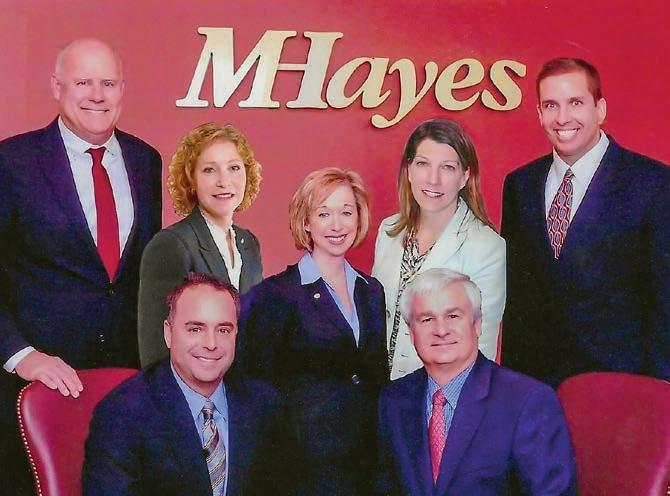
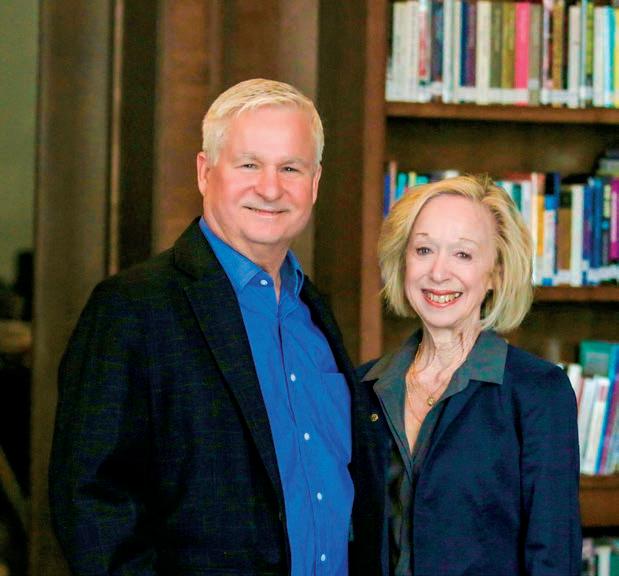
discussions, Brian always possessed a very honest and GAAP approach to our finances.”
Brian beams at the memory. “I’ve been doing accounting for 30 years. Yes, you could, according to the letter of the law, maybe you could book it this way and make it appear a certain way. But it’s not really the best way.” Or as Melinda might say, the M Hayes way.
Apart from essential components like assembling key members of her upper management team and enacting strategies to land national accounts, Hayes had ideas she wanted to implement — about the culture of her new firm and innovations she was confident would improve service, and the business.
In terms of innovations, several ideas were gradually developed that led to growth and M Hayes really setting itself apart. Always strategic, Hayes also had her eyes on being a national player, and she was determined to find a way to get there.
Realizing the importance and value of standardization, M Hayes built a case management system that would ensure the process and the practice of providers, according to their standards and accreditation. The aim was standardization, at a very high level. They hired software developers and engineers, and created a customized software system. Hayes sums up: “it ensured the delivery of service in a consistent way.” The CM3 computer system meant that the same steps were being taken, the same process was being followed and the same quality was being offered.
Hayes is proud of the tech developments. “We created our own case management application,” she sums up.
“At Crawford, our big national company wouldn’t give us a system, so we built our own.” To Hayes, it made sense. “Because we know the practice and we were improving the practice, we were the best people to actually develop things.” Looking back, Hayes concludes, “We helped to create the industry, bringing it to what it is today. There’s no question.”

Case management, in a nutshell, is managing the process — and all the players and entities involved — by which an injured worker is medically treated, rehabilitated, and ideally returns to fruitful work. The case manager aims to deliver the best possible healthcare outcomes for the injured worker through engaging the best medical providers promptly to ensure the best chances for a fuller recovery and return to work. Experienced RNs and vocational rehabilitation counselors trained to case management best practices and standards deliver these services. Case management services are typically utilized in serious or complex cases, which benefit from such nursing experience. An area of specialization is catastrophic case management (CAT), for severe, debilitating injuries, that can profoundly affect a person’s quality of life long term, and that of his or her family. Specific RN qualifications and experience are required for CAT cases, as is case manager experience with trauma centers nationwide. CAT cases made up approximately 25% of M Hayes’s overall services. Coordinating the highest quality medical care, managed through best standards and processes, is the priority and primary focus of the case manager. Any cost savings are secondary.
Another innovation was the QualTrak quality assurance, which was another way to demonstrate to clients and partners that service would remain high, with timetables and benchmarks for the process a claim would travel through.
Perhaps the most innovative aspect was called the Affiliate Alliance. While the ever-creative Hayes is often the source of ideas she wants to explore, she is candid in crediting one of her customers with this one. A chance comment by a customer set things in motion. “I was meeting with a customer, who was a national insurance company, and she said, ‘Melinda, if I could have your services all over the country, that would be the best thing. I’d be so happy. I’d use you guys… All these other smaller case management companies, why don’t you work with them?’ And I was like, “Whoa! Bingo. Ding, ding, ding. And we did it. We did it.” In short, with the Affiliate Alliance, M Hayes offered smaller case management companies across the country — regional experts in their fields, already established in their territories — a chance to join up with M Hayes as an official affiliate. They had to agree to follow M Hayes’s standards, practices and systems.
“...it was really about doing something really good and doing it well and putting out something no one else had ever done before, or even thought about doing. So, I was a pioneer.”
MELINDA HAYES ’75
“It was something that had never been done before,” Hayes states. “No other provider had used other regional companies” in such a manner. “We went about contracting these affiliates and pioneered a design that no one else had done.”
Certain innovations, like the Affiliate Alliance, caught other businesses’ attention. “In terms of the Alliance,” Hayes states, “people started seeing what we were achieving by working with other companies — collaborating, contracting, having them work according to our requirements, our service standards, our accreditation requirements. They saw that we could deliver, with the right system, a better service. We took all the risk in setting that up. And that’s a big part of what makes you successful, too — being willing to take the risk. And not fretting too much about it, not getting caught up in the fear factor. When our company was acquired, one of the reasons they wanted us was because this design had been so effective, and they weren’t about to go about it themselves.”
Between the standardization they offered, the certifications they had earned, their excellent financial practices and results, and the national network of experienced service providers they possessed, M Hayes became not only a powerful national player — they became the new standard, offering a new template. M Hayes had gone from a small, upstart local company in the DMV area (D.C., Maryland, Virginia) to a strong mid-Atlantic regional presence to a leading player on a national scale, with its revolutionary and transformative Affiliate Alliance stretching across the country, offering standardized, best-in-industry service and performance.
In the end, her business was also extremely successful. And after nearly 16 years of growth and impactful innovations in its operations, M Hayes had become attractive as an acquisition to an industry which was becoming more centralized among a few key players. Several national entities wanted to buy her business, giving Hayes the luxury of choice, to do it her way, if she so chose. Hayes entertained the possibilities offered by selling. Perhaps, she may have thought, it was time — time to sell. Ultimately she did sell to a company now known as Enlyte. In doing so, in choosing the best match, she ensured that her business model, with its innovative platform, proprietary software and affiliate network, would live on. People would continue to be served at that higher level, and many of her employees would
be retained. For many entrepreneurs, this is the dream; build something of profound value, attract numerous buyers, sell it to the most attractive bidder, and take care of your people and the business as you transition into what’s next.
Looking back, years after successfully selling her company, which attracted several possible buyers, Hayes thinks over her legacy and what her company had offered. “What did I do? Well, I started a company that started small. Did I ever dream of being national? No, but I saw a need. I saw what our customers would benefit from, and I found a pathway to do it, and made the investments to be able to deliver on it. What does that take? Well, it takes innovation, of course. It takes looking at something and saying I think we can do this and focusing on doing it — instead of focusing on what the outcome would be — like ‘I’m gonna sell my business. I’m gonna be successful. I’m gonna make a lot of money.’ Yeah, there’s ambition. You want to get the contracts. I was all about that. But it was really about doing something really good and doing it well and putting out something no one else had ever done before, or even thought about doing. So, I was a pioneer. That’s what I was. I was an industry pioneer.”
For Melinda Hayes, her career was
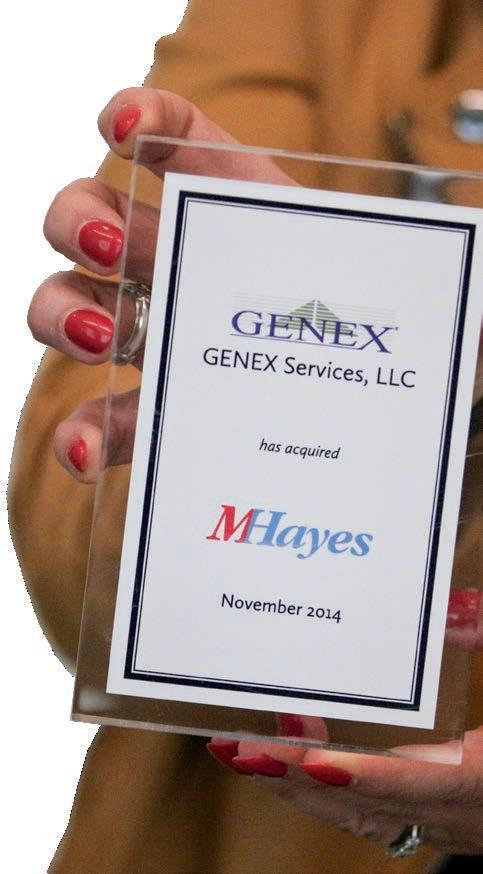
In November 2014, GENEX Services LLC, now known as Enlyte, acquired M Hayes.
always going to be grounded in service, helping those in need. She did not expect to go into business to accomplish that — much less become an entrepreneur with the challenges and risks that come along with it. She did not realize that she had a sort of genius for business. When asked if it was fair to call Hayes a visionary, Froehlich responds immediately: “Certainly.” Her husband Brian quietly — but firmly — adds, “more than fair.”
Her innovations helped develop a new template for her field, which the industry followed. She helped her industry evolve to deliver a better product — and perhaps a higher calling. Long after selling the business Melinda Hayes is still grounded in service, still helping others through their crises. She and her husband Brian are involved heavily in a nonprofit — Kids’ Chance of Maryland — aimed at supporting the children of injured workers of Maryland. As she said recently, “it’s still my cause!” After 16 years at Crawford & Company, 16 years at M Hayes, and 12 years since the buyout, she is still serving others impacted by workplace injuries.
For many entrepreneurs, their business is a product. To Melinda Hayes, it was a cause. And Hayes can take some rightful pride that she never turned her back on leading a life of service. She just incorporated it into a vision for a business that could serve people better. Living a life rooted in service was a foundation that paid off very well for Melinda Hayes — but that’s not the important thing, she maintains. Life, she fervently feels, is “all about serving people — that’s what it’s all about in the end.”
A devout Catholic, Hayes feels her overarching philosophy is reflected in the following verse from Matthew:
“The King will reply, ‘Truly I tell you, whatever you did for one of the least of these brothers and sisters of mine, you did for me.’”
MATTHEW 25:40 (NIV)
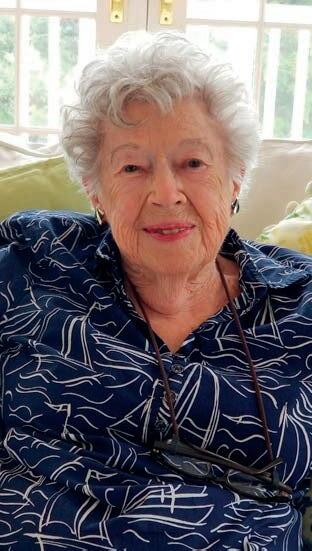
MELINDA HAYES IS QUICK TO CREDIT HER MOTHER, ROSALIE, NOW 98, WITH BEING AN INSPIRATION, ESPECIALLY WHEN IT COMES TO SERVING OTHERS. SO WHERE DID THE DRIVE OR THE PASSION TO SERVE OTHERS COME FROM?
Rosalie comments, “I think being in a small town during the Depression, when there were so many people that did not have enough food to eat. My parents’ home was called the Elastic House. The reason it was called that was because there were no motels or hotels in town. Anytime someone in town that my parents knew had someone visiting and they didn’t have room for them, all they did was pick up the phone to call my mother, and they would make room for them. I always walked from my bedroom to the Murphy bed in the wall that I would then sleep in. And my mother, she put clean sheets on the bed and gave my bed to someone who needed a place to sleep. And it was the same thing about eating. People were often there at the dinner table that were not a part of the family. And mother, she never made just enough food for us, because we knew that someone was going to drop in at mealtime was hungry. And the reason they dropped in at mealtime was they knew that they would be invited to join us to eat. And so we fed a lot of people that way. My parents grew all sorts of vegetables, and they had chickens and cows. We were self-sufficient, except for things like coffee and sugar, but everything else, because we lived on a big farm.”
Melinda says that principle, that example, was very influential: “We always heard those stories when we were young — about the Elastic House. You wonder, where did you get this whole idea of giving to or caring for others? It’s because you hear these stories, and you’re raised kind of the same way. And then the theme and the giving continues. It becomes generational.” Melinda proudly adds that this family legacy of giving back has been passed down to her own children, Lauren Hayes Eller and Andy Hayes Eller.
What else did Rosalie impart, to guide, encourage and maybe even embolden her daughters?
Rosalie emphasized the importance of giving your best effort. “I told both my daughters, I said, ‘Make sure when you’re working, when you get that paycheck that you’ve earned it.’ And because of that, both of them were such hard workers.”
Melinda notes that seed took root: “I worked really hard because my mother taught me, whatever your job was, you work hard and you do your best. That’s going to serve people well.”
MISSION, CULTURE, INNOVATION AND LEADERSHIP MADE M HAYES A VERY SUCCESSFUL ENTERPRISE, RANKED IN THE TOP 10 CASE MANAGEMENT FIRMS IN THE INDUSTRY, PER BUSINESS INSURANCE MAGAZINE.
M HAYES Mission Statement
Our mission is to improve healthcare outcomes for customers and injured/ill individuals through our innovativeness, our integrity and our proven processes. Through our delivery of quality healthcare and disability management services, we help to reduce our clients’ medical costs and utilization while improving the quality of patient care.
M HAYES Core Values
The foundation of our success is our staff and we hold ourselves to the highest standard of conduct in our relationship with customers, claimants, and each other. Though the work is serious, we bring a sense of humor, fun and compassion to our work and our relationships.
A few words from those who bought
I’m glad to share a few personal reflections on behalf of both Peter and myself. When I think about Melinda, what I return to first is who she is as a person. From the earliest conversations we had, I was struck by her quiet confidence, her generosity of spirit, and the seriousness with which she took her responsibility to others. Melinda didn’t lead for recognition; she led because she genuinely cared — about her clients, her employees, and the broader impact of the work.
That character shaped everything she built at M Hayes. The company’s success was never just about performance or growth; it reflected Melinda’s belief that excellence and service go hand in hand. She created a culture where people felt valued and trusted, and where doing the right thing was
MELINDA HAYES DESCRIBES THE INNOVATIONS SHE IS MOST PROUD OF:
M Hayes Affiliate Alliance: Best-in-class regional companies were integrated within M Hayes to provide consistency of service and URAC compliance to the largest insurers and employers.
CM3: Our proprietary application, which embedded our technology-enabled QA program, QualTrak. Seamless accountability and results ensured the best national case management solutions for our customers. It changed the trajectory for customer options for national case management quality.
Prescription Drug Monitoring: M Hayes proactively responded to the addiction risk of injured workers prescribed narcotics in the course of their recovery. Statistics showed the longer the injured worker is on narcotics, the greater the likelihood of addiction, which translates to little chance of returning to work. Through our program, our nurses helped manage the inherent risk of specific drugs. By monitoring the physician and educating the injured worker, we mitigated the risk of addiction and helped improve return to work success.
simply the way business was done. Those values weren’t aspirational — they were lived every day.
Melinda’s legacy, to me, is the example she set. She showed that it’s possible to be both visionary and deeply human, to innovate while staying grounded in integrity and empathy. Even today, her influence continues to guide how we think about leadership and culture.
I was personally grateful for her continued involvement during the transition, along with Helen Froehlich’s incredibly steady leadership. Frankly, Helen’s presence ensured that what made M Hayes special was honored and carried forward.
Warm Regards,
DELPHIA FRISCH , Executive VP and COO, Emperion, Inc.
PETER MADEJA , CEO and President, Emperion, Inc.


Regarding the lasting power of her innovations,
Hayes notes that both the Affiliate Alliance (now Signature) and Prescription Drug Monitoring (now Rx Case Management Intervention) remain in practice at Enlyte, who acquired M Hayes in 2014.
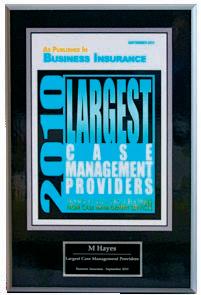
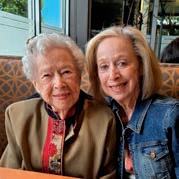
Apart from the values of giving and compassion handed down for generations in Melinda Hayes’s family, there was another family tradition which ultimately translated to Melinda Hayes becoming a creative, risk-taking, innovative business leader. Hayes notes, “female leadership and professional responsibility were abundant in my family.”
She had a great-great-aunt Cora who, during the Great Depression after WWI, worked for the family timbering business in the mountains of western North Carolina. Cora and her sister married two brothers, who started a traveling sawmill. They learned that Cora was quite good at estimating timber amounts on the properties they would purchase to harvest the trees. Hayes relates, “in those days, no one would believe a woman could do this job. So, she dressed up as a man when she went to the properties and was the lumber estimator for the successful business.”
Hayes continues, “My grandmother Zell, niece of Aunt Cora, was thrust into becoming the breadwinner for my mother’s family when her husband fell ill during WWII. While he was in poor health, she decided she needed a profession and traveled to Raleigh, NC from their home (the Elastic House!) in Franklinton to become a certified beautician.” Franklinton did not have a formal hair salon. She rented a space and hired other qualified stylists to work there. As they were not local, they would stay temporarily at the Elastic House until they could rent a room in town. Still raising her five children after her husband passed, she realized the business wasn’t earning enough income. A woman of action, she went to Camp Butner, NC and applied for the job of manager of the Post Exchange (PX). With her business ownership experience, they hired her, and she sold her hair salon. On a trip to Rome, Italy to visit her oldest daughter and son-in-law, who was with the State Department, she fell in love with Rome. As Camp Butner was closing, she was hired to manage the Rome Embassy PX. She remained in Rome at the embassy for the next 25 years.
“In those days, no one would believe a woman could do this job. So, she dressed up as a man when she went to the properties and was the lumber estimator for the successful business.”
Hayes also includes her mother Rosalie in this reckoning of leaders. Hayes reports that, “Rosalie attended East Carolina University studying chemistry. She became the first female chemist in R&D at Burlington Industries in Greensboro, NC — another female pioneer!”
Recognizing what we are capable of and what we become may be triggered by adversity and challenge, Hayes reflects that, “the life crisis that befell my grandmother took her on a path she’d never envisioned. But it was her responsibility, and confidence, that led her on that path of a very rewarding professional life. She instilled that belief in my mother, and she in me. Take chances and believe you can surmount whatever comes your way.”
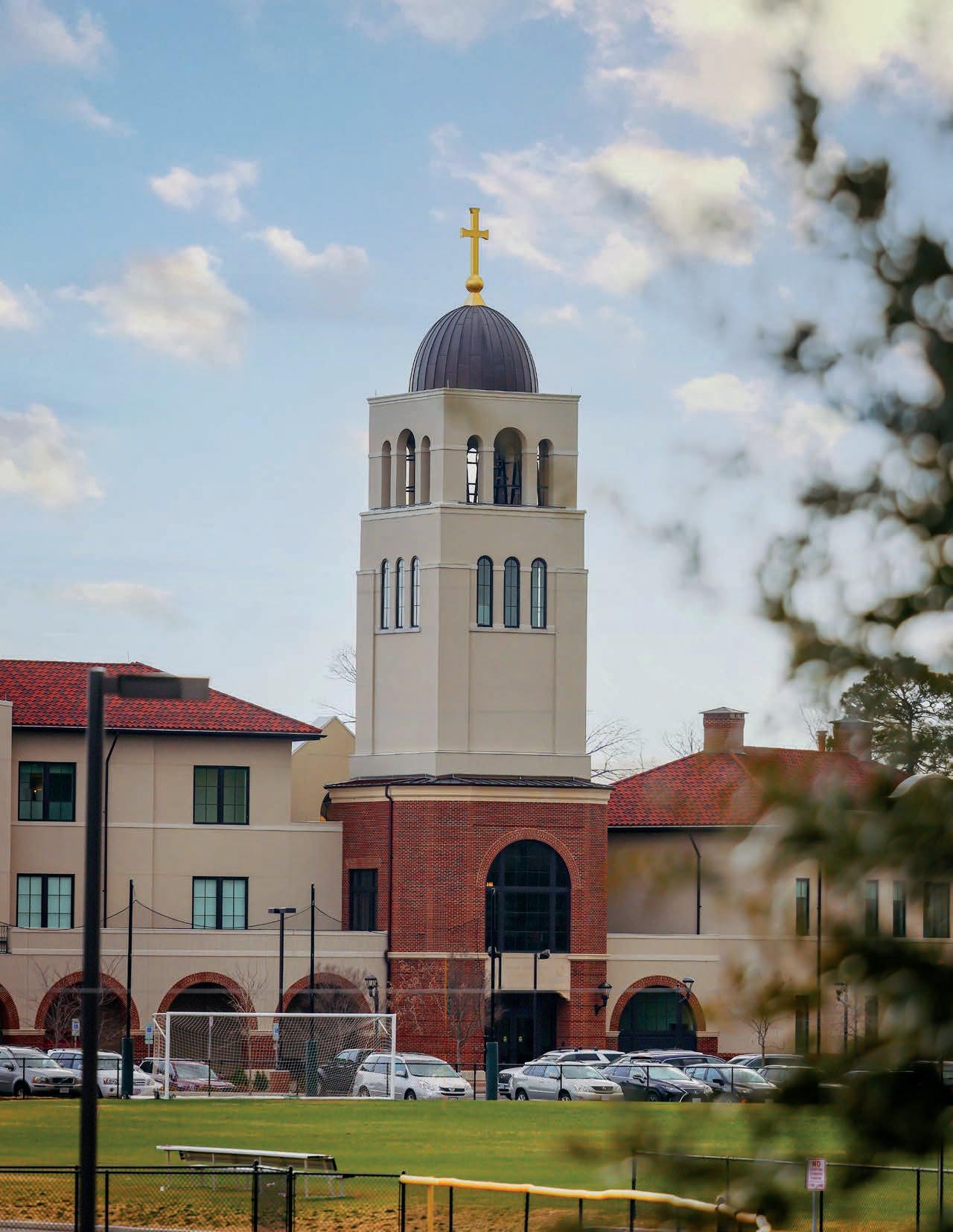
I’m sure I didn’t realize at the time how much my experience at Benedictine would help me accept many of life’s challenges ahead. I was the 1973 recipient of the William H. Danforth ‘l Dare You Award’ which was the faculty’s call to me to develop myself and the confidence to persevere. Whether it was through athletics, academics, the military or the Benedictine Monks ... I knew I had to try ... whether I won or lost, my reward was the ‘confidence to try.’ I owe much to Benedictine. My thanks will be shown in part by a scholarship funded now and through my estate plan.”
THURMAN S. CASH III | BENEDICTINE CLASS OF 1973
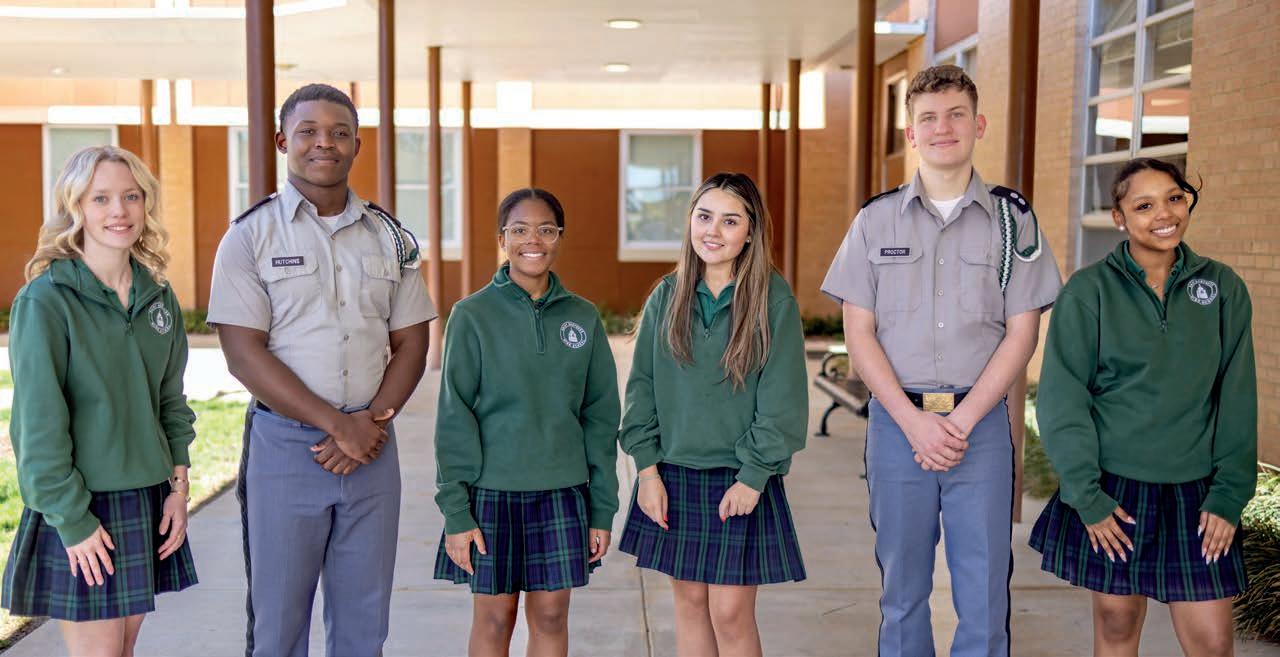
Include a specific amount or percentage in your will — one of the simplest ways to give while reducing your taxable estate.
— LIFE INSURANCE —
Incorporating planned giving into your financial strategy is a powerful way to shape the future of the Benedictine Schools of Richmond. Your gift — whether through an estate plan, IRA or other asset — supports scholarships, programs, faculty and facilities. Every gift, regardless of size, strengthens our mission and inspires future generations of Cadets and Gators.
Have you included Benedictine or Saint Gertrude in your estate plans? Let us honor your generosity through our legacy societies. Join today and leave a lasting legacy. Learn more about Estate & Planned Giving or make your gift now.
For additional information about planned giving options that can also provide financial benefits to you and your heirs, please contact Kristina Pudner, Director of Scholarship Giving at 804-708-9581 or kpudner@benedictineschools.org

Name Benedictine Schools of Richmond as a beneficiary. An easy option for donors of any age, especially younger alums.
— IRAS OR RETIREMENT PLAN ASSETS —
Designating these assets can reduce income and estate taxes. Required minimum distributions begin at age 73.
— REAL OR PERSONAL PROPERTY —
Donate fully owned property and deduct its fair market value while avoiding capital gains tax.
— CHARITABLE GIFT ANNUITY —
In exchange for your gift, receive lifetime income through a simple contract with Benedictine Schools of Richmond.
— CHARITABLE TRUSTS — LEAD, REMAINDER, OR UNITRUSTS —
Lead, remainder, or unitrusts may offer significant tax benefits — consult with us and your advisor to explore options.

An interview with Cadet entrepreneur Griffin Lang ’27, who specializes in crafting custom cutting boards and charcuterie boards, and enjoys taking on creative commissions.
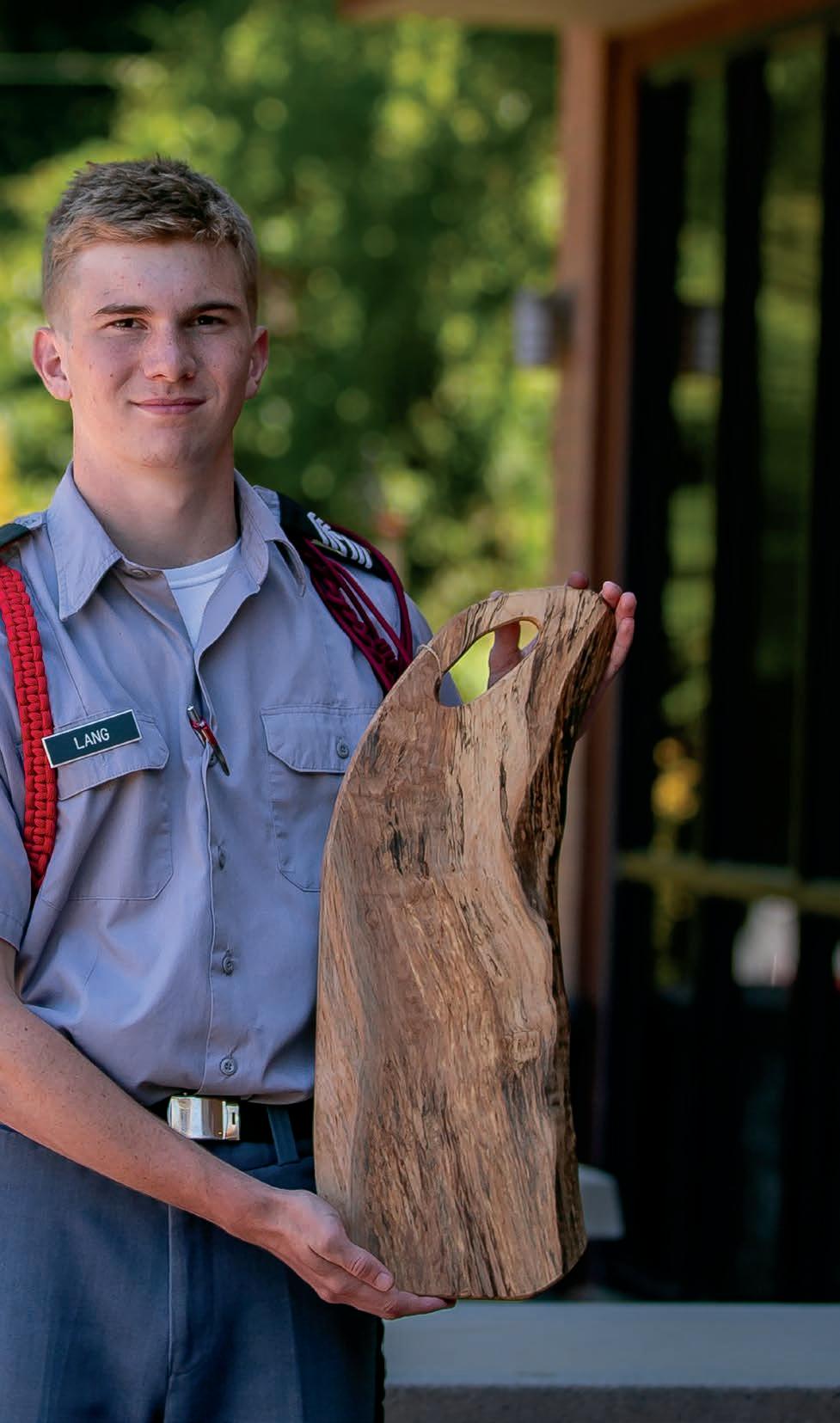
Discovering a passion for woodworking from watching YouTube videos, Cadet Griffin Lang ’27 started a woodworking business when he was just a freshman. Lang taught himself from those videos, and from cutting board kits, where everything was laid out for him, and was soon making sales. That first year he completed five cutting boards, all from kits. This past year he completed 17 cutting boards, all done completely by hand. The kit days are long gone. Lang is now a skilled artisan who sources wood from sawmills, and prepares the wood himself. He has Instagram and Facebook accounts for his business and sells directly to customers by communicating through those platforms. Creative and possessing high standards, Lang likes to take on custom commissions and has learned some valuable lessons already — both from actual experience and through the BSoR Entrepreneurship Program. His logo has an antique hand plane at the center, a nod to his emphasis on old school craftsmanship.
TELL ME ABOUT YOUR BUSINESS — THE NAME, WHEN YOU FOUNDED IT AND WHAT YOU OFFER.
My business name is GLL Woodworks. Back in freshman year I started watching videos on woodworking, and discovered I really liked doing this stuff. My Dad, he is a contractor. He does some of it partially on the side. That Christmas of my freshman year I asked for a bunch of tools and it started right then. That January of 2023 I started making cutting boards and a couple other things. The main business model is just selling cutting boards and charcuterie boards, but I want to expand that out soon. I have a couple personal projects in mind that may develop into products.
WHAT MADE YOU DECIDE TO TURN YOUR SKILLS WITH WOODWORKING INTO A BUSINESS?
Well, I mean if you’re having fun with something you might as well get some monetary value out of it! If you love to do something, I feel like you should just make it useful — but also have fun with it. What I want to say is, yes, the money’s nice to bring in, but I don’t want to get carried away with just making stuff to make it and sell it. I want to stay in the creative mindset and make stuff that I want to make.
My products are cutting boards, charcuterie boards, and recently I made little duck call boxes — presentation boxes — for Mr. Smith, for the BSoR Conservation and Hunt Program. I do a lot of custom orders like that.
The main woods that I use are maple, cherry and walnut. Usually I’m working with hardwoods, but there are also sub-genres of the type of wood. For example, I had a lot of Brazilian cherry I used to use. That’s a really hard wood, and you have to sand it so many different times, but it comes out so beautifully! I also use oak, and I have used an African wood, bubinga.
Most people just DM me. Usually the custom orders are coming from people I know, or people my parents know. Usually they’ll come to me or message me on the Instagram account and let me know what they want. Most of the work I do is commissioned work, probably 60%.
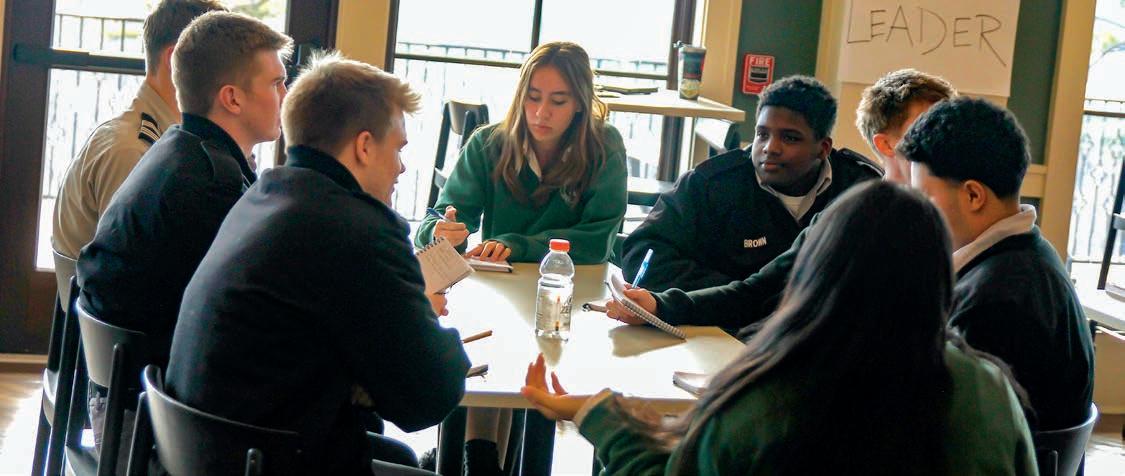
Griffin Lang (far left) participating at an Entrepreneurship Program event in January 2026.
“I feel like you can’t focus on just one thing. I really want to focus on the woodworking part — but I now realize I also have to focus on the business plan and actually selling and promoting.”
WHAT EQUIPMENT DO YOU HAVE AND WHAT DO A COUPLE OF THOSE MACHINES DO?
The typical machines are a sander, and either a skill saw or a circular saw or a table saw. If you’re not buying the finest wood — if you’re buying roughed up wood — you have a planer, which flattens both sides. And I also have a bunch of different hand saws.
In my first year I made about five cutting boards. Back in my freshman year I used to just buy the kits where they already have everything laid out for you, and you just ‘saw it out.’ I was still learning. I was learning all by myself. I would just glue them up, clamp them and then sand them down and put finish on them. Now I actually go get the wood milled up and put it all together myself. This last year I completed about 17.
It’s strictly just direct sales, done through messaging from my Instagram account for the business. I do have an Etsy shop, but I don’t really use it.
HOW DO YOU PROMOTE YOUR BUSINESS?
It’s mostly just posting on Instagram and Facebook. I don’t really advertise anywhere.
It’s very time-consuming. I feel like you can’t focus on just one thing. I really want to focus on the woodworking part — but I now realize I also have to focus on the business plan and actually selling and promoting.
I’ve gone to events associated with the Entrepreneurship Program many times. The main thing I’ve gotten out of it is: stick to one genre or category. Like I said, I have wanted to expand my products, but if I want to keep the business successful I have been told that I need to focus on my one main thing, and crank it out as long as it’s successful. I have been advised not to get distracted, to stay focused. Usually when I’m in the workshop I have five projects going on and I really want to do all of them. But then I get stuck and nothing gets completed. I have to focus on one thing at a time, and be disciplined.
ARE THE MOST
I feel like it’s quality. Quality is my main thing. When I go into some stores, where they are selling other people’s cutting boards or charcuterie boards, I go and feel them. They’re not the grit that I like. I go to like 220 grit, which is pretty fine. You can just tell people are skipping the grits or not water popping — which is making sure the grain doesn’t rise — to smooth it out. They skip steps in the process of woodworking, which just overall lowers the quality of their products.
WHAT’S AN EXAMPLE OF A CHALLENGE OR A FAILURE THAT YOU LEARNED FROM?
There have been two or three times where the wood that I’m blowing up to make the cutting board is not flat or has some imperfections, and sometimes I just have to start over. I don’t throw those pieces of wood away. I reuse them. I have learned that I just can’t use it as a cutting board at all, because it’s not up to my usual quality. If it’s not to the standard, I’ll just put it aside and see if I can use it for something else.
WHAT’S A POSSIBLE NEW PRODUCT, IF YOU HAVE ANY IN THE PIPELINE?
I really want to build skateboards. I saw a guy on YouTube — he made a long board, with a checkered pattern in it. He also inlaid the siding of an old Coca-Cola box, and it was really cool. I want to do something like that, which I’ll keep or make available for purchase. If someone would like to buy it, I’ll say “Sure!” and I’m free to make myself another.

My goal is definitely to make more time for it. School this year has definitely been rough, because I have AP classes and this second semester I haven’t done anything with the business. My goal is to be spending more time on it, and then making sure I’m focusing on the business side while also still finding that creativity aspect, which is really important to me.
What are the benefits of owning my own business? I mean there’s an income — there’s that — but I feel there’s an aspect where you feel older, you feel like you have more responsibility. I feel like it’s definitely matured me. Also it makes other people have a perspective that I am older, more responsible.

CAN YOU THINK OF ANYTHING ELSE YOU PICKED UP FROM THE ENTREPRENEURSHIP
Someone said something like “Don’t be afraid to fail because failure is really just an opportunity to learn and grow.” And I have learned that some “failures” will work for something in the future. Sometimes you can find the piece of wood you rejected for a cutting board, and realize it would be really good for a project you have in mind now. Even though, in some way, it’s all messed up — it’s useful for this. Some of them turn into, like, Bob Ross’s ‘Happy Accidents.’


“What are the benefits of owning my own business? I mean there’s an income — there’s that — but I feel there’s an aspect where you feel older, you feel like you have more responsibility. I feel like it’s definitely matured me. Also it makes other people have a perspective that I am older, more responsible.”
— KELLY GEARY ’93 — ENTREPRENEUR, BOARD MEMBER OF THE BS o R ENTREPRENEURSHIP PROGRAM
Last year’s column introduced an ambitious idea: to build an entrepreneurship program that would not only teach business fundamentals, but also cultivate a mindset grounded in curiosity, resilience, and purpose. Since then, something important has happened — the program has begun to take on a life of its own.
What started as a framework is now becoming a living, breathing experience for students.
When I first visited campus in January to lead the workshop, “Think, Speak and Sell Like an Entrepreneur,” I wasn’t there to lecture — I was there to challenge. Entrepreneurship is not something you absorb passively; it requires participation. We explored identity shifts, what it means to build a personal brand, and how first impressions often determine whether an idea ever gets the chance to grow. Most importantly, we worked through the LEAD pitch framework, helping students articulate not just what they want to build, but why it matters.
What stood out immediately was their willingness to engage. Students leaned into the discomfort of presenting ideas, refining them, and receiving feedback in real time. That willingness — to try, to iterate, to improve — is the foundation of every successful entrepreneur I’ve ever met.
That same spirit carried into February’s “Ask the Entrepreneur” workshop, where Andrew Wyant and I had the opportunity to sit down one-on-one with students. These weren’t surface-level conversations. Students came prepared — with early-stage ideas, side ventures, and, in some cases, real traction. Our role wasn’t to validate — it was to push.
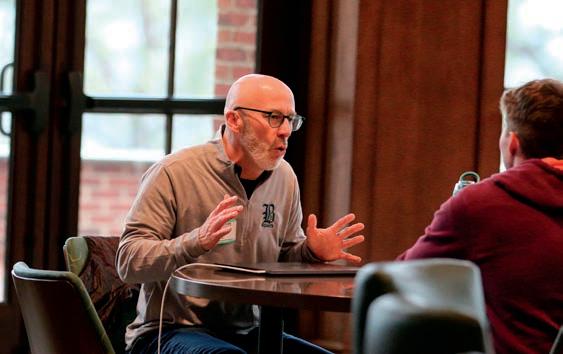
We asked hard questions. What problem are you really solving?
Who cares about your solution?
Why are you the person to build this?
Those moments of pressure are where growth happens. And the students rose to the occasion. Some left with sharper ideas; others realized they needed to rethink entirely. Both outcomes are wins in entrepreneurship.
What’s particularly exciting is that these engagements are not isolated events — they are becoming part of a broader, intentional ecosystem. Plans are already underway to make “Ask the Entrepreneur” a recurring, monthly opportunity, bringing in different voices and perspectives. Exposure matters. The more students can interact with people who have built, failed, adapted, and succeeded, the more real this path becomes.
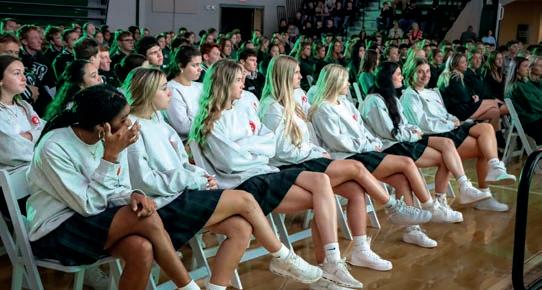
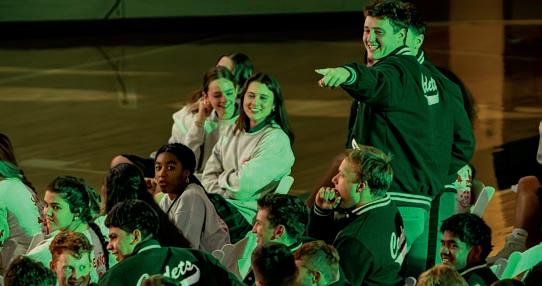
That reality was further reinforced in March, when BSoR students were invited to attend the Robins Executive Speaker Series at the University of Richmond — an opportunity typically reserved for college students and professionals. Hearing from a founder like Stuart Weitzman about creativity and decision-making under uncertainty gave students a firsthand look at what it means to translate ideas into enduring products and brands.
Experiences like these do something a classroom alone cannot: they connect theory to practice. They show students that entrepreneurship is not a distant concept — it is accessible, tangible, and within reach.
And the momentum is continuing to build.
This spring, program leadership will participate in a statewide roundtable at UVA’s Darden School of Business, working alongside the Batten Institute to explore how entrepreneurship education can be delivered with consistency and rigor at scale. This is a critical step. If we want programs like this to endure, they must be both inspirational and structured — capable of reaching more students without losing depth.
In late April, students engaged with Somiah Lattimore of Virginia Tech’s Apex Center for Entrepreneurs, adding yet another perspective to their growing understanding of what entrepreneurship looks like across industries and career paths.
Taken together, these experiences signal something important: the program is no longer just about what students might learn — it’s about what they are actively doing.
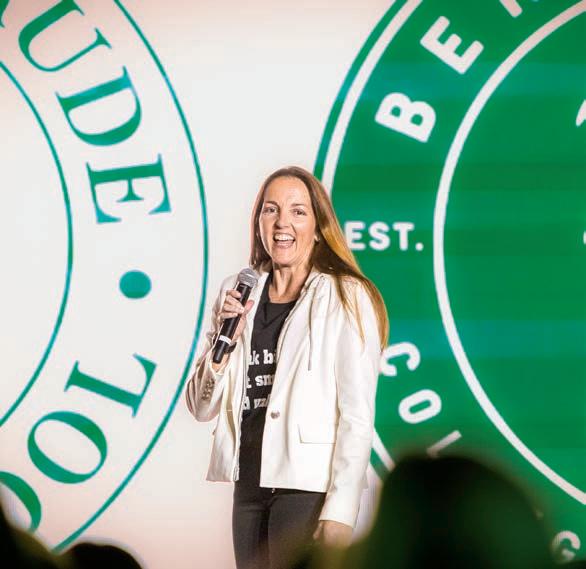
And that’s the point.
Entrepreneurship is not defined by starting a company. It’s defined by how you approach problems, how you create value, and how you respond when things don’t go as planned. Whether these students go on to launch ventures, lead organizations, or innovate within existing industries, the mindset they are developing will stay with them.
The phrase “Think Big, Start Small, Add Value” is more than a tagline. It’s a discipline. Think beyond what exists today. Start with what you have, where you are. And always focus on creating something meaningful for others.
From what I’ve seen so far, BSoR students are already putting that into practice.
And we’re just getting started.
Kelly Geary ’93 — an entrepreneur, board member, and active leader in the BSoR Entrepreneurship Program — and her husband, Andrew Wyant, traveled from Arizona to work directly with students from Benedictine and Saint Gertrude, offering hands-on guidance and real-world insight. Through workshops and one-on-one sessions, they challenged students to think critically, refine their ideas, and articulate the value behind their ventures. Drawing from their own entrepreneurial experiences, Kelly and Andrew have become trusted mentors within the program, helping to cultivate confidence, creativity, and a deeper understanding of what it takes to turn ideas into action.