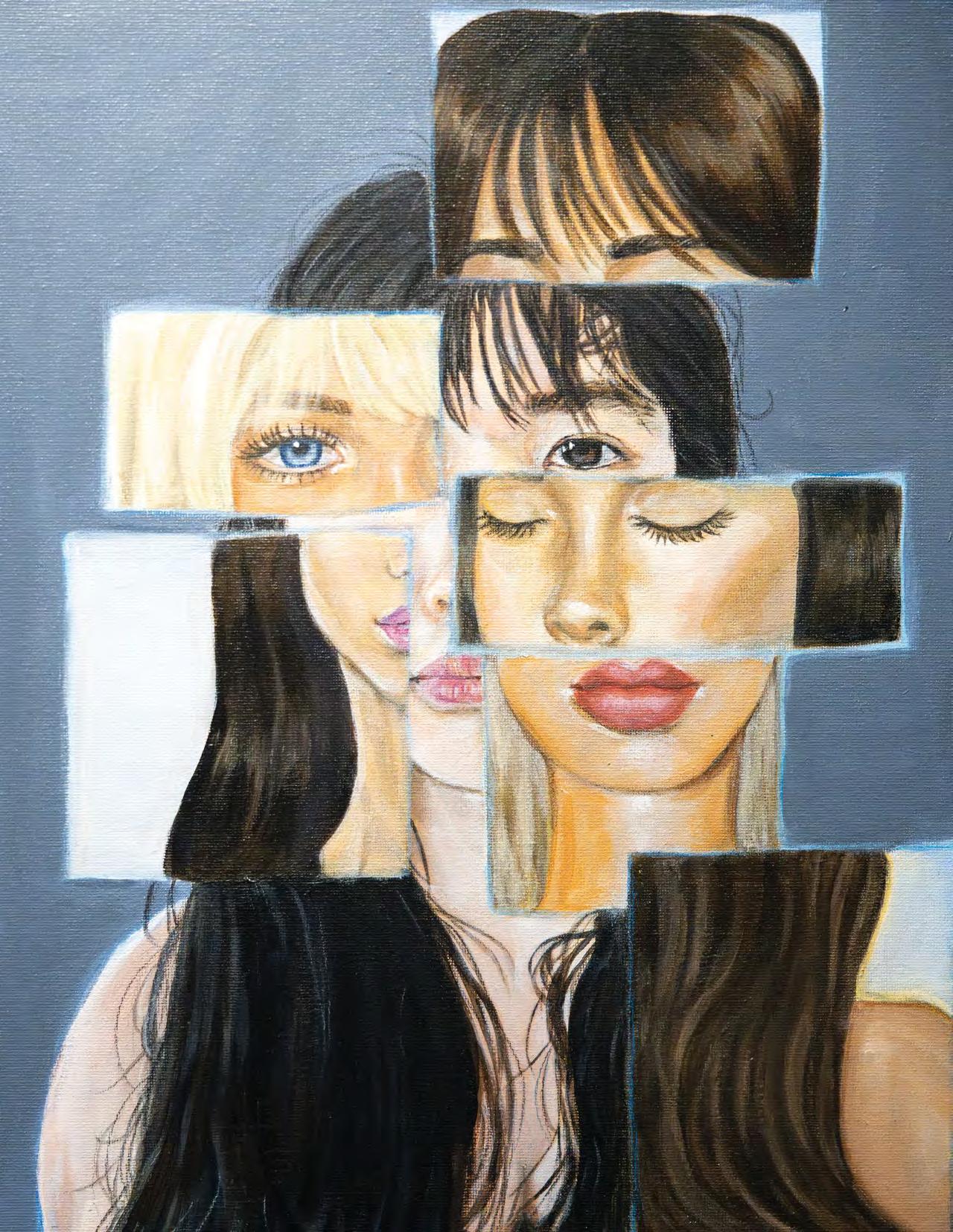
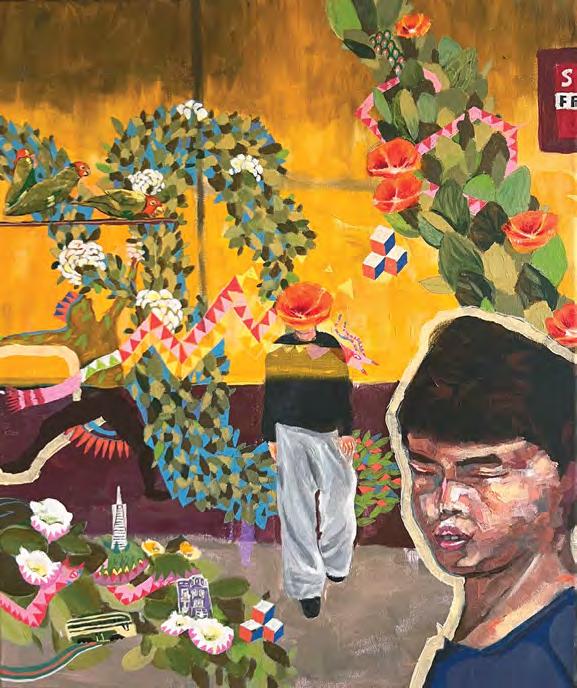
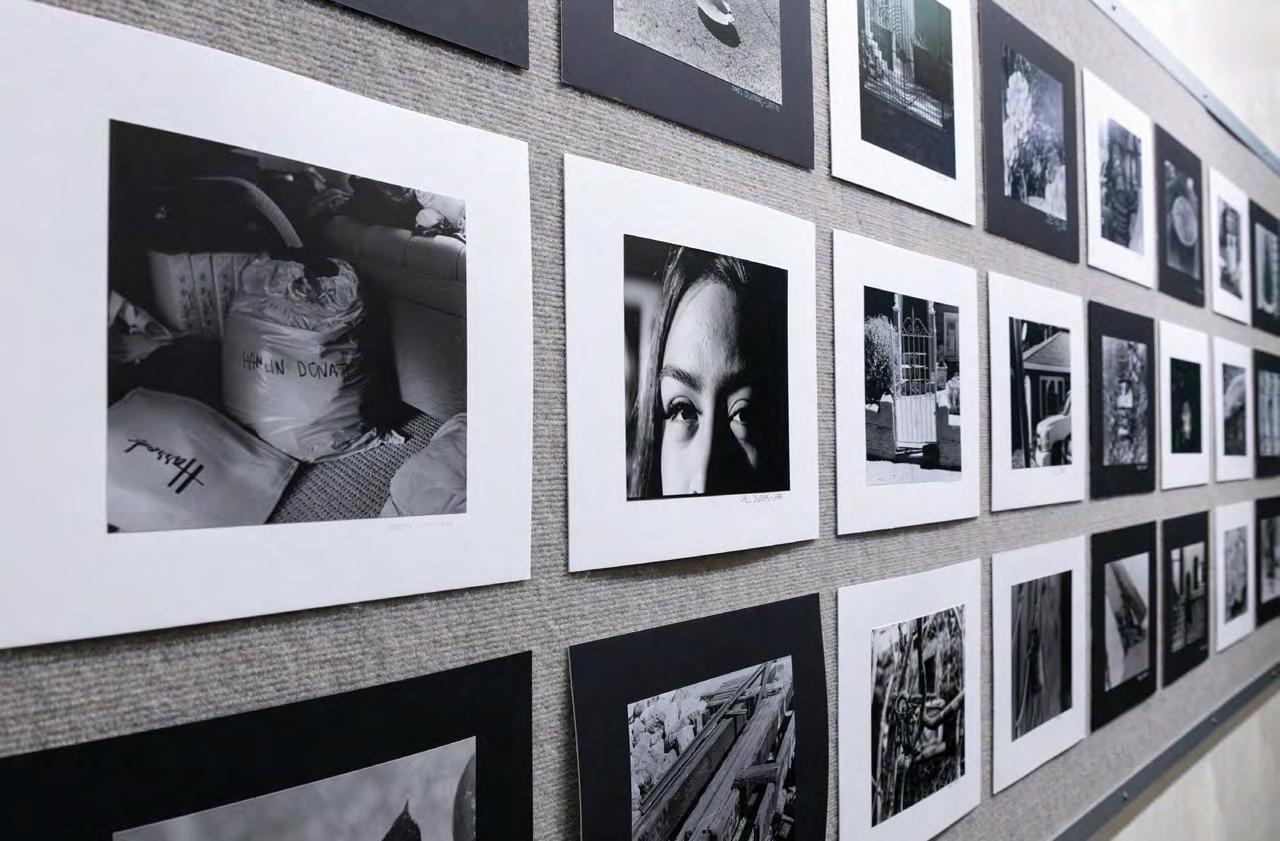
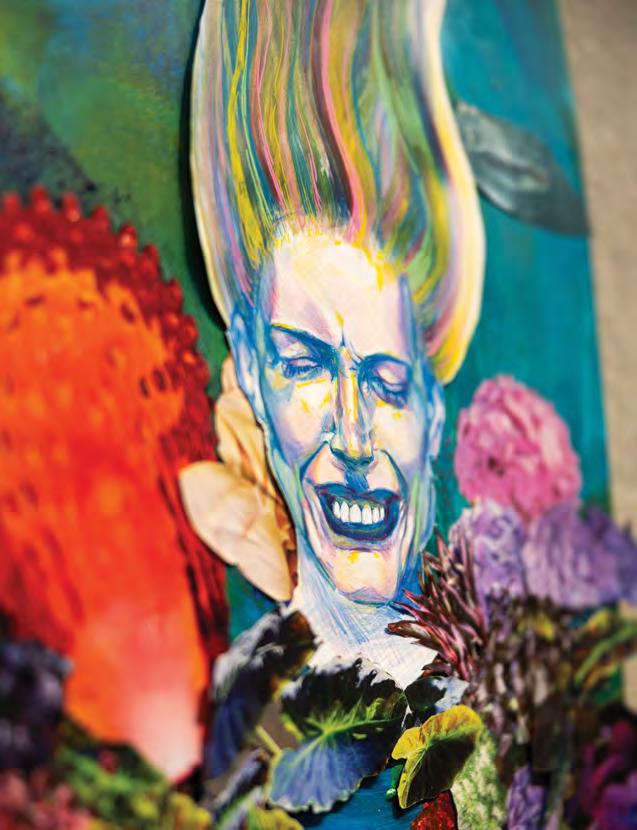
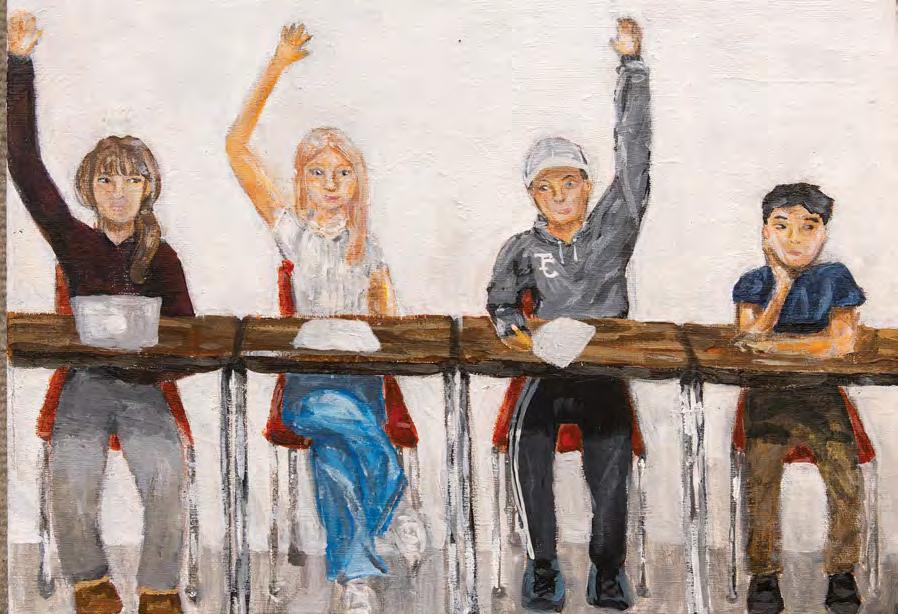
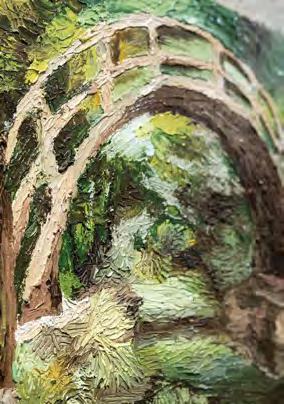
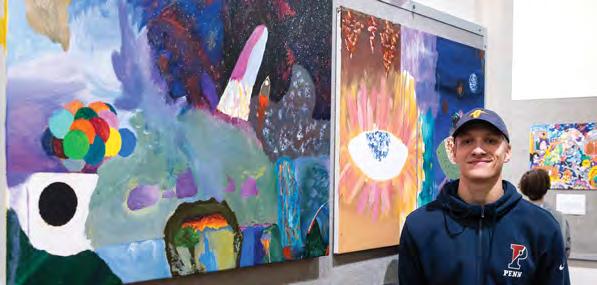
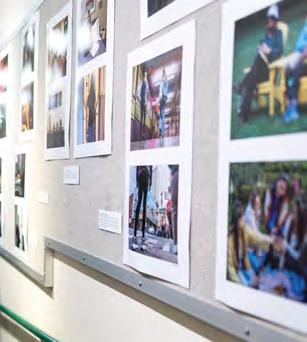
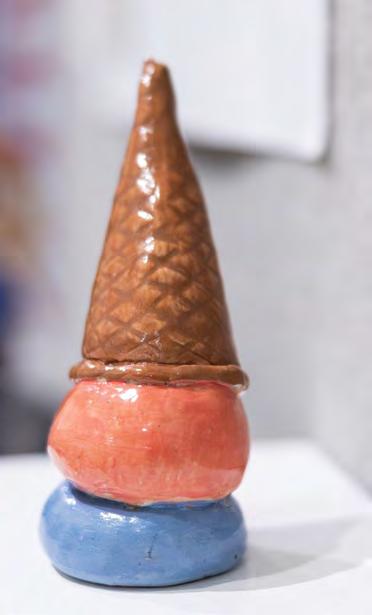
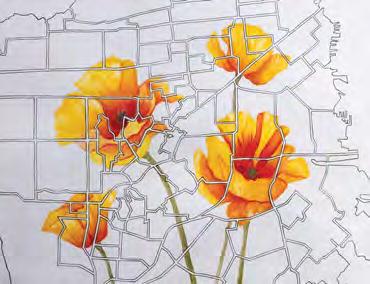
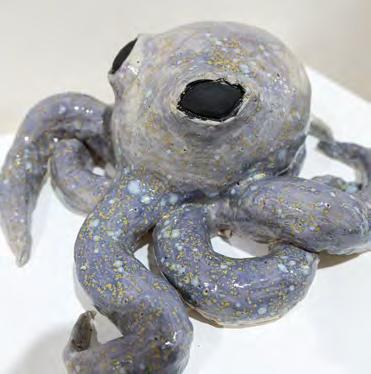
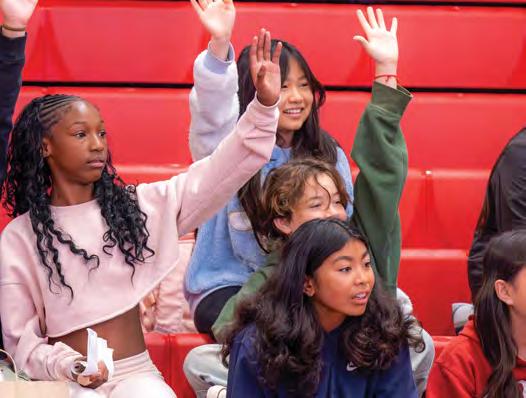
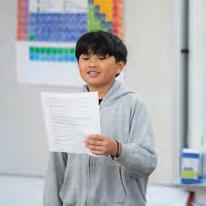
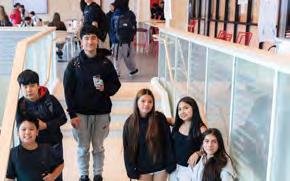
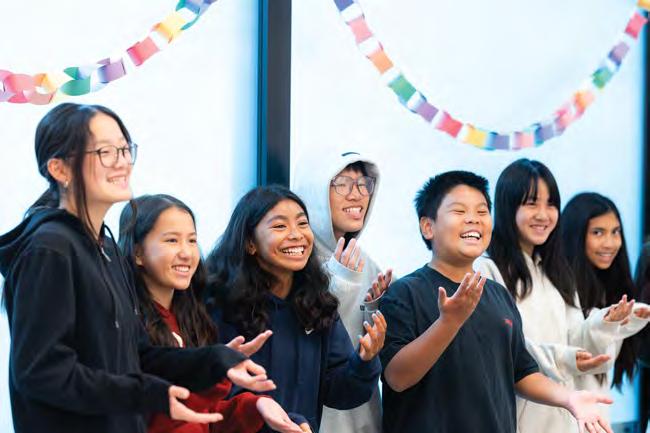
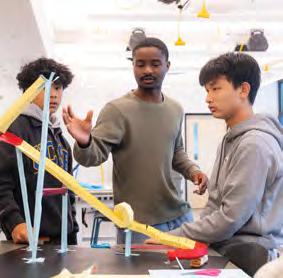
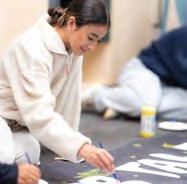
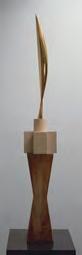
In Drawing and Painting III (taught by Lisa Carroll and Mark Harris), students deepen their artistic practice through themed series that explore storytelling, identity, and community connection. Mia Shan’s work examines how social media shapes the ways we connect, influences our perceptions, and impacts culture—from consumerism and beauty standards to shifting social norms—inviting reflection on the world around us.
Mia’s triptych was on display at the Winter Arts Festival, December 2024.
Dear UHS Community,
HEAD OF SCHOOL
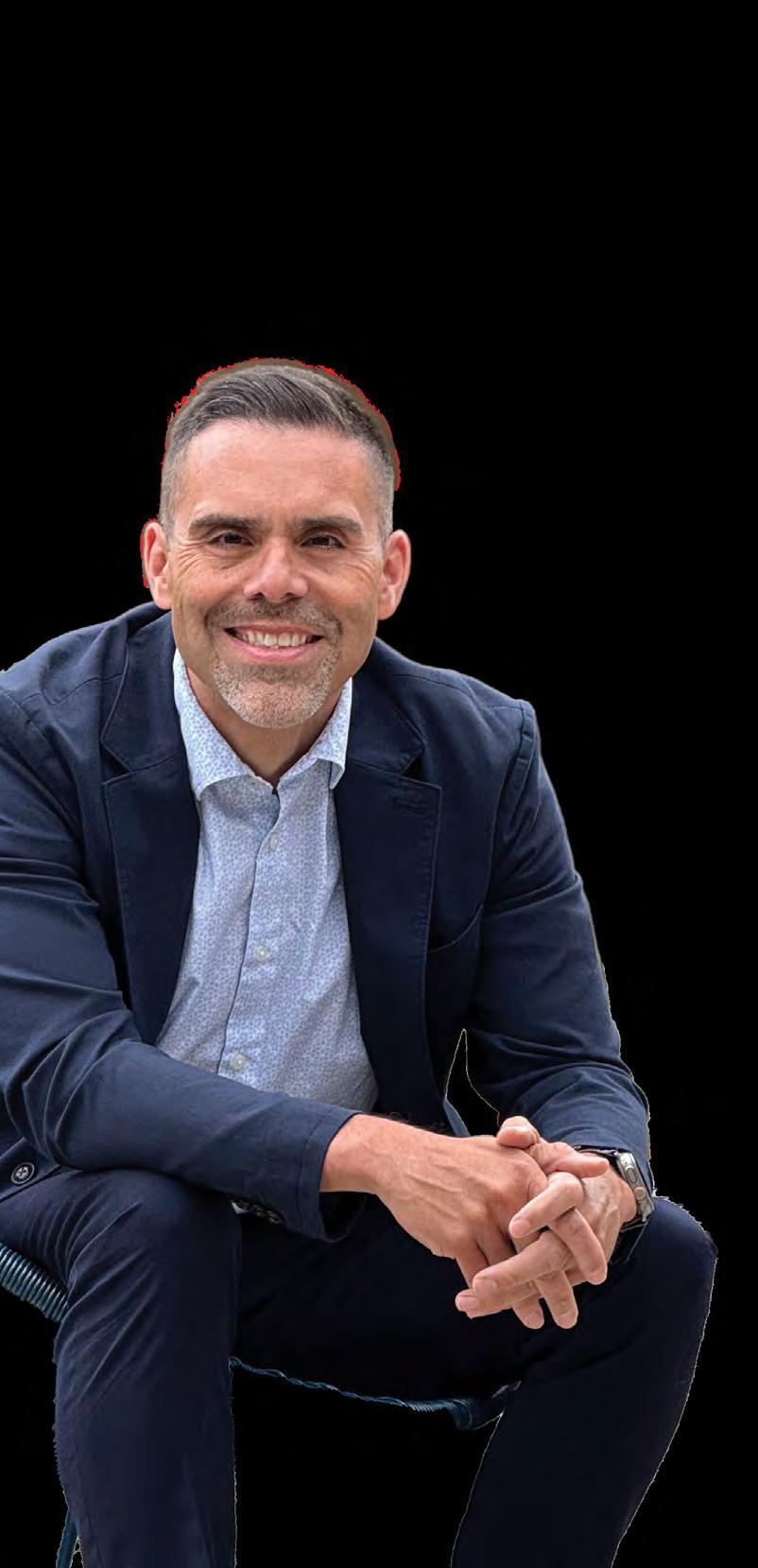
As I navigate my final year at San Francisco University High School, I have been spending a lot of time reflecting on the entirety of my journey and the serendipitous circumstances of my start. Late in September of 1993, I got an unexpected phone call from Bill Bullard, then the Academic Dean of San Francisco University High School, urging me to take a twoweek position as a substitute physics teacher. I was reluctant to accept the offer, as I had never taught high school before, but Bill was very persuasive. I could never have imagined the profound impact that this phone call, and my first experiences in the UHS classroom, would have on the rest of my life.
I vividly remember the remarkable experience of my first days of my teaching here. I had never encountered a community like this one: thoughtful and caring students and colleagues who, even though none of them knew me, seemed to be fully invested in my success. It was so unlike any professional or academic experience I had had before that I eagerly signed on for any other subbing roles that became available. Now, 32 years later, I am still here, and still in awe of this school, the people it brings together, and the culture that emerges from that mix.
It has been an amazing privilege to be part of this community of scholars. I have had incredible role models here, both in my colleagues, who are passionate educators and leaders of remarkable skill, and in my students, who have been some of the most ambitious, courageous, and elaborate thinkers I have ever known. I have gotten to know many UHS parents, whose examples have made me a better parent myself. And there is so much joy here; people take great pleasure in what they dedicate themselves to, and genuinely enjoy each other. I can honestly say that I have laughed, and learned new things, every day that I have been at this school.
An important part of the culture of UHS that has kept me inspired and invested all of this time is the commitment to growth and improvement on all levels. Students are ambitious about their own learning, and there is a deep tradition of faculty professional growth. And the school is itself a learner, constantly striving to improve. UHS has grown and changed in wonderful ways over the last 30 years, and I am grateful to have been part of that evolution. The school’s commitment to equity and social justice, one of its founding ideals, has become even more explicit and central to all that we do. And I can say that we are now a better school for every student who joins us, and we serve a much broader diversity of students than ever before.
Two years ago, our school, like many, faced a significant challenge when the events in Israel and Gaza caused division within our community. In response, last year we developed comprehensive policies and frameworks to ensure everyone’s safety while maintaining our commitment to student learning on urgent and controversial issues. Rooted in our Statement
NASIF ISKANDER
on Equity and Community, this approach is fundamentally aimed at fostering thoughtful, productive discourse that encompasses a wide range of differing perspectives. By prioritizing student freedom of expression and providing teachers with robust scaffolding, our new framework ensures that students can explore diverse viewpoints and analyze information, ultimately supporting critical thinking and empathy, and continuing to foster the courageous and independent thinkers that UHS has long been known for.
Our campus has also been significantly transformed, with the opening of the beautiful California Street building, and the ongoing renovation work that our expanded footprint has made possible. A key element of the new campus design is the presence of comfortable spaces to gather in each building of the school, essential for developing the kinds of relationships that are part of the foundation of a UHS education. And as we upgrade our physical spaces, we are beginning to think more imaginatively about how we can use space and time to support deeper learning. In response to the profound changes over the last decade in both our concept of attention and our relationship to information, we are designing some experimental classroom and course structures. As we roll these pilot programs out, it will be exciting to discover what new opportunities they open up for our students and the school.
And I am thrilled to be welcoming in our next head of school, Max Delgado, who is so well aligned with the values, heart, and purpose of UHS. Max will start in July, and I believe that he is the perfect leader for the next chapter of the school’s evolution. He and I are already working together to ensure a seamless and successful transition, as he prepares to step aboard this fast-moving train.
As I prepare to step off the train, I will be forever grateful for my time here, and for all of the ways that UHS has shaped my life. This is where great role models and mentors helped me learn to be an educator and a school leader. This is where ambitious students have pushed me to understand the nature of the universe more deeply and clearly. It was even through the UHS community that I met my wife, and this is where I got to witness my talented co-workers guide my son through a truly transformational learning experience. I will always be proud to have counted myself among the faculty and staff of UHS.
Nasif Iskander P ‘22
Interim Head of School
UHS VAL ES INTERCONNECTION
The practice of Instructional Rounds promotes a more connected community:
FOSTERS transformational professional growth by uniting educators in shared learning experiences that bridge disciplines;
CENTERS inquiry as a collective practice, encouraging curiosity, reflection, and deeper understanding of student learning across classrooms;
STRENGTHENS connection among faculty by cultivating empathy, trust, and a shared commitment to student success.
CREATING A CULT RE OF CONNECTION
INSTRUCTIONAL ROUNDS AS A CATALYST FOR COMMUNITY
This summer, I had the opportunity to work with 40 aspiring independent and international school leaders at the Klingenstein Center, Teachers College, Columbia University. My task for my three-day course was to teach the students about instructional rounds, as a method, but also as a leadership move. As part of the work of understanding why a school might consider taking on instructional rounds as a system, my co-teacher, Byron Philhour P ’25, ’28, and I asked the students to come up with a list of shocks to the educational system in the last ten years. The students came up with an extensive list that included the rise of artificial intelligence, the COVID-19 pandemic, Black Lives Matter, #MeToo, increasing political polarization, and several geopolitical conflicts, including the ongoing war in Israel and Palestine.
SARAH ODELL Dean of Faculty
When I arrived at University High School for my interview in January of 2024, many faculty and staff members shared with me that they felt increasingly disconnected from their peers. School leaders also expressed to me a desire to build systems that would increase connectivity and belonging among adults at the school. As a school leader, my point north is always, first and foremost, how do we increase educators’ efficacy? When teachers feel like professionals, connected to one another within a community of practice, they will be at their most powerful in how they engage students. Because teacher working conditions are student learning conditions, instructional rounds is a systems approach to developing a teacher-centered community of practice, with student learning at the center of the shared work.
The students that I worked with at Klingenstein were able to recognize all of the challenges to developing
tight-knit professional communities at their schools, as well as the changes in student development over the last ten years that have changed students’ engagement with curricula. In today’s dynamic educational landscape, schools face increasingly complex challenges stemming from cultural shifts and rapidly changing student needs. Diverse student populations, widening equity gaps, technological advances, and evolving community expectations have forced schools to reevaluate traditional teaching models and professional development methods. Instructional rounds—a structured, collaborative approach to professional learning, as a means of fostering continuous improvement in instruction, enhancing student learning outcomes, and building a stronger sense of community among faculty—is a system that can combat all of the challenges that schools are facing today. That is why I took eight educators from UHS to Harvard last December to get trained on the method.
Instructional rounds are adapted from the medical model of clinical rounds that is used in hospitals. In education, they involve small groups of educators— usually teachers, administrators, and instructional coaches—visiting classrooms to observe teaching and learning in a non-evaluative way. The process typically follows a clear structure: identifying a problem of practice, conducting observations, debriefing with collected data, and reflecting on patterns and implications. The goal is not to evaluate individual teachers, but to develop a shared understanding of effective instructional practices and how they align with schoolwide goals.
One of the primary benefits of instructional rounds is that they encourage educators to openly discuss
and reflect on the cultural challenges present in their schools. We saw this in real time during our visit to East Boston High School (EBH), where we conducted a practice round as part of our training at Harvard. EBH had become a school mostly populated by immigrants who were English language learners. Not only had the rounds process allowed EBH to become a leading academic high school in Boston; it had also empowered teachers within EBH to become the leaders of teaching and learning work in the school. Even though UHS does not face the same challenges EBH does, the educators on our trip could see the power of instructional rounds and what the process could do for educators and students alike.
Instructional rounds can create space for dialogue around teaching and learning at UHS and thus help us feel more connected to one another across our increasingly spread-out campus. Through focused observations, our whole faculty and staff can develop a common language around student engagement and success. We can also see how students learn in a myriad of settings and across diverse tasks in different classrooms.
Instructional rounds emphasize collective responsibility for student learning. At UHS, we can sometimes remain siloed by our academic disciplines, and sometimes make assumptions about what learning looks like in other departments. The process encourages us to ask, “What is happening across classrooms, and how can we improve together?” This shift in perspective is critical, as it promotes collaboration and empathy instead of isolation. We now have the possibility of becoming a school learning together, faculty and staff alongside our students, with the goal of giving them the best possible learning environment.
Today’s students face a wide range of challenges and possess diverse learning profiles. Social-emotional needs, mental health concerns, neurodiversity, and the impact of technology on attention and motivation are just a few of the factors reshaping how students learn. Instructional rounds help educators respond to these shifting needs by grounding their understanding of student experiences in actual classroom observations. When teams engage in rounds, they pay attention to student behaviors, interactions, and engagement levels. They may ask questions such as: Are students collaborating meaningfully? Are they grappling with rigorous content? Do they have access to differentiated supports? Are lessons responsive to their interests and cultural backgrounds? These questions push educators to align their instructional strategies with what students
truly need in the moment—not what has always been done in the past.
Instructional rounds also address a more subtle but critical need: the professional and emotional well-being of teachers. Both UHS and the Hewitt School (where I previously worked) have articulated a sense of teachers not feeling known in their work since the pandemic. Rounds provide a structure for meaningful collaboration and collective learning, which helps restore a sense of professional agency and purpose across the entire school.
During instructional rounds, teachers are not just passive recipients of professional development—they are active participants and co-creators of knowledge. They engage in focused observation, share their insights, and contribute to the school’s improvement goals. This fosters trust, mutual respect, and a culture where everyone is both a learner and a leader.
Additionally, rounds promote a reflective mindset. Teachers are encouraged to look beyond surface-level behaviors and ask deeper questions about student learning: What are students thinking and feeling? What cognitive demands are being placed on them? How do our practices empower or marginalize certain learners? One of the most impactful things I learned at Harvard was to “look down and not up” during observations. We often focus on what the teacher is doing in a given situation, as opposed to what students are doing. Focusing on student behavior and engagement enables us to discuss the evidence of what we are doing for student learning in the classroom.
Because rounds are repeated over time, they provide longitudinal insight into whether new initiatives are taking root. Patterns in instruction can be tracked, celebrated, and adjusted as needed. Leaders can use the insights from rounds to inform coaching, resource allocation, and professional learning priorities. In this way, rounds become both a mirror and a map: they reflect current realities and guide future actions.
In an era marked by shifting student needs and teacher burnout, rounds enable innovative, collaborative, and reflective strategies for growth. By creating space for our teachers to observe, reflect, and learn from one another, rounds address the dual challenge of improving student outcomes and building stronger professional communities. They foster cultural responsiveness, adaptability, and a shared commitment to equity and excellence. We hope that rounds become part of a movement toward a more connected University High School.
NOLAN CHU ’27
EARNS NATIONAL AND CONGRESSIONAL ART HONORS
UHS is thrilled to celebrate Nolan Chu ’27, whose dedication to the arts and writing was recognized with multiple prestigious awards in the spring of 2025.
Nolan received three National Scholastic Awards-–two for visual art and one for writing. One of his art submissions was created through an independent study with Mark Harris, while his award-winning poem began as an assignment in Ella Zaslow’s English class. Both projects represent countless hours of effort and creativity, pursued with passion both inside and outside of the classroom.
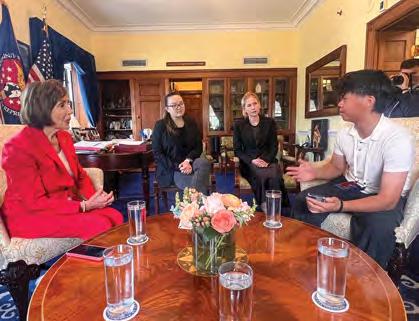
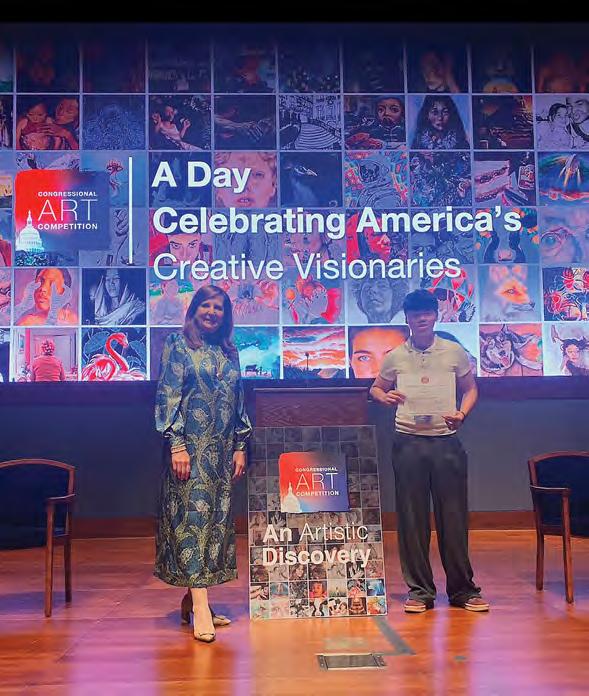
Adding to this impressive achievement, Nolan was also selected as the winner of the Congressional Art Competition for San Francisco. Each year, members of the U.S. House of Representatives honor one high school student in their district with this award. Nolan’s painting will hang in the U.S. Capitol alongside works from across the country, representing Congresswoman Nancy Pelosi’s P ‘84 district and, of course, UHS.
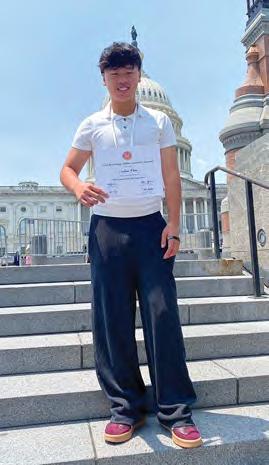
In June, Nolan and his mother, Cat Seto, traveled to Washington, DC, where Nolan was invited to attend the official ceremony. In a special one-onone meeting, Pelosi surprised Nolan by presenting him with a Congressional Challenge Coin. Rarely given, these coins carry a tradition rooted in the military and government, symbolizing honor, recognition, and accomplishment at the highest levels.
Nolan’s painting, which depicts some of the “forgotten” in San Francisco, was created with the hope of offering a visual statement to a bipartisan audience. As Nolan explained, his goal was that lawmakers and visitors who pass through the Capitol exhibit hall daily might pause to reflect each time they walk by.
We are delighted to celebrate Nolan’s accomplishments and look forward to seeing his creative journey continue to inspire.
Nolan Chu meets with Nancy Pelosi P ‘84 and staff
Sightseeing in the nation’s capital
At the ceremony in the Capitol with Kelle Strickland, President and CEO of Congressional Institute
Nolan’s painting, "City Mosaic," which will hang in the U.S. Capitol Hill Cannon Tunnel for the next year
ARTS FESTIVAL WINTER
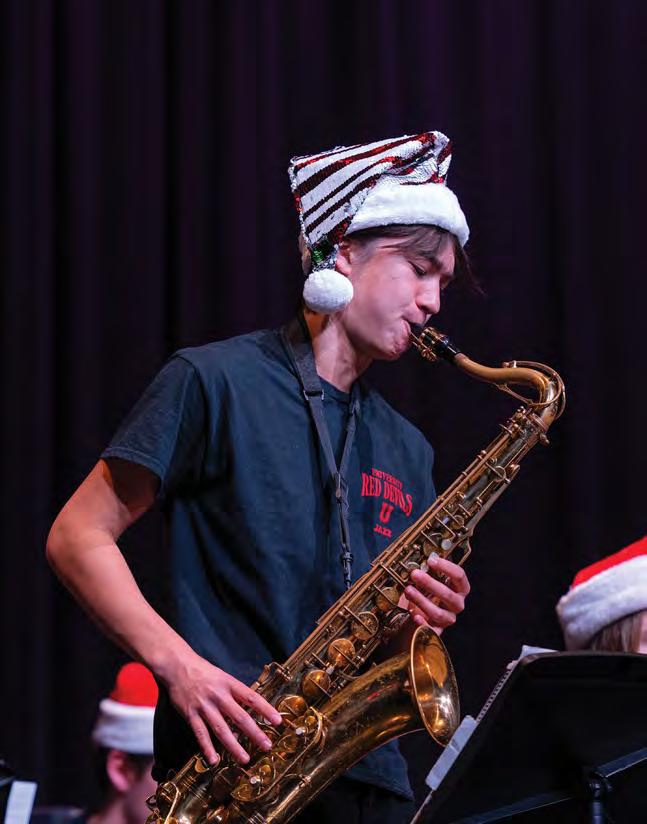
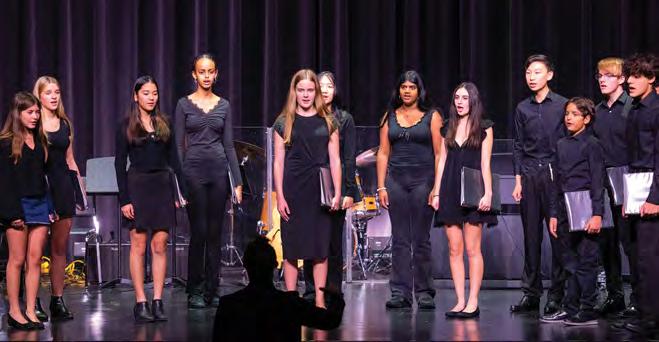
The Winter Arts Festival began with the Arts Show in the Jackson Street Gallery and Washington Street Foyer, where students displayed work from Photography, Ceramics, and Drawing and Painting classes, along with select Independent Studies. Attendees also viewed the progress of the AP Studio Arts students, each working toward a portfolio to be completed in the spring. The festival continued in the Theater with the Winter Concert. The program featured performances by Jazz Combo, Jazz Ensemble, Chamber Orchestra, Chorale, and Satonics. This cherished annual tradition allowed the community to celebrate UHS student artists and musicians while closing out the calendar year with an evening of creativity and connection.
FIFTY YEARS OF INQ IRY
Incoming Head of School Max Delgado on How UHS Continues to Lead in Education
Those of us who’ve spent our careers in independent schools have watched the world of education slowly catch up to what UHS has been doing since its founding: embracing complexity, collaboration, and open inquiry. In fact, it’s these values that attracted so many of us to this community in the first place.
I first walked into a classroom twenty-four years ago. Back then, if I asked students to take out something to write with, they dug into their backpacks and pulled out whatever worked: a pencil, a pen, even a broken crayon. Once, a student took a quiz with an eyeliner pencil because that’s all she had. What mattered wasn’t the tool—it was her impulse to jump in.
But over time, I noticed a shift. When I asked students to take out something to write with, hands began to go up. “Which pen?” “What color?” “Is a pencil okay?” As the years passed, more hands went up. Students wanted specificity for every step.
Across four schools in three states, I’ve noticed the same pattern over my career: students are more apprehensive about improvising in academic spaces than they were two decades ago. Yes, my observation is anecdotal (and admittedly a little silly), but most teachers who’ve been doing this work
for a while could tell a different story that gets to the same point. Students have grown increasingly uncomfortable with open-ended questions, less willing to embrace false starts, and more hesitant to attempt something new without clear instruction. This shift isn’t about pens. It’s about ambiguity. Students have become drawn to the idea that there’s a single right answer, a single right source, one correct way to ask and do things. Ambiguity is no longer seen as an opportunity for exploration but as a trick question—a trigger to look outward for direction before taking a risk.
Some of this instinct comes from good pedagogy. The past few decades have seen a shift toward articulated learning outcomes: rubrics, clear targets, and careful mapping of how skills and content overlap. This is all good stuff, and there's a deep benefit in students knowing what’s being asked of them. But when students internalize the idea that their best work requires clear targets or a simple rehearsal of what they’ve seen before, they can begin to believe that attempting anything open-ended is inherently risky or wrong. What gets lost is the art of “sight-reading”—a vital tool for the kind of deep scholarship that UHS does so well.
Scan to read
known for. It’s rooted in the school’s history.
In Civilization and the Arts, students learn that history, music, literature, and philosophy can’t be understood in isolation; meaning is derived through cross-disciplinary exploration, where questions are answered in layers rather than through a single source. The Independent Study program pushes students to pursue self-designed projects that demand curiosity, persistence, and many (many) false starts. And the upper-level elective program, designed to extend foundational learning through application, wonderfully embodies this approach. Whether analyzing Moby Dick, wrestling with ethical dilemmas of food systems, or developing their own questions in statistical research, students build novel arguments and defend their interpretations.
the Board’s announcement,
explore Max’s bio, and learn about the Head of School Search process
You likely know that sight-reading— a term borrowed from music instruction—is when a musician encounters an unfamiliar piece and must decode, interpret, and perform it in real time. This practice has corollaries across every academic discipline. Most simply, it describes the art of approaching novel challenges by drawing on prior knowledge and staying curious about how things will unfold, rather than being paralyzed by the unknown. Ask any music teacher, and they’ll tell you sight-reading is one of the ways students build true fluency.
The strongest academic programs do two things: give students a foundation of clear targets while also teaching them to improvise, apply, and explore. But the best programs go further—they articulate complexity itself as a goal, teaching students that answers are often plural and that the strongest conclusions are drawn from multiple perspectives. And this work—this best work—is what UHS is
While many schools are now realizing they need to explicitly teach students to manage ambiguity and embrace complexity, UHS has taught these principles for decades. UHS has been ahead of the curve for half a century—the work is not adoption, but growth and refinement.
I’m thrilled to be joining the community in July 2026, when I’ll finally see UHS’s legacy of inquiry, agency, and interconnection in action. Whether you’re joining the community next year, part of its rich history, or currently helping write the story of what UHS will become in the next fifty years, it’s exciting to know we’re all part of an approach to education that students need now more than ever.
Even those of us who are new are grateful for the faculty, staff, students, and alumni who have built this legacy, and for Nasif Iskander, who has sustained and deepened this practice so beautifully for more than thirty years. We are all part of the UHS story, where we build not only knowledge but also the temperament students will need when no one is there to tell them which pen to use—or what comes next.
Best,
Max Delgado Incoming Head of School
BECOMING
University High School’s two-year identity work began in the 2023–24 school year with a deep dive into the school’s mission, led by a task force of alumni, trustees, faculty, and staff in collaboration with our strategic consultants from Mission & Data. This process reaffirmed the core values long embedded in the UHS community and resulted in an updated mission statement that served as a launchpad for the school’s broader brand narrative and identity story. By clearly articulating who we are and what we aspire to be, the mission provides the foundation for authentic, values-driven storytelling and sets the tone for a refreshed visual identity that more accurately reflects and amplifies the UHS experience.
The next phase of identity work aimed to reshape perceptions of UHS by presenting a more holistic representation of the school’s identity, balancing its strong academic reputation with its deeply rooted culture of care, purpose, and community. Led by the Strategic Communications Committee and in partnership with our creative partners at DISTINC_, the work focused on developing a cohesive brand narrative grounded in the newly articulated mission. Through campus visits, stakeholder engagement, and storytelling exploration, DISTINC_ gathered insights to inform a new visual identity and messaging strategy. These efforts were designed to align internal and external communications, support enrollment and philanthropic goals, and ultimately
tell a more accurate, compelling story about the transformational UHS experience.
The new visual identity was intentionally designed not just as an aesthetic update, but as a powerful reflection of UHS’s core values and aspirations. It serves as a mirror of who we are and who we strive to be: a vibrant, multifaceted community unified by a shared mission. Our new identity affirms that excellence at UHS is expressed through diverse pathways that honor each student’s unique strengths and ambitions. At its heart, the design captures the richness of the UHS experience, where diverse voices, purposeful passions, and spirited pursuits intersect to create a transformational experience. Rather than presenting a singular narrative, the visual system embraces complexity, signaling that there are many ways to be part of University. The theme that has emerged from this work is: Becoming U: Many Voices, One University.
The Transformative“U”on its own and the multiple “U”s as a system are expressions of inclusion. This identity invites those who may not have always seen themselves reflected in our story to find belonging and recognition. It is an affirmation that UHS is a place where difference is celebrated and where everyone contributes to a shared, dynamic whole. By grounding our brand narrative and identity story in this philosophy, we move forward with clarity, unity, and purpose, bringing our mission to life in a bold and visible way.
MANY VOICES, ONE UNIVERSITY
OUR MISSION
At San Francisco University High School, we engage our community of diverse voices in a transformational experience that embraces the spirited pursuit of learning and empowers purpose larger than self.
EXPLORE THE NEW VISUAL IDENTITY AND BRAND NARRATIVE HERE
TRANSFORMATIVE U
Many identities, paths, voices make up one community. Through the journey of learning we grow more into our selves and our purpose. Rooted in the UHS Mission & Equity Statement: We believe that the deepest learning requires collaboration among people who embody a diversity of backgrounds, beliefs, experiences, and perspectives.
INSPIRED U
Referencing the early letterforms from the first printing press, this U represents innovation and the spreading of knowledge.
We are curious, open-minded, and courageous, striving to deepen our understanding of the evolving world.
INTERCONNECTED U
The U within the U. Our connections are foundational to our community identity.
\We recognize that we form a web through our common humanity, and we act to fulfill a purpose larger than self.
HERITAGE U
The U historically associated with University and its athletics.
We are anchored in our legacy of inquiry, care, integrity, agency, and interconnection.
DYNAMIC U
A playful U depicting joy and dynamism.
We take risks, pursue passions, discover and make real our own distinctive and evolving expressions of excellence.
UHS
Empowering Purpose
Larger
Than Self at SOCIAL IMPACT
PROGRAM CONTEXT: WHAT IS THE RESPONSIVE EDUCATION DEPARTMENT?
The Responsive Education (REd) department is made up of four different programs (Social Impact, Ethnic Studies, Metacognition, and Health & Wellness) that aim to work towards achieving the mission to cultivate a learning environment where identity is honored, action is purposeful, humanization is centered, relational learning is embraced, and care guides every interaction. Through empathy-driven education, we empower individuals to grow, connect, and create meaningful change in their communities.
Through REd programming, students will learn to…
● reflect on personal values and experiences to foster self-awareness and meaningful advocacy;
● critically examine diverse perspectives to deepen understanding and uplift marginalized voices;
● cultivate inclusive connections through effective collaborations to address shared challenges;
● engage in real-world challenges with a commitment to justice and positive change; and
● advocate for ethical action by practicing compassion, accountability, and integrity in personal and community spaces.
HOW COMMUNITY ENGAGEMENT EVOLVED INTO SOCIAL IMPACT
After careful reflection and cross-departmental collaboration, the Community Engagement Program was recently renamed and reframed as the Social Impact Program. This shift reflects a deeper alignment with UHS’s mission and the Responsive Education mission of fostering transformational experiences that empower purpose larger than self. The phrase “social impact” emphasizes not only service within the community, but also the broader, lasting effects of students’ actions on society. By reframing the program in this way, we highlight the importance of students seeing themselves as active participants in creating meaningful change. The name also signals a more expansive vision that integrates service, advocacy, and collaboration, underscoring that the program is about cultivating purpose and responsibility in all aspects of students’ lives, not simply completing service hours. The program is anchored in four Social Impact Values that guide student reflection and growth: Empathy, Collaboration, Purpose, and Advocacy. Students return to these values after each service experience, integrating them into their personal and academic development.
RESPONSIVE EDUCATION Department
E-chieh Lin
Interim Assistant Head for Programs & Dean of Equity and Community
Demond
Walker Associate Dean of Equity and Community
THE JOURNEY: EXPERIENCING THE SOCIAL IMPACT PROGRAM IN GRADES 9–12
The Social Impact Program now builds across all four years of high school, adding depth, responsibility, and independence at each stage.
The 9th grade year introduces students to the connections between curriculum and community service. Each cohort completes two grade-level service projects—one during the fall retreat and one in the spring semester. These projects are designed to connect with the service-learning components of Ethnic Studies, English, and Physics courses. Beginning their UHS journey with service tied directly to academics helps students immediately connect with the mission of UHS and Responsive Education.
The 10th grade year emphasizes purpose and collaboration, with a strong focus on reflection. The Social Impact curriculum is delivered through clusters, where students explore values, research social issues, and design a multi-year social impact experience to continue through 12th grade.
Clusters explore issues such as climate change, environmental justice, and housing and food insecurity, aligning their work with the UN Sustainable
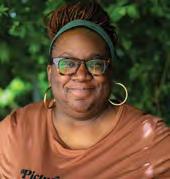
Nicole Hunter Director of Collaborative Programs
Corinne Lenos
Director of Health and Wellness
Maggie Jackson Ethnic Studies Instructor
DeShan Lett
Director of Learning Services
Development Goals: No Poverty, Zero Hunger, Sustainable Cities and Communities, and Climate Action. Each cluster then identifies an issue of focus, partners with an organization, and begins sustained, meaningful work to drive long-term impact.
By 11th and 12th grade, the program shifts toward empathy and collaboration. Each cluster continues its multi-year social impact project and partners closely with its chosen organization, completing at least two direct service experiences annually.
Students also commit to three independent service days or shifts each year, either with their cluster’s partner or with another organization. They are encouraged to integrate service they already perform— through NCL, Service Corps, religious communities, or other groups—into their Social Impact requirements.
Students may also design an independent study, crafting their own Social Impact Program through an existing partnership or by building a new initiative. Independent studies require at least 30 hours of engagement per year and satisfy the independent service requirement. These projects allow students to pursue passion-driven impact while building leadership and initiative.
BREAKTHROUGH SUMMERBRIDGE
IMPACT
Dear UHS Community,
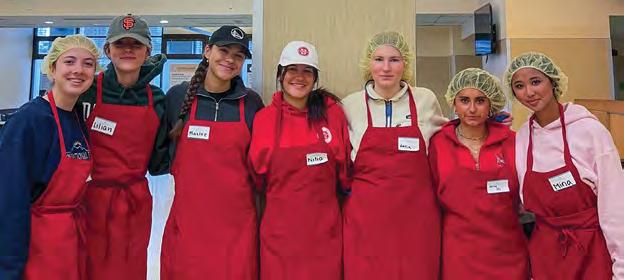
Summer 2025 marked an exciting milestone for the Breakthrough Summerbridge program: our students were among the very first to experience the state-of-the-art science and math classrooms and stunning Pavilion in the new California Street Campus. It was thrilling to see them walk into this space for summer orientation in May, and to return on the first day of programming in June ready to dive in.
As always, our Teaching Fellows (TFs) brought immense energy, care, and dedication to every aspect of the summer. This year’s cohort represented colleges across the country, from Penn and Brown to Boston University and UC Berkeley. One-third of them had prior connections to Summerbridge or UHS, as alumni or as volunteers, which deepened their investment in the program. It was particularly inspiring to welcome back several returning TFs, as their knowledge and enthusiasm set a powerful example for both students and peers.
The summer concluded with our Celebration, where students and TFs shared heartfelt reflections about their experience. Bella, a 9th grader, shared, “This isn’t just a summer school, but a place where I have grown not only academically but also personally . . . My confidence has soared, and now I feel comfortable connecting with new people, asking questions, and sharing my thoughts with others and in class.”
Looking ahead, our work continues year-round. Later this month, we’ll welcome students back for After-School Enrichment (ASE), hosted at UHS. Our Boom, Dynamite! program will also return for its fourth year, giving selected UHS juniors and seniors the opportunity to develop their teaching skills and lead workshops with Breakthrough Summerbridge students during ASE. And with our College Access Program now in its second year, we’re thrilled to be supporting two full classes of high school students (Classes of 2028 and 2029) as they begin preparing for college—helping them choose the right courses, build strong applications, and explore their aspirations for the future. In just a few years, we’ll have a comprehensive program guiding students from seventh grade all the way to high school graduation.
With Breakthrough Summerbridge spirit,
Dara Northcroft Executive Director, Breakthrough
Summerbridge
BREAKTHROUGH SUMMERBRIDGE HAS TRANSFORMED THE LIVES OF OVER 1,600 MIDDLE SCHOOL STUDENTS AND OVER 650 HIGH SCHOOL AND COLLEGE-AGE “TEACHERS.”
100 95%
students engage in our intensive 6-week summer program and school-year programming on average each year
LAST YEAR’S IMPACT REPORT
of students enroll in academically rigorous college prep high schools
average student retention rate over the course of our 3-year program 98%
UHS
Innovation at Hits the Headlines
Bridging Technology and Community: UHS Values in Action
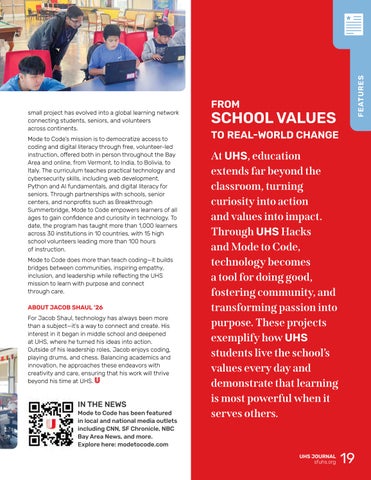
At UHS, learning is a transformational journey that empowers students to pursue a purpose greater than self. Guided by the school’s core values of Inquiry, Care, Integrity, Agency, and Interconnection, students are encouraged to explore their passions, take initiative, and use their knowledge to uplift others.
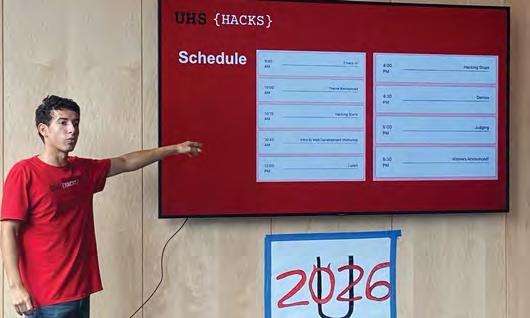
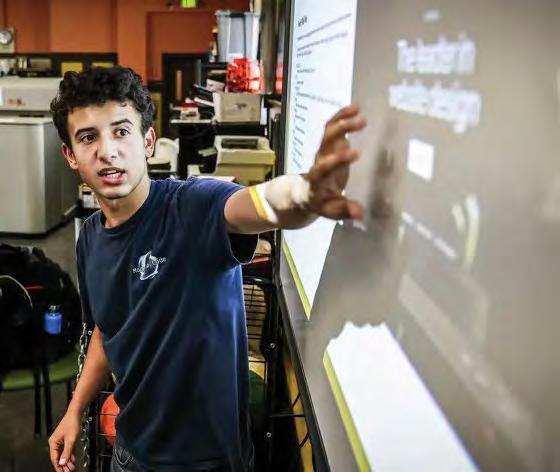
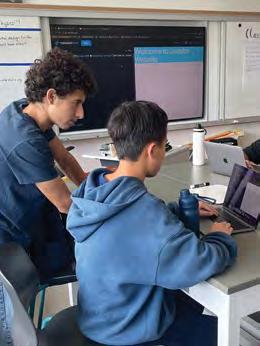
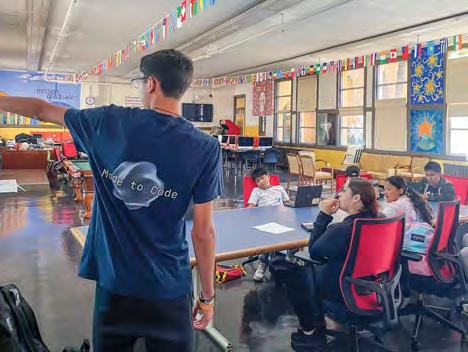
UHS senior Jacob Shaul ’26 has harnessed his interest in technology, founding two student-led initiatives: UHS Hacks and Mode to Code. What began as a personal fascination with web development during his sophomore year has grown into programs that connect students, schools, and communities across the world. Together, these projects bring technology, creativity, and collaboration to life, embodying the UHS mission to learn deeply, act with purpose, and connect meaningfully with the world.
UHS HACKS: A PLATFORM FOR AGENCY AND INQUIRY
UHS Hacks is a free hackathon that invites high school students from across the Bay Area to explore technology through creativity, problem-solving, and teamwork.
A hackathon is a collaborative, timebound event where participants design and build software or hardware solutions for real-world challenges. UHS Hacks embraces that energy while ensuring accessibility, welcoming students of all skill levels, from first-time coders to experienced programmers. The event is free and open to all, with more than $16,000 raised to support student innovation. Teams work together to bring ideas to life, guided by mentors and peers in a supportive environment that celebrates experimentation and discovery.
UHS Hacks reflects the UHS values of inquiry and interconnection, creating a space where students learn from one another and gain confidence through collaboration. It is a model of inclusive innovation, showing how technology can unite communities and inspire future creators.
MODE TO CODE: EXTENDING UHS VALUES BEYOND CAMPUS
Founded in 2024, Mode to Code brings the UHS values of care, integrity, and interconnection to life by making technology education accessible to all. What began as a
small project has evolved into a global learning network connecting students, seniors, and volunteers across continents.
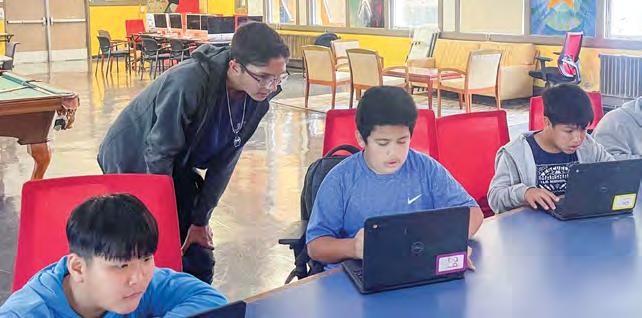
Mode to Code’s mission is to democratize access to coding and digital literacy through free, volunteer-led instruction, offered both in person throughout the Bay Area and online, from Vermont, to India, to Bolivia, to Italy. The curriculum teaches practical technology and cybersecurity skills, including web development, Python and AI fundamentals, and digital literacy for seniors. Through partnerships with schools, senior centers, and nonprofits such as Breakthrough Summerbridge, Mode to Code empowers learners of all ages to gain confidence and curiosity in technology. To date, the program has taught more than 1,000 learners across 30 institutions in 10 countries, with 15 high school volunteers leading more than 100 hours of instruction.
Mode to Code does more than teach coding—it builds bridges between communities, inspiring empathy, inclusion, and leadership while reflecting the UHS mission to learn with purpose and connect through care.
ABOUT JACOB SHAUL ‘26
For Jacob Shaul, technology has always been more than a subject—it’s a way to connect and create. His interest in it began in middle school and deepened at UHS, where he turned his ideas into action. Outside of his leadership roles, Jacob enjoys coding, playing drums, and chess. Balancing academics and innovation, he approaches these endeavors with creativity and care, ensuring that his work will thrive beyond his time at UHS.
IN THE NEWS
Mode to Code has been featured in local and national media outlets including CNN, SF Chronicle, NBC Bay Area News, and more. Explore here: modetocode.com
FROM SCHOOL VALUES TO
At UHS, education extends far beyond the classroom, turning curiosity into action and values into impact. Through UHS Hacks and Mode to Code, technology becomes a tool for doing good, fostering community, and transforming passion into purpose. These projects exemplify how UHS students live the school’s values every day and demonstrate that learning is most powerful when it serves others.
REFLECTIONS ON NASIF ISKANDER
BY KATE GARRETT
Kate Garrett Director of College Counseling
A little more than 30 years ago, on the day before classes began in the fall, I ran into Nasif Iskander in the courtyard of Upper Campus. We had only met briefly at the opening faculty/staff retreat, but he immediately stopped and asked me how I was doing. I told him that I was fine, and excited to start teaching English the next day . . . but that I kept having this recurring nightmare where I was wandering around the school, unable to find my classroom. I intended the last remark to be funny, but Nasif must
have sensed the incipient panic beneath my light tone. This was the first of many times that I witnessed and benefited from Nasif’s uncanny ability to read people.
“Has anyone given you a tour of the school?” he asked. They had not. “Well, let’s do that right now!” Nasif said, dropping whatever it was he had intended to do in the faculty room. He spent the next hour leading me through the front and back hallways, explaining the quickest ways to get to and from All-School Meeting, and showing me the basement of Lower Campus, which bore a shocking resemblance to a parking garage (at the time, I didn’t know that’s exactly what the building had been in a previous life). In 1995, the classroom numbering system seemed completely random; if I remember correctly, what is now room U-205 was room 19, and today’s M-202 was room 12, or maybe it was the other way around? In any case, as our tour progressed, I realized that Nasif’s spontaneous act of kindness had probably saved me from seeing my recurring nightmare come true.
That day, I learned that Nasif is intuitive, generous, really fun to be with, and deeply knowledgeable about UHS. Over the ensuing decades, I’ve come to know his unshakeable integrity, his keen intelligence, and his fierce dedication to the mission, vision, and values of this school.
Nasif has always cared about building and sustaining community at UHS. As a Dean and Head of School, doing that has been the focus of almost every initiative he has spearheaded, from redesigning our approach to professional development to creating our mentoring program and more. But the seeds of this commitment were evident in the mid-’90s, too. In that era, when email hadn’t yet been invented and there was just one telephone in every shared office space, the faculty and staff devised an ingenious way of communicating. In our cramped lounge, near the ceiling, a thin pipe ran the length of the room, and we’d tape notices and updates to that pipe. When I encountered a flyer inviting anyone interested to
join “The Committee," it took me a while to figure out what on earth this vaguely named group could possibly do—especially with a 4 p.m. on Friday meeting time. The penny dropped when I read the small tagline at the bottom of the page: “The Committee: We don’t take minutes. We take hours.” This may well have been Nasif’s first role as a committee chair, though certainly not his last.
Nasif has been a senior administrator for the last 20 years, so most everybody has some sense of the enormous impact he has made as a Dean and Head. But many may be unaware of what we lost when we let him leave full-time teaching. Nasif is one of the most gifted educators I have ever encountered—creative, warm, unendingly patient, and possessing absolute confidence in every student’s ability to succeed. I saw all those qualities firsthand when I joined a three-week science program we piloted one summer, in an effort to shore up the skills of some of our struggling ninthgraders. Nasif led us through creative lessons and activities to break down the concepts and make what seemed ungraspable come clearly into focus. I remember us clambering up from the physics lab in the basement of Lower Campus to the gym on the top floor, and laying out sheet after
sheet of gridded paper so that we could ultimately comprehend just how enormous the number 1,000,000 is. A few years later, several of the same students who were in that pilot were seniors in Nasif’s astronomy elective. There, they figured out a solution to a challenging design problem and built a sundial that tells “civil time,” the time told by clocks, rather than solar time, as most sundials do. We believe it may be the only one in existence, and you can see it to this day in the courtyard of Upper Campus.
Much as we miss having him in the classroom full-time, I think we’d miss having him as a school leader even more. Nasif is a consummate big-picture thinker. He is not afraid to dream, to imagine what could be and then do the hard, often thankless work to bring a vision into reality. The results of Nasif’s leadership are woven into the very fabric of University; you can find traces of his genius and his tireless work in virtually every aspect of our school. But Nasif isn’t just a visionary. He is a practical problemsolver. No issue is too big, or too small, for Nasif to give it his full attention, most often coming up with an elegant and unexpected solution. More frequently than one might imagine, that solution involves data. Nasif absolutely
loves data, and one of his most consequential contributions to UHS is the way he continues to find innovative ways to use it in service of our mission.
But even more than data, Nasif loves people. When he interacts with you, he is so fully present that you feel like you’re the only person on earth, and like time is abundant. To be able to create that experience, day in and day out, for more than thirty years, in an environment as fast-paced as University High School, is nothing short of astonishing. But that’s what Nasif Iskander does— whether with a confused student, a concerned parent, or a brandnew teacher looking a little lost in the courtyard.
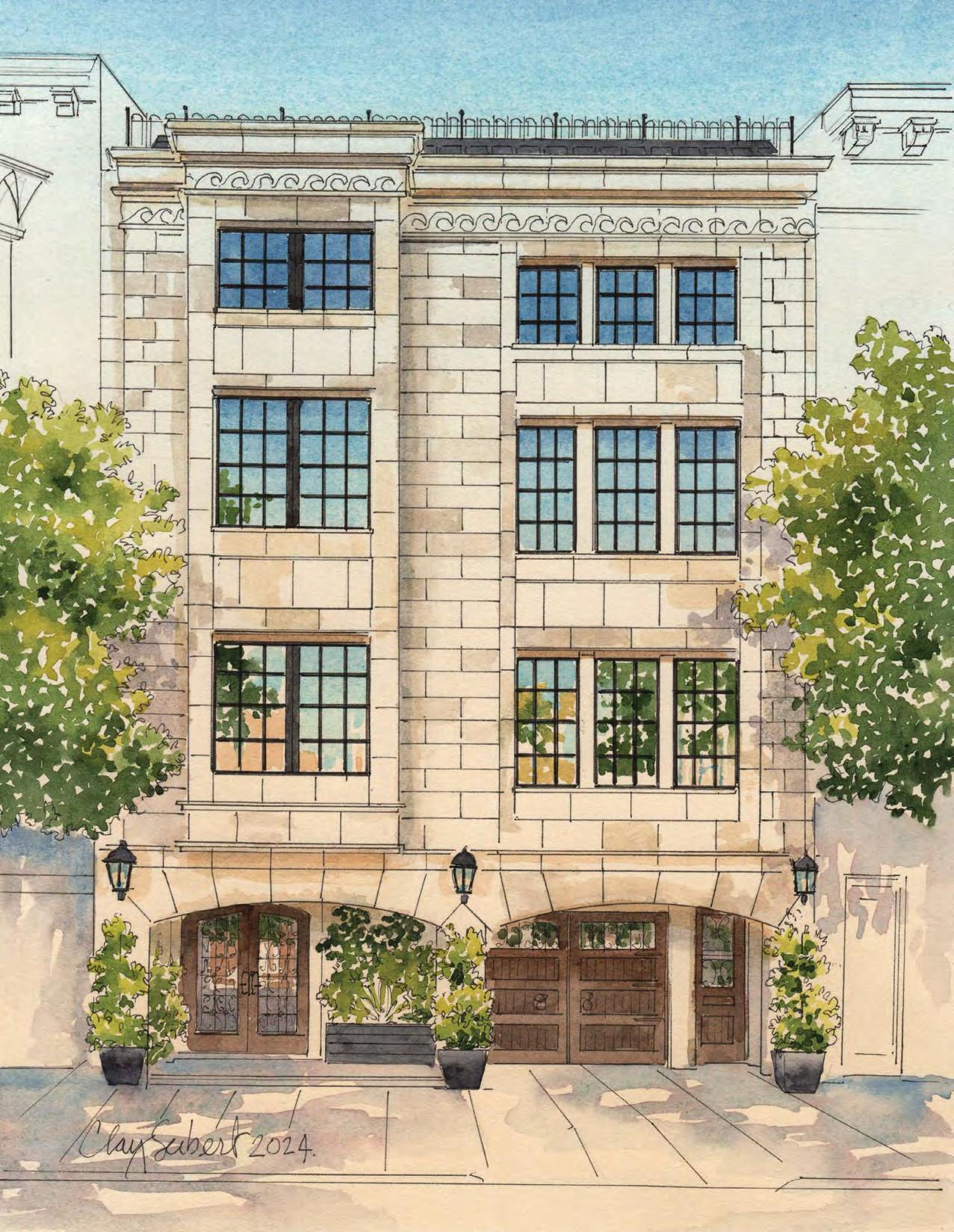
Sketch of this year’s Showcase home at 2935 Pacific, by Clay Seibert Photography and Fine Art.
2935 PACIFIC 2025
SAN FRANCISCO DECORATOR SHOWCASE
We send our deep appreciation to everyone who helped make the 2025 Decorator Showcase a success. Thanks to the leadership of Parent Co-Chairs Heather Friedland P ’27, ’29, and Katie Taylor P ’27, we proudly surpassed our goal, raising more than $1 million for the UHS Financial Aid Program. We are grateful to our generous patrons; the companies, schools, and families who hosted evening events; hundreds of docents; and the thousands of visitors whose ticket purchases contributed to our fundraiser.
This year, we were honored to feature the stunning home at 2935 Pacific Avenue, a spacious and beautifully reimagined residence in San Francisco’s Pacific Heights neighborhood. Originally designed in 1902 by architect T. Paterson Ross, this home has undergone thoughtful renovations that blend timeless elegance with modern sophistication. Its expansive layout, breathtaking views, and refined design provided the perfect canvas for this year’s talented designers. We were especially proud to highlight members of the UHS community, including arts instructors Nikhil Paladugu ’12, Lisa Carroll, Rebecca Sexton, and Kari Orvik. In addition, students Anabel Hamill ’27 and Ava Behnia ’27 performed at the Patron Preview Gala, and alumna Diane Rosenblum ’82 designed a space in the house.
Since its inception in 1977, Decorator Showcase has been a vital part of San Francisco’s design community. The idea was brought to life by Nan Rosenblatt, a talented interior designer and dedicated parent at San Francisco University High School, alongside fellow parent Philip Fernandez, the first president of the school’s Parent/Guardian Association. Over the years, this event has raised more than $20 million to support UHS’s Financial Aid Program for thousands of deserving Bay Area families.
The 47th annual Decorator Showcase will run April 25–May 25, 2026. We have begun recruiting our committee chairs and docents, and we are always looking for more volunteers to partake in this beloved community tradition. Please scan the QR code below to learn more and get involved!
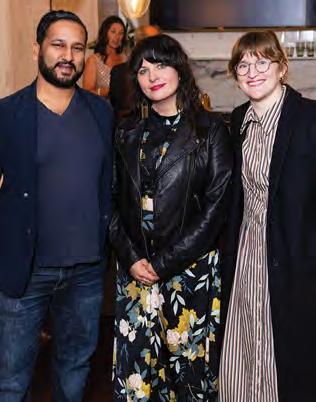
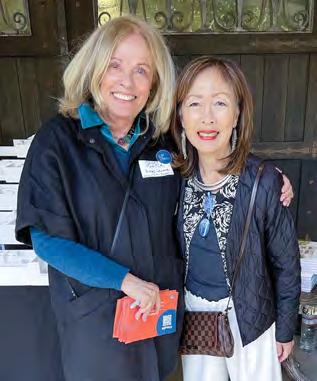
House Managers Janet Hunter P ’06 and Beverly Chong P ’06, ’09.
UHS volunteers at the Showcase Invitation Mailing Get-Together
Student performers Anabel Hamill ’27 and Ava Behnia ’27.
Photo Credit: drew Altizer
Faculty artists Nikhil Paladugu ’12, Kari Orvik, and Rebecca Sexton. Photo Credit: drew Altizer
& A Legacy of
GRATIT DE GIVING at UHS
For more than a decade, Sheila and Jeff Cuthbert P ‘19, ‘22, ‘24, ‘26. have been deeply engaged members of the University High School community. With four daughters attending UHS over the course of 11 years, their family’s connection to the school has been both meaningful and enduring.
Their journey began when their eldest daughter applied to UHS. What struck them most was not only the school’s academic strength, but also the warmth and kindness of its students.
“What set UHS apart was not just the brilliance of the students, but their kindness. That mattered most to us.”
That first impression proved true throughout their daughters’ time at the school. Each of their four children found opportunities to grow, to be challenged, and to be supported by faculty who, in Sheila’s words, “meet students where they are and draw out their best.” The children’s transformation from quiet ninth-graders into confident, engaged young adults was gradual but profound.
“UHS has been transformational for our daughters—helping each of them grow with confidence, purpose, and heart.”
Beyond their daughters’ experiences, the family invested deeply in the broader UHS community. Sheila held numerous volunteer roles, including class parent, team parent, and ultimately President of the Parent/ Guardian Association (PGA), over four years. She also serves on the Board of Trustees, first as the board’s PGA liaison and currently as a voting member.
“UHS has given our family so much,” she reflects. “Offering my time and energy was the least I could do. And in return, I gained lasting friendships, meaningful connections, and the privilege of working alongside extraordinary parents and guardians.”
Sheila’s husband, Jeff, has played his own steady role in their family’s UHS journey. Having grown up
with four sisters, he jokes that the dynamic of being surrounded by women at home feels natural. Their daughters, unique but bonded by similar values, thrived in the school’s nurturing, yet challenging, environment. Faculty members such as Jesse Berrett and Ozzie Nevarez were particularly influential, shaping not only the girls’ academic experiences but also their confidence and future pursuits. Just as significant were the friendships the sisters formed with classmates—bonds built on encouragement, collaboration, and mutual support, which have continued well beyond graduation.
As their youngest prepares to graduate, the family reflects with gratitude on the role UHS has played in their lives.
“UHS has given our family so much. Giving back is the least we can do.”
While 11 years of school life have passed quickly, their family’s legacy of service and generosity will remain woven into the fabric of UHS for years to come.
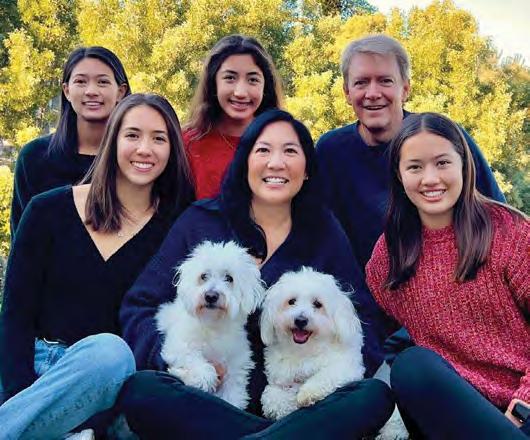
The Cuthberts with their family dogs, Josie and Jake. Back row: Nicole ‘19, Juliette ‘24, Jeffrey. Front row: Danielle ‘22, Sheila, Caroline ‘26.
AL MNI
DONOR SPOTLIGHT
“I never imagined high school would shape my life so profoundly— but then again, UHS has never been an ordinary school.
Attending UHS’s 50th anniversary celebration in September reminded me just how much this community means to me. I felt immense gratitude— for the exceptional education I received, for being part of the school’s early years, and for the honor of later serving as a trustee. As my 45th reunion approaches, I find myself reflecting on what truly sets UHS apart: the lifelong friendships forged in those halls and the enduring bonds with beloved teachers who still feel like mentors and friends. Even after more than four decades, it’s effortless to reconnect with classmates—to laugh, share stories, and support one another as if no time has passed at all. Life has come full circle, too: several UHS student athletes have gone on to coach with the Women’s Coaching Alliance, where I now work.
UHS continues to be a vital, joyful thread woven through my life story. That’s why I give to the Annual Fund each year—and why I’ve chosen to include UHS in my estate plans, ensuring that future generations can experience the same extraordinary community that shaped my life.”
Heidi Philbrick Schell ’81 was named to the inaugural 1980 All-American Girls High School Soccer Team and was recruited to play soccer at Stanford University. She has dedicated her life to giving back to her community, holding many nonprofit leadership positions, including UHS trustee, President of Peninsula Temple Sholom, and board member of the San Mateo County Parks Foundation. Today she works with Women’s Coaching Alliance, which recruits high school and college athletes to be youth sports coaches, helping develop the next generation of female leaders.
O R
NEW & REMODELED SPACES
A HOME FOR BREAKTHROUGH SUMMERBRIDGE
The California Street Campus also provides a home for Breakthrough Summerbridge, the award-winning, tuition-free academic enrichment and advocacy program that is the original home and inspiration for the Breakthrough Collaborative. This deepens UHS’s role as a community partner and reinforces the school’s long-standing commitment to access and equity.
As UHS celebrates its 50th anniversary, the California Street Campus stands as both a milestone and a promise: a place where creativity and collaboration flourish, where sustainability and stewardship are lived daily, and where students find the inspiration and tools to lead with purpose in a changing world.
A MILESTONE FOR UHS: THE OPENING OF THE CALIFORNIA STREET CAMPUS
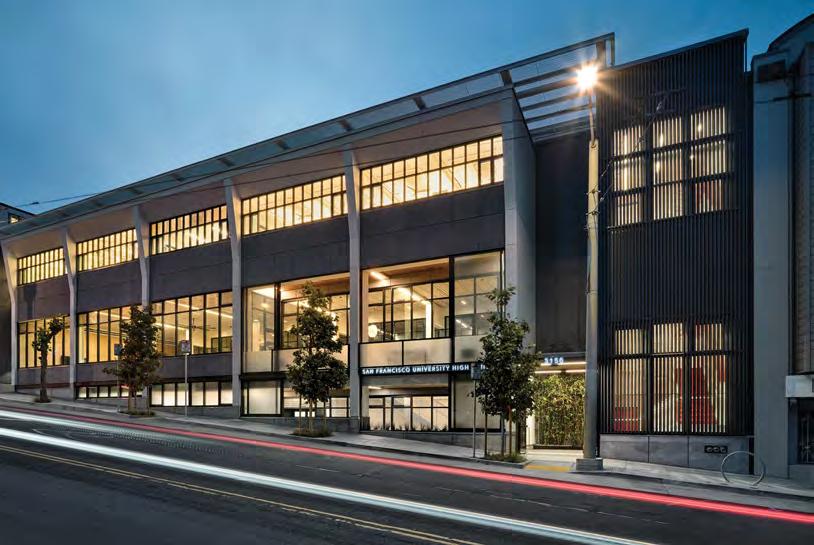
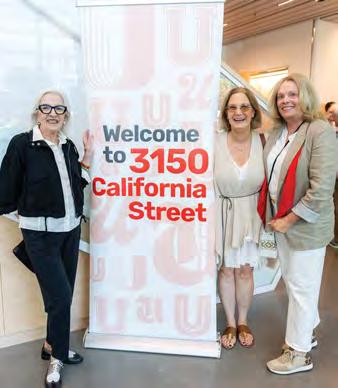
In June 2025, University High School proudly opened the doors to its new California Street Campus, a landmark 50,000-square-foot expansion that represents both a bold architectural achievement and a profound statement of values as the school celebrates its 50th anniversary.
Located at 3150 California Street, the campus is built to LEED Platinum, Net Zero Energy standards, embodying UHS’s deep commitment to sustainability, inclusion, and innovation.
A VISION REALIZED
“More than just a building, the California Street Campus reflects our enduring values and aspirations— a purposeful space that aligns physical design with academic vision, elevates student life, and creates new pathways for community engagement,” said Nasif Iskander, Interim Head of School.
The project was brought to life in partnership with Leddy Maytum Stacy Architects, Truebeck Construction, and Equity Community Builders. Together, this team shaped a campus that functions not only as a home for teaching and learning but also as a living laboratory for environmental science.
“The building will serve as a teaching tool for concepts like energy conservation, sustainable design, and renewable energy,” explained Rochelle Devault, Science Department Chair.
SPACES THAT INSPIRE
The new campus was intentionally designed to spark collaboration and encourage innovation:
● Science classrooms and faculty offices share a floor, promoting cross-disciplinary dialogue.
● Light-filled labs in physics, life science, and chemistry are paired with shared prep and supply rooms.
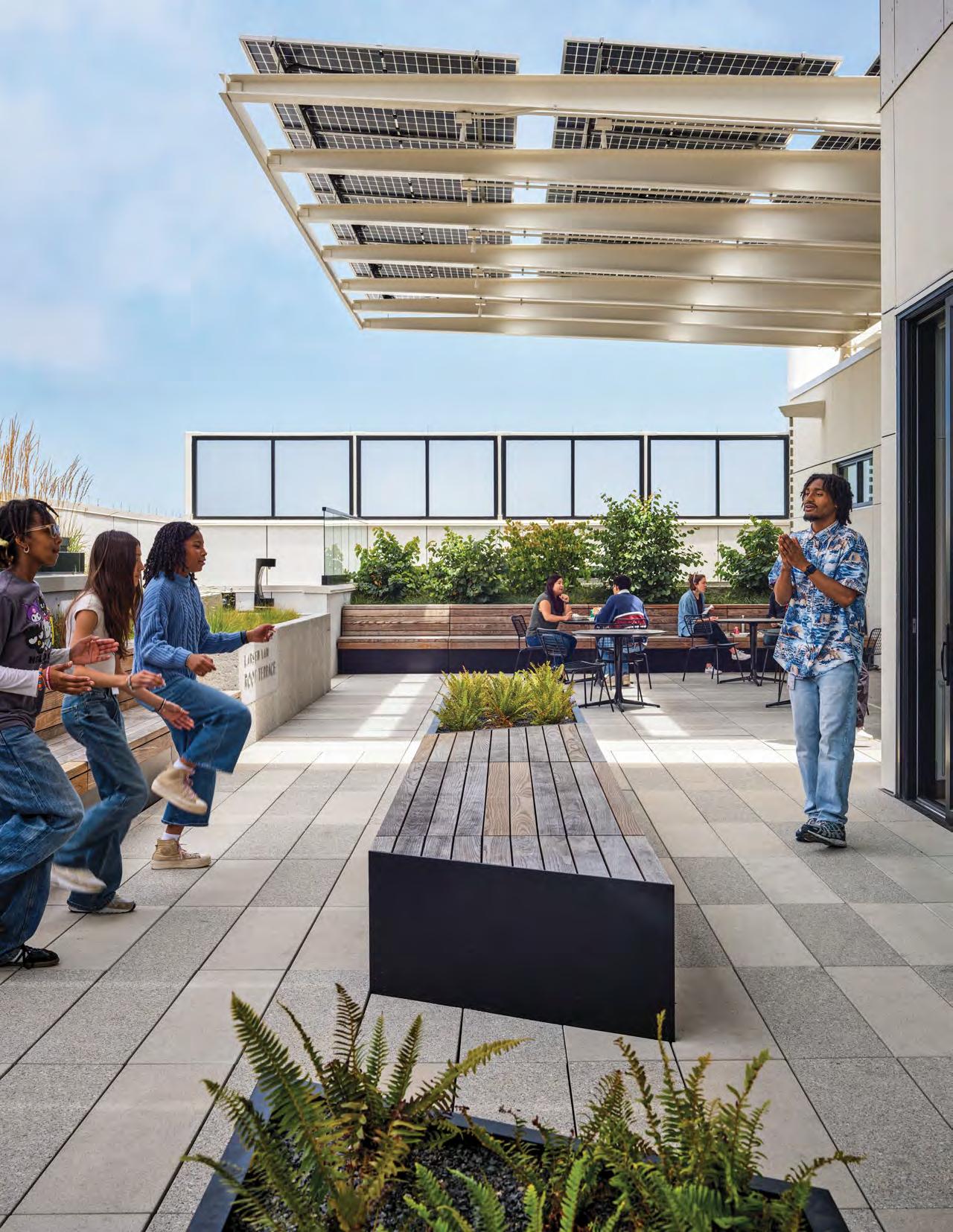
● An adjacent outdoor terrace extends learning into the natural environment, especially valuable for the life sciences.
● Conference rooms near faculty spaces provide welcoming venues for small-group advising and mentorship.
● The ULab maker space offers access to advanced tools—3D printing, robotics, laser cutting, and machine fabrication—that empower students to design, create, and solve real-world problems.
These academic spaces embody the principles of the school’s Strategic Design, ensuring that teaching and learning at UHS remain cutting edge.
THE HEART OF THE CAMPUS
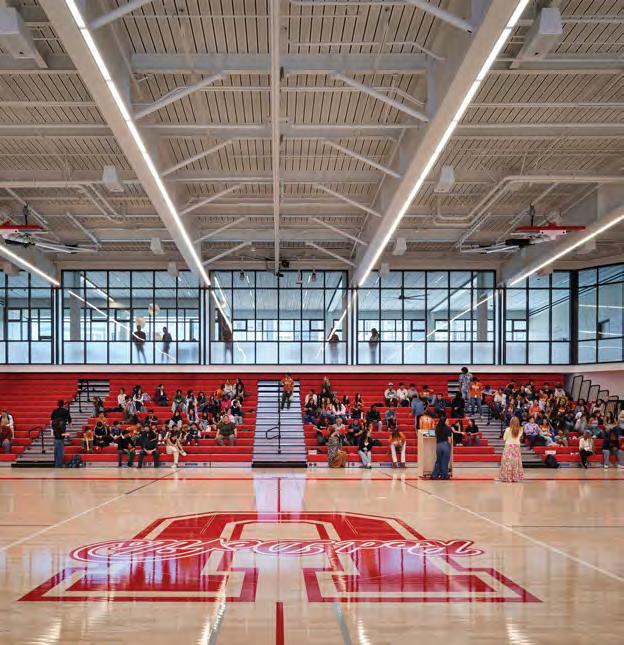
At the center of the new facility is the Bessolo Family Pavilion, UHS’s first full-sized, collegiate-level gymnasium, with seating for over 600. It has already become a natural gathering place for the school community, hosting Convocation, All School Meetings, athletic competitions, and spirited celebrations.
“The inclusion of a full-size gym is monumental,” said Anthony Thomas, Athletic Director. “Our studentathletes are remarkable, and now our facilities match the strength of our program.”
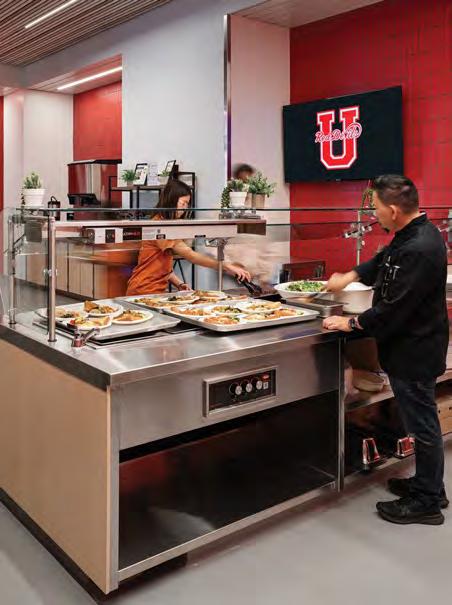
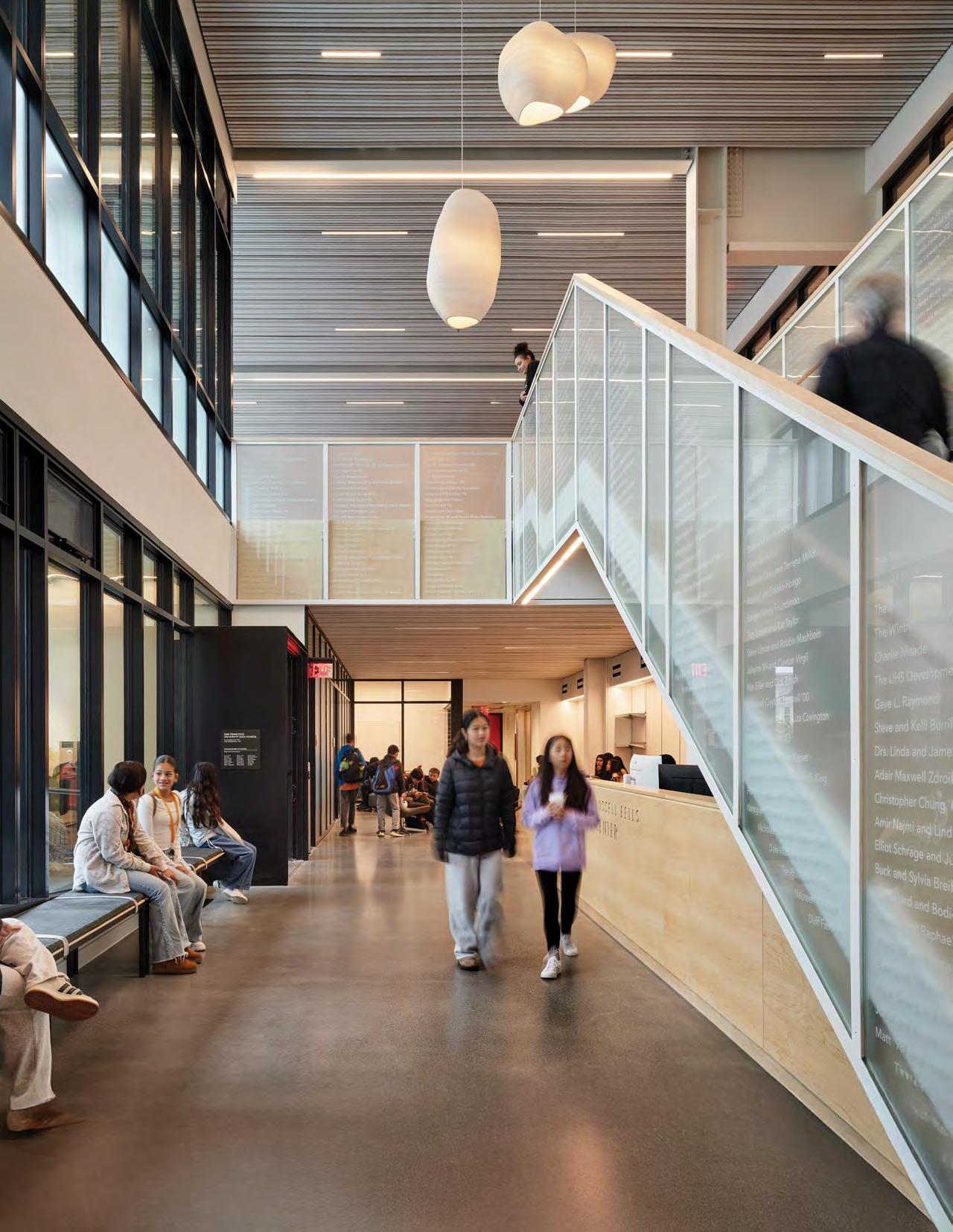
Complementing the Pavilion is the Student Commons, a 2,000-square-foot space featuring soaring ceilings, versatile seating, food service, and a sunlit terrace.
“This building will be a hub for creativity, wellness, and belonging,” shared Alexandra Simmons, Dean of Student Life.
MIDDLE CAMPUS: A HUB FOR THE PERFORMING ARTS
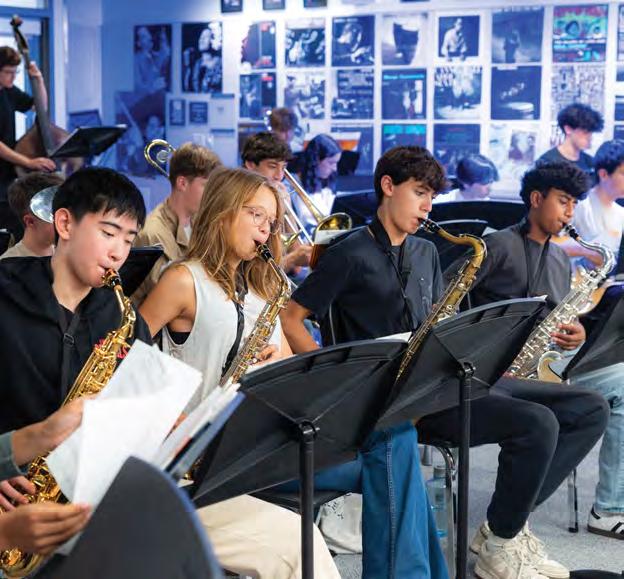
Performing arts are a cornerstone of the UHS curriculum, with many students completing the equivalent of six years of performing arts courses during their four years at the school. As the school has grown, our jazz program has flourished, but the facilities have struggled to keep pace. The jazz and music spaces—once shared with drama and other programs— were cramped, with limited resources. With the expansion of the California Campus came the opportunity to reimagine the area behind the theater in Middle Campus. The former science labs have been fully remodeled and replaced with:
● a dedicated jazz music room
● soundproof practice spaces
● flexible rehearsal areas
● music instructor offices
● instrument storage
● tech spaces for sets and props
These enhancements elevate experiences for students across all performing arts disciplines, ensuring that our facilities match the excellence of our programs.
SACRAMENTO CAMPUS
The Sacramento Campus, formerly known as South Campus, was originally designed to maximize classroom space, but has lacked areas for students to gather outside of class. With the ULab moving to its new home on California Street, the unique opportunity arose to create space for a student lounge featuring natural light, gallery space for visual arts, and food options. This new lounge is a vibrant hub for students, with easy access to fresh food and opportunities for social interaction. Adjacent to the lounge is dedicated office space for the Breakthrough Summerbridge program. This new configuration also allows for a more visible administrative presence at the entrance of the building.
LOWER CAMPUS
A Vision of Collaboration, Fitness, and Expanded Classroom Space
Looking ahead, the final phase of our wholecampus master plan will further transform the Lower Campus. Plans under discussion include a large student commons area, new classrooms, and the possibility of an expanded fitness center. We hope to begin this final phase during the next summer break.
SUPPORT UHS
Building for the Future
Campus expansion and renovation are made possible through the remarkable generosity of our UHS community. Explore Next Level: The Campaign for University High School here. Thank you!
ALLISON BHUSRI P’28
WELCOME NEW TR STEES
As the founder of Lemonade Capital, Allison Thoreson Bhusri invests primarily in early-stage enterprise and consumer technology companies. With over 20 years of business experience spanning both investing and operations, Allison’s career includes launching new ventures at eBay, running the baking business at the Ghirardelli Chocolate Company, and investing in enterprise technology companies at JP Morgan Partners. She began her career in 1995 as a corporate finance analyst at Morgan Stanley & Co., based in New York. Allison earned a BA in Government from Dartmouth College and an MBA from the Stanford Graduate School of Business. She serves on the UCSF Board of Directors, the Stanford Business School Advisory Council, and the Dartmouth President’s Leadership Council, and previously served as chair of the Hamlin School Board of Trustees and as vice chair of the Gateway Public Schools Board of Trustees. In her spare time, Allison enjoys tennis, skiing, and golf. She is originally from the Pacific Northwest but today lives in San Francisco with her family.
ANDREW KAWAJA P‘27, ‘28
ULYSSES KING ‘96
Ulysses King is a strategic communications executive with 25 years of experience helping companies shape narratives that move culture and drive business impact. He has led work for some of the world’s most influential brands—including Amazon, Meta, Nike, Salesforce, and TikTok—with deep expertise in media relations, executive visibility, product storytelling, and brand positioning. Previously, Ulysses served as Executive Vice President at the global public relations firm Archetype, where he sat on the North America leadership team and oversaw highimpact client accounts. He also founded Archetype Ascend, a dedicated practice that provided strategic communications support for BIPOC founders, executives, and venture capitalists. A proud alumnus of UHS, Ulysses is passionate about advancing equity and ensuring that underrepresented communities have meaningful access to academic and professional opportunity. His work is guided by curiosity, cultural foresight, and a belief in the power of storytelling to inspire change.
Andrew Kawaja, born in Montreal and raised in Toronto, earned an AB in East Asian History from Brown University in 1996 before relocating to San Francisco to pursue a career in equity research and proprietary trading at Robertson Stephens. In 2001, he completed a joint MBA and MA in Education at Stanford University and subsequently joined his family’s manufacturing enterprises. As a board member and advisor there, he brings expertise in leadership development, human resource strategy, and Innovation— contributions that have helped drive accelerated growth across several markets. Throughout his career, Andrew has maintained an active commitment to community service. While at Robertson Stephens, he launched the Everybody Wins! Power Lunch Program in partnership with John Yehall Chin Elementary School, growing it to engage over 200 volunteers. In 2020, he became the first male Executive Board Member and Co-President of San Francisco’s nonprofit The MidWeeklies, Inc. Andrew and his wife, Dokleida, reside in San Francisco with their four children: Luke (UHS ’27), Sofie (UHS ’28), Magnus (San Francisco Day School, rising 8th grader), and Kai (San Francisco Day School, rising 5th grader).
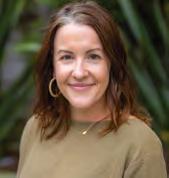
MEET ANA ILLANES
Director of Events at UHS
Ana Illanes Director of Events
We are delighted to welcome Ana to The UHS Development Team! She joined us this fall and will be focusing much of her work on the San Francisco Decorator Showcase, along with other community events. Originally from Santiago, Chile, Ana came to the U.S. to study at the Fashion Institute of Technology in New York, where she lived and worked in the retail industry for nearly a decade before moving to San Francisco. Most recently, she led store design development for West Elm at Williams-Sonoma, Inc., where she helped bring the brand’s vision to life by shaping the look and feel of its retail spaces globally.
HOW DID YOU FIRST LEARN ABOUT DECORATOR SHOWCASE?
I first discovered Decorator Showcase when I moved to San Francisco seven years ago. I’ve loved following the event ever since, and this year I had the chance to volunteer as a docent. Seeing the designers’ creativity and the energy of the event up close was so fun and inspiring.
WHAT ARE YOU EXCITED TO BRING TO THE EVENT THIS YEAR?
I’m excited to bring a sense of newness to Showcase this year—rethinking how we host events, how we engage our sponsors, and how we welcome a wider audience into the house. The designers create such beautiful spaces, and I see a real opportunity to activate those spaces in fresh ways and strengthen the community around this event. Most of all, I’m excited to emphasize Showcase as not only an incredible design experience, but also a fundraiser that directly supports UHS students through financial aid.
WHAT WOULD YOU LIKE PEOPLE TO KNOW ABOUT DECORATOR SHOWCASE?
I want people to know that Decorator Showcase only happens because of the amazing support of our community, and I’m so grateful to everyone who makes it possible—our patrons, corporate sponsors, committee members, and hundreds of volunteers. Showcase is a unique, monthlong celebration of the incredible talent and vision of designers, generating over $1 million annually to support the Financial Aid Program at UHS. It helps students access not just a great education, but the full UHS experience. That impact is what makes this event so special, and it’s the story I love sharing most.
CELEBRATES
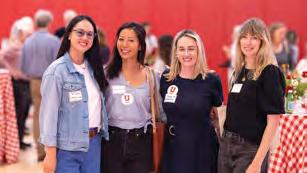
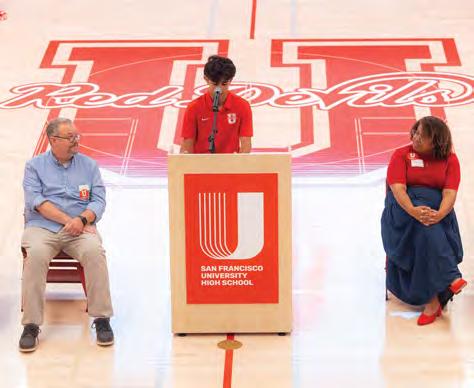
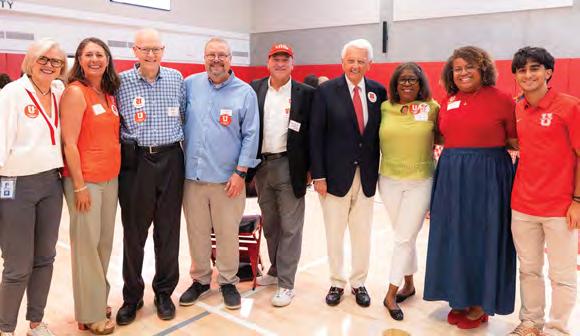
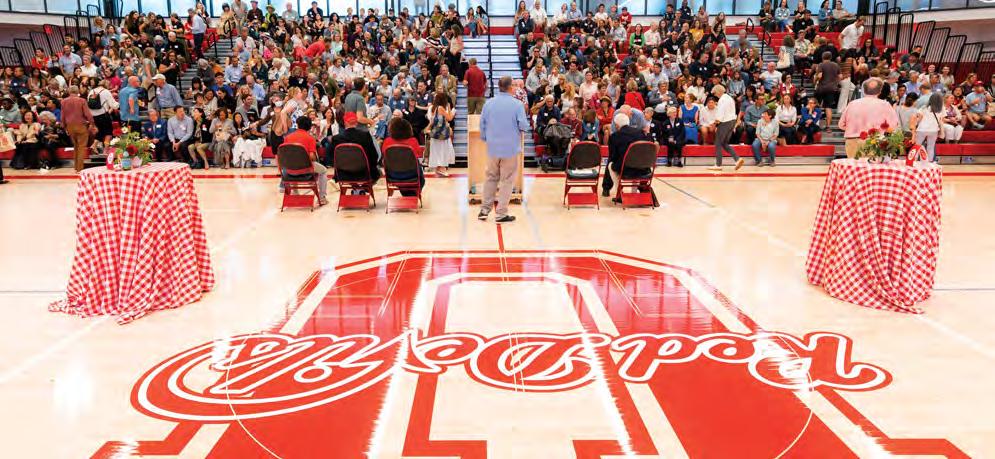
San Francisco University High School marked a historic milestone in September, celebrating its 50th anniversary with a spirited gathering that honored its past, celebrated its present, and looked forward to its future. The event took place at the school’s stunning new campus at 3150 California Street, a striking symbol of the school’s growth and ambition.
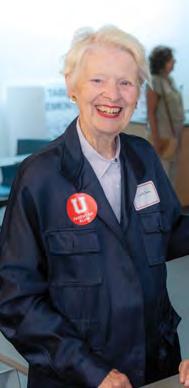
Nearly 1,000 people attended the celebration, filling the new space with energy and pride. The audience included current families and students, alumni spanning every decade, and faculty past and present, as well as both current and founding trustees. Their presence reflected the enduring strength of the UHS community and the profound impact that the school has had across generations.
that endures today. They chose the school colors, shaped the student body’s governance, and embraced a philosophy of academic rigor paired with joy, creativity, and community spirit. From the beginning, UHS sought to be “more than simply another school”—a place where honesty, discovery, and contribution would serve as guiding principles.
HAPPY 50 th BIRTHDAY, UHS. HERE’S TO THE NEXT FIFTY.
Founding Head of School Dennis Collins P ‘86, ‘90 delivered the keynote speech, reflecting on the school’s humble beginnings: a renovated building on Jackson Street, where 155 pioneering students and 17 faculty members gathered on the very first school day in 1973. “This is an experiment,” the young headmaster told them at the time. “This place may not exist next year. It is up to you.” That spirit of collaboration, innovation, and resilience became the foundation on which UHS was built.
As Collins recalled, those early students helped define traditions, set standards, and create the vibrant culture
Over the decades, UHS has grown into a nationally respected model for urban college preparatory education, excelling in academics, athletics, and the arts while remaining committed to diversity, equity, and civic engagement. The school has become known not only for preparing students for success in higher education and beyond, but also for being, in Collins’s words, “a school with a soul.”
At the anniversary celebration, Collins emphasized that UHS remains a “work in progress,” encouraging today’s students to carry forward the pioneering spirit of the school’s founders. “Those who came before you dreamt about a future you now inhabit,” he told them. “Those who follow you will depend on you to keep that flame of aspiration burning brightly.”
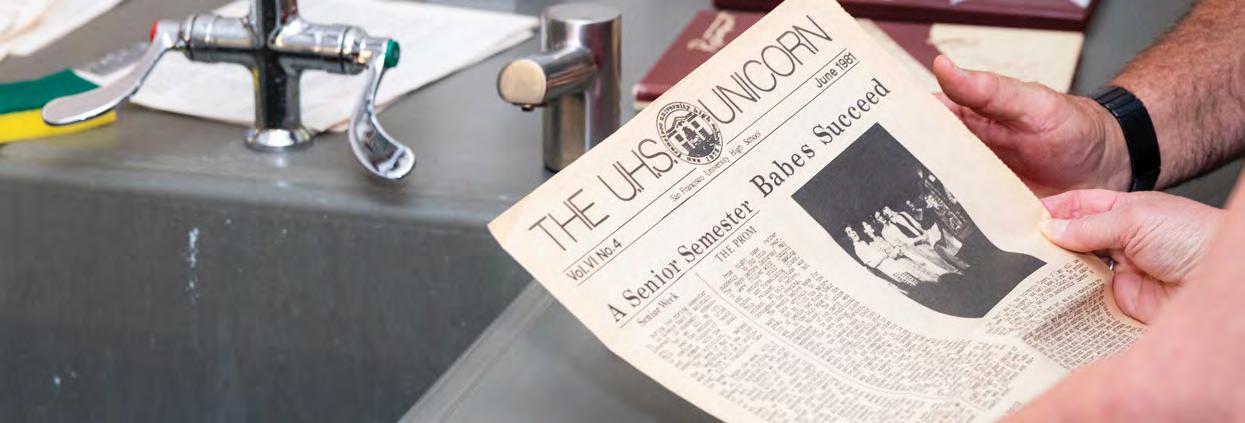
The afternoon included a video tribute to the school’s history and future, as the UHS community came together to honor 50 years of learning, leadership, and service.
of EXCELLENCE & COMMUNITY
SCAN TO WATCH VIDEO
&
WITH ANTHONY THOMAS
ON BUILDING GLOBAL PERSPECTIVE THROUGH SERVICE, SPORT, AND COMMUNITY ENGAGEMENT
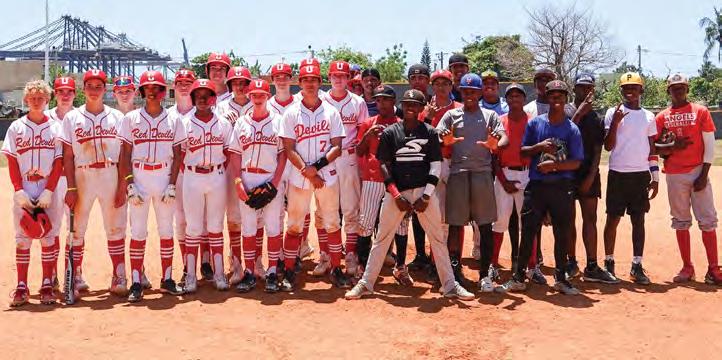
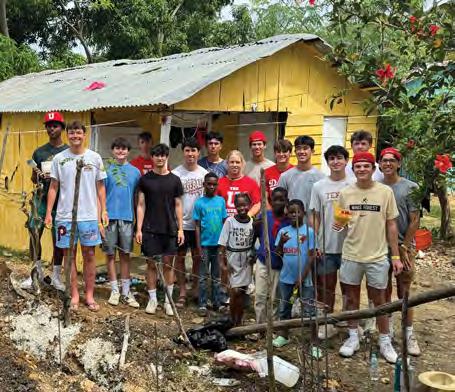
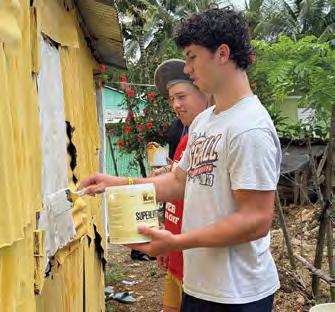
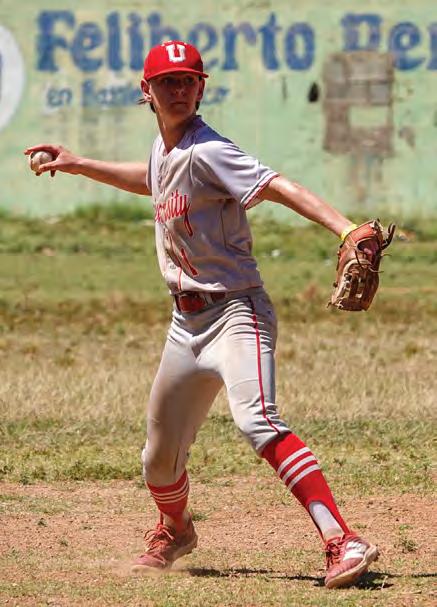
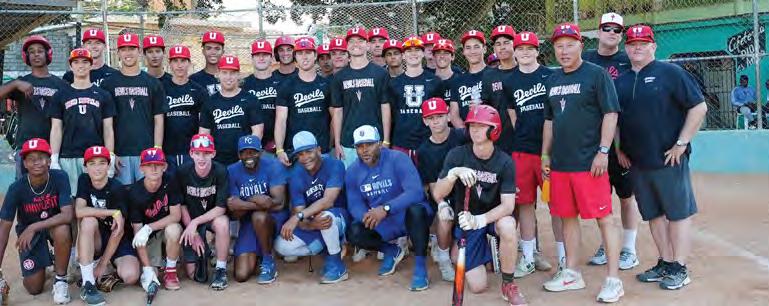
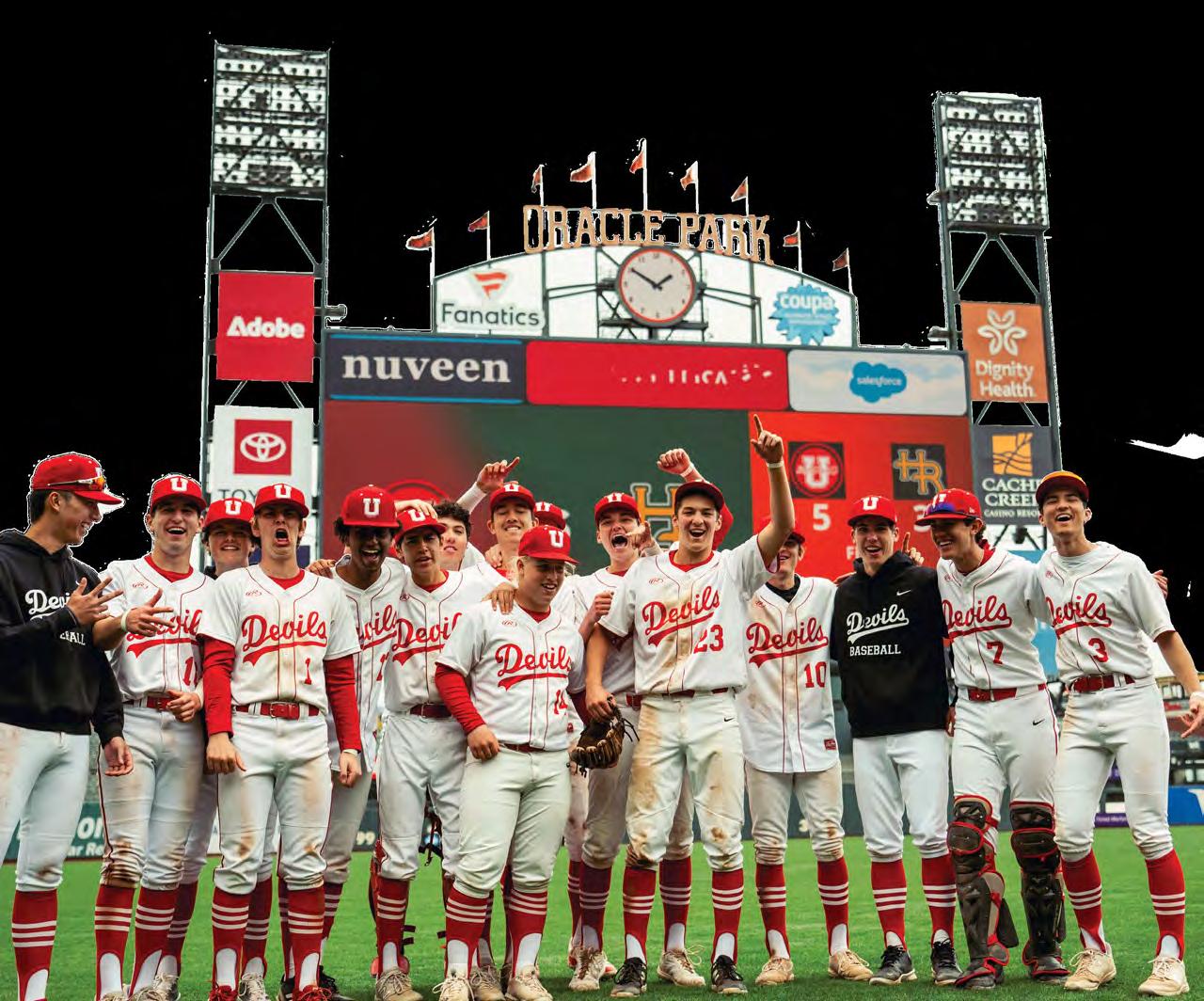
Over spring break 2025, the UHS baseball team traveled to the Dominican Republic for a service-learning trip that blended baseball, cultural exchange, and community impact. Director of Athletics Anthony Thomas shares how the experience shaped students both on and off the field.
What inspired you to take UHS students on a global service-learning trip?
Anthony Thomas: Last summer I started talking with parents, and by fall we were working through the steps that led up to spring break. At my previous school, Branson, I saw how powerful global trips could be. But I also noticed that our athletes were left out. They couldn’t take part in spring global trips without missing their seasons.
So I thought, why not design trips that allow them to stay with their teams, keep practicing, and still gain that global experience? That was my solution, and it worked. We sent soccer to Mallorca, basketball to Australia and Serbia, and more. Kids loved it. They want to travel with their teams—it deepens the bond. If you can add community
service and cultural immersion, the experience becomes transformational.
Why the Dominican Republic, and why with the baseball team?
Thomas: Baseball is woven into the fabric of the Dominican Republic. Per capita, it produces more Major League players than anywhere else. There’s a deep joy in the game, but also a harder truth: for many kids, it feels like the only way off the island. Sometimes education is sacrificed for the dream of being signed.
I wanted our students to see both sides. To experience baseball in its purest form, but also to understand the social and economic realities behind that passion. And because it was our baseball team, the sport became the natural bridge for connection.
Thomas Director of Athletics
Every day was a mix of baseball, service, and cultural engagement. One day we’d be on the field, the next we’d be teaching English at the Royals Academy or painting homes in a village. It wasn’t a vacation—it was immersion.
What kind of service did the students do?
Thomas: Service was at the heart of the trip. On our very first full day we ran a clinic for about a hundred local kids. Imagine an open field with cows walking through while we hit baseballs—it was raw and unforgettable.
We also visited an orphanage, NPH, and spent time playing volleyball, sharing meals, and just being with the kids. That visit turned out to be the highlight for our students. We carried down eight duffel bags packed with donated equipment— cleats, gloves, uniforms—and gave
Anthony
them out during our clinics. We also painted homes and visited historical sites in Santo Domingo. The trip was designed so students experienced history, service, and language immersion alongside baseball.
What stood out to the students most?
Thomas: Honestly, it wasn’t the baseball—it was the human connections. They were struck by the joy and gratitude of the Dominican kids, many of whom live with dirt floors and tin roofs, but welcomed us proudly into their homes.
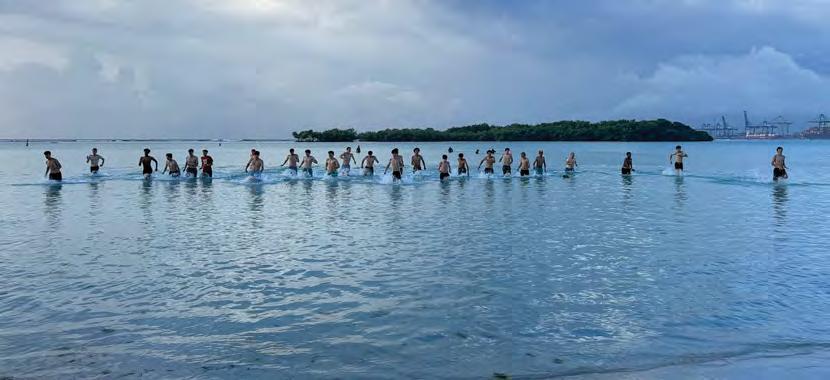
Our students also learned resilience. They saw Dominican athletes swinging sledgehammers at tractor tires for strength training, because there are no weight rooms. They ran brutal beach workouts— running waist-deep into the water and sprinting back, over and over. It was the hardest workout our kids had ever done, but they
came away with respect for Dominican toughness.
And back home, the impact was visible. One teacher told me, “I don’t know what happened on that trip, but my baseball players are more engaged, more disciplined, more grateful.” That’s exactly the transformation we hoped for.
How did you make sure the trip was safe and structured?
Thomas: Parent trust was critical. Right before we left, a news story broke about a missing U.S. college student in the D.R. Two mothers called me worried. I told them, “We’re not going to Punta Cana resorts, and our kids won’t be unsupervised. They’ll have curfews, lifeguards at the beach, structured schedules.”
We stayed in Boca Chica because the reef makes the water as calm as a lake. We worked with WorldStrides, a professional company, to make sure logistics were standardized. We had only one parent along, and she was a medical professional— which gave me peace of mind.
Trips like this only happen when parents believe their kids will be safe. That trust means everything.
What lessons about athletics did this experience reinforce?
Thomas: Athletics naturally builds community. A team is a microcosm of society—you bring people together with different perspectives, and they have to work toward a single goal.
But culture has to be built intentionally. We do captains’ retreats because leadership isn’t about power; it’s about example, service, and collaboration.
We use the phrase “16 = 1,” meaning every kid on the team, from the star player to the last on the bench, has to feel seen and valued.
That culture is what allowed our kids to deliver. When I told them, “Tomorrow you’re running a clinic for a hundred kids,” they just said, “Got it, Coach,” and made it happen. They take responsibility because they don’t want to let each other down.
And that mindset transfers back home. Whether in the classroom, their families, or future careers, they know how to lead, belong, and push through challenges.
What
role do you see athletics playing in UHS’s mission?
Thomas: Our mission says we empower purpose larger than self. Athletics is one of the best vehicles for that. These trips bring the mission to life.
Kids don’t always remember the games years later, but they remember trips. Alumni still stop me to talk about the Dominican trips we did at Branson a decade ago. Experiences like this shape character. They show students the world is bigger than them, and that they can contribute in meaningful ways. That’s transformational education.
How did the trip connect with Dominican baseball culture?
Thomas: We visited the Kansas City Royals Academy. Our students worked with kids who were about to be sent to the U.S. minor leagues. We sat on the ground reading English books together because those kids needed language skills before they left home.
We also got to play at the San Francisco Giants’ facility in the D.R. For our players, competing on the field of their hometown team, thousands of miles away, was surreal. But the most important part was realizing: greatness isn’t about fancy facilities. It’s about passion and perseverance.
Will there be more trips like this?
Thomas: Absolutely. I’d love to make the D.R. trip a tradition every couple of years for baseball. But I’m also exploring other opportunities— like taking our girls’ field hockey team to Shawnigan Lake School in British Columbia, where the sport is huge.
It takes a year to plan a trip well, but the test case worked. Now I’m pushing for us to create a Global Trips Coordinator role so all of this is streamlined and consistent. That way, opportunities aren’t dependent on who happens to ask first, but are aligned with mission, resources, and equity.
Do you also see possibilities closer to home?
Thomas: Yes. San Francisco has needs right here. We’ve talked about turning our school Olympics into an event for underserved kids, bringing them to Paul Goode Field— many of them may never have seen it. Some of our athletes already volunteer with Summerbridge. I’ve been in touch with the Boys & Girls Club near City Hall about ways our teams could help.
At my old school, we partnered with the Jackie Robinson YMCA for tutoring. We could do something similar here. The challenge is our students’ busy schedules, but if we want to prioritize service, we have to put resources behind it. As I tell people: You know what a school cares about by the energy and money it invests. Don’t just talk about it—be about it.
What did this trip teach you about students?
Thomas: That they always deliver. They may have a healthy fear of failure, but when challenged, they rise. Whether it was putting on a clinic, navigating cultural differences, or running until
their legs gave out on a Dominican beach, they responded with resilience.
I remind them: in baseball you can fail seven times out of ten and still be a Hall of Famer. What matters is how you respond, how you carry yourself, and how you support your teammates. On this trip, they showed me they can do that—and more.
Any final reflections?
Thomas: This trip was about more than baseball. It was about history, culture, service, and belonging. It was about giving students perspective, gratitude, and purpose.
I don’t want athletics to be pigeonholed as just wins and losses. I was an educator first, and I believe sports are an extension of the classroom. They complement academics and build the skills and character we want in our graduates. Trips like this transform students into young adults with a deeper understanding of the world, a sense of gratitude for their own lives, and the drive to serve others. That’s why I can’t wait to do it again.
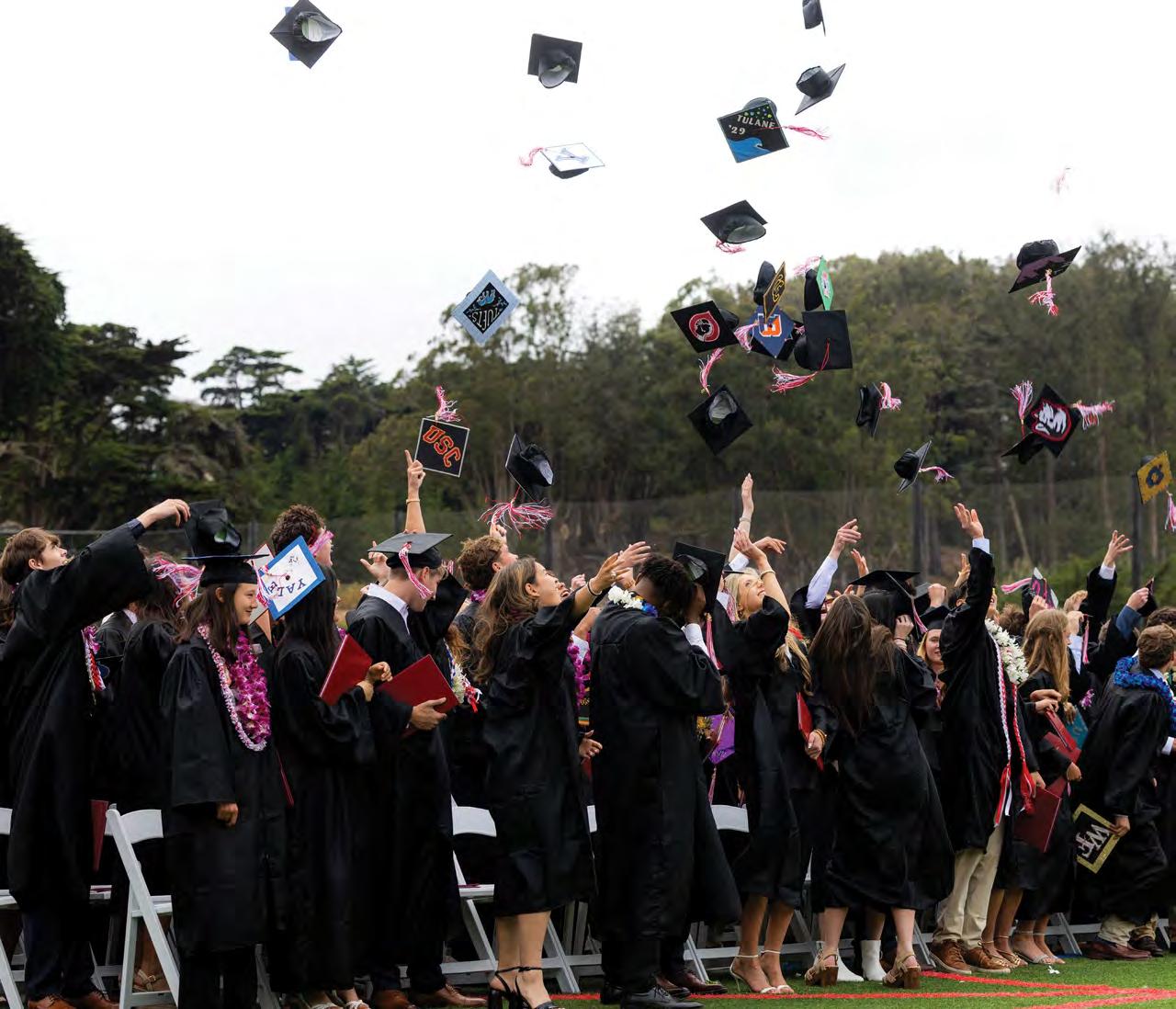
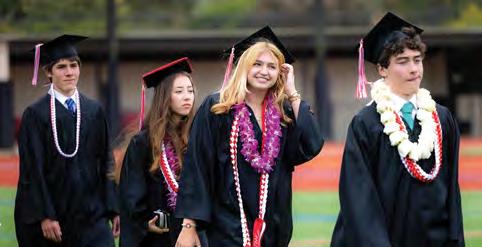
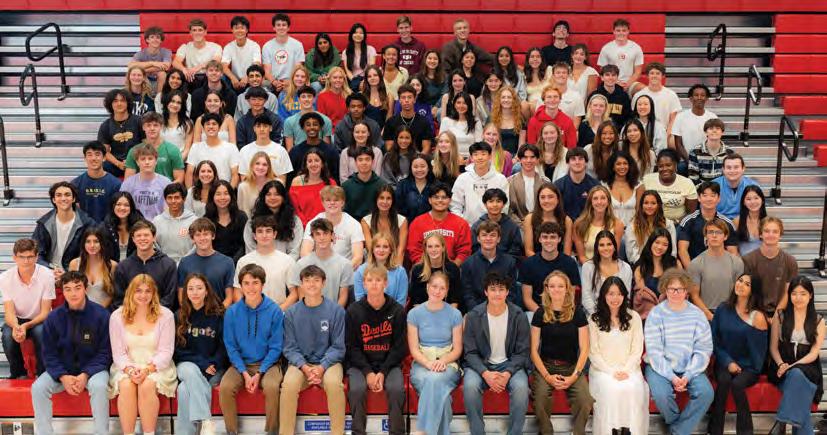
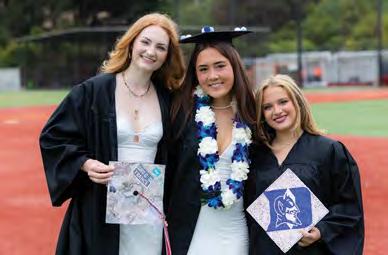
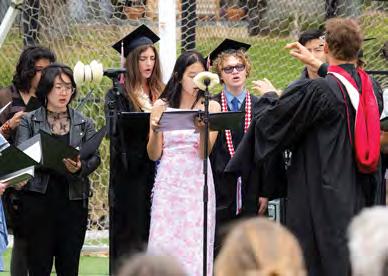
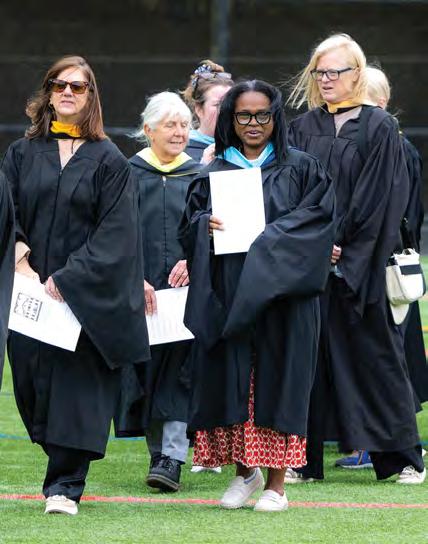
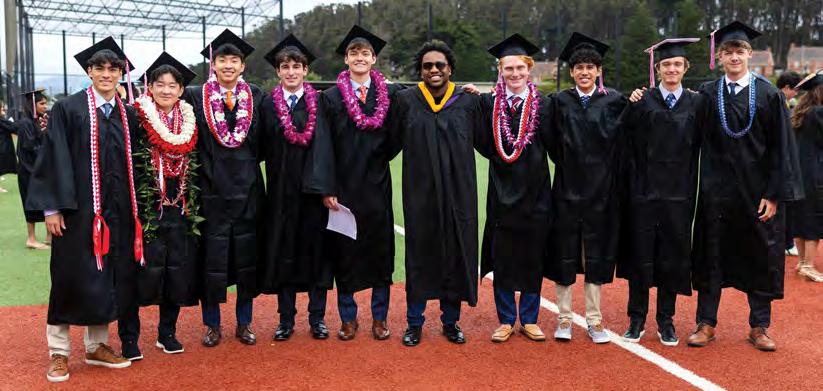
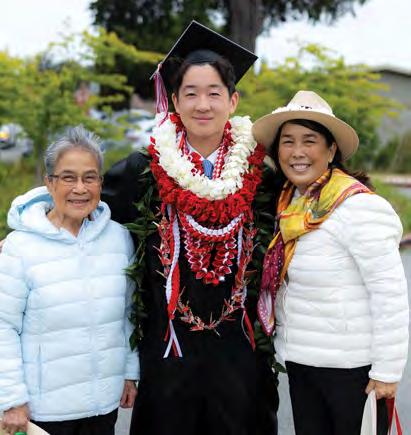
The Class of 2025 graduated from University High School on June 9, 2025, in a joyful ceremony at Paul Goode Field. Surrounded by cheering families and friends, students in caps and gowns marked this milestone with pride and excitement. The program included thoughtful remarks from administrators, trustees, faculty, and students, all of whom reflected on resilience, growth, and the values that define the UHS community. Music and song brought the day to a celebratory close, sending the graduates off with a sense of purpose and possibility.
Congratulations
to the Class of 2025 as they step forward into their next chapter as UHS alumni!
COLLEGE SPOTLIGHT
By the end of their time at UHS, our graduates are inspired, confident, and ready for their next adventure. With the support of our experienced college counselors, students map out paths forward that best match their values, passions, and aspirations. While we take pride in the broad range of excellent colleges and universities that our students choose to attend, we are proudest of who they are when they graduate from UHS: individuals ready to live lives of integrity, inquiry, and purpose larger than the self.
SCAN HERE TO EXPLORE THE UHS COLLEGE COUNSELING JOURNEY AND READ WORDS OF WISDOM FROM ALUMNI.
AL MNI
HONORS 2025
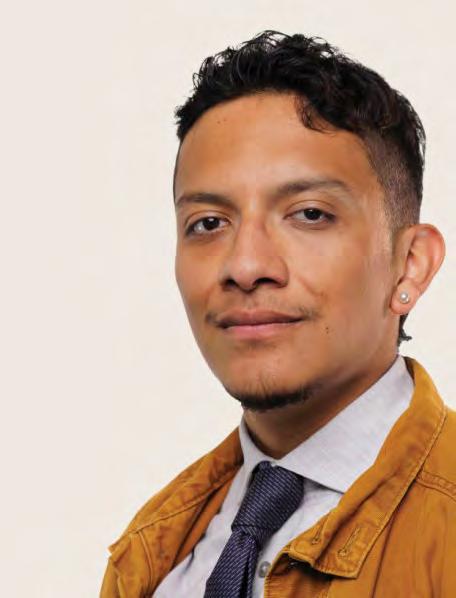
Carlos Cabrera-Lomelí ’16
is a community reporter with KQED’s digital engagement team. He also reports and co-produces for KQED’s bilingual news hub, KQED en Español. His journalism anticipates and addresses what underrepresented and future audiences need, publishing on platforms that they are most likely to use, such as WhatsApp. His voice is extremely valuable in this time of uncertainty for our immigrant population.
Carlos emphasizes the importance of building new audiences for journalism, moving away from traditional reporting. Through his journalism, he provides actionable information and links to resources, while holding institutions and communities accountable, amplifying local voices, and challenging misleading narratives. Having grown up in the Mission District, he is a trusted and authentic voice for the community.
Carlos spoke to students and alumni guests at the 2025 Alumni Honors Assembly, which took place on May 2 as part of Reunion Weekend. Carlos was nominated by Samantha Lam ’16.
SCAN TO READ
CARLOS’S REPORTING
CLASS NOTES
Brooke Wentz ’78 was the producer/music supervisor, and Pierre Hauser ’78 served as executive producer/ writer, for the feature documentary Janis Ian: Breaking Silence, which premiered on American Masters in June 2025. The film traces Ian’s remarkable journey from teenage prodigy to folk icon and LGBTQ+ advocate. Friends Michael Solomon ‘78, David Kulko ‘79, and Christina Doren (Whitaker) ‘78 joined Brooke and Pierre in NYC for the premiere last November.
Mark Kushner ’79, P ’20, ’23, shares, “I am excited to be the new Executive Director of Youth Tennis Advantage, a nonprofit founded by Arthur Ashe that uses tennis, tutoring, and mentoring to help inner-city students succeed in college and thrive in life.”
The current body of work by photographer, writer, and artist Gabrielle Saveri ’81 involves photographing the beautiful and rich culture and traditions of Italy’s native cowboys, the butteri. She had two exhibitions of her work in 2025: “Italian Cowboys: An American eye on the heart of Maremma,” a solo photographic exhibition at Caccia al Piano 1868 in Bolgheri, Italy, and “Italy’s Legendary Cowboy of the Maremma,” a solo photographic exhibition at the American Heritage Center of the University of Wyoming.
This summer, Katherine Melchior Ray ’81 published Brand Global, Adapt Local: How to Build Brand Value Across Cultures. The book draws on decades of experience working around the world, at global icons such as Louis Vuitton, Nike, Shiseido, and Hyatt, breaking down the science of adapting brands to culture to craft marketing strategies that truly connect with consumers around the world. The day it launched in June, the book became Amazon’s #1 Best Seller for International Business and remained there for 4+ weeks. Katherine consults, speaks, and lectures on international marketing and leadership at UC Berkeley Haas School of Business.
Katherine Melchior Ray ’81 and Philippe Krakowsky ’80 at the Cannes LIONS Creativity Summit in Cannes, France, in June.
Simon Frankel ’81 writes, “I am delighted to share that my book, Law, Ethics, and the Visual Arts (6th edition), written with Stephen K. Urice of the University of Miami School of Law and the late John Henry Merryman of Stanford Law School, was published in May by Cambridge University Press. In many ways, this book is the culmination of my thirty years teaching in the field of art law, along with handling numerous landmark cases on art and law when I was in private practice.”
Law, Ethics, and the Visual Arts
SIXTH EDITION
JOHN HENRY MERRYMAN
STEPHEN K. URICE
This thoroughly reorganized and rewritten edition covers a wide range of issues at the intersection of art, law, and ethics, including how artists live and sell their works, how art markets operate, title and authenticity, international trade in antiquities, art and war, museums, and freedom of expression and art. The book has multiple uses and audiences: a text for courses in law schools and graduate programs, a reference work for lawyers and museum professionals, and a lively read, filled with engaging legal stories and colorful anecdotes featuring the broad cast of characters in the art world. And on a personal note, Simon and Courtney Weaver ’83’s youngest, Juliette, graduated from UHS in June.
Eric Belz ’83 writes, “I left NASA/JPL and Earth science/Mars landings and am now a Senior System Engineer in the Phenomenology group at NorthrupGrumman Space Systems in Azusa, CA. I apply fundamental physics to various phenomena associated with our space-borne national assets. It’s pretty fun— it’s hard to follow Mars landings, though.”
Hedge fund veteran Raji Khabbaz ’85 founded Learn Wall Street to teach financial literacy and investing to students in grades 7–12. His nonprofit app uses visual storytelling and real-life case studies to engage beginners with no prior knowledge. His mission is to empower young people to make smart financial decisions and build long-term wealth—starting early. “Financial literacy is like broccoli,” he says. “So, we dipped the broccoli in chocolate.” This past spring, Raji contacted the UHS Alumni Association to offer free access to UHS students, and both the Investing Club and the Finance Club jumped at the opportunity. Thanks, Raji!
The Class of 1985 gathered for their 40th reunion on September 22. To keep in touch with classmates, share updates using your private Facebook Group at facebook.com/groups/SFUHS1985
Lincoln Mitchell, PhD, ’85 shares, “I am still teaching at the School of International and Public Affairs and the Political Science Department at Columbia. My ninth book was published this spring. It is a biography of George Moscone, called Three Years Our Mayor: George Moscone and the Making of Modern San Francisco. ”
From Grack Films: “Ari ’88 and Ethan ’88 Gold have crafted something truly extraordinary with their new film Brother Verses Brother, executive produced by Francis Ford Coppola. Presented as a real-time journey through the streets of San Francisco, this improvised musical drama stars the real-life twins alongside their 99-year-old father, renowned SF author Herbert Gold, in his final performance before his death. It received raves from critics as ‘one of the great discoveries from this year’s SXSW.’ The film creates an immersive ‘live cinema’ experience that blends innovative storytelling with deeply personal themes about family, grief, and the power of music to heal. The brothers invite you to join their mailing list at BrotherVerses.com for a chance to see it.”
Members of the Class of 1990 headed to the Laureate Bar & Lounge after UHS Night at Showcase to celebrate their 30th reunion. Thanks to Alix Spivack and Elizabeth Land for organizing the group!
SIMON J. FRANKEL
Last spring, Lareina Yee ’91 and her McKinsey & Company coauthors published The Broken Rung: When the Career Ladder Breaks for Women—and How They Can Succeed in Spite of It. The book identifies a critical moment early in women’s careers—between entry-level and first promotion—where advancement stalls. For every 100 men promoted to manager, only 81 women are, and just 77 women of color.
Leslie Manace Brenman, MD, ’96 shares, “I’m continuing to practice medical genetics at Kaiser Permanente, leading precision medicine and genomics for the Northern California region. I stay involved in the community benefiting ballet in Oakland and graduate science students with ARCS Foundation. I am excited to be joining the Hamlin School Board of Trustees this fall.”
Lighthouse Public Affairs cofounder Boe Hayward ’96 was named to the SF Standard’s SF 100 for being one of the most effective and connected figures in San Francisco public affairs. Boe’s journey began in City Hall, working under former Supervisor Bevan Dufty, where he developed a deep understanding of local government, budgets, and land-use policy. Since then, he’s helped shape the city’s landscape through his work with clients like Salesforce, Uber, Wells Fargo, Facebook, and AT&T, as well as major development and infrastructure projects across San Francisco.
Two classmates who are both talented independent filmmakers, Jesse Eisenhardt ’97 and Eric Wong ’97, collaborated on a project for the 50th anniversary of University High School, interviewing 25 members of our community, including some of their own teachers, friends’ parents, and members of their own cohort. Scan the QR code to see the movie.
Julia Adler-Milstein, PhD, ’97 returned to San Francisco eight years ago (with her husband and two kids), after stints in LA (brief!), Boston, and Ann Arbor. She says she loves being a professor at UCSF and specifically studying the impact of the ever-changing set of technologies used to deliver healthcare.
Cameron Kramlich ’98 shares, “During the pandemic, Carrie and I bought a forever home in Verdi, Nevada (we kept our place in SF), because we thought it would be a great place to be a kid. Zuna Kramlich joined our family on October 30, 2024. We’re still adjusting to this pivot in life, but she’s happy and healthy. She attended her first Giants game on April 23rd against the Brewers! ”
Charlotte Cooper ’98 appeared as a contestant on the season finale of Jeopardy! (air date July 25). She writes “I definitely busted out my textbooks from Western Civ, Art History AP, and US History AP as part of my preparation/study strategy.” Charlotte didn’t win the game, but she did answer the Final Jeopardy! clue correctly: “According to one obituary, in 1935 he owned 13 magazines, 8 radio stations, 2 movie companies & $56 million in real estate.” Turn the magazine upside down to read the correct answer at the bottom of the page.
The Class of 2000 celebrated their 25th reunion at the Head of School’s home over Reunion Weekend 2025.
The correct response was: Who is William Randolph Hearst?
Jessica Vose ’00 has worked in cybersecurity for the past 10 years and in high-tech for the last 20. She is currently Chief Marketing Officer at CyberRisk Alliance, a media and events organization that connects the cybersecurity practitioner ecosystem with the cybersecurity technology community. Before CyberRisk Alliance, Jessica held marketing leadership positions at cybersecurity companies Zimperium, SafeBreach, and Cylance. Jessica has two daughters (Adelyne, 7 and Westley, 5) with husband Greg Vose, who is a plant scientist currently teaching at Merritt College in the Peralta Community College district. They live in Berkeley and spend as much free time outside as possible, playing bluegrass music very badly (Jess on fiddle and Greg on guitar), camping, cooking, and spending time with family.
Caroline Grey ’01 joined the California Energy Commission as a senior advisor to chair David Hochschild in late February. On LinkedIn, she posted, “Out in the world, I’m often asked for good news: our solutions exist and California is bringing them online faster than ever.” She and her husband Corbin welcomed their son Lucian to their family last spring.
Jamie Timbrell ’02 shares, “I am happy to report that I recently set a new Guinness World Record for fastest marathon by a caveman, at the 2025 London Marathon.”
Larissa Hsia-Wong ’03 shares, “After dedicating nearly 15 years to elementary education as both a classroom teacher and an administrator, with half of that time spent in international schools abroad, I completed my EdD. My dissertation focused on reimagining diversity, equity, and inclusion (DEI) initiatives in independent schools. This research was conducted through the unique perspective of kindergarten teachers of color, highlighting the crucial roles of community joy, storytelling, and reflective practices in fostering more inclusive educational environments. Currently, I serve as a Lead Curriculum Developer at Seesaw Learning,
where I apply my extensive experience and research insights to create innovative educational content. On a personal note, I’m also embracing the joys and lessons of parenting, with an energetic toddler!”
Ryan Kellett ’05 shares, “I just completed my time at Harvard University doing dual fellowships at the Nieman Foundation and the Berkman Klein Center. I used my year in academia to study the intersection of the creator economy and journalism, launching a course for traditional journalists to pursue ‘solo’ careers in content creation. I’m headed back to Washington, DC, to pursue consulting with publishers and tech leaders on their editorial operations.”
Julia Mattison ’07 was nominated for a 2025 Tony Award for Best Original Score (Music and/or Lyrics) Written for the Theatre for her work on the musical Death Becomes Her, alongside her collaborator Noel Carey. Their score helped propel the show to become one of the season’s biggest hits, earning 10 Tony nominations, including Best Musical. Julia’s score has been praised for its bold mix of camp, emotion, and genre-blending flair.
Alejandra Vargas-Johnson ’08 writes, “I’m living in Oakland with my partner, Fabiano, and our two-yearold daughter, Francisca. It’s been wonderful to hang out with so many UHS friends this year, from toddler birthday parties and playground meetups to karaoke nights, career chats, and lunch dates. Go Devils!”
and Alejandra ’08 and Charlie and Hilary Eggers, MD, ’08 at Charlie’s 2nd birthday party.
Talia Berson ’11 writes, “I’ve recently finished my PhD in clinical psychology and moved up to the Bay for my fellowship with my husband. We’re so happy to be back!”
Gabby Chua ’14 shares, “I defended my PhD in Chemical Biology and Biophysics from The Rockefeller University in April 2025. I have remained in New York City and am now a postdoctoral researcher, studying gene replication and DNA damage.”
Francisca
Frances Arnautou ’16 is a singer-songwriter and producer based in Los Angeles. She’s released music under the name Frances Whitney, with tracks such as “Stoned on the Highway,” “Going Somewhere,” and “Holding On” gaining traction in 2024 and 2025. Her style leans into indie pop with introspective lyrics and layered production.
CJ Dowd ’17 graduated from Harvard in 2021 with degrees in mathematics and music. He sang in the Harvard Glee Club, won the Boott Prize for choral composition, was named to Phi Beta Kappa, and was awarded a Herchel Smith Fellowship to pursue a master’s degree at Cambridge (UK). He is now in the Mathematics PhD program at UC Berkeley.
Maddie Dowd ’19 graduated from Harvard in May, with degrees in Philosophy and Human Evolutionary Biology. She co-wrote the Hasty Pudding Show, served on the writing board of The Lampoon, won the Hoopes Prize for her senior thesis, and was elected to Phi Beta Kappa. She was awarded a St. John’s Benefactors’ Scholarship to pursue a master’s degree at Cambridge (UK) next year.
Olivia Schirle ’19 shares, “Last spring I graduated with my second bachelor’s degree and started working as a mechanical engineer at a medical robotics company.” Olivia received her BE in Mechanical Engineering from Dartmouth in 2024 and her BA in Computational Biology from Colby College in 2023.
Fifteen athletes in the Class of 2025 went on to play sports in college. Nationwide, only seven percent of high school student athletes go on to play at the next level.
Congratulations to these college athletes!
(List of committed seniors published by the UHS Athletic Department, 4/8/25.)
NAME SPORT SCHOOL
Jack Brilliant Cross Country—Track Vassar College
Luke Burton Soccer University of Notre Dame
Scarlett Carpenter Field Hockey Tufts University
Zoë Cort Cross Country—Track Wellesley College
Whitney Froeb Lacrosse Yale University
Ben Jones Cross Country—Track Wesleyan University
Hanae Kambara-Coughlin Soccer Columbia University
Kate Kennedy Basketball Washington & Lee University
Dani Lee Volleyball Carnegie Mellon University
Sammy Monks Track and Field—Sprints Brown University
Vivi Nealey Soccer Pomona-Pitzer
Saskia Petitt Rowing Tufts University
Watts Richmond Soccer Boston College
Olivia Soenens Basketball Amherst College
Damysia Walls Volleyball and Track & Field Xavier University
PARTY
!When you get three or more alums together for any kind of snack, we’ll reimburse you up to $50. Just send us photos of your tablemates, the restaurant check, and the reason for your get-together. Only one submission per person per year, please. Find details at sfuhs.org/pizzaparty
Adam Zaidi ’24, Jonas Rosenman ’24, Mika Yamamoto ’24
Ella Dovey ’21, Katie Hartel ’21, Sara Tagol ’21
Fiona Brauer ’19, Judith Edwards ’19, Colin Cooper ’19
Isabel Grohne ’24, Leyton Lin ’24, Maren Walker ’24, Elizabeth Gorman ’24, Maya Egrie ’24, Bryce Hoenigman ’24
Jenna Tam ’20, Clara Chung ’20, Ella Tang ’20
Jenna Tam ’20, Kyra Kushner ’20, Sofia Paolucci ’20
Jude Edwards ’19, Roxie Miles ’19, Lily Zhong ’18
Georgie Miles ’25, Roxie Miles ’19, Olivia Miles ’25
Gladys Silva ’98, Maura McGinnis-Gibney ’99, Myesha Jackson ’98
Ella Tang ’20, Jenna Tam ’20, Clara Chung ’20
Elliot Britton ’18, Jonathan Som ’18, Will Hespe ’18
Eloise Burtis ’20, Clara Chung ’20, Zoe Shulman ’20
Leyton Lin ’24, Bryce Hoenigman ’24, Isabel Grohne ’24, Chloe Hall-Sherr ’24, Dean Myers ’24, Lucas Holden ’24, Ryan Jo ’24
NEW!
Pizza Party Professional is a twist on the classic, now TWO alums can get up to $50 reimbursement when they meet *in person* for career networking or mentorship over coffee.
Emma Chin-Hong ‘20 and Olivia Luk ’20 Career topic: Design/UX
Sarah
Ethan
Amy Yu
Jack
Julian McWilliams ’20, Nicolas BignoliLakshman ’20, Kameron Mohebbi ’19
Maya Swain ’20, Rania Borgani ’20, Olivia Luk ’20
Nicolas Pantelick ’19, Linda Huang ’17, Sergio Martinez ’17, Ian Browne ’17
The Jim Tracy 5K, Walk & Roll to Cure ALS (Jim Tracy 5K) is more than a race—it’s a living tribute to a beloved coach whose courage and conviction continue to inspire generations. Organized in partnership with UHS students and the ALS Network, the event honors the legendary cross-country coach who led his teams to 13 state titles over 22 seasons and whose battle with ALS galvanized a movement.
The 2025 11th annual Jim Tracy 5K hit a new milestone when a change was made to the winning formula: the date of the event was moved to the first Sunday in May, to coincide with UHS Reunion Weekend (always the first weekend in May). This new family-friendly offering during Reunion Weekend will attract alums, their parents, and their own kids of any age. The flatas-a-pancake route around Blue Heron Lake (formerly Stow Lake) in Golden Gate Park appeals to all levels of athleticism and offers plentiful free parking within steps of the registration desk.
Jim Tracy was diagnosed with ALS in 2010, but continued coaching until his passing in 2014, often from a wheelchair, never wavering in his commitment to his athletes. His story gained national attention through the documentary Running for Jim, directed by Robin Hauser P ’12,
which captured his final seasons and the unforgettable moment when runner Holland Reynolds ’12 collapsed near the finish line of the 2010 state championship race—then crawled across to secure the title for her coach. That act of grit became emblematic of Tracy’s philosophy: finish strong, no matter the odds. Tracy embodied the never-give-up spirit of those affected by ALS and their families and advocates.
In 2015, students Wyeth Coulter ’16 and Julia Lu ’15, both members of the cross-country team, founded the Jim Tracy 5K to honor his legacy and raise funds for ALS research. What began as a student-led initiative has grown into a powerful annual tradition, drawing runners, walkers, and rollers from across the Bay Area. The Jim Tracy 5K student-led committee has continuously been an incredible asset to the success of this event to raise awareness and funds for the ALS community. The inclusive format reflects Tracy’s belief that everyone deserves a chance to cross the finish line.
The ALS Network (formerly known as ALS Golden West) is a nonprofit organization dedicated to supporting people living with ALS and their loved ones. The ALS Network is committed to offering local, personalized care; working with elected officials to eliminate barriers to care; and driving science for effective prevention strategies, treatments, and cures for ALS. Amelia Bello, assistant director of community outreach at ALS Network and mentor to the student organizers of the Jim Tracy 5K, says, “Collaboration between the ALS Network and University High School has significantly enhanced our ability to broaden impact, foster meaningful partnerships, and accelerate advancements as we strive to cure ALS together.”
WHAT’S YO R ONE DEGREE EXPERIENCE?
One Degree is a recurring section of the UHS Journal magazine, sharing stories of alumni who work together or volunteer together after their time at UHS. What’s your One Degree experience? Send us the story at UHSalumni@sfuhs.org.
To expand your career network and make meaningful connections with other alumni, add San Francisco University High School to the education section of your LinkedIn profile, and use the search function on our school page. Scan the QR code to get to our LinkedIn profile.
In May 2025, to celebrate World Multiple Sclerosis (MS) Day, JoAnna Soffa ’89 and Max Boyer Glynn ’98 came together on the South San Francisco campus of Genentech, Inc., a member of the Roche Group, to share their patient journeys with a global audience of Roche employees. The event, which included other MS advocates and researchers, highlighted the importance of continuing to develop new therapeutic options in this complex disease area. JoAnna, who is the VP of Healthcare Law in the Genentech Legal Department, relished the chance to make a connection with Max, whose father, Herb Boyer, is a celebrated cofounder of Genentech. Max and JoAnna, both alumnae of Vassar College, share a passion for MS awareness and hope for other opportunities to join forces.
We’ve heard that many alums volunteered to help make the 2024 San Francisco mayoral campaign of Daniel Lurie ’95, P ’29, a success, including Will Bartlett ’93, P ’24, ’27; Danielle Bourhis ’94; Max Boyer Glynn ’98; Mark Mamakos ’95 Ned Topham ’94 Mark Young ’93 involved and we didn’t list your name, please let us know.