M & P S p e c i a l t y I n s u r a n c e p r o v i d e s
i n s u r a n c e a n d r i s k m a n a g e m e n t
s e r v i c e s f o r h e a v y l i f t i n
i n d u s t r i e s .
I N D U S T R Y
I N D U S T RY
S P E C A LT I E S :
E E L E C T O R S
H E AV Y H A U L E R S
R A N E R E N TA L R I I N G
F A B R I C AT O R S
S P E C I A L T I E S : THE M&P DIFFERENCE IF YOU LIFT, ERECT,
S T R U C T U R A L M OV E R S
L i c e n s e d n a t i o n w i d e , M & P S p e c i a l t y I n s u r a n c e o f f e r s c o m p r
w e e n i
s u r a n c e p r o d u c t s , c o n t r a c t u a l d e t a i l , a n d r i s k m a n a g e m e n t p r a c t i c e s
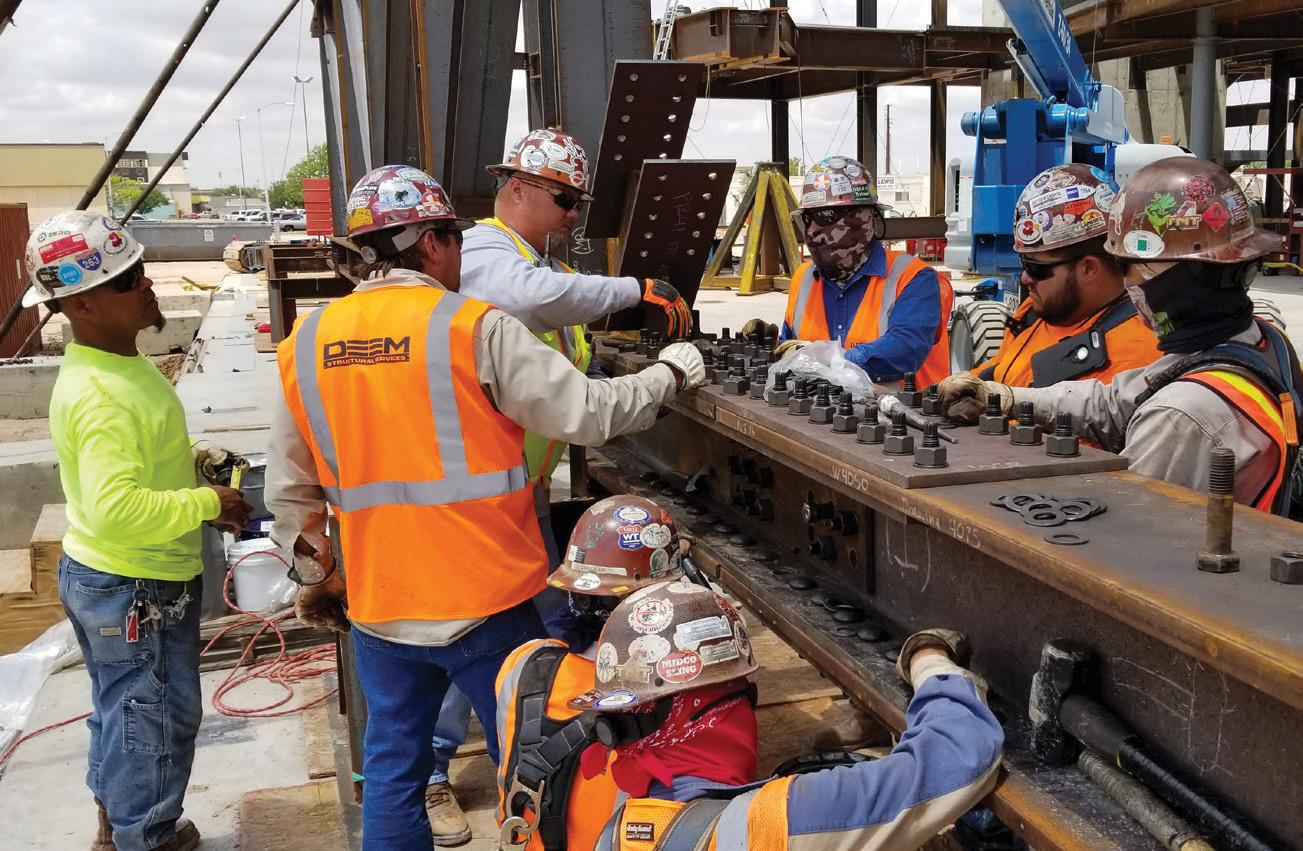
SEAA’s World Class Safety and Training companies speak about the issues they face and the priorities their companies make to nurture a culture of safety.
By Tracy Bennett
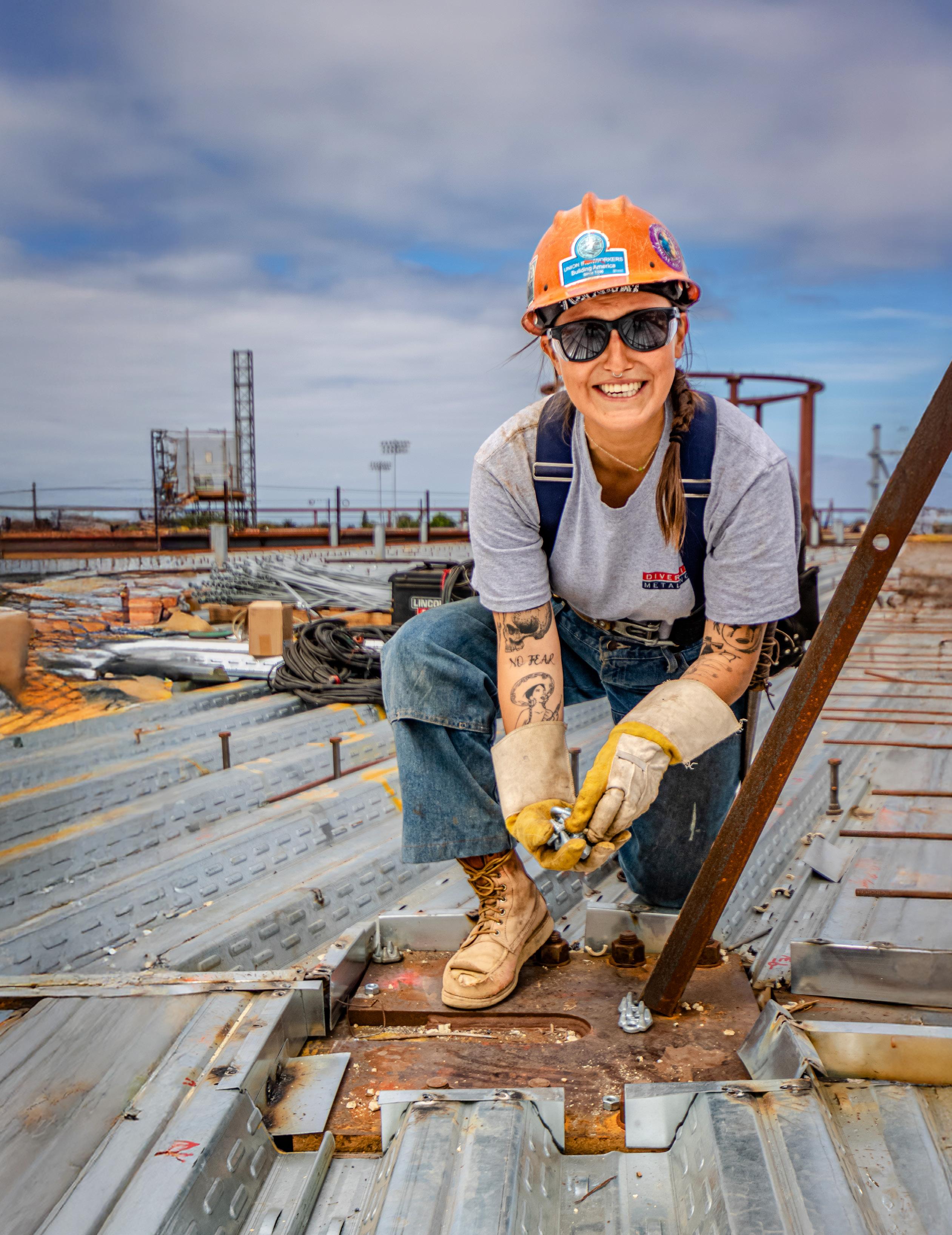
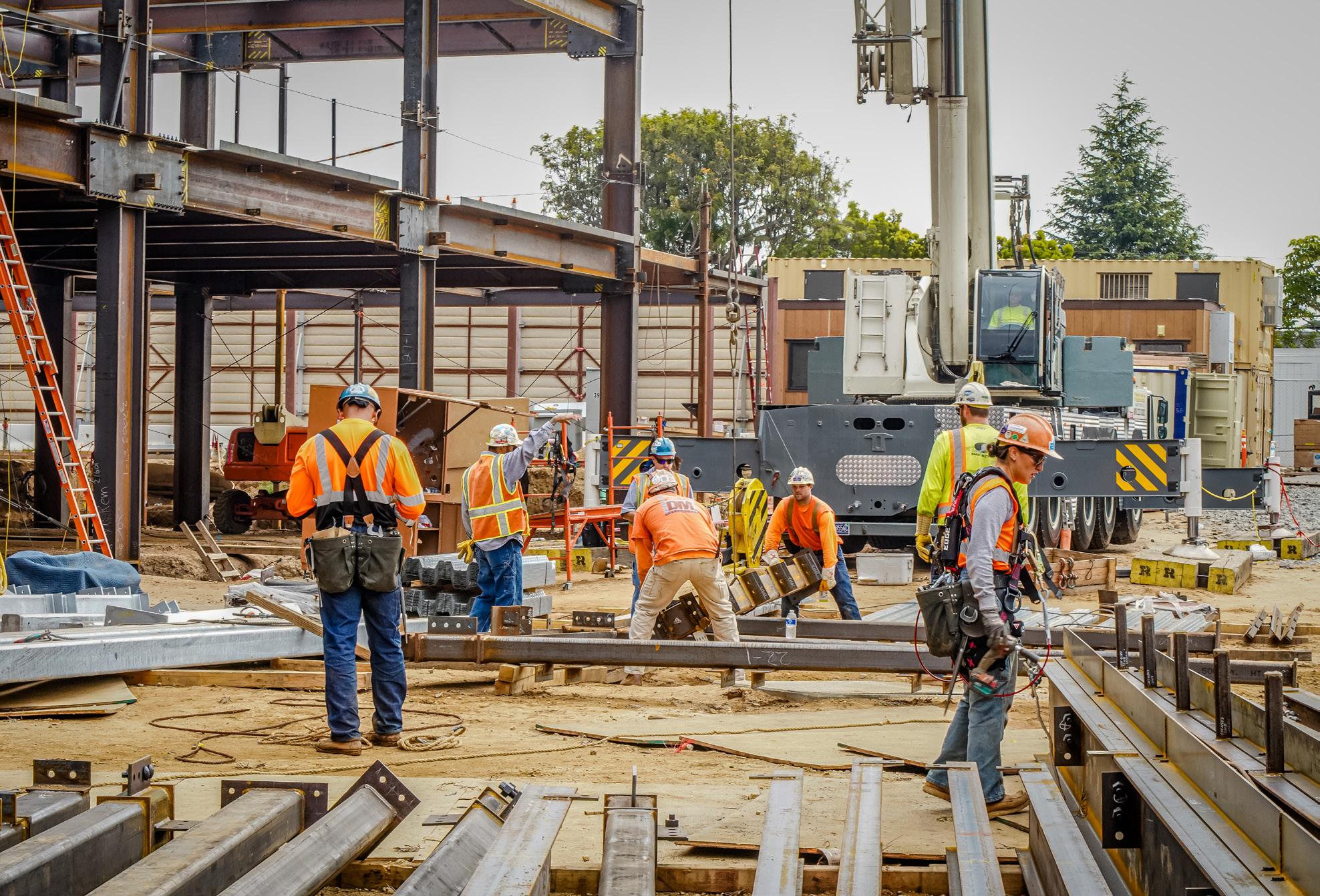
On the Cover:On the Cover: In 2022, during construction of a new math and science building at Santa Monica College in Santa Monica, California, Irie Rose Sandoval was the only female ironworker on the project. She is still an apprentice and is currently working on a welding certification needed for job she is on at a refinery. (Photo Credit: Tara Garner/ Under Construction Photography.) Providing a career pathway for women in steel erection, decking, and rebar construction is an important part of a company’s culture. SEAA is seeking nominations of women currently working in the industry to recognize during Women in Construction Week, March 2-8, 2025. Learn more at https://bit.ly/seaa-hh.
Management
“Steel” Yourself: AI is Coming Education and investment is needed to take advantage of labor-saving solutions.
By Daniel Kamau
By Lori Kuiper
Resources For Your Business Worth 18 X More Than Average Membership
THE OFFICIAL MAGAZINE OF THE STEEL ERECTORS ASSOCIATION OF AMERICA
SEAA is the only national trade association representing the interests of steel erectors, fabricators, and related service providers. Connector reaches both small and large contractors working in union and open labor markets.
$2,400 per year
Job Board and Applicant Tracking System
$10,000 per member
Ironworker Craft Training & Assessments Program
$10,000 per member
SteelPros Training Portal
>$2,000 per year
Workers Comp Insurance Program provides Immediate 10% discount on Premium
$1,000+ per year
Workers Comp Program provides opportunity to earn 5% return based on injury performance
$2,500 in first year & $1,250 each subsequent year
BBSI reimburses companies for achieving and maintaining AISC certification
$1,000 per member
SEAA Erector Members receive 50% discount on AISC Membership
Steel Erectors Association of America
353 Jonestown Rd, Suite 207 Winston-Salem, NC 27104
336-294-8880
www.seaa.net
OFFICERS & EXECUTIVE STAFF
Jack Nix, President
Chris Legnon, President Elect
Glen Pisani, Industry Member Vice President
Carrie Gulajan, Associate Member Vice President
Bryan McClure, Secretary
Jason McElrath, Treasurer
R. Pete Gum, Executive Directorr
PUBLISHING PARTNER
Chris Harrison, Publisher connectorsales@seaa.net Phone 660-287-7660
Roger Ridpath, Art Director roger@ridpathcreative.com 816-792-9669
ADVISORY COMMITTEE
Chris Legnon, Chairman, Cooper Steel
Nick Caratelli, Vice Chairman, Nelson Stud Welding Nathan Block, SDS2
Tammy Dean, Gardner-Watson Decking
Oliver Gleize, OTH Rigging
John Hughes, Industrial Training International
Todd Macintosh, JPW Erectors
Allie Sylvester, U-Vest Financial
Michael Waltman, Group Steel Erectors
Katy Williams, Williams industries
Connector™ is published quarterly by the Steel Erectors Association of America 353 Jonestown Rd, Suite 207 Winston-Salem, NC 27104
Copyright 2024 by the Steel Erectors Association of America. No material may be reprinted without permission from the Executive Director. While the information and recommendations contained in this publication have been compiled from sources believed to be reliable, the Steel Erectors Association of America, its affiliates, employees, contributors, writers, editors, designers, photographers, and media advisory committee, makes no guarantee as to, and assumes no responsibility for, the correctness, sufficiency or completeness of such information or recommendations and cannot be held responsible for the outcome of any action
By Jack Nix
Forging Connections, Building Success
In today’s competitive market, running a successful steel construction business requires more than technical skill or industry expertise—it demands a network, a voice, and the ability to adapt to evolving standards. One of the most impactful ways to access these resources is by joining a reputable trade association, like the Steel Erectors Association of America (SEAA). Over the years, I’ve seen firsthand how association membership can significantly benefit companies of all sizes, offering both tangible returns on investment and invaluable, less obvious gains that are just as crucial for growth.
Tangible Benefits: The Immediate Returns
1. Networking Opportunities: SEAA connects you directly with a community of industry professionals, from competitors and suppliers to potential customers and business partners. Through conferences, regional meetings, and peer groups, SEAA provides the opportunities for companies to build connections that lead to new business partnerships, mentorships, and collaborative projects. In fact, many of our members cite networking as the single most valuable aspect of their SEAA involvement.
2. Access to Training and Certification: A skilled workforce is the backbone of success. SEAA offers training programs and certifications tailored to the needs of structural and reinforcing steel erectors, decking contractors, and fabricators. Created by subject matter experts, these programs assist you in maintaining a workforce that is safe, skilled, and productive. Being able to advertise that your employees have SEAA/NCCER credentials or that you have established a DOL-approved apprenticeship program is an asset, giving clients confidence that your team meets industry standards. Training also helps reduce turnover rates, as employees appreciate opportunities for development and growth.
3. Industry Advocacy: SEAA actively monitors and engages in policy discussions that affect the steel erection industry, from safety regulations to labor laws. By joining SEAA, you amplify your voice in shaping policies that directly impact your business and the wider industry.
4. Exclusive Member Resources and Discounts: SEAA membership includes access to best practice guides and specialized tools designed to keep your team members informed and your business competitive. Additionally, SEAA negotiates discounts on essential business services for members—from insurance to software to materials. These savings add up, directly impacting your bottom line.
Jack Nix is President of SEAA and Chief Operations Officer for Shelby Erectors.
Intangible Benefits: The Long-Term Value
1. Staying Ahead of Industry Trends: In an industry as dynamic as steel construction, trends shift rapidly. SEAA provides members with regular updates on new technologies, emerging best practices, and evolving customer demands. Members receive publications, industry reports, and event updates that keep them informed about trends and innovations. Staying current with these developments is crucial for making strategic decisions that ensure longevity and competitiveness.
2. Building a Reputation of Trust and Credibility: Membership in SEAA is a mark of professionalism and commitment to excellence. Clients, suppliers, and partners recognize the SEAA logo as a symbol of reliability and quality. When a business associates itself with SEAA, it signals that it values safety, quality, and ethical practices. These perceptions build trust, which is critical in our industry. SEAA’s member directory is available on the website, allowing clients to find you. For small companies without websites, this is often the only verifiable online presence they have.
3. Gaining Access to Mentorship and Knowledge Sharing: New members are often pleasantly surprised by the culture of mentorship and knowledge sharing that pervades the association. Veteran members are generous with their knowledge, supporting newer companies in overcoming challenges, avoiding pitfalls, and seizing opportunities. Through mentorship or informal advice shared at events, SEAA members gain insights and strategies that can only be learned from experience. This support is particularly invaluable for small and growing businesses, which benefit from the collective wisdom of their peers.
Being part of SEAA is about more than just business; it’s about being part of a family. Our industry is tough, and the challenges we face are significant, but being part of a network of like-minded professionals can be a powerful source of motivation and encouragement. The camaraderie that members experience is a reminder that we’re all working toward shared goals, which can be both reassuring and energizing. Joining SEAA is not just a strategic business move—it’s an investment in your company’s future.
If you’re not yet a member of SEAA, I urge you to consider the opportunities you’re missing. Let us be a part of your journey, and I guarantee that together, we can achieve more than any of us could alone. So join us—let’s build something great, side by side. •
EVENTS & ACTIVITIES
Winter Board of Directors Meeting
January 17, 2025
Nashville, Tennessee
Steel Connections
Peer Group
January 17, 2025
Nashville, Tennessee
Meet & Greet
Reception
January 17, 2025
Nashville, Tennessee
Meet & Greet
Reception
February 5, 2025
Tampa, Florida
Career Fair
February 7, 2025
GMF Steel Group
Lakeland, Florida
Convention & Trade Show
May 6-9, 2025
Pittsburgh, Pennsylvania
ASSOCIATION NEWS
■ Steel Industry Leaders to Gather in the City of Bridges for SEAA’s 2025 Convention & Trade Show
SEAA will host its 52nd Convention & Trade Show from May 6-9, 2025, in Pittsburgh, Pennsylvania, at The Landing Hotel at Rivers Casino. The event will bring together industry professionals for networking, education, and exciting excursions.
“We look forward to welcoming steel erectors, fabricators, and suppliers in Steel City! Our annual convention is an unmatched opportunity for networking, learning, and industry engagement for steel construction business owners and managers,” said Pete Gum, SEAA Executive Director. “We encourage members to register early, as hotel space is limited and high demand is expected with major events happening in Pittsburgh,” said Gum.
Bonus Networking This year there are several bonus opportunities for networking on top of the usual receptions and peer group discussions. Included in a full access registration is a sightseeing cruise on the Gateway Princess, a paddle wheel riverboat on Tuesday, May 6 and tickets to see the Pittsburgh Pirates take on the
Atlanta Braves on Friday, May 9, at PNC Park, named by USA Today as the best ballpark in Major League Baseball.
Education Attendees can look forward to education sessions designed to address key issues affecting construction processes and safety as well as gain insights into new tools and tech and tips for better business management. Keynote speaker Matt Eversmann, First Sergeant (Ret.), will deliver a
powerful presentation titled "Strategic Shock: Leadership Lessons from Black Hawk Down," sharing insights into navigating unpredictability and leading through challenges.
The convention will also feature panel discussions with award winning member companies and peer-led small group discussions on bidding for projects, risk management, and social media.
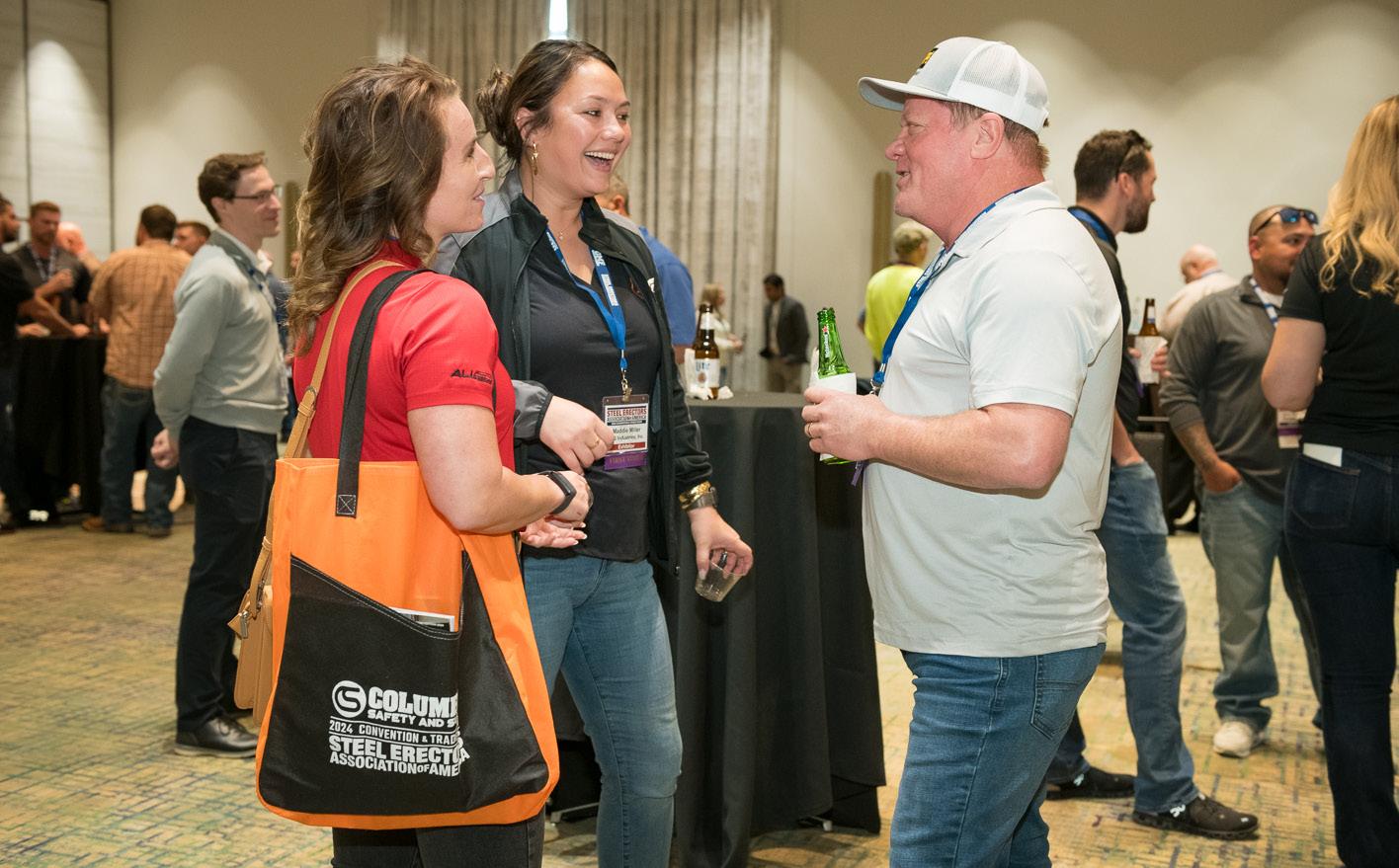
Trade Show The Trade Show, held Wednesday night and Thursday morning, will feature more than 70 exhibitors featuring the latest safety gear, software, and other solutions for steel erectors. Exhibitors receive two full access registrations (valued at $1,700) per booth and are encouraged to participate in networking activities throughout the week. Included with the Exhibitor Registration is the Riverboat Cruise, President’s Dinner, and Friday Night Ballgame.
Excursions include the George R. Pocock Memorial Golf Tournament to be held at Quicksilver Golf Club, and a Pickleball Tournament at LevelUp Pickleball Club. Discounts on registration are available until February 28, 2025.
Keynote speaker Matt Eversmann, First Sergeant (Ret.), will deliver a powerful presentation titled “Strategic Shock: Leadership Lessons from Black Hawk Down.”
First-Timers and New Members are invited to a happy hour where they meet the Board of Directors and network.
■ Annual Golf Tournament Raises Funds for Safety and Education
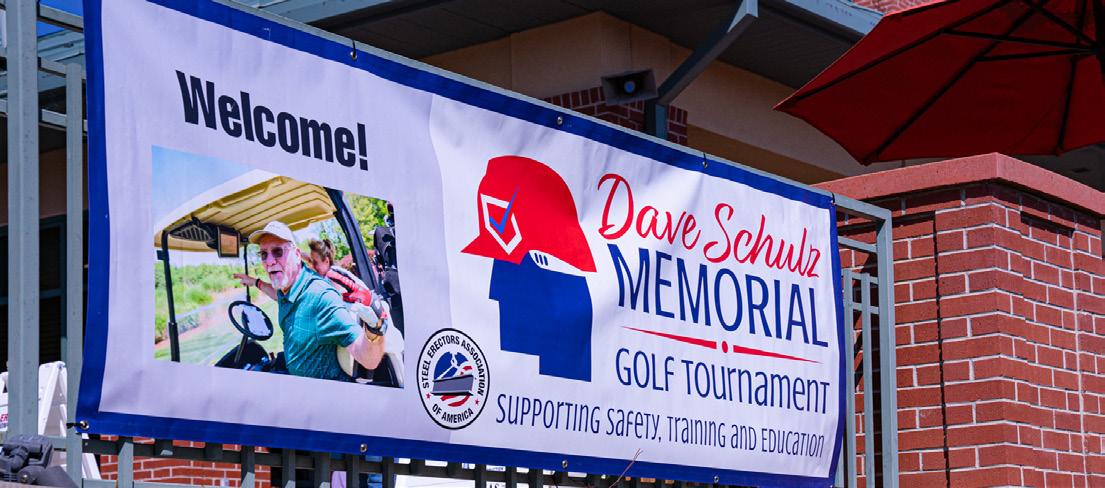
The Dave Schulz Memorial Golf Tournament returned to the Golf Club at Omni Interlocken in September. The tournament was named for former SEAA President (2018-2019) and 2009 Person of the Year Dave Schulz, who passed in 2020. The event also honored SEAA Board Member David “Big Dave” Conway Brown, who passed away on May 31, 2024.
Funds raised during this tournament and from the Boom Lift Ball Drop, sponsored by United Rentals, supports Safety & Education projects for the association.
The association would like to thank all of the players, sponsors, volunteers, and the SEAA staff who helped make this another successful event! View photos from the event here.
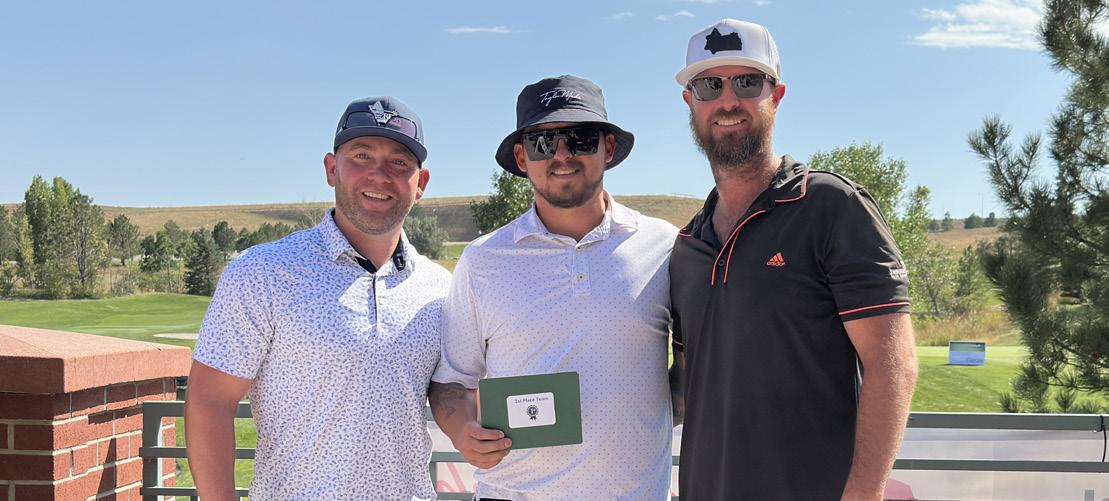
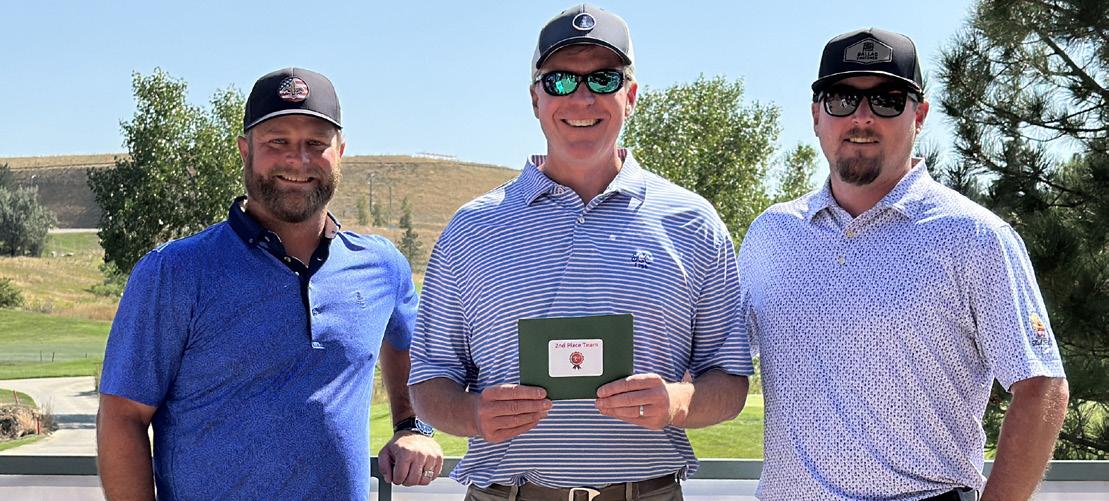
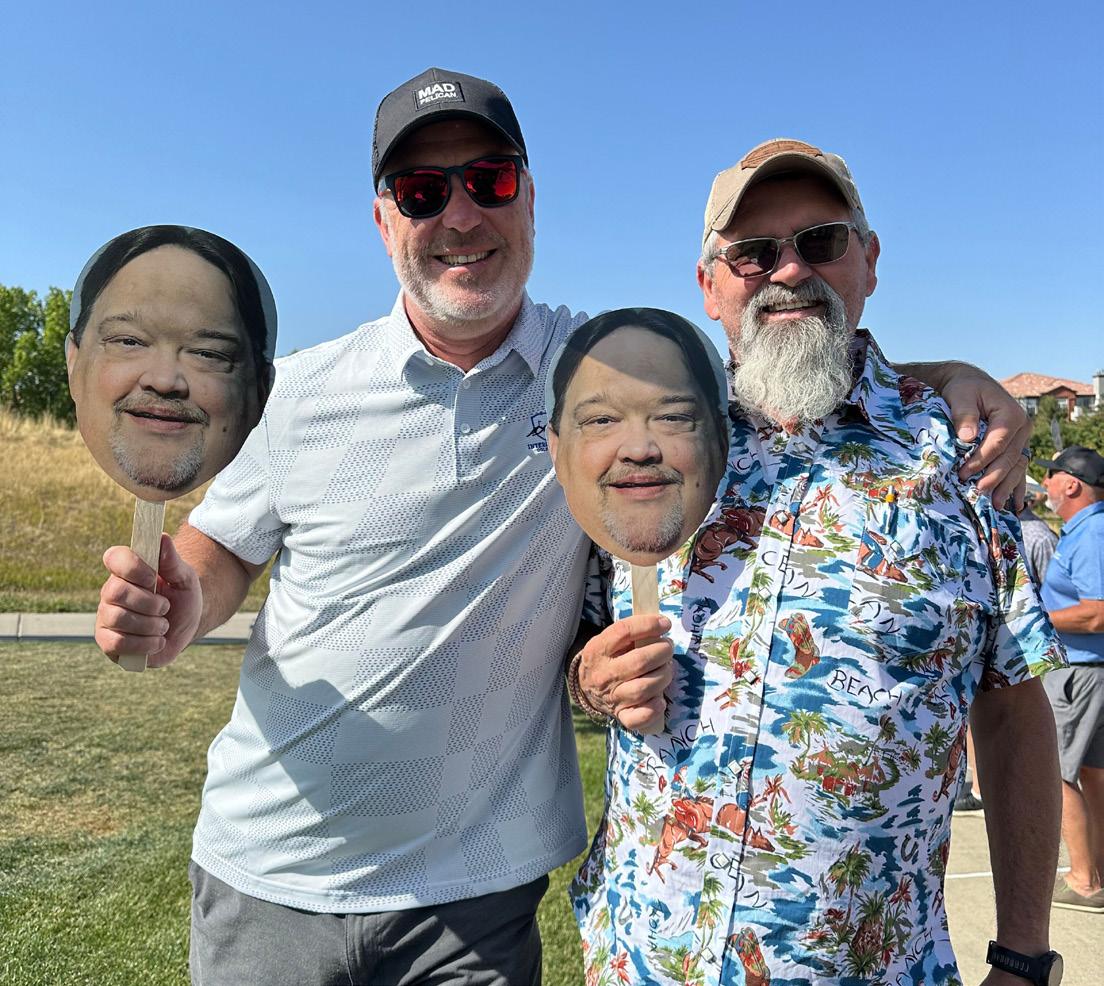
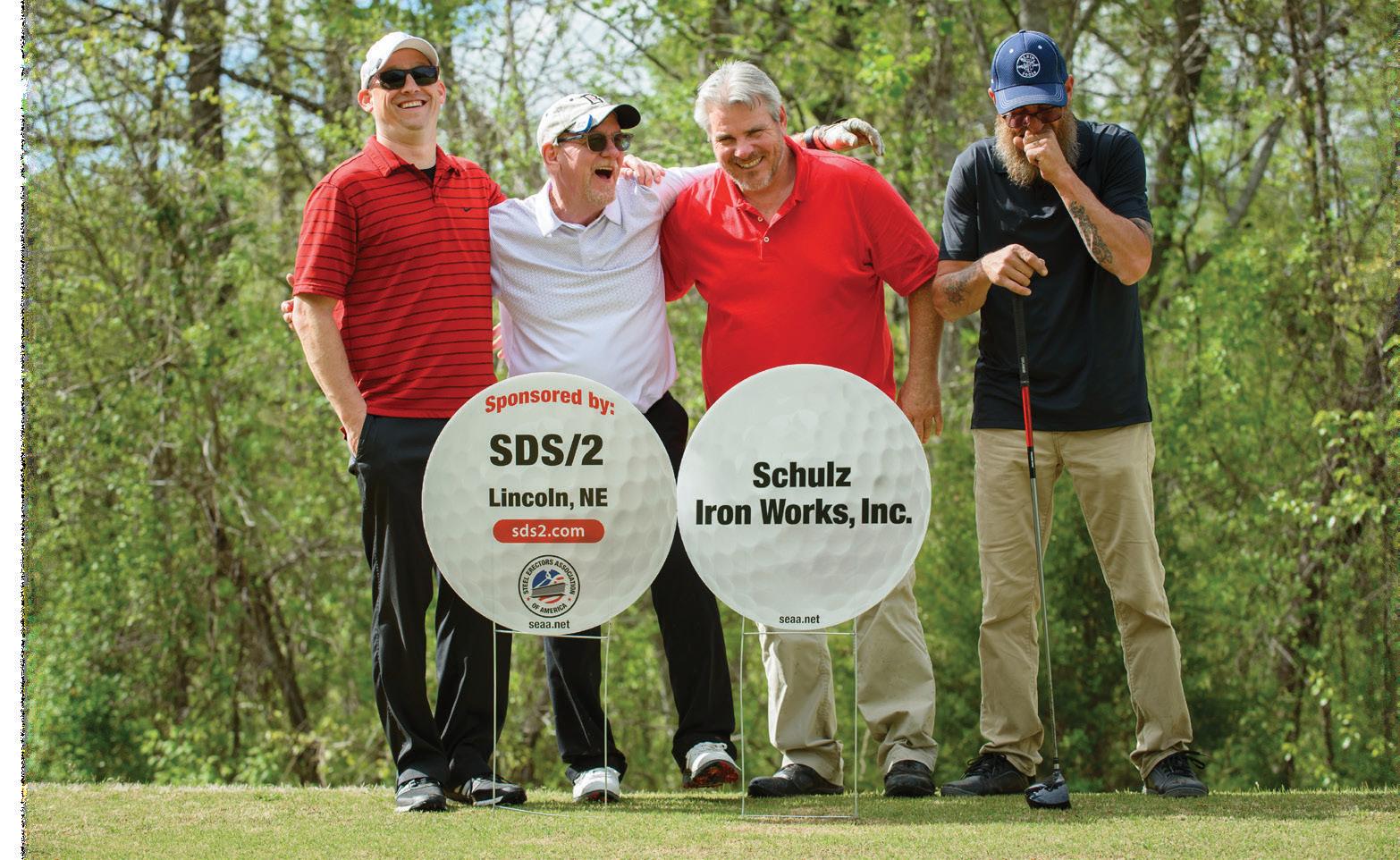
❶ The Golf Club at Omni Interlocken. ❷ & ❸ See full photo gallery at https://bit.ly/ seaa-golf-2024 ❹ 1st Place Team representing BDB Fabrication was Brice Davidson, Erich Posdzich, Colby Smith, with Jim Russell of Cellular Sales. ❺ 2nd Place Team was Chris Biguenet and Neal Gordon of Birmingham Fastener and David Slatinsky of Alliant Insurance Services received second place. ❻ SEAA has both serious and silly golfers. ❼ Attendees remember SEAA Board Member David “Big Dave” Conway Brown during the Boom Lift Ball Drop sponsored by United Rentals.
STEEL STRONG
■ SEAA to Honor Steel Strong Women During WIC Week 2025
The association plans to recognize exceptional women working in steel construction during the 2025 Women in Construction Week (March 2-8, 2025). Currently, the association is seeking nominations. The deadline to submit is January 7. Make nominations online.
To kick off the campaign, the SEAA Marketing Committee selected a logo designed by Dani Carville, Safety Coordinator for SEAA member-company S.L. Chasse Steel, Hudson, New Hampshire. “Being an ironworker has long been viewed as a man’s profession, but these days more and more women are working in this industry. They are competent and skilled and it’s time to celebrate that,” said Carville.
“We want to highlight women working in all aspects of the industry—from field positions to executives,” said Tammy Dean, Chief Financial Officer, Gardner-Watson Decking, Oldsmar, Florida, and member of the SEAA Marketing Committee.
The nomination form asks for information about the nominee’s professional achievements, contributions to a team or project,
examples of her leadership, mentorship, or collaboration, her contributions to community, as well as personal qualities. Nominations are open to anyone, whether the individual is working for a SEAA member or not. Finalists will be featured on SEAA’s social media channels during the 2025 Women in Construction week.
Resources for WIC Week Celebrations
SEAA invites member companies to set time aside to recognize the contributions of women on their teams during Women in Construction Week. Topics and resources are available from the National Association of Women in Construction. Be sure to check out their blog and podcast.
SEAA members can order hard hat stickers featuring Dani Carville’s design and jobsite banners to use during WIC Week celebrations. The deadline to place orders is February 12. Check out the SEAA website for details. Learn more https://bit.ly/seaa-hh.
■ Now Accepting Hard Hat Sticker Designs for 2025 Stand-Down
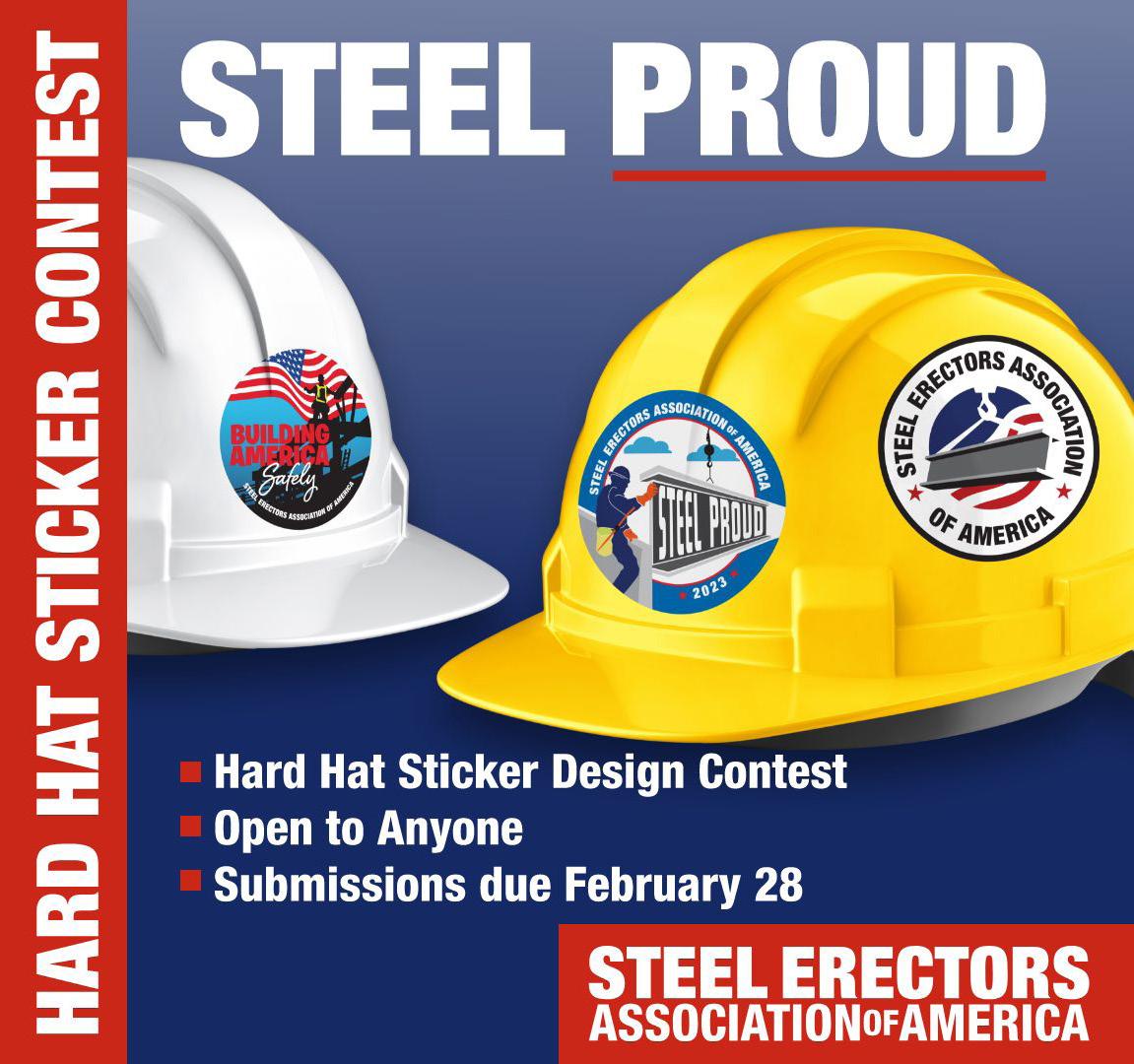
The 2025 National Safety Stand-Down to Prevent Falls in Construction will take place in May 2025, and SEAA encourages all professionals working in the steel construction industry to submit designs for this year's Hard Hat Sticker Contest.
The winning design concept will be recreated by a professional graphic artist and will be available for SEAA Members to purchase. Hard hat sticker designs must be original artwork and should reflect one of three themes. Submit at https://www.seaa.net/hardhat.html
Fundraiser Supporting SPONSORS
SAFETY, TRAI NING AND EDUCATION
■ National Christmas Tree
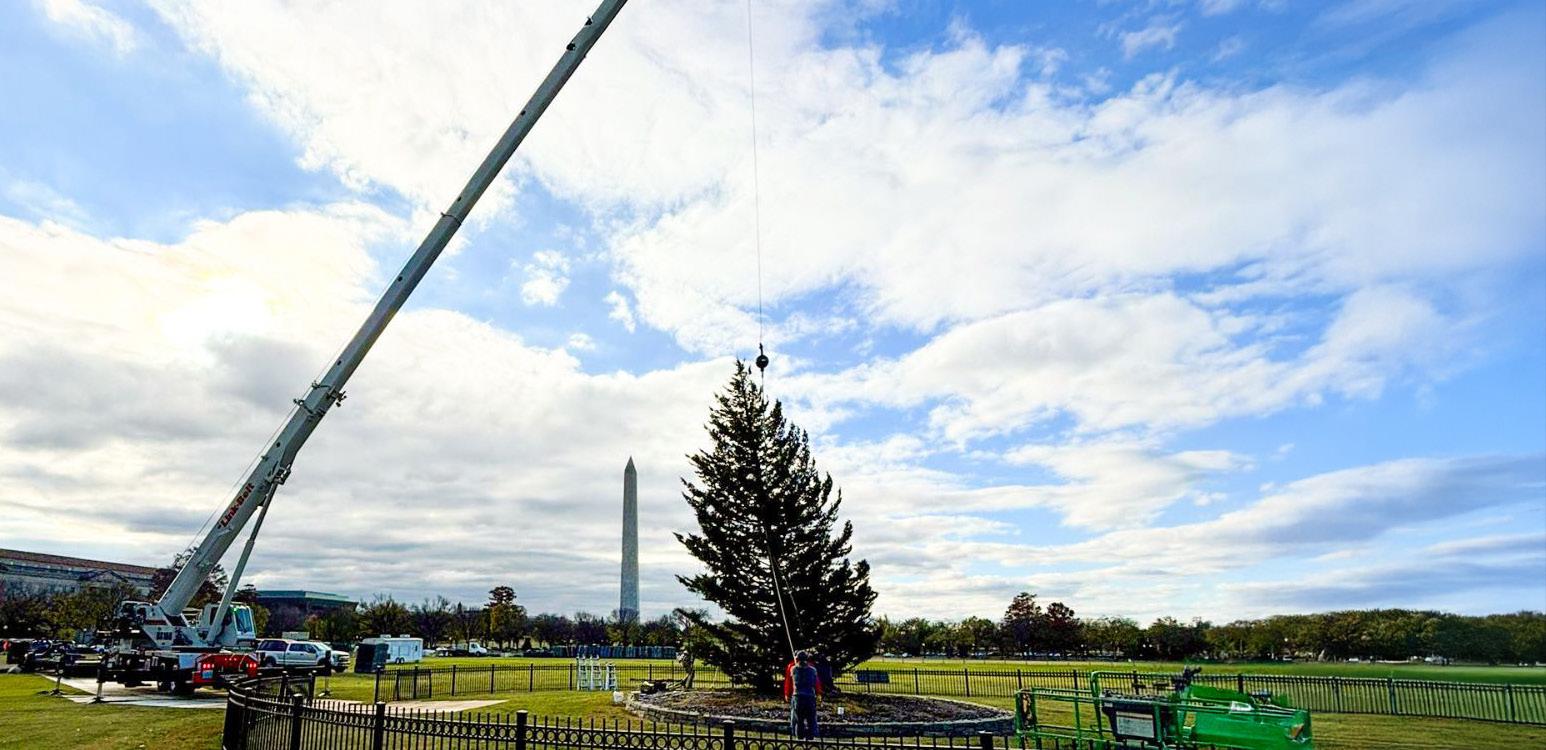
In November, L. R. Willson and Sons, Inc., erected The National Christmas Tree for the National Park Service. Bowen Willson was the crane operator. He used a Link-Belt 100-ton HTC-86100 truck crane to lift the tree into place. The National Christmas Tree has been a tradition for more than 100 years and symbolizes hope and unity.
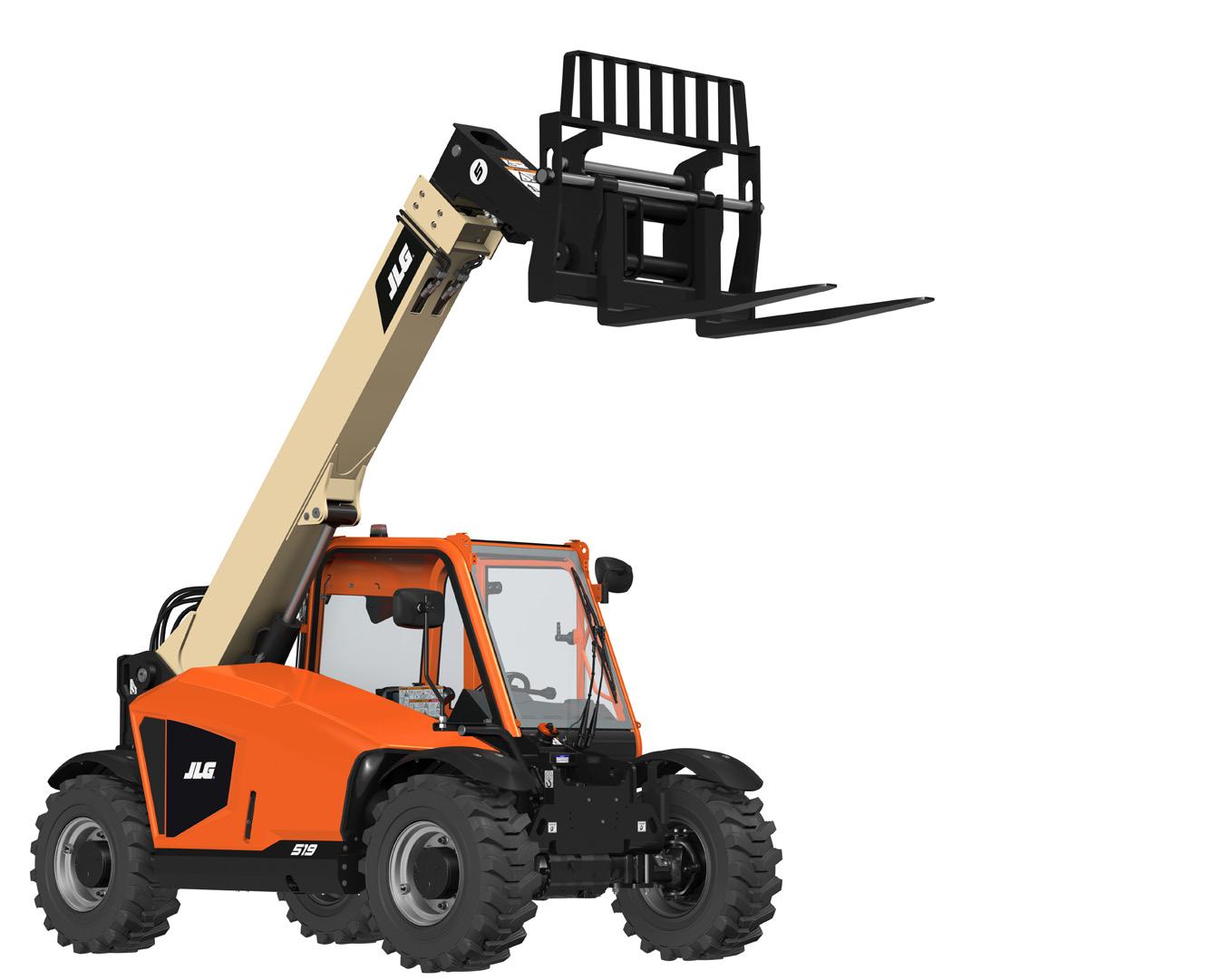
■ JLG 519 Telehandler Features Improved Load Chart
The new 519 telehandler from JLG Industries is a redesign of the G5-18A model. With a 5,500-lb lift capacity, 18-ft 7-in lift height, and 10-ft 10-in forward reach, the 519 features an improved load chart. It is powered by a Deutz 60 hp engine and has an electric-over-hydraulic joystick. The redesigned cab enhances operator comfort, while ClearSky Smart Fleet technology boosts productivity and diagnostics. Serviceability is streamlined with 44 percent fewer hydraulic connections.
The tree came from White Top Mountain in Virginia. It was erected at the Ellipse between the White House and Washington Monument. About a 4 ft hole was dug and the base of the tree, which was "toenailed" with rebar to keep the tree from falling over. The tree will have anywhere from 15,000 to 20,000 lights. A galvanized metal pipe will be secured to the trunk of the tree for the star to attach to.
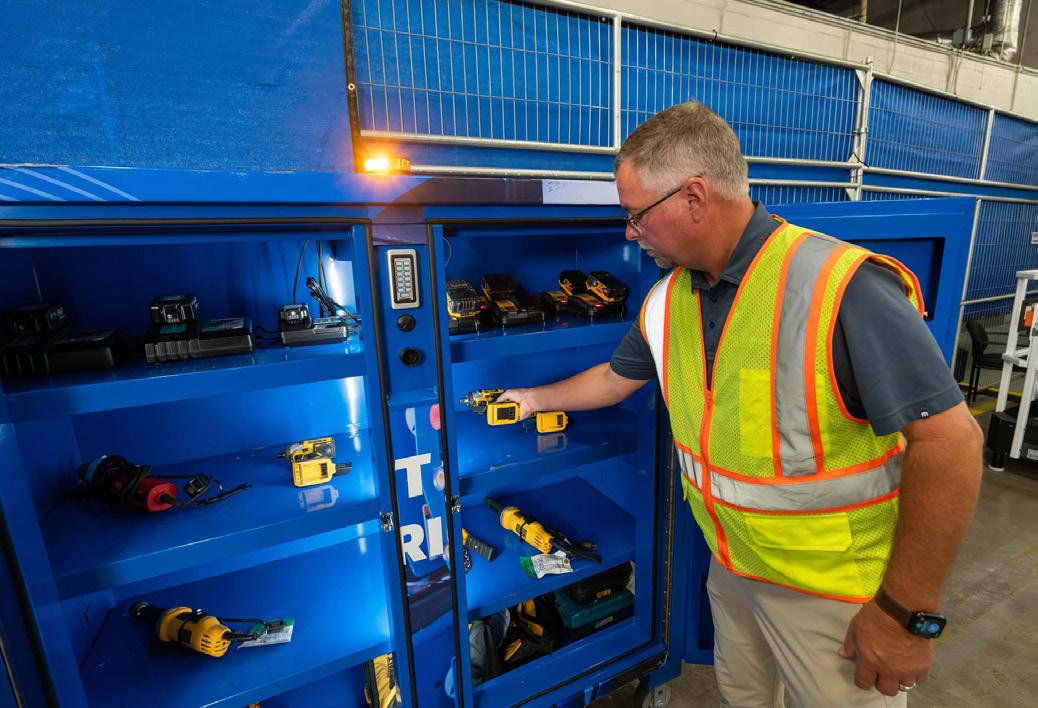
■ United Rentals Automates Worksite Tool Management
United Rentals has introduced ProBox OnDemand, a Bluetooth-enabled automated tool tracking system. ProBox OnDemand tracks tools in real time to reduce worksite tool loss. ProBox OnDemand is manufacturer agnostic; it can read and report on rental tools from any manufacturer. The system records who removed what tool, and provides real-time visibility into what tools have not been returned, allowing supervisors to track down missing tools and mitigate tool loss.
■ Fall Clearance Calculator from FallTech
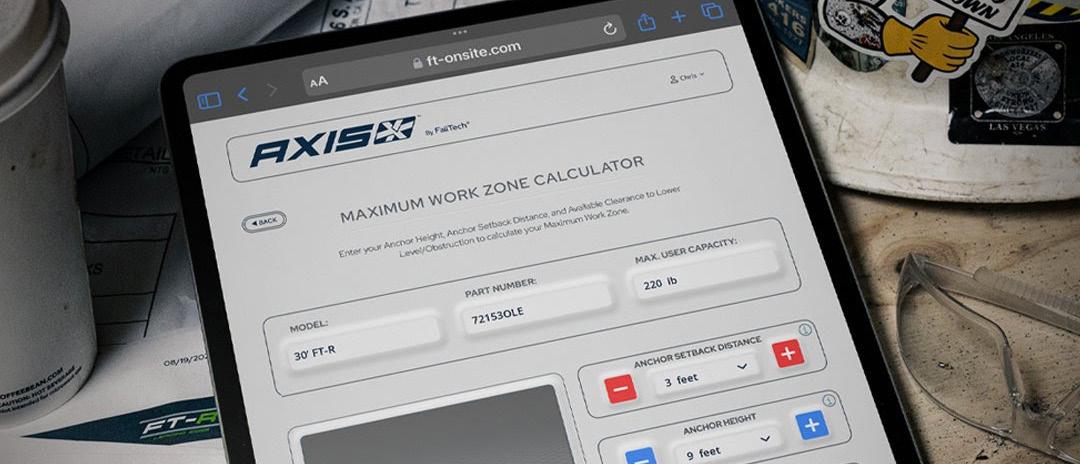
FallTech is setting a new standard in safety planning with the launch of AXIS, a Minimum Required Fall Clearance and Work Zone Calculator. AXIS merges advanced digital capabilities with FallTech’s expertise in safety engineering. This online tool is designed to meet the demands of modern work environments, offering unparalleled accuracy tailored to specific FallTech Self-Retracting Lifelines (SRLs) and based on unique job requirements.
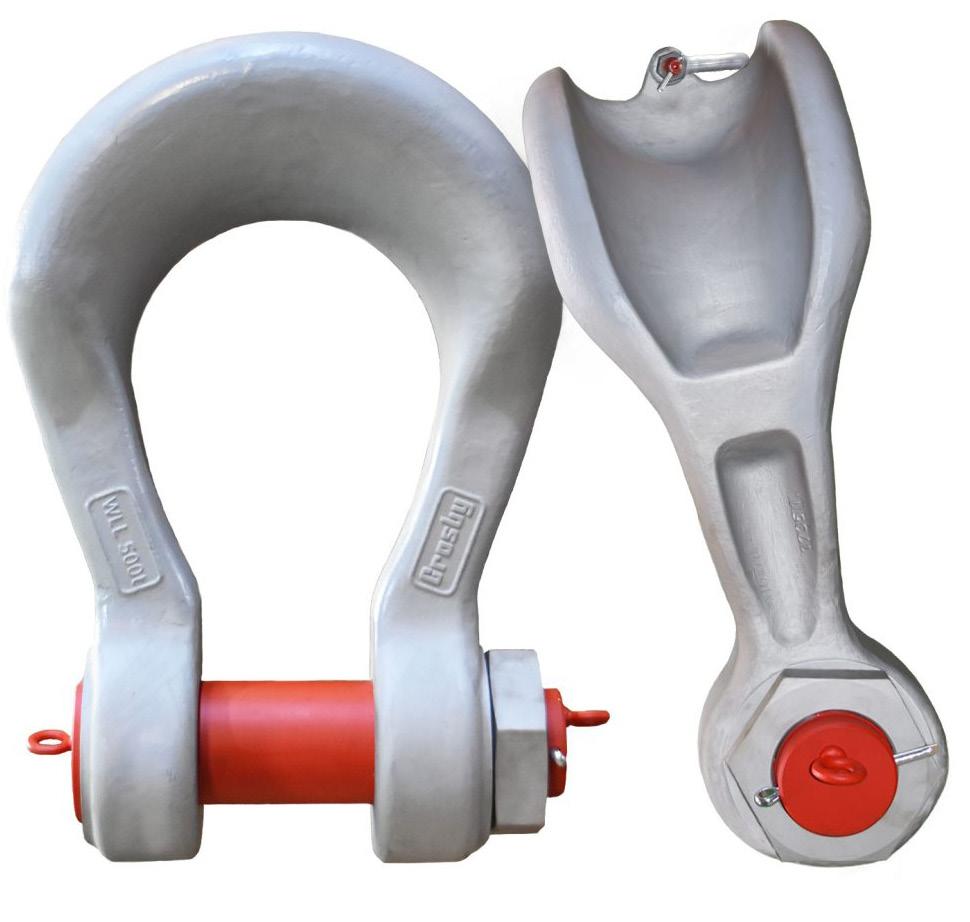
■ Wide Body Shackle for Heavy Lifting Operations
Kito Crosby introduces the Crosby G-2160 Wide Body Shackle for heavy lift applications. It comes in eight capacities ranging from 400-ton to 2,000-ton and has the widest bow on the market allowing for higher sling efficiency and capacity with smaller sling sizes. The shackle has three lifting points, including a recessed and removable center lifting point that reduces the risk of snags and provides balanced handling.
■ The Learning Path Builder from ITI
Industrial Training International has introduced a Learning Path Builder designed to streamline training process by providing curated course lists specifically designed for various roles within the crane and rigging industry. Users have the flexibility to explore these paths and customize them to fit your team’s unique needs by adding, removing, or adjusting courses as needed. With popular learning paths already built out, users can quickly and easily tailor a complete learning path designed specifically for the role you have in mind.
■ NCCER Launches Construction Foreman Certification Program
The National Center for Construction Education and Research (NCCER) has released a Construction Foreman Certification Program, another comprehensive program in its Construction Leadership Series. This online training and certification program provides a flexible, turnkey solution to train and qualify current and upcoming foremen in the critical areas of people management, communication, quality, safety and productivity.
Genie’s New Scissor Lift Line Built for Low
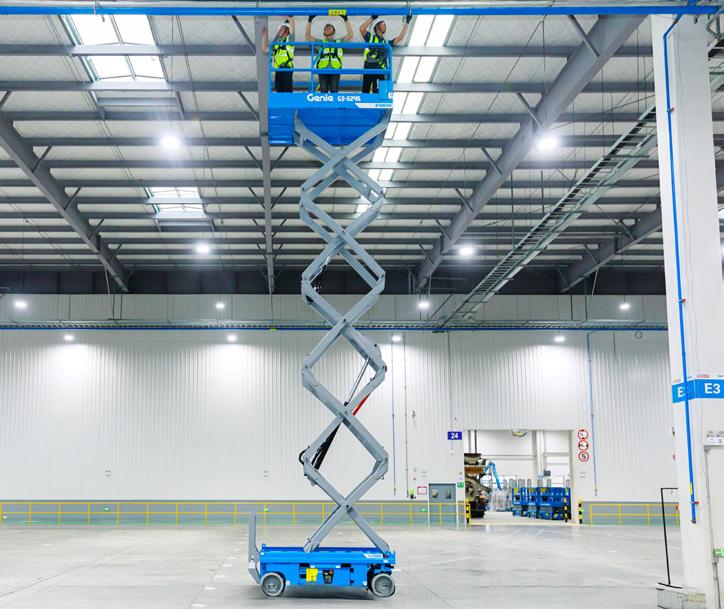
Genie announces an all-new design for its slab scissor lift product line that improves performance and lowers the total cost of ownership for Next-Generation Genie® GSTM-1932, GS-2632, GS-3232, GS-2646, GS-3246, and GS-4046 scissor
“Our priority was to drive lower cost of ownership, improve serviceability, and enhance the user experience — all while delivering the quality that our customers expect from Genie,” said Christian Dube, Senior Global Product Manager
The most noticeable change is the curved linkage design. This departure from industry standard reduces machine weight, allowing Genie to use right-sized components — including batteries, drive motors and other electrical components — which have a lower replacement part cost. Standard fixed guard rails on the popular GS-1932 fit through most doors, a reinforced extension deck eliminates flex and reduces damage, and new Smart Link™ plat form controller has an ergonomic design. •
MANAGEMENT
By Daniel Kamau
“Steel”
Yourself: AI is Coming
Education and
investment
is needed to take advantage of labor-saving solutions
The construction industry has a labor problem. Contractors are constantly looking to fill gaps— not only in the field—but also in front office and back office roles.
In 2023, the industry contributed 7% of global gross output by dollar value. Yet, it lacks the skilled workforce to capitalize on its estimated 70% growth potential over the next 15 years. In the United States alone, the labor shortage
Daniel Kamau, P.Eng, MBA/M.Eng, is founder and CEO of SketchDeck.ai. Read how other steel erectors and fabricators have won bids and reduced estimating time at sketcdeck.ai/ customer-stories.
tops half a million workers.
General Contractors, Specialty Contractors, and Steel Manufacturers are beginning to look to technology to solve this problem. Unfortunately, the construction industry has also been slow to adopt one of technology’s most promising solutions: artificial intelligence (AI).
Slow Innovation Stunts an Industry
In many industries, AI works hand-inhand with businesses and employees to increase efficiency and fill skilled labor gaps. For instance, some construction
firms have plugged their gaps with free “administrative” tools like ChatGPT to aid in research, document creation, and contract review. However, such generalized language processing programs lack the niche knowledge to truly elevate specialized businesses within the steel industry.
Even with these tools readily available, the industry has been reluctant to adopt AI. As of 2024, less than 4% of U.S. construction companies had adopted or planned to adopt AI. Just 1.5% of companies reported using it recently.
This data fits into a larger pattern: historically, construction firms have
AI works hand-in-hand with businesses and employees to increase efficiency and fill skilled labor gaps.
spent less than 1% of revenues on IT. However, it’s not necessarily a lack of desire, but a lack of options, driving this trend. With few truly innovative, purpose-built tools available, leaders are often left to cobble clunky or outdated programs into a workable solution.
When construction companies do invest in advanced software, they often start with data and project management tools – tools to record hazards, review procedures, run projects, or preemptively predict maintenance needs. While important, these tasks don’t offer the same productivity boost as construction-specific, multi-modal AI (algorithms that process many types of information simultaneously).
Despite the lack of widespread investment, construction’s early forays into AI have already generated transformative effects. Various software can assist firms with project planning and execution, more accurate cost estimation, data and document analysis, and even advanced materials discovery. Companies that have integrated these programs successfully often enjoy boosts to productivity, safety, and sustainability.
And yet, AI’s substantial potential has been undercut by snailpaced innovation, slow adoption, and business’ wariness of advanced AI tools.
So, how does construction solve this problem?
It starts at the top. Industry leaders must be willing to test and adopt AI technologies for their own purposes, and to promote AI education within their ranks. Someone has to stand abreast of the new frontier – and companies that adopt, learn, and grow early will undoubtedly hone a more competitive edge.
AI in Construction: A Case Study in Steel
Victor Garcia, President of Flawless Steel Welding in Denver, Colorado, is an example of a construction leader racing to embrace AI’s potential. His company has integrated AI into nearly every aspect of business – with substantial results to show for it.
For instance, Flawless Steel Welding uses Microsoft Co-Pilot for secure communication, document management, and automated code updates to stay AISC-compliant as a certified fabricator and erector. AI-powered meeting software automates note-taking to improve follow-up with partners and clients. These programs also assist with research, project insights, and even scaling opportunities. “I need an assistant, and AI has been an awesome assistant,” said Garcia.
One of Garcia’s more ambitious projects has been experimenting with AI in Excel. He hopes to create code that will streamline cost analysis by following projects from sketch to estimation to production. “Once I figure that out, I’ll be able to really manage my business by the numbers,” he said.
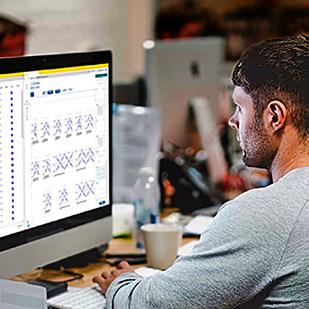
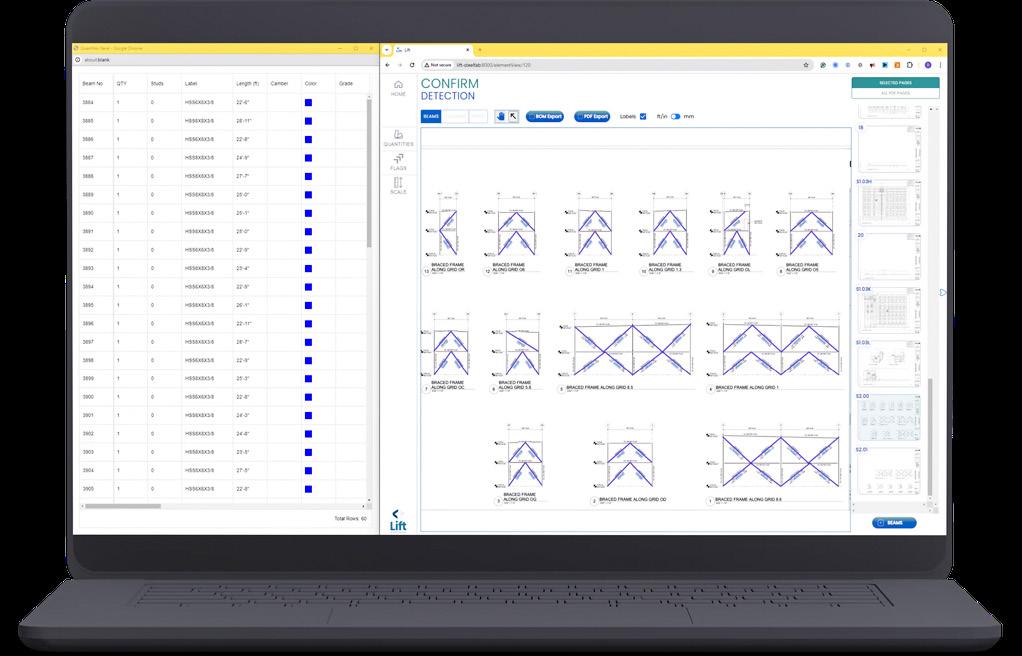
On the estimation side, Victor has adopted the construction-specific software, LIFT by SketchDeck.AI, to assist in more specialized needs. This AI-powered tool reads 2D engineering drawings and bidding plans, then exports essential data into integrated Bill of Materials (BOMs.) Early case studies show that LIFT can reduce take-off times by 50-95%, allowing erectors like Flawless Steel Welding to focus on high-value tasks, quality control, and client interaction.
Used together, Garcia’s AI suite has enabled him to overcome labor challenges in key areas of his company and position himself
Tips for Implementing AI Tools
AI offers great promise to companies seeking a competitive edge. But the gap between being willing to work with AI and actually implementing AI can be substantial. The process starts with leadership. Here are suggestions for encouraging success when companies are ready to adopt AI.
Address employees’ concerns. Business leaders can buy into AI – but employees will be the ones using the programs. Leaders can start by communicating their plans to adopt AI and what they hope to achieve. Emphasize that successful adoption will help the business scale and grow and allow skilled workers to refocus on high-value work. And be prepared to field questions about how AI integration will impact current practices.
Upskill your workforce. No one can take advantage of programs they don’t know how to use, so it’s more important than ever to promote or offer general AI education, through online or in-person courses. As the workforce gets familiar with these technologies, businesses will see more successful AI-human partnerships, especially when paired with algorithm-specific training programs.
Have an open-door technology policy, which establishes a culture where workers can clearly express concerns, frustrations, and drawbacks. Leadership can tap these insights to adjust procedures, deploy additional training, or select more viable AI alternatives.
Balance automation and human expertise. Construction leaders should not aim to outsource all human labor – they should look to capitalize on it. AI offers great promise, but algorithms are still machines that require oversight, correction, and a human eye to achieve their promise. Emphasize that the human-AI equation frees workers to focus on higher-value tasks, quality control, and on-time delivery as part of the collaborative partnership.
Adopt tools that cleanly integrate. Start the AI adoption process off right by identifying tools that make sense for your business needs, procedures, and existing software, which minimizes production interruptions and gives workers the best chance for success.
for growth. “As a small company, we’re setting the foundation to scale in the future,” he says. “Adopting AI earlier in the process means we’re going to have fewer hiccups and can adapt to a changing technological environment a lot faster.”
The Future of AI in Steel Construction
In 2022, the global AI construction market was valued around $1.3 billion. By 2030, that number is expected to hit $13.5 billion. The companies that stand to benefit most from this AI boom are the ones who adopt – and adapt – early in the game.
“The steel industry is so behind with software, but people who are willing to adopt now, they’re going to be new titans in the industry,” predicts Garcia. “I think [early adopters] are operating the way the entire industry is going to operate in five years.”
Early adopters will also help shape the AI-construction landscape by guiding development of technology that can overcome real-world challenges. Training
LIFT from SketchDeck AI helps automate takeoff tasks by analyzing large documents, calculating weights and volumes, detecting materials, and more.
on niche-specific construction data, building effective human-AI partnerships, and minimizing AI’s “hallucinations” (where algorithms generate inaccurate or nonsensical answers) all require subject matter experts and on-the-ground effort. And deploying active AI into a variety of environments will help developers design easier integration strategies in a field where businesses and clients are wary of technological interruptions.
This last problem, at least, has an easy solution: marketing AI-enabled companies as assets instead of liabilities. “Everyone
says they can get your job done on time and under budget, but do they have the tools to do that?” asks Garcia. “[Companies that use AI] aren’t just saying, ‘Hey, I can save you money.’ No, here’s the proof that I can save you money.”
As the construction industry enters its technological age, companies that adopt AI now are setting themselves up for early success. AI tools allow leaders to capitalize on their existing workforce while filling widening labor gaps, alleviating burnout, and re-focusing talent on high-value work.
It's only with the buy-in of these industry leaders that companies can realize the benefits of AI innovation. And it’s only in partnership with on-the-ground firms that AI tools can be built, tested, and properly implemented for maximum results.
As Victor Garcia says, “You can’t get away from AI. We’re tiptoeing into this AI environment, and this is exactly where the industry and society is going to go. I would rather be on the front end of it, trying to learn how to adopt it, than be on the back end trying to stay away from it – because it’s going to happen.” •
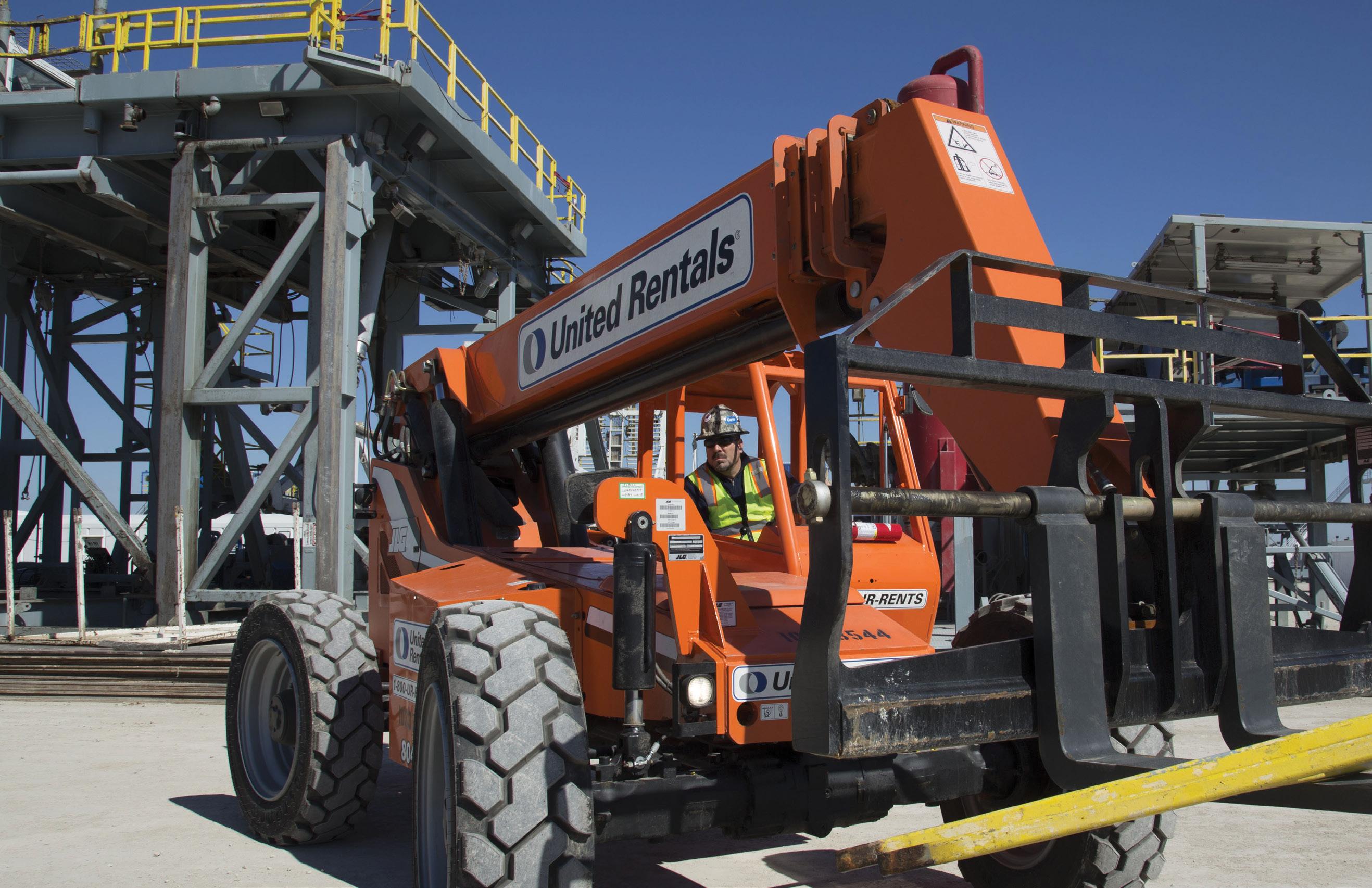
W ith a fleet of 650,000 pieces of equipment - 80% of which are equipped with telematics capabilities - United Rentals is the largest equipment-rental provider. We maintain the highest safety standards, offering quality general equipment solutions, including scissor lifts and boom lifts, and we also provide solutions that require a more specialized skill set, including Trench Safety, Power & HVAC, Fluid Management and more. Visit UnitedRentals.com or call 800.UR.RENTS to lear n more.
By Lori Kuiper
A Modern Approach to Pre-Heating Steel
Induction heating for precision welding
PPr ecision heat treating is the essential underpinning in everything from steel erection to manufacturing. It’s not just about maintaining material integrity — it’s about ensuring the safety, efficiency and quality of complex projects.
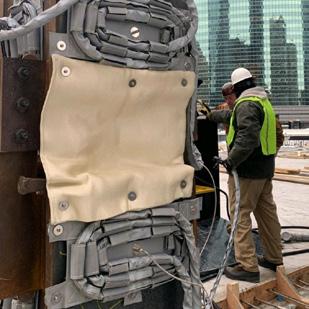
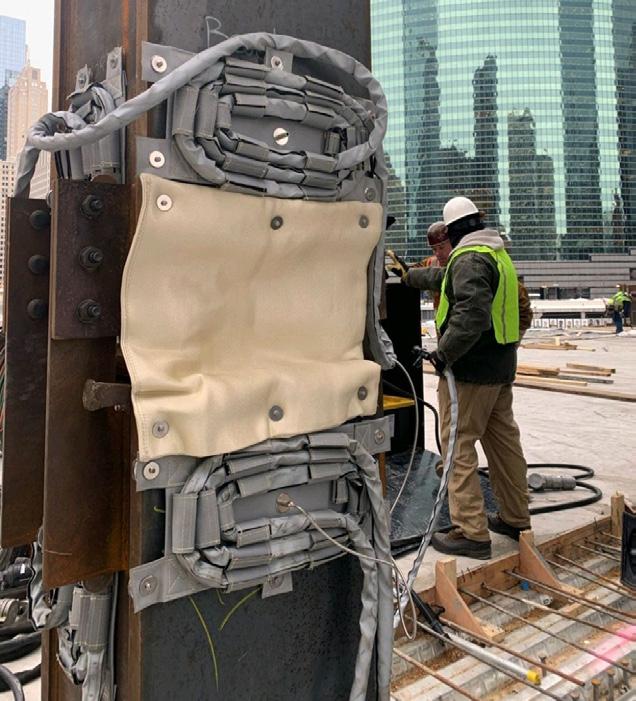
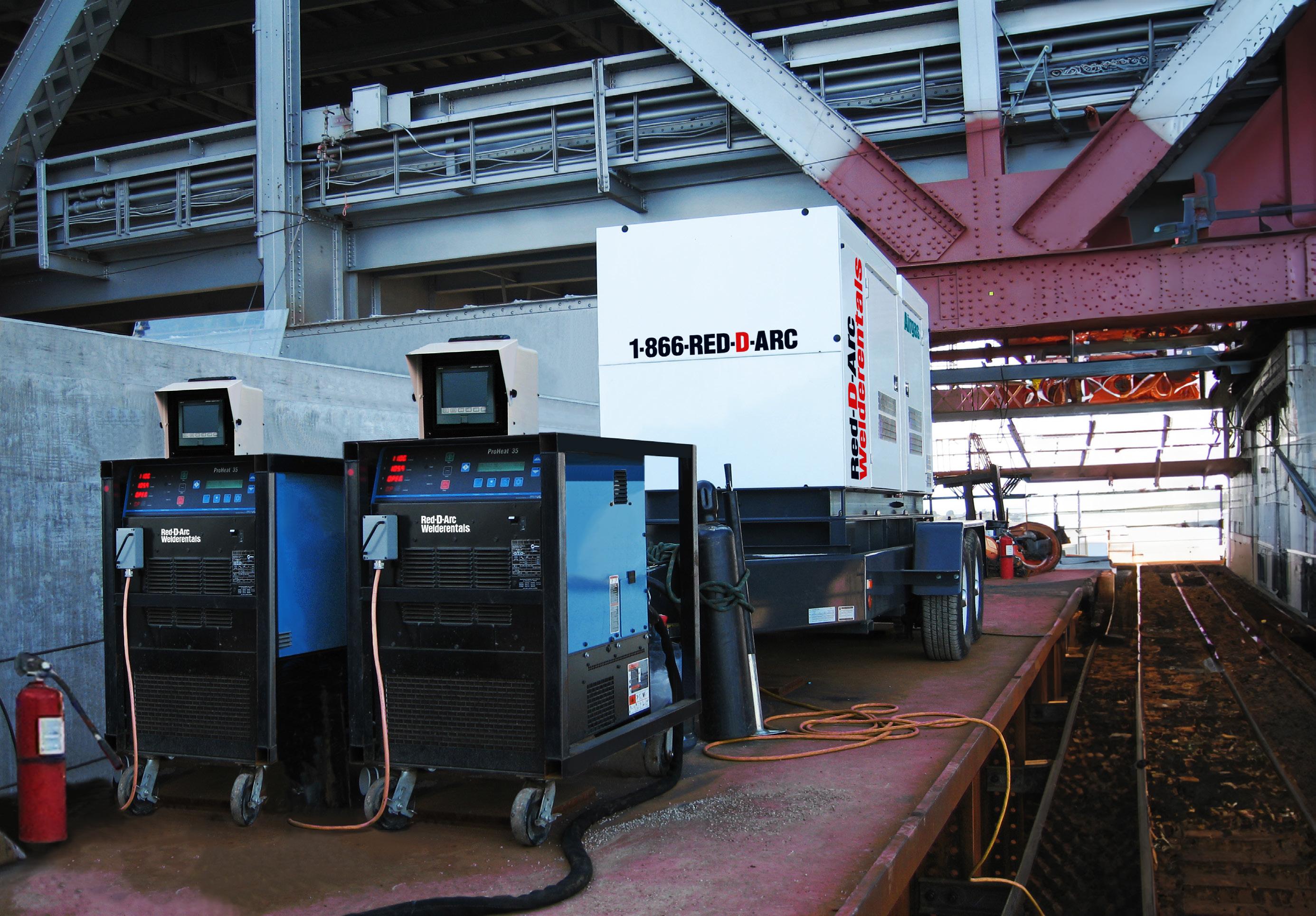
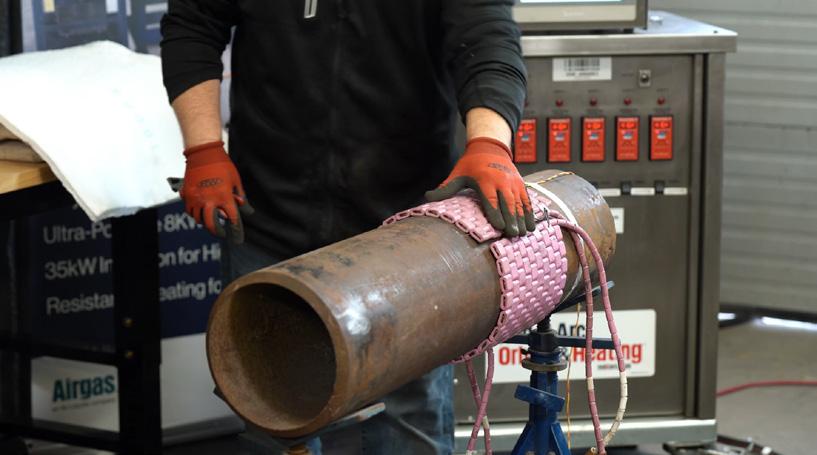
Induction heating is a more modern approach to heat treatment. Using electromagnetic fields, a power source sends an alternating current through an induction heating cable and the friction created heats the material without direct contact. This method offers significant advantages over traditional flame heating, enhancing productivity, safety and control.
Let’s explore the top five reasons why induction heating can be advantageous for today’s most demanding projects.
1. Material Type
Induction heating works particularly well with carbon steel, which is most common in manufacturing and infrastructure projects. Preheating steel, especially for structural welding, is critical to reduce the risk of cracking and to ensure weld integrity. Induction heating ensures precise, even heating, protecting the material from damage and reducing inconsistencies during welding.
2. Desired Heat Range
Precise temperature control is vital for preheat and post-weld treatments. Induction heating allows for highly controlled, consistent temperatures, which is especially important in steel erection, where consistent preheat temperatures help
Lori Kuiper is a welding engineer with more than 20 years of experience, including welding equipment manufacture, welding consumables sales, and field weld engineering. She has served on or chaired several technical committees of the American Welding Society and has a deep understanding of heating processes, as well as how to use them in the field. Currently, Lori is the Director of Specialty Products for Red-D-Arc, an Airgas company.
reduce thermal stress and the potential for weld defects. Unlike flame heating, which is often inconsistent with fluctuating temperatures due to a lack of operator education, induction heating provides uniform distribution, making it ideal for high-stakes projects like bridge building, skyscraper construction, or tunnel work, where precision is critical.
Induction heating is also excellent in cold weather applications. In fact, both the American Welding Society (AWS) D1.1 Structural Welding Code and American Association of State Highway and Transportation Officials (AASHTO)/AWS D1.5 Bridge Welding Code have requirements for preheating when welding in cold weather.
Using induction heating helps to keep the base materials at the desired level rather than flame heating, which causes the heat to drop off as soon as the flame is removed.
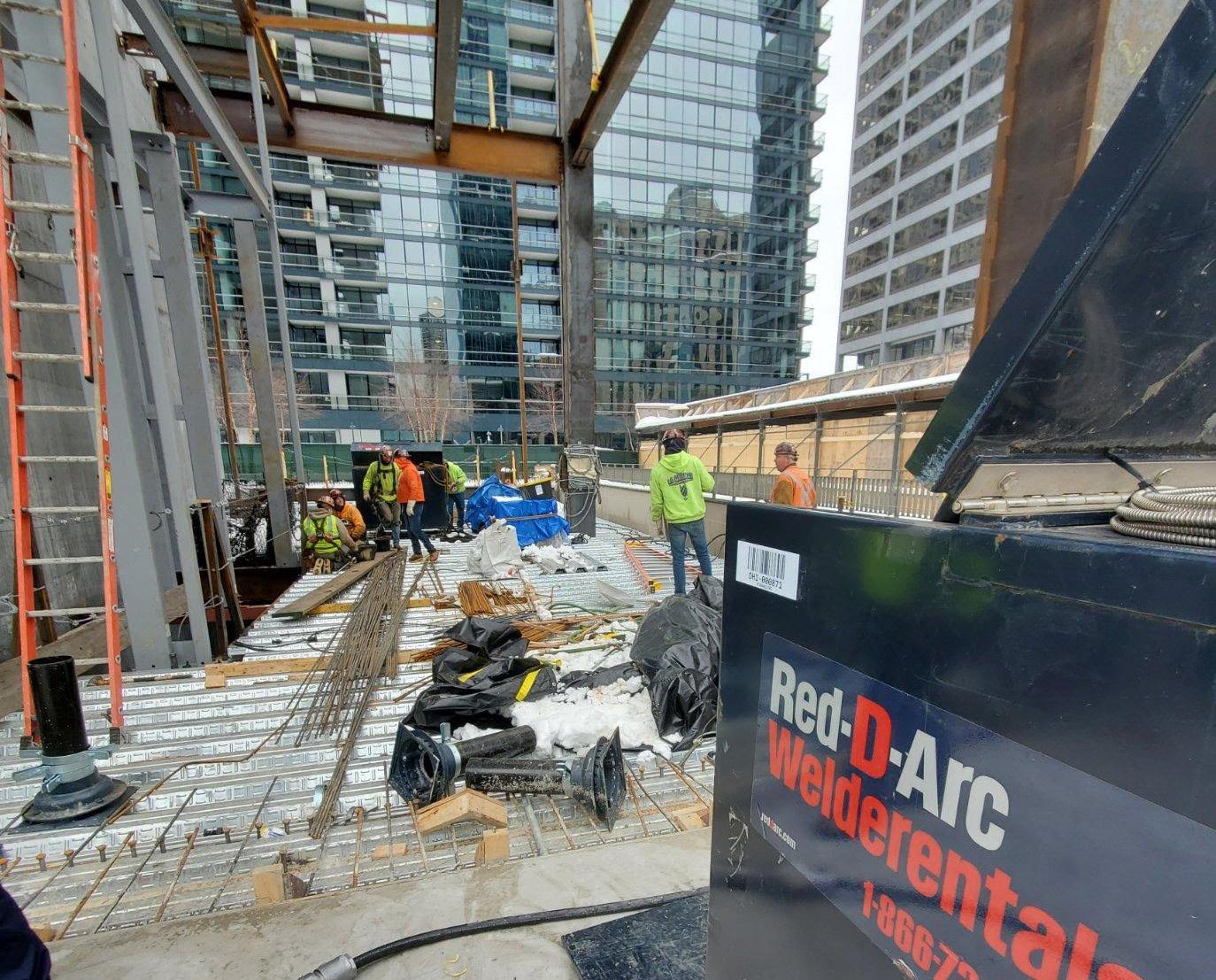
Technicians utilize induction heating systems provided by Red-D-Arc, delivering uniform, controlled heat essential for this large-scale steel project.
RECRUIT THE BEST
SEAA + CareerPlug Helps Members with Hiring
Program benefits for SEAA members only.
Experienced program managers can help you get started.
CareerPlug is an applicant tracking system that makes hiring easy, cost effective, and efficient for companies of all sizes.
If you have not set up your SEAA-exclusive account yet, you are missing out!
Q Every SEAA member receives a FREE CareerPlug account
Q Create a job post in minutes with pre-built templates
Q CareerPlug files applications for you and keeps them in one place
Q Schedule interviews using text messages
Q Hire the right candidate for the job
Q Upgrade to PREMIUM for only $79 per month
“As a business owner, the hiring process can be dreadful, but CareerPlug does the legwork for me. I only have to create one job post, and the platform pushes it out to all of the job boards.
It filters through the best applicants for the job, making it easy and efficient. When I did the hiring myself, I would get 2-4 applications. With CareerPlug, I have 402 applications.”
– Victor Garcia, President, Flawless Steel Welding
Keri Goldstein, Director of Membership & Business Development
3. Part Size
The size of the material being heated is another key factor. Large or irregularly shaped parts can be challenging to heat uniformly with traditional methods. With induction heating, flexible coils wrap around the parts, heating areas of large or oddly shaped components, ensuring even temperatures across the material. This flexibility minimizes warping and defects, making it an optimal choice for large-scale projects requiring consistency and high-quality results.
4. Part Geometry
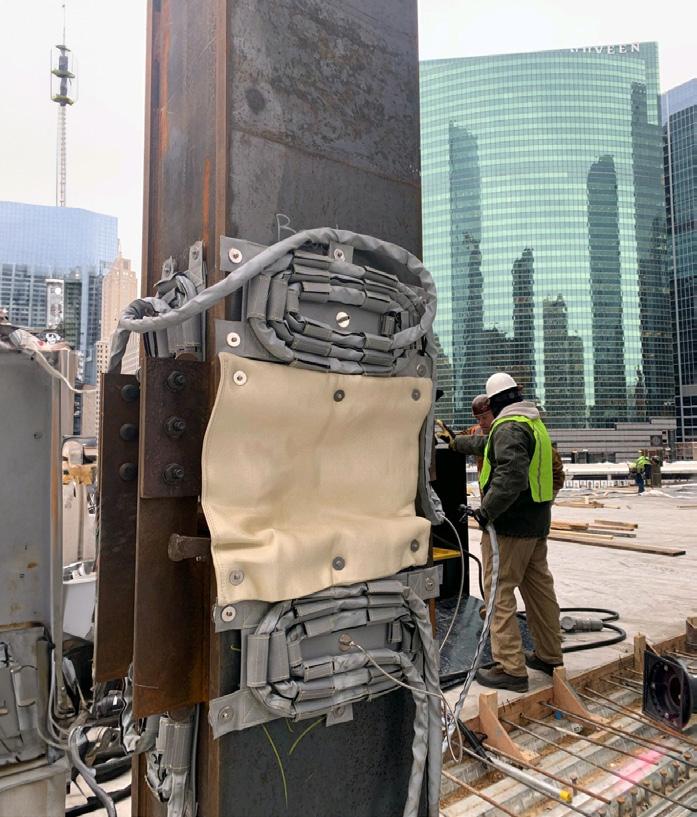
Skilled technicians operate daisy-chained induction coils provided by Red-D-Arc along with the induction heating equipment rental to optimize their heating process with blankets designed custom for this hi-rise project.
Along with size, the geometry of the part affects the heating process. Complex shapes and curves can be difficult to heat uniformly using conventional methods. Induction heating provides a more targeted approach, allowing for even heating on intricate parts and difficult-to-reach areas. This flexibility results in fewer
heating cycles and less risk of distortion, especially for parts with intricate details. Manufacturers using induction heating can significantly improve production quality, especially on projects that involve complex geometries.
5. Project Goals
The ultimate goal of any heat treatment process is to achieve quality results while maintaining efficiency and safety. Today, skilled welders are harder to find; induction heating offers a safer, more user-friendly alternative. The lack of an open flame and subsequent noise reduction from flame heating minimizes safety risks, making it easier for operators with varying skill levels to achieve desired outcomes without damaging the material.
Beyond merely using induction heating, having the necessary training and support to ensure its seamless implementation on a project is crucial to success. Experts from Red-D-Arc help with equipment selection and customizing the approach to build expertise in self-performing heating applications – ensuring that the solution can be replicated for future projects.
Induction heating is rapidly becoming a reliable heat treatment method in applications that require precise, efficient and safe temperature control. Its ability to provide uniform heating, minimize material damage and enhance operator safety makes it an invaluable tool for modern manufacturing and construction.
By considering material type, heat range, part size, geometry and overall project goals, companies can optimize their heat treatment processes. •
Provide NCCER Credentials to Ironworkers
Use DOL-approved Standards to Register for Apprenticeship
Program Benefits for SEAA Members Only SEAA provides on-site training and personnel certifications, implementation support, and a dedicated liaison. This service is an estimated savings of more than $12,000 per company.
NCCER Accredited
Nationally Recognized Credentials
Become accredited as Training Unit and Assessment Sites using SEAA’s Sponsorship
Get Admin and Implementation Support
Training Curriculum Options
NCCER Ironworker Levels 1-2-3
NCCER Reinforcement Ironworker Levels 1-2
Crane Operator, Rigger, Signalperson
Craft Assessment Certification
Written & Performance Assessments
NCCER/SEAA Programs Meet OSHA
Certification Requirements
Mobile Crane Operator
Rigger
Signal Person
COVER STORY By Tracy Bennett
A company specific safety program is specific to the workforce, the work site, and the scope of work.
PROACTIVE SAFETY STRATEGIES
How Industry Leaders are Building Safer Job Sites
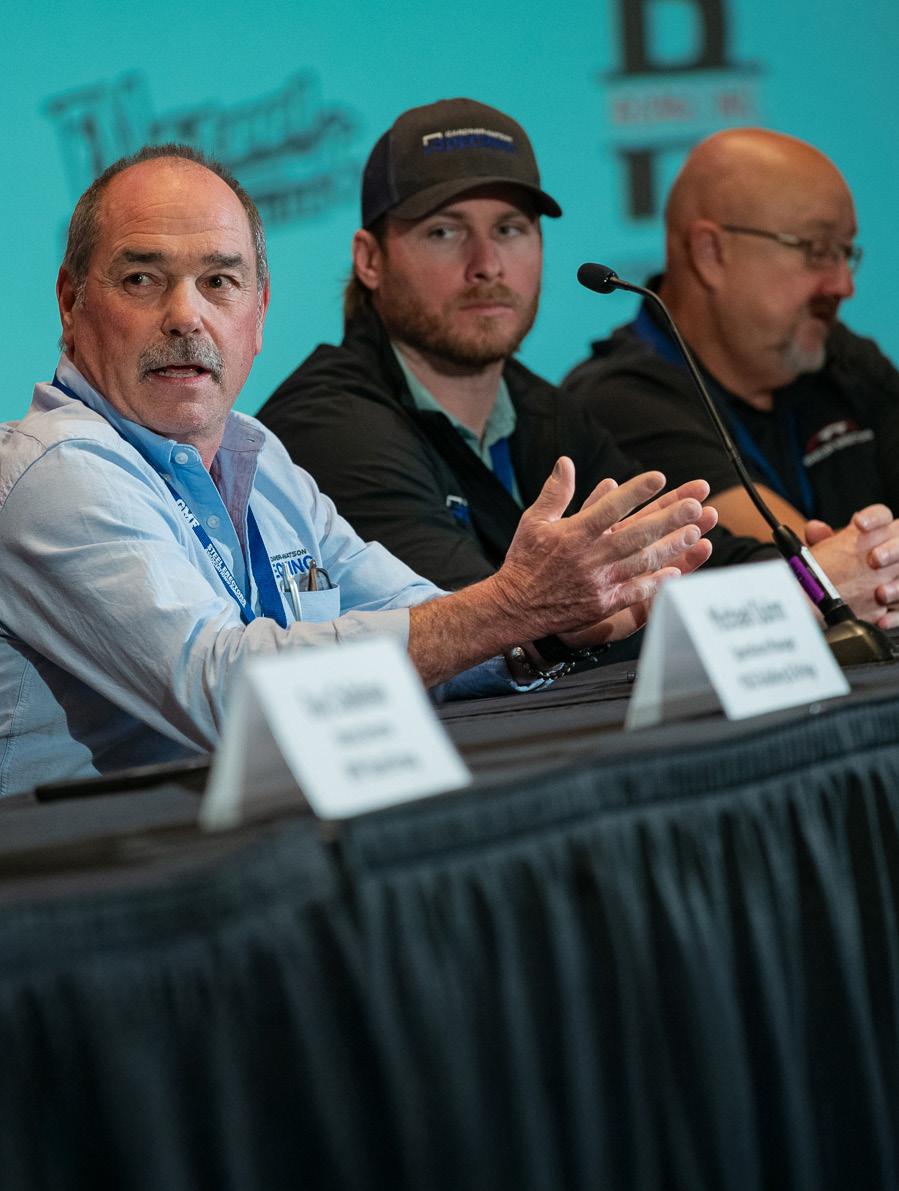
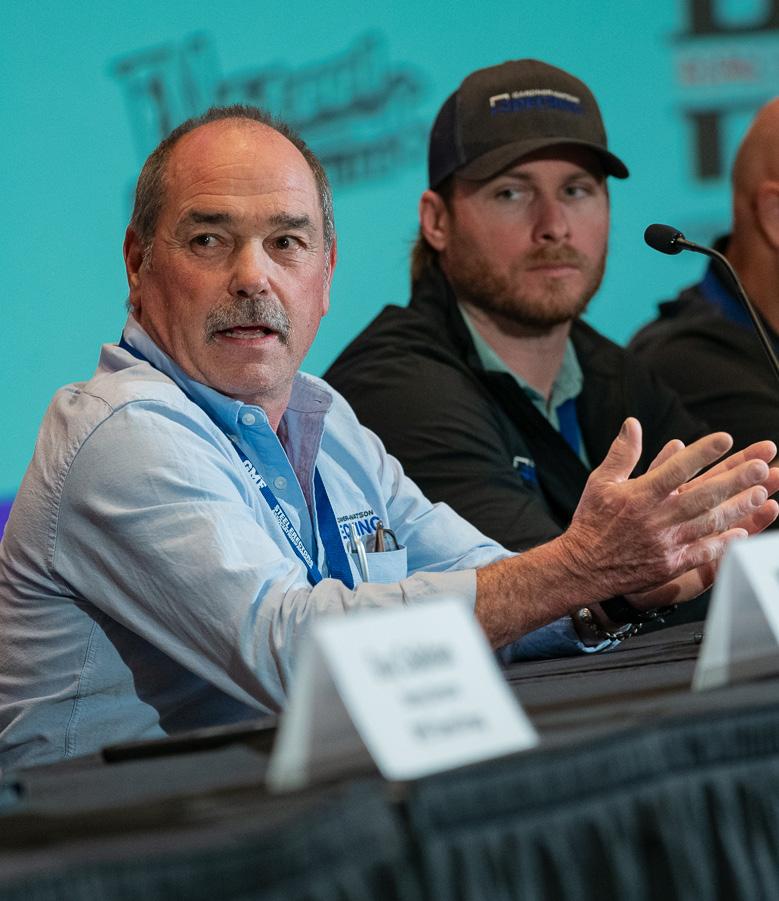
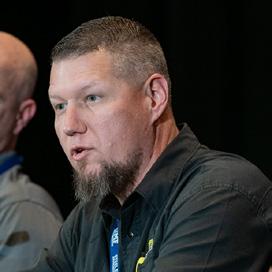
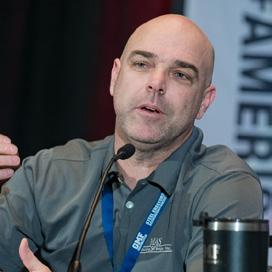
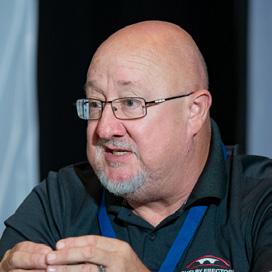
Earlier this year SEAA recognized 14 member companies for their outstanding safety and training records. Of those, five achieved World Class status. Representatives from these companies spoke candidly about the issues they face and the priorities their companies make to nurture a culture of safety.
The discussion took place during the 2024 Convention & Trade Show in Glendale, Arizona, on April 4. The session was moderated by Bryan McClure of Trivent Safety Consulting and a member of
Tracy Bennett is Editor of Connector and President of Mighty Mo Media Partners
SEAA’s Safety & Education Committee. The panelists acknowledged there are three follow up steps to having a successful safety program. Once you build a program that is company specific and you implement it, you must also train your people to use it, regularly audit it, and continue to adapt. “A company -specific program is specific to our workforce, our work sites, and our scope of work,” said Guy Callahan, Safety Director, GMF Steel Group.
While lagging indicators, like incident reports, reveal where things went wrong, leading indicators are increasingly recognized as tools to prevent incidents before they occur.
Michael Quinn, Safety Manager, MAS Building & Bridge, highlighted the importance of tracking near-miss reports, safety inspection scores, and even monitoring the relationship with general contractors on-site. “If it’s a challenging GC to work with, or the project is experiencing schedule pressure, that’s going to distract the foremen, that’s going to distract the crew,” he said, emphasizing that these indicators can signal when a site may need additional safety oversight. This information can guide everything from what topics to focus on in daily tool box talks to bigger tasks like formal education and re-training
Photo Credit: Tara Garner/Under Construction Photography
PANELISTS
Austin Reiner, Safety Manager Derr & Gruenewald Construction
“Five times more deaths occur from suicide than workplace fatalities. In my mind, that’s something we need to figure out and prepare people to talk about.”
Guy Callahan, Safety Director GMF Steel Group
“A company-specific safety program can’t be a copy and paste. It has to be something that’s specific to our workforce, our worksites, and our scope of work.”
Jerry Morganelli, Safety Manager
MAS Building & Bridge, Inc.
Marc Cox, Senior Project Manager Gardner-Watson
Decking
“We don't want to get complacent just because it’s a small job. [Safety] is the same to us, no matter whether the job is large, medium, or small.”
Andrew Boothe Director of Field Operations Gardner-Watson Decking
“Good pre-job planning is one of the best things for preventing problems with an accelerated schedule. We’re going to be pushed to work more hours, but you just have to plan for more manpower to keep working hours to 10 or less.”
“With our structured onboarding process, it's easier to help push those people along. It also helps if they aren’t really catching on—you can identify it quicker.”
Michael Quinn, Safety Manager
MAS Building & Bridge
“Pinch points, struck-bys, and caught-betweens—those are the injuries we see most often. Keeping these risks forefront in their minds, through frequent talks and demonstrations, helps mitigate them.”
Jason Zyla, Safety Manager and Training Coordinator
Shelby Erectors
“When you want to start implementing computers and technology, to use the excuse that the old-timers aren’t going to do it—it’s just an excuse. They’ll adapt if we provide the right tools and support.”
Top 5 Discussion Points
1. Impact of Tight Schedules on Safety
Panelists discussed how tight project schedules can negatively impact safety. To combat that, they emphasized the importance of planning, staffing, and maintaining consistency in safety standards across projects of all sizes.
2. Onboarding and Continuous Training
The conversation covered innovative onboarding methods (such as using training towers for new hires) and the importance of tailored training programs to accommodate varying experience levels. Emphasis was placed on continuous retraining and using apps and software to monitor and ensure compliance.
3. Mental Health and Suicide Prevention
Suicide in the construction industry was addressed, highlighting the importance of being prepared to support workers struggling with mental health issues. Training supervisors to recognize signs and having open conversations were stressed as key measures.
4. Use of Technology in Safety Training
Panelists advocated for leveraging technology, such as videos, QR codes, and mobile apps, to deliver consistent and accessible safety training. Discussions emphasized adapting to generational preferences and increasing engagement through digital tools.
5. Recognition and Incentives for Safety Practices
Companies shared strategies for recognizing safe behavior, such as awards, monetary incentives, and gear, fostering a culture of pride and motivation. Programs like “Crew of the Month” and safety stores were highlighted as effective tools for promoting safety culture.
Marc Cox left and Andrew Boothe right.
Impact of Tight Schedules on Safety
Tight project schedules are more often the norm than the exception. The operations and safety managers on our panel see a direct correlation between tight schedules and the increased likelihood of risk exposure. Among the challenges resulting from tight schedules are increased fatigue due to long work shifts, reduced attention to detail, and strained resources, including staffing, supervision, and equipment.
Strategies to Mitigate Risks
1. Standardizing Safety Across Projects. Marc Cox of Gardner-Watson Decking emphasized treating all projects—small, medium, or large—with the same level of safety rigor.
2. Planning and Flexibility. Andrew Boothe of Gardner-Watson Decking suggested proactively adding manpower and safety staff to address the unique demands of a project and to keep shifts to 10 hours or less to mitigate fatigue.
3. Cultural Emphasis on Safety. Creating a top-down culture where safety is non-negotiable encourages teams to maintain high standards regardless of deadlines, explained Jason Zyla of Shelby Erectors.
4. Auditing and Adjusting. Regular site audits and safety reviews ensure that even in high-pressure scenarios, teams are compliant and potential risks are addressed promptly, suggested Michael Quinn of MAS Building & Bridge.
Training Tips
Formal Onboarding
MAS Building and Bridge created a base task list for new hires that covers everything from how to properly set up a ladder to welding. Each person is taught the skill on the job and once they demonstrate proficiency, the skill is checked off. The task list is accessible via tablets. Foremen can track an individual’s progress and provide additional training where needed.
Accessibility
Platforms such as Safety Plus and mobile apps like Field Wire make training accessible on personal devices like smartphones or tablets. In addition, panelists emphasized that multilingual training is essential.
Consistency and Assessment
Technology allows all employees, regardless of their location, to receive the same training material. Shelby Erectors has built custom training videos and accompanying assessments that are delivered to workers through a log-in portal. Watching the video and taking the quiz is mandatory before crews start work for the day—even before filling out the pre-task form.
Engagement
Real-time alerts and updates through apps encourage workers to stay engaged and compliant with ongoing safety requirements. Balancing digital tools with hands-on training remains essential.
for your workforce.
Safety audits play a key role in effective risk management. Callahan pointed out that a safety audit isn’t just about checking boxes— it’s about ensuring that safety programs are implemented effectively on the ground.
“Just because we have this robust plan in place doesn’t mean it’s actually being followed in the field,” said Callahan. He emphasized the importance of auditing both policies and practices to identify gaps and correct them proactively.
Quinn agreed, noting that frequent audits—particularly in high-risk areas such as boneyards or rigging zones—help keep risks top of mind. Some of the most common types of incidents are pinch points, struck-by, and caught between during unloading of trucks, when shaking out steel, and rigging. “It’s mostly about awareness, keeping it forefront in ironworkers’ minds,” he added.
Each panelist admitted that training is a continuous process. Whether onboarding new hires, offering skill specific training, such as welding instruction, or doing retraining based on leading indicator data or audit results, training never stops.
The presence of specific risks on certain projects necessitates additional or more frequent training. Pre-planning and hazard identification help outline site-specific training needs, ensuring workers are adequately prepared before starting. “You have to understand the scope and what may have changed on the job when determining when to train or retrain beyond required intervals,” said Callahan. This dynamic approach ensures workers receive relevant, timely training based on current project demands.
A culture of accountability depends on transparency
Safety committees and incentive programs play a pivotal role in fostering a culture of accountability. “A healthy safety culture starts at the top and works its way down to the team in the field. It’s a credit to our field crews that they keep doing what we are asking them to do,” said Marc Cox, Senior Project Manager, Gardner-Watson Decking. All the data MAS Building & Bridge gathers from safety audits is communicated to every foreman, superintendent and project manager.
GMF Steel Group’s committee includes diverse representation from apprentices to executives. In addition to Callahan and the
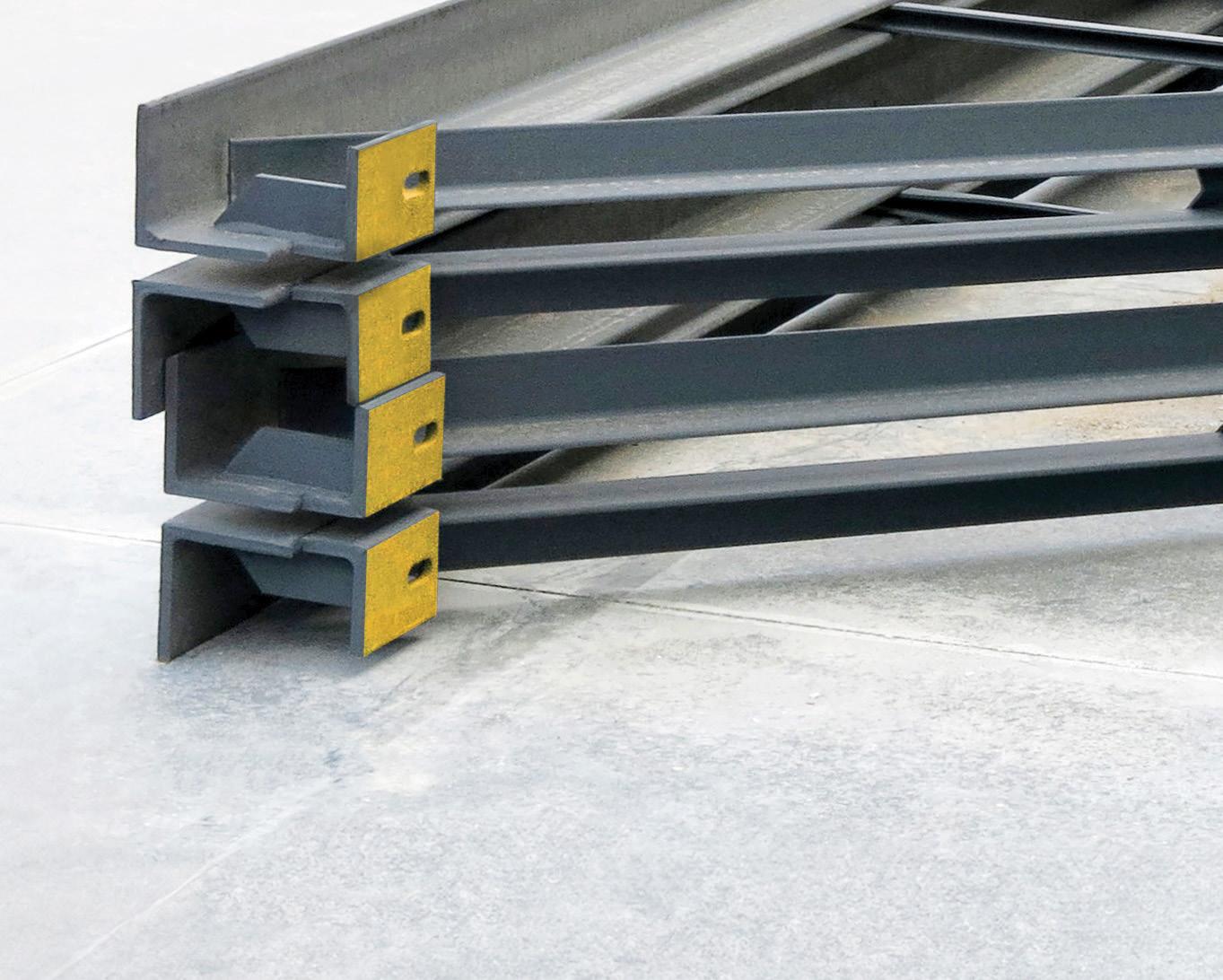
Think you know how to ins tall this?
There’s risk in being wrong. When a steel joist seat has slots, it must be addressed in either one of two ways. Failure to act could lead to dangerous uplift issues. Get the installation details:
Creating a Culture of Support
Construction workers face unique stressors contributing to mental health challenges and high rates of suicide. Recognizing these risks is the first step toward meaningful action. Austin Reiner of Derr & Gruenewald highlighted the importance of handling these issues directly: “If they’re going to open up to you, they have some kind of trust in you. Don’t pass it off to HR. Handle it.” A supportive culture means providing training, resources and finding external partners like the Construction Industry Alliance for Suicide Prevention. Use toolbox talks to create awareness of warning signs and how to respond appropriately when approached by employees in distress. Reiner shared a personal experience of helping a worker who was contemplating suicide, emphasizing the importance of taking such situations seriously: “The worst thing you can do is brush it off.”
company’s Project Executive, the committee is made up of other workers representing apprentices, engineers, project managers, superintendents, and field supervisors. This ensures that employees from various roles and perspectives contribute to safety discussions, creating a culture where everyone feels invested in safety outcomes. “It helps to make sure that safety deficiencies and corrective actions are disseminated through your influencers in the field, and it empowers your workforce to identify issues themselves,” said Callahan.
Incentives for Safe Behavior
While the corporate culture is the biggest influencer on safety, recognition and rewards for safe practices can boost morale and compliance. Several of the companies use a nomination process whereby workers who are caught working safely can earn prizes.
This takes different forms. Derr & Gruenwald utilizes a system where mistakes or near misses are reported by the field for corrective action. The observations are reviewed by upper management and once a month one person who reported a safety concern is selected.
MAS Building & Bridge and GMF Steel Group seek nominations of individuals who are implementing safe practices or going above and beyond with training or hazard awareness. At GMF Steel Group one person is selected each month, while MAS Building & Bridge team members earn points over time that can be redeemed for prizes ranging from apparel to luggage.
“It’s been very effective. Everyone likes it because they can choose their own prize,” said Jerry Morganelli, Operations Manager, MAS Building & Bridge, Inc.
Meanwhile, Shelby Erectors takes a more holistic approach. Jason Zyla, Safety Manager at Shelby Erectors, explained their “Crew of the Month” program rewards teams that meet both safety and budget goals. Rather than prizes, it’s more about bragging rights. “We post about the crew on our in-house social media platform called Beekeeper, the team gets to raise the Crew of the Month flag, and each member of the crew gets a special t-shirt recognizing their achievement. They take a lot of pride in being recognized,” said Zyla. •
Your Company’s Values Should Drive Your Marketing Message
When contractors think of marketing, they often think of the method first—advertising, social media, email, sponsorships, or trade shows. But before you take that step to invest in marketing, you should first give serious consideration to your message. Your message, and all marketing, should reflect your company’s values.
We asked Ryan Englin, co-author of Hire Better People Faster, and CEO of Core Matters, to weigh in on the topics of values, mission, vision, and company culture, and how they impact marketing decisions.
“In the construction industry, a strong foundation of Core Values, Mission, and Vision is essential for longterm success. These elements are more than just words. They shape your company’s identity, drive your team’s commitment, and guide your reputation in the market,” said Englin.
“By clearly defining and consistently communicating them, contractors can attract and retain the right people, build a loyal client base, and forge strong partnerships.”
What is the difference between Core Values and Mission/Vision Statements?
Think of Core Values, Mission, and Vision like the foundation, the frame, and the blueprint of a building. Each one has a unique role in holding the structure of your company together.
Core Values are the standards you expect your
employees to live up to. They’re the behaviors that define your team. For example, if “Serve Others” is one of your Core Values, you can expect your team to actively put others’ wants, needs, and dreams ahead of their own.
Mission is often interchanged with purpose. It’s your why. Why do you get up at 5 AM to hang iron in the bitter cold or blazing sun? Maybe your Mission is to build structures that last generations or to provide rock-solid work opportunities in your community. Your Mission is the purpose behind every weld and every cut.
Your Mission is important because it gives people something bigger to work toward. It’s what motivates a welder to put in that extra effort, knowing they’re building something that matters. People want to feel like they’re contributing to something bigger. Your Mission gives them that sense of purpose.
Vision is about the future. Think of your business like a bus - everyone’s on board, but they need to know where you’re going. Your Vision is the destination of the bus (business). For instance, your Vision could be to become the most trusted name in steel erection across your region. Or maybe it’s to set up shop in all 50 states. When the whole team knows the end goal, they can work together to get there.
Your team probably spends more waking hours with you than with their closest friends. If people are going to trade their time and energy, they want to know where
MAS Building & Bridge, Inc., Norfolk, Massachusetts Core Values: People, Safety, Quality and Productivity
Our values are not just words, they translate into action and performance. Our safety record has given us one of the best reputations in New England. This contributes to GCs and fabricators preferring to work with us.
We communicate our core values to our employees by following them ourselves. As a result, our employees stay with us because we care about the welfare of our crews. There are lots of ways that this is implemented, but here are a few examples.
• We have a dedicated person in charge of employee development to make sure all managers and leaders are following through on company programs and initiatives.
• We offer foreman, lead man, welding, and Subpart R training to all employees, and utilize a base task list to guide employees through meeting specific criterial for task proficiency.
• We bring in financial advisors to educated crews on investing in 401K retirement programs and how to invest annuity money. We pay for the classes as long as the participant passes the completion.
Ryan Englin, CEO, Core Matters
Glen Pisani, Steel Division Manager
Achieve & Maintain Temperature Specifications
with Red-D-Arc Heat Treating Solutions
Self-perform your heating treating applications with equipment that’s best suited to meet the requirements of your job.
The Red-D-Arc team has more than 20 years of heating treating experience and a team of experts who work with you to understand the details of your project. We focus on supporting you so you can focus on the work you need to do.
Our services for self-performing heating applications can include:
• Estimating and bid support
• Graduated training depending on skill levels
• Equipment selection, planning and optimization
• Designing special application solutions
With 50+ locations in the United States and Canada, Red-D-Arc has you covered no matter where you are. In addition to applications expertise, we offer flexible options to rent, lease or purchase equipment and accessories to create a turnkey package customized to fit your specific needs.
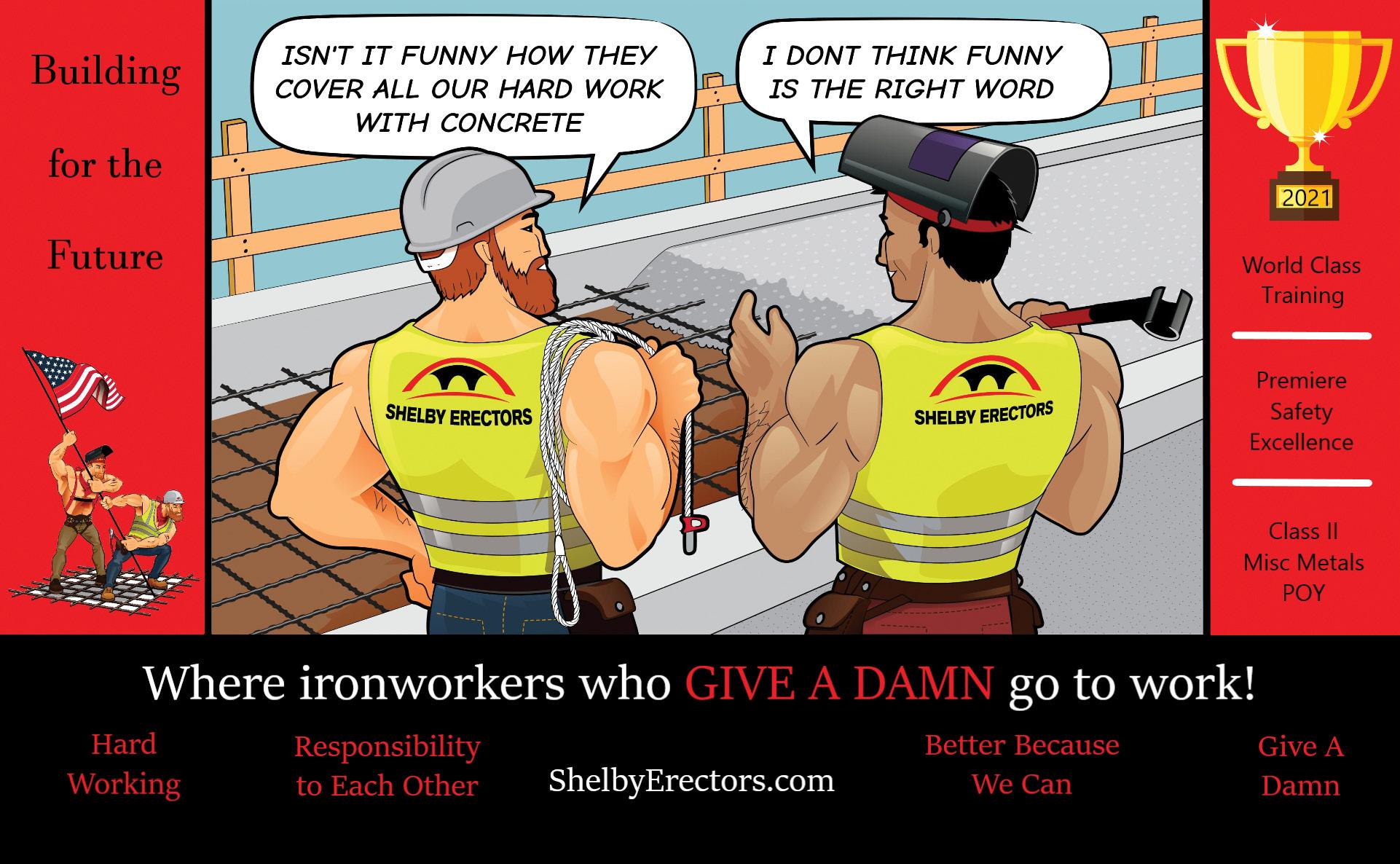
Shelby Erectors, Inc., Reddick, Florida Core Values: Hard Working, Responsibility to Each Other, Better Because We Can, Give a Damn
Our four Core Values are what Shelby Erectors stands for and they are essential to any marketing initiative we undertake. If we are not true to them then it’s false advertising. Our customers are aware that we are true to them by our employees who represent us – so continued business relationships with our customers is easy if we are living up to our core values.
Our core values are communicated to all potential employees and each one is addressed in the interview process by our hiring manager. This conversation helps us determine if we are a good fit for one another. And once employees are hired they are held to those standards and our supervisors know that unless they match our Core Values, they cannot stay employed with us.
Some of the ways we continuously communicate our core values is by printing them on t-shirts, hats, and hard hat stickers, and through posts in our internal communications via Beekeeper. Our employees especially love “Give A Damn” because that is not a typical Core Value a corporation would have – but it is true to who are as a company in this line of work.
Our employees are required to do 10 hours of Personal & Professional Development a year, which reflects two of our values: Better, Because We Can and Give a Damn. We are also accomplishing this with our Leadership this year by implementing KnowledgeVine training – a bi-weekly training program that they complete online.
you’re going is worth it. Your Vision gives everyone a sense of future. Your crew wants to know there’s room for growth and opportunities coming down the line.
Why is it important for contractors to define their Core Values, Mission, and Vision?
In the contracting world, your business is all about people—your crew, your partners, and your clients. Core Values, Mission, and Vision help you attract the right people, regardless of their role, and make sure everyone is working toward the same purpose.
How does this relate to a company’s corporate culture?
Your culture is like the job site atmosphere that follows your crew from one project to the next. It’s in how your people communicate, lead, and handle challenges. When you have shared Values, Mission, and Vision, your team has a built-in sense of pride and purpose. From safety briefings to after-hours gatherings, your company culture shapes every interaction and every decision. Your crew isn’t just showing up for a paycheck - they’re showing up because they believe in what you’re working toward.
So how does this relate to marketing?
Marketing isn’t just for your clients. For contractors, marketing is a tool to communicate with anyone who comes across your business, including current and prospective employees, vendors, and other contractors.
When it comes to hiring, a strong Mission and Values-driven message draws in people who want more than just a job. It attracts ironworkers and operators who want to be part of something lasting.
Internal marketing helps to keep your current team in the loop about new projects, growth, and opportunities. When that marketing reflects your values, it’s also a way to build morale and remind everyone that they’re part of something bigger. A quick update on new safety gear or celebrating a new hire boosts pride and loyalty.
Vendors and other contractors are two important partners in the success of your business. Aligning with vendors who get you means smoother projects and fewer headaches. Other contractors who understand your company culture may choose you over someone else on bid day or if they are working for you, will be more likely to show up on time and prioritize your needs.
Your reputation is everything. Use your marketing to show the world that you’re not just building structures - you’re building a strong, forward-thinking company. Let people know you’re growing, have a solid leadership team, and are leading the way with the latest technology in the industry.
Are there common challenges among construction contractors when it comes to identifying and communicating Core Values?
Absolutely. Here are a few common roadblocks:
Thinking Values are “Fluffy.” Some contractors think Core Values are too soft for a tough business. But Values are the backbone of your business. It’s not about adding fluff - it’s about setting standards and building a team that aligns with it.
Pencil Whipping Their Values. A lot of companies go with permission to play values like “integrity” or “teamwork,” but these are the bare minimum to even run a business. You have to dig deeper to define what truly makes your company unique. Maybe it’s “Relentless Problem Solving” or “Always Improve.” The goal is to define Values that mean something specific to your team.
Struggling to Identify Values Clearly. When you’re in the thick of the work, it’s hard to get a clear view of your Values. You might need a fresh set of eyes to get the clarity your company deserves.
If your company is struggling to identify and communicate your Core Values, the easiest way to get started is by building stories around your Values. As you’re collecting stories, you’ll notice repeating themes - maybe it’s resilience or innovation. These stories will help you identify your Values and help them come to life in a meaningful way.
Jennifer Nix, President
Core Values: Safety, Continuous Improvement, Accountability, Quality Service
These Core Values, when practiced with intention, become the silent sales and marketing tool of your company. People want to work with other people who do what they say and say what they do.
Communicating our core values is important because it expresses the importance of the company’s culture and sets the expectation that each employee will carry out the values for themselves, their colleagues, and the customer.
Two ways we have implemented initiatives that reflect our core values:
• Regularly survey customers to find out how we did in meeting our values, and
• Recognize employees for safety and attendance.
Subcontractors often lag other business segments when it comes to marketing strategies, historically relying on personal relationships, referrals, and networking. After tackling the foundation, frame and blueprints of their Core Values, Mission, and Vision, what are your top marketing suggestions?
In Steel Erection and commercial construction, effective marketing can set you apart in a competitive field. It’s not just about putting your name out there - it’s about building trust, showcasing your expertise, and making a lasting impression on clients, future employees, and industry partners.
Here are three marketing methods that can help you strengthen your reputation.
Online Presence (Website, Social Media, Social Review Sites): Your website is your online headquarters. It’s the one place where you have complete control, so make it count. Share project updates, showcase your team’s expertise, and highlight your company’s impact. Social media is also key - your crew’s work is visually impressive, so show it off.
Word of Mouth: Encourage your team to share their stories too - it builds pride and spreads your reputation.
Email/Text Marketing: For a personal touch, use email or text to keep clients and employees updated. Regular messages about new projects, safety tips, and shout-outs to the crew show people you’re on top of things and value their involvement. •
Todd Macintosh, Executive Vice President
TOPPING OUT
CRANE SAFETY HAZARDS
Speaking about a new report, Understanding the Current State of Safety Hazards in the Crane Industry, developed by the NCCCO Foundation and National Safety Council:
“The National Safety Council’s research expertise combined with the NCCCO Foundation’s knowledge of the crane industry allowed us to design a survey that resulted in a significant amount of new and useful data on the hazards that face those in the industry every day.””
T.J Cantwell,
NCCCO Foundation Executive Director
The top three hazardous situations reported by participants:
• 89% loading and unloading
• 64% vehicle-pedestrian interactions
• 55% working at height
Situational risks associated with loading and unloading activities include falls to lower levels, being crushed by moving loads and being struck by vehicles or machinery and equipment. Situational risks associated with vehicle-pedestrian interactions include being struck, crushed or pinned by a vehicle. Situational risks associated with work-at-height include falls to lower levels, falls at the same level and being struck by falling objects.
Meet New Members
Check out the Member Directory at SEAA.net
All-Trade Construction, Palmerton, Pennsylvania, specializes in steel erection and crane rental, servicing the Lehigh Valley, Poconos, and surrounding areas.
AV Decking Inc., Litchfield, Arizona. Referred by Bryan McClure, Trivent Safety Consulting
Bay Crane Mid-Atlantic, Baltimore, Maryland, has an expanded portfolio of services including tower crane and hoist rentals, rigging, heavy haul, warehousing, and alternative movement solutions.
Blue Steel Welding & Fabricating Inc, Metter, Georgia, is a one stop shop that can take your idea through design, cut, weld, paint and install in the shortest time possible.
Crick Construction LLC, Scottsboro, Alabama. Dedicated to delivering precision and excellence in steel erection services for a wide range of construction projects. Referred by Garrison Steel Erectors, Inc. & Ropac, Inc.
Heavy Iron, LLC, Lexington, South Carolina, is an authorized dealer for Kobelco, Tadano, Mantis, Demag, RopeBlock, Lube-A-Boom, and Bigfoot offering new and used crane sales, rentals, and product support to meet your crane needs.
Infracero ARL, Santo Domingo, Dominican Republic
Iron Industries, Montrose, Colorado, has been a prominent welding company in Colorado since 2008 and specializes in Architectural & Structural welding. Referred by Bryan McClure, Trivent Safety Consulting
Just Steel Inc., Sarasota, Florida, provides quality steel fabrication and installation predominately to the Sarasota, Manatee, and Charlotte counties. Referred by Jason Kulvinskas, Gardner-Watson Decking
Met-Con Inc., Cocoa, Florida, is a multi-disciplined construction company specializing in the fabrication and erection of structural steel.
Montalvo Steel LLC, Ocala, Florida, provides expert steel erection of commercial buildings across the Southeast.
NextGen Contracting, Phoenix, Arizona.
NextGen Steel Erectors, Middletown, Connecticut, is an experienced structural and miscellaneous steel erector.Referred by Glen Pisani, MAS Building and Bridge, Marc Cox, Gardner-Watson Decking
https://bit.ly/nccco
Shoreline Constructors Inc., Ventura, California, is a full-service steel fabrication company providing services to residential, industrial, and commercial clients. Referred by Tucker Smith, BBSI
Silver Lake Welding Services, Dayton, Virginia, offers turnkey fabrication and installation on structural steel as well as the fabrication and installation of stairs, guardrails, catwalks, landings, and more.
Stanley Black and Decker, Townson, Maryland, is a worldwide leader in Tools and Outdoor, operating manufacturing facilities globally. The company's world-class portfolio of trusted brands includes DEWALT, CRAFTSMAN, STANLEY, and BLACK+DECKER. Referred by Nick Caratelli, Nelson Stud Welding
Warrior Steel Erection, Corp., Siler City, North Carolina, AISC Certified steel erector, providing services for small- and large-scale projects
Wrought Washer Mfg. Inc., Milwaukee, Wisconsin, is the world's largest manufacturer of standard and specialty washers for more than a century. Referred by Bill Germuga, St. Louis Screw & Bolt
Winner of Summer Photo Contest
Duke Perry, Vice President of Sales and Operations for Gardner-Watson Studs is the winner of the Summer Photo Contest. Perry’s photo will be featured on the cover of the Spring 2025 issue of Connector.
THE WORSENING BURDEN OF SLOW PAY FOR SUBCONTRACTORS
In December 2023, Billd surveyed subcontractors to create the fourth National Subcontractor Market Report, which aimed to investigate the market conditions subcontractors faced throughout the year. With financing costs creating a silent but significant burden, subcontractors' profitability now depends on their ability to recognize and capture the cost of financing in bids.
All subcontractors are deeply familiar with the challenges of slow pay and this year’s respondents reported the problem worsening. The survey saw an 11% increase in subcontractors reporting the problem year-over-year. Download the full report at https://billd.com/2024-market-report/.
Of respondents said they are generally slow paid by GCs, up from 60% in the year prior. 71%
92 DAYS 57 DAYS
The average time spent waiting to get paid for completed work from the time a pay application is submitted.
77%
Of subcontractors came out of pocket for materials before receiving payment in 2023, up from 73% in 2022 and 66% in 2021.
Many subcontractors are willing to pay a percentage in exchange for guaranteed payment upon pay application approval; 89% offer discounts of 1-5%, and a few offer as much as 10%. 89%
Worth of working capital available to the business, which seems optimistic compared to the thousands of cash flow assessments conducted by Billd.
46%
Of subcontractors will quickly admit, cash flow posed a substantial challenge for their business growth in 2023.
Spring Edition: April 2025
Ad Deadline: March 21, 2025
Chris.Harrison@seaa.net 660-287-7660
POWERFUL PARTNERSHIPS. POWERFUL
At Vulcraft and Verco, we believe in the transformative power of partnerships. When you collaborate with our experts, you’re gaining a strategic team dedicated to your project’s success at every phase. Our innovative steel construction solutions are engineered to save you time and money. We can turn your vision into reality, faster and more efficiently than ever before. Let’s build something extraordinary, together