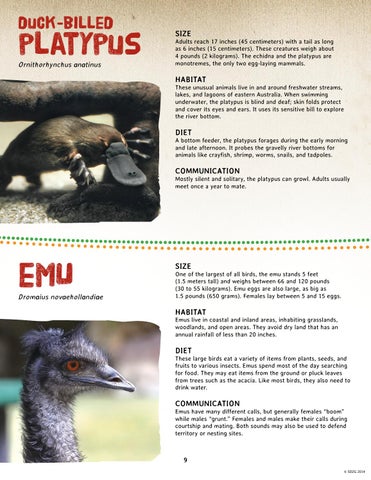
duck-billed
platypus Ornithorhynchus anatinus
SIZE Adults reach 17 inches (45 centimeters) with a tail as long as 6 inches (15 centimeters). These creatures weigh about 4 pounds (2 kilograms). The echidna and the platypus are monotremes, the only two egg-laying mammals.
HABITAT These unusual animals live in and around freshwater streams, lakes, and lagoons of eastern Australia. When swimming underwater, the platypus is blind and deaf; skin folds protect and cover its eyes and ears. It uses its sensitive bill to explore the river bottom.
DIET A bottom feeder, the platypus forages during the early morning and late afternoon. It probes the gravelly river bottoms for animals like crayfish, shrimp, worms, snails, and tadpoles.
COMMUNICATION Mostly silent and solitary, the platypus can growl. Adults usually meet once a year to mate.
emU Dromaius novaehollandiae
SIZE One of the largest of all birds, the emu stands 5 feet (1.5 meters tall) and weighs between 66 and 120 pounds (30 to 55 kilograms). Emu eggs are also large, as big as 1.5 pounds (650 grams). Females lay between 5 and 15 eggs.
HABITAT Emus live in coastal and inland areas, inhabiting grasslands, woodlands, and open areas. They avoid dry land that has an annual rainfall of less than 20 inches.
DIET These large birds eat a variety of items from plants, seeds, and fruits to various insects. Emus spend most of the day searching for food. They may eat items from the ground or pluck leaves from trees such as the acacia. Like most birds, they also need to drink water.
COMMUNICATION Emus have many different calls, but generally females “boom” while males “grunt.” Females and males make their calls during courtship and mating. Both sounds may also be used to defend territory or nesting sites.
9 © SDZG 2014