14 ▶ CHAPTER 1 ▶ DID YOU KNOW? A single pustule of the coffee rust fungus can produce 150,000 spores, which serve as both primary and secondary inoculum.
▶ DID YOU KNOW? The Great Bengal Famine caused the death of 2 million people in India in 1943. Rainy weather during an unusually long monsoon season favored epidemics of a leaf spot disease caused by the fungus Bipolaris oryzae, which destroyed the rice crop. This disaster occurred during the Second World War when India was still a British colony. With the Japanese army occupying neighboring Burma (Myanmar), India had no access to supplies from ricegrowing regions of southeast Asia, and the Bengali people starved.
A
B
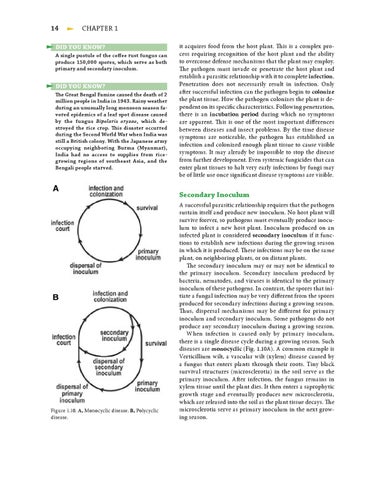
Figure 1.10. A, Monocyclic disease. B, Polycyclic disease.
it acquires food from the host plant. This is a complex process requiring recognition of the host plant and the ability to overcome defense mechanisms that the plant may employ. The pathogen must invade or penetrate the host plant and establish a parasitic relationship with it to complete infection. Penetration does not necessarily result in infection. Only after successful infection can the pathogen begin to colonize the plant tissue. How the pathogen colonizes the plant is dependent on its specific characteristics. Following penetration, there is an incubation period during which no symptoms are apparent. This is one of the most important differences between diseases and insect problems. By the time disease symptoms are noticeable, the pathogen has established an infection and colonized enough plant tissue to cause visible symptoms. It may already be impossible to stop the disease from further development. Even systemic fungicides that can enter plant tissues to halt very early infections by fungi may be of little use once significant disease symptoms are visible.
Secondary Inoculum A successful parasitic relationship requires that the pathogen sustain itself and produce new inoculum. No host plant will survive forever, so pathogens must eventually produce inoculum to infect a new host plant. Inoculum produced on an infected plant is considered secondary inoculum if it functions to establish new infections during the growing season in which it is produced. These infections may be on the same plant, on neighboring plants, or on distant plants. The secondary inoculum may or may not be identical to the primary inoculum. Secondary inoculum produced by bacteria, nematodes, and viruses is identical to the primary inoculum of these pathogens. In contrast, the spores that initiate a fungal infection may be very different from the spores produced for secondary infections during a growing season. Thus, dispersal mechanisms may be different for primary inoculum and secondary inoculum. Some pathogens do not produce any secondary inoculum during a growing season. When infection is caused only by primary inoculum, there is a single disease cycle during a growing season. Such diseases are monocyclic (Fig. 1.10A). A common example is Verticillium wilt, a vascular wilt (xylem) disease caused by a fungus that enters plants through their roots. Tiny black survival structures (microsclerotia) in the soil serve as the primary inoculum. After infection, the fungus remains in xylem tissue until the plant dies. It then enters a saprophytic growth stage and eventually produces new microsclerotia, which are released into the soil as the plant tissue decays. The microsclerotia serve as primary inoculum in the next growing season.