LEXINGTON ROAD
THE WHOLE COUNSEL OF GOD

TR. ALBERT MOHLER, JR.
TR. ALBERT MOHLER, JR.
he recovery of biblical theology has been one of the hallmark milestones of evangelical Christians over the course of the last several decades. Biblical theology, understood as a branch of Christian theology that seeks to expose and explain and exult the theological unfolding of Holy Scripture, has never been absent from Christ’s people, but the renaissance of biblical theology has come as a signal event in evangelical life and a hallmark of evangelical conviction and preaching.
The centrality of Scripture should be sufficient to remind evangelical believers of this task, but biblical theology receded into the background over much of the twentieth century. Such an approach was central to the theological achievement of John Calvin, that great reformer of Geneva, whose Institutes of the Christian Religion was saturated with what we would now identify as biblical theology. On the other side of the Atlantic, and especially in the Netherlands, towering figures such as Geerhardus Vos dived deeply and faithfully into biblical theology. Similarly, dogmatician Herman Bavick devoted a lifetime to the explication of biblical theology.
Why did biblical theology fall into an eclipse of sorts in the United States? For one thing, American evangelicals were fighting crucial doctrinal battles over truths as essential as the inerrancy, inspiration, and authority of the Bible. Other battles raged over doctrinal essentials such as the virgin birth, the bodily resurrection of Christ, and a host of related doctrines
The last gasp of neo-orthodoxy arrived with the Biblical Theology Movement, but that movement
came largely at the expense of biblical inerrancy and fell apart. Liberal theology just collapsed into social activism and protest theologies. Then came postmodernism and the denial of any over-arching “metanarrative” within the Bible,
But then something unexpected happened. Evangelicals came to understand that a more faithful understanding of biblical authority truly set the stage for a recovery of a genuine approach to biblical theology—one based in full fidelity to the faith once for all delivered to the saints and fully faithful to the authority and inerrancy of God’s Word.
Put most simply, the Bible reveals an unfolding story of God’s purposes as revealed in creation and redemption and the consummation of all things to God’s greater glory. The pattern can be summarized most briefly in two dimensions—as promise and fulfillment. A true biblical theology reveals and explains the unfolding of God’s plan to redeem sinners by the blood of the Lamb. The distinction between law and gospel is made clear, but the consistency of God’s eternal plan is made equally clear.
The recovery of biblical theology in our midst comes with the promise of an even more comprehensive assertion of biblical truth and a clearer understanding of God’s faithfulness and redeeming love. For this recovery I am deeply thankful. It has transformed evangelical preaching and greatly encouraged God’s people. Biblical theology drives us into an even deeper devotion to the Gospel and the old, old story of Jesus and his love.

Fall 2025
Copyright © 2025
The Southern Baptist Theological Seminary
Vice President of Communications and Managing Editor: Jacob Percy
Creative Director: Samantha Rice
Copy Editor: Hannah Miller
Designer: Ruth Bayles
Production Manager: Drew Watson
Photographers: Mark Schisler, Daniel Villanueva
News Writer: Travis Hearne
Subscription Information: Lexington Road Magazine is published by The Southern Baptist Theological Seminary, 2825 Lexington Road, Louisville, KY 40206. The magazine is distributed digitally at equip.sbts.edu/magazine. If you would like to request a hard copy, please reach out by emailing communications@sbts.edu.
Mail:
The Southern Baptist Theological Seminary, 2825 Lexington Road, Louisville, KY 40206
Online: sbts.edu
Email: communications@sbts.edu
Telephone: (502) 897-4000
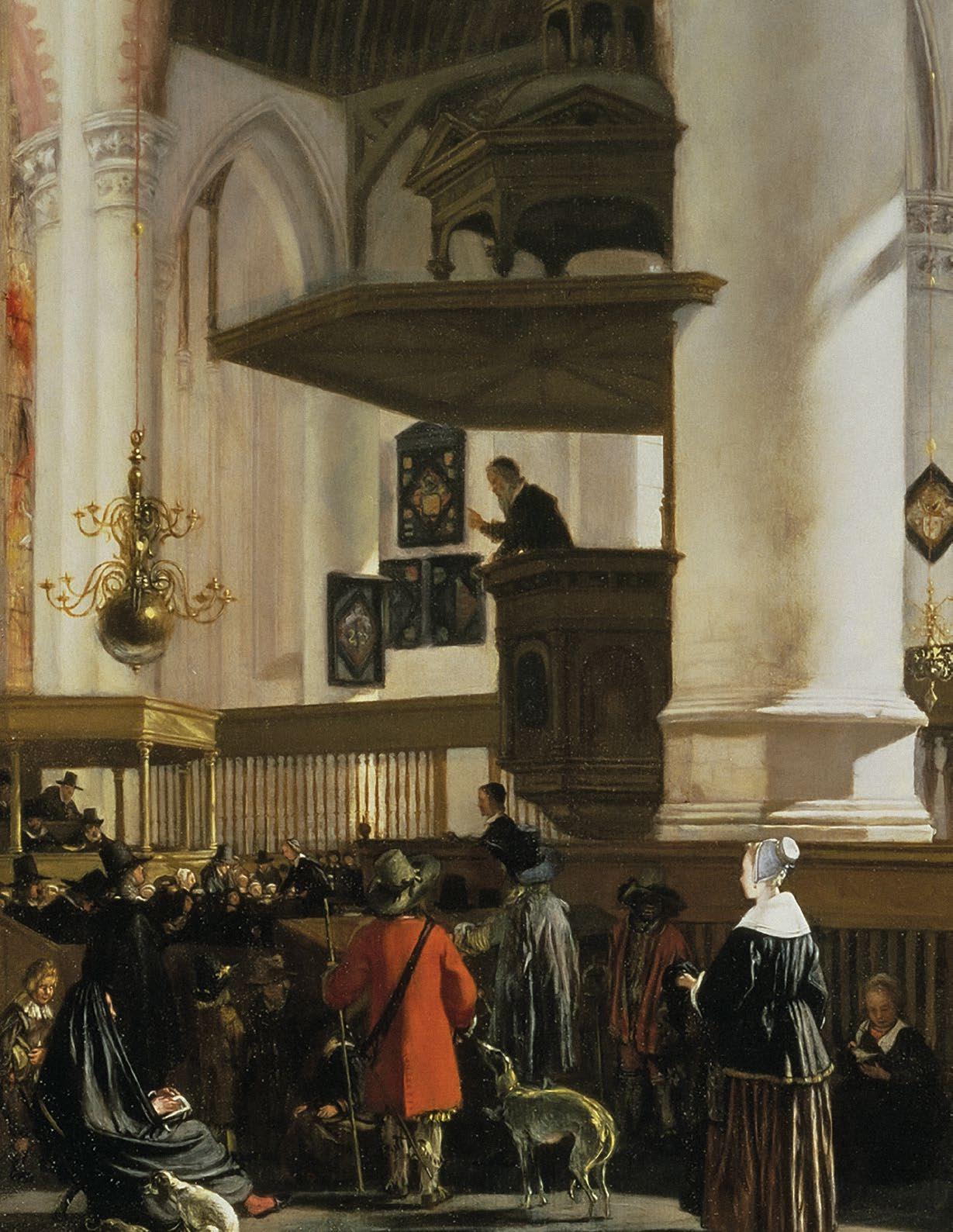
Cover Art: Interior of the Oude Kerk at Delft during a Sermon, Emanuel de Witte, 1651


10 The Nations in the Storyline of the Bible: A Biblical Theology of God’s Global Mission by Paul Akin
22 Old Testament Interpretation by Daniel Stevens
32 Reading as Discipleship: Why Biblical Interpretation is Meant to Change You by Jonathan T. Pennington
CONVERSATION
67 Office Hours with James Hamilton
76 Faculty Titles
92 A Chapel Message from Kyle Claunch The Glory of Gethsemane: Christ’s Humanity and Our Hope
42 A God-Centered Vision for Discipleship by J. T. English
54 The Serpent, the Seed, and the Savior: How Genesis 3:15 Shapes the Whole Bible by Mitchell L. Chase
71 Office Hours with Stephen Wellum
82 The Tradition of SBTS Faculty Writings: An Enduring Vision to “Study with the Authors” by Travis Hearne
But I do not account my life of any value nor as precious to myself, if only I may finish my course and the ministry that I received from the Lord Jesus, to testify to the gospel of the grace of God. And now, behold, I know that none of you among whom I have gone about proclaiming the kingdom will see my face again. Therefore I testify to you this day that I am innocent of the blood of all, for I did not shrink from declaring to you the whole counsel of God.
ACTS 20:24–27 FOUNDATIONS

by R. Albert Mohler, Jr.
Western society is currently experiencing what can only be described as a moral revolution. Our society’s moral code and collective ethical evaluation on a particular issue has undergone not small adjustments but a complete reversal. That which was once condemned is now celebrated, and the refusal to celebrate is now condemned.
What makes the current moral and sexual revolution so different from previous moral revolutions is that it is taking place at an utterly unprecedented velocity. Previous generations experienced moral revolutions over decades, even centuries. This current revolution is happening at warp speed.
As the church responds to this revolution, we must remember that current debates on sexuality present to the church a crisis that is irreducibly and inescapably theological. This crisis is tantamount to the type of theological crisis that Gnosticism presented to the early church or that Pelagianism presented to the church in the time of Augustine. In other words, the crisis of sexuality challenges the church’s
understanding of the gospel, sin, salvation, and sanctification. Advocates of the new sexuality demand a complete rewriting of Scripture’s metanarrative, a complete reordering of theology, and a fundamental change to how we think about the church’s ministry.
Proof-texting is the first reflex of conservative Protestants seeking a strategy of theological retrieval and restatement. This hermeneutical reflex comes naturally to evangelical Christians because we believe the Bible to be the inerrant and infallible word of God. We understand that, as B.B. Warfield said, “When Scripture speaks, God speaks.” I should make clear that this reflex is not entirely wrong, but it’s not entirely right either. It’s not entirely wrong because certain Scriptures (that is, “proof texts”) speak to specific issues in a direct and identifiable way.
There are, however, obvious limitations to this type of theological method—what I like to call the “concordance reflex.” What happens when you are wrestling with a theological issue for which no corresponding word appears in the concordance? Many of the most important theological issues cannot be reduced to merely finding relevant words and their corresponding verses in a concordance. Try looking up “transgender” in your concordance. How about “lesbian”? Or “in vitro fertilization”? They’re certainly not in the back of my Bible.
It’s not that Scripture is insufficient. The problem is not a failure of Scripture but a failure of our approach to Scripture. The concordance approach to theology produces a flat Bible without context, covenant, or master-narrative—three hermeneutical foundations that are essential to understand Scripture rightly.
Biblical theology is absolutely indispensable for the church to craft an appropriate response to the current sexual crisis. The church must learn to read Scripture according to its context, embedded in its master-narrative, and progressively revealed along covenantal lines. We must learn to interpret each theological issue through Scripture’s metanarrative of creation, fall, redemption, and new creation. Specifically, evangelicals need a theology of the body that is anchored in the Bible’s own unfolding drama of redemption.
Genesis 1:26– 28 indicates that God made man—unlike the rest of creation—in his own image. This passage also demonstrates that God’s purpose for humanity was an embodied existence. Genesis 2:7 highlights this point as well. God makes man out of the dust and then breathes into him the breath of life. This indicates that we were a body before we were a person. The body, as it turns out, is not incidental to our personhood. Adam and Eve are given the commission to multiply and subdue the earth. Their bodies allow them, by God’s creation and his sovereign plan, to fulfill that task of image-bearing.
The Genesis narrative also suggests that the body comes with needs. Adam would be hungry, so God gave him the fruit of the garden. These needs are an expression embedded within the created order that Adam is finite, dependent, and derived. Further, Adam would have a need for companionship, so God gave him a wife, Eve. Both Adam and Eve were to fulfill the mandate to multiply and fill the earth with God’s image-bearers by a proper
use of the bodily reproductive ability with which they were created. Coupled with this is the bodily pleasure each would experience as the two became one flesh— that is, one body.
The Genesis narrative also demonstrates that gender is part of the goodness of God’s creation. Gender is not merely a sociological construct forced upon human beings who otherwise could negotiate any number of permutations. But Genesis teaches us that gender is created by God for our good and his glory. Gender is intended for human flourishing and is assigned by the Creator’s determination—just as he determined when, where, and that we should exist.
In sum, God created his image as an embodied person. As embodied, we are given the gift and stewardship of sexuality from God himself. We are constructed in a way that testifies to God’s purposes in this.
Genesis also frames this entire discussion in a covenantal perspective. Human reproduction is not merely in order to propagate the race. Instead, reproduction highlights the fact that Adam and Eve were to multiply in order to fill the earth with the glory of God as reflected by his image bearers.
The fall, the second movement in redemptive history, corrupts God’s good gift of the body. The entrance of sin brings mortality to the body. In terms of sexuality, the Fall subverts God’s good plans for sexual complementarity. Eve’s desire is to rule over her husband (Gen 3:16). Adam’s leadership will be harsh (3:17-19). Eve will experience pain in childbearing (3:16).
The narratives that follow demonstrate the development of aberrant sexual practices, from polygamy to rape, which Scripture addresses with remarkable candor. These Genesis accounts are followed by the giving of the Law which is intended to curb aberrant sexual behavior. It regulates sexuality and expressions of gender and makes clear pronouncements on sexual morals, cross-dressing, marriage, divorce, and host of other bodily and sexual matters.
The Old Testament also connects sexual sin to idolatry. Orgiastic worship, temple prostitution, and other horrible distortions of God’s good gift of the body are all seen as part and parcel of idolatrous worship. The same connection is made by Paul in Romans 1. Having “exchanged the glory of the immortal God for images resembling mortal man and birds and animals and reptiles” (Rom 1:22), and having “exchanged the truth about God for a lie and worshiped and served the creature rather than the Creator” (Rom 1:25), men and women exchange their natural relations with one another (Rom 1:26-27).
With regard to redemption, we must note that one of the most important aspects of our redemption is that it came by way of a Savior with a body. “The Word became flesh and dwelt among us” (John 1:14; cf. Phil. 2:5-11). Human redemption is accomplished by the Son of God incarnate —who remains incarnate eternally.
Paul indicates that this salvation includes not merely our souls but also our bodies. Romans 6:12 speaks of sin that reigns in our “mortal bodies”—which implies the hope of future bodily redemption. Romans 8:23 indicates part of our eschatological hope is the “redemption of our bodies.” Even now, in our life of sanctification we are commanded to present our bodies as a living sacrifice to God in worship (Rom. 12:2). Further, Paul describes the redeemed body as a temple of the Holy Spirit (1 Cor 6:19) and clearly we must understand sanctification as having effects upon the body.
Sexual ethics in the New Testament, as in the Old Testament, regulate our expressions of gender and sexuality. Porneia, sexual immorality of any kind, is categorically condemned by Jesus and the apostles. Likewise, Paul clearly indicates to the church at Corinth that sexual sin—sins committed in the body (1 Cor 6:18)—are what bring the church and the gospel into disrepute because they proclaim to a watching world that the gospel has been to no effect (1 Cor 5-6).
Finally, we reach the fourth and final act of the drama of redemption—new creation. In 1 Corinthians 15:42-57, Paul directs us not only to the resurrection of our own bodies in the new creation but to the fact that Christ’s bodily resurrection is the promise and power for that future hope. Our resurrection will be the experience of eternal glory in the body. This body will be a transformed, consummated continuation of our present embodied existence in the same way that Jesus’ body is the same body he had on earth, yet utterly glorified.
The new creation will not simply be a reset of the garden. It will be better than Eden. As Calvin noted, in the new creation we will know God not only as Creator but as Redeemer—and that redemption includes our bodies. We will reign with Christ in bodily form, as he also is the embodied and reigning cosmic Lord.
In terms of our sexuality, while gender will remain in the new creation, sexual activity will not. It is not that sex is nullified in the resurrection; rather, it is fulfilled. The eschatological marriage supper of the Lamb, to which marriage and sexuality point, will finally arrive. No longer will there be any need to fill the earth with image-bearers as was the case in Genesis 1. Instead, the earth will be filled with knowledge of the glory of God as the waters cover the sea.
The sexuality crisis has demonstrated the failure of theological method on the part of many pastors. The “concordance reflex” simply cannot accomplish the type of rigorous theological thinking needed in pulpits today. Pastors and churches must learn the indispensability of biblical theology and must practice reading Scripture according to its own internal logic— the logic of a story that moves from creation to new creation. The hermeneutical task before us is great, but it is also indispensable for faithful evangelical engagement with the culture.
by Paul Akin
The Bible presents us with an alternative story—a different way of seeing and understanding the world around us. It is not merely a local tale about a particular ethnic group or a narrow religious tradition. Instead, the Bible presents us with the story of the world itself: a story that begins with the creation of all things and will be complete with the restoration and renewal of all things. The biblical story declares that God’s plan and purpose is for our lives to be shaped, formed, and transformed by this divine narrative.
From a Baptist perspective, we recognize that this story is not fragmented or accidental. God is sovereign over history, and every page
of Scripture reveals His eternal purpose to glorify Himself by redeeming a people for His name from every tribe, tongue, and nation. The nations are not a side note in the Bible; they are central to the unfolding story of redemption.
The story of the Bible develops in four major movements: creation, fall, redemption, and restoration. Together, these essential elements of the story form the framework for understanding God’s mission and the place of the nations within His plan. With each unfolding component, the storyline of the Bible becomes increasingly clear. The story begins at the beginning of the Bible in creation.
Creation: God’s Good World and His Image-Bearers
Genesis opens with simplicity and clarity: “In the beginning God created the heavens and the earth”
(Gen 1:1). The triune God—Father, Son, and Spirit— speaks the world into existence out of nothing. In the opening pages of the Bible, we learn that God is eternal, self-sufficient, and sovereign over all. Creation is distinct from God, yet dependent upon Him. Everything He makes is declared “very good” (Gen 1:31). Humanity, the crown of creation, is uniquely made in the imago Dei —the image of God.
At the outset, humanity is flourishing in every facet and relationship. First, humanity has a perfect relationship with God. Humanity was created to know, love, and worship its Creator. Second, humanity has a perfect relationship with one another. Humanity is designed for community and love of neighbor. Third, humanity has a perfect relationship with oneself. Humanity is called to see itself rightly, through God’s eyes, with dignity and humility. Lastly, humanity has a perfect relationship with creation. Humanity is tasked to steward, cultivate, and develop God’s good world.
The mandate given in Genesis 1:28, “Be fruitful, multiply, fill the earth, and subdue it”—is global in scope. From the very beginning, God’s plan was for His image-bearers to spread across the earth, reflecting His glory in every corner of creation. This is the original “mission” that God gives to his people. At this point in redemptive history, Adam and Eve are dwelling in perfect union and harmony with the Triune God.
Genesis 3 records the tragic reversal. Adam and Eve reject God’s word, choosing autonomy and self-rule. In an effort to pursue power and happiness apart from God’s plan, they plunge the world into sin and death. This seemingly harmless act of rebellion resulted not only in Adam and Eve’s fall from God’s purpose and will, but also the fall of the entire created order.
As a result of Adam and Eve’s sinful rebellion, humanity in every facet is now affected negatively by the fall. The consequences of sin impact every key
relationship. First, a broken relationship with God. Humanity becomes alienated from its Creator, now described as children of wrath (Eph 2:3). Second, a broken relationship with others. Strife, jealousy, and violence characterize human relationships (Gen 4: Cain and Abel). Third, a broken relationship with oneself. The image of God is marred; our loves are disordered; pride and shame reign in our hearts. Lastly, a broken relationship with the created order. Work becomes toilsome, and creation itself groans under the curse (Rom 8:20–22). Most pointedly, the punishment for sin is death.
Yet even in judgment, God offers a glimmer of hope. In Genesis 3:15, God promises that the seed of the woman will crush the serpent’s head. The Protoevangelium (first gospel) anticipates Christ, the Redeemer, who will undo the works of the devil. From this point forward, the story of the Bible is the story of how God unfolds this promise, progressively revealing His plan to bless the nations through His chosen people.
Despite human rebellion and the tragic effects of sin and the fall, God’s purpose advances in his mission of redemption. In Genesis 12:1–3, God calls Abram and makes a covenant with him: “I will make you into a great nation, I will bless you, I will make your name great, and you will be a blessing… . and all the peoples on earth will be blessed through you.” Here, the scope of God’s mission comes into focus. The promise is twofold: God will make Abraham’s descendants into a great nation, and through that nation He will bless all the nations of the earth. This covenantal theme runs through the patriarchs—Isaac and Jacob—and shapes the rest of redemptive history.
Even the patriarchal narratives reveal threats to God’s plan—barrenness, famine, hostile kings, and unbelief. Yet God’s faithfulness continually shines
through. He preserves His people in Egypt through Joseph’s trials, showing that He is sovereign over history and committed to His redemptive purpose. Towards the conclusion of the book of Genesis, Jacob moves his twelve sons and their families to Egypt to escape a famine. It is in Egypt several hundred years later that God demonstrates His faithfulness to His mission, His plan, and His purposes.
The Exodus is the great act of redemption in the Old Testament. God delivers His people from slavery in Egypt, defeats Pharaoh, and reveals His supremacy over the gods of the nations. At Sinai, He establishes Israel as His covenant people, giving them a distinct identity and mission (Exod 19:3–6). Through Moses, God calls the people of Israel to be a Kingdom of Priests and a Holy Nation. First, as a Kingdom of Priests, Israel is to mediate God’s presence and blessing to the peoples and nations of the world. Second, as a Holy Nation, Israel is to display the beauty of life under God’s rule and reign. Israel is called to be a showcase people who reveal what it means to live in covenant relationship with Yahweh. The law was given not as a means of salvation, but as a guide for Israel’s role and a constant reminder to live distinctly in a watching world.
Yet the Bible repeatedly demonstrates that Israel continually falls short of the task given to them by God at Sinai. The books of Judges, Kings, and Chronicles trace a downward spiral of idolatry, rebellion, and disobedience. Instead of serving as a blessing to the nations, Israel becomes indistinguishable from them. The idolatry and rebellion of Israel eventually led to the devastating experience of exile.
In the period of exile, Israel is left wondering what has happened to the promises that God made to the patriarchs. However, even during the time of exile, God continues to speak to His people through the prophets. Through the prophets, God promises a
coming King from David’s line who will bring justice, peace, and global salvation (Isa 9:6–7). He declares that His intention remains that His people would function as a light to the nations (Isa 49:6).
Nevertheless, Israel eventually returns to the land but resettles on a much smaller scale and faces mounting challenges all around it. Between the end of the Old Testament and the beginning of the New Testament, there is a period of silence from God that lasts more than four hundred years. During this time, Israel had to wonder what God’s plans and purposes were for His people. Would God keep the promises that He had made to the patriarchs? Would Israel be a light to the nations and bless the peoples and nations of the earth?
It is in this context of uncertainty and expectation that Jesus of Nazareth arrives on the scene. He proclaims the arrival of God’s kingdom and demonstrates it through teaching, miracles, and acts of compassion. Unlike Israel, Jesus perfectly embodies the calling to be a light to the nations. But His mission is not accomplished through political triumph or military might. Instead, Jesus’s mission is fulfilled through His atoning sacrifice on the cross. In His substitutionary death, Jesus bears the penalty of sin, satisfying the wrath of God and making it possible for sinners to be reconciled to God through repentance and faith. As Paul declares, “Christ redeemed us from the curse of the law by becoming a curse for us … so that the blessing of Abraham might come to the Gentiles in Christ Jesus” (Gal 3:13–14).
Jesus’s resurrection from the dead vindicates Him as Lord and inaugurates the new creation. His authority now extends to heaven and earth, and with that authority He commissions His disciples: “Go, therefore, and make disciples of all nations” (Matt 28:19). The global scope of God’s mission could not
be clearer. The church is now entrusted with the task once given to Israel: to be a holy people and to declare the excellencies of the One who called them out of darkness and into his marvelous light (1 Pet 2:9).
The book of Acts records the Spirit-empowered expansion of the gospel. Beginning in Jerusalem, then Judea and Samaria, and finally to the ends of the earth, the good news spreads across the Roman Empire. The apostle Paul becomes God’s chosen instrument to bring the gospel to the nations (Acts 9). He plants churches, writes letters, and trains leaders, leaving a missionary legacy that shapes the identity of the church to this day. From the book of Acts to our contemporary moment, the story of God’s people growing in number and gathering from all the nations has continued for 2000 years and continues through us today.
The storyline of Scripture finds its climactic vision in Revelation 5. John sees the Lamb who was slain, worthy to open the scroll of history. The song of heaven declares: “You were slaughtered, and you purchased people for God by your blood from every tribe and language and people and nation” (Rev 5:9). John sees in this vision the fulfillment of God’s covenant promise to Abraham. The nations are not an afterthought; they have always been central to God’s mission of redemption. Christ’s blood secures a people from every corner of the globe, forming a kingdom of priests who will reign with Him forever in the new creation.
The final movement of the biblical story is restoration. Christ will return to judge the living and the dead, to banish Satan forever, and to renew creation. What was lost in Eden will be regained—and more. Genesis
began with creation and a garden; Revelation ends with a new creation and a city, where God’s presence fills every corner (Rev 21–22). The nations, once scattered at Babel and separated by sin, are now gathered as one redeemed people.
The nations in the storyline of the Bible remind us that God’s mission has always been global in scope. From creation’s mandate to fill the earth with His glory, to the covenant with Abraham, to the commissioning of the church, God’s purpose has been to gather a people from every tribe, tongue, and nation.
The Bible is clear that this mission is God’s work from beginning to end. Salvation belongs to the Lord; He sovereignly calls, redeems, and preserves His people. Yet He graciously invites and includes us in His mission, calling the church to proclaim the gospel to all peoples.
Until Christ returns, the church is called to bear witness—to be a holy nation and a royal priesthood— so that the nations might see the glory of God in the face of Christ. The story ends with a multitude that no one can number, from every nation, worshiping the Lamb (Rev 5). The question that remains for us is this: Will we live our lives aligned with this story, God’s story, the story of the nations, and His global mission? May God, by the power of His Spirit, give us grace to be faithful and obedient to the task he has put before us until Jesus returns.
by Stephen J. Wellum
How does all Scripture point to Christ? The answer to this question is important because it also demonstrates how the entire Bible finds its unity, coherence, and center in Christ’s person and work. Despite Scripture being written by numerous authors over many centuries, it is centrally about one thing: what our triune God has planned in eternity, executed in time, in order to redeem a people for himself and to make everything new in Christ Jesus (Eph 1:9–10). To demonstrate how all Scripture points to Christ is to validate this crucial point, but how?
My initial answer is not in terms of hidden verses or codes, or multiple layers of meaning. Instead, all Scripture points to Christ as it traces out God’s redemptive plan, rooted in eternity, enacted in time,
and unveiled over time by human authors. Christ is revealed in all Scripture by starting where the Bible begins—in creation, starting with who God is as Creator and Lord, humans as image-bearers created to know God in covenant relationship, the entrance of sin into the world, and God’s gracious promise and determination to redeem a people for himself by a greater Adam who is not merely human but also the divine Son.
In other words, all Scripture points to Christ by seeing him unveiled in the Bible’s story and discovering how in God’s eternal plan, all of God’s promises, along with various persons, events, and institutions, were intended by God to anticipate, foreshadow, and typify the eternal Son to come. Thus, by tracing out the Bible’s story, the identity of Christ as the divine Son who will assume our human nature to redeem us and why he, as God the Son, must do so, is unveiled step-by-step. In fact, all of Scripture is needed to fully grasp Jesus’s person and work.
“To discover how all Scripture points to Christ, we must first start with who God is, since we cannot know who Jesus is, especially as the divine Son, apart from starting with theology proper. Much could be said on this point, but we begin with God as our Creator and covenant Lord.”
Jesus does not come to us de novo. Instead, he is revealed to us rooted in the teaching and categories of the Old Testament (OT).
To show how all Scripture points to Christ, I will sketch four truths, grounded in the Bible’s story that illustrates how Jesus’s identity as God the Son incarnate is gradually unveiled in the OT, which then comes to full light in the New Testament (NT) in the Son’s incarnation and work.
To discover how all Scripture points to Christ, we must first start with who God is, since we cannot know who Jesus is, especially as the divine Son, apart from starting with theology proper. Much could be said on this point, but we begin with God as our Creator and covenant Lord.
From Genesis 1 on, God presents himself as the uncreated, independent, self-sufficient one who creates and rules all things by his Word (Gen 1–2; Ps 50:12–14; Acts 17:24–25; cf. John 1:1). This truth grounds the central distinction of Christian theology: The Creator-creature distinction, which establishes a specific view of the God-world relationship. God alone is God; all else is creation that depends totally on him for all things. God’s transcendent lordship (Ps 7:17; 9:2; 21:7; 97:9; 1 Kgs 8:27; Isa 6:1; Rev 4:3) also eliminates any notion of deism that rejects God’s agency in human history; God is transcendent and immanent
with his creation. As Creator and Lord, God is fully present and related to his creatures: He freely, powerfully, and purposefully sustains and governs all things to his desired end (Ps 139:1–10; Acts 17:28; Eph 1:11), but he is not identified with the world.
As the Creator, God sovereignly rules over his creation. He rules with perfect power, knowledge, and righteousness (Ps 9:8; 33:5; 139:1–4, 16; Isa 46:9–11; Rom 11:33–36). As Lord, God acts in, with, and through his creatures to accomplish his plan and purposes (Eph 1:11). As personal, God commands, loves, comforts, and judges consistent with himself and according to the covenant relationships that he establishes with his creatures. In fact, as Scripture unfolds over time, God discloses himself as tri-personal, a unity of three persons: Father, Son, and Spirit (Matt 28:18–20; John 1:1–18; 5:16–30; 17:1–5; 1 Cor 8:5–6; 2 Cor 13:14; Eph 1:3–14). In fact, the Trinity is revealed with the unveiling of Christ as the divine Son, along with the Holy Spirit as God.
God is also the Holy One (Gen 2:1–3; Exod 3:2–5; Lev 11:44; Isa 6:1–3; Rom 1:18–23). God’s holiness means more than “set apart.” God’s holiness is uniquely associated with his aseity (“life from himself”). As God, he is selfsufficient metaphysically (self-existent) and morally (self-justifying; he is the moral standard of the universe). God is categorically different in nature and existence than his creation; he shares his glory with no one (Isa 40–48).
God’s holiness entails his personal moral perfection. He is “too pure to behold evil” and unable to tolerate wrong (Hab 1:12–13; cf. Isa 1:4–20; 35:8). As such, God must act with holy justice when his people rebel against him; yet he is the God who loves his people with a holy love (Hos 11:9). God’s holiness and love are never at odds (1 John 4:8; Rev 4:8). Yet, as sin enters the world in Adam, and God graciously promises to redeem us, a question arises as to how he will do so and remain true to himself—a question central to the Bible’s unveiling of Christ’s identity.
This summary of theology proper is the first truth that is crucial in how all Scripture points to Christ. Specifically, Jesus’s identity is tied to this God, and it is within this framework that Christ’s identity is unveiled. But why is this significant for understanding how all Scripture reveals Christ? Let me offer two important reasons.
First, as the Bible’s story unfolds, beginning in Genesis 3:15—the seed of the woman—and then, especially in the prophets, the Messiah-Son to come will be human but also identified with God. For it is he who will fulfill all of God’s promises, inaugurate God’s saving rule, and share God’s throne (Ps 110; cf. Ps 45)—something no mere human can do.
In fact, one of the ways the NT teaches Christ’s deity is by identifying Jesus with OT Yahweh texts and applying them directly to him, thus identifying Jesus with this God (Rom 10:9; 1 Cor 12:3; Phil 2:11). Also, in the NT, theos is applied to Christ seven times, but when set in the context of the OT, this identifies Jesus with God. In biblical thought, no creature can share the attributes of God (Col 2:9), carry out the works of God (Col 1:15–20; Heb 1:1–3), receive the worship of God (John 5:22–23; Phil 2:9–11, Heb 1:6; Rev 5:11–12), and bear the titles and name of God (John 1:1, 18; 8:58; 20:28; Rom 9:5; Phil 2:9–11; Heb 1:8–9) unless he is God equal with God, and thus one who shares the one, identical divine nature.
BY S TEPHEN J. W
Second, given that God is the moral standard, then sin before God is a serious problem. As the holy one, God is “the Judge of all the earth” who always does what is right (Gen 18:25). But in promising to justify us before him (Gen 15:6; Rom 4:5), God cannot overlook our sin; he must remain true to his own righteous demand against sin. But how can God remain just and the justifier of the ungodly? In Scripture, this is the major question that drives the Bible’s story. Ultimately, as God’s plan unfolds, this question is answered in a specific person, namely, the Messiah, who is the Servant-Son, who alone can redeem us because he is more than a mere man. He is also the divine Son who becomes human to act as our representative and substitute (Rom 3:21–26). As the divine Son, he is able to satisfy his own righteous demand against us, and as human, he is able to satisfy the demands of covenant life for us as our new covenant head.
To grasp how all Scripture reveals Christ, we must also identify humans rightly as God’s image-sons and covenant creatures. Specifically, we must go back to Adam and then trace the Bible’s link between the command to and the curse of the first Adam that is remedied only by the last Adam. Otherwise, we cannot make sense of why the divine Son became man to save us from our sins (Matt 1:21) and how the Bible’s story, starting with Adam, anticipates Christ.
Scripture divides all humans under two representative heads: Adam and Christ (Rom 5:12–21; 1 Cor 15:12–28). In God’s plan, Adam is a type of Christ, who anticipates the last Adam (Rom 5:14).
Adam is not only the first man, but also humanity’s representative. Adam’s headship defines what it means to be human, and sadly, by his representative-legal act of disobedience, he plunges all people into sin (Gen 3; Rom 3:23; 5:12–21).
Central to God’s relationship with us is his demand of obedience. From Adam, and by extension all of us, God demands complete obedience. After all, what else would God demand as our Creator? Also, God enters into a covenant relationship with Adam. God gives him a command (Gen 2:15–17) and a promise that if he obeys, he will be confirmed in permanent covenant fellowship with God. The tree of the knowledge of good and evil tests whether Adam will be an obedient covenant keeper. Tragically, Adam disobeys, and the consequence of his action is not private. Post-fall, all people are born “in Adam”— guilty and corrupt. Also, Adam’s sin impacts the entire creation; we now live in a fallen, abnormal world that requires God to remedy (Gen 3:15; Rom 8:18–25). The tree of life holds out an implied promise of life. Yet, because of sin, the Judge of all the earth expels Adam from Eden. Yet, there is a concealed message of hope in God’s promise to provide a Redeemer (Gen 3:15), which, over time, is unveiled with greater understanding through the biblical covenants. Why is this important for how Christ is in all Scripture? Because of the truth of who Adam is, his disobedience that results in sin and death, and God’s gracious promise to redeem and to provide a coming Redeemer drive the Bible’s story. It gives the rationale for why the divine Son must become incarnate for us, and why he must be greater. Why? Because to undo and to pay for Adam’s sin, the “seed of the woman” must come. For redemption to occur, a human must do it. He must render our required covenantal obedience as a greater Adam. Yet, the reversal of Adam’s sin and all of its disastrous effects will require more than a mere man. It will also require the divine Son, the true image of God (Col 1:15; Heb 1:3), to do the work of God: to remove the curse, to pay for our sin, and to usher in a new creation. To underscore why the reversal of Adam’s sin will require more than a mere human, let’s turn to the third truth.
Central to the purpose of our creation and the covenant is that God has created us to know him and to be his image-sons to display his glory by expanding Eden’s borders to the entire creation. But what happens when we rebel against God and deface the image? Can the divine purpose still be accomplished? How will God forgive those who sin against him?
From Genesis 3 on, Scripture reveals that Adam’s disobedience brought sin into the world and all humans under God’s wrath. God expels Adam and Eve from his presence, and sin’s transmission is universal. By Genesis 6, human sin has so multiplied that it results in a global flood. Looking back on the course of human history, Paul confirms our universal fallenness: “There is no one righteous, not even one … for all have sinned and fall short of the glory of God” (Rom 3:10, 23). Adam’s sin turned the created order upside down and brought on us the sentence of death (Rom 6:23). We were made to know, love, and serve God. But now we live under his righteous condemnation as his enemies and objects of his wrath (Eph 2:1–3).
What is God’s response to our sin? Judgment, yet given God’s promise to redeem, there is also grace and provision. But how can God do both: judge us yet also forgive us of our sin? God is holy and just, sin is against him, and sin must be punished. God cannot and will not overlook our sin since our sin is not against an impersonal law, but against him (Ps 51:4). For God to forgive us, it will demand nothing less than the full satisfaction of his moral demand. But who is able to satisfy God’s righteous demand other than God himself?
These three truths are foundational to the Bible’s story and necessary to grasp if we are to understand how all Scripture reveals Christ. First, because of who God is and his promise to save, he must provide his own solution to the forgiving of our sin. Second, because God has created humans to rule over creation, salvation must come through a man. Third, because
of the universal nature of sin, this last Adam must be greater than the first, and ultimately, God himself. In other words, the Redeemer to come must identify with God in his nature and with us in ours—a point that is underscored in the unfolding of the covenants.
God Himself Saves through His Obedient Son
Who, then, is qualified to undo what Adam did, establish God’s kingdom on earth, and save us from our sins? Certainly, no one “in Adam” is able to do so, but there is one who can: God’s own provision of his Son, our Lord Jesus Christ, which is unveiled through the covenants.
After Adam’s sin, God does not leave us to ourselves. God acts in grace and promises to reverse the manifold effects of sin through his provision of the “seed of the woman” (Gen 3:15)—a promise that is given greater clarity over time. We learn that this coming Redeemer will destroy the works of Satan and restore goodness to this world. This promise creates the hope that when it’s finally realized, sin and death will be destroyed, and the fullness of God’s saving reign will come. As God’s plan unfolds, we discover who this Redeemer is and how he will save us. Three points will develop this last point.
First, God’s promise of the coming of the “seed of the woman” is unfolded through the covenants with Noah, Abraham, Israel, and David, which develop and anticipate the promise.
Gradually, God prepares his people to anticipate the coming of a person who will be human but also more. How? Scripture teaches that the fulfillment of God’s promises will be through a human, anticipated by various typological persons such as Adam, Noah, Moses, Israel, and David, along with the development of the priesthood, sacrificial system, and temple. But Scripture also identifies this Messiah with God. How? Because of what this Messiah-King does: he inaugurates God’s rule, shares God’s throne, and does what only God can do (e.g., Pss 2, 45, 110; Isa 9:6–7; Ezek 34).
Second, how does God’s kingdom come in its redemptive-new creation sense (Isa 65:17)? As the OT unfolds, God’s saving kingdom is revealed and comes to this world, at least in anticipatory form, through the covenants and their heads—Adam, Noah, Abraham and his seed, Israel, and most significantly through David and his sons. Yet, the OT repeatedly reminds us that these covenant heads disobey; they are not the promised “seed of the woman.” Specifically, this is evident in the Davidic covenant and kings.
The Davidic covenant is the epitome of the OT covenants; it brings the previous covenants to a climax in the king. There are two main parts to it: (1) God’s promises about the establishment of David’s house forever (2 Sam 7:12–16), and (2) the promises concerning the “Fatherson” relationship between God and
BY S TEPHEN J. W ELLUM
“After Adam’s sin, God does not leave us to ourselves. God acts in grace and promises to reverse the manifold effects of sin through his provision of the ‘seed of the woman’ (Gen 3:15)—a promise that is given greater clarity over time.”
the Davidic king (2 Sam 7:14; cf. Ps 2; 89:26–27).
The meaning of this “sonship” is twofold. First, it inextricably ties the Davidic covenant to the previous covenants, and second, it anticipates in type the greater Sonship of Christ.
Regarding the former, the sonship applied to corporate Israel (Exod 4:22–23; cf. Hos 11:1) is now applied to the individual Davidic king, who, in himself, is “true Israel.” He becomes the administrator of the covenant, thus representing God’s rule to the people and representing the people as a whole (2 Sam 7:22–24). This also entails that the Davidic king fulfills the role of Adam; it is through him that God’s rule is effected in the world (2 Sam 7:19b). This makes sense if one links the covenants together, building toward climactic fulfillment. At the center of God’s redemptive plan is the restoration of humanity’s vice-regent role in creation via the seed. By the time we reach David, we now know that it is through the Davidic king that creation will be restored. In the OT, this truth is borne out in many places, especially the Psalter, which envisions the Davidic son as executing a universal rule (e.g., Ps 2, 8, 45, 72, cf. Isa 9:6–7, 11, 53).
But in OT history, there is a major problem. As previous covenant mediators disobeyed, so also the Davidic kings. Yet the hope of salvation depends on them. God continues in his unilateral determination to keep his promise to bring forth the promised king who will rule the world, yet there is no faithful sonking who effects God’s saving reign. This leads to the message of the Prophets and the anticipation of a new covenant.
When thinking of the OT writing prophets, it is crucial to note that all of them wrote post-David. Why is this important? Their prophecies build on what God has already revealed through the covenants in promises and typological patterns. The prophets not only speak of God’s judgment on the nation for their violation of the covenant, but they also proclaim an overall pattern of renewal by recapitulating the past
history of redemption and projecting it into the future. The prophets announce that God will unilaterally keep his promise to redeem and he will do so through a faithful Davidic king (Isa 7:14; 9:6–7; 11:1–10; 42:1–9; 49:1–7; 52:13–53:12; 55:3; 61:1–3; Jer 23:5–6; 33:14–26; Ezek 34:23–24; 37:24–28). In this king, identified as the “servant of Yahweh,” a new/everlasting covenant will come, and with it the pouring of the Spirit (Ezek 36–37; Joel 2:28–32), God’s saving reign among the nations, the forgiveness of sin (Jer 31:34) and a new creation (Isa 65:17). The hope of the Prophets is found in the new covenant, which at its heart promises the full forgiveness of our sins (Jer 31:34).
Third, we can now see how the Bible’s covenantal story identifies and anticipates Christ. If we step back and ask— Who is able to fulfill all of God’s promises, inaugurate God’s saving rule in this world, and achieve the full forgiveness of sin? Answer: God alone. And this is precisely what the OT teaches (Isa 43:11; 45:21).
As Israel’s history unfolds, it becomes evident that God alone must act to accomplish his promises; he must initiate in order to save; he must unilaterally act if there is going to be redemption at all. After all, who can achieve the forgiveness of sin other than God alone? Who can usher in the new creation, final judgment, and salvation? If there is to be salvation, God himself must come and usher it in and execute judgment (Isa 51:9; 52:10; 53:1; 59:16–17; cf. Ezek 34).
Just as God once led Israel through the desert, so he must come again, bringing a new exodus to bring salvation to his people (Isa 11:10–16; 40:3–5; 43:1–7; cf. Hos 11:1–12).
However, as the covenants establish, alongside the emphasis that God himself must come to redeem, the OT also stresses that God will do so through another David, a human “son,” but a “son” who is also closely identified with Yahweh. Isaiah pictures this well. This king to come will sit on David’s throne (Isa 9:7) but he will also bear the very titles/names of God (Isa 9:6). This King, though another David (Isa 11:1),
is also David’s Lord who shares the divine rule (Ps 110:1). He will be the mediator of a new covenant; he will perfectly act like Yahweh (Isa 11:1–5), yet he will suffer for our sin to justify many (Isa 53:11). In him, OT hope and expectation is joined: God must save but through his King-Son—who is truly human yet one who bears the divine name.
So how does all Scripture reveal Christ? It does so by the unveiling of this covenantal story, which step-by-step reveals what is concealed. In fact, as the NT opens, and Jesus arrives on the scene, this is precisely how the NT presents him. Jesus is the human son (Matt 1:1—“son of David and Abraham), yet he is also the eternal, divine Son of the Father, identified with God who has come to save his people from their sins (see Matt 1:21; 11:1–15; 12:41–42; 13:16–17; Luke 7:18–22; 10:23–24; cf. John 1:1–3; 17:3). As the human son, he perfectly fulfills all the typological patterns and roles of the previous sons for our salvation (e.g., Adam [Luke 3:38], Israel [Exod 4:22–23; Hos 11:1], David [2 Sam 7:14; Pss 2, 16, 72, 110]). By his incarnation and work, he becomes David’s greater Son, the last Adam, who inaugurates God’s kingdom, and is now seated as the Davidic king, leading history to its consummation at his return (Matt 1:1; 28:18–20; Luke 1:31–33; Rom 1:3–4; 5:12–21; 1 Cor 15:22–22; Eph 1:9–10, 18–23; Phil 2:9–11; Col 1:15–20; Heb 1–2). Yet, Jesus can only do all of this because he is the divine Son of the Father (Matt 11:25–30; John 5:16–30) who assumed our humanity and lives, obeys, dies, and is raised for our justification. For it is only as the divine Son assuming our human nature that he can fulfill all of the Law and the Prophets (Matt 5:17–20; 7:12) and take on himself our sin, guilt, and make this world right by the ratification of a new covenant in his blood (Rom 3:21–26; 5:1–8:39; 1 Cor 15:1–34; Eph 1:7–10; Heb 8:1–13). In this way, from beginning to end, Scripture reveals Christ.
by Daniel Stevens
Ihave often had an uneasy relationship with the Old Testament. I have loved it for its wild poetry and intricate narrative. I have striven to see it as it came to Israel and was received in unfolding splendor. And so, throughout much of my Christian life thus far, while I have been able to see the Old Testament as God’s Word to Israel and as a densely woven set of storylines and movements that find resolution in the New Testament, I have had difficulty moving back from the New Testament to the Old Testament.
When I saw the New Testament’s use of Old Testament passages, I became confused. I held the apostles’
interpretations at arm’s length because it seemed that they were seeing what was not there. I knew the apostles could not be wrong in their inspired writing, so for years I attributed this seemingly creative strand of interpretation to their role as prophets. Matthew was right to say that Jesus’s flight to Egypt and return as a child fulfilled the words of Hosea (Matt 2:15; Hos 11:1), but there is no way we could have known that. God let them see what we otherwise could not. We should not go one letter beyond what they said and saw anew. How could we?
I had thought my problem was strictly with the New Testament and its ways of reading. In truth, I did not yet understand the Old Testament for what it really was. I had not yet learned to read the books of the old covenant as Christian Scripture.
What I mean by this is that I had failed to appreciate the ways in which the whole Scripture, Old and New, works together. The same God who inspired the Old Testament inspired the New Testament, and knew what he would have the apostles say as they reflected on the prophets. Just because the original audience would not have been able to understand the full significance of a given prophecy did not mean that the significance was not there. Rather, God put some things within the Old Testament as a mystery, waiting to be made clear in the fullness of revelation with the coming of Christ.
As I studied the book of Hebrews for my doctorate, I was confronted again and again with the author’s way of interpreting the Old Testament Scriptures. Perhaps more than any other book in the New Testament, Hebrews presents itself as a long and careful engagement with the words of the Old Testament. Every claim about Jesus, every argument about the responsibilities of the audience, and every statement about the new reality that has come after Jesus’s life, death, resurrection, and ascension is grounded in what God said in the Old Testament. Nothing is presented as an innovation, but rather the author repeatedly claims to be interpreting God’s Word. Further, the author never depends on his own personality or apostolic authority to drive home a point. It is upon the interpretation of the Scriptures that everything in Hebrews is founded.
He may see things that others have not seen before, but he is not reading them into the passages. Further, he expects his audience (and God expects us) to agree not just with his conclusions, but with his interpretations. That means in Psalm 2, we have the Father speaking to the Son (Heb 1:5). In Psalm 45 and Psalm 102, we have what God says about the Son (Heb 1:8–12). In Psalm 22, we have Jesus’s own words (Heb 2:12). This is not a claim to prophetic new information, but rather, under the guidance of the Holy Spirit, the author of Hebrews is reading the
Old Testament and seeing what is really there. And the more we pay attention to how and what he does, the more we see that he is paying close and careful attention to the actual words of the passage. He is interpreting and showing us how to interpret.
That is, he reveals to us both how to read the Old Testament and what the Old Testament really is: God’s Word, written for us. The one God who spoke to the fathers through the prophets has spoken to us in his Son (Heb 1:1–2). But we see that speech to us in the very words of Scripture, both Old and New.
And once I saw this in Hebrews, I saw it everywhere
Paul tells us that the events of the Exodus took place “as examples for us” (1 Cor 10:6), and that they “were written down” by Moses, so many years ago, “for our instruction, on whom the end of the ages had come” (1 Cor 10:11).
Did you catch that? Why did God have Moses write the Pentateuch? One answer, and one which is most relevant for us, is that Moses wrote the Pentateuch to instruct Christians, we who live at the end of the ages between the first and second comings of Christ. This, Paul says, is what these things were written down for. And it is significant that he says this immediately after an enigmatic interpretation of an Old Testament passage. He makes a parallel between the experiences of the generation of the Exodus and the experience of the church, calling their passing through the Red Sea a kind of baptism (1 Cor 10:2), He then goes on to say not only that they drank “spiritual drink” from the rock (1 Cor 10:4), but that “the Rock was Christ” (1 Cor 10:4). What he means by this may be a bit obscure, but for our purposes, there are some clear implications. The things that happened to the Exodus generation were sovereignly intended by God to point forward to realities about Christ and the church. And in God’s inspiration of the Scriptures
about these events, he designed the very details of the passages to point forward to Christian realities. These things have always been there, for “these things happened to them as an example, but they were written down for our instruction, on whom the end of the ages has come” (1 Cor 10:11).
Similarly, in a well-known passage, on the road to Emmaus, Jesus speaks to the two disciples on the road and “beginning with Moses and all the Prophets, he interpreted to them in all the Scriptures the things concerning himself” (Luke 24:27). Now, while this does not say that every verse of every passage is about Jesus, it does say that “in all the Scriptures,” that is, in every book, there are things about Jesus for us to find. These things are already there, and if we interpret them as the resurrected Jesus taught his disciples to interpret, we will see them there.
In his earthly ministry, Jesus also taught and assumed that a right reading of the Old Testament would lead one not only to a vague understanding that Jesus would come but rather to an accurate knowledge of him. When confronting some Jewish leaders, he boldly told them, “You search the Scriptures because you think that in them you have eternal life, and it is they that bear witness about me” (John 5:39). Or again, when speaking of his nearing betrayal, death, and resurrection, he asked in Jerusalem, “Have you not read this Scripture: ‘The stone that the builders rejected has become the cornerstone; this was the Lord’s doing, and it is marvelous in our eyes?’” (Mark 12:10–11).
Notice again the precise wording: “Have you not read this Scripture?” He assumes that they should know about him, about his rejection by men but approval by God, from having read Psalm 118. The psalm is about him, and rightly reading the psalm leads to rightly recognizing Christ.
It is not just that the Old Testament historically led to the New Testament as a kind of prelude, but rather that the one God who speaks in both
Testaments intended them to belong forever to the church as a single body of Scripture. That is, while it is important—necessary even—to read the Old Testament as that which went before the coming of Christ and his gospel in all its historical rootedness as God interacted with Israel, it is just as necessary to read it alongside the New Testament as God’s present Word to the church. God spoke in the Old Testament, yes, and in that historical speech, God still speaks.
That is fundamentally what the New Testament authors knew; and that is the key to seeing, as they did, the many-splendored revelation of God in Christ that reverberates through every page of Scripture, Old and New.
The whole Bible is the Word of God for us. It all speaks of Christ. It all speaks to us because God has spoken to us through it.
Adapted from an article by Daniel Stevens entitled, “The Breakthrough That Helped Me Understand the Old Testament.” Used by permission of Crossway, a publishing ministry of Good News Publishers, Wheaton, IL 60187, www.crossway.org.
“That is, he reveals to us both how to read the Old Testament and what the Old Testament really is: God’s Word, written for us. The one God who spoke to the fathers through the prophets has spoken to us in his Son (Heb 1:1–2). But we see that speech to us in the very words of Scripture, both Old and New.”
by Oren R. Martin
Biblical and systematic theology are not foes, but friends, for they work together to form whole disciples of Christ, who by his Spirit follow him in every area of life. There has always been disciplined, systematic reflection on the history of redemption as it concerns God and his work in Christ. For example, the early church Trinitarian and Christological debates involved putting the whole canon together in light of salvation history as they sought to answer questions of who God is, what he has done in redemption, and how Christ Jesus and the Holy Spirit were identified with God. Then, they sought to address the
contemporary issues of their day, which, in one sense, is a department of systematic theology, as it involved constructive formation against destructive views. Yes, biblical and systematic theology have been friends from the beginning, so what God has joined together let no one separate.
What follows is a brief sketch of biblical (BT) and systematic theology (ST) in order to demonstrate how they differ but work together for our formative good.
Biblical theology works intertextually by tracking how Scripture develops on its own terms as it historically and redemptively unfolds in Christ from Genesis to Revelation. From this description, four convictions of biblical theology are worth noting.
First, biblical theology takes into account the unity of God’s revelation. Scripture is God’s Word written, which reveals his unified plan of redemption from beginning to end. However, God’s redemptive plan did not happen all at once, so his revelation did not come all at once. Rather, “God spoke to our fathers by the prophets at many times and in many ways” (Heb 1:1) as he guided them toward his final— and better—redemption in Christ. This framework presupposes that Scripture constitutes a unified text with a developing story. God’s Word reveals and interprets his redemptive acts that develop across time, from creation to consummation. Therefore, biblical theology must keep the redemptive-revelatory and redemptive-historical nature of Scripture in its focus. But not only is God’s revelation redemptivehistorical, but it is also eschatological. That is, it has a divine goal. Michael Horton is correct when he says that when reading Scripture, “eschatology should be a lens and not merely a locus.”1 For example, the promise of the offspring of the woman who would triumph over the serpent (Gen 3:15) unfolds in diverse and dramatic ways across Scripture until Christ fulfills it. This eschatological aspect of Scripture is rooted in a sovereign God who is moving history along to his appointed ends—to overcome sinful rebellion, to create, sustain, and perfect covenant fellowship with his people, and to reconcile and make new all things in Christ. As a result, biblical theology attends to the unity of God’s redemptive revelation and reads the parts in light of the whole.
Second, because God’s unified revelation came over time, biblical theology gives attention to Scripture’s diversity. This diversity is marked by different biblical authors, languages, genres, cultures, epochs, covenants, and Testaments. The diversity of Scripture displays the wonder of God’s beauty, but
1 Michael S. Horton, Covenant and Eschatology: The Divine Drama (Louisville: Westminster John Knox Press, 2002), 5.
through Scripture’s rich diversity is an underlying unity that spans its pages from beginning to end.
Third, biblical theology reads Scripture on its own terms—that is, literately and literally its own terms, concepts, structures, and categories (e.g., creation, image, covenant, redemption, temple). It does not impose extra-biblical categories on the text but rather lets Scripture speak on its own terms and sets the agenda.
Finally, biblical theology is canonical and Christological. That is, all revelation points to and is fulfilled in Christ (Luke 24; Eph 1:10). God’s past dealings with his people serve as patterns, or types, for his future dealings with his people. Therefore, all Old Testament redemptive events, institutions, covenants, persons, and offices point to the final saving event, sacrifice, covenant, person, prophet, priest, and king. By God’s revelatory grace, the New Testament authors saw in the Lord Jesus Christ—in his person and work—the fulfillment Israel’s prophetic hopes.
In summary, biblical theology works intertextually to interpret Scripture on its own terms by tracking how it historically and redemptively unfolds from the beginning (creation in Gen 1) to end (new creation in Rev 21–22).
Systematic theology, in contrast, works from Scripture as it makes intrasystematic connections primarily in relation to its source—the Triune God—and secondarily to all things in relation to him. That is, systematic theology preserves the meaning of the terms, structures, and categories in biblical theology, but goes one step further by transforming and transposing those terms into a conceptual framework for people today. It puts all the conceptual “pieces” together to display the anatomy of their relations and proportions. Thus, it connects all reality to God and the works of God, for “from him and through him and to him are all things” (Rom 11:36).
Flowing from this point, then, systematic theology is ordered around the Word and works of God, which is why most systematic theologies display this kind of logic in their table of contents.
To spell this out, God reveals (doctrine of revelation) who God is (doctrine of God’s attributes and Triune nature) and what he has created (doctrine of creation and humanity). And, though humanity has sinned against him (doctrine of sin), God the Father has provided a gracious solution by sending God the Son, who became incarnate, who was sent in the likeness of sinful flesh to condemn sin in the flesh by becoming like us in every way yet without sin (doctrines of the person and work of Christ), for us and for our redemption (doctrine of salvation). As a result, God the Father and the Son sent God the Holy Spirit who indwells, fills, and gifts his people for service (doctrine of the Holy Spirit and the church) until the day when Christ returns to complete what he began by his life, death, resurrection, and ascension and usher in a new creation (doctrine of last things). As one can see, not only does ST give a conceptual structure to BT, but BT gives a canonical structure to ST.
A brief word on the why of ST is in order. Taking our cues from the early church, theologizing set out to protect the church against heresies, prepare new Christians for baptism and the Lord’s Supper, and disciple Christians to become mature in Christ.
Theology, therefore, was—and should be—lived. It was not for the theoretical sake of crossing theological t’s and dotting doctrinal i’s; rather, it was a matter of life and death for the sake and spread of the gospel. As a result, there are important components in systematic theology.
First, not only does systematic theology attend to the whole of Scripture and relate it to our world, but it also gives attention to Scripture’s internal relations. That is, systematic theology not only develops what Scripture teaches about the Father, Son, and Holy Spirit, or deity and humanity of Christ, or faith and works, by looking at how each develops across Scripture (which is closer to biblical theology), but it goes further by asking, “What is the relation(s) between the Father, Son, and Holy Spirit, or deity and humanity of Christ in his (one) person, or faith and works?” As a result, the church has employed terms such as “nature,” “person,” “eternal relations of origin,” and “hypostatic union” to conceptually and faithfully summarize what Scripture teaches concerning the Trinity or the person of Christ, which has been handed down to us in the creed and confessions. Put simply, theology employs concepts and conceptual tools that provide systematic coherence to what Scripture teaches about doctrines such as God and Christ, for us and for our salvation.
Second, systematic theology gives its attention to Scripture’s proportions. That is, it distinguishes doctrines that
BY O REN R.
“Put simply, theology employs concepts and conceptual tools that provide systematic coherence to what Scripture teaches about doctrines such as God and Christ, for us and for our salvation.”
are of “first importance” such as the gospel (1 Cor 15:3) or person of Christ (1 John 4:2–3), from other doctrines of secondary or tertiary importance (Matt 23:23; 1 Cor 1:14–17). Thus, theology seeks to reflect the Bible’s own emphases and priorities in its sanctified and disciplined attention to and presentation of biblical teaching. And finally, systematic theology takes into account and is informed by historical theology, for every person approaches the text with certain (confessional) commitments.
Biblical theology grounds systematic theology, and systematic theology guards biblical theology. That is, systematic theology builds on biblical theology in its theological formulations. When systematic theologians ground their theology in the Bible, they should do so in ways that honor both what it is and how God revealed it over time. In other words, they should be doing biblical theology. The narrative structure, the story of God’s relationship with his creation—from Adam to Christ—forms the regulative principle and interpretative key for systematic theology (as it does biblical theology!). In order to reach sound biblical and theological conclusions, theologians must give equal study to all texts, giving careful attention to the literary genres and rightly interpreting each passage within its respective contexts and overall place in redemptive history and the canon. Similarly, when biblical theologians draw theological conclusions from Scripture (which they should), they should do so respecting the complex set of philosophical, cultural, doctrinal and creedal issues that attends such conclusions. In other words, they should be doing systematic theology.
Biblical and systematic theology are not foes, but friends, for they are interdependent activities in the integrated task of knowing and living before God in his world. Biblical theology seeks to interpret the diverse canonical forms on their own terms, while
systematic theology seeks to both preserve those canonical forms and transform them into a coherent, conceptual framework for today. In the end, the fixed redemptive-historical framework of Scripture (biblical theology) gives rise to a theological vision for all of life (systematic theology). As pilgrims on our way home, may we give attention to both biblical and systematic theology in pursuit of knowing God, for “this is eternal life, that they know you, the only true God, and Jesus Christ whom you have sent” (John 17:3).

Boyce College fortifies students in a commitment to a Christian worldview, surrounds them with Christ-like faculty, and fosters a student life experience that instills a culture of discipleship. All so they are sent out for maximum faithfulness to Christ in every area of life. Take the first step towards fulfilling God’s call for maximum faithfulness at BOYCECOLLEGE.COM
by Jonathan T. Pennington
If our reading of Scripture does not lead us to love God and love our neighbor, then we have not truly understood it.
Augustine made this claim over 1,500 years ago, and it still speaks with piercing relevance.1 In one of his sermons, he compares the Scriptures to a road that leads to our true home. If we study the map endlessly but never start walking, we have missed the point. For Augustine, the goal was always clear: Our engagement with the Bible must move us toward love, for that is the very life of God in us. This is not a minor point—it strikes at the heart of what the Bible is for. We live in a time when Christians have more access to biblical tools than ever before. With a few clicks, we can consult
1 Augustine, On Christian Doctrine, trans. D. W. Robertson Jr. (Upper Saddle River, NJ: Prentice Hall, 1997), 27.
multiple translations, read centuries of commentary, and parse Greek verbs with digital precision. All of this can be a gift, but it can also subtly distort our aim. We begin to think of “application” as a secondary step, something that comes after the “real work” of exegesis. Transformation becomes an optional add-on, as if God’s Word were given primarily for information rather than for life.
But Scripture will not let us make that separation. From beginning to end, the Bible presents itself not as a static record of God’s past words but as His living speech to His people. It addresses us. It calls us. It comforts and confronts us. Reading is never merely an act of observation; it is an act of following. To read is to take up our cross again and again, to submit ourselves to the living God who speaks, and to be reshaped into the likeness of His Son.
Paul’s words to Timothy are as direct as they are profound: “All Scripture is God-breathed and
profitable for teaching, for reproof, for correction, and for training in righteousness, so that the man of God may be complete, equipped for every good work” (2 Tim 3:16–17). Notice the movement here: Scripture comes from God, it works on us through multiple channels, and it produces a certain kind of life. The end goal is not simply that we would know more, but that we would be more, that we would become complete, mature, and ready to live faithfully in every circumstance.
This truth is not unique to Paul’s pastoral letters. The Psalms open with this same vision. Psalm 1 paints the portrait of the blessed person who delights in the law of the Lord and meditates on it day and night. The result is not merely an expanded storehouse of theological facts but a deeply rooted life—stable in trials, fruitful in season, and enduring through drought. The image is of a tree planted by streams of water, its life continually renewed by God’s truth.
James picks up this theme with equal force. He warns us not to be hearers of the Word only, deceiving ourselves. The Word is like a mirror, revealing who we are. But if we walk away unchanged, the mirror has not failed—we have. To truly hear is to respond, to let the implanted Word take root and bear fruit in obedience.
The early church instinctively read the Scriptures this way. They saw them as God’s living voice to His people, intended to heal, train, and transform. Pastors like John Chrysostom did not simply explain the meaning of the text; they pressed their hearers to act on it, to embody its truth in their daily lives. Scripture, they believed, was meant to move from the page to the heart and then out into the world.
If the goal of Scripture is transformation into Christlikeness, then how we come to the text matters just as much as what we take from it. Transformation is not a mechanical process that happens automatically
whenever words are read. It requires a posture, a way of approaching the Bible that is humble, prayerful, and ready to be reshaped.
The great teachers of the church have always warned that knowledge without virtue is dangerous. Gregory the Great observed that interpretation which fails to produce holy living is “not worthy of God.”2
In other words, if our study of Scripture leaves our character untouched, we are not reading it as God intends. Theological precision without Christlike humility is not merely incomplete; it is a distortion.
A true posture of discipleship is one that comes to the Bible expecting to be confronted and changed. It is an openness to hear God’s voice even when His words challenge our assumptions, unsettle our comfort, or call us to repent. It is the recognition that we are not masters of the text but servants before it, kneeling to receive what God gives.
Imagine a believer reading Jesus’s words in Matthew 11: “Come to me, all who labor and are heavy laden, and I will give you rest.” In an academic mode, this might lead to a word study on “rest” or a crossreference to Old Testament Sabbath themes—both valuable exercises. But in a posture of openness, those same words are heard as an invitation from the living Christ to lay down our burdens now. They become a doorway into prayer, confession, and renewed trust.
This is the difference between reading as an observer and reading as a disciple. The former seeks mastery over the text; the latter seeks to be mastered by it. Only the second leads to the kind of transformation the Scriptures are meant to bring.
It is possible to study the Bible deeply, to master its languages, to map its theology—and yet to miss its purpose entirely. Knowledge alone is not the goal.
2 Gregory the Great, Pastoral Care, trans. Henry Davis, Ancient Christian Writers 11 (New York: Newman Press, 1950), 74.
If the truth we learn does not take root in our lives as wisdom, then it remains incomplete.
Wisdom is more than the accumulation of facts; it is truth embodied in faithful living. It is the ability to navigate the complexity of life in obedience to God, to act in ways that reflect His character and purposes. In biblical terms, wisdom is inseparable from righteousness. It is the fruit of knowing God and walking in His ways.
Paul models this movement from knowledge to wisdom at the hinge between Romans 11 and 12. After plumbing the depths of God’s saving purposes—Jew and Gentile united in Christ, God’s mercy revealed through inscrutable providence—Paul does not end with a chart or a conclusion. He ends in worship: “Oh, the depth of the riches and wisdom and knowledge of God! How unsearchable are his judgments and how inscrutable his ways!” (Rom 11:33).
And from that place of awe, he moves immediately to a call for transformed living: “I appeal to you therefore, brothers, by the mercies of God, to present your bodies as a living sacrifice… . Do not be conformed to this world but be transformed by the renewal of your mind” (Rom 12:1–2). Theology leads to doxology, and doxology leads to obedience.
This is the journey of reading Scripture as discipleship: from study to worship to offering ourselves to God in renewed, wise living. The Bible is not content to fill our minds; it aims to form our hearts, shape our loves, and direct our steps in the path of Christ.
If Scripture is God’s Word to His people, then it speaks a unified message. From Genesis to Revelation, the Bible tells a single, coherent story—the story of God redeeming the world in Jesus Christ. That message does not shift with the times, and it is not subject to our personal preferences. Yet this one truth, when it is
lived out, takes on a rich diversity of expressions in the lives of God’s people.
This is the reality of what can be called “bounded pluriformity.” The “bounded” part matters: The truth of Scripture is not infinitely elastic. God has entrusted His people with clear boundaries—what Jude calls “the faith that was once for all delivered to the saints” (Jude 1:3) These boundaries are not arbitrary; they are marked out by the creeds, confessions, and statements of faith that the church has produced, the guardrails that keep us in the path of the gospel. Within those bounds, however, the life of faith can take many faithful shapes.
Take the parable of the Good Samaritan. The meaning is unmistakable: love your neighbor without limit, even across barriers of culture, religion, or social standing. Yet the way that truth works itself out will look different in different settings. For a church in a suburban American neighborhood, it may mean opening its homes to refugee families. For a small congregation in rural Africa, it might involve sharing scarce resources with a struggling church in a neighboring village. For a Christian working in a secular corporate office, it could mean extending patience and kindness to a colleague who has been openly hostile to the faith.
The unity of truth and the diversity of application are not in tension; they are part of the beauty of God’s Word. The same gospel that formed the early church in Jerusalem also took root in Antioch, Philippi, and Rome—each with its own culture, struggles, and opportunities for obedience. What bound them together was not identical practice in every detail but a shared allegiance to Christ and fidelity to the apostolic gospel.
Reading Scripture with this in mind keeps us from two opposite errors. On one hand, it guards against a rigid uniformity that demands every believer’s obedience look exactly the same in every context. On the other hand, it protects us from an
unbounded relativism that treats the Bible as a mirror reflecting only our own desires. Bounded pluriformity affirms that the truth is fixed, but the Spirit applies that truth in ways that are perfectly fitted to our lives, our communities, and our callings.
When we read this way—faithful to the boundaries, open to the Spirit’s particular work— we join the ongoing conversation of the global and historic church. We learn from believers in other times and places, and we contribute our own stories of how God’s Word is shaping us. In this way, transformation is never only personal; it is part of the Spirit’s work in forming a people, united in truth and alive to the many ways that truth can be lived.
Reading Scripture is never meant to be a detached exercise in religious curiosity. It is the daily, deliberate act of following Jesus. Every time we open the Bible, we are stepping into the presence of the living God, placing ourselves before His voice, and inviting His Word to search us and change us.
This is why the question we must ask after reading is not only, “Do I understand what this means?” but, “Am I becoming the kind of person this Word describes?” If the truth of Scripture remains at arm’s length—neatly outlined in our notes but untouched in our hearts—we have not yet read as disciples.
When we read as disciples, the Bible becomes what God intends it to be: a means of grace. It renews our minds, orders our loves, stirs our affections, and strengthens our wills to obey. It draws us into deeper communion with God and equips us to live faithfully in the ordinary and the extraordinary alike.
And as this transformation takes root, it does not remain hidden. Like the tree in Psalm 1, our lives begin to bear fruit that nourishes others. Our speech changes. Our priorities shift. Our compassion deepens.
The very patterns of our thinking and feeling begin to align with the mind of Christ.
Biblical theology, then, is not an abstract discipline reserved for scholars. It is the Christian’s way of reading, thinking, and living under the Word of God. It is the conviction that every page of Scripture is meant to shape us—mind, heart, and body—until we reflect the One to whom it all points.
So let us come to the Scriptures with open hands and open hearts. Let us read not only to know, but to follow. Let us measure our engagement not by how much we can recall but by how much we have been remade. For the goal of reading is not information, but transformation—hearing the Word, loving the Son, and walking in the Spirit until the day when faith becomes sight.

Come & See
by Jonathon Pennington
A practical guide to reading Scripture through three lenses: informational, theological, and transformational, showing how the Bible leads us not just to knowledge but to deeper relationship with God.
by Stephen O. Presley
People do not often associate “biblical theology” with the early church. It is true that this discipline emerged in the eighteenth century with the publication of Johann Philipp Gabler’s famous 1787 lecture “On the Proper Distinction between Biblical and Dogmatic Theology.” In the ensuing years, others picked up the task of biblical theology and shaped the disciples in a variety of ways. But along the way, the early church has been a dialogue partner for many biblical theologians. Consider, for example, German theologian John Lawson’s book, The Biblical Theology of Saint Irenaeus, or more recently, Brevard Child’s work on the history of
interpretation of Isaiah, The Struggle to Understand Isaiah as Christian Scripture.
Irenaeus of Lyons is often beloved by biblical theologians and rightly so. I can recall in seminary when I first picked up his short catechetical manual, The Demonstration of the Apologetic Preaching. This small, but dense text is a classic example of biblical theology showing how the early church pieced the Bible together in a coherent whole. While modern biblical theologians are trying to prove that the Scriptures are not just a disconnected assortment of stories, laws, prophecies, and letters, Irenaeus and the other fathers of the early church were already doing biblical theology with theological depth, spiritual seriousness, and ecclesial commitment.
In my recent book, Biblical Theology in the Life of the Early Church, I try to capture how the fathers explained the unity of Scripture.1 I argue that the practice of biblical theology in early Christianity is not principally about the issues of canon or covenants, but about the reading of Scripture in the church, or what I term an “Ecclesial Biblical Theology.” Biblical theology is alive in the reading and proclamation of the Word of God for the people of God.
I explain that this vision of biblical theology flows from certain assumptions about the nature of Scripture itself. Reading the Bible entailed coming to Scripture with certain interpretive postures that formed the incubator for good biblical interpretation. These postures include: (1) Scripture is God’s selfrevelation; (2) interpretation must be worthy of God; (3) Scripture interprets Scripture; (4) interpretation requires divine assistance; and (5) Scripture is the highest authority. These postures were not abstract theories; they were lived convictions, guiding how the church prayed, preached, catechized, and defended the faith from the text.
In what follows, I explain these five postures, which continue to challenge and enrich our reading of the Bible today.
The first and most basic conviction of the fathers was that Scripture is God’s self-revelation. The Bible is not merely a record of human religious experience but the Spirit-inspired disclosure of God’s character and work of salvation. Justin Martyr expresses this conviction in his The First Apology, where he defended the Scriptures as true and trustworthy.2 The sayings of
1. Stephen O. Presley, Biblical Theology in the Life of the Early Church: Recovering an Ancient Vision (Grand Rapids: Baker Academic, 2025).
2. Justin Martyr, “The First Apology,” New Advent, accessed September 25, 2025, https://www.newadvent.org/fathers/0126.htm.
the prophets, he argues, were “inspired” by the Divine Word. Clement of Rome encourages his readers to look carefully into the Scriptures, which are “the true utterances of the Holy Spirit.”3 In Sermon 22 on Psalm 68, Augustine tells Christians that until they behold God face-to face, they should “treat the scripture of God as the face of God,” and “Melt in front of it.”
When I read these texts, I realize how different the fathers’ approach was from much of modern biblical scholarship. For them, Scripture was not primarily a puzzle to solve but a revelation to receive and imbibe. They approached Scripture with awe, convinced that God was speaking through every word. They saw the Scriptures as the inspired and inerrant gift of God, revealing to them God’s will. That posture continues to challenge us: When we open the Bible, do we come as critics or with a listening ear, ready to receive divine revelation?
If Scripture reveals God, the fathers believe that any theology derived from the Bible must honor God’s nature as God has been revealed. The fathers often assumed this point when they confronted difficult passages, texts that seemed to depict God as cruel, changeable, or unjust, as say Marcion or the Gnostics argued. Their guiding principle was simple: All interpretation must be worthy of God. Clement of Alexandria, for example, argues that those who misread Scripture, such as the heretics, “do not quote or deliver the Scriptures in a manner worthy of God and of the Lord.”4 Against the Gnostic interpretation of Scripture, Irenaeus insists that the God of creation and the God of redemption were one and the same:
3. Clement of Rome, “Letter to the Corinthians,” New Advent, accessed September 25, 2025, https://www. newadvent.org/fathers/1010.htm, chap. 45.
4. Clement of Alexandria, “The Stromata,” New Advent, accessed September 25, 2025, https://www.newadvent.org/ fathers/02106.htm, chap. 15, sect. 4.
“For the Creator of the world is truly the Word of God: and this is our Lord, who in the last times was made man.”5 Any reading that fractures the unity of God’s creative and salvific activity across the Testaments was unworthy of God. Augustine expresses something similar in his memorable statement in On Christian Doctrine: “Whoever, then, thinks that he understands the Holy Scriptures, or any part of them, but puts such an interpretation upon them as does not tend to build up this twofold love of God and our neighbor, does not yet understand them as he ought.”6 For Augustine, the ultimate test of interpretation was love of God and neighbor. If a reading diminished love of God or neighbor, it could not be a good reading of the text. Today, it is all too easy to weaponize the Bible, quoting texts in ways that distort God’s character or use Scripture to defend some ideological agenda that is contrary to the nature of God. The fathers remind us that exegesis is always accountable to the God revealed in Christ, the one true, righteous, and holy God.
The fathers also read the Bible with the conviction that Scripture interprets Scripture. This principle was a guiding assumption among the Reformers and for much of the Reformed tradition, and the Fathers are no different. No verse or passage stood alone apart from its theological coherence with the rest of revealed Scripture. Returning to Irenaeus, he states this principle plainly, the proofs of the things which are “contained in the Scriptures cannot be shown except from the Scriptures themselves.”7 Irenaeus’s famous image of the mosaic of the king illustrates
5. Irenaeus, “Against Heresies,” New Advent, accessed September 25, 2025, https://www.newadvent.org/ fathers/0103518.htm, book 5, chap. 18, sect. 3.
6. Augustine, “On Christian Doctrine,” New Advent, accessed September 25, 2025, https://www.newadvent.org/ fathers/12021.htm, book 1, chap. 36, sect. 40.
7. Irenaeus, “Against Heresies,” book 3, chap. 12, sect. 9.
this point. The heretics, he said, “disregard the order and the connection of the Scriptures, and so far as in them lies, dismember and destroy the truth.”8 So, they take apart the Scriptures, which depict the beautiful image of the king, and rearrange things so that the Scriptures portray the image of a fox or a dog. For Irenaeus, the key was to read Scripture within the church’s confession of Christ crucified and risen, letting the revelation of Christ help make sense of the rest of Scripture.
Irenaeus and Augustine recognize that not all Scripture passages are equally clear, so the wise interpreter will read the clearer passages with the unclear ones. In “On Christian Doctrine,” Augustine
8. Irenaeus, “Against Heresies,” book 1, chap. 8, sect. 1.
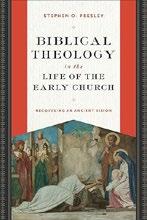
by Stephen O. Presley
Explores how the early church practiced biblical theology within community, where figures like Irenaeus and Augustine shaped believers through Scripture to pursue holiness, worship, and the glory of God.
writes, “from the places where the sense in which they are used is more manifest we must gather the sense in which they are to be understood in obscure passages.”9 Difficult texts were clarified by clearer ones, and the entire canon was understood within the framework of the church’s confession. This posture challenges us to resist fragmenting the Bible into isolated proof-texts. Scripture is a unified whole, a single story in which Christ is the key.
Another shared conviction of the fathers was that biblical interpretation requires divine assistance. Because Scripture is God’s Word, it cannot be fully understood apart from the Spirit’s illumination. Exegesis is not simply a matter of intellect but of holiness, prayer, and dependence on God.
Gregory of Nazianzus warned of this in his First Theological Oration: “Not to everyone, my friends, does it belong to philosophize about God … and I will add, not before every audience, nor at all times, nor on all points; but on certain occasions, and before certain persons, and within certain limits.”10 The contemplation of God, he continues, is “who have been previously purified in soul and body, or at the very least are being purified.” Returning to Justin Martyr, he recounts in his conversion experience that a certain Christian old man share with him the Scriptures and prayed, “that, above all things, the gates of light may be opened to you; for these things cannot be perceived or understood by all, but only by the man to whom God and His Christ have imparted wisdom.”11 Justin explains that after this conversation, “a flame
9. Augustine, “On Christian Doctrine,” book 3, chap. 26.
10. Gregory of Nazianzus, “First Theological Oration,” New Advent, accessed September 25, 2025, https://www. newadvent.org/fathers/310227.htm, oration 27, sect. 3.
11. Justin Martyr, “Dialogue with Trypho,” New Advent, accessed September 25, 2025, https://www.newadvent.org/ fathers/01281.htm, chap. 7.
was kindled in my soul; and a love of the prophets, and of those men who are friends of Christ, possessed me; and while revolving his words in my mind, I found this philosophy alone to be safe and profitable.”
The fathers remind us that the Bible is not conquered by intellect but received in humility. Reading Scripture rightly requires prayer, repentance, and openness to the Spirit’s guidance.
Finally, the fathers affirmed that Scripture was the highest authority in the church. Tradition, reason, and philosophy had their place, but all were subordinate to the Word of God. Tertullian set the tone for the supremacy of Scripture when he writes: “In the Lord’s apostles we possess our authority; for even they did not of themselves choose to introduce anything, but faithfully delivered to the nations the doctrine which they had received from Christ.” For him, Scripture was the decisive court of appeal against false teaching. Athanasius embodied this principle in his battle against Arianism. He appealed not to speculative philosophy but to the testimony of Scripture, knowing that the “sacred and inspired Scriptures are sufficient to declare the truth.” There were, of course, other trusted Christian authorities, but the authority of the Bible undergirded all others. Augustine expressed a similar conviction in his letter to Jerome: “have learned to yield this respect and honor only to the canonical books of Scripture: of these alone do I most firmly believe that the authors were completely free from error.” While Augustine valued tradition as a faithful witness, he saw Scripture as uniquely inspired and authoritative.
This posture remains deeply relevant in an age when so many other voices compete for authority— tradition, culture, politics, personal experience. The fathers remind us that Scripture must remain the norming norm, the standard by which everything else is measured.
BY S TEPHEN O. P RESLEY
These five interpretive postures remind me that the Bible is not an artifact to analyze but the living Word of God that is the guiding light for the people of God. It seems that much of modern biblical interpretation often fragments the text or detaches it from the life of the church. The fathers call us back to a theological, spiritual, and ecclesial reading of Scripture, one that forms not only the mind but my soul, and the community of believers gathered around its pages praising the God that the Scriptures reveal.
To recover these postures is, in the end, to recover the conviction that the Bible is God’s Word, given not merely to inform but to transform, not merely to describe but to reveal, not merely to study but to worship. And that is a vision I want to carry with me every time I open the Scriptures. The early church has helped me see that these postures were not theoretical. They were embodied in the church’s preaching, catechesis, liturgy, and doctrinal disputes. These postures do not solve all theological issues or complexities, but they provide the right kind of environment where the church can thrive. A vision of biblical theology centered in the church and leading the people of God to behold the glory of God.
by J. T. English
In the winter of 2019, I took my first sabbatical in ministry. For a few days I stayed alone at Lake Tahoe, hoping for rest and renewal. I had been there once before, but this trip was different. I found myself stunned by the majesty of God’s creation. The Sierra Nevada Mountains rose into the crisp blue sky before plunging into the clear waters of the lake. Tahoe is one of the deepest lakes in the United States—1,645 feet, more than five football fields stacked end to end. Standing on the shore, looking into water so clear it seemed bottomless, I couldn’t shake the sense of its vastness.
And then Habakkuk’s words came to mind: “For the earth will be filled with the knowledge of the glory of the LORD as the waters cover the sea” (Hab 2:14). He spoke those words to a devastated people. Their kingdom was in ruins. Exile loomed. They wondered: What is God doing? Is judgment the
end of our story? Where is this heading? The prophet answers: No. History is not spiraling into chaos. It is moving toward a day when God’s glory will fill the whole earth—like waters cover the sea, like Tahoe’s endless depths. That is where everything is headed. That is the future. And that is the foundation of deep discipleship.
Before we discuss ministry strategies, programs, or best practices, we need to remember the why behind the what. The heart of discipleship is not a plan or a philosophy—it is the glory of God.
Our aim in discipleship is not to build bigger ministries but to know and enjoy God himself. Deep discipleship is about pointing ourselves and those we lead toward the inexhaustible beauty of the triune God. Success is not found in busier calendars or flashier events, but in forming disciples who love the Lord with all their heart, soul, mind, and strength (Luke 10:27).
Habakkuk shows us that the knowledge of God’s glory is both the goal and the fuel of discipleship. It is the goal, because the whole world is moving toward it. And it is the fuel, because God’s presence alone will carry us there. Programs won’t sustain us. Strategies won’t satisfy us. Only God will.
This is why discipleship matters. It is not ultimately about curriculum or classrooms. Those are tools. The goal and the fuel of discipleship is God himself. As Herman Bavinck put it, “God, and God alone, is man’s highest good.”1 Discipleship is about the next fifty trillion years in the presence of God, not just the next fifty in ministry. If we lose this vision, even our best practices will leave us hollow. A ministry not oriented to God’s presence is dead. Ministry fueled by his presence is alive.
In John 17:3, Jesus prayed, “This is eternal life, that they know you, the only true God, and Jesus Christ whom you have sent.” Eternal life is not simply about heaven someday. It is about knowing God now. The Great Commandment presses the same point: love the Lord your God with all your heart, all your soul, all your mind (Matt 22:37). The repeated “with all” is intentional. Nothing deserves our whole selves but God alone.
That is why discipleship cannot be reduced to counting small group participation or Bible study completions. True discipleship is measured by whether people are being reoriented to God himself—whether their loves, desires, and imaginations are increasingly centered on him.
John Calvin once wrote, “The final goal of the blessed life rests in the knowledge of God.”2 Discipleship is about growing in that knowledge—not
1 Herman Bavinck, The Wonderful Works of God (Glenside, PA: Westminster Seminary Press, 2020), 1.
2 John Calvin, Institutes of the Christian Religion, trans. Ford Lewis Battles, vol. 1 (Louisville: Westminster John Knox, 2001), 51.
simply information about God, but fellowship with the Triune God who reveals himself in Christ.
To make that point clearer, Calvin uses an image. He says true wisdom is made up of the knowledge of God and the knowledge of ourselves. But this is not a call to self-focus. Think of a jeweler who places a diamond against a black backdrop. The diamond’s brilliance stands out more clearly because of the contrast. God is the diamond. We are the backdrop. Our role is not to magnify ourselves but to magnify him.
This is why discipleship must be deep. The good life is not found in self-discovery, career success, or personal fulfillment. The good life is knowing God. Depth is required not because we are ambitious, but because God is inexhaustible. Our people don’t need more of themselves. They need more of Christ. Not more than Jesus, but more of Jesus.
So why do so many churches settle for shallow discipleship? Because two subtle but deadly counterfeits have taken root: self-centered discipleship and spiritual apathy. Both look appealing on the surface. Both can even masquerade as genuine discipleship. But both lead us away from Christ.
We live in a cultural moment obsessed with the autonomous self. From every angle, we hear the same message: Be true to yourself. Salvation, we are told, is not found in knowing God but in discovering yourself.
This is not a new problem. From Genesis 3 onward, humanity has been tempted to grasp for identity apart from God, to believe that self, not God, is a bottomless well of beauty. Our first parents reached for wisdom apart from God, and ever since then, the lie has lingered: true flourishing comes through self-rule, not surrender.
The danger is that the church has often baptized this cultural mantra. Instead of calling people to deny
“Instead of calling people to deny themselves, we sometimes market discipleship as a way to improve themselves. We reinforce the lie that following Christ will simply make you a better version of who you already are. But Jesus could not have been clearer: ‘If anyone would come after me, let him deny himself and take up his cross and follow me’ (Matt 16:24).”
themselves, we sometimes market discipleship as a way to improve themselves. We reinforce the lie that following Christ will simply make you a better version of who you already are. But Jesus could not have been clearer: “If anyone would come after me, let him deny himself and take up his cross and follow me” (Matt 16:24). Even Peter had to learn this. When Jesus told his disciples he would suffer and die, Peter rebuked him. For Peter, discipleship meant ruling with Jesus, not following him to a cross. But Jesus corrected him: You do not find your life by clinging to it—you find it by losing it for his sake.
John Calvin once wrote that true wisdom consists of “the knowledge of God and of ourselves.”3 But this was never a license for self-focus. Calvin’s point was that God is the diamond, and we are the black backdrop. The brilliance of God shines most clearly when our own self-sufficiency fades into the background. When discipleship is reduced to self-help, the results are predictable. People know their Enneagram number better than the attributes of God. They can quote political talking points but not the Apostles’ Creed. They are shaped more by digital habits than spiritual disciplines. They may be religious consumers, but they are not deep disciples.
True discipleship turns us away from ourselves and toward Christ. He must increase, and we must decrease (John 3:30).
3 Calvin, Institutes of the Christian Religion, 1:35.
If self-centered discipleship is one danger, spiritual apathy is another. Many churches are satisfied if people are not bored with church, even if they are bored with Christ. We measure engagement by activity rather than awe. But boredom with Jesus is impossible. If people are yawning at Christ, it means they have never truly seen him.
The Colossian church faced this very temptation. They were not abandoning the faith outright, but they were distracted by other fascinations— angels, rulers, powers. So, Paul reminded them of Christ’s supremacy: “He is the image of the invisible God… that in everything he might be preeminent” (Col 1:15–18). Paul’s cure for apathy was not novelty. It was awe. He held Christ before them until they saw again that everything—visible and invisible—was created by him, through him, and for him.
We face the same challenge today. Our churches are often marked by a version of cultural Christianity that leaves people busy but bored. Cultural Christianity says that God is good to us—he gives us gifts, blessings, and benefits. Biblical Christianity says that God is good for us; he is the gift, the blessing, and the benefit. Cultural Christianity says we should seek God to get his things. Biblical Christianity says we should seek God to get God.
Do you see the difference? A church can have excellent music, a strong budget, and polished programs—and still fail if Christ is
not central. Satan doesn’t need people to renounce their faith to make them ineffective. He only needs them to grow indifferent. A domesticated Jesus will never produce deep disciples. The only cure for apathy is awe. The church must show people Christ again and again until they see him as he truly is Creator, Sustainer, Redeemer, Lord.
The Invitation
If we want to make whole disciples of Jesus, we must recover a God-centered vision of discipleship. That means refusing to define success by numbers alone. It means resisting the temptation to cater to the self or entertain the apathetic. It means calling people to the one reality that never fails, never bores, never runs dry: the glory of God.
Paul ends Romans 11 with a doxology: “Oh, the depth of the riches and wisdom and knowledge of God! How unsearchable are his judgments and how inscrutable his ways!” (Rom 11:33). That is the cry of deep discipleship.
J. I. Packer once asked two questions: What were we made for? What aim should we set ourselves in life? His answer was simple and profound: to know God4 That is the heartbeat of discipleship. We cannot settle for a vision that makes the church central but leaves Christ on the margins. We cannot settle for strategies that merely keep people comfortable but fail to captivate them.
The foundation of discipleship is not new ideas or clever strategies. The foundation is God himself. He is the goal, and he is the means. He is where we are going, and he is how we will get there. Whether standing on the shore of Lake Tahoe or standing at the edge of eternity, disciples know what they want: not more than Jesus, but more of Jesus.
This is the call before us. Raise the bar, not lower it. Invite people into the bottomless depths of God’s
4 J. I. Packer, Knowing God, 20th anniv. ed. (Downers Grove, IL: IVP Books, 1993), 33
glory. Show them that discipleship should be deep because God is inexhaustible. That is our task. That is our joy. And that is our future.
Adapted from “A God-Centered Vision of Discipleship” in Deep Discipleship: How the Church Can Make Whole Disciples of Jesus. Copyright © 2020 Published by B&H Publishers, Nashville, TN. Used by permission of the publisher. All rights reserved.
by
J.T. English
Calls churches to reclaim their central role in forming disciples through Scripture, theology, and spiritual practice, equipping believers to grow into the image of Christ.


SPECIALIZED PREPARATION
21 credit hours of electives
that can be organized into graduate certificates, allowing you to specialize and earn additional credentials
40% Save up to by studying in Louisville
Residential MDiv students now pay for only the first 9 hours per semester and can take an additional 2 classes per semester for FREE AFFORDABLE EXCELLENCE
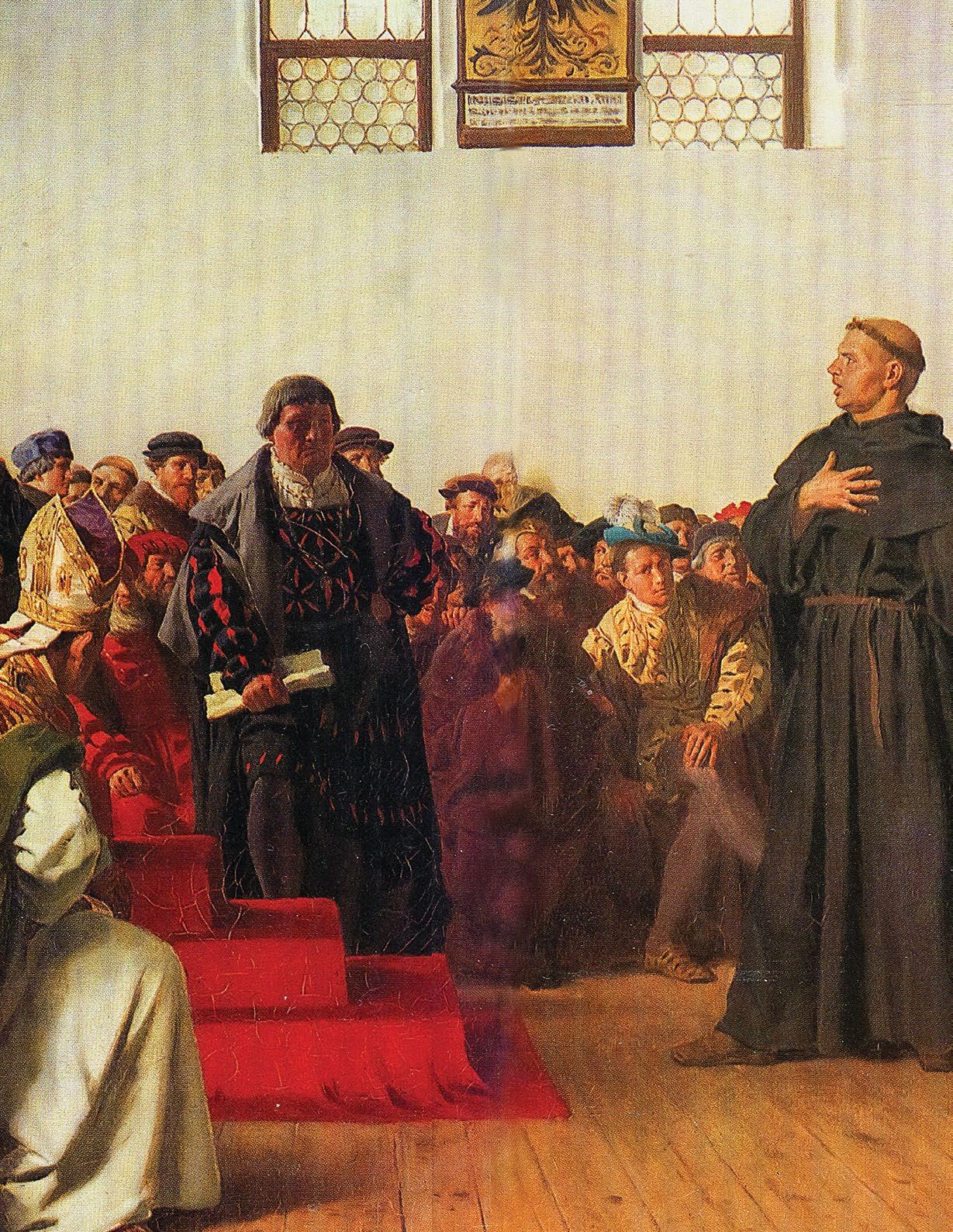
by Dustin Bruce
In 1519, a Swiss student by the name of Thomas Platter (1499–1582) attended a sermon given by the recently installed Zurich minister, Ulrich Zwingli (1484–1531). He would later describe the experience, “I felt as if someone had pulled me up into the air by the hair of my head.”1 Upon hearing Zwingli’s exposition of John 10, Platter, who had previously intended to enter the Roman Catholic priesthood, would conclude, “a priest I will never be!”
In the summer of the same year, the German Reformer, Martin Luther (1483–1546) engaged in a debate with the Roman Catholic theologian, Johann Eck (1486–1543), in the city of Leipzig. Having embraced the doctrine of justification by faith two years earlier, Luther’s dispute with Eck centered on the legitimacy of the authority of the papacy and church councils. Whereas Eck continuously appealed to tradition to confirm Rome’s authority,
1. Thomas Platter, The Autobiography of Thomas Platter: A Schoolmaster of the Sixteenth Century, trans. Sidney M. Seebohm (London: George Routledge and Sons, 1864), 39.
Luther based his arguments upon the Bible. As the debate went on, his confidence that Holy Scripture stood as the final source of authority solidified. Eventually, the German Reformer would emphasize to Eck, “I am bound, not only to assert, but to defend the truth with my blood and death. I want to believe freely and be a slave to no one, whether council, university, or pope. I will confidently confess what appears to me to be true, whether it has been asserted by a Catholic or a heretic.”2 Luther held God’s Word, not the teachings of men, to be the ultimate standard of truth. Reformation was underway in Europe, and at the heart of that Reformation stood a new way of seeing and understanding Scripture. As Luther would write years later, “The Word of God should establish articles of faith—and no one else, not even an angel.”3 Zwingli, Luther, and numerous others would lead the church to recover an “ecclesial biblical theology,” as the Word
2. Martin Luther, quoted in Roland H. Bainton, Here I Stand: A Life of Martin Luther (Nashville: Abingdon Press, 1950), 91–92.
3. Martin Luther, Luther’s Works, vol. 34, ed. Helmut T. Lehmann and Lewis W. Spitz (Philadelphia: Fortress Press, 1960), 308.
“The Reformer’s belief in the authority of Scripture meant the Word of God ought to become the ready possession of the people of God.”
of God alone became the final authority for life and doctrine.4
Central to the Reformer’s recovery of an ecclesial biblical theology stood the conviction that Scripture alone provided the ultimate authority for God’s people. As represented by Luther’s debate with Eck, the late medieval Roman Catholic church put forward Scripture as one of several sources of religious authority, including councils and the papacy. In practice, Rome’s authority overshadowed the authority of God’s Word, since the church’s teaching office served as the Bible’s ultimate interpreter.5 The Reformers consistently challenged Rome’s claims, placing the authoritative Word of God in the center of the church’s practice.
In his Institutes of the Christian Religion, John Calvin (1509–1564) sought to defend Scripture’s ultimate authority, reporting that, “a most pernicious error widely prevails that
4. I am employing the language and categories of “ecclesial biblical theology” from Stephen O. Presley, Biblical Theology in the Life of the Early Church: Recovering an Ancient Vision (Grand Rapids: Baker Academic, 2025). Like the early church, the Reformers do not use the language of “biblical theology” but labor to bring a unified vision of Scripture to bear on all aspects of the church’s life and culture.
5. Bernhard Lohse, Martin Luther’s Theology: Its Historical and Systematic Development, trans. Roy A. Harrisville (Minneapolis: Fortress Press, 1999), 188.
Scripture has only so much weight as is conceded to it by the consent of the church. As if the eternal and inviolable truth of God depended upon the decision of men!”6 For Calvin, the Word of God preceded the church, since the church itself was “built on the foundation of the apostles and prophets (Eph 2:30).” Zwingli would similarly testify, “When I was younger, I gave myself overmuch to human teaching … But eventually I came to the point where led by the Word and Spirit of God I saw the need to set aside all these things and to learn the doctrine of God direct from his own Word.”7
The Reformer’s belief in the authority of Scripture meant the Word of God ought to become the ready possession of the people of God. As Luther put it, “Let the man who would hear God speak, read Holy Scripture.”8 To see such a thing come to pass, however, meant both making the Word of God available through mass printing and vernacular translations, and providing God’s people with
6. John Calvin, Institutes of the Christian Religion, ed. John T. McNeill, trans. Ford Lewis Battles, 2 vols., Library of Christian Classics (Louisville: Westminster John Knox Press, 2011), 1:75.
7. Ulrich Zwingli, “On the Clarity and Certainty of the Word of God,” in Zwingli and Bullinger, trans. and ed. G. W. Bromiley, Library of Christian Classics 24 (London: SCM Press, 1953), 90.
8. Martin Luther, Luther’s Works, vol. 54, ed. and trans. Theodore G. Tappert (Philadelphia: Fortress Press, 1967), 165.
instruction on how to best understand and interpret God’s Word. As David Steinmetz observed, “The Protestant Reformers were, above all, biblical exegetes; their reform was advanced from the pulpit and the commentator’s desk.”9 As the Reformers taught, preached, and wrote, the unity and Christ-centered interpretation of Scripture provided the foundation upon which their return to an ecclesial biblical theology was built.
For the Reformers, Scripture presented a unified narrative of divine revelation across both the Old and New Testaments. Though progressively revealed, Genesis to Revelation echoed God’s promise to his people. While the Reformers would have their own distinct emphases, they presented a unified voice, conveying that God’s Word spoke a unified message that ultimately centered on and found ultimate fulfillment in Christ.
Luther’s reformational principles grew out of his work as a lecturer in sacred Scripture at the newly formed University of Wittenberg. As Timothy George has noted, Luther’s earliest lectures began to evidence a critique of the established methods of Scholastic theology, “insisting that the true theologian would pay attention to God’s distinctive way of speaking in Scripture.”10 As the German reformer studied the Scripture, he discerned that both the Old and New Testaments contained a mixture of both law and gospel.
As early as his 1518 Heidelberg Disputation, Luther had put forward the biblical-theological scheme of law and gospel, “The law says, ‘Do this,’ and it is never done. Grace says, ‘believe in this,’ and
9. David C. Steinmetz, “The Superiority of Pre-Critical Exegesis,” Theology Today 37, no. 1 (1980): 27.
10. Timothy George, Reading Scripture with the Reformers (Downers Grove, IL: IVP Academic, 2011), 153.
everything is already done.”11 In his 1520 Freedom of a Christian, Luther would more explicitly connect the themes of law and gospel to biblical interpretation. He writes, “the entire Scripture of God is divided into two parts: commandments [law] and promises [gospel}.”12 For Luther, the law corresponds with “everything that preaches about our sins and God’s wrath,” while the gospel represents that which “shows and gives nothing but grace and forgiveness in Christ.”13 As Christopher Brown notes, Luther “significantly did not mean a distinction between the Old Testament and the New Testament as groups of books in the Christian biblical canon.”14 As a biblical-theological tool, distinguishing between law and gospel “became a key to interpreting the entire canon of Scripture.”15 The Old Testament was full of gospel promises, while the New Testament, including the explicit teaching of Jesus, contained law. The Christian church needed the continual proclamation of both law and gospel, but in such a way that the gospel “had the final word.”16
Calvin largely followed Luther’s law-gospel distinction but also developed a more systematic account of the unity of Scripture through his understanding of covenant. For the Genevan Reformer, both the Old and New Testaments represented one
11. Martin Luther, Luther’s Works: Career of the Reformer I, vol. 31, ed. Harold J. Grimm (Philadelphia: Fortress Press, 1999), 40.
12. Luther, Luther’s Works: Career of the Reformer I, 348.
13. Martin Luther, Luther’s Works: Church and Ministry IV, vol. 78, ed. Benjamin T. G. Mayes and James L. Langebartels (Saint Louis: Concordia, 2015), 215.
14. Christopher Boyd Brown, “Martin Luther’s Biblical Hermeneutics,” in The Oxford Handbook of the Bible and the Reformation, ed. Jennifer Powell McNutt and Herman J. Selderhuis, Oxford Handbooks (Oxford: Oxford University Press, 2024), 299.
15. George, Reading Scripture with the Reformers, 180.
16. Brown, “Martin Luther’s Biblical Hermeneutics,” 299.
covenant, differing in administration but not in substance.17 For Calvin, “The covenant made with all the patriarchs is so much like ours in substance and reality that the two are actually one and the same. Yet they differ in the mode of dispensation.”18 He went on to explain that the two Testaments were unified by three factors. First, Old Testament saints, just as those of the New, did not aspire fundamentally to “carnal prosperity” but “were adopted into the hope of immortality.” Second, the covenant was “supported, not by their own merits, but by the mercy of God who called them.” As Peter Optiz states, “the covenant was always a covenant of grace, and the continuation of sola gratia spans both Testaments.”19 Finally, even in the Old Testament, saints “had and knew Christ as mediator” as they trusted in the promises of God while lacking the New Testament clarity concerning the person and work of Christ.
While Calvin underscored a fundamental unity of Old and New Testament as companion testimonies of God’s gracious covenant, he recognized that there were certain differences regarding administration. He went on to suggest five differences, including the Old Testament’s promise of a land for God’s people and the extension of God’s promise to all nations found within the New Testament. Yet, for Calvin, such differences did not “detract from its established unity.”20 While Calvin’s relationship with the later development of covenant theology is complex, most
17. Pierrick Hildebrand, “Calvin and the Covenant: The Reception of Zurich Theology,” in The Oxford Handbook of Calvin and Calvinism, ed. Bruce Gordon and Carl R. Trueman, Oxford Handbooks (Oxford: Oxford University Press, 2021), 67.
18. Calvin, Institutes of the Christian Religion, 2:429.
19. Peter Opitz, “Scripture,” in The Calvin Handbook, ed. Herman J. Selderhuis, trans. Henry J. Baron et al. (Grand Rapids: William B. Eerdmans, 2009), 238.
20. Calvin, Institutes of the Christian Religion, 2:449.
of the significant components are found within his writings and his work undoubtedly served as a key impetus for one of the most fruitful themes of biblical theology.
Central to the Reformer’s biblical theology stood the conviction that Christ was the hermeneutical key that unlocked true understanding of God’s Word. Scripture, then, was to be read and preached with Christ at the center. Whereas the fourfold interpretation of the Scriptures that had come to dominate the medieval church too often obscured Christ, the Reformers saw Christ throughout the whole Bible and contended that the purpose of the Bible was to reveal Christ.
For Luther, both law and gospel served to reveal Christ, as the law revealed one’s sinful state and need for Christ, and the gospel presented good news of God’s grace in Christ. Thus, Christ could be found in every passage of Scripture. For the German Reformer, interpreting all of Scripture Christologically was not a fanciful mode of reading Scripture that laid something foreign over the text, but stemmed from a literal reading of the text. To find Christ in all of Scripture was nothing more than taking seriously the words of Christ in John 5:29, “You search the Scriptures because you think that in them you have eternal life; and it is they that bear witness about me.” This meant interpreting the Old Testament in light of the Christological clarity of the New. As David Dockery emphasized, “In principle, every portion of the Old Testament proclaimed Jesus Christ and anticipated its fulfillment in him. At the same time, everything in the New Testament was understood to look back and shed light on the Old.”21 Luther’s replacement of medieval exegetical practices with a Christological
21. David S. Dockery, “Martin Luther’s Christological Principle,” in The Reformation and the Irrepressible Word of God: Interpretation, Theology, and Practice, ed. Scott M. Manetsch (Downers Grove, IL: IVP Academic, 2021), 30.
hermeneutic rooted in a literal reading of the text “profoundly shaped the subsequent history of biblical interpretation in the West” and established Christcentered interpretation of the whole Bible as one of the foremost concerns of biblical theology.
Calvin, like Luther, interpreted all of Scripture with a Christological focus. For the Genevan Reformer, Christ was both the “Word … from which both all oracles and prophecies go forth” and the goal of all Scripture. This was true for both the Old and New Testaments. He explained, “whatever the law teaches, whatever it commands, whatever it promises, has always a reference to Christ as its main object; and hence all its parts ought to be applied to him.”22
Calvin shared Luther’s concern that Christological readings ought not be offered on the basis of careless allegorizing that overlooked the historical-grammatical context of a text. In fact, Calvin generally offered more restrained readings of biblical passages than Luther.23 However, undergirded by the biblical-theological category of covenant and the teaching and example of Christ and the apostles, Calvin understood Christ to be the definitive interpreter of the law and the object of prophetic utterances.24 For Calvin, a Christ-centered interpretation of the Scriptures was true Christian interpretation. “We ought to read the Scriptures,” he would write, “with the express design of finding Christ in them.”25
22. John Calvin, Commentary on the Epistle of Paul the Apostle to the Romans, trans. and ed. John Owen (Edinburgh: Calvin Translation Society, 1849), 384.
23. John L. Thompson, “Calvin as Biblical Interpreter,” in The Cambridge Companion to John Calvin, ed. Donald K. McKim, Cambridge Companions to Religion (Cambridge: Cambridge University Press, 2004), 69.
24. Opitz, “Scripture,” 249.
25. John Calvin, Commentary on the Gospel according to John, 2 vols., trans. William Pringle (Edinburgh: Calvin Translation Society, 1847–48), 1:218.
The Reformation was not merely a transformation in theological understanding and church life, but a transformation rooted in a more faithful reading of the Scriptures, resulting in a renewal of ecclesial biblical theology. Moreover, this “hermeneutical revolution”26 was not for the scholarly elite but meant to transform the people of God as they heard and read the authoritative Word of God through a biblicaltheological framework that upheld the unity of the Bible and a Christ-centered interpretation of all of Scripture. The biblical theology movement as we know it today may be rightly considered a proper extension of both the concerns and advances that Reformers such as Luther, Zwingli, and Calvin pioneered. As twenty-first-century interpreters of Scripture seek to follow the example of the Reformers in the right reading of God’s Word, we do so committed to understanding the Bible as God’s unified message centered on the gospel of Christ. As Luther insisted, “For the gospel teaches nothing but Christ, and therefore Scripture contains nothing but Christ. Whoever fails to recognize Christ may hear the gospel or he may indeed carry the book in his hand, but he lacks understanding, for to have the gospel without understanding, is to have no gospel at all. And to possess Scripture without knowing Christ, is to have no Scripture.”27
26. David S. Dockery, “Martin Luther’s Christological Hermeneutics,” Grace Theological Journal 4, no. 2 (Fall 1983): 189.
27. Martin Luther, Luther’s Works: Sermons II, vol. 52, ed. Jaroslav Jan Pelikan, Hilton C. Oswald, and Helmut T. Lehmann (Philadelphia: Fortress Press, 1999), 207.
by Mitchell L. Chase
The earthly road to the cross began in Eden. There, in a garden with the sounds of judgment still ringing in the air, the Lord God made a promise. The serpent was the recipient of the words, but God’s image bearers would be the beneficiaries. God told the vile and manipulative creature, “I will put enmity between you and the woman, and between your offspring and her offspring; he shall bruise your head, and you shall bruise his heel” (Gen 3:15).
Charles Simeon is right: “Now, as the oak with all its luxuriant branches is contained in the acorn, so was the whole of salvation, however copiously unfolded in subsequent revelations, comprehended
in this one prophecy; which is, in fact, the sum and summary of the whole Bible.”1
Sometimes the promise in Genesis 3:15 is called the protoevangelium, a term which means “first gospel.”
From the giving of that promise in Genesis 3:15, the rest of the biblical storyline shows God’s faithfulness to keep those words. A line of descent unfolded unto the Serpent-Crusher, the Curse-Reverser, the Messiah. The Lord Jesus was the promised seed of the woman, and Genesis 3:15 was the fountainhead of messianic prophecy which prepared his way. Even though the words “Messiah” and “messianic” are not used in
1 Charles Simeon, Horae Homileticae, vol. 1, Genesis to Leviticus (London: Holdsworth and Ball, 1832), 36.
Genesis 3:15, the continuity of biblical revelation ensures that the hope for a promised son (which begins in Gen 3:15) is deepened and clarified as the Old Testament unfolds.
According to Jim Hamilton, “The Old Testament is a messianic document, written from a messianic perspective, to sustain a messianic hope.”2 The Old Testament “is a messianic document” (singular), though it consists of 39 books (plural). These books are about many different people and events, yet they serve collectively as a messianic document because of their content. The hope for a deliverer is why the Old Testament exists. The Old Testament is about many things, but none is more significant than messianic hope.
Genesis 3:15 is a fountainhead for waters of hope that strengthen and surge in the Old Testament writings. Throughout the unfolding of Old Testament revelation, the biblical authors do not ignore or forget what transpired previously. They advance messianic hope. Their writings sustain what God promised.
From Genesis and Numbers
What can we notice about the promised deliverer when we pay attention to the words of Genesis 3:15? The future victor would be human because the “offspring”—the “seed”—is from Eve, and this human would be a son because of the pronouns. He would bruise, and he would be bruised.
This hope did not remain in the garden. When Adam and Eve left Eden, they took this hope-filled promise with them, and the “first gospel” promise was known in subsequent generations. As evidence of this transference, notice the words of Noah’s father Lamech when his son was born. Lamech had hoped that his son would be the promised victor. He named
2 James M. Hamilton Jr., “The Skull-Crushing Seed of the Woman: Inner-Biblical Interpretation of Genesis 3:15,” Southern Baptist Journal of Theology 10, no. 2 (2006): 30.
his son Noah, saying, “Out of the ground that the LORD has cursed, this one shall bring us relief from our work and from the painful toil of our hands” (Gen 5:29). Lamech’s words confirmed the awareness and embrace of the hope reported in Genesis 3:15. Someone was coming, and victory would follow. In Genesis 3:15, the promised son would defeat the serpent, and in Genesis 5:29, this victory would have ramifications in a world marked by sin and toil and death (see 3:17–19). He would come to make his blessings flow as far as the curse is found.
As the storyline advances in Genesis, we meet a man named Abraham, and God makes promises to him. In particular, Abraham learned that his offspring—his seed—would “possess the gate of his enemies, and in your offspring shall all the nations of the earth be blessed” (Gen 22:17–18). Blessing upon the nations through Abraham’s offspring is an allusion to Genesis 12:3. The seed of Abraham would not just be a string of descendants (plural). The seed would ultimately be a son (singular), and the apostle Paul said that this offspring is Christ Jesus (Gal 3:16). This son would be triumphant over his enemies. And by the end of Genesis, we learn that this promised son would be from Judah’s tribe. He would possess the ruler’s staff, and he would receive obedience from the peoples (Gen 49:10).
Balaam’s words in Numbers 24:17–19 confirm what we learn from Genesis. The coming king would rise from Israel and defeat his enemies. In fact, focusing on Balaam’s phrasing, the future king would “crush the forehead of Moab.” Striking the head reminds us of Genesis 3:15. A thread was forming across the biblical storyline, and the subject of this thread was the serpent-crusher and curse-reverser. He would be a king from the line of Abraham, arising from the people of Israel and descending from the tribe of Judah.
From 2 Samuel and Psalms
A thousand years after Abraham, more specificity is given to the promise of a victor. During the reign of David (who reigned from approximately 1010 to 970 BC), Israel’s king received a covenant promise. David learned in 2 Samuel 7 that his royal line would lead to a king whose reign would never end. David would have a son, and this Son of David would be upon the throne forever.
God told David, “When your days are fulfilled and you lie down with your fathers, I will raise up your offspring after you, who shall come from your body, and I will establish his kingdom. He shall build a house for my name, and I will establish the throne of his kingdom forever” (2 Sam 7:12–13). A ruler was coming—a son. And this son was not only from Judah’s tribe (Gen 49:10), but he would be from David’s line.
The Psalms hold forth hope for such a figure. The Son of David would be the Son of God, and he would inherit the nations and reign with a rod of iron (Ps 2:8–9). Since Israel’s kings were anointed, this future king was an Anointed One—the Messiah. He would be enthroned over heaven and earth and would make his enemies his footstool (Ps 110:1). According to the New Testament, Jesus is the Messiah promised in 2 Samuel 7 and the Psalms. Jesus was the Davidic descendant, and God made him both Lord and Christ (Acts 2:30–31, 36).
From Micah and Daniel In 1 Samuel 16, we learn that David was from Bethlehem (1 Sam 16:4–13). It was to this village that Samuel went to anoint the king who was from Judah’s tribe. The hometown of David would feature in a prophecy centuries later during Micah’s ministry. Micah said, “But you, O Bethlehem Ephrathah, who are too little to be among the clans of Judah, from you shall come forth for me one who is to be ruler in Israel, whose coming forth is from of old, from ancient days”
(Mic 5:2). The future Son of David would be born in the town of David (see Matt 2:3–6).
The Messiah’s birth in Bethlehem would occur during a particular historical empire. According to the book of Daniel, the promised son—or stone—would come during the reign of the fourth empire, a number counting from the days of the prophet Daniel (Dan 2:31–45). The first empire was Babylon, the second would be Persia, the third would be Greece, and the fourth would be Rome.
During the days of the Roman emperor Caesar Augustus, the Christ was born in the town of Bethlehem (Luke 2:1–7).
Victory through Suffering
According to the promise in Genesis 3:15, the future son of Eve was born to achieve victory—but victory at a cost. God told the serpent, “He shall bruise your head, and you shall bruise his heel.” The imagery corresponds to a serpent whose head will be crushed and whose mouth will strike at the crushing foot.
The verb “bruise” is used for the actions committed toward the serpent and toward the son. In each case, the blow is deadly. We should not imagine a harmless snake. We should picture a venomous bite, like those bites that ended the lives of many Israelites in Numbers 21:4–9.3 When the Lord told the serpent, “You shall bruise his heel,” the action is described from the vantage point of a snake. The snake strikes from the ground at the accessible heel, and the bite is deadly.
The deliverer’s foot is involved in two ways: It is doing the striking, and at the same time, it is being struck. When a foot comes down on a snake’s head, the snake has been defeated. The image of headcrushing is about conquering. But this is a victory
3 See Kevin S. Chen, The Messianic Vision of the Pentateuch (Downers Grove, IL: IVP Academic, 2019), 54.
through suffering. Indeed, the language in Genesis 3:15 suggests that the promised son achieves victory through his own suffering and death.
The seed of the woman would come in the fullness of time, born in Bethlehem and laid in a lowly manger. After Jesus grew up and began his public ministry, he taught his disciples what would happen to him in Jerusalem: “The Son of Man must suffer many things and be rejected by the elders and the chief priests and the scribes and be killed, and after three days rise again” (Mark 8:31).
In the wisdom and mystery of God’s redemptive plan, the old rugged cross displayed the death of the Son of God, but this death was not his defeat. His death had been the plan all along. The seed of the woman would be lifted up on a cross. And as the Romans raised the cross, they thereby raised his feet as well. The grim and sorrowful scene was prophetically perfect because a raised foot is exactly what you need when you are going to crush a serpent’s head.
Through his death, he would satisfy the justice of God on our behalf, he would defeat that ancient serpent who wrought such havoc in Eden, and he would rise to everlasting bodily life. The victory on the cross is made clear by his vindication—his resurrection on the third day.
Conclusion
By the time we reach the end of the Old Testament, the Messiah had not yet come. We must keep reading. The road of messianic hope is long and winding, but the destination is certain, because God does not make promises he does not keep.
When we follow the road from Eden to the Place of the Skull outside Jerusalem, we see the fulfillment of a divine promise that traveled and developed through the writings of the biblical authors. The prophesied victor would be a son from Abraham’s family, from the people of Israel, from the tribe of
Judah, and from the family of David. He would be born in Bethlehem during the days of the Roman Empire. He would bear our iniquities after being rejected and betrayed, he would be delivered from the grave, and he would reverse the curse of sin and death. He acted on our behalf as our representative and substitute. The first Adam heard the promise that the last Adam fulfilled. At the appointed time, the appointed Son accomplished the appointed work. On Good Friday, a holy heel took aim with all the power of heaven.
by Mitchell L. Chase
Examines how the themes of Genesis 3— sin, shame, and hope—echo throughout Scripture, revealing the fall’s enduring impact and the redemption fulfilled in Jesus Christ.
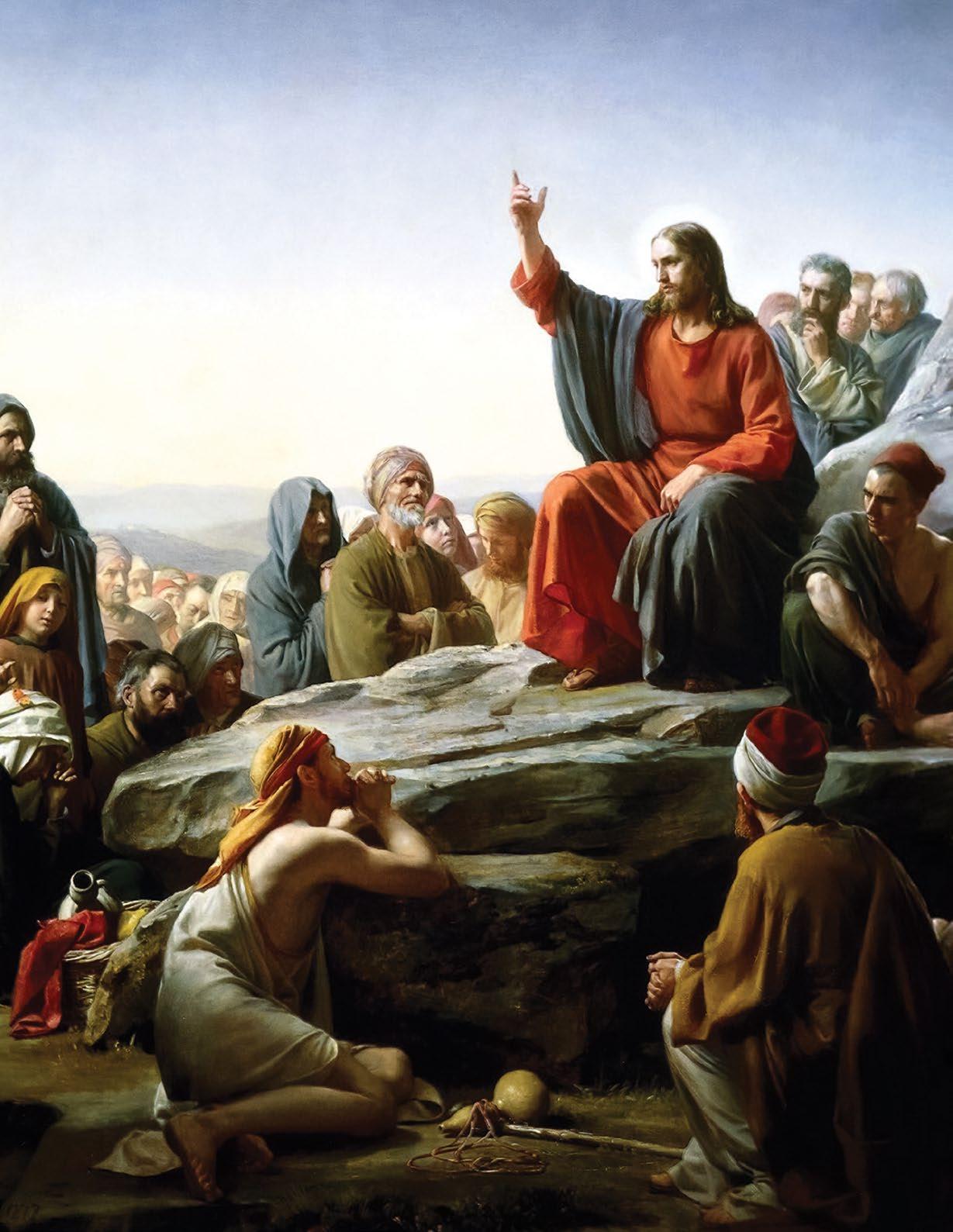
by Andrew T. Walker
Imagine sitting down to listen to a symphony. At first, you hear scattered motifs: a single violin theme, a burst from the brass, a faint echo from the woodwinds. Alone, these fragments might seem unrelated, even confusing. But as the piece unfolds, you begin to realize that each note, each instrument, each melody and harmony, is part of one great composition. The composer has woven them together into a whole, and what once seemed scattered now resounds with harmony. In the same way, the whole of Scripture presents not isolated moral commands or theological fragments out of harmony, but a unified composition—creation, law, gospel, and lordship—all resolved and fulfilled in Christ. Christian ethics cannot be understood
apart from this grand moral symphony. The ethical commands may take shape in unique contexts and specific genres, yet the same moral law resonates throughout Scripture.
To interpret the Bible’s moral commands correctly requires sound exegesis in light of the Bible’s unfolding narrative—to put a moral command in the context of its original setting, to understand the genre it comes to us in its current covenantal context (whether in commands, principles, wisdom, or paradigms), and then within the whole canonical storyline. The purpose of this short essay is quite simple: To trace the narrative arc of Christian ethics in view of the entire Bible. When this is done correctly, we will see that the Bible’s moral storyline is not a disjointed or contradictory collection of moral edicts, but a consistent narrative that portrays one
moral order, revealed through the unfolding of divine revelation and covenantal sequences. This essay will trace the Bible’s moral storyline—from creation to Christ—to demonstrate that Christian ethics is not an arbitrary collection of rules, but the embodiment of God’s moral order in redemption.
The beginning of all moral considerations is God’s action to create and bring order within creation. An even cursory glance at Genesis 1 reveals immense moral significance, the first of which is that God’s order is teleological—moral design and purpose are embedded within creation. Purpose and design are imposed by a divine givenness shaped by the divine wisdom of God. There are two moral actions in Genesis 1. First, God creates an order pregnant with moral direction. He establishes a “law of nature” whereby he dictates the boundaries of creation (Job 28:26; Jer 5:22). God establishes the laws of creation by ordaining things to be as they are, in keeping with his divine wisdom, and to continue in their appointed pathways. Second, God decrees moral ordinances within that order. In Genesis 1, we see the ordinances take shape: existence, self-knowledge, identity, family, sociality, vocation, and cultural productivity. God calls His creatures to work in conformity with the moral grain of creation order. Significantly, the cadence of Genesis 1 is described by a deeply moral word, “good.” God’s decree that creation is “good” declares that the created order is rightly ordered as it ought to be, and moral agents are therefore called to live in accordance with that order. As Bradford Littlejohn writes, “every order of creature is drawn into motion by seeking the perfection that belongs to it, a perfection that is its own unique mode of imitating the divine
perfection.”1 When God looks upon his creation and deems it “good,” we see that every creature should act consistently with the nature that the Creator designed for it. The rest of the Bible’s moral unfolding follows from the foundations established in Genesis 1. This explains why the apostle Paul says in 1 Timothy 4:4, “For everything created by God is good, and nothing is to be rejected if it is received with thanksgiving.” The narrative of God’s moral order throughout the rest of Scripture is refracted through the moral significance of creation order.
As we all know, the moral order God affixed was disobeyed by our ancestors, Adam and Eve, in Genesis 3. Casting off God’s rule and moral commands, humanity is subjected to the decaying effects of moral rebellion: Resistance, revolt, and vicious human interactions follow. Where Genesis 1 envisions moral authority, man’s revolt signifies his willed overturning of God’s moral order along with the besetting proclivities of idolatry, scarcity, strife, and conflict.
After the flood, God establishes his covenant with Noah. There is a two-fold purpose for the Noahic Covenant: (1) to re-establish a creation order platform constrained by the realities of human fallenness and (2) to provide a creational platform for the redemptive covenants, grounded in God’s eternal plan of redemption, to occur. The moral commission in Genesis 1 is recommissioned in the Noahic Covenant, except that membership in the Noahic Covenant offers no promise of eschatological glory. The same moral realities of Genesis 1 remain, however. Human beings are still called to marry and work, and due to sin, establish systems for adjudicating injustices.
The mission of God’s redemption is simultaneously a mission of moral reclamation, which
1. Bradford Littlejohn, introduction to The Laws of Ecclesiastical Polity in Modern English: Preface–Book IV, by Richard Hooker, ed. Bradford Littlejohn et al., Library of Early English Protestantism, vol. 1 (Moscow, ID: Davenant Institute, 2019), xxviii.
is why God’s covenant with Abraham in Genesis 12 holds deep moral significance. God’s calling of Abraham is, along with the redemption of a people, a call for moral witness and moral redemption. Notice that in Genesis 18:17–19, God’s covenant with Abraham calls for Abraham to repristinate God’s moral order:
The LORD said, “Shall I hide from Abraham what I am about to do, seeing that Abraham shall surely become a great and mighty nation, and all the nations of the earth shall be blessed in him? For I have chosen him, that he may command his children and his household after him to keep the way of the LORD by doing righteousness and justice, so that the LORD may bring to Abraham what he has promised him.” (ESV)
God calls for a redeemed people to manifest moral excellence in hopes that the nations would be drawn to a people embodying “righteousness and justice.” God then establishes his covenant with the descendants of Abraham, the nation of Israel. Israel is called to a covenant of moral goodness and to recapitulate God’s original vision for creation and moral order. But Israel, too, like its Edenic progenitors, persists in disobedience and rebellion against YHWH. Here is where the Mosaic Covenant, and in particular, the Decalogue or Ten Commandments, should not be seen as the introduction of an entirely novel law-code, but rather as the republication and codification of the moral order and natural law already embedded in creation. They give explicit, covenantal expression to principles that were always binding on humanity— such as honoring parents, rejecting murder, and keeping marriage pure—because these commands flow from the very structure of creation itself. For example, murder (the 6th Commandment) was not permissible before the Ten Commandments. With questions regarding how the Sabbath reflects creation order principles and its differing application for
New Covenant Christians set aside for now, the Ten Commandments distill the original tenets of creation order into a crystalline form.
In Leviticus, God reveals the ultimate standard for the Bible’s moral storyline—the moral mission of Israel is meant to reflect the moral glory of YHWH. Leviticus 20:26 declares, “You shall be holy to me, for I the LORD am holy and have separated you from the peoples, that you should be mine.” Biblical morality reflects God’s holiness. As God is unchanging, so is His moral law unchanging as well.
The rest of the Old Testament—from the Davidic Covenant to the wisdom literature and the Prophets—is the unfolding of the moral saga begun in Genesis 1 played out in each of their historical contexts and unique moral genres. Along the way, ethical norms and moral logic unfold, giving explanation and purpose to the structure of Genesis’s moral landscape. Moral laws require moral maxims to execute and obey them. For example, Psalm 34:14 states, “Turn away from evil and do good; seek peace and pursue it.” While the truth of this passage seems intuitive, it conveys what moral norms are intended for—they are directives and clues by which we guide our conduct to achieve what is good and conducive to flourishing as a reflection of God’s own holiness. To put this in terms of ethical discourse, all moral action is rational action that satisfies or fulfills our nature and conforms to the order of creation as decreed by God. Moral rectitude is thus not an arbitrary pathway whereby we can choose “A” or “B” and hope for the best outcome. Aligning ourselves with God’s moral path is the only sure guarantee of reaching our intended purpose.
There are also clues in the Old Testament that God’s moral order—begun in Genesis and reconstituted in the Noahic Covenant—is enduring, universal, intelligible, objective, and authoritative. The abiding authority of moral order persists. Psalm 19 is a classic passage that speaks of God’s continued moral witness through the testimony of creation.
There, we read that “The heavens declare the glory of God, and the sky above proclaims his handiwork. Day to day pours out speech, and night to night reveals knowledge.” Even with the decaying and desecrating effects of Genesis 3, creation’s moral intelligibility is not extinguished. Notice, too, in reading the whole chapter, the seamless integration of God’s moral law in Psalm 19, in that it moves from creational moral knowledge to covenantal moral knowledge to personal moral knowledge. The same moral law is known in three media.
As we reach the New Testament, the absolute fullness of moral revelation dawns in the person of Jesus Christ. The identity of the moral architect becomes incarnate. An impersonal deity or abstract force does not hold the universe together. As Colossians 1 and John 1 teach, the ordering principle of the universe, the “Logos,” is Jesus Christ. “All things were made through him” (John 1:2) and “by him all things were created … all things were created through him and for him … in him all things hold together” (Col 1:16–17). The present moral order subsists as it does because Jesus Christ establishes and upholds it.
Here is where confusion can enter, because it is sometimes thought that Jesus introduces a new moral law. He does not. He brings the moral law to its fulfillment (Matt 5:17). Jesus extends and deepens the elements of moral order. He unveils it in full. For example, the command to love God and love one’s neighbor as yourself (Matt 22:37–39) is not a new moral law. Both commands are present in the Old Testament (Lev 19:18; Deut 6:4–5). What is new is not the content of morality but the clarity and power of its fulfillment in Christ. What changes about the moral law is not its substance, but our deepening knowledge of it and the ability to obey it. New Testament ethics portray the animating Christian ethic as one of love borne through charity, forgiveness, mercy, love of enemies, and self-sacrifice. The life of Christian obedience is possible because the Holy Spirit awakens
and stirs us to conformity with Christ (Rom 8:29). None of these Spirit-given norms, however, changes the substance of the moral law.
While New Testament Christians are not under the law code as a covenantal reality, we are not “released” from the obligations of all measures of “law,” as the definition of “law” inherently refers to a standard or measure of conformity. Rather, the locus of the law is no longer on the law-code itself, but the “law of Christ” and the “law of the Spirit of life” that Paul speaks of in Galatians 6:2, 1 Corinthians 9:21, and Romans 8:2. Another facet of New Testament morality that reflects Old Testament morality is that our obedience brings glory to God (Ps 86:12; 1 Cor 6:12–20). The gospel transforms us into moral people.
Titus 2:11–14 declares:
For the grace of God has appeared, bringing salvation for all people, training us to renounce ungodliness and worldly passions, and to live self-controlled, upright, and godly lives in the present age, waiting for our blessed hope, the appearing of the glory of our great God and Savior Jesus Christ, who gave himself for us to redeem us from all lawlessness and to purify for himself a people for his own possession who are zealous for good works.
The life of grace does not evacuate the contents of creation order and its moral mandates—it vindicates and ratifies it. Grace enables us to experience creation as God originally envisioned. According to Herman Bavinck, regeneration does not suspend the abiding validity of the moral goods or moral norms; rather, the heavenly good should “animate the moral life, control it, subject it, and make it its instrument” so that the task of ethics “is therefore to describe how regenerate people are to manifest their eternal heavenly life in the form of
the temporal earthly life.”2 Or as Carl F. H. Henry said, “The ethics of redemption is not a new morality that reflects a fundamental change in the will of God regarding the essential content of the good. It preserves in full force his rule of righteousness.”3
Elsewhere in the New Testament, the abiding authority of God’s creational and Noahic creation order is upheld. Jesus cites the order of creation explicitly in Matthew 19:4–6 as part of his defense of marriage. This is quite significant, as Jesus maintains that even in the New Covenant era, the creation order remains intelligible and authoritative. The apostle Paul likewise refers to the witness of creation order as giving evidence of God’s existence and moral laws (Rom 1:18–32). Paul also maintains that nonChristians have the ability for true moral knowledge because it is “written on the heart” (Rom 2:14–15).
In thinking about how we apply the moral law of the whole Bible as New Covenant Christians, a helpful strategy is to deploy some hermeneutical “test” questions:
1. Creation Order Test: How does this moral issue uphold God’s creational design?
2. Natural Law Test: How is this moral issue consistent with moral goods knowable by reason?
3. Redemptive Revelation Test: How does this moral issue align with biblical principles in light of Christ?
When Christians read the Bible for moral guidance, the first question to ask is: What good does this passage encourage, and what evil does it
2 Herman Bavinck, Reformed Ethics, vol. 1, Created, Fallen, and Converted Humanity, ed. John Bolt (Grand Rapids: Baker Academic, 2019), 235.
3. Carl F. H. Henry, Christian Personal Ethics, 2nd ed. (Grand Rapids: William B. Eerdmans, 1977), 157.
warn against? From there, we should look at how the passage speaks—whether as a clear command, a guiding principle, a story to learn from, or a rule to follow. We then need to ask whether what it teaches aligns with God’s design in creation and if it has implications for our lives together in society. It is also important to notice how the passage reasons—does it call us to virtue, to duty, to wise ends, or to consider the consequences? Next, we should place the text within the broader context of the Bible, examining how it relates to God’s covenants and how Christ brings it to fulfillment. We must also weigh how binding it is—whether it is required, recommended, optional, or left to wisdom. Finally, Christians should ask how the Spirit enables us to obey, how the teachings point to genuine human flourishing, how they relate to contemporary moral debates, and what they mean for the life of the church. In this way, interpreting the Bible’s moral teaching is not just an academic exercise but an act of submitting our lives to God’s Word.
Christian ethics is nothing less than living as creatures redeemed by Christ, reflecting God’s glory by aligning our lives with the order He declared “good” from the beginning.
While he was still speaking to the people, behold, his mother and his brothers stood outside, asking to speak to him. But he replied to the man who told him, “Who is my mother, and who are my brothers?” And stretching out his hand toward his disciples, he said, “Here are my mother and my brothers! For whoever does the will of my Father in heaven is my brother and sister and mother.
MATTHEW 12:46–50

WITH JAMES HAMILTON
Dr. James M. Hamilton, Jr. serves as Professor of Biblical Theology at The Southern Baptist Theological Seminary and as senior pastor of Kenwood Baptist Church in Louisville, Kentucky.
Known for his passion for the Bible’s big story and his ability to connect the Scriptures to the Christian life, Hamilton models what it means to be a pastor-theologian. His journey into teaching and pastoral ministry was shaped by literature, faithful preaching, and the conviction that God’s Word must be both studied deeply and proclaimed boldly.
HOW DID YOU KNOW YOU WANTED TO BE A TEACHER?
When I was a student at the University of Arkansas, I was profoundly helped by the writings of C. S. Lewis. Mere Christianity clarified the Christian faith for me, and Lewis ministered to me in a way that made me want to minister to others. At the same time, I was inspired by my English professors, who opened up great works of literature and showed how these stories dealt with the big questions of life. Literature, I realized, was like philosophy in story form.
Then I encountered expository preaching for the first time through Tommy Nelson at Denton Bible Church in Texas. Hearing the Bible explained the way my professors explained literature was life-changing. I had never experienced preaching like that before, and immediately I thought: “This is what I want to do. I want to explain the Bible as literature, to unfold its meaning so that people understand it and can apply it to their lives.”
As I discerned God’s direction, I considered graduate school. At first, I thought about pursuing English
literature, but I realized I didn’t want to spend my life immersed in critical theory and Marxist approaches to texts—which dominated my English studies at Arkansas. What I really wanted was to study the Bible with people who believed the Bible. That conviction led me to Dallas Theological Seminary, and eventually to Southern Seminary for my PhD.
Along the way, I wrestled with whether my path would be as a professor or as a pastor. In God’s providence, he opened the door for me to teach at a seminary, and then later led me—unexpectedly—to pastor a church plant in Houston, Texas. That dual calling has shaped my life ever since. My primary role has always been as a seminary professor, but I also serve as senior pastor. In this, I see myself walking in the long line of pastortheologians: Augustine, Martin Luther, John Calvin, Jonathan Edwards, and more. My own mentor, Dr. Tom Schreiner, modeled this so well as he taught at Southern and pastored at Clifton Baptist Church. I want to follow that example.
WHAT MAKES YOU LOVE TEACHING AT SOUTHERN SEMINARY?
First, I love the Lord, and I love his Word. That is the foundation of everything I do. Second, I love these students. I grew up in churches pastored by graduates of Southern Baptist seminaries, and I want to help train faithful pastors for churches like the ones that shaped me.
There’s a kind of heritage here. I was formed in Southern Baptist churches, and now I get to play a role in shaping the next generation of pastors who will shepherd churches like those I grew up in. That is deeply meaningful to me. I want Southern students to leave here loving the Lord, loving the Scriptures, and loving the people God entrusts to their care. Training them to faithfully handle the Word is one of the most important ways I can serve both the church today and generations to come.
HOW DOES THEOLOGY SHAPE YOUR OWN DAY-TO-DAY LIFE?
That’s a great question. The New Testament shows us that God gives us patterns of life in the examples of Jesus, the apostles, and the prophets. Paul calls believers to imitate him as he follows Christ. Peter tells us that Jesus left us an example so that we should follow in his steps. This “pattern and imitation” language is central to biblical theology. It means we are called to walk in the footsteps of the faithful who have gone before us—Abraham, the prophets, the apostles, and supremely Christ himself.
So theology isn’t just about ideas; it’s about shaping the way we live. We bless those who persecute us because that’s how the prophets were treated. We endure suffering for doing good because that’s what Jesus did. These patterns of thought and life form a kind of spiritual rhythm that believers enter into as we follow Christ.
On another level, biblical theology is about embracing the interpretive perspective of the biblical authors. It’s about understanding the gospel and seeing the world the way they did: How God created it, what went wrong, and how he is redeeming it through Christ. That’s what I’m trying to do every day—understand the Bible on its own terms and live in light of its truth.
Southern Seminary’s Doctor of Ministry equips pastors to lead with clarity, serve with conviction, and develop ministry solutions that strengthen their church.
“
I
needed help shepherding a divided congregation, and my doctoral project gave me the tools to lead lasting change.
— JERROD RUMLEY, D.ED.MIN. GRADUATE
Find the right degree for your ministry:
SBTS.EDU/DEGREETOOL


WITH STEPHEN WELLUM
Dr. Stephen Wellum has spent decades teaching theology at The Southern Baptist Theological Seminary, and his love for truth has only deepened with time. For Wellum, theology is not an abstract exercise but the lifeblood of Christian ministry. Whether in the classroom or in daily life, Wellum emphasizes that doctrine is meant to be believed, lived, and proclaimed. His passion is evident: to prepare students not only to know the truth but to courageously stand for it in a culture that increasingly denies it.
WHAT DO YOU LIKE ABOUT TEACHING AT SOUTHERN?
I have been teaching here for many years, and it remains one of the greatest joys of my life. Every semester, I am reminded that we have truly wonderful students—men and women who are eager to learn, devoted to Christ, and preparing to serve his church. What excites me most is the opportunity to communicate God’s Word to them and to help prepare them for a lifetime of ministry. It is a privilege to open the Scriptures, to walk through the great truths of the faith, and to watch the Lord work in their lives. Ultimately, the calling to equip and instruct future pastors, missionaries, and Christian leaders in sound doctrine is one of the highest privileges anyone could have. There really is no greater calling than helping others be grounded in God’s truth for the sake of Christ’s church.
HOW DID YOU RECOGNIZE YOU WANTED TO BE A TEACHER?
My desire to teach began soon after my conversion at age sixteen. As a new Christian, I was hungry for truth, and the writings of Francis Schaeffer had a profound influence on me. Schaeffer emphasized both the
centrality of the gospel and the importance of standing for truth in a culture that was increasingly rejecting it. That resonated deeply with me. I realized that one of the ways I could be faithful was by following that same call—to stand in the gap, to defend what is true, right, and good, and to call others to do the same. Teaching became the natural outworking of that conviction. As I grew in my faith, I came to see that serving as a teacher would allow me to proclaim and defend the gospel, not only personally but also by equipping others to do so in their own ministries.
WHAT IS THE MAIN THING YOU WANT YOUR STUDENTS TO LEARN?
In systematic theology, I want students to know what the Bible says and how to put its teaching together in a coherent, doctrinal framework. But that is only the beginning. My deepest hope is that students will come to see doctrine not merely as an academic subject, but as truth—truth that demands to be believed, lived, and proclaimed. Theology is not about filling notebooks with information; it is about encountering the God who speaks. If students leave my class with a firm conviction that the gospel is true, that Christ
must be proclaimed, and that these truths are worth living and dying for, then I will feel that I have fulfilled my calling as a teacher.
Southern attracts students who are already committed to Christ and to the authority of Scripture. They come here because of our firm commitment to orthodox, historic Christianity and our confessional Baptist heritage. This gives our classrooms a unique character. Instead of constantly debating the authority of truth itself, we can focus on growing together in conviction and clarity. It is a joy to teach students who are not resistant but eager—students who already desire to learn, to serve, and to stand boldly for the gospel. That eagerness makes them unique, and it makes our work as faculty especially rewarding.
Theology is never just abstract doctrine. It is the truth about the living God, and that truth changes everything. It shapes the way we live, the way we relate to others, the way we approach marriage, parenting, work, and ministry. It shapes how we handle trials, how we speak to others, and how we view the world around us. Theology is not meant to remain in the classroom—it is the reality of who God is and what he has done in Christ. As we come to understand the gospel more deeply, it should transform every area of our lives. That is why theology matters. It is not just theory. It is life.
The fear of the LORD is the beginning of knowledge; fools despise wisdom and instruction.
PROVERBS 1:7
The latest books from Southern Seminary and Boyce College faculty reflect our enduring commitment to serve the church through scholarship that is faithful, rigorous, and accessible. These works exemplify the kind of theological depth and clarity our students engage with every day in the classroom. At Southern Seminary and Boyce College, you study with the authors.
God and Country: Upholding Faith, History, and National Identity
by John D. Wilsey
B&H
ACADEMIC | $21.98
Is nationalism always a threat to Christian faith? In God and Country: Upholding Faith, History, and National Identity, John D. Wilsey argues that nationalism is a complex phenomenon with varied expressions, some dangerously opposed to Christianity, others potentially compatible with a biblical worldview. Wilsey demonstrates how nationalism can become a surrogate religion, even cloaking itself in Christian language, and illustrates that this danger isn’t confined to one side of the political spectrum.
The Baptist Story (2nd Ed)
by Michael A.G. Haykin
B&H
ACADEMIC
| $47.99
What does it mean to be a Baptist? How did this now worldwide movement begin and what are the current issues it faces today? The 2nd edition of The Baptist Story: From English Sect to Global Movement gives a narrative history of Baptists spanning four centuries and many continents. In this new edition, Baptist historians Anthony Chute, Nathan Finn, and Michael Haykin provide a fresh update, detailing events up to the 2024 Southern Baptist Convention, relocating their chapter on identity and distinctives to the front of the book, and adding new recommended reading resources.
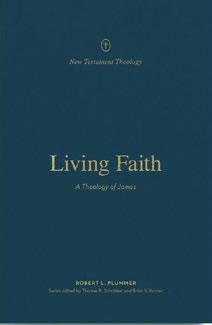
by Robert L. Plummer CROSSWAY
| $19.98
In this volume of the New Testament Theology series, Robert L. Plummer explores the central themes and theology of James, offering insightful connections between this epistle and the broader narrative of Scripture. Through thoughtful and engaging analysis, Plummer examines 6 key themes Jesus Christ, faith and works, trials and temptations, poverty and riches, speech and anger, and prayer and perseverance. Living Faith will ultimately help readers gain a deeper understanding of this beloved letter and its important relevance to Christian life.

by Michael A.G. Azad Haykin BAPTIST COURIER
| $11.95
While the world of the English Reformers and that of the English Puritans may well be, to some extent, foreign countries, they do, nonetheless, contain rich treasures of wisdom for our contemporary walk with God. These four short studies are a great reminder that Christian biography is a great resource for living faithfully in the present day.
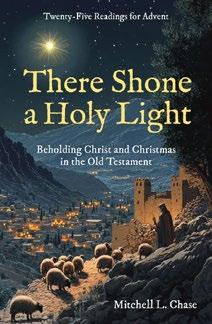
There Shone a Holy Light: Beholding Christ and Christmas in the Old Testament
by Mitchell L. Chase
CHRISTIAN FOCUS | $13.10
Discover the rich tapestry of Christ’s coming woven throughout the entire Old Testament in There Shone a Holy Light, a compelling Advent devotional by Mitchell L. Chase. This unique exploration takes readers on a 25–day journey through the ancient stories, prophecies, and patterns that pointed to the birth of Jesus centuries before that holy night in Bethlehem.
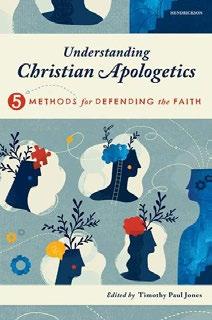
edited by Timothy Paul Jones HENDRICKSON PUBLISHERS
| $19.96
Understanding Apologetics presents in counterpoint form five popular approaches to the defense of the Christian faith that have developed throughout history from the early days of Christianity through to our practices today.
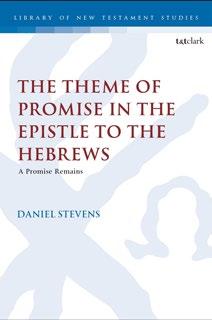

The Theme of Promise in the Epistle to the Hebrews
by Daniel Stevens T&T CLARK
| $110.67
Daniel Stevens analyses the use of the language of divine commitment in the Epistle to the Hebrews, arguing that the author distinguishes promise from the cultic language of covenant to sketch a unique mixture of continuity and discontinuity among the people of God across time.
It is Finished
by
Stephen Wellum
UNION PUBLISHING | $8.09
When Jesus cried “It is finished” from the cross, what did he mean? And why is this so significant today? Ironically, this cry wasn’t about defeat but about triumph. And it wasn’t just good news but the best news ever! Jesus is not simply a notable person from history. He’s the divine Son of God and the living Savior. He meets our greatest need by providing salvation and rescue. He wins our hearts and our adoration, filling us with deep and lasting joy.
edited by Andrew T. Walker
ZONDERVAN ACADEMIC | $19.99
The lack of dialogue between the various schools of natural law has left a historic tradition within Christian moral thought underdeveloped in contemporary Protestant theology. By bringing together a variety of perspectives in much-needed conversation, this book helps readers to understand the various construals of natural law within the broader strands of Christian and classical traditions and clarifies its unique importance for Christian moral witness in a secular culture.
by Brian Vickers LEXHAM PRESS
| $14.21
Jesus asked his disciples this question, and no question is more important. The Gospel of Mark answers by presenting Jesus as the king who suffered and gave his life for us and invited us to take up our cross and follow him. Mark: A 40-Day Bible Study is meditative, gospel-centered, practical, and prayerful.
by James M. Hamilton Jr. BAKER BOOKS
| $18.79
Like an expert diving instructor, pastor and biblical scholar James M. Hamilton Jr. gives you the tools and training necessary to discover the theological treasures found in the literary structure undergirding John’s Gospel. Covering both the overall structure of the book, as well as key repetition of terms, phrases, concepts, and themes, Hamilton helps you understand what John wanted his readers to understand about Jesus’s claims of Old Testament fulfillment, his human and divine natures, the triune nature of God, and more.
by J.T. English
B&H PUBLISHING GROUP
There is one true story that you are invited to live in—the story of the Bible. From Genesis to Revelation the Bible is one true story that invites us to know and love God. But you can’t live in a story you don’t know. Remember and Rehearse will help readers understand the whole story of Scripture. Knowing the true, good story of God combats the false stories the world tells. Through the big movements of Scripture: creation, fall, the covenants, Christ, the Spirit and the Church, and the Kingdom without end, readers will discover the unfolding drama of God’s Kingdom coming to earth and how each of us are invited to be participants.
by Jimmy Scroggins
B&H PUBLISHING GROUP
Author Jimmy Scroggins developed the 3 Circles method as a simple way for people of all ages to understand and share the gospel. In this unique Bible storybook, readers ages 6 to 10 can discover the method’s repeating pattern—God’s Plan, our Fall, and the Very Good News of Jesus—throughout the Bible. They’ll better understand God’s unending love for us and how to share it with others.

Southern Seminary is proud to introduce our new online PhD in Christian Studies, tailored for ministry leaders and pastors who are passionate about both scholarship and practical ministry. This program provides a new opportunity to engage in rigorous academic study completely online. The PhD in Christian Studies combines the flexibility of online learning with the rigorous academic standards that Southern Seminary is known for, making it accessible to leaders worldwide.
An Article by Travis Hearne
“Study with the authors” remains one of the primary motivations for students worldwide to enroll at The Southern Baptist Theological Seminary (SBTS). Every year, the faculty at Southern Seminary publishes across a variety of disciplines, addressing scholars, pastors, and laypeople from confessional convictions. But an actively publishing faculty is nothing new for the institution. Since the seminary’s founding, students have benefitted from a faculty committed to writing what they teach and teaching what they write. This article provides a guided tour through some of the formidable works produced by faculty members at Southern Seminary, highlighting how their legacy continues into 2025 and beyond.
First published in 1887, Southern Seminary’s founding president produced his seminal Abstract of Systematic Theology based on his class lecture notes. The book was initially published for students as a textbook, but as the 1880s unfolded, he refined the book for a public audience.
Associate Librarian at Southern Seminary, Jake Stone, has focused his scholarly and popular work on understanding Boyce and his times.
“Boyce’s Abstract of Systematic Theology is really the last of its time for well over a century,” Stone said. “His Abstract is in many ways a baptized version of his teacher, Charles Hodge’s, Systematic Theology. Boyce taught theology with a scholastic and confessional approach. This is important because
Boyce demonstrated that Baptist identity and theology in the late nineteenth century cared about the Protestant tradition of confessionalism and normal life in Baptist churches.”
Numerous authors, including B. B. Warfield, glowingly reviewed Boyce’s Abstract, and the work found its way into the curriculum at other Baptist seminaries.
“The work still holds up today,” Stone said. “The strongest part that is still applicable today is Boyce’s argument for theological method. It’s a three-legged stool: how we exegete, how we put systematics together, and then how to apply what he calls ‘ecclesiastical dogmatics,’ which are the creeds and confessions, and how the church has historically
understood dogmatics. For Boyce, a good systematic theologian uses all three.”
The current Systematic Theology department at Southern Seminary stands in line with Boyce as they contribute to the field from a confessional Baptist perspective. Pastors and students alike read the works of authors such as Stephen Wellum and Gregg Allison. Wellum’s Systematic Theology, volume one, is soon to be complemented by the forthcoming volume two, and Allison’s Sojourners and Strangers (2012) remain accessible and rigorous academic achievements that continue to shape Baptist churches.1
If Boyce served as Southern’s premier contributor in theology, then John A. Broadus is the primary contributor to biblical interpretation and preaching, as evidenced by his commentary on Matthew and The Preparation and Delivery of Sermons.
Thousands of students learned to preach from Broadus’s The Preparation and Delivery of Sermons. The book remained in the curriculum of Southern Baptist seminaries until the mid-twentieth century.
President of SBTS, R. Albert Mohler Jr., wrote the foreword for the newly reprinted first edition of Broadus’s work from Southern Seminary Press.
“Broadus was committed to the exposition of the Bible.” Mohler wrote. “He believed in the total truthfulness and authority of the Bible as the Word of God, and he sought to teach preachers to respect, love, study, and preach that Word.”2
In centering the role of training preachers, professors Hershel York and Abraham Kuruvilla write for the church. York’s recent book, Pastor Well, faithfully navigates pastors and aspiring
1 Stephen J. Wellum, Systematic Theology: From Canon to Concept, vol. 1 (Nashville: B & H Academic, 2024).
2 R. Albert Mohler Jr., foreword to A Treatise on the Preparation and Delivery of Sermons, by John A. Broadus (Louisville: Southern Seminary Press, 2025), 8.
pastors through the most pressing questions church leaders encounter. Kuruvilla’s latest work, Glory to Glory, combines the technical and academic side of homiletics to equip preachers to understand the importance of sanctification in the life of believers.
Timeless works of scholarship retain relevance through generations because the arguments are substantive and the communication clear, even though A. T. Robertson’s 1,454 words in work A Grammar of the Greek New Testament in the Light of Historical Research first appeared in 1914; scholars still cite him regularly.
Robert L. Plummer is Chair of the Department of New Testament at Southern Seminary and dedicated his own intermediate Greek grammar to the legacy of Robertson.
“Our hope is that Robertson’s desire for capable preachers of God’s Word in his generation is facilitated through this volume for yet another generation of students and communicators of God’s Word,” Plummer wrote, alongside Andreas J. Köstenberger and Benjamin L. Merkle.3
Robertson never dismissed the importance of seminary education. His notoriously difficult Greek exams sought not to discourage students, but to raise them up to understand the magnitude of their task as teachers of the Bible.
“Not only was Robertson a man zealous for Greek,” Plummer said. “More importantly, he was passionate about the significant difference that knowing Greek can make for those who preach and teach God’s word… . Robertson had a deep passion to
3 Andreas J. Köstenberger, Benjamin L. Merkle, and Robert L. Plummer, Going Deeper with New Testament Greek: An Intermediate Study of the Grammar and Syntax of the New Testament (Nashville: B & H Academic, 2020), 7.
equip gospel ministers whose hearts were impassioned and whose minds were enlightened.”4
Plummer and Merkle’s latest book, Greek Word Studies for Everyone: An Easy Guide to Serious Study of the Bible, contains the same vision of the man whose shoulders he stands on.5
Tom J. Nettles: Historian for the Church
Amid theological controversy, the essential arguments that shape the conversation may include works of theology, biblical interpretation, and various philosophical studies. Occasionally, as was the case in 1980 and the conservative resurgence within the Southern Baptist Convention, historical arguments move the needle.
Before Tom J. Nettles joined the Southern Seminary faculty, his work with Russ L. Bush, Baptists and the Bible, laid the intellectual and historical foundation for the return to biblical fidelity in the SBC. Nettles and Bush demonstrated that the inerrancy of Scripture remained the historic norm among Baptists in history. By refuting the assertions of SBC moderates, Nettles paved his own way to teach at Southern Seminary, as his work shifted the scholarly conversation and renewed commitment to inerrancy in the life of Southern Baptist seminaries and churches.
This past year, church historians John D. Wilsey and Stephen Presley, from Southern Seminary, each wrote books to encourage Christians toward a more faithful witness. Wilsey’s Religious Freedom: A Conservative Primer helps Christians navigate citizenship from a Christian worldview, while Presley’s Biblical Theology in the Life of the Early Church
4 Köstenberger, Merkle, and Plummer, Going Deeper with New Testament Greek, 8.
5 Benjamin L. Merkle and Robert L. Plummer, Greek Word Studies for Everyone: An Easy Guide to Serious Study of the Bible (Nashville: B & H Academic, 2025).
draws from ancient Christian wisdom to renew modern churches.6
Thomas R. Schreiner: Teacher for Teachers
Thomas R. Schreiner produces book after book and article after article so that his output and the clarity of his thinking stand at the forefront of evangelicalism. His 1998 commentary on Romans and his 2001 book, Paul, Apostle of God’s Glory in Christ: A Pauline Theology, received second editions and have found their way into countless scholarly works, pastoral libraries, and hearts of Christians everywhere.7
In many ways, Schreiner represents the vision of the seminary’s founding in his commitment to teaching and training leaders for the church.
Drawing from Boyce’s Three Changes in Theological Education, Stone reflected on what it means to study with the authors.
“The works published by the faculty here have been hammered out and refined in two places—the classroom and the church,” Stone said. “These authors have their students in mind when they teach, but also their congregations. Studying with the authors reveals how the academy and the church work in tandem. The works published at this institution are for both spheres of influence.”
To study with the authors is never an excuse for lazy research. According to Boyce, the seminary was to be a place of great research, but that was never at the expense of remembering the average Baptist layman
6 John D. Wilsey, Religious Freedom: A Conservative Primer (Grand Rapids: William B. Eerdmans, 2025); Stephen O. Presley, Biblical Theology in the Life of the Early Church: Recovering an Ancient Vision (Grand Rapids: Baker Academic, 2025).
7. Thomas R. Schreiner, Romans, 2nd ed., Baker Exegetical Commentary on the New Testament (Grand Rapids: Baker Academic, 2018); Thomas R. Schreiner, Paul, Apostle of God’s Glory in Christ: A Pauline Theology, 2nd ed. (Downers Grove, IL: IVP Academic, 2015).
who is living their life out every day for the glory of God.
“The institution would not exist without the churches,” Stone said. “Teachers had to be able to communicate with the average churchgoer who had been entrusted to their care. That has always been the beauty of Southern Seminary’s vision.”
Broadus wrote for the “well-informed Sunday School teacher” who needed extra help. That’s what Southern Seminary has always been about—helping the well-informed Sunday School teacher through the output of its faculty.
Do not be conformed to this world, but be transformed by the renewal of your mind, that by testing you may discern what is the will of God, what is good and acceptable and perfect.
ROMANS 12:2
Why a PhD at Southern Seminary Is More than Classwork: SBTS Students Attend APL Conference with John D. Wilsey, Receive Edmund Burke Fellowships by
Travis Hearne
John D. Wilsey and a car full of his PhD students finally arrived at the National Mall in the heart of Washington, D.C. They were meeting me and a couple of other students who came to visit the sites after a full day at the Academy of Philosophy & Letters conference.
At Southern Seminary, the Bible’s Original Languages Are Alive and Well: Recapping the 2025 Greek and Hebrew for Life Conferences by
Travis Hearne
The Southern Baptist Theological Seminary welcomed 225 students, pastors, scholars, and laypeople from across the country for its 2025 Greek and Hebrew for Life Conference.
Christ the Only Foundation: Mohler’s Charge at Fall Convocation by
Jacob Percy
The Fall 2025 convocation at The Southern Baptist Theological Seminary and Boyce College marked the beginning of a new academic term, celebrating the new while grounding all the work of the seminary and college in the unchanging Christian faith.
Advancing the Gospel: Heritage Classic Raises $241K for Future Ministers by
Travis Hearne
The Southern Baptist Theological Seminary is giving thanks to the Lord and to faithful supporters for the success of the 22nd annual Heritage Classic Golf Tournament, held Monday at Big Spring Country Club.
JULY 1, 2025
JULY 29, 2025
AUGUST 27, 2025
AUGUST 29, 2025

The Best Backyard: How the Parsons Raise a Family and Grow in Christ at SBTS
by Travis Hearne
Choosing to go to seminary does not have to mean choosing education at the expense of family. In fact, seminary can help families flourish as they grow in knowledge and the grace of God alongside a Christ-centered community.
Answering the Call: Nearly 100 Students Join Jenkins Center Evangelism to Reach Muslims
by Travis Hearne
The Jenkins Center for the Christian Understanding of Islam launched its first monthly evangelism outing of the semester on August 30, drawing nearly 100 students from Southern Seminary and Boyce College to share the gospel of Jesus Christ across Louisville.
Southern Seminary’s Jason Heath Receives Patriot Award for Supporting Military Service
by Jacob Percy
Jason Heath, Vice President of Campus Technology at The Southern Baptist Theological Seminary, was presented with the Employer Support of the Guard and Reserve (ESGR) Patriot Award on Tuesday, October 1, 2025.
SEPTEMBER 29, 2025
Read the full articles at sbts.edu/news
OCTOBER 2, 2025
OCTOBER 8, 2025
with Albert Mohler
The Briefing is a daily analysis of news and events from a Christian worldview. Each weekday, President R. Albert Mohler, Jr. helps listeners think biblically about culture, politics, and the moral challenges of our time.

with Albert Mohler
Thinking in Public is a series of conversations with the day’s leading thinkers. In each episode, Dr. Mohler engages writers, scholars, and public intellectuals on the ideas shaping the church and the world.
with Albert Mohler
In the Library features Dr. R. Albert Mohler, Jr. in long-form conversations with leading authors, scholars, and cultural thinkers on ideas shaping the world today.
From global missions to biblical theology to cultural analysis, these podcasts reflect the theological depth and Great Commission heartbeat of Southern Seminary and Boyce College.
Hershael York
Hosted by Dr. Hershael York, pastor and longtime preaching professor at Southern Seminary, The Pastor Well Podcast offers reflections on ministry drawn from decades of pastoral experience. Available in both audio and video, each episode offers biblical insight and practical encouragement for those called to shepherd the church.

Paul Akin
Hosted by Dr. Paul Akin, Provost of Southern Seminary, Amazon to the Himalayas highlights the work of the global church and the unstoppable mission of God. Each Wednesday, listeners hear stories from the frontlines and conversations that inspire faithfulness in the Great Commission.
Bible Talk is a podcast from 9Marks and Southern Seminary. Tune in each week as Jim Hamilton, Sam Emadi, and Alex Duke have accessible conversations about the Bible and biblical theology—showing how the whole Bible fits together and points to Christ.
A Chapel Message from Kyle Claunch
Kyle Claunch is Associate Professor of Christian Theology at The Southern Baptist Theological Seminary. Dr. Claunch preached this sermon in Alulmni Chapel on September 23. What follows is a lightly edited transcript prepared for Lexington Road. To watch the full sermon, visit youtube.com/southernseminary.
As we turn to Matthew 26:36-46 this morning, we encounter one of the most significant moments in all of Scripture—the last Adam facing the trial of temptation in a garden, where he would emerge triumphant over the flesh and the devil.
Matthew 26:36-46 tells us:
Then Jesus went with them to a place called Gethsemane and he said to his disciples, “Sit here while I go over there and pray.” And taking with him Peter and the two sons of Zebedee, he began to be sorrowful and troubled. Then he said to them, “My soul is very sorrowful, even to death. Remain here and watch with me.”
And going a little farther, he fell on his face and prayed, saying, “My Father, if it be possible, let this cup pass from me. Nevertheless, not as I will, but as you will.” And he came to the disciples and found them sleeping...
This moment sets in motion the series of events that brings the
Lord Jesus Christ through betrayal, abandonment, mockery, injustice, brutality, crucifixion, death, burial, resurrection, and ascension. Like a master symphony, the whole Gospel of Matthew has been building to this climactic moment.
My goal this morning is to focus on key pressure points of this text. If we’re reading attentively in light of Scripture’s whole testimony across its entire storyline, we see this passage pressuring us to think carefully about the mystery of the person of Jesus Christ and the glory of the work he accomplishes on our behalf.
Let me invite you to consider four such pressure points from this passage:
1. The Human Nature of the Person of Christ
Throughout church history, this text has been central to reflection upon the mystery of the incarnation. In particular, this passage displays the reality and
genuineness of Christ’s humanity. We see this in two particular ways.
First, we see the sorrowful soul of Christ. The text piles up descriptors—troubled, sorrowful, deeply sorrowful to the point of death—conveying the utter depths of a soul in turmoil, grief, and pain. The Lord Jesus, the Son of God, is genuinely suffering in this moment.
This presents us with a profound mystery: How can he who is truly God experience such deep sorrow? The answer the Bible gives is that he who is truly God took into personal union with himself our very nature. As John tells us, the Word who was “with God” and who “was God” in the beginning “became flesh and dwelt among us.” He who is true God became true man for us and for our salvation.
This humanity was not a farce or partial—it was true and complete. He did not only take a human body, as some false teachers have taught. As a true man, he was fully capable of suffering as we suffer, even in the inner anguish of soul, mind, and will. As the writer of Hebrews explains, “He had to be made like his brothers in every respect so that he might become a merciful and faithful high priest.”
For Christ to save the fullness of our humanity, he had to take on the fullness of our nature. The takeaway is this: when you find yourself sorrowful in soul, facing overwhelming agony and grief, you can cling to this precious truth—your Savior sympathizes with you in your weakness. He has suffered as you have suffered.
Second, we see the submissive will of Christ. He prays, “My Father, if it be possible, let this cup pass from me. Nevertheless, not as I will, but as you will.”
This is not a moment of resistance or rebellion, but it demonstrates clearly that two wills are involved here. There is the will of Christ who says “if there is any other way,” and the will of God concerning whom Christ says, “nevertheless, not as I will, but as you will.”
As the eternal Son sharing one nature with the Father, he shares one divine will with the Father. But in the incarnation, he assumed a human will—a human capacity for willing and choosing. What happens when one will is brought into submission to another? We call it obedience. The apostle Paul tells us that the Son of God took the “form of a servant” and “became obedient to the point of death, even death on a cross.” This account of Jesus praying in the garden narrates one of the more significant moments in Jesus’ obedience to the point of death. And here, Jesus obeys for you and on your behalf. His obedience as the last Adam is credited to you as positive righteousness when you believe in him.
We might ask: Why is Christ so overwhelmed with agony at the prospect of death? In other moments of his ministry, he faced danger without fear. Remember the storm on the sea? The situation is almost entirely reversed. In the garden, Jesus is in emotional distress while the disciples sleep. In the storm on the sea, the disciples panicked while Jesus slept peacefully. They woke Jesus, who then stood and commanded the wind and waves to be still.
Why does Jesus regularly show no fear in the face of mortal danger while showing genuine dread and agony of soul in Gethsemane? The answer is that Jesus knows whom to fear. He himself said, “Do no fear those who kill the body but cannot kill the soul. Rather, fear him who can destroy both body and soul in hell.” What Jesus faces is not only bodily pain and death—horrific as that was—but the very wrath of Almighty God directed against the sins of his people. Jesus knows he’s about to experience the weight of divine wrath.
The reference to “the cup” likely has its roots in Old Testament imagery of the cup of God’s wrath. In Jeremiah 25, God says to the nations: “Take from my
“To deny that Christ paid your penalty is to deny that your penalty has been paid at all.”
hand this cup of the wine of wrath... You must drink.”
This is the cup God presented to Jesus to drink—to bear in himself the weight of the wrath of God. And when Jesus says, “Nevertheless, not as I will, but as you will,” he’s saying, “I will drink it in full.”
And he did. He drank every last drop. So that for you who are in Christ, instead of God saying “you must drink it,” he can say “it has been drunk on your behalf.” Jesus drank it so you don’t have to.
To deny that Christ paid your penalty is to deny that your penalty has been paid at all. Christ died as a penalty under the wrath of God in our place, and he knew what he faced in this moment.
While there is much about Jesus that is utterly unique and cannot be imitated, we also recognize that we are to imitate him in certain ways—in his obedience, in his proper fear of God, and in his prayers.
In Matthew 6, Jesus taught his disciples to pray: “Our Father in heaven, hallowed be your name. Your kingdom come, your will be done...”
In Gethsemane, we see Jesus praying according to the same pattern:
• He addresses God as “Father”
• He’s focused on the kingdom: “if it’s possible” refers to whether the kingdom could come another way
• He surrenders to God’s will: “not as I will, but as you will”
• He seeks deliverance from temptation and evil
Why does this matter? Because we see in Christ that as a man, he felt his dependence upon God. He felt the weakness of his own frailty and finitude. He felt the pressures of the fallen world around him, and he made it a discipline to remind himself of his dependence upon God. He taught us how to pray out of the well of his own experience and perfect wisdom.
Everything about this passage speaks of Jesus’ sorrow, grief, and fear—yet you cannot help but see his resolve—his rock-solid resolve that he will not stray from the will of God.
Contrasted with this is the weakness of his disciples. The very three who went with him into the garden—who had just declared they would never fall away—cannot stay awake for even a single hour, though Jesus has expressed to them the weight of the moment.
Their weakness foreshadows what Jesus predicted: they will all abandon him. If the coming of the kingdom and the salvation of God’s people depended upon the resolve of the apostles, we would all be lost. They’re unreliable, their nature fallen and weak.
But this is precisely the Christian life. This is what unbelievers need to see and believe, and what believers
need to continue to believe: I have nothing to offer to God on my own. Left to my own devices, all I will do is fail.
Yet here’s the other side: the very same one who succeeded where they failed has now given you the same resources—the Holy Spirit who empowered him for his mission. Your mission is different, but the same Spirit is in you, empowering you to find success as you fight against trials of temptation.
What this takes is having rightly ordered loves and rightly ordered fears. The evil one wants to destroy you through temptation, to rob you and diminish your effectiveness for the kingdom of God. You are like these disciples—you will fail and be weak unless, by saying to the Lord “not my will, but yours be done,” you constantly order your life by the power of the Holy Spirit.
Conclusion
This climactic moment in Matthew’s Gospel and in all of redemptive history calls us to consider the human nature of the person of Christ, the substitutionary nature of his suffering, the exemplary nature of his prayer, and the weak nature of his disciples.
My prayer is that in all of it, you will look to Christ alone as Savior and trust in his Spirit. Watch and pray that you enter not into temptation.
If you are not yet a follower of Christ, today could be the day of salvation. Believe in the Lord Jesus Christ, who drank the bitter cup reserved for you.
For those who are his followers, may we be made mindful through God’s Word and by his Spirit to watch and pray, and to go and live faithfully for his glory.

Lexington Road is a resource from Southern Seminary and Boyce College—named for the road our campus has called home since 1926. From this place, faculty have trained generations of church leaders with biblical truth and theological clarity. This resource continues that legacy, offering timely articles that equip the church and reflect the kind of biblical conviction and theological clarity essential for faithfulness in all of life—so that the people of God “may be perfect, throughly furnished unto all good works” (2 Tim 3:17).