
Official Publication of the San Antonio Bar Association May–June 2023 Judge Jefferson Moore: A Man with World Views and Exciting Life Experiences








Get started at lawpay.com/saba 866-730-4140 TOTAL: $1,500.00 New Case Reference **** **** **** 9995 *** Trust Payment IOLTA Deposit YOUR FIRM L OGO HERE PAY AT TO RNEY PO WE R ED BY 22% increase in cash flow with online payments Vetted and approved by all 50 state bars, 70+ local and specialty bars, the ABA, and the ALA 62% of bills sent online are paid in 24 hours Data based on an average of firm accounts receivables increases using online billing solutions. LawPay is a registered agent of Synovus Bank, Columbus, GA., and Fifth Third Bank, N.A., Cincinnati, OH. Trusted by 50,000 law firms, LawPay is a simple, secure solution that allows you to easily accept credit and eCheck payments online, in person, or through your favorite practice management tools. Member Benefit Provider I
LawPay!
–Law
in
+
love
I’m not sure why I waited so long to get it set up.
Firm
Ohio
DEPARTMENTS
17 Book Review: The Rio Grande Sniper Killings: Caught in the Sights of a Drug Conspiracy
Reviewed by Magistrate Judge Henry Bemporad
27 Fourth Court Update
By
Justice Luz Elena D. Chapa
28 Federal Court Update
By Soledad Valenciano, Melanie Fry, and Jeffrie Lewis
contents
ON THE COVER
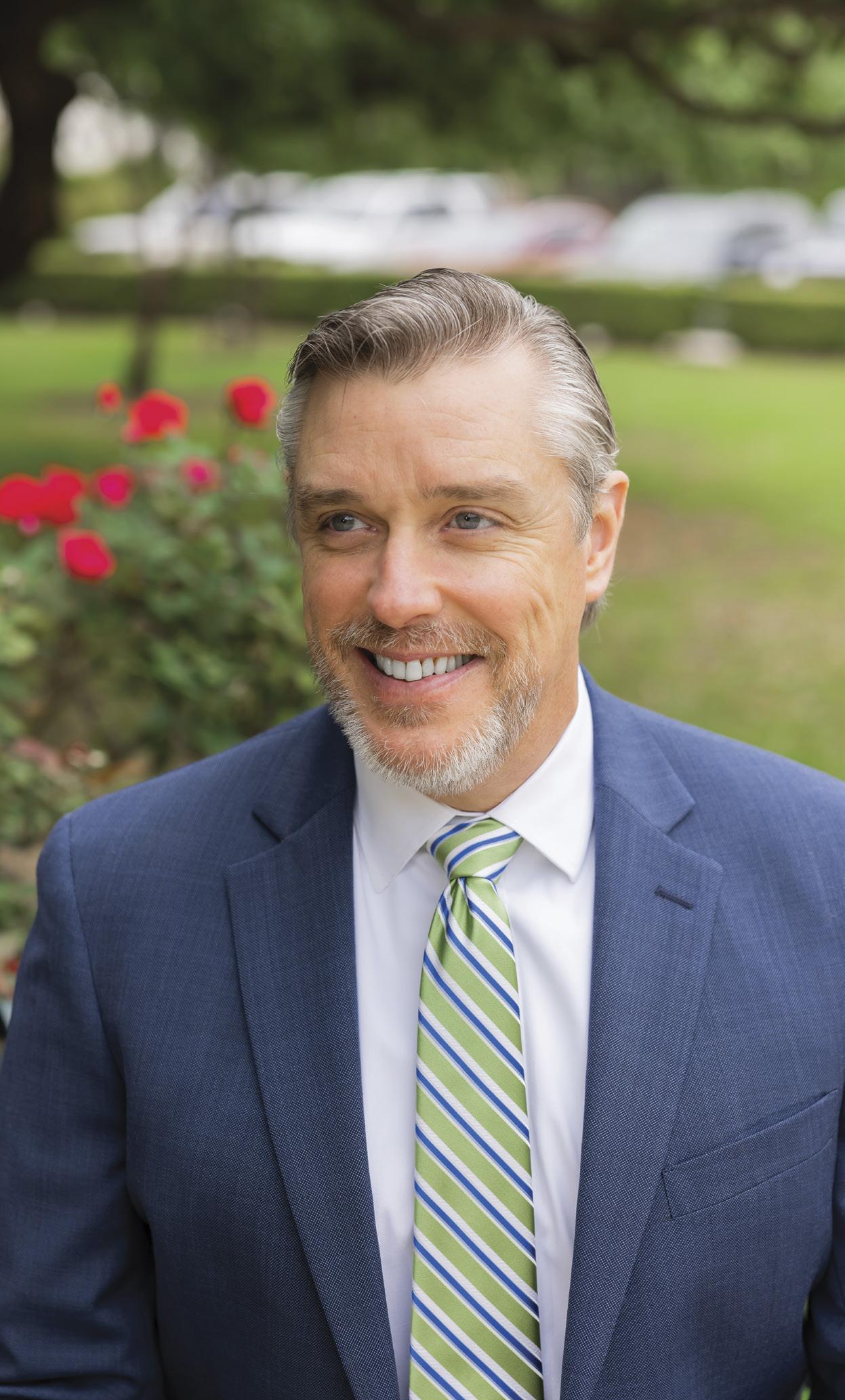
6 Judge Jefferson Moore: A Man with World Views and Exciting Life Experiences
 By Cynthia Orr
FEATURES
12 The Trial of Sam Sheppard Part III: The Appeal
By Mark J. Phillips and Aryn Z. Phillips
18 Famous American Judges: Justice Oliver Wendell Holmes, Jr.
By Harry Munsinger
23 Bocas Cerradas— No Mas! The Reemergence of Emmett Till
By ileta A. Sumner
May–June 2023 | San Antonio Lawyer® 3
Judge Jefferson Moore at the Landa Library
6
Photo by Mewborne Photography
®
Official Publication of the San Antonio Bar Association
San Antonio Lawyer® is published bimonthly. Copyright ©2023 San Antonio Bar Association. All rights reserved. Republication of San Antonio Lawyer content, in whole or in part, is prohibited without the express written permission of the San Antonio Bar Association. Please contact Editor in Chief Sara Murray regarding republication permission.
Views expressed in San Antonio Lawyer are those of the authors and do not necessarily reflect the views of the San Antonio Bar Association. Publication of an advertisement does not imply endorsement of any product or service. San Antonio Lawyer, the San Antonio Bar Association, and the Publisher reserve the right to edit all materials and assume no responsibility for accuracy, errors, or omissions. San Antonio Lawyer and the Publisher do not knowingly accept false or misleading advertisements or editorials, and do not assume any responsibility should such advertising or editorials appear.
Contributions to San Antonio Lawyer are welcome, but the right is reserved to select materials to be published. Please send all correspondence to info@sabar.org
Advertising Inquiries: Monarch Media & Consulting, Inc.
Archives of San Antonio Lawyer are available at sabar.org. Send address changes to the San Antonio Bar Association.

Mediation Booking: DonPhilbin.com


Scheduling Assistance: (210) 212-7100
“His grasp of the forces that drive a successful mediation is always spot on.”
“A real thinker and innovator”
“One of the smartest, most talented mediators I know”
“Lots of really innovative and clever ideas for helping people close”
“Works hard to ensure the parties are aware of the risks”
Chellie Thompson 512.293.9277
chellie@monarchmediainc.com
EDITORS
BOARD OF EDITORS
Publication Design and Production: Monarch Media & Consulting, Inc.
Editor in Chief Sara Murray
Articles Editor Natalie Wilson
Departments Editor Leslie Sara Hyman
Editor in Chief Emeritus
Hon. Barbara Nellermoe
PUBLISHING PARTNER
Monarch Media & Consulting, Inc. 512.293.9277 | monarchmediainc.com

Design Direction
Andrea Exter Design Sabrina Blackwell
Advertising Sales
Chellie Thompson
Sara Murray, Chair
Pat H. Autry, Vice-Chair
Barry Beer
Amy E. Bitter
Ryan V. Cox
Paul Curl
Shannon Greenan
Stephen H. Gordon
Leslie Sara Hyman
Rob Killen
Thomas Lillibridge
Rob Loree
Lauren Miller
Curt Moy
Harry Munsinger
Hon. Barbara Nellermoe
Steve Peirce
Donald R. Philbin

Clay Robison
Regina Stone-Harris
ileta! Sumner
Natalie Wilson
Ex Officio
Donna McElroy
Chellie Thompson
For information on advertising in San Antonio Lawyer: Call 512.293.9277
Chellie Thompson, Monarch Media & Consulting, Inc. chellie@monarchmediainc.com
100 Dolorosa, Suite 500, San Antonio, Texas 78205 210.227.8822 | sabar.org
OFFICERS / DIRECTORS
President
Donna McElroy
President-Elect
Steve Chiscano
Treasurer
Patricia “Patty”
Rouse Vargas
Secretary
Nick Guinn
Immediate Past President
Lawrence Morales, II
Directors (2021-2023)
Kacy Cigarroa
Tiffanie Clausewitz
Grant McFarland
Jaime Vasquez
Directors (2022-2024)
Emma Cano
Charla Davies
Charles "Charlie" Deacon
Jorge Herrera
Executive Director
June Moynihan
STATE BAR / SA BAR FOUNDATION
State Bar of Texas Directors
Tom Crosley
Lawrence Morales, II
San Antonio Bar Foundation Chair
Lawrence Morales, II
LOCAL BAR ASSOCIATIONS
Association of Corporate Counsel South/Central TX
Bexar County Women’s Bar Association
Christian Legal Society
Defense Counsel of San Antonio
Federal Bar Association—San Antonio
Mexican-American Bar Association—San Antonio
San Antonio Black Lawyers Association
San Antonio Criminal Defense Lawyers Association
San Antonio Trial Lawyers Association


San Antonio Young Lawyers Association
TEX-ABOTA, American Board of Trial Advocates—San Antonio
William S. Sessions Inn of Court
4 San Antonio Lawyer® | sabar.org

Investment management services and trust services are o ered through Frost Wealth Advisors of Frost Bank. Investment and insurance products are not FDIC insured, are not bank guaranteed, and may lose value. Brokerage services o ered through Frost Brokerage Services, Inc., Member FINRA/SIPC, and investment advisory services o ered through Frost Investment Services, LLC, a registered investment adviser. Both companies are subsidiaries of Frost Bank. Additionally, insurance products are o ered through Frost Insurance. Deposit and loan products are o ered through Frost Bank, Member FDIC. Visit us at frostbank.com or call (210) 220-5016 At Frost, we take the time to build relationships with our customers. After all, we think it’s the only way to help them best manage, protect and distribute the assets they’ve worked hard to acquire over a lifetime. Whether your clients need probate or trust administration, real estate or mineral management, special needs trusts or anything in between, we’re here to help. We don’t just build a plan. WE BUILD RELATIONSHIPS.
Judge Jefferson Moore

A
Man with World Views and Exciting Life Experiences
By Cynthia Orr
6 San Antonio Lawyer® | sabar.org
Judge Jefferson Moore at the Landa Library
Photo by Mewborne Photography
When you ask a child of a military family where home is, invariably the answer is “nowhere” or “everywhere.” Most were born in towns or cities where they did not stay long. Some were born on a temporary assignment. One thing you know for sure about military kids, though, is that—when they are grown— they will choose a place they truly love to call home.
So it is with Judge Jefferson Moore, who was born in Charleston, South Carolina, and now calls San Antonio his home. The secondborn of twins, he has two other older brothers and two younger sisters, so he is one of five siblings in all. His parents met when his dad was attending the United States Naval Academy. His mother was from New Orleans, his father from Denver, and they now live just north of New Orleans. He is close with his family and especially with his fraternal twin Patrick, enjoying a friendly competition about their respective positions in the law. While Patrick was born just ahead of him and is a successful administrative law judge in Louisiana, Judge Moore is quick to smile and point out that he was the first lawyer in the family. If you know Judge Moore at all, this will not surprise you. He is a modest, self-effacing, and amiable person who thrives on making jokes at his own expense.
In his formative years, Judge Moore attended an all-boys school, where he learned integrity, manners, professionalism, to wear a tie and jacket every day, and a little bit about self-reliance. He went on to hone these characteristics through a trying and difficult life, and they show in his bearing, judicial temperament, and unwavering collegiality. Never a bully or unprofessional on the bench, and never arrogant or presumptuous at bar functions, he gives grace to all around him.

After boarding school, Judge Moore traveled the world before settling in San Antonio. He was in the military, gained secret security clearance, overcame tremendous challenges to pass the bar exam, survived a lifethreatening illness, prosecuted in Louisiana under the Napoleonic Code, became licensed to practice law in Texas, was a private defense lawyer, and then became a judge here. He also found the love of his life and married here. He met his wife Aida Rojas Moore at a legal social event, “Magic is the Night,” and says it was a magical evening. She is a Democrat, he a Republican, and they hit it off immediately. They share a love of their families, especially their grandchildren, elegant bar events, and the outdoors—not only hiking and camping, but also hunting.
Before arriving in San Antonio, Judge Jefferson Moore lived an adventurous life. He served in many capacities in the military, traveling the world, learning other languages, and meeting folks from all walks of life in many countries and from many cultures. He says his time in the military taught him about the goodness of everyday people, and he says that those experiences taught him how to judge a person’s

situation and make sentencing decisions in criminal cases based upon an individual’s circumstances.
In 1982, he went to Tulane University in New Orleans, where he studied business administration and was in the Reserve Officers’ Training Corps (ROTC). Two years after graduating, he went to law school and aspired to be a trial lawyer. He attended Loyola University of New Orleans College of Law. He was an engineer for the Army and the National Guard during law school. He served on Guard duty, clerked for a criminal defense lawyer, and provided appellate work for several district attorney offices in the region, where he says he saw a lot of mistakes made. He also enjoyed seeing a lot of his writing picked up in the judges’ opinions. In the lead up to his taking the bar exam, and just after the operation that deposed Panamanian military dictator General Manuel Noriega, he was training for and deployed to Panama and Bolivia with the Army. General Noriega was ultimately charged with drug trafficking and convicted in the United States along with Pablo Escobar. Needless to say, Judge Moore got little time to study during his assignment. Even still, he passed!
On January 2, 1992, he became an Assistant District Attorney in Orleans Parish, taking his first job with then-elected District Attorney Harry Connick. Recounting how much the practice has changed, he recalls prosecuting before the Internet existed. Contacting witnesses and victims was often difficult, he says. When people moved or their phone numbers changed, he would have to rely upon the United States Postal Service, hoping that the people his case depended on had put in a change of address with the Post Office. The fact that Harry Connick was his boss brought additional color to his job. Sometimes Harry Jr., a famous actor and singer, and Mr. Connick’s son, would come into the office, causing all the women there to swoon.
While the lack of modern-day technology made it difficult to practice, he says the limitations taught him that professionalism makes the day, and that diplomacy is important when interacting with anyone connected to his case. He also learned that the clerks, bailiffs, and staff were the people in the system with the real power. “So many times,” he says, “lawyers are short with staff or will even snap at a judge. They’ll show up late to court and casually lie. But this lack of professionalism reflects on these lawyers, and actually hurts their clients and their own reputations.”
He learned how to try cases in those salad days, he says, even working for a time in the juvenile division. He tried 110 cases in 2.5 years. He recalls one judge who yelled and remembers telling himself that he would never conduct himself in that manner. He says that, in his experience, judges who yell are typically the same judges that do not know the law very well.

May–June 2023 | San Antonio Lawyer® 7
Judge Jefferson Moore learned the values of integrity and professionalism in school and in the Army before becoming a lawyer.
• HIPPA Compliance (TX HB300 applies)
• Cloud: storage, files, computers, servers
• Computers: repairs, upgrades, purchases, encryption
• Servers: setup, repairs, maintenance, purchases
• Email: domains, migration, backup, encryption
• Office 365: email, OneDrive, backup and Office software
• VoIP phones: includes Quality of Service (QoS) and backup internet
• Network: devices, setup, repairs, maintenance
• Call when you need us or customized service options available
• Remote and on-site support, antivirus programs, virus removal, maintenance

www.pstus.com
210-385-4287
After he practiced law for twenty years, Judge Moore says he realized he would never know all the law. So, he says, he got comfortable with the fact that he would continue learning throughout his legal career and is always ready to pick up and consult a law book whenever necessary. He says this is what it means to be a good lawyer and an even better judge.
In the Army, he was an engineer, and it was there that he learned to blow up roads and buildings. But after serving as an engineer and working as an assistant district attorney for a few years, he decided to change both his legal and military careers by applying for admission into the United States Army Judge Advocate General (JAG) Corps. He left New Orleans for active duty as a military lawyer. Following his graduation from the Army JAG Corps basic school, he volunteered to go to Fort Benning paratrooper school. He was a captain and a lawyer, surrounded by 500 infantry and sergeants. He had to answer to his enlisted instructors, but he was also a captain, so ironically they had to call him, “Sir.” They would ask him legal questions that he could not answer, and as punishment for his not knowing the answers, he would have to do extra push-ups. He also admits that, during this time, he jumped out of perfectly good airplanes. After jump school, he reported to the 101st Airborne Division (Screaming Eagles). There, he attended the United States Army Air Assault School and received helicopter training, learning to work with different landing zones and to dangle from a rope dropped down from a helicopter. He got to do things that he had never dreamed of doing. He also remembers learning that very nice people would join him in teamwork that led to great results, whether they had GEDs or advanced degrees. He says this experience made him a better lawyer because he learned how to talk to people and work with them. “When speaking to a jury,” Judge Moore says, “you need to be able to talk to people from all walks of life. Whether a plumber, electrician, or a chef, people are intelligent and capable.”


Judge Moore’s work in the military also saw him deployed to Egypt. He spent six months in the Sinai with an International Force comprised of Americans, Italians, French, Fijians, Dutch, Hungarians, Colombians, and Australians. He was an American lawyer for an American battalion handling disciplinary matters for them and advising the service on international matters in Egypt and Israel. As Judge Moore explained, “We were serving as a buffer between Israel and Egypt. Israel had captured Sinai, and when they left Egypt, no one was allowed to put any forces there.” He remembers that summers were very hot—up to 135 degrees during the day and in the 80s at night. Because of the heat of the day, those 80s at night felt very cold. He climbed Mount Sinai and visited Petra, the Dead Sea, the Sea of Galilee, and the Red Sea. After he got back to Fort Campbell, Kentucky, he was sent to South Korea, which was quite a change in atmosphere due to the extreme cold. There was thick ice on the roads in Korea, he says, and he remembers the contrast when, in the same deployment, he would be sent to nearby Japan, warmed by the Pacific. He learned to read Korean while he was there and performed courts-martial.1 While in Asia, Judge Moore took a trip to Tokyo, visited Australia and Thailand, and spent time in Bangkok, including the jewelry district.
From there, he was set to move back stateside and recalls he had a big decision to make. For the first time in his life, he was choosing where he would live and stay, where he would call home. He wanted a military facility that was near a sizable city, and Fort Sam Houston in San Antonio, Texas, quickly became his top choice. He came here sight unseen, found that he liked the city, and of all the places in the world he had to choose from, he found that he truly loved Texas.
Judge Moore gained a reciprocal license to practice law in Texas, even though he had a degree in Napoleonic law and never took the Texas bar exam. As a government lawyer for ten years, he remembers he

8 San Antonio Lawyer® | sabar.org
support@pstus.com
with:
We can help
Judge Moore’s experience as an Army Engineer and lawyer took him all over the world.
Judge Moore found a home and the love of his life in San Antonio, but he has not lost his sense of adventure.




May–June 2023 | San Antonio Lawyer® 9 Through the years, ATKG’s Litigation Support team has built strong relationships with noteworthy attorneys across Texas. Isn’t it time you put us to work for you? OUR RELENTLESS PURSUIT OF CLIENT SATISFACTION Internal Control Assessment Fraud Examination Due Diligence Quality of Earnings Analysis Litigation Support Business Disputes and Divorce Expert Witness Forensic Accounting Business Valuation 210.733.6611 atkgcpa.com AStone@atkgcpa.com 9 San Antonio Lawyer® | sabar.org
never thought he would defend criminals. Nevertheless, he did engage in private criminal defense practice, and also did a little family law, labor law, probate, and military administrative law. But he thrived on criminal defense work and enjoyed success in it. It was Jimmy Parks, he remembers, speaking at a continuing legal education program, that taught him the importance of the criminal defense lawyer. “America owes a great debt to criminal defense lawyers,” Judge Moore says, “because they support and give life to the United States Constitution and are the cutting-edge defense between the rule of law and lawlessness every day.” Having fought to defend our Constitution in the Army, he enjoyed being a criminal defense lawyer.

But Judge Moore was not finished with the Army. Twice, he was recalled to active duty to fight in the war on terror. In 2003, he was deployed to Germany and served as the Deputy Chief of International Law for the United States and Africa. It was there that he did secret work. When the Northern Option2 was cut off because Turkey would not grant access, and after the fall of Baghdad, he thought the war was over and asked to go back into private practice. The Army also thought the war was over, and Judge Moore was released back to civilian life.
But these were the early stages of the War on Terror, and the Army was experiencing a high state of flux with personnel management, so the day after Judge Moore came home from Germany, he got called back to active duty. The Army sent him back to Germany, where he was put in charge of the Army Legal Center. He supervised various departments on administrative law, environmental law, and even German labor law; and there he met one of the largest challenges of his life. After a routine dental appointment in 2004, Judge Moore got an infection that spread to his heart. It took him two years to recover, and he barely did, he says. After his dental exam, he became weak and could not catch his breath. He went
Meet your challenges when they’re still opportunities.

RSM US LLP s the U S member firm of RSM International a global network of independent aud t tax and consulting firms V sit rsmus com/aboutus for more informat on regard ng RSM US LLP and RSM International
RSM and our global network of litigation consulting professionals specialize in working with global, national and regional law firms. is focus leads to custom insights designed to meet your specific challenges Our experience, combined with yours, helps you move forward with confidence to reach even higher goals rsmus com/litigation
Judge Moore brought his myriad life experiences to bear in his judicial decisions.
“As a government lawyer for ten years, he remembers he never thought he would defend criminals. But he thrived on criminal defense work and enjoyed success in it.”
on to lose nearly forty pounds. The Army sent him to a local German doctor, which he calls “the best piece of luck.” His German doctor did an echocardiogram and sent him immediately to the emergency room. He had a very serious heart infection and was in congestive heart failure.
Once he was in the German hospital system, local law would not permit him to leave. This law saved his life. At one point he took a terrible turn for the worse and was saved again by a remarkable twist of fortune. The director of the hospital, Dr. Helmut Volkleschlager, was very good friends with an expert heart surgeon, and it was because of this friendship and a phone call, that Dr. Detrick Burnbaum was able to operate in time, repair Judge Moore’s heart, and keep him alive. Judge Moore’s health scares were not over, though. He had a stroke a couple of years later, and is practically blind in one eye.
Judge Moore retired from the Army Reserves after twenty years of service. He had seen a lot of different judges in over twenty years of practice, and he remembers thinking that he knew he could be a good judge himself. In 2014, he was elected a Bexar County District Judge, hearing criminal cases. In 2018, he was unopposed and won a second term. In his time on the bench, Judge Moore


recalls making some tough decisions, especially regarding sentencing—having to decide where people should land. He had prosecuted for ten years and was a defense lawyer for thirteen, but none of it was at tough as this. He had to sentence one man to life imprisonment, and in all his time on the bench rejected only two proposed plea bargain agreements. During sentencing, he listened to both sides carefully and read the reports, he says, and also used his own experience when making a decision. Although he decided not to run for a third term in 2022, he will continue to serve as a visiting judge.
Judge Jefferson Moore is an amiable, humble, and very accomplished person with a gusto for life and interest in new experiences. This author, for one, is grateful he chose to call San Antonio home.

Cynthia Orr is a criminal defense attorney and the managing partner of Goldstein & Orr. Recently, with the San Antonio Bar Association, Cynthia obtained health law reform in Congress for cancer survivors.


ENDNOTES
1A military court action to determine if a service member violated military law.

2The Northern Option “was a major effort of plan development until the government of Turkey denied Coalition requests for support and access to its territory, thus preventing introduction of [the Fourth Infantry Division] from the north [to control Iraq and eliminate weapons of mass destruction].” Peter J. Schifferle, Ed., Bringing Order to Chaos; Historical Case Studies of Combined Arms Maneuver in Large-Scale Combat Operations, Army University Press 2018.
Benefits:
May–June 2023 | San Antonio Lawyer® 11
The University of the Incarnate Word Professional and Continuing Education (PaCE) office offers certifications and training online and in person to help jumpstart your career. Legal Studies offers professional certificates in several legal subjects. Contact the PaCE office! (210) 832-5677 | PaCE@uiwtx.edu • Learn at your own pace • Available 100% online • Flexible monthly payment options • No hidden fees or costs bit.ly/PaCE-LegalStudies _ _ _ _ _ _ _ _ _ _ _ _ _ Advance Your Knowledge in Legal Studies YOUR JOURNEY. OUR MISSION.
Judge Moore celebrated his official retirement in 2022.
The Trial of Sam Sheppard Part III: The Appeal
By Mark J. Phillips and Aryn Z. Phillips
The murder of Marilyn Sheppard in her bedroom during the early morning hours of July 4, 1954, remains one of America’s most notorious unsolved crimes. Young and beautiful, the mother of one child and pregnant with another, her bludgeoning death transfixed a nation. Every circumstance of her death and the nine-week trial of her husband that followed became fodder for an unprecedented crush of newspaper coverage. In what the United States Supreme Court later called “a carnival,” Sam Sheppard was convicted of her bludgeoning death.
Sam Sheppard spent ten years in a maximum-security state penitentiary in Columbus, Ohio. During all of that time, his remaining family and legal team sought to overturn his conviction. On January 3, 1955, the trial court overruled the motion for a new trial, which had been based on numerous erroneous decisions occurring during the trial and deliberation—including
Sam’s arraignment before trial on a capital charge in the absence of counsel; the inability of Sam’s defense attorney William Corrigan to represent him during the inquest; the refusal of the court to change the venue of the trial in the face of massive adverse publicity; the publication of the list of potential jury members in advance of trial; the failure to sequester the jurors during the trial; the trial judge’s decision to set aside a major portion of the courtroom to representatives of the news media; the police seizure of Sam’s house and exclusion of Sam and his representatives from the house for the duration of the trial; and other claims.

On May 9, 1955, the trial court denied a supplemental motion for a new trial on the grounds that Sam’s retained experts had since investigated the house and could demonstrate the presence of blood in the house that did not come from either Marilyn or Sam. In July 1955, the court of appeals affirmed the conviction and the denial of the motion for
a new trial. On May 31, 1956, the Ohio Supreme Court affirmed the court of appeals, with two judges dissenting. On November 14, 1956, the United States Supreme Court denied a petition for certiorari, and subsequently denied an application for rehearing. On September 5, 1960, the Ohio Supreme Court denied an application for habeas corpus.
After six years of fighting on Sam’s behalf, defense lawyer William Corrigan died in July of 1961, and attorney F. Lee Bailey, just a year out of law school, was selected by Sam’s brother Stephen to prosecute the appeal. Bailey was then in his early thirties. Brilliant, talented, and always controversial, he had studied at Harvard but had dropped out in 1952 to join the Marine Corps, where he received aviator wings in 1954. In 1960, he received his law
12 San Antonio Lawyer® | sabar.org
The jury for the Sheppard murder case poses for a picture in the courtroom in 1954. Photo courtesy of Cleveland State University, Michael Schwartz Library, Special Collections.
degree from Boston University, ranked first in his graduating class.
By 1963, Sam and Bailey had moved their arguments to the federal courts. On April 11, 1963, they filed a petition for a writ of habeas corpus in the United States District Court, contending that Sam had not received a fair trial. The district court granted the writ, but the United States Court of Appeals reversed. The matter finally reached the United States Supreme Court, which in the now famous Sheppard v. Maxwell, 384 U.S. 333, 363 (1966), ruled:
Since the state trial judge did not perform his duty to protect Sheppard from the inherently prejudicial publicity which saturated the community and to control disruptive influences in the courtroom, we must reverse the denial of the habeas petition. The case is remanded to the district courtroom with instructions to issue the writ and order that Sheppard be released from custody unless the State puts him to its charges again within a reasonable time.
Bailey argued the case before the United States Supreme Court, where he won the retrial for Sam. The case established Bailey’s
reputation as a skilled defense attorney, and was the first of his many high-profile cases, which included the defense of the confessed Boston Strangler; the defense of United States Army Captain Ernest Medina in the My Lai Massacre court-martial in 1971; the unsuccessful defense of Patty Hearst in her prosecution for armed bank robbery after being kidnapped by the Symbionese Liberation Army; and the acquittal of O.J. Simpson in 1995.The State of Ohio did retry Sam soon after.
At his new arraignment on September 8, 1966, Sheppard loudly pleaded, “Not guilty.” Attorney Bailey was by his side. Unlike in the original trial, this time neither Sheppard nor Susan Hayes took the stand, a strategy that proved to be successful when a not guilty verdict was returned on November 16, 1966.
Sam’s life never returned to the normality it had before the early morning hours of July 4, 1954. Days after his release from prison following the Supreme Court’s decision in the summer of 1966, Sam married Ariane Tebbenjohanns, a German divorcee who had corresponded with him during his time in prison. Tebbenjohanns endured her own bit of controversy shortly after her relationship
continued on page 14
Young and beautiful, the mother of one child and pregnant with another, her bludgeoning death transfixed a nation. Every circumstance of her death and the nine-week trial of her husband that followed became fodder for an unprecedented crush of newspaper coverage. In what the United States Supreme Court later called “a carnival,” Sam Sheppard was convicted of her bludgeoning death.
- efficiently deciphers healthcare language and identifies important missing elements which saves you time
- has the expertise to thoroughly review medical records, provide summaries and perform research at the fraction of the cost of a MD
- can evaluate all of the evidence to form an opinion as to causation and damages, which can help develop the overall case theory and strategy.
Services include:
• Screening cases for merit

• Summarizing and interpreting medical reports
• Defining deviations from and adherence to the standard of care
• Determining if injuries sustained were a direct result of the incident or an exacerbation of a preexisting condition
• Identifying factors that caused or contributed to the alleged damages/injuries
• Locating expert witnesses
• And much more

May–June 2023 | San Antonio Lawyer® 13
Angela Barker RN, BSN, LNC
Risk Free Guarantee with work product If you have a case involving health, injury or illness, Phone: (409) 263-1538 Email: anbarker@CovenantLNC.com Website: www.CovenantLNC.com
A Legal Nurse Consultant Why Hire a Legal Nurse Consultant (LNC)?
100%
Professional
in the Expert. It’s what we do!
Call
continued from page 13
with Sam was announced, confirming that her half-sister was Magda Ritschel, the wife of Nazi propaganda chief Joseph Goebbels. Tebbenjohanns emphasized that she held no Nazi views. Their marriage was short-lived, and they divorced on October 7, 1969.
After his acquittal, Sam co-authored Endure and Conquer, presenting his side of the case and giving insight into his years in prison. F. Lee Bailey wrote the forward. Sam also returned briefly to practicing medicine
in Youngstown, Ohio, but he was sued twice for medical malpractice by the estates of dead patients and left the practice.1 Later, Sheppard enjoyed a brief career as a professional wrestler—in the ring going by the name The Killer and teaming with partner George Strickland in matches across the United States. Just six months before his death, Sheppard married George’s daughter, Colleen Strickland.
Sam died of liver failure on April 6, 1970, having by the end of his life become an alcoholic drinking as much as two fifths
of liquor a day. He was forty-six and had enjoyed his liberty for only four years. He was buried in Forest Lawn Memorial Gardens in Columbus, Ohio, where his body remained until 1997, when it was exhumed for DNA testing as part of the lawsuit brought by his son, Sam Reese Sheppard, to clear his father’s name. After the tests, the body was cremated, and the ashes were laid to rest in a mausoleum at Knollwood Cemetery in Mayfield Heights, Ohio, next to those of Marilyn.
• Experienced, having conducted more than 25,000 mediations since 1989 with more than 850 years’ experience practicing law
• Committed to the mediation process and devoted to the ethical practice of law
• Covered by the AAM Member Insurance Group Policy, an arbitrator and mediator professional liability insurance
Areas of Practice
Appellate Bankruptcy Business/Commercial Civil Rights Condemnation Construction Consumer Education Employment & Labor Entertainment Family Farm & Ranch Health Care Insurance Intellectual Property International Medical Oil & Gas Personal Injury Professional Liability Real Estate Securities Taxation Title Insurance Wills, Trusts & Estates
For more information, contact the local San Antonio Chapter. www.attorney-mediators.org/SanAntonioChapter
Gary Javore - gary@jcjclaw.com
John Boyce, III 210.736.2224
jkbiii@boyceadr.com
Leslie Byrd
210.229.3460
leslie.byrd@bracewell.com
Debbie Cotton
210.338.1034
info@cottonlawfirm.net
Michael Curry
512.474.5573
mcmediate@msn.com
Aric J. Garza
210.225.2961
aric@sabusinessattorney.com
Charles Hanor
210.829.2002
chanor@hanor.com
Gary Javore
210.733.6235 gary@jcjclaw.com
Daniel Kustoff
210.614.9444
dkustoff@salegal.com
J.K. Leonard 210.445.8817 jk@jkladr.com
Cheryl McMullan,
210.824.8120 attyelder@aol.com
Dan Naranjo 210.710.4198 dan@naranjolaw.com
Patricia Oviatt 210.250.6013 poviatt@clarkhill.com
Jamie Patterson 210.828.2058 jamie@braychappell.com
Diego J. Peña 817.575.9854 diego@thepenalawgroup.com
Don Philbin 210.212.7100 don.philbin@adrtoolbox.com
Edward Pina 210.614.6400 epina@arielhouse.com
Richard L. Reed, Sr. 210.451.6920 rreed@coatsrose.com
Wade Shelton 210.349.0515 wshelton@shelton-valadez.com
Thomas Smith 210.227.7565 smith@tjsmithlaw.com
Richard Sparr 210.828.6500 rsparr@sparrlaw.net
John Specia 210.734.7092 jspecia@pg-law.com
Phylis Speedlin 210.405.4149 phylis@justicespeedlin.com
Lisa Tatum 210.249.2981 ltatum@tatum-law.com
William Towns 210.819.7453 bill.towns@townsadr.com
James Upton 361.884.0616 jupton@umhlaw.com
In 1963, ABC premiered The Fugitive, the drama series created by Roy Huggins, starring David Janssen as Richard Kimble, a doctor falsely accused of his wife’s murder and given the death penalty. En route to death row, Kimble’s train derails and crashes, allowing him to escape and begin a cross-country search for the real killer, a one-armed man played in the series by Bill Raisch. The Fugitive was a hit and ran for four seasons, ranked as No. 36 on the TV Guide list of the 50 Greatest TV Shows of All Time. As originally conceived, the story called for the murder of Dr. Kimble’s wife to have been committed by a “red-haired” man, but studio lawyers told Huggins that it was too similar to the “bushy-haired” intruder described by Sam.2
Huggins denied basing the series on Sam Sheppard, although the show’s film editor, Ken Wilhoit, was married to Susan Hayes, Sam’s lover and the star witness in the 1954 trial. The series was remade as a 1993 feature film starring Harrison Ford as Dr. Richard Kimble. Grossing $368,000,000 in box office business from a $44,000,000 budget, the film was a major financial success and was nominated for seven Academy Awards, including Best Picture.
In 1995, Sam’s son, Sam Reese Sheppard, used his father’s estate to file a lawsuit against the State of Ohio for Sam’s wrongful imprisonment. Under state law, Sheppard had to prove that his father was innocent, a far more difficult legal standard than that of Sam’s re-trial, where acquittal was required unless he was found guilty beyond a reasonable doubt. In September of 1997, Sam Reese Sheppard had his father’s remains exhumed in order to conduct DNA testing and exclude Sam’s blood from the bloodstains found in the home. In response, the State of Ohio had the bodies of Marilyn and the fetus she was carrying exhumed in 1999, so that they could perform their DNA tests.
The wrongful imprisonment civil trial commenced in February 2000, with F. Lee Bailey as the first witness. After two months of
continued on page 16
14 San Antonio Lawyer® | sabar.org
Emeritus
Recommended by Judges and Attorneys
SABA LIFETIME ACHIEVEMENT AWARD – JOE FRAZIER BROWN SR. AWARD OF EXCELLENCE | SARA DYSART

SABF OUTSTANDING LAWYER IN COMMUNITY SERVICE – CAROLYN THURMOND AWARD | WILLIAM “BILL” CROW



SABF PEACEMAKER AWARD | EDUARDO JUAREZ

SAYLA OUTSTANDING YOUNG LAWYER AWARD | COLLANNE BRAMBLETT WEST


SAYLA OUTSTANDING MENTOR AWARD | JUSTICE BETH WATKINS
SAYLA LIBERTY BELL AWARD | ANABEL MARTINEZ
INCOMING PRESIDENT | STEVE CHISCANO
OUTGOING PRESIDENT | DONNA MCELROY

6 PM SOCIAL TIME, SILENT AUCTION 7 PM DINNER, AWARDS PROGRAM 9 PM DESSERT ATTIRE EVENING GOWN, COCKTAIL BLACK TIE, DARK SUIT OR SPANISH FLAIR THE SAN ANTONIO BAR FOUNDATION PRESENTS GALA BENEFIT AND AWARDS SEPTEMBER 23, 2023 ROSENBERG SKYROOM 847 E HILDEBRAND AVE, SAN ANTONIO, TX 78212 Celebrating 125 Years of Excellence HONORING
continued from page 14 killed her.
testimony, seventy-six witnesses, and hundreds of exhibits, the jury deliberated just three hours on April 12, 2000, before returning a verdict in favor of the State of Ohio. On appeal, the Eighth District Court of Appeals ruled in favor of the State on the grounds that a wrongful imprisonment claim could be made only by the person actually imprisoned, and not by a family member such as Sam Reese Sheppard. Legal standing to bring such a claim, the court of appeals found, died with the person who had been imprisoned. The appeals court decision was affirmed by the Supreme Court of Ohio later that year.
Nearly fifty years after Marilyn’s brutal murder, the trials finally came to an end. After tens of thousands of transcript pages in the numerous trials, ten books, thousands of newspaper articles, a television series, and a major motion picture, no one knows who
The bludgeoning death of Marilyn Sheppard and the spiraling descent of her husband from respected physician to prisoner and wrestler and finally his ignominious death have fascinated Americans for two generations. Something intangible about the Sheppards, other than just celebrity, combines into an elixir that continues to enthrall. And in that mix it is impossible to separate the story from the storyteller, to determine if the national media found a story of interest to its readers and reported it, or if they fanned a tiny ember into an undeserved firestorm. Jack P. DeSario and William Mason in Dr. Sam Sheppard on Trial—their recounting of the 2000 trial of the civil suit filed by Sam Reese Sheppard, in which Mason was lead counsel for the State of Ohio—write that when the pretrial proceedings got underway
in 1999, the prosecutor’s office was handling several gruesome cases, including that of Mary Jo Pesho, a Parma wife and mother who had been abducted at a mall and tortured, raped, and murdered in the back of a van; and that of Thomas McCarthy, a serial rapist who broke into a young woman’s home, hung her up by her thumbs, and tortured and raped her. Either of these stories would have warranted extensive media coverage, yet when Marilyn’s casket was transported that same year to the coroner’s office for DNA testing, the drive turned into a public spectacle, with fleets of satellite trucks, television vans, and helicopters.3
Ohio Supreme Court Justice Bell captured it well in the opening paragraph of his decision in 1956:
Murder and mystery, society, sex and suspense were combined in this case in such a manner as to intrigue and captivate the public fancy to a degree perhaps unparalleled in recent annals. Throughout the preindictment investigation, the subsequent legal skirmishes and the nineweek trial, circulation-conscious editors catered to the insatiable interest of the American public in the bizarre . . . . In this atmosphere of a ‘Roman Holiday’ for the news media, Sam Sheppard stood trial for his life.4
Mark J. Phillips is a shareholder at the law offices of Lewitt Hackman in Encino, California.


Aryn Z. Phillips, Ph.D. is an assistant professor at the University of Maryland at College Park. Mark and Aryn are the co-authors of Trials of the Century (Prometheus 2016).

ENDNOTES
1Jack P. De Sario and William D. Mason, Dr. Sam Sheppard on Trial 79 (Kent, Ohio: Kent State University Press, 2003).
2Cynthia L. Cooper and Sam Reese Sheppard, Mockery of Justice 30 (New York: Onyx, 1997).
3DeSario & Mason at 3, 51.
4State v. Sheppard, 135 N.E.2d 340, 342 (Ohio 1956).
16 San Antonio Lawyer® | sabar.org
Gallant Computer Investigative Services, LLC David T. Gallant Licensed Texas Private Investigator (A15633) Retired Federal Agent (AFOSI) Court Certified Expert Witness (Federal/State/Military) (210) 271-2999 Titan Building 2700 NE Loop 410, Ste. 301, San Antonio, TX 78217 www.WhatsOnThePhone.com The Proof is in the Data™ Digital Forensics/Cell Tower Geolocation Mapping Cell Phone Records Analysis for MVAs Edward Hodge is a registered representatives of and offers securities and investment advisory services through MML Investors Services, LLC. Member SIPC (www.SIPC.org). Supervisory office: CRN #: CRN202104-241908 I focus on being a resource to Attorneys Ned Hodge nedhodge.com (210) 332-3757 INSURANCE PROFESSIONAL Protect your income, family & business. • Life Insurance • Disability Insurance • Long Term Care Insurance • Home Insurance • Auto Insurance • Health Insurance
The Rio Grande Sniper Killings: Caught in the Sights of a Drug Conspiracy
By John W. Primomo
Reviewed by Magistrate Judge Henry Bemporad
As F. Scott Fitzgerald famously said, “There are no second acts in American lives.” Well, that saying is definitely not true of John W. Primomo. After completing a long and distinguished career of federal service as a well-respected United States Magistrate Judge, Primomo has pursued his second successful career, as an outstanding author of historical non-fiction.
Judge Primomo’s books reflect his wide interests. His first, The Appomattox Generals (2013), told the stories of the parallel lives of Joshua L. Chamberlain of Maine and John B. Gordon of Georgia, who represented the Union and Confederate armies at the formal surrender ceremony at Appomattox Courthouse on April 12, 1865. His second, Architect of Death at Auschwitz (2020), was a biography of Rudolf Hoss, the longest-serving Auschwitz commandant, and often considered the worst mass murderer in the history of the world. But Judge Primomo’s latest book, The Rio Grande Sniper Killings: Caught in the Sights of a Drug Conspiracy, may be his best yet.
A gripping tale of drug dealing, witness intimidation, and murder, The Rio Grande Sniper Killings reads like a fictional script written for a combination Law and Order episode and Quentin Tarantino movie. Yet it is a true story, one which ended up as a notable 1980s federal criminal case, tried right here in the Western District of Texas.
The Rio Grande Sniper Killings centers on the senseless and tragic deaths of Charlotte Elliott and Kevin Frase, two young bystanders shot by Lloyd Walker, an amateur assassin hired to murder a federal grand jury witness. Walker fired a rifle into Pepe’s On the River, a popular outdoor bar in Mission, Texas, right on the Rio Grande. He missed his target, but killed Elliott and Frase in the process. The story of killings, the Austin drug case that led up to them, and the federal murder prosecution that followed, is both complex and fascinating. In telling it, Judge Primomo brings not just his
literary skill and his expertise as a legal analyst, but a personal perspective as well. He was a first-hand observer of Walker’s murder case, serving as law clerk to the legendary U.S. District Judge H.F. “Hippo” Garcia, who presided over the trial.
The Rio Grande Sniper Killings is a great read for anyone, but it will be of special interest to those in the legal communities of San Antonio and South Texas. The original drug conspiracy was known as the “Loop 360 Deal,” as it involved landing a load of marijuana on the then-uncompleted Highway 360 in Austin. And the cast of legal characters in the story reads like a Who’s Who of criminal practice in the region. The federal prosecutions were led by former Assistant U.S. Attorneys John Murphy and Archie Carl Pierce—the latter perhaps best known for his role in prosecuting the drug case underlying the assassination of U.S. District Judge John Wood. As for Walker, he was defended by renowned Houston attorney Mike DeGeurin. Other famous, and infamous, lawyers make appearances in the book, including Percy Foreman and Sidney Powell.
As always, Judge Primomo approaches his subject not just as an engaging writer but also as a careful historian and biographer. Although it is a quick read, The Rio Grande Sniper Killings reflects the Judge’s exhaustive research, with deep dives into the backgrounds of all the characters, a careful review of the documents of the case and, whenever possible, first person interviews with those involved.
For the local bar, the best part of the book might be Judge Primomo’s loving portrait of Judge Garcia, his mentor and friend and one of San Antonio’s most beloved state and federal trial judges. And while the book expertly tells the story of the legal cases involved, from beginning to end, the Rio Grande Sniper Killings is filled with compassion for the two innocent victims and their families. As Judge Primomo explains, although he tells the whole story from the original drug conspiracy though
John W. Primomo

all the court cases, his “book has always been about remembering Charlotte and Kevin.”
The Rio Grande Sniper Killings is a mustread both for true crime fans and for Texas history buffs—especially those interested in the South Texas region. And it offers a particular pleasure for San Antonio lawyers and the legal community. As for me, I just hope that Judge Primomo keeps up his great “second act” as a historian and author.

Henry J. Bemporad has been a United States Magistrate in the San Antonio Division since 2012. Prior to joining the bench, he was the Federal Public Defender for the Western District of Texas. He previously served as law clerk to then-United States District Judge Edward C. Prado.

May–June 2023 | San Antonio Lawyer® 17
History Press, 2023, 140 pages, $23.99
BOOK REVIEW
Oliver Wendell Holmes, Jr. was born in Boston, Massachusetts, on March 8, 1841.1 Using money inherited from her family, Holmes’s mother bought a New England farm near Pittsfield, Massachusetts. Holmes grew to love New England while visiting the family farm. A parochial school for boys and private tutors provided his early education. In 1856, Holmes entered Harvard College2 and studied Latin, Greek, and Rhetoric. Holmes was an excellent student and made friends easily.
The Civil War
The attack on Fort Sumter in April 1860 meant Civil War. Holmes withdrew from Harvard and enlisted as a private in the Massachusetts Volunteer Militia, believing the war would end in a few months. In 1861, war seemed like a grand game for Harvard’s bright young men. Of the 578 Harvard men who served in the Union Army during the Civil War, 36% were killed or seriously wounded. Holmes was injured three times.
Battle of Ball’s Bluff 3

For Holmes and his comrades, the Battle of Ball’s Bluff on the banks of the Potomac River was the first taste of combat. Holmes viewed the battle as a personal triumph because he was brave, although his regiment was badly defeated. Nearly everything went wrong at the Battle at Ball’s Bluff. Holmes was hit in the ribs by a spent bullet and then shot through the chest. Bleeding badly, he was carried down the bluff to a boat and taken to a field
JUSTICE Oliver Holmes,Wendell Jr.
By Harry Munsinger
hospital. Holmes spent weeks recuperating in Philadelphia before his father moved him to Boston. Holmes rejoined his regiment in March 1862, near Washington, D.C. He felt more afraid in later battles.
Battle at Antietam
Shortly after Holmes rejoined his unit, the unit fought at Antietam, the bloodiest single day in the history of the United States Army. The Army lost more men that day than on the beaches of Normandy on D-Day. Holmes was hit in the neck but managed to walk back to a field hospital for treatment. Surgeons neglected Holmes because they felt he would not survive. He surprised everyone and lived. He returned to his regiment in Fredericksburg, Virginia, but came down with dysentery the day before Union troops attacked the city and were slaughtered by Confederate soldiers. When Holmes returned to his unit, he was wounded by shrapnel in the heel. After that injury, everyone called him Achilles.
Other Military Service

Holmes missed the battle at Gettysburg because of his heel wound, but when he returned to duty, he was promoted to Lieutenant Colonel and offered command of a Negro regiment. He declined the command, saying he wanted to stay with the Massachusetts militia. In spring 1864, Holmes was assigned to a general’s staff, where he no longer faced enemy fire on the battlefield. He met President Lincoln while serving as a staff officer. Reportedly, he told Lincoln to “get
down or you will get your head blown off.” Holmes spent the rest of the war carrying messages. During one ride, he ran into twenty Confederate soldiers, but he galloped through their line on the side of his horse to avoid being shot. Holmes concluded during the war that everything has a price, and it is best to know the cost before undertaking the task.
Holmes the Lawyer and Common Law Scholar
Holmes entered Harvard Law School when the war ended.4 He applied himself diligently because he wanted to succeed and viewed technical expertise as important. After graduating, Holmes went on a grand tour, visiting the House of Commons, viewing the Magna Carta, and touring London art museums. He climbed mountains, stayed with the Duke of Argyll, and went fishing and hunting in Scotland. Holmes was admitted to the bar in March 1867.
After marrying Fanny B. Dixwell in June 1872, Holmes practiced law, edited the American Law Review, lectured on constitutional law at Harvard, and prepared a revised edition of Commentaries on American Law 5 An invitation to deliver twelve public lectures to the Lowell Institute motivated Holmes to write about the common law. Holmes argued that the common law is a summary of procedures and decisions developed by judges to settle disputes rather than a systematic theory of law. He organized the common law according to three principles: first, the common law changes, but conceals
18 San Antonio Lawyer® | sabar.org
AMERICAN
FAMOUS
JUDGES
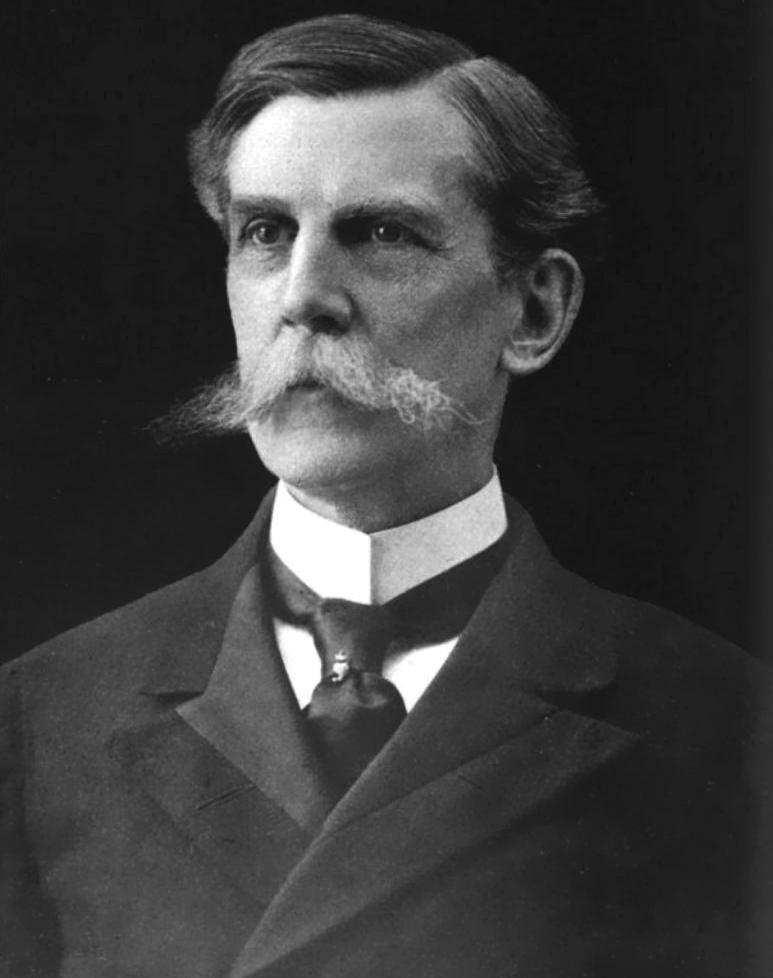
Oliver Wendell Holmes, 1841-1935. Photo by Harris & Ewing. Library of Congress Prints and Photographs Division Washington, D.C. 20540
that fact by explaining old rules in new ways; second, judges develop policies to resolve real problems in a fair and consistent way; and finally, the common law should be based on objective standards of guilt for equal application by all judges.
Holmes published The Path of the Law6 in the Harvard Law Review, introducing the doctrine of legal realism and arguing that the common law develops through legal decisions made by judges who balance social interests and public policy in deciding cases. Judges soon began using the balancing tests Holmes suggested to decide cases rather than making logical deductions from legal theories. This practice represented a radical departure from the earlier doctrine of legal formalism followed by most American judges.
Judge Holmes
In 1887, Holmes was appointed to the Supreme Judicial Court of Massachusetts.7 There, he heard divorces, torts, and criminal cases; traveled around the state; and presided over disputes involving shady stock transactions, bloody accidents, contract disputes, messy divorces, and terrible crimes, thereby becoming familiar with people he would not have ordinarily encountered. Holmes served as a trial judge for two decades before his appointment to the Supreme Court of the United States.
Justice Holmes
In February 1902, Justice Horace Gray suffered a stroke and resigned from the Supreme Court. President Theodore Roosevelt invited Holmes to his Long Island summer home. Impressed, President Roosevelt appointed Holmes to the Supreme Court on December 4, 1902. Four days later, the Senate confirmed the appointment.8 Holmes was sixty-two when he joined the Court and delighted to be a Justice. When he arrived in Washington, he was met by a gentleman who had been Justice Gray’s messenger and performed personal tasks such as valet, cook, barber, or others. Holmes agreed to hire him.
At the time, the Supreme Court met in the old Senate chambers. Because the Senate chambers contained no offices for the justices, they worked from home. The Court convened at noon and worked until four-thirty each day. The justices met every Saturday in the Court’s library for deliberations. Holmes wrote short, clear judicial opinions, focusing on issues of the case. The other justices characterized his opinions as “clear as a bell.” Colleagues trusted Holmes so much that he sometimes wrote both the majority and dissenting opinions.
His first opinion, Otis v. Parker, 9 upheld a provision of the California Constitution that banned buying stock shares on margin. Holmes concluded that the statute was consistent with the Fourteenth Amendment to the United States Constitution. During his first term, Holmes wrote twenty-nine opinions, despite starting three months into the term. Holmes said he gave the same consideration to a case involving $25 as to one that concerned a person’s life or the welfare of a state.
Beginning in the late 1880s, the Justices began considering the meaning of due process. They began protecting private property by invalidating congressional statutes that violated the Due Process Clause of the Fourteenth Amendment. The Court held that the Due Process Clause of the Constitution forbids government interference with private property or the functioning of the economy unless the regulation is essential to protect public health. Many of the Court’s decisions indirectly undermined protections offered to newly freed enslaved persons, however. Holmes always believed in judicial restraint, feeling that judges had a duty to examine the practical effects of their rulings and that all judicial decisions ultimately come down to weighing competing interests and deciding between them.
Northern Securities v. United States
In 1904, the Supreme Court heard Northern Securities v. United States,10 concerning a J.P. Morgan trust that included two Northern railroads. In a 5-4 decision, the majority held that the trust created a monopoly on railroad traffic across the Northern part of the country, and that the trust must sell the railroads. Holmes dissented, believing the Sherman Antitrust Act was “an imbecile statute.” President Theodore Roosevelt, who had vowed to break up the railroad, oil, and shipping trusts, was not amused by Holmes’s dissent.
Swift & Co. v. United States11
Another antitrust case involved six meatpacking companies that conspired to control the price of beef and pressure railroads to offer low transportation rates. In a unanimous decision, Holmes wrote that Congress has the power to regulate trusts under the Commerce Clause. Holmes expanded the meaning of “interstate commerce” to include any activity that is part
continued on page 20
RISK-TAKING CAN BE FUN...
…BUT NOT WHEN IT’S A MALPRACTICE CLAIM.
Personal Injury Claim*
• Lawyer sued for allowing a default judgment taken against client
• Damages of up to $4,000,000 sought ($200,000 policy limit)
• TLIE settled case for $300,000
INSURED BY TLIE
Deductible = $1,000
Amount over policy limit = $109,000
Total out-of-pocket = $110,000
IF NOT INSURED
Defense costs $10,000
Settlement + $300,000
Total out-of-pocket = $310,000
* Based on actual claim handled by TLIE.
FIND OUT MORE: TLIE.ORG or (512) 480-9074
May–June 2023 | San Antonio Lawyer® 19
He organized the common law according to three principles: first, the common law changes, but conceals that fact by explaining old rules in new ways; second, judges develop policies to resolve real problems in a fair and consistent way; and finally, the common law should be based on objective standards of guilt for equal application by all judges.
of the “stream of commerce” and interstate in character. Following the decision, Congress passed the Pure Food and Drug Act and the Meat Inspection Act. Roosevelt was delighted with Holmes after this decision.
In July 1910, Chief Justice Fuller died, triggering a search for his replacement. President Taft appointed Justice Edward Douglas White as Fuller’s replacement. Even though Holmes did not want to be Chief Justice, he felt hurt by not being considered. President Taft appointed six Justices to the Supreme Court during his presidency. The new Justices did not change the basic outlook of the Court and it remained conservative.
Privately, Holmes complained that his new colleagues used repetitious arguments. He resented having to submit his opinions to the criticisms of others, even though he accepted most suggestions to maintain a majority and write the opinion. Holmes worked hard to convince a majority to accept his view of a case by making strategic compromises. He sometimes changed or removed important legal arguments to maintain a majority, but he was never happy to make changes.
Holmes’s Dissents
Holmes enjoyed writing dissents because he could express his ideas without compromise. His dissents became famous during his later years on the Court. He crafted dissents to persuade the next generation of judges that his views of the law were correct. Holmes’s ideas often became the majority opinion decades later. Beginning in 1914, Holmes wrote a series of important dissents that had a lasting influence on constitutional law.
Dissent in Abrams v. United States12

In 1918, the United States conducted a military operation in Russia, even though that country was no longer participating in World War I. Russian immigrants in America called for a general strike at United States munitions plants to protest the American action on Russian soil. The immigrants were charged with espionage because the strike harmed the war effort. Justice John H. Clarke wrote the majority opinion, holding there are limits to free speech during a war, because First Amendment protections are lower when the country is under threat. He reasoned that inspiring unrest and undermining the

American war effort contradicted the national interest and could not be permitted during wartime. Holmes and Brandeis dissented, with Holmes arguing that First Amendment rights lie at the foundation of freedom and include the right to dissent even when the country is at war. He argued that the government should not curtail free speech unless there is a present danger of immediate evil or the defendant intends to create such a danger. Holmes felt the actions at issue in Abrams did not create a present danger of immediate evil.
After Warren Harding became President, Taft asked Harding to nominate him Chief Justice of the Supreme Court, and Harding obliged. Holmes was skeptical of Taft’s qualifications but came to appreciate the former President’s administrative efficiency and good humor. Taft controlled the Court’s agenda and eliminated repetitive arguments, endearing him to Holmes. Taft cleared the backlog of cases and cut the time needed to obtain a Court hearing to six months. He cancelled the automatic right of appeal to the Supreme Court and gave Justices the authority to decide which cases they should accept.
Holmes’s Health
In 1922, Holmes had his prostate removed. The operation went well, and he was released to recuperate at his farm after a month in the hospital. Holmes decided to install an elevator in his Washington, D.C. home so he could get upstairs to his office and library while recuperating. He moved into a hotel during his home’s renovations. A few months later, Holmes was back working on legal opinions as if nothing had happened.
During Taft’s nine years as Chief Justice, the Court’s majority invalidated nearly one hundred state laws on the grounds that they interfered with private business arrangements, freedom of contract, or a person’s right to private property in violation of the Fourteenth Amendment. In many of these cases, Holmes and Brandeis dissented, arguing that if the legislature had a reasonable basis for enacting a law to regulate business, the courts should not interfere. A majority of the nine Justices believed the only justification for regulating a business was health, safety, or public morals. The Court also strengthened defendants’ rights to due process and a fair trial.
Moore v. Dempsey
In the winter of 1922-23, the Court considered an important habeas corpus issue in Moore v. Dempsey 13 In Moore, a group of Black farmers met in a church to oppose extortions by white landlords. Rumors that the

20 San Antonio Lawyer® | sabar.org
continued from page 19 www.bankler.com
When business partners separate...it’s like a divorce.
Providing business exit strategy (planning) and forensic accounting (damage control) in disputes over death, business “divorce” and succession.
The
9901
Suite
San
210.691.3133
44 years of experience assisting business owners, lawyers, judges and juries with complicated accounting and tax matters.
Colonnade
IH-10 West
670
Antonio, TX 78230
And,inmanyinstances,thereisnoclearpre-nup.
“When I explain it, they understand it.”
farmers were planning an insurrection incited a mob to surround the church and a gun fight broke out. Federal troops suppressed the riot. Local officials arrested the Black farmers and charged twelve farmers with murder. A state jury convicted the farmers after a one-hour trial. The farmers’ court-appointed lawyer called no witnesses and made no challenges to the jury. The state court sentenced the farmers to death, and later dismissed the farmers’ petition for habeas corpus.
Holmes wrote the majority opinion, providing that the verdict was void because no one on the jury could have voted for acquittal and continued to live in the county. He explained that if mob pressure influenced judicial proceedings, and the state judge failed to correct the injustice, the Supreme Court would uphold the defendant’s constitutional rights and order a new trial. Moore was the first time the Supreme Court had intervened in a state court criminal conviction on due process grounds, but it would not be the last. Moore helped secure the right of criminal defendants to due process and a fair trial.


Chief Justice Taft expected Holmes to resign after his prostate surgery, but he recovered and felt competent to continue. There were rumors
Holmes would resign on his eighty-fourth birthday, but he continued to work for years after that. He appeared on the cover of Time on his eighty-fifth birthday but refused to give interviews. Holmes said he was happier than he had ever been and was enjoying life.
Nixon v. Herndon

In 1927, Holmes wrote a unanimous opinion in Nixon v. Herndon, 14 ruling that a Texas statute barring Blacks from participating in Democratic primary elections violated the Fourteenth Amendment. He explained that the Fourteenth Amendment was intended to protect Blacks from discrimination and rejected the state’s argument that the statute was political and, therefore, outside the jurisdiction of the Court. Holmes ruled that a state cannot, on the basis of race, deny a citizen the right to vote.
In October 1928, Holmes became the longest serving Supreme Court Justice in history. He continued to deliver his opinions on Tuesday after receiving a case, even though he was getting older and had less energy. Holmes remained sharp and loved being on the Court. In April 1929, his wife Fanny fell and broke her hip. Fanny died nine days later.
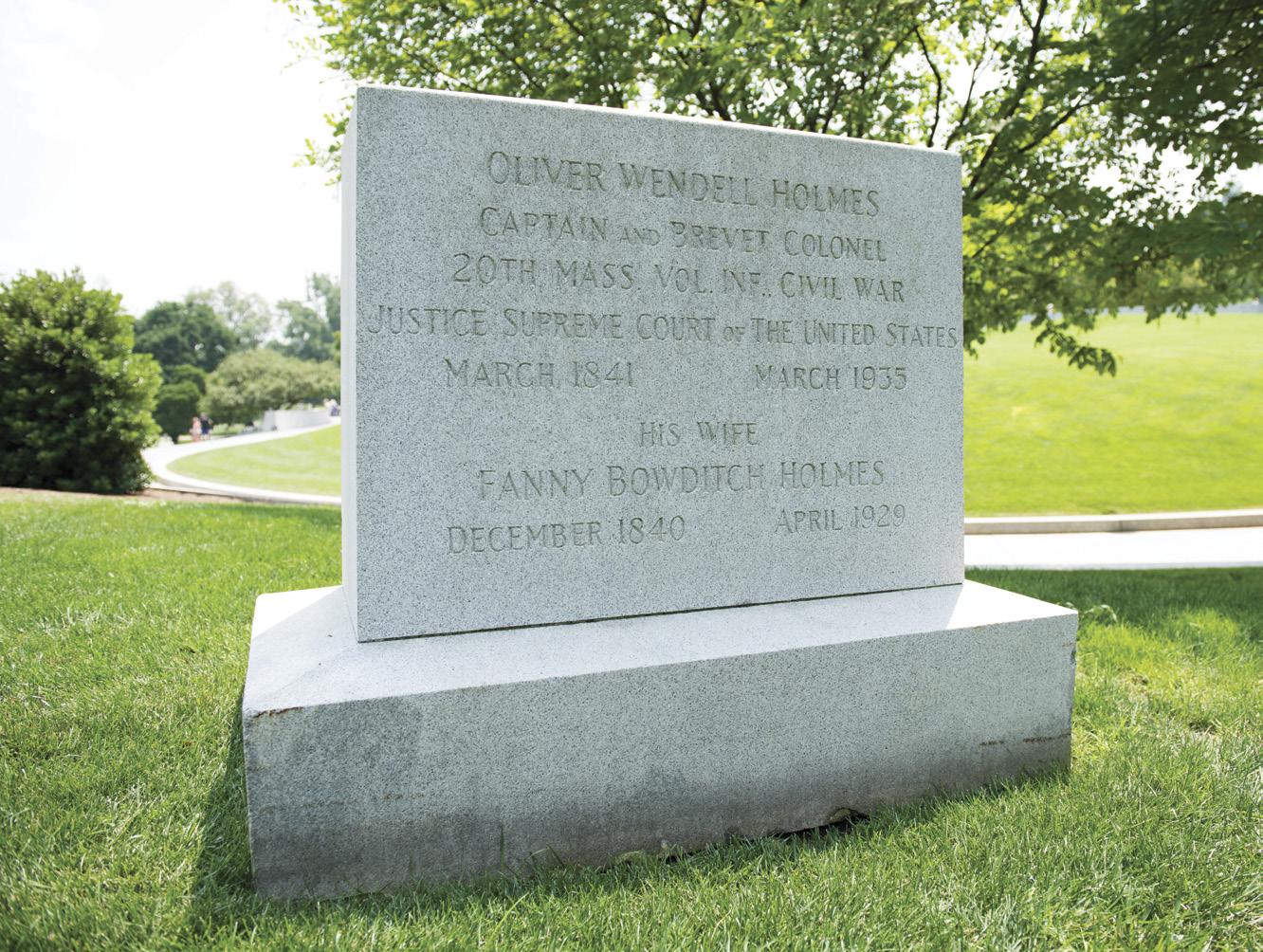
Taft arranged her funeral because Holmes was so distressed by his loss. Fanny was buried in Arlington Cemetery in a plot next to one reserved for Holmes. Despite his despair, Holmes participated in Court deliberations and wrote dissents.
United States v. Schwimmer



Holmes wrote a strong dissent in an appeal of the denial of citizenship to Rosika Schwimmer, a Jewish Hungarian pacifist who refused to swear she would defend the United States because she did not believe in war. Schwimmer testified that she was willing to be treated as a conscientious objector who refused to take up arms to defend the United States, but that was not sufficient for the Court majority. The majority upheld the denial of United States citizenship. Holmes dissented, writing that freedom of conscience is a fundamental right necessary for a free society and “it is the principle of free thought—not free thought for those who agree with us, but freedom for thought that we hate” which is most important.15 Holmes was not a pacifist, but he believed Schwimmer was “a woman of
continued on page 22

May–June 2023 | San Antonio Lawyer® 21
TEXAS CHAPTER MEMBERS IN SAN ANTONIO
Joseph CASSEB
Don PHILBIN
Wade SHELTON Thomas SMITH Hon. John SPECIA, Jr.
Hon. Phylis SPEEDLIN
Dan POZZA
John BOYCE
Check preferred available dates & schedule online in seconds - for FREE Visit our TX Chapter at www.TexasNeutrals.org Visit our National Database of over 1000 top litigator-rated mediators & arbitrators at www.NADN.org
Roberto RIOS
Roger BRESNAHAN Gary JAVORE
Hon. Catherine STONE
Hon. Karen POZZA Kevin MICKITS
Krishna REDDY
continued from page 21
superior character and intellect” and should receive citizenship despite her refusal to swear she would defend the country in time of war.
In 1930, Taft became too ill to continue working. Holmes, as senior justice, assumed Taft’s duties as Chief Justice until the post was filled. Taft resigned and President Hoover appointed Charles Hughes Chief Justice of the Supreme Court. When Holmes turned ninety, his friends arranged a national radio broadcast that included tributes from Chief Justice Hughes, the American Bar Association, and the dean of Yale Law School. Holmes received hundreds of congratulatory letters. In Summer 1931, Holmes’s health began to decline. Although his mind was still sharp, he lacked the energy needed to keep up with his work on the Court. On January 10, 1932, Brandeis and Hughes visited Holmes and gently asked him to resign. Holmes agreed, delighted that the decision to retire was made for him. In early 1935, Holmes contracted
bronchial pneumonia and died on March 6, 1935. After his death, his attorney found two musket balls wrapped in a small paper parcel among Holmes’s personal effects, with the note reading, “These were taken from my body in the Civil War.”
Harry Munsinger is the author of Texas Divorce Guide, The History of Marriage and Divorce, History of Inheritance Law, History of Medical Miracles, and Portraits of Leadership He has served on the San Antonio Bar Association’s publications committee for many years. During that time, he has been a frequent contributor to the San Antonio Lawyer magazine. Although now retired from law practice, Harry continues to contribute to this magazine!
ENDNOTES
1Biography, Oliver Wendell Holmes, Jr. Biography. com, https://www.biography.com/law-figure/oliverwendell-holmes-jr
2Id
3Ball’s Bluff—Harrison’s Island, American Battlefield Trust, https://www.battlefields.org/learn/civil-war/ battles/balls-bluff.
4Biography, Oliver Wendell Holmes, Jr., Biography. com, https://www.biography.com/law-figure/oliverwendell-holmes-jr
5Oliver Wendell Holmes, James Kent, Commentaries on American Law, Franklin Classics, 2018.
6The Path of the Law, Oliver Wendell Holmes, Jr. 1897, https://law.jrank.org/pages/11777/Path-Law. html.
7Oliver Wendell Holmes, History.com, https://www. history.com/topics/us-government/oliver-wendellholmes-jr
8Oliver Wendell Holmes, Jr., 1902-1932, https:// supremecourthistory.org/associate-justices/oliverwendell-holmes-jr-1902-1932/
9Otis v. Parker, 187 U.S. 606 (1903).
10Northern Securities v. United States, 193 U.S. 197 (1904).

11Swift & Co. v. United States, 196 U.S. 375 (1905).
12Abrams v. United States, 250 U.S. 616 (1919).
13Moore v. Dempsey, 261 U.S. 86 (1923).
14Nixon v. Herndon, 273 U.S. 536 (1927).
15United States v. Schwimmer, 279 U.S. 644, 654-55 (1929).
22 San Antonio Lawyer® | sabar.org
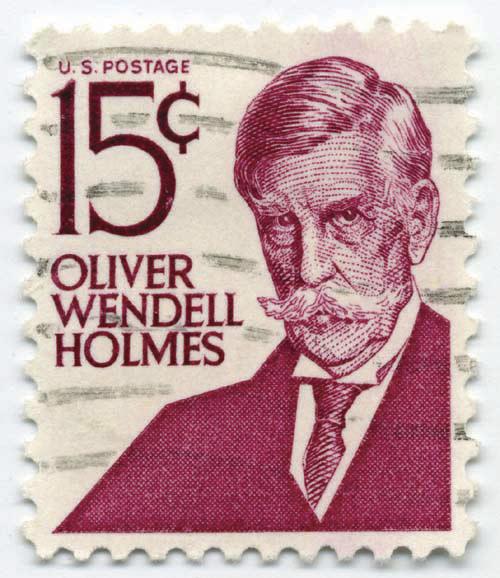
Left: Scan of United States 15c stamp of 1968 Public Domain. Above: Oliver Wendell Holmes Jr., buried in Section 5, grave 7004-A, U.S Army photo by Rachel Larue/released.
1902 portrait photograph of Oliver Wendell Holmes, Public Domain
Bocas Cerradas
No Mas!
THE REEMERGENCE OF EMMETT TILL*
By ileta A. Sumner
Who Was Emmett Till?
In its September-October 2019 and November-December 2019 issues, the San Antonio Lawyer (SAL) published a two-part series on the short but wonderful life—along with the extended and horrific death—of a black youth from Chicago, Emmett Till. After Emmett was lynched while visiting family in Mississippi in 1955, his mother, Mamie Till Mobley, had his bludgeoned corpse photographed by Jet magazine and displayed in an open coffin so “the world [could] see what they [had] done” to her son. That bold act became the start of the modern civil rights movement. When the SAL series was published, the name “Emmett Till” had seemingly become little more than an asterisk in American history. However, lately, Emmett’s long shadow appears to be hovering everywhere, more than sixty years after his homicide. How has this come to pass? Actually, it seems to be nothing more complicated than the confluence of many disparate events that happened to intersect at this moment in time.

Emmett – The Case
Although she tried mightily, it was not until after Mamie Till Mobley’s death in 2003 that the government considered reopening Emmett’s murder case. In 1955, after a sham of a trial where two white defendants were found “Not Guilty” despite overwhelming evidence to the contrary, Mamie and her family’s desire
to have someone held accountable for her son’s death was not first reconsidered until 2004, but the Justice Department found that there was no federal jurisdiction in the matter. Nonetheless, in 2005, the United States Senate issued a resolution conveying “remorse for failing to pass anti-lynching legislation.” Then, in 2007, a Mississippi grand jury refused to issue charges against Carolyn Bryant (later Carolyn Bryant Donham), the white woman whose lies about having been groped instigated Emmett’s kidnapping and lynching. However, that same year, the Emmett Till Unsolved Civil Rights Crime Reauthorization Act of 2007 gave the Justice Department the authority to investigate unsolved cases prior to 1970 that ended in death.

The latest effort to reopen the case, in 2018, failed when an allegation of “new evidence” was never substantiated. The best chance of getting truthful testimony from the accuser arose when new evidence surfaced in June 2022. During research in the Leflore County, Mississippi, courthouse, a 1955 warrant for Carolyn Bryant was discovered. It turned out that it had not been served because authorities felt the mother of two young children need not be “bothered” with such a nuisance. Once again, this led nowhere because the Mississippi Attorney General claimed that the warrant, though recently found, was not NEW evidence. While Emmett’s story should live in perpetuity, Donham just passed away
on April 25, 2023, at the age of 88, while in hospice care for cancer. Because Donham died without admitting under oath that she had lied about Emmett’s having done anything untoward to her, any chance to hold someone legally liable for Emmett’s death died with her.
Emmett – The Law
After 100 years and more than 200 attempts, at last there is a federal anti-lynching law. What became the Emmett Till Anti-lynching Act, signed into law by President Biden on March 29, 2022, was first introduced by Rep. George Henry, the only black man in the United States Congress at the time, in 1900. Part of the delay was due to disagreement over the definition of “lynching.” Ultimately, kidnappings, aggravated sexual abuse, or attempts to kill a person when a conspiracy to commit a hate crime results in death or serious bodily injury, can all be prosecuted as lynchings.
Emmett – The Films
Certainly, for many decades, Emmett has not been front page news, but that does not mean his story has been forgotten. That being said, of the hundreds of books and articles that have been published, two books, Death of Innocence: The Story of the Hate Crime that Changed America, by Mamie Till Mobley (published posthumously in 2003) and Emmett
continued on page 24
May–June 2023 | San Antonio Lawyer® 23
—
Emmett Till
New York World-Telegram & Sun Collection, Prints & Photographs Division, Library of Congress, LCUSZ62-111241
continued
from page
Till: The Murder That Shocked the World and Propelled the Civil Rights Movement, a welldocumented book including forty-five pages of endnotes, became the basis of the six-hour ABC network mini-series entitled “Women of the Movement,” which aired in January 2022. Surprisingly, this network program used the extremely graphic language of the era as well a raw examination of the brutality associated with racism in the south in 1955.
Likewise, Till—a movie in wide release as of October 14, 2022—examines the circumstances surrounding Emmett’s life and killing. While Till shows the dismal occurrences of Emmett’s life, the protagonist of Till is Mamie Till Mobley, and the movie shows the incidents from her perspective. Unlike the mini-series, the movie does not include the beat-down suffered by Emmett because, in real life, Mamie was not present for that horrific event. Nevertheless, the emotions are shown in full force, especially when the camera shows Mamie visiting her only child on display in his coffin.

Both films were well received and included very nuanced performances depicting difficult lives during hard times. Still, problems
examined in these films, unfortunately, were not brand new in 2022. Another movement had already revived Emmett’s story in its continuing fight for change.
Emmett – His Life Matters
Just as the tale of Emmett’s life served as a catalyst for the civil rights movement of the 20th century, the story of Trayvon Martin can be pinned as the spark for the nonviolent protest for the rights of people of color in the new millennium. Both events involve black teenagers; each of them was on a trip when his life ended; and no one was held accountable for either of their deaths.
It is interesting to note that one hundred days after the death of Emmett Till, Rosa Parks refused to defer to codes that required black people to sit in the back of municipal buses, giving momentum to the civil rights movement; and in the wake of Trayvon Martin’s death, Alicia Garza, Patrisse Cullors, and Opal Tometi founded Black Lives Matters (BLM), which gave rise to (mostly) peaceful protests worldwide. It should not be surprising that the National Museum of African American History and Culture (NMAAHC), authorized
It ’ s s
in 2003 and opened in 2016, has an exhibit tracing a definite connection between Emmett and Trayvon. Not only does it have clothes worn by Trayvon, but the NMAAHC has also obtained the casket in which Emmett’s body was displayed. The pictures of Trayvon’s eyes piercing from under his hoodie show a similar innocence displayed in photos of Emmett’s face before his southern visit.
Coincidentally, the picture (video) of another victim, George Floyd, while he was being killed by now ex-policeman Derek Chauvin in Minneapolis, MN, in May 2020, spurred the spread of BLM protests. It has been said that a picture is worth a thousand words. Well, it is fair to say that photographs of Emmett, Trayvon, and George elicited strong emotions and kick-started serious protests worldwide in a way no essay could have done. In fact, the day after Floyd’s killer Derek Chauvin was convicted, Floyd’s brother Philonise Floyd commented that Till had immediately come to his mind, and he called Emmett “the first George Floyd.”
Because of these myriad, largely unconnected matters, Emmett Till’s place in history has been solidified. With the creation of his permanent exhibit in NMAAHC; preservation of bulletproof markers designating the site where his murder occurred; documentation of Emmett’s story not just in books but also on screens large and small; the development of an app so that inquisitive persons can get accurate information about Emmett’s experiences; as well as the passage of the Emmett Till Antilynching Act, Emmett Till will remain part of the collective consciousness of the world. More than half a century after Emmett Till’s murder went unpunished, anyone who commits a crime that’s deemed a lynching will also face federal repercussions— imprisonment of up to thirty years.
While Emmett was silenced forever for not keeping quiet, his picture, along with the legislation that bears his name, in addition to innumerable ways that his story has been, and can be, disseminated will guarantee that the world knows about racism in America.
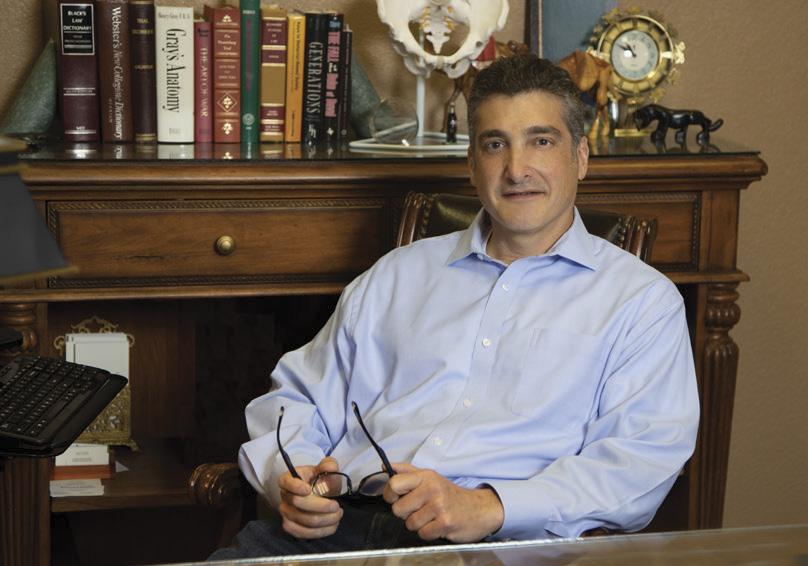
24 San Antonio Lawyer® | sabar.org Alex Katzman Resolving Cases Delivering Results Board Certified in Civil Trial Law* ** *Texas Board of Legal Specialization (TBLS) **National Board of Trial Advocacy (NBTA) AV Rated Texas Super Lawyer: every year since 2009 Mediating all types of civil litigation cases from pre-lit to post verdict since 2007. To schedule an in-person or virtual mediation, visit the calendar at www.KatzmanAndKatzman.com/adr-mediation/ or call 210.979.7300
ettled
ileta! Sumner, Esq. is a former President of the Bexar County Women’s Bar Association (2002) and the original General Counsel and creator of the legal department of the Battered Women’s and Children Shelter. She has been disabled since 2006. She can be reached at (210)421-2877 (cell), litig7rij@aol.com. 23
Selected Bibliography
*The original series was titled, “En Bocas Cerradas,” which was derived from the Spanish saying, “En bocas cerradas, no entran moscas” – flies cannot enter your mouth when you keep it shut – in reference to the multiple warnings Emmett’s mom gave him about how to speak to white people down south.
Gabby Raymond, “Justice Department Has Reopened Its Investigation of Emmett Till’s Murder. Here Are 5 Things to Know About the Case,” Time, July 12, 2018, 5:06 PM EDT, https:// time.com/5336879/original-emmett-till-casereopened/.
Darlene Superville, “Biden hosts screening of film about lynching of Emmett Till,” AP News, February 16, 2023, https://apnews.com/article/ biden-legal-proceedings-mississippi-crime-1e57 ded597170a7d69fd5cdd47938679.
“Mississippi Team Uncovers Arrest Warrant for White Woman Who Lied About Emmett Till,” Tennessee Tribune, July 3, 2022, https:// tntribune.com/mississippi-team-uncoversarrest-warrant-for-white-woman-who-liedabout-emmett-till/.
Peter Granitz, “Senate passes anti-lynching bill and sends federal hate crime legislation to Biden,” npr, March 8, 2022, https://www.npr. org/2022/03/08/1085094040/senate-passesanti-lynching-bill-and-sends-federal-hatecrimes-legislation-to-bi
“More Than a Century After it Was First Proposed, President Biden Signs Historic Law Making Lynching a Federal Crime,” Death Penalty Information Center, March 31, 2022, https:// deathpenaltyinfo.org/news/more-than-acentury-after-it-was-first-proposed-presidentbiden-signs-historic-law-making-lynching-afederal-crime
Scott Pierce, “TV mini-series about lynching of Emmett Till is based on ‘unlikely’ book by Utah author,” The Salt Lake Tribune, June 2, 2022, Update Jan 3, 2022, https://www.sltrib.com/ artsliving/2022/01/02/tv-miniseries-about/
Odie Henderson, “Till,” RogerEbert.com, October 14, 2022, https://www.rogerebert.com/reviews/ till-movie-review-2022
“The Impact of Emmett Till’s Murder,” American Experience, PBS, https://www.pbs.org/wgbh/ americanexperience/features/emmett-impactemmett-tills-murder/
Sanya Mansoor, “93% of Black Lives Matters Protests Have Been Peaceful, New Report Finds,” Time, September 5, 2020, 11:47 AM EDT, https:// time.com/5886348/report-peaceful-protests/.
“Defending Freedom, Defining Freedom, Era of Segregation, 1876 – 1968, Exhibitions, National Museum of African American History & Culture, https://nmaahc.si.edu/explore/exhibitions/ defending-freedom-defining-freedom
“From Trayvon Martin to Emmett Till: Black Lives Matter,” National Museum of African American
History & Culture, August 12, 2021, https:// nmaahc.si.edu/explore/stories/trayvon-martinemmett-till-black-lives-matter
Helier Cheung, “George Floyd’s Death: Why U.S. protests are so powerful this time,” BBC News, Washington, D.C., 8 June 2020, https://www.bbc. com/news/world-us-canada-52969905
Sophia Tareer, “George Floyd’s and Emmett Till’s Families See Parallel Loses,” AP News, April 21, 2021, https://apnews.com/article/emmett-tillgeorge-floyd-death-of-george-floyd-4af9887a29 86386e561d1a8eea205227
Margaret Carlisle, “Bulletproof Emmett Till Marker Erected in Mississippi,” TIME, October 20, 2019, 12:02 PM EDT, https://time.com/5705681/ bulletproof-emmett-till-murder-marker/ Keisha Rowe, “In 1955, Emmett Till was murdered in Mississippi. In 2019, a new app honors his memory,” Mississippi Clarion Ledger, published 4:05 p.m., CT, August 28, 2019, https://www. clarionledger.com/story/news/2019/08/28/ emmett-till-new-app-fsu-prof-history-14-yearold-killed-ms-civil-rights/2144706001/
We believe every client should have: Consider Structured Settlement Annuities for:
to maximize settlement dollars and protect assets
Opportunity for face to face meeting with settlement professional with knowledge of: college costs, inflation rates, retirement expenses, Special Needs, Minor’s and Spendthrift trusts, Social Security Disability, Medicaid, Medicare Set Aside Trusts, Qualified Settlement Funds and Life Care Plans
Follow-through after settlement
Personal Injury
Product Liability
Medical Malpractice
Legal Malpractice
Breach of Contract
Disability
Construction
Business Buy-Outs
Transactional Litigation
Family Law
May–June 2023 | San Antonio Lawyer® 25
the trust of trial lawyers and their
for over 20 years.
to an experienced settlement planner working
Earning
clients
Access
Structured Attorney fees payable to the attorney or the law firm produce healthy rates of return with tax deferral that are protected from creditors (attorneys can structure their fees even if the client does not). DAVIS SETTLEMENT PARTNERS The Attorney’s Indispensable Partner in Settlement Planning Carola M. Davis, CFS 830.609.5555 cmdavis388@gmail.com www.DavisSettlementPartners.com
Harassment
Employment Sexual
Attorney Fees Punitive Damages Environmental
NOW IS THE TIME TO LOCK-IN 5% + ANNUITY RATES…!
Carola M. Davis, CFS

Governmental Immunity Remains a Prevalent Issue
By Justice Luz Elena D. Chapa
Governmental immunity and its limits are a common source of appeals at the Fourth Court of Appeals. In 2022 alone, the Fourth Court issued nearly twenty opinions addressing governmental immunity. In this update, we provide a brief overview of governmental immunity and summarize a handful of those opinions.
“[S]overeign immunity protects the State of Texas against lawsuits for damages unless the State consents to be sued.” Gulf Coast Ctr. v. Curry, 658 S.W.3d 281, 283 (Tex. 2022). “[G]overnmental immunity provides similar protection to the State’s political subdivisions, such as counties, cities, and school districts.” Id. at 284. “Governmental immunity encompasses two related but distinct concepts: ‘immunity from liability, which bars enforcement of a judgment against a governmental entity, and immunity from suit, which bars suit against the entity altogether.’” Dohlen v. City of San Antonio, 643 S.W.3d 387, 392 (Tex. 2022) (quoting Tooke v. City of Mexia, 197 S.W.3d 325, 332 (Tex. 2006)).
In Jubilee Academic Center, Inc. v. School Model Support, LLC, School Model Support (“Athlos Academies”)—an education service provider—sued Jubilee—a charter school operator—for breach of their services agreement. No. 04-21-00237-CV, 2022 WL 1479039, at *1 (Tex. App.—San Antonio May 11, 2022, pet. denied) (mem. op.). Jubilee moved for summary judgment, contending it was protected by governmental immunity. Id. The issue on appeal was whether the parties entered into an agreement subject to the statutory waiver of immunity under Government Code section 271.152, which waives immunity from suit for local government entities and permits enforcement of contracts against them. See id. at *4. Jubilee contended, among other things, that the parties’ agreement lacked essential terms that would trigger the waiver under section 271.152. See id. at *5-7. Jubilee further argued its immunity was not waived because a contract provision purported to retain Jubilee’s immunity from suit, contrary to section 271.152. See id. at *7-10. This court rejected both arguments, concluding the services agreement had all essential terms and reasoning Jubilee’s freedom of contract was “qualified by” section 271.152 which intended to waive immunity. See id. at *9.
In Medina County v. Johnson, Martha Johnson sued the Medina County Sheriff’s Department after a police unit responding to an emergency struck her vehicle. No. 04-21-00452-CV, 2022 WL 2707740, at *1 (Tex. App.—San Antonio July 13, 2022, no pet.) (mem. op.). The county filed a plea to the jurisdiction, arguing the emergency exception to the waiver of immunity in the Texas Tort Claims Act (TTCA) applied to the actions taken by the police officer; the trial court denied the plea. Id. The issue on appeal was whether there was a genuine issue of material fact as to the application of the emergency exception. Id. Section 101.021 of the TTCA provides a limited waiver of immunity when government officials cause property damage and personal injury,
while acting within the scope of their employment. See Tex Civ Prac & Rem. Code § 101.021(1). However, there is an exception to the waiver when officials are responding to an emergency and acting in compliance with laws that apply to emergencies, and during such time, their actions do not show a conscious indifference or reckless disregard for the safety of others. See id. at *2. This court noted it was undisputed the police unit was responding to an emergency with activated sirens, and Johnson rather than yielding the right of way had stopped her vehicle on the road. Id. at *4. The parties disputed whether Johnson’s vehicle had remained at a stop and the police unit then rear-ended it or she began turning left at the intersection, causing the police officer to swerve right in the police unit to avoid a deadlier collision. Because the standard of review required us to resolve any doubts in Johnson’s favor, we took Johnson’s evidence as true. Crediting Johnson’s evidence, we affirmed the denial of the plea, concluding there was a material fact issue as to whether the police officer acted with reckless disregard for the safety of others.
In Shannon v. Blair, property owners sued a San Antonio city official seeking a declaratory judgment that city officials could not enforce city ordinances requiring owners with property abutting alleys to keep their property and abutting alleyways garbage and brush free. No. 04-2100257-CV, 2022 WL 4492801, at *1 (Tex. App.—San Antonio Sept. 28, 2022, no pet.) (mem. op.). The city official filed a plea to the jurisdiction, arguing governmental immunity barred the claim; the trial court denied the plea. Id. The issue on appeal was whether the ultra vires exception applied to a city official seeking to enforce an alley ordinance against the putative class members. Id. As this court explained, because plaintiffs did not challenge the ordinance’s validity, governmental immunity only bars suit for ultra vires claims seeking prospective declaratory relief against officials acting without legal authority. See id. at *6. The plaintiff in the lawsuit could also not complain of an official’s exercise of discretion for the ultra vires exception to apply. Id. Concluding the enforcement of the ordinance was discretionary, we held actions pursuant to the ordinance were protected by governmental immunity and did not fall within the ultra vires exception. Id. at *9.
No doubt the issue of governmental immunity is a prevalent one in the Fourth Court’s district, and there are no signs of it not remaining so.
Justice Luz Elena D. Chapa has served on the Fourth Court of Appeals since January 1, 2013. Justice Chapa is a dualgraduate of St. Mary’s University and practiced civil trial law with a concentration in products liability for twelve years prior to her election. Daniel Guzmán, a staff attorney to Justice Chapa, assisted with the writing of this article.
May–June 2023 | San Antonio Lawyer® 27
Fourth Court Update
Western District of Texas Court Summaries
By Soledad Valenciano, Melanie Fry, and Jeffrie Lewis
If you are aware of a Western District of Texas order that you believe would be of interest to the local bar and should be summarized in this column, please contact Soledad Valenciano (svalenciano@svtxlaw.com, 210-787-4654) or Melanie Fry (mfry@dykema.com, 210-554-5500) with the style and cause number of the case, and the entry date and docket number of the order.
COVID-19; Fraud
AHBP LLC v. Lynd Co., No. SA-22-CV00096-XR (Rodriguez, X., Jan. 9, 2023)
This case arose from a disinfectant distribution deal gone bad in the midst of the COVID-19 pandemic. Plaintiff AHBP negotiated an exclusive license to sell a surface disinfectant in Argentina manufactured by Bio Supply (a company owned by Lynd). AHBP submitted documentation to the Argentinian government provided by Lynd verifying that the product could kill the COVID-19 virus. The documentation was fraudulent. AHBP sued Lynd alleging that AHBP was unable to sell the product in Argentina—the only place it had a license to do so—and suffered over $90 million in damages as a result. The court held that AHBP’s pleadings were adequate to survive the 12(b)(6) stage in all respects except as to a business disparagement claim. The business disparagement claim was premised on Lynd’s provision of false documentation to Argentina; because the false information was not disparaging of AHBP, AHBP did not adequately plead that claim. The economic loss doctrine did not bar AHBP’s tort claims because the claims invoked Lynd’s alleged violation of duties that arose separately from the parties’ contract, and AHBP allegedly suffered non-economic damages as a result of the commission of those torts. The court determined that the limitation of liability in the parties’ contract did not serve to cap damages because liability cannot be prospectively limited for intentional torts.
Attorney Withdrawal; Penalty
AHBP LLC v. Lynd Co., No. SA-22-CV00096-XR (Rodriguez, X., Jan. 23, 2023).
The court granted defendant’s attorneys’ motion to withdraw, and the withdrawing attorneys were replaced by attorneys appearing pro hac vice. That order stated the replacement
attorneys could appear pro hac vice until the client, a limited liability company, retained new counsel or the replacement attorneys sought leave to withdraw. The replacement attorneys later moved to withdraw. The court initially denied the motion due to the attorneys’ failure to comply with Local Rule AT-3, which required, among other things, identification of a successor attorney, the client’s signature, or an explanation of why the signature was not provided despite diligence. Five months later, the motion to withdraw was re-urged, this time with an explanation by the replacement attorneys that they could not obtain the client’s signature because the client refused to provide it. The court granted the motion, leaving the client without licensed counsel. Having previously warned the company several times that as a fictional legal person it could not proceed without licensed counsel, the court had the discretion to strike the company’s pleadings or enter default. The court ordered the company to have licensed counsel enter an appearance within two weeks, the failure of which would cause its motion to dismiss (which had already been granted in part and denied in part) to be vacated and cause a default to be entered against the company.
Civil Rights Complaint; Immunity
Fisher v. Smith, SA-22-CV-00146-XR (Rodriguez, X., January 27, 2023)
An inmate sued a prison dentist under 42 USC § 1983, alleging cruel and unusual punishment. The inmate alleged the dentist refused to provide him dentures even though the inmate had no teeth and painful gums and eating caused cuts and abrasions. Monetary claims against the dentist, an employee of the Texas Department of Criminal Justice, are barred by the Eleventh Amendment.
Prospective injunctive relief, here providing dentures, is an exception to the Eleventh Amendment; however, because the inmate could not establish the dentist had authority to provide the dentures, the inmate could not satisfy the “redressability” element necessary to show standing. The inmate’s claims against the dentist in his individual capacity failed because the summary judgment evidence did not show the dentist was deliberately indifferent to the serious medical needs of the inmate; rather, the evidence showed the dentist treated the inmate, explained how dentures are provided only when medically necessary (a decision not up to the dentist), explained to the inmate the reasons he did not show medical necessity, and referred the inmate to a pilot program for dentures for patients who did not qualify under TDCJ standards. Accordingly, the court granted the dentist’s motion for summary judgment and dismissed the inmate’s claims.
ADA; Standing; Failure to State a Claim; Testers
Castillo v. Hank Sully, LLC, SA-22-CV00472-XR (Rodriguez, X., February 13, 2023).
Plaintiff, who in Castillo v. Sanchez, No. SA-22-CV-00301-FB, self-identified as an “ADA tester” whose goal is to “monitor, determine, and ensure whether places of public accommodation are in compliance with the ADA” filed a lawsuit against a convenience store located thirty miles from his home, seeking declaratory and injunctive relief, attorney’s fees, litigation expenses, and costs under Title III of the Americans with Disabilities Act and the ADA’s Accessibility Guidelines. The convenience store moved to dismiss under Rule 12(b)(1) for lack of standing and Rule 12(b)(6) for failure to plausibly allege that the architectural barriers identified caused injury or that their removal was readily
28 San Antonio Lawyer® | sabar.org Federal Court Update
achievable. With respect to standing, the court applied Laufer v. Mann Hosp., LLC, 9496 F.3d 269 (5th Cir. 2021), in which the Fifth Circuit clarified that a plaintiff’s status as an ADA tester does not absolve the plaintiff of the need to show an injury in fact, and that Laufer, who lived in Florida, failed to show sufficiently concrete plans to stay at a hotel in Texas (that failed to advertise accessibility information) as required to support an ADA claim. Here, simply visiting a convenience store requires far less planning and, therefore, becomes a more plausible site for future harm. As such, the court did not find it implausible that the plaintiff frequently passes by this convenience store and would like to patronize it, despite its being thirty miles from his home. The plaintiff’s previous visit to the convenience store, an inability to access it, and knowledge of the architectural barriers at issue were sufficient to invoke the “futile gesture” provision of the ADA, thereby relieving him of any need to attempt or plan future visits to the convenience store to establish standing. The plaintiff sufficiently stated a claim for relief when he alleged he had attempted to access the convenience store but could not access it because of physical barriers as such a loss of opportunity is an actionable injury. Further, the court found that whether the removal of the architectural barrier is “readily achievable,” meaning easily accomplished without much difficulty or expense, is fact-intensive and premature, adding however, that allegations that discussed the straightforwardness of the modifications, their low cost, the store’s financial resources, and the governmental assistance available to the store to make such modifications were sufficient to survive a motion to dismiss. Accordingly, the court denied the store’s motion.
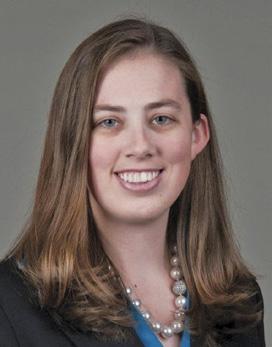
RICO; Personal Injury Settlements
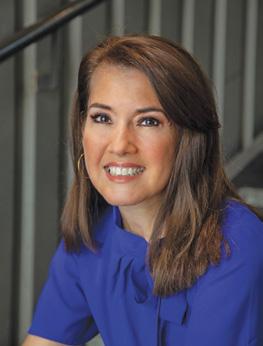
State Farm Mut. Auto. Ins. Co. v. Misra, SA-22-CV-806-JKP-HJB (Pulliam, J., Feb. 24, 2023).
In this Racketeer Influenced and Corrupt Organizations Act (RICO) lawsuit, two insurance companies sued a doctor and his professional association, asserting claims for (1) racketeering predicated on mail fraud and (2) money had and received. The insurer plaintiffs alleged that the doctor had a pattern of dispensing medically unnecessary treatment to personal injury plaintiffs in order to inflate potential recovery for their
car accident injuries, at the expense of auto insurers defending car accident claims. The court denied the doctor’s motion to dismiss. The doctor was legally distinct from his professional association allegedly used to commit racketeering. The plaintiffs alleged sufficient facts to support proximate cause because the harm to the insurer (alleged overpayment to settle personal injury claims) would not have occurred but for the doctor’s submitting allegedly inflated medical bills. The plaintiffs pleaded mail fraud and fraudulent intent with sufficient particularity because their factual allegations supported a conclusion that the defendants had awareness that the mails would be used in the ordinary course of business in achieving the allegedly inflated personal injury settlements. And the plaintiffs adequately pleaded a money-hadand-received claim based on allegations that the defendants systemically inflated medical bills for the purpose of achieving higher settlement amounts.
May–June 2023 | San Antonio Lawyer® 29
KFG23_CS_017 SA LAWYER MAY_JUN_mar_032723_PR.indd 1 3/28/23 11:31 AM
Soledad Valenciano practices commercial and real estate litigation with Spivey Valenciano, PLLC. Melanie Fry practices commercial litigation and appellate law with Dykema Gossett PLLC. Jeffrie B. Lewis is Assistant General Counsel with Zachry Group.
Profit From Our Experience.

30 San Antonio Lawyer® | sabar.org ATKG LLP 9 Broadway Bank 32 Covenant Legal Nurse Consulting 13 Davis Settlement Partners 25 Donald R. Philbin, Jr. P.C. 4 EmployStats 30 Frost - Banking, Investments, Insurance 5 Gallant Computer Investigative Services, LLC 16 Gunn, Lee & Cave, P.C. 31 Katzman & Katzman, PLLC 24 LawPay 2 National Academy of Distinguished Neutrals 21 Ned Hodge - Insurance Architect 16 Professional Services Technologies 8 RSM US LLP 10 Scott Baker Mediation, LLC 30 Steven Bankler 20 Texas Lawyer Insurance Exchange 19 The Association of Attorney-Mediators 14 theKFORDgroup 29 UIW School of Professional Studies 11 ad index



WEALTH & PRIVATE BANKING Private Banking with Customized Lending Solutions1 As a Private Banking client, you will have access to various lending options customized to your needs to help you achieve your personal and business financial goals. Your dedicated Private Banker will work with you to create solutions, including terms and rates, that allow you to maximize liquidity and investment objectives. We offer a wide array of solutions including: • Revolving Lines of Credit • Professional Investment Loans • Professional Mortgage Loans • Luxury Vehicle Loans Experience premium modern banking with Broadway Bank. broadway.bank/private • (210) 681-0747 1 To be eligible, you must qualify to be a Broadway Bank Private Banking client. Membership qualifications apply for certain programs. All loans subject to credit and collateral approval (if applicable). Programs, interest rates, terms and conditions are subject to change without notice. Other restrictions and limitations may apply. Member FDIC. Rev. 04/23 #1081233410
