What Separates Good STEM Programs from Great Ones, by Sam Agdasi
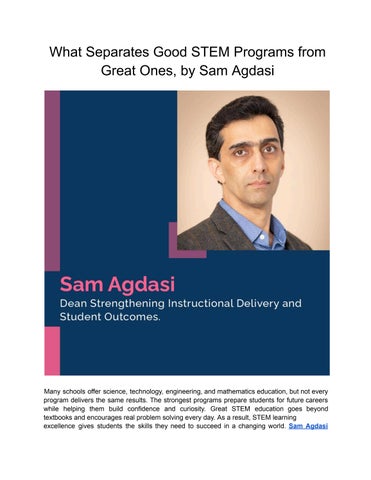
Many schools offer science, technology, engineering, and mathematics education, but not every program delivers the same results. The strongest programs prepare students for future careers while helping them build confidence and curiosity. Great STEM education goes beyond textbooks and encourages real problem solving every day. As a result, STEM learning excellence gives students the skills they need to succeed in a changing world. Sam Agdasi
believes that outstanding STEM programs combine strong teaching, practical experience, and continuous improvement. One important difference is how students learn. Good programs explain concepts clearly, but great programs allow students to apply those ideas through experiments, projects, and teamwork. Hands-on learning helps students understand difficult topics while making lessons more engaging. Great STEM programs also encourage curiosity. Instead of simply providing answers, teachers ask students to investigate questions and explore different solutions. This approach develops creativity and helps students become confident thinkers who enjoy learning. Technology should support learning, not replace it. Successful programs introduce students to modern software, digital tools, and laboratory equipment that reflect current industry practices. These experiences prepare learners for future education and professional careers. Strong teachers play a major role in student success. Great educators continue learning so they can bring new ideas into the classroom. Professional development allows instructors to keep lessons current and meaningful as technology continues to evolve. Collaboration is another feature that separates outstanding programs from average ones. Students learn valuable communication and leadership skills when they work together on projects. Team activities also prepare them for the collaborative environments found in many careers. Real world connections make STEM education more valuable. Schools that partner with businesses, universities, and community organizations expose students to practical applications of classroom knowledge. These partnerships inspire students while helping them understand future career opportunities. Problem solving should remain at the center of every STEM program. Students benefit from challenges that require careful thinking, planning, and testing. These experiences teach resilience and encourage learners to improve through practice rather than fear mistakes. Great programs also welcome students with different backgrounds and interests. Every learner should have the opportunity to participate and grow. Inclusive classrooms create stronger learning communities where students feel supported and motivated. Regular evaluation keeps STEM programs moving forward. Schools should gather feedback from students, teachers, families, and industry partners. Reviewing results helps educators improve courses and ensure they continue meeting changing educational and workforce needs. Career awareness should begin early in STEM education. Students gain motivation when they understand how classroom lessons connect with engineering, healthcare, technology, research, and many other professions. Seeing these connections helps learners set meaningful goals. Successful STEM education also teaches adaptability. New discoveries and technologies
continue to reshape industries around the world. Students who learn how to adapt, communicate, and solve problems remain prepared for opportunities throughout their careers. Future ready skills make the greatest STEM programs stand out from the rest. Schools that combine practical learning, strong instruction, industry partnerships, and continuous improvement prepare students for lasting success. When education encourages curiosity and real world experience, graduates leave with the confidence and knowledge needed to thrive in college, the workplace, and beyond.