Building a Strong Financial Future After Military Service by
Roy Gagaza

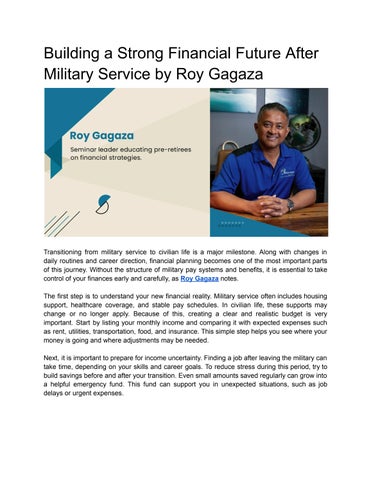
Transitioning from military service to civilian life is a major milestone Along with changes in daily routines and career direction, financial planning becomes one of the most important parts of this journey Without the structure of military pay systems and benefits, it is essential to take control of your finances early and carefully, as Roy Gagaza notes
The first step is to understand your new financial reality Military service often includes housing support, healthcare coverage, and stable pay schedules. In civilian life, these supports may change or no longer apply. Because of this, creating a clear and realistic budget is very important Start by listing your monthly income and comparing it with expected expenses such as rent, utilities, transportation, food, and insurance. This simple step helps you see where your money is going and where adjustments may be needed
Next, it is important to prepare for income uncertainty. Finding a job after leaving the military can take time, depending on your skills and career goals To reduce stress during this period, try to build savings before and after your transition Even small amounts saved regularly can grow into a helpful emergency fund. This fund can support you in unexpected situations, such as job delays or urgent expenses
Debt management should also be a priority If you have loans or credit card balances, create a plan to manage them responsibly. Paying off high-interest debt first can reduce financial pressure over time Making timely payments also helps maintain a healthy credit score, which is important for renting homes, applying for loans, or securing other financial opportunities.
At the same time, think about your long-term goals Many veterans choose to continue their education, learn new skills, or explore different career paths. These decisions can improve future income and stability Take advantage of veteran support programs, job training, and education benefits that may be available to you
It is also important to develop good money habits Civilian life requires greater personal financial discipline than military life Tracking expenses, avoiding unnecessary spending, and setting clear financial goals can help you stay on track.
Financial readiness is not built overnight. It grows through steady planning and responsible decisions By taking small, consistent steps, you can create a stable foundation for your future With patience and discipline, life after military service can be both financially secure and personally fulfilling.