DISASTER PREPAREDNESS
RECOVERY TEAMS
W
hen Hurricane Sally slammed into the Gulf Coast on Sept. 16, 2020, as a strong Category 2 hurricane with maximum sustained winds of 105 miles per hour, most storm veterans in the affected area assumed the blow would be relatively manageable. It was sure to be less devastating than Hurricane Michael, which had roared ashore at Mexico Beach two years earlier as a Category 5 event. But for many property owners in Sally’s impact area, the storm would prove to be more consequential than they anticipated. Sally was blamed for three deaths. First its outer bands and then prolonged hurricane conditions with powerful wind gusts damaged roofs, destroyed docks, left yachts and other vessels stranded on shore and felled trees. A major bridge was out. By the time Sally blew out of town, water and power were off for residents in Pensacola Beach. Many roads were closed. Flooded properties included the Portofino Island Resort. Its parking area was underwater, and its five condominium towers looked strangely like vertical islands. The property owners in the best position to deal with Sally’s effects were those who had planned for such an eventuality. For more than 34 years, attorney Ed Fleming, the founding partner in the Pensacola law firm, McDonald Fleming, has witnessed hurricanes and their effects. He helps people partner with contractors and deal with insurance companies. And he consistently recommends that people establish a disasterrecovery team before a storm hits.
20 | FALL 2023 | 850BusinessMagazine.com
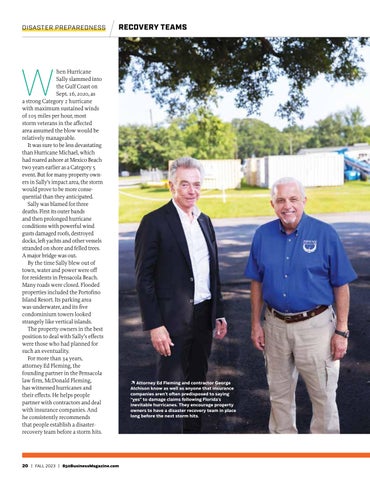
↗ Attorney Ed Fleming and contractor George Atchison know as well as anyone that insurance companies aren’t often predisposed to saying “yes” to damage claims following Florida’s inevitable hurricanes. They encourage property owners to have a disaster recovery team in place long before the next storm hits.