Driving Efficiency Forward: How Innovation Is Reshaping Transportation and Logistics by Robert
Snowdale

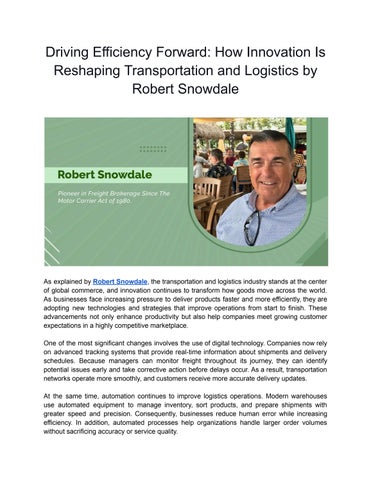
As explained by Robert Snowdale, the transportation and logistics industry stands at the center of global commerce, and innovation continues to transform how goods move across the world As businesses face increasing pressure to deliver products faster and more efficiently, they are adopting new technologies and strategies that improve operations from start to finish. These advancements not only enhance productivity but also help companies meet growing customer expectations in a highly competitive marketplace
One of the most significant changes involves the use of digital technology Companies now rely on advanced tracking systems that provide real-time information about shipments and delivery schedules Because managers can monitor freight throughout its journey, they can identify potential issues early and take corrective action before delays occur As a result, transportation networks operate more smoothly, and customers receive more accurate delivery updates.
At the same time, automation continues to improve logistics operations Modern warehouses use automated equipment to manage inventory, sort products, and prepare shipments with greater speed and precision Consequently, businesses reduce human error while increasing efficiency. In addition, automated processes help organizations handle larger order volumes without sacrificing accuracy or service quality.
Another important innovation focuses on smarter transportation planning. Route optimization tools analyze factors such as traffic conditions, fuel usage, and delivery deadlines to determine the most efficient paths for drivers. Therefore, companies can reduce travel time and lower operating costs. Moreover, efficient routing helps decrease vehicle emissions, which supports sustainability efforts across the industry
Sustainability has become a major focus for transportation and logistics providers Many organizations now invest in electric vehicles, energy-efficient fleets, and environmentally responsible practices. Furthermore, businesses continue to explore alternative fuels and greener transportation methods that reduce their environmental impact These efforts support long-term sustainability goals while helping companies adapt to changing regulations and consumer expectations.
Collaboration also plays an essential role in modern logistics success. Businesses, suppliers, and transportation partners increasingly share information through digital platforms that improve communication and coordination As a result, supply chains become more agile and responsive When unexpected challenges arise, companies can work together more effectively to maintain service levels and avoid major disruptions
Looking toward the future, emerging technologies promise even greater advancements. Artificial intelligence, predictive analytics, and autonomous transportation systems continue to create new opportunities for efficiency and innovation Although the industry faces ongoing challenges, organizations that embrace change can position themselves for long-term success.
Transportation and logistics continue to evolve through innovation, technology, and strategic planning Companies that invest in modern solutions can improve performance, strengthen customer relationships, and remain competitive in a rapidly changing business environment As the industry moves forward, efficiency and adaptability will remain key drivers of growth and success