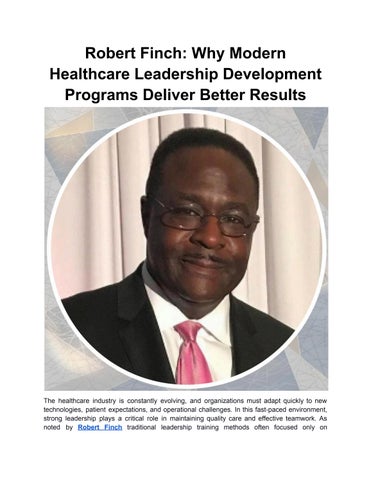
Robert Finch: Why Modern Healthcare Leadership Development Programs Deliver
Better Results
The healthcare industry is constantly evolving, and organizations must adapt quickly to new technologies, patient expectations, and operational challenges In this fast-paced environment, strong leadership plays a critical role in maintaining quality care and effective teamwork. As noted by Robert Finch traditional leadership training methods often focused only on
management theory Still, modern healthcare leadership development programs are designed to deliver practical skills, measurable outcomes, and long-term professional growth. These updated programs are producing better results because they are more flexible, personalized, and focused on real healthcare challenges.
Modern healthcare leadership development programs place a strong emphasis on communication and collaboration. Hospitals and medical facilities rely on teamwork between doctors, nurses, administrators, and support staff Without effective leadership, communication gaps can lead to confusion and degrade the quality of patient care Today’s leadership programs teach healthcare professionals how to manage diverse teams, resolve workplace conflicts, and encourage open communication These skills help create a more supportive and efficient work environment where employees can perform at their best
Another reason modern leadership programs are more successful is their focus on emotional intelligence. Healthcare professionals often work under intense pressure, dealing with stressful situations and emotional patient experiences every day Leaders who understand empathy, self-awareness, and emotional control are better prepared to support their teams and make thoughtful decisions. Modern programs include leadership coaching, interactive learning, and practical exercises that help participants strengthen these important personal skills As a result, leaders become more effective in motivating employees and improving workplace morale
Technology has also transformed healthcare leadership training Many programs now use online learning platforms, virtual workshops, and data-driven performance tracking This allows healthcare professionals to learn at their own pace while balancing demanding work schedules. Digital tools also make training more accessible for employees in different locations, helping organizations provide consistent leadership development across departments and facilities.
Modern leadership development programs are also more focused on patient-centered care Healthcare leaders are trained to improve patient experiences while efficiently managing resources They learn how to make informed decisions, encourage accountability, and create systems that support both employees and patients When leadership improves, patient satisfaction and healthcare outcomes often follow suit.