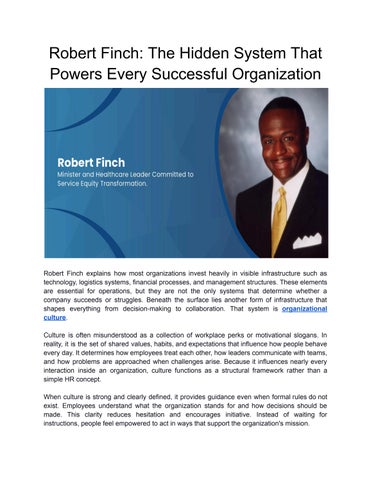
Robert Finch: The Hidden System That Powers Every Successful Organization
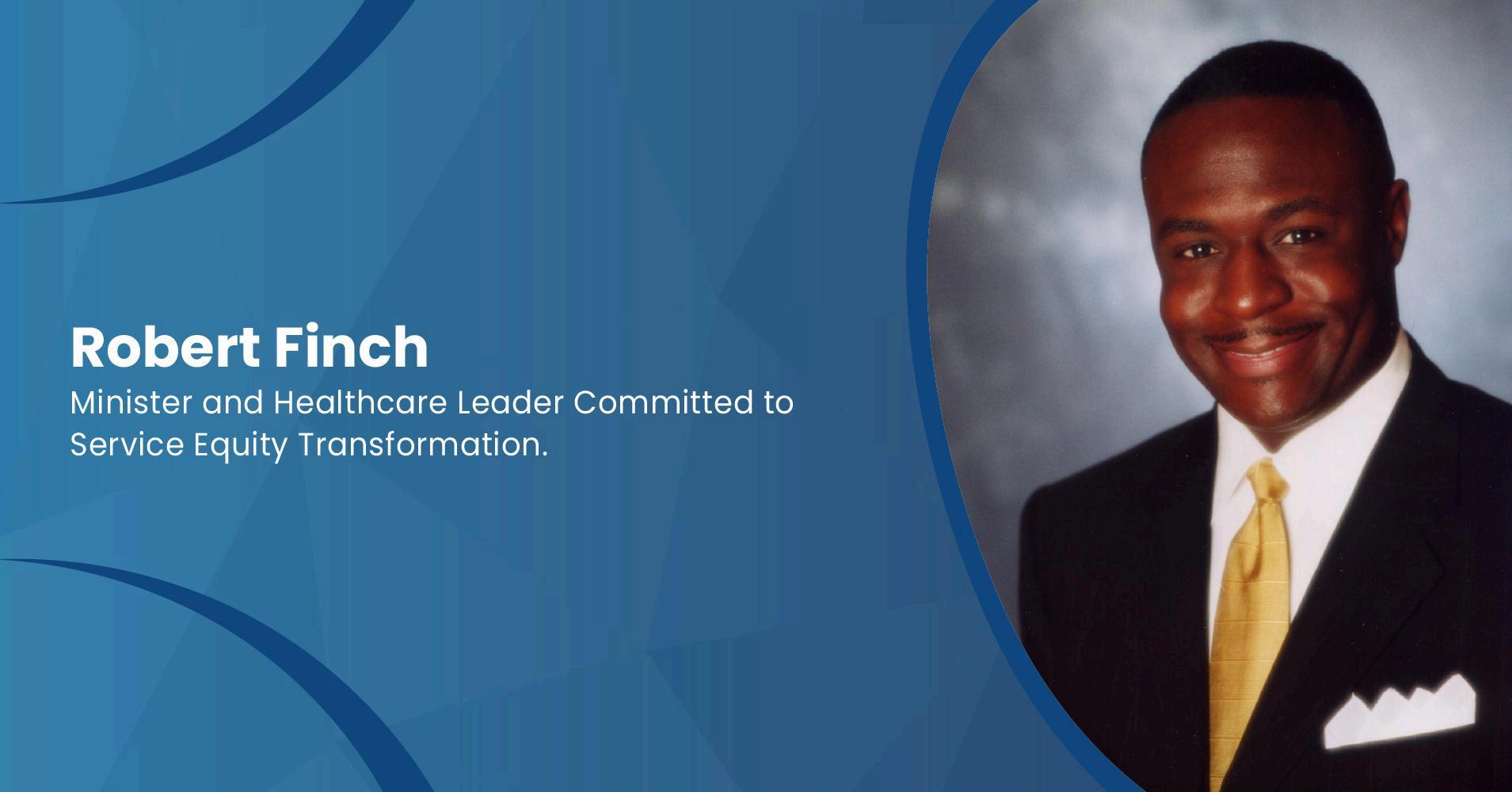
Robert Finch explains how most organizations invest heavily in visible infrastructure such as technology, logistics systems, financial processes, and management structures These elements are essential for operations, but they are not the only systems that determine whether a company succeeds or struggles Beneath the surface lies another form of infrastructure that shapes everything from decision-making to collaboration That system is organizational culture.
Culture is often misunderstood as a collection of workplace perks or motivational slogans In reality, it is the set of shared values, habits, and expectations that influence how people behave every day It determines how employees treat each other, how leaders communicate with teams, and how problems are approached when challenges arise Because it influences nearly every interaction inside an organization, culture functions as a structural framework rather than a simple HR concept
When culture is strong and clearly defined, it provides guidance even when formal rules do not exist Employees understand what the organization stands for and how decisions should be made. This clarity reduces hesitation and encourages initiative. Instead of waiting for instructions, people feel empowered to act in ways that support the organization's mission
Culture also plays a critical role in shaping trust In environments where transparency and accountability are consistently demonstrated, employees feel safe sharing ideas and feedback. This openness leads to stronger collaboration and better problem-solving Teams become more willing to experiment, learn from mistakes, and support one another in achieving shared goals.
Another important aspect of cultural infrastructure is its ability to sustain performance during times of change. Markets evolve, technologies advance, and strategies must adapt. Organizations with a strong cultural foundation handle these shifts more effectively because shared values and a common purpose unite employees Even when plans change, the principles guiding behavior remain steady.
Leadership has the greatest influence over this system Culture is built through consistent actions, not written policies. When leaders demonstrate integrity, fairness, and respect, those qualities spread throughout the organization Over time, they shape how teams interact and how the company presents itself to the outside world.
While culture may be invisible compared to physical systems, its impact is undeniable Organizations that intentionally nurture it create an environment where people can perform at their best and where long-term success becomes far more achievable